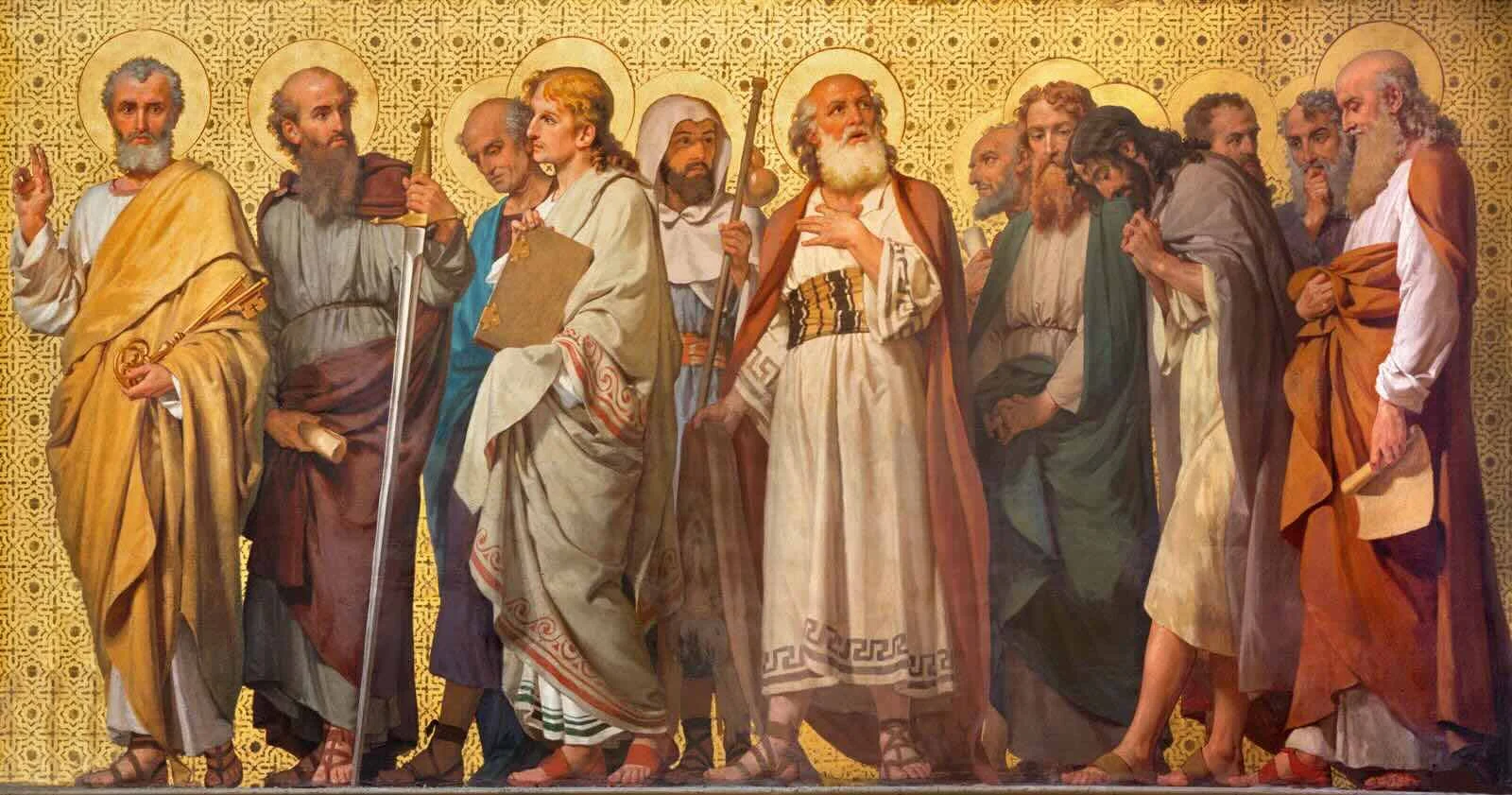
Translated from Philip Schaff's History of The Christian Church
第九章 神学争论与普世正统教义的发展
目录
§ 117. 总论:这一时期在教义上的重要性;古代哲学的影响
§ 118. 神学的渊源:圣经与传统
§ 119. 尼西亚会议以前的阿里乌派争论,318—325年
§ 120. 尼西亚会议,325年
§ 121. 阿里乌派与半阿里乌派的反动,公元325—361年
§ 122. 正统信仰的最终胜利与381年君士坦丁堡会议
§ 123. 所涉及的神学原则:争论的意义
§ 124. 阿里乌主义
§ 125. 半阿里乌主义
§ 126. 撒伯流主义的复兴:马尔凯鲁与佛提努
§ 127. 尼西亚关于子与父同质的教义
§ 128. 圣灵的教义
§ 129. 尼西亚信经与君士坦丁堡信经
§ 130. 尼西亚的三位一体教义与三位一体术语
§ 131. 奥古斯丁的后尼西亚三位一体教义
§ 132. 亚他那修信经
§ 133. 巴勒斯坦的奥利金主义争议:伊皮法纽、鲁菲努斯与哲罗姆,公元394–399年
§ 134. 埃及与君士坦丁堡的奥利金主义争议:提阿非罗与金口,公元399–407年
§ 135. 概观:亚历山大学派与安提阿学派
§ 136. 亚波里拿留异端,公元362–381年
§ 137. 聂斯托利之争,公元428–431年
§ 138. 公元431年的以弗所大公会议与妥协
§ 139. 聂斯托利派
§ 140. 欧提克争论:公元449年的强盗会议
§ 141. 迦克墩普世会议,公元451年
§ 142. 正统基督论——分析与批判
§ 143. 基督一性论的争论
§ 144. 三章与第五次大公会议,公元553年
§ 145. 基督一性论各宗派:雅各派、科普特人、阿比西尼亚人、亚美尼亚人、马龙派
§ 146. 伯拉纠争论的性质
§ 147. 伯拉纠争论的外部历史,公元411—431年
§ 148. 巴勒斯坦的伯拉纠争论
§ 149. 罗马教会的立场:对伯拉纠主义的谴责
§ 150. 伯拉纠派的体系:人的原初状态与自由;堕落
§ 151. 伯拉纠体系续论:人的能力与上帝恩典的教义
§ 152. 奥古斯丁的体系:人的原初状态与自由意志
§ 153. 奥古斯丁的体系:堕落及其后果
§ 154. 奥古斯丁的体系:原罪与人类灵魂的起源
§ 155. 原罪与遗传罪责教义的论据
§ 156. 对伯拉纠派异议的答复
§ 157. 奥古斯丁论救赎的恩典
§ 158. 预定论
§ 159. 半伯拉纠主义
§ 160. 半奥古斯丁主义的胜利:公元529年的奥朗日会议
§ 117. 总论:这一时期在教义上的重要性;古代哲学的影响
尼西亚 (Nicene) 与迦克墩 (Chalcedonian) 时代,是普世正统教义形成并由教会确立的时期;这些教义即圣三一、道成肉身以及基督神人二性的位格之教义,希腊教会、拉丁教会和福音派教会直到今日,在各自的信条文献中对此仍持一致立场,共同反对阿里乌派 (Arianism)、亚波里拿留派 (Apollinarianism)、聂斯托利派 (Nestorianism) 和欧提克派 (Eutychianism) 的异端。除这些三一论和基督论的教义之外,人论与救恩论,尤其是反对伯拉纠主义 (Pelagianism) 和半伯拉纠主义 (Semi-Pelagianism) 的罪与恩典之教义,也得到发展,并获得相对确定的结论;不过,这仅限于拉丁教会,因为希腊教会极少参与伯拉纠主义的争论。
这些教义的根本性质、从事这些研究的教父之伟大,以及所得成果的重要性,使这一时期在神学史上的地位仅次于使徒时期。除十六世纪宗教改革之外,没有任何时期有过如此重大而认真的教义争论,也没有任何时期对此表现出如此热切的关注。教会此时已掌握罗马帝国的古代哲学与学术,并将其用于阐明和捍卫基督教真理。领导这些争论的教会教师,才华卓绝,虔诚而有活力;他们并非仅仅埋首书斋之人,而是德望可敬的神学人物,是表里如一的人,在行动和受苦上与在思想上一样伟大。对他们而言,神学是关乎内心与生命的神圣事业;1我们可以用优西比乌 (Eusebius) 论奥利金 (Origen) 的评语来评说他们:“他们的生活如同他们的言语,他们的言语也如同他们的生活。”
神学争论吸纳了当时的思想活动,震撼了教会与帝国的根基。对真理最纯粹的热忱,与许多神学家的憎恨与狂怒(odium 与 rabies theologorum),以及形形色色的神学激情混杂在一起;这些激情是最深沉、最苦毒的,因为宗教所关切的是永恒的利害。
这些争论中的主要人物,自然是主教和司祭。修士如同一支常备军,在他们身旁作战,以狂热的热忱争取正统教义的胜利,也不时甚至为异端效力。皇帝和文官也插手神学事务,但大多有损于神学自由的内在发展;因为他们使一切神学问题都带上政治性质,并使之与宫廷的密谋和当时的世俗利益纠缠在一起。在阿里乌派争论期间,君士坦丁堡 (Constantinople) 的各个阶层,甚至工匠、银钱商、旧衣贩、市场妇女和逃奴,都热烈参与同质 (Homousion) 与从属、受生与非受生等问题的争论。2
东方教会的思辨精神,兼有深切的宗教热忱与某种神秘主义,同时又兼有希腊人的好奇心和好辩性;后者后来对教会内在生命的损害,反而多于促进。拿先斯的贵格利 (Gregory Nazianzen) 在阿里乌派争战期间住在君士坦丁堡,他描述了这种论战精神在父母与儿女、丈夫与妻子、老人与青年、主人与奴仆、司祭与民众之间造成的分裂与敌意。“事情竟已到了这样的地步:整个市场都回响着异端者的议论,每场筵席都被这种喋喋不休的言谈败坏,令人厌恶欲呕;每次欢庆都变成哀悼,而每场庄严的丧礼,竟几乎因这更大的祸患——争吵——而显得不那么悲苦;甚至妇女的内室,那培育纯真之所,也受到扰乱,贞静之花被这种过早养成的争辩习气摧残。”3金口约翰 (Chrysostom) 如同后来的梅兰希顿 (Melanchthon) 一样,因他那个时代神学上的好斗风气而饱受痛苦。
尼西亚时代的历史清楚表明,上帝的教会是将属天的宝贝放在属地的瓦器里。十六世纪的宗教改革,实际上同样是一场不间断的战争,其中各种不纯的个人动机与政治动机都在起作用,甚至最优秀的人也常常违背使徒关于用爱心说诚实话的训诫。但我们不可忘记,当时那种激烈而不宽容的教条主义,是以深切的道德热忱和坚强的信仰为基础的;就此而言,它远远高于冷漠主义的宽容,后者轻率地玩弄真理,或不时以极其猛烈的不宽容攻击信仰。(请想一想第一次法国革命。)在这些狂暴的冲突中,上帝护理的统御昭然可见;谬误越是猖獗,真理的胜利便越显伟大。上帝使用各式各样的人作他的器皿,使恶的激情与善的激情一同为他效力。真理的圣灵引导教会穿过争斗各方的冲撞与喧嚣,并且最终总是战胜谬误。
大公会议是决定正统教义胜利的公开战场。这些会议的教义决议,包含了关于三一与基督位格的最深刻讨论之成果;教会直到今日,在实质上仍未超越这些决议。
希腊教会致力于发展神论和基督论,拉丁教会则专注于人论和救恩论。前者忠于希腊民族的禀性,主要是思辨的、辩证的、冲动而不安定的;后者则符合罗马人的性格,是务实的、尊重传统的、统一的、一贯而稳健的。前者承受奥利金和亚历山大学派 (Alexandrian school) 的激发;后者则从德尔图良 (Tertullian) 和居普良 (Cyprian) 获得动力,并在哲罗姆 (Jerome) 和奥古斯丁 (Augustine) 身上达到其神学的高峰。希腊教会的思辨倾向,甚至也表现在其讲道中,讲道不时论及世界的数目、物质的观念、高等灵体的不同等级、神性中三个位格 (hypostases) 的关系,以及类似的深奥问题。然而,拉丁教会也具有深刻的探究精神(正如我们在德尔图良和奥古斯丁身上所见),积极参与东方关于三一论和基督论的争论,并以其权威的分量决定了正统教义的胜利。希腊教会在那些伟大的争战中几乎耗尽了创造力,对奥古斯丁所阐发的有关罪与恩典的更深刻观念漠不关心,并在迦克墩会议之后,在神学上退化为经院式的形式主义和无谓的精细辨析。
第四、第五世纪是教父神学以及基督教希腊—罗马文明繁荣的古典时期。第五世纪下半叶,西罗马帝国连同这些文学宝藏,在民族大迁徙的风暴中衰亡,随后又在查理大帝 (Charlemagne) 治下,以日耳曼—罗马的形式,展开新的、更高的历程。在东罗马帝国,学术得到了较好的保存,并借着希腊语这一媒介,维持了与古代的某种联系。但希腊教会正如没有中世纪,也没有经历过新教宗教改革。
教父们所崇尚的哲学,主要是柏拉图哲学 (Platonic philosophy),但以其与基督教精神相容的部分为限。东方的思辨神学家,尤其是奥利金学派的神学家,以及西方的安布罗斯 (Ambrose),特别是奥古斯丁,都受到柏拉图唯心论的塑造。
在伪狄奥尼修斯著作 (pseudo-Dionysian books) 的神秘象征体系中,可以看到柏拉图主义与基督教的一种显著结合,而这种结合却损害了后者。这些著作不可能写成于第五世纪以前,却被伪托为《使徒行传》(十七34)中那位亚略巴古成员 (Areopagite) 所作;它们出自后期新柏拉图主义 (New-Platonism) 学派,其代表人物是雅典的普罗克洛 (Proclus,卒于485年)。这些狄奥尼修斯著作(《天上等级论》《教会等级论》《神名论》《神秘神学论》,以及十封书信)的基本观念,是一种双重的等级体系,一在天上,一在地上,各由三个三联组构成,居于人与那不可言说、超越万有、超乎本质的神性之间,充当中介。这一观念是古代异教贵族精神的残余,构成了它与教会圣统组织相联系的环节,也解释了伪狄奥尼修斯体系何以获得极大的重要性和广泛的欢迎,尤其是在中世纪的神秘神学中。4
在昔兰尼的辛尼修斯 (Synesius of Cyrene) 身上,柏拉图主义也重于基督教。他是亚历山大著名女哲学家希帕提娅 (Hypatia) 的热忱门徒,于410年受召出任五城地区 (Pentapolis) 首府托勒密城 (Ptolemais) 的主教。受圣职之前,他坦率声明,自己不能放弃哲学见解,尽管他愿在公开场合迁就大众的信仰。亚历山大的提阿非罗 (Theophilus of Alexandria) 接受了这种可疑的迁就理论;而此人正是逼迫基督教柏拉图主义之父奥利金的仰慕者的主要人物之一。辛尼修斯被立为主教,却常常后悔自己放下心爱的研究,换来了主教职分中责任重大而繁重的职责。在他的赞美诗中,他将基督教的三一教义与柏拉图的上帝观念融合,又将救主与神圣的赫利俄斯 (Helios) 融合;在他看来,太阳每日的西落与东升,乃是基督降入阴间与升上高天的预表。灵魂渴望摆脱物质锁链的愿望,取代了为罪忧伤和渴慕救恩的心。5
神学一旦呈现经院性质,开始更多地运用辩证形式,而非活泼的观念,亚里士多德 (Aristotle) 的哲学便日益受到青睐并产生影响;从公元550年约翰·斐洛波努斯 (John Philoponus) 的时代起,贯穿整个中世纪,直到新教宗教改革,它一直在天主教会中占据主导地位。它是经院哲学的哲学基础,而神秘主义则较为亲近柏拉图的体系。
这两大哲学对神学的影响是有益还是有害,取决于基督教的原则是处于支配地位,还是处于受支配地位。这两个体系都是有神论的(归根结底是一神论的),也都有助于认真而深刻的思辨精神。柏拉图主义以其理想化而富有诗意的观点,激发、充实、鼓舞并提升理性与想象力,却也容易将人引入诺斯替主义 (gnosticism) 的谬误和神秘主义的朦胧境地。亚里士多德主义 (Aristotelianism) 以其冷静的实在论和鲜明的逻辑区分,成为训练知性的良好工具、操练辩证法的学校,并有助于以合乎逻辑、系统而有条理的方式处理问题,却也可能导致贫乏的形式主义。事实上,基督教本身就是最高的哲学,正如信心是最高的理性;它依据保罗所说“万有全是你们的”这一原则,使历代哲学以及艺术与科学都为自己效力。6
§ 118. 神学的渊源:圣经与传统
参阅第I卷§ 75及§ 76所列文献。另参:优西比乌 (Eusebius):《教会史》(Hist. Eccl.),iii. 3;vi. 25(论尼西亚时代正典的形态);莱安德·范埃斯 (Leander van Ess,罗马天主教徒):《金口约翰,或教父们赞成阅读圣经的声音》(Chrysostomus oder Stimmen der Kirchenväter für’s Bibellesen)。达姆施塔特 (Darmstadt),1824年。
勒兰的文森特 (Vincentius Lirinensis,†约450年):《维护大公信仰的古老性与普世性、反对一切异端亵渎性新说的备忘录》(Commonitorium pro cathol. fidei antiquitate et universitate Adv. profanas omnium haer. novitates);屡次刊行,例如巴卢齐乌斯 (Baluzius,1663及1684年)、加兰迪 (Gallandi)、科斯特 (Coster)、克吕普费尔 (Kluepfel,附导论及注释,维也纳〔Viennae〕,1809年),以及赫尔佐格 (Herzog,布雷斯劳〔Vratisl.〕,1839年) 所编各版;亦收入《阿尔勒的希拉里著作集》(Opera Hilarii Arelatensis,罗马〔Rom.〕,1731年)、《萨尔维安著作集》(Opera Salviani,巴黎〔Par.〕,1669年),以及米涅 (Migne) 的《教父集》(Patrolegis),第50卷,第626页及后。
教会对于基督教神学的渊源以及信仰与实践准则的看法,仍与前一时期相同,只是在细节上有了进一步的发展。7 与人的著作相对的、新旧约神圣的圣经,以及与异端各派纷纭意见相对的、自使徒传承而来的大公教会口头传统或活的信仰,共同构成唯一无误的信仰渊源与准则。二者承载同一实质,即上帝在基督里施行拯救的启示;但在形式与职分上有所不同:教会传统确定正典,为圣经的正确解释提供钥匙,并保护圣经免受异端滥用。古代教会心目中二者的关系,可以一国的最高法律(如罗马法、《拿破仑法典》、英国普通法、《美国宪法》)与解释法律、裁决相互冲突之解释的法庭之间的关系来说明。例如,“正统之父”亚他那修 (Athanasius) 始终以圣经为其结论的根据,只为证明自己正确理解并阐释圣经,才诉诸传统的权威。他说,大公信仰就是主所赐下、使徒所传讲、教父所保存的信仰;教会建立在这信仰之上,凡离弃这信仰的人,就不能再称为基督徒。8
教义传统的总纲包含在所谓《使徒信经》(Apostles’ Creed) 之中;这信经起初有多种形式,但在第四世纪开始以后,便采用了现今通用的罗马形式。在希腊教会中,325年以后取代它的是《尼西亚信经》(Nicene Creed),后者更充分地表达了基督神性的教义。这两部信经都没有超出使徒教训的实质,也都不包含任何希腊或罗马所特有的教义。
因此,古代大公教会关于圣经与传统的教义,虽然与罗马教会的教义十分接近,却不可与之完全混为一谈。前者认为二者在实质上相同,而罗马教会的许多教义与惯例,如七项圣礼、弥撒、炼狱、教皇制度及圣母无原罪始胎等教义,在圣经中并无根据,乃是以传统为依据。福音教会对此提出抗议,并主张圣经作为神圣启示的记录,是完备而充分的;但它并不否认传统或教会意识在解释圣经上的价值,也以信条文献规范公开的教导。按新教的看法,传统并非与圣经并列,而是从属于圣经,其价值取决于它与圣经是否一致。唯独圣经是信仰的准则 (norma fidei);教会教义只是教导的准则 (norma doctrinae)。在圣经解释上,新教给予个人判断与自由研究的余地,远比罗马教会,甚至比尼西亚时代的教会更大。9
I. 关于圣经:
到第四世纪末,对于正典的范围,或应当承认为神圣而有权威之书卷的数目,人们仍有不同意见。
犹太人的正典,即希伯来文圣经,得到普遍接纳;而增入希腊文《七十士译本》(Septuagint) 的次经 (Apocrypha),则通常只被视为适合在教会中宣读的书卷,10 因而成为正典与严格意义上的伪经(托名著作)之间的中间类别。这是恰当的;因为那些书卷虽具有重大的历史价值,并填补了新旧约之间的空白,却全都产生于先知预言止息以后,因此不能视为受默示的著作,基督和使徒也从未引用过它们。11
在新约方面,优西比乌 (Eusebius) 时代,四福音书、《使徒行传》、保罗的十三封书信、《约翰一书》和《彼得前书》,普遍被承认为正典;12 而《希伯来书》《约翰二书》《约翰三书》《彼得后书》《雅各书》和《犹大书》是否出自使徒,则受到许多人的质疑,《启示录》也因其内容而受到怀疑。13 东方教会对于旧约次经的这种犹疑不决,延续得更久;但到第四世纪中叶,新约中这七部有争议的书卷已经得到普遍承认,并列入亚他那修、拿先斯的贵格利 (Gregory Nazianzen)、以哥念的安斐罗基乌斯 (Amphilochius of Iconium)、耶路撒冷的区利罗 (Cyril of Jerusalem) 及伊皮法纽 (Epiphanius) 所开列的正典书目中;只是在有些书目中,《启示录》未被列入。
在西方教会,新旧约正典于第四世纪末得到确定,这有赖于哲罗姆 (Jerome) 的权威(不过,他在批判性的疑虑与传统原则之间有所摇摆),尤其有赖于奥古斯丁 (Augustine) 的权威。后者坚定地遵循《七十士译本》的亚历山大正典,并在有争议的大公书信和《启示录》问题上遵从占优势的传统;不过,他自己在某些地方也倾向于将旧约次经视为权威次一等的第二正典书卷。393年的希波会议 (Council of Hippo) 和397年的第三次(按另一种算法为第六次)迦太基会议 (Council of Carthage),在两次会议均有出席的奥古斯丁影响下,确定了圣经的大公正典,其中包括旧约次经,并禁止在教会中宣读其他书籍,惟在殉道者纪念日宣读《殉道者行传》不在此限。这两次非洲会议与奥古斯丁一样,14 将四十四卷书列为旧约正典,次序如下:《创世记》《出埃及记》《利未记》《民数记》《申命记》《约书亚记》《士师记》《路得记》,四卷《列王纪》(即《撒母耳记》上下卷与《列王纪》上下卷),两卷《补遗记》(Paralipomena,即《历代志》),《约伯记》《诗篇》,所罗门的五卷书,十二小先知书,《以赛亚书》《耶利米书》《但以理书》《以西结书》《多比传》(Tobias)、《犹滴传》(Judith)、《以斯帖记》,两卷《以斯拉书》,两卷《马加比书》(Maccabees)。新约正典则与我们所持的相同。
然而,这一海外教会的决定仍须获得批准;当英诺森一世 (Innocent I) 和格拉修一世 (Gelasius I,公元414年) 重申同一份圣经书目时,它便获得了罗马主教座的赞同。
这一正典直到十六世纪都未受扰动,并在特伦托会议 (Council of Trent) 的第四次会议上获得认可。
新教保留了罗马教会的新约正典,15 但依照正统犹太教与早期基督教的看法,将次经排除在旧约之外。16
最杰出的教父都以最强烈的措辞,申明圣经全然的默示及其无误的权威,并劝勉人殷勤阅读圣经,连平信徒也不例外,金口约翰 (Chrysostom) 尤其如此。然而,普及教育的缺乏,加上书籍价格极其昂贵,使民众大多只能依靠在公共礼拜中听见上帝的话;而盛行的圣职统治精神,又压抑了个人对圣经的自由研读。诚然,当时尚未禁止阅读圣经,但认为圣经是神父与修士之书的成见已经存在。直到很久以后,借着印刷术的发明、新教的自由精神以及平民学校的设立,圣经才真正成为全民之书,正如它起初所命定的那样;又借着圣经公会广为传播,如今这些公会一年所印行和散发的圣经,比整个中世纪,甚至比宗教改革以前十五个世纪所制作的还要多。
现存最古老的圣经抄本,最早也只能追溯到第四世纪,数量极少,且充满各种不涉及实质的错误与遗漏;以校勘方法恢复原文的问题,迄今尚未得到令人满意的解决,而且在使徒原稿已经不存的情况下,也只能得到近似的解决。
最古老且最重要的大写字体抄本,是西奈抄本 (Sinaitic,1859年由蒂申多夫〔Tischendorf〕首次发现,1862年刊行)、梵蒂冈抄本 (Vatican,藏于罗马,有残缺)、亚历山大抄本 (Alexandrian,藏于伦敦);其次是藏于巴黎、残损甚多的叙利亚人以法莲抄本 (Codex Ephraim Syrus),以及残缺的剑桥抄本 (Codex of Cambridge)。我们所能获得的最古老经文,主要必须从这些以及少数其他大写字体抄本中辑集。次要资料则是教父著作中的引文、最早的译本,如叙利亚文《别西大译本》(Peshito) 和拉丁文《武加大译本》(Vulgate),以及较晚的抄本。17
那不以字句、而以基督教活的精神为根基的信仰,不会因圣经抄本及古今译本的缺陷而陷入错误,反而只会因此受到激励,作更新、更深入的研究。
教会传播到罗马帝国的各民族,甚至传播到其边境的蛮族之中,随之而来的便是将圣经翻译为各种语言的必要。这些译本中最重要、使用最广的,是拉丁文《武加大译本》(Vulgate),由博学的哲罗姆以较早的《意大利译本》(Itala) 为基础译成;后来,罗马教会虽知其中有许多错误,仍将它置于与原文同等的地位。教父中懂得希伯来文的人极少;人们认为有《七十士译本》就已足够,而在蛮族入侵以及与东方分裂以后,拉丁教会中懂得希腊文的人也不断减少,以致原文圣经成了一部封闭的书,直到十五世纪学术复兴时才有所改变。
在圣经的解释上,寓意式阐释与强加寓意的体系备受推崇,并且常常堕为极其任意的臆想,亚历山大学派 (Alexandrian school) 尤其如此,尼西亚时代大多数伟大的教义神学家都属于这一学派。与这一体系相对,由路吉安 (Lucian,†311年) 创立、以大数的狄奥多鲁 (Diodorus of Tarsus)、摩普绥提亚的狄奥多若 (Theodore of Mopsuestia) 为代表,而以金口约翰 (John Chrysostom) 和狄奥多勒 (Theodoret) 为最佳代表的安提阿学派 (Antiochian school),提倡一种更为审慎的语法与历史释经法,并更鲜明地区分圣经中属人的与属神的要素。狄奥多若因此受到希腊教会的怀疑,后来甚至受到定罪。
在拉丁教父中,圣经解释上也存在类似的差异:一边是奥古斯丁富有洞察力的深度与活泼的思维驰骋,另一边则是哲罗姆在语法和古物研究方面的学识,以及他在教义上的肤浅。
- 圣经被普遍接受为最高权威和无谬的信仰准则。然而,由于圣经本身受到种种不同的解释,异端也援引圣经来支持自己的见解,本时期的教父便像他们以前的爱任纽 (Irenaeus) 和德尔图良一样,同时诉诸传统,即由使徒传下、借着主教不间断的继承而保存下来的传统。在他们看来,圣经是最高的律法;而大公教会这个由信徒构成的有机身体所汇集的智慧与敬虔,则是裁定这律法真义的审判者。因为圣经要为人所理解,就必须得到解释:或凭个人的判断,或凭基督教世界的普遍信仰。
严格说来,圣灵既是圣经的作者,也是圣经唯一无谬的解释者。但当时人们认为,圣灵只赐给正统教会,并不赐给异端和分裂的宗派;而且,圣灵借着聚集的正统主教和大公会议,以最清楚、最具权威的方式表达自己。希拉里 (Hilary) 说:“异端都引用圣经,却不明白圣经的意思;因为在教会以外的人,不可能明白上帝的道。”他们自以为遵循圣经,实际上却遵循自己的臆想,把这些臆想塞进圣经,而不是从圣经汲取自己的思想。
即使在所有教父中最接近福音派新教的奥古斯丁,也在这一点上维护大公教会的原则;他在反驳摩尼教徒 (Manichaeans) 时,提出了那句著名的格言:“若不是普世教会的权威敦促我,我就不会相信福音。”但他随即补充道:“愿上帝不容我不信福音。”18
然而,传统本身也不止一种,更不用说对大公教会传统还有种种不同的解释。因此,便需要一个辨别传统真伪的准则。半伯拉纠派 (semi-Pelagian) 神学家文森特 (Vincentius),是高卢南部勒兰 (Lirinum) 修道院的修士兼司祭(†450年);19除此以外,他的生平鲜为人知。他提出了一条在此事上具有划时代意义的格言,此后一直成为罗马教会的标准:我们必须持守“各处、历来、所有人所信的”。20这里有衡量教会正统性的三重标准:地域、时间和人数上的普遍性;也就是无处不有、源远流长和普遍一致;21换言之,一项信条必须能够追溯到使徒,并且见于所有基督教国家和所有信徒之中。但这一原则只能适用于启示宗教的少数基本信条,不能适用于任何罗马教会特有的教义;若要有合理的意义,就必须将其缩减为单纯的多数原则。至于严格说来已包含另外两项的 consensus omnium(全体一致),文森特自己也作了这样的限制,把其条件界定为多数教牧人员的赞同。22在信仰问题上,无论他还是整个罗马教会体系,都丝毫不顾及民众的声音。然而,在许多重要教义上,甚至连 consensus patrum(教父的一致意见)也不存在,例如自由意志、预定和赎罪的教义。在个人见解上容许一定程度的分歧自由,是一切思想进步不可或缺的条件,也先于教会对每项信条的定论。即使文森特也明确主张,教会在认识真理上不断前进;当然,这种进步须与先前各阶段相协调,正如人或树木在各个生长阶段仍保持自身的同一性。23
文森特著作的精神和倾向完全属于大公教会,对于新教自由研究圣经的方式,他连最模糊的观念也没有。但另一方面,他对新教义也同样不会容忍。他并不想使传统成为圣经之外一个独立的知识来源和信仰准则,而只要求承认传统为圣经的真正解释者,以及防止异端滥用圣经的屏障。他所要求的教义古老性这一标准,包含着使徒性,因而也包含着与新约的精神和实质相符。他说,教会是受托之物的殷勤守护者,不作任何改变、删减或增添。她唯一的努力,就是使旧有之物成形、坚固或保存下来。创新是异端的事,而不是正统信徒的事。圣经正典本身是完整的,而且绰绰有余。24但既然所有异端都诉诸圣经,就必须请出教会的权威作为解释的准则;在这一点上,我们必须遵循普遍性、古老性和一致性。25他在同一著作中说,大公教会信徒的惯例,是用两种方式证明真信仰:首先凭圣经的权威,其次凭大公教会的传统;这并不是因为单凭正典本身不足以应付一切,而是由于圣经受到许多彼此冲突的解释和曲解。26
教皇利奥一世 (Leo I.) 也本着同样的精神说:“不容许偏离福音书作者和使徒的教义,哪怕只是一字;对于圣经,也不容许有不同于蒙福的使徒和我们先辈所领受、所教导的思想。”27
随着教父和会议的权威增加,以及圣经的学术研究衰退,大公教会的传统原则日益巩固;传统在实践中逐渐与圣经并列,甚至凌驾其上。它束缚了自由研究,助长了一种僵硬、停滞而不宽容的正统主义,竟把奥利金 (Origen) 和德尔图良这样的人定为异端。但另一方面,传统原则无疑也发挥了有益的保守力量,使古代教会教义的实质,不致被那淹没基督教世界的异教蛮族文化所遮蔽、混淆。
I. 三位一体论的争论
阿里乌派争论的一般文献
I. 史料:正统派方面有四世纪大多数教父的著作;尤其是亚他那修 (Athanasius) 的教义与论战著作(《反阿里乌派演说》Orationes c. Arianos;《论尼西亚会议的决议》De decretis Nicaenae Synodi;《论狄奥尼修的意见》De sententia Dionysii;《驳阿里乌派辩护书》Apologia c. Arianos;《为自己逃亡所作的辩护》Apologia de fuga sua;《阿里乌派史》Historia Arianorum 等,均见本笃会版第i卷第i、ii部分),巴西尔 (Basil)(《驳欧诺米》Adv. Eunomium),拿先斯的贵格利 (Gregory Nazianzen)(《神学演说》Orationes theologicae),尼撒的贵格利 (Gregory Of Nyssa)(《驳欧诺米》Contra Eunom.),伊皮法纽 (Epiphanius)(《定锚》Ancoratus),希拉里(《论三位一体》De Trinitate),安布罗斯 (Ambrose)(《论信仰》De Fide),奥古斯丁(《论三位一体》De Trinitate,以及《驳阿里乌派马克西米努斯》Contra Maximinimum Arianum),鲁菲努斯 (Rufinus),以及希腊教会史家的著作。
异端派方面:阿里乌 (Arius) 著作的残篇(《Θάλεια*》,以及致尼科米底亚的优西比乌 (Eusebius of Nicomedia) 和亚历山大的亚历山大 (Alexander of Alexandria) 的两封书信,Epistolae),保存在亚他那修、伊皮法纽、苏格拉底 (Socrates) 和狄奥多勒 (Theodoret) 的引文中;参较法布里修斯 (Fabricius):《希腊文献志》Biblioth. gr.,第viii卷,第309页。约388年的《阿里乌派残篇》Fragmenta Arianorum,见安杰洛·迈 (Angelo Mai):《古代作家新集》Scriptorum veterum nova collect.,罗马,1828年,第iii卷。阿里乌派的菲洛斯托吉乌斯 (Philostorgius,公元350—425年) 的《教会史》残篇。
- 研究著作:蒂勒蒙 (Tillemont,罗马天主教):《回忆录》等,Mémoires, etc.,第vi卷,第239—825页,巴黎1699年版及威尼斯版(主要论述外部历史)。狄奥尼修斯·佩塔维乌斯 (Dionysius Petavius,耶稣会士,†1652年):《论神学教义》De theologicis dogmatibus,第ii卷,以八书论述神圣的三位一体;另有第iv、v卷的部分内容,以十六书论述圣言的道成肉身。此书虽不完整,至今仍是罗马教会在教义史方面最博学的著作;初版于1644—1650年在巴黎出版,五卷,对开本;后于1700年在阿姆斯特丹出版(六卷),1757年在威尼斯出版(扎卡里亚 (Zacharia) 编);最近由帕萨利亚 (Passaglia) 和施拉德 (Schrader) 于1857年在罗马重新编订。J. M. 特拉瓦萨 (J. M. Travasa,罗马天主教):《阿里乌生平考》Storia critica della vita di Ario,威尼斯,1746年。S. J. 曼堡 (S. J. Maimburg):《阿里乌主义史》Histoire de l’Arianisme,巴黎,1675年。约翰·皮尔逊 (John Pearson,切斯特主教,†1686年):《信经释义》An Exposition of the Creed(第二条),1689年;第12版,伦敦,1741年;此后多布森 (Dobson)、伯顿 (Burton)、尼科尔斯 (Nichols)、舍瓦利耶 (Chevalier) 等曾多次编订出版。乔治·布尔 (George Bull,圣公会圣戴维兹主教,†1710年):《尼西亚信仰辩护》Defensio fidei Nicaenae,牛津,1685年(拉丁文著作集 Opp. Lat.,对开本,格拉贝 (Grabe) 编,伦敦,1703年;《全集》Complete Works,伯顿编,牛津,1827年,1846年再版,第5卷分两部分;另有英译本,收入《盎格鲁大公派文库》Anglo-Catholic Library,1851年)。这部经典著作以渊博的学识,力图表明所有尼西亚以前的教父都持有尼西亚信仰,因此更适合归入前一时期。丹·沃特兰 (Dan. Waterland,米德尔塞克斯会吏长,†1730年,在圣公会维护尼西亚信仰的人中,其才干仅次于布尔):《基督神性辩护》Vindication of Christ’s Divinity,1719年及以后,收入《沃特兰著作集》Waterland’s Works,米尔德特 (Mildert) 编,第i、ii、iii卷,牛津,1843年。(包含若干敏锐而博学的论文和讲章,维护正统的三位一体教义,反对萨姆·克拉克博士 (Dr. Sam. Clarke) 和惠特比博士 (Dr. Whitby) 的高派阿里乌主义。)Chr. W. F. 瓦尔希 (Chr. W. F. Walch):《异端全史》等,Vollständige Historic der Ketzereien, etc.,11卷,莱比锡,1762年及以后;第ii、iii卷(极其详尽,也极其枯燥)。吉本 (Gibbon):《罗马帝国衰亡史》History of the Decline and Fall of the Roman Empire,第xxi章。A. 默勒 (A. Möhler,罗马天主教):《大亚他那修及其时代的教会》Athanasius der Grosse u. die Kirche seiner Zeit,美因茨(1827年);第2版,1844年(第ii—vi书)。J. H. 纽曼 (J. H. Newman,当时为蒲西主义的博学领袖,后来归入罗马天主教):《四世纪的阿里乌派》The Arians of the Fourth Century,伦敦,1838年;第2版(未作改动),1854年。F. Chr. 鲍尔 (F. Chr. Baur):《基督教三位一体与道成肉身教义的历史发展》Die christl. Lehre von der Dreieinigkeit u. Menschwerdung in ihrer geschichtl. Entwicklung,3卷,图宾根,1841—1843年;第i卷,第306—825页(至迦克墩会议)。另参较鲍尔的《四至六世纪教会史》Kirchengesch. vom 4ten his 6ten Jahrh.,图宾根,1859年,第79—123页。Js. A. 多尔纳 (Js. A. Dorner):《基督位格教义发展史》Entwicklungsgesch. der Lehre von der Person Christi,1836年;第2版,2卷,斯图加特,1845—1853年;第i卷,第773—1080页(英译本由 W. L. 亚历山大 (W. L. Alexander) 和 D. W. 西蒙 (D. W. Simon) 译,收入克拉克的《外国神学文库》Foreign Theol. Library,爱丁堡,1861年)。R. 威尔伯福斯 (R. Wilberforce,当时为东赖丁会吏长,后来归入罗马天主教):《论我主耶稣基督道成肉身的教义》The Doctrine of the Incarnation of our Lord Jesus Christ,第4版,伦敦,1852年。凯伊主教 (Bishop Kaye):《亚他那修与尼西亚会议》Athanasius and the council of Nicaea,伦敦,1853年。C. Jos. 黑费勒 (C. Jos. Hefele,罗马天主教):《会议史》Conciliengeschichte,弗赖堡,1855年及以后;第i卷,第219页及后。阿尔贝·德·布罗伊亲王 (Albert Prince de Broglie,罗马天主教):《四世纪的教会与罗马帝国》L’église et l’empire romain, au IV. siècle,巴黎,1856—1866年,6卷;第i卷,第331页及后;第ii卷,第1页及后。W. W. 哈维 (W. W. Harvey):《三大信经的历史与神学》History and Theology of the Three Creeds,伦敦,1856年,2卷。H. 福格特 (H. Voigt):《亚历山大的亚他那修的教义》Die Lehre des Athanasius von Alexandrien,不来梅,1861年。A. P. 斯坦利 (A. P. Stanley):《东方教会史讲座》Lectures on the History of the Eastern Church,第2版,862年(纽约重印);第ii—vii节(文采胜于扎实)。另参较弗勒里 (Fleury)、施勒克 (Schröckh,第v、vi卷)、尼安德 (Neander)、吉泽勒 (Gieseler) 的教会通史,以及明舍尔—克尔恩 (Münscher-cölln)、鲍姆加滕—克鲁修斯 (Baumgarten-Crusius)、哈根巴赫 (Hagenbach)、鲍尔、贝克 (Beck)、谢德 (Shedd) 的教义史中相关各节。
§ 119. 尼西亚会议以前的阿里乌派争论,318—325年
阿里乌派争论首先关乎基督的神性,但在其发展过程中,也触及圣灵的神性,因而涵盖了神圣三位一体与上帝道成肉身的全部奥秘,而这正是基督教启示的中心。三位一体的教义并非以抽象形式独立出现,而是与基督和圣灵的神性教义不可分割地联系在一起。如果后一教义是真实的,那么,在以圣经的一神论为前提的情况下,三位一体便是逻辑上的必然结论;换言之:如果上帝是一位,而基督和圣灵既有别于父,却又同有神的本质,那么上帝必定是三位一体的。虽然圣经本身直接证明三位一体的经文不多,而且其中完全没有“三位一体”这个名称,但这一教义除了间接包含在基督和圣灵的神性之中,更从《创世记》到《启示录》,借着上帝作为创造者、救赎者和使人成圣者而启示自身的主要事实,以活生生的形式得到愈加有力的教导。
教会始终相信这一启示中的三位一体,并借着奉父、子、圣灵之名施洗,宣认自己的信仰。这从起初便包含了一种确信:上帝的这一启示,必定以神圣本质中内在的区别为根基。然而,要使这一信仰成为清晰而确定的认识,并将洗礼的信仰宣认形成教义,却是三个世纪艰苦而严肃的思想工作。在尼西亚时期,各种思想彼此冲撞,围绕基督真实神性的教义,展开了赞成与反对的决定性战斗;而基督教是否具有神圣性,正取决于这一教义的成立与否。
围绕这一根本问题的争论,震撼了罗马帝国及东西方教会,历时半个多世纪,并促成了尼西亚 (Nicaea) 和君士坦丁堡 (Constantinople) 最初两次大公会议的召开。最后,正统教义取得胜利,并于381年形成了一种表述,直到今日,所有正统教会在实质上仍持守这一表述。
我们先概述阿里乌派争论外部历史的主要轮廓;这段历史可分为三个阶段:
从争论爆发到正统信仰在尼西亚会议上取得暂时胜利;公元318—325年。
阿里乌派与半阿里乌派的反扑,以及它们占据优势,直至君士坦提乌斯 (Constantius) 去世;公元325—361年。
最后的胜利,以及尼西亚信经的完成;至公元381年的君士坦丁堡会议。
阿里乌主义出自大公教会内部,在尼西亚会议上被定为异端,但后来又以各种形式,一度甚至在教会中占据优势,直到第二次大公会议才被永远逐出。此后,它便失去了作为政治—神学力量的重要性,却仍作为大公教会之外的一个宗派,在日耳曼诸民族中延续了二百余年;这些民族是在阿里乌派占支配地位时归信基督教的。
阿里乌派争论的根源,一部分可见于伟大的奥利金 (Origen) 的基督论中相互矛盾的成分,这些成分反映了三世纪基督教思想尚未成熟的状况;另一部分则在于亚历山大学派与安提阿学派神学之间的对立。一方面,奥利金将永恒性及其他神圣属性归于基督,这在逻辑上导向本质同一的正统教义;因此,甚至亚他那修 (Athanasius)、卡帕多西亚 (Cappadocia) 的两位贵格利 (Gregory) 和巴西尔 (Basil),也都曾为他辩护。但另一方面,他热心强调神格中位格的区别,同样明确地教导父与子在本质上相分离,28并教导子的从属地位,认为子是在父之下的第二位或次等的神,29从而为阿里乌异端提供了出发点。在奥利金看来,子由父的意志永恒受生,乃是一种神圣却次等的本质之传递;到了虔诚与深刻均不及他的阿里乌 (Arius) 手中,这一观念便蜕变为最初受造物的概念,因为阿里乌凭着更为严密的逻辑,不容许上帝与受造物之间存在任何中间存在者。
但总的说来,阿里乌主义与安提阿学派的精神,远比与亚历山大学派的精神更为接近。阿里乌本人将自己的教义追溯至安提阿的路吉安 (Lucian of Antioch);此人曾拥护撒摩撒他的保罗 (Paul of Samosata) 关于三位一体的异端观点,一度被逐出教会,但后来却备受尊崇,并在马克西米努斯 (Maximinus) 治下殉道。
亚历山大主教亚历山大 (Alexander) 认真贯彻奥利金关于子永恒受生的教义,并由此推导出子与父的 homo-ousia,即同质性。(这一永恒受生的教义,后来也由亚他那修和尼西亚信经加以教导,但意义更为深刻,指的是一个具有相同本质的位格从父的本质而生,而非一个具有不同本质的位格出于父的意志。)
阿里乌30自313年以后任同城的长老。据描述,他身材瘦高,学识渊博,机敏干练,生活严峻,富有魅力,却又骄傲、狡黠、躁动不安、好争辩。他竭力申述并夸大奥利金关于子从属于父的观点,指控亚历山大持撒伯流主义 (Sabellianism),并教导说,基督虽然确是世界的创造者,但他自己却是上帝的受造物,因此并不真正具有神性。31
这两种观点之间的争执,约于318年或320年爆发。321年,一百位埃及和利比亚主教在亚历山大举行会议,因阿里乌及其追随者否认基督真实的神性,将他们革职并逐出教会。尽管如此,他仍继续召集众多拥护者举行宗教聚会;被逐出亚历山大以后,又在巴勒斯坦 (Palestine) 和尼科米底亚 (Nicomedia) 鼓吹自己的教义,并借一部半诗半文、饶有趣味的作品《筵席》(The Banquet,Θάλεια*) 加以传播;此书有少数残篇保存在亚他那修的著作中。有几位主教,尤其是尼科米底亚的优西比乌 (Eusebius of Nicomedia) 和凯撒利亚的优西比乌 (Eusebius of Caesarea),或赞同他的观点,或至少认为这些观点无害,便为他辩护。亚历山大向全体主教发出多封通函,反对这些背道者和“出于无有派” (Exukontians)。32主教起来反对主教,行省起来反对行省。由于所争问题的重要性以及各派的热忱,这场争论很快便卷入整个教会,使整个基督教东方变成了神学战场。
君士坦丁 (Constantine) 是第一位介入基督教世界宗教事务的皇帝;他这样做,是出于维护帝国与宗教统一的政治及君主统治利益。起初,他倾向于把这场争执视为徒劳的文字争辩,企图以外交方式,借书信以及亲自派遣年迈的西班牙主教何西乌 (Hosius),来调和双方,却毫无成效。神学与宗教原则的问题,不能像政治措施那样以妥协解决,而必须争辩到底,直至产生最后结果;真理不是获胜,就是(暂时)屈服。于是,他遵循自己所认为的“神圣感动”,可能也采纳了与他友好的主教们的建议,33召集了第一次普世会议,代表帝国全体教会,对基督与上帝的关系作出最终裁决,并处理若干较次要的问题,包括教会纪律、复活节日期,以及埃及的米利提乌派分裂 (Meletian schism)。
§ 120. 尼西亚会议,325年
史料
尼西亚会议的二十条教规 (Canones)、教义信经 (Symbol) 和一项决议,以及亚历山大主教亚历山大和君士坦丁皇帝的若干书信(均以希腊文和拉丁文收入曼西 (Mansi):《神圣会议汇编》Collect. sacrorum Conciliorum,第ii卷,第635—704叶)。当时并未编写会议议事过程本身的正式记录;只有获通过的决议被记录成文,并由全体签署(参较优西比乌:《君士坦丁传》Vita Const.,iii. 14)。后来所有关于会议有大部头议事录的说法,都是纯粹的捏造(参较黑费勒 (Hefele),第i卷,第249页及后)。
目击者的记述,尤其是优西比乌:《君士坦丁传》Vita Const.,iii. 4—24(肤浅,颇倾向阿里乌主义,且是对君士坦丁皇帝的颂扬)。优西比乌的《教会史》(Church History) 本应以尼西亚会议结束,却只记到324年。亚他那修:《论尼西亚会议的决议》De decretis Synodi Nic.;《反阿里乌派演说四篇》Orationes iv contra Arianos;《致非洲主教书》Epist. ad Afros,以及其他历史性和反阿里乌派的论著,见其《著作集》Opera,本笃会版,第i、ii卷;其中较重要的篇章,也收入蒂洛 (Thilo) 的《希腊教父教义文库》Bibliotheca Patrum Graec. dogmat.,第1卷,莱比锡,1853年。(英译本见牛津《教父文库》Library of the Fathers。)
后期的记述:伊皮法纽 (Epiphanius):《驳异端》Haer.,69;苏格拉底 (Socrates):《教会史》H. E.,i. 8及后;索佐门 (Sozomen):《教会史》H. E.,i. 17及后;狄奥多勒 (Theodoret):《教会史》H. E.,i. 1—13;鲁菲努斯 (Rufinus):《教会史》H. E.,i. 1—6(若将他翻译的优西比乌著作计算在内,则为第x书)。基齐库斯的格拉修 (Gelasius Cyzicenus,约476年):《尼西亚会议议事评述》Commentarius actorum Concilii Nicaeni(希腊文和拉丁文见曼西,第ii卷,第759叶及后;此书自称依据一部古抄本,却充满虚构的演说)。另参较皮特拉 (Pitra):《索莱姆文献拾遗》Spicilegium Solesmense,巴黎,1852年,第i卷,第509页及后所收的四篇科普特文残篇;以及《尼西亚文献选编:有关尼西亚会议的残篇》Analecta Nicaena. Fragments relating to the Council of Nicaea 中的叙利亚文残篇,叙利亚文本由 H. 考珀 (H. Cowper) 据一部古抄本刊行,伦敦,1857年。
研究著作
§ 119所引的历史学家中,此处尤其须提到蒂勒蒙 (Tillemont,罗马天主教)、瓦尔希 (Walch)、施勒克 (Schröckh)、吉本 (Gibbon)、黑费勒(第i卷,第249—426页)、A. 德·布罗伊 (A. de Broglie,第ii卷,第iv章,第3—70页) 和斯坦利 (Stanley)。此外还有伊蒂希 (Ittig):《尼西亚会议史》Historia concilii Nicaeni,莱比锡,1712年。Is. 博伊尔 (Is. Boyle):《尼西亚会议史论,附文献译本》A historical View of the Council of Nice, with a translation of Documents,纽约,1856年(收入克鲁泽 (Crusé) 编优西比乌《教会史》)。另参较上文§ 65和§ 66,那里已将此次会议与其他大公会议一并论述。
尼西亚,其名称本身就意味着胜利,是比提尼亚 (Bithynia) 的第二大城市,距皇帝驻跸的尼科米底亚仅二十英里,从帝国各地循水陆两路前往,都很便利。如今它已成为一个破败的土耳其村落,名叫伊兹尼克 (Is-nik);34对于那使此地在世界历史上留名的事件,只有当地唯一的圣马利亚教堂中一幅粗陋的图画,尚留作纪念。
325年,即他在位的第二十年(因而也是庆祝在位二十周年的节年,vicennalia),皇帝发出邀请函,召集帝国的主教到这里来,将公共交通工具供他们使用,并慷慨地由国库支付他们在尼西亚居留和返程的费用。每位主教应携两名长老和三名仆人同行。35他们有的乘公共驿车,有的骑马、骡或驴,有的步行。许多人前来,是要将自己的私人争端呈请皇帝裁决;皇帝却命人将他们的所有呈文不经阅读便付之一炬,并劝勉双方和解,和睦相处。
与会主教的总数至多为三百一十八人;36也就是说,约占帝国全部主教的六分之一。据估计,帝国至少有一千八百名主教(希腊语各省一千名,拉丁语各省八百名);此次与会人数也只有迦克墩会议的一半。若将长老、执事及其他随员计算在内,总人数可能达到一千五百至两千人。东方大多数省份都有众多代表出席;相反,拉丁教会只有七名代表:西班牙的科尔多瓦的何西乌 (Hosius of Cordova),法国的第戎的尼卡修 (Nicasius of Dijon),北非的迦太基的凯基利安 (Caecilian of Carthage),潘诺尼亚的斯特里多的多姆努斯 (Domnus of Strido),意大利的米兰的欧斯托尔吉乌 (Eustorgius of Milan) 和卡拉布里亚的马尔库斯 (Marcus of Calabria),以及罗马的两名长老维克托或维图斯 (Victor or Vitus) 与文森提乌 (Vincentius),代表年迈的教宗西尔维斯特一世 (Sylvester I) 出席。此外,还有一位波斯主教约翰 (John),以及一位哥特主教提阿非罗 (Theophilus) 与会;后者是哥特文圣经译者乌尔斐拉 (Ulfilas) 的先驱和老师。
在大公派、阿里乌派 (Arians) 与哲学家们进行初步辩论之后,正式会议大概在五旬节前后开始,至迟也在皇帝于6月14日抵达之后开始。会议于7月25日,即君士坦丁 (Constantine) 登基周年纪念日闭幕;不过,与会者直到8月25日才散去。37会议似乎有时在一座教堂或某座公共建筑中举行,有时在皇帝的住所举行。
皇帝庄严入场,标志着会议正式开幕。优西比乌 (Eusebius) 在其颂扬谄媚之词中如此描述这一情景:38“众主教进入王宫中央的大厅之后,便各以合宜的谦逊态度,在两侧预备的众多座位上就座,静候皇帝驾临。宫廷官员相继入场,但仅限于那些承认信奉基督的人。约定的信号一传出,宣告皇帝即将驾临,众人便从座位上起立;皇帝随即出现,仿佛从天而来的上帝使者,39满身黄金宝石,光彩夺目,身材颀长,兼具俊美、力量与威严。除这外在的装饰之外,他还兼有敬畏上帝、谦逊与卑微这些属灵的装饰,从他低垂的双眼、泛红的面容、身体的动作和步态中,都可以看出。他走到为他预备的金座前,便停下脚步,直到主教们示意,才坐下来。随后众人也都重新就座。”
教会如今的处境,与那才刚刚过去的受逼迫时期相比,反差何其巨大!这些主教的看法发生了何等剧变:他们从前畏惧罗马皇帝,视之为教会最凶恶的仇敌,如今却迎接同一位身着半野蛮服饰的皇帝,视之为从天而来的上帝使者;尽管他甚至尚未受洗,他们仍将教会最高会议的名誉主席之位授予他!
坐在皇帝右侧的主教先致了简短的欢迎辞;这位主教极可能就是凯撒利亚的优西比乌 (Eusebius of Caesarea)。随后,皇帝亲自用官方的拉丁语,以温和的声音发表开幕致辞,并随即译成希腊语,内容如下:40
“朋友们,能够有幸参加你们的聚会,是我最大的心愿。我必须感谢上帝,他在其他一切福分之外,又向我显明了这最大的福分:看见你们和睦同心地聚集在这里。愿没有恶毒的仇敌夺去我们这份幸福;既然靠着救赎主的帮助,基督之敌[李锡尼 (Licinius) 及其军队]的暴政已被征服,愿邪恶的魔鬼不再以新的亵渎逼迫神圣的律法。我认为,教会中的纷争比任何其他战争都更可怕、更令人痛心。我靠着上帝的帮助战胜仇敌之后,原以为如今只须与我所解放的人一同欢喜,感谢上帝,便别无所需了。但听说你们中间有分裂,我深信此事决不可置之不理,因此愿尽绵力相助,立即召集了你们。然而,只有当我看见众人的心思在和平融洽中合而为一,我才会感到自己的心愿得以实现;因为你们身为上帝的受膏者,必须向别人宣讲这样的和睦。所以,朋友们,不要迟延;上帝的仆人们,不要迟延!要除去一切纷争的根由,以和平的法则解开一切不和的纠结。这样,你们就必成就上帝最喜悦的工作,也使我这与你们同作仆人的人41得到极大的喜乐。”
致辞之后,他便将主持权交给会议的(教会)主席们,42议事随即开始。然而,皇帝始终积极参与,并发挥了相当大的影响。
在与会教父中,除了许多默默无闻的平庸之辈,也有几位卓越而德高望重的人物。凯撒利亚的优西比乌以学识最为出众;随亚历山大里亚主教亚历山大 (Alexander) 前来的年轻总执事亚他那修 (Athanasius),则以热忱、才智与口才见长。有些人作为认信者,身上仍带着逼迫时期留下的基督的印记:上底比斯地区的帕弗努提乌 (Paphnutius of the Upper Thebaid),右眼被剜去的赫拉克利亚的波塔蒙 (Potamon of Heraklea),以及新凯撒利亚的保罗 (Paul of Neo-Caesarea),他在李锡尼治下受过烧红烙铁的酷刑,双手残废。另一些人则以非凡的苦修圣洁,甚至以神迹著称;例如尼西比斯的雅各 (Jacob of Nisibis),他多年隐居于树林和檐下,像野兽一般靠草根树叶为生;又如塞浦路斯的斯皮里迪翁 (Spyridion,或圣斯皮罗,St. Spiro),他是爱奥尼亚群岛 (Ionian isles) 的主保圣人,即使受按立后,仍是个朴实的牧羊人。东方主教中,凯撒利亚的优西比乌,西方主教中,科尔多瓦的何西乌,亦作奥西乌 (Hosius, or Osius),43对皇帝最有影响。这两人可能坐在皇帝身旁,并与亚历山大里亚和安提阿的主教轮流主持议事。
在神学问题上,会议起初分为三派。44
坚持基督神性的正统派,起初人数居于少数,但在才干和影响力方面却更有分量。其领袖是亚历山大里亚的主教(或称“教宗”)亚历山大、安提阿的欧斯塔修 (Eustathius of Antioch)、耶路撒冷的马卡里乌 (Macarius of Jerusalem)、安居拉的马尔凯鲁 (Marcellus of Ancyra)、科尔多瓦的罗西努斯 (Rosins of Cordova,宫廷主教),尤其是亚历山大里亚的总执事亚他那修。他虽然身材矮小、年纪轻轻,而且按照后来的惯例,尚无资格在会议中发言或占有席位,却表现出胜过众人的热忱与洞察力,已显出日后成为正统派领袖的潜质。
阿里乌派或优西比乌派 (Eusebians) 约有二十名主教,其领袖是有权势的尼科米底亚的优西比乌 (Eusebius of Nicemedia,后任君士坦丁堡主教),他与皇室有亲属关系;另一领袖是长老阿里乌 (Arius),他奉皇帝之命出席,并屡次被召来陈述自己的见解。45属于这一派的还有尼西亚的提奥格尼斯 (Theognis of Nicaea)、迦克墩的马里斯 (Maris of Chalcedon) 和以弗所的梅诺凡图斯 (Menophantus of Ephesus);如此一来,几处后来召开正统大公会议的城市,其主教竟都以这种引人注目的方式归入了这一派。
多数派以著名历史学家凯撒利亚的优西比乌为代言人,在左右两派之间采取中间立场,却较接近右派,最终也归向了右派。他们中许多人凭直觉倾向正统,却少有辨别力;另一些人是奥利金 (Origen) 的门徒,或宁愿采用朴素的圣经措辞,而不用学理化的术语;还有一些人并无坚定信念,只有游移不定的意见,因此很容易被较强一派的论证,或仅仅被外在的考量所左右。
阿里乌派首先提出一份信经,却在喧嚷的反对声中被否决,并被撕得粉碎;于是,十八名签署者中,除同属埃及的提奥纳斯 (Theonas) 和塞孔杜斯 (Secundus) 外,其余都放弃了阿里乌的主张。
随后,教会史家优西比乌代表中间派,提出一份古老的巴勒斯坦信仰告白,其内容与尼西亚信经十分相近,以一般性的圣经用语承认基督的神性,却避开了争论中的术语 ὁμοούσιος*,即 consubstantialis,同一本质。皇帝事先已经看过并赞同这份告白,甚至阿里乌派的少数人也愿意接受。
但恰恰是最后这一点,使极右派深为怀疑。他们要的是一份任何阿里乌派人士都无法诚实签署的信经,尤其坚持加入 homo-ousios(同一本质)一词;阿里乌派憎恶这个词,声称它不合圣经,带有撒伯流主义 (Sabellian) 和物质主义的意味。46皇帝清楚地看出,优西比乌的信仰表述不会获通过;而他为了和平,一心希望达成尽可能一致的决议,因此便表态支持这个有争议的词。
随后,科尔多瓦的何西乌出面宣布,一份信仰告白已经拟就,现在将由会议秘书、凯撒利亚的执事(后来成为主教)赫尔摩革尼斯 (Hermogenes) 宣读。这份告白在实质上就是众所周知的尼西亚信经,只是有些增删,我们将在下文论及。其行文略显突兀;会议只求应付眼前的迫切需要,并不打算做得更多。直接关切的只是确立圣子真实神性的教义。圣灵的神性虽然不可避免地涉及其中,当时却未被列为专门讨论的议题,因此会议在这一点上仅以一句话为足:“又(我们信)圣灵。”47君士坦丁堡会议扩充了最后这条有关圣灵的条文。在尼西亚信仰告白正面陈述的部分之后,还附有对阿里乌异端的谴责,后来通行的信经表述则删去了这一部分。
几乎所有主教都签署了信经,何西乌列于首位,接着是两位罗马长老,代表他们的主教签署。这是基督教会中首次如此签署文件。凯撒利亚的优西比乌经过一天考虑之后,也签了名,并在致其教区的信中为这一举动辩护。尼科米底亚的优西比乌和尼西亚的提奥格尼斯签署了信经,却未签署谴责条款;他们因此被罢免,并一度遭到放逐,但最终同意了会议的一切决议。阿里乌派历史学家斐洛斯托尔吉乌 (Philostorgius)——不过,他很不值得信任48——指控他们不诚实,说他们听从皇帝的建议,以半阿里乌派的词 ὁμοι-ούσιος*(相似本质)替换了 ὁμο-ούσιος*(同一本质)。只有两名埃及主教提奥纳斯和塞孔杜斯始终拒绝签署,与阿里乌一同被放逐到伊利里亚 (Illyria)。阿里乌的书籍遭到焚毁,其追随者也被打上基督教仇敌的烙印。49
这是世俗政权惩罚异端的第一个实例;也是漫长的一连串世俗逼迫的开端,凡偏离大公信仰者都成了逼迫的对象。在政教联合之前,教会的革除教籍是最严厉的惩罚。如今又加上了放逐,后来甚至加上死刑,因为一切冒犯教会的行为,同时都被视为危害国家与公民社会的罪行。
尼西亚会议所裁决的另外两个问题,即复活节问题和米利提乌分裂 (Meletian schism),已在各自相关之处述及。会议颁布了二十条有关教会纪律的教规。信经和教规被写成一册,再由主教们签署。会议致函埃及和利比亚的主教,说明对这三个主要问题的裁决;皇帝也向各教会颁发了数道敕令,将这些决议归于上帝的默示,并颁布为帝国的法律。七月二十九日,即他登基二十周年之日,他在宫中设盛宴款待与会者;优西比乌 (Eusebius)——他实在太容易为世俗的荣华所打动——将这场宴会描绘为基督在地上掌权的预象。皇帝又厚赐众主教,致以适宜的临别训词,并赐给他们致归途中各省官员的荐函,随后遣送他们回去。
尼西亚会议就这样结束了。它是历次大公会议中最早、最受尊崇的一次;在基督教世界的一切会议中,除耶路撒冷的使徒会议之外,它也是最重要、最显赫的一次。亚他那修 (Athanasius) 称它为“战胜一切异端的真正纪念碑和标志”;大利奥 (Leo the Great) 与君士坦丁一样,将它的决议归于圣灵的默示,甚至认为它的教规也具有永久的效力;希腊教会每年都在五旬节前的主日举行特别的节庆,以纪念这次会议。后来出现了许多颂扬它的伪托演说和传说,五世纪的基齐库斯的格拉修 (Gelasius of Cyzicus) 将这些材料收集成了整整一卷。50
尼西亚会议是第四世纪最重要的事件;它不流血地在思想上战胜了一种危险的谬误,这对于真正文明的进步,其意义远胜于君士坦丁及其继承者一切血腥的胜利。它在教义史上划出了一个时代,既总结了此前有关基督神性和道成肉身的一切讨论成果,又为此后数百年大公正统教义的进一步发展立下了准则。尼西亚信经在第二次大公会议之后所形成的扩充形式,是一切教义信条中唯一为希腊教会、拉丁教会和福音派教会共同承认的信条,惟后来增添的 filioque(和子)一词除外;历经十五个世纪,直到今日,在文明世界的各国,人们仍每逢主日诵祷、歌唱这一信经。诚然,使徒信经在西方的使用普遍得多,而且因其更为简明、形式更为通俗,也更适合教理问答和礼仪之用;但它未曾在东方教会扎根;亚他那修信经就更不用说了,尽管后者在逻辑的严密和内容的完备上超过尼西亚信经。熔岩之上,竟长出甘美的葡萄果实。尼西亚会议周围那些人的狂烈激情和软弱都已消逝,但对基督永恒神性的信仰却留存下来;只要这一信仰尚存,尼西亚会议的名字就必为人怀着敬意和感恩提起。
§ 121. 阿里乌派与半阿里乌派的反动,公元325—361年
尼西亚会议对大多数主教所持见解的胜利,只是表面上的胜利。诚然,它筑起了一座坚固的堡垒,使维护基督本质神性的人可以随时在其中躲避异端的攻击;从这一点看,它具有极其重大的意义,并确保了真理的最终胜利。然而,有些主教签署 homoousion(同一本质)一词,或是勉强为之,或是顾及皇帝,至多也只是保留了作宽泛解释的余地;一旦形势改变,他们便很容易转而反对。争论至此才真正全面爆发,阿里乌主义进入了其政治发展和掌权的阶段。接着是一段极度动荡的过渡时期,会议与会议相抗,信经与信经相争,咒诅与咒诅相互投掷。异教徒阿米阿努斯·马尔凯利努斯 (Ammianus Marcellinus) 论到君士坦提乌 (Constantius) 治下的会议时说:“大路上尽是策马奔驰的主教”;就连亚他那修也斥责教士们这种躁动不安的奔波,他们为寻找真正的信仰而走遍帝国,招致不信的世人的嘲笑和鄙视。在不宽容和暴力方面,阿里乌派超过了正统派,主教选举中的争执也屡屡酿成流血冲突。帝国政治的干预只是火上浇油,阻碍了神学发展的自然进程。
亚他那修个人的经历与这场教义争论交织在一起;他全心投身于自己所拥护的事业。他被罢免是否合法的问题,几乎等同于尼西亚信经是否应当得胜的问题。
尼科米底亚的优西比乌和尼西亚的提奥格尼斯 (Theognis) 竭尽全力反对 homoousion(同一本质)的拥护者。君士坦丁本人受到居于亚他那修与阿里乌之间的凯撒利亚的优西比乌、他的妹妹君士坦提娅 (Constantia) 及其告解神父的影响,又因阿里乌作出了一份含糊的信仰告白,便转而对阿里乌抱有较多好感,将他从流放地召回。然而,此后他仍同从前一样,自以为与正统观点和尼西亚信经一致。他从未理解这场争论的真正要害。亚历山大 (Alexander) 于328年四月去世后,51亚他那修继任亚历山大城主教,并成为尼西亚派的领袖。他拒绝让这位异端者恢复原职,却因虚假的指控而被两个阿里乌派会议定罪、罢免:一处在推罗 (Tyre),由历史学家优西比乌主持;另一处于335年(或336年)在君士坦丁堡举行。336年,皇帝又以扰乱教会和平的罪名,将他放逐到高卢的特里尔 (Treves)。
此后不久,阿里乌在耶路撒冷的一次会议上(公元335年)获正式宣告无异端之罪,原定将在君士坦丁堡被隆重接纳,重回教会的团契。然而,就在预定从皇宫列队前往使徒教堂的前一晚,他在如厕时突患类似霍乱的疾病而死(公元336年),享年八十余岁。许多人视他的死为上帝的审判;另一些人认为是仇敌下毒所致;还有一些人则归因于阿里乌得胜后的过度欢喜。52
君士坦丁临终前不久,领受了阿里乌派的尼科米底亚的优西比乌所施的洗礼;他去世(337年)后,君士坦丁二世 (Constantine II,† 340年) 于338年召回了被放逐的亚他那修。民众极其热烈地迎接他,“其欢欣程度,是任何皇帝都未曾享有的”。53数月之后(339年),他在亚历山大城召集了一个近百位主教参加的会议,以维护尼西亚教义。但这只是暂时的胜利。
在东方,阿里乌主义占了上风。君士坦丁大帝的次子、东方的统治者君士坦提乌,连同他的整个宫廷,都以狂热而不宽容的态度依附这一派。尼科米底亚的优西比乌于338年出任君士坦丁堡主教,领导阿里乌派以及较为温和、却较不一贯的半阿里乌派,共同反对亚他那修和正统派的西方。优西比乌派 (Eusebians) 的名称即由此而来。54亚他那修再次被罢免,投奔罗马主教犹利乌 (Julius),寻求庇护(339或340年);犹利乌于341年秋召集了五十余位主教举行会议,为这位被放逐者辩护,并谴责他的反对者。整个西方教会大体上更坚定地站在尼西亚正统派一边,尊亚他那修为真信仰的殉道者。相反,341年在优西比乌派主持下,借一所教堂的献堂之机于安提阿 (Antioch) 举行的一次会议,55固然颁布了二十五条普遍被认为正统而有效的教规,却同时确认罢免亚他那修,并提出四份信经;这些信经虽拒绝阿里乌主义,却避开正统派的表述,尤其避开备受争议的 homoousion(同一本质)一词。56
这样,东方与西方的冲突便公开化了。
为了弥合这一分裂,东方的君士坦提乌和西方的君士坦斯 (Constans) 两位皇帝,于公元343年在伊利里亚的撒狄迦 (Sardica) 召集了一次全体会议。57在这里,尼西亚派和罗马的影响占了上风。58教皇犹利乌由两位意大利司铎代表出席。西班牙主教何西乌 (Hosius) 担任主席。会议确认了尼西亚教义,同时通过十二条教规,其中有些对于教会纪律和罗马主教座的权威极为重要。但倾向阿里乌派的东方主教不满会议接纳亚他那修,未参与议事,而在邻近的腓立波波利斯 (Philippopolis) 另开一个对立的会议,确认安提阿会议的决议。因此,这两个相互对立的会议非但未能平息教会的纷争,反而使之愈演愈烈。
诚然,君士坦提乌在他兄弟的迫使之下,于346年恢复了亚他那修的职务;但君士坦斯于公元350年去世后,他接连召集了三次支持温和阿里乌主义的会议:一次于351年在潘诺尼亚的西尔米乌姆 (Sirmium);一次于353年在高卢的阿雷拉特 (Arelate),即阿尔勒 (Arles);一次于355年在意大利的米兰 (Milan)。他将这些会议的决议强加于西方教会,罢免并放逐了反抗这些决议的主教,如罗马的利贝里乌 (Liberius)、科尔多瓦的何西乌、普瓦捷的希拉里 (Hilary of Poictiers)、卡拉里斯的路西弗 (Lucifer of Calaris);又在礼拜进行时,动用五千名武装士兵,将亚他那修逐出亚历山大城的大教堂,另以无学而贪婪的阿里乌派人士、加帕多家的乔治 (George of Cappadocia) 取代他(356年)。在这些暴力措施中,宫廷主教和君士坦提乌最后一任妻子、热心的阿里乌派信徒优西比娅 (Eusebia),都有很大影响。那些忠于尼西亚信仰的人,即使在流放期间,也遭受种种凌辱与骚扰。因此,亚他那修、希拉里和路西弗猛烈抨击君士坦提乌,将他比作法老、扫罗、亚哈、伯沙撒,称他为毫无人性的野兽、敌基督的先锋,甚至称他就是敌基督。
这样,阿里乌主义便在整个罗马帝国占据了优势;不过,并非它原初的严格形式,而是较为温和的相似本质说 (homoi-ousianism),即本质相似的教义;这一教义一方面与尼西亚的同一本质说 (homo-ousianism)(本质相同)相对,另一方面又与阿里乌派的不同本质说 (hetero-ousianism)(本质有别)相对。
在这段阿里乌派当权的间歇时期,就连教皇宝座也被异端玷污;利贝里乌被罢免之后,执事斐利克斯二世 (Felix II) 被选为他的继任者,用亚他那修的话说,这是“出于敌基督的邪恶”。59许多罗马教会的历史学家因此只把他看作一位对立教皇。但在罗马教会的典籍中,这位斐利克斯不仅被列为合法教皇,甚至被列为圣徒,因为根据很久以后才出现的一个传说,他曾斥责君士坦提乌为异端,因而被处死。他的纪念日在七月二十九日。关于他后来的遭遇,各种记载极不相同。罗马民众希望召回利贝里乌;而利贝里乌已厌倦流放生活,终于受人劝诱,背弃了信仰,签署一份阿里乌派、或至少倾向阿里乌派的信仰告白,并与优西比乌派保持教会团契。60他以此为条件恢复了教皇尊位,于358年回到罗马,受到热烈欢迎。他于366年去世,死时持守正统信仰;他曾否认这一信仰,是出于软弱,而非出于确信。
甚至那位年近百岁的何西乌 (Hosius) 主教,也在长期监禁和皇帝威胁之下,虽未亲自拟定(如希拉里所说),却终于签署了(如亚他那修和索佐门所说)公元357年第二次西尔米乌姆会议的阿里乌派信仰准则;但不久之后,他便为自己的失信悔改,并在临终前谴责了阿里乌派异端。
这样,尼西亚正统信仰表面上已被压倒。但异端派的多数在战胜共同敌人之后,如今却因内部的分裂,为自身的瓦解铺平了道路。他们分为两派。右翼,即以安居拉的巴西尔 (Basil of Ancyra) 和老底嘉的格列高利 (Gregory of Laodicea) 为代表的优西比乌派或半阿里乌派,主张子与父虽非本质相同(ὁμο-ούσιος*),却是本质相似(ὁμοι-ούσιος*)。其中许多人内心赞同尼西亚信仰,只是或对亚他那修怀有偏见,或认为 ὁμο-ούσιος* 一词近于撒伯流主义 (Sabellianism);因为当时神学尚未恰当地确定本质(οὐσία*)与位格(ὑπόστασις*)的区别,以致本质同一 (homoousia) 很容易与位格同一混淆。左翼,即坚决的阿里乌派,在安提阿的优多克修 (Eudoxius of Antioch)、他的执事埃提乌 (Aëtius)61,尤其是每西亚的基齐库斯主教优诺米乌 (Eunomius of Cyzicus in Mysia)62 的领导下(他们也因后者而得名优诺米乌派 (Eunomians)),教导说,子的本质与父不同(ἑτεροούσιος*),甚至与父不相似(ἀνόμοιος*),并且是从无中被造的(ἐκ οὐκ ὄντων*)。他们又因所用的标志性术语,得名为不同本质派 (Heterousiasts)、不相似派 (Anomaeans) 和从无受造派 (Exukontians)。
多次会议都曾处理反尼西亚派的这一内部纷争:两次在西尔米乌姆 (Sirmium)(第二次,公元357年;第三次,公元358年),一次在安提阿 (Antioch)(358年),一次在安居拉 (Ancyra)(358年),一次是分别在塞琉西亚 (Seleucia) 和里米尼 (Rimini) 举行的双重会议(359年),还有一次在君士坦丁堡 (Constantinople)(360年)。但分裂并未弥合。有人提出折衷办法,完全避免使用 οὐσία* 一词,并以 ὅμοιος*(相似)取代 ὁμοιούσιος*(本质相似)和 ἀνόμοιος*(不相似),却未能使任何一方满意。君士坦提乌企图以其皇帝兼主教式的权力压制争端,终归徒劳。他于361年去世,为尼西亚正统信仰第二次、也是永久的胜利开辟了道路。
§ 122. 正统信仰的最终胜利与381年君士坦丁堡会议
背道者尤利安 (Julian the Apostate) 容忍基督教各派,指望他们彼此毁灭。出于这一目的,他召回了被放逐的正统派主教。甚至亚他那修也得以归来,但不久又被当作“诸神的仇敌”放逐,后来由约维安 (Jovian) 召回。此时,基督徒共同对抗复兴的异教,内部争端因而暂时平息。阿里乌派争论循其自身的自然进程发展。真理重新获得自由发挥的余地,尼西亚精神得以彰显其内在力量。它逐渐取得了胜利;首先是在拉丁教会,该教会在罗马、米兰和高卢召开了数次正统派会议;随后是在埃及和东方,借着亚他那修明智而有力的治理,以及加帕多家三大主教——巴西尔 (Basil)、拿先斯的贵格利 (Gregory of Nazianzum) 和尼撒的贵格利 (Gregory of Nyssa)——的雄辩与著述,取得了胜利。
亚他那修于373年去世后,阿里乌主义一度在亚历山大城重新掌权,对正统派施行种种暴行。
在君士坦丁堡,拿先斯的贵格利从379年起,在一个小会众中辛勤工作,大有成效;阿里乌派统治期间,唯有这一会众仍忠于正统信仰。他在一所家庭礼拜堂里,发表了那些论基督神性的著名讲论;他意味深长地将这座礼拜堂命名为阿纳斯塔西娅 (Anastasia)(复活教会)。这些讲论为他赢得了神学家 (the Divine) 的称号,也随之带来了许多逼迫。
阿里乌派皇帝瓦伦斯 (Valens,364—378年) 以狂暴的热忱同时打击半阿里乌派和亚他那修派,结果促使前者向后者靠拢。他的继任者格拉提安 (Gratian) 持守正统信仰,召回了被放逐的主教。
因此,当生于西班牙、受尼西亚信仰教养的皇帝狄奥多西一世 (Theodosius I),即狄奥多西大帝登基时,异端派在思想和道德上实际上已经溃败。他在漫长而强有力的统治期间(379—395年),从外部完成了正统信仰在罗马帝国的胜利。即位后不久,他便于380年颁布了著名的敕令,要求全体臣民承认正统信仰,并以惩罚警告异端。进入君士坦丁堡后,他擢升拿先斯的贵格利担任牧首,取代德摩菲卢 (Demophilus)(后者坦诚地拒绝放弃其异端信念),并将已统治四十年的阿里乌派逐出首都的所有教堂。
为使这些强制措施取得法律认可,并恢复整个帝国教会的合一,狄奥多西于381年5月在君士坦丁堡召集了第二次大公会议。三十六位半阿里乌派的马其顿派 (Macedonians),又称敌圣灵派 (Pneumatomachi),退出后,此次会议只剩一百五十位主教。拉丁教会完全没有代表出席。63梅勒提乌 (Meletius,在开会后不久去世)、拿先斯的贵格利,以及贵格利辞职后的君士坦丁堡的涅克塔里乌 (Nectarius),先后担任主席。君士坦丁堡牧首之所以获此优先地位,位列亚历山大牧首之前,可由此次会议第三条教规得到解释:该条规定,新罗马主教的地位仅次于旧罗马主教。皇帝出席了会议的开幕,并向主教们备致敬意。
此次会议并未制定新的信经,而是采纳了《尼西亚信经》,作了一些非实质性的修改,并针对马其顿主义 (Macedonianism),即敌圣灵主义 (Pneumatoinachism),增添了有关圣灵神性的重要条文。64《尼西亚信经》以这一改进后的形式获得接纳,不过希腊教会并未接受后来拉丁教会所增添的措辞:filioque(和子)。
此次会议的七条真实教规谴责了优诺米乌派或不相似派、阿里乌派或优多克修派 (Eudoxians)、半阿里乌派或敌圣灵派、撒伯流派 (Sabellians)、马尔凯鲁派 (Marcellians) 和阿波利拿里派 (Apollinarians) 的异端,并处理了纪律问题。
皇帝批准了会议的决议,并早在381年7月便颁布法律,规定所有教堂都应交给那些相信父、子、圣灵具有同等神性,并与某些指定的正统派主教保持教会团契的主教。异端的公开崇拜被禁止。
这样,阿里乌主义及其同类谬误便在罗马帝国永远被摧毁了,尽管类似的见解仍不断以个别事例、在其他关联中重新出现。65
但在西方各蛮族中,尤其是在高卢和西班牙,那些在阿里乌主义占优势期间从罗马帝国接受基督教的民族中,这一教义又延续了两个世纪:在哥特人 (Goths) 中直到587年;在西班牙的苏维人 (Suevi) 中直到560年;在429年征服北非、并残酷逼迫大公教会信徒的汪达尔人 (Vandals) 中,直到他们于530年被贝利撒留 (Belisarius) 驱逐;在勃艮第人 (Burgundians) 中,直到他们于534年并入法兰克帝国;在伦巴第人 (Longobards) 中,则直到六世纪末。不过,这些蛮族持守阿里乌主义,与其说出于确信,不如说是偶然所致,他们几乎不知道它与正统教义有何区别。第一个征服罗马的阿拉里克 (Alaric)、征服北非的盖塞里克 (Genseric),以及意大利国王、《尼伯龙根之歌》(Niebelungen Lied) 中的英雄狄奥多里克大帝 (Theodoric the Great),都是阿里乌派信徒。第一部条顿语《圣经》译本出自阿里乌派传教士乌尔斐拉 (Ulfilas) 之手。
§ 123. 所涉及的神学原则:争论的意义
在前述著作中,此处尤其应参照罗马天主教学者佩塔维乌 (Petavius)(第二卷,《论至圣三一》[De sanctissima Trinitate])和默勒 (Möhler)(《亚他那修》[Athanasius],第三编),以及新教的鲍尔 (Baur)、多尔纳 (Dorner) 和福格特 (Voigt) 的著作。
现在我们转而考察阿里乌派争论的内部历史,即彼此对立的思想的发展;首先指出理解这一题目所必须采取的几个一般观点。
在肤浅而持理性主义的眼光看来,这场伟大的斗争似乎只是形而上学的精细辨析,是围绕一个希腊字母 iota 展开的无益口舌之争。但它深入基督教的核心,必然或多或少地影响其他一切信条。争论各派对于基督与父之关系的不同见解,涉及一个总体问题:基督教究竟是真正神圣的、最高的启示和实际的救赎,还是仅仅一种相对真理,可以被更完全的启示所取代。
甚至鲍尔博士也是这样理解这场争论的;他对基督教教义史上各种冲突之哲学和历史意义的洞察,远比其他一切理性主义历史学家深刻。他说:“主要问题是:基督教是否为上帝最高而绝对的启示;是否在这一启示中,上帝自有而绝对的存在,借着上帝的儿子与人联合,并且如此将自己传达给人,使人借着子真正与上帝成为一,进入与上帝本质相通的关系,从而对赦罪和救恩有绝对的确据。亚他那修正是从这一观点把握了争论的要旨;他对阿里乌派教义的一切反驳,最终总归结为这一主要论据:如果那位被认为使人与上帝在存在上真正合一的,本身不是绝对的上帝,或不是与绝对的上帝具有同一本质,而不过是受造物中的一个,那么基督教的全部实质、救赎的一切真实性,以及使基督教成为完全救恩的一切,都将彻底落空,毫无意义。将受造者与创造者隔开的无限鸿沟仍未填平;如果上帝与人之间仅有某个受造而有限的存在,或只有阿里乌派所设想的那样一位中保和救赎主——他们认为上帝的儿子在本质上与上帝有别,并非从上帝的本质而生、与上帝同为永恒,而是从无中被造、在时间中出现——那么上帝与人之间就没有任何真正的中介。亚他那修教义的特征,在于努力将父与子的关系,以及其中所包含的上帝与人的关系,理解为本质的同一与相通;与此恰恰相反,阿里乌派教义所追求的乃是分离,使父与子,继而使上帝与人,处于无限与有限的抽象对立之中。因此,按照亚他那修的看法,基督教是上帝与人合一的宗教;而按照阿里乌的看法,基督教启示的本质,只能在于使人意识到那将自己连同一切有限之物与上帝的绝对存在隔开的差异。然而,人们必须问:这样的基督教若非使人更亲近上帝,反而只是将上帝与人之间的鸿沟固定下来,它还有什么价值呢?”66
阿里乌主义 (Arianism) 是一场由世界的精神向基督教启示的精神发动的宗教政治战争;世界的精神从外部逼迫教会三百年之后,又企图披上基督教的名号,将基督贬入有时间性、受造之物的范畴,将基督教降至自然宗教的水平,借此征服教会。它以一个受造的半神、一个被高举的赫拉克勒斯 (Hercules),取代了真正具有神性的救赎主。阿里乌主义从人的理性出发,亚他那修主义 (Athanasianism) 则从神圣启示出发;二者都将对方的知识来源用作从属的辅助因素。就精神和影响而言,前者是自然神论的、理性主义的,后者则是有神论的、超自然主义的。前者以合乎理性为真理的标准,后者则以符合圣经为标准。前者的动力原则是理智上的关切,后者则是道德和宗教上的关切。然而,亚他那修 (Athanasius) 同时也是一个远比阿里乌 (Arius) 深刻而有才干的思想家;阿里乌所操弄的,只是贫乏的理性推演和辩证公式。67
与此紧密相连的,还有另一项区别。阿里乌主义与世俗政权及宫廷派结盟;它代表皇帝兼教皇的原则,而它在君士坦提乌 (Constantius) 治下盛行的时期,正是国家以极其专横暴烈的手段不断侵犯教会权利的时期。相反,亚他那修屡次被皇帝罢黜,又如此大胆地直言批评君士坦提乌;他不仅是正统信仰的人格化代表,也是教会不受世俗权力支配之独立性的代表。在这一点上,他是后来与德意志皇权抗争的格列高利七世 (Gregory VII.) 的先驱。
阿里乌主义屈从于宫廷派变幻不定的政治,一旦失去皇帝的支持,便分裂为不同的学派和宗派;尼西亚信仰 (Nicene faith) 却如同其伟大的捍卫者亚他那修一样,在外部境遇的一切变迁中始终忠于自身,唯独借着由内而外的正常生长而大步前进。亚他那修对于阿里乌派和半阿里乌派的各种不同倾向全不加以区分,而将他们一概归入大公信仰之敌的同一范畴。68
§ 124. 阿里乌主义
阿里乌派的教义,其实质如下。这些人也按其后来的领袖被称为优西比乌派 (Eusebians)、埃提乌派 (Aëtians)、优诺米乌派 (Eunomians),或按其特有术语被称为出于无有派 (Exukontians)、异质派 (Heteroousiasts) 和不相似派 (Anomoeans):
唯独父是上帝;所以,唯独他是非受生的、永恒的、智慧的、良善的、不变的,他与世界之间隔着一道无限的鸿沟。他不能直接创造世界,只能借着一个媒介,即逻各斯 (Logos) 来创造。上帝的儿子是先存的,69在一切受造物之先,又在一切受造物之上,是介于上帝与世界之间的存在,是世界的创造者、父的完全形像和父旨意的执行者,因此可以在比喻意义上被称为上帝、逻各斯和智慧。70然而,另一方面,他本身也是受造物,就是上帝首先创造的存在,父借着他使其他受造物得以存在;他在一切可以设想的时间之前,按父的意志从无中被造71(并非出于上帝的本质);所以,他并非永恒,而是有一个开端,并且曾有他不存在的时候。72
阿里乌主义坚持子在一切世界之先就已作为位格存在,而这些世界都是他所创造的;在这一点上,它远远高于伊便尼主义 (Ebionism)、索西尼主义 (Socinianism)、自然神论和理性主义。但它又与这些体系一样,将子降到受造者的领域,而受造者这一概念自然包含着时间性与有限性。它起初也赋予子不变这一属性,73后来却使他受制于受造存在的变迁。74不过,如有必要,可以借着区分道德上的不变与本性上的不变来化解这一矛盾:子按其本性(φύσει*)是可变的,却借着其意志的自由行动保持良善(καλός*)。阿里乌既已剥夺了子的神圣本质,75若要保持一贯,便不能再容许他拥有任何严格意义上的神圣属性;他限制了子存在的久远、能力和知识,并明确宣称,子并不完全认识父,因此也不能完全启示父。子在本质上与父有别,76而且——如埃提乌 (Aëtius) 和优诺米乌 (Eunomius) 后来更强烈地表述的——与父不相似;77有些人又将这种不相似扩展到一切道德和形而上学的属性及状态。78在阿里乌看来,基督在本质上具有神性的教义,似乎必然导致撒伯流主义 (Sabellianism),或诺斯替派 (Gnostic) 关于流溢的幻想。至于基督的人性,阿里乌只承认他有人类的身体,却没有理性的灵魂;在这一点上,亚波里拿留 (Apollinarius) 也得出了同样的结论,尽管他是从正统的前提出发,意在维护基督神圣位格的统一性。
阿里乌主义后来的发展,并未产生任何真正新颖的内容,反而暴露出许多前后不一和自相矛盾之处。例如,优诺米乌以清晰为真理的尺度,主张启示已使一切清楚明白,人可以完全认识上帝;而阿里乌却否认,就连子也能完全认识上帝或认识自己。否定的、理性主义的成分日益突出,争论遂成为一场形而上学的战争,全无深刻的宗教精神。阿里乌主义和半阿里乌主义在尼西亚会议与君士坦丁堡会议之间制定的十八个信仰公式,乃是不开花的叶子、不结果的枝条。阿里乌异端的自然趋向是向下沉沦,经过索西尼主义的阶段,进入那仅视基督为一个人、为同类之冠的理性主义。
现在转而考察支持和反对此谬误所用的论据:
- 阿里乌派的释经论据,取自那些似乎以某种方式将基督列入受造者范畴的经文,79或将成长、知识的欠缺、疲倦、忧伤,以及其他变化不定的人类情感和心境,归于道成肉身的逻各斯(而非时间之前、具有神性的逻各斯)的经文,80或教导子从属于父的经文。81
亚他那修将这些经文全都归于耶稣位格中属人的一面,以此处理这些论据,未免有些过于轻易。例如,主说他不知道审判的日子和时辰,这仅是由于他的人性。因为创造日子和时辰的天地之主,怎会不知道这些呢!他指责阿里乌派怀有犹太人的妄见,以为神性与人性不能相容。犹太人说:基督若是上帝,怎能成为人,又死在十字架上呢?阿里乌派说:基督既是人,怎能同时又是上帝呢?亚他那修说,我们是基督徒;当基督宣告他永恒的神性时,我们不用石头打他;当他用人类贫弱的言语对我们说话时,我们也不因他跌倒。圣经特有的教导,乃是处处宣告基督的双重实情:他作为逻各斯和父的形像,始终真正具有神性;后来又为我们的救恩成为人。当亚他那修无法将“被造”“受造”“成为”等词归于基督的人性时,他便将这些词作比喻解释,视为“被见证”“被设立”“被显明”的意思。82
作为反对阿里乌主义的正面释经论据,亚他那修援引了几乎所有熟知的证明经文;这些经文将神圣的名称、神圣的属性、神圣的作为和神圣的尊荣归于基督,此处无须逐一列举。
当然,若按现代语法、历史和批判方法的水准来看,他的释经与一般教父的释经一样,包含大量寓意解释的任意与幻想,以及诡辩式的精微辨析。但总体而言,它远比异端的释经更为深刻、真实。
- 支持阿里乌主义的神学论据,主要是否定性的、理性化的。其要旨是:相反的见解不合情理,不能与严格的一神论及上帝的尊严相容,并且会导致撒伯流派或诺斯替派的谬误。诚然,安居拉的马尔凯鲁 (Marcellus of Ancyra) 是尼西亚同质论 (homoousianism) 最热心的倡导者之一,却陷入了撒伯流派否认三个位格的错误;83但大多数尼西亚教父却以准确无误的辨识力,在撒伯流主义的斯库拉 (Scylla) 与三神论的卡律布狄斯 (Charybdis) 这两处险境之间稳健前行。
亚他那修以压倒性的辩证技巧回应阿里乌派的神学反驳,揭露他们立场的内在矛盾和哲学上的荒谬。阿里乌主义教导有两位神,一位非受造,一位受造;一位至高,一位次等;在这一点上,它便退回了异教的多神论。它认为基督不过是受造物,却又是世界的创造者;仿佛一个受造物竟能成为生命的源头,成为一切受造物的起源和归宿!它将创世以前的存在归于基督,却否认他的永恒性;然而,时间属于世界这一概念,唯有随世界一同被造,84所以,在世界以前,除了永恒,别无所有。它假定在先存的基督被造以前还有一段时间,从而将上帝本身也置于时间的观念之中;这就与上帝的绝对存在相矛盾。它断言上帝不变,却在否认子的永恒受生时,也否认父永恒为父;这样一来,它终究还是假定上帝发生了一种极其本质性的变化。85亚他那修指责阿里乌派陷于二元论和异教思想,并控告他们摧毁了整个救恩教义。因为,若子是受造物,人就仍像先前一样,与上帝隔绝;没有任何受造物能救赎其他受造物,使他们与上帝联合。若基督不具有神性,我们就更不能有分于上帝的性情,成为上帝的儿女。86
§ 125. 半阿里乌主义
半阿里乌派 (Semi-Arians),87又称相似质派 (Homoiousiasts),88在理论和行为上都摇摆于尼西亚正统信仰与阿里乌异端之间。他们的教义给人的印象,并不是从内部调和那些事实上无法调和的对立面,而是外交式的闪避、权宜性的妥协,是平庸而各取一半的折中立场 (juste milieu)。他们在大多数尼西亚会议以前教父的从属论中,有着坚实的立足点;然而,此时已经到了必须作出清楚而明确抉择的时候。
他们的教义载于凯撒利亚的优西比乌 (Eusebius of Caesarea) 向尼西亚会议提出、却遭否决的信仰告白,以及340至360年间安提阿 (Antioch) 和西尔米乌姆 (Sirmium) 各次会议的信经之中。在神学上,他们最出色的代表,起初是凯撒利亚的优西比乌,他更紧密地追随自己所敬仰的奥利金 (Origen);后来则是耶路撒冷的区利罗 (Cyril of Jerusalem),他更接近尼西亚派的正统信仰。
半阿里乌主义的标志性术语是相似质 (homoi-ousion),以区别于同质 (homo-ousion)和异质 (hetero-ousion)。这一体系教导说,基督不是受造物,而是与父同为永恒;然而,他与父并非同质,只是本质相似,并且从属于父。它肯定子的永恒受生,否认他是受造的存在,在这两点上与尼西亚信经一致;但它又与阿里乌主义一样,否认本质的同一。因此,它不能使对立的任何一方满意,双方都指责它在逻辑上自相矛盾。亚他那修及其同道反驳半阿里乌派说,可以说属性和关系相似,却不能说本质或实体相似;本质或实体不是相同,就是不同。我们可以说一个人与另一个人相似,但这不是就实体而言,而是就外貌和形体而言。半阿里乌派既承认子出于父的本质,他就也必定与父同质。阿里乌派则论证说:受造与非受造的存在之间,没有中间的存在;若唯有父上帝是非受造的,那么,在他以外的一切,包括子在内,都是受造的,因而与他本质不同,也与他不相似。
半阿里乌主义受到双方如此夹攻,便无法长久支撑;甚至在君士坦丁堡会议以前,它的大部分就已转入正统派的阵营。89
§ 126. 撒伯流主义的复兴:马尔凯鲁与佛提努
I. 凯撒利亚的优西比乌 (Eusebius Caesar.):《驳马尔凯鲁》二卷(contra Marcellum,κατὰ Μαρκέλλου*),以及《教会神学》三卷(De ecclesiastica theologia,收于其《福音明证》Demonstratio evang.之后)。希拉里 (Hilary):《残篇》(Fragmenta),1–3。大巴西尔 (Basil the Great):《书信》(Epist.) 52。伊皮法纽 (Epiphanius):《异端》(Haeres.) 72。雷特贝格 (Retberg):《马尔凯鲁文集》(Marcelliana)。哥廷根 (Gött.),1794年(马尔凯鲁残篇汇编)。
- 蒙福孔 (Montfaucon):《论安居拉的马尔凯鲁一案》(Diatribe de causa Marcelli Ancyr.),载《新教父文集》(Collect. nova Patr.),第ii卷,巴黎 (Par.),1707年。克洛泽 (Klose):《马尔凯鲁与佛提努的历史及教义》(Geschichte u. Lehre des Marcellus u. Photinus)。汉堡 (Hamb.),1837年。默勒 (Möhler):《大亚他那修》(Athanasius der Gr.),第iv编,第318页及后(旨在为马尔凯鲁辩护,尼安德亦然)。鲍尔 (Baur):前引书,第i卷,第525–558页。多尔纳 (Dorner):前引书,第i卷,第864–882页。(两人都否认马尔凯鲁的正统性。)黑费勒 (Hefele):《会议史》(Conciliengesch.),第i卷,第456页及下页,并参散见各处的论述。维伦博格 (Willenborg):《论马尔凯鲁的正统性》(Ueber die Orthodoxie des Marc.)。明斯特 (Münster),1859年。
在转而阐述正统教义以前,我们必须留意一种关于三位一体的谬误;它产生于这场争论之中,是由于反对阿里乌派从属论的热忱过度而起,构成了相反的极端。
加拉太 (Galatia) 安居拉 (Ancyra) 的主教马尔凯鲁 (Marcellus),是亚他那修的朋友,也是尼西亚派的领袖之一。他在尼西亚会议后不久撰写了一部反对阿里乌主义和半阿里乌主义的大型论战著作,将基督同质的教义推到如此地步,以致损害了父与子在位格上的区别,至少在措辞上陷入了一种精致化的撒伯流主义 (Sabellianism)。90为了保全基督完全的神性及其与父的平等,他否认基督作为位格的先存。然而,关于马尔凯鲁是否正统,东方与西方意见分歧,甚至现代学者之间也仍存在这种分歧。公元335年,君士坦丁堡的一次半阿里乌派会议罢免了他,并委托凯撒利亚的优西比乌驳斥他的著作;相反,罗马教皇尤利乌 (Julius) 和正统派的撒狄迦 (Sardica) 会议(343年),却被他含混的声明、过去的功绩以及他与亚他那修的密切关系蒙蔽,维护他的正统性,并恢复了他的主教职。然而,在腓立波波利斯 (Philippopolis) 举行的对立会议确认了对他的定罪。据说,最后连在其他地方总是极为尊重他地谈论他的亚他那修,也曾公开反对他。91公元381年的君士坦丁堡会议甚至宣布,马尔凯鲁派和佛提努派所施的洗礼无效。92
马尔凯鲁希望持守基督真实的神性,又不致受到从属论的指控。他承认阿里乌派的这一主张是对的:尼西亚关于子永恒受生的教义,包含着子的从属地位,且与子自身的永恒性不相容。因此,他完全放弃了这一教义,将子、像、首生者、受生者这些用语,不是指向永恒的形而上关系,而是指向道成肉身。这样,他便把逻各斯 (Logos) 与子截然分开,而这正是其体系的πρῶτον ψεῦδος*,即根本谬误。他教导说,在道成肉身以前,并没有上帝的儿子,只有逻各斯;他所理解的逻各斯——至少优西比乌是这样描述他的——乃是一种非位格的能力,是内在于上帝、与他不可分离、永恒而非受生的理性,类似于人里面的理性。这逻各斯在创世以前,静默地存在于上帝里面(因而没有言语);但在创世时,他便作为创造的道与能力,即上帝的δραστικὴ ἐνέργεια πράξεως*,从上帝而出(并非作为一个位格)。这一能力是创造的本原,在道成肉身中达到顶点,但在完成救赎之工后,又归回上帝的安息。子完成救赎之工后,便将国交给父,重新安息于上帝里面,如同起初一样。因此,子这一身份只是一种暂时的状态,始于基督降世为人,最后则被提升或荣耀化而归入神性。马尔凯鲁所达到的,并非一位真正的神人,而只是神圣能力以非凡的动力方式内住于耶稣这个人里面。在这一点上,335年的君士坦丁堡会议指控他持撒摩撒他主义 (Samosatenism),确有几分道理,虽然他的出发前提与撒摩撒他的保罗 (Paul of Samosata) 完全不同。93他关于圣灵和三位一体的教义,同样不能令人满意。他固然谈到不可分割的神圣一元体扩展为三元体,但这是在撒伯流主义的意义上说的,并且否认三个自立体或位格。
佛提努 (Photinus) 最初在安居拉任执事,后来成为潘诺尼亚 (Pannonia) 的西尔米乌姆 (Sirmium) 主教,他比其师马尔凯鲁走得更远。他同样从严格区分逻各斯与子的概念出发,94拒绝永恒受生的观念,并将基督里面的神性视为上帝一种非位格的能力。然而,马尔凯鲁从撒伯流主义的立场出发,在本质上将子与逻各斯视为同一,并将属于逻各斯的神性属性转用于子;佛提努则相反,完全像撒摩撒他的保罗一样,认为耶稣以其人性为基础,经过道德上的进步和道德功绩的积累,上升到神圣的尊位,因此,他里面的神性乃是逐渐生长的。
因此,从344年在安提阿举行的半阿里乌派会议开始,东方和西方的数次会议都将佛提努定为异端。他于366年死于流放中。95
§ 127. 尼西亚关于子与父同质的教义
参较§§ 119、120所列文献,尤其是亚他那修《驳阿里乌派》的四篇讲论,以及这位“正统之父”的其他反阿里乌派论著。
尼西亚派、同质派 (Homo-ousian),或称亚他那修派的教义,在东方以亚他那修为最清晰、最有力的代表;在他身上,这教义成了有血有肉的实际;96其次是亚历山大的亚历山大 (Alexander of Alexandria)、安居拉的马尔凯鲁(不过他误入了撒伯流主义)、巴西尔 (Basil),以及卡帕多西亚 (Cappadocia) 的两位贵格利 (Gregory);在西方,则以安布罗斯 (Ambrose) 和希拉里为代表。
尼西亚教义在与阿里乌主义的争战中,其核心是子与父本质的同一,或称同质;这一点表述于(原始的)尼西亚信经的这一条款:“[我们信]独一的主耶稣基督,上帝的儿子;他是由父所生的独生子;即出于父的本质,出于上帝的上帝,出于光的光,出于真神的真神,受生而非受造,与父同质。”97
ὁμοούσιος*,即同质 (consubstantial),这一术语当然与三位一体 (trinity)98一样,都不是圣经中的用语;99但此前,异教作家、100异端者101以及正统教父102都已使用过它,虽然含义有所不同。它成了抵御阿里乌派和半阿里乌派的堡垒,也成了一只锚,使教会在第一次与第二次大公会议之间的风暴时期得以稳固。103起初,它具有反对异端的否定意义;正如亚他那修反复说的,它否认子在任何意义上是受造的、被产生的和可变的。104但后来,同质 (homoousion) 成了正统信仰的一个正面判准;按照尼西亚会议的意思,它清楚而毫不含糊地表明基督真实而本质上的神性,以反对各式各样虚有其表的神性、半神性,或仅仅与上帝相似的说法。那同一的神圣、永恒、不变的本质,以本原的方式存在于父里面,也从永恒起,借着受生,以派生的方式存在于子里面;正如泉水存在于溪流中,太阳的光存在于光线中,不能与之分离。因此,主说:“我在父里面,父在我里面;人看见了我,就是看见了父;我与父原为一。”这就是“出于上帝的上帝”“出于真神的真神”这些话的含义。基督按其神性与父完全同质,正如按其人性与人完全同质一样;他是我们肉中的肉、骨中的骨;然而,尽管如此,他相对于父仍是一个独立的位格,正如他相对于其他人也是如此。从这一角度出发,巴西尔用ὁμοούσιος*这一术语反驳撒伯流派对三位一体中位格区别的否认,因为并不是同一事物与自身同质,而是一事物与另一事物同质。105诚然,当我们说人彼此同质时,所指的是分享同一本性的不同个体;从这一角度看,这一术语也可能在三神论的意义上表示种类的统一。
但在我们所论的情形中,不可把子与父在位格上的区别推演为同一种类的两个实体;相反,同质 (homoousion) 必须理解为实体的同一,或数目上的统一,而有别于仅仅种类上的统一。否则,它显然会导向二元论或三神论。尼西亚教义不肯偏离一神论的基础,立于撒伯流主义 (Sabellianism) 与三神论之间;不过,必须承认,οὐσία*和ὑπόστασις*的用法在一段时期内仍然游移不定,而同质与神圣本质在数目上的统一之间的关系,直到后来才明确显现出来。亚他那修 (Athanasius) 坚持说,神圣本质的统一是不可分割的,神性只有一个本原。106他常像先前的德尔图良一样,以火与光辉的关系,107或泉源与溪流的关系,来说明父与子的关系;不过,在这些比喻中,绝不可忘记一切比喻皆有不足这一常理。他说:“我们不可把《约翰福音》十四章10节‘我在父里面,父在我里面’这句话,理解为父与子是两个彼此渗透、互相补足的不同实体,好像两种物体充满一个器皿。父是丰满而完全的,子则是神性一切的丰盛。”108他在另一处说:“我们不可想象,上帝里面有三个分开的实体,109如同人间的情形,免得我们像异教徒一样,虚构出许多神;而应当想到溪流由泉源而生,却不与泉源分离,虽然二者有两种形态和两个名称。父不是子,子也不是父;因为父是子的父,子是父的子。正如泉源不是溪流,溪流也不是泉源,但二者乃是同一的水,从泉源流入溪流;照样,神性从父流入子,却没有分割。因此,主说:我从父出来,也是从父而来。然而,他始终与父同在,他在父的怀里,而父的怀里从来不曾失去子的神性。”110
子出于父的本质,不是借着分割或减损,而是借着单纯而完全的自我传达。这永恒之爱的神圣自我传达,是以生的比喻来表述的;这一比喻取自圣经中的父与子、独生子、首生者等称谓。111永恒受生是上帝本质内部的过程,子是这本质内在的后裔;创造则是上帝旨意的行动,受造物在创造主之外,并具有不同的实体。子就其为人而言,是被产生的;112就其为上帝而言,则是非被产生、非受造的;113他从永恒就是由非受生的114父所生的。115亚他那修把那论到在父怀里的独生子的经文,用来说明这一点。116
因此,生与创造是完全不同的观念。生是上帝自身本质中一个内在、必然、永续的过程,是父将本质或自身永恒地传达给子;相反,创造乃是上帝旨意一个向外、自由、一次性的行动,从无中产生一个不同的、属于时间的实体。上帝里面永恒的父子关系,是地上一切类似关系的完美原型。但神圣的生与人类一切的生不同,不仅在于它绝对的属灵性,也在于它并不产生一个同类的新本质,而是受生者与生他者在本质上同一;因为神圣本质既是单纯的,就不能分割;既是无限的,就不能增加。117严格说来,生全然不涉及本质,只涉及位格的区别。子受生,不是就其为上帝而言,而是就其为子而言;不是就其本性 (natura) 而言,而是就其ἰδιότης*,即其独有的属性及其与父的关系而言。神圣本质既不生,也不受生。圣灵的发出 (processio) 也是如此,它所涉及的不是圣灵的本质,而只是圣灵的位格。此外,在人类的生育中,父亲比儿子年长;但在神圣的生中,既然它不是发生于时间之内,而是永恒的,两个位格就不可能有任何先后之分。对于子是否在受生以前已经存在这一问题,亚历山大的区利罗 (Cyril of Alexandria) 回答说:“子的受生并不先于他的存在;他乃是永恒存在,并且永恒地因受生而存在。”子对于父的存在之必要,正如父对于子的存在之必要一样。
然而,这样断言永恒受生具有必然性,并不损害其自由;其用意只在于否认它是任意而偶然的,并确保它的根基在于上帝自身的本质。上帝要成为父,就必须从永恒生子,从而重现自身;但他如此行,并非服从外来的律,而是遵循他自身的律和自身意志的推动。诚然,亚他那修一方面断言,上帝生子不是出于他的意志,118而是出于他的本性;119但另一方面,他也不承认上帝生子是没有意志的,120或出于强迫或无意识的必然。因此,正确理解的生,乃是同时出于本质与意志的行动。奥古斯丁称子为“出于意志的意志”。121在上帝里面,自由与必然是一致的。
神圣之生的方式是奥秘,也必然是奥秘。当然,必须避免以任何属人的形象来表现它,而当以纯粹道德和属灵的方式来理解这事。永恒受生若被理解为理智的过程,就是上帝永恒的自我认识;若用伦理的语言表述,就是他永恒而绝对的爱在他自身里面的运行与作为。
亚他那修在《驳阿里乌派》的四篇讲论中,论证子的同质时,除了引证圣经的证明——这证明统摄并贯穿其他一切论据——还时而采用实践的方法,从救赎的观念出发;时而采用思辨的方法,从上帝的观念出发。
基督救我们脱离罪的咒诅和权势,使我们与上帝和好,并使我们有分于永恒的神圣生命;因此,他自身必定是上帝。或者,从反面说:基督若是受造物,就不能救赎其他受造物脱离罪与死。这里所依据的前提是:救赎与创造一样,同样而且严格地是神的工作。122
亚他那修从上帝的观念出发,论证说:父的关系并非偶然,也不是在时间中产生的;否则上帝就会改变;123这种关系如同永恒、智慧、良善和圣洁等属性一样,必然属于上帝的本质和品格;因此,他必定从永恒就是父,由此便得出子的永恒受生。124神圣的父子关系是地上一切类似关系的原型。正如没有父就没有子,没有子也就没有父。不能生育的父,如同黑暗的光或干涸的泉源,是自相矛盾的。相反,受造物的不存在,并不减损创造主的完全,因为只要他愿意,他总有能力创造。125子出于父自身内在的本质,而受造物则在上帝之外,依赖于他旨意的行动。126此外,不能设想上帝没有理性(ἄλογος*)、智慧和能力;而按照圣经(阿里乌派自己也承认),子就是逻各斯 (Logos),就是上帝的智慧、能力和道,万物都是借着他造的。正如光从火发出,与火不可分离,照样,道出于上帝,智慧出于那有智慧者,子出于父。127因此,子在太初就已经存在,就是在上帝永恒存在的开端,在最初的开端,或说从永恒就已经存在。他自称与父为一,保罗也颂赞他为永远可称颂的上帝。128
最后,基督若非严格意义上的神,就不能像圣经所表明、教会也向来所认定的那样,成为敬拜的正当对象。敬拜受造物就是拜偶像。
当我们仔细研读亚他那修及其同工那些热切、有力、雄辩而明辨的论战著作,并将其与反对者含糊、贫乏、几乎全然否定性的断言及肤浅的论据相比较时,就不能不产生这样的印象:尽管他们在个别释经和辩证方法上存在种种缺陷,但在他们这一边,有占压倒优势的正面真理、圣经的权威、理性更深刻的思辨,以及早期教会占主导地位的传统信仰。129
尼西亚教义的精神和趋向能造就人;它尊崇基督和基督教。阿里乌派的谬误冷漠无情,把基督贬到受造物的领域,并企图以异教式的受造物神化,代替对上帝的真正敬拜。也正因如此,相信基督具有真实而本质的神性这一信仰,直到今日仍有无穷的生命力;而阿里乌派那不合理的虚构——一个创造世界、自己却又受造的半神——早已完全失去生命力。130
§ 128. 圣灵的教义
尼西亚会议的决议,主要只涉及基督本质上的神性。但在阿里乌派论争更广的范围内,圣灵的神性也间接受到牵涉,因为它与子的神性同立同倒。诚然,教会始终把对圣灵的信仰与对父和子的信仰联系起来,却把有关圣灵的教义仅仅看作父与子之教义的附录,直到逻辑上的发展促使教会同样着重圣灵的神性和位格性,并将他与父和子并列,在三位一体中具有同等的地位。
阿里乌派把圣灵视为子的第一个受造物,认为圣灵从属于子,正如子从属于父。因此,阿里乌派的三位一体不是内在而永恒的三位一体,而是在时间中产生、按等级递降的,由非受造的上帝和两个受造的半神组成。半阿里乌派在这一点上,如同在其他方面一样,接近正统教义,却拒绝圣灵的同质,断言圣灵是受造的。尤其持这种立场的是马其顿尼乌 (Macedonius),一位温和的半阿里乌派人物;阿里乌派的宫廷党曾将他赶下君士坦丁堡的主教座位。自362年以后,持这种有关圣灵之错误教义的人,就因他的名字被称为马其顿尼乌派 (Macedonians);131也称敌圣灵派 (Pneumatomachi)132和转义派 (Tropici)。133
即使在尼西亚正统信仰的拥护者中,对于圣三位一体第三位的教义,也曾一度仍然存在不确定的看法。有些人认为圣灵是上帝一种非位格的能力或属性;另一些人至多不愿超出圣经的表述。拿先斯的贵格利 (Gregory Nazianzen) 自己相信并教导圣灵与父、子同质,却迟至380年仍作出这一引人注目的承认:134“我们中间有智慧的人,有些认为圣灵是一种作用,有些认为他是受造物,有些认为他就是上帝,135还有些人则不知该如何判断;据他们说,这是出于对圣经的敬畏,因为圣经对此并没有确切的说明。因此,他们在敬拜与不敬拜圣灵之间摇摆,136采取一种中间道路,然而这道路实际上是不好的。”巴西尔 (Basil) 在370年仍小心避免称圣灵为上帝,尽管这是为了争取软弱的人。普瓦捷的希拉里 (Hilary of Poictiers) 相信,那参透上帝深奥之事的圣灵必定具有神性,却找不到一处称他为上帝的经文,因此认为自己必须以圣经所教导、内心所见证的圣灵之存在为满足。137
但教会绝不可能仅以二位一体为满足。洗礼的公式、使徒的祝福,以及传统的三位一体颂荣,都把圣灵置于与父、子平等的地位,要求承认一种以本质合一为基础的神圣三位格性。神圣的三一之内,不容有本质上的不平等,也不容造物主与受造物混杂。亚他那修 (Athanasius) 清楚地认识到这一点,坚决主张圣灵同质,反对敌圣灵派或转义派。138巴西尔也如此,139拿先斯的贵格利、140尼撒的贵格利 (Gregory of Nyssa)、141狄迪穆 (Didymus)142和安布罗斯 (Ambrose)143亦然。
这一教义在公元362年的亚历山大会议、375年的罗马会议,最后在381年的君士坦丁堡会议上取得胜利,成为普世正统信仰不可缺少的组成部分。
因此,《君士坦丁堡信经》在《尼西亚信经》的基础上作了这一重要补充:“又信圣灵,他是主,是赐生命者,与父同受敬拜、同得荣耀,曾借众先知说话。”144
这虽然没有明说圣灵同质,实际上却宣告了这一点,并为他要求神圣的尊荣和敬拜。
尼西亚教父用以证明圣灵神性的释经论据,主要如下。圣经从未把圣灵列于受造物或天使之中,而是把他置于上帝自身之内,与上帝同为永恒,因为他参透上帝深奥的事(林前2:11、12)。他充满宇宙,无所不在(诗139:7),而受造物,甚至天使,都处于一定的地方。他在创造之时便已运行(创1:3),又充满摩西和众先知。重生与成圣的神圣工作出于他(约3:5;罗1:4;8:11;林前6:11;多3:5–7;弗3:16;5:17、19等)。他是教会中一切恩赐的源头(林前12章)。他如父与子一样住在信徒里面,使他们有分于神圣的生命。亵渎圣灵是极大的罪,不能得赦免(太12:31)。欺哄圣灵被称为欺哄上帝(徒5:3、4)。在洗礼公式(太28:19)以及使徒的祝福(林后13:13)中,圣灵被置于与父、子平等的地位,却又与二者有别;因此,他必定真正具有神性,同时又是有自我意识的位格。145圣灵是成圣的源头,使我们与神圣的生命联合,因此他自己必定具有神性。神圣的三位一体之内,不容有任何受造而可变的事物。子自永恒由父所生,圣灵也同样由父借着子而发出。(相反,圣灵由子发出的说法,是拉丁教会后来根据子与父同质而作出的推论,尼西亚教父并不知道这一说法。)
“生”与“发出”之间的区别,并没有得到明确的界定。奥古斯丁 (Augustin) 称二者都是不可言说、不可解释的。146这一时期,圣灵的教义在任何方面都没有像有关基督的教义那样得到精确的发展,仍显出许多空缺。
§ 129. 尼西亚信经与君士坦丁堡信经
现在我们把尼西亚与君士坦丁堡两份信经并列考察;它们概括了这些长期论争的成果。我们用方括号括起前者中被后者删去的部分,并以斜体标出后者在前者基础上增添的内容,借此标明两者的差异。
325年的《尼西亚信经》147
381年的《尼西亚—君士坦丁堡信经》148
我们信独一的上帝,全能的父,一切有形无形之物的创造者(Πιστεύομεν εἰς ἕνα Θεὸν πατέρα παντοκράτορα, πάντων ὁρατῶν τε καὶ ἀοράτων ποιητήν*)。
我们信独一的上帝,全能的父,天地及一切有形无形之物的创造者(Πιστεύομεν εἰς ἕνα Θεὸν, πατέρα παντοκράτορα, ποιητὴν οὐρανοῦ καὶ γῆς, ὁρατῶν τε πάντων καὶ ἀοράτων*)。
又信独一的主耶稣基督,上帝的儿子;由父所生〔独生的,就是出于父的本质;出于上帝的上帝,又(Καὶ εἰς ἕνα κύριον Ἰησοῦν Χριστὸν, τὸν υἱὸν τοῦ Θεοῦ· γεννηθέντα ἐκ τοῦ πατρὸς [μονογενῆ· τοῦτ’ ἔστιν ἐκ τῆς οὐσίας τοῦ πατρός· Θεὸν ἐκ Θεοῦ καὶ*)149〕出于光的光,出于真上帝的真上帝;受生而非受造,与父同质;万物都借着他而成〔无论天上的,或地上的〕;他为我们人类,并为我们的救恩,降临,成为肉身,又(φῶς ἐκ φωτὸς, Θεὸν ἀληθινὸν ἐκ Θεοῦ ἀληθινοῦ· γεννηθέντα, οὐ ποιηθέντα, ὁμοούσιον τῷ πατρὶ· δι’ οὗ τὰ πάντα ἐγένετο [τά τε ἐν τῷ οὐρανῷ καὶ τὰ ἐν τῇ γῇ·] τὸν δι’ ἡμᾶς τοὺς ἀνθρώπους καὶ διὰ τὴν ἡμετέραν σωτηρίαν κατελθόντα καὶ σαρκωθέντα, καὶ*)150432成为人;受难(ἐνανθρωπήσαντα· παθόντα*)151433,第三日复活,升入(καὶ ἀναστάντα τῇ τρίτῃ ἡμέρᾳ, ἀνελθόντα εἰς τοὺς*)152诸天(οὐρανοὺς*)153,将要来审判活人死人(ἐρχόμενον κρῖναι ζῶντας καὶ νεκρούς*)。
又信独一的主耶稣基督,上帝的独生子;在万世以前由父所生;出于光的光,出于真上帝的真上帝,受生而非受造,与父同质;万物都借着他而成;他为我们人类,并为我们的救恩,从天降临,借着圣灵和童贞女马利亚成为肉身,成为人;在本丢·彼拉多手下为我们被钉十字架,受难,埋葬,照圣经所言,第三日复活,升天,坐在父的右边,将在荣耀中再来,审判活人死人;他的国度永无穷尽(Καὶ εἰς ἕνα κύριον Ἰησοῦν Χριστὸν τὸν υἱὸν τοῦ Θεοῦ τὸν μονογενῆ· τὸν ἐκ τοῦ πατρός γεννηθέντα πρὸ πάντων τῶν αἰώνων· φῶς ἐκ φωτὸς, Θεὸν ἀληθινὸν ἐκ Θεοῦ ἀληθινοῦ, γεννηθέντα, οὐ ποιηθέντα, ὁμοούσιον τῷ πατρὶ· δι’ οὗ τὰ πάντα ἐγένετο· τὸν δι’ ἡμᾶς τοὺς ἀνθρώπους καὶ διὰ τὴν ἡμετέραν σωτηρίαν κατελθόντα ἐκ τῶν οὐρανῶν, καὶ σαρκωθέντα ἐκ πνεύματος ἁγίου καὶ Μαρίας τῆς παρθένου, καὶ ἐνανθρωπήσαντα· σταυρωθέντα τε ὑπὲρ ἡμῶν ἐπὶ Ποντίου Πιλάτου, καὶ παθόντα, καὶ ταφέντα, καὶ ἀναστάντα τῇ τρίτῃ ἡμέρᾳ κατὰ τὰς γραφὰς, καὶ ἀνελθόντα εἰς τοὺς οὐρανοὺς, καὶ καθεζόμενον ἐκ δεξιῶν τοῦ πατρὸς, καὶ πάλιν ἐρχόμενον μετὰ δόξης κρῖναι ζῶντας καὶ νεκρούς· οὗ τῆς βασιλείας οὐκ ἔσται τέλος*)。
又信圣灵(Καὶ εἰς τὸ ἅγιον* πνεῦμα*)。
又信(Καὶ εἰς τὸ*)圣灵(πνεῦμα*),他是主,是赐生命者,从父而出,与父和子同受敬拜,同得荣耀,曾借众先知说话。又信独一、圣洁、大公、使徒的教会;我们承认使罪得赦的独一洗礼;盼望死人复活,并来世的生命。阿们(τὸ ἅγιον, τὸ κύριον, τὸ ζωοποιὸν, τὸ ἐκ τοῦ πατρὸς ἐκπορευόμενον, τὸ σὺν πατρὶ καὶ υἱῷ προσκυνούμενον καὶ συνδοξαζόμενον, τὸ λαλῆσαν διὰ τῶν προφητῶν. Εἰς μίαν ἁγίαν καθολικὴν καὶ ἀποστολικὴν ἐκκλησίαν· ὁμολογοῦμεν ἓν βάπτισμα εἰς ἄφεσιν ἁμαρτιῶν· προσδοκῶμεν ἀνάστασιν νεκρῶν καὶ ζωὴν τοῦ μέλλοντος αἰῶνος. Ἀμήν*)。
[至于那些说(Τοὺς δὲ λέγοντας, ὅτι*)154“曾有一时他不存在”、“他在受生以前不存在”,或说“他是从无而有”,或声称他出于另一实体或本质(ἦν ποτε ὅτε οὐκ ἦν· καὶ· πρὶν γεννηθῆναι οὐκ ἦν· καὶ ὅτι ἐξ οὐκ ὄντων ἐγένετο· ἢ ἐξ ἑτέρας ὑποστάσεως ἢ οὐσίας*)155,或说上帝的儿子是受造的、可变的、可改变的,圣洁、大公、使徒的(φάσκοντας εἶναι· ἢ κτιστὸν, ἢ τρεπτὸν, ἢ ἀλλοιωτὸν τὸν υἱὸν τοῦ Θεοῦ· ἀναθεματίζει ἡ ἁγία καθολικὴ καὶ ἀποστολικὴ*)156教会(ἐκκλησία*)都予以咒诅。]]
我们信独一的上帝,全能的父,一切有形无形之物的创造者。
我们信独一的上帝,全能的父,天地及一切有形之物的创造者
“又信独一的主耶稣基督,上帝的儿子,由父所生[是独生的,即出于父的本质,是出于上帝的上帝,又是]出于光的光,出于真上帝的真上帝,受生而非被造,与父同质;万物都借着他而造[无论在天上的,还是在地上的];他为我们人类,并为我们的救恩,降临,成了肉身,成为人;他受难,第三日复活,升天;将从那里降临,审判活人死人。
“又信独一的主耶稣基督,上帝的独生子,在万世 (aeons) 以前由父所生,157是出于光的光,出于真上帝的真上帝,受生而非被造,与父同质;万物都借着他而造;他为我们人类,并为我们的救恩,从天降临,由圣灵感孕,从童贞女马利亚取了肉身,成为人;在本丢·彼拉多手下为我们钉十字架,受难,埋葬,照圣经所说,第三日复活,升天,坐在父的右边;将从那里在荣耀中再临,审判活人死人;他的国度永无穷尽。158
“又信圣灵。
“又信圣灵,他是主,是赐生命者,由父发出,与父、子同受敬拜、同得荣耀,曾借众先知说话。又信独一、圣洁、大公、使徒的教会;我们承认为赦罪而设的独一洗礼;盼望死人复活,并来世的生命。阿们。159
[“至于那些说:曾有一时他不存在;或说:他在被造以前不存在;或说:他是从无而造的,或出于另一种本质或事物;或说上帝的儿子是受造的、可变的、可改变的——圣洁、大公、使徒的教会将他们定罪。”]
仔细比较便可看出,《君士坦丁堡信经》比《尼西亚信经》有相当大的改进,既删去了末尾的咒诅语,又增添了有关圣灵、教会和救恩之道的条款。“照圣经所说”这一增语也很重要,因为它承认圣经是引人认识真理的神圣而无误的向导。整篇比《尼西亚信经》(Nicaenum) 更加完备、匀称,在这一点上也更像《使徒信经》;后者同样以创造为始,以复活和永生为终,没有论战的不谐之音扰乱其间。不过,《使徒信经》的结构远比另外两份简单,因而更适合会众和青少年使用。
《君士坦丁堡信经》曾有一段时期与《尼西亚信经》并行。451年的迦克墩会议 (Council of Chalcedon) 首次正式采纳它以后,它便逐渐取代了后者。自那时以来,它本身通常就称为《尼西亚信经》。然而,原来的尼西亚信仰告白,至今仍为东方教会某些分裂派别所使用。
拉丁教会从希腊教会接受了这份经过改进的尼西亚信经,却在有关圣灵的条款中进一步加入了著名的“和子”一语(filioque)。这一增语首次出现在589年的一次托莱多会议 (Council of Toledo) 上,后来在两者之间引起了激烈的争论
§ 130. 尼西亚的三位一体教义与三位一体术语
圣灵在本质上的神性及其位格性的教义,使尼西亚的三位一体教义臻于完备;现在我们可以对这一教义的整体作更仔细的考察。
这一根本而包罗广泛的教义,既保障了基督教上帝观的合一,也保障了其生命的丰满;在这方面,它比任何其他教义都更能代表整个基督教。它一方面构成抵御异教多神论的堡垒,另一方面抵御犹太教的自然神论和抽象的一神论。它避免了这两种相反观念的错误,又将其中的真理结合起来。尼撒的贵格利 (Gregory of Nyssa) 说:面对异教徒,我们坚持本质的合一;面对犹太人,我们坚持位格的区别。我们并不拒绝一切多样性,只拒绝像异教多神论那样破坏存在之合一的多样性;同样,我们也不拒绝一切合一,只拒绝那种否认差异及充分生命活动的合一。此外,正统的三位一体教义,在撒伯流主义 (Sabellianism) 与三神论 (tritheism) 之间形成了真正的中道;两者都教导神圣的三元,但前者牺牲了位格的区别,后者牺牲了本质的合一。这一教义对其他教义发挥了有益的规范作用。它克服了一切流溢说,严格区分了两类存在:一类像圣子和圣灵那样,出于上帝的本质,并与他为一;另一类则由上帝自由的旨意从无而有,具有不同的实体;由此确立了基督教的创造观。它使神圣本质之中具有认识与爱的活动和运行,而无须诉诸奥利金派关于永恒创造的假说。又因它断言救赎者与成圣者具有真实的神性,便保障了救赎与成圣之工的神圣性质。
尼西亚教父们并不自称已经穷尽三位一体的奥秘;他们十分明白,人类的一切知识,尤其在这一最深奥、最核心的教义上,都显明不过是片段。一切关于神圣事物的思辨,最终都归于奥秘,总有无法解释的余蕴,思想的心灵在其面前必须以谦卑的虔敬俯伏。亚他那修 (Athanasius) 说:“人只能看见三一上帝的衣襟;其余部分,基路伯用翅膀遮盖着。”他在约358年所写的《致修士书》中承认,越深入考察,这奥秘便越超出他的理解,160 因而与诗人一同呼喊:“这样的知识奇妙,是我不能测的;至高,是我不能及的。”161 奥古斯丁 (Augustine) 在一处说:“若有人要求我们给三位一体下定义,我们只能说,它不是这个,也不是那个。”162 然而,虽然我们不能解释所信之事如何如此、为何如此,基督徒仍然能够、也应当知道自己信什么、不信什么,并且应当确信那些构成其信仰内容的事实与真理。
正统三位一体教义的要点如下:
- 神圣的本质或实体只有一个。163 父、子、灵在本质上为一,亦即同质。164 他们互在彼此之中,不可分离;离开任何一位,都无法设想其余各位。在这一点上,尼西亚教义是彻底的一神论,或独一神论 (monarchian),有别于三神论;后者不过是异教多神论的一种新形式。
本质(οὐσία*)与本性(φύσις*)这两个术语,在哲学意义上,并不表示个体或人格,而是表示属或种;不是 unum in numero(数目上的一),而是 ens unum in multis(多者之中的同一存在)。所有人都具有同一实体,同享相同的人性,尽管作为位格和个体,他们彼此大不相同。165 homoousion(同质)一词,按其严格的语法意义,既不同于 monoousion 或 toutoousion,也不同于 heteroousion;它并不表示数目上的同一,而是表示若干存在者之间本质的相等或本性的共同。《迦克墩信经》显然就是这样使用这个词的,其中说,基督“按神性说,与父同质(homoousios);按人性说,与我们同质〔然而就个体而言,又与我们有别〕”。《尼西亚信经》并未明确断言神圣本质的单一性或数目上的合一(除非第一条“我们信一位上帝”就是这个意思);尼西亚教父们所着重的,乃是针对阿里乌派 (Arianism),坚持圣子、圣灵严格意义上的神性,以及他们与父在本质上的平等。倘若我们过分强调 homoousion 与 monoousion 的区别,却忽略他们在许多段落中同样着重申明神性的 monarchia,即数目上的合一,我们就必定会指控他们主张三神论。166
但在神圣的三位一体中,同质不仅表示种类相同,同时也表示数目上的合一;不仅是 unum in specie(种类上的一),也是 unum in numero(数目上的一)。三个位格与神圣实体的关系,并不像三个个体与其所属之种类的关系,例如亚伯拉罕、以撒、雅各,或彼得、约翰、保罗与人性的关系;他们只是独一的上帝。神圣实体因其单纯性而绝对不可分割,因其无限性而绝对不可扩展、不可转移;有形的实体却可以分割,人性也可以借生育而繁衍。若有三个神圣实体,它们便会彼此限制、互相排斥,因而不可能是无限的或绝对的。上帝那独一而未分的本质,其全部丰满连同一切属性,都存在于三位一体的各个位格之中,但在各位之中各有其独特方式:在父里面,作为本原;在子里面,借着永恒的受生;在灵里面,借着永恒的发出。教会所教导的,不是一个神圣本质加上三个位格,而是一个本质存在于三个位格之中。父、子、灵不可被设想为三个分立的个体,而是互在彼此之中,构成不可分离的统一体。167
尼西亚教父们的许多段落,无疑带有三神论的意味,但另一些段落又将其抵消,而这些段落若单独来看,也可能被作撒伯流主义的解释;因此,必须认为他们的立场处在这两个极端之间。后来,约在六世纪中叶,亚历山大的一位亚里士多德派学者兼基督一性论者约翰·斐罗波努斯 (John Philoponus),被控主张三神论,因为他不区分 φύσις* 与 ὑπόστασις*,而按位格的数目,在三位一体中数出三个本性、三个实体、三个神。168
- 在这独一的神圣本质之中,有三个位格,169 或者用一个更恰当的术语说,三个自立体 (hypostases),170 即同一个未分且不可分的整体的三种不同自存方式,171 圣经称之为父、子、圣灵。172 这些区别不只是神性的不同属性、能力或活动,更不只是神性向人心显现时所呈现的主观面貌;相反,每个位格都表现出神圣存在的全部丰满及其一切属性,而三个位格又处于相互认识、彼此相爱的关系之中。父将自己的生命传给子,灵则是两者之间联合与相交的纽带。子向父说话,并且作为神人,甚至向父祷告,由此以第一位对第二位的关系与父相对而立;他又称圣灵为他将从父那里差来的“另一位保惠师”,由此将圣灵称为第三位。173
在这里,正统教义离开了撒伯流主义或形态论 (modalism);后者固然把父、子、灵置于严格并列的地位,却只将他们视为独一上帝的不同名称和显现形式。
但另一方面,正如我们已经指出的,这里的位格一词,不可按人间通行的意义来理解,仿佛三个位格就是三个不同的个体,或三个各有自我意识、各自行动的存在者。三位一体教义中的位格观,处于两种观念之间:一端是仅仅作为显现形式或角色的观念,这会导向撒伯流主义;另一端是独立而有限的人格观念,这会导致三神论。换言之,它既避免了 monoousian 或独一位格论式的三一观,即同一存在者的三重观念和面貌;也避免了 triousian 或三神论式的三一观,即三个各自独立、彼此分离的存在者。174 在每个位格之中,都有同一个不可分离的神圣实体,并与该位格所独有、使其有别于其他位格的特性和关系相联合。位格这个词,实际上只是在缺乏更恰当术语时的一种权宜用语。我们对上帝的观念,比我们的术语更为真实、深刻;而上帝的本质和性情,又远远超越我们最高的观念。175
尼西亚教父们与奥古斯丁,像德尔图良 (Tertullian) 和亚历山大的狄奥尼修斯 (Dionysius of Alexandria) 先前所做的那样,试图借受造存在中的类比来阐明三位一体。他们所用的比喻有:太阳、光线与光;泉源、溪流与水流;根、茎与果实;彩虹的颜色;176 灵魂、思想与灵;177 记忆、理智与意志;178 以及爱的观念;后者提供了最好的说明,因为上帝就是爱。179 诚然,大家都承认,这些比喻不足以作为证明;若加以过分推演,很容易导致完全错误的观念。例如,太阳、光线与光并不是并列的,后两者只是前者的性质或流溢。“Omne simile claudicat.”(一切类比都有欠缺。)180 然而,类比在这里仍有消极的作用,可以为这一教义抵挡不合理的指控;实际上,这一教义乃是最高的理性,从柏拉图 (Plato) 到谢林 (Schelling) 和黑格尔 (Hegel),最伟大的哲学家都曾以各种形式承认它,虽然他们的理解往往完全不合圣经。不可否认,某种三一性贯穿一切受造的生命,尤其以多种方式反映在按上帝形像受造的人身上:反映在身体、魂与灵的关系中;反映在思想、情感与意志的机能中;反映在自我意识的本性中;181 也反映在爱的本性中。182 3. 每一个神圣位格都有其特性,仿佛一种独具的个体特征,以希腊词 ἰδιότης* 183 和拉丁词 proprietas 表示。184 这不可与属性混淆;因为神的属性,如永恒、无所不在、无所不能、智慧、圣洁、爱等,都内在于神圣的本质,为所有神圣位格所共有。相反,idiotes 是位格的独特性质,因此不能从一位传给或转移到另一位。
第一位的特性是父性,亦即非受生;185 第二位的特性是子性,亦即受生;186 圣灵的特性则是发出。187 换言之,父不是受生的,却生子;子不是受造的,却是受生的;圣灵从父发出(按拉丁教义,也从子发出)。但正如我们已经说过的,这些区别只涉及位格,对于神圣本质并不适用;这本质在各位之中都是相同的,既不生,也不受生,既不发出,也不受差遣。
神圣的各个位格互在彼此之中,彼此贯通,并在神圣本质之中形成永恒的相互交通与运行;正如主所说:“我在父里面,父在我里面”;又说:“住在我里面的父做他自己的事。”188 这种完全的内住与生命的相交,后来被大马士革的约翰 (John of Damascus) 和经院学者们用以下术语来表述:ἐνύπαρξις*、περιχώρησις*,189 inexistentia, immanentia, inhabitatio, circulatio, permeatio, intercommunio, circumincessio(内在、内存、内住、循环、贯通、相互交通、相互涵容)。190
尼西亚教义在实质上已经包含了两种三一性的区别:一是自永恒就存在的、就其构成而言的内在三一性,191 一是就其显现而言的经纶三一性;192 不过,直到很晚以后,这一区别才得到正式表述。因为按照这一教义,子的受生与圣灵的发出都是永恒的过程。严格说来,基督徒心灵的认识与实际需要,是从启示中的三一性出发,即创造世界、救赎世界和保守世界这三重渐进的工作,然后由此推论到存在本身的三一性;因为上帝是照着他本来的所是启示自己,他的本性与他的作为之间不可能有矛盾。子与圣灵永恒的先存,乃是他们借以成就我们救恩的历史启示的背景。圣经主要论述启示中的三一性,对于本质中的三一性则仅有暗示,例如《约翰福音》的序言,便断言上帝与逻各斯 (Logos) 之间有永恒的区别。然而,尼西亚神学家顺着希腊心灵的形而上学倾向,未免过于局限在思辨的领域,以及神性内在的、创世以前的关系这一幽暗领域中,而太少立足于救恩事实的实践基础。
尼西亚教父仍像他们的前辈一样,教导某种从属论,这似乎与同质的教义相冲突。但我们必须区分本质(οὐσία*)上的从属论与位格、次序和尊位上的从属论。193 前者受到否定,后者则得到肯定。神性的本质既是独一的,又是绝对完全的,就不容有任何等级。父、子、圣灵都有同一神圣本质,然而并非以平列的方式拥有,而是在从属的次序中拥有。父原本就有这本质,出于自身,而不出于任何他者;他是最初的神圣主体,惟独他具有绝对性,因此,他被卓然称为上帝,194 或神性的本原、泉源和根。195 反之,子的本质是由父传递而来,因此是以次一级的、派生的方式拥有。“父比子大。”一位不受生,另一位受生;子出于父,父却不出于子;按其本性而言,父性在先,子性在后。同样的从属关系更适用于圣灵。尼西亚教父认为,尽管有三个位格,仍以父为子与圣灵所从出、又所归回的独一本原,最能保存神圣合一的观念。
这种从属关系,在西方尼西亚教义的捍卫者普瓦捷的希拉里 (Hilary of Poictiers) 那里表达得最为清楚。196 亚他那修 (Athanasius) 像德尔图良一样,经常采用泉源与水流、太阳与光这些熟悉的比喻,也同样导向子对于父的依赖。197 甚至《尼西亚—君士坦丁堡信经》也赞同这一点,称子为出于上帝的上帝,出于光的光,出于真神的真神。因为,一个位格若从另一位而有所拥有,或从另一位而有所是,那么,他所拥有的或他之所是,就不是出于自身。然而,对这一表述可以作更为正确的理解,而后期尼西亚教父有时实际上也如此使用:子与圣灵只有其位格出于父,神性的本质则为三个位格所共有,并且在三位之中都是同样永恒的。
人们从以下这些经文中,为这种从属论找到了丰富的圣经论据:“因为父怎样在自己有生命(ἔχει ζωὴν ἐν ἑαυτῷ*),就赐给(ἔδωκε*)他儿子也照样在自己有生命;并且赐给他行审判的权柄”;198 “一切所有的,都是我父交付我的(πάντα μοι παρεδόθη*)”;199 “我父是比我大的。”200 然而,这些以及类似的经文,所指的是父与处于降卑状态、道成肉身的逻各斯之间的历史关系,或是人性被提升而分享神性的荣耀与权能,201 并非父与子之间永恒的、形而上学的关系。
在这一点上,正如在圣灵教义上,尼西亚体系仍需要进一步发展。尼西亚教父最为强调的子与父同质的教义,其逻辑上的一致性,终必克服这一日渐衰败的尼西亚以前从属论的残余。202
§ 131. 奥古斯丁的后尼西亚三位一体教义
奥古斯丁 (Augustine):《论三位一体》(De trinitate),十五卷,始作于400年,约于415年完成;以及他的反阿里乌派著作:《驳阿里乌派讲论》(Contra sermonem Arianorum);《与阿里乌派主教马克西米努斯的辩论》(Collatio cum Maximino Arianorum episcopo);《驳异端马克西米努斯》(Contra Maximinum haereticum),二卷。(均收入其《全集》(Opera omnia),威尼斯本笃会版,1733年,第viii卷,第626–1004页;以及米涅 (Migne) 版,巴黎,1845年,第viii卷,第683–1098页。)
希腊教会停留在尼西亚对于三位一体教义的表述上,拉丁教会则在第五世纪初,在奥古斯丁深邃而虔敬的思辨精神引导下,将这一教义继续向前发展,直至形成《亚他那修信经》。在所有教父中,除亚他那修之外,奥古斯丁对这一教义的贡献最大;凭借他明辨精微的思辨,他对经院神学和宗教改革神学的影响,超过了所有尼西亚神学家。他超越《尼西亚信经》之处如下:203
- 他清除了从属论的残余,更清楚、更鲜明地阐明了三个位格的同质,以及其本质在数目上的独一性。204
然而,他也承认,父在这一点上高于子与圣灵:惟独父不出于任何他者,而是绝对本原的、独立的;子则由他而生,圣灵则从他发出,并且从父发出的意义,高于从子发出的意义。205 我们可以说三个人具有同样的人性;但三位一体中的位格,并不是三个各自独立存在的个体。神圣的实体不是三位所共有的一种抽象的类本性,而是具体而活生生的实在。同一位上帝就是父、子、圣灵。三位一体的一切工作都是共同的工作。因此,既可以说道成肉身是子的道成肉身,也可以说是上帝的道成肉身;旧约中通常归于逻各斯的神显,也可以归于父和圣灵。
如果说正统的三位一体教义处于撒伯流主义 (Sabellianism) 与三神论之间,那么奥古斯丁就较为倾向撒伯流主义的一边。他从人的心灵中所作的类比,进一步显示出这一点;他在其中看见三位一体奥秘的反映,并且格外乐于用这些类比,以精细的心理洞察力阐明这一奥秘,虽然他谦卑地意识到,这些类比并未揭开帷幕,只是使帷幕在某些地方稍为透亮一些。他在人里面区分出存在、知识或意识,以及意志,分别对应于父、子和圣灵。206 他在心智、言语和爱的关系中,也发现了类似的三一性;又在记忆、理智和意志或爱的关系中发现同样的三一性:它们彼此有别,却只是同一个人性(当然,也只是同一个人的位格)。207
- 奥古斯丁教导圣灵既从父发出,也从子发出,虽然主要是从父发出。这是从各位格在本质上完全合一推导出来的,也得到一些论及子差遣圣灵的经文的支持。208 他又把圣灵表述为父与子之间的爱与相交,是使二者联合、并使信徒与上帝联合的纽带。209
《尼西亚—君士坦丁堡信经》只肯定圣灵从父发出(processio Spiritus a Patre),不过,其用意并非排除从子发出,而是要赋予圣灵与父之间一种如同子与父之间一样直接的关系,以反对敌圣灵派 (Pneumatomachi)。圣灵并非由子创造,而是永恒地直接从父发出,正如子自永恒就由父所生。一切都出于父,经由子为中介,由圣灵成全。亚他那修、巴西尔 (Basil) 和几位贵格利 (Gregories) 都提出这一见解,却不否认圣灵从子发出。有些希腊教父,如伊皮法纽 (Epiphanius)、210 安居拉的马尔凯鲁 (Marcellus of Ancyra)211 和亚历山大的区利罗 (Cyril of Alexandria),212 认为圣灵出于父与子;而摩普绥提亚的狄奥多若 (Theodore of Mopsuestia) 和狄奥多勒 (Theodoret) 则不容许圣灵对子有任何依赖。
奥古斯丁的见解逐渐在西方得到普遍接纳。波爱修 (Boëthius)、大利奥 (Leo the Great) 等人都采纳了它。213 589年的托莱多会议 (council of Toledo) 甚至在《尼西亚信经》中加入了 filioque(和子)一词,将这一见解纳入其中,并对反对者宣告咒诅;不过,这里所指的反对者并非希腊人,而是阿里乌派。
直到今日,这仍是希腊教会与拉丁教会之间主要的教义分歧,尽管围绕这一问题的争论,直到九世纪中叶、牧首佛提乌 (Photius) 任内(867年)才爆发。214 沃特兰博士 (Dr. Waterland) 将争议的要点简要归纳如下:215 “希腊人与拉丁人就圣灵的发出,进行过许多冗长的争辩。有一点值得注意:双方所援引的古代教父,虽然经常说圣灵从父发出,而没有提到子,却从未说过圣灵惟独从父发出;所以,近代希腊人在这一条上,即使在实际意义上没有创新,至少在措辞上确实有所创新。至于拉丁人,他们可以提出以下辩护:没有一位古代教父曾谴责他们的教义;其中许多人还曾明确肯定这一教义;东方教会本身所谴责的,与其说是这一教义本身,不如说是他们擅自在大公会议所制定的信经中增添内容;那些指控他们的教义为异端的希腊教会,却也不得不承认大致相同的事,只是措辞不同;而且圣经本身明白表明,圣灵即使不是从子发出,至少也是借着子发出;而这终究是同一回事。”
希腊教会与拉丁教会之间的这一教义分歧,乍看似乎微不足道,却体现了双方的特征,说明了东方在几次大公会议之后保守而停滞的神学,与西方不断发展、趋于系统化的神学之间的对照。更改一项古老而普遍接受的信仰准则是否明智,是可以质疑的。诚然,必须承认,《尼西亚信经》还经历了其他几项更改,这些更改被纳入《君士坦丁堡信经》,并为希腊人与拉丁人共同接受。但在 Filioque(和子)的问题上,制定《尼西亚信经》的东方教会从未受到征询;而当查理曼 (Charlemagne) 首次将这一增文提请罗马主教注意时,后者曾反对这一创新。他的继任者默许了它;新教各教会也未经考察,便接受了含有 Filioque 的《尼西亚信经》。希腊教会自佛提乌以来一直抗议这一增文,也决不会接受它。她严格区分圣灵的发出与差遣:前者是圣三一自身内部永恒的过程,后者则是在时间中的启示行动。圣灵永恒地惟独从父发出(虽然是借着子);但在五旬节那一天,圣灵是由父与子差遣而来。因此,论及前者时使用现在时(约翰福音15:26),论及后者时则使用将来时(14:26;15:26)。希腊教会所关切的是父的尊严与主权,因为父是神性惟一的源头与根源。拉丁教会所关切的是子的尊严,因为子与父同质;她又从父与子共同差遣圣灵,推论圣灵从父与子双方发出。
§ 132. 亚他那修信经
G. 约翰·福斯 (G. Joh. Voss,改革宗):《论三大信经》(De tribus symbolis),第ii篇论述,1642年;亦收入其《全集》(Opera Omnia),阿姆斯特丹 (Amstel.),1701年(在批判性研究上具有划时代意义)。厄舍大主教 (Archbishop Usher):《论信经》(De symbolis),1647年。J. H. 海德格尔 (J. H. Heidegger,改革宗):《论亚他那修信经》(De symbolo Athanasiano),苏黎世 (Zür.),1680年。埃姆·滕策尔 (Em. Tentzel,路德宗):《学者论亚他那修信经意见汇编》(Judicia eruditoram de Symb. Athan. studiose collecta),哥达 (Goth.),1687年。蒙福孔 (Montfaucon,罗马天主教):《论〈凡愿得救者信经〉》(Diatribe in Symbolum Quicunque),载本笃会版《亚他那修著作集》(Opera Athanasii),巴黎 (Par.),1698年,第ii卷,第719–735页。丹·沃特兰 (Dan. Waterland,圣公会):《亚他那修信经考证史》(A Critical History of the Athanasian Creed),剑桥,1724年,第2版1728年(收入米尔德特〔Mildert〕编《沃特兰著作集》〔Waterland’s Works〕,第iii卷,第97–270页,牛津〔Oxf.〕,1843年)。多姆·M. 斯佩罗尼 (Dom. M. Speroni,罗马天主教):《论通称圣亚他那修信经》(De symbolo vulgo S. Athanasii),论述i、ii,帕多瓦 (Patav.),1750–1751年。E. 克尔纳 (E. Köllner,路德宗):《基督教各宗派信条学》(Symbolik aller christl. Confessionen),汉堡 (Hamb.),第i卷,1837年,第53–92页。W. W. 哈维 (W. W. Harvey,圣公会):《三大信经的历史与神学》(The History and Theology of the Three Creeds),伦敦 (Lond.),1854年,第ii卷,第541–695页。菲利普·沙弗 (Ph. Schaff):《亚他那修信经》(The Athanasian Creed),载《美国神学评论》(Am. Theolog. Review),纽约,1866年,第584–625页。(较早的文献按年代排列,参见沃特兰前引书,第108页及后,以及克尔纳。)
[此处参见附录第1034页的注释,以及沙弗《基督教世界的信经》(Creeds of Christendom) 中较晚且更详尽的论述,纽约 (N. York),第4版,1884年,第i卷,第34–42页;第ii卷,第66–72页;并参见第ii卷第555页及下页所附《乌得勒支诗篇集》(Utrecht Psalter) 中《亚他那修信经》最古老抄本的摹真本。1873年这份抄本的重新发现,促成了对整个问题更彻底的批判性研究,所得结论是:《乌得勒支诗篇集》出自九世纪,而且没有证据表明,这部伪托亚他那修的信经,在查理曼时代以前已具有现今的完整形式。因此,本节中以其起源较早为前提的论述,必须作相应修正。1889年增补。]
尼西亚之后的、或称奥古斯丁式的三一论,在第三部、也是最后一部大公信经中,得到了经典的表述。这部信经称为《亚他那修信经》(Symbolum Athanasianum),也按其开头的几个字称为《凡愿得救者信经》(Symbolum Quicumque);直到今日,罗马天主教和福音派各教会在这一教义的正统发展上,仍未超越它。216 这部信经在逻辑的清晰、严密与精确方面,是无与伦比的杰作;信仰奥秘的深邃无穷,连天使也愿意详细察看,而在有限的辩证形式中将其表述出来,并护卫它免受异端侵扰——只要这样的事有可能做到,这部用于礼仪的神学信仰告白便完成了这一任务。我们在此将其全文列出,提前述及基督论争议的结果;并附上奥古斯丁及其他较早作者著作中的平行段落。这位姓名不详的作者曾采用这些段落,有时甚至逐字照录,并以极其娴熟的手法,将它们编织成一个有机的整体。217
- Quicumque vult salvus esse, ante omnia opus est, ut teneat catholicam fidem.218
凡愿得救的人,首先必须持守大公信仰。
凡愿得救的人,首先必须持守大公的[真正基督教的]信仰。
Quam nisi quisque integram inviolatamque219 servaverit, absque dubio220 in aeternum peribit.
这信仰,人若不完整而无损地持守,就必永远沉沦,毫无疑问。
这信仰,人若不完整而无玷污地持守,就必永远沉沦,毫无疑问。
Fides autem catholica haec est, ut unum Deum in trinitate et trinitatem in unitate veneremur;221
大公信仰乃是:我们敬拜三位一体中的一位上帝,又敬拜一体中的三位;
大公信仰乃是:我们敬拜三位一体中的一位上帝,又敬拜一体中的三位;
Neque confundentes personas; neque substantiam separantes.222
既不混淆位格,也不分割本质。
既不混淆位格,也不分割本质。
Alia est enim persona Patris: alia Filii: alia Spiritus Sancti.223
因为父是一位格,子是另一位格,圣灵又是另一位格。
因为父是一位格,子是另一位格,圣灵又是另一位格。
Sed Patris et Filii et Spiritus Sancti una est divinitas: aequalis gloria, coaeterna majestas.224
然而,父、子、圣灵的神性是一;荣耀同等,威严同永恒。
然而,父、子、圣灵的神性全然为一;荣耀同等,威严同永恒。
Qualis Pater, talis Filius, talis (et) Spiritus Sanctus.225
父如何,子也如何,圣灵也如何。
父如何,子也如何,圣灵也如何。
Increatus Pater: increatus Filius: increatus (et) Spiritus Sanctus.
父非受造,子非受造,圣灵也非受造。
父非受造,子非受造,圣灵非受造。
Immensus Pater: immensus Filius: immensus Spiritus Sanctus.226
父无限量,子无限量,圣灵无限量。
父无限量,子无限量,圣灵无限量。
Aeternus Pater: aeternus Filius: aeternus (et) Spiritus Sanctus.227
父永恒,子永恒,圣灵也永恒。
父永恒,子永恒,圣灵永恒。
Et tamen non tres* aeterni: sed unus aeternus.
然而,并非三位永恒者,乃是一位永恒者。
然而,并非三位永恒者,乃是一位永恒者。
Sicut non tres increati: nec tres immensi: sed unus increatus et unus immensus.
同样,也非三位非受造者,亦非三位无限量者,乃是一位非受造者,一位无限量者。
同样,也非三位非受造者,亦非三位无限量者,乃是一位非受造者,一位无限量者。
Similiter omnipotens Pater: omnipotens Filius: omnipotens (et) Spiritus Sanctus.
同样,父全能,子全能,圣灵也全能。
同样,父全能,子全能,圣灵也全能,
Et tamen non tres omnipotentes*; sed unus omnipotens.228
然而,并非三位全能者,乃是一位全能者。
然而,并非三位全能者,乃是一位全能者。
Ita Deus Pater: Deus Filius: Deus (et) Spiritus Sanctus.229
如此,父是上帝,子是上帝,圣灵也是上帝。
如此,父是上帝,子是上帝,圣灵也是上帝。
Et tamen non tres Dii; sed unus est Deus.230
然而,并非三位上帝,乃是一位上帝。
然而,并非三位上帝,乃是一位上帝。
Ita Dominus Pater: Dominus Filius: Dominus (et) Spiritus Sanctus.
如此,父是主,子是主,圣灵也是主。
如此,父是主,子是主,圣灵也是主。
Et tamen non tres Domini; sed unus est Dominus.231
然而,并非三位主,乃是一位主。
然而,并非三位主,乃是一位主。
Quia sicut singulatim unamquamque personam et
因为,正如我们对每一位格分别……
- 因为,正如基督教的真理使我们不得不承认,每一位格自身都是上帝,都是主。
Deum et Dominum confiteri christiana veritate compellimur:232(基督教的真理使我们不得不承认其为上帝、为主:)
- Ita tres Deos, aut (tres)233 Dominos dicere catholica religione prohibemur.
同样,大公信仰禁止我们说,有三位上帝,或有(三位)主。
同样,大公信仰禁止我们说,有三位上帝,或有三位主。
Pater a nullo est factus; nec creatus; nec genitus.
父不是由任何一位所作成,亦非受造,亦非受生。
父不是由任何一位所作成,亦非受造,亦非受生。
Filius a Patre solo est:234 non factus; nec creatus; sed genitus.
子惟独出于父;不是被作成,亦非受造,乃是受生。
子惟独出于父;不是被作成,亦非受造,乃是受生。
Spiritus Sanctus a Patre et Filio: non factus; nec creatus; nec genitus (est); sed procedens.235
圣灵出于父与子;不是被作成,亦非受造,亦非受生,乃是发出。
圣灵出于父与子;不是被作成,亦非受造,亦非受生,乃是发出。
Unus ergo Pater, non tres Patres: unus Filius, non tres Filii: unus Spiritus Sanctus, non tres Spiritus Sancti.236
所以,只有一位父,并非三位父;一位子,并非三位子;一位圣灵,并非三位圣灵。
因此,只有一位父,并非三位父;一位子,并非三位子;一位圣灵,并非三位圣灵。
Et in hac trinitate nihil prius, aut posterius: nihil maius, aut minus.237
在这三一之中,无先无后,无大无小。
在这三一之中,没有哪一位先于或后于另一位,也没有哪一位大于或小于另一位。
Sed totae tres personae coaeternae sibi sunt et coaequales.
三个位格全都同永恒、同等。
三个位格全都同永恒、同等。
Ita, ut per omnia, sicut jam supra dictum est, et unitas in trinitate et trinitas in unitate veneranda sit.238
因此,如上所述,在一切事上,都当敬拜三位中的一体,也敬拜一体中的三位。
因此,如上所述,在一切事上,都当敬拜三位中的一体,也敬拜一体中的三位。
Qui vult ergo salvos esse, ita de trinitate sentiat.
所以,凡愿得救的人,都必须如此理解三一。
- 所以,凡愿得救的人,都必须如此理解三一。
这部非凡作品的起源,笼罩在神秘的幽暗之中。它与《使徒信经》一样,与其说是某一个人的作品,不如说是教会精神的产物。正如《使徒信经》代表尼西亚以前时期的信仰,《尼西亚信经》代表尼西亚时期的信仰,《亚他那修信经》则以正式的表述,表达了尼西亚以后对三一奥秘和上帝道成肉身的信仰。自八世纪以来,古老的传统将它归于亚他那修 (Athanasius),视他为正统三一教义的伟大捍卫者;但这一传统早已为各方所摒弃,因为在亚他那修及其同时代人的著作中,甚至在第三次、第四次大公会议的议事录中,都找不到它的踪迹。239 直到十一或十二世纪,它才在希腊教会中出现;当时也只见于少数抄本,这些抄本明显具有译文的特征,彼此有数处不同,并且省略或修改了圣灵从父与子发出的条款(第23条)。240 它以尼西亚以后、或称奥古斯丁式的三一教义的全部发展为前提,甚至也以五世纪的基督论讨论为前提,虽然其中并没有反聂斯托利派 (Nestorian) 的试金石用语 θεοτόκος*,即上帝之母。它逐字采用了奥古斯丁直到415年才完成的《论三位一体》中的若干段落,也采用了勒兰的文森特 (Vincentius of Lerinum) 于434年写成的《备忘录》(Commonitorium) 中的段落;显然,这些著作并非从一部已经存在的信经中引用这些段落,而是为这座建筑提供了石材。另一方面,它丝毫没有提及基督一性论 (Monophysite) 与基督一志论 (Monothelite) 的争议,其成书年代也不能晚于570年,因为普瓦捷的韦南提乌斯·福图纳图斯 (Venantius Fortunatus of Poictiers) 在那一年为它写了一篇简短的注释。
它可能于五世纪中叶左右,产生于高卢 (Gaul) 的奥古斯丁学派之中;它最早在那里出现,也最早在那里获得教会的权威地位。但其确切的作者或编纂者已无法查明,学者们关于他的种种看法,都不过是意见而已。241 这部信经的权威从高卢传遍了整个拉丁基督教世界,随后又传入欧洲希腊教会的某些地区。新教各教会,或已将《亚他那修信经》连同《尼西亚信经》和《使徒信经》正式采纳,或至少在各自的信条文献中,赞同其关于三一及基督位格的教义。242
《亚他那修信经》以简短而精练的条文和鲜明有力的对照,陈述教会的三一教义,以反对独一神论 (Unitarianism) 和三神论 (tritheism);又陈述道成肉身以及基督神人位格的教义,以反对聂斯托利主义 (Nestorianism) 和欧提克主义 (Eutychianism),从而清楚而简洁地总结了古代教会三一论与基督论争议的成果。它教导父、子、圣灵在本质上数目为一,在位格上为三,并教导基督在一个不可分割的位格中具有完全的神性和完全的人性。前者是在三个位格中有一个本质或本性;后者是在一个神人位格中有两种本性。
永远的救恩被系于这一信仰之上。《亚他那修信经》(Athanasianum) 在序言和结语中的定罪条款,甚至使赞同其内容的人也感到反感。然而,原初的《尼西亚信经》同样包含咒诅的条款,只是后来删去了;这咒诅应当指向异端,不可应用于个别的人,因为惟有上帝才是他们的审判者;最后,整个用意并不是说,得救与沉沦取决于接受或拒绝某种神学信条,或人对真理的理解和表述,而是说,使人得救的乃是对所启示的真理本身的信仰,是对永活的上帝——父、子、圣灵——以及对神人耶稣基督、世界救主的信仰,即使人的理解可能十分欠缺,仍是如此;使人被定罪的则是不信。这正如主所宣告的:“信而受洗的,必然得救;不信的,必被定罪。”至于具体的个别情形,基督徒的谦卑与爱心当然要求人极其谨慎,将审判留给全知而公义的上帝。
《亚他那修信经》结束了大公信经的相继形成;这些信经为整个正统基督教世界所承认,不过,福音派新教赋予它们的并非绝对权威,而只是相对权威,并且保留从无谬的上帝之道这一取之不尽的泉源,自由探究并进一步发展一切教会教义的权利。
II. 奥利金主义争议
I. 伊皮法纽 (Epiphanius):《驳异端》(Haeres.),64。伊皮法纽、亚历山大的提阿非罗 (Theophilus of Alex.) 和哲罗姆的若干书信(见瓦拉尔西 (Vallarsi) 编哲罗姆《书信集》(Epp.),第51及87–100封)。哲罗姆和鲁菲努斯 (Rufinus) 关于奥利金 (Origen) 正统性的论战著作(鲁菲努斯:《奥利金〈论原理〉序言》(Praefatio ad Orig. περὶ ἀρχῶν*);以及《辩护,或驳哲罗姆》(Apologia s. invectivarum in Hieron.);哲罗姆:《致帕玛基乌斯与俄刻阿努斯论奥利金的错误,第84封书信》(Ep. 84 ad Pammachium et Oceanum de erroribus Origenis);《驳鲁菲努斯的辩护》三卷 (Apologia Adv. Rufinum libri iii),写于402–403年,等等)。帕拉迪乌斯 (Palladius):《约翰·金口传》(Vita Johannis Chrysostomi)(见蒙福孔 (Montfaucon) 编《金口著作集》(Chrysost. Opera),第xiii卷)。苏格拉底 (Socrates):《教会史》(H. E.),vi. 3–18。索佐门 (Sozomenus):《教会史》(H. E.),viii. 2–20。狄奥多勒 (Theodoret):《教会史》(H. E.),v. 27及后。佛提乌 (Photius):《文库》(Biblioth.),Cod. 59。曼西 (Mansi):
- 于埃 (Huetius):《奥利金研究》(Origeniana)(德拉吕 (De la Rue) 编《奥利金著作集》(Opera Orig.),第iv卷)。杜桑 (Doucin):《教会中因奥利金而起的风潮史》(Histoire des mouvements arrivés dans l’église au sujet d’Origène)。巴黎 (Par.),1700年。瓦尔希 (Walch):《异端史》(Historie der Ketzereien),第vii部,第427页及后。施勒克 (Schröckh):《教会史》(Kirchengeschichte),第x卷,第108页及后。比较雷德彭宁 (Redepenning) 和托马修斯 (Thomasius) 关于奥利金的专题著作;以及尼安德 (Neander):《圣约翰·金口》(Der heil. Joh. Chrysostomus)。柏林 (Berl.),1848年,第3版,第ii卷,第121页及后。赫费勒 (Hefele,罗马天主教徒):《奥利金主义争议》(Origenistenstreit),载韦策尔 (Wetzer) 与韦尔特 (Welte) 编《教会辞典》(Kirchenlexicon),第vii卷,第847页及后;以及《公会议史》(Conciliengeschichte),第ii卷,第76页及后。O. 策克勒 (O. Zöckler):《哲罗姆》(Hieronymus)。哥达 (Gotha),1865年,第238页及后;第391页及后。
§ 133. 巴勒斯坦的奥利金主义争议:伊皮法纽、鲁菲努斯与哲罗姆,公元394–399年
在阿里乌派与聂斯托利派的争议之间,出现了围绕奥利金是否正统而展开的激烈而琐碎的人身争吵;这些争吵与前一场争议有间接的联系,固然无益于教会教义的发展,却与神学史有关,因为它们显示了正统信仰发展中的双重面貌:一方面是对纯正信仰的诚挚热忱,另一方面则是对一切自由思辨的狭隘不容。对奥利金的定罪,给希腊教会的神学研究以致命打击,使它逐渐僵化为机械的传统主义和形式主义。我们将尽可能只论述具有普遍意义的要点,略去人身攻击与诽谤中那些极其乏味而可耻的细节。
伟大的开拓性心灵有一种特权,就是能使众多其他心灵活动起来,唤起强烈的同情与反感,甚至对后世仍具有激励和塑造的力量。他们的错误本身,往往也比不思考者单凭传统持守的正统更有益处,因为这些错误出于对真理的诚实探求,并能激发新的研究。奥利金就是这样的一位人物;他是尼西亚以前时期最博学、最有才干的神学家,是希腊教会的柏拉图 (Plato) 或施莱尔马赫 (Schleiermacher)。在他生前,他那些独特而大多带有柏拉图主义色彩的见解,就已引起反对;在后来发展得更为充分的正统信仰看来,这些见解必然显得是危险的异端。推罗的美多迪乌 (Methodius of Tyre,卒于311年) 最先攻击他关于创造与复活的教义;而保尔菲卢斯 (Paulphilus,卒于309年) 则在狱中为奥利金撰写了一部辩护书,后来由优西比乌 (Eusebius) 完成。他的名字被卷入阿里乌派争议,双方都为了各自的目的而利用并滥用他的名声。这样,这位已故伟人是否正统的问题,便成为当时的一个重大议题;随着人们对纯正教义的热忱日增,对一切异端的憎惧日深,这一问题也愈加受到关注。
围绕这一问题,出现了三个派别:自由而进取的门徒、盲目的拥护者,以及盲目的反对者。243
奥利金那些真正而独立的追随者,从他的著作中获得许多教益与激励,却不拘泥于他的言辞;他们随时代的要求而前进,对基督教特有教义的认识,比奥利金本人更为清晰,却并未因此失去对他的追念和对其卓越贡献的敬意。这些人包括潘菲卢斯 (Pamphilus)、凯撒利亚的优西比乌 (Eusebius of Caesarea)、亚历山大的狄迪穆 (Didymus of Alexandria);从更广的意义上说,还包括亚他那修 (Athanasius)、大巴西尔 (Basil the Great)、拿先斯的贵格利 (Gregory of Nazianzum) 和尼撒的贵格利 (Gregory of Nyssa);拉丁教父中则有希拉里 (Hilary),以及起初的哲罗姆,后者后来加入了反对者的行列。尼撒的贵格利,或许还有狄迪穆,甚至坚持奥利金关于一切受造的理性存在者最终都要得救的教义。
那些盲目而奴性地追随他的人,不能领会奥利金自由的精神,只拘守字句,持守他所有尚未成熟和偏离正轨的见解,比奥利金本人更看重这些见解,并将其推向极端。对一位大师如此机械地忠诚,始终是对其精神的背叛,因为这种精神趋向于知识的不断增长。尼特里亚 (Nitrian) 山区的埃及修士属于这一类,尤其是其中的四人:狄奥斯库鲁斯 (Dioscurus)、阿蒙尼乌斯 (Ammonius)、优西比乌 (Eusebius) 和恩提米乌斯 (Enthymius);他们以“四长兄弟”之名为人所知,244 而且十分博学。
奥利金的反对者,有的出于无知,有的出于狭隘和缺乏辨别力,将他的思辨视为最危险的异端之源而加以避斥;他们在定罪奥利金的同时,也定罪了一切自由的神学讨论;然而,没有这样的讨论,知识就不可能进步,甚至连尼西亚教义也绝不会产生。以帕科米乌 (Pachomius) 为首的斯凯提斯 (Scetic) 沙漠中的一类埃及修士,就属于这些反对者。他们反对尼特里亚 (Nitria) 的奥利金派修士的神秘主义和唯灵主义,竭力主张以粗陋的感官观念理解神圣事物,因而得了“神人同形派”(Anthropomorphites) 的名称。在阿里乌派争论以前,罗马教会几乎连奥利金的名字都不知道;它也大体上抱有一种强烈的成见,认为奥利金是一个不健全而危险的作者。
这场向奥利金枯骨兴师问罪的运动,其领袖是塞浦路斯 (Cyprus) 萨拉米斯 (Salamis,又名康斯坦提亚,Constantia) 的主教伊皮法纽 (Epiphanius,卒于403年)。他诚实、善意,深受同时代人的敬重,却又暴烈、粗鲁、狭隘、偏执,是一位修道圣徒,也是异端猎手。他从埃及沙漠中的修士那里承受了对奥利金的强烈仇恨,视他为异端魁首;在他的《药箱》(Panarion),即备有医治八十种异端之解毒剂的药箱中,他从奥利金的大量著作中搜集文献依据,为这种仇恨辩护,将奥利金斥为阿里乌主义和许多其他谬误之父。245 他还不以此为满足,又试图借着各处奔走和口头讲论,到处消除这位早已去世的亚历山大教师的影响,并认为自己这样做,是为上帝和教会尽最大的效劳。
为此,这位年迈的主教于394年前往巴勒斯坦 (Palestine)。在那里,奥利金仍享有极高的声望,尤其受到耶路撒冷主教约翰 (John),以及博学的修士鲁菲努斯和哲罗姆的尊崇;当时,前者在耶路撒冷,后者在伯利恒。他在耶路撒冷作了一篇声势汹汹的讲道,引起哄笑,并激烈要求定罪奥利金。约翰和鲁菲努斯加以抵制;但哲罗姆却因顾虑自己正统信仰的名声而屈服,转入反对派,与约翰断绝教会团契,并与昔日的朋友鲁菲努斯陷入极其激烈的笔战,成为神学的丑闻史(chronique scandaleuse)中的一页。此前,他曾认为奥利金是使徒以后最伟大的教会教师,也曾从他的释经著作中获益良多,而未采纳他在教义上的错误。397年,宗主教提阿非罗 (Theophilus) 居间调解,固然终止了这场分裂,争论却又重新爆发。哲罗姆特别谴责奥利金的先存论、魔鬼与邪灵最终归信的教义,以及他将身体复活唯灵化的解释;鲁菲努斯则于398年返回西方,将奥利金的若干部著作译为拉丁文,并加以调整,使之符合正统派的口味。事实上,两人都同样热衷于为自己辩护,洗脱奥利金主义的指控,又将这一罪名加在对方身上;他们所用的,不是对奥利金教义的批判分析与冷静研究,而是人身谴责和卑劣的谩骂。246
鲁菲努斯被传唤到教皇阿纳斯塔修 (Anastasius,398–402年在位) 面前;这位教皇曾在罗马的一次会议上定罪奥利金。但鲁菲努斯送去了一份令人满意的辩护书,并在阿奎莱亚 (Aquileia) 找到了庇护之所。他受到诺拉的保利努斯 (Paulinus of Nola) 和奥古斯丁等人的敬重,于410年在西西里 (Sicily) 去世。
§ 134. 埃及与君士坦丁堡的奥利金主义争议:提阿非罗与金口,公元399–407年
与此同时,这场争议的第二幕在埃及展开;在其中扮演主角的,是毫无原则、野心勃勃而又工于心计的亚历山大主教提阿非罗。这位主教起初崇敬奥利金,鄙视神人同形派修士;但后来,他因伊西多尔 (Isidore) 和“四长兄弟”拒绝将教会款项交到他手中,而与他们发生个人争执,于是转而反对奥利金,在数份文书中攻击他的错误(399–403年),247 并宣布咒诅这位死者;在这件事上,他得到伊皮法纽、哲罗姆和罗马主教阿纳斯塔修的支持。同时,他对奥利金派修士肆意采取极其暴烈的措施,将他们逐出埃及。这些修士大多逃往巴勒斯坦;但约有五十人,其中包括四长兄弟,前往君士坦丁堡 (Constantinople),于401年在那里受到主教约翰·金口 (John Chrysostom) 的热情接待。
这位高尚的人就这样被卷入了争论。他是安提阿学派 (Antiochian school) 的追随者,又是一位注重实践的神学家,因此并不赞同奥利金的哲学思辨;但他懂得欣赏奥利金在解释圣经方面的功绩,并受基督徒的爱心与公义所驱使,为受逼迫的修士向提阿非罗求情。不过,在他们证明自己清白之前,他并未准许他们领受圣餐。
提阿非罗此时动用一切手段,要推翻他早已嫉妒的金口,甚至利用当时已近八旬的伊皮法纽 (Epiphanius),作为实现其教阶权势图谋的工具。这位老人于402年隆冬前往君士坦丁堡,以为只凭自己亲临,就能消灭异端这条千头九头蛇。金口召集了全城教士来迎接他,他却不肯与金口保持教会团契,也不肯为皇帝垂死的儿子祷告,除非先将所有奥利金派异端逐出首都,并准许他从祭坛上宣告咒诅。但他发现,尼特里亚 (Nitria) 的修士遭受了不公,便很快又乘船返回塞浦路斯 (Cyprus),对送他到海边的主教们说:“我把这城、宫廷和虚伪留给你们;我却要走了,因为我必须赶紧上路。”他于403年夏天死在船上。
伊皮法纽那诚实而粗鲁的作风未能办到的事,却由提阿非罗的诡计办成了。后者此时亲自来到君士坦丁堡,立即以控告者兼审判者的身份出现。金口严厉的道德要求与大胆的谴责,使教士、皇后欧多克西娅 (Eudoxia) 和宫廷对他不满;提阿非罗深知如何利用这种不满。248 他在金口本人的教区内,即迦克墩 (Chalcedon) 一处称为“橡树下”的庄园里,249 召集三十六位主教,举行反对金口的秘密会议,并凭着道德败坏、违背教会规矩和大逆不道等虚假指控,促成了403年对金口的罢黜与放逐。250 诚然,由于发生地震,加上民众不满,金口三天后便获召回;但404年,他又被一次会议定罪,并被逐离宫廷。原因是他因圣索菲亚教堂 (St. Sophia) 附近竖立了欧多克西娅的银像,以及伴随而来的戏剧表演而激愤,竟以不明智而不公正的夸张,在纪念施洗约翰、以《马可福音》六章17节及下文为题的讲道开头,作了如下影射:“希罗底又发怒了,又狂叫了,又跳舞了,又索取约翰〔这也是金口本人的名字〕的头,要放在盘子里。”251 他从流放地库库苏斯 (Cucusus) 和阿拉比苏斯 (Arabissus) 与基督教世界各地通信,热切关心波斯 (Persia) 和斯基泰 (Scythia) 的宣教事业,并向大公会议提出申诉。他的敌手从阿卡狄乌斯 (Arcadius) 那里取得命令,要将他迁往遥远的皮提乌斯 (Pityus) 荒野。在前往那里的途中,他于公元407年死在本都 (Pontus) 的科马纳 (Comana),时年六十岁;他为一切事赞美上帝,甚至也为自己无辜遭受的逼迫而赞美。252
民众尊金口为圣徒。他死后三十年,奉狄奥多西二世 (Theodosius II.) 之命(438年),他的遗骨被隆重迎回君士坦丁堡,安放在皇室陵墓中。皇帝亲自在迦克墩迎接遗骸,俯伏在灵柩前,以自己有罪的父母阿卡狄乌斯和欧多克西娅的名义,恳求这位圣者宽恕。那个时代固然不能理解和欣赏奥利金大胆的精神,却仍能接受伊皮法纽狭隘的虔诚与金口高尚的德行。
尽管当时普遍厌恶自由思辨,奥利金始终仍有许多读者和仰慕者,尤其在巴勒斯坦的修士中。其中两人,图密善 (Domitian) 和狄奥多鲁斯·阿斯基达斯 (Theodorus Askidas),在查士丁尼一世 (Justinian I.) 的宫廷中获得恩宠与影响力。但在这位皇帝统治下,约于六世纪中叶,关于奥利金是否正统的争论,随着三章争议 (Three Chapters) 而再度兴起,最后以544年一次会议定罪奥利金的十五项命题而告终。253 此后直到近代,无人敢为奥利金发声,而他的许多著作也已散佚。
随着亚历山大的区利罗 (Cyril of Alexandria) 去世,希腊教会在神学方面的创造力几乎枯竭;随着狄奥多勒 (Theodoret) 去世,其释经方面的创造力也几乎消失。此后,希腊人大多满足于修订和汇集旧有的宝藏。一个不再前进的教会,就会倒退,或陷于停滞。
III. 基督论争议
关于基督论争议全领域的著作,尤其应参阅前已引述的佩塔维乌斯 (Petavius)(第iv卷,《论道成肉身》〔De incarnatione Verbi〕)、瓦尔希 (Walch)(《异端史》〔Ketzerhistorie〕,第v–ix卷)、鲍尔 (Baur) 和多尔纳 (Dorner) 的著作。专题文献将在各节开头列出。
§ 135. 概观:亚历山大学派与安提阿学派
三位一体与基督论,是神学中最艰深的两个问题,也是涵盖最广的两项教义,彼此关系密切。因此,一项问题获得解决之后,另一项问题的争论与研究便接踵而至。关于三位一体的思辨,本来就起源于对基督位格的研究,后来又回到这一研究。二者的结合点,是上帝道成肉身的观念。但在阿里乌派争议 (Arian controversy) 中,人们主要从上帝之子与父之间在世界以前的本质关系来看待他;而在基督论争议中,争论的主题则是道成肉身、进入历史的基督,以及他神人位格的构成。
救赎的观念构成基督教思想的中心;它要求有一位救赎主,在自己的位格中将神性与人性联合起来,却不相混淆。要成为真正的救赎主,这一位必须具有一切神圣属性,同时又进入人类的一切关系与处境,将他们提升到上帝面前。因此,关于基督的正统教义包含四项要素:他是真正的上帝;他是真正的人;他是一个位格;而他里面的神性与人性,虽在位格上完全联合、和谐一致,却仍保持区别。
阿里乌派争议的结果,是基督在本质上和永恒中的神性得到普遍承认。在那场争议结束以前,基督真实的人性也同时再度成为讨论的课题;教会固然一直维护这一点,以反对诺斯替派的幻影说 (Gnostic Docetism),但如今面对亚波里拿留主义 (Apollinarianism) 对人性的部分否认,就必须将其表达得更加明确,并着重强调理性的灵魂。接着,基督里面神性与人性之间的关系,又成了问题。曾引发阿里乌派争议的奥利金,也是最早激发人们对基督位格的奥秘作更深思辨的人。但关于这一重大问题的见解,长期笼罩在极大的晦暗与不确定之中。正统基督论是激烈而充满激情的冲突所结出的果实。值得注意的是,臭名昭著的神学家之狂怒(rabies theologorum),在任何教义争议中,都不曾像在关于这位使人与神和好者之位格的争议中,以及后来关于和好之爱筵的争议中,发作得如此持久而猛烈。
亚历山大神学学派 (Alexandrian school) 具有特有的思辨与神秘倾向,主张神性与人性在道成肉身中结合得如此紧密,以致有使人性消失于神性之中,或至少与神性混合的危险;254 反过来,以冷静的理智和反思为主导的安提阿学派,又称叙利亚学派 (Syrian school),则倾向于另一极端,将二性作抽象的分离。255 在这两种情形中,道成肉身的奥秘,即神性与人性在基督一个位格中真实而永久的联合,都或多或少地被削弱或改变了;而这种联合,对于救赎主和中保的观念却是不可或缺的。在前一种情形中,道成肉身成了神性与人性的转化或混合(σύγκρασις*);在后一种情形中,则成了逻各斯 (Logos) 在人里面的单纯内住(ἐνοίκησις*),或二性之间——更确切地说,两个位格之间——的道德联合(συνάφεια*)。
教会此时面对的任务,是反对这两个极端,以同样审慎而精确的态度,维护基督位格的统一与二性的区别。教会借着基督论争议完成了这一任务;这些争议以异乎寻常的猛烈程度,震撼希腊教会达二百余年。罗马教会总体上虽然平静得多,却也借着若干杰出领袖,对这一事业表现出同样深切的关怀,并且两次凭借罗马主教的强大影响,在第四次与第六次大公会议上,决定了正统信仰的胜利。
在这场漫长的戏剧中,我们必须区分五幕:
亚波里拿留派争议,发生于尼西亚时期 (Nicene age) 的末期,所涉及的是基督的完整人性,也就是:基督在取了人的身体和人的魂(anima animans,即赋予生命的魂)之外,是否也取了人的灵(νοῦς*、πνεῦμα*、anima rationalis,即理性的灵魂)。
聂斯托利派争议 (Nestorian controversy),直到公元431年在以弗所 (Ephesus) 举行的第三次大公会议,否定基督具有双重位格的教义为止。
欧提奇派争议 (Eutychian controversy),直到公元451年迦克墩第四次大公会议,定罪基督只有一性的教义——更确切地说,定罪基督的人性被神性吸收的教义——为止。
基督一性派争议 (Monophysite dispute),即向欧提奇理论的部分回归,直到公元553年在君士坦丁堡举行的第五次大公会议为止。
基督一志派争议 (Monothelite controversy),公元633–680年,终于680年君士坦丁堡第六次大公会议否定基督只有一个意志的教义;这场争议已在我们本时期的范围以外。
§ 136. 亚波里拿留异端,公元362–381年
史料
I. 亚波里拿留 (Apollinaris):《论道成肉身》(Περὶ σαρκώσεως*)、《论信仰》(Περὶ Πίστεως*)、《论复活》(Περὶ ἀναστάσεως*)、《分章论述》(Κατὰ κεφάλειον*),以及反驳波菲利 (Porphyry) 和欧诺米乌斯 (Eunomius) 的论战著作、圣经注释和书信。这些作品仅有残篇存留于尼撒的贵格利 (Gregory of Nyassa) 和狄奥多勒的答辩中,以及安杰洛·迈 (Angelo Mai) 的《教父新文库》(Nov. Biblioth. Patrum),第vii卷(罗马,1854年),第二部分,第82–91页(《以西结书》注释)、拜占庭的莱昂提努斯 (Leontinus Byzantinus) 的著作及串珠注释集(Catenae)中,尤其是科尔德里乌斯 (Corderius) 编的《约翰福音串珠注释》(Catena in Evang. Joh.),1630年。
- 反对亚波里拿留的著作:亚他那修 (Athanasius):《驳亚波里拿留》(Contra Apollinarium),二卷(Περὶ σαρκώσεως τοῦ Κυρίου ἡμῶν Ἰ. Χ. κατὰ Ἀπολλιναρίου*,载《著作集》〔Opera〕,第i卷,第二部分,第921–955页,本笃会版;亦见蒂洛〔Thilo〕编《希腊教父教义文库》〔Bibl. Patr. Gr. dogm.〕,第i卷,第862–937页)。此书约写于372年,反对广义的亚波里拿留主义,并未提及亚波里拿留或其追随者的姓名;因此,最古老的抄本中并无上述标题。亚他那修在《致哥林多主教埃皮克泰图斯驳异端书》(Epist. ad Epictetum episcopum Corinthi contra haereticos;《著作集》〔Opp.〕i. ii.,第900页及后;亦见蒂洛,i.,第820页及后)中,也驳斥了类似的错误,但同样没有直接提到亚波里拿留,并避开了他最重要的主张;连伊皮法纽也曾引用这封信。尼撒的贵格利 (Gregory of Nyssa):Λόγος ἀντιῤῥητικὸς πρὸς τὰ Ἀπολλιναρίου*,即《驳亚波里拿留》,最初由 L. A. 扎卡尼 (L. A. Zacagni) 根据梵蒂冈图书馆的珍藏编入《希腊与拉丁教会古文献集》(Collectanea monumentorum veterum ecclesiae Graecae et Latinae),罗马,1698年,第123–287页;可惜此集并不完整。后来又由加兰迪 (Gallandi) 收入《古代教父文库》(Bibliotheca Vet. Patrum),第vi卷,第517–577页。拿先斯的贵格利 (Gregory Naz.):《致涅克塔里乌斯书》(Epist. ad Nectarium),及《致克勒多尼乌斯书》第一、二封(Ep. i.、ii. ad Cledonium;或《演说》〔Orat.〕46及51–52;参乌尔曼〔Ullmann〕《拿先斯的贵格利》〔Gregor v. Naz.〕,第401页及后)。大巴西尔 (Basilius M.):《书信》(Epist.)265(公元377年),载其《著作集》(Opera)本笃会新版,巴黎,1839年,第iii卷,第二部分,第591页及后。伊皮法纽:《异端论》(Haer.)77。狄奥多勒:《异端谬说汇编》(Fabul. haer.)iv. 8;v. 9;以及《对话》(Diolog.)i–iii。
参考文献
狄奥尼修斯·佩塔维乌斯 (Dion. Petavius):《论圣言道成肉身》(De incarnatione Verbi),第i卷,第6章(载《神学教义》〔Theologicorum dogmatum〕第4卷,第24–34页,巴黎,1650年版)。雅克·巴斯纳热 (Jac. Basnage):《亚波里拿留异端史论》(Dissert. de Hist. haer. Apollinar.),乌得勒支 (Ultraj.),1687年。C. W. F. 瓦尔希 (C. W. F. Walch):前引书,第iii卷,第119–229页。鲍尔 (Baur):前引书,第i卷,第585–647页。多尔纳 (Dorner):前引书,第i卷,第974–1080页。H. 福伊格特 (H. Voigt):《亚他那修的教义》等(Die Lehre des Athanasius, &c.),不来梅,1861年,第306–345页。
叙利亚老底嘉 (Laodicea) 的主教亚波里拿留 (Apollinaris)256,是第一个将尼西亚时期三一论讨论的成果应用于基督论 (Christology),并开启漫长的基督论争论的人。他首先使教会注意到基督人性中魂与灵的层面,并因其反面的主张,使基督具有理性的人魂这一教义,得到了比以往更清楚、更明确的阐述。
亚波里拿留与其父亲(老亚波里拿留〔Apollinaris the Elder〕,亚历山大人,任老底嘉的长老)一样,以敬虔、古典学修养、以学术维护基督教以反驳波菲利 (Porphyry) 和皇帝尤利安 (Julian),以及持守尼西亚信仰而著称。他也深受亚他那修 (Athanasius) 敬重;后者也许是出于对他个人的宽容,在反驳其谬误的著作中,从未提及他的姓名。
然而,他因热心维护基督真实的神性,又恐惧双重位格,便陷入了否定基督完整人性的谬误。他采用心理学上的三分说,认为基督具有人类的身体和人类的(动物性的)魂,257却没有人类的灵或理性;258他以神圣的逻各斯 (Logos) 取代了人类的灵。他反对逻各斯仅仅与耶稣这个人相联结的观念,意在确立二者有机的合一,从而确立真实的道成肉身;但他为求达到这一目的,却牺牲了人最重要的构成要素。他所达到的只是一个 θεὸς σαρκοφόρος*,正如聂斯托利主义 (Nestorianism) 所达到的只是一个 ἄνθρωπος θεοφόρος*,而不是真正的 θεάνθρωπος*。他诉诸圣经所说的“道成了肉身”——而不是成了灵;259“上帝在肉身显现”等等。对此,拿先斯的贵格利 (Gregory Nazianzen) 正当地回答说,这些经文中的 σάρξ* 一词,是以部分代全体,指整个人性。亚波里拿留由此使逻各斯与人的肉身联结得如此紧密,以至一切神的属性都转移到人性,一切人的属性都转移到神性,二者在基督里融为一个本性。因此,他能够谈论逻各斯被钉十字架,以及对其肉身的敬拜。他把基督变成了介于上帝与人之间的存在,在其中,仿佛一份神性与两份人性融合为一个新的本性。260
伊皮法纽 (Epiphanius) 论及这场争论的开端时,用了以下这些异乎寻常的宽厚而恭敬的措辞:“我们中有些身居高位、深受我们及一切正统信徒敬重的弟兄,认为应当将灵(ὁ* νοῦς*)排除在基督于肉身中的显现之外;他们宁愿主张,我们的主基督取了肉身和魂,却没有取我们的灵,因此没有取一个完整的人。年高德劭的老底嘉的亚波里拿留,连蒙福的教父亚他那修也亲爱他,事实上所有正统信徒也都亲爱他,他却是首先拟定并传播这一教义的人。起初,他的一些门徒将这教义传给我们时,我们不愿相信,这样一个人竟会传播这种教义。我们以为,是门徒们没有领会这位如此博学而富于识见之人的深邃思想,自己捏造了他并未教导的东西”,等等。
早在362年,亚历山大的一次会议就已否定这一教义(虽未指名提出者),并断言基督具有理性的魂。但直到375年,亚波里拿留才脱离教会的团契,开始组织自己的宗派。他于390年去世。他的著作,除大量残篇保存在反对者的作品中以外,均已散佚。
因此,亚波里拿留教导基督的神性,却否定其人性的完整性(τελειότης*);他从尼西亚的同质(homoousion)这一基本命题出发,却陷入了阿里乌派 (Arian) 的异端。后者同样以神圣的逻各斯取代基督里面人的灵,而且还主张基督具有可变性(τρεπτότης*);相反,亚波里拿留的目的,却是要更加稳固地确立基督的不变性,用阿里乌派自己的武器击败他们,并为尼西亚教义提供更好的辩护。他认为,完全的神性与完全的人性联合于一个位格,也就是两个完整者联合为一个完整者,是不可能的。261他以为,唯有除去人的灵,才能保全基督位格的统一性,同时保全他的无罪性;因为罪的所在,既不是没有意志的魂,也不是身体,而是人那有理性、有自由、因而可以改变的意志或灵。他还指责教会关于基督完整人性的教义,将基督赎罪的受苦局限于人性,从而减损了基督之工的赎罪效力;因为一个人的死不能消灭死亡。神性必须全程参与受苦。正因如此,他的反对者指责他使神性受苦并死亡。不过,他把逻各斯区分为两个方面:一方面与人相联,能够受苦;另一方面与上帝相联,超乎一切痛苦之上。亚波里拿留用酒与水的混合、铁中炽燃的火,以及人里面魂与身体的联合,来说明基督里面神圣的灵性本质与人的魂及身体的本质之间的关系;魂与身体虽有区别,却彼此贯通,形成一个整体。
然而,关于他教义的具体内容,各种记述不尽相同;他的门徒中也出现了纷繁复杂的意见,其中有些彼此差异很大。据一种记述,亚波里拿留断言,基督甚至连他的人性也是从天上带来的,并且从永恒起就是 ἔνσαρκος*;据另一种记述,这只是他门徒的一种意见,或是反对者根据他的主张所作的无根据的推论:他主张道成肉身出于永恒的定旨,又极力强调逻各斯与基督肉身的联合,以至认为连这肉身也可以受敬拜,而不构成偶像崇拜。262
教会绝不可能接受这种半幻影说式的道成肉身,接受基督这种残缺不全、发育不全、被剥夺了其君王般头颅的人性,也不可能接受由此必然导致的仅仅局部的救赎。逻各斯的道成肉身,就是他完全成为人。263因此,这意味着他取了人整个不可分割的本性,包括灵与身体,唯独罪除外;事实上,罪并不属于人原初的本性,而是由于魔鬼的欺骗,如外来的毒素一般从外面侵入的。耶稣生平中的许多事,都表明他具有理性的魂:忧伤、痛苦和祷告。灵恰恰是人最本质、最高贵的构成要素,是支配的原则,264它与魂和身体一样需要救赎。如果逻各斯没有取人的灵,他就根本不是真正的人,也不能成为我们的榜样。他也就不能救赎人的灵;而一半的救赎,根本就不是救赎。基督要成为完全的救赎主,也必须是完全的人,τέλειος ἄνθρωπος*。这就是亚波里拿留之争所产生的重要教义成果。
亚他那修、两位贵格利、巴西尔 (Basil) 和伊皮法纽都曾反驳亚波里拿留的谬误,却颇为窘迫;他们的攻击与其说是来自正面,不如说是来自后方和侧翼,对于其主要论点——两个完整的位格不能形成一个位格——尚未准备好作出恰当的回答。后来的正统教义教导基督的人性本身没有独立位格,并将基督的位格完全置于逻各斯,从而克服了这一困难。
377年和378年,在达马苏 (Damasus) 主持下于罗马举行的会议,以及381年的第二次大公会议,都谴责了亚波里拿留派。265388年、397年和428年的皇帝敕令又对他们加以追逼。他们有些人重返大公教会,有些则融入基督一性派 (Monophysites);亚波里拿留在一定程度上为后者的教义预备了道路。
然而,随着这一谬误被排斥,基督里面神性与人性之间恰当关系的问题,并未得到解决,反而是第一次得到充分的提出。那些教会教师证明了基督必须具有理性的人魂。但关于两性联合的方式,他们的见解却是混乱的,有些表述更是完全错误,并且引人误入歧途。266教会是经过此后几个阶段的基督论争论,才对这一伟大的奥秘——上帝在肉身显现——有了清楚的认识。
§ 137. 聂斯托利之争,公元428–431年
史料
I. 聂斯托利 (Nestorius):Ὁμιλίαι*,《讲道集》(Sermones);《咒诅条款》(Anathematismi)。希腊原文的摘录见于以弗所 (Ephesus) 会议的《会议录》(Acts);拉丁译文见北非平信徒马里乌斯·墨卡托 (Marius Mercator) 的《著作集》(Opera),加尔涅 (Garnerius) 编,巴黎,1673年,第二部分;巴吕兹 (Baluzius) 编本更佳,巴黎,1684年。墨卡托当时恰居于君士坦丁堡。亦见加兰迪 (Gallandi)《古代教父文库》(Bibl. vet. P. P.),第viii卷,第615–735页,以及米涅 (Migne)《教父集》(Patrol.),第48卷。聂斯托利本人的记述(埃瓦格里乌斯〔Evagr.〕《教会史》〔H. E.〕i. 7),为他的朋友爱任纽 (Irenaeus,伯爵,后任推罗主教,直至448年) 所采用,写入《悲剧,或论以弗所会议及全东方所发生之事》(Tragödia s. comm. de rebus in synodo Ephesina ac in Oriente toto gestis);此书现已散佚,所附文献在6世纪经修订,收入《驳爱任纽〈悲剧〉会议文献集》(Synodicon adversus tragödiam Irenaei),见曼西 (Mansi),第v卷,第731页及后。支持聂斯托利,至少支持其教义的,有狄奥多勒 (Theodoret,卒于457年) 反对区利罗 (Cyril) 的著作,以及题为 Ἑρανιστής*(《乞丐》)的三篇对话。另参摩普绥提亚的狄奥多若 (Theodore of Mopsuestia,卒于429年) 的残篇。
- 反对聂斯托利的著作:亚历山大的区利罗 (Cyril of Alex.):《咒诅条款》(Ἀναθεματισμοὶ*)、五卷《驳聂斯托利》(κατὰ Νεστορίου*),以及数封反对聂斯托利和狄奥多勒的书信,载奥贝尔 (Aubert) 编其《著作集》(Opera),巴黎,1638年,第vi卷(米涅版第ix卷)。苏格拉底 (Socrates):第vii卷,第29–35章(写于431年之后,但仍在聂斯托利去世之前;参第84章)。埃瓦格里乌斯 (Evagrius):《教会史》(H. E.)i. 2–7。利贝拉图斯 (Liberatus,约553年为迦太基执事):《聂斯托利派与欧提基派事件简史》(Breviarium causes Nestorianorum et Eutychianorum),加特尼耶 (Gartnier) 编,巴黎,1675年,亦收入加兰迪《古代教父文库》(Bibl. vet. Patr.),第xii卷,第121–161页。拜占庭的莱昂提努斯 (Leontinus Byzant.,修士):《论宗派》(De sectis)及《驳聂斯托利与欧提基》(contra Nestorium et Eutychen),见加兰迪《文库》(Bibl.),第xii卷,第625页及后、第658–700页。聂斯托利之争全部会议文献的完整汇编,见曼西,第iv卷,第567页及后,以及第v、vii、ix卷。
后期文献
佩塔维乌斯 (Petavius):《教义神学》(Theolog. dogmatum),第iv卷(de incarnations,论道成肉身),第i编,第7章及后。Jo. 加尔涅 (Jo. Garnier):《论聂斯托利的异端及著作》(De haeresi et libris Nestorii),载其所编《马里乌斯·墨卡托著作集》(Opera Marii Mercator.),巴黎,1673年;米涅 (Migne) 重新编辑,巴黎,1846年。吉本 (Gibbon):《罗马帝国衰亡史》(Decline and Fall of the R. E.),第41章。P. E. 雅布隆斯基 (P. E. Jablonski):《论聂斯托利主义》(De Nestorianismo),柏林,1724年。根格勒 (Gengler,罗马天主教):《论聂斯托利的定罪》(Ueber die Verdammung des Nestorius),载《图宾根季刊》(Tübinger Quartalschrift),1835年,第2期。施勒克 (Schröckh):《教会史》(K. Geschichte),第xviii卷,第176–312页。瓦尔希 (Walch):《异端史》(Ketzerhist.),第v卷,第289–936页。尼安德 (Neander):《教会史》(K. Gesch.),第iv卷,第856–992页。吉泽勒 (Gieseler):第i卷,第ii分册,第131页及后(第4版)。鲍尔 (Baur):《三位一体》(Dreieinigkeit),第i卷,第693–777页。多尔纳 (Dorner):《基督论》(Christologie),第ii卷,第60–98页。赫费勒 (Hefele,罗马天主教):《教会会议史》(Conciliengesch.),第ii卷,第134页及后。H. H. 米尔曼 (H. H. Milman):《拉丁基督教史》(History of Latin Christianity),第i卷,第iii章,第195–252页。(斯坦利〔Stanley〕在他的《东方教会史》〔History of the Eastern Church〕中,竟认为可以略过聂斯托利之争及其他基督论争论——而这些正是希腊教会史上最重要的争论!)另参W. 默勒 (W. Möller):〈聂斯托利〉,载《赫尔措格神学百科全书》(Herzog’s Theol. Encykl.),第x卷(1858年),第288–296页,以及各教义史著作中的有关章节。
阿波利拿里主义 (Apollinarianism) 为了位格的统一而牺牲了诸性的完整,至少牺牲了人性的完整;它虽以一种独特的方式,却预示了基督一性论 (Monophysite) 异端,并与安提阿 (Antioch) 的教义恰成对照。后者约在同时及稍后,由大数 (Tarsus) 主教狄奥多鲁 (Diodorus,卒于394年) 和摩普绥提亚 (Mopsuestia) 主教狄奥多若 (Theodore,393–428年在任) 加以发展,把基督里的神性与人性截然分开,以致虽未公开宣称,实际上却把基督变成了双重位格。
聂斯托利 (Nestorius) 出自这一学派;他是以其名字命名的基督论异端的领袖和殉道者。他的教义与摩普绥提亚的狄奥多若的教义,仅在以下几点有所不同:较少思辨,较重实践,并且更不关切基督位格的统一。267他起初是修士,随后在安提阿任长老,428年以后任君士坦丁堡牧首。在君士坦丁堡,人们期待他成为第二位金口约翰 (Chrysostom),并恢复他那位伟大前任因亚历山大对手的诋毁而受损的声誉。他为人诚实,极富口才,有修道者的虔诚,也有为正统热心的狂热精神;但他急躁、虚荣、轻率,缺乏健全而实际的判断力。他在就职讲道中对狄奥多西二世 (Theodosius II) 说:“皇帝啊,请赐我一个清除了异端的世界,我就以天堂回报你;请帮助我与异端作战,我就帮助你与波斯人作战。”268
他立即采取严厉措施,对付阿里乌派 (Arians)、诺瓦提安派 (Novatians)、十四日派 (Quartodecimanians) 和马其顿派 (Macedonians),并煽动皇帝制定更严厉的法律来对付异端。他唯独宽待伯拉纠派 (Pelagians),因为他赞同他们关于自由意志的教义(却不赞同他们关于原罪的教义)。他接纳了埃克拉努姆的尤利安 (Julian of Eclanum)、凯莱斯提乌斯 (Coelestius) 以及该派其他被放逐的领袖,并于429年向皇帝和教皇凯莱斯廷 (Celestine) 为他们求情。然而,由于当时住在君士坦丁堡的平信徒马里乌斯·墨卡托 (Marius Mercator) 传播了极不利于伯拉纠主义的报告,他的求情并无结果。由于两者之间的这种局部联系,以弗所会议将伯拉纠主义与聂斯托利主义一并定罪。
但如今,聂斯托利自己也与君士坦丁堡教会通行的信仰发生了冲突。起因是他反对上帝之母这一确实十分大胆而含义不明的说法。奥利金 (Origen)、亚历山大的亚历山大 (Alexander of Alexandria)、亚他那修 (Athanasius)、巴西尔 (Basil) 等人,早已偶尔用它来称呼童贞女马利亚;在阿里乌派争论之后,随着对马利亚崇拜的增长,这一说法便进入了民众的敬虔用语。269
这个称谓的意思,当然不是说受造者生了创造者,或永恒的神性始于马利亚——这样的意思,或者说荒诞的谬论,将是一切异端中最荒谬、最邪恶的,也是骇人的亵渎。这一说法所要表示的,只是基督里神人二性不可分解的联合,以及逻各斯 (Logos) 真实的道成肉身:他从马利亚的身体取得人性,作为神人从她腹中出来,并作为神人在十字架上受苦。因为基督是作为一个位格出生,也是作为一个位格受苦的;而基督的位格性在于他的神性,不在于他的人性。事实上,人的理性灵魂作为人之位格性的中心,也同样参与身体的痛苦和临死的挣扎,尽管灵魂本身并不死,也不能死。
然而,安提阿神学无法设想一种没有人的位格的人性,并把这人的位格与神圣的逻各斯严格区分。因此,摩普绥提亚的狄奥多若早已极其认真地反对theotokos(上帝之母)这个称谓。他说:“马利亚生的是耶稣,不是逻各斯;因为逻各斯过去是、现在仍是无所不在的,尽管他从起初就以特殊的方式住在耶稣里面。因此,严格说来,马利亚是基督之母,不是上帝之母。只有以比喻的方式,per anaphoram,她才也能被称为上帝之母,因为上帝以特殊的意义在基督里面。确切地说,她生了一个人,在他里面,与逻各斯的联合已经开始,却仍然如此不完全,以致他还不能被称为上帝的儿子(直到受洗以后才可以)。”他甚至宣称,说上帝由童贞女所生乃是“疯狂”的;“从马利亚所生的不是上帝,而是上帝所居住的殿。”
聂斯托利和他的朋友阿纳斯塔修斯 (Anastasius),即他从安提阿带来的一位祭司,也以类似的论调,在讲坛上反对theotokon这一称谓。聂斯托利声称,他到君士坦丁堡时,争论已经存在,因为有人称马利亚为上帝之母(θεοτόκος*),另有人称她为人之母(ἀνθρωποτόκος*)。他提出折中的说法,即基督之母(Χριστοτόκος*),因为基督同时是神也是人。他就这一争论点作过数次讲论。他在第一篇讲道中说:“你们问,马利亚能否称为上帝之母。难道上帝也有母亲吗?若是如此,那么异教为其诸神安排母亲也情有可原了;但这样一来,保罗便是说谎者,因为他论到基督的神性,说它无父、无母、无族谱。270不,我亲爱的先生,马利亚并没有生上帝;……受造者所生的不是非受造的创造者,而是那作为神性之工具的人;圣灵并没有孕育逻各斯,而是从童贞女为他造了一座可供居住的殿(约二21)。道成肉身的上帝并没有死,而是使他在其中成为肉身的那个人活过来。……他所使用的这件衣服,我尊崇它,是因为上帝隐藏在其中,与它不可分离;……我区分诸性,却将敬拜合一。请思想这究竟意味着什么。那在马利亚腹中成形的,本身不是上帝,而是上帝取用了他〔assumsit,即以人性为衣披戴自己〕;由于那取用者的缘故,那被取用的也被称为上帝。”271
聂斯托利之争由这个词而起;但这个词同时代表着一种神学观念和一种强大的宗教情感;它与日益增长的马利亚崇敬密切相关,因此深入了敬虔生活的领域,而这比思辨神学的领域更贴近民众;由此,它触动了最强烈的情绪。theotokos一词是聂斯托利之争中正统派的口号,正如homoousios(同质)一词曾是阿里乌派争论中正统派的口号一样;反对这个词,就意味着否认道成肉身的奥秘,或否认基督里神人二性的真实联合。
无疑,聂斯托利所代表的安提阿基督论,并没有使逻各斯真正成为人。诚然,它正确地主张二性的双重性及其持续的区别;它否认上帝就其本身而言能够出生、受苦和死亡,也同样正确;但它把二性的区别推到了双重位格的地步。它以取纳人性,或者更确切地说,以取纳一个完整的人进入与逻各斯相交的观念,272以及神性内住于基督的观念,273取代了道成肉身的观念。在这里,取代神人274的,只是一个承载上帝之人的观念;275拿撒勒人耶稣的位格,仅仅是神圣逻各斯所居住的工具或圣殿。276二性并不构成位格的统一,277而只是道德的统一,一种亲密的友谊或结合。278它们彼此之间保持着外在的、机械的关系,279各自保留其特有的属性,280排斥任何形式的communicatio idiomatum(属性相通)。这种联合,第一,是上帝施恩的俯就,281逻各斯藉此使这人成为上帝所喜悦的对象;第二,是将这人提升到更高的尊荣,并得享上帝儿子的名分。282第三,藉着这种俯就,便产生了实际运作上的相交,283在其中,人性成为神性的工具和圣殿,而ἕνωσις σχετική*也达到顶点。摩普绥提亚的狄奥多若,这位安提阿基督论的卓越奠基者,从路加福音二53出发,把人被提升而得享上帝儿子名分的过程,阐述为一个逐渐发展的道德进程,并使之取决于耶稣日益增长的德行和功绩。这德行和功绩在复活时达到完全,并为他赢得神圣生命的不变性,作为他凭自愿而在德行上得胜的奖赏。
因此,安提阿和聂斯托利的理论,归根到底等于主张基督里有双重位格,尽管并未明确承认。它无法设想二性的真实性,而不给予每一性以位格上的独立。它否认基督位格的神人统一,也就否认了他工作,尤其是他受苦和死亡的神人统一;并且在同等程度上削弱了救赎的真实性。284
从这一观点看,马利亚当然只能是人耶稣的母亲;而theotokos这一称谓,若严格理解,就必然显得荒谬或亵渎。聂斯托利至多只肯承认,上帝曾经过(transiit)马利亚的腹。
正是这种对正统派所珍爱的信仰口号的攻击,激起了民众和修士们最激烈的反对;他们在感情上倾向于亚历山大神学。他们在讲坛上反驳聂斯托利,在街上辱骂他;而他则以恶报恶,促使当局对修士施以体罚和监禁,并于429年在一次地方会议上定罪了对手的观点。285
他在君士坦丁堡的主要对手,是基齐库斯 (Cyzicum) 主教普罗克洛 (Proclus);此人或许曾与聂斯托利竞争牧首之位而未成。他把对马利亚的崇拜推向极端,只有现代罗马天主教中热衷于无玷始胎教义的人才超过他。他在一篇辞藻浮夸、尊荣童贞女的讲道中,286称赞她是“童贞无瑕的宝库;第二亚当属灵的乐园;二性在其中一同熔合的工场;圣言在其中迎娶肉身的洞房;自然界那活的荆棘,未被神圣诞生之火烧毁;承载那坐在基路伯之间者的轻云;沐浴天上甘露的无瑕羊毛,牧人用它给羊群披衣;使女与母亲,童贞女与诸天。”
不久,另一位强大得多的对手出现了,就是亚历山大牧首区利罗 (Cyril)。这位教长学识渊博、思想敏锐、精力充沛,却又极其暴躁、傲慢、野心勃勃,好与人争辩。他出于个人和教义两方面的利害考虑,投入争战,用尽一切手段,要推翻他在君士坦丁堡的对手,正如与他志同道合的舅父兼前任提阿非罗 (Theophilus),曾在奥利金主义争论中推翻高尚的金口约翰 (Chrysostom) 一样。这场神学争论同时也是两个牧首区之间的角逐。就个人品格而言,区利罗远逊于聂斯托利 (Nestorius);但在世故、机敏、神学知识和思想锐利方面,却胜过后者,而且他这一方在表面上显得更加尊崇基督和马利亚。他反对把神性与人性抽象地分开,在这一点上是正确的,尽管他自己也逼近了另一种错误的边缘,就是把基督的二性混合或混淆。287在他身上,我们看见一个鲜明的证据:一种教义的价值,并不总能按其代表人物的个人品德来判断。上帝为成就自己的旨意,会使用各式各样的器皿,有好的,有坏的,也有平庸的。
区利罗先写信给聂斯托利,继而写给皇帝、皇后欧多基娅 (Eudokia),以及热心参与教会事务的皇帝之姊普尔喀丽娅 (Pulcheria),最后又写给罗马主教凯莱斯廷 (Celestine);他还警告东西方的主教和教会,要提防他这位对手的危险异端。凯莱斯廷受到正统信仰本能的驱使,又因有人诉诸他的权威而深感受用,加之聂斯托利友善地接待了被放逐的伯拉纠派 (Pelagians),令他愤慨,便在罗马的一次会议上定罪了聂斯托利的教义,并决定将他革除牧首之职,除非他在十日之内撤回自己的主张(430年)。
聂斯托利仍坚持自己的观点,区利罗于是无视安提阿牧首约翰 (John of Antioch) 的友善调停,奉教皇之命,从亚历山大的一次会议上,向君士坦丁堡牧首发出十二条咒诅,即定罪条文(430年)。288
聂斯托利以十二条反咒诅作答,指控他的对手犯了亚波里拿留 (Apollinaris) 的异端。289居罗斯的狄奥多勒 (Theodoret of Cyros),这位博学的释经家和教会史家,也应安提阿的约翰之请,撰文反对区利罗。
此时,这场争论已变得如此普遍而紧迫,非召开大公会议不能解决。
§ 138. 公元431年的以弗所大公会议与妥协
会议记录见曼西 (Mansi)(第iv卷,第567–1482叶,以及第v卷的一部分)、阿尔杜安 (Harduin) 和富克斯 (Fuchs);关于此次会议及其相关事务的详尽历史,可参阅瓦尔希 (Walch)、施勒克 (Schröckh) 和赫费勒 (Hefele)(第ii卷,第162–271页)。我们这里只限于叙述具有决定意义的要点。
狄奥多西二世 (Theodosius II.) 联同西部的同僚瓦伦提尼安三世 (Valentinian III.),召集普世会议,定于公元431年五旬节在以弗所 (Ephesus) 举行。在那里,对赐予光明和生命的童贞女神狄安娜 (Diana) 的崇拜,已经被对童贞上帝之母的崇拜所取代。这是第三次大公会议,因此受到所有教会的高度尊重。但就道德品格而言,这次会议远逊于尼西亚会议和第一次君士坦丁堡会议。一种缺乏爱心、暴烈而激愤的精神支配着议事过程。其教义成果也主要只是消极的,即定罪聂斯托利主义。这次会议的积极性质和大公性质,实际上只有通过后续的交涉,以及会议中的多数派与提出抗议的东方少数派主教联合起来,才得以确立。290
聂斯托利率领十六位主教,带着武装护卫,首先来到以弗所,仿佛是要奔赴战场。他有皇权的支持,但多数主教,以及以弗所和君士坦丁堡占优势的民意,都反对他。皇帝本人无法亲临,便派遣了御林军统领、伯爵坎狄狄安 (Candidian)。区利罗则率领庞大的随从前来,其中有五十位埃及主教,此外还有修士、救护会成员 (parabolani)、奴隶和水手,打着圣马可和圣洁上帝之母的旗号。支持他的有以弗所大主教孟农 (Memnon),以及孟农所属的四十位亚细亚附属主教和来自旁非利亚 (Pamphilia) 的十二位主教;小亚细亚的教士、修士和民众也抱持同样的立场。罗马教皇由两位主教和一位司铎代表出席——这是大公会议上的第一次。他们支持区利罗,却不参与辩论,因为他们摆出在争执双方之间施行裁断的姿态,以维护教皇的权威。不过,这个代表团在开会之初尚未到达。291聂斯托利的朋友、安提阿牧首约翰,与他的主教们因路途遥远而耽搁了。
区利罗不肯等待,不顾皇帝专使的抗议,于五旬节后第十六天,即6月22日,在圣马利亚教堂召集一百六十位主教,292宣布会议开幕。会议三次传召聂斯托利出席,但他拒绝前来,坚持要等全体主教到齐。于是,会议在他缺席的情况下,着手审查争议的要点,并定罪聂斯托利。主教们齐声高呼:“凡不咒诅聂斯托利的,他自己就当受咒诅;真信仰咒诅他;神圣会议咒诅他。凡与聂斯托利相交的,他就当受咒诅。我们全都咒诅聂斯托利的书信和教义。我们全都咒诅聂斯托利和他的追随者,以及他那不敬虔的信仰和不敬虔的教义。我们全都咒诅聂斯托利”,等等。293随后,会上宣读了早期教父关于基督论的大量表述,以及聂斯托利著作中的若干段落。第一次会议一直持续到深夜,结束时通过了如下革职判决,并由约二百位主教签署:“遭他〔聂斯托利〕亵渎的主耶稣基督,藉着这次神圣会议,裁定将聂斯托利革除主教职分,并断绝他与一切圣职人员的共融。”294
以弗所的民众无不欢腾,欢呼这一结果,全城张灯结彩,并举着火炬和香炉,隆重地护送区利罗回到住所。295
次日,一道简短的敕令将革职判决通知聂斯托利,其中称他为新的犹大。但他愤然抗议这项决议,并写信向皇帝申诉。皇帝专使宣布这些决议无效,因为它们只是由会议的一部分成员作出的;他还竭力阻止这些决议公布。
几天之后,即6月26日或27日,安提阿的约翰终于抵达以弗所,随即与四十二位志同道合的主教,在皇帝专使和一队卫兵的保护下,于自己的住所召开了一次对立会议,或称小集会 (conciliabulum),其中包括著名的狄奥多勒。这次会议的仓促与暴烈丝毫不逊于另一次会议;它以异端和整场纷乱的始作俑者之名,革除亚历山大的区利罗和以弗所的孟农的一切司祭职权,并宣布将其他投票支持他们的主教逐出教会,直到这些人咒诅区利罗的异端命题为止。296
接着便是一连串的相互指控、辱骂、教会外交与政治手腕、阴谋和暴力,呈现出当时基督教缺乏爱心和属灵生命的最为可悲的图景。然而,基督教的真正精神,自然远远高于那些不配的代言人,甚至能驾驭人类最恶劣的情欲,使之服务于真理和公义的事业。
教皇使节到达后,以审判者自居;区利罗于7月10日举行第二次会议,此后又召开五次(共计七次),时而在孟农的住所,时而在圣马利亚教堂,发布了若干通函,以及六条反对聂斯托利派和伯拉纠派的教规。
双方都向软弱的皇帝申诉。皇帝并不了解争论的问题,此前一直偏向聂斯托利;但君士坦丁堡的民众和修士在年迈而德高望重的达尔马提乌斯 (Dalmatius) 领导下,举行公众示威和庄严的游行,使他震慑于声势,转而崇拜上帝之母。他最终决定同时批准对聂斯托利以及区利罗和孟农的革职,并派遣最高级文官之一约翰 (John) 前往以弗所,宣布这一判决,并尽可能调解争执双方。被革职的主教们遭到逮捕。会议,也就是多数派,再次向皇帝及其同僚申诉,哀叹自己可悲的处境,并要求释放区利罗和孟农;他们指出,自己从未革除这两人的职分,相反,始终尊他们为正统教义的领袖。安提阿派同样竭尽全力,争取皇帝站在自己一边,并向他呈交了一份信经。这份信经固然鲜明地区分基督的二性,却因二者的不相混淆的联合(ἀσύγχυτος ἕνωσις*),而承认马利亚可以享有备受争议的称谓——theotokos(上帝之母)。
皇帝随后从双方各召八位发言代表,到迦克墩 (Chalcedon) 晋见自己。其中,一方有教皇的代表,另一方有安提阿的约翰和居罗斯的狄奥多勒;区利罗和孟农则被迫留在以弗所的监狱里。聂斯托利依照自己的意愿,被安置在安提阿原先的修道院中;431年10月25日,马克西米安 (Maximian) 被任命为他在君士坦丁堡的继任者。经过一番毫无结果的磋商,以弗所会议于431年10月解散,区利罗和孟农获释,双方主教都奉命返回各自的地方。
分裂又持续了两年,最后才达成某种妥协。安提阿的约翰差遣年迈的埃米萨主教保罗 (Paul of Emisa) 为使者,前往亚历山大,带去一份信经;他此前已将其较简短的形式呈交皇帝。这份信经坚持二性的区别,以反对区利罗,又坚持上帝之母的称谓,以反对聂斯托利,从而打破了教义上的对立。297这份由狄奥多勒撰写的信经说:“我们承认,我们的主耶稣基督,上帝的独生子,是完全的上帝,也是完全的人,由有理性的灵魂和身体构成;298按其神性,他在万世以前由父所生;按其人性,他在末后的日子,为我们并为我们的救恩,由童贞女马利亚所生;按其神性,他与父同质,按其人性,他与我们同质;299因为二性彼此联合。300所以我们承认一位基督、一位主、一位子。由于这种联合,而且是不相混淆的联合,301我们也承认圣童贞女是上帝之母,因为上帝圣言成为肉身,成为人,并且从成孕之时起,就将他取自童贞女的殿〔人性〕与自己联合。至于福音书和使徒书信中论到基督的话,我们知道,神学家将其中指向一个位格的某些话共同应用于二性,却将另一些话分别归于二性,把与上帝相称的表达归于基督的神性,而把卑微的表达归于他的人性。”302区利罗赞同这份信仰告白,并在答复安提阿牧首的和解书信时,逐字复述了它,又增添了一些教义上的解释,但坚持把定罪并革除聂斯托利的职分,作为教会相交不可或缺的条件。同时,他也懂得用各种礼物争取宫廷站在正统一边;按照东方以礼物向君王表示臣服的习俗,这些礼物未必被视为贿赂。安提阿派既满足于保全二性教义,便认为,为教会的合一而牺牲聂斯托利本人,并咒诅他那些“邪恶而不圣洁的创新”,乃是上策。303这样,合一于433年实现了,尽管双方都不乏强烈反对,也少不了皇权的强制措施。
不幸的聂斯托利被拖离昔日宁静的修院——安提阿城门外的欧普勒皮乌斯修院 (cloister of Euprepius),他曾在那里安享四年的平静——从一个流放地辗转到另一个流放地,先到阿拉伯,后到埃及,被迫饮尽逼迫的苦杯,正如他自己当权时曾强迫异端者饮下的一样。他以顺服而不屈的精神忍受苦难,以意味深长的《悲剧》(Tragedy) 为题撰写了自己的生平,304并于439年以后去世,死于何地何时,无人知晓。埃瓦格里乌斯 (Evagrius) 引述的一则说法,颇能表现那个时代的狂热:305聂斯托利因亵渎而受罚,舌头被虫蛀蚀,随后又进入永世更为严酷的刑罚。基督一性派的雅各派 (Jacobites) 每年惯常向他在上埃及的所谓坟墓投掷石块,并散布传说,说天上的雨从未润湿那座坟墓,尽管这雨也降给恶人和善人。皇帝先前曾眷顾他,如今却完全转而反对他,下令焚毁他的一切著作,并将他的追随者冠以行邪术的西门 (Simon Magus) 之名,污称为西门派 (Simonians)。306
同样的正统热忱也转而攻击摩普绥提亚的狄奥多若 (Theodore of Mopsuestia) 的著作;他是聂斯托利早已去世的老师,也是其谬误的始作俑者。埃德萨主教拉布拉斯 (Rabulas of Edessa,卒于435年) 宣布将他咒诅,并禁止他的著作流传;虽然其继任者伊巴斯 (Ibas,436–457年) 又为狄奥多若奔走,并将他的若干著作译成叙利亚语(波斯教会的教会语言),逼迫却很快重新爆发。安提阿神学赖以维持最久、波斯教牧人员由之而出的埃德萨神学院,于489年被皇帝芝诺 (Zeno) 解散。聂斯托利主义在罗马帝国境内至此告终。
§ 139. 聂斯托利派
Jos. Sim. 阿塞马尼 (Jos. Sim. Assemani):《论叙利亚聂斯托利派》(De Syris Nestorianis),载其《东方文库》(Bibliotheca Orientalis)。罗马 (Rom.),1719–1728年,对开本,第iii卷,第ii部。埃贝德耶稣 (Ebedjesu,聂斯托利派尼西比斯都主教,卒于1318年):《信仰真理的珍珠书》(Liber Margaritae de veritate fidei),一部为聂斯托利主义辩护的著作,载Ang. Mai《古代作家新集》(Scrip. vet. nova collect.),x. ii. 317。吉本 (Gibbon):第xlvii章近末处。E. 史密斯 (E. Smith) 与 H. G. O. 德怀特 (H. G. O. Dwight):《亚美尼亚考察;兼访乌尔米亚与萨尔马斯的聂斯托利派及迦勒底基督徒》(Researches in Armenia; with a visit to the Nestorian and Chaldean Christians of Oormiah and Salmas)。2卷,波士顿 (Bost.),1833年。贾斯廷·珀金斯 (Justin Perkins):《旅居波斯八年》(A Residence of eight years in Persia)。安多弗 (Andover),1843年。维尔奇 (Wiltsch):《教会地理与统计》(Kirchliche Geographie u. Statistik)。柏林 (Berl.),1846年,i. 214及下页。Geo. 珀西·巴杰 (Geo. Percy Badger):《聂斯托利派及其礼仪》(The Nestorians and their Rituals)。附插图(含彩色图版),2卷,伦敦 (Lond.),1852年。H. 纽科姆 (H. Newcomb):《宣教百科全书》(A Cyclopaedia of Missions)。纽约,1856年,第553页及下页。彼得曼 (Petermann):《聂斯托利派》(Nestorianer) 条,载赫尔佐格 (Herzog)《神学百科全书》(Theol. Encykl.),第x卷(1858年),第279–288页。
古代的大多数异端,包括阿里乌派在内,都已从历史上完全消失,只是偶尔以个别见解的形式,经过特殊的改造而重新抬头;第五世纪的基督论异端,即聂斯托利主义和基督一性论 (Monophysitism),却以有组织的宗派延续至今。这些东方的分裂教会,是古代教会史中重要篇章所留下的化石般的遗存或废墟。它们沉沦于无知与迷信之中;但它们比正统的希腊教会更易于接近西方基督教,并为罗马教会和新教各教会提供了一片引人注目的宣教园地,尤其是在聂斯托利派和亚美尼亚人中间。
聂斯托利派与正统希腊教会的区别,在于他们拒绝以弗所会议,拒绝将马利亚作为上帝之母加以崇拜,拒绝使用圣像(但保留十字架的标记),拒绝炼狱教义(但为死者祈祷),也拒绝变质说 (transubstantiation)(但持守基督在圣餐中真实临在),而且礼拜更为简朴。他们服从一种独特的教阶组织,共有八级,从大公长 (catholicus) 或牧首,直到副执事和诵经员。较低的五级,直至司祭,都可以结婚;从前甚至主教、大主教和牧首也享有这种权利。他们的禁食次数繁多,规定严格。节期从日落开始,与犹太人一样。牧首不吃肉;总是从同一家族中选出;由三位都主教为他祝圣。教会书籍大多用叙利亚语写成。
聂斯托利主义在罗马帝国境内被根除之后,在波斯王国找到了避难所;埃德萨神学院的几位教师逃到了那里。其中一人巴尔苏马斯 (Barsumas) 成为尼西比斯 (Nisibis) 主教(435–489年),307在那里创办了一所新的神学院,并坚固波斯基督徒对区利罗所主持的以弗所会议的反感,以及对安提阿和聂斯托利神学的依附。从佩罗泽斯 (Pherozes),又名菲鲁兹 (Firuz,461–488年) 起,波斯诸王出于政治上反对君士坦丁堡的缘故,优待他们。在塞琉西亚会议 (council of Seleucia,498年) 上,他们断绝了与帝国正统教会的一切联系。他们按照自己的礼仪语言,自称迦勒底或亚述基督徒,而反对者则称他们为聂斯托利派。他们有一位牧首,496年以后驻于塞琉西亚—泰西封 (Seleucia-Ctesiphon) 双城,762年以后驻于巴格达 (Bagdad,撒拉逊帝国的首都),称为 Yazelich(大公长);在十三世纪,他所管辖的都主教不下二十五位。
聂斯托利派教会兴盛了几个世纪,以极大的宣教热忱,从波斯扩展到印度、阿拉伯,甚至中国和鞑靼地区 (Tartary),并在学术以及创办学校和医院方面作出了有益的贡献。据认为,穆罕默德 (Mohammed) 对基督教的不完全认识,得自一位聂斯托利派修士塞尔吉乌斯 (Sergius);这个宗派从穆罕默德那里获得许多特权,因此在阿拉伯人中间享有很高的地位,对他们的文化产生了影响,从而也影响了哲学和科学的整体发展。308在十一世纪的鞑靼人中间,这个宗派曾成功地使一位国王归信基督教,就是克烈部 (Kerait) 的祭司王约翰长老 (Presbyter John,即 Prester John),以及他那位同名的继承者。309但关于此事,我们只有不确定的记载;无论如何,聂斯托利派基督教此后在鞑靼地区和中国只留下了些微痕迹。
蒙古王朝统治之下,聂斯托利派遭受了残酷的逼迫。可怕的帖木儿 (Tamerlane),这个亚洲的鞭笞者和毁灭者,在十四世纪末几乎将他们灭绝。然而,他们至今仍在土耳其统治下库尔德斯坦 (Kurdistan) 和亚美尼亚的荒山幽谷中存留下来,并有一位独立的牧首;他从1559年至十七世纪驻于摩苏尔 (Mosul),此后则住在土耳其与波斯边境一处几乎无法进入的山谷中。他们极其无知而贫困,人数又因战争、瘟疫和霍乱而大为减少。
一部分聂斯托利派,尤其是城市中的信徒,不时以迦勒底人之名与罗马教会联合,并在巴格达设有自己的牧首。
另一方面,自1833年以来,来自美国的新教宣教士通过讲道、学校、翻译圣经和优良书籍,大力向聂斯托利派传福音,增进他们的文明,并取得了成效。310
东印度的多马基督徒 (Thomas-Christians) 是聂斯托利派的一个分支,得名于使徒多马;据认为,多马曾在马拉巴尔 (Malabar) 海岸传扬福音。他们在叙利亚语礼仪中尊崇狄奥多勒和聂斯托利的记忆,并依附聂斯托利派的牧首。在十六世纪,他们在耶稣会宣教士的运作下,勉强与罗马教会联合,历时六十年(1599–1663年)。但当葡萄牙在印度的势力受到荷兰人动摇时,他们便恢复了独立地位;自葡萄牙人被逐出以后,他们在马拉巴尔海岸一直享有自由奉行其宗教的权利。据说多马基督徒的人数仍有七万,在英帝国统治下自成一个教省,由司祭和长老治理。
§ 140. 欧提克争论:公元449年的强盗会议
参看§ 137所列著作。
史料
迦克墩会议、君士坦丁堡地方会议及以弗所强盗会议的会议录。利奥 (Leo) 与弗拉维安 (Flavian) 等人的往来书信。关于这些会议录、书信及其他文献,见曼西 (Mansi)《会议集》(Conc.),第v、vi、vii卷。(格拉修斯 [Gelasius]?):《欧提克派简史,或关于阿卡修之名的事迹》(Breviculus historiae Eutychianistarum a. gesta de nomine Acacii)(记事至486年,载曼西,vii. 1060及下页)。利贝拉图斯 (Liberatus):《聂斯托利与欧提克争端简编》(Breviarium causae Nest. et Eutych.)。拜占庭的莱昂提努斯 (Leontinus Byzant.):《驳聂斯托利与欧提克》(Contra Nest. et Eutych.)。《反伊雷奈乌斯〈悲剧〉会议文集》(Synodicon adv. tragödiam Irenaei) 的末部(载曼西,v. 731及下页)。埃瓦格里乌斯:《教会史》(H. E.),i. 9及下页。狄奥多勒:Ἐρανιστής*(《乞丐》),或 Πολύμορφος*(《多形者》)——以三篇对话驳斥埃及的欧提克派教义体系(这一体系从各种古老异端中东拼西凑,竟构成了一种新异端);写于447年(《全集》[Opera],舒尔策 [Schulze] 编,第iv卷)。
研究文献
佩塔维乌斯 (Petavius):《论圣言道成肉身》(De incarnatione Verbi),第i卷,第14–18章及其后诸卷,尤其第iii、iv、v卷(《教义神学》[Theolog. dogmatum],第iv卷,第65页及下页,巴黎版,1650年)。蒂耶蒙 (Tillemont):《回忆录》(Mémoires),第xv卷,第479–719页。C. A. 萨利希 (C. A. Salig):《欧提克以前的欧提克主义》(De Eutychianismo ante Eutychen)。Wolfenb.,1723年。瓦尔希 (Walch):《异端史》(Ketzerhist.),第vi卷,第3–640页。施勒克 (Schröckh):第xviii卷,第433–492页。尼安德 (Neander):《教会史》(Kirchengesch.),第iv卷,第942–992页。鲍尔 (Baur):《三位一体教义史》等 (Gesch. der Lehre von d. Dreieinigkeit, etc.),第i卷,第800–825页。多尔纳 (Dorner):《基督位格教义史》(Gesch. d. Lehre v. d. Pers. Chr.),第ii卷,第99–149页。赫费勒 (Hefele,罗马天主教):《会议史》(Conciliengesch.),第ii卷,第295–545页。W. 坎宁安 (W. Cunningham):《历史神学》(Historical Theology),第i卷,第311–315页。另参阿伦特 (Arendt,1835年) 与佩特尔 (Perthel,1848年) 关于利奥一世 (Leo I.) 的专著。
第三次普世会议的结果,与其说是积极的,不如说是消极的。会议谴责了聂斯托利 (Nestorius) 的谬误,却没有确定真正的教义。亚历山大派与安提阿派随后达成的联合,不过是表面的和平,双方为此都牺牲了自己的一部分信念。妥协通常不能持久;原则与体系必然要发展到其最终的结果;异端必然要成熟,并被剖开,显露其内核。正如安提阿神学产生了聂斯托利主义,把基督神人二性的区别推展为双重位格;亚历山大神学也产生了相反的谬误,即欧提克主义 (Eutychianism),或一性论 (Monophysitism),它以牺牲二性的区别为代价,强调基督位格的合一,使神圣的逻各斯 (Logos) 吸收了人性。后一种谬误与前一种同样危险。因为基督若不是真正的人,就不能成为我们的榜样,他的受难与受死最终也就化为纯粹象征性的表述,或幻影说式的表象。
区利罗 (Cyril) 一派中有很大一部分人不满联合信条,他不得不为自己洗清前后不一的嫌疑。他把信条中所说的二性,归于神性与人性在抽象意义上的区别;然而二者在独一的基督里如此成为一体,以致联合以后,一切分离便告终止,在道成肉身的圣子里面,只应承认一个性。逻各斯作为这一性的真正主体,确实具有一切属人的属性,或更确切地说,具有神人属性,却没有人性。区利罗的道成肉身理论接近圣父受苦说 (Patripassianism),但与后者不同的是,他认为圣子是有别于圣父的独立位格。它把神性与人性混合起来;但它只在基督里面将二者混合,因此是基督神论 (Christo-theistic),而不是泛神论。311
另一方面,东方派或安提阿派在约翰 (John)、伊巴斯 (Ibas),尤其是狄奥多勒 (Theodoret) 的领导下,按照自己的理解解释联合信条,认为即使在道成肉身以后,二性的区别仍继续存在于独一的基督里面;后来他们借助罗马主教的帮助,果真在迦克墩会议上为这种温和的聂斯托利主义赢得了胜利。
新的争端是由倾向一性论的一派挑起的。
区利罗于444年去世。他的总执事狄奥斯库鲁 (Dioscurus,Διόσκορος*) 曾陪同他出席以弗所会议,继而接任亚历山大牧首之位(444–451年);他在区利罗的一切恶劣品性上有过之而无不及,在才智和神学能力上却远远不如。312 他野心无穷,性情暴烈,为了实现自己的图谋,使亚历山大教座凌驾于整个东方之上,不惜采取任何手段;不久,他就在强盗会议上达到了这一目的。他自居一性论派的领袖,四处煽起反对安提阿基督论的战火。
以欧提克 (Eutyches) 之名命名的一性论异端,其神学代表是欧提克,313 但他绝不是这一异端的创始人。他是君士坦丁堡一位年高望重的长老兼修道院长(管理一所拥有三百名修士的修道院),除此之外并无显著地位。他多年隐居修院,只曾公开露面一次,在那次游行中发声,支持区利罗的以弗所会议,反对聂斯托利。他与亚历山大基督论的关系,犹如聂斯托利与安提阿基督论的关系;也就是说,他使这一理论集中成形,赋予它通俗的表达,并且顽固地坚持它;但他的才干和学识远逊于聂斯托利。他与这场争端的关系,在很大程度上是偶然的。
欧提克像区利罗一样,着重强调基督里面的神性,否认在道成肉身以后还能谈论二性。在我们的主降生以后,他只敬拜其中的一个性,即成为肉身、成为人的上帝之性。314 非位格的人性被有位格的逻各斯同化,仿佛被神化,以致他的身体绝不与我们的身体同质 (ὁμοούσιον*),而是神圣的身体。315 一切属人的属性,都转归于同一主体,即成为人的逻各斯。因此,可以而且必须说:上帝降生了,上帝受苦了,上帝被钉十字架并且死了。所以,他一方面断言逻各斯位格能够受苦和受死,另一方面则断言基督里面的人性被神化。
狄奥多勒在447年写成的三篇对话中,攻击这种埃及式的欧提克教义,称它是一个乞丐的篮子,杂装着幻影说、诺斯替主义、亚波里拿留主义及其他异端;316 他所主张的是经过限定的安提阿基督论,即二性在一个位格里面不相混合地联合的教义。狄奥斯库鲁向安提阿牧首多姆努斯 (Domnus) 控告他,说他把独一的主基督分为两位上帝之子;狄奥多勒对此作了温和的答复。狄奥斯库鲁则竭力煽动君士坦丁堡宫廷反对亚洲东方的整个教会。多姆努斯和狄奥多勒也前往首都,为自己的教义辩护。争端如今更加猛烈地爆发出来,并集中在君士坦丁堡的欧提克一人身上。
448年,牧首弗拉维安 (Flavian) 在君士坦丁堡召开地方会议,317 弗里吉亚 (Phrygia) 多里莱乌姆 (Dorylaeum) 的主教优西比乌 (Eusebius) 在会上指控欧提克的谬误。欧提克在屡次受到质询后,仍执意拒绝承认道成肉身以后的二性,以及基督的身体与我们的身体同质,因此被革职,并受到教会的绝罚。他回家途中,遭民众当众辱骂。会议宣认其信仰说:“基督在道成肉身以后,由二性160318构成,在一个本体和一个位格里面,是一位基督,一位圣子,一位主。”
双方都力图争取舆论,并向远方的主教求援,尤其是罗马的利奥一世。449年,利奥在几封书信中确认了会议的决定,尤以致弗拉维安的一封信最为重要。这封信在基督论史上划出了一个时代;在其中,他对一个位格里面具有二性的正统教义,作了精湛、深刻而清晰的分析。319 但欧提克在修士和宫廷中都有权势强大的朋友,尤其有亚历山大的狄奥斯库鲁作为庇护者;后者促使皇帝狄奥多西二世 (Theodosius II.) 召集一次普世会议。
这次会议于449年8月在以弗所召开,共有一百三十五位主教参加。它在教会史的丑闻纪事 (chronique scandaleuse) 中占有一个声名狼藉的位置。狄奥斯库鲁在修士和武装士兵的保护下,以粗暴的手段主持会议;弗拉维安和他的朋友几乎不敢开口,狄奥多勒则完全被排除在外。多里莱乌姆的优西比乌曾在君士坦丁堡会议上控告欧提克;当他的一份申辩书被呈上时,许多人高喊:“烧死优西比乌;把他活活烧死。他既把基督割成两半,就把他也割成两半。”320 会议确认了亲自出席为自己辩护的欧提克的正统性与圣洁,采纳区利罗的十二条咒诅,谴责二性论为异端,并将其拥护者革职、逐出教会,其中包括狄奥多勒、弗拉维安和利奥。三位罗马代表(主教尤利乌斯 [Julius]、雷纳图斯 [Renatus],以及执事希拉鲁斯 [Hilarus])甚至不敢在会上宣读利奥致会议的书信,321 随后秘密离去,免得被迫签署会议决议。322 弗拉维安受到狂怒修士的残酷虐待,几天后在流放途中伤重而死;在此以前,他曾上诉,请求另开会议。代替他被选为君士坦丁堡牧首的,是狄奥斯库鲁的朋友和代理人、执事阿纳托利乌斯 (Anatolius)。然而,此人后来转向正统派,并以其精美的希腊文赞美诗,洗去了他升任时所蒙的耻辱。
这些毫无祭司风范的祭司,自始至终行事如此专横暴虐,以致第二次以弗所会议自此便被冠以“强盗会议”的恶名。323 尼安德公允地评论说:324 “没有什么比这次会议中当权一派对于教义公式的狂热,更违背福音的精神了。他们幻想自己在这些公式里面拥有那位本是灵与生命的基督,尽管他们在性情和行为上都否认了他。”例如,狄奥斯库鲁驳回了对某位主教淫乱及其他恶行的控告,说:“你们若要控告他的正统信仰,我们就受理;但我们聚集在此,并不是要审判淫乱的事。”325 这样,对教义公式的狂热,压倒了一切道德上的关切,仿佛正如狄奥多勒所说,基督只规定了一套教义体系,而没有同时赐下生活的准则。
§ 141. 迦克墩普世会议,公元451年
参看曼西 (Mansi,第vii卷)、阿尔杜安 (Harduin,第ii卷) 及富克斯 (Fuchs) 所收《会议录》(Acta Concilii),连同会议前后的往来书信,以及埃瓦格里乌斯 (Evagrius)《教会史》(H. E.),第ii卷,第4章的概述;后世历史学家中,参看瓦尔希、施勒克、尼安德、赫费勒的前引著作 (l.c.)。最后一位在第ii卷,第392页详列了文献。
这样,狄奥斯库鲁一派借助软弱的狄奥多西二世的宫廷,成功地制服了东方教会;东方教会如今便向西方寻求帮助。
利奥于440至461年在任教皇,所表现的才干、胆识和属灵感召力,在其前任中无人能及,在其继任者中也鲜有匹敌;况且他在这件事上代表了整个西方教会。他在多封书信中抗议那竟敢罢黜他的强盗会议,并明智地利用纷乱的局势,提高罗马教座的权威。他的行文和行动具有令人敬畏的尊严、魄力、审慎与技巧,而且对争论的问题掌握得极为透彻;显然,他是其时代在才智与品格上最伟大的人物,也是古代教会诸教皇中最卓越的一位。他力促在自由而正统的意大利召开一次新会议,后来却又建议延期,表面上是因为阿提拉 (Attila) 的蹂躏使西方动荡不安,但很可能是希望劝使众主教签署他的《教义书信》(Epistola Dogmatica),即使不召开会议,也能得到满意的结果。326
与此同时,政局发生了变化,并随之带来了教义上的转变;这在东方是常有的事。450年7月,狄奥多西因坠马而死;他没有留下男性继承人,杰出的将军兼元老马尔基安 (Marcian) 因与其姊普尔喀丽亚 (Pulcheria) 结婚,327 成为他的继承者。普尔喀丽亚支持教皇利奥和二性论教义。弗拉维安的遗骸得到隆重安葬,几位被革职的主教也得以复职。
为恢复帝国的和平,新君主于451年5月,以自己和西方同僚的名义召集了一次大公会议;但会址不在意大利,而在尼西亚 (Nicaea),一则便于他控制会议,一则可以借第一次大公会议的历史记忆增添此次会议的权威。诏书发给各都主教,内容如下:
“凡关乎真信仰与正统宗教之事,皆应置于其他一切事务之上。因为上帝对我们的恩眷,也保障我们帝国的昌盛。如今,从至圣的罗马大主教利奥 (Leo) 的书信可见,关于真信仰已经发生疑惑,因此我们决定在庇推尼 (Bithynia) 的尼西亚召开一次神圣会议,使真理得以在众人一致同意之下接受检验,并以不偏不倚且更为明确的方式宣明真信仰,使此后不再有关于信仰的疑惑或分裂。因此,请阁下偕同属下适当数目的明智而正统的主教,于即将到来的9月1日前往尼西亚。我们自己若不为战事所阻,也将亲自出席这庄严的会议。”328
利奥虽不满意会议的时间和地点,仍作出让步,派遣主教帕斯卡西努斯 (Paschasinus)、卢肯提乌斯 (Lucentius) 和司铎博尼法斯 (Boniface) 为使节,与已在君士坦丁堡的使节共同代表他出席会议,并由帕斯卡西努斯以他的名义主持会议。329
主教们于451年9月聚集尼西亚,但因举止喧乱,不久便奉召移往君士坦丁堡对岸的迦克墩 (Chalcedon),以便宫廷与元老院亲自出席,尽可能压制双方宗教狂热的猛烈爆发。第四次大公会议于10月8日在此地的圣尤菲米娅 (St. Euphemia) 教堂开幕,持续至11月1日。这座教堂坐落在一处山丘上,四望景色壮丽,距博斯普鲁斯海峡 (Bosphorus) 仅二斯塔迪亚,即一千二百步。就主教人数而言,此次会议远远超过古代教会其他一切会议;330 就教义的重要性而言,则仅次于尼西亚会议。然而,五六百位主教中,除教皇使节及两位非洲人以外,都是希腊人和东方人。因此,教皇使节必须代表整个拉丁基督教世界。代表皇帝主持会议外部事务的帝国专员,331 与出席的元老一同坐在教堂中央、圣所屏障之前。罗马使节坐在左侧,以属灵主席的身份主持会议内部事务,这在大公会议上尚属首次;紧邻他们的是君士坦丁堡的安纳托利乌斯 (Anatolius)、安提阿的马克西穆斯 (Maximus),以及大多数东方主教——他们全都反对欧提克主义 (Eutychianism)。右侧坐着亚历山大的狄奥斯库鲁 (Dioscurus)(不过,他不久便不得不离席,改坐中央)、耶路撒冷的尤维纳利斯 (Juvenal),以及埃及、伊利里库姆 (Illyricum) 和巴勒斯坦的其他主教——他们属于欧提克派。
会议从一开始就十分喧乱,双方的神学狂热时而猛烈爆发,以致在场的平信徒不得不提醒主教们顾念其圣职身份的尊严。332 居罗斯 (Cyrus) 的狄奥多勒 (Theodoret) 被引入会场时,东方主教热烈欢迎他,埃及主教却喊道:“把那犹太人、上帝的仇敌、亵渎基督的人赶出去!”另一方同样激愤地反驳道:“把杀人犯狄奥斯库鲁赶出去!谁不知道他的罪行?”众人反对聂斯托利 (Nestorius) 的情绪极其强烈,狄奥多勒只有在第八次会议上决意宣布咒诅他的老友,以及一切不称马利亚为“上帝之母”、将独一的基督分为两个儿子的人,才使会议平静下来。然而,众人对欧提克 (Eutyches) 和强盗会议的憎恶更为强烈,且得到宫廷支持。在这些影响之下,大多数埃及主教不久便转到左侧,承认自己的错误;其中一些人以强盗会议曾对他们施加暴力相要挟为自己辩解。秘书们宣读了该次会议及此前君士坦丁堡会议(448年)的记录,并宣读其他官方文件,却不断被临时辩论、欢呼和咒骂打断。这完全违背了我们现代关于议事礼仪的一切观念,尽管经验不断向我们提供新的例证,表明在情绪激动的集会上,人的激情会如何猛烈地失去控制。
早在第一次会议结束时,强盗会议的决议便已撤销,殉道者弗拉维安 (Flavian) 被宣告为正统,亚历山大的狄奥斯库鲁、耶路撒冷的尤维纳利斯及欧提克派的其他领袖则遭到罢黜。东方主教高呼:“愿元老院万岁!圣哉上帝,圣哉大能者,圣哉永生的上帝,怜悯我们!愿诸皇帝万岁!不敬虔者必永远倾覆!杀害[弗拉维安]的凶手狄奥斯库鲁,基督已将他罢黜!这是公义的判决、公义的元老院、公义的会议!”
在随后的一次会议上,狄奥斯库鲁三次被传召,就贪婪、不义、奸淫及其他恶行的种种指控为自己申辩,却始终没有到场,遂被剥夺一切圣职职权;另外五位遭罢黜的主教则承认错误,获准重新参加会议。
10月10日第二次会议举行时,狄奥斯库鲁已经离去;会议在热烈的欢呼声中宣读了《尼西亚—君士坦丁堡信经》、区利罗 (Cyril) 的两封书信(但没有宣读他的咒诅文),以及利奥致弗拉维安的著名《教义书信》(Epistola Dogmatica)。主教们高呼:“这就是教父们的信仰!这就是使徒们的信仰!我们都这样相信!正统者都这样相信!凡另有所信的,当受咒诅!彼得借着利奥如此说了。区利罗所教导的正是如此!这就是真信仰。”333
10月22日举行的第五次会议,也是最重要的一次会议,通过了正面的信仰宣言,其中包含《尼西亚—君士坦丁堡信经》,继而转入争论的焦点,几乎采用利奥那封经典书信的措辞,作出如下表述:334
“我们遵循圣教父,一致教导:同一位圣子,我们的主耶稣基督,在神性上完全,在人性上也完全;他是真上帝,也是真人,具有理性的灵魂和人的肉身;按神性说,与父同质,按人性说,也与我们同质;335 凡事与我们一样,只是没有罪;336 按神性说,他在万世以前由父所生;按人性说,在这末后的日子,为我们人类并为我们的救恩,由童贞女马利亚、上帝之母所生;337 这同一位基督、圣子、主、独生者,应被认识为在(出于)二性之中,338 不相混乱、不相转变、不相分离、不相分割;339 二性的区别绝不因其联合而废除,各性的特质反得保全,二者会合于一个位格、一个自立体 (hypostasis)。340 我们所承认的,不是一位被分割、拆散为两个位格的圣子,而是同一位圣子、独生者、上帝之道 (God-Logos),我们的主耶稣基督,正如众先知从前论到他所宣告的、他自己所教导我们的,以及教父们的信经所传给我们的。
“如今,我们既已以最周全的精确与审慎拟定这一决议,神圣的大公会议341 便规定:任何人都不得擅自以口头或书面提出另一种信仰,也不得持守这种信仰或用它教导他人;凡胆敢向从异教、犹太教或任何异端归信的人提出另一种信经,或教导另一种信仰的,若为主教或教士,应革除其主教职位与圣职;若为修士或平信徒,应逐出教会。”
这份信仰宣言公开宣读之后,全体主教高呼:“这是教父们的信仰;这是使徒们的信仰;我们全都赞同;我们全都如此相信。
这份信经于第六次会议(10月25日)上,在皇帝与皇后面前获得庄严批准。皇帝为信仰统一的恢复而感谢基督,并警告说,凡此后挑起新争论的人,都将受到严惩;于是会议高呼:“你既是祭司,也是君王,是战争的得胜者,也是信仰的教师。”
在此后的各次会议上,大会处理了埃德萨 (Edessa) 主教伊巴斯 (Ibas) 的申诉,他曾被强盗会议罢黜,如今获准复职;此外还处理其他纪律案件和一些个人事务,并制定了二十八条教规,这些并非我们在此所要讨论的。342
皇帝颁布数道诏书,赋予会议决议以法律效力,并下令将一切欧提克派逐出帝国,焚毁他们的著作。343 教皇利奥确认了会议的教义宣言,却抗议第二十八条教规,因为该条将君士坦丁堡牧首置于与他平等的地位。尽管有这些批准和欢庆,教会的和平仍只是表面的,漫长的基督一性论 (Monophysite) 纷争已迫在眉睫。344
但在继续叙述这些纷争之前,我们必须更仔细地阐述迦克墩基督论,因为它已成为基督教世界的正统教义。
§ 142. 正统基督论——分析与批判
第一次尼西亚会议已经确立了基督永恒先存的神性。第四次大公会议的信经所论的是道成肉身的逻各斯 (Logos),即那曾行走在地上、如今坐在父右边的道;它所反对的错误,虽赞同《尼西亚信经》对阿里乌派 (Arianism) 的反对,却错误地理解了基督神性与人性的关系。这份信经基本上完成了古代教会的正统基督论;因为基督一性论和基督一志论 (Monothelite) 争论所增添的界定很少,而且相对而言并非根本性的。
同一教义的主要内容,甚至几乎连同其措辞,都被伪托的《亚他那修信经》第二部分采用了345(不过,对聂斯托利主义和欧提克主义的针对性不那么明确),并于十六世纪进入了各新教教会的一切信条。346 它像尼西亚的三位一体教义一样,是希腊、拉丁和福音派基督教世界的共同遗产;只是在此处,正如在其他方面一样,新教仍保留这样的权利:在福音书和使徒著作所呈现的活的基督里,不断向新的深处探寻这一奥秘取之不尽的宝藏。347
耶稣基督位格中神人生命的丰满,不是任何人类逻辑公式所能穷尽表述的。即使是人那不完全、有限的位格,也有超乎思辨理解的奥秘背景;何况基督完全的位格,其中造物主与受造物、无限与有限、不变而永恒的存在与变动而属时间的生成,这些极大的对立,竟和谐地联合在一起!正统教义的公式既不能产生真信仰,也不能滋养它;它们不是生命的粮和水,而是神学研究的准绳与公开教导的规范。348
这些考量表明了《迦克墩信经》(Creed of Chalcedon) 的真正地位与应有价值,既反对夸大,也反对贬抑。这一信经并不企图穷尽基督论的奥秘,只以陈明事实、划定正统教义的界限为满足。它无意排除进一步的神学讨论,而是要防范那些损害基督的神性或人性,或使二者处于错误关系之中的观念。它是一座灯塔,为基督论思辨之舟指明斯库拉 (Scylla) 与卡律布狄斯 (Charybdis) 之间的航道,使其免于搁浅在聂斯托利派二性论或欧提克派一性论的暗礁上。它只求以清晰的轮廓,确定道成肉身这一神人过程的永恒结果,而将对过程本身的研究留给系统的神学探究。诚然,利奥 (Leo) 的教义书信更进了一步,尝试从神学上解释这一教义;但也正因如此,它不能具有与信经本身同等的约束力和规范效力。
正如尼西亚的三位一体教义居于三神论 (tritheism) 与撒伯流主义 (Sabellianism) 之间,迦克墩的信条公式也在聂斯托利主义 (Nestorianism) 与欧提克主义 (Eutychianism) 之间确立了真正的中道。
它接受二性论 (dyophysitism);就此而言,它无疑较为支持并满足了温和的安提阿派 (Antiochian party),而非埃及派。349 但与此同时,它又以同样明确的方式,反对贯彻到底的聂斯托利主义,教导基督位格不可分离的合一。
这一信经的主要思想如下:
- 逻各斯,即神性中第二位格,真正的道成肉身。350 其动机是上帝深不可测的爱;其目的是救赎堕落的人类,使他们与上帝和好。这道成肉身既不是上帝转变为一个人,也不是一个人转变为上帝;既不是神性的人化,也不是人性的神化或奉为神明;另一方面,它也不是两种要素仅仅外在而短暂的结合,而是二者在一个位格生命中真实而持久的联合。
这首先且主要是神圣逻各斯俯就人性、自我降卑,同时也是由此将人性取入并提升,使之与神圣位格有不可分离、永恒的相交。逻各斯取了人的身体、魂与灵,进入人类在地上生活的一切境遇与软弱,唯独没有罪;其实,罪并非人性本质上或必然具有的要素,而只是附带于人性的。正如利奥在书信中所说:“宇宙的主取了奴仆的形像;不能受苦的上帝成为受苦的人;那不朽者使自己服在死亡的权下;尊荣将卑微取入自身;力量取了软弱;永恒取了必死性。”那是真上帝的同一位,也是真人,而其中任何一种要素都不因另一种而改变、消灭,或被贬为仅仅附带的属性。
这一奥秘的联合,借着圣灵的能力,以不可思议的方式,发生在童贞女马利亚的腹中。但这神奇的成孕究竟只是联合的开始,还是同时也完成了联合,《迦克墩信经》并未作出决定。至少就其人性而言,基督使自己服从逐渐发展和道德争战的法则;若非如此,他也根本不能成为我们的榜样。
本性与位格之间的确切区分。本性或本质,是构成一个存在者的能力与性质的总和;位格则是自我,是具有自我意识、自我肯定并采取行动的主体。没有无本性的位格,却可以有无位格的本性(如无理性的存在者)。351 教会的教义在圣三一中,区分出三个同享一个神圣本性或本质的位格(不过,“位格”并非这个词通常在人身上的意义);反之,在基督论中,它教导两种本性存在于一个贯通二者的位格之中(这里“位格”取通常的意义)。因此,不能说逻各斯取了一个人的位格,352 或与某个特定的人类个体联合;因为那样,神人就由两个位格构成了。毋宁说,他取了所有人共同具有的人性;因此,他所救赎的不是某一个人,而是所有同享这一本性或本质的人。353 具有位格的逻各斯并未成为一个个体的 ἄνθρωπος*,而是成为 σάρξ*,即肉身,其中包括人的全部本性——身体、魂与灵。有位格、有自我意识的自我,居于逻各斯之中。不过,这一点我们将在下文更充分地讨论。
道成肉身这一神圣之爱的无限行动,其结果就是神人。不是一个具有两个位格的(聂斯托利派的)双重存在者;也不是一个复合的(亚波里拿留派或基督一性派的)中间存在者,即第三种存在 (tertium quid),既非神,亦非人;而是一个位格,既是神,又是人。基督有一个理性的人类灵魂,而且——按照后来增补的定义——有一个人的意志,354 因而是完全意义上的人子;但同时,他又是在同一位格中的永恒上帝之子,具有一个不可分割的自我意识。
两种本性的二重性。这是聂斯托利主义中的真理成分,也是迦克墩会议着重强调之处,因为这次会议主要是要定罪欧提克主义或基督一性论 (monophysitism),正如以弗所会议 (Ephesus,431年) 主要是要定罪聂斯托利主义,即抽象的二性论。诚然,这两种见解都承认本性的区别,但欧提克主义否认道成肉身之后仍有这种区别,并且(像亚波里拿留主义一样)使基督成为一个中间的存在者,仿佛是两种本性的混合物;更准确地说,是一种本性,其中人的要素被吸收并神化了。
针对这一点,《迦克墩信经》断言,即使在道成肉身之后,直到永远,两种本性的区别仍然存在,不相混乱,不相改变,355 但另一方面,也不相分离,不相分割;356 因而,神性永远仍是神性,人性永远仍是人性,357 然而二者始终共有一个生命,并且彼此贯通,正如三位一体中的各位格一样。358
神性持续不变,乃是其不变性所蕴含的,各方也都基本承认这一点。因此,争论所涉及的只是人性。
而在这一点上,圣经显然并不站在欧提克派一边。福音书中的基督,绝不给人这样的印象:他是一个人性被神性吸收、消灭,甚至削弱了的位格;相反,从降生到入墓,他始终显为最高尚、最美好意义上的真正而完全的人。他那取自马利亚本质的身体,与其他任何人的身体一样,出生、成长,饥渴、睡醒,受苦、死亡,并被埋葬。他那理性的灵魂感受喜乐与忧伤,照着人的方式思想、言说、行动。他的人性所经历的唯一变化,就是与其他人一样,按着生长的法则,在心智和身体上发展至完全成人的地步;但这发展是正常的,没有罪,也没有内在的分裂;此外,他的人性又因与神性联合而得以提升、完全。
- 位格的合一。359 这是欧提克主义和后来的基督一性论中的真理成分,然而,它们却以牺牲人的要素为代价来强调这一点。只有一位、同一位基督,一位主,一位救赎主。区别之中有合一,正如合一之中有区别。利奥说:“那是真上帝的同一位,也是真人,而在这合一中并无虚假;因为在其中,人的卑微与上帝的尊荣完全彼此贯通……因为两种本性只构成一个位格,所以我们一方面读到:‘人子从天降下’(《约翰福音》三13),然而从童贞女取了肉身的却是上帝的儿子;另一方面又读到:‘上帝的儿子被钉十字架,并被埋葬’(《哥林多前书》二8),然而他并非在那与父同永恒、同本质的神性中受苦,而是在软弱的人性中受苦。”
在这里,迦克墩的信条公式同样具有坚实而明确的圣经根据。在福音历史中,这种位格的合一处处显明,确凿无疑。基督的自我意识并不分裂。那说话、行动、受苦,从死里复活、升天、坐在上帝右边,并且将要在荣耀中再来审判活人死人的,乃是同一个神人主体。
基督的神性与人性并不构成双重位格,正如人的灵魂与身体,或信徒重生的生命与自然的生命,并不构成双重位格一样。人的位格性在于物质本性与属灵本性的联合,其中灵是支配的原则和位格的中心;照样,基督的位格在于人性与神性的联合,其中神性是自我意识之所在,并贯通人性,赋予其生命。360
我还可以提到古代那个众所周知的火与铁的比喻。
基督全部的工作都应归于他的位格,而不应专归于某一种本性。正是这同一位神人基督,凭着住在他里面的神性,行了彰显全能的神迹;又按着他那能够受苦的人性,受苦并被埋葬。位格是受难的主体,人性则是受难的所在与感受器官。正因神性与人性在基督降卑与升高的所有阶段中都有这位格的联合 (hypostatical union),他的工作与功德才对我们具有无限的意义,同时又具有真正属人、足为榜样的意义。因为受苦的是神人,他的死便使世界与上帝和好;又因为他作为人受苦,他就给我们留下了榜样,叫我们跟随他的脚踪行。361
基督人性的无位格性 (anhypostasia),即非独立位格性 (impersonality);更准确地说,是其在位格中存在 (enhypostasia)。这是一个难点,却是关于一位神人的正统教义中不可缺少的一环;否则,我们就不得不在基督里面承认两个位格,并且在道成肉身之后,在神圣的三位一体中承认第四个位格,而且是一个人的位格。然而,基督人性的非独立位格性,不应被理解为绝对的,而应被理解为相对的,下面的考量将说明这一点。
神人位格生命的中心,无疑在于逻各斯 (Logos);他自永恒就是神格中的第二位,不可能失去自己的位格性。如前所述,他使自己与之联合的,并不是一个人的位格,而是人性。因此,神性乃是基督位格性的根基。况且,基督自己说话行事,始终充分意识到自己神圣的来源与本质;他是从父而来、奉父差遣的,甚至在世生活期间,也仍住在天上,与父保持不间断的交通。362基督的人性在神圣位格之外,并没有自身独立的位格性;它在道成肉身以前根本不存在,而是随这一行动才开始存在,并且如此融入那先存的逻各斯位格之中,以致唯独在这位格中才获得自身充分的自我意识,并在其发展的每一阶段都受这位格的贯通和支配。然而,人性构成了这神圣位格中一个不可缺少的要素;在这个意义上,我们可以同早期新教神学家一起说,基督是一个 persona σύνθετος*,即同时为神又为人的复合位格。363
如此理解,教会关于在位格中存在 (enhypostasia) 的教义,就没有什么极大的形而上学或心理学上的困难。诚然,按照我们现代的思维方式,我们无法设想一种没有位格性的完整人性。我们认为,位格性本身就在于理智和自由意志,因此,若没有位格性,本性便降为各种能力、性质和功能的纯粹抽象。364然而,耶稣的人性事实上从来不曾单独存在;它从起初便与另一具有位格性的本性不可分离地联合,而后者取了人性,使之与自己成为生命的统一体。在这里,逻各斯的位格性就是自我意识之光,也是意志的推动力,既贯通神性,也贯通人性。365
- 批评与发展。近年来,这一迦克墩 (Chalcedonian) 基督论受到了严厉的批评;人们有时指责它是二元论 (dualism),有时又指责它是幻影说 (docetism),这取决于他们更着眼于它对两种本性的区分,还是它关于人性非独立位格性的教义。366
但这些指责彼此抵消,正如人们若孤立地看待三个位格或同一本质,也可能指责正统的三位一体教义是三神论 (tritheism) 或形态论 (modalism) 一样。迦克墩信经的独特优点,恰恰在于它以如此准确的判断和如此审慎的智慧,将基督里面这些巨大的对立统一起来,力求既充分顾及本性的区别,也充分顾及位格的合一。367在基督里面,一切矛盾都得以调和。
诚然,在这些界限之内,基督论仍有广阔的思辨余地,可以进一步探讨道成肉身的可能性、实在性和方式;它与上帝的启示及人类发展的关系;它与上帝的不变性、本体的三位一体和启示的三位一体的关系:尤其在近代,德国的新教神学家曾认真而深入地讨论这些问题。368
就目前基督论争论的状况而言,最迫切的需要,一方面是更细致地探讨保罗所说的虚己 (kenosis),即逻各斯的自我限制、自我舍弃;另一方面,则是在不损及耶稣神性的前提下,描绘一幅真正属人的耶稣形象,展现他在世上从童年到完全成人的发展过程,反而借此彰显他绝对的独一无二和无罪的完全,以此证明他的神性。这两项任务都能够、也应当以这样的方式来完成:不把古代教会深刻而认真的思想所付出的巨大劳苦,判为纯粹徒费心力,而是在实质上予以确认、扩展和完善。
即使在那些有信仰的新教学者中间,尽管他们对基督位格之神人荣耀的主要见解一致,意见仍有分歧。有些人将虚己 (kenosis) 限于放下神圣的存在形式,或神圣的尊荣与荣耀;369另一些人则不同程度地将它推展,甚至认为他将神圣本质部分或全部从自身倒空,以致在他在世生活期间,父与子之间三位一体内部的活动,以及借着子对世界施行的治理,都部分或全部中止了。370此外,有些人认为道成肉身是一个瞬间完成的行动,在神奇的成孕和降生中已经完成;另一些人则认为它是一个渐进过程,是永恒的逻各斯与人耶稣在不断发展中达成的伦理性联合;这样,完整的神人与其说是耶稣在世生命的起点,不如说是其终极成就。
然而,这些较近的探究尽管认真、深刻而有价值,迄今仍未取得任何重大或普遍接受的成果,也不能取代迦克墩基督论。教会的神学将不断重新回到对耶稣基督神人位格愈益深刻的默观和敬拜;这一位格现在是、也永远是历史的太阳、神迹中的神迹、敬虔的中心奥秘,以及失丧人类取之不尽的救恩与生命之泉。
§ 143. 基督一性论的争论
I. 曼西 (Mansi) 编纂的《会议录》(Acta),第vii–ix卷。前已引用的利伯拉图斯 (Liberatus) 和拜占庭的利昂提乌斯 (Leontinus Byzant.) 的著作。埃瓦格里乌斯 (Evagrius):《教会史》(H. E.),ii、v。尼基弗鲁斯 (Nicephorus):《教会史》(H. E.),xvi. 25。普罗科皮乌斯 (Procopius,†约552年):《秘史》(Ἀνέκδοτα*,Hist. arcana;奥雷利 [Orelli] 编,莱比锡 [Lips.],1827年)。法昆杜斯 (Facundus,非洲赫尔米亚内 [Hermiane] 的主教,但大多居住在君士坦丁堡):《为三章辩护》(Pro defensione trium capitulorum),共12卷(写于公元547年,西尔蒙 [Sirmond] 编,巴黎,1629年;亦收入加兰德 [Galland.] 文集,xi. 665)。富尔根提乌斯·费兰杜斯 (Fulgentius Ferrandus,迦太基的执事,†551年):《论三章》(Pro tribus capitulis)(载 Gall.,第xi卷)。西奈的阿纳斯塔修斯 (Anastasius Sinaita,564年任安提阿主教):《反无首派指南》(Ὁδηγός* adv. Acephalos)。安杰洛·迈 (Angelo Mai):《古代作家新集》(Script vet. Bova collectio),第vii卷。一项较晚近、虽不甚重要的基督一性论历史资料(涉及581至583年),是六世纪基督一性论主教以弗所的约翰 (John of Ephesus) 所著的《教会史》:《以弗所主教约翰〈教会史〉第三部》(The Third Part of the Eccles. History of John, bishop of Ephesus),牛津,1853年(由 W. 居里顿 [W. Cureton] 根据尼特里亚修道院 [Nitrian convent] 的叙利亚文文献编辑)。
- 佩塔维乌斯 (Petavius):《论道成肉身》(De Incarnatione),第i卷,第16–18章(第iv卷,第74页及后)。瓦尔希 (Walch):第vi–viii卷。施勒克 (Schröckh):第xviii部,第493–636页。尼安德 (Neander):《教会史》(Kirchengeschichte),iv*. 993–1038。吉泽勒 (Gieseler):i. ii.,第347–376页(第4版),以及他的《阐明古代基督一性论者关于基督位格的各种意见之论述》(Commentatio qua Monophysitarum veterum variae de Christi persona opiniones ... illustrantur)(1835年及1838年)。鲍尔 (Baur):《三位一体教义史》(Geschichte der Trinitätslehre),第ii卷,第37–96页。多尔纳 (Dorner):《基督论史》(Geschichte der Christologie),ii.,第150–193页。黑费勒 (Hefele,罗马天主教):《大公会议史》(Conciliengeschichte),ii. 545及下页。F. 鲁德·哈塞 (F. Rud. Hasse):《教会史》(Kirchengeschichte)(1864年),第i卷,第177页及下页。A. 埃布拉德 (A. Ebrard):《教会史与教义史手册》(Handbuch der Kirchen- und Dogmengeschichte)(1865年),第i卷,第263–279页。
迦克墩会议 (council of Chalcedon) 未能实现使教会归于和平的初衷,反而在巴勒斯坦和埃及遭遇了激烈的反对。它与尼西亚会议一样,必须先经过争战的火炼,才能获得教会的普遍承认。尼德纳 (Niedner) 说:“这一问题在形而上学上的困难及其在宗教上的重要性,成了承认该会议普世权威的障碍。”诚然,反对者拒绝欧提克斯派 (Eutychian) 关于人性被神性吸收的理论,却仍坚守基督只有一种本性的教义;因此,从迦克墩会议时期起,他们便被称为基督一性论者 (Monophysites);371而他们反过来又将赞同该会议的人斥为二性论者 (Dyophysites) 和聂斯托利派 (Nestorians)。他们固然承认一种复合的本性(μία φύσις σύνθετος* 或 μία φύσις διττή*),却不承认两种本性。他们假定性质虽有差异,却没有与之相应的不同实体,并将基督的人性化为不变的神圣实体的一种偶性。
他们反对迦克墩会议的主要论据是:两种本性的教义必然导致两个位格或主体的教义,从而将一位基督分裂为两位上帝之子。他们对“本性”和“位格”二词的用法,以及对正统教义中两者之区别的拒斥,与聂斯托利派完全一致。他们无法设想没有位格性的人性。聂斯托利派由此推论:既然基督里面有两种本性,就必然也有两个独立的位格 (hypostases);基督一性论者则推论:既然基督里面只有一个位格,就只能有一种本性。他们认为,本性乃是某一类所有个体所共有的东西(κοίνον*),但它从不单纯作为本性而存在,只存在于个体之中。因此,在他们看来,每一个 φύσις* 或 οὐσία*,实际上总是一种个体的存在。372
基督一性论者在礼仪中用来标明立场的口号是:上帝被钉十字架了。他们将这句话加入三圣颂 (Trisagion),引入公共敬拜:“圣哉,上帝;圣哉,大能者;圣哉,永生者,你为我们被钉十字架,求你怜悯我们。”373他们也因此被称为神受苦派 (Theopaschites)。166374这一表述本身是正统的,并且是 θεοτόκος*375 所必需的对应表述,前提是这里的上帝指逻各斯,并在理解时补上“按着肉身”或“按着人性”。在这一限定的意义上,后来不但查士丁尼 (Justinian) 在一项教义敕令中认可了它,第五次大公会议也认可了它,不过并未将其作为三圣颂的附加语。因为基督的神人位格既是降生的主体,也是受难的主体;他的人性则是受难的所在与器官(sensorium,感受器官)。然而,三圣颂泛指整个神格,因而既指子,也指父和圣灵;所以,将这一表述加于其中,无论如何都是不协调且含混的。神受苦论 (Theopaschitism) 与早期的圣父受苦论 (Patripassianism) 相近,都使父与子共有的、不能受苦的神圣本质,承受神人在十字架上的苦难;不过,前者不像后者那样混淆子与父,而是混淆子里面的位格与本性。
由此,从迦克墩会议开始,爆发了那些激烈而复杂的基督一性论争论;一百多年间,它们震撼着东方教会,从牧首和皇帝,直至修士和农民,无不卷入其中,甚至到我们今日仍留下痕迹。这些争论对神学鲜有可观的益处,却大大损害了敬虔;它们展现了一幅教会败坏的阴暗图景。曾激励亚他那修 (Athanasius) 和尼西亚教父们、对信仰实践的强烈关切,如今不是衰退,就是走入歧途;神学思辨逐渐沦为不结果实的形而上学琐辨;党派口号和空洞公式比真正的真理更受重视。对于教义史上这一虽不无重要性、却令人厌倦的篇章,我们只作简要叙述;近来,吉泽勒、鲍尔和多尔纳的研究已为它带来新的亮光。376
这场争论的外部历史,是一部暴行与阴谋、罢黜与放逐、骚乱、分裂及试图恢复联合的历史。迦克墩会议之后,修士与暴民之间立即爆发了流血冲突,基督一性论各派纷纷脱离,另立分裂的教会。在巴勒斯坦,狄奥多西 (Theodosius,451–453年) 便如此起来反对耶路撒冷牧首尤维纳利斯 (Juvenal);在亚历山大,提摩太·埃卢鲁斯 (Timotheus Aelurus)377和彼得·蒙古斯 (Peter Mongus)378(454–460年)起来反对新当选的牧首普罗塔里乌斯 (Protarius),后者在安提阿的一场骚乱中被杀;还有漂布者彼得 (Peter the Fuller)379(463–470年)。经过三十年的混乱,基督一性论者在粗野的帝位篡夺者巴西利斯库斯 (Basiliscus,475–477年) 的保护下,取得了暂时的胜利;他在一道通谕中380命令所有主教谴责迦克墩会议(476年)。他倒台以后,芝诺 (Zeno,474–475年及477–491年) 采纳君士坦丁堡牧首阿卡基乌斯 (Acacius) 的建议,颁布了著名的和解信式《合一敕令》(Henoticon),意图借着回避有争议的措辞,并同时谴责欧提克斯主义与聂斯托利主义,调和基督一性论与二性论的观点,实际上默默搁置了迦克墩信式(482年)。但随后不久又发生了两次分裂,一次发生于基督一性论者内部,另一次发生于东西方之间。罗马主教费利克斯二世 (Felix II.) 立即拒绝《合一敕令》,断绝了与东方的共融(484–519年)。严格的基督一性论者与迦克墩会议的拥护者一样,都不满意《合一敕令》;前者背离自己的牧首,成为无首派 (Acephali),381后者则归附罗马。直到皇帝查士丁一世 (Justin I.,518–527年) 在位时,迦克墩会议的权威才在民众骚乱的压力下确立,与罗马的和平也才得以恢复。基督一性论主教此时被罢黜,大多逃往亚历山大;在那里,他们的党派势力过于强大,无法加以攻击。
基督一性论者内部的分歧,尤其围绕基督的人性与普通人性之间本质差异的程度,因而也围绕他们偏离正统教义的程度;正统教义认为,基督的人性与我们的人性完全同质。382这些派别中最重要的是塞韦鲁派 (Severians,得名于安提阿牧首塞韦鲁〔Severus〕),又称敬拜可朽坏者派 (Phthartolaters),383主张基督的身体在复活以前是会死、会朽坏的;以及尤利安派 (Julianists,得名于哈利卡纳苏斯〔Halicarnassus〕主教尤利安〔Julian〕及其同时代的希拉波利斯〔Hierapolis〕的色纳亚斯〔Xenajas〕),又称幻影不朽派 (Aphthartodocetae),384断言基督的身体从起初就是不朽坏的,其观点近于幻影说。前者向大公教会信徒承认,基督按肉身与我们同质(κατὰ σάρκα ὁμοούσιος ἡμῖν*)。后者则从两性的混合(σύγχυσις*)推论,基督的身体从最初便有分于逻各斯的不朽坏性,只是 κατ’ οἰκονομίαν* 才受朽坏性的支配。他们尤其援引耶稣在海面上行走的事。双方都同意,基督的身体在复活以后是不朽坏的。应当指出,φθορά* 一词,有时用于脆弱之义,有时则用于可朽坏之义。
这个并非全然无谓的问题,其答案似乎应当是:基督复活以前的身体,类似于亚当堕落以前的身体;也就是说,其中含有不死与不朽坏的萌芽;但在得荣耀以前,它仍受自然诸要素的影响,是可以毁坏的,也确实因外来的暴力而被置于死地;然而,借着内住的无罪之灵的能力,它得以免于朽坏,并且复活,进入永不朽坏的生命。这样,相对的不死便成为绝对的不死。385就此而言,我们可以毫不自相矛盾地既肯定基督复活前后身体的同一性,又肯定它在复活以后得了荣耀。386
塞韦鲁派又因基督是否全知的问题,细分为狄奥多西派 (Theodosians) 与忒弥斯提派 (Themistians),即不知派 (Agnoetae)。387尤利安派则按其肯定或否认基督的身体是受造的身体,细分为敬拜受造者派 (Ktistolatae)388与非受造派 (Aktistetae)。168389最为贯彻始终的基督一性论者,是修辞学家司提反·尼俄贝斯 (Stephanus Niobes,约550年);他宣称,任何试图区分基督里面神性与人性的做法,都是不可容许的,因为二者在他里面已经绝对合一。390埃德萨 (Edessa) 的一位修道院长巴尔·苏代利 (Bar Sudaili),甚至将这一原则推及受造界,主张受造界最终将完全被吸收于上帝之中。约翰·菲洛波努斯 (John Philoponus,约530年) 更加剧了混乱;他从基督一性论的原则出发,以具体而非抽象的意义理解 φύσις*,并将其等同于 ὑπόστασις*,于是便在上帝里面区分出三个个体,从而陷入三神论。他试图用亚里士多德的属 (genus)、种 (species) 与个体 (individuum) 等范畴来证明这一观点。391
§ 144. 三章与第五次大公会议,公元553年
除前引文献外,另参:H. 诺里斯 (H. Noris,罗马天主教):《伯拉纠主义史及论第五次大公会议的论文,记述对伯拉纠谬误创始者奥利金与摩普绥提亚的狄奥多若的正当谴责,以及阿奎莱亚的分裂等》(Historia Pelagiana et dissertatio de Synodo Quinta oecumen. in qua Origenis et Th. Mopsuesteni Pelagiani erroris auctorum justa damnatio, et Aquilejense schisma describitur, etc.)。帕多瓦,1673年,对开本;又维罗纳,1729年。约翰·加尼耶 (John Garnier,罗马天主教):《论第五次会议》(Dissert. de V. Synodo)。巴黎,1675年(反对诺里斯枢机)。赫费勒 (Hefele,罗马天主教):第ii卷,第775–899页。——第五次会议的希腊文《会议录》(Acta),除十四条咒诅及若干残篇外,均已散佚;但尚存一部看来是同时代的拉丁文译本(载于曼西〔Mansi〕,第ix卷,第163页及后),其真实性与完整性曾引起许多争论(参赫费勒,第ii卷,第831页及后)。
基督一性论后来的命运,与皇帝查士丁尼一世 (Justinian I.,527–565年) 联系在一起。这位博学而勤勉不倦的统治者,在教会事务上虔诚,却又虚荣而好炫耀;他在长达近三十年、且在若干方面颇为辉煌的统治中,渴望兼得立法者与神学家、征服者与真信仰捍卫者的声誉。他常常整夜祷告禁食,从事神学研究与讨论;他将自己的宝座置于蒙福童贞女及天使长米迦勒的特别保护之下;在其著名的《法典》、尤其《新律》(Novelles) 中,他确认并扩大了教士的特权;他以耗资巨大的教堂和慈善机构装点首都及各行省;他又将使异端者归于和解、联合教会各派,并为将来所有世代确立真正的正统信仰,视为自己的特殊使命。在这一切事业中,他都自以为是主要的行动者,尽管他往往不过是皇后、宫廷神学家和宦官的工具;而他强求普遍一致的努力,只是加剧了教会与国家的分裂。
查士丁尼十分推崇迦克墩会议的决议,并在他的《罗马法典》中确认了前四次大公会议。但他那位著名的妻子狄奥多拉 (Theodora),是个美丽、狡诈而不择手段的女人;他——倘若我们可以相信普罗科皮乌斯 (Procopius) 的记载392——将她从卑微的地位,甚至从放荡的生活中,提升到与自己共享皇位的地位;她身为皇后,对教会及禁欲主义的敬虔表现出极大的热忱,却暗中笃信基督一性论,挫败了他的一切计划。她促使他赞同基督一性论者的礼仪用语:“上帝为我们被钉十字架”,以致他在一道教会敕令中认可了这一表述(533年)。393
在她的影响下,基督一性论者安提穆斯 (Anthimus) 被立为君士坦丁堡牧首(535年),毫无操守的维吉利乌斯 (Vigilius) 被立为罗马主教(538年),后者私下答应支持基督一性论,作为就任的条件。然而,前者不久便因信奉基督一性论而被罢黜(536年),后者则未履行诺言。394与此同时,奥利金主义的争论再度兴起。皇帝一方面受劝,在致君士坦丁堡的门纳斯 (Mennas) 的信中谴责奥利金主义的谬误;另一方面又受劝,以敕令谴责最为基督一性论者所憎恶的安提阿学派教师:摩普绥提亚的狄奥多若 (Theodore of Mopsuestia,聂斯托利的老师)、居罗斯的狄奥多勒 (Theodoret of Cyros) 与埃德萨的伊巴斯 (Ibas of Edessa,后二人为聂斯托利的朋友);尽管后两人曾被迦克墩会议明确宣布为正统。他对狄奥多若作了全盘谴责,对狄奥多勒则只谴责其反对区利罗 (Cyril) 及在以弗所召开的第三次大公会议的著作,对伊巴斯则只谴责其致波斯主教马里斯 (Maris) 的信;伊巴斯在信中抱怨区利罗一派在埃德萨的暴行,并否认属性相通 (communicatio idiomatum)。这就是所谓的三章,即三条谴责文,或者更确切地说,是其中所指明并谴责的人物及著作。395
激烈的三章争论就这样燃起;有人曾说,为它写下的卷帙之多,远超过它本来值得写下的行数。东方轻易地屈从于诡计与强力;西方则加以抵抗。396迦太基的庞提亚努斯 (Pontianus of Carthage) 宣称,无论皇帝还是任何其他人,都无权审判死者。然而,罗马的维吉利乌斯却随情势而左右逢源,一度被赫尔米阿内的法昆杜斯 (Facundus of Hermiane) 所领导的非洲二性论者逐出教会。公元548年,他在君士坦丁堡签署了对三章的谴责,却拒绝签署皇帝反对三章的第二道敕令(551年),后来又为三章辩护。
为终结这场争论,查士丁尼未经教皇同意,于公元553年在君士坦丁堡召集了第五次大公会议;会议由一百六十四位主教组成,在君士坦丁堡牧首欧提基乌斯 (Eutychius) 主持下,从5月5日至6月2日共举行八次会议。会议咒诅了三章,即摩普绥提亚的狄奥多若本人、狄奥多勒反对区利罗的著作,以及伊巴斯的书信,397并认可“上帝被钉十字架”或“三位一体中的一位受了苦”这一表述,但不将其作为三圣颂的附加语。398查士丁尼的教义敕令由此得到了教会的认可。然而,会议似乎并未再提及奥利金主义;事实上也无此必要,因为544年的一次地方会议已经谴责了它。也可能是奥利金主义者的朋友、会议领袖之一狄奥多若·阿斯基达斯 (Theodore Askidas),阻止了大公会议对奥利金的谴责。但这一点尚有争议,并且与《会议录》的真实性及完整性这一难题有关。399
维吉利乌斯起初抗议这次会议;尽管一再受邀,他始终没有出席,并被会议停职;但他后来表示接受会议,获准在离开七年之后返回罗马,却于555年在归途中的叙拉古 (Syracuse) 去世。他四次改变意见,实在无助于教皇无谬说的主张。他的继任者伯拉纠一世 (Pelagius I.) 立即承认了这次会议。但北意大利、非洲及伊利里亚 (Illyria) 的教会因此脱离了罗马教座,一直处于分裂状态,直到教皇格列高利一世 (Gregory I.) 劝服大多数意大利主教承认这次会议为止。
因此,这场争论的结果,是安提阿 (Antioch) 神学遭到谴责,而亚历山大 (Alexandria) 的基督一性论教义,在能够与迦克墩 (Chalcedon) 的界定相协调的范围内,取得了部分胜利。然而,迦克墩的基督二性论后来以基督二志论 (dyothelitism) 的形式作出反击;在公元680年于君士坦丁堡举行的第六次大公会议(又称第一次特鲁罗会议,Concilium Trullanum I.)上,它在教皇阿加托 (Agatho) 一封书信的影响下,战胜了基督一志论 (Monothelitism)。这封信使我们想起利奥 (Leo) 的《教义书信》(Epistola Dogmatica)。基督一志论之所以包含着基督一性论,是因为一个意志这一伦理观念,依赖于一个本性这一实体观念。
但尽管第五次大公会议作出了让步,基督一性论者仍与正统教会分离,拒绝以任何方式承认主张基督二性论的迦克墩会议。查士丁尼 (Justinian) 又企图通过认可基督身体不朽坏说 (Aphthartodocetism),来争取他们(564年),这眼看又要使教会陷入新的纷扰;但他不久便于565年去世,使这些徒劳而专横的合一计划告终。他的继任者查士丁二世 (Justin II.) 于565年颁布一道宽容敕令,劝勉所有基督徒荣耀主,不要为人物和字句争竞。自那时起,基督一性论者的历史便与大公教会的历史分道而行了。
§ 145. 基督一性论各宗派:雅各派、科普特人、阿比西尼亚人、亚美尼亚人、马龙派
欧塞布·勒诺多 (Euseb. Renaudot,罗马天主教徒,† 1720):《雅各派亚历山大牧首史:从圣马可至十三世纪末》(Historia patriarcharum Alexandrinorum Jacobitarum a D. Marco usque ad finem saec. xiii.)。巴黎 (Par.),1713年。同作者另著:《东方礼仪集》(Liturgiarum orientalium collectio)。巴黎,1716年,2卷,四开本。约瑟夫·西蒙·阿塞马尼 (Jos. Sim. Assemani,罗马天主教徒,† 1768):《东方文库》(Bibliotheca orientalis)。罗马 (Rom.),1719年及后,4卷,对开本(第ii卷论述叙利亚基督一性论作家,De scriptoribus Syria Monophysitis)。米歇尔·勒基安 (Michael le Quien,罗马天主教徒,† 1733):《基督教东方》(Oriens Christianus)。巴黎,1740年,3卷,对开本(第2、3卷)。韦西埃·德拉克罗兹 (Veyssière De La Croze):《埃塞俄比亚与亚美尼亚基督教史》(Histoire du Christianisme d’Ethiope et d’Armenie)。海牙 (La Haye),1739年。吉本 (Gibbon):第xlvii章近末尾处。马克里齐 (Makrîzi,伊斯兰教徒,开罗的历史学家和法学家,卒于1441年):《科普特基督徒史》(Historia Coptorum Christianorum,阿拉伯文和拉丁文),H. T. 韦策尔 (H. T. Wetzer) 编,苏尔茨巴赫 (Sulzbach),1828年;较佳版本由 F. 吕斯滕费尔德 (F. Wüstenfeld) 编,附译文和注释,哥廷根 (Göttingen),1845年。J. E. T. 维尔奇 (J. E. T. Wiltsch):《教会统计》(Kirchliche Statistik)。柏林,1846年,第i卷,第225页及下。约翰·梅森·尼尔 (John Mason Neale,圣公会信徒):《亚历山大牧首区》(The Patriarchate of Alexandria)。伦敦,1847年,2卷。另著:《神圣东方教会史》(A History of the Holy Eastern Church)。伦敦 (Lond.),1850年,2卷(第ii卷除其他内容外,还收有亚美尼亚及科普特雅各派的礼仪)。E. 迪洛里耶 (E. Dulaurier):《亚美尼亚教会的历史、教义、传统与礼仪》(Histoire, dogmes, traditions, et liturgie de l’Eglise Armeniane)。巴黎,1859年。阿瑟·彭林·斯坦利 (Arthur Penrhyn Stanley):《东方教会史讲演录》(Lectures on the History of the Eastern Church)。纽约,1862年,第i讲,第92页及下。关于雅各派、科普特人、亚美尼亚人及马龙派的现状,还可查阅东方游记,以及传教杂志和其他宗教期刊中的大量记述。
基督一性论者与其对手聂斯托利派 (Nestorians) 一样,直到今日,仍在东方各自的主教和牧首领导下,作为独立宗派延续下来;这就表明,那些承认基督完全的神性和人性的基督论谬误,具有何等顽强的生命力;而古代教会中否认其神性或人性的那些谬误(伊便尼主义、诺斯替主义、摩尼教、阿里乌主义等),作为宗派,早已消失。这些因基督论而分裂的人,仿佛中了魔法一般,停留在他们于第五世纪所采取的同一立场上。聂斯托利派拒绝第三次大公会议,基督一性论者则拒绝第四次;前者坚持区分基督的二性,甚至达到抽象分离的地步,后者则坚持二性融合为一,其顽固历经数世纪而不改,使他们无法重返正统希腊教会的怀抱。严格说来,他们是埃及、叙利亚和亚美尼亚古老的民族教会,有别于正统希腊教会,以及东方的合一派教会,即罗马教会。
基督一性论者散居在叙利亚、亚美尼亚、亚述 (Assyria)、埃及和阿比西尼亚 (Abyssinia) 的山间、谷地与沙漠中;他们与这些国家的正统希腊教会信徒一样,大多生活在伊斯兰教徒的统治之下,一部分则处于俄国统治之下。他们曾支持阿拉伯人和土耳其人削弱并最终征服拜占庭帝国 (Byzantine empire),从而促成了伊斯兰教的最终胜利。作为回报,他们受到征服者的种种优待,并获得支持,继续与希腊教会分离。他们早已陷入停滞、无知和迷信;他们之于基督教世界,犹如一具祷告着的尸体之于活人。他们是古代教会历史中孤立的残片,是第五、第六世纪基督论战场上留下的奇异化石,显露在伊斯兰世界的景象之中。但上帝的护理保守了他们,如同保守犹太人一样,使他们历经战争与逼迫的风暴,始终不变地存留至今;这无疑并非没有目的。他们对正统希腊教会的仇恨本身,使他们更容易接触新教和罗马教会的传教活动,也更容易接受西方基督教与西方文明的影响。
另一方面,他们又是新教通向阿拉伯人和土耳其人的门户:借着雅各派通向前者,借着亚美尼亚人通向后者。我们更有理由盼望这些伊斯兰教徒归信,因为他们藐视古老的东方教会;若要赢得他们,就必须以一种更为纯正的基督教形态。在这一点上,美国人在土耳其帝国亚美尼亚人中所从事的传教工作,与他们在波斯聂斯托利派中所作的工作一样,具有重大的前瞻意义,因为这些都是一种迟早注定要使东方重生的宗教的前哨。
除了他们视为聂斯托利异端而加以拒绝的迦克墩基督论以外,基督一性论各宗派的大部分教义、制度和礼仪,都与正统希腊教会相同。他们拒绝,或至少不承认,filioque(“和子”);他们坚持弥撒,即圣餐献祭,并持有某种变质说;在圣餐中使用有酵饼;相信藉三次浸水的洗礼而重生;承认七件圣礼(但并不明确,因为他们或者没有表示圣礼的确切词语,或者没有确定的圣礼观念);奉行牧首制、修道制度、朝圣和禁食;要求司祭和执事只结婚一次(主教不许结婚);400禁止吃血或勒死的动物。401另一方面,他们对炼狱和赎罪券一无所知,其崇拜也比希腊教会和罗马教会简朴。按照他们的教义,所有人死后都进入阴间,那里既无悲哀,也无喜乐;在最后的普遍审判之后,他们或进入天堂,或被投入地狱;在此期间,活人的代祷和虔诚善行,会影响死者最终的归宿。他们与正统希腊教会信徒一样,尊崇圣徒的画像和遗物,但程度不及后者。对他们而言,圣经与传统同为启示的来源和信仰的准则。阅读圣经并未受到禁止,却受限于民众自身的无知。他们在崇拜中使用古代的本族语言,不过这些语言对他们而言,如今已经是死的语言了。
基督一性论者共有四个分支:叙利亚的雅各派;科普特人,包括阿比西尼亚人;亚美尼亚人;以及历史较短的马龙派。
I. 叙利亚、美索不达米亚 (Mesopotamia) 和巴比伦尼亚 (Babylonia) 的雅各派 (Jacobites)。他们的名称来自其普世402都主教雅各 (Jacob),别号巴拉戴 (Baradai),或赞扎卢斯 (Zanzalus)。403这位非凡人物,在第六世纪中叶,以不倦的热忱,为受逼迫的基督一性论者的事业献身三十七年(511—578年)。他“脚快如亚撒黑”,404身披乞丐的衣裳,冒着极大的危险,忍受重重困苦,四处奔走;恢复了安提阿牧首区;按立主教、司祭和执事;组织教会;弥合分裂;从而挽救了濒临灭亡的基督一性论团体。
这位牧首的称号是安提阿牧首,因为其传承可追溯至安提阿的塞韦鲁 (Severus);不过,他通常居住在迪亚巴克尔 (Diarbekir),或其他城镇及修道院中。自十四世纪以来,牧首总是采用伊格那丢 (Ignatius) 这个名字,以纪念那位著名的殉道者和安提阿主教。雅各派修士以粗鄙的迷信和严酷的禁欲主义著称。一部分雅各派信徒已与罗马教会联合。近来,一些来自美国的新教传教士也在他们中间打开了门户。
- 埃及的科普特人 (Copts),405就民族而言,确是古埃及人的后裔,虽也混有希腊人和阿拉伯人的血统。迦克墩会议后不久,他们便选立提摩太·埃卢鲁斯 (Timotheus Aelurus),与牧首普罗特里乌斯 (Proterius) 对立。历经兴衰之后,自536年起,他们有了自己的亚历山大牧首;这位牧首与埃及多数显贵一样,通常住在开罗 (Cairo)。他自认为是福音书作者马可、圣亚他那修 (Athanasius) 和区利罗 (Cyril) 的真正继承人。他总是从修士中选出,并且严格遵循传统的 nolo episcopari(“我不愿作主教”),违背本人的意愿而获选;他必须过严格的禁欲生活,夜间每隔一刻钟便被唤醒,作一次简短的祷告。惟有他拥有按立的权柄,而且他履行这一职分,不是藉着按手,而是向候选人吹气并施以膏抹。他的管辖权遍及埃及、努比亚 (Nubia) 和阿比西尼亚,即埃塞俄比亚 (Ethiopia) 的各教会。他为阿比西尼亚选立并膏抹阿布纳 (Abuna,意为“我们的父”),即该地的牧首。他手下有十二位主教,其中有些拥有实际管辖权,有些只是领衔主教;这些主教之下又有其他教士,直至诵经员和驱魔者。现存的科普特文圣经译本有两种,均不完整:一种是上埃及译本,即底比斯译本 (Thebaic),也按该省的阿拉伯名称称为撒希底译本 (Sahidic),意即高地译本;另一种是下埃及译本,即孟斐斯译本 (Memphitic)。406
科普特人的人数远多于大公教会信徒,他们讥讽地给后者起了个绰号,叫作麦勒基派 (Melchites),407即凯撒的基督徒。他们与后者势不两立,并促成了撒拉森人 (Saracens) 对埃及的征服(641年)。但后来,他们却受到这些撒拉森人本身的残酷逼迫,408人数从约二百万锐减至十五万或二十万,其中约一万人,或据另一些人说,三万至六万人,住在开罗,其余大多住在上埃及。如今,他们与其他所有宗教派别一样,享有宽容待遇。他们和阿比西尼亚人与其他基督一性论者不同,实行犹太人和伊斯兰教徒的割礼习俗,由平信徒施行(男女皆受);在埃及,这一习俗基于卫生方面的考虑。他们仍遵守犹太人的饮食律法。他们深陷贫困、无知与半开化状态之中。甚至教士也是一群穷困之徒;他们本就出身于民众的最底层,除了诵读弥撒、举行各种仪式以外,别无所知。他们甚至不懂科普特语,即古埃及语——他们自己古老的教会语言。他们以耕作为生,并靠履行教职所得的酬金维持生活。近来,塔塔姆 (Tattam) 和其他旅行者已将他们修道院中以科普特文、叙利亚文和阿拉伯文写成的文献珍藏,大部分搜集入大英博物馆。
近来,已有传教团体在他们中间开展工作,尤其是英国的教会差会 (Church Missionary Society,自1825年开始),以及美国的联合长老会 (United Presbyterians),但迄今成效甚微。409
阿比西尼亚教会是科普特教会的子教会,由来自亚历山大的两位传教士弗鲁门提乌斯 (Frumentius) 和埃德修斯 (Aedesius) 于第四世纪建立。它呈现出野蛮、无知、迷信与基督教的奇异混合。其埃塞俄比亚文圣经或许可追溯至最早的传教士,其中的旧约收入了伪经《以诺书》。始于第四世纪的《阿克苏姆编年史》(Chronicles of Axuma;阿克苏姆是该国旧都),几乎受到与圣经同等的尊崇。迦克墩会议被视为愚人与异端的聚会。阿比西尼亚教会保留的犹太教成分,甚至比科普特教会更多。它既守犹太人的安息日,也守基督徒的主日;禁止食用猪及其他不洁净牲畜的肉;每年举行一次全民洁净或重新受洗的节期;保留一种圣约柜的模型,称为锡安约柜,人们向它献礼、祈祷,它也成为公共崇拜的中心。它相信外在仪式具有神奇的效力,尤其把浸水视为真正的重生。尤其奇怪的是,它尊本丢·彼拉多 (Pontius Pilate) 为圣徒,因为他曾洗手,表示自己与无辜者的血无关。关于基督诸性的无休止争论,在别处已经平息,在那里却仍然激烈进行。阿比西尼亚人尊崇圣徒和画像,却不尊崇雕像;尊崇十字架,却不尊崇苦像。每位祭司手中都拿着一个十字架,遇见任何人,都递过去让他亲吻。教堂数量众多,却都很小,顶部呈穹隆形,以芦苇和稻草覆盖。地板上放着许多杖和拐杖,供人们在漫长的礼拜中支撑身体,因为他们与所有东方人一样,并不设置长凳。阿比西尼亚所残存的基督教虽然微乎其微,但在农业、技艺、法律和社会状况方面,仍远远高于非洲的异教国家——这证明,即使是野蛮的基督教,也胜于全无基督教。
西方的影响甚至已经深入阿比西尼亚。十七、十八世纪耶稣会的传教工作,以及十九世纪新教徒的传教工作,都是在重重危险中,以极大的自我牺牲进行的;然而迄今成效甚微。410
- 亚美尼亚人 (Armenians)。他们是基督一性论各派中人数最多、最引人关注、最有希望的一支,如今也是最容易向福音派新教敞开的一支。他们的民族历史可追溯至苍茫的远古,正如亚拉腊山 (Mount Ararat) 一样;他们原来的家园就在这座山下。第四世纪初,在提里达底王 (Tiridates) 统治之下,他们因启蒙者贵格利 (Gregory the Enlightener) 的工作而归信基督教;贵格利是亚美尼亚人的第一位牧首、教会作家,也是他们最伟大的圣徒。411他为他们设立修道院和神学院;后来,梅斯罗布 (Mesrob)412又为他们译出圣经,以希腊文为底本,并借助叙利亚文《别西大译本》(Peschito)。这部译本同时标志着亚美尼亚文学的开端,因为梅斯罗布首先必须创制本民族的字母。亚美尼亚正典含有其他任何圣经都没有的四卷书:旧约中有《约瑟与亚西纳的故事》和《十二族长遗训》,新约中有《哥林多人致保罗书》,以及一封伪托的《保罗致哥林多人第三书》。亚美尼亚语中年代仅次于此的著作,是半个世纪以后,霍雷内的摩西 (Moses Chorenensis) 所写的本国及本民族历史。
亚美尼亚人于552年脱离希腊帝国的教会,并以这一年作为他们纪元的起点。波斯人出于政治考虑,赞成这种分离,但他们本身却极端敌视基督教,竭力将琐罗亚斯德教 (Zoroastrian religion) 引入亚美尼亚。亚美尼亚教会因其主教偶然缺席,未能派代表出席迦克墩会议;491年,它接受了芝诺皇帝 (Zeno) 的《合一诏书》(Henoticon),并在公元595年于特温 (Twin,又称 Tevin 或 Tovin,当时的首都) 举行的会议上,坚决声明支持基督一性论。祭司在每次晨祷礼拜中都诵读《亚美尼亚信仰告白》(Confessio Armenica);这篇告白在其他方面与《尼西亚信经》十分相似。亚美尼亚教会长期只有一位牧首,或称大公长 (Catholicus),起初驻于塞巴斯特 (Sebaste),后来驻于埃奇米阿津 (Etschmiezin,亦作 Edschmiadsin) 修道院;那里是他们的圣城,位于亚拉腊山麓,靠近埃里温 (Erivan,今属俄国),有四十二位大主教隶属于他。直到如今,在他的祝圣礼上,仍总要使用启蒙者贵格利死后留下的手,作为接触式传承的媒介。后来,又在耶路撒冷(1311年)、基利家的西斯 (Sis,1440年),以及希腊帝国灭亡后的君士坦丁堡(1461年)设立了其他牧首座。413637年,亚美尼亚落入伊斯兰教徒的统治,如今一部分属于土耳其,一部分属于俄国。然而,本国变幻不定的命运和屡次遭受的压迫,迫使成千上万的亚美尼亚人流亡国外;如今,他们散居于俄国、土耳其的其他地区,以及波斯、印度和奥地利。
散居各地的亚美尼亚人大多是成功的商人和经纪人,已经成为一个由商界巨擘组成的民族和教会,在土耳其拥有巨大的影响力。他们散居异地、热爱贸易、缺乏政治独立、执着地遵守古老的民族习俗和礼仪,在外国遭受压迫,却仍对这些国家发挥影响;这一切使他们在东方,尤其在土耳其的处境,类似于犹太人在基督教世界中的处境。
关于亚美尼亚人的总数,估计悬殊极大,从二百五十万到一千五百万不等。414
应当指出,亚美尼亚教会早已分为两部分,二者内部虽十分相似,却彼此坚决对立。合一派亚美尼亚人,自公元1439年佛罗伦萨会议以来,就与罗马教会相联合。梅希塔尔会 (Mechitarists) 属于这一派,由修院院长梅希塔尔 (Mechitar,† 1749) 创立,在威尼斯附近的圣拉扎罗岛 (San Lazzaro) 上拥有一座著名的修道院;自1702年以来,该会以此为中心,为罗马天主教会的利益,卓有成效地致力于亚美尼亚文学和教育事业。415分裂派亚美尼亚人则牢守其独特的古老教义和教制。他们自认为正统,反将合一派或罗马派亚美尼亚人称为分裂派。
自1830年以来,英国、巴塞尔 (Basle) 和美国的新教差会、福音单张会及圣经公会,一直在亚美尼亚人中间,尤其在基督一性论派中间工作,成效甚大。其中,美国公理会海外传道部 (American Board of Commissioners for Foreign Missions)416以亚美尼亚文和亚美尼亚字母土耳其文 (Armeno-Turkish)417分发圣经和宗教书籍,并在君士坦丁堡、布鲁萨 (Broosa)、尼科米底亚 (Nicomedia)、特拉比松 (Trebizond)、埃尔祖鲁姆 (Erzroom)、艾因塔布 (Aintab)、哈普特 (Kharpoot)、迪亚巴克尔等地建立了兴旺的教会和学校。其中几所教会已经受住了逼迫的严峻考验,使人有理由对未来寄予光明的盼望。正如散居各地的犹太会堂,曾在拜偶像的人中间为一神信仰作见证,并成为基督教的预备学校,这些亚美尼亚新教教会,以及聂斯托利派中的新教教会,也是福音文明在东方的前哨,或许还是原始基督教在圣经诸地复兴的开端,以及伊斯兰教徒将来归信的先声。418
- 基督一性论者中最年轻的宗派,也是基督一志论争论留下的唯一遗迹,是马龙派 (Maronites);这一名称来自圣马龙 (St. Maron),以及他在叙利亚创立的著名修道院(400年)。419他们居住在黎巴嫩山脉及其山坡和谷地,北起的黎波里 (Tripolis),南至推罗及革尼撒勒湖 (lake of Gennesaret) 附近,人数至多五十万。他们在阿勒颇 (Aleppo)、大马士革等地也有小型教会。他们是纯粹的叙利亚人,在礼仪中仍使用叙利亚语,日常则说阿拉伯语。他们隶属于一位牧首,牧首通常住在黎巴嫩山的卡诺宾 (Kanobin) 修道院。他们起初是基督一志论者;即使第六次大公会议(公元680年)已经否定基督只有一个意志的教义,他们仍然如此;这一教义是基督一性论在伦理方面的补充。但在十字军东征之后(1182年),尤其在1596年以后,他们开始归入罗马教会,然而仍保留饼酒两种圣餐、叙利亚文弥撒书、祭司婚姻、传统的禁食日,以及本派的一些圣徒,尤其是圣马龙。
十八世纪,三位著名的东方学者阿塞马尼 (Assemani) 就出自他们中间:约瑟夫·西蒙 (Joseph Simon,† 1768)、他的兄弟约瑟夫·阿洛伊修斯 (Joseph Aloysius),以及他们的堂兄弟斯蒂芬·埃沃迪乌斯 (Stephen Evodius)。他们出生于黎巴嫩山,在罗马的马龙派学院受教育。
叙利亚也有一些马龙派信徒憎恶罗马教会。420
IV. 人论争议
伯拉纠争论的一般性著作
史料
I. 伯拉纠 (Pelagius):《保罗书信注释》(Expositiones in epistolas Paulinas,作于410年以前);《致德米特里亚书》(Epistola ad Demetriadem),共30章(写于公元413年);《致英诺森一世信仰书》(Libellus fidei ad Innocentium I.,417年,亦被误称为《致达马苏信经释义》〔Explanatio Symboli ad Damasum〕)。这三部著作被当作哲罗姆的作品,因而完整保存下来,并被收入这位教父的《全集》(Opera,瓦拉尔修斯〔Vallarsius〕版,第xi卷)。伯拉纠的其他著作(《论本性》〔De natura〕;《论自由意志》〔De libero arbitrio〕;《纲要》〔Capitula〕;随《信仰书》一同呈交的《致英诺森一世书》〔Epist. ad Innocent. I.〕),只在其反对者,尤其奥古斯丁的著作中留有残篇。同样,凯莱斯提乌斯 (Coelestius) 的著作:《定义》(Definitiones)、《致佐西穆信经》(Symbolum ad Zosimum),以及埃克拉努姆的尤利安 (Julianus of Eclanum) 的著作:《致图尔班提乌斯主教,驳奥古斯丁〈论婚姻〉第一书》四卷 (Libri iv. ad Turbantium episcopum contra Augustini primum de nuptiis)、《致弗洛鲁斯,驳奥古斯丁〈论婚姻〉第二书》八卷 (Libri viii. ad Florum contra Augustini secundum de nuptiis),也都只存残篇。奥古斯丁对尤利安的长篇答辩中,有大段逐字引文。
- 奥古斯丁 (Augustinus):《论罪的功价与赦免》(De peccatorum meritis et remissione,412年);《论精意与字句》(De spiritu et litera,418年);《论本性与恩典》(De natura et gratia,415年);《论伯拉纠案的审理》(De gestis Pelagii,417年);《论基督的恩典与原罪》(De gratia Christi et de peccato originali,418年);《论婚姻与私欲》(De nuptiis et concupiscentia,419年);《驳伯拉纠派的两封书信》(Contra duas Epistolas Pelagianorum,420年);《驳尤利安》六卷 (Contra Julianum, libri vi.,421年);《驳尤利安未竟之作》(Opus imperfectum contra Julianum,429年);《论恩典与自由意志》(De gratia et libero arbitrio,426或427年);《论责备与恩典》(De correptione et gratia,427年);《论圣徒的预定》(De praedestinatione sanctorum,428或429年);《论坚忍的恩赐》(De dono perseverantivae,429年);以及其他反伯拉纠派著作,均收入其《全集》(Opera)第10卷,分为两部分,本笃会版,巴黎,1690年,又于威尼斯,1733年重印。(本节中,我始终引自威尼斯的本笃会版。在米涅〔Migne〕的奥古斯丁著作版,巴黎,1841年,反伯拉纠派著作也构成第十卷,共1912页。)哲罗姆 (Hieronymus):《致克特西丰书》(ad Ctesiphontem),第133封书信(瓦拉尔西〔Vallarsi〕版和米涅版;本笃会版则为第43封),315年;《驳伯拉纠派对话录》三卷 (Dialogi contra Pelagianos, libri iii.;《全集》〔Opera〕,Vallars.版,第ii卷,第693–806叶;米涅版,ii. 495–590)。P. 奥罗修斯 (P. Orosius):《驳伯拉纠辩护书》三卷 (Apologeticus c. Pelag. libri iii.;《全集》〔Opera〕,哈弗坎普〔Haverkamp〕版)。马里乌斯·梅尔卡托 (Marius Mercator),君士坦丁堡一位博学的拉丁修士(428–451年):《备忘录》(Commonitoria),429、431年(Baluz.版,巴黎,1684年;米涅版,巴黎,1846年)。会议文献 (Acta) 汇编见曼西 (Mansi),第iv卷。
研究文献
格尔·约翰·福修斯 (Gerh. Joh. Vossius):《伯拉纠及其余党所引发的争论史》七卷 (Hist. de controversiis, quas Pelagius ejusque reliquiae moverunt, libri vii.)。莱顿 (Lugd. Batav.),1618年(增订版,阿姆斯特丹〔Amstel.〕,1655年)。枢机主教亨尔·诺里修斯 (Henr. Norisius):《伯拉纠派史及第五次大公会议论》(Historia Pelagiana et dissert. de Synodo Quinta Oecumen.)。Batavii,1673年,对开本(亦收入《全集》〔Opera〕,维罗纳〔Veron.〕,1729年,第i卷)。加尔尼耶 (Garnier,耶稣会士):《完整论述伯拉纠派历史的七篇论文》(Dissert. vii. quibus integra continentur Pelagianorum hist.),见其所编马里乌斯·梅尔卡托 (Marius Mercator)《全集》(Opera),i. 113。奥古斯丁《全集》(Opera)的本笃会版第10卷《序言》(Praefatio)。科尔·扬森 (Corn. Jansenius,† 1638):《奥古斯丁,或圣奥古斯丁论人性之健全、疾病与医治的教义,驳伯拉纠派及马赛派》(Augustinus, sive doctrina S. Augustini de humanae naturae sanitate, aegritudine, medicina, adv. Pelagianos et Massilienses)。鲁汶 (Lovan.),1640年,对开本。(他将奥古斯丁的著作读过二十遍,并在罗马天主教会中复兴了奥古斯丁的体系。)蒂耶蒙 (Tillemont):《回忆录》等 (Mémoires, etc.),第xiii卷,第1–1075页,全卷专述奥古斯丁的生平。Ch. Wilh. Fr. 瓦尔希 (Ch. Wilh. Fr. Walch):《异端史》(Ketzerhistorie)。莱比锡 (Leipz.),1770年,第iv、v卷。施勒克 (Schröckh):《教会史》(Kirchengeschichte),第xiv、xv部分(1790年)。老 G. F. 维格斯 (G. F. Wiggers, sen.):《奥古斯丁主义与伯拉纠主义的实用史述尝试》(Versuch einer pragmatischen Darstellung des Augustinismus und Pelagianismus),分两部分。汉堡,1833年。(第一部分于1821年在柏林出版;第二部分论半伯拉纠主义,于1833年在汉堡出版。总扉页所署年份为1833年。第一部分亦由埃默森〔Emerson〕教授译成英文,安多弗,1840年。)J. L. 雅各比 (J. L. Jacobi):《伯拉纠的教义》(Die Lehre des Pelagius)。莱比锡,1842年。F. 伯林格 (F. Böhringer):《传记中的基督教会》(Die Kirche Christi in Biographien),第i卷,第3部分,第444–626页,苏黎世,1845年。吉泽勒 (Gieseler):《教会史》(Kirchengeschichte),第i卷,第2部,第106–131页(第4版,1845年,完全倾向于伯拉纠主义)。尼安德 (Neander):《教会史》(Kirchengeschichte),第iv卷(第2版,1847年,较倾向奥古斯丁主义)。沙弗 (Schaff):《伯拉纠争论》(The Pelagian Controversy),载《神圣文库》(Bibliotheca Sacra),安多弗,1848年5月(第xviii期)。特奥德·甘高夫 (Theod. Gangauf):《圣奥古斯丁的形而上心理学》(Metaphysische Psychologie des heiligen Augustinus)。奥格斯堡 (Augsb.),1852年。论述透彻,但未完成。H. 哈特·米尔曼 (H. Hart Milman):《拉丁基督教史》(History of Latin Christianity)。纽约,1860年,第i卷,第ii章,第164–194页。尤尔·米勒 (Jul. Müller):《基督教的罪论》(Die christliche Lehre von der Sünde)。布雷斯劳 (Bresl.),1838年,第5版,1866年,2卷(普尔斯福德〔Pulsford〕英译本,爱丁堡)。同一作者:《伯拉纠主义》(Der Pelagianismus)。柏林,1854年。(篇幅简短,却是一篇出色的论文。)黑费勒 (Hefele):《会议史》(Conciliengeschichte),第ii卷,1856年,第91页及下。W. 坎宁安 (W. Cunningham):《历史神学》(Historical Theology)。爱丁堡,1863年,第i卷,第321–358页。Fr. 沃尔特 (Fr. Wörter,罗马天主教徒):《伯拉纠主义的起源与教义》(Der Pelagianismus nach seinem Ursprung und seiner Lehre)。弗赖堡,1866年。努里松 (Nourrisson):《圣奥古斯丁的哲学》(La philosophie de S. Augustin)。巴黎 (Par.),1866年,2卷(第i卷,第452页及下;第ii卷,第352页及下)。另参第178节所列文献,以及明歇尔 (Münscher)、鲍姆加滕–克鲁修斯 (Baumgarten-Crusius)、哈根巴赫 (Hagenbach)、尼安德、鲍尔 (Baur)、贝克 (Beck)、谢德 (Shedd) 所著教义史中的相关章节。
§ 146. 伯拉纠争论的性质
当东方教会在基督论的争论中耗尽精力,并在西方的帮助下阐明关于基督位格的大公教义时,拉丁教会则专注于罪与恩典这些重大的人的教义与救恩论问题,发掘出丰富的真理宝藏,既未得到东方教会的帮助,也未对东方教会产生影响。诚然,第三次大公会议谴责了伯拉纠主义 (Pelagianism),但并未作仔细的考察,仅仅是因为它与聂斯托利主义 (Nestorianism) 偶然有所关联。希腊历史家苏格拉底 (Socrates)、索佐门 (Sozomen)、狄奥多勒 (Theodoret) 和埃瓦格里乌斯 (Evagrius),虽记述了这一时期,却丝毫没有提及伯拉纠争论。从这一事实,我们可以看出西方以实践为主的性格,与东方好沉思、重思辨的性格截然不同。然而,基督论的争论与人的教义及救恩论的争论之间,有着内在的紧密联系,因为基督成为人,正是为了救赎人。救赎主的位格与工作,一方面以人能够蒙救赎为前提,另一方面又以人需要救赎为前提。摩尼教 (Manichaeism) 否认前者,伯拉纠主义否认后者。教会蒙召,要在反对这两种关于人的根本异端的过程中,阐明全部真理。
在奥古斯丁以前,教会关于人的教义极其粗浅,尚无明确界定。对于人的堕落与道德责任、罪的可怕咒诅,以及救赎恩典的必要性,已有普遍的共识;但对于与生俱来的败坏究竟有多深,以及在重生与归信的工作中,人的自由与上帝的恩典有何关系,则尚无定论。希腊教父,尤其亚历山大学派的教父,为反对诺斯替诸体系的二元论与宿命论——这些体系把恶看作本性中必然存在的事物——极力强调人的自由,以及这自由与上帝恩典的合作是不可或缺的;拉丁教父,尤其德尔图良 (Tertullian) 与居普良 (Cyprian)、希拉里 (Hilary) 与安布罗斯 (Ambrose),则更多受实际经验而非思辨原则的引导,强调人遗传的罪与罪责,以及上帝恩典的主权,却并不否认自由与个人的责任。421希腊教会坚持其尚未充分发展的协同论 (synergism),422把人的意志与上帝的恩典并列为归信工作中的因素;拉丁教会在奥古斯丁的影响下,则进而形成了上帝独作论 (divine monergism) 的体系,423将一切荣耀归于上帝,甚至把自由本身也视为恩典的结果;与此相反,伯拉纠主义所代表的则是人独作论 (human monergism) 的原则,把归信的主要功劳归给人,将恩典降为纯粹外在的助力。然而,奥古斯丁死后,介于两者之间、与希腊协同论相近的半伯拉纠主义 (Semi-Pelagianism),却在西方盛行起来。
伯拉纠 (Pelagius) 与奥古斯丁 (Augustine) 分别体现了这两种相反的独作论;他们作为代表性人物的意义,比他们之前的阿里乌 (Arius) 与亚他那修 (Athanasius),或他们之后的聂斯托利 (Nestorius) 与区利罗 (Cyril),更为严格。前者是不列颠人,不止一次以其谬误震撼世界;后者是非洲人,不止一次以其真理震撼世界。他们所代表的原则与倾向,以不同的变体贯穿教会的全部历史,并在相继而来的各个时代重新出现。九世纪的戈特沙尔克 (Gottschalk) 争论、宗教改革、路德宗教会中的协同论争论、改革宗教会中的阿民念主义 (Arminian) 争论,以及罗马天主教会中的扬森主义 (Jansenistic) 争论,不过是从新的、特定的方面重现这同一场重大争战。每一种体系都反映其创立者的个人性格与经历。伯拉纠是一位正直的修士,未曾经历内心的冲突,而是在平静的成长过程中,为自己获得了一种律法式的敬虔;这种敬虔既不知罪的深渊,也不知恩典的高峰。奥古斯丁则相反,他经历剧烈的震荡与痛苦的争战,直到上帝那非人所配得的恩典临到他,使他重新受造,进入信与爱的生活。伯拉纠的心智虽狭窄,却异常清晰;他有认真的道德志向,却没有追求崇高理想的热忱;因此,他觉得达到自己那较低的圣洁标准并非难事。奥古斯丁有大胆而高远的才智,有炽热的心;他在情欲的波涛中长久颠簸之后,才寻得平安。他尝尽了罪的一切痛苦,随后又尝到了救赎的一切荣耀;这种经历,使他能够远比他的对手更深刻地理解并阐明这两股敌对的力量,其论述的力度与充实,只有受默示的使徒保罗能超越。的确,在所有教父中,奥古斯丁的经历与教义最像这位使徒;就对改教家的影响而言,他也仅次于保罗。
伯拉纠争论的核心,是罪与恩典这一重大的对立。它涵盖人对上帝在伦理与宗教关系方面的整个教义范围,因此包括人的自由、原初状态、堕落、重生与归信、永恒的救赎旨意,以及上帝恩典的性质与运行等教义。它最终归结为这样的问题:救赎主要是上帝的工作,还是人的工作;人需要重生,还是只需改良。伯拉纠体系的灵魂是人的自由;奥古斯丁体系的灵魂是上帝的恩典。伯拉纠从属血气的人出发,靠着人自己的努力,向上达到公义与圣洁。奥古斯丁则对人在道德上的自足绝望,把新生命和一切行善的力量都归源于上帝创造性的恩典。前一种体系从选择的自由走向律法主义的敬虔;后一种则从罪的捆绑走向上帝儿女在福音里的自由。在前者看来,基督不过是教师与榜样,恩典是帮助人发展其天赋能力的外在助力;在后者看来,他也是祭司与君王,恩典则是一种创造性的原则,产生、滋养并成全一个新生命。前者把重生与归信看作人的德行逐渐加强并达到完善的过程;后者则将其视为彻底的转变,其中旧事消逝,一切都变成新的。一种乐于赞叹人的尊严与力量;另一种则忘我地敬拜上帝的荣耀与全能。一种迎合人天然的骄傲;另一种则是赐给悔改的税吏与罪人的福音。伯拉纠主义始于自我高举,终于自觉受骗与无能。奥古斯丁主义先把人抛入卑微与绝望的尘土,为要使他乘着恩典的翅膀上腾,获得超自然的力量;又领他穿过认识自我的地狱,升入认识上帝的天堂。伯拉纠的体系清楚、冷静、易懂,却流于肤浅;奥古斯丁的体系则探测知识与经验的深处,并向奥秘献上虔敬的尊崇。前者以常识哲学为根基,这种哲学对于日常生活不可或缺,却不能领悟上帝的事;后者以重生之理性的哲学为根基,突破自然的界限,深入上帝启示的深处。前者以这一命题为出发点:Intellectus praecedit fidem(理解先于信仰);后者则以相反的格言为出发点:Fides praecedit intellectum(信仰先于理解)。两者都运用圣经;但一种使圣经迁就理性,另一种使理性服从圣经。伯拉纠主义与理性主义有着明显的亲缘关系,并构成理性主义在实践方面的补充。前一种体系的天然意志,与后一种体系的天然理性相对应;正如伯拉纠主义认为天然意志能够行善,理性主义也认为天然理性能够认识真理。所有理性主义者,在人的教义上都是伯拉纠主义者;但伯拉纠与凯莱斯提乌斯 (Coelestius) 并未贯彻这一立场,而是宣称在其他一切教义上赞同传统正统信仰,尽管他们并未深入领会这些教义更深的含义及彼此的联系。甚至上帝的奥秘,也可能仅凭承袭前人的传统,以一种纯粹外在、机械的方式加以相信;神学史,尤其东方的神学史,已充分证明这一点。
关于归信之工中上帝的恩典与人的自由之间关系的难题,真正的解答不在于否认其中任何一个因素;因为这不是把人抬高到自我救赎者的地位,就是把人贬低为无理性的机器,最终不是归于宿命论的泛神论,就是归于无神论。相反,必须寻求这两个因素的协调,既充分重视上帝的主权,也充分重视人的责任,同时又赋予上帝的作为以首要地位,与创造主和救赎主无限超越有罪受造者的崇高地位相称。奥古斯丁对这一问题的解答,虽非完全令人满意,而且他在热心反对伯拉纠谬误时,也曾偏向另一个极端;然而,在一切要点上,圣经,尤其保罗的书信,以及基督徒的经验和最深刻的思辨,都支持他。凡读过他著作第十卷的人,都会惊叹其中为万世积存的思想与经验之异常丰富;这一卷收录了他反伯拉纠主义的著作,在本笃会版中占大开本一千四百余栏。若想到伯拉纠争论爆发时,奥古斯丁已五十七岁,并且已经历过摩尼教与多纳徒派 (Donatist) 的争论,就尤其令人惊叹。这样的神学巨人,只能出现在这样一个时代:神学这门众学之冠,能将当时全部的思想活动都吸引来为她效力。
伯拉纠争论所耗费的心智力量,以及在道德与宗教上的认真程度,并不亚于东方关于三位一体和基督论的争论,但激情较少,阴谋也较少。居于前列的是奥古斯丁雄伟的天才与纯正的热忱;他从未有失神学的尊严,虽持有极其坚定有力的信念,心中却充满爱。然而,连他也在相当程度上屈从于当时不宽容的精神,竟为以国家刑罚压制多纳徒派和伯拉纠派的谬误辩护。
§ 147. 伯拉纠争论的外部历史,公元411—431年
伯拉纠 (Pelagius)424 只是一位普通修士,约于四世纪中叶出生于不列颠 (Britain),即当时文明世界的边陲。他头脑清晰,性情温和,学养深厚,品行无瑕;甚至奥古斯丁虽然深恶其教义,也屡次以敬重的言辞谈及他本人。425他研习希腊神学,尤其安提阿学派 (Antiochian school) 的神学,很早便显出改进自身与世人道德的极大热忱。但他的道德,与其说是丰富深厚的信仰生活,不如说是修道主义外在的律法主义、禁欲的自我约束与自义。一个颇能表明其特点的事实是,甚至在争论发生以前,他就对奥古斯丁那句著名的话大为反感:“求你赐下你所命令的,并命令你所愿意的。”426他无法理解,遵守诫命的能力,必须与诫命本身出于同一源头。在他看来,信仰几乎不过是理论上的相信;宗教的首要之事是道德行为,是凭自己的力量遵守上帝的诫命。他致出身安尼基亚氏族 (gens Anicia) 的罗马贵族修女德米特里亚 (Demetrias) 的信,其开篇的话也显明这一点;在信中,他把一位模范贞女描写为人性优越的明证:“每逢我要谈论道德的进步和圣洁生活的实行时,我惯常先阐明人性的能力与特质,说明它所能成就的事。427因为除非有盼望作为伴侣吸引我们趋向美德,我们就决不能踏上美德之路。我们一旦对获得某物绝望,对它的一切渴望便会在我们心中消亡。”
409年,伯拉纠已年事渐高,住在罗马,撰写了一部简短的保罗书信注释。这部注释保存在哲罗姆的著作之中,显出清晰而稳健的释经才干。428他安静平和地致力于改善罗马败坏的风俗,并使律师凯莱斯提乌斯 (Coelestius) 接受他的修道生活和观点;此人出身显贵,此外身世不详。争论正是由这人引起的;他比老师年轻,更善于辩论,更乐于论争,也更严格地贯彻自己的原则。在他们所代表的体系中,伯拉纠是道德方面的创始者,凯莱斯提乌斯则是思想方面的创始者。429他们原本并无意真正建立一个新体系,而是相信自己符合圣经与既定教义。他们更关切基督教的伦理方面,而非教义方面;然而,他们追求道德完全的努力,是以关于意志天然能力的某些观点为基础的,而这些观点后来显明,与非洲教会此前十年间在奥古斯丁影响下发展起来的人的教义原则相冲突。
411年,这两位志同道合的朋友,为躲避可怕的哥特王阿拉里克 (Alaric),离开罗马,前往非洲。他们途经希坡 (Hippo),本想拜访奥古斯丁,却发现他当时正在迦太基 (Carthage),忙于处理多纳徒派的事务。伯拉纠写了一封极其恭敬的信给他,奥古斯丁也以同样的语气答复,但暗示必须持守关于罪的正确教义。他说:“请为我祈祷,使上帝真正使我成为你已经认定的那种人。”伯拉纠不久便前往巴勒斯坦 (Palestine)。凯莱斯提乌斯则在迦太基申请按立为长老,而那里恰恰是他最有理由预料会遭到反对的地方。这一欠考虑的举动引发了危机。诚然,他的才干与禁欲的热忱使他赢得了许多朋友,但同时,他的新奇见解也引起了疑虑。
米兰的执事保利努斯 (Paulinus) 当时恰在迦太基,不久后又应奥古斯丁的请求撰写了安布罗斯传。他提醒主教奥雷利乌斯 (Aurelius) 提防凯莱斯提乌斯,并在412年奥雷利乌斯于迦太基召集的会议上,430出面控告他。他声称,在凯莱斯提乌斯的著作中发现了六七项谬误:
亚当被造时就是会死的,即使没有犯罪,也会死亡。
亚当的堕落只损害他自己,并未损害人类。
婴孩降生时的状态,与亚当堕落以前的状态相同。
人类既不因亚当的堕落而死亡,也不因基督的复活而复活。
未受洗的婴孩也和其他人一样得救。431
律法与福音同样能引人进入天国。
甚至在基督以前,也曾有无罪的人。
其中最主要的是第二和第三项命题;两者紧密相连,后来成为争论的特别焦点。
凯莱斯提乌斯作了闪烁其词的答复。他宣称,这些命题只是学派中的思辨问题,并不涉及信仰的实质,而且教会中对此本来就有不同意见。他拒绝撤回被指控的谬误,会议遂将他逐出教会的团契。他随即前往以弗所 (Ephesus),在那里被按立为长老。
奥古斯丁并未亲自参与这些事。但由于伯拉纠派的教义甚至在非洲和西西里 (Sicily) 也找到许多拥护者,他早在412年和415年就写了数篇论著加以驳斥,不过措辞仍然尊重而宽厚。432
§ 148. 巴勒斯坦的伯拉纠争论
与此同时,414年,争论在巴勒斯坦爆发;伯拉纠当时住在那里,并因致修女德米特里亚的一封信而引起注意。他的观点在那里传播得广泛得多,尤其在奥利金派 (Origenists) 中;因为东方教会完全没有受到奥古斯丁观点的影响,既接受自由的观念,也接受恩典的观念,却不试图界定两者之间的确切关系。但当时恰有两位西方神学家哲罗姆和奥罗修斯 (Orosius) 在巴勒斯坦,他们便发起了对伯拉纠的反对。
哲罗姆在伯利恒 (Bethlehem) 过着修道生活,起初明确赞同希腊教父的协同论,但同时也在罪的败坏绝对普遍这一教义上,与安布罗斯和奥古斯丁意见一致。433然而,他已从奥利金 (Origen) 的热烈崇拜者,转变为激烈的敌人。他把伯拉纠关于自由意志和人性道德能力的教义归因于奥利金和鲁菲努斯 (Rufinus) 的影响,并把伯拉纠对自己某些著作的攻击视为对他个人的侮辱。434因此,他撰文反对伯拉纠,不过出于受伤的自尊与轻蔑,他甚至没有提及对方的名字;先是在一封信中答复罗马某位克特西丰 (Ctesiphon) 的询问(415年);435随后又写了一部三卷本的反伯拉纠派对话录,论述更为详尽。该书写于415年年底,即耶路撒冷会议宣告伯拉纠无罪后不久。436然而,在这部论著及其他著作中,哲罗姆本人仍教导意志的自由,并且只承认一种基于上帝预知的有条件的预定;因此,尽管他个人对伯拉纠派极为痛恨,其立场却属于半伯拉纠主义,虽然奥古斯丁曾盛赞这部对话录。437
一位年轻的西班牙教士保罗·奥罗修斯 (Paul Orosius),当时为进一步求学而与哲罗姆同住;他是奥古斯丁派来的,并带着有关奥利金派和伯拉纠派争论的书信。
415年6月,耶路撒冷主教约翰召集了一次教区会议,438这位奥罗修斯在会上出面反对伯拉纠,并报告说,迦太基的一次会议已谴责凯莱斯提乌斯,奥古斯丁也已撰文反对他的谬误。伯拉纠以回避而轻蔑的口吻答道:“奥古斯丁与我何干?”奥罗修斯表示,一个人竟敢出言侮辱那位使整个北非教会得以复兴的主教(显然是指多纳徒派争论的解决),就理当被逐出整个教会的团契。约翰十分崇敬已遭谴责的奥利金,并不看重奥古斯丁的权威;他宣称:“我就是奥古斯丁”,439并着手为被告辩护。尽管伯拉纠只是修士和平信徒,他仍准许他在长老中就座。440伯拉纠断言,人能轻易遵守上帝的诫命,并成为无罪的人;在他十分含糊地承认为此必须有上帝的帮助之后,约翰便不再指责这一主张。伯拉纠通晓两种语言,占有优势;约翰只说希腊语,奥罗修斯只说拉丁语,而译员又常常翻译不准。经过许多讨论,会议决定把此事提交罗马主教英诺森 (Innocent),因为争论双方都属于西方教会。在此期间,双方应停止一切进一步的相互攻击。
第二次巴勒斯坦会议的结果对伯拉纠更为有利。这次会议由十四位主教组成,于同年12月在狄奥斯波利斯 (Diospolis),即吕大 (Lydda) 举行,由凯撒利亚主教欧洛吉乌斯 (Eulogius) 主持,审理两位被放逐的高卢主教赫罗斯 (Heros) 和拉撒路 (Lazarus) 与哲罗姆协同行动所提出的控告。441控告书拟得不够高明,伯拉纠便得以利用含混的措辞,并把凯莱斯提乌斯 (Coelestius) 的教导——其实也是他自己的教导——斥为愚妄,却不判为异端。耶路撒冷的约翰也是这次会议的成员;会议没有深入问题的内里,事实上也不理解这个问题,却宣告被告全无异端之罪。哲罗姆称它为一次“可悲的会议”,是有理由的;442不过,奥古斯丁的话也同样有根据:“在那里获判无罪的并非异端,而是否认那异端的人。”443
哲罗姆反对伯拉纠派的论战热忱,使他付出了沉重代价。416年年初,一群倾向伯拉纠主义的修士、教士和无赖闯入他在伯利恒的修道院,虐待院中居民,放火焚烧建筑,迫使这位年迈的学者逃走。耶路撒冷主教约翰任凭此事过去,不加惩处。难怪哲罗姆甚至在晚年所写的几封书信中,仍不时向伯拉纠发出愤怒的抨击,称他为第二个喀提林 (Catiline)。
§ 149. 罗马教会的立场:对伯拉纠主义的谴责
问题提交罗马教座之后,局势又有了转折。416年,北非的两次会议,一次在迦太基 (Carthage),另一次在米勒维 (Mileve,今梅拉〔Mela〕),再次谴责伯拉纠派的谬误,并把判决通报教皇英诺森。444五位北非主教又联名致函给他,这是第三封信,内容更为私密,奥古斯丁也是署名者之一。445伯拉纠也给他寄了一封信和一份信仰告白,但未能及时送达。
英诺森既明白这场争论,也明白罗马教座的利益所在。他赞扬非洲主教向圣彼得的教会申诉,因为基督教世界的一切事务,理当提交这个教会;他表示完全赞同对伯拉纠、凯莱斯提乌斯及其追随者的谴责,但没有对狄奥斯波利斯会议作出判断。446
然而,不久之后(417年),英诺森去世,继任者是看来出身东方的佐西穆 (Zosimus,417—418年在位)。447就在此时,伯拉纠致英诺森的信送到了;他在信中诉说自己蒙受冤屈,并保证自己的信仰正统。凯莱斯提乌斯亲自来到罗马,通过书面和口头的解释,成功地使佐西穆感到满意。他和伯拉纠一样,极其详尽地证明自己在那些全无争议的问题上持守正统,把真正有争议的论点说成学派间无关紧要的问题,并声称自己若有错误,愿意接受罗马主教的裁断而改正。
佐西穆显然全无独立的神学见解;他这时(417年)向北非主教发出一封通函,附上有关文献证据,责备他们没有更彻底地调查此事,反而在愚妄而过分好奇的争论中,妄想知道得比圣经更多。同时,他极力证明伯拉纠和凯莱斯提乌斯的正统性,并把他们的主要对手赫罗斯和拉撒路描述为品行卑劣之徒,已由他施以逐出教会和革职的处分。他说,他们在罗马听到这样一些常常提及 gratia Dei(上帝的恩典)和 adjutorium divinum(神的帮助)的人,竟被定为异端,几乎忍不住落泪。最后,他恳求众主教服从罗马教座的权威。448
罗马主教对伯拉纠异端的这番暂时眷顾,意味深长地预示了后来历任教皇对伯拉纠化倾向的宽容,以及教皇对詹森主义 (Jansenism) 的谴责。
非洲主教深信自己的立场正确,断不肯服从如此薄弱的判断;何况这一判断又与英诺森的判决明显冲突。在417年或418年于迦太基举行的一次会议上,他们以恭敬却坚决的态度抗议佐西穆的决定,并让他明白,他正任凭自己受到凯莱斯提乌斯那些含糊解释的严重蒙蔽。418年在迦太基举行的一次全非洲会议上,二百多位主教以八条(或九条)教规,明确表述了他们对伯拉纠派谬误的反对;这些教规完全符合奥古斯丁的观点。449其要旨如下:
凡说亚当受造时本是必死的,即使不犯罪,也会由于自然的必然而死亡的,他应当受咒诅。
凡拒绝婴儿洗礼,或否认婴孩有原罪,以致必须把洗礼用语“使罪得赦”作宽泛而非严格解释的,他应当受咒诅。
凡说在天国或别处有某个中间地带,使未受洗便夭折的婴孩在那里享受福乐(beate vivant),尽管他们未经洗礼不能进入天国,即永生的,他应当受咒诅。450
第四条教规谴责一种教义,即上帝使人称义的恩典,仅仅使已经犯下的罪得赦;其余各条则谴责对于上帝的恩典和人的罪性所持的其他肤浅见解。
与此同时,非洲主教成功地促使皇帝霍诺留 (Honorius) 颁布了反对伯拉纠派的敕令。
这些事使佐西穆改变了看法。约在418年年中,他向东西方全体主教发出通函,宣布咒诅伯拉纠和凯莱斯提乌斯(后者在此期间已离开罗马),并声明,在人性败坏、洗礼和恩典的教义上,他赞同迦太基会议的决议。凡拒绝签署这封通函的人,都应被革职,逐出自己的教会,并被剥夺财产。451
意大利有十八位主教拒绝签署,因而被革职。其中有几位后来撤回原说,恢复了职位。
然而,其中最杰出的一位,即坎帕尼亚 (Campania) 境内卡普阿 (Capua) 附近小城埃克拉努姆 (Eclanum) 的主教尤利安 (Julian),却至死不改其志,并在流放中以卓越的才干和热忱,针对奥古斯丁捍卫自己的原则;他把本派的一切不幸都归咎于奥古斯丁,而奥古斯丁也详尽地驳斥了他。452尤利安是伯拉纠派中学识最渊博、思想最敏锐、论述最有系统的人,也是奥古斯丁最强劲的对手;他的才干、正直的生活,以及对自身信念坚定不移的忠诚,值得敬重,但他过度的激情和盛气凌人的骄傲,无疑也应受到责备。453
429年,尤利安、凯莱斯提乌斯及其他遭放逐的伯拉纠派领袖,在君士坦丁堡 (Constantinople) 受到牧首聂斯托利 (Nestorius) 的热情接待。他赞同他们关于意志具有道德能力的教义,却不赞同他们否认原罪;他曾向皇帝和教皇凯莱斯廷 (Celestine) 为他们求情,但没有成功。狄奥多西 (Theodosius) 经马里乌斯·梅尔卡托 (Marius Mercator) 告知此案实情之后,下令这些异端离开首都(429年)。聂斯托利在一封至今尚存的致凯莱斯提乌斯的信中,454给了他最尊贵的称号,并以施洗约翰和受逼迫的使徒为例安慰他。聂斯托利派基督论的创始者、摩普绥提亚的狄奥多若 (Theodore of Mopsuestia,卒于428年),曾于419年写了一部反对奥古斯丁人论的著作,如今只剩残篇。455
关于伯拉纠和凯莱斯提乌斯后来的生平,我们没有记载。他们去世的时间和地点全然不详。据说尤利安在一次饥荒中倾尽家产救济穷人之后,在西西里 (Sicily) 做了教师,并于公元450年在那里结束了一生。
这样,早在约430年,伯拉纠主义就在外在形态上被击败了。它从未形成一个教会宗派,而只是一个神学学派。直到五世纪中叶前后,意大利仍有个别追随者,因此罗马主教大利奥 (Leo the Great) 认为有必要吩咐众主教:任何伯拉纠派人士,若未明确撤回原说,绝不可接纳他进入教会的团契。
公元431年(奥古斯丁去世后的第二年),在以弗所 (Ephesus) 举行的第三次大公会议上,伯拉纠(更确切地说,是凯莱斯提乌斯)被列入与聂斯托利相同的类别。两者之间确实存在某种亲缘关系:他们都主张把神与人作抽象的分离,一个是在基督的位格中,另一个是在归信的工作中,从而排除一切生命的有机统一。根据会议致教皇凯莱斯廷的书信,西方反对伯拉纠派的议事文献 (Acta) 曾在以弗所宣读,并获认可,但我们不知道这是在哪一场会议上。对于伴随这一举措而有的讨论,我们也一无所知。诚然,在教规中,凯莱斯提乌斯曾两次与聂斯托利一同遭到谴责,但其中并未陈述他的教导。456
希腊教会在这个问题上的立场,仅是否定性的;她在名义上谴责了伯拉纠主义,却从未接受奥古斯丁的正面教义。她继续教导协同论或半伯拉纠主义的观点,却没有更深入地探究人的自由与神的恩典之间的关系。457
§ 150. 伯拉纠派的体系:人的原初状态与自由;堕落
伯拉纠清楚领会并付诸实践、凯莱斯提乌斯以辩证方式加以发挥、尤利安主教以极其敏锐的论辩加以捍卫的那些独特人论教义,虽然没有以系统形式提出,彼此之间却有紧密的逻辑联系。乍看之下,它们以其简单、清晰和貌似合理而博得赞许,忠实地表达了属血气之人肤浅而自满的道德观。它们以一种纯粹经验性的人性观为出发点;这种观点不追溯道德生命的源头,只停留在其外在表现上,并把每个人、每一个意志行动,都看作独立自存,与一个广大的整体没有任何有机联系。
我们可以按照人类道德历史的各个重大阶段,来排列这一体系的各项教义。
I. 人类的原初状态与自由的教义。
人的原初状态这一教义,在伯拉纠的体系中居于次要地位,自由的教义却处于中心;因为在他看来,原初状态与现今的状态实质上相同,而自由则是人作为道德存在,在其发展的所有阶段所特有的权利。
他教导说,亚当受上帝创造时是无罪的,完全有能力行一切善,具有不朽的灵和必死的身体。他被赋予理性和自由意志。他要凭理性管理无理性的受造物,凭自由意志事奉上帝。自由是至高的善,是人的尊荣与荣耀,是不可丧失的本性之善(bonum naturae)。它是人与上帝之间伦理关系的唯一基础,因为上帝不愿人勉强事奉他。照伯拉纠(Pelagius)的看法,自由本质上在于自由抉择(liberum arbitrium),或行善作恶的可能性(possibilitas boni et mali);也就是选择的自由,以及在每一时刻行善或作恶的绝对均等的能力。458 作恶的能力必然属于自由,因为我们若不能同时愿意作恶,也就不能愿意行善。若没有这种作相反选择的能力,选择善本身就会失去自由,因而也失去其道德价值。只有当善与恶、生与死交在人的手中时,人才是自由、自决的道德主体。459
这是伯拉纠所具有的唯一自由观念,他和他的追随者不断回到这一观念。他只从自由的形式,只在自由的最初阶段来看自由,并将其固定、停留在那里,使它永远在善恶之间保持均衡,随时都可以转向任何一方。它没有过去,也没有未来;绝对不受任何内外事物的制约;它是一个真空,可以使自身充实,随后又成为真空;是一块永远空白的书写板(tabula rasa),人可以随意在上面书写;是一种永不安定的选择,每次作出决定以后,又回到犹豫和摇摆之中。人的意志仿佛是永远站在岔路口的赫拉克勒斯(Hercules),先向右迈一步,再向左迈一步,却总是回到原处。伯拉纠只知道自由选择与强制之间的对立,不知道发展的阶段,也不知道过渡。他把意志与其行为割裂,又把各个行为彼此割裂,忽略了习惯与行为之间的有机联系。人的自由如同其他一切属灵能力,也有其发展;它必须超越均衡状态,超越仅仅能犯罪或不犯罪的能力,并作出取此舍彼的决定。意志一旦作出决定,就在相应程度上失去了它的中立性;它行动得越频繁,就越趋于固定;善或恶成为它的习惯,成为它的第二天性;意志或者因选择美德、践行美德而成为真正自由的,或者成为恶习的奴隶。460 “所有犯罪的,就是罪的奴仆。”善本身就是自己的报偿,恶本身就是自己的惩罚。选择的自由不是力量,而是软弱,或者更确切地说,是一种尚未成形的力量,有待取得某种确定的形式,弃绝恶而委身于善,成为道德上的自制;在这种自制中,选择恶如同在基督身上一样,在道德上虽非在自然能力上,已成为不可能。它趋向运用自身的冲动,也就是趋向自我消除,或至少自我限制的冲动。正确运用选择的自由,会导向圣洁的状态;滥用它,则导向受罪捆绑的状态。意志的状态受其行为影响,逐渐定型为持久的善或恶的品格。每一行为都有助于形成一种道德状态或习惯;而习惯又产生新的行为。完全的自由与道德的必然性合而为一:人在其中不再能作恶,因为他不愿作恶;并且必须行善,因为他愿意行善;有限的意志在喜乐的顺服中与上帝的意志联合,并被提升到不可能背道的境地。这就是上帝儿女在荣耀状态中蒙福的自由。诚然,在自然美德和公民正义这一次一级的领域内,即使堕落的人仍保有某种选择的自由,并能塑造自己的品格。但就他与上帝的关系而言,他处于与上帝隔绝、受罪捆绑的状态;他不能靠自己的力量,靠意志上一个单纯的决断,从中奋起,而只能靠恩典使人重生的作为;这恩典须以谦卑和信心领受,并使他得自由,能够践行基督徒的美德。这样,当人从上头重生以后,新人的意志就在基督徒生命的成长中,与上帝的恩典同工。461
伯拉纠把肉体的死亡视为自然律,即使没有罪,这律仍会施行。462 对于圣经中把死亡说成罪的后果的经文,他认为所指的是道德败坏或永远的定罪。463 不过,他也承认,亚当若没有犯罪,或可因一种特殊的恩遇而免于死亡。
- 亚当的堕落及其后果。
伯拉纠完全没有人类或人性乃是有机整体的观念,只把亚当看作一个孤立的个体;他没有赋予亚当代表性的地位,因此也不认为亚当的行为会影响到自身以外的人。
在他看来,始祖的罪只在于一次孤立的违背神命的行为。尤利安(Julian)把它比作孩子无关紧要的过失:孩子受感官诱饵的误导,随后却为自己的过错懊悔。亚当“粗朴、缺乏经验、未经思虑,尚未学会惧怕,也未见过美德的榜样”,464 因而受禁果悦目外观的引诱,受女人劝说的支配。这一次可以原谅的过犯,既没有给亚当的灵魂或身体带来任何后果,更没有给他的后裔带来后果,因为他们各人都是凭自己站立或跌倒。
因此,按照这一体系,并没有原罪,也没有遗传的罪责。伯拉纠只承认,亚当因其悖逆树立了一个坏榜样,对他的后裔产生或多或少的有害影响。从这个角度出发,他在狄奥斯波利斯(Diospolis)会议(415年)上谴责了凯莱斯提乌斯(Coelestius)的主张,即亚当的罪只损害了他自己,并未损害人类。465 他也倾向于承认人类的败坏日益加深,不过他把这完全归因于作恶的习惯;这种习惯持续越久、传播越广,其力量就越大。466 然而,罪并非与生俱来;它不是本性的产物,而是意志的产物。467 人生来既无美德,也无恶德,却具有形成二者的能力。468 罪的普遍性必须归因于恶劣榜样和恶劣习俗的力量。
而且,这种普遍性也有例外。《罗马书》五章12节中的“众人”,应当按相对意义理解为大多数人。甚至在基督以前,也有人活着不犯罪,例如义人亚伯、亚伯拉罕、以撒、童贞女马利亚,以及许多其他人。469 圣经没有提及许多义人的罪,他便由此推断,这些人是无罪的。470 关于马利亚,伯拉纠比奥古斯丁(Augustine)更接近现今罗马天主教的观点;奥古斯丁只认为她没有本罪,却不认为她没有原罪。471 哲罗姆(Jerome)虽然极其尊崇蒙福的童贞女,却连这个例外也不承认,而是毫无限定地说,每一个受造者都在罪的权势之下,都需要上帝的怜悯。472
随着原罪的消失,遗传的罪责自然也随之消失;即使撇开这一联系不论,伯拉纠也认为遗传的罪责与上帝的公义无法相容。从这一立场必然推导出,未受洗的婴孩也能得救。不过,伯拉纠把永生(vita aeterna),即较低程度的救恩,与受洗圣徒的天国(regnum coelorum)区别开来;他断言,洗礼是进入天国所必需的。473
在这一堕落教义中,我们遇见了前面同样那种将人类割裂的人性观。亚当与其后裔被割裂;他的悖逆与其他的罪被分离。他只是一个个体,与其他任何人一样,而不是全人类的代表。这里没有开创性的起点;每个人都重新开始历史。在这一体系中,保罗把亚当和基督描绘为人类具有代表性的始祖,就毫无意义了。如果前者的行为只有个人的意义,后者的行为也必然如此。如果亚当的罪不能归算,基督的功劳也同样不能归算。在这两种情形下,所剩下的都只有榜样的观念,而榜样的影响完全取决于我们自己的自由意志。然而,始祖的罪与其后裔的罪之间,确实存在着不可否认的连带关系。
同样,这里几乎只把罪看作意志的一次孤立行为,然而罪性也是确实存在的;有犯罪的状态和犯罪的习惯,它们因实际的犯罪行为而成形并得到加强,又反过来产生其他实际的犯罪行为。
席勒(Schiller)的这两行诗含有深刻的真理,而其中的宿命论意旨是很容易剔除的:
“这正是恶行所招致的咒诅,
它又成为新恶滋生的种子。”176474
最后,罪的本质和根源不是伯拉纠所倾向于认定的感官欲望(虽然他在这一点上的表述不甚明确),而是自私自利,其中包括骄傲和纵欲这两种主要的罪的形式。撒但的罪是妄图与上帝同等的骄傲,是对上帝的反叛;亚当的堕落也从这里开始,而且在他吃禁果以前,就已经在内心完成了。
§ 151. 伯拉纠体系续论:人的能力与上帝恩典的教义
- 按照伯拉纠的体系,人现今的道德状态,在各方面都与亚当堕落以前相同。每一个孩子生来都具有与上帝创造始祖时所赋予的相同的道德力量和能力。因为正如我们已经看见的,选择的自由并不因滥用而丧失;在异教徒、犹太人和基督徒身上,它完全相同,唯一的区别是基督徒的自由得到恩典的帮助。475 伯拉纠是灵魂创造说(creationism)的主张者,认为只有身体来自父母,每一个灵魂都是上帝直接创造的,因此是无罪的。父亲的罪既然只在于孤立的意志行为,而非内在于本性之中,就不会对孩子产生影响。唯一的区别在于:第一,亚当的后裔出生时都是婴孩,而不像他那样,受造时就已成年;第二,他们面前有他悖逆的坏榜样,或多或少地引诱他们效法,绝大多数人——却不是所有人——都屈从于它的影响。
尤利安常援引异教徒的美德,例如勇敢、贞洁和节制,来证明人性天然的善。
他只就道德行为本身的内容来看待并判断它。他反驳奥古斯丁关于异教徒美德具有败坏性质的看法,说:“如果异教徒的贞洁不算贞洁,那么也可以同样有理地说,不信者的身体不是身体;异教徒的眼睛不能看见;他们田里长出的谷物不是谷物。”
奥古斯丁正确地把道德行为的价值归于内在的心志或意志的方向,并从整个生命的统一性出发,按照爱上帝的标准来判断行为;这爱是一切真正美德的灵魂,而且唯有借着恩典才赐给我们。他并未全然否认自然美德的存在,例如节制、宽厚、仁爱、慷慨;这些美德出于创造主,在人间也构成某种功德。但他在这些美德与基督徒特有的恩德之间划出了一条鲜明的界线;唯有后者才是严格意义上的善,也唯有后者在上帝面前有价值。
圣经、历史和基督徒的经验,决不支持伯拉纠体系对于人天然道德状况所持的那种乐观看法。相反,它们描绘了一幅极其阴暗的图景:人有可怕的败坏,普遍倾向于一切邪恶,唯有上帝恩典的介入才能克服。然而,奥古斯丁错误地应用保罗的话:“凡不出于信心的都是罪”(罗十四23),把异教徒的一切美德都归于野心和好名之心,因而将其斥为恶行,在这里也走向了极端。476 事实上,他在这一点上与自己并不一致。因为照他的看法,上帝所造的本性,就其本质而言仍是善的;上帝的形象并未完全丧失,只是受到损毁;甚至人对于自身损失的悲哀,也显露出仍然存留的善的痕迹。477
伯拉纠(Pelagius)在善的概念中区分了三个要素:能力、意愿和行为(posse, velle 和 esse)。第一项属于人的本性,第二项属于人的自由意志,第三项属于人的行为。行善的力量或能力,即人的伦理禀赋,乃是恩典,因此出于上帝,是人性原有的赋予。它是意愿和行动的条件,却不必然产生意愿和行动。愿意和行动完全属于人自己。478 言语、思想、视觉的能力,都是上帝的恩赐;但我们是否实际思想、言说或观看,以及思想、言说或观看得好还是坏,都取决于我们自己。479
这里把人的本性与他的意志和行为机械地割裂开来,将前者完全归于上帝,将后者归于人。道德能力并不独立存在于意志及其行为之外,而是存在于其中,并因运用而增强;因此,它的增长取决于人自己。另一方面,即使在立志行善和实行善事上,上帝的帮助也不可或缺;因为我们立志行事,都是上帝在我们里面运行。480 伯拉纠体系不自觉地建立在自然神论(deism)的世界观之上,视世界为一座时钟,由上帝造好并上紧发条,此后便自行运转,至多只需日后稍加修理。在这个体系中,上帝并不是无所不在、处处运行的世界维系者和统治者,受造之物的生活、动作、存留也不是在乎他;他倒成了宇宙运行的一个多少有些被动的旁观者。481 因此,哲罗姆(Jerome)指责伯拉纠派否认人对上帝的绝对依赖,是公允的;他虽未指名,却引用基督在约翰福音五17关于上帝不断工作的宣告来反驳他们。482
- 上帝恩典的教义。
人的天然理性和意志若是充足的,似乎便使超自然的启示和恩典成为多余。但伯拉纠并不承认这一点。除了我们可称为自然恩典的、受造时即有的能力之外,他也承认一种超自然的恩典,借着启示光照人的悟性,并帮助人立志行善。483 这恩典赐予一种消极的益处,即赦免以往的罪,或称义;伯拉纠按照新教的意义,将称义理解为宣告为义,而不像奥古斯丁那样,按照大公教会的意义,将其理解为使人成为义;484
他本当从内部推动世界,
将自然怀于自身,将自身涵于自然,
使凡在他里面生活、动作、存留的,
永不缺少他的力量,永不缺少他的精神。”
“若有一位上帝,只从外面
用手指拨转宇宙,那算什么上帝?
他本当从受造物内部推动它;
在他里面温养自然,在自然里面温养自身;
使凡在他里面生活、动作、存留的,
永远感受到他那活泼的气息。”
以及一种积极的益处,即借着教导和榜样的力量坚固人的意志。我们既曾在罪上跟随亚当,也当在美德上效法基督。伯拉纠说:“在非基督徒身上,善处于赤裸无助的境地;但在基督徒身上,善因基督的帮助而获得力量。”485 他按照人类日益加深的败坏,区分恩典发展的不同阶段。他说,起初,人靠本性而过公义的生活(justitia per naturam),继而在律法之下为义(justitia sub lege),最后在恩典之下,即福音之下为义(justitia gratiae)。486 当内在的律法,即良心,不再足够时,外在的律法,即摩西律法,便随之而来;当这律法因犯罪习惯势不可挡而失效时,就必须借着瞻仰并效法基督榜样中所显明的美德,来加以扶助。487 埃克拉努姆的尤利安(Julian of Eclanum)也将上帝的恩典分为不同种类和等级。第一项恩赐是从无中创造我们;第二项是我们的理性灵魂;第三项是成文律法;第四项是福音及其一切益处。在赐下上帝之子这件事上,恩典达到了完满。488
因此,恩典对于发展本性的能力,是一种有用的外在帮助(adjutorium),却不是绝对必需的。凯莱斯提乌斯(Coelestius)提出了这样一个命题:恩典并非为每一个行为而赐下。489 诚然,伯拉纠曾谴责那些否认人在每一时刻、每一行为上都需要上帝在基督里的恩典的人;但这一点是他在争论中被迫作出的让步,并不能从他的前提合乎逻辑地推导出来。490
此外,照伯拉纠的看法,恩典是为所有人预备的(而不像奥古斯丁所教导的,仅为少数选民预备),但人必须先配得恩典。然而,这实际上破坏了恩典白白赐予的性质。491 他说:“异教徒当受审判和定罪,因为他们虽有自由意志,凭此能够达到信仰并配得上帝的恩典,却滥用了所赐给他们的自由;反之,基督徒配得赏赐,因为他们善用自由,配得上帝的恩典,并遵守他的诫命。”492
因此,伯拉纠主义将恩典的概念扩展得过于宽泛,把人性本身和摩西律法也包括在内;另一方面,它又把基督教特有的恩典不当地局限于教导和榜样的力量。基督固然是至高的教师和完全的榜样,但他也是大祭司和君王,是属灵新创造的创始者。假如他仅仅是一位教师,他与摩西和苏格拉底(Socrates)就不会有本质上的区别,也不可能救赎人类脱离罪责和罪的捆绑。此外,他不只是从外面影响信徒,而且借着圣灵在他们里面生活、工作,成为他们属灵生命的本原。因此,奥古斯丁向他的对手表达了这样的愿望:“但愿伯拉纠承认那样的恩典:它不只是应许我们将来荣耀的卓越,也在我们里面生出对此荣耀的信心和盼望;它不只是劝勉我们行一切善,也从内心使我们倾向于善;它不只是启示智慧,也激发我们对智慧的爱。”493 按照伯拉纠对罪的理解,这种肤浅的恩典观是不可避免的。如果人性没有败坏,天然的意志能够行一切善,我们就不需要一位救赎主在我们里面创造新的意志和新的生命,而只需要一位改良者和提升者;救恩在本质上也就成了人的工作。伯拉纠体系实际上并未给救赎、赎罪、重生和新创造这些观念留下位置。它以我们自身的道德努力来完善天然能力,代替这些观念,只把上帝的恩典加在其上,作为有价值的帮助和支持。伯拉纠及其信徒仍然遵循传统,持守教会关于三位一体和基督位格的教义,仅仅是出于一种幸而存在的不一致。按照逻辑,他们的体系必然导向理性主义的基督论。494
伯拉纠主义是人论上的一种根本异端,否认人需要救赎,与否认基督神性的伊便尼派(Ebionistic)基督论相呼应。它与摩尼教(Manichaeism)正相反,后者否认人能够蒙救赎,并与诺斯替派(Gnostic)否认基督真实人性的主张相对应。495
§ 152. 奥古斯丁的体系:人的原初状态与自由意志
早在400年,即伯拉纠争论开始前十年,奥古斯丁(Augustine,354—430年)已在《忏悔录》(Confessions)中,阐述了自己对于人的罪和上帝恩典的深刻而丰富的体验。这部每个神学生都应当阅读的经典自传,具有普遍的适用性;每个基督徒都可以在其中哀叹自己的歧途,对自己绝望,无条件地投身上帝的怀抱,持定那不配得的恩典。496 奥古斯丁在自己的一生中,经历了教会历史先前的各个阶段;在摩尼教的反面——伯拉纠主义——出现以前,他已经在理论和实践上克服了摩尼教的异端。借着在神学上驳斥后一种异端,并清晰地阐明圣经的人论,他赢得了最崇高、最持久的声誉。正如他在《忏悔录》所记述的事件中表达了福音关于罪与恩典的教义观念,他也在反伯拉纠著作的教义中阐述了自己的亲身体验。他所教导的,无一不是他亲身感受过的。在他身上,哲学家与活出信仰的基督徒处处融为一体。他最崇高的形而上思辨,不知不觉便化为敬拜。亲身体验的鲜活芬芳,使他的见解倍增意趣,对一切严肃寻求的心灵具有不可抗拒的吸引力。497
然而,他的体系并非始终完全相同;唯有经过亲身的争战和实际的考验,它才达到完善。他早期的许多观点——例如关于选择的自由,以及将信心视为人的工作——后来都由他自己在《订正录》(Retractations)中放弃了;498 因此,决不能把他当作不会犯错的向导。此外,他持守福音关于罪与恩典的教义,并非取新教的意义,而是像他忠实的门徒詹森派(Jansenists)一样,将这些教义与大公教会的圣礼制度和严格的教会体制联系起来;他教导洗礼重生的必要性,以及一切未受洗的儿童都要被定罪,又在实质上将称义与成圣视为一体,尽管他将成圣自始至终看作白白恩典的工作,而非人的功德。超越自身时代的处境,并且在反对一种错误时绝不陷入其反面,这始终是受默示的使徒所独有的特权。尽管如此,奥古斯丁仍是教父群星中最明亮的一颗;他的光辉穿透了中世纪最黑暗的时期,直到今日,仍同样照耀着天主教徒和新教徒。499
他的人论可以按照人类宗教发展的三个阶段来阐述,即完全状态(status integritatis)、败坏状态(status corruptionis)和蒙救赎状态(status redemtionis)。
I. 人的原初状态,或无罪状态。
奥古斯丁对乐园的理解远比伯拉纠派(Pelagians)崇高,也意味着更深重的堕落,以及救赎恩典更为荣耀的彰显。人的最初状态类似于天上蒙福者的状态,然而它与那最终状态的差别,犹如尚未发育的胚芽与成熟果实的差别。按照奥古斯丁的看法,人出自创造主之手,是他真正的杰作,毫无瑕疵。人拥有行善的自由、认识上帝的理性,以及上帝的恩典。不过,奥古斯丁所谓的这种恩典(他在这里的用词并不妥当),仅指受造者为持守善所不可缺少的一般超自然援助。500 人与上帝的关系,是喜乐而完全的顺服;身体与灵魂的关系也是如此。肉体尚未与圣灵相争;二者完全和谐,肉体全然顺服心灵。“亚当在那地方,不受自身与自身争战的试探和侵扰,享受着与自己和睦的福乐。”外在情境与这内在状态相称。乐园不只是属灵的,也是可见而有形的;那里没有酷热或严寒,没有疲乏或躁动,没有疾病、痛苦或任何缺陷。奥古斯丁派对亚当的完全和乐园福乐的描绘,与旧时新教徒的描绘一样,往往超出了圣经持重的尺度,并且部分借用了将来那永不失落的天上乐园的色彩。501
然而,奥古斯丁承认,人的原初状态只是相对的完全,是就其本类而言的完全;正如一个孩子可以是完全的孩子,却仍注定要长大成人;又如种子虽尚待长成树木,却已经实现了种子本身的理念。唯有上帝是不变且绝对良善的;人则须在时间中发展,因而也会改变。起初的恩赐赐给人时,仅仅是一些能力,可以循两条道路之一发展。亚当可以径直前行,在与上帝安然无扰的合一中和谐地发展自己,由此逐渐达到最终的完全;他也可以背离上帝,滥用自由意志,从无中(ex nihilo)生出恶来,在不和与矛盾中发展自己。上帝施恩,使他的心智能够达到不再犯错、意志不再犯罪、身体不再死亡的地步;借着正常的成长,这种可能性本会成为现实。然而,这仅仅是可能性,按其本质,也包含着犯错、犯罪和死亡的相反可能性。
奥古斯丁作了一个重要区分:能够不犯罪502,与不能犯罪503。前者是有条件的、或潜在的脱离罪的自由,可能转变为其反面,即罪的奴役。这是人在堕落以前所具有的。后者则是绝对脱离罪的自由,或完全的圣洁,属于上帝、经过试验而蒙悦纳的圣天使,以及天上蒙救赎的圣徒。
同样,他也区分绝对的不朽与相对的不朽。504 前者是不能死亡,以不能犯罪为基础;这是上帝以及复活之后圣徒的属性。后者仅仅是为不朽预备好的禀赋,也包含着死亡这一相反的可能性。这就是亚当堕落以前的不朽;他若持守到底,这就会转变为不能死亡,但它却因罪而丧失了。505
奥古斯丁也认为,自由是人原有的禀赋;不过,他区分了自由的不同种类及其发展的不同程度。我们必须留意这些区别,否则就会指责他自相矛盾。506
首先,奥古斯丁所谓自由,仅指自发性或自主活动,与外在强制之下或出自动物本能的行动相对。罪与圣洁都是自愿的,也就是说,都是意志的行动,而非自然必然性的运动。507 这种自由在任何时候都本质地属于人的意志,即使在犯罪状态中也是如此(在这种状态中,严格说来,意志是任己而行的);它是罪责与刑罚、功德与报偿的必要条件。从这个角度来看,任何有思想的人若否认自由,就必破坏人的责任及其道德本性。非自愿的意志,与没有理解力的理解一样,都是显然的自相矛盾。508
自由的第二种形式是自由选择(liberum arbitrium),即选择的自由。在这一点上,奥古斯丁与伯拉纠(Pelagius)有部分相同;尤其在他早期反对摩尼教(Manichaeism)的著作中更是如此,因为摩尼教否认一切自由,把恶视为自然的必然性和原初的实体。他与伯拉纠一样,认为堕落以前的第一个人具有选择的自由。上帝造人,使人具有犯罪或不犯罪的双重能力,禁止前者,命令后者。但奥古斯丁与伯拉纠不同,他并不认为亚当在善与恶、顺服与悖逆之间处于完全无所偏向的均衡状态,而认为他在本性上具有积极向善的倾向,同时却仍有犯罪的可能。509 此外,为维护恩典与真正的自由,奥古斯丁降低了选择自由的地位,将它限定于起初那短暂的试验状态。这种相对的犹疑不定,根本不能用来描述上帝或天使、圣徒或罪人。它是意志的一种不完全,而实际选择善或恶,都在某种程度上克服了这种不完全。亚当本当借着上帝恩典的帮助,使自己提升到真正的自由,即行善的道德必然性;没有这种恩典,他固然可以愿意行善,却不能持守善。然而,他选择了恶,便陷入罪的奴役。510 不过,奥古斯丁也曾附带承认,即使在堕落的人里面,liberum arbitrium 仍在一定程度上存在:人虽不能在罪与圣洁之间选择,却仍能在罪性和公民之义(justitia civilis)的范围内,在个别行动之间作出选择。511
最后,奥古斯丁最经常、也最喜爱论述的,是最高的自由,即意志自由地向着善与圣洁作出的自主抉择或自我决定,也就是上帝儿女蒙福的自由。诚然,在今世的生活中,它仍包含犯罪的可能性;但到了天上,它便成为上帝自由的形象,成为一种行善的幸福必然性(felix necessitas boni),并且因为不愿犯罪,就不能犯罪。512 它与犯罪状态中那种作恶的严酷必然性(dura necessitas mali)恰好相反。它不是一切有理性心灵共同拥有的能力,而是道德发展的最高阶段,惟真正的基督徒才有。奥古斯丁认为,我们主的这句话表达了这种自由:“所以天父的儿子若叫你们自由,你们就真自由了。”它并不免除恩典的需要,反倒由恩典产生;恩典越多,自由也越多。意志越健全,就越自由;它越是在其真正生命的领域——上帝里面——活动,并出于自身自发的冲动顺服他,就越健全。事奉上帝才是真正的自由。513
§ 153. 奥古斯丁的体系:堕落及其后果
要理解奥古斯丁关于人类堕落的教义,我们首先必须记得,他以人类有机统一的观念,以及保罗在首先的亚当与末后的亚当之间所作的深刻对照为出发点;514 他认为第一个人不只是一个个体,同时也是全人类的始祖和代表;他与属血气的人类的关系,正如基督与蒙救赎、得重生的人类的关系。因此,《创世记》第三章以既深刻又天真的方式记载的堕落历史,具有普遍的意义。在亚当里面堕落的是人性,因此,凡从他承受这人性、如同果实在胚芽中那样在他里面,并且仿佛与他一同长成一个人的,也都堕落了。515
然而,奥古斯丁并未止于人类之间、以及亚当的罪与原罪之间具有有机联系这一十分正确的观念;他还假定,亚当的一切后裔都以某种方式预先存在于他里面,因此他们虽没有个体的自觉,却确实亲自在他里面犯了罪。既然堕落之时我们都“在亚当的腰间”(“in lumbis Adami”),亚当的罪便“按播种与萌生之理”(“jure seminationis et germinationis”)成为我们的罪与罪责;身体的死亡甚至临到婴孩也是一种刑罚,正如它临到亚当是一种刑罚。因此,亚当的后裔受罚,并非因为别人的罪,而是因为他们自己在亚当里面所犯的罪。正如我们下文将要看到的,奥古斯丁把这种观点建立在对《罗马书》五章12节的错误解释之上。
I. 堕落。人的原初状态包含犯罪的可能性,这正是那种状态的不完全之处。这种可能性成为了现实。它何以竟成为现实,是不可理解的;因为恶不像善,从来没有充分的理由。它就是非理性本身。奥古斯丁在原初状态与犯罪状态之间划下了一道巨大的鸿沟。然而,思想一旦完成这冒险的一跃,便发现他的体系处处连贯一致。
亚当并非没有受到外来试探就堕落了。那因骄傲而离弃上帝、转向自己的天使,试探了人;人当时仍处于完全的状态,激起了他的嫉妒。他先接近那较为软弱、也较轻信的女人。亚当之罪的实质不在于吃果子,因为这件事本身既无错误,也无害处;而在于违背上帝的命令。“那条诫命所吩咐的是顺服;在有理性的受造者里面,这一美德可说是一切美德的母亲和守护者。”罪的本原、罪的根源,是骄傲、自私,是意志渴望离弃自己的创造者,归自己所有。这种骄傲先于外在的行动。我们的始祖尚未公然悖逆,内心就已经有罪了。“因为人若不先受邪恶意志的驱使,就从未做出恶事。”这种骄傲甚至先于蛇的试探。“人若没有预先开始以自己为乐,蛇就无从辖制他。”
我们若先想到亚当所居的崇高地位,以及他受造时所具有的上帝形象;再想到诫命何等简单,乐园中各样果实何等丰盛,使遵守诫命何等容易;最后想到他的创造主、最大的恩主曾以最可怕的刑罚作警戒,就会看出,亚当的堕落越发严重,也越发当受惩罚。
这样,奥古斯丁透过表象探究实质,深入表面以下寻求更深的真理。他不止于外在的行为,而主要着眼于作为其根源的内在意向。
- 在奥古斯丁看来,最初之罪对亚当及其后裔所产生的后果,其广泛与可怕的程度,与罪本身的深重相称。同时,这一切后果也都是公义上帝所施的刑罚;他以同一律法,将报偿与顺服相连,将刑罚与罪相连。这些后果都包含在最广义的死之中,正如保罗所说:“罪的工价乃是死。”《创世记》二章17节所警告的死,应当理解为临到身体与灵魂的一切祸患。
奥古斯丁把罪的后果分列为七项;前四项是消极的,其余是积极的:
选择自由的丧失。516 这种自由在于积极向善的倾向与爱,同时包含犯罪的可能性。取代这种自由的,是犯罪的严酷必然性,是受恶奴役。“意志若得恩典的帮助,本会成为善的泉源;但在亚当背离上帝时,它却成了他里面恶的泉源。”
知识受阻。人原本能够轻易学习一切,无须劳苦,并且正确理解一切。但如今心智蒙蔽,只有汗流满面,才能获得并传授知识。
丧失上帝的恩典。这恩典使人能够实行其自由意志所愿的善,并在其中持守。人因不愿行善而丧失了行善的能力,如今即使愿意行善,也无力去行。
丧失乐园。大地如今处于上帝的咒诅之下:地长出荆棘和蒺藜,人必须汗流满面才得糊口。
私欲,即不是感官性本身,而是感官欲望占据优势,是肉体的情欲与灵相争。上帝就这样以罪惩罚罪——尤利安 (Julian) 认为这一命题是亵渎。起初,身体欢然顺服灵,正如人顺服上帝一样。那时只有一个意志在运行。堕落破坏了这一美好的和谐,产生了保罗在《罗马书》第七章中所描述的对抗。(奥古斯丁把这段经文解释为重生之人的状态。)灵背叛上帝,自然招致肉体背叛灵,作为惩罚。因此,Concupiscentia(私欲)实质上等同于保罗在贬义上所说的“肉体”。它不是感官构造本身,而是感官构造凌驾于人更高的理性本性之上。517 不过,奥古斯丁渴望在灵里过一种毫无阻碍的生活,因而确实倾向于把饥渴之类正当的欲求,只要表现为强烈渴求的形式,也看作至少与堕落有间接的联系。518 尤利安把动物性欲望的强烈归因于人原初本性中的动物性成分。奥古斯丁回答说,人之所以高于禽兽,在于理性完全支配感官本性,因此,人在这方面趋近禽兽,乃是上帝的惩罚。所以,私欲与圣经所说的 σάρξ* 一样,并非仅仅属于肉体,而是以灵魂为所在;没有灵魂,便不会产生欲望。因此,我们必须承认灵魂自身内部存在着冲突:一方是低下、属地、自私的本能,另一方则是更高、与上帝相似的冲动。
这就是 concupiscentia 的广义:感官和心理上的种种欲望联合起来,与那肖似上帝的灵争战。但奥古斯丁也常像使用其他相应术语一样,在较狭窄的意义上使用这个词,指不正当的性欲。这种欲望在堕落之后立即显露,表现为人类始祖的羞耻;他们并不是因赤身露体本身而羞耻,因为这对他们并非新事,而是因身体的情欲而羞耻;因此,使他们羞耻的,原是本身为善的事物(可以说,是身体自身的享受),如今却因身体与灵魂失和而不正当地兴起。然而,若没有堕落,还会有生育吗?无疑会有;但生育不会扰乱理性对感官欲望的支配。生育本会是纯洁意志和贞洁之爱的行动,其间不会有任何羞耻,正如把种子撒在大地母亲的怀抱中一样。但如今,情欲支配着灵;奥古斯丁早年曾对这种暴政有过痛苦的亲身体验。他把分娩的痛苦归因于生育行为中的这一罪恶成分;事实上,《创世记》也把分娩之痛视为堕落的后果和上帝的咒诅。倘若人保持纯洁,“成熟的果实便会从母腹中落下,妇人无须劳苦,也不受疼痛,正如果实从树上落下一样。”519
肉体的死亡,以及随之而来的疾病和身体的痛苦。亚当受造时确实是能死的,也就是说,他有死亡的可能,却不受死亡辖制。经过自然的发展,死亡的可能性本会被不朽的能力所克服;身体本会逐渐灵化,披上荣耀,无须经历剧烈的转变,甚至不必经历衰老的软弱。但如今,人已陷入非死不可的痛苦境地。由于灵曾甘愿离弃上帝,如今它也必须不情愿地离弃身体。奥古斯丁以深刻的洞察力表明,不仅灵魂与身体的实际分离是死亡,罪人的整个一生也是不断死亡的过程。死亡从生产的阵痛和婴儿的第一声啼哭便已开始。因此,主的警告:“你们吃的日子必定死”,立刻就开始应验了。因为始祖虽然此后还活了许多年,却立即开始衰老、走向死亡。生命是不停地走向死亡的行程,而且“没有人获准停留片刻,或走得慢一些,所有人都被迫以相同的步伐前进,没有人所受的驱策与别人不同。因为寿命较短的人,其所见的一日,并不比寿命较长之人的一日更短。那花更多时间才抵达死亡的人,并不是走得更慢,而只是行程更长罢了。”
亚当堕落最重要的后果,是他的全体后裔都有了原罪和遗传的罪责;由于这也是争论的主要焦点之一,必须详加论述。
§ 154. 奥古斯丁的体系:原罪与人类灵魂的起源
按照奥古斯丁的看法,原罪520是灵魂生来就有的趋恶倾向,亚当的一切后裔都带着这种倾向来到世上——唯有由圣灵感孕、由纯洁童贞女所生的基督例外——一切实际的罪都必然由此产生。它主要表现为私欲,亦即肉体与灵的争战。罪不只是个别的行为,也是一种状况,一种 status(状态)和 habitus(习性),通过生育世代相传。如前所述,原罪是亚当作为全人类始祖和代表的身份所必然导致的结果;在他里面,人类的本性本身堕落了,因而,所有将承受这本性的人,也都潜在地堕落了。521 根的败坏传到树干和枝条。但凡有罪的地方,在公义上帝眼中就总有罪责,并且理当受罚。整个人类因其始祖的堕落,已成为一个 massa perditionis(沉沦的群体)。当然,这仍容许罪性与罪责各有不同的程度。
原罪与罪责借着自然生育而传递。植于亚当里面的人类共同本性,在接续不断的个体中展开,这些个体彼此有机地衍生。然而,罪不只是身体的事,首先且本质上更是灵的事;因此便产生一个问题:关于灵魂的起源与传衍,奥古斯丁是以当时流行的哪一种理论为其见解的基础呢?
这个形而上学问题因与原罪教义相关而进入神学领域;因此,有必要在这里作些说明。522 诺斯替派 (Gnostic) 和泛神论的流出说,早已普遍被斥为异端。然而,另有三种见解在教会中获得了支持者:
传衍说 (Traducian)523,或称生育说,认为灵魂与身体一同源于生育行为,因而是经由人的作用而产生的。这一见解获得若干经文的支持,如《创世记》五章3节;《诗篇》五十一篇5节;《罗马书》五章12节;《哥林多前书》十五章22节;《以弗所书》二章3节;它显然十分契合原罪教义,因此,自德尔图良 (Tertullian) 以来,大多数西方神学家都采用此说,以支持并解释这一教义。524
创造说把每一个灵魂都归于上帝直接的创造行动,并认为灵魂在身体生成之时,或在此后,与身体结合。若干东方神学家以及哲罗姆 (Jerome) 持此见解;哲罗姆援引上帝不息的创造活动为据(《约翰福音》五章17节)。这一见解必须假定:灵魂从创造主手中出来时必然纯洁,却因与自然生成的身体结合而成为有罪。伯拉纠 (Pelagius) 及其追随者都是创造说的支持者。525
先存说由柏拉图 (Plato) 创始,后由奥利金 (Origen) 作了更充分的发展;此说认为,灵魂在身体产生之前,已存在于另一个世界,并在那里犯罪,后来被放逐到身体之内,如同被囚禁在监牢中,526 为要赎清自身那如亚当一样的罪责,并借着禁欲修炼的过程恢复原初状态。这是查士丁尼 (Justinian) 统治时期所谴责的奥利金主义异端之一。即使尼撒的贵格利 (Gregory of Nyssa),虽然与涅墨修斯 (Nemesius) 和亚历山大的区利罗 (Cyril of Alexandria) 一样,认为灵魂先于身体被造,却也把奥利金的理论比作异教的神话与寓言。奥利金本人承认,圣经并未直接教导灵魂先存,却坚持认为若干经文暗示了这一点,例如以扫与雅各在母腹中相争,以及马利亚问安时,施洗约翰在以利沙伯腹中跳动。这一理论中唯一的真理是:每个人的灵魂,都从永恒起便存在于上帝的思想与旨意之中。527
奥古斯丁坚决反对先存说,528却没有想到,他自己所主张的全人类作为一个整体在亚当里先存并背道的理论,实际上也会遭到类似的反驳。因为他同样把全人类的命运系于一个超越我们时间意识的、超验的自由行为之上;诚然,他把这一行为置于尘世历史的开端,归之于人类共同的始祖,而奥利金则把它移到先前的世界中,视为每一个灵魂各自的行为。529
但在创造说与传衍说之间,奥古斯丁却犹豫不决,因为圣经并未作出明确的判定。他既希望保全上帝持续不断的创造活动,也希望保全身体与灵魂的有机联合。
奥古斯丁认为,这整个问题属于学术和学派,而不属于信仰和教会;他承认自己对此无知,对于一个具有他那样思辨天才的人来说,这需要极大的自我克制。他说:“圣经没有作出确定见证的地方,人的探究就必须谨慎,不可断定此说或彼说。倘若知道这方面的事是得救所必需的,圣经就会说得更多。”530
作为最后的评论,我们可以指出,关于灵魂起源的这三种理论是可以调和的。每一种理论都含有真理的成分,只有在被排他地坚持时才是错误的。每个人的灵魂都以观念的形式先存于上帝的心思、上帝的意志之中,我们还可以补充说,也先存于上帝的生命之中;每个人的灵魂与每个人的身体一样,都是上帝与父母共同作用的产物。先存说的错误,在于把观念上的先存,与具体的、有自我意识的、个体的先存混为一谈;传衍说的错误,在于忽略上帝的创造作用——没有这作用,任何存在都不能产生,更何况是不朽的心灵——并且助长了对灵魂的唯物主义理解;创造说的错误,在于否认人的作用,从而使灵魂与身体之间只剩下一种偶然的关系。
§ 155. 原罪与遗传罪责教义的论据
现在我们转而考察奥古斯丁用以确立其原罪与罪责教义的论据,以及他的对手所提出的反驳。
在圣经的权威方面,他主要而且反复诉诸《罗马书》五章12节的话:ἐφ’ ᾧ πάντες ἥμαρτον*;武加大译本将其误译为:in quo182531 omnes peccaverunt(在他里面,众人都犯了罪)。奥古斯丁 (Augustine) 对希腊文所知甚少,通常只限于使用拉丁文圣经;在这里,他把 in quo 指向亚当(即本节开头的“一人”,但两者相隔实在太远);然而,希腊文的 ἐφ’ ᾧ* 必须看作中性,并作为连接词,意思是:由于或因为众人都犯了罪。532 因此,奥古斯丁的释经,以及他所主张的全人类仿佛都在亚当里面有过一次亲身堕落的教义,无疑是不能成立的。另一方面,保罗在这段经文中无疑教导了罪与死之间的因果关系,也教导了亚当的罪与其后裔的罪性之间的因果关系,因而也就是原罪。这一论点的证据,在于亚当与基督之间的整个平行关系,以及他们对人类所具有的代表关系(参《哥林多前书》十五章45节及下),尤其在于 πάντες ἥμαρτον*,而不在于武加大译本和奥古斯丁所译解的 ἐφ’ ᾧ*。奥古斯丁所援引的其他教导原罪的经文,还有《创世记》八章21节;《诗篇》五十一篇7节;《约翰福音》三章6节;《哥林多前书》二章14节;《以弗所书》二章3节等。
教会施行婴儿洗礼,采用“使罪得赦”的惯用宣告,并伴有驱魔等仪式,这就预设了即使在婴儿时期,人也处于罪与魔鬼权势的统治之下。既然婴儿在自我意识觉醒以前并未犯过本罪,洗礼的功效就必然关乎原罪与罪责的赦免。533 这一点从争论开始便极为重要,奥古斯丁也屡次回到这个论点上来。
在这一点上,他在逻辑上无疑胜过伯拉纠派 (Pelagians)。他们保留了婴儿洗礼的传统惯例,却剥去了它本有的意义,使它仅仅表示对一种已经良善的本性的提升;若要贯彻自己的立场,他们就应当把洗礼限于成年人,用以赦免本罪。
然而,伯拉纠派对于未受洗婴儿被定罪沉沦这一令人反感的推论感到愤慨,是有理由的;圣经从未教导这一点,它也违背一切未受扭曲的宗教本能。伯拉纠 (Pelagius) 倾向于把未受洗的婴儿置于一种享有部分福乐的中间状态,介于为受洗者预备的天国与不敬虔者的地狱之间;不过,他在这一点上并未作出确定的断言。534 他显然认为,救恩所依据的,与其说是基督的救赎,不如说是个人天然的道德品格。因此,洗礼在他看来也不像在他的对手看来那样重要。
奥古斯丁根据《马太福音》二十五章34、46节及其他经文,正确地否认了中立的中间状态;为解决这一困难,他设想福乐与定罪沉沦各有不同的程度(这事实上是必须承认的),与圣洁和邪恶的不同程度相应。然而,受原罪观念以及洗礼为得救所必需这一假定的约束,他竟不惜将未受洗的婴孩归于定罪沉沦,535 尽管他竭力缓和这一可怕的教义,把这种定罪减至最低限度的刑罚,或仅仅是福乐的丧失。536 他本可借助自己关于恩典拣选的教义,或假定基督的功德在死亡之际或在阴间以非同寻常的方式施行,而在不损害其前提的情况下避开这一困难。但大公教会认为,外在的洗礼是重生和进入上帝国度所必需的;这一教义使他无法对那夭折于童年、占人类一半者的永恒归宿采取更宽厚的看法。
不过,我们可以回想一个值得注意的事实:418年在迦太基 (Carthage) 举行的北非会议,其第三条教规谴责未受洗的婴孩可以得救这一意见,但许多抄本都缺少这条教规,因此其真实性是可疑的。奥古斯丁体系的严酷,在这里向基督徒之爱更大的力量让步了。甚至奥古斯丁在《上帝之城》(De civitate Dei) 中谈到麦基洗德的例子时,也大胆推想,上帝或许在异教徒中也有一群选民,即按着灵意说的真以色列人,祂藉着圣灵隐秘的能力吸引他们归向自己。我们可以问,这种思想为什么不尤其适用于儿童呢?我们知道,救主自己曾以极其特殊的意义(而且并未提及洗礼)宣告他们有权进入天国。
- 圣经与教会的见证,也为经验所证实。趋恶的倾向随着意识与意志活动的觉醒而觉醒。即使吃奶的婴儿,也显出任性、怨怒和不顺服的迹象。随着道德的发展,人感到这种倾向确实是恶的,是应受惩罚的,而不仅是一种限制或缺陷。因此,我们发现,连儿童也受苦难、疾病和死亡的辖制。若说这就是人最初的状态,便违背了纯正的上帝观念。上帝所创造的人必定是毫无缺陷、倾向于善的。事实上,人性并非其所当有的样子,这一确信遍及全人类。奥古斯丁在一处引述了西塞罗 (Cicero)《论共和国》(Republic) 第三卷的一段话:“自然对待人,不像真正的母亲,倒像继母,使他来到世上时,身体赤裸、脆弱而无力,灵魂急于逃避重担,为种种忧惧所压,不愿努力,却倾向于感官享乐。然而,我们仍不能不辨认出某种神圣的灵性之火,仿佛在灰烬之下,在人心中继续闪烁。”西塞罗把这一切归咎于创造万物的自然。“因此,他清楚地看见了事实,却未看见原因;因为他不认识圣经,所以对原罪毫无概念。”
§ 156. 对伯拉纠派异议的答复
除了这些正面的论据,还必须加上对伯拉纠派,尤其是埃克拉努姆的尤利安 (Julian of Eclanum),在这场争论的辩论过程中针对奥古斯丁理论所提出的异议的直接答复;这些异议有时极为尖锐。
尤利安把自己反对奥古斯丁的论证归纳为五点,意在从奥古斯丁自己所承认的前提出发,驳倒原罪说:如果人是上帝的受造物,他从上帝手中出来时就必定是善的;如果婚姻本身是善的,它就不能产生恶;如果洗礼赦免一切罪并使人重生,受洗者的儿女就不可能遗传罪;如果上帝是公义的,祂就不能因别人的罪而定婴孩的罪;如果人性能够达到完全的义,它就不可能具有内在的缺陷。537
我们特别考察其中的前四点;第五点实质上已经包含在第一点之内。
- 如果原罪藉着生育而传衍,如果确有所谓 tradux peccati(罪的传衍)和 malum naturale(本性之恶),那么罪就是一种实体,我们便陷入摩尼教 (Manichaean) 的谬误;区别只在于,我们把作为婴孩之父的上帝当作罪的创始者,而摩尼教却把罪归于魔鬼,视魔鬼为人性之父。538
敏锐而明察的尤利安一再强烈提出这一指控。但按照奥古斯丁的看法,一切本性,就其为本性(即受造物)而言,本身都是善的,而且永远保持为善;恶只是本性的败坏,是附着于本性的恶习。摩尼 (Manichaeus) 把恶看作实体,奥古斯丁则仅把它看作偶性;前者视恶为一种实在而永恒的本原,后者则认为恶出于受造物,只赋予它一种消极的或缺失性的存在;一方断言恶是本性的必然,另一方则认为它是自由的行动;前者把恶置于物质、身体之中,后者则把它置于意志之中。539 奥古斯丁反过来指控伯拉纠派犯了摩尼教的错误,因为他们把人的肉体情欲置于人原初的本性之内,从而排除了医治它的可能。但在他们看来,concupiscentia carnis(肉体的情欲)并不像奥古斯丁所理解的那样,而是一种无辜的自然冲动,只有放纵过度时才成为罪。
- 如果恶并非实体,那么我们理当认为,受洗而重生的人,既然恶在他们里面的权势已经被打破,就会生出无罪的儿女。如果罪能够传衍,义也应当能够传衍。
但按照奥古斯丁的看法,洗礼只除去原罪的罪责(reatus),并不除去罪本身,即私欲(concupiscentia)。在生育中起作用的,不是重生的灵,而是仍受 concupiscentia 支配的本性。“重生的父母生育时,不是以上帝儿子的身份,而是以世人儿女的身份。”因此,一切出生的人,都需要藉着同样的洗礼而重生,洗去原罪的咒诅。奥古斯丁诉诸类比,尤其援引这样一个事实:好橄榄树的种子会长出野橄榄树,尽管好橄榄树与野橄榄树大不相同。540
- 但如果生儿育女不可能没有肉体的情欲,难道不就必须谴责婚姻吗?541
不;婚姻以及随之而来的生儿育女,与本性一样,本身都是善的。它们属于两性相互对应的关系。“要生养众多”的祝福,以及“因此,人要离开父母,与妻子连合,二人成为一体”的宣告,都来自乐园本身;即使没有罪,生育也仍会发生,但却是“sine ulla libidine”(没有任何情欲),是一种“tranquilla motio et conjunctio vel commixtio membrorum”(肢体的平静运动、结合或交合)。肉体的情欲是后来附加的,如今作为偶性存在于生育行为之中,自然本身也以羞耻将它遮掩;但它并不取消婚姻的祝福。只是由于罪,生殖器官才成了 pudenda(羞处);它们本身是可尊重的。毫无疑问,重生者蒙召,要使情欲仅仅服务于生育,好使他们所生的儿女成为上帝的儿女,因而在基督里重生。奥古斯丁参照《哥林多前书》七章3节及下,称这种欲望为“一种可蒙赦免的罪责”。然而,既然在现今的状态下,concupiscentia carnis(肉体的情欲)与婚姻不可分离,那么,放弃“bonum nuptiarum”(婚姻之善),把婚姻视为一种必要的恶,实在会更为一贯;这正是受到时代精神支持的修道禁欲主义所强烈倾向的。在这一方面,奥古斯丁与伯拉纠之间并无实质的差别。后者在赞扬童贞为基督徒德行的最高形式时,完全走得同样远,甚至更远;他致修女德米特里娅斯 (Demetrias) 的书信,描绘了一个完美的童贞女,她以自身的道德纯洁证明人性的优越。
- 认为一个人因另一个人的罪而受罚,是与上帝的公义相矛盾的。我们只须为出于自己意志行为的罪负责。尤利安诉诸常被引用的《以西结书》十八章2—4节;在那里,上帝禁止以色列人使用这句俗语:“父亲吃了酸葡萄,儿子的牙酸倒了”;并在那里立下原则:“犯罪的,他必死亡。”542
按照伯拉纠 (Pelagius) 将个人各自分立的原则,这一异议十分自然,也是无可辩驳的;但在奥古斯丁的体系中,人类被视为一个有机的整体,亚当则是人性的代表,并将他所有的后裔包含在内,因此,这一异议便部分地失去了力量。奥古斯丁由此使所有人都成为堕落的参与者,所以,他们实际上是因自己在亚当里所行的而受罚。但这决没有完全解决难题。他本应以不同的方式运用他的有机整体观,并将它贯彻得更为彻底。因为,若不可将亚当与他的后裔割裂,也就不可将原罪与本罪分开看待。上帝不会撇开后者而惩罚前者。他总是把人的一生视为整体,把原罪看作滋生本罪的母体;他定一个人的罪,不是因为另一个人的罪责,而是因为这人把亚当的行为变成自己的行为,并以自己自愿的过犯重演了堕落。凡活过无意识的婴儿时期的人,无不如此。但如我们已经看见的,奥古斯丁认为,甚至婴儿也仅仅因原罪而应受惩罚;这就无疑不仅侵犯了上帝的公义,也侵犯了他的爱,而这爱乃是他一切作为的始终,也是理解他一切工作的钥匙。
奥古斯丁的罪论可概括如下:这一可怕的权势是普遍的;它既统治个人,也统治整个人类;它以意志的道德性质为所在,从那里延伸到个别行为,又从这些行为反过来作用于意志;它使每一个人毫无例外地服在上帝施行惩罚的公义之下。然而,这败坏还没有严重到改变人的本质,使他不能蒙救赎的地步。否认人蒙救赎的能力,乃是摩尼教 (Manichaean) 的错误,与伯拉纠否认救赎的必要性恰成两个相反的极端。奥古斯丁说:“那为失去的善而哀叹的,仍是善的;因为,若我们本性中没有留下某种善,就不会因丧失善作为惩罚而悲伤。”543 即使在异教徒心中,上帝的律法也没有完全泯灭;544 即使在最放荡之人的生活中,也有一些善行。但这些对救恩毫无助益。它们并非真正的善,因为它们出自自私这浑浊的源头。信心是一切真正善行的根,爱是其动机,而这爱是圣灵浇灌在我们心里的。“凡不出于信心的都是罪。”因此,在基督以前,一切美德,或者像旧约圣徒的美德一样——他们所盼望的,正是我们所信的同一位基督——是自觉或不自觉地属基督的;或者,经过更仔细的考察,就显明不过是相对较轻的恶,或徒有其表的美德,缺乏纯洁的动机和正当的目标。贪求声名与贪求统治,是古罗马人的基本特征;起初,它们产生了那些为自由与祖国献身的美德,在世人眼中极为光荣;但后来,随着迦太基 (Carthage) 的毁灭,各种道德败坏涌入,它们便产生了罗马人的种种恶行。545
这种把异教或自然道德看作貌似美善的恶的观点,虽在很大程度上是真实的,却仍是一个不公允的极端,连奥古斯丁自己也无法一贯坚持。即使他也不得不承认,异教徒之间存在重要的道德差别:例如,廉洁不阿的法布里基乌斯 (Fabricius) 与叛徒喀提林 (Catiline) 之间的差别。尽管他只是从消极方面,将这种差别界定为罪恶与罪责程度的轻重,但这本身就包含了一项积极的承认:法布里基乌斯更接近基督教道德的立场,而且异教徒中至少存在相对的善。此外,他也不能否认,在基督以前,不仅以色列人中,就是外邦人中,也有敬畏上帝的灵魂,如麦基洗德和约伯;他们是真以色列人,不是按肉体,而是按灵说的;即使没有洗礼和外在的施恩媒介,上帝也藉着他圣灵隐秘的运行,将他们吸引到自己面前。546 亚历山大的教父们也同样在异教的黑夜中看见了逻各斯 (Logos) 散布的光芒;只是他们远没有如此鲜明地区分何为属基督的,何为不属基督的。
因此,人的一切夸口都被排除了;人是患病的,在基督之外,他的病乃是至于死的,但他仍能恢复健康;疾病越重,越显出医生的伟大,越显出良药——救赎的恩典——的大能。
§ 157. 奥古斯丁论救赎的恩典
奥古斯丁循着两条途径,得出了他独特的救赎恩典之教义。首先,他按照对照的法则,自下而上地推论;也就是从他关于未重生之人全然无力行善的看法出发。败坏越深,救治的原则就必须越有能力。因此,恩典的教义不过是罪的教义在正面上的对应。其次,他自上而下地推论;也就是从他对上帝临在的理解出发:上帝的临在在自然生命中运行一切、贯通一切,在属灵生命中更是如此。伯拉纠以自然神论的方式,将创造以后的上帝与世界分开,使人处于独立的地位;奥古斯丁则早在这场争论以前,就因其思辨的天才和切身而深刻的人生经历,深深体认到受造物对创造主的绝对依赖;我们生活、动作、存留,都在乎他。但奥古斯丁对上帝内在于世界的感受,丝毫没有泛神论的性质;这并不诱使他否认上帝的超越性,以及他对世界的绝对独立。在圣经的引导下,他在自然神论与泛神论之间持守真正的中道。在《忏悔录》(Confessions) 的开头,547 他极其优美地说:“我当怎样呼求我的上帝,我的上帝和主呢?我若呼求他,就必呼求他进入我里面;而我里面有什么地方,可以让我的上帝,那创造天地的上帝进入呢?主我的上帝啊,我里面有什么能容纳你吗?你所创造的天地能容纳你吗?你也在其中创造了我。还是说,凡存在的都容纳你,因为若没有你,凡存在的就都不会存在?那么,既然我也存在,我还要求你进入我里面吗?倘若你不在我里面,我就根本不会存在。我还活着,还没有下到阴间,但你也在那里。我若在阴间下榻,你也在那里。我的上帝啊,若你不在我里面,我便不会存在,根本不会存在。不,岂止如此,我的上帝啊,若我不在你里面,我也不会存在;万有出于你,万有在你里面,万有藉你而有。主啊,诚然如此,诚然如此。”简言之,没有上帝,人便一无所是;在上帝里面并藉着上帝,人便拥有一切。这种情感的潜流,不能不推动这位教父,走向他为反对伯拉纠异端而阐发的全部观点。
伯拉纠将恩典的观念扩展得漫无界限,把它化为自然恩赐、律法、福音、赦罪、光照与榜样的杂合;奥古斯丁则把恩典限定在基督教特有的范围内(因此称之为 gratia Christi,即基督的恩典),虽也承认它在基督以前的犹太旧约体制中运行于圣徒之间;但在这一范围内,他赋予恩典的深度却无可比拟。在他看来,恩典首先是上帝在基督里从内在改变人的创造之能。它首先产生赦罪这一消极的果效,除去人与上帝相交的障碍;然后,积极地将新的生命原则赐给人。这两者合于称义的观念之中;如我们已经指出的,奥古斯丁对称义的理解,不是新教所说的一次而永远地宣告为义,而是天主教所说的逐渐使人成义;因此,他实质上将称义与成圣等同起来。548 然而,由于他将这整个过程归于上帝的恩典,排除人的一切功德,他的立场在本质上仍是福音派的。549 正如我们从首先的亚当承受了有罪而必死的生命,照样,第二个亚当也把无罪而不朽的生命之种,从上帝而来、在上帝里面,植入我们之中。因此,积极的恩典并不像伯拉纠所教导的,仅仅藉着教训和劝诫从外部作用于我们的理智,也在人格的中心运行,将力量赐给意志,使它能行出教训所指示的善,并效法基督的榜样。550 因此,他常称恩典为善良意志的感发,或爱的感发,而爱成全了律法。551 “对于那不愿意的人,恩典前来迎接,使他愿意;对于那愿意的人,恩典随后相助,使他的愿意不致徒然。”552 信心本身就是恩典的果效;实在说来,是它最初而根本的果效,为其他一切果效作了预备,并在爱中表现出来。他先前曾认为信心是人的作为(事实上,信的能力,或对神圣事物的领受能力,虽不完全如此,却也可以这样说);但后来,尤其由于保罗在《哥林多前书》四章7节所说的:“你有什么不是领受的呢?”他改变了自己的看法。553 一言以蔽之,恩典是新人的气息和血液;一切真正良善而属上帝的,都是从它而出;离了它,我们就不能做任何蒙上帝悦纳的事。
从这一关于恩典的基本观念,产生了奥古斯丁为反对伯拉纠而赋予恩典的几项属性:
首先,恩典对于基督徒的德行是绝对必要的;它不只是辅助,而是这种德行得以存在所不可缺少的。它“对于人在每一时刻的每一个善行、每一个善念、每一句善言”,都是必要的。没有它,基督徒的生命就既不能开始,也不能前进,更不能达到完全。即使在旧约体制下,恩典也是必要的;旧约体制以应许的形式包含了福音。基督以前的圣徒,预先靠着他的恩典而活。奥古斯丁说:“他们所处的,不是在那使人惧怕、定人罪、施行惩罚的律法之下,而是在那使人心以善为乐、医治人心、使之自由的恩典之下。”554
此外,恩典是非凭功德而得的。Gratia(恩典)若不是 gratuita, gratis data(白白赐下的),便不成其为 gratia。555 人既然没有恩典就不能行善,自然也就不能配得恩典;因为要配得恩典,他就必须先有所善行。“当我们还不爱上帝的时候,能有什么功德呢?为了使我们里面生出那当用来爱他的爱,在我们尚未有这爱的时候,我们已经蒙了爱。倘若不是从那先爱我们的主领受这样的爱,并且因着他先爱了我们,我们就绝不可能有力量爱上帝。没有这样的爱,我们能行什么善呢?有了这样的爱,我们又怎能不行善呢?”“圣灵随自己的意思吹动,并不随从功德,反而是他自己产生功德!556 因此,恩典赐给人,不是因为他已经相信,而是要使他能够相信;不是因为他已经藉善行配得恩典,而是要使他能够配得善行。”伯拉纠 (Pelagius) 把原因当作结果,把结果当作原因,颠倒了自然的关系。若要上帝仍为不变者,我们救恩的根基就只能在上帝自己里面找到。奥古斯丁援引罪人蒙赦免的实例,指出在这些事例中,“先前不仅没有善功,反倒有恶行应得的报应”。例如,使徒保罗“厌恶那被他残害的信仰,并且怒火中烧地反对它,却忽然藉着恩典得胜的能力归信了这信仰;这改变不仅使他从仇敌变为朋友,也使他从逼迫者变为为那曾被他摧残的信仰而遭受逼迫的人。因为基督赐给他的,不只是信服基督,也要为他受苦。”他也指着婴孩说,他们尚无意志,因而也没有任何先在的、自愿而行的功德,却藉着圣洗礼被纳入恩典的国度。557 最后,他自身的经历也为上帝白白赐下、非人所配得的怜悯提供了一个在他看来无可辩驳的论据。至于他在其他地方论及功德,所指的乃是圣灵在人里面成就、又蒙上帝施恩赏赐的善行;因此,永生乃是恩上加恩。“如果你的一切功德都是上帝的恩赐,那么上帝为你的功德加冠,并不是把它们看作你的功德,而是看作他恩典的恩赐。”558
恩典在其果效上是不可抗拒的;这当然不是以外在强力胁迫意志,而是作为一种道德的能力,使人甘心乐意,并且必然达到其目的,就是使蒙恩者归信,并最终臻于完全。559 这一点与奥古斯丁的整个预定论密切相连,按其逻辑,既可导向预定论,也可从预定论推导出来。因此,伯拉纠派屡次指控奥古斯丁假借恩典之名,引入某种宿命论。然而,不可抗拒性显然不能延伸到恩典的一切影响;因为圣经常常说到使圣灵担忧、销灭圣灵的感动、欺哄圣灵和亵渎圣灵,因而表明恩典是可以抗拒的;圣经也列举了许多这种抗拒的活生生的实例。不可否认,扫罗、所罗门、亚拿尼亚、撒非喇,甚至叛徒犹大,都曾处于神恩的影响之下,却加以拒绝。因此,奥古斯丁必须把不可抗拒的恩典,等同于使选民重生的特殊恩典;这恩典同时也赐下 donum perseverantiae,即坚忍的恩赐。560
最后,恩典的运行是渐进的,或说是分阶段的。它除去堕落的一切后果;但它除去这些后果的次序,与信徒有限而逐渐发展的本性相适应。恩典如同一位乳母,为了受她照管者最大的益处,以智慧和慈爱适应他随时变化的需要。奥古斯丁按照恩典发展的这些不同阶段,赋予它不同的名称。当恩典胜过抗拒的意志,使人切实认识罪,并渴望救赎时,它就是 gratia praeveniens 或 praeparans,即先行的恩典或预备的恩典。当它产生信心和行善的自由意志,并使灵魂与基督联合时,它就是 gratia operans,即运行的恩典。当它与已得释放的意志一同争战,抵挡残余的罪恶,并结出善行作为信心的果实时,它就是 gratia cooperans,即协同的恩典。最后,当它使信徒在信心中坚忍到底,并最终引导他达到不能再犯罪、也不能再死亡的完全境界——虽不是在今生达到——它就是 gratia perficiens,即成全的恩典。561 这包括 donum perseverantiae,即坚忍的恩赐;这是蒙拣选唯一确实的标记。562 “我们称自己为选民,或上帝的儿女,是因为我们这样称呼一切在我们看来已经重生、显然过着圣洁生活的人。但唯有恒守那使他获得此名之实的人,才真正名副其实。”因此,只要一个人还活着,我们就不能在这方面对他作出确定的判断。坚忍至死,也就是坚忍到不再有背道危险的地步,尤其是一种恩典,“因为得着这一恩赐,比得着其他任何恩赐都困难得多;不过,对那无所不能者而言,赐下这一恩赐与赐下其他恩赐同样容易。”
至于恩典与自由的关系:两者虽似乎相冲突,却并不互相排斥。在奥古斯丁的体系中,自由,或说自主决定行善,乃是人这一方面与上帝那一方面的恩典相对应的事物。恩典越多,行善的自由就越多,以善为乐的心也越强。二者在爱的观念中合而为一;爱既是客观的,又是主观的,既是被动的,又是主动的,既是把握,又是被把握。563
我们可以将奥古斯丁的人论归纳为以下三点:
原初的状态:人与上帝直接而尚未发展的合一;孩童般的无辜;此后一切事物的萌芽和条件;既有无罪发展的可能,也有有罪发展的可能。
罪的状态:与上帝疏离;受奴役;死亡掌权;同时渴望救赎。
救赎或恩典的状态:与上帝更高的、经由中保而成的合一;经过争战而受检验的德行;上帝儿女有福的自由;在今生固然仍受残余的罪与死亡所累,但在来世则绝对完全,再无背道的可能。
§ 158. 预定论
I. 奥古斯丁 (Augustinus):《论圣徒的预定——致普罗斯珀与希拉里》(De praedestinatione sanctorum ad Prosperum et Hilarium),写于公元428或429年,反对半伯拉纠派;《论坚忍的恩赐》(De dono perseverantiae),同年写成,针对同样的对手;《论恩典与自由意志》(De gratia et libero arbitrio),写于公元426或427年,致瓦伦提努斯与哈德鲁梅图姆的修士们 (ad Valentinum et Monachos Adrumetinos);《论责备与恩典》(De correptione et gratia),同年写给同一批人。
- Corn. 詹森 (Corn. Jansenius):《奥古斯丁》(Augustinus),鲁汶 (Lovan.),1640年,第iii卷。Jac. 西尔蒙 (Jac. Sirmond,耶稣会士):《预定论史》(Historia praedestinatiana),巴黎 (Par.),1648年(亦见其《著作集》〔Opera〕,第iv卷,第271页)。卡尔·贝克 (Carl Beck):《根据原始文献阐述奥古斯丁、加尔文和路德的预定论,并特别参照施莱尔马赫的拣选论作比较评判》(Die Augustinische, Calvinistische und Lutherische Lehre von der Praedestination aus den Quellen dargestellt und mit besonderer Rücksicht auf Schleiermacher’s Erwählungslehre comparativ beurtheilt),载《研究与评论》(Studien und Kritiken),1847年。J. B. 莫兹利 (J. B. Mozley):《奥古斯丁的预定论》(Augustinian Doctrine of Predestination),伦敦 (Lond.),1855年。
奥古斯丁并未止步于这一罪与恩典的教义。他将自己的人论和救恩论追溯到它们在神论中的根源。他亲身经历了上帝奇妙而非人所配得的恩典,加上圣经的许多经文,尤其是《罗马书》,以及思想的逻辑联系,引导他形成了这样的教义:全知全能的上帝具有无条件而永恒的定旨。他在这定旨中找到了人类堕落与救赎历史的蓝图。他大胆而又敬畏地走到思辨深渊的边缘;在那里,人的一切知识都消融于奥秘与敬拜之中。
一般而言,预定是上帝意志的一个必然属性,正如预知是上帝理智的一个属性;不过严格说来,我们不能说上帝有什么先或后,在他那里,一切都是永恒的现在。上帝竟会盲目地、没有固定计划地创造世界或人,或这一计划竟会受到受造物的任何扰乱或阻挠,这都是绝对不可思议的。此外,到处都有一种更高的引导,完全独立于我们的意志或行为;即使在人的自然生活中,在才智的禀赋与属世福分的分配上,尚且如此,在恩典的领域中就更是如此。一个人生于此地或彼地,生于此时或彼时,处于这些或那些境遇之下,在他生存的各个时期,在他受教育的一切机会中,尤其是在他的重生和成圣中,谁能不承认并敬拜上帝的护理和白白的恩典呢?我们在基督徒生活中越有长进,就越不愿将任何功德归给自己,而越愿为一切感谢上帝。信徒不仅向前仰望永生,也向后追溯创世以前的永恒,并在上帝之爱的永恒定旨中,找到自己救恩的起点和牢固的锚地。564
就此而言,我们可以说,每一个深思的基督徒,都必须相信某种出于白白恩典的拣选;事实上,圣经中充满了这样的教导。但在奥古斯丁以前,这一教义从未成为深入探究的对象,因而也从未得到精确的界定,只是非常肤浅而偶然地被论及。希腊教父,以及德尔图良 (Tertullian)、安布罗斯 (Ambrose)、哲罗姆 (Jerome) 和伯拉纠,都只教导一种有条件的预定,使预定取决于上帝对人自由行为的预知。在这一点上,正如在罪与恩典的观点上一样,奥古斯丁远远超越了早期的神学家,教导一种无条件的恩典拣选,并将救赎的定旨限定于某一确定的选民群体,而这些选民在人类中只占少数。565
在奥古斯丁的体系中,预定论并不像在加尔文 (Calvin) 的体系中那样是出发点,而是最终的完成。它是从他关于罪与恩典的观点推导出来的。因此,它的性质更偏于实践,而非思辨。它受到他的圣礼观的制约。如果我们可以提前采用很久以后才出现的术语,那么,它是在堕落后预定论 (infralapsarianism) 的范围内展开的,但在哲学上不如堕落前预定论 (supralapsarianism) 那样首尾一致。堕落后预定论从罪的意识出发,将堕落——世界历史中除救赎之外最重大的事件——排除在上帝的定旨之外,归入上帝许可的范畴,使之取决于始祖的自由意志;堕落前预定论则从上帝绝对主权的观念出发,将亚当的堕落包含在上帝永恒不变的计划之中,当然不是把它当作目的,也不是为了堕落本身(那将是亵渎),而是把它当作达到相反目的的暂时手段,或当作一个消极的条件,藉此在被弃者身上显明上帝的公义,在选民身上显明上帝的恩典。因此,严格说来,奥古斯丁并不承认拣选与弃绝的双重谕旨,而只承认拣选人得救的谕旨;不过,逻辑的本能有时也会将他带到堕落前预定论的边缘。然而,在这两种体系中,谕旨都是永恒、无条件而不变的;区别在于谕旨的对象:按一种体系,是堕落的人;按另一种体系,则是人本身。使奥古斯丁没有走向更为严密、更富思辨性的堕落前预定论体系的,乃是一种可贵的不一致;他深刻的道德确信,使他不能容忍将罪的根源追溯到上帝的意志,从而以任何方式为罪开脱;而他对于亚当与人类之间不可分割之联系的独特看法,又使他能够将每一个人都视为仿佛个别地对亚当的堕落负责。但否认这一联系的伯拉纠派,却指控他教导某种宿命论。
按照奥古斯丁的理论,最初的罪是自由的行为,本来可以而且应当避免。但这罪一经犯下,便使全人类——他们原已作为种子存在于亚当的腰中——都服在上帝施行惩罚的公义之下。全人类不过是一个沉沦的群体,566因着他们与生俱来的罪和实际所犯的罪,都配受暂时和永远的死亡。上帝若任凭人类的一大部分,甚至(如果所有异教徒和未受洗的婴孩都要灭亡)绝大部分,承受他们应得的命运,也不过是公义的。但他从永恒就已定意,要在一些人身上显明他的恩典,将他们从这沉沦的群体中拯救出来,不凭他们的功德而使他们得救。
这就是恩典的拣选,或称预定。它与恩典本身的关系,如同因与果、预备与施行的关系。567它是救恩终极而不可测度的根基。它与预知的区别,如同意志与理智的区别;它总是包含理智,但理智却不总是包含它。568上帝预先决定并知道自己要做什么;至于人的堕落和各人所犯的罪,他也从永恒就完全知道,但他并不决定或意欲这些事,只是容许这些事发生。因此,在某一点上,预知独立于预定,人的自由仿佛介入了二者之间。(与堕落前预定论相比,这正是堕落后预定论体系在哲学上的弱点,但另一方面,也是它在伦理上的长处。)预先的决定只关乎善,而不关乎恶。它等同于拣选;而在堕落前预定论的体系中,预定则包括拣选的谕旨(decretum electionis)和弃绝的谕旨(decretum reprobationis)。诚然,奥古斯丁在某些地方也说到预定人沉沦(这是罪的后果),但从未说到预定人犯罪。569恩典的拣选不以任何预见的功德为条件,而是绝对自由的。上帝并非因他儿女的信心而预定他们,因为他们的信心本身就是恩典的赐予;他乃是预定他们得着信心,成为圣洁。570
这样,也就排除了那种指责,说这一教义教导人可以蒙拣选,却仍过不敬虔的生活。571成圣是拣选必然产生的果效。那些如此蒙预定、成为怜悯器皿的人,或许会像大卫和彼得一样暂时跌倒,却不可能最终从恩典中坠落。他们必定经过蒙召、称义、得荣耀的相继步骤,最终得救;这正如上帝是全能的,他的应许都是“是的”和“阿们”一样确定;572而那些忿怒的器皿则因自己的过错而灭亡。拣选必然包含坚忍的恩赐,即 donum perseverantiae,这恩赐由蒙福的离世得到证实。那些离弃信仰的人,即使曾经受洗并重生,也由此表明,他们从未属于选民之数。573因此,在今生,我们不能确知谁是选民;我们必须呼召所有人悔改,向所有人提供救恩,尽管恩典的呼召只在一些人身上显出功效。
如前所述,奥古斯丁从他的罪观推导出这一教义。如果所有人按本性都全然无力行善,如果是恩典在我们里面运行,使我们立志行善并将其行出来,如果信心本身也是人所不配得的恩典之赐,那么,救恩的终极根基就只能在上帝不可测度的旨意中找到。他诉诸上帝在个人和民族生活中奇妙的引领:一些人蒙召接受福音和洗礼,另一些人却死在黑暗之中。为什么偏偏这个人或那个人得着信心,而别人却没有,这实在是个奥秘。他说,我们在今生不能解释上帝护理的安排;只要相信上帝是公义的,我们将来就必获得完全的知识。
他能够援引许多经文,尤其是《罗马书》第九章,来支持自己的教义。但对于另一些经文,即那些教导普遍呼召人得救,并使人对自己接受或拒绝福音负责的经文,他却只能作牵强的解释。例如,在《提摩太前书》2:4中,上帝愿意得救的“万人”,他便理解为各样的人,富人和穷人、有学问的和没有学问的;或者,他将其含义曲解为:凡得救的人,都只是因上帝的旨意而得救。574当他找不到别的方法来回应异议时,就诉诸上帝不可测度的智慧。
奥古斯丁的预定论直接引发了一场延续近百年的神学争论。这场争论几乎提出了赞成和反对这一教义的所有论据,并催生了一个居于中间立场的体系;我们现在就转而考察它。
§ 159. 半伯拉纠主义
参比较§ 146所列著作。
史料
I. 约翰·卡西安 (Joh. Cassianus,† 432):《教父谈话录》二十四篇(Collationes Patrum xxiv),尤其是第十三篇。收入《全集,附D. 阿拉尔·加泽的评注》(Opera omnia, cum commentaries D. Alardi Gazaei;Gazet),阿特雷巴蒂 (Atrebati,即阿特雷赫特〔Atrecht〕或法国的阿拉斯〔Arras〕),1628年及1733年;增补后重印于米涅 (Migne) 的《教父集》(Patrologia),第xlix、l卷(第i卷,第478–1328页),此外还曾多次单独出版。莱兰的文森特 (Vincentius Lirinsis,† 450)、里耶的浮士德 (Faustus Rhegiensis,† 490–500) 及其他半伯拉纠派作者,见加兰迪 (Gallandi),《文库》(Biblioth.),第x卷;米涅,《教父集》(Patrol.),第l、liii卷。
- 奥古斯丁 (Augustinus):《论恩典与自由意志》(De gratia et libero arbitrio);《论责备与恩典》(De correptione et gratia);《论圣徒的预定》(De praedestinatione Sanctorum);《论坚忍的恩赐》(De dono perseverantiae)(均收入本笃会版第10卷)。阿基坦的普罗斯珀 (Prosper Aquitanus,奥古斯丁的门徒和敬仰者,† 460):《致奥古斯丁论高卢伯拉纠异端的余绪书》(Epistola ad Augustinum de reliquiis Pelagianae haereseos in Gallia)(奥古斯丁《书信》〔Aug. Ep.〕225,亦见《奥古斯丁全集》〔Opera Aug.〕第x卷,第780页),以及《论恩典与自由意志》(De gratia et libero arbitrio,亦称《驳〈谈话录〉作者》〔contra Collatorem〕)。希拉里乌斯 (Hilarius):《致奥古斯丁论同一题目书》(Ad Augustinum de eodem argumento)(列于奥古斯丁《书信集》〔Epp. Aug.〕中,编号226,亦见第x卷,第783页)。另有维埃纳的阿维图斯 (Avitus of Vienne)、阿尔勒的凯撒里乌斯 (Caesarius of Arles)、鲁斯佩的富尔根提乌斯 (Fulgentius of Ruspe) 等人的奥古斯丁派著作。(参比较加兰迪,Bibl.,第xi卷;米涅,Patrol.,第li卷。)
公元529年奥朗日会议 (Synod of Orange) 的《会议录》(Acta),见曼西 (Mansi),第viii卷,第711页及后。
参考文献
雅克·西尔蒙 (Jac. Sirmond):《预定论史》(Historia praedestinatiana),巴黎 (Par.),1648年。约翰·格夫肯 (Johann Geffken):《最早期半伯拉纠主义史》(Historia Semipelagianismi antiquissima;更恰当的写法是 antiquissimi),哥廷根 (Gott.),1826年(仅述至434年)。G. Fr. 维格斯 (G. Fr. Wiggers):《半伯拉纠主义与奥古斯丁主义之争的实用史述,迄于第二次奥朗日会议》(Versuch einer pragmatischen Darstellung des Semipelagianismus in seinem Kampfe gegen den Augustinismus his zur zweiten Synode zu Orange),汉堡,1833年(这是前已引述的那部论奥古斯丁主义与伯拉纠主义著作的第二部分)。这是一部极为详尽的著作,可惜没有索引。另参比较瓦尔希 (Walch)、施勒克 (Schröckh),以及后出的教会史和教义史著作中的相应部分。
半伯拉纠主义 (Semi-Pelagianism) 是一种颇为模糊、界限不明的调和尝试,徘徊于伯拉纠 (Pelagius) 与奥古斯丁两个界限鲜明的体系之间,削去双方的锋芒,时而倾向这一方,时而倾向另一方。这一名称产生于经院时期,但这一教义体系在所有要点上,早已于第五世纪、奥古斯丁晚年及其去世后不久,在法国南部形成。它源于奥古斯丁以前的神人合作论 (synergism) 与修道主义的律法主义的共同影响。它的主要观念是:上帝的恩典与人的意志共同完成归信和成圣的工作,而且通常必须由人迈出第一步。它拒绝伯拉纠派关于人在道德上健全的教义,但也拒绝奥古斯丁派关于属血气的人全然败坏并受奴役的教义,代之以意志能力处于患病或残缺状态的观念。它不承认伯拉纠派将恩典仅仅看作外在辅助的观念;但它同样坚决地拒绝奥古斯丁派关于恩典的主权性、不可抗拒性和限定性的教义;它肯定恩典的必要性,以及恩典与人的活动共同并藉着人的活动而产生的内在运行,肯定基督所成就的普遍赎罪,也肯定以预知的信心为条件的得救预定。然而,这种试图将伯拉纠派与奥古斯丁派因素联合起来的做法,并不是内在而有机的融合,倒是一种机械而任意的拼合,实际上既不能满足这一方所关切的,也不能满足另一方所关切的,而通常偏向伯拉纠派一边。575
因此,它极为适合中世纪重律法、尚禁欲的敬虔方式;事实上,它始终留在大公教会的范围之内,从未形成独立的宗派。
我们现在略观这一学派起源与发展的主要情形。
伯拉纠的体系已被奥古斯丁击败,并被教会当作异端加以拒绝和定罪。然而,这一结果本身并不必然意味着对奥古斯丁体系的完全认可。许多人,甚至伯拉纠的反对者,也不愿接受奥古斯丁关于人受奴役以及恩典绝对拣选的教义,因为这些立场与较早教父的观点相距太远;他们宁愿采取中间立场。
首先,北非阿德鲁梅图姆 (Adrumetum) 修道院的修士们,就预定论在彼此之间发生了分歧;有些人歪曲这教义,陷入属肉体的安逸自恃;有些人则因它陷入痛苦和绝望;还有些人觉得,必须比奥古斯丁更着重人的自由和责任。奥古斯丁试图藉《论恩典与自由意志》(De gratia et libero arbitrio) 和《论责备与恩典》(De correptione et gratia) 两篇论著,消除这些修士的疑虑。院长瓦伦提努斯 (Valentinus) 代表修士们,以恭敬顺服的语气答复了这两篇论著。576
但与此同时,在高卢南部,大公教会内部兴起了一个正式的神学学派,对预定论提出了更为危险的反对。这个学派的成员起初被称为“伯拉纠派的余党”,577但通常因其主要中心马西利亚 (Massilia,即马赛〔Marseilles〕),而被称为马西利亚派 (Massilians),后来则称为半伯拉纠派。奥古斯丁从两位博学而敬虔的平信徒朋友普罗斯珀 (Prosper) 和希拉里乌斯 (Hilarius)578那里得知了这一情况,他们恳请他亲自执笔驳斥。这便促成了他的两部著作:《论圣徒的预定》(De praedestinatione sanctorum) 和《论坚忍的恩赐》(De dono perseverentiae),他以此圆满结束了自己的著述生涯。他对待这些争论者比对待伯拉纠派更为温和,并称他们为弟兄。他于430年去世以后,这场讨论主要在高卢继续进行;因为当时北非受到汪达尔人 (Vandals) 胜利入侵的扰乱,数十年间被隔绝于神学和教会活动的圈子之外。
半伯拉纠派的领袖是约翰·卡西安 (John Cassian),他是马西利亚修道院的创办人和院长,学养深厚,阅历丰富,其正统信仰无可置疑。579他是金口约翰 (Chrysostom) 心怀感恩的门徒;后者曾按立他为执事,看来也曾按立他为长老。他所受的希腊教育和他对修道主义的偏爱,为他的半伯拉纠理论提供了有利的土壤。他曾与伯拉纠一起在罗马工作一段时期,后来又在法国南部致力于修道的敬虔生活,藉劝勉和榜样有力地促进了这一事业。修道主义寻求在修院隐居生活中得到庇护,以抵御罪的诱惑、蛮族毁灭性的入侵,以及动荡混乱时代的苦难。但对修道生活的热忱,极易导致人过分看重外在行为和禁欲操练,并抵制奥古斯丁神学中自由的福音倾向。卡西安撰有十二卷《论修院制度》(De coenobiorum institutis),其中先描述修士的外在生活,再描述他们内心的争战,以及他们如何胜过八种主要的恶习:放纵、淫乱、贪婪、愤怒、忧郁、怠惰、好名和骄傲。更为重要的是他的十四篇《教父谈话录》(Collationes Patrum),记录了卡西安与友人格尔马努斯 (Germanus) 在埃及居留七年期间,同当地最富经验的苦修者所作的交谈。
在这部著作中,尤其在第十三篇《谈话录》中,580他坚决反对伯拉纠的谬误,581肯定人人都有罪,罪是由亚当的堕落而来的,并且人每一个具体的行动都需要上帝的恩典。但他虽未点名,却显然针对奥古斯丁,抨击拣选的教义,以及恩典不可抗拒而又仅施于特定之人的教义;这些教义既与教会传统,尤其与东方神学相冲突,也与他自己热切奉行的禁欲主义律法观相抵触。
他反对这两种体系,教导说,上帝的形象和人的自由并未因堕落而消灭,只是受到削弱;换言之,人是患病,而非死亡;他固然不能自救,却能渴望医生的帮助,并在帮助临到时接受或拒绝;在得救的事上,他必须与上帝的恩典合作。至于这两个因素何者先行的问题,他完全根据经验作答,大意是:有时,而且通常如此,是人的意志自行决定归信,如浪子、撒该、悔改的强盗和哥尼流的情形;有时则是恩典先于人的意志而来,将抵抗的意志吸引归向上帝,如马太和保罗的情形——但即使在这种情况下,也没有强迫。582因此,在这里,gratia praeveniens(先行恩典)显然被忽略了。
这些本质上是半伯拉纠主义的原则,尽管可以有种种变通和应用。教会,甚至罗马教会,都正确地强调先行恩典的必要性,却没有指控卡西安;其实,他正是半伯拉纠理论之父。大利奥 (Leo the Great) 甚至委托他撰写一部反对聂斯托利主义 (Nestorianism) 的著作,583这给了他极好的机会,确立自己的正统地位,并撇清自己与伯拉纠主义和聂斯托利主义这两种相近异端的一切关系;这两种异端于431年在以弗所 (Ephesus) 一同受到定罪。他于432年以后高龄去世,虽未经正式封圣,却被某些教区尊为圣徒。他的著作被极其广泛地阅读,用以获得实际生活中的造就。
奥古斯丁派神学家兼诗人阿基坦的普罗斯珀 (Prosper Aquitanus),大概由于汪达尔人的蹂躏,离开故乡阿基坦 (Aquitania),前往高卢南部,并在当时的战乱中,从拣选的教义得到安慰与安息。约于432年,他针对卡西安的第十三篇《谈话录》,撰写了一部论恩典与自由的著作,584批评卡西安的十二项命题,宣称除第一项外,其余都是异端。他还写了一首长诗,为奥古斯丁及其体系辩护,585并驳斥了那些把预定论描绘得极其可憎的“高卢人的诽谤和文森特的指控”。586
然而,半伯拉纠教义更得人心,在法国大有进展。卡西安之后,其主要倡导者如下:勒兰的长老兼修士文森特 (Vicentius of Lerinum),《备忘录》(Commonitorium) 的作者;他在这部著作中阐明了真正大公的教义检验标准,即三重共识,暗中针对奥古斯丁主义的新颖教义(约434年);587雷吉乌姆 (Rhegium,即里耶兹〔Riez〕) 的主教福斯图斯 (Faustus),他在阿尔勒 (Arles) 会议(475年)上驳斥了极端奥古斯丁派的长老卢基杜斯 (Lucidus),并受会议委托,撰写一部论上帝恩典与人类自由的著作;588马赛的长老根纳迪乌斯 (Gennadius,卒于495年以后),他续写哲罗姆的传记著作《名人传》(De viris illustribus),记述至495年,并把奥古斯丁的预定论归因于他写作成癖;589小阿尔诺比乌斯 (Arnobius the younger);590以及那部备受议论的匿名论著《被预定者》(Praedestinatus,约460年)。这部论著极度夸张,并无端地把奥古斯丁已明确预先排除的逻辑后果强加于他,将预定论描绘得可憎,然后加以驳斥。591
《被预定者》的作者说,他得到了一篇论著,冒用正统教师奥古斯丁的名字,企图借大公教会的名义,偷运一种亵渎上帝、有害信仰的教条。因此,他着手抄录并驳斥这部著作。《被预定者》本身分为三卷;第一卷依循奥古斯丁的《论异端》(De haeresibus),描述了从行邪术的西门直至作者时代的九十种异端,并把双重预定论列为最后一种,认为这教义使上帝成为恶的创始者,并使人一切道德上的努力归于徒然;592第二卷是那篇伪托奥古斯丁、论述这第九十种异端的论著,但看来不过是同一作者从半伯拉纠立场所作的歪曲描绘;593第三卷则运用半伯拉纠派惯用的论据,驳斥这套经过如此丑化、伪托奥古斯丁的预定论。
与这部论著相对的,是另一部同样匿名的著作《论万民的蒙召》(De vocatione omnium gentium);《被预定者》怎样竭力藉夸张使奥古斯丁主义显得荒谬,这部著作就怎样竭力藉缓和其教义使之易于被人接受。594有人将它归于教皇利奥一世 (Leo I.,† 461),它也确实不辱其名;但如此显赫人物的著作竟会一直匿名流传,实难想象。作者甚至避免使用 praedestinatio(预定)一词,并明确教导说,基督为所有人死,也愿所有人得救,因而拒绝奥古斯丁仅限特定之人的救恩观。但另一方面,他也拒绝半伯拉纠派的原则,断言属血气的人完全无力行善。他毫不犹豫地把恩典置于人的意志之上,并把信仰生活从始至终都看作人不配得的恩典之工。他阐述了三个思想:上帝愿所有人得救;没有人凭自己的功德得救,惟独靠恩典;人的理解力无法测透上帝智慧的深奥。我们必须信赖上帝的公义。每一个被定罪的人,所受的不过是自己罪恶所当得的公义刑罚;而任何圣徒都不能夸耀自己的功德,因为他得救全然出于恩典。然而,每年有大批婴孩未经洗礼就死去,也没有机会认识救恩,他们的情形又如何呢?作者感到了这个困难,却无法解决。他求助于父母所具有的代表性,并把奥古斯丁的原罪教义淡化为一种消极观念,仅仅视为善的缺失;这自然也减轻了遗传罪责以及未受洗婴孩被定罪的观念。他区分了两种恩典:一种是普遍的恩典,藉着自然、律法和福音中的外在启示临到人;另一种是特殊的恩典,藉着在内心赐下救赎的能力,使人归信并重生,而这种恩典只赐给那些得救的人。
半伯拉纠主义在高卢盛行了数十年。在雷吉乌姆的福斯图斯领导下,它在两次会议上取得胜利,即472年的阿尔勒会议和475年的里昂 (Lyons) 会议;这两次会议谴责了奥古斯丁的预定论,却没有提及他的名字。
§ 160. 半奥古斯丁主义的胜利:公元529年的奥朗日会议
但这些会议只是地方性的,并且造成了分裂。在北非和罗马,奥古斯丁的教义体系取得了优势,尽管形式有所缓和。教皇格拉修斯 (Gelasius) 于496年颁布的《关于应予接受及不应予接受的书籍》(de libris recipiendis et non recipiendis) 法令,是《禁书目录》(Index librorum prohibitorum) 的开端;其中把奥古斯丁和阿基坦的普罗斯珀的著作列入教会认可的书籍,而把卡西安和雷吉乌姆的福斯图斯的著作列入伪托或禁阅的书籍。即使在高卢,这一体系在六世纪初也有极其能干而杰出的倡导者,尤其是维埃纳 (Vienne) 大主教阿维图斯 (Avitus,490523年) 和阿尔勒大主教凯撒里乌斯 (Caesarius,502–542年)。与他们联合的,还有鲁斯佩的富尔根提乌斯 (Fulgentius of Ruspe,† 533),他代表被汪达尔人放逐、当时居住在撒丁岛 (Sardinia) 的六十位非洲主教。595
斯基泰 (Scythian) 修士重新挑起了这场争论。他们热衷于基督一性论的神受苦说 (theopaschitism),憎恶一切与聂斯托利主义有关的事物;他们先敦促教皇霍尔米斯达斯 (Hormisdas),继而敦促流亡中的非洲主教,促成对半伯拉纠主义的定罪,后一次取得了较大的成功。
这些交涉最终以温和的奥古斯丁主义获胜而告终;为区别于半伯拉纠主义,也可以称之为半奥古斯丁主义。529年的奥朗日 (Orange,Arausio) 会议,由阿尔勒的凯撒里乌斯领导,以二十五章或教规谴责了半伯拉纠体系,却未提及其信奉者;会议认可奥古斯丁关于罪与恩典的教义,却没有认可绝对预定或仅限特定之人的预定教义。596同年举行的瓦朗斯 (Valence,Valencia) 会议也得出了类似的结果,但除此之外,这次会议的情况便不为人知了。597
奥朗日会议在人论与救恩论上作出了奥古斯丁派的决议,因此具有重大的意义。但由于各章有许多重复之处(大多引自圣经以及奥古斯丁和其追随者的著作),这里摘录其中以正面形式表述的最重要命题,便已足够。
第1章。亚当的罪不仅损害了人的身体,也损害了人的灵魂。
亚当的罪使罪与死临到全人类。
恩典并非只在我们祈求时才赐下;正是恩典本身使我们为此祈求。
甚至信心的开端,即愿意相信的心,也是恩典所成就的。
一切善念与善行都是上帝的恩赐。
即使是重生的人和圣徒,也不断需要上帝的帮助。
上帝在我们身上所爱的,不是我们的功德,而是他自己的恩赐。
在亚当里被削弱的598自由意志,惟有藉洗礼的恩典才能恢复。
我们所拥有的一切善,都是上帝的恩赐,因此无人应当自夸。
人不配得的恩典先于有功德的行为。599
即使人未曾堕落,也仍需要上帝的恩典才能得救。
人犯罪时,是行自己的意志;行善时,则是遵行上帝的旨意,但仍是出于自愿。
对上帝的爱,本身就是上帝的恩赐。
会议在这些章条之外,又附加了一份关于人论与救恩论的信条,针对半伯拉纠主义,包含以下五项命题:600
自由意志因堕落而受到极大削弱,以致没有先行恩典,就无人能尽其本分地爱上帝、信靠他,或为上帝的缘故行善(sicut oportuit,意即“如其所当行的”,暗示人在一定程度上仍可如此行)。
藉着上帝的恩典,所有人都能在上帝的协同作用下,实行其灵魂得救所必需的事。
我们决不相信上帝预定任何人犯罪(ad malum,归于恶);恰恰相反,若有人相信如此卑劣的事,我们便以极大的憎恶谴责他们(cum omni detestatione)。601
每一件善工的开端都不是出于我们;而是上帝在我们尚无任何功德之先,就在我们里面激发对他的信与爱,使我们渴望受洗,并在受洗之后,能靠他的帮助遵行他的旨意。
由于教父和本会议的这一教义对平信徒也有益于救恩,出席这次庄严大会的杰出平信徒,也应签署这些议决。
遵照这一要求,除主教们之外,禁卫军长官利贝里乌斯 (Liberius) 以及另外七位显贵(viri illustres),也在会议记录上签了名。考虑到当时崇尚教阶制度的倾向,这种对平信徒因素的承认颇有意义,表明福音教义与普遍祭司职分的观念之间有一种内在联系。我们还必须记得,在高卢首先挺身而出,坚决反对半伯拉纠主义 (Semi-Pelagianism)、捍卫上帝恩典之主权的,正是普罗斯珀 (Prosper) 和希拉里乌斯 (Hilarius) 这两位平信徒。
凯撒里乌斯 (Caesarius) 将会议的决议送往罗马,教皇博尼法斯二世 (Boniface II.) 于530年予以确认。博尼法斯在批准时,着重申明:甚至善良意志与信心的开端,也是先行恩典的恩赐;而半伯拉纠主义却为人留下一条无需上帝恩典便可归向基督的道路。毫无疑问,教会断言恩典优先于自由,并肯定先行恩典(gratia praeveniens)的必要性和重要性,是完全有根据的。
尽管半伯拉纠派的教义(并非其教师)遭到这一否决,它们仍重新进入教会;而且,奥古斯丁虽普遍受到尊崇,被奉为册封的圣徒和权威教师,卡西安 (Cassian) 和雷吉乌姆的浮士德 (Faustus of Rhegium) 却仍在法国被当作圣徒,受到感戴与纪念。602
在这一时期的末尾,大格列高利 (Gregory the Great) 代表了温和化的奥古斯丁体系,保留先行恩典(gratia praeveniens),却不主张不可抗拒的恩典(gratia irresistibilis),也不主张特殊主义的绝对谕旨(decretum absolutum)。通过他,这种较温和的奥古斯丁主义对中世纪神学产生了重大影响。然而,严格的奥古斯丁主义始终有其拥护者,如比德 (Bede)、阿尔昆 (Alcuin) 和塞维利亚的伊西多尔 (Isidore of Seville);他们教导双重预定,即选民被预定得救、被弃者被预定死亡(gemina praedestinatio, sive electorum ad salutem, sive reproborum ad mortem)。这一主张在九世纪的戈特沙尔克 (Gottschalk) 争论中再度显著兴起,后来受到经院哲学和盛行的律法主义压制;宗教改革的先驱,尤其威克里夫 (Wiclif) 和胡斯 (Huss),又加以倡导;到了十六世纪的宗教改革,它在加尔文主义 (Calvinism) 中获得广泛承认和独立发展;事实上,加尔文主义对它作了部分重塑,赋予它最为一贯的形式。
Original Text
CHAPTER IX. THEOLOGICAL CONTROVERSIES, AND DEVELOPMENT OF THE ECUMENICAL ORTHODOXY.
§ 117. General Observations. Doctrinal Importance of the Period. Influence of the Ancient Philosophy.
The Nicene and Chalcedonian age is the period of the formation and ecclesiastical settlement of the ecumenical orthodoxy; that is, the doctrines of the holy trinity and of the incarnation and the divine-human person of Christ, in which the Greek, Latin, and evangelical churches to this day in their symbolical books agree, in opposition to the heresies of Arianism and Apollinarianism, Nestorianism and Eutychianism. Besides these trinitarian and christological doctrines, anthropology also, and soteriology, particularly the doctrines of sin and grace, in opposition to Pelagianism and Semi-Pelagianism were developed and brought to a relative settlement; only, however, in the Latin church, for the Greek took very little part in the Pelagian controversy.
The fundamental nature of these doctrines, the greatness of the church fathers who were occupied with them, and the importance of the result, give this period the first place after the apostolic in the history of theology. In no period, excepting the Reformation of the sixteenth century, have there been so momentous and earnest controversies in doctrine, and so lively an interest in them. The church was now in possession of the ancient philosophy and learning of the Roman empire, and applied them to the unfolding and vindication of the Christian truth. In the lead of these controversies stood church teachers of imposing talents and energetic piety, not mere book men, but venerable theological characters, men all of a piece, as great in acting and suffering as in thinking. To them theology was a sacred business of heart and life,(1) and upon them we may pass the judgment of Eusebius respecting Origen: "Their life was as their word, and their word was as their life."
The theological controversies absorbed the intellectual activity of that time, and shook the foundations of the church and the empire. With the purest zeal for truth were mingled much of the odium and rabies theologorum, and the whole host of theological passions; which are the deepest and most bitter of passions, because religion is concerned with eternal interests.
The leading personages in these controversies were of course bishops and priests. By their side fought the monks, as a standing army, with fanatical zeal for the victory of orthodoxy, or not seldom in behalf even of heresy. Emperors and civil officers also mixed in the business of theology, but for the most part to the prejudice of its free, internal development; for they imparted to all theological questions a political character, and entangled them with the cabals of court and the secular interests of the day. In Constantinople, during the Arian controversy, all classes, even mechanics, bankers, frippers, market women, and runaway slaves took lively part in the questions of Homousion and sub-ordination, of the begotten and the unbegotten.(2)
The speculative mind of the Eastern church was combined with a deep religious earnestness and a certain mysticism, and at the same time with the Grecian curiosity and disputatiousness, which afterwards rather injured than promoted her inward life. Gregory Nazianzen, who lived in Constantinople in the midst of the Arian wars, describes the division and hostility which this polemic spirit introduced between parents and children, husbands and wives, old and young, masters and slaves, priests and people. "It has gone so far that the whole market resounds with the discourses of heretics, every banquet is corrupted by this babbling even to nausea, every merrymaking is transformed into a mourning, and every funeral solemnity is almost alleviated by this brawling as a still greater evil; even the chambers of women, the nurseries of simplicity, are disturbed thereby, and the flowers of modesty are crushed by this precocious practice of dispute."(3) Chrysostom, like Melanchthon at a later day, had much to suffer from the theological pugnacity of his times.
The history of the Nicene age shows clearly that the church of God carries the heavenly treasure in earthly vessels. The Reformation of the sixteenth century was likewise in fact an incessant war, in which impure personal and political motives of every kind had play, and even the best men often violated the apostolic injunction to speak the truth in love. But we must not forget that the passionate and intolerant dogmatism of that time was based upon deep moral earnestness and strong faith, and so far forth stands vastly above the tolerance of indifferentism, which lightly plays with the truth or not rarely strikes out in most vehement intolerance against the faith. (Remember the first French revolution.) The overruling of divine Providence in the midst of these wild conflicts is unmistakable, and the victory of the truth appears the greater for the violence of error. God uses all sorts of men for his instruments, and brings evil passions as well as good into his service. The Spirit of truth guided the church through the rush and the din of contending parties, and always triumphed over error in the end.
The ecumenical councils were the open battle-fields, upon which the victory of orthodoxy was decided. The doctrinal decrees of these councils contain the results of the most profound discussions respecting the Trinity and the person of Christ; and the Church to this day has not gone essentially beyond those decisions.
The Greek church wrought out Theology and Christology, while the Latin church devoted itself to Anthropology and Soteriology. The one, true to the genius of the Greek nationality, was predominantly speculative, dialectical, impulsive, and restless; the other, in keeping with the Roman character, was practical, traditional, uniform, consistent, and steady. The former followed the stimulation of Origen and the Alexandrian school; the latter received its impulse from Tertullian and Cyprian, and reached its theological height in Jerome and Augustine. The speculative inclination of the Greek church appeared even in its sermons, which not rarely treated of the number of worlds, the idea of matter, the different classes of higher spirits, the relation of the three hypostases in the Godhead, and similar abstruse questions. The Latin church also, however, had a deep spirit of investigation (as we see in Tertullian and Augustine), took an active part in the trinitarian and christological controversies of the East, and decided the victory of orthodoxy by the weight of its authority. The Greek church almost exhausted its productive force in those great struggles, proved indifferent to the deeper conception of sin and grace, as developed by Augustine, and after the council of Chalcedon degenerated theologically into scholastic formalism and idle refinements.
The fourth and fifth centuries are the flourishing, classical period of the patristic theology and of the Christian Graeco-Roman civilization. In the second half of the fifth century the West Roman empire, with these literary treasures, went down amidst the storms of the great migration, to take a new and higher sweep in the Germano-Roman form under Charlemagne. In the Eastern empire scholarship was better maintained, and a certain connection with antiquity was preserved through the medium of the Greek language. But as the Greek church had no middle age, so it has had no Protestant Reformation.
The prevailing philosophy of the fathers was the Platonic, so far as it was compatible with the Christian spirit. The speculative theologians of the East, especially those of the school of Origen, and in the West, Ambrose and pre-eminently Augustine, were moulded by the Platonic idealism.
A remarkable combination of Platonism with Christianity, to the injury of the latter, appears in the system of mystic symbolism in the pseudo-Dionysian books, which cannot have been composed before the fifth century, though they were falsely ascribed to the Areopagite of the book of Acts (xvii. 34), and proceeded from the later school of New-Platonism, as represented by Proclus of Athens († 485). The fundamental idea of these Dionysian writings (on the celestial hierarchy; on the ecclesiastical hierarchy; on the divine names; on mystic theology; together with ten letters) is a double hierarchy, one in heaven and one on earth, each consisting of three triads, which mediates between man and the ineffable, transcendent hyper-essential divinity. This idea is a remnant of the aristocratic spirit of ancient heathenism, and forms the connecting link with the hierarchical organization of the church, and explains the great importance and popularity which the pseudo-Dionysian system acquired, especially in the mystic theology of the middle ages.(4)
In Synesius of Cyrene also the Platonism outweighs the Christianity. He was an enthusiastic pupil of Hypatia, the famous female philosopher at Alexandria, and in 410 was called to the bishopric of Ptolemais, the capital of Pentapolis. Before taking orders he frankly declared that he could not forsake his philosophical opinions, although he would in public accommodate himself to the popular belief. Theophilus of Alexandria, the same who was one of the chief persecutors of the admirers of Origen, the father of Christian Platonism, accepted this doubtful theory of accommodation. Synesius was made bishop, but often regretted that he exchanged his favorite studies for the responsible and onerous duties of the bishopric. In his hymns he fuses the Christian doctrine of the Trinity with the Platonic idea of God, and the Saviour with the divine Helios, whose daily setting and rising was to him a type of Christ’s descent into Hades and ascension to heaven. The desire of the soul to be freed from the chains of matter, takes the place of the sorrow for sin and the longing after salvation.(5)
As soon as theology assumed a scholastic character and began to deal more in dialectic forms than in living ideas, the philosophy of Aristotle rose to favor and influence, and from John Philoponus, a.d. 550, throughout the middle age to the Protestant Reformation, kept the lead in the Catholic church. It was the philosophy of scholasticism, while mysticism sympathized rather with the Platonic system.
The influence of the two great philosophies upon theology was beneficial or injurious, according as the principle of Christianity was the governing or the governed factor. Both systems are theistic (at bottom monotheistic), and favorable to the spirit of earnest and profound speculation. Platonism, with its ideal, poetic views, stimulates, fertilizes, inspires and elevates the reason and imagination, but also easily leads into the errors of gnosticism and the twilight of mysticism. Aristotelianism, with its sober realism and sharp logical distinctions, is a good discipline for the understanding, a school of dialectic practice, and a help to logical, systematic, methodical treatment, but may also induce a barren formalism. The truth is, Christianity itself is the highest philosophy, as faith is the highest reason; and she makes successive philosophies, as well as the arts and the sciences, tributary to herself, on the Pauline principle that "all things are hers."(6)
§ 118. Sources of Theology. Scripture and Tradition.
Comp. the literature in vol. i. § 75 and § 76. Also: Eusebius: Hist. Eccl. iii. 3; vi. 25 (on the form of the canon in the Nicene age); Leander van Ess (R.C.): Chrysostomus oder Stimmen der Kirchenväter für’s Bibellesen. Darmstadt, 1824.
Vincentius Lirinensis († about 450): Commonitorium pro cathol. fidei antiquitate et universitate Adv. profanas omnium haer. novitates; frequent editions, e.g. by Baluzius (1663 and 1684), Gallandi, Coster, Kluepfel (with prolegom. and notes), Viennae, 1809, and by Herzog, Vratisl. 1839; also in connection with the Opera Hilarii Arelatensis, Rom. 1731, and the Opera Salviani, Par. 1669, and in Migne’s Patrolegis, vol. 50, p. 626 sqq.
The church view respecting the sources of Christian theology and the rule of faith and practice remains as it was in the previous period, except that it is further developed in particulars.(7) The divine Scriptures of the Old and New Testaments, as opposed to human writings; and the oral tradition or living faith of the catholic church from the apostles down, as opposed to the varying opinions of heretical sects together form the one infallible source and rule of faith. Both are vehicles of the same substance: the saving revelation of God in Christ; with this difference in form and office, that the church tradition determines the canon, furnishes the key to the true interpretation of the Scriptures, and guards them against heretical abuse. The relation of the two in the mind of the ancient church may be illustrated by the relation between the supreme law of a country (such as the Roman law, the Code Napoleon, the common law of England, the Constitution of the United States) and the courts which expound the law, and decide between conflicting interpretations. Athanasius, for example, "the father of orthodoxy," always bases his conclusions upon Scripture, and appeals to the authority of tradition only in proof that he rightly understands and expounds the sacred books. The catholic faith, says he, is that which the Lord gave, the apostles preached, and the fathers have preserved; upon this the church is founded, and he who departs from this faith can no longer be called a Christian.(8)
The sum of doctrinal tradition was contained in what is called the Apostles’ Creed, which at first bore various forms, but after the beginning of the fourth century assumed the Roman form now commonly used. In the Greek church its place was supplied after the year 325 by the Nicene Creed, which more fully expresses the doctrine of the deity of Christ. Neither of these symbols goes beyond the substance of the teaching of the apostles; neither contains any doctrine specifically Greek or Roman.
The old catholic doctrine of Scripture and tradition, therefore, nearly as it approaches the Roman, must not be entirely confounded with it. It makes the two identical as to substance, while the Roman church rests upon tradition for many doctrines and usages, like the doctrines of the seven sacraments, of the mass, of purgatory, of the papacy, and of the immaculate conception, which have no foundation in Scripture. Against this the evangelical church protests, and asserts the perfection and sufficiency of the Holy Scriptures as the record of divine revelation; while it does not deny the value of tradition, or of the consciousness of the church, in the interpretation of Scripture, and regulates public teaching by symbolical books. In the Protestant view tradition is not coordinate with Scripture, but subordinate to it, and its value depends on its agreement with the Scriptures. The Scriptures alone are the norma fidei; the church doctrine is only the norma doctrinae. Protestantism gives much more play to private judgment and free investigation in the interpretation of the Scriptures, than the Roman or even the Nicene church.(9)
I. In respect to the Holy Scriptures:
At the end of the fourth century views still differed in regard to the extent of the canon, or the number of the books which should be acknowledged as divine and authoritative.
The Jewish canon, or the Hebrew Bible, was universally received, while the Apocrypha added to the Greek version of the Septuagint were only in a general way accounted as books suitable for church reading,(10) and thus as a middle class between canonical and strictly apocryphal (pseudonymous) writings. And justly; for those books, while they have great historical value, and fill the gap between the Old Testament and the New, all originated after the cessation of prophecy, and they cannot therefore be regarded as inspired, nor are they ever cited by Christ or the apostles.(11)
Of the New Testament, in the time of Eusebius, the four Gospels, the Acts, thirteen Epistles of Paul, the first Epistle of John, and the first Epistle of Peter, were universally recognized as canonical,(12) while the Epistle to the Hebrews, the second and third Epistles of John, the second Epistle of Peter, the Epistle of James, and the Epistle of Jude were by many disputed as to their apostolic origin, and the book of Revelation was doubted by reason of its contents.(13) This indecision in reference to the Old Testament Apocrypha prevailed still longer in the Eastern church; but by the middle of the fourth century the seven disputed books of the New Testament were universally acknowledged, and they are included in the lists of the canonical books given by Athanasius, Gregory Nazianzen, Amphilochius of Iconium, Cyril of Jerusalem, and Epiphanius; except that in some cases the Apocalypse is omitted.
In the Western church the canon of both Testaments was closed at the end of the fourth century through the authority of Jerome (who wavered, however, between critical doubts and the principle of tradition), and more especially of Augustine, who firmly followed the Alexandrian canon of the Septuagint, and the preponderant tradition in reference to the disputed Catholic Epistles and the Revelation; though he himself, in some places, inclines to consider the Old Testament Apocrypha as deutero-canonical books, bearing a subordinate authority. The council of Hippo in 393, and the third (according to another reckoning the sixth) council of Carthage in 397, under the influence of Augustine, who attended both, fixed the catholic canon of the Holy Scriptures, including the Apocrypha of the Old Testament, and prohibited the reading of other books in the churches, excepting the Acts of the Martyrs on their memorial days. These two African councils, with Augustine,(14) give forty-four books as the canonical books of the Old Testament, in the following order: Genesis, Exodus, Leviticus, Numbers, Deuteronomy, Joshua, Judges, Ruth, four books of Kings (the two of Samuel and the two of Kings), two books of Paralipomena (Chronicles), Job, the Psalms, five books of Solomon, the twelve minor Prophets, Isaiah, Jeremiah, Daniel, Ezekiel, Tobias, Judith, Esther, two books of Ezra, two books of Maccabees. The New Testament canon is the same as ours.
This decision of the transmarine church however, was subject to ratification; and the concurrence of the Roman see it received when Innocent I. and Gelasius I. (a.d. 414) repeated the same index of biblical books.
This canon remained undisturbed till the sixteenth century, and was sanctioned by the council of Trent at its fourth session.
Protestantism retained the New Testament canon of the Roman church,(15) but, in accordance with the orthodox Jewish and the primitive Christian view, excluded the Apocrypha from the Old.(16)
The most eminent of the church fathers speak in the strongest terms of the full inspiration and the infallible authority of the holy Scriptures, and commend the diligent reading of them even to the laity. Especially Chrysostom. The want of general education, however, and the enormous cost of books, left the people for the most part dependent on the mere hearing of the word of God in public worship; and the free private study of the Bible was repressed by the prevailing Spirit of the hierarchy. No prohibition, indeed, was yet laid upon the reading of the Bible; but the presumption that it was a book of the priests and monks already existed. It remained for a much later period, by the invention of printing, the free spirit of Protestantism, and the introduction of popular schools, to make the Bible properly a people’s book, as it was originally designed to be; and to disseminate it by Bible societies, which now print and circulate more copies of it in one year, than were made in the whole middle age, or even in the fifteen centuries before the Reformation.
The oldest manuscripts of the Bible now extant date no further back than the fourth century, are very few, and abound in unessential errors and omissions of every kind; and the problem of a critical restoration of the original text is not yet satisfactorily solved, nor can it be more than approximately solved in the absence of the original writings of the apostles.
The oldest and most important manuscripts in uncial letters are the Sinaitic (first discovered by Tischendorf in 1859, and published in 1862), the Vatican (in Rome, defective), the Alexandrian (in London); then the much mutilated codex of Ephraim Syrus in Paris, and the incomplete codex of Cambridge. From these and a few other uncial codices the oldest attainable text must be mainly gathered. Secondary sources are quotations in the fathers, the earliest versions, Stich as the Syriac Peshito and the Latin Vulgate, and the later manuscripts.(17)
The faith which rests not upon the letter, but upon the living spirit of Christianity, is led into no error by the defects of the manuscripts and ancient and modern versions of the Bible, but only excited to new and deeper study.
The spread of the church among all the nations of the Roman empire, and even among the barbarians on its borders, brought with it the necessity of translating the Scriptures into various tongues. The most important of these versions, and the one most used, is the Latin Vulgate, which was made by the learned Jerome on the basis of the older Itala, and which afterwards, notwithstanding its many errors, was placed by the Roman church on a level with the original itself. The knowledge of Hebrew among the fathers was very rare; the Septuagint was considered sufficient, and even the knowledge of Greek diminished steadily in the Latin church after the invasion of the barbarians and the schism with the East, so that the Bible in its original languages became a sealed book, and remained such until the revival of learning in the fifteenth century.
In the interpretation of the Scriptures the system of allegorical exposition and imposition was in high repute, and often degenerated into the most arbitrary conceits, especially in the Alexandrian school, to which most of the great dogmatic theologians of the Nicene age belonged. In opposition to this system the Antiochian school, founded by Lucian († 311), and represented by Diodorus of Tarsus, Theodore of Mopsuestia, and best by John Chrysostom and Theodoret, advocated a soberer grammatical and historical exegesis, and made a sharper distinction between the human and the divine elements in the Scriptures. Theodore thereby incurred the suspicion and subsequently even the condemnation of the Greek church.
Among the Latin fathers a similar difference in the interpretation of Scripture appears between the discerning depth and lively play of Augustine and the grammatical and archaeological scholarship and dogmatical superficiality of Jerome.
- The Holy Scriptures were universally accepted as the supreme authority and infallible rule of faith. But as the Scriptures themselves were variously interpreted, and were claimed by the heretics for their views, the fathers of our period, like Irenaeus and Tertullian before them, had recourse at the same time to Tradition, as preserved from the apostles through the unbroken succession of the bishops. With them the Scriptures are the supreme law; the combined wisdom and piety of the catholic church, the organic body of the faithful, is the judge which decides the true sense of the law. For to be understood the Bible must be explained, either by private judgment or by the universal faith of Christendom.
Strictly speaking, the Holy Ghost, who is the author, is also the only infallible interpreter of the Scriptures. But it was held that the Holy Ghost is given only to the orthodox church not to heretical and schismatic sects, and that he expresses himself through assembled orthodox bishops and universal councils in the clearest and most authoritative way. "The heretics," says Hilary, "all cite the Scriptures, but without the sense of the Scriptures; for those who are outside the church can have no understanding of the, word of God." They imagine they follow the Scriptures, while in truth they follow their own conceits, which they put into the Scriptures instead of drawing their thoughts from them.
Even Augustine, who of all the fathers stands nearest to evangelical Protestantism, on this point advocates the catholic principle in the celebrated maxim which he urges against the Manichaeans: "I would not believe the gospel, if I were not compelled by the authority of the universal church." But he immediately adds: "God forbid that I should not believe the gospel."(18)
But there are different traditions; not to speak of various interpretations of the catholic tradition. Hence the need of a criterion of true and false tradition. The semi-Pelagian divine, Vincentius, a monk and priest in the South-Gallic cloister of Lirinum († 450), (19) otherwise little known, propounded the maxim which formed an epoch in this matter, and has since remained the standard in the Roman church: We must hold "what has been everywhere, always, and by all believed."(20) Here we have a threefold test of the ecclesiastical orthodoxy: Catholicity of place, of time, and of number; or ubiquity, antiquity, and universal consent;(21) in other words, an article of faith must be traced up to the apostles, and be found in all Christian countries, and among all believers. But this principle can be applied only to a few fundamental articles of revealed religion, not to any of the specifically Romish dogmas, and, to have any reasonable meaning, must be reduced to a mere principle of majority. In regard to the consensus omnium, which properly includes both the others, Vincentius himself makes this limitation, by defining the condition as a concurrence of the majority of the clergy.(22) To the voice of the people neither he nor the whole Roman system, in matters of faith, pays the slightest regard. In many important doctrines, however, there is not even a consensus patrum, as in the doctrine of free will, of predestination, of the atonement. A certain freedom of divergent private opinions is the indispensable condition of all progress of thought, and precedes the ecclesiastical settlement of every article of faith. Even Vincentius expressly asserts a steady advance of the church in the knowledge of the truth, though of course in harmony with the previous steps, as a man or a tree remains identical through the various stages of growth.(23)
Vincentius is thoroughly Catholic in the spirit and tendency of his work, and has not the most remote conception of the free Protestant study of the Scriptures. But on the other hand he would have as little toleration for new dogmas. He wished to make tradition not an independent source of knowledge and rule of faith by the side of the Holy Scriptures, but only to have it acknowledged as the true interpreter of Scripture, and as a bar to heretical abuse. The criterion of the antiquity of a doctrine, which he required, involves apostolicity, hence agreement with the spirit and substance of the New Testament. The church, says he, as the solicitous guardian of that which is intrusted to her, changes, diminishes, increases nothing. Her sole effort is to shape, or confirm, or preserve the old. Innovation is the business of heretics not of orthodox believers. The canon of Scripture is complete in itself, and more than sufficient.(24) But since all heretics appeal to it, the authority of the church must be called in as the rule of interpretation, and in this we must follow universality, antiquity, and consent.(25) It is the custom of the Catholics, says he in the same work, to prove the true faith in two ways: first by the authority of the holy Scriptures, then by the tradition of the Catholic church; not because the canon alone is not of itself sufficient for all things, but on account of the many conflicting interpretations and perversions of the Scriptures.(26)
In the same spirit says pope Leo I.: "It is not permitted to depart even in one word from the doctrine of the Evangelists and the Apostles, nor to think otherwise concerning the Holy Scriptures, than the blessed apostles and our fathers learned and taught."(27)
The catholic principle of tradition became more and more confirmed, as the authority of the fathers and councils increased and the learned study of the Holy Scriptures declined; and tradition gradually set itself in practice on a level with Scripture, and even above it. It fettered free investigation, and promoted a rigid, stationary and intolerant orthodoxy, which condemned men like Origen and Tertullian as heretics. But on the other hand the principle of tradition unquestionably exerted a wholesome conservative power, and saved the substance of the ancient church doctrine from the obscuring and confusing influence of the pagan barbarism which deluged Christendom.
I. – Trinitarian Controversies.
General Literature Of The Arian Controversies.
I. Sources: On the orthodox side most of the fathers of the fourth century; especially the dogmatic and polemic works of Athanasius (Orationes c. Arianos; De decretis Nicaenae Synodi; De sententia Dionysii; Apologia c. Arianos; Apologia de fuga sua; Historia Arianorum, etc., all in tom. i. pars i. ii. of the Bened. ed.), Basil (Adv. Eunomium), Gregory Nazianzen (Orationes theologicae), Gregory Of Nyssa (Contra Eunom.), Epiphanius (Ancoratus), Hilary (De Trinitate), Ambrose (De Fide), Augustine (De Trinitate, and Contra Maximinimum Arianum), Rufinus, and the Greek church historians.
On the heretical side: The fragments of the writings of Arius (Qavleia, and two Epistolae to Eusebius of Nicomedia and Alexander of Alexandria), preserved in quotations in Athanasius, Epiphanius, Socrates, and Theodoret; comp. Fabricius: Biblioth. gr. viii. p. 309. Fragmenta Arianorum about 388 in Angelo Mai: Scriptorum veterum nova collect. Rom. 1828, vol. iii. The fragments of the Church History of the Arian Philostorgius, a.d. 350–425.
- Works: Tillemont (R.C.): Mémoires, etc. tom. vi. pp. 239–825, ed. Paris. 1699, and ed. Ven. (the external history chiefly). Dionysius Petavius (Jesuit, † 1652): De theologicis dogmatibus, tom. ii., which treats of the divine Trinity in eight books; and in part toms. iv. and v. which treat in sixteen books of the Incarnation of the Word. This is still, though incomplete, the most learned work of the Roman church in the History of Doctrines; it first appeared at Paris, 1644–’50, in five volumes fol., then at Amsterdam, 1700 (in 6 vols.), and at Venice, 1757 (ed. Zacharia), and has been last edited by Passaglia and Schrader in Rome, 1857. J. M. Travasa (R.C.): Storia critica della vita di Ario. Ven. 1746. S. J. Maimburg: Histoire de l’Arianisme. Par. 1675. John Pearson (bishop of Chester, † 1686): An Exposition of the Creed (in the second article), 1689, 12th ed. Lond. 1741, and very often edited since by Dobson, Burton, Nichols, Chevalier, etc. George Bull (Anglican bishop of St. David’s, † 1710): Defensio fidei Nicaenae. Ox. 1685 (Opp. Lat. fol. ed. Grabe, Lond. 1703. Complete Works, ed. Burton, Oxf. 1827, and again in 1846, vol. 5th in two parts, and in English in the Anglo-Catholic Library, 1851). This classical work endeavors, with great learning, to exhibit the Nicene faith in all the ante-Nicene fathers, and so belongs more properly to the previous period. Dan. Waterland (archdeacon of Middlesex, † 1730, next to Bull the ablest Anglican defender of the Nicene faith): Vindication of Christ’s Divinity, 1719 ff., in Waterland’s Works, ed. Mildert, vols. i. ii. iii. Oxf. 1843. (Several acute and learned essays and sermons in defence of the orthodox doctrine of the Trinity against the high Arianism of Dr. Sam. Clarke and Dr. Whitby.) Chr. W. F. Walch: Vollständige Historic der Ketzereien, etc. 11 vols. Leipzig, 1762 ff. Vols. ii. and iii. (exceedingly thorough and exceedingly dry). Gibbon: History of the Decline and Fall of the Roman Empire, ch. xxi. A. Möhler (R.C.): Athanasius der Grosse u. die Kirche seiner Zeit. Mainz (1827); 2d ed. 1844 (Bk ii.-vi.). J. H. Newman (at the time the learned head of Puseyism, afterwards R.C.): The Arians of the Fourth Century. Lond. 1838; 2d ed. (unchanged), 1854. F. Chr. Baur: Die christl. Lehre von der Dreieinigkeit u. Menschwerdung in ihrer geschichtl. Entwicklung. 3 vols. Tübingen, 1841–’43. Vol. i. pp. 306–825 (to the council of Chalcedon). Comp. also Baur’s Kirchengesch. vom 4ten his 6ten Jahrh. Tüb. 1859, pp. 79–123. Js. A. Dorner: Entwicklungsgesch. der Lehre von der Person Christi. 1836, 2d ed. in 2 vols. Stuttg. 1845–’53. Vol. i. pp. 773–1080 (English transl. by W. L. Alexander and D. W. Simon, in Clark’s Foreign Theol. Library, Edinb. 1861). R. Wilberforce (at the time archdeacon of East Riding, afterwards R.C.): The Doctrine of the Incarnation of our Lord Jesus Christ. 4th ed. Lond. 1852. Bishop Kaye: Athanasius and the council of Nicaea. Lond. 1853. C. Jos. Hefele (R.C.): Conciliengeschichte. Freib. 1855 ff. Vol. i. p. 219 ff. Albert Prince de Broglie (R.C.): L’église et l’empire romain, au IV. siècle. Paris, 1856–’66, 6 vols. Vol. i. p. 331 sqq.; vol. ii. 1 sqq. W. W. Harvey: History and Theology of the Three Creeds. Lond. 1856, 2 vols. H. Voigt: Die Lehre des Athanasius von Alexandrien. Bremen, 1861. A. P. Stanley: Lectures on the History of the Eastern Church. 2d ed. 862 (reprinted in New York). Sects. ii.-vii. (more brilliant than solid). Comp. also the relevant sections in the general Church Histories of Fleury, Schröckh(vols. v. and vi.), Neander, Gieseler, and in the Doctrine Histories of Münscher-cölln, Baumgarten-Crusius, Hagenbach, Baur, Beck, Shedd.
§ 119. The Arian Controversy down to the Council of Nicaea, 318–325.
The Arian controversy relates primarily to the deity of Christ, but in its course it touches also the deity of the Holy Ghost, and embraces therefore the whole mystery of the Holy Trinity and the incarnation of God, which is the very centre of the Christian revelation. The dogma of the Trinity came up not by itself in abstract form, but in inseparable connection with the doctrine of the deity of Christ and the Holy Ghost. If this latter doctrine is true, the Trinity follows by logical necessity, the biblical monotheism being presumed; in other words: If God is one, and if Christ and the Holy Ghost are distinct from the Father and yet participate in the divine substance, God must be triune. Though there are in the Holy Scriptures themselves few texts which directly prove the Trinity, and the name Trinity is wholly wanting in them, this doctrine is taught with all the greater force in a living form from Genesis to Revelation by the main facts of the revelation of God as Creator, Redeemer, and Sanctifier, besides being indirectly involved in the deity of Christ and the Holy Ghost.
The church always believed in this Trinity of revelation, and confessed its faith by baptism into the name of the Father, and of the Son, and of the Holy Ghost. This carried with it from the first the conviction, that this revelation of God must be grounded in a distinction immanent in the divine essence. But to bring this faith into clear and fixed knowledge, and to form the baptismal confession into doctrine, was the hard and earnest intellectual work of three centuries. In the Nicene age minds crashed against each other, and fought the decisive battles for and against the doctrines of the true deity of Christ, with which the divinity of Christianity stands or falls.
The controversies on this fundamental question agitated the Roman empire and the church of East and West for more than half a century, and gave occasion to the first two ecumenical councils of Nicaea and Constantinople. At last the orthodox doctrine triumphed, and in 381 was brought into the form in which it is to this day substantially held in all orthodox churches.
The external history of the Arian controversy, of which we first sketch the main features, falls into three stages:
From the outbreak of the controversy to the temporary victory of orthodoxy at the council of Nicaea; a.d. 318–325.
The Arian and semi-Arian reaction, and its prevalence to the death of Constantius; a.d. 325–361.
The final victory, and the completion of the Nicene creed; to the council of Constantinople, a.d. 381.
Arianism proceeded from the bosom of the Catholic church, was condemned as heresy at the council of Nicaea, but afterwards under various forms attained even ascendency for a time in the church, until at the second ecumenical council it was cast out forever. From that time it lost its importance as a politico-theological power, but continued as an uncatholic sect more than two hundred years among the Germanic nations, which were converted to Christianity under the Arian domination.
The roots of the Arian controversy are to be found partly in the contradictory elements of the christology of the great Origen, which reflect the crude condition of the Christian mind in the third century; partly in the antagonism between the Alexandrian and the Antiochian theology. Origen, on the one hand, attributed to Christ eternity and other divine attributes which logically lead to the orthodox doctrine of the identity of substance; so that he was vindicated even by Athanasius, the two Cappadocian Gregories, and Basil. But, on the other hand, in his zeal for the personal distinctions in the Godhead, he taught with equal clearness a separateness of essence between the Father and the Son(28) and the subordination of the Son, as a second or secondary God beneath the Father,(29) and thus furnished a starting point for the Arian heresy. The eternal generation of the Son from the will of the Father was, with Origen, the communication of a divine but secondary substance, and this idea, in the hands of the less devout and profound Arius, who with his more rigid logic could admit no intermediate being between God and the creature, deteriorated to the notion of the primal creature.
But in general Arianism was much more akin to the spirit of the Antiochian school than to that of the Alexandrian. Arius himself traced his doctrine to Lucian of Antioch, who advocated the heretical views of Paul of Samosata on the Trinity, and was for a time excommunicated, but afterwards rose to great consideration, and died a martyr under Maximinus.
Alexander, bishop of Alexandria, made earnest of the Origenistic doctrine of the eternal generation of the Son (which was afterwards taught by Athanasius and the Nicene creed, but in a deeper sense, as denoting the generation of a person of the same substance from the substance of the Father, and not of a person of different substance from the will of the Father), and deduced from it the homo-ousia or consubstantiality of the Son with the Father.
Arius,(30) a presbyter of the same city after 313, who is represented as a tall, thin, learned, adroit, austere, and fascinating man, but proud, artful, restless, and disputatious, pressed and overstated the Origenistic view of the subordination, accused Alexander of Sabellianism, and taught that Christ, while he was indeed the creator of the world, was himself a creature of God, therefore not truly divine.(31)
The contest between these two views broke out about the year 318 or 320. Arius and his followers, for their denial of the true deity of Christ, were deposed and excommunicated by a council of a hundred Egyptian and Libyan bishops at Alexandria in 321. In spite of this he continued to hold religious assemblies of his numerous adherents, and when driven from Alexandria, agitated his doctrine in Palestine and Nicomedia, and diffused it in an entertaining work, half poetry, half prose: The Banquet (Qavleia), of which a few fragments are preserved in Athanasius. Several bishops, especially Eusebius of Nicomedia and Eusebius of Caesarea, who either shared his view or at least considered it innocent, defended him. Alexander issued a number of circular letters to all the bishops against the apostates and Exukontians.(32) Bishop rose against bishop, and province against province. The controversy soon involved, through the importance of the subject and the zeal of the parties, the entire church, and transformed the whole Christian East into a theological battle-field.
Constantine, the first emperor who mingled in the religious affairs of Christendom, and who did this from a political, monarchical interest for the unity of the empire and of religion, was at first inclined to consider the contest a futile logomachy, and endeavored to reconcile the parties in diplomatic style by letters and by the personal mission of the aged bishop Hosius of Spain; but without effect. Questions of theological and religious principle are not to be adjusted, like political measures, by compromise, but must be fought through to their last results, and the truth must either conquer or (for the time) succumb. Then, in pursuance, as he thought, of a "divine inspiration," and probably also with the advice of bishops who were in friendship with him,(33) he summoned the first universal council, to represent the whole church of the empire, and to give a final decision upon the relation of Christ to God, and upon some minor questions of discipline, the time of Easter, and the Meletian schism in Egypt.
§ 120. The Council of Nicaea, 325.
Sources.
The twenty Canones, the doctrinal Symbol, and a Decree of the Council of Nicaea, and several Letters of bishop Alexander of Alexandria and the emperor Constantine (all collected in Greek and Latin in Mansi: Collect. sacrorum Conciliorum, tom. ii. fol. 635–704). Official minutes of the transactions themselves were not at that time made; only the decrees as adopted were set down in writing and subscribed by all (comp. Euseb. Vita Const. iii. 14). All later accounts of voluminous acts of the council are sheer fabrications (Comp. Hefele, i. p. 249 sqq.)
Accounts of eye-witnesses, especially Eusebius, Vita Const. iii. 4–24 (superficial, rather Arianizing, and a panegyric of the emperor Constantine). The Church History of Eusebius, which should have closed with the council of Nice, comes down only to the year 324. Athanasius: De decretis Synodi Nic.; Orationes iv contra Arianos; Epist. ad Afros, and other historical and anti-Arian tracts in tom. i. and ii. of his Opera, ed. Bened. and the more important of them also in the first vol. of Thilo’s Bibliotheca Patrum Graec. dogmat. Lips. 1853. (Engl. transl. in the Oxford Library of the Fathers.)
The later accounts of Epiphanius: Haer. 69; Socrates: H. E. i. 8 sqq.; Sozomen: H. E. i. 17 sqq.; Theodoret: H. E. i. 1–13; Rufinus: H. E. i. 1–6 (or lib. x., if his transl. of Eusebius be counted in). Gelasius Cyzicenus (about 476): Commentarius actorum Concilii Nicaeni (Greek and Latin in Mansi, tom. ii. fol. 759 sqq.; it professes to be founded on an old MS., but is filled with imaginary speeches). Comp. also the four Coptic fragments in Pitra: Spicilegium Solesmense, Par. 1852, vol. i. p. 509 sqq., and the Syriac fragments in Analecta Nicaena. Fragments relating to the Council of Nicaea. The Syriac text from am ancient MS. by H. Cowper, Lond. 1857.
Literature.
Of the historians cited at § 119 must be here especially mentioned Tillemont (R.C.), Walch, Schröckh, Gibbon, Hefele (i. pp. 249–426), A. de Broglie (vol. ii. ch. iv. pp. 3–70), and Stanley. Besides them, Ittig: Historia concilii Nicaeni, Lips. 1712. Is. Boyle: A historical View of the Council of Nice, with a translation of Documents, New York, 1856 (in Crusé’s ed. of Euseb.’s Church History). Comp. also § 65 and 66 above, where this in connection with the other ecumenical councils has already been spoken of.
Nicaea, the very name of which speaks victory, was the second city of Bithynia, only twenty English miles from the imperial residence of Nicomedia, and easily accessible by sea and land from all parts of the empire. It is now a miserable Turkish village, Is-nik,(34) where nothing but a rude picture in the solitary church of St. Mary remains to the memory of the event which has given the place a name in the history of the world.
Hither, in the year 325, the twentieth of his reign (therefore the festive vicennalia), the emperor summoned the bishops of the empire by a letter of invitation, putting at their service the public conveyances, and liberally defraying from the public treasury the expenses of their residence in Nicaea and of their return. Each bishop was to bring with him two presbyters and three servants.(35) They travelled partly in the public post carriages, partly on horses, mules, or asses, partly on foot. Many came to bring their private disputes before the emperor, who caused all their papers, without reading them, to be burned, and exhorted the parties to reconciliation and harmony.
The whole number of bishops assembled was at most three hundred and eighteen;(36) that is, about one sixth of all the bishops of the empire, who are estimated as at least eighteen hundred (one thousand for the Greek provinces, eight hundred for the Latin), and only half as many as were at the council of Chalcedon. Including the presbyters and deacons and other attendants the number may, have amounted to between fifteen hundred and two thousand. Most of the Eastern provinces were strongly represented; the Latin church, on the contrary, had only seven delegates: from Spain Hosius of Cordova, from France Nicasius of Dijon, from North Africa Caecilian of Carthage, from Pannonia Domnus of Strido, from Italy Eustorgius of Milan and Marcus of Calabria, from Rome the two presbyters Victor or Vitus and Vincentius as delegates of the aged pope Sylvester I. A Persian bishop John, also, and a Gothic bishop, Theophilus, the forerunner and teacher of the Gothic Bible translator Ulfilas, were present.
The formal sessions began, after preliminary disputations between Catholics, Arians, and philosophers, probably about Pentecost, or at farthest after the arrival of the emperor on the 14th of June. They closed on the 25th of July, the anniversary of the accession of Constantine; though the members did not disperse till the 25th of August.(37) They were held, it appears, part of the time in a church or some public building, part of the time in the emperor’s house.
The formal opening of the council was made by the stately entrance of the emperor, which Eusebius in his panegyrical flattery thus describes:(38) "After all the bishops had entered the central building of the royal palace, on the sides of which very many seats were prepared, each took his place with becoming modesty, and silently awaited the arrival of the emperor. The court officers entered one after another, though only such as professed faith in Christ. The moment the approach of the emperor was announced by a given signal, they all rose from their seats, and the emperor appeared like a heavenly messenger of God,(39) covered with gold and gems, a glorious presence, very tall and slender, full of beauty, strength, and majesty. With this external adornment he united the spiritual ornament of the fear of God, modesty, and humility, which could be seen in his downcast eyes, his blushing face, the motion of his body, and his walk. When he reached the golden throne prepared for him, he stopped, and sat not down till the bishops gave him the sign. And after him they all resumed their seats."
How great the contrast between this position of the church and the time of her persecution but scarcely passed! What a revolution of opinion in bishops who had once feared the Roman emperor as the worst enemy of the church, and who now greeted the same emperor in his half barbarous attire as an angel of God from heaven, and gave him, though not yet even baptized, the honorary presidency of the highest assembly of the church!
After a brief salutatory address from the bishop on the right of the emperor, by which we are most probably to understand Eusebius of Caesarea, the emperor himself delivered with a gentle voice in the official Latin tongue the opening address, which was immediately after translated into Greek, and runs thus:(40)
"It was my highest wish, my friends, that I might be permitted to enjoy your assembly. I must thank God that, in addition to all other blessings, he has shown me this highest one of all: to see you all gathered here in harmony and with one mind. May no malicious enemy rob us of this happiness, and after the tyranny of the enemy of Christ [Licinius and his army] is conquered by the help of the Redeemer, the wicked demon shall not persecute the divine law with new blasphemies. Discord in the church I consider more fearful and painful than any other war. As soon as I by the help of God had overcome my enemies, I believed that nothing more was now necessary than to give thanks to God in common joy with those whom I had liberated. But when I heard of your division, I was convinced that this matter should by no means be neglected, and in the desire to assist by my service, I have summoned you without delay. I shall, however, feel my desire fulfilled only when I see the minds of all united in that peaceful harmony which you, as the anointed of God, must preach to others. Delay not therefore, my friends, delay not, servants of God; put away all causes of strife, and loose all knots of discord by the laws of peace. Thus shall you accomplish the work most pleasing to God, and confer upon me, your fellow servant,(41) an exceeding great joy."
After this address he gave way to the (ecclesiastical) presidents of the council(42) and the business began. The emperor, however, constantly, took an active part, and exercised a considerable influence.
Among the fathers of the council, besides a great number of obscure mediocrities, there were several distinguished and venerable men. Eusebius of Caesarea was most eminent for learning; the young archdeacon Athanasius, who accompanied the bishop Alexander of Alexandria, for zeal, intellect, and eloquence. Some, as confessors, still bore in their body the marks of Christ from the times of persecution: Paphnutius of the Upper Thebaid, Potamon of Heraklea, whose right eye had been put out, and Paul of Neo-Caesarea, who had been tortured with red hot iron under Licinius, and crippled in both his hands. Others were distinguished for extraordinary ascetic holiness, and even for miraculous works; like Jacob of Nisibis, who had spent years as a hermit in forests and eaves, and lived like a wild beast on roots and leaves, and Spyridion (or St. Spiro) of Cyprus, the patron of the Ionian isles, who even after his ordination remained a simple shepherd. Of the Eastern bishops, Eusebius of Caesarea, and of the Western, Hosius, or Osius, of Cordova,(43) had the greatest influence with the emperor. These two probably sat by his side, and presided in the deliberations alternately with the bishops of Alexandria and Antioch.
In reference to the theological question the council was divided in the beginning into three parties.(44)
The orthodox party, which held firmly to the deity of Christ, was at first in the minority, but in talent and influence the more weighty. At the head of it stood the bishop (or "pope") Alexander of Alexandria, Eustathius of Antioch, Macarius of Jerusalem, Marcellus of Ancyra, Rosins of Cordova (the court bishop), and above all the Alexandrian archdeacon, Athanasius, who, though small and young, and, according to later practice not admissible to a voice or a seat in a council, evinced more zeal and insight than all, and gave promise already of being the future head of the orthodox party.
The Arians or Eusebians numbered perhaps twenty bishops, under the lead of the influential bishop Eusebius of Nicemedia (afterwards of Constantinople), who was allied with the imperial family, and of the presbyter Arius, who attended at the command of the emperor, and was often called upon to set forth his views.(45) To these also belonged Theognis of Nicaea, Maris of Chalcedon, and Menophantus of Ephesus; embracing in this remarkable way the bishops of the several seats of the orthodox ecumenical councils.
The majority, whose organ was the renowned historian Eusebius of Caesarea, took middle ground between the right and the left, but bore nearer the right, and finally went over to that side. Many of them had an orthodox instinct, but little discernment; others were disciples of Origen, or preferred simple biblical expression to a scholastic terminology; others had no firm convictions, but only uncertain opinions, and were therefore easily swayed by the arguments of the stronger party or by mere external considerations.
The Arians first proposed a creed, which however was rejected with tumultuous disapproval, and torn to pieces; whereupon all the eighteen signers of it, excepting Theonas and Secundus, both of Egypt, abandoned the cause of Arius.
Then the church historian Eusebius, in the name of the middle party, proposed an ancient Palestinian Confession, which was very similar to the Nicene, and acknowledged the divine nature of Christ in general biblical terms, but avoided the term in question, oJmoouvsio" consubstantialis, of the same essence. The emperor had already seen and approved this confession, and even the Arian minority were ready to accept it.
But this last circumstance itself was very suspicious to the extreme right. They wished a creed which no Arian could honestly subscribe, and especially insisted on inserting the expression homo-ousios, which the Arians hated and declared to be unscriptural, Sabellian, and materialistic.(46) The emperor saw clearly that the Eusebian formula would not pass; and, as he had at heart, for the sake of peace, the most nearly unanimous decision which was possible, he gave his voice for the disputed word.
Then Hosius of Cordova appeared and announced that a confession was prepared which would now be read by the deacon (afterwards bishop) Hermogenes of Caesarea, the secretary of the synod. It is in substance the well-known Nicene creed with some additions and omissions of which we are to speak below. It is somewhat abrupt; the council not caring to do more than meet the immediate exigency. The direct concern was only to establish the doctrine of the true deity of the Son. The deity of the Holy Spirit, though inevitably involved, did not then come up as a subject of special discussion, and therefore the synod contented itself on this point with the sentence: "And (we believe) in the Holy Ghost."(47) The council of Constantinople enlarged the last article concerning the Holy Ghost. To the positive part of the Nicene confession is added a condemnation of the Arian heresy, which dropped out of the formula afterwards received.
Almost all the bishops subscribed the creed, Hosius at the head, and next him the two Roman presbyters in the name of their bishop. This is the first instance of such signing of a document in the Christian church. Eusebius of Caesarea also signed his name after a day’s deliberation, and vindicated this act in a letter to his diocese. Eusebius of Nicomedia and Theognis of Nicaea subscribed the creed without the condemnatory formula, and for this they were deposed and for a time banished, but finally consented to all the decrees of the council. The Arian historian Philostorgius, who however deserves little credit,(48) accuses them of insincerity in having substituted, by the advice of the emperor, for oJmo-ouvsio" (of the same essence) the semi-Arian word oJmoi-ouvsio" (of like essence). Only two Egyptian bishops, Theonas and Secundus, persistently refused to sign, and were banished with Arius to Illyria. The books of Arius were burned and his followers branded as enemies of Christianity.(49)
This is the first example of the civil punishment of heresy; and it is the beginning of a long succession of civil persecutions for all departures from the Catholic faith. Before the union of church and state ecclesiastical excommunication was the extreme penalty. Now banishment and afterwards even death were added, because all offences against the church were regarded as at the same time crimes against the state and civil society.
The two other points on which the council of Nicaea decided, the Easter question and the Meletian schism, have been already spoken of in their place. The council issued twenty canons in reference to discipline. The creed and the canons were written in a book, and again signed by the bishops. The council issued a letter to the Egyptian and Libyan bishops as to the decision of the three main points; the emperor also sent several edicts to the churches, in which he ascribed the decrees to divine inspiration, and set them forth as laws of the realm. On the twenty-ninth of July, the twentieth anniversary of his accession, he gave the members of the council a splendid banquet in his palace, which Eusebius (quite too susceptible to worldly splendor) describes as a figure of the reign of Christ on earth; he remunerated the bishops lavishly, and dismissed them with a suitable valedictory, and with letters of commendation to the authorities of all the provinces on their homeward way.
Thus ended the council of Nicaea. It is the first and most venerable of the ecumenical synods, and next to the apostolic council at Jerusalem the most important and the most illustrious of all the councils of Christendom. Athanasius calls it "a true monument and token of victory against every heresy;" Leo the Great, like Constantine, attributes its decrees to the inspiration of the Holy Ghost, and ascribes even to its canons perpetual validity; the Greek church annually observes (on the Sunday before Pentecost) a special feast in memory of it. There afterwards arose a multitude of apocryphal orations and legends in glorification of it, of which Gelasius of Cyzicus in the fifth century collected a whole volume.(50)
The council of Nicaea is the most important event of the fourth century, and its bloodless intellectual victory over a dangerous error is of far greater consequence to the progress of true civilization, than all the bloody victories of Constantine and his successors. It forms an epoch in the history of doctrine, summing up the results of all previous discussions on the deity of Christ and the incarnation, and at the same time regulating the further development of the Catholic orthodoxy for centuries. The Nicene creed, in the enlarged form which it received after the second ecumenical council, is the only one of all, the symbols of doctrine which, with the exception of the subsequently added filioque, is acknowledged alike by the Greek, the Latin, and the Evangelical churches, and to this, day, after a course of fifteen centuries, is prayed and sung from Sunday to Sunday in all countries of the civilized world. The Apostles’ Creed indeed, is much more generally used in the West, and by its greater simplicity and more popular form is much better adapted to catechetical and liturgical purposes; but it has taken no root in the Eastern church; still less the Athanasian Creed, which exceeds the Nicene in logical precision and completeness. Upon the bed of lava grows the sweet fruit of the vine. The wild passions and the weaknesses of men, which encompassed the Nicene council, are extinguished, but the faith in the eternal deity of Christ has remained, and so long as this faith lives, the council of Nicaea will be named with reverence and with gratitude.
§ 121. The Arian and Semi-Arian Reaction, a.d. 325–361.
The victory of the council of Nicaea over the views of the majority of the bishops was a victory only in appearance. It had, to be sure, erected a mighty fortress, in which the defenders of the essential deity of Christ might ever take refuge from the assaults of heresy; and in this view it was of the utmost importance, and secured the final triumph of the truth. But some of the bishops had subscribed the homoousion with reluctance, or from regard to the emperor, or at best with the reservation of a broad interpretation; and with a change of circumstances they would readily turn in opposition. The controversy now for the first time fairly broke loose, and Arianism entered the stage of its political development and power. An intermediate period of great excitement ensued, during which council was held against council, creed was set forth against creed, and anathema against anathema was hurled. The pagan Ammianus Marcellinus says of the councils under Constantius: "The highways were covered with galloping bishops;" and even Athanasius rebuked the restless flutter of the clergy, who journeyed the empire over to find the true faith, and provoked the ridicule and contempt of the unbelieving world. In intolerance and violence the Arians exceeded the orthodox, and contested elections of bishops not rarely came to bloody encounters. The interference of imperial politics only poured oil on the flame, and embarrassed the natural course of the theological development.
The personal history of Athanasius was interwoven with the doctrinal controversy; he threw himself wholly into the cause which he advocated. The question whether his deposition was legitimate or not, was almost identical with the question whether the Nicene Creed should prevail.
Eusebius of Nicomedia and Theognis of Nicaea threw all their influence against the adherents of the homoousion. Constantine himself was turned by Eusebius of Caesarea, who stood between Athanasius and Arius, by his sister Constantia and her father confessor, and by a vague confession of Arius, to think more favorably of Arius, and to recall him from exile. Nevertheless he afterwards, as before, thought himself in accordance with the orthodox view and the Nicene creed. The real gist of the controversy he had never understood. Athanasius, who after the death of Alexander in April, 328,(51) became bishop of Alexandria and head of the Nicene party, refused to reinstate the heretic in his former position, and was condemned and deposed for false accusations by two Arian councils, one at Tyre under the presidency of the historian Eusebius, the other at Constantinople in the year 335 (or 336), and banished by the emperor to Treves in Gaul in 336, as a disturber of the peace of the church.
Soon after this Arius, having been formally acquitted of the charge of heresy by a council at Jerusalem (a.d. 335), was to have been solemnly received back into the fellowship of the church at Constantinople. But on the evening before the intended procession from the imperial palace to the church of the Apostles, he suddenly died (a.d. 336), at the age of over eighty years, of an attack like cholera, while attending to a call of nature. This death was regarded by many as a divine judgment; by others, it was attributed to poisoning by enemies; by others, to the excessive joy of Arius in his triumph.(52)
On the death of Constantine (337), who had shortly before received baptism from the Arian Eusebius of Nicomedia, Athanasius was recalled from his banishment (338) by Constantine II. († 340), and received by the people with great enthusiasm; "more joyously than ever an emperor."(53) Some months afterwards (339) he held a council of nearly a hundred bishops in Alexandria for the vindication of the Nicene doctrine. But this was a temporary triumph.
In the East Arianism prevailed. Constantius, second son of Constantine the Great, and ruler in the East, together with his whole court, was attached to it with fanatical intolerance. Eusebius of Nicomedia was made bishop of Constantinople (338), and was the leader of the Arian and the more moderate, but less consistent semi-Arian parties in their common opposition to Athanasius and the orthodox West. Hence the name Eusebians.(54) Athanasius was for a second time deposed, and took refuge with the bishop Julius of Rome (339 or 340), who in the autumn of 341 held a council of more than fifty bishops in defence of the exile and for the condemnation of his opponents. The whole Western church was in general more steadfast on the side of the Nicene orthodoxy, and honored in Athanasius a martyr of the true faith. On the contrary a synod at Antioch, held under the direction of the Eusebians on the occasion of the dedication of a church in 341,(55) issued twenty-five canons, indeed, which were generally accepted as orthodox and valid, but at the same time confirmed the deposition of Athanasius, and set forth four creeds, which rejected Arianism, yet avoided the orthodox formula, particularly the vexed homoousion.(56)
Thus the East and the West were in manifest conflict.
To heal this division, the two emperors, Constantius in the East and Constans in the West, summoned a general council at Sardica in Illyria, a.d. 343.(57) Here the Nicene party and the Roman influence prevailed.(58) Pope Julius was represented by two Italian priests. The Spanish bishop Hosius presided. The Nicene doctrine was here confirmed, and twelve canons were at the same time adopted, some of which are very important in reference to discipline and the authority of the Roman see. But the Arianizing Oriental bishops, dissatisfied with the admission of Athanasius, took no part in the proceedings, held an opposition council in the neighboring city of Philippopolis, and confirmed the decrees of the council of Antioch. The opposite councils, therefore, inflamed the discord of the church, instead of allaying it.
Constantius was compelled, indeed, by his brother to restore Athanasius to his office in 346; but after the death of Constans, a.d. 350, be summoned three successive synods in favor of a moderate Arianism; one at Sirmium in Pannonia (351), one at Arelate or Arles in Gaul (353), and one at Milan in Italy, (355); he forced the decrees of these councils on the Western church, deposed and banished bishops, like Liberius of Rome, Hosius of Cordova, Hilary of Poictiers, Lucifer of Calaris, who resisted them, and drove Athanasius from the cathedral of Alexandria during divine service with five thousand armed soldiers, and supplied his place with an uneducated and avaricious Arian, George of Cappadocia (356). In these violent measures the court bishops and Eusebia, the last wife of Constantius and a zealous Arian, had great influence. Even in their exile the faithful adherents of the Nicene faith were subjected to all manner of abuse and vexation. Hence Constantius was vehemently attacked by Athanasius, Hilary, and Lucifer, compared to Pharaoh, Saul, Ahab, Belshazzar, and called an inhuman beast, the forerunner of Antichrist, and even Antichrist himself.
Thus Arianism gained the ascendency in the whole Roman empire; though not in its original rigorous form, but in the milder form of homoi-ousianism or the doctrine of similarity of essence, as opposed on the one hand to the Nicene homo-ousianism (sameness of essence), and on the other hand to the Arian hetero-ousianism (difference of essence).
Even the papal chair was desecrated by heresy during this Arian interregnum; after the deposition of Liberius, the deacon Felix II., "by antichristian wickedness," as Athanasius expresses it, was elected his successor.(59) Many Roman historians for this reason regard him as a mere anti-pope. But in the Roman church books this Felix is inserted, not only as a legitimate pope, but even as a saint, because, according to a much later legend, he was executed by Constantius, whom he called a heretic. His memory is celebrated on the twenty-ninth of July. His subsequent fortunes are very differently related. The Roman people desired the recall of Liberius, and he, weary of exile, was prevailed upon to apostatize by subscribing an Arian or at least Arianizing confession, and maintaining church fellowship with the Eusebians.(60) On this condition he was restored to his papal dignity, and received with enthusiasm into Rome (358). He died in 366 in the orthodox faith, which he had denied through weakness, but not from conviction.
Even the almost centennarian bishop Hosius was induced by long imprisonment and the threats of the emperor, though not himself to compose (as Hilary states), yet to subscribe (as Athanasius and Sozomen say), the Arian formula of the second council of Sirmium, a.d. 357, but soon after repented his unfaithfulness, and condemned the Arian heresy shortly before his death.
The Nicene orthodoxy was thus apparently put down. But now the heretical majority, having overcome their common enemy, made ready their own dissolution by divisions among themselves. They separated into two factions. The right wing, the Eusebians or Semi-Arians, who were represented by Basil of Ancyra and Gregory of Laodicea, maintained that the Son was not indeed of the same essence (oJmo-ouvsio"), yet of like essence (oJmoi-ouvsio"), with the Father. To these belonged many who at heart agreed with the Nicene faith, but either harbored prejudices against Athanasius, or saw in the term oJmo-ouvsio" an approach to Sabellianism; for theological science had not yet duly fixed the distinction of substance (oujsiva) and person (uJpovstasi"), so that the homoousia might easily be confounded with unity of person. The left wing, or the decided Arians, under the lead of Eudoxius of Antioch, his deacon Aëtius,(61) and especially the bishop Eunomius of Cyzicus in Mysia(62) (after whom they were called also Eunomians), taught that the Son was of a different essence (eJteroouvsio"), and even unlike the Father (ajnovmoio"), and created out of nothing (ejk oujk o[ntwn). They received also, from their standard terms, the names of Heterousiasts, Anomaeans, and Exukontians.
A number of councils were occupied with this internal dissension of the anti-Nicene party: two at Sirmium (the second, a.d. 357; the third, a.d. 358), one at Antioch (358), one at Ancyra (358), the double council at Seleucia and Rimini (359), and one at Constantinople (360). But the division was not healed. The proposed compromise of entirely avoiding the word ouvsia, and substituting o{moio" like, for oJmoiouvsio" of like essence, and ajnovmoio", unlike, satisfied neither party. Constantius vainly endeavored to suppress the quarrel by his imperio-episcopal power. His death in 361 opened the way for the second and permanent victory of the Nicene orthodoxy.
§ 122. The Final Victory of Orthodoxy, and the Council of Constantinople, 381.
Julian the Apostate tolerated all Christian parties, in the hope that they would destroy one another. With this view he recalled the orthodox bishops from exile. Even Athanasius returned, but was soon banished again as an "enemy of the gods," and recalled by Jovian. Now for a time the strife of the Christians among themselves was silenced in their common warfare against paganism revived. The Arian controversy took its own natural course. The truth regained free play, and the Nicene spirit was permitted to assert its intrinsic power. It gradually achieved the victory; first in the Latin church, which held several orthodox synods in Rome, Milan, and Gaul; then in Egypt and the East, through the wise and energetic administration of Athanasius, and through the eloquence and the writings of the three great Cappadocian bishops Basil, Gregory of Nazianzum, and Gregory of Nyssa.
After the death of Athanasius in 373, Arianism regained dominion for a time in Alexandria, and practised all kinds of violence upon the orthodox.
In Constantinople Gregory Nazianzen labored, from 379, with great success in a small congregation, which alone remained true to the orthodox faith during the Arian rule; and he delivered in a domestic chapel, which he significantly named Anastasia (the church of the Resurrection), those renowned discourses on the deity of Christ which won him the title of the Divine, and with it many persecutions.
The raging fanaticism of the Arian emperor Valens (364–378) against both Semi-Arians and Athanasians wrought an approach of the former party to the latter. His successor, Gratian, was orthodox, and recalled the banished bishops.
Thus the heretical party was already in reality intellectually and morally broken, when the emperor Theodosius I., or the Great, a Spaniard by birth, and educated in the Nicene faith, ascended the throne, and in his long and powerful reign (379–395) externally completed the triumph of orthodoxy in the Roman empire. Soon after his accession he issued, in 380, the celebrated edict, in which he required all his subjects to confess the orthodox faith, and threatened the heretics with punishment. After his entrance into Constantinople he raised Gregory Nazianzen to the patriarchal chair in place of Demophilus (who honestly refused to renounce his heretical conviction), and drove the Arians, after their forty years’ reign, out of all the churches of the capital.
To give these forcible measures the sanction of law, and to restore unity in the church of the whole empire, Theodosius called the second ecumenical council at Constantinople in May, 381. This council, after the exit of the thirty-six Semi-Arian Macedonians or Pneumatomachi, consisted of only a hundred and fifty bishops. The Latin church was not represented at all.(63) Meletius (who died soon after the opening), Gregory Nazianzen, and after his resignation Nectarius of Constantinople, successively presided. This preferment of the patriarch of Constantinople before the patriarch of Alexandria is explained by the third canon of the council, which assigns to the bishop of new Rome the first rank after the bishop of old Rome. The emperor attended the opening of the sessions, and showed the bishops all honor.
At this council no new symbol was framed, but the Nicene Creed, with some unessential changes and an important addition respecting the deity of the Holy Ghost against Macedonianism or Pneumatoinachism, was adopted.(64) In this improved form the Nicene Creed has been received, though in the Greek church without the later Latin addition: filioque.
In the seven genuine canons of this council the heresies of the Eunomians or Anomoeans, of the Arians or Eudoxians, of the Semi-Arians or Pneumatomachi, of the Sabellians, Marcellians, and Apollinarians, were condemned, and questions of discipline adjusted.
The emperor ratified the decrees of the council, and as early as July, 381, enacted the law that all churches should be given up to bishops who believed in the equal divinity of the Father, the Son, and the Holy Ghost, and who stood in church fellowship with certain designated orthodox bishops. The public worship of heretics was forbidden.
Thus Arianism and the kindred errors were forever destroyed in the Roman empire, though kindred opinions continually reappear as isolated cases and in other connections.(65)
But among the different barbarian peoples of the West, especially in Gaul and Spain, who had received Christianity from the Roman empire during the ascendency of Arianism, this doctrine was perpetuated two centuries longer: among the Goths till 587; among the Suevi in Spain till 560; among the Vandals who conquered North Africa in 429 and cruelly persecuted the Catholics, till their expulsion by Belisarius in 530; among the Burgundians till their incorporation in the Frank empire in 534, and among the Longobards till the close of the sixth century. These barbarians, however, held Arianism rather through accident than from conviction, and scarcely knew the difference between it and the orthodox doctrine. Alaric, the first conqueror of Rome; Genseric, the conqueror of North Africa; Theodoric the Great, king of Italy and hero of the Niebelungen Lied, were Arians. The first Teutonic translation of the Bible came from the Arian missionary Ulfilas.
§ 123. The Theological Principles involved: Import of the Controversy.
Here should be compared, of the works before mentioned, especially Petavius (tom. sec. De sanctissima Trinitate), and Möhler (Athanasius, third book), of the Romanists, and Baur, Dorner, and Voigt, of the Protestants.
We pass now to the internal history of the Arian conflict, the development of the antagonistic ideas; first marking some general points of view from which the subject must be conceived.
To the superficial and rationalistic eye this great struggle seems a metaphysical subtilty and a fruitless logomachy, revolving about a Greek iota. But it enters into the heart of Christianity, and must necessarily affect in a greater or less degree all other articles of faith. The different views of the contending parties concerning the relation of Christ to the Father involved the general question, whether Christianity is truly divine, the highest revelation, and an actual redemption, or merely a relative truth, which may be superseded by a more perfect revelation.
Thus the controversy is conceived even by Dr. Baur, who is characterized by a much deeper discernment of the philosophical and historical import of the conflicts in the history of Christian doctrine, than all other rationalistic historians. "The main question," he says, "was, whether Christianity is the highest and absolute revelation of God, and such that by it in the Son of God the self-existent absolute being of God joins itself to man, and so communicates itself that man through the Son becomes truly one with God, and comes into such community of essence with God, as makes him absolutely certain of pardon and salvation. From this point of view Athanasius apprehended the gist of the controversy, always finally summing up all his objections to the Arian doctrine with the chief argument, that the whole substance of Christianity, all reality of redemption, everything which makes Christianity the perfect salvation, would be utterly null and meaningless, if he who is supposed to unite man with God in real unity of being, were not himself absolute God, or of one substance with the absolute God, but only a creature among creatures. The infinite chasm which separates creature from Creator, remains unfilled; there is nothing really mediatory between God and man, if between the two there be nothing more than some created and finite thing, or such a mediator and redeemer as the Arians conceive the Son of God in his essential distinction from God: not begotten from the essence of God and coeternal, but created out of nothing and arising in time. Just as the distinctive character of the Athanasian doctrine lies in its effort to conceive the relation of the Father and Son, and in it the relation of God and man, as unity and community of essence, the Arian doctrine on the contrary has the opposite aim of a separation by which, first Father and Son, and then God and man, are placed in the abstract opposition of infinite and finite. While, therefore, according to Athanasius, Christianity is the religion of the unity of God and man, according to Arius the essence of the Christian revelation can consist only in man’s becoming conscious of the difference which separates him, with all the finite, from the absolute being of God. What value, however, one must ask, has such a Christianity, when, instead of bringing man nearer to God, it only fixes the chasm between God and man?"(66)
Arianism was a religious political war against the spirit of the Christian revelation by the spirit of the world, which, after having persecuted the church three hundred years from without, sought under the Christian name to reduce her by degrading Christ to the category of the temporal and the created, and Christianity to the level of natural religion. It substituted for a truly divine Redeemer, a created demigod, an elevated Hercules. Arianism proceeded from human reason, Athanasianism from divine revelation; and each used the other source of knowledge as a subordinate and tributary factor. The former was deistic and rationalistic, the latter theistic and supernaturalistic, in spirit and effect. The one made reasonableness, the other agreement with Scripture, the criterion of truth. In the one the intellectual interest, in the other the moral and religious, was the motive principle. Yet Athanasius was at the same time a much deeper and abler thinker than Arius, who dealt in barren deductions of reason and dialectic formulas.(67)
In close connection with this stood another distinction. Arianism associated itself with the secular political power and the court party; it represented the imperio-papal principle, and the time of its prevalence under Constantius was an uninterrupted season of the most arbitrary and violent encroachments of the state upon the rights of the church. Athanasius, on the contrary, who was so often deposed by the emperor, and who uttered himself so boldly respecting Constantius, is the personal representative not only of orthodoxy, but also of the independence of the church with reference to the secular power, and in this respect a precursor of Gregory VII. in his contest with the German imperialism.
While Arianism bent to the changing politics of the court party, and fell into diverse schools and sects the moment it lost the imperial support, the Nicene faith, like its great champion Athanasius, remained under all outward changes of fortune true to itself, and made its mighty advance only by legitimate growth outward from within. Athanasius makes no distinction at all between the various shades of Arians and Semi-Arians, but throws them all into the same category of enemies of the catholic faith.(68)
§ 124. Arianism.
The doctrine of the Arians, or Eusebians, Aëtians, Eunomians, as they were called after their later leaders, or Exukontians, Heteroousiasts, and Anomoeans, as they were named from their characteristic terms, is in substance as follows:
The Father alone is God; therefore he alone is unbegotten, eternal, wise, good, and unchangeable, and he is separated by an infinite chasm from the world. He cannot create the world directly, but only through an agent, the Logos. The Son of God is pre-existent,(69) before all creatures, and above all creatures, a middle being between God and the world, the creator of the world, the perfect image of the Father, and the executor of his thoughts, and thus capable of being called in a metaphorical sense God, and Logos, and Wisdom.(70) But on the other hand, he himself is a creature, that is to say, the first creation of God, through whom the Father called other creatures into existence; he was created out of nothing(71) (not out of the essence of God) by the will of the Father before all conceivable time; he is therefore not eternal, but had a beginning, and there was a time when he was not.(72)
Arianism thus rises far above Ebionism, Socinianism, deism, and rationalism, in maintaining the personal pre-existence of the Son before all worlds, which were his creation; but it agrees with those systems in lowering the Son to the sphere of the created, which of course includes the idea of temporalness and finiteness. It at first ascribed to him the predicate of unchangeableness also,(73) but afterwards subjected him to the vicissitudes of created being.(74) This contradiction, however, is solved, if need be, by the distinction between moral and physical unchangeableness; the Son is in his nature (fuvsei) changeable, but remains good (kalov") by a free act of his will. Arius, after having once robbed the Son of divine essence,(75) could not consistently allow him any divine attribute in the strict sense of the word; he limited his duration, his power, and his knowledge, and expressly asserted that the Son does not perfectly know the Father, and therefore cannot perfectly reveal him. The Son is essentially distinct from the Father,(76) and—as Aëtius and Eunomius afterward more strongly expressed it—unlike the Father;(77) and this dissimilarity was by some extended to all moral and metaphysical attributes and conditions.(78) The dogma of the essential deity of Christ seemed to Arius to lead of necessity to Sabellianism or to the Gnostic dreams of emanation. As to the humanity of Christ, Arius ascribed to him only a human body, but not a rational soul, and on this point Apollinarius came to the same conclusion, though from orthodox premises, and with the intention of saving the unity of the divine personality of Christ.
The later development of Arianism brought out nothing really new, but rather revealed many inconsistencies and contradictions. Thus, for example, Eunomius, to whom clearness was the measure of truth, maintained that revelation has made everything clear, and man can perfectly know God; while Arius denied even to the Son the perfect knowledge of God or of himself. The negative and rationalistic element came forth in ever greater prominence, and the controversy became a metaphysical war, destitute of all deep religion, spirit. The eighteen formulas of faith which Arianism and Semi-Arianism produced between the councils of Nice and Constantinople, are leaves without blossoms, and branches without fruit. The natural course of the Arian heresy is downward, through the stage of Socinianism, into the rationalism which sees in Christ a mere man, the chief of his kind.
To pass now to the arguments used for and against this error:
- The Arians drew their exegetical proofs from the passages of Scripture which seem to place Christ in any way in the category of that which is created,(79) or ascribe to the incarnate (not the pre-temporal, divine) Logos growth, lack of knowledge, weariness, sorrow, and other changing human affections and states of mind,(80) or teach a subordination of the Son to the Father.(81)
Athanasius disposes of these arguments somewhat too easily, by referring the passages exclusively to the human side of the person of Jesus. When, for example, the Lord says he knows not the day, nor the hour of the judgment, this is due only to his human nature. For how should the Lord of heaven and earth, who made days and hours, not know them! He accuses the Arians of the Jewish conceit, that divine and human are incompatible. The Jews say How could Christ, if he were God, become man, and die on the cross? The Arians say: How can Christ, who was man, be at the same time God? We, says Athanasius, are Christians; we do not stone Christ when he asserts his eternal Godhead, nor are we offended in him when he speaks to us in the language of human poverty. But it is the peculiar doctrine of Holy Scripture to declare everywhere a double thing of Christ: that he, as Logos and image of the Father, was ever truly divine, and that he afterwards became man for our salvation. When Athanasius cannot refer such terms as "made," "created," "became," to the human nature he takes them figuratively for "testified," "constituted," "demonstrated."(82)
As positive exegetical proofs against Arianism, Athanasius cites almost all the familiar proof-texts which ascribe to Christ divine names, divine attributes, divine works, and divine dignity, and which it is unnecessary here to mention in detail.
Of course his exegesis, as well as that of the fathers in general, when viewed from the level of the modern grammatical, historical, and critical method, contains a great deal of allegorizing caprice and fancy and sophistical subtilty. But it is in general far more profound and true than the heretical.
- The theological arguments for Arianism were predominantly negative and rationalizing. The amount of them is, that the opposite view is unreasonable, is irreconcilable with strict monotheism and the dignity of God, and leads to Sabellian or Gnostic errors. It is true, Marcellus of Ancyra, one of the most zealous advocates of the Nicene homoousianism, fell into the Sabellian denial of the tri-personality,(83) but most of the Nicene fathers steered with unerring tact between the Scylla of Sabellianism, and the Charybdis of Tritheism.
Athanasius met the theological objections of the Arians with overwhelming dialectical skill, and exposed the internal contradictions and philosophical absurdities of their positions. Arianism teaches two gods, an uncreated and a created, a supreme and a secondary god, and thus far relapses into heathen polytheism. It holds Christ to be a mere creature, and yet the creator of the world; as if a creature could be the source of life, the origin and the end of all creatures! It ascribes to Christ a pre-mundane existence, but denies him eternity, while yet time belongs to the idea of the world, and is created only therewith,(84) so that before the world there was nothing but eternity. It supposes a time before the creation of the pre-existent Christ; thus involving God himself in the notion of time; which contradicts the absolute being of God. It asserts the unchangeableness of God, but denies, with the eternal generation of the Son, also the eternal Fatherhood; thus assuming after all a very essential change in God.(85) Athanasius charges the Arians with dualism and heathenism, and he accuses them of destroying the whole doctrine of salvation. For if the Son is a creature, man remains still separated, as before, from God; no creature can redeem other creatures, and unite them with God. If Christ is not divine, much less can we be partakers of the divine nature and children of God.(86)
§ 125. Semi-Arianism.
The Semi-Arians,(87) or, as they are called, the Homoiousiasts,(88) wavered in theory and conduct between the Nicene orthodoxy and the Arian heresy. Their doctrine makes the impression, not of an internal reconciliation of opposites which in fact were irreconcilable, but of diplomatic evasion, temporizing compromise, flat, half and half juste milieu. They had a strong footing in the subordination of most of the ante-Nicene fathers; but now the time for clear and definite decision had come.
Their doctrine is contained in the confession which was proposed to the council of Nicaea by Eusebius of Caesarea, but rejected, and in the symbols of the councils of Antioch and Sirmium from 340 to 360. Theologically they were best represented first by Eusebius of Caesarea, who adhered more closely to his admired Origen, and later by Cyril of Jerusalem, who approached nearer the orthodoxy of the Nicene party.
The signal term of Semi-Arianism is homoi-ousion, in distinction from homo-ousion and hetero-ousion. The system teaches that Christ if; not a creature, but co-eternal with the Father, though not of the same, but only of like essence, and subordinate to him. It agrees with the Nicene creed in asserting the eternal generation of the Son, and in denying that he was a created being; while, with Arianism, it denies the identity of essence. Hence it satisfied neither of the opposite parties, and was charged by both with logical incoherence. Athanasius and his friends held, against the Semi-Arians, that like attributes and relations might be spoken of, but not like essences or substances; these are either identical or different. It may be said of one man that he is like another, not in respect of substance, but in respect of his exterior and form. If the Son, as the Semi-Arians ad-mit, is of the essence of the Father, he must be also of the same essence. The Arians argued: There is no middle being between created and uncreated being; if God the Father alone is uncreated, everything out of him, including the Son, is created, and consequently of different essence, and unlike him.
Thus pressed from both sides, Semi-Arianism could not long withstand; and even before the council of Constantinople it passed over, in the main, to the camp of orthodoxy.(89)
§ 126. Revived Sabellianism. Marcellus and Photinus.
I. Eusebius Caesar.: Two books contra Marcellum (kata; Markevllou), and three books De ecclesiastica theologia (after his Demonstratio evang.). Hilary: Fragmenta, 1–3. Basil the Great: Epist. 52. Epiphanius: Haeres. 72. Retberg: Marcelliana. Gött. 1794 (a collection of the Fragments of Marcellus).
- Montfaucon: Diatribe de causa Marcelli Ancyr. (in Collect. nova Patr. tom. ii. Par. 1707). Klose: Geschichte u. Lehre des Marcellus u. Photinus. Hamb. 1837. Möhler: Athanasius der Gr. Buch iv. p. 318 sqq. (aiming to vindicate Marcellus, as Neander also does). Baur: l.c. vol. i. pp. 525–558. Dorner: l.c. i. pp. 864–882. (Both against the orthodoxy of Marcellus.) Hefele: Conciliengesch. i. 456 sq. et passim. Willenborg: Ueber die Orthodoxie des Marc. Münster, 1859
Before we pass to the exhibition of the orthodox doctrine, we must notice a trinitarian error which arose in the course of the controversy from an excess of zeal against the Arian subordination, and forms the opposite extreme.
Marcellus, bishop of Ancyra in Galatia, a friend of Athanasius, and one of the leaders of the Nicene party, in a large controversial work written soon after the council of Nicaea against Arianism and Semi-Arianism, so pushed the doctrine of the consubstantiality of Christ that he impaired the personal distinction of Father and Son, and, at least in phraseology, fell into a refined form of Sabellianism.(90) To save the full divinity of Christ and his equality with the Father, he denied his hypostatical pre-existence. As to the orthodoxy of Marcellus, however, the East and the West were divided, and the diversity continues even among modem scholars. A Semi-Arian council in Constantinople, a.d. 335, deposed him, and intrusted Eusebius of Caesarea with the refutation of his work; while, on the contrary, pope Julius of Rome and the orthodox council of Sardica (343), blinded by his equivocal declarations, his former services, and his close connection with Athanasius, protected his orthodoxy and restored him to his bishopric. The counter-synod of Philippopolis, however, confirmed the condemnation. Finally even Athanasius, who elsewhere always speaks of him with great respect, is said to have declared against him.(91) The council of Constantinople, a.d. 381, declared even the baptism of the Marcellians and Photinians invalid.(92)
Marcellus wished to hold fast the true deity of Christ without falling under the charge of subordinatianism. He granted the Arians right in their assertion that the Nicene doctrine of the eternal generation of the Son involves the subordination of the Son, and is incompatible with his own eternity. For this reason he entirely gave up this doctrine, and referred the expressions: Son, image, firstborn, begotten, not to the eternal metaphysical relation, but to the incarnation. He thus made a rigid separation between Logos and Son, and this is the prw'ton yeu'do" of this system. Before the incarnation there was, he taught, no Son of God, but only a Logos, and by that he understood,—at least so he is represented by Eusebius,—an impersonal power, a reason inherent in God, inseparable from him, eternal, unbegotten, after the analogy of reason in man. This Logos was silent (therefore without word) in God before the creation of the world, but then went forth out of God as the creative word and power, the drastikh; ejnevrgeia pravxew" of God (not as a hypostasis). This power is the principle of creation, and culminates in the incarnation, but after finishing the work of redemption returns again into the repose of God. The Son, after completing the work of redemption, resigns his kingdom to the Father, and rests again in God as in the beginning. The sonship, therefore, is only a temporary state, which begins with the human advent of Christ, and is at last promoted or glorified into Godhead. Marcellus reaches not a real God-Man, but only an extraordinary dynamical indwelling of the divine power in the man Jesus. In this respect the charge of Samosatenism, which the council of Constantinople in 335 brought against him, has a certain justice, though he started from premises entirely different from those of Paul of Samosata.(93) His doctrine of the Holy Spirit and of the Trinity is to a corresponding degree unsatisfactory. He speaks, indeed, of an extension of the indivisible divine monad into a triad, but in the Sabellian sense, and denies the three hypostases or persons.
Photinus, first a deacon at Ancyra, then bishop of Sirmium in Pannonia, went still further than his preceptor Marcellus. He likewise started with a strict distinction between the notion of Logos and Son,(94) rejected the idea of eternal generation, and made the divine in Christ an impersonal power of God. But while Marcellus, from the Sabellian point of view, identified the Son with the Logos as to essence, and transferred to him the divine predicates attaching to the Logos, Photinus, on the contrary, quite like Paul of Samosata, made Jesus rise on the basis of his human nature, by a course of moral improvement and moral merit, to the divine dignity, so that the divine in him is a thing of growth.
Hence Photinus was condemned as a heretic by several councils in the East and in the West, beginning with the Semi-Arian council at Antioch in 344. He died in exile in 366.(95)
§ 127. The Nicene Doctrine of the Consubstantiality of the Son with the Father.
Comp. the literature in §§ 119 and 120, especially the four Orations of Athanasius against the Arians, and the other anti-Arian tracts of this "father of orthodoxy."
The Nicene, Homo-ousian, or Athanasian doctrine was most clearly and powerfully represented in the East by Athanasius, in whom it became flesh and blood;(96) and next to him, by Alexander of Alexandria, Marcellus of Ancyra (who however strayed into Sabellianism), Basil, and the two Gregories of Cappadocia; and in the West by Ambrose and Hilary.
The central point of the Nicene doctrine in the contest with Arianism is the identity of essence or the consubstantiality of the Son with the Father, and is expressed in this article of the (original) Nicene Creed: "[We believe] in one Lord Jesus Christ, the Son of God; who is begotten the only-begotten of the Father; that is, of the essence of the Father, God of God, and Light of Light, very God of very God, begotten, not made, being of one substance with the Father."(97)
The term oJmoouvsio", consubstantial, is of course no more a biblical term,(98) than trinity;(99) but it had already been used, though in a different sense, both by heathen writers(100) and by heretics,(101) as well as by orthodox fathers.(102) It formed a bulwark against Arians and Semi-Arians, and an anchor which moored the church during the stormy time between the first and the second ecumenical councils.(103) At first it had a negative meaning against heresy; denying, as Athanasius repeatedly says, that the Son is in any sense created or produced and changeable.(104) But afterwards the homoousion became a positive testword of orthodoxy, designating, in the sense of the Nicene council, clearly and unequivocally, the veritable and essential deity of Christ, in opposition to all sorts of apparent or half divinity, or mere similarity to God. The same divine, eternal, unchangeable essence, which is in an original way in the Father, is, from eternity, in a derived way, through generation, in the Son; just as the water of the fountain is in the stream, or the light of the sun is in the ray, and cannot be separated from it. Hence the Lord says: "I am in the Father, and the Father in Me; He that hath seen Me hath seen the Father; I and My Father are one." This is the sense of the expression: "God of God," "very God of very God." Christ, in His divine nature, is as fully consubstantial with the Father, as, in His human nature, He is with man; flesh of our flesh, and bone of our bone; and yet, with all this, He is an independent person with respect to the Father, as He is with respect to other men. In this view Basil turns the term oJmoouvsio" against the Sabellian denial of the personal distinctions in the Trinity, since it is not the same thing that is consubstantial with itself, but one thing that is consubstantial with another.(105) Consubstantiality among men, indeed, is predicated of different individuals who partake of the same nature, and the term in this view might denote also unity of species in a tritheistic sense.
But in the case before us the personal distinction of the Son from the Father must not be pressed to a duality of substances of the same kind; the homoousion, on the contrary, must be understood as identity or numerical unity of substance, in distinction from mere generic unity. Otherwise it leads manifestly into dualism or tritheism. The Nicene doctrine refuses to swerve from the monotheistic basis, and stands between Sabellianism and tritheism; though it must be admitted that the usage of oujsiva and uJpovstasi"_ still wavered for a time, and the relation of the consubstantiality to the numerical unity of the divine essence did not come clearly out till a later day. Athanasius insists that the unity of the divine essence is indivisible, and that there is only one principle of Godhead.(106) He frequently illustrates the relation) as Tertullian had done before him, by the relation between fire and brightness,(107) or between fountain and stream; though in these illustrations the proverbial insufficiency of all similitudes must never be forgotten. "We must not," says he, "take the words in John xiv. 10: ’I am in the Father and the Father in Me’ as if the Father and the Son were two different interpenetrating and mutually complemental substances, like two bodies which fill one vessel. The Father is full and perfect, and the Son is the fulness of the Godhead."(108) "We must not imagine," says he in another place, "three divided substances(109) in God, as among men, lest we, like the heathen, invent a multiplicity of gods; but as the stream which is born of the fountain, and not separated from it, though there are two forms and names. Neither is the Father the Son, nor the Son the Father; for the Father is the Father of the Son, and the Son is the Son of the Father. As the fountain is not the stream, nor the stream the fountain, but the two are one and the same water which flows from the fountain into the stream; so the Godhead pours itself, without division, from the Father into the Son. Hence the Lord says: I went forth from the Father, and come from the Father. Yet He is ever with the Father, He is in the bosom of the Father, and the bosom of the Father is never emptied of the Godhead of the Son."(110)
The Son is of the essence of the Father, not by division or diminution, but by simple and perfect self-communication. This divine self-communication of eternal love is represented by the figure of generation, suggested by the biblical terms Father and Son, the only-begotten Son, the firstborn.(111) The eternal generation is an internal process in the essence of God, and the Son is an immanent offspring of this essence; whereas creation is an act of the will of God, and the creature is exterior to the Creator, and of different substance. The Son, as man, is produced;(112) as God, he is unproduced or uncreated;(113) he is begotten(114) from eternity of the unbegotten(115) Father. To this Athanasius refers the passage concerning the Only-begotten who is in the bosom of the Father.(116)
Generation and creation are therefore entirely different ideas. Generation is an immanent, necessary, and perpetual process in the essence of God himself, the Father’s eternal communication of essence or self to the Son; creation, on the contrary, is an outwardly directed, free, single act of the will of God, bringing forth a different and temporal substance out of nothing. The eternal fatherhood and sonship in God is the perfect prototype of all similar relations on earth. But the divine generation differs from all human generation, not only in its absolute spirituality, but also in the fact that it does not produce a new essence of the same kind, but that the begotten is identical in essence with the begetter; for the divine essence is by reason of its simplicity, incapable of division, and by reason of its infinity, incapable of increase.(117) The generation, properly speaking, has no reference at all to the essence, but only to the hypostatical distinction. The Son is begotten not as God, but as Son, not as to his natura, but as to his ijdiovth", his peculiar property and his relation to the Father. The divine essence neither begets, nor is begotten. The same is true of the processio of the Holy Ghost, which has reference not to the essence, but only to the person, of the Spirit. In human generation, moreover, the father is older than the son; but in the divine generation, which takes place not in time, but is eternal, there can be no such thing as priority or posteriority of one or the other hypostasis. To the question whether the Son existed before his generation, Cyril of Alexandria answered: "The generation of the Son did not precede his existence, but he existed eternally, and eternally existed by generation." The Son is as necessary to the being of the Father, as the Father to the being of the Son.
The necessity thus asserted of the eternal generation does not, however, impair its freedom, but is intended only to deny its being arbitrary and accidental, and to secure its foundation in the essence of God himself. God, to be Father, must from eternity beget the Son, and so reproduce himself; yet he does this in obedience not to a foreign law, but to his own law and the impulse of his will. Athanasius, it is true, asserts on the one hand that God begets the Son not of his will,(118) but by his nature,(119) yet on the other hand he does not admit that God begets the Son without will,(120) or of force or unconscious necessity. The generation, therefore, rightly understood, is an act at once of essence and of will. Augustine calls the Son "will of will."(121) In God freedom and necessity coincide.
The mode of the divine generation is and must be a mystery. Of course all human representations of it must be avoided, and the matter be conceived in a purely moral and spiritual way. The eternal generation, conceived as an intellectual process, is the eternal self-knowledge of God; reduced to ethical terms, it is his eternal and absolute love in its motion and working within himself.
In his argument for the consubstantiality of the Son, Athanasius, in his four orations against the Arians, besides adducing the proof from Scripture, which presides over and permeates all other arguments, sets out now in a practical method from the idea of redemption, now in a speculative, from the idea of God.
Christ has delivered us from the curse and power of sin, reconciled us with God, and made us partakers of the eternal, divine life; therefore he must himself be God. Or, negatively: If Christ were a creature, he could not redeem other creatures from sin and death. It is assumed that redemption is as much and as strictly a divine work, as creation.(122)
Starting from the idea of God, Athanasius argues: The relation of Father is not accidental, arising in time; else God would be changeable;(123) it belongs as necessarily to the essence and character of God as the attributes of eternity, wisdom, goodness, and holiness; consequently he must have been Father from eternity, and this gives the eternal generation of the Son.(124) The divine fatherhood and sonship is the prototype of all analagous relations on earth. As there is no Son without Father, no more is there Father without Son. An unfruitful Father were like a dark light, or a dry fountain, a self-contradiction. The non-existence of creatures, on the contrary, detracts nothing from the perfection of the Creator, since he always has the power to create when he will.(125) The Son is of the Father’s own interior essence, while the creature is exterior to God and dependent on the act of his will.(126) God, furthermore, cannot be conceived without reason (a[logo"), wisdom, power, and according to the Scriptures (as the Arians themselves concede) the Son is the Logos, the wisdom, the power, the Word of God, by which all things were made. As light rises from fire, and is inseparable from it, so the Word from God, the Wisdom from the Wise, and the Son from the Father.(127) The Son, therefore, was in the beginning, that is, in the beginning of the eternal divine being, in the original beginning, or from eternity. He himself calls himself one with the Father, and Paul praises him as God blessed forever.(128)
Finally Christ cannot be a proper object of worship, as he is represented in Scripture and has always been regarded in the Church, without being strictly divine. To worship a creature is idolatry.
When we attentively peruse the warm, vigorous, eloquent, and discriminating controversial writings of Athanasius and his co-laborers, and compare with them the vague, barren, almost entirely negative assertions and superficial arguments of their opponents, we cannot escape the impression that, with all their exegetical and dialectical defects in particulars, they have on their side an overwhelming preponderance of positive truth, the authority of holy Scripture, the profounder speculations of reason, and the prevailing traditional faith of the early church.(129)
The spirit and tendency of the Nicene doctrine is edifying; it magnifies Christ and Christianity. The Arian error is cold and heartless, degrades Christ to the sphere of the creature, and endeavors to substitute a heathen deification of the creature for the true worship of God. For this reason also the faith in the true and essential deity of Christ has to this day an inexhaustible vitality, while the irrational Arian fiction of a half-deity, creating the world and yet himself created, long ago entirely outlived itself.(130)
§ 128. The Doctrine of the Holy Spirit.
The decision of Nicaea related primarily only to the essential deity of Christ. But in the wider range of the Arian controversies the deity of the Holy Ghost, which stands and falls with the deity of the Son, was indirectly involved. The church always, indeed, connected faith in the Holy Spirit with faith in the Father and Son, but considered the doctrine concerning the Holy Spirit as only an appendix to the doctrine concerning the Father and the Son, until the logical progress brought it to lay equal emphasis on the deity and personality of the Holy Ghost, and to place him with the Father and Son as an element of equal claim in the Trinity.
The Arians made the Holy Ghost the first creature of the Son, and as subordinate to the Son as the Son to the Father. The Arian trinity was therefore not a trinity immanent and eternal, but arising in time and in descending grades, consisting of the uncreated God and two created demi-gods. The Semi-Arians here, as elsewhere, approached the orthodox doctrine, but rejected the consubstantiality, and asserted the creation, of the Spirit. Thus especially Macedonius, a moderate Semi-Arian, whom the Arian court-party had driven from the episcopal chair of Constantinople. From him the adherents of the false doctrine concerning the Holy Spirit, were, after 362, called Macedonians;(131) also Pneumatomachi,(132) and Tropici.(133)
Even among the adherents of the Nicene orthodoxy an uncertainty still for a time prevailed respecting the doctrine of the third person of the Holy Trinity. Some held the Spirit to be an impersonal power or attribute of God; others, at farthest, would not go beyond the expressions of the Scriptures. Gregory Nazianzen, who for his own part believed and taught the consubstantiality of the Holy Ghost with the Father and the Son, so late as 380 made the remarkable concession:(134) "Of the wise among us, some consider the Holy Ghost an influence, others a creature, others God himself,(135) and again others know not which way to decide, from reverence, as they say, for the Holy Scripture, which declares nothing exact in the case. For this reason they waver between worshipping and not worshipping the Holy Ghost,(136) and strike a middle course, which is in fact, however, a bad one." Basil, in 370, still carefully avoided calling the Holy Ghost God, though with the view of gaining the weak. Hilary of Poictiers believed that the Spirit, who searches the deep things of God, must be divine, but could find no Scripture passage in which he is called God, and thought that he must be content with the existence of the Holy Ghost, which the Scripture teaches and the heart attests.(137)
But the church could not possibly satisfy itself with only two in one. The baptismal formula and the apostolic benediction, as well as the traditional trinitarian doxologies, put the Holy Ghost on an equality with the Father and the Son, and require a divine tri-personality resting upon a unity of essence. The divine triad tolerates in itself no inequality of essence, no mixture of Creator and creature. Athanasius well perceived this, and advocated with decision the consubstantiality of the Holy Spirit against the Pneumatomachi or Tropici.(138) Basil did the same,(139) and Gregory of Nazianzum,(140) Gregory of Nyssa,(141) Didymus,(142) and Ambrose.(143)
This doctrine conquered at the councils of Alexandria, a.d. 362, of Rome, 375, and finally of Constantinople, 381, and became an essential constituent of the ecumenical orthodoxy.
Accordingly the Creed of Constantinople supplemented the Nicene with the important addition: "And in the Holy Ghost, who is Lord and Giver of life, who with the Father is worshipped and glorified, who spake by the prophets."(144)
This declares the consubstantiality of the Holy Ghost, not indeed in words, yet in fact, and challenges for him divine dignity and worship.
The exegetical proofs employed by the Nicene fathers for the deity of the Holy Ghost are chiefly the following. The Holy Ghost is nowhere in Scripture reckoned among creatures or angels, but is placed in God himself, co-eternal with God, as that which searches the depths of Godhead (1 Cor. ii. 11, 12). He fills the universe, and is everywhere present (Ps. cxxxix. 7), while creatures, even angels, are in definite places. He was active even in the creation (Gen. i. 3), and filled Moses and the prophets. From him proceeds the divine work of regeneration and sanctification (John iii. 5; Rom. i. 4; viii. 11; 1 Cor. vi. 11; Tit. iii. 5–7; Eph. iii. 16; v. 17, 19, &c). He is the source of all gifts in the church (1 Cor. xii). He dwells in believers, like the Father and the Son, and makes them partakers of the divine life. Blasphemy against the Holy Ghost is the extreme sin, which cannot be forgiven (Matt. xii. 31). Lying to the Holy Ghost is called lying to God (Acts v. 3, 4). In the formula of baptism (Matt. xxviii. 19), and likewise in the apostolic benediction (2 Cor. xiii. 13), the Holy Ghost is put on a level with the Father and the Son and yet distinguished from both; he must therefore be truly divine, yet at the same time a self-conscious person.(145) The Holy Ghost is the source of sanctification, and unites us with the divine life, and thus must himself be divine. The divine trinity tolerates in itself nothing created and changeable. As the Son is begotten of the Father from eternity, so the Spirit proceeds from the Father through the Son. (The procession of the Spirit from the Son, on the contrary, is a subsequent inference of the Latin church from the consubstantiality of the Son, and was unknown to the Nicene fathers.)
The distinction between generation and procession is not particularly defined. Augustine calls both ineffable and inexplicable.(146) The doctrine of the Holy Ghost was not in any respect so accurately developed in this period, as the doctrine concerning Christ, and it shows many gaps.
§ 129. The Nicene and Constantinopolitan Creed.
We look now at the Creeds of Nicaea and Constantinople side by side, which sum up the result of these long controversies. We mark the differences by inclosing in brackets the parts of the former omitted by the latter, and italicizing the additions which the latter makes to the former.
The Nicene Creed of 325(147)
the Nicaeno-Constantinopolitan Creed of 381(148)
Pisteuvomen eij" e{na Qeo;n patevra pantokravtora, pavntwn oJratw'n te kai; ajoravtwn poihthvn
Pisteuvomen eij" e{na Qeo;n, patevra pantokravtora, poihth;n oujranou' kai; gh'", oJratw'n te pavntwn kai; ajoravtwn.
Kai; eij" e{na kuvrion !Ihsou'n Cristo;n, to;n uiJo;n tou' Qeou': gennhqevnta ejk tou' patro;" »monogenh': tou't je[stin ejk th'" oujsiva" tou' patro;": Qeo;n ejk Qeou' kai;(149)¼ fw'" ejk fwto;", Qeo;n ajlhqino;n ejk Qeou' ajlhqinou': gennhqenta, ouj poihqevnta, oJmoouvsion tw'/ patri;: di j ou| ta; pavnta ejgevneto »tav te ejn tw'/ oujranw'/ kai; ta; ejn th'/ gh'/:¼ to;n di j hJma'" tou;" ajnqrwvpou" kai; dia; th;n hJmetevran swthrivan katelqovnta kai; sarkwqevnta, kai; (150)432 ejnanqrwphvsanta: paqovnta (151)433 kai; ajnastavnta th'/ trivth/ hJmevra/, ajnelqovnta eij" tou;" (152) oujranou;", (153) ejrcovmenon krivnai xw'nta" kai; nekrou".
Kai; eij" e{na kuvrion jIhsou'n Cristo;n to;n uiJo;n tou' Qeou' to;n monogenh': to;n ejk tou' patrov" gennhqevnta pro; pavntwn tw'n aijwvnwn: fw'" ejk fwto;", Qeo;n ajlhqino;n ejk Qeou' ajlhqinou', gennhqevnta, ouj poihqevnta, oJmoouvsion tw'/ patri;: di j ou| ta; pavnta ejgevneto: to;n di j hJma'" tou;" ajnqrwvpou" kai; dia; th;n hJmetevran swthrivan katelqovnta ejk tw'n oujranw'n, kai; sarkwqevnta ejk pneuvmato" aJgivou kai; Mariva" th'" parqevnou, kai; ejnanqrwphvsanta: staurwqevnta te uJpevr hJmw'n ejpi; Pontivou Pilavtou, kai; paqovnta, kai; tafevnta, kai; ajnastavnta th'/ trivth/ hJmevra/ kata; ta;" grafa;", kai; ajnelqovnta eij" touv" oujranou;", kai; kaqezovmenon ejk dexiw'n tou' patro;", kai; pavlin ejrcovmenon meta; dovxh" krivnai zw'nta" kai; nekrou;": ou| th'" basileiva" oujk e[stai tevlo".
Kai; eij" to; a{gion pneu'ma.
Kai; eij" to; pneu'ma to; a]gion, to; kuvrion, to; zwopoio;n, to; ejk tou' pa-tro;" ejkporeuovmenon, to; su;n patri; kai; uiJw'/ proskunouvmenon kai; sundoxazovmenon, to; lalh'san dia; tw'n profhtw'n. Eij" mivan aJgivan kaqolikh;n kai; ajpostolikh;n ejk-klhsivan: oJmologou'men e}n bavptisma eij" a[fesin aJmartiw'n: prosdok-w'men ajnavstasin nekrw'n kai; zwh;n tou' mevllonto" aijw'no". jAmhvn.
[Tou;" de; levgonta", o{ti (154) hpote o{te oujk h: kai;: pri;n gennhqh'nai oujk h: kai; o{ti ejx oujk o[ntwn ejgevneto: h] ejx eJtevra" uJpostavsew" h] oujsiva" (155) favskonta" ei: h] ktisto;n, h] trepto;n, h] ajlloiwto;n to;n uijo;n tou' Qeou': ajnaqemativzei hJ aJgiva kaqolikh; kai; ajpostolikh; (156) ejkklhsiva. ]]
We believe in one God, the Father Almighty, Maker of all things visible, and invisible.
We believe in one God, the Father Almighty, Maker of heaven and earth, and of all things visible
"And in one Lord Jesus Christ, the Son of God, begotten of the Father [the only-begotten, i.e., of the essence of the Father, God of God, and] Light of Light, very God of very God, begotten, not made, being of one substance with the Father; by whom all things were made [in heaven and on earth]; who for us men, and for our salvation, came down and was incarnate and was made man; he suffered, and the third day he rose again, ascended into heaven; from thence he cometh to judge the quick and the dead.
"And in one Lord Jesus Christ, the only-begotten Son of God, begotten of the Father before all worlds ( aeons ), (157) Light of Light, very God of very God, begotten, not made, being of one substance with the Father; by whom all things were made; who for us men, and for our salvation, came down from heaven , and was incarnate by the Holy Ghost of the Virgin Mary , and was made man; he was crucified for us under Pontius Pilate, and suffered , and was buried , and the third day he rose again, according to the Scriptures, and ascended into heaven , and sitteth on the right hand of the Father ; from thence he cometh again, with glory , to judge the quick and the dead ; whose kingdom shall have no end . (158)
"And in the Holy Ghost.
"And in the Holy Ghost, who is Lord and Giver of life, who pro-ceedeth from the Father, who with the Father and the Son together is worshipped and glorified, who spake by the prophets. In one holy catholic and apostolic church, we acknowledge one baptism for the remission of sins; we look fo r the resurrection of the dead, and the life of the world to come. Amen . (159)
["And those who say: there was a time when he was not; and: he was not before he was made; and: he was made out of nothing, or out of another substance or thing, or the Son of God is created, or changeable, or alterable; they are condemned by the holy catholic and apostolic Church." ]
A careful comparison shows that the Constantinopolitan Creed is a considerable improvement on the Nicene, both in its omission of the anathema at the close, and in its addition of the articles concerning the Holy Ghost and concerning the church and the way of salvation. The addition: according to the Scriptures, is also important, as an acknowledgment of this divine and infallible guide to the truth. The whole is more complete and symmetrical than the Nicaenum, and in this respect is more like the Apostles’ Creed, which, in like manner, begins with the creation and ends with the resurrection and the life everlasting, and is disturbed by no polemical dissonance; but the Apostles’ Creed is much more simple in structure, and thus better adapted to the use of a congregation and of youth, than either of the others.
The Constantinopolitan Creed maintained itself for a time by the side of the Nicene, and after the council of Chalcedon in 451, where it was for the first time formally adopted, it gradually displaced the other. Since that time it has itself commonly borne the name of the Nicene Creed. Yet the original Nicene confession is still in use in some schismatic sects of the Eastern church.
The Latin church adopted the improved Nicene symbol from the Greek, but admitted, in the article on the Holy Ghost, the further addition of the well-known filioque, which was first inserted at a council of Toledo in 589, and subsequently gave rise to bitter disputes between the two
§ 130. The Nicene, Doctrine of the Trinity. The Trinitarian Terminology.
The doctrine of the essential deity and the personality of the Holy Ghost completed the Nicene doctrine of the Trinity ; and of this doctrine as a whole we can now take a closer view.
This fundamental and comprehensive dogma secured both the unity and the full life of the Christian conception of God; and in this respect it represents, as no other dogma does, the whole of Christianity. It forms a bulwark against heathen polytheism on the one hand, and Jewish deism and abstract monotheism on the other. It avoids the errors and combines the truth of these two opposite conceptions. Against the pagans, says Gregory of Nyssa, we hold the unity of essence; against the Jews, the distinction of hypostases. We do not reject all multiplicity, but only such as destroys the unity of the being, like the pagan polytheism; no more do we reject all unity, but only such unity as denies diversity and full vital action. The orthodox doctrine of the Trinity, furthermore, formed the true mean between Sabellianism and tritheism, both of which taught a divine triad, but at the expense, in the one case, of the personal distinctions, in the other, of the essential unity. It exerted a wholesome regulative influence on the other dogmas. It overcame all theories of emanation, established the Christian conception of creation by a strict distinction of that which proceeds from the essence of God, and is one with him, like the Son and the Spirit, from that which arises out of nothing by the free will of God, and is of different substance. It provided for an activity and motion of knowledge and love in the divine essence, without the Origenistic hypothesis of an eternal creation. And by the assertion of the true deity of the Redeemer and the Sanctifier, it secured the divine character of the work of redemption and sanctification.
The Nicene fathers did not pretend to have exhausted the mystery of the Trinity, and very well understood that all human knowledge, especially in this deepest, central dogma, proves itself but fragmentary. All speculation on divine things ends in a mystery, and reaches an inexplicable residue, before which the thinking mind must bow in humble devotion. "Man," says Athanasius, "can perceive only the hem of the garment of the triune God; the cherubim cover the rest with their wings." In his letter to the Monks, written about 358, he confesses that the further he examines, the more the mystery eludes his understanding,(160) and he exclaims with the Psalmist: "Such knowledge is too wonderful for me; it is high, I cannot attain unto it."(161) Augustine says in one place: "If we be asked to define the Trinity, we can only say, it is not this or that."(162) But though we cannot explain the how or why of our faith, still the Christian may know, and should know, what he believes, and what he does not believe, and should be persuaded of the facts and truths which form the matter of his faith.
The essential points of the orthodox doctrine of the Trinity are these:
- There is only one divine essence or substance.(163) Father, Son, and Spirit are one in essence, or consubstantial.(164) They are in one another, inseparable, and cannot be conceived without each other. In this point the Nicene doctrine is thoroughly monotheistic or monarchian, in distinction from tritheism, which is but a new form of the polytheism of the pagans.
The terms essence (oujsiva) and nature (fuvsi"), in the philosophical sense, denote not an individual, a personality, but the genus or species; not unum in numero, but ens unum in multis. All men are of the same substance, partake of the same human nature, though as persons and individuals they are very different.(165) The term homoousion, in its strict grammatical sense, differs from monoousion or toutoousion, as well as from heteroousion, and signifies not numerical identity, but equality of essence or community of nature among several beings. It is clearly used thus in the Chalcedonian symbol, where it is said that Christ is "consubstantial (homoousios) with the Father as touching the Godhead, and consubstantial with us [and yet individually, distinct from us] as touching the manhood." The Nicene Creed does not expressly assert the singleness or numerical unity of the divine essence (unless it be in the first article: "We believe in one God"); and the main point with the Nicene fathers was to urge against Arianism the strict divinity and essential equality of the Son and Holy Ghost with the Father. If we press the difference of homoousion from monoousion, and overlook the many passages in which they assert with equal emphasis the monarchia or numerical unity of the Godhead, we must charge them with tritheism.(166)
But in the divine Trinity consubstantiality denotes not only sameness of kind, but at the same time numerical unity; not merely the unum in specie, but also the unum in numero. The, three persons are related to the divine substance not as three individuals to their species, as Abraham, Isaac, and Jacob, or Peter, John, and Paul, to human nature; they are only one God. The divine substance is absolutely indivisible by reason of its simplicity, and absolutely inextensible and untransferable by reason of its infinity; whereas a corporeal substance can be divided, and the human nature can be multiplied by generation. Three divine substances would limit and exclude each other, and therefore could not be infinite or absolute. The whole fulness of the one undivided essence of God, with all its attributes, is in all the persons of the Trinity, though in each in his own way: in the Father as original principle, in the Son by eternal generation, in the Spirit by, eternal procession. The church teaches not one divine essence and three persons, but one essence in three persons. Father, Son, and Spirit cannot be conceived as three separate individuals, but are in one another, and form a solidaric unity.(167)
Many passages of the Nicene fathers have unquestionably a tritheistic sound, but are neutralized by others which by themselves may bear a Sabellian construction so that their position must be regarded as midway between these two extremes. Subsequently John Philoponus, an Aristotelian and Monophysite in Alexandria about the middle of the sixth century, was charged with tritheism, because he made no distinction between fuvsi" and uJpovstasi", and reckoned in the Trinity three natures, substances, and deities, according to the number of persons.(168)
- In this one divine essence there are three persons(169) or, to use a better term, hypostases, (170) that is, three different modes of subsistence(171) of the one same undivided and indivisible whole, which in the Scriptures are called the Father, the Son, and the Holy Ghost.(172) These distinctions are not merely different attributes, powers, or activities of the Godhead, still less merely subjective aspects under which it presents itself to the human mind; but each person expresses the whole fulness of the divine being with all its attributes, and the three persons stand in a relation of mutual knowledge and love. The Father communicates his very life to the Son, and the Spirit is the bond of union and communion between the two. The Son speaks, and as the God-Man, even prays, to the Father, thus standing over against him as a first person towards a second; and calls the Holy Ghost "another Comforter" whom he will send from the Father, thus speaking of him as of a third person.(173)
Here the orthodox doctrine forsook Sabellianism or modalism, which, it is true, made Father, Son, and Spirit strictly coordinate, but only as different denominations and forms of manifestation of the one God.
But, on the other hand, as we have already intimated, the term person must not be taken here in the sense current among men, as if the three persons were three different individuals, or three self-conscious and separately acting beings. The trinitarian idea of personality lies midway between that of a mere form of manifestation, or a personation, which would lead to Sabellianism, and the idea of an independent, limited human personality, which would result in tritheism. In other words, it avoids the monoousian or unitarian trinity of a threefold conception and aspect of one and the same being, and the triousian or tritheistic trinity of three distinct and separate beings.(174) In each person there is the same inseparable divine substance, united with the individual property and relation which distinguishes that person from the others. The word person is in reality only a make-shift, in the absence of a more adequate term. Our idea of God is more true and deep than our terminology, and the essence and character of God far transcends our highest ideas.(175)
The Nicene fathers and Augustine endeavored, as Tertullian and Dionysius of Alexandria had already done, to illustrate the Trinity by analogies from created existence. Their figures were sun, ray, and light; fountain, stream, and flow; root, stem, and fruit; the colors of the rainbow;(176) soul, thought, and spirit;(177) memory, intelligence, and will;(178) and the idea of love, which affords the best illustration, for God is love.(179) Such figures are indeed confessedly insufficient as proofs, and, if pressed, might easily lead to utterly erroneous conceptions. For example: sun, ray, and light are not co-ordinate, but the two latter are merely qualities or emanations of the first. "Omne simile claudicat."(180) Analogies, however, here do the negative service of repelling the charge of unreasonableness from a doctrine which is in fact the highest reason, and which has been acknowledged in various forms by the greatest philosophers, from Plato to Schelling and Hegel, though often in an entirely unscriptural sense. A certain trinity undeniably runs through all created life, and is especially reflected in manifold ways in man, who is created after the image of God; in the relation of body, soul, and spirit; in the faculties of thought, feeling, and will; in the nature of self-consciousness;(181) and in the nature of love.(182) 3. Each divine person has his property, as it were a characteristic individuality, expressed by the Greek word ijdiovth",(183) and the Latin proprietas.(184) This is not to be confounded with attribute; for the divine attributes, eternity, omnipresence, omnipotence, wisdom, holiness, love, etc., are inherent in the divine essence, and are the common possession of all the divine hypostases. The idiotes, on the contrary, is a peculiarity of the hypostasis, and therefore cannot be communicated or transferred from one to another.
To the first person fatherhood, or the being unbegotten, (185) is ascribed as his property; to the second, sonship, or the being begotten;(186) to the Holy Ghost, procession.(187) In other words: The Father is unbegotten, but begetting; the Son is uncreated, but begotten; the Holy Ghost proceeds from the Father (and, according to the Latin doctrine, also from the Son). But these distinctions relate, as we have said, only to the hypostases, and have no force with respect to the divine essence which is the same in all, and neither begets nor is begotten, nor proceeds, nor is sent.
The divine persons are in one another, mutually interpenetrate, and form a perpetual intercommunication and motion within the divine essence; as the Lord says: "I am in the Father, and the Father in me;" and "the Father that dwelleth in me, he doeth the works."(188) This perfect indwelling and vital communion was afterwards designated (by John of Damascus and the scholastics) by such terms as ejnuvparxi", pericwvrhsi",(189) inexistentia, immanentia, inhabitatio, circulatio, permeatio, intercommunio, circumincessio.(190)
The Nicene doctrine already contains, in substance, a distinction between two trinities: an immanent trinity of constitution,(191) which existed from eternity, and an economic trinity of manifestation;(192) though this distinction did not receive formal expression till a much later period. For the generation of the Son and the procession of the Spirit are, according to the doctrine, an eternal process. The perceptions and practical wants of the Christian mind start, strictly speaking, with the trinity of revelation in the threefold progressive work of the creation, the redemption, and the preservation of the world, but reason back thence to a trinity of being; for God has revealed himself as he is, and there can be no contradiction between his nature and his works. The eternal pre-existence of the Son and the Spirit is the background of the historical revelation by which they work our salvation. The Scriptures deal mainly with the trinity of revelation, and only hint at the trinity of essence, as in the prologue of the Gospel of John which asserts an eternal distinction between God and the Logos. The Nicene divines, however, agreeably to the metaphysical bent of the Greek mind, move somewhat too exclusively in the field of speculation and in the dark regions of the intrinsic and ante-mundane relations of the Godhead, and too little upon the practical ground of the facts of salvation.
The Nicene fathers still teach, like their predecessors, a certain subordinationism, which seems to conflict with the doctrine of consubstantiality. But we must distinguish between, a subordinatianism of essence (oujsiva) and a subordinatianism of hypostasis, of order and dignity.(193) The former was denied, the latter affirmed. The essence of the Godhead being but one, and being absolutely perfect, can admit of no degrees. Father, Son, and Spirit all have the same divine essence, yet not in a co-ordinate way, but in an order of subordination. The Father has the essence originally and of himself, from no other; he is the primal divine subject, to whom alone absoluteness belongs, and he is therefore called preeminently God,(194) or the principle, the fountain, and the root of Godhead.(195) The Son, on the contrary, has his essence by communication from the Father, therefore, in a secondary, derivative way. "The Father is greater than the Son." The one is unbegotten, the other begotten; the Son is from the Father, but the Father is not from the Son; fatherhood is in the nature of the case primary, sonship secondary. The same subordination is still more applicable to the Holy Ghost. The Nicene fathers thought the idea of the divine unity best preserved by making the Father, notwithstanding the triad of persons, the monad from which Son and Spirit spring, and to which they return.
This subordination is most plainly expressed by Hilary of Poictiers, the champion of the Nicene doctrine in the West.(196) The familiar comparisons of fountain and stream, sun and light, which Athanasius, like Tertullian, so often uses, likewise lead to a dependence of the Son upon the Father(197) Even the Nicaeno-Constantinopolitan Creed favors it, in calling the Son God of God, Light of Light, very God of very God. For if a person has anything, or is anything, of another, he has not that, or is not that, of himself. Yet this expression may be more correctly understood, and is in fact sometimes used by the later Nicene fathers, as giving the Son and Spirit only their hypostases from the Father, while the essence of deity is common to all three persons, and is co-eternal in all.
Scriptural argument for this theory of subordination was found abundant in such passages as these: "As the Father hath life in himself (e[cei zwh;n ejn eJautw'/), so hath he given (e[dwke) to the Son to have life in himself; and hath given him authority to execute judgment also;"(198) "All things are delivered unto me (pavnta moi paredovqh) of my Father;"(199) "My father is greater than I."(200) But these and similar passages refer to the historical relation of the Father to the incarnate Logos in his estate of humiliation, or to the elevation of human nature to participation in the glory and power of the divine,(201) not to the eternal metaphysical relation of the Father to the Son.
In this point, as in the doctrine of the Holy Ghost, the Nicene system yet needed further development. The logical consistency of the doctrine of the consubstantiality of the Son, upon which the Nicene fathers laid chief stress, must in time overcome this decaying remnant of the ante-Nicene subordinationism.(202)
§ 131. The Post-Nicene Trinitarian Doctrine of Augustine.
Augustine: De trinitate, libri xv., begun in 400, and finished about 415; and his anti-Arian works: Contra sermonem Arianorum; Collatio cum Maximino Arianorum episcopo; Contra Maximinum haereticum, libri ii. (all in his Opera omnia, ed. Bened. of Venice, 1733, in tom. viii. pp. 626–1004; and in Migne’s ed. Par. 1845, tom. viii. pp. 683–1098).
While the Greek church stopped with the Nicene statement of the doctrine of the Trinity, the Latin church carried the development onward under the guidance of the profound and devout speculative spirit of Augustine in the beginning of the fifth century, to the formation of the Athanasian Creed. Of all the fathers, next to Athanasius, Augustine performed the greatest service for this dogma, and by his discriminating speculation he exerted more influence upon the scholastic theology and that of the Reformation, than all the Nicene divines. The points in which he advanced upon the Nicene Creed, are the following:(203)
- He eliminated the remnant of subordinationism, and brought out more clearly and sharply the consubstantiality of the three persons and the numerical unity of their essence.(204)
Yet he too admitted that the Father stood above the Son and the Spirit in this: that he alone is of no other, but is absolutely original and independent; while the Son is begotten of him, and the Spirit proceeds from him, and proceeds from him in a higher sense than from the Son.(205) We may speak of three men who have the same nature; but the persons in the Trinity are not three separately subsisting individuals. The divine substance is not an abstract generic nature common to all, but a concrete, living reality. One and the same God is Father, Son, and Spirit. All the works of the Trinity are joint works. Therefore one can speak as well of an incarnation of God, as of an incarnation of the Son, and the theophanies of the Old Testament, which are usually ascribed to the Logos, may also be ascribed to the Father and the Holy Ghost.
If the orthodox doctrine of the Trinity lies midway between Sabellianism and tritheism, Augustine bears rather to the Sabellian side. He shows this further in the analogies from the human spirit, in which he sees the mystery of the Trinity reflected, and by which he illustrates it with special delight and with fine psychological discernment, though with the humble impression that the analogies do not lift the veil, but only make it here and there a little more penetrable. He distinguishes in man being, which answers to the Father, knowledge or consciousness, which answers to the Son, and will, which answers to the Holy Ghost.(206) A similar trinity he finds in the relation of mind, word, and love; again in the relation of memory, intelligence, and will or love, which differ, and yet are only one human nature (but of course also only one human person).(207)
- Augustine taught the procession of the Holy Ghost from the Son as well as from the Father, though from the Father mainly. This followed from the perfect essential unity of the hypostases, and was supported by some passages of Scripture which speak of the Son sending the Spirit.(208) He also represented the Holy Ghost as the love and fellowship between Father and Son, as the bond which unites the two, and which unites believers with God.(209)
The Nicaeno-Constantinopolitan Creed affirms only the processio Spiritus a Patre, though not with an exclusive intent, but rather to oppose the Pneumatomachi, by giving the Spirit a relation to the Father as immediate as that of the Son. The Spirit is not created by the Son, but eternally proceeds directly from the Father, as the Son is from eternity begotten of the Father. Everything proceeds from the Father, is mediated by the Son, and completed by the Holy Ghost. Athanasius, Basil, and the Gregories give this view, without denying procession from the Son. Some Greek fathers, Epiphanius,(210) Marcellus of Ancyra,(211) and Cyril of Alexandria,(212) derived the Spirit from the Father and the Son; while Theodore of Mopsuestia and Theodoret would admit no dependence of the Spirit on the Son.
Augustine’s view gradually met universal acceptance in the West. It was adopted by Boëthius, Leo the Great and others. (213) It was even inserted in the Nicene Creed by the council of Toledo in 589 by the addition of filioque, together with an anathema against its opponents, by whom are meant, however, not the Greeks, but the Arians.
Here to this day lies the main difference in doctrine between the Greek and Latin churches, though the controversy over it did not break out till the middle of the ninth century under patriarch Photius, (867). (214) Dr. Waterland briefly sums up the points of dispute thus:(215) "The Greeks and Latins have had many and tedious disputes about the procession. One thing is observable, that though the ancients, appealed to by both parties, have often said that the Holy Ghost proceeds from the Father, without mentioning the Son, yet they never said that he proceeded from the Father alone; so that the modern Greeks have certainly innovated in that article in expression at least, if not in real sense and meaning. As to the Latins, they have this to plead, that none of the ancients ever condemned their doctrine; that many of them have expressly asserted it; that the oriental churches themselves rather condemn their taking upon them to add anything to a creed formed in a general council, than the doctrine itself; that those Greek churches that charge their doctrine as heresy, yet are forced to admit much the same thing, only in different words; and that Scripture itself is plain, that the Holy Ghost proceeds at least by the Son, if not from him; which yet amounts to the same thing."
This doctrinal difference between the Greek and the Latin Church, however insignificant it may appear at first sight, is characteristic of both, and illustrates the contrast between the conservative and stationary theology of the East, after the great ecumenical councils, and the progressive and systematizing theology of the West. The wisdom of changing an ancient and generally received formula of faith may be questioned. It must be admitted, indeed, that the Nicene Creed has undergone several other changes which were embodied in the Constantinopolitan Creed, and adopted by the Greeks as well as the Latins. But in the case of the Filioque, the Eastern Church which made the Nicene Creed, was never consulted, and when the addition was first brought to the notice of the bishop of Rome by Charlemagne, he protested against the innovation. His successors acquiesced in it, and the Protestant churches accepted the Nicene Creed with the Filioque, though without investigation. The Greek Church has ever protested against it since the time of Photius, and will never adopt it. She makes a sharp distinction between the procession, which is an eternal and internal process in the Holy Trinity itself, and the mission, of the Spirit, which is an act of revelation in time. The Spirit eternally proceeds from the Father alone (though through the Son); but was sent by the Father and the Son on the day of Pentecost. Hence the present tense is used of the former (John 15:26), and the future of the latter (14:26; 15:26). The Greek Church is concerned for the dignity and sovereignty of the Father, as the only source and root of the Deity. The Latin Church is concerned for the dignity of the Son, as being of one substance with the Father, and infers the double procession from the double mission.
§ 132. The Athanasian Creed.
G. Joh. Voss (Reform): De tribus symbolis, diss. ii. 1642, and in his Opera Omnia, Amstel. 1701 (forming an epoch in critical investigation). Archbishop Usher: De symbolis. 1647. J. H. Heidegger (Ref.): De symbolo Athanasiano. Zür. 1680. Em. Tentzel (Luth.): Judicia eruditoram de Symb. Athan. studiose collecta. Goth. 1687. Montfaucon (R.C.): Diatribe in Symbolum Quicunque, in the Benedictine ed. of the Opera Athanasii, Par. 1698, tom. ii. pp. 719–735. Dan. Waterland (Anglican): A Critical History of the Athanasian Creed. Cambridge, 1724, sec. ed. 1728 (in Waterland’s Works, ed. Mildert, vol. iii. pp. 97–270, Oxf. 1843). Dom. M. Speroni (R.C.): De symbolo vulgo S. Athanasii. Dias. i. and ii. Patav. 1750–’51. E. Köllner (Luth.): Symbolik aller christl. Confessionen. Hamb. vol. i. 1837, pp. 53–92. W. W. Harvey (Angl.): The History and Theology of the Three Creeds. Lond. 1854, vol. ii. pp. 541–695. Ph. Schaff: The Athanasian Creed, in the Am. Theolog. Review, New York, 1866, pp. 584–625. (Comp. the earlier literature, in chronological order, in Waterland, l. c. p. 108 ff., and in Köllner).
[Comp. here the notes in Appendix, p. 1034, and the later and fuller treatment in Schaff: Creeds of Christendom, N. York, 4th ed., 1884, vol. i. 34–42; vol. ii. 66–72, with the facsimile of the oldest MS. of the Athan. Creed in the Utrecht Psalter, ii. 555 sq. The rediscovery of that MS. in 1873 occasioned a more thorough critical investigation of the whole subject, with the result that the Utrecht Psalter dates from the ninth century, and that there is no evidence that the pseudo-Athanasian Creed, in its present complete form, existed before the age of Charlemagne. The statements in this section which assume an earlier origin, must be modified accordingly. Added 1889.]
The post-Nicene or Augustinian doctrine of the Trinity reached its classic statement in the third and last of the ecumenical confessions, called the Symbolum Athanasianum, or, as it is also named from its initial words, the Symbolum Quicumque; beyond which the orthodox development of the doctrine in the Roman and Evangelical churches to this day has made no advance.(216) This Creed is unsurpassed as a masterpiece of logical clearness, rigor, and precision; and so far as it is possible at all to state in limited dialectic form, and to protect against heresy, the inexhaustible depths of a mystery of faith into which the angels desire to look, this liturgical theological confession achieves the task. We give it here in full, anticipating the results of the Christological controversies; and we append parallel passages from Augustine and other older writers, which the unknown author has used, in some cases word for word, and has woven with great dexterity into an organic whole.(217)
Quicumque vult salvus esse, ante omnia opus est, ut teneat catholicam fidem.(218)
Whosoever will be saved, before all things it is necessary that he hold the catholic [true Christian] faith
Quam nisi quisque integram inviolatamque(219) servaverit, absque dubio(220) in aeternum peribit.
Which faith except every one do keep whole and undefiled, without doubt he shall perish everlastingly.
Fides autem catholica haec est, ut unum Deum in trinitate et trinitatem in unitate veneremur;(221)
But this is the catholic faith: That we worship one God in trinity, and trinity in unity;
Neque confundentes personas; neque substantiam separantes.(222)
Neither confounding the persons; nor dividing the substance.
Alia est enim persona Patris: alia Filii: alia Spiritus Sancti.(223)
For there is one person of the Father: another of the Son: another of the Holy Ghost.
Sed Patris et Filii et Spiritus Sancti una est divinitas: aequalis gloria, coaeterna majestas.(224)
But the Godhead of the Father, and of the Son, and of the Holy Ghost is all one: the glory equal, the majesty coëternal.
Qualis Pater, talis Filius, talis (et) Spiritus Sanctus.(225)
Such as the Father is, such is the Son, and such is the Holy Ghost.
Increatus Pater: increatus Filius: increatus (et) Spiritus Sanctus.
The Father is uncreated: the Son is uncreated: the Holy Ghost is uncreated.
Immensus Pater: immensus Filius: immensus Spiritus Sanctus.(226)
The Father is immeasurable: the Son is immeasurable: the Holy Ghost is immeasurable.
Aeternus Pater: aeternus Filius: aeternus (et) Spiritus Sanctus.(227)
The Father is eternal: the Son eternal: the Holy Ghost eternal.
Et tamen non tree aeterni: sed unus aeternus.
And yet there are not three eternals; but one eternal.
Sicut non tres increati: nec tres immensi: sed unus increatus et unus immensus.
As also there are not three uncreated: nor three immeasurable: but one uncreated, and one immeasurable.
Similiter omnipotens Pater: omnipotens Filius: omnipotens (et) Spiritus Sanctus.
So likewise the Father is almighty: the Son almighty: and the Holy Ghost almighty,
Et tamen non tres omnipo-entes; sed unus omnipotens. (228)
And yet there are not three almighties: but one almighty.
Ita Deus Pater: Deus Filius: Deus (et) Spiritus Sanctus.(229)
So the Father is God: the Son is God: and the Holy Ghost is God.
Et tamen non tres Dii; sed unus est Deus.(230)
And yet there are not three Gods; but one God.
Ita Dominus Pater: Dominus Filius: Dominus (et) Spiritus Sanctus.
So the Father is Lord: the Son Lord: and the Holy Ghost Lord.
Et tamen non tres Domini; sed unus est Dominus.(231)
And yet not three Lords; but one Lord
Quia sicut singulatim unamquamque personam et
For like as we are compelled by the Christian verity to Deum et Dominum confiteri christiana veritate compellimur:(232) acknowledge every Person by himself to be God and Lord
Ita tres Deos, aut (tres)(233) Dominos dicere catholica religione prohibemur.
So are we forbidden by the catholic religion to say, there are three Gods, or three Lords.
Pater a nullo est factus; nec creatus; nec genitus.
The Father is made of none; neither created; nor begotten.
Filius a Patre solo est: (234) non factus; nec creatus; sed genitus.
The Son is of the Father alone: not made; nor created; but begotten.
Spiritus Sanctus a Patre et Filio: non factus; nec creatus; nec genitus (est); sed procedens. (235)
The Holy Ghost is of the Father and the Son: not made; neither created; nor begotten; but proceeding.
Unus ergo Pater, non tres Patres: unus Filius, non tres Filii: unus Spiritus Sanctus, non tres Spiritus Sancti.(236)
Thus there is one Father, not three Fathers: one Son, not three Sons: one Holy Ghost, not three Holy Ghosts.
Et in hac trinitate nihil prius, aut posterius: nihil maius, aut minus.(237)
And in this Trinity none is before or after another: none is greater or less than another.
Sed totae tres personae coaeternae sibi sunt et coaequales.
But the whole three Persons are co-eternal together, and co-equal
Ita, ut per omnia, sicut jam supra dictum est, et unitas in trinitate et trinitas in unitate veneranda sit.(238)
So that in all things, as aforesaid, the Unity in Trinity, and the Trinity in Unity is to be worshipped.
Qui vult ergo salvos esse, ita de trinitate sentiat.
He therefore that will be saved, must thus think of the Trinity.
The origin of this remarkable production is veiled in mysterious darkness. Like the Apostles’ Creed, it is not so much the work of any one person, as the production of the spirit of the church. As the Apostles’ Creed represents the faith of the ante-Nicene period, and the Nicene Creed the faith of the Nicene, so the Athanasian Creed gives formal expression to the post-Nicene faith in the mystery of the Trinity and the incarnation of God. The old tradition which, since the eighth century, has attributed it to Athanasius as the great champion of the orthodox doctrine of the Trinity, has been long ago abandoned on all hands; for in the writings of Athanasius and his contemporaries, and even in the acts of the third and fourth ecumenical councils, no trace of it is to be found.(239) It does not appear at all in the Greek church till the eleventh or twelfth century; and then it occurs in a few manuscripts which bear the manifest character of translations, vary from one another in several points, and omit or modify the clause on the procession of the Holy Ghost from the Father and the Son (v. 23).(240) It implies the entire post-Nicene or Augustinian development of the doctrine of the Trinity, and even the Christological discussions of the fifth century, though it does not contain the anti-Nestorian test-word qeotovko", mother of God. It takes several passages verbally from Augustine’s work on the Trinity which was not completed till the year 415, and from the Commonitorium of Vincentius of Lerinum, 434; works which evidently do not quote the passages from an already existing symbol, but contribute them as stones to the building. On the other hand it contains no allusion to the Monophysite and Monothelite controversies, and cannot be placed later than the year 570; for at that date Venantius Fortunatus of Poictiers wrote a short commentary on it.
It probably originated about the middle of the fifth century, in the school of Augustine, and in Gaul, where it makes its first appearance, and acquires its first ecclesiastical authority. But the precise author or compiler cannot be discovered, and the various views of scholars concerning him are mere opinions.(241) From Gaul the authority of this symbol spread over the whole of Latin Christendom, and subsequently made its way into some portions of the Greek church in Europe. The various Protestant churches have either formally adopted the Athanasian Creed together with the Nicene and the Apostles’, or at all events agree, in their symbolical books, with its doctrine of the trinity and the person of Christ.(242)
The Athanasian Creed presents, in short, sententious articles, and in bold antitheses, the church doctrine of the Trinity in opposition to Unitarianism and tritheism, and the doctrine of the incarnation and the divine-human person of Christ in opposition to Nestorianism and Eutychianism, and thus clearly and concisely sums up the results of the trinitarian and Christological controversies of the ancient church. It teaches the numerical unity of substance and the triad of persons in the Father and the Son and the Holy Ghost, with the perfect deity and perfect humanity of Christ in one indivisible person. In the former case we have one substance or nature in three persons; in the latter, two natures in one divine-human person.
On this faith eternal salvation is made to depend. By the damnatory clauses in its prologue and epilogue the Athanasianum has given offence even to those who agree with its contents. But the original Nicene Creed contained likewise an anathema, which afterwards dropped out of it; the anathema is to be referred to the heresies, and may not be applied to particular persons, whose judge is God alone; and finally, the whole intention is, not that salvation and perdition depend on the acceptance and rejection of any theological formulary or human conception and exhibition of the truth, but that faith in the revealed truth itself, in the living God, Father, Son, and Spirit, and in Jesus Christ the God-Man and the Saviour of the world, is the thing which saves, even where the understanding may be very defective, and that unbelief is the thing which condemns; according to the declaration of the Lord: "He that believeth and is baptized shall be saved; but he that believeth not shall be damned." In particular actual cases Christian humility and charity of course require the greatest caution, and leave the judgment to the all-knowing and just God.
The Athanasian Creed closes the succession of ecumenical symbols; symbols which are acknowledged by the entire orthodox Christian world, except that Evangelical Protestantism ascribes to them not an absolute, but only a relative authority, and reserves the right of freely investigating and further developing all church doctrines from the inexhaustible fountain of the infallible word of God.
II. The Origenistic Controversies.
I. Epiphanius: Haeres. 64. Several Epistles of Epiphanius, Theophilus of Alex., and Jerome (in Jerome’s Epp. 51 and 87–100, ed. Vallarsi). The controversial works of Jerome and Rufinus on the orthodoxy of Origen (Rufini Praefatio ad Orig. peri; ajrcw'n; and Apologia s. invectivarum in Hieron.; Hieronymi Ep. 84 ad Pammachium et Oceanum de erroribus Origenis; Apologia Adv. Rufinum libri iii, written 402–403, etc.). Palladius: Vita Johannis Chrysostomi (in Chrysost. Opera, vol. xiii. ed. Montfaucon). Socrates: H. E. vi. 3–18. Sozomenus: H. E. viii. 2–20. Theodoret: H. E. v. 27 sqq. Photius: Biblioth. Cod. 59. Mansi:
- Huetius: Origeniana (Opera Orig. vol. iv. ed. De la Rue). Doucin: Histoire des mouvements arrivés dans l’église au sujet d’Origène. Par. 1700. Walch: Historie der Ketzereien. Th. vii. p. 427 sqq. Schröckh: Kirchengeschichte, vol. x. 108 sqq. Comp. the monographs Of Redepenning and Thomasius on Origen; and Neander: Der heil. Joh. Chrysostomus. Berl. 1848, 3d ed. vol. ii. p. 121 sqq. Hefele (R.C.): Origenistenstreit, in the Kirchenlexicon of Wetzer and Welte, vol. vii. p. 847 sqq., and Conciliengeschichte, vol. ii. p. 76 sqq. O. Zöckler: Hieronymus. Gotha, 1865, p. 238 ff; 391 ff.
§ 133. The Orgenistic Controversy in Palestine. Epiphanius, Rufinus, and Jerome, a.d. 394–399.
Between the Arian and the Nestorian controversies and in indirect connection with the former, come the vehement and petty personal quarrels over the orthodoxy of Origen, which brought no gain, indeed, to the development of the church doctrine, yet which have a bearing upon the history of theology, as showing the progress of orthodoxy under the twofold aspect of earnest zeal for the pure faith, and a narrow-minded intolerance towards all free speculation. The condemnation of Origen was a death blow to theological science in the Greek church, and left it to stiffen gradually into a mechanical traditionalism and formalism. We shall confine ourselves, if possible, to the points of general interest, and omit the extremely insipid and humiliating details of personal invective and calumny.
It is the privilege of great pioneering minds to set a mass of other minds in motion, to awaken passionate sympathy and antipathy, and to act with stimulating and moulding power even upon after generations. Their very errors are often more useful than the merely traditional orthodoxy of unthinking men, because they come from an honest search after truth, and provoke new investigation. One of these minds was Origen, the most learned and able divine of the ante-Nicene period, the Plato or the Schleiermacher of the Greek church. During his life-time his peculiar, and for the most part Platonizing, views already aroused contradiction, and to the advanced orthodoxy of a later time they could not but appear as dangerous heresies. Methodius of Tyre († 311) first attacked his doctrines of the creation and the resurrection; while Paulphilus († 309), from his prison, wrote an apology for Origen, which Eusebius afterwards completed. His name was drawn into the Arian controversies, and used and abused by both parties for their own ends. The question of the orthodoxy of the great departed became in this way a vital issue of the day, and rose in interest with the growing zeal for pure doctrine and the growing horror of all heresy.
Upon this question three parties arose: free, progressive disciples, blind adherents, and blind opponents.(243)
The true, independent followers of Origen drew from his writings much instruction and quickening, without committing themselves to his words, and, advancing with the demands of the time, attained a clearer knowledge of the specific doctrines of Christianity than Origen himself, without thereby losing esteem for his memory and his eminent services. Such men were Pamphilus, Eusebius of Caesarea, Didymus of Alexandria, and in a wider sense Athanasius, Basil the Great, Gregory of Nazianzum, and Gregory of Nyssa; and among the Latin fathers, Hilary, and at first Jerome, who afterwards joined the opponents. Gregory of Nyssa, and perhaps also Didymus, even adhered to Origen’s doctrine of the final salvation of all created intelligences.
The blind and slavish followers, incapable of comprehending the free spirit of Origen, clave to the letter, held all his immature and erratic views, laid greater stress on them than Origen himself, and pressed them to extremes. Such mechanical fidelity to a master is always apostasy to his spirit, which tends towards continual growth in knowledge. To this class belonged the Egyptian monks in the Nitrian mountains; four in particular: Dioscurus, Ammonius, Eusebius, and Enthymius, who are known by the name of the "tall brethren,"(244) and were very learned.
The opponents of Origen, some from ignorance, others from narrowness and want of discrimination, shunned his speculations as a source of the most dangerous heresies, and in him condemned at the same time all free theological discussion, without which no progress in knowledge is possible, and without which even the Nicene dogma would never have come into existence. To these belonged a class of Egyptian monks in the Scetic desert, with Pachomius at their head, who, in opposition to the mysticism and spiritualism of the Origenistic monks of Nitria, urged grossly sensuous views of divine things, so as to receive the name of Anthropomorphites. The Roman church, in which Origen was scarcely known by name before the Arian disputes, shared in a general way the strong prejudice against him as an unsound and dangerous writer.
The leader in the crusade against the bones of Origen was the bishop Epiphanius of Salamis (Constantia) in Cyprus († 403), an honest, well-meaning, and by his contemporaries highly respected, but violent, coarse, contracted, and bigoted monastic saint and heresy hunter. He had inherited from the monks in the deserts of Egypt an ardent hatred of Origen as an arch-heretic, and for this hatred he gave documentary justification from the numerous writings of Origen in his Panarion, or chest of antidotes for eighty heresies, in which he branded him as the father of Arianism and many other errors.(245) Not content with this, he also endeavored by journeying and oral discourse to destroy everywhere the influence of the long departed teacher of Alexandria, and considered himself as doing God and the church the greatest service thereby.
With this object the aged bishop journeyed in 394 to Palestine, where Origen was still held in the highest consideration, especially with John, bishop of Jerusalem, and with the learned monks Rufinus and Jerome, the former of whom was at that time in Jerusalem and the latter in Bethlehem. He delivered a blustering sermon in Jerusalem, excited laughter, and vehemently demanded the condemnation of Origen. John and Rufinus resisted; but Jerome, who had previously considered Origen the greatest church teacher after the apostles, and had learned much from his exegetical writings, without adopting his doctrinal errors, yielded to a solicitude for the fame of his own orthodoxy, passed over to the opposition, broke off church fellowship with John, and involved himself in a most violent literary contest with his former friend Rufinus; which belongs to the chronique scandaleuse of theology. The schism was terminated indeed by the mediation of the patriarch Theophilus in 397, but the dispute broke out afresh. Jerome condemned in Origen particularly his doctrine of pre-existence, of the final conversion of the devils, and of demons, and his spiritualistic sublimation of the resurrection of the body; while Rufinus, having returned to the West (398), translated several works of Origen into Latin, and accommodated them to orthodox taste. Both were in fact equally zealous to defend themselves against the charge of Origenism, and to fasten it upon each other, and this not by a critical analysis and calm investigation of the teachings of Origen, but by personal denunciations and miserable invectives.(246)
Rufinus was cited before pope Anastasius (398–402), who condemned Origen in a Roman synod; but he sent a satisfactory defense and found an asylum in Aquileia. He enjoyed the esteem of such men as Paulinus of Nola and Augustine, and died in Sicily (410).
§ 134. The Origenistic Controversy in Egypt and Constantinople. Theophilus and Chrysostom a.d. 399–407.
Meanwhile a second act of this controversy was opened in Egypt, in which the unprincipled, ambitious, and intriguing bishop Theophilus of Alexandria plays the leading part. This bishop was at first an admirer of Origen, and despised the anthropomorphite monks, but afterwards, through a personal quarrel with Isidore and the "four tall brethren," who refused to deliver the church funds into his hands, he became an opponent of Origen, attacked his errors in several documents (399–403),(247) and pronounced an anathema on his memory, in which he was supported by Epiphanius, Jerome, and the Roman bishop Anastasius. At the same time he indulged in the most violent measures against the Origenistic, monks, and banished them from Egypt. Most of these monks fled to Palestine; but some: fifty, among whom were the four tall brethren, went to Constantinople, and found there a cordial welcome with the bishop John Chrysostom in 401.
In this way that noble man became involved in the dispute. As an adherent of the Antiochian school, and as a practical theologian, he had no sympathy with the philosophical speculation of Origen, but he knew how to appreciate his merits in the exposition of the Scriptures, and was impelled by Christian love and justice to intercede with Theophilus in behalf of the persecuted monks, though he did not admit them to the holy communion till they proved their innocence.
Theophilus now set every instrument in motion to overthrow the long envied Chrysostom, and employed even Epiphanius, then almost an octogenarian, as a tool of his hierarchical plans. This old man journeyed in mid-winter in 402 to Constantinople, in the imagination that by his very presence he would be able to destroy the thousand-headed hydra of heresy, and he would neither hold church fellowship with Chrysostom, who assembled the whole clergy of the city to greet him, nor pray for the dying son of the emperor, until all Origenistic heretics should be banished from the capital, and he might publish the anathema from the altar. But he found that injustice was done to the Nitrian monks, and soon took ship again to Cyprus, saying to the bishops who accompanied him to the sea shore: "I leave to you the city, the palace, and hypocrisy; but I go, for I must make great haste." He died on the ship in the summer of 403.
What the honest coarseness of Epiphanius failed to effect, was accomplished by the cunning of Theophilus, who now himself travelled to Constantinople, and immediately appeared as accuser and judge. He well knew how to use the dissatisfaction of the clergy, of the empress Eudoxia, and of the court with Chrysostom on account of his moral severity and his bold denunciations.(248) In Chrysostom’s own diocese, on an estate "at the oak"(249) in Chalcedon, he held a secret council of thirty-six bishops against Chrysostom, and there procured, upon false charges of immorality, unchurchly conduct, and high treason, his deposition and banishment in 403.(250) Chrysostom was recalled indeed in three days in consequence of an earthquake and the dissatisfaction of the people, but was again condemned by a council in 404, and banished from the court, because, incensed by the erection of a silver statue of Eudoxia close to the church of St. Sophia, and by the theatrical performances connected with it, he had with unwise and unjust exaggeration opened a sermon on Mark vi. 17 ff., in commemoration of John the Baptist with the personal allusion: "Again Herodias rages, again she raves, again she dances, and again she demands the head of John [this was Chrysostom’s own name] upon a charger."(251) From his exile in Cucusus and Arabissus he corresponded with all parts of the Christian world, took lively interest in the missions in Persia and Scythia, and appealed to a general council. His opponents procured from Arcadius an order for his transportation to the remote desert of Pityus. On the way thither he died at Comana in Pontus, a.d. 407, in the sixtieth year of his age, praising God for everything, even for his unmerited persecutions.(252)
Chrysostom was venerated by the people as a saint, and thirty years after his death, by order of Theodosius II. (438), his bones were brought back in triumph to Constantinople, and deposited in the imperial tomb. The emperor himself met the remains at Chalcedon, fell down before the coffin, and in the name of his guilty parents, Arcadius and Eudoxia, implored the forgiveness of the holy man. The age could not indeed understand and appreciate the bold spirit of Origen, but was still accessible to the narrow piety of Epiphanius and the noble virtues of Chrysostom.
In spite of this prevailing aversion of the time to free speculation, Origen always retained many readers and admirers, especially among the monks in Palestine, two of whom, Domitian and Theodorus Askidas, came to favor and influence at the court of Justinian I. But under this emperor the dispute on the orthodoxy of Origen was renewed about the middle of the sixth century in connection with the controversy on the Three Chapters, and ended with the condemnation of fifteen propositions of Origen at a council in 544.(253) Since then no one has ventured until recent times to raise his voice for Origen, and many of his works have perished.
With Cyril of Alexandria the theological productivity of the Greek church, and with Theodoret the exegetical, became almost extinct. The Greeks thenceforth contented themselves for the most part with revisions and collections of the older treasures. A church which no longer advances, goes backwards, or falls in stagnation.
III. The Christological Controversies.
Among the works on the whole field of the Christological controversies should be compared especially the already cited works of Petavius (tom. iv. De incarnatione Verbi), Walch (Ketzerhistorie, vol. v.-ix.), Baur, and Dorner. The special literature will be given at the heads of the several sections.
§ 135. General View. Alexandrian and Antiochian Schools.
The Trinity and Christology, the two hardest problems and most comprehensive dogmas of theology, are intimately connected. Hence the settlement of the one was immediately followed by the agitation and study of the other. The speculations on the Trinity had their very origin in the study of the person of Christ, and led back to it again. The point of union is the idea of the incarnation of God. But in the Arian controversy the Son of God was viewed mainly in his essential, pre-mundane relation to the Father; while in the Christological contest the incarnate historical Christ and the constitution of his divine-human person was the subject of dispute.
The notion of redemption, which forms the centre of Christian thinking, demands a Redeemer who unites in his person the nature of God and the nature of man, yet without confusion. In order to be a true Redeemer, the person must possess all divine attributes, and at the same time enter into all relations and conditions of mankind, to raise them to God. Four elements thus enter into the orthodox doctrine concerning Christ: He is true God; be is true man; he is one person; and the divine and human in him, with all the personal union and harmony, remain distinct.
The result of the Arian controversies was the general acknowledgment of the essential and eternal deity of Christ. Before the close of that controversy the true humanity of Christ at the same time came in again for treatment; the church having indeed always maintained it against the Gnostic Docetism, but now, against a partial denial by Apollinarianism, having to express it still more distinctly and lay stress on the reasonable soul. And now came into question, further, the relation between the divine and the human natures in Christ. Origen, who gave the impulse to the Arian controversy, had been also the first to provoke deeper speculation on the mystery of the person of Christ. But great obscurity and uncertainty had long prevailed in opinions on this great matter. The orthodox Christology is the result of powerful and passionate conflicts. It is remarkable that the notorious rabies theologorum has never in any doctrinal controversy so long and violently raged as in the controversies on the person of the Reconciler, and in later times on the love-feast of reconciliation.
The Alexandrian school of theology, with its characteristic speculative and mystical turn, favored a connection of the divine and human in the act of the incarnation so close, that it was in danger of losing the human in the divine, or at least of mixing it with the divine;(254) while, conversely, the Antiochian or Syrian school, in which the sober intellect and reflection prevailed, inclined to the opposite extreme of an abstract separation of the two natures.(255) In both cases the mystery of the incarnation, the veritable and permanent union of the divine and human in the one person of Christ, which is essential to the idea of a Redeemer and Mediator, is more or less weakened or altered. In the former case the incarnation becomes a transmutation or mixture (suvgkrasi") of the divine and human; in the latter, a mere indwelling (ejnoivkhsi") of the Logos in the man, or a moral union (sunavfeia) of the two natures, or rather of the two persons.
It was now the problem of the church, in opposition to both these extremes, to assert the personal unity and the distinction of the two natures in Christ with equal solicitude and precision. This she did through the Christological controversies which agitated the Greek church for more than two hundred years with extraordinary violence. The Roman church, though in general much more calm, took an equally deep interest in this work by some of its more eminent leaders, and twice decided the victory of orthodoxy, at the fourth general council and at the sixth, by the powerful influence of the bishop of Rome.
We must distinguish in this long drama five acts:
The Apollinarian controversy, which comes in the close of the Nicene age, and is concerned with the full humanity of Christ, that is, the question whether Christ, with his human body and human soul (anima animans), assumed also a human spirit (nou'", pneu'ma, anima rationalis).
The Nestorian controversy, down to the rejection of the doctrine of the double personality of Christ by the third ecumenical council of Ephesus, a.d. 431.
The Eutychian controversy, to the condemnation of the doctrine of one nature, or more exactly of the absorption of the human in the divine nature of Christ; to the fourth ecumenical council at Chalcedon, a.d. 451.
The Monophysite dispute; the partial reaction towards the Eutychian theory; down to the fifth general council at Constantinople a.d. 553.
The Monothelite controversy, a.d. 633–680, which terminated with the rejection of the doctrine of one will in Christ by the sixth general council at Constantinople in 680, and lies this side of our period.
§ 136. The Apollinarian Heresy, a.d. 362–381.
Sources.
I. Apollinaris: Peri; sarkwvsew"—PeriPivstew" — Peri; ajnastavsew"—Kata; kefaleion,—and controversial works against Porphyry, and Eunomius, biblical commentaries, and epistles. Only fragments of these remain in the answers of Gregory of Nyassa and Theodoret, and in Angelo Mai: Nov. Biblioth. Patrum, tom. vii. (Rom. 1854), Pars secunda, pp. 82–91 (commentary on Ezekiel), in Leontinus Byzantinus, and in the Catenae, especially the Catena in Evang. Joh., ed. Corderius, 1630.
- Against Apollinaris: Athanasius: Contra Apollinarium, libri ii. (Peri; sarkwvsewstou' Kurivou hJmw'n jI. C. kata; jApollinarivou, in Opera, tom. i. pars secunda, pp. 921–955, ed. Bened., and in Thilo’s Bibl. Patr. Gr. dogm., vol. i. pp. 862–937). This work was written about the year 372 against Apollinarianism in the wider sense, without naming, Apollinaris or his followers; so that the title above given is wanting in the oldest codices. Similar errors, though in like manner without direct reference to Apollinaris, and evading his most important tenet, were combated by Athanasius in the Epist. ad Epictetum episcopum Corinthi contra haereticos (Opp. i. ii. 900 sqq., and in Thilo, i. p. 820 sqq.), which is quoted even by Epiphanius. Gregory Of Nyssa: Lovgo" ajntirjrJhtiko;" pro;" ta; jApollinarivou, first edited by L. A. Zacagni from the treasures of the Vatican library in the unfortunately incomplete Collectanea monumentorum veterum ecclesiae Graecae et Latinae, Romae, 1698, pp. 123–287, and then by Gallandi, Bibliotheca Vet. Patrum, tom. vi. pp. 517–577. Gregory Naz.: Epist. ad Nectarium, and Ep. i. and ii. ad Cledonium (or Orat. 46 and 51–52; comp. Ullmann’s Gregor v. Naz. p. 401 sqq.). Basilius M.: Epist. 265 (a.d. 377), in the new Bened. ed. of his Opera, Par. 1839, tom. iii. Pars ii. p. 591 sqq. Epiphanius: Haer. 77. Theodoret: Fabul. haer. iv. 8; v. 9; and Diolog. i.-Iii.
Literature.
Dion. Petavius: De incarnatione Verbi, lib. i. cap. 6 (in the fourth vol. of the Theologicorum dogmatum, pp. 24–34, ed. Par. 1650). Jac. Basnage: Dissert. de Hist. haer. Apollinar. Ultraj. 1687. C. W. F. Walch: l.c. iii. 119–229. Baur: l.c. vol. i. pp. 585–647. Dorner: l.c. i. pp. 974–1080. H. Voigt: Die Lehre des Athanasius, &c. Bremen, 1861. Pp. 306–345.
Apollinaris,(256) bishop of Laodicea in Syria, was the first to apply the results of the trinitarian discussions of the Nicene age to Christology, and to introduce the long Christological controversies. He was the first to call the attention of the Church to the psychical and pneumatic side of the humanity of Christ, and by contradiction brought out the doctrine of a reasonable human soul in him more clearly and definitely than it had before been conceived.
Apollinaris, like his father (Apollinaris the Elder, who was a native of Alexandria, and a presbyter in Laodicea), was distinguished for piety, classical culture, a scholarly vindication of Christianity against Porphyry and the emperor Julian, and adhesion to the Nicene faith. He was highly esteemed, too, by Athanasius, who, perhaps through personal forbearance, never mentions him by name in his writings against his error.
But in his zeal for the true deity of Christ, and his fear of a double personality, he fell into the error of denying his integral humanity. Adopting the psychological trichotomy, he attributed to Christ a human body, and a human (animal) soul,(257) but not a human spirit or reason;(258) putting the divine Logos in the place of the human spirit. In opposition to the idea of a mere connection of the Logos with the man Jesus, he wished to secure an organic unity of the two, and so a true incarnation; but he sought this at the expense of the most important constituent of man. He reaches only a qeo;" sarkofovro", as Nestorianism only an a[nqrwpo" qeofovro", instead of the proper qeavnqrwpo". He appealed to the fact that the Scripture says, the word was made flesh—not spirit;(259) God was manifest in the flesh, &c.; to which Gregory Nazianzen justly replied that in these passages the term savrx was used by synecdoche for the whole human nature. In this way Apollinaris established so close a connection of the Logos with human flesh, that all the divine attributes were transferred to the human nature, and all the human attributes to the divine, and the two were merged in one nature in Christ. Hence he could speak of a crucifixion of the Logos, and a worship of his flesh. He made Christ a middle being between God and man, in whom, as it were, one part divine and two parts human were fused in the unity of a new nature.(260)
Epiphanius expresses himself concerning the beginning of the controversy in these unusually lenient and respectful terms: "Some of our brethren, who are in high position, and who are held in great esteem with us and all the orthodox, have thought that the spirit (oJ nou'") should be excluded from the manifestation of Christ in the flesh, and have preferred to hold that our Lord Christ assumed flesh and soul, but not our spirit, and therefore not a perfect man. The aged and venerable Apollinaris of Laodicea, dear even to the blessed father Athanasius, and in fact to all the orthodox has been the first to frame and promulgate this doctrine. At first, when some of his disciples communicated it to us, we were unwilling to believe that such a man would put this doctrine in circulation. We supposed that the disciples had not understood the deep thoughts of so learned and so discerning a man, and had themselves fabricated things which he did not teach," &c.
So early as 362, a council at Alexandria rejected this doctrine (though without naming the author), and asserted that Christ possessed a reasonable soul. But Apollinaris did not secede from the communion of the Church, and begin to form a sect of his own, till 375. He died in 390. His writings, except numerous fragments in the works of his opponents, are lost.
Apollinaris, therefore, taught the deity of Christ, but denied the completeness (teleiovth") of his humanity, and, taking his departure from the Nicene postulate of the homoousion ran into the Arian heresy, which likewise put the divine Logos in the place of the human spirit in Christ, but which asserted besides this the changeableness (treptovth") of Christ; while Apollinaris, on the contrary, aimed to establish more firmly the unchangeableness of Christ, to beat the Arians with their own weapons, and provide a better vindication of the Nicene dogma. He held the union of full divinity with full humanity in one person, therefore, of two wholes in one whole, to be impossible.(261) He supposed the unity of the person of Christ, and at the same time his sinlessness, could be saved only by the excision of the human spirit; since sin has its seat, not in the will-less soul, nor in the body, but in the intelligent, free, and therefore changeable will or spirit of man. He also charged the Church doctrine of the full humanity of Christ with limiting the atoning suffering of Christ to the human nature, and so detracting from the atoning virtue of the work of Christ; for the death of a man could not destroy death. The divine nature must participate in the suffering throughout. His opponents, for this reason, charged him with making deity suffer and die. He made, however, a distinction between two sides of the Logos, the one allied to man and capable of suffering, and the other allied to God and exalted above all suffering. The relation of the divine pneumatic nature in Christ to the human psychical and bodily nature Apollinaris illustrated by the mingling of wine and water, the glowing fire in the iron, and the union of soul and body in man, which, though distinct, interpenetrate and form one thing.
His doctrine, however, in particulars, is variously represented, and there arose among his disciples a complex mass of opinions, some of them differing strongly from one another. According to one statement Apollinaris asserted that Christ brought even his human nature from heaven, and was from eternity e[nsarko"; according to another this was merely an opinion of his disciples, or an unwarranted inference of opponents from his assertion of an eternal determination to incarnation, and from his strong emphasizing of the union of the Logos with the flesh of Christ, which allowed that even the flesh might be worshipped without idolatry.(262)
The Church could not possibly accept such a half Docetistic incarnation, such a mutilated and stunted humanity of Christ, despoiled of its royal head, and such a merely partial redemption as this inevitably involved. The incarnation of the Logos is his becoming completely man.(263) It involves, therefore, his assumption of the entire undivided nature of man, spiritual and bodily, with the sole exception of sin, which in fact belongs not to the original nature of man, but has entered from without, as a foreign poison, through the deceit of the devil. Many things in the life of Jesus imply a reasonable soul: sadness, anguish, and prayer. The spirit is just the most essential and most noble constituent of man, the controlling principle,(264) and it stands in the same need of redemption as the soul and the body. Had the Logos not assumed the human spirit, he would not have been true man at all, and could not have been our example. Nor could he have redeemed the spirit; and a half-redemption is no redemption at all. To be a full Redeemer, Christ must also be fully man, tevleio" a[nqrwpo". This was the weighty doctrinal result of the Apollinarian controversy.
Athanasius, the two Gregories, Basil, and Epiphanius combated the Apollinarian error, but with a certain embarrassment, attacking it rather from behind and from the flank, than in front, and unprepared to answer duly its main point, that two integral persons cannot form one person. The later orthodox doctrine surmounted this difficulty by teaching the impersonality of the human nature of Christ, and by making the personality of Christ to reside wholly in the Logos.
The councils at Rome under Damasus, in 377 and 378, and likewise the second ecumenical council, in 381, condemned the Apollinarians.(265) Imperial decrees pursued them, in 388, 397, and 428. Some of them returned into the catholic church; others mingled with the Monophysites, for whose doctrine Apollinaris had, in some measure, prepared the way.
With the rejection of this error, however, the question of the proper relation of the divine and human natures in Christ was not yet solved, but rather for the first time fairly raised. Those church teachers proved the necessity of a reasonable human soul in Christ. But respecting the mode of the union of the two natures their views were confused and their expressions in some cases absolutely incorrect and misleading.(266) It was through the succeeding stages of the Christological controversies that the church first reached a clear insight into this great mystery: God manifest in the flesh.
§ 137. The Nestorian Controversy, a.d. 428–431.
Sources.
I. Nestorius: JOmilivai, Sermones; Anathematismi. Extracts from the Greek original in the Acts of the council of Ephesus; in a Latin translation in Marius Mercator, a North African layman who just then resided in Constantinople, Opera, ed. Garnerius, Par. 1673. Pars ii, and better ed. Baluzius, Par. 1684; also in Gallandi, Bibl. vet. P. P. viii. pp. 615–735, and in Migne’s Patrol. tom. 48. Nestorius’ own account (Evagr. H. E. i. 7) was used by his friend Irenaeus (comes, then bishop of Tyre till 448) in his Tragödia s. comm. de rebus in synodo Ephesina ac in Oriente toto gestis, which, however, is lost; the documents attached to it were revised in the 6th century in the Synodicon adversus tragödiam Irenaei, in Mansi, tom. v. fol. 731 sqq. In favor of Nestorius, or at least of his doctrine, Theodoret († 457) in his works against Cyril, and in three dialogues entitled JEranisthv" (Beggar). Comp. also the fragments of Theodore of Mopsuestia, († 429).
- Against Nestorius: Cyril of Alex.: jAnaqematismoi;, Five Books kata; Nestorivou, and several Epistles against Nest., and Theod., in vol. vi. of Aubert’s ed. of his Opera, Par. 1638 (in Migne’s ed. t. ix.). Socrates: vii. c. 29–35 (written after 431, but still before the death of Nestorius; comp. c. 84). Evagrius: H. E. i. 2–7. Liberatus (deacon of Carthage about 553): Breviarium causes Nestorianorum et Eutychianorum (ed. Gartnier, Par. 1675, and printed in Gallandi, Bibl. vet. Patr. tom. xii. pp. 121–161). Leontinus Byzant. (monachus): De sectis; and contra Nestorium et Eutychen (in Gallandi, Bibl. tom. xii. p. 625 sqq., and 658–700). A complete collection of all the acts of the Nestorian controversy in Mansi, tom. iv. fol. 567 sqq., and tom. v. vii. ix.
Later Literature.
Petavius: Theolog. dogmatum tom. iv. (de incarnations), lib. i. c. 7 sqq. Jo. Garnier: De haeresi et libris Nestorii (in his edition of the Opera Marii Mercator. Par. 1673, newly edited by Migne, Par. 1846). Gibbon: Decline and Fall of the R. E. ch. 41. P. E. Jablonski: De Nestorianismo. Berol. 1724. Gengler (R.C.): Ueber die Verdammung des Nestorius (Tübinger Quartalschrift, 1835, No. 2). Schröckh: K. Geschichte, vol. xviii. pp. 176–312. Walch: Ketzerhist. v. 289–936. Neander: K. Gesch. vol. iv. pp. 856–992. Gieseler, vol. i. Div. ii. pp. 131 ff. (4th ed.). Baur: Dreieinigkeit, vol. i. 693–777. Dorner: Christologie, vol. ii. pp. 60–98. Hefele (R.C.): Conciliengesch., vol. ii. pp. 134:ff. H. H. Milman: History of Latin Christianity, vol. i. ch. iii. pp. 195–252. (Stanley, in his History of the Eastern Church, has seen fit to ignore the Nestorian, and the other Christological controversies—the most important in the history of the Greek church!) Comp. also W. Möller: Article Nestorius, in Herzog’s Theol. Encykl. vol. x. (1858) pp. 288–296, and the relevant sections in the works on Doctrine History.
Apollinarianism, which sacrificed to the unity of the person the integrity of the natures, at least of the human nature, anticipated the Monophysite heresy, though in a peculiar way, and formed the precise counterpart to the Antiochian doctrine, which was developed about the same time, and somewhat later by Diodorus, bishop of Tarsus (died 394), and Theodore, bishop of Mopsuestia (393–428), and which held the divine and human in Christ so rigidly apart as to make Christ, though not professedly, yet virtually a double person.
From this school proceeded Nestorius, the head and martyr of the Christological heresy which bears his name. His doctrine differs from that of Theodore of Mopsuestia only in being less speculative and more practical, and still less solicitous for the unity of the person of Christ.(267) He was originally a monk, then presbyter in Antioch, and after 428 patriarch of Constantinople. In Constantinople a second Chrysostom was expected in him, and a restorer of the honor of his great predecessor against the detraction of his Alexandrian rival. He was an honest man, of great eloquence, monastic piety, and the spirit of a zealot for orthodoxy, but impetuous, vain, imprudent, and wanting in sound, practical judgment. In his inaugural sermon he addressed Theodosius II. with these words: "Give me, O emperor, the earth purified of heretics, and I will give thee heaven for it; help me to fight the heretics, and I will help thee to fight the Persians."(268)
He immediately instituted violent measures against Arians, Novatians, Quartodecimanians, and Macedonians, and incited the emperor to enact more stringent laws against heretics. The Pelagians alone, with whose doctrine of free will (but not of original sin) he sympathized, he treated indulgently, receiving to himself Julian of Eclanum, Coelestius, and other banished leaders of that party, interceding for them in 429 with the emperor and with the pope Celestine, though, on account of the very unfavorable reports concerning Pelagianism which were spread by the layman Marius Mercator, then living in Constantinople, his intercessions were of no avail. By reason of this partial contact of the two, Pelagianism was condemned by the council of Ephesus together with Nestorianism.
But now Nestorius himself fell out with the prevailing faith of the church in Constantinople. The occasion was his opposition to the certainly very bold and equivocal expression mother of God, which had been already sometimes applied to the virgin Mary by Origen, Alexander of Alexandria, Athanasius, Basil, and others, and which, after the Arian controversy, and with the growth of the worship of Mary, passed into the devotional language of the people.(269)
It was of course not the sense, or monstrous nonsense, of this term, that the creature bore the Creator, or that the eternal Deity took its beginning from Mary; which would be the most absurd and the most wicked of all heresies, and a shocking blasphemy; but the expression was intended only to denote the indissoluble union of the divine and human natures in Christ, and the veritable incarnation of the Logos, who took the human nature from the body, of Mary, came forth God-Man from her womb, and as God-Man suffered on the cross. For Christ was borne as a person, and suffered as a person; and the personality in Christ resided in his divinity, not in his humanity. So, in fact, the reasonable soul of man, which is the centre of the human personality, participates in the suffering and the death-struggle of the body, though the soul itself does not and cannot die.
The Antiochian theology, however, could not conceive a human nature without a human personality, and this it strictly separated from the divine Logos. Therefore Theodore of Mopsuestia had already disputed the term theotokos with all earnestness. "Mary," says he, "bore Jesus, not the Logos, for the Logos was, and continues to be, omnipresent, though he dwelt in Jesus in a special manner from the beginning. Therefore Mary is strictly the mother of Christ, not the mother of God. Only in a figure, per anaphoram, can she be called also the mother of God, because God was in a peculiar sense in Christ. Properly speaking, she gave birth to a man in whom the union with the Logos had begun, but was still so incomplete that he could not yet (till after his baptism) be called the Son of God." He even declared it "insane" to say that God was born of the Virgin; "not God, but the temple in which God dwelt, was born of Mary."
In a similar strain Nestorius, and his friend Anastasius, a priest whom he had brought with him from Antioch, argued from the pulpit against the theotokon. Nestorius claimed that he found the controversy already existing in Constantinople, because some were calling Mary mother of God (qeotovko"), others, mother of Man (ajnqrwpotovko"). He proposed the middle expression, mother of Christ (Cristotovko"), because Christ was at the same time God and man. He delivered several discourses on this disputed point. "You ask," says he in his first sermon, "whether Mary may be called mother of God. Has God then a mother? If so, heathenism itself is excusable in assigning mothers to its gods; but then Paul is a liar, for he said of the deity of Christ that it was without father, without mother, and without descent.(270) No, my dear sir, Mary did not bear God; ... the creature bore not the uncreated Creator, but the man who is the instrument of the Godhead; the Holy Ghost conceived not the Logos, but formed for him, out of the virgin, a temple which he might inhabit (John ii. 21). The incarnate God did not die, but quickened him in whom he was made flesh .... This garment, which he used, I honor on account of the God which was covered therein and inseparable therefrom; ... I separate the natures, but I unite the worship. Consider what this must mean. He who was formed in the womb of Mary, was not himself God, but God assumed him [assumsit, i.e., clothed himself with humanity], and on account of Him who assumed, he who was assumed is also called God."(271)
From this word the Nestorian controversy took its rise; but this word represented, at the same time, a theological idea and a mighty religious sentiment; it was intimately connected with the growing veneration of Mary; it therefore struck into the field of devotion, which lies much nearer the people than that of speculative theology; and thus it touched the most vehement passions. The word theotokos was the watchword of the orthodox party in the Nestorian controversy, as the term homoousios had been in the Arian; and opposition to this word meant denial of the mystery of the incarnation, or of the true union of the divine and human natures in Christ.
And unquestionably the Antiochian Christology, which was represented by Nestorius, did not make the Logos truly become man. It asserted indeed, rightly, the duality of the natures, and the continued distinction between them; it denied, with equal correctness, that God, as such, could either be born, or suffer and die; but it pressed the distinction of the two natures to double personality. It substituted for the idea of the incarnation the idea of an assumption of human nature, or rather of an entire man, into fellowship with the Logos,(272) and an indwelling of Godhead in Christ.(273) Instead of God-Man,(274) we have here the idea of a mere God-bearing man;(275) and the person of Jesus of Nazareth is only the instrument or the temple,(276) in which the divine Logos dwells. The two natures form not a personal unity,(277) but only a moral unity, an intimate friendship or conjunction.(278) They hold an outward, mechanical relation to each other,(279) in which each retains its peculiar attributes,(280) forbidding any sort of communicatio idiomatum. This union is, in the first place, a gracious condescension on the part of God,(281) whereby the Logos makes the man an object of the divine pleasure; and in the second place, an elevation of the man to higher dignity and to sonship with God.(282) By virtue of the condescension there arises, in the third place, a practical fellowship of operation,(283) in which the humanity becomes the instrument and temple of the deity and the e{nwsi" scetikhv cuIminates. Theodore of Mopsuestia, the able founder of the Antiochian Christology, set forth the elevation of the man to sonship with God (starting from Luke ii. 53) under the aspect of a gradual moral process, and made it dependent on the progressive virtue and meritoriousness of Jesus, which were completed in the resurrection, and earned for him the unchangeableness of the divine life as a reward for his voluntary victory of virtue.
The Antiochian and Nestorian theory amounts therefore, at bottom, to a duality of person in Christ, though without clearly avowing it. It cannot conceive the reality of the two natures without a personal independence for each. With the theanthropic unity of the person of Christ it denies also the theanthropic unity of his work, especially of his sufferings and death; and in the same measure it enfeebles the reality of redemption.(284)
From this point of view Mary, of course, could be nothing more than mother of the man Jesus, and the predicate theotokos, strictly understood, must appear absurd or blasphemous. Nestorius would admit no more than that God passed through (transiit) the womb of Mary.
This very war upon the favorite shibboleth of orthodoxy provoked the bitterest opposition of the people and of the monks, whose sympathies were with the Alexandrian theology. They contradicted Nestorius in the pulpit, and insulted him on the street; while he, returning evil for evil, procured corporal punishments and imprisonment for the monks, and condemned the view of his antagonists at a local council in 429.(285)
His chief antagonist in Constantinople was Proclus, bishop of Cyzicum, perhaps an unsuccessful rival of Nestorius for the patriarchate, and a man who carried the worship of Mary to an excess only surpassed by a modern Roman enthusiast for the dogma of the immaculate conception. In a bombastic sermon in honor of the Virgin(286) he praised her as "the spotless treasure-house of virginity; the spiritual paradise of the second Adam; the workshop, in which the two natures were annealed together; the bridal chamber in which the Word wedded the flesh; the living bush of nature, which was unharmed by the fire of the divine birth; the light cloud which bore him who sat between the Cherubim; the stainless fleece, bathed in the dews of Heaven, with which the Shepherd clothed his sheep; the handmaid and the mother, the Virgin and Heaven."
Soon another antagonist, far more powerful, arose in the person of the patriarch Cyril of Alexandria, a learned, acute, energetic, but extremely passionate, haughty, ambitious, and disputatious prelate. Moved by interests both personal and doctrinal, he entered the field, and used every means to overthrow his rival in Constantinople, as his like-minded uncle and predecessor, Theophilus, had overthrown the noble Chrysostom in the Origenistic strife. The theological controversy was at the same time a contest of the two patriarchates. In personal character Cyril stands far below Nestorius, but he excelled him in knowledge of the world, shrewdness, theological learning and acuteness, and had the show of greater veneration for Christ and for Mary on his side; and in his opposition to the abstract separation of the divine and human he was in the right, though he himself pressed to the verge of the opposite error of mixing or confusing the two natures in Christ.(287) In him we have a striking proof that the value of a doctrine cannot always be judged by the personal worth of its representatives. God uses for his purposes all sorts of instruments, good, bad, and indifferent.
Cyril first wrote to Nestorius; then to the emperor, the empress Eudokia, and the emperor’s sister Pulcheria, who took lively interest in church affairs; finally to the Roman bishop Celestine; and he warned bishops and churches east and west against the dangerous heresies of his rival. Celestine, moved by orthodox instinct, flattered by the appeal to his authority, and indignant at Nestorius for his friendly reception of the exiled Pelagians, condemned his doctrine at a Roman council, and deposed him from the patriarchal chair, unless he should retract within ten days (430).
As Nestorius persisted in his view, Cyril, despising the friendly mediation of the patriarch John of Antioch, hurled twelve anathemas, or formulas of condemnation, at the patriarch of Constantinople from a council at Alexandria by order of the pope (430).(288)
Nestorius replied with twelve counter-anathemas, in which he accused his opponents of the heresy of Apollinaris.(289) Theodoret of Cyros, the learned expositor and church historian, also wrote against Cyril at the instance of John of Antioch.
The controversy had now become so general and critical, that it could be settled only by an ecumenical council.
§ 138. The Ecumenical Council of Ephesus, a.d. 431. The Compromise.
For the Acts of the Council, see Mansi (tom. iv. fol. 567–1482, and a part of tom. v.), Harduin, and Fuchs, and an extended history of the council and the transactions connected with it in Walch, Schröckh, and Hefele (ii. pp. 162–271). We confine ourselves to the decisive points.
Theodosius II., in connection with his Western colleague, Valentinian III., summoned a universal council on Pentecost, a.d. 431, at Ephesus, where the worship of the Virgin mother of God had taken the place of the worship of the light and life dispensing virgin Diana. This is the third of the ecumenical councils, and is held, therefore, by all churches, in high regard. But in moral character this council stands far beneath that of Nicaea or of the first council of Constantinople. An uncharitable, violent, and passionate Spirit ruled the transactions. The doctrinal result, also, was mainly only negative; that is to say, condemnation of Nestorianism. The positive and ecumenical character of the council was really secured only by the subsequent transactions, and the union of the dominant party of the council with the protesting minority of Oriental bishops.(290)
Nestorius came first to Ephesus with sixteen bishops, and with an armed escort, as if he were going into battle. He had the imperial influence on his side, but the majority of the bishops and the prevailing voice of the people in Ephesus, and also in Constantinople, were against him. The emperor himself could not be present in person, but sent the captain of his body-guard, the comes Candidian. Cyril appeared with a numerous retinue of fifty Egyptian bishops, besides monks, parabolani, slaves, and seamen, under the banner of St. Mark and of the holy Mother of God. On his side was the archbishop Memnon of Ephesus, with forty of his Asiatic suffragans and twelve bishops from Pamphilia; and the clergy, the monks, and the people of Asia Minor were of the same sentiment. The pope of Rome—for the first time at an ecumenical council—was represented by two bishops and a priest, who held with Cyril, but did not mix in the debates, as they affected to judge between the contending parties, and thus maintain the papal authority. This deputation, however, did not come in at the beginning.(291) The patriarch John of Antioch, a friend of Nestorius, was detained on the long journey with his bishops.
Cyril refused to wait, and opened the council in the church of St. Mary with a hundred and sixty bishops(292) sixteen days after Pentecost, on the 22d of June, in spite of the protest of the imperial commissioner. Nestorius was thrice cited to appear, but refused to come until all the bishops should be assembled. The council then proceeded without him to the examination of the point in dispute, and to the condemnation of Nestorius. The bishops unanimously cried: "Whosoever does not anathematize Nestorius, let himself be anathema; the true faith anathematizes him; the holy council anathematizes him. Whosoever holds fellowship with Nestorius, let him be anathema. We all anathematize the letter and the doctrines of Nestorius. We all anathematize Nestorius and his followers, and his ungodly faith, and his ungodly doctrine. We all anathematize Nestorius," &c.(293) Then a multitude of Christological expressions of the earlier fathers and several passages from the writings of Nestorius were read, and at the close of the first session, which lasted till late in the night, the following sentence of deposition was adopted and subscribed by about two hundred bishops: "The Lord Jesus Christ, who is blasphemed by him [Nestorius], determines through this holy council that Nestorius be excluded from the episcopal office, and from all sacerdotal fellowship."(294)
The people of Ephesus hailed this result with universal jubilee, illuminated the city, and accompanied Cyril with torches and censers in state to his house.(295)
On the following day Nestorius was informed of the sentence of deposition in a laconic edict, in which he was called a new Judas. But he indignantly protested against the decree, and made complaint in an epistle to the emperor. The imperial commissioner declared the decrees invalid, because they were made by only a portion of the council, and he prevented as far as possible the publication of them.
A few days after, on the 26th or 27th of June, John of Antioch at last reached Ephesus, and immediately, with forty-two bishops of like sentiment, among whom was the celebrated Theodoret, held in his dwelling, under the protection of the imperial commissioner and a body-guard, a counter council or conciliabulum, yielding nothing to the haste and violence of the other, deposed Cyril of Alexandria and Memnon of Ephesus from all priestly functions, as heretics and authors of the whole disorder and declared the other bishops who voted with them excommunicate until they should anathematize the heretical propositions of Cyril.(296)
Now followed a succession of mutual criminations, invectives, arts of church diplomacy and politics, intrigues, and violence, which give the saddest picture of the uncharitable and unspiritual Christianity of that time. But the true genius of Christianity is, of course, far elevated above its unworthy organs, and overrules even the worst human passions for the cause of truth and righteousness.
On the 10th of July, after the arrival of the papal legates, who bore themselves as judges, Cyril held a second session, and then five more sessions (making seven in all), now in the house of Memnon, now in St. Mary’s church, issuing a number of circular letters and six canons against the Nestorians and Pelagians.
Both parties applied to the weak emperor, who, without understanding the question, had hitherto leaned to the side of Nestorius, but by public demonstrations and solemn processions of the people and monks of Constantinople under the direction of the aged and venerated Dalmatius, was awed into the worship of the mother of God. He finally resolved to confirm both the deposition of Nestorius and that of Cyril and Memnon, and sent one of the highest civil officers, John, to Ephesus, to publish this sentence, and if possible to reconcile the contending parties. The deposed bishops were arrested. The council, that is the majority, applied again to the emperor and his colleague, deplored their lamentable condition, and desired the release of Cyril and Memnon, who had never been deposed by them, but on the contrary had always been held in high esteem as leaders of the orthodox doctrine. The Antiochians likewise took all pains to gain the emperor to their side, and transmitted to him a creed which sharply distinguished, indeed, the two natures in Christ, yet, for the sake of the unconfused union of the two (ajsuvgcuto" e{vwsi"), conceded to Mary the disputed predicate theotokos.
The emperor now summoned eight spokesmen from each of the two parties to himself to Chalcedon. Among them were, on the one side, the papal deputies, on the other John of Antioch and Theodoret of Cyros, while Cyril and Memnon were obliged to remain at Ephesus in prison, and Nestorius at his own wish was assigned to his former cloister at Antioch, and on the 25th of October, 431, Maximian was nominated as his successor in Constantinople. After fruitless deliberations, the council of Ephesus was dissolved in October, 431, Cyril and Memnon set free, and the bishops of both parties commanded to go home.
The division lasted two years longer, till at last a sort of compromise was effected. John of Antioch sent the aged bishop Paul of Emisa a messenger to Alexandria with a creed which he had already, in a shorter form, laid before the emperor, and which broke the doctrinal antagonism by asserting the duality of the natures against Cyril, and the predicate mother of God against Nestorius.(297) "We confess," says this symbol, which was composed by Theodoret, "that our Lord Jesus Christ, the only begotten Son of God, is perfect God and perfect man, of a reasonable soul and body subsisting;(298) as to his Godhead begotten of the Father before all time, but as to his manhood, born of the Virgin Mary in the end of the days for us and for our salvation; of the same essence with the Father as to his Godhead, and of the same substance with us as to his manhood;(299) for two natures are united with one another.(300) Therefore we confess one Christ, one Lord, and one Son. By reason of this union, which yet is without confusion,(301) we also confess that the holy Virgin is mother of God, because God the Logos was made flesh and man, and united with himself the temple [humanity] even from the conception; which temple he took from the Virgin. But concerning the words of the Gospel and Epistles respecting Christ, we know that theologians apply some which refer to the one person to the two natures in common, but separate others as referring to the two natures, and assign the expressions which become God to the Godhead of Christ, but the expressions of humiliation to his manhood."(302) Cyril assented to this confession, and repeated it verbally, with some further doctrinal explanations, in his answer to the irenical letter of the patriarch of Antioch, but insisted on the condemnation and deposition of Nestorius as the indispensable condition of church fellowship. At the same time he knew how to gain the imperial court to the orthodox side by all kinds of presents, which, according to the Oriental custom of testifying submission to princes by presents, were not necessarily regarded as bribes. The Antiochians, satisfied with saving the doctrine of two natures, thought it best to sacrifice the person of Nestorius to the unity of the church, and to anathematize his "wicked and unholy innovations."(303) Thus in 433 union was effected, though not without much contradiction on both sides, nor without acts of imperial force.
The unhappy Nestorius was dragged from the stillness of his former cloister, the cloister of Euprepius before the gates of Antioch, in which he had enjoyed four years of repose, from one place of exile to another, first to Arabia, then to Egypt, and was compelled to drink to the dregs the bitter cup of persecution which he himself, in the days of his power, had forced upon the heretics. He endured his suffering with resignation and independence, wrote his life under the significant title of Tragedy,(304) and died after 439, no one knows where nor when. Characteristic of the fanaticism of the times is the statement quoted by Evagrius, (305) that Nestorius, after having his tongue gnawed by worms in punishment for his blasphemy, passed to the harder torments of eternity. The Monophysite Jacobites are accustomed from year to year to cast stones upon his supposed grave in Upper Egypt and have spread the tradition that it has never been moistened by the rain of heaven, which yet falls upon the evil and the good. The emperor, who had formerly favored him, but was now turned entirely against him, caused all his writings to be burned, and his followers to be named after Simon Magus, and stigmatized as Simonians.(306)
The same orthodox zeal turned also upon the writings of Theodore of Mopsuestia, the long deceased teacher of Nestorius and father of his error. Bishop Rabulas of Edessa († 435) pronounced the anathema upon him and interdicted his writings; and though his successor Ibas (436–457) again interested himself in Theodore, and translated several of his writings into Syriac (the ecclesiastical tongue of the Persian church), yet the persecution soon broke out afresh, and the theological school of Edessa where the Antiochian theology had longest maintained its life, and whence the Persian clergy had proceeded, was dissolved by the emperor Zeno in 489. This was the end of Nestorianism in the Roman empire.
§ 139. The Nestorians.
Jos. Sim. Assemani: De Syris Nestorianis, in his Bibliotheca Orientalis. Rom. 1719–1728, fol. tom. iii. P. ii. Ebedjesu (Nestorian metropolitan of Nisibis, † 1318): Liber Margaritae de veritate fidei (a defence of Nestorianism), in Ang. Mai’s Scrip. vet. nova collect. x. ii. 317. Gibbon: Chap. xlvii., near the end. E. Smith and H. G. O. Dwight: Researches in Armenia; with a visit to the Nestorian and Chaldean Christians of Oormiah and Salmas. 2 vols. Bost. 1833. Justin Perkins: A Residence of eight years in Persia. Andover, 1843. Wiltsch: Kirchliche Geographie u. Statistik. Berl. 1846, i. 214 ff. Geo. Percy Badger: The Nestorians and their Rituals. Illustrated (with colored plates), 2 vols. Lond. 1852. H. Newcomb: A Cyclopaedia of Missions. New York, 1856, p. 553 ff. Petermann: Article Nestorianer, in Herzog’s Theol. Encykl. vol. x. (1858), pp. 279–288.
While most of the heresies of antiquity, Arianism not excepted, have been utterly obliterated from history, and only raise their heads from time to time as individual opinions under peculiar modifications, the Christological heresies of the fifth century, Nestorianism and Monophysitism, continue in organized sects to this day. These schismatic churches of the East are the petrified remains or ruins of important chapters in the history of the ancient church. They are sunk in ignorance and superstition; but they are more accessible to Western Christianity than the orthodox Greek church, and offer to the Roman and Protestant churches an interesting field of missions, especially among the Nestorians and the Armenians.
The Nestorians differ from the orthodox Greek church in their repudiation of the council of Ephesus and of the worship of Mary as mother of God, of the use of images (though they retain the sign of the cross), of the doctrine of purgatory (though they have prayers for the dead), and of transubstantiation (though they hold the real presence of Christ in the eucharist), as well as in greater simplicity of worship. They are subject to a peculiar hierarchical organization with eight orders, from the catholicus or patriarch to the sub-deacon and reader. The five lower orders, up to the priests, may marry; in former times even the bishops, archbishops, and patriarchs had this privilege. Their fasts are numerous and strict. The feast-days begin with sunset, as among the Jews. The patriarch eats no flesh; he is chosen always from the same family; he is ordained by three metropolitans. Most of the ecclesiastical books are written in the Syriac language.
After Nestorianism was exterminated from the Roman empire, it found an asylum in the kingdom of Persia, whither several teachers of the theological school of Edessa fled. One of them, Barsumas, became bishop of Nisibis (435–489),(307) founded a new theological seminary there, and confirmed the Persian Christians in their aversion to the Cyrillian council of Ephesus, and in their adhesion to the Antiochian and Nestorian theology. They were favored by the Persian kings, from Pherozes, or Firuz, onward (461–488), out of political opposition to Constantinople. At the council of Seleucia (498) they renounced all connection with the orthodox church of the empire. They called themselves, after their liturgical language, Chaldaean or Assyrian Christians, while they were called by their opponents Nestorians. They had a patriarch, who after the year 496 resided in the double city of Seleucia-Ctesiphon, and after 762 in Bagdad (the capital of the Saracenic empire), under the name of Yazelich (catholicus), and who, in the thirteenth century, had no less than twenty-five metropolitans under his supervision.
The Nestorian church flourished for several centuries, spread from Persia, with great missionary zeal, to India, Arabia, and even to China and Tartary, and did good service in scholarship and in the founding of schools and hospitals. Mohammed is supposed to owe his imperfect knowledge of Christianity to a Nestorian monk, Sergius; and from him the sect received many privileges, so that it obtained great consideration among the Arabians, and exerted an influence upon their culture, and thus upon the development of philosophy and science in general.(308) Among the Tartars, in the eleventh century, it succeeded in converting to Christianity a king, the priest-king Presbyter John (Prester John) of the Kerait, and his successor of the same name.(309) But of this we have only uncertain accounts, and at all events Nestorian Christianity has since left but slight traces in Tartary and in China.
Under the Mongol dynasty the Nestorians were cruelly persecuted. The terrible Tamerlane, the scourge and the destroyer of Asia, towards the end of the fourteenth century almost exterminated them. Yet they have maintained themselves on the wild mountains and in the valleys of Kurdistan and in Armenia under the Turkish dominion to this day, with a separate patriarch, who from 1559 till the seventeenth century resided at Mosul, but has since dwelt in an almost inaccessible valley on the borders of Turkey and Persia. They are very ignorant and poor, and have been much reduced by war, pestilence, and cholera.
A portion of the Nestorians, especially those in cities, united from time to time, under the name of Chaldaeans, with the Roman church, and have a patriarch of their own at Bagdad.
And on the other side, Protestant missionaries from America have made vigorous and successful efforts, since 1833, to evangelize and civilize the Nestorians by preaching, schools, translations of the Bible, and good books.(310)
The Thomas-Christians in East India are a branch of the Nestorians, named from the apostle Thomas, who is supposed to have preached the gospel on the coast of Malabar. They honor the memory of Theodore and Nestorius in their Syriac liturgy, and adhere to the Nestorian patriarchs. In the sixteenth century they were, with reluctance, connected with the Roman church for sixty years (1599–1663) through the agency of Jesuit missionaries. But when the Portuguese power in India was shaken by the Dutch, they returned to their independent position, and since the expulsion of the Portuguese they have enjoyed the free exercise of their religion on the coast of Malabar. The number of the Thomas-Christians is said still to amount to seventy thousand souls, who form a province by themselves under the British empire, governed by priests and elders.
§ 140. The Eutychian Controversy. The Council of Robbers, a.d. 449.
Comp. the Works at § 137.
Sources.
Acts of the council of Chalcedon, of the local council of Constantinople, and of the Robber Synod of Ephesus. The correspondence between Leo and Flavian, etc. For these acts, letters, and other documents, see Mansi, Conc. tom. v. vi. and vii. (Gelasius?): Breviculus historiae Eutychianistarum a. gesta de nomine Acacii (extending to 486, in Mansi, vii. 1060 sqq.). Liberatus: Breviarium causae Nest. et Eutych. Leontinus Byzant.: Contra Nest. et Eutych. The last part of the Synodicon adv. tragödiam Irenaei (in Mansi, v. 731 sqq.). Evagrius: H. E. i. 9 sqq. Theodoret: jEranisthv" (the Beggar) or Poluvmorfo" (the Multiformed),—a refutation of the Egyptian Eutychian system of doctrines (which begged together so much from various old heresies, as to form a now one), in three dialogues, written in 447 (Opera, ed. Schulze, vol. iv.).
Literature.
Petavius: De incarnatione Verbi, lib. i. c. 14–18, and the succeeding books, particularly iii., iv., and v. (Theolog. dogmatum, tom. iv. p. 65 sqq. ed. Par. 1650). Tillemont: Mémoires, tom. xv. pp. 479–719. C. A. Salig: De Eutychianismo ante Eutychen. Wolfenb. 1723. Walch: Ketzerhist. vol. vi. 3–640. Schröckh: vol. xviii. 433–492. Neander: Kirchengesch. iv. pp. 942–992. Baur: Gesch. der Lehre von d. Dreieinigkeit, etc. i. 800–825. Dorner: Gesch. d. Lehre v. d. Pers. Chr. ii. 99–149. Hefele (R.C.): Conciliengesch. ii. pp. 295–545. W. Cunningham: Historical Theology, i. pp. 311–’15. Comp. also the Monographs of Arendt (1835) and Perthel (1848) on Leo I.
The result of the third universal council was rather negative than positive. The council condemned the Nestorian error, without fixing the true doctrine. The subsequent union of the Alexandrians and the Antiochians was only a superficial peace, to which each party had sacrificed somewhat of its convictions. Compromises are generally of short duration; principles and systems must develope themselves to their utmost consequences; heresies must ripen, and must be opened to the core. As the Antiochian theology begot Nestorianism, which stretched the distinction of the human and divine natures in Christ to double personality; so the Alexandrian theology begot the opposite error of Eutychianism or Monophysitism, which urged the personal unity of Christ at the expense of the distinction of natures, and made the divine Logos absorb the human nature. The latter error is as dangerous as the former. For if Christ is not true man, he cannot be our example, and his passion and death dissolve at last into mere figurative representations or docetistic show.
A large portion of the party of Cyril was dissatisfied with the union creed, and he was obliged to purge himself of inconsistency. He referred the duality of natures spoken of in the symbol to the abstract distinction of deity and humanity, while the two are so made one in the one Christ, that after the union all separation ceases, and only one nature is to be recognized in the incarnate Son. The Logos, as the proper subject of the one nature, has indeed all human, or rather divine-human, attributes, but without a human nature. Cyril’s theory of the incarnation approaches Patripassianism, but differs from It in making the Son a distinct hypostasis from the Father. It mixes the divine and human; but It mixes them only in Christ, and so is Christo-theistic, but not pantheistic.(311)
On the other side, the Orientals or Antiochians, under the lead of John, Ibas, and especially Theodoret, interpreted the union symbol in their sense of a distinction of the two natures continuing in the one Christ even after the incarnation, and actually obtained the victory for this moderate Nestorianism, by the help of the bishop of Rome, at the council of Chalcedon.
The new controversy was opened by the party of monophysite sentiment.
Cyril died in 444. His arch-deacon, Dioscurus (Diovskoro"), who had accompanied him to the council at Ephesus, succeeded him in the patriarchal chair of Alexandria (444–451), and surpassed him in all his had qualities, while he fell far behind him in intellect and in theological capacity.(312) He was a man of unbounded ambition and stormy passion, and shrank from no measures to accomplish his designs and to advance the Alexandrian see to the supremacy of the entire East; in which he soon succeeded at the Council of Robbers. He put himself at the head of the monophysite party, and everywhere stirred the fire of a war against the Antiochian Christology.
The theological representative, but by no means the author, of the monophysite heresy which bears his name, was Eutyches,(313) an aged and respected, but not otherwise important presbyter and archimandrite (head of a cloister of three hundred monks) in Constantinople, who had lived many years in monastic seclusion, and had only once appeared in public, to raise his voice, in that procession, for the Cyrillian council of Ephesus and against Nestorius. His relation to the Alexandrian Christology is like that of Nestorius to the Antiochian; that is, he drew it to a head, brought it to popular expression, and adhered obstinately to it; but he is considerably inferior to Nestorius in talent and learning. His connection with this controversy is in a great measure accidental.
Eutyches, like Cyril, laid chief stress on the divine in Christ, and denied that two natures could be spoken of after the incarnation. In our Lord, after his birth, he worshipped only one nature, the nature of God become flesh and man.(314) The impersonal human nature is assimilated and, as It were, deified by the personal Logos, so that his body is by no means of the same substance (oJmoouvsion) with ours, but a divine body.(315) All human attributes are transferred to the one subject, the humanized Logos. Hence it may and must be said: God is born, God suffered, God was crucified and died. He asserted, therefore, on the one hand, the capability of suffering and death in the Logos-personality, and on the other hand, the deification of the human in Christ.
Theodoret, in three dialogues composed in 447, attacked this Egyptian Eutychian type of doctrine as a beggar’s basket of Docetistic, Gnostic, Apollinarian, and other heresies,(316) and advocated the qualified Antiochian Christology, i.e., the doctrine of the unfused union of two natures in one person. Dioscurus accused him to the patriarch Domnus in Antioch of dividing the one Lord Christ into two Sons of God; and Theodoret replied to this with moderation. Dioscurus, on his part, endeavored to stir up the court in Constantinople against the whole church of Eastern Asia. Domnus and Theodoret likewise betook themselves to the capital, to justify their doctrine. The controversy now broke forth with greater violence, and concentrated on the person of Eutyches in Constantinople.
At a local synod of the patriarch Flavian at Constantinople in 448(317) Eutyches was charged with his error by Eusebius, bishop of Dorylaeum in Phrygia, and upon his wilful refusal, after repeated challenges, to admit the dyophysitism after the incarnation, and the consubstantiality of Christ’s body with our own, he was deposed and put under the ban of the church. On his way home, he was publicly insulted by the populace. The council confessed its faith that "Christ, after the incarnation, consisted of two natures160(318) in one hypostasis and in one person, one Christ, one Son, one Lord."
Both parties endeavored to gain the public opinion, and addressed themselves to distant bishops, especially to Leo I. of Rome. Leo, in 449, confirmed the decision of the council in several epistles, especially in a letter to Flavian, which forms an epoch in the history, of Christology, and in which he gave a masterly, profound, and clear analysis of the orthodox doctrine of two natures in one person.(319) But Eutyches had powerful friends among the monks and at the court, and a special patron in Dioscurus of Alexandria, who induced the emperor Theodosius II. to convoke a general council.
This synod met at Ephesus, in August, 449, and consisted of one hundred and thirty-five bishops. It occupies a notorious place in the chronique scandaleuse of church history. Dioscurus presided, with brutal violence, protected by monks and an armed soldiery; while Flavian and his friends hardly dared open their lips, and Theodoret was entirely excluded. When an explanation from Eusebius of Dorylaeum, who had been the accuser of Eutyches at the council of Constantinople, was presented, many voices exclaimed: "Let Eusebius be burnt; let him be burnt alive. As he has cut Christ in two, so let him be cut in two."(320) The council affirmed the orthodoxy and sanctity of Eutyches, who defended himself in person; adopted the twelve anathematisms of Cyril; condemned dyophysitism as a heresy, and deposed and excommunicated its advocates, including Theodoret, Flavian, and Leo. The three Roman delegates (the bishops Julius and Renatus, and the deacon Hilarus) dared not even read before the council the epistle addressed to it by Leo,(321) and departed secretly, that they might not be compelled to subscribe its decisions.(322) Flavian was so grossly maltreated by furious monks that he died of his wounds a few days later, in banishment, having first appealed to a new council. In his stead the deacon Anatolius, a friend and agent of Dioscurus, was chosen patriarch of Constantinople. He, however, afterwards went over to the orthodox party, and effaced the infamy of his elevation by his exquisite Greek hymns.
The conduct of these unpriestly priests was throughout so arbitrary and tyrannical, that the second council of Ephesus has ever since been branded with the name of the "Council of Robbers."(323) "Nothing," Neander justly observes,(324) "could be more contradictory to the spirit of the gospel than the fanatical zeal of the dominant party in this council for dogmatical formulas, in which they fancied they had Christ, who is spirit and life, although in temper and act they denied Him." Dioscurus, for example, dismissed a charge of unchastity and other vices against a bishop, with the remark: "If you have an accusation against his orthodoxy, we will receive it; but we have not come together to pass judgment concerning unchastity."(325) Thus fanatical zeal for doctrinal formulas outweighed all interests of morality, as if, as Theodoret remarks, Christ had merely prescribed a system of doctrine, and had not given also rules of life.
§ 141. The Ecumenical Council of Chalcedon, A.D. 451.
Comp. the Acta Concilii, together with the previous and subsequent epistolary correspondence, in Mansi (tom. vii.), Harduin (tom. ii.), and Fuchs, and the sketches of Evagrius: H. E. l. ii. c. 4; among later historians: Walch; Schröckh; Neander; Hefele, l.c. The latter, ii. 392, gives the literature in detail.
Thus the party of Dioscurus, by means of the court of the weak Theodosius II., succeeded in subjugating the Eastern church, which now-looked to the Western for help.
Leo, who occupied the papal chair from 440 to 461, with an ability, a boldness, and an unction displayed by none of his predecessors, and by few of his successors, and who, moreover, on this occasion represented the whole Occidental church, protested in various letters against the Robber Synod, which had presumed to depose him; and he wisely improved the perplexed state of affairs to enhance the authority of the papal see. He wrote and acted with imposing dignity, energy, circumspection, and skill, and with a perfect mastery of the question in controversy;—manifestly the greatest mind and character of his age, and by far the most distinguished among the popes of the ancient Church. He urged the calling of a new council in free and orthodox Italy, but afterwards advised a postponement, ostensibly on account of the disquiet caused in the West by Attila’s ravages, but probably in the hope of reaching a satisfactory result, even without a council, by inducing the bishops to subscribe his Epistola Dogmatica. (326)
At the same time a political change occurred, which, as was often the case in the East, brought with it a doctrinal revolution. Theodosius died, in July, 450, in consequence of a fall from his horse; he left no male heirs, and the distinguished general and senator Marcian became his successor, by marriage with his sister Pulcheria, (327) who favored Pope Leo and the dyophysite doctrine. The remains of Flavian were honorably interred, and several of the deposed bishops were reinstated.
To restore the peace of the empire, the new monarch, in May, 451, in his own name and that of his Western colleague, convoked a general council; not, however, to meet in Italy, but at Nicaea, partly that he might the better control it partly that he might add to its authority by the memories of the first ecumenical council. The edict was addressed to the metropolitans, and reads as follows:
"That which concerns the true faith and the orthodox religion must be preferred to all other things. For the favor of God to us insures also the prosperity of our empire. Inasmuch, now, as doubts have arisen concerning the true faith, as appears from the letters of Leo, the most holy archbishop of Rome, we have determined that a holy council be convened at Nicaea in Bithynia, in order that by the consent of all the truth may be tested, and the true faith dispassionately and more explicitly declared, that in time to come no doubt nor division may have place concerning it. Therefore let your holiness, with a convenient number of wise and orthodox bishops from among your suffragans, repair to Nicaea, on the first of September ensuing. We ourselves also, unless hindered by wars will attend in person the venerable synod."(328)
Leo, though dissatisfied with the time and place of the council, yielded, sent the bishops Paschasinus and Lucentius, and the priest Boniface, as legates, who, in conjunction with the legates already in Constantinople, were to represent him at the synod, over which Paschasinus was to preside in his name.(329)
The bishops assembled at Nicaea, in September, 451, but, on account of their turbulent conduct, were soon summoned to Chalcedon, opposite Constantinople, that the imperial court and senate might attend in person, and repress, as far as possible, the violent outbreaks of the religious fanaticism of the two parties. Here, in the church of St. Euphemia, on a hill commanding a magnificent prospect, and only two stadia or twelve hundred paces from the Bosphorus, the fourth ecumenical council was opened on the 8th of October, and sat till the lst of November. In number of bishops it far exceeded all other councils of the ancient Church,(330) and in doctrinal importance is second only to the council of Nicaea. But all the five or six hundred bishops, except the papal delegates and two Africans, were Greeks and Orientals. The papal delegates had, therefore, to represent the whole of Latin Christendom. The imperial commissioners,(331) who conducted the external course of the proceedings, in the name of the emperor, with the senators present, sat in the middle of the church, before the screen of the sanctuary. On the left sat the Roman delegates, who, for the first time at an ecumenical council, conducted the internal proceedings, as spiritual presidents; next them sat Anatolius, of Constantinople, Maximus, of Antioch, and most of the bishops of the East;—all opponents of Eutychianism. On the right sat Dioscurus, of Alexandria (who, however, soon had to give up his place and sit in the middle), Juvenal, of Jerusalem, and the other bishops of Egypt, Illyricum, and Palestine;—the Eutychians.
The proceedings were, from the outset, very tumultuous, and the theological fanaticism of the two parties broke out at times in full blaze, till the laymen present were compelled to remind the bishops of their clerical dignity.(332) When Theodoret, of Cyrus, was introduced, the Orientals greeted him with enthusiasm, while the Egyptians cried: "Cast out the Jew, the enemy of God, the blasphemer of Christ!" The others retorted, with equal passion: "Cast out the murderer Dioscurus! Who is there that knows not his crimes?" The feeling against Nestorius was so strong, that Theodoret could only quiet the council by resolving (in the eighth session) to utter the anathema against his old friend, and against all who did not call Mary "mother of God," and who divided the one Christ into two sons. But the abhorrence of Eutyches and the Council of Robbers was still stronger, and was favored by the court. Under these influences most of the Egyptians soon went over to the left, and confessed their error, some excusing themselves by the violent measures brought to bear upon them at the Robber Synod. The records of that Synod, and of the previous one at Constantinople (in 448), with other official documents, were read by the secretaries, but were continually interrupted by incidental debates, acclamations, and imprecations, in utter opposition to all our modern conceptions of parliamentary decorum, though experience is continually presenting us with fresh examples of the uncontrollable vehemence of human passions in excited assemblies.
So early as the close of the first session the decisions of the Robber Synod had been annulled, the martyr Flavian declared orthodox, and Dioscurus of Alexandria, Juvenal of Jerusalem, and other chiefs of Eutychianism, deposed. The Orientals exclaimed: "Many years to the Senate! Holy God, holy mighty, holy immortal God, have mercy upon us. Many years to the emperors! The impious must always be overthrown! Dioscurus, the murderer [of Flavian], Christ has deposed! This is a righteous judgment, a righteous senate, a righteous council!"
Dioscurus was in a subsequent session three times cited in vain to defend himself against various charges of avarice, injustice, adultery, and other vices, and divested of all spiritual functions; while the five other deposed bishops acknowledged their error, and were readmitted into the council.
At the second session, on the 10th of October, Dioscurus having already departed, the Nicaeno-Constantinopolitan symbol, two letters of Cyril (but not his anathemas), and the famous Epistola Dogmatica of Leo to Flavian, were read before the council amid loud applause—the bishops exclaiming: "That is the faith of the fathers! That is the faith of the apostles! So we all believe! So the orthodox believe Anathema to him who believes otherwise! Through Leo, Peter has thus spoken. Even so did Cyril teach! That is the true faith."(333)
At the fifth and most important session, on the 22d of October, the positive confession of faith was adopted, which embraces the Nicaeno-Constantinopolitan symbol, and then, passing on to the point in controversy, expresses itself as follows, almost in the words of Leo’s classical epistle:(334)
"Following the holy fathers, we unanimously teach one and the same Son, our Lord Jesus Christ, complete as to his Godhead, and complete as to his manhood; truly God, and truly man, of a reasonable soul and human flesh subsisting; consubstantial with the Father as to his Godhead, and consubstantial also with us as to his manhood;(335) like unto us in all things, yet without sin;(336) as to his Godhead begotten of the Father before all worlds, but as to his manhood, in these last days born, for us men and for our salvation, of the Virgin Mary, the mother of God;(337) one and the same Christ, Son, Lord, Only-begotten, known in (of) two natures, (338) without confusion, without conversion, without severance, and without division;(339) the distinction of the natures being in no wise abolished by their union, but the peculiarity of each nature being maintained, and both concurring in one person and hypostasis.(340) We confess not a Son divided and sundered into two persons, but one and the same Son, and Only-begotten, and God-Logos, our Lord Jesus Christ, even as the prophets had before proclaimed concerning him, and he himself hath taught us, and the symbol of the fathers hath handed down to us.
"Since now we have drawn up this decision with the most comprehensive exactness and circumspection, the holy and ecumenical synod (341) hath ordained, that no one shall presume to propose, orally, or in writing, another faith, or to entertain or teach it to others; and that those who shall dare to give another symbol or to teach another faith to converts from heathenism or Judaism, or any heresy, shall, if they be bishops or clergymen, be deposed from their bishopric and spiritual function, or if they be monks or laymen, shall be excommunicated."
After the public reading of this confession, all the bishops exclaimed: "This is the faith of the fathers; this is the faith of the apostles; to this we all agree; thus we all think.
The symbol was solemnly ratified at the sixth session (Oct. 25th), in the presence of the emperor and the empress. The emperor thanked Christ for the restoration of the unity of faith, and threatened all with heavy punishment, who should thereafter stir up new controversies; whereupon the synod exclaimed: "Thou art both priest and king, victor in war, and teacher of the faith."
At its subsequent sessions the synod was occupied with the appeal of Ibas, bishop of Edessa, who had been deposed by the Robber Synod, and was now restored; with other cases of discipline; with some personal matters; and with the enactment of twenty-eight canons, which do not concern us here.(342)
The emperor, by several edicts, gave the force of law to the decisions of the council, and commanded that all Eutychians should be banished from the empire, and their writings burned.(343) Pope Leo confirmed the doctrinal confession of the council, but protested against the twenty-eighth canon, which placed the patriarch of Constantinople on an equality with him. Notwithstanding these ratifications and rejoicings, the peace of the Church was only apparent, and the long Monophysite troubles were at hand.(344)
But before we proceed to these, we must enter into a more careful exposition of the Chalcedonian Christology, which has become the orthodox doctrine of Christendom.
§ 142. The Orthodox Christology—Analysis and Criticism.
The first council of Nicaea had established the eternal preexistent Godhead of Christ. The symbol of the fourth ecumenical council relates to the incarnate Logos, as he walked upon earth and sits on the right hand of the Father, and it is directed against errors which agree with the Nicene Creed as opposed to Arianism, but put the Godhead of Christ in a false relation to his humanity. It substantially completes the orthodox Christology of the ancient Church; for the definitions added by the Monophysite and Monothelite controversies are few and comparatively unessential.
The same doctrine, in its main features, and almost in its very words (though with less definite reference to Nestorianism and Eutychianism), was adopted in the second part of the pseudo-Athanasian Creed,(345) and in the sixteenth century passed into all the confessions of the Protestant churches.(346) Like the Nicene doctrine of the Trinity, it is the common inheritance of Greek, Latin, and Evangelical Christendom; except that Protestantism, here as elsewhere, reserves the right of searching, to ever new depths, the inexhaustible stores of this mystery in the living Christ of the Gospels and the apostolic writings.(347)
The person of Jesus Christ in the fulness of its theanthropic life cannot be exhaustively set forth by any formulas of human logic. Even the imperfect, finite personality of man has a mysterious background, that escapes the speculative comprehension; how much more then the perfect personality of Christ, in which the tremendous antitheses of Creator and creature, Infinite and finite, immutable, eternal Being and changing, temporal becoming, are harmoniously conjoined! The formulas of orthodoxy can neither beget the true faith, nor nourish it; they are not the bread and the water of life, but a standard for theological investigation and a rule of public teaching.(348)
Such considerations suggest the true position and the just value of the Creed of Chalcedon, against both exaggeration and disparagement. That symbol does not aspire to comprehend the Christological mystery, but contents itself with setting forth the facts and establishing the boundaries of orthodox doctrine. It does not mean to preclude further theological discussion, but to guard against such erroneous conceptions as would mutilate either the divine or the human in Christ, or would place the two in a false relation. It is a light-house, to point out to the ship of Christological speculation the channel between Scylla and Charybdis, and to save it from stranding upon the reefs of Nestorian dyophysitism or of Eutychian monophysitism. It contents itself with settling, in clear outlines, the eternal result of the theanthropic process of incarnation, leaving the study of the process itself to scientific theology. The dogmatic letter of Leo, it is true, takes a step beyond this, towards a theological interpretation of the doctrine; but for this very reason it cannot have the same binding and normative force as the symbol itself.
As the Nicene doctrine of the Trinity stands midway between tritheism and Sabellianism, so the Chalcedonian formula strikes the true mean between Nestorianism and Eutychianism.
It accepts dyophysitism; and so far it unquestionably favored and satisfied the moderate Antiochian party rather than the Egyptian.(349) But at the same time it teaches with equal distinctness, in opposition to consistent Nestorianism, the inseparable unity of the person of Christ.
The following are the leading ideas of this symbol:
- A true incarnation of the Logos, or of the second person in the Godhead.(350) The motive is the unfathomable love of God; the end, the redemption of the fallen race, and its reconciliation with God. This incarnation is neither a conversion of God into a man, nor a conversion of a man into God; neither a humanizing of the divine, nor a deification or apotheosis of the human; nor on the other hand is it a mere outward, transitory connection of the two factors; but an actual and abiding union of the two in one personal life.
It is primarily and pre-eminently a condescension and self-humiliation of the divine Logos to human nature, and at the same time a consequent assumption and exaltation of the human nature to inseparable and eternal communion with the divine person. The Logos assumes the body, soul, and spirit of man, and enters into all the circumstances and infirmities of human life on earth, with the single exception of sin, which indeed is not an essential or necessary element of humanity, but accidental to it. "The Lord of the universe," as Leo puts the matter in his epistle, "took the form of a servant; the impassible God became a suffering man; the Immortal One submitted himself to the dominion of death; Majesty assumed into itself lowliness; Strength, weakness; Eternity, mortality." The same, who is true God, is also true man, without either element being altered or annihilated by the other, or being degraded to a mere accident.
This mysterious union came to pass, in an incomprehensible way, through the power of the Holy Ghost, in the virgin womb of Mary. But whether the miraculous conception was only the beginning, or whether it at the same time completed the union, is not decided in the Creed of Chalcedon. According to his human nature at least Christ submitted himself to the laws of gradual development and moral conflict, without which, indeed, he could be no example at all for us.
The precise distinction between nature and person. Nature or substance is the totality of powers and qualities which constitute a being; person is the Ego, the self-conscious, self-asserting, and acting subject. There is no person without nature, but there may be nature without person (as in irrational beings).(351) The Church doctrine distinguishes in the Holy Trinity three persons (though not in the ordinary human sense of the word) in one divine nature or substance which they have in common; in its Christology it teaches, conversely, two natures in one person (in the usual sense of person) which pervades both. Therefore it cannot be said: The Logos assumed a human person,(352) or united himself with a definite human individual: for then the God-Man would consist of two persons; but he took upon himself the human nature, which is common to all men; and therefore he redeemed not a particular man, but all men, as partakers of the same nature or substance.(353) The personal Logos did not become an individual a[nqrwpo", but savrx, flesh, which includes the whole of human nature, body, soul, and spirit. The personal self-conscious Ego resides in the Logos. But into this point we shall enter more fully below.
The result of the incarnation, that infinite act of divine love, is the God-Man. Not a (Nestorian) double being, with two persons; nor a compound (Apollinarian or Monophysite) middle being a tertium quid, neither divine nor human; but one person, who is both divine and human. Christ has a rational human soul, and—according to a definition afterwards added—a human will,(354) and is therefore in the full sense of the word the Son of man; while yet at the same time he is the eternal Son of God in one person, with one undivided self-consciousness.
The duality of the natures. This was the element of truth in Nestorianism, and on this the council of Chalcedon laid chief stress, because this council was principally concerned with the condemnation of Eutychianism or monophysitism, as that of Ephesus (431) had been with the condemnation of Nestorianism, or abstract dyophysitism. Both views, indeed, admitted the distinction of the natures, but Eutychianism denied it after the act of the incarnation, and (like Apollinarianism) made Christ a middle being, an amalgam, as it were, of the two natures, or, more accurately, one nature in which the human element is absorbed and deified.
Against this it is affirmed by the Creed of Chalcedon, that even after the incarnation, and to all eternity, the distinction of the natures continues, without confusion or conversion,(355) yet, on the other hand, without separation or division,(356) so that the divine will remain ever divine, and the human, ever human,(357) and yet the two have continually one common life, and interpenetrate each other, like the persons of the Trinity.(358)
The continuance of the divine nature unaltered is involved in its unchangeableness, and was substantially conceded by all parties. The controversy, therefore, had reference only to the human nature.
And here the Scriptures are plainly not on the Eutychian side. The Christ of the Gospels by no means makes the impression of a person in whom the human nature had been absorbed, or extinguished, or even weakened by the divine; on the contrary, he appears from the nativity to the sepulchre as genuinely and truly human in the highest and fairest sense of the word. The body which he had of the substance of Mary, was born, grew, hungered and thirsted, slept and woke, suffered and died, and was buried, like any other human body. His rational soul felt joy and sorrow, thought, spoke, and acted after the manner of men. The only change which his human nature underwent, was its development to full manhood, mental and physical, in common with other men, according to the laws of growth, yet normally, without sin or inward schism; and its ennoblement and completion by its union with the divine.
- The unity of the person.(359) This was the element of truth in Eutychianism and the later monophysitism, which, however, they urged at the expense of the human factor. There is only one and the self-same Christ, one Lord, one Redeemer. There is an unity in the distinction, as well as a distinction in the unity. "The same who is true God," says Leo, "is also true man, and in this unity there is no deceit; for in it the lowliness of man and the majesty of God perfectly pervade one another .... Because the two natures make only one person, we read on the one hand: ’The Son of man came down from heaven’ (John iii. 13), while yet the Son of God took flesh from the Virgin; and on the other: ’The Son of God was crucified and buried’ (1 Cor. ii. 8), while yet he suffered not in his Godhead as co-eternal and consubstantial with the Father, but in the weakness of human nature."
Here again the Chalcedonian formula has a firm and clear basis in Scripture. In the gospel history this personal unity everywhere unmistakably appears. The self-consciousness of Christ is not divided. It is one and the self-same theanthropic subject that speaks, acts, and suffers, that rises from the dead, ascends to heaven, sits at the right hand of God, and shall come again in glory to judge the quick and the dead.
The divine and the human are as far from forming a double personality in Christ, as the soul and the body in man, or as the regenerate and the natural life in the believer. As the human personality consists of such a union of the material and the spiritual natures that the spirit is the ruling principle and personal centre: so does the person of Christ consist in such a union of the human and the divine natures that the divine nature is the seat of self-consciousness, and pervades and animates the human.(360)
I may refer also to the familiar ancient analogy of the fire and the iron.
The whole work of Christ is to be referred to his person, and not to be attributed to the one or the other nature exclusively. It is the one divine-human Christ, who wrought miracles of almighty power,—by virtue of the divine nature dwelling in him,—and who suffered and was buried,—according to his passible, human nature. The person was the subject, the human nature the seat and the sensorium, of the passion. It is by this hypostatical union of the divine and the human natures in all the stages of the humiliation and exaltation of Christ, that his work and his merits acquire an infinite and at the same time a genuinely human and exemplary significance for us. Because the God-Man suffered, his death is the reconciliation of the world with God; and because he suffered as Man, he has left us an example, that we should follow his steps.(361)
The anhypostasia, impersonality, or, to speak more accurately, the enhypostasia, of the human nature of Christ. This is a difficult point, but a necessary link in the orthodox doctrine of the one God-Man; for otherwise we must have two persons in Christ, and, after the incarnation, a fourth person, and that a human, in the divine Trinity. The impersonality of Christ’s human nature, however, is not to be taken as absolute, but relative, as the following considerations will show.
The centre of personal life in the God-Man resides unquestionably in the Logos, who was from eternity the second person in the Godhead, and could not lose his personality. He united himself, as has been already observed, not with a human person, but with human nature. The divine nature is therefore the root and basis of the personality of Christ. Christ himself, moreover, always speaks and acts in the full consciousness of his divine origin and character; as having come from the Father, having been sent by him, and, even during his earthly life, living in heaven and in unbroken communion with the Father.(362) And the human nature of Christ had no independent personality of its own, besides the divine; it had no existence at all before the incarnation, but began with this act, and was so incorporated with the preexistent Logos-personality as to find in this alone its own full self-consciousness, and to be permeated and controlled by it in every stage of its development. But the human nature forms a necessary element in the divine personality, and in this sense we may say with the older Protestant theologians, that Christ is a persona suvnqeto", which was divine and human at once.(363)
Thus interpreted, the church doctrine of the enhypostasia presents no very great metaphysical or psychological difficulty. It is true we cannot, according to our modern way of thinking, conceive a complete human nature without personality. We make personality itself consist in intelligence and free will, so that without it the nature sinks to a mere abstraction of powers, qualities, and functions.(364) But the human nature of Jesus never was, in fact, alone; it was from the beginning inseparably united with another nature, which is personal, and which assumed the human into a unity of life with itself. The Logos-personality is in this case the light of self-consciousness, and the impelling power of will, and pervades as well the human nature as the divine.(365)
- Criticism and development. This Chalcedonian Christology has latterly been subjected to a rigorous criticism, and has been charged now with dualism, now with docetism, according as its distinction of two natures or its doctrine of the impersonality of the human nature has most struck the eye.(366)
But these imputations neutralize each other, like the imputations of tritheism and modalism which may be made against the orthodox doctrine of the Trinity when either the tripersonality or the consubstantiality is taken alone. This, indeed, is the peculiar excellence of the creed of Chalcedon, that it exhibits so sure a tact and so wise a circumspection in uniting the colossal antitheses in Christ, and seeks to do justice alike to the distinction of the natures and to the unity of the person.(367) In Christ all contradictions are reconciled.
Within these limits there remains indeed ample scope for further Christological speculations on the possibility, reality, and mode of the incarnation; on its relation to the revelation of God and the development of man; on its relation to the immutability of God and the trinity of essence and the trinity of revelation:—questions which, in recent times especially, have been earnestly and profoundly discussed by the Protestant theologians of Germany.(368)
The great want, in the present state of the Christological controversy, is, on the one hand, a closer discussion of the Pauline idea of the kenosis, the self-limitation, self-renunciation of the Logos, and on the other hand, a truly human portrait of Jesus in his earthly development from childhood to the fall maturity of manhood, without prejudice to his deity, but rather showing forth his absolute uniqueness and sinless perfection as a proof of his Godhead. Both these tasks can and should be so performed, that the enormous labor of deep and earnest thought in the ancient church be not condemned as a sheer waste of strength, but in substance confirmed, expanded, and perfected.
And even among believing Protestant scholars, who agree in the main views of the theanthropic glory of the person of Christ, opinions still diverge. Some restrict the kenosis to the laying aside of the divine form of existence, or divine dignity and glory;(369) others strain it in different degrees, even to a partial or entire emptying of the divine essence out of himself, so that the inner trinitarian process between Father and Son, and the government of the world through the Son, were partially or wholly suspended during his earthly life.(370) Some, again, view the incarnation as an instantaneous act, consummated in the miraculous conception and nativity; others as a gradual process, an ethical unification of the eternal Logos and the man Jesus in continuous development, so that the complete God-Man would be not so much the beginning as the consummation of the earthly life of Jesus.
But all these more recent inquiries, earnest, profound, and valuable as they are, have not as yet led to any important or generally accepted results, and cannot supersede the Chalcedonian Christology. The theology of the church will ever return anew to deeper and still deeper contemplation and adoration of the theanthropic person of Jesus Christ, which is, and ever will be, the sun of history, the miracle of miracles, the central mystery of godliness, and the inexhaustible fountain of salvation and life for the lost race of man.
§ 143. The Monophysite Controversies.
I. The Acta in Mansi, tom. vii.-ix. The writings already cited of Liberatus and Leontinus Byzant. Evagrius: H. E. ii. v. Nicephorus: H. E. xvi. 25. Procopius († about 552): jAnevkdota, Hist. arcana (ed. Orelli, Lips. 1827). Facundus (bishop of Hermiane in Africa, but residing mostly in Constantinople): Pro defensione trium capitulorum, in 12 books (written a.d. 547, ed. Sirmond, Paris, 1629, and in Galland. xi. 665). Fulgentius Ferrandus (deacon in Carthage, † 551): Pro tribus capitulis (in Gall. tom. xi.). Anastasius Sinaita (bishop of Antioch, 564): JOdhgov" adv. Acephalos. Angelo Mai: Script vet. Bova collectio, tom. vii. A late, though unimportant, contribution to the history of Monophysitism (from 581 to 583) is the Church History of the Monophysite bishop John of Ephesus (of the sixth century): The Third Part of the Eccles. History of John, bishop of Ephesus, Oxford, 1853 (edited by W. Cureton from the Syrian literature of the Nitrian convent).
- Petavius: De Incarnatione, lib. i. c. 16–18 (tom. iv. p. 74 sqq.). Walch: Bd, vi.-viii. Schröckh: Th. xviii. pp. 493–636. Neander: Kirchengeschichte, !v. 993–1038. Gieseler: i. ii. pp. 347–376 (4th ed.), and his Commentatio qua Monophysitarum veterum variae de Christi persona opiniones ... illustrantur (1835 and 1838). Baur: Geschichte der Trinitätslehre, Bd. ii. pp. 37–96. Dorner: Geschichte der Christologie, ii. pp. 150–193. Hefele (R.C.): Conciliengeschichte, ii. 545 ff. F. Rud. Hasse: Kirchengeschichte (1864), Bd. i. p. 177 ff. A. Ebrard: Handbuch der Kirchen- und Dogmengeschichte (1865), Bd. i. pp. 263–279.
The council of Chalcedon did not accomplish the intended pacification of the church, and in Palestine and Egypt it met with passionate opposition. Like the council of Nicaea, it must pass a fiery trial of conflict before it could be universally acknowledged in the church. "The metaphysical difficulty," says Niedner, "and the religious importance of the problem, were obstacles to the acceptance of the ecumenical authority of the council." Its opponents, it is true, rejected the Eutychian theory of an absorption of the human nature into the divine, but nevertheless held firmly to the doctrine of one nature in Christ; and on this account, from the time of the Chalcedonian council they were called Monophysites,(371) while they in return stigmatized the adherents of the council as Dyophysites and Nestorians. They conceded, indeed, a composite nature (miva fuvsi" suvnqeto" or miva fuvsi" ditthv), but not two natures. They assumed a diversity of qualities without corresponding substances, and made the humanity in Christ a mere accident of the immutable divine substance.
Their main argument against Chalcedon was, that the doctrine of two natures necessarily led to that of two persons, or subjects, and thereby severed the one Christ into two Sons of God. They were entirely at one with the Nestorians in their use of the terms "nature" and "person," and in rejecting the orthodox distinction between the two. They could not conceive of human nature without personality. From this the Nestorians reasoned that, because in Christ there are two natures, there must be also two independent hypostases; the Monophysites, that, because there is but one person in Christ, there can be only one nature. They regarded the nature as something common to all individuals of a species (koivnon), yet as never existing simply as such, but only in individuals. According to them, therefore, over, fuvsi" or oujsiva is in fact always an individual existence.(372)
The liturgical shibboleth of the Monophysites was: God has been crucified. This they introduced into their public worship as an addition to the Trisagion: "Holy, God, holy Mighty, holy Immortal, who hast been crucified for us, have mercy upon us."(373) From this they were also called Theopaschites.166(374) This formula is in itself orthodox, and forms the requisite counterpart to qeotovko"(375), provided we understand by God the Logos, and in thought supply: "according to the flesh" or "according to the human nature." In this qualified sense it was afterwards in fact not only sanctioned by Justinian in a dogmatical decree, but also by the fifth ecumenical council, though not as an addition to the Trisagion. For the theanthropic person of Christ is the subject, as of the nativity, so also of the passion; his human nature is the seat and the organ (sensorium) of the passion. But as an addition to the Trisagion, which refers to the Godhead generally, and therefore to the Father, and the Holy Ghost, as well as the Son, the formula is at all events incongruous and equivocal. Theopaschitism is akin to the earlier Patripassianism, in subjecting the impassible divine essence, common to the Father and the Son, to the passion of the God-Man on the cross; yet not, like that, by confounding the Son with the Father, but by confounding person with nature in the Son.
Thus from the council of Chalcedon started those violent and complicated Monophysite controversies which convulsed the Oriental church, from patriarchs and emperors down to monks and peasants, for more than a hundred years, and which have left their mark even to our day. They brought theology little appreciable gain, and piety much harm; and they present a gloomy picture of the corruption of the church. The intense concern for practical religion, which animated Athanasius and the Nicene fathers, abated or went astray; theological speculation sank towards barren metaphysical refinements; and party watchwords and empty formulas were valued more than real truth. We content ourselves with but a summary of this wearisome, though not unimportant chapter of the history of doctrines, which has recently received new light from the researches of Gieseler, Baur, and Dorner.(376)
The external history of the controversy is a history of outrages and intrigues, depositions and banishments, commotions, divisions, and attempted reunions. Immediately after the council of Chalcedon bloody fights of the monks and the rabble broke out, and Monophysite factions went off in schismatic churches. In Palestine Theodosius (451–453) thus set up in opposition to the patriarch Juvenal of Jerusalem; in Alexandria, Timotheus Aelurus(377) and Peter Mongus(378) (454–460), in opposition to the newly-elected patriarch Protarius, who was murdered in a riot in Antioch; Peter the Fuller(379) (463–470). After thirty years’ confusion the Monophysites gained a temporary victory under the protection of the rude pretender to the empire, Basiliscus (475–477), who in an encyclical letter,(380) enjoined on all bishops to condemn the council of Chalcedon (476). After his fall, Zeno (474–475 and 477–491), by advice of the patriarch Acacius of Constantinople, issued the famous formula of concord, the Henoticon, which proposed, by avoiding disputed expressions, and condemning both Eutychianism and Nestorianism alike, to reconcile the Monophysite and dyophysite views, and tacitly set aside the Chalcedonian formula (482). But this was soon followed by two more schisms, one among the Monophysites themselves, and one between the East and the West. Felix II., bishop of Rome, immediately rejected the Henoticon, and renounced communion with the East (484–519). The strict Monophysites were as ill content with the Henoticon, as the adherents of the council of Chalcedon; and while the former revolted from their patriarchs, and became Acephali,(381) the latter attached themselves to Rome. It was not till the reign of the emperor Justin I. (518–527), that the authority of the council of Chalcedon was established under stress of a popular tumult, and peace with Rome was restored. The Monophysite bishops were now deposed, and fled for the most part to Alexandria, where their party was too powerful to be attacked.
The internal divisions of the Monophysites turned especially on the degree of essential difference between the humanity of Christ and ordinary human nature, and the degree, therefore, of their deviation from the orthodox doctrine of the full consubstantiality of the humanity of Christ with ours.(382) The most important of these parties were the Severians (from Severus, the patriarch of Antioch) or Phthartolaters (adorers of the corruptible),(383) who taught that the body of Christ before the resurrection was mortal and corruptible; and the Julianists (from bishop Julian of Halicarnassus, and his contemporary Xenajas of Hierapolis) or Aphthartodocetae,(384) who affirmed the body of Christ to have been originally incorruptible, and who bordered on docetism. The former conceded to the Catholics, that Christ as to the flesh was consubstantial with us (kata; savrka oJmoouvsio" hJmi'n). The latter argued from the commingling (suvgcusi") of the two natures, that the corporeality of Christ became from the very beginning partaker of the incorruptibleness of the Logos, and was subject to corruptibleness merely kat j oijkonomivan. They appealed in particular to Jesus’ walking on the sea. Both parties were agreed as to the incorruptibleness of the body of Christ after the resurrection. The word fqorav, it may be remarked, was sometimes used in the sense of frailty, sometimes in that of corruptibleness.
The solution of this not wholly idle question would seem to be, that the body of Christ before the resurrection was similar to that of Adam before the fall; that is, it contained the germ of immortality and incorruptibleness; but before its glorification it was subject to the influence of the elements, was destructible, and was actually put to death by external violence, but, through the indwelling power of the sinless spirit, was preserved from corruption, and raised again to imperishable life. A relative immortality thus became absolute.(385) So far we may without self-contradiction affirm both the identity of the body of Christ before and after his resurrection, and its glorification after resurrection.(386)
The Severians were subdivided again, in respect to the question of Christ’s omniscience, into Theodosians, and Themistians, or Agnoetae.(387) The Julianists were subdivided into Ktistolatae,(388) and Aktistetae168(389) according as they asserted or denied that the body of Christ was a created body. The most consistent Monophysite was the rhetorician Stephanus Niobes (about 550), who declared every attempt to distinguish between the divine and the human in Christ inadmissible, since they had become absolutely one in him.(390) An abbot of Edessa, Bar Sudaili, extended this principle even to the creation, which be maintained would at last be wholly absorbed in God. John Philoponus (about 530) increased the confusion; starting with Monophysite principles, taking fuvsi" in a concrete instead of an abstract sense, and identifying it with uJpovstasi", he distinguished in God three individuals, and so became involved in tritheism. This view he sought to justify by the Aristotelian categories of genus, species, and individuum.(391)
§ 144. The Three, Chapters, and the Fifth Ecumenical Council, A.D. 553.
Comp., besides the literature already cited, H. Noris (R.C.): Historia Pelagiana et dissertatio de Synodo Quinta oecumen. in qua Origenis et Th. Mopsuesteni Pelagiani erroris auctorum justa damnatio, et Aquilejense schisma describitur, etc. Padua, 1673, fol., and Verona, 1729. John Garnier (R.C.): Dissert. de V. Synodo. Paris, 1675 (against Card. Noris). Hefele (R.C.): vol. ii. 775–899.—The Greek Acta of the 5th council, with the exception of the 14 anathemas and some fragments, have been lost; but there is extant an apparently contemporary Latin translation (in Mansi, tom. ix. 163 sqq.), respecting whose genuineness and completeness there has been much controversy (comp. Hefele, ii. p. 831 ff.).
The further fortunes of Monophysitism are connected with the emperor Justinian I. (527–565). This learned and unweariedly active ruler, ecclesiastically devout, but vain and ostentatious, aspired, during his long and in some respects brilliant reign of nearly thirty years, to the united renown of a lawgiver and theologian, a conqueror and a champion of the true faith. He used to spend whole nights in prayer and fasting, and in theological studies and discussions; he placed his throne under the special protection of the Blessed Virgin and the archangel Michael; in his famous Code, and especially in the Novelles, he confirmed and enlarged the privileges of the clergy; he adorned the capital and the provinces with costly temples and institutions of charity; and he regarded it as his especial mission to reconcile heretics, to unite all parties of the church, and to establish the genuine orthodoxy for all time to come. In all these undertakings he fancied himself the chief actor, though very commonly he was but the instrument of the empress, or of the court theologians and eunuchs; and his efforts to compel a general uniformity only increased the divisions in church and state.
Justinian was a great admirer of the decrees of Chalcedon, and ratified the four ecumenical councils in his Code of Roman law. But his famous wife Theodora, a beautiful, crafty, and unscrupulous woman, whom he—if we are to believe the report of Procopius(392)—raised from low rank, and even from a dissolute life, to the partnership of his throne, and who, as empress, displayed the greatest zeal for the church and for ascetic piety, was secretly devoted to the Monophysite view, and frustrated all his plans. She brought him to favor the liturgical formula of the Monophysites: "God was crucified for us, so that he sanctioned it in an ecclesiastical decree (533).(393)
Through her influence the Monophysite Anthimus was made patriarch of Constantinople (535), and the characterless Vigilius bishop of Rome (538), under the secret stipulation that he should favor the Monophysite doctrine. The former, however, was soon deposed as a Monophysite (536), and the latter did not keep his promise.(394) Meanwhile the Origenistic controversies were renewed. The emperor was persuaded, on the one hand, to condemn the Origenistic errors in a letter to Mennas of Constantinople; on the other hand, to condemn by an edict the Antiochian teachers most odious to the Monophysites: Theodore of Mopsuestia (the teacher of Nestorius), Theodoret of Cyros, and Ibas of Edessa (friends of Nestorius); though the last two had been expressly declared orthodox by the council of Chalcedon. Theodore he condemned absolutely, but Theodoret only as respected his writings against Cyril and the third ecumenical council at Ephesus, and Ibas as respected his letter to the Persian bishop Maris, in which he complains of the outrages of Cyril’s party in Edessa, and denies the communicatio idiomatum. These are the so-called Three Chapters, or formulas of condemnation, or rather the persons and writings designated and condemned therein.(395)
Thus was kindled the violent controversy of the Three Chapters, of which it has been said that it has filled more volumes than it was worth lines. The East yielded easily to craft and force; the West resisted.(396) Pontianus of Carthage declared that neither the emperor nor any other man had a right to sit in judgment upon the dead. Vigilius of Rome, however, favored either party according to circumstances, and was excommunicated for awhile by the dyophysite Africans, under the lead of Facundus of Hermiane. He subscribed the condemnation of the Three Chapters in Constantinople, a.d. 548, but refused to subscribe the second edict of the, emperor against the Three Chapters (551), and afterwards defended them.
To put an end to this controversy, Justinian, without the concurrence of the pope, convoked at Constantinople, a.d. 553, the Fifth Ecumenical Council, which consisted of a hundred and sixty-four bishops, and held eight sessions, from the 5th of May to the 2d of June, under the presidency of the patriarch Eutychius of Constantinople. It anathematized the Three Chapters; that is, the person of Theodore of Mopsuestia, the anti-Cyrillian writings of Theodoret, and the letter of Ibas,(397) and sanctioned the formula "God was crucified," or "One of the Trinity has suffered," yet not as an addition to the Trisagion.(398) The dogmatic decrees of Justinian were thus sanctioned by the church. But no further mention appears to have been made of Origenism; and in truth none was necessary, since a local synod of 544 had already condemned it. Perhaps also Theodore Askidas, a friend of the Origenists, and one of the leaders of the council, prevented the ecumenical condemnation of Origen. But this is a disputed point, and is connected with the difficult question of the genuineness and completeness of the Acts of the council.(399)
Vigilius at first protested against the Council, which, in spite of repeated invitations, he had not attended, and by which he was suspended; but he afterwards signified his adherence, and was permitted, after seven years’ absence, to return to Rome, but died on the journey, at Syracuse, in 555. His fourfold change of opinion does poor service to the claim of papal infallibility. His successor, Pelagius I., immediately acknowledged the council. But upon this the churches in Northern Italy, Africa, and Illyria separated themselves from the Roman see, and remained in schism till Pope Gregory I. induced most of the Italian bishops to acknowledge the council.
The result of this controversy, therefore, was the condemnation of the Antiochian theology, and the partial victory of the Alexandrian monophysite doctrine, so far as it could be reconciled with the definitions of Chalcedon. But the Chalcedonian dyophysitism afterwards reacted, in the form of dyothelitism, and at the sixth ecumenical council, at Constantinople, a.d. 680 (called also Concilium Trullanum I.), under the influence of a letter of pope Agatho, which reminds us of the Epistola Dogmatica of Leo, it gained the victory over the Monothelite view, which so far involves the Monophysite, as the ethical conception of one will depends upon the physical conception of one nature.
But notwithstanding the concessions of the fifth ecumenical council, the Monophysites remained separated from the orthodox church, refusing to acknowledge in any manner the dyophysite council of Chalcedon. Another effort of Justinian to gain them, by sanctioning the Aphthartodocetic doctrine of the incorruptibleness of Christ’s body (564), threatened to involve the church in fresh troubles; but his death soon afterwards, in 565, put an end to these fruitless and despotic plans of union. His successor Justin II. in 565 issued an edict of toleration, which exhorted all Christians to glorify the Lord, without contending about persons and syllables. Since that time the history of the Monophysites has been distinct from that of the catholic church.
§ 145. The Monophysite Sects: Jacobites, Copts, Abyssinians, Armenians, Maronites.
Euseb. Renaudot (R.C., † 1720): Historia patriarcharum Alexandrinorum Jacobitarum a D. Marco usque ad finem saec. xiii. Par. 1713. Also by the same: Liturgiarum orientalium collectio. Par. 1716, 2 vols. 4to. Jos. Sim. Assemani (R.C., † 1768): Bibliotheca orientalis. Rom. 1719 sqq., 4 vols. folio (vol. ii. treats De scriptoribus Syria Monophysitis). Michael le Quien (R.C., † 1733): Oriens Christianus. Par. 1740, 3 vols. folio (vols. 2 and 3). Veyssière De La Croze: Histoire du Christianisme d’Ethiope et d’Armenie. La Haye, 1739. Gibbon: Chapter xlvii. towards the end. Makrîzi (Mohammedan, an historian and jurist at Cairo, died 1441): Historia Coptorum Christianorum (Arabic and Latin), ed. H. T. Wetzer, Sulzbach, 1828; a better edition by F. Wüstenfeld, with translation and annotations, Göttingen, 1845. J. E. T. Wiltsch Kirchliche Statistik. Berlin, 1846, Bd. i. p. 225 ff. John Mason Neale (Anglican): The Patriarchate of Alexandria. London, 1847, 2 vols. Also: A History of the Holy Eastern Church. Lond. 1850, 2 vols. (vol. ii. contains among other things the Armenian and Copto-Jacobite Liturgy). E. Dulaurier: Histoire, dogmes, traditions, et liturgie de l’Eglise Armeniane. Par. 1859. Arthur Penrhyn Stanley: Lectures on the History of the Eastern Church. New York, 1862, Lect. i. p. 92 ff. Respecting the present condition of the Jacobites, Copts, Armenians, and Maronites, consult also works of Eastern travel, and the numerous accounts in missionary magazines and other religious periodicals.
The Monophysites, like their antagonists, the Nestorians, have maintained themselves in the East as separate sects under their own bishops and patriarchs, even to the present day; thus proving the tenacity of those Christological errors, which acknowledge the full Godhead and manhood of Christ, while those errors of the ancient church, which deny the Godhead, or the manhood (Ebionism, Gnosticism, Manichaeism, Arianism, etc.), as sects, have long since vanished. These Christological schismatics stand, as if enchanted, upon the same position which they assumed in the fifth century. The Nestorians reject the third ecumenical council, the Monophysites the fourth; the former hold the distinction of two natures in Christ even to abstract separation, the latter the fusion of the two natures in one with a stubbornness which has defied centuries, and forbids their return to the bosom of the orthodox Greek church. They are properly the ancient national churches of Egypt, Syria, and Armenia, in distinction from the orthodox Greek church, and the united or Roman church of the East.
The Monophysites are scattered upon the mountains and in the valleys and deserts of Syria, Armenia, Assyria, Egypt, and Abyssinia, and, like the orthodox Greeks of those countries, live mostly under Mohammedan, partly under Russian, rule. They supported the Arabs and Turks in weakening and at last conquering the Byzantine empire, and thus furthered the ultimate victory of Islam. In return, they were variously favored by the conquerors, and upheld in their separation from the Greek church. They have long since fallen into stagnation, ignorance, and superstition, and are to Christendom as a praying corpse to a living man. They are isolated fragments of the ancient church history, and curious petrifactions from the Christological battle-fields of the fifth and sixth centuries, coming to view amidst Mohammedan scenes. But Providence has preserved them, like the Jews, and doubtless not without design, through storms of war and persecution, unchanged until the present time. Their very hatred of the orthodox Greek church makes them more accessible both to Protestant and Roman missions, and to the influences of Western Christianity and Western civilization.
On the other hand, they are a door for Protestantism to the Arabs and the Turks; to the former through the Jacobites, to the latter through the Armenians. There is the more reason to hope for their conversion, because the Mohammedans despise the old Oriental churches, and must be won, if at all, by a purer type of Christianity. In this respect the American missions among the Armenians in the Turkish empire, are, like those among the Nestorians in Persia, of great prospective importance, as outposts of a religion which is destined sooner or later to regenerate the East.
With the exception of the Chalcedonian Christology, which they reject as Nestorian heresy, most of the doctrines, institutions, and rites of the Monophysite sects are common to them with the orthodox Greek church. They reject, or at least do not recognize, the filioque; they hold to the mass, or the Eucharistic sacrifice, with a kind of transubstantiation; leavened bread in the Lord’s Supper; baptismal regeneration by trine immersion; seven sacraments (yet not explicitly, since they either have no definite term for sacrament, or no settled conception of it); the patriarchal polity; monasticism; pilgrimages, and fasting; the requisition of a single marriage for priests and deacons (bishops are not allowed to marry);(400) the prohibition of the eating of blood or of things strangled.(401) On the other hand, they know nothing of purgatory and indulgences, and have a simpler worship than the Greeks and Romans. According to their doctrine, all men after death go into Hades, a place alike without sorrow or joy; after the general judgment they enter into heaven or are cast into hell; and meanwhile the intercessions and pious works of the living have an influence on the final destiny of the departed. Like the orthodox Greeks, they honor pictures and relics of the saints, but not in the same degree. Scripture and tradition are with them coordinate sources of revelation and rules of faith. The reading of the Bible is not forbidden, but is limited by the ignorance of the people themselves. They use in worship the ancient vernacular tongues, which, however, are now dead languages to them.
There are four branches of the Monophysites: the Syrian Jacobites; the Copts, including the Abyssinians; the Armemians; and the less ancient Maronites.
I. The Jacobites in Syria, Mesopotamia, and Babylonia. Their name comes down from their ecumenical(402) metropolitan Jacob, surnamed Baradai, or Zanzalus.(403) This remarkable man, in the middle of the sixth century, devoted himself for seven and thirty years (511–578), with unwearied zeal to the interests of the persecuted Monophysites. "Light-footed as Asahel,"(404) and in the garb of a beggar, he journeyed hither and thither amid the greatest dangers and privations; revived the patriarchate of Antioch; ordained bishops, priests, and deacons; organized churches; healed divisions; and thus saved the Monophysite body from impending extinction.
The patriarch bears the title of patriarch of Antioch, because the succession is traced back to Severus of Antioch; but he commonly resides in Diarbekir, or other towns or monasteries. Since the fourteenth century, the patriarch has always borne the name Ignatius, after the famous martyr and bishop of Antioch. The Jacobite monks are noted for gross superstition and rigorous asceticism. A part of the Jacobites have united with the church of Rome. Lately some Protestant missionaries from America have also found entrance among them.
- The Copts,(405) in Egypt, are in nationality the genuine descendants of the ancient Egyptians, though with an admixture of Greek and Arab blood. Soon after the council of Chalcedon, they chose Timotheus Aelurus in opposition to the patriarch Proterius. After varying fortunes, they have, since 536, had their own patriarch of Alexandria, who, like most of the Egyptian dignitaries, commonly resides at Cairo. He accounts himself the true successor of the evangelist Mark, St. Athanasius, and Cyril. He is always chosen from among the monks, and, in rigid adherence to the traditionary nolo episcopari, he is elected against his will; he is obliged to lead a strict ascetic life, and at night is waked every quarter of an hour for a short prayer. He alone has the power to ordain, and he performs this function not by imposition of hands, but by breathing on and anointing the candidate. His jurisdiction extends over the churches of Egypt, Nubia, and Abyssinia, or Ethiopia. He chooses and anoints the Abuna (i.e., Our Father), or patriarch for Abyssinia. Under him are twelve bishops, some with real jurisdiction, some titular; and under these again other clergy, down to readers and exorcists. There are still extant two incomplete Coptic versions of the Scriptures, the Upper Egyptian or Thebaic, called also, after the Arabic name of the province, the Sahidic, i.e., Highland version; and the Lower Egyptian or Memphitic.(406)
The Copts were much more numerous than the Catholics, whom they scoffingly nicknamed Melchites,(407) or Caesar-Christians. They lived with them on terms of deadly enmity, and facilitated the conquest of Egypt by the Saracens (641). But they were afterwards cruelly persecuted by these very Saracens,(408) and dwindled from some two millions of souls to a hundred and fifty or two hundred thousand, of whom about ten thousand, or according to others from thirty to sixty thousand, live in Cairo, and the rest mostly in Upper Egypt. They now, in common with all other religious sects, enjoy toleration. They and the Abyssinians are distinguished from the other Monophysites by the Jewish and Mohammedan practice of circumcision, which is performed by lay persons (on both sexes), and in Egypt is grounded upon sanitary considerations. They still observe the Jewish law of meats. They are sunk in poverty, ignorance, and semi-barbarism. Even the clergy, who indeed are taken from the lowest class of the people, are a beggarly set, and understand nothing but how to read mass, and perform the various ceremonies. They do not even know the Coptic or old Egyptian, their own ancient ecclesiastical language. They live by farming, and their official fees. The literary treasures of their convents in the Coptic, Syriac, and Arabic languages, have been of late secured for the most part to the British Museum, by Tattam and other travellers.
Missions have lately been undertaken among them, especially by the Church Missionary Society of England (commencing in 1825), and the United Presbyterians of America, but with little success so far.(409)
The Abyssinian church is a daughter of the Coptic, and was founded in the fourth century, by two missionaries from Alexandria, Frumentius and Aedesius. It presents a strange mixture of barbarism, ignorance, superstition, and Christianity. Its Ethiopic Bible, which dates perhaps from the first missionaries, includes in the Old Testament the apocryphal book of Enoch. The Chronicles of Axuma (the former capital of the country), dating from the fourth century, receive almost the same honor as the Bible. The council of Chalcedon is accounted an assembly of fools and heretics. The Abyssinian church has retained even more Jewish elements than the Coptic. It observes the Jewish Sabbath together with the Christian Sunday; it forbids the use of the flesh of swine and other unclean beasts; it celebrates a yearly feast of general lustration or rebaptizing of the whole nation; it retains the model of a sacred ark, called the ark of Zion, to which gifts and prayers are offered, and which forms the central point of public worship. It believes in the magical virtue of outward ceremonies, especially immersion, as the true regeneration. Singularly enough it honors Pontius Pilate as a saint, because be washed his hands of innocent blood. The endless controversies respecting the natures of Christ, which have died out elsewhere still rage there. The Abyssinians honor saints and pictures, but not images; crosses, but not the crucifix. Every priest carries a cross in his hand, and presents it to every one whom he meets, to be kissed. The numerous churches are small and dome-shaped above, and covered with reeds and straw. On the floor lie a number of staves and crutches, on which the people support themselves during the long service, as, like all the Orientals, they are without benches. Slight as are its remains of Christianity, Abyssinia still stands, in agriculture, arts, laws, and social condition, far above the heathen countries of Africa—a proof that even a barbaric Christianity is better than none.
The influences of the West have penetrated even to Abyssinia. The missions of the Jesuits in the seventeenth and eighteenth centuries, and of the Protestants in the nineteenth, have been prosecuted amidst many dangers and much self-denial, yet hitherto with but little success.(410)
- The Armenians. These are the most numerous, interesting, and hopeful of the Monophysite sects, and now the most accessible to evangelical Protestantism. Their nationality reaches back into hoary antiquity, like Mount Ararat, at whose base lies their original home. They were converted to Christianity in the beginning of the fourth century, under King Tiridates, by Gregory the Enlightener, the first patriarch and ecclesiastical writer and the greatest saint of the Armenians.(411) They were provided by him with monasteries and seminaries, and afterwards by Mesrob(412) with a version of the Scriptures, made from the Greek with the help of the Syriac Peschito; which at the same time marks the beginning of the Armenian literature, since Mesrob had first to invent his alphabet. The Armenian canon has four books found in no other Bible; in the Old Testament, the History of Joseph and Asenath, and the Testament of the twelve Patriarchs, and in the New, the Epistle of the Corinthians to Paul and a Third, but spurious, Epistle of Paul to the Corinthians. The next oldest work in the Armenian language is the history of their land and people, by Moses Chorenensis, a half century later.
The Armenians fell away from the church of the Greek Empire in 552, from which year they date their era. The Persians favored the separation on political grounds, but were themselves thoroughly hostile to Christianity, and endeavored to introduce the Zoroastrian religion into Armenia. The Armenian church, being left unrepresented at the council of Chalcedon through the accidental absence of its bishops, accepted in 491 the Henoticon of the emperor Zeno, and at the synod of Twin (Tevin or Tovin, the capital at that time), held a.d. 595, declared decidedly for the Monophysite doctrine. The Confessio Armenica, which in other respects closely resembles the Nicene Creed, is recited by the priest at every morning service. The Armenian church had for a long time only one patriarch or Catholicus, who at first resided in Sebaste, and afterwards in the monastery of Etschmiezin (Edschmiadsin), their holy city, at the foot of Mount Ararat, near Erivan (now belonging to Russia), and had forty-two archbishops under him. At his consecration the dead hand of Gregory the Enlightener is even yet always used, as the medium of tactual succession. Afterwards other patriarchal sees were established, at Jerusalem (in 1311), at Sis, in Cilicia (in 1440), and after the fall of the Greek empire in Constantinople (1461).(413) In 637 Armenia fell under Mohammedan dominion, and belongs now partly to Turkey and partly to Russia. But the varying fortunes and frequent oppressions of their country have driven many thousands of the Armenians abroad, and they are now scattered in other parts of Russia and Turkey, as well as in Persia, India, and Austria.
The Armenians of the diaspora are mostly successful traders and brokers, and have become a nation and a church of merchant princes, holding great influence in Turkey. Their dispersion, and love of trade, their lack of political independence, their tenacious adherence to ancient national customs and rites, the oppressions to which they are exposed in foreign countries, and the influence which they nevertheless exercise upon these countries, make their position in the Orient, especially in Turkey, similar to that of the Jews in the Christian world.
The whole number of the Armenians is very variously estimated, from two and a half up to fifteen millions.(414)
The Armenian church, it may be remarked, has long been divided into two parts, which, although internally very similar, are inflexibly opposed to each other. The united Armenians, since the council of Florence, a.d. 1439, have been connected with the church of Rome. To them belongs the congregation of the Mechitarists, which was founded by the Abbot Mechitar († 1749), and possesses a famous monastery on the island of San Lazzaro near Venice, from which centre it has successfully labored since 1702 for Armenian literature and education in the interest of the Roman Catholic church.(415) The schismatical Armenians hold firmly to their peculiar ancient doctrines and polity. They regard themselves as the orthodox, and call the united or Roman Armenians schismatics.
Since 1830, the Protestant Missionary, Tract, and Bible societies of England, Basle, and the United States, have labored among the Armenians especially among the Monophysite portion, with great success, The American Board of Commissioners for Foreign Missions,(416) in particular, has distributed Bibles and religious books in the Armenian and Armeno-Turkish(417) language, and founded flourishing churches and schools in Constantinople, Broosa, Nicomedia, Trebizond, Erzroom, Aintab, Kharpoot, Diarbekir, and elsewhere. Several of these churches have already endured the crucial test of persecution, and justify bright hopes for the future. As the Jewish Synagogues of the diaspora were witnesses for monotheism among idolaters, and preparatory schools of Christianity, so are these Protestant Armenian churches, as well as the Protestant Nestorian, outposts of evangelical civilization in the East, and perhaps the beginning of a resurrection of primitive Christianity in the lands of the Bible and harbingers of the future conversion of the Mohammedans.(418)
- The youngest sect of the Monophysites, and the solitary memorial of the Monothelite controversy, are the Maronites, so called from St. Maron, and the eminent monastery founded by him in Syria (400).(419) They inhabit the range of Lebanon, with its declivities and valleys, from Tripolis on the North to the neighborhood of Tyre and the lake of Gennesaret on the South, and amount at most to half a million. They have also small churches in Aleppo, Damascus, and other places. They are pure Syrians, and still use the Syriac language in their liturgy, but speak Arabic. They are subject to a patriarch, who commonly resides in the monastery of Kanobin on Mt. Lebanon. They were originally Monothelites, even after the doctrine of one will of Christ, which is the ethical complement of the doctrine of one nature, had been rejected at the sixth ecumenical Council (a.d. 680). But after the Crusades (1182), and especially after 1596, they began to go over to the Roman church, although retaining the communion under both kinds, their Syriac missal, the marriage of priests, and their traditional fast-days, with some saints of their own, especially St: Maron.
From these came, in the eighteenth century, the three celebrated Oriental scholars, the Assemani, Joseph Simon († 1768), his brother Joseph Aloysius, and their cousin Stephen Evodius. These were born on Mt. Lebanon, and educated at the Maronite college at Rome.
There are also Maronites in Syria, who abhor the Roman church.(420)
IV. The Anthropological Controversies.
WORKS ON THE PELAGIAN CONTROVERSY IN GENERAL.
Sources.
I. Pelagius: Expositiones in epistolas Paulinas (composed before 410); Epistola ad Demetriadem, in 30 chapters (written a.d. 413); Libellus fidei ad Innocentium I. (417, also falsely called Explanatio Symboli ad Damasum). These three works have been preserved complete, as supposed works of Jerome, and have been incorporated in the Opera of this father (tom. xi. ed. of Vallarsius). Of the other writings of Pelagius (De natura; De libero arbitrio; Capitula; Epist. ad Innocent. I., which accompanied the Libellus fidei), we have only fragments in the works of his opponents, especially Augustine. In like manner we have only fragments of the writings of Coelestius: Definitiones; Symbolum ad Zosimum; and of Julianus of Eclanum: Libri iv. ad Turbantium episcopum contra Augustini primum de nuptiis; Libri viii. ad Florum contra Augustini secundum de nuptiis. Large and literal extracts in the extended replies of Augustine to Julian
- Augustinus: De peccatorum meritis et remissione (412); De spiritu et litera (418); De natura et gratia (415); De gestis Pelagii (417); De gratia Christi et de peccato originali (418); De nuptiis et concupiscentia (419); Contra duas Epistolas Pelagianorum (420); Contra Julianum, libri vi. (421); Opus imperfectum contra Julianum (429); De gratia et libero arbitrio (426 or 427); De correptione et gratia (427) De praedestinatione sanctorum (428 or 429); De dono perseverantivae (429); and other anti-Pelagian writings, which are collected in the 10th volume of his Opera, in two divisions, ed. Bened. Par. 1690, and again Venet. 1733. (it is the Venice Bened. edition from which I have quoted throughout in this section. In Migne’s edition of Aug., Par. 1841, the anti-Pelagian writings form likewise the tenth tomus of 1912 pages.) Hieronymus: Ep. 133 (in Vallarsi’s, and in Migne’s ed.; or, Ep. 43 in the Bened. ed.) ad Ctesiphontem (315); Dialogi contra Pelagianos, libri iii. (Opera, ed. Vallars. vol. ii. f. 693–806, and ed. Migne, ii. 495–590). P. Orosius: Apologeticus c. Pelag. libri iii. (Opera, ed. Haverkamp). Marius Mercator, a learned Latin monk in Constantinople (428–451): Commonitoria, 429, 431 (ed. Baluz. Paris, 1684, and Migne, Par. 1846). Collection of the Acta in Mansi, tom. iv.
Literature.
Gerh. Joh. Vossius: Hist. de controversiis, quas Pelagius ejusque reliquiae moverunt, libri vii. Lugd. Batav. 1618 (auct. ed. Amstel. 1655). Cardinal Henr. Norisius: Historia Pelagiana et dissert. de Synodo Quinta Oecumen. Batavii, 1673, fol. (and in Opera, Veron. 1729, i.). Garnier (Jesuit): Dissert. vii. quibus integra continentur Pelagianorum hist. (in his ed. of the Opera of Marius Mercator, i. 113). The Praefatio to the 10th vol. of the Benedictine edition of Augustine’s Opera. Corn. Jansenius († 1638): Augustinus, sive doctrina S. Augustini de humanae naturae sanitate, aegritudine, medicina, adv. Pelagianos et Massilienses. Lovan. 1640, fol. (He read Augustine twenty times, and revived his system in the Catholic church.) Tillemont: Mémoires, etc. Tom. xiii. pp. 1–1075, which is entirely devoted to the life of Augustine. Ch. Wilh. Fr. Walch: Ketzerhistorie. Leipz. 1770. Bd. iv. and v. Schröckh: Kirchengeschichte. Parts xiv. and xv. (1790). G. F. Wiggers (sen.): Versuch einer pragmatischen Darstellung des Augustinismus und Pelagianismus, in zwei Theilen. Hamburg, 1833. (The first part appeared 1821 in Berlin; the second, which treats of Semi-Pelagianism, in 1833 at Hamburg. The common title-page bears date 1833. The first part has also been translated into English by Prof. Emerson, Andover, 1840). J. L. Jacobi: Die Lehre des Pelagius. Leipzig, 1842. F. Böhringer: Die Kirche Christi in Biographien. Bd. i. Th. 3, pp. 444–626, Zürich, 1845. Gieseler: Kirchengeschichte. Bd. i. Abth. 2 pp. 106–131 (4th ed. 1845, entirely favorable to Pelagianism). Neander: Kirchengeschichte. Bd. iv. (2d ed. 1847, more Augustinian). Schaff: The Pelagian Controversy, in the Bibliotheca Sacra, Andover, May, 1848 (No. xviii.). Theod. Gangauf: Metaphysische Psychologie des heiligen Augustinus. Augsb. 1852. Thorough, but not completed. H. Hart Milman: History of Latin Christianity. New York, 1860, vol. i. ch. ii. pp. 164–194. Jul. Müller: Die christliche Lehre von der Sünde. Bresl. 1838, 5th ed. 1866, 2 vols. (An English translation by Pulsford, Edinburgh.) The same: Der Pelagianismus. Berlin, 1854. (A brief, but admirable essay.) Hefele: Conciliengeschichte. Bd. ii. 1856, p. 91 ff. W. Cunningham: Historical Theology. Edinburgh, 1863, vol. i, pp. 321–358. Fr. Wörter (R.C.): Der Pelagianismus nach seinem Ursprung und seiner Lehre. Freiburg, 1866. Nourrisson: La philosophie de S. Augustin. Par. 1866, 2 vols. (vol. i. 452 ff.; ii. 352 ff.). Comp. also the literature in § 178, and the relevant chapters in the Doctrine-Histories of Münscher, Baumgarten-Crusius, Hagenbach, Neander, Baur, Beck, Shedd.
§ 146. Character of the Pelagian Controversy.
While the Oriental Church was exhausting her energies in the Christological controversies, and, with the help of the West, was developing the ecumenical doctrine of the person of Christ, the Latin church was occupied with the great anthropological and soteriological questions of sin and grace, and was bringing to light great treasures of truth, without either help from the Eastern church or influence upon her. The third ecumenical council, it is true, condemned Pelagianism, but without careful investigation, and merely on account of its casual connection with Nestorianism. The Greek historians, Socrates, Sozomen, Theodoret, and Evagrius, although they treat of that period, take not the slightest notice of the Pelagian controversies. In this fact we see the predominantly practical character of the West, in contradistinction to the contemplative and speculative East. Yet the Christological and anthropologico-soteriological controversies are vitally connected, since Christ became man for the redemption of man. The person and the work of the Redeemer presuppose on the one hand man’s capability of redemption, and on the other his need of redemption. Manichaeism denies the former, Pelagianism the latter. In opposition to these two fundamental anthropological heresies, the church was called to develope the whole truth.
Before Augustine the anthropology of the church was exceedingly crude and indefinite. There was a general agreement as to the apostasy and the moral accountability of man, the terrible curse of sin, and the necessity of redeeming grace; but not as to the extent of native corruption, and the relation of human freedom to divine grace in the work of regeneration and conversion. The Greek, and particularly the Alexandrian fathers, in opposition to the dualism and fatalism of the Gnostic systems, which made evil a necessity of nature, laid great stress upon human freedom, and upon the indispensable cooperation of this freedom with divine grace; while the Latin fathers, especially Tertullian and Cyprian, Hilary and Ambrose, guided rather by their practical experience than by speculative principles, emphasized the hereditary sin and hereditary guilt of man, and the sovereignty of God’s grace, without, however, denying freedom and individual accountability.(421) The Greek church adhered to her undeveloped synergism,(422) which coordinates the human will and divine grace as factors in the work of conversion; the Latin church, under the influence of Augustine, advanced to the system of a divine, monergism,(423) which gives God all the glory, and makes freedom itself a result of grace; while Pelagianism, on the contrary, represented the principle of a human monergism, which ascribes the chief merit of conversion to man, and reduces grace to a mere external auxiliary. After Augustine’s death, however the intermediate system of Semi-Pelagianism, akin to the Greek synergism, became prevalent in the West.
Pelagius and Augustine, in whom these opposite forms of monergism were embodied, are representative men, even more strictly than Arius and Athanasius before them, or Nestorius and Cyril after them. The one, a Briton, more than once convulsed the world by his errors; the other, an African, more than once by his truths. They represented principles and tendencies, which, in various modifications, extend through the whole history of the church, and reappear in its successive epochs. The Gottschalk controversy in the ninth century, the Reformation, the synergistic controversy in the Lutheran church, the Arminian in the Reformed, and the Jansenistic in the Roman Catholic, only reproduce the same great contest in new and specific aspects. Each system reflects the personal character and experience of its author. Pelagius was an upright monk, who without inward conflicts won for himself, in the way of tranquil development, a legal piety which knew neither the depths of sin nor the heights of grace. Augustine, on the other hand, passed through sharp convulsions and bitter conflicts, till he was overtaken by the unmerited grace of God, and created anew to a life of faith and love. Pelagius had a singularly clear, though contracted mind, and an earnest moral purpose, but no enthusiasm for lofty ideals; and hence he found it not hard to realize his lower standard of holiness. Augustine had a bold and soaring intellect, and glowing heart, and only found peace after he had long been tossed by the waves of passion; he had tasted all the misery of sin, and then all the glory of redemption, and this experience qualified him to understand and set forth these antagonistic powers far better than his opponent, and with a strength and fulness surpassed only by the inspired apostle Paul. Indeed, Augustine, of all the fathers, most resembles, in experience and doctrine, this very apostle, and stands next to him in his influence upon the Reformers.
The Pelagian controversy turns upon the mighty antithesis of sin and grace. It embraces the whole cycle of doctrine respecting the ethical and religious relation of man to God, and includes, therefore, the doctrines of human freedom, of the primitive state, of the fall, of regeneration and conversion, of the eternal purpose of redemption, and of the nature and operation of the grace of God. It comes at last to the question, whether redemption is chiefly a work of God or of man; whether man needs to be born anew, or merely improved. The soul of the Pelagian system is human freedom; the soul of the Augustinian is divine grace. Pelagius starts from the natural man, and works up, by his own exertions, to righteousness and holiness. Augustine despairs of the moral sufficiency of man, and derives the now life and all power for good from the creative grace of God. The one system proceeds from the liberty of choice to legalistic piety; the other from the bondage of sin to the evangelical liberty of the children of God. To the former Christ is merely a teacher and example, and grace an external auxiliary to the development of the native powers of man; to the latter he is also Priest and King, and grace a creative principle, which begets, nourishes, and consummates a new life. The former makes regeneration and conversion a gradual process of the strengthening and perfecting of human virtue; the latter makes it a complete transformation, in which the old disappears and all becomes new. The one loves to admire the dignity and strength of man; the other loses itself in adoration of the glory and omnipotence of God. The one flatters natural pride, the other is a gospel for penitent publicans and sinners. Pelagianism begins with self-exaltation and ends with the sense of self-deception and impotency. Augustinianism casts man first into the dust of humiliation and despair, in order to lift him on the wings of grace to supernatural strength, and leads him through the hell of self-knowledge up to the heaven of the knowledge of God. The Pelagian system is clear, sober, and intelligible, but superficial; the Augustinian sounds the depths of knowledge and experience, and renders reverential homage to mystery. The former is grounded upon the philosophy of common sense, which is indispensable for ordinary life, but has no perception of divine things; the latter is grounded upon the philosophy of the regenerate reason, which breaks through the limits of nature, and penetrates the depths of divine revelation. The former starts with the proposition: Intellectus praecedit fidem; the latter with the opposite maxim: Fides praecedit intellectum. Both make use of the Scriptures; the one, however, conforming them to reason, the other subjecting reason to them. Pelagianism has an unmistakable affinity with rationalism, and supplies its practical side. To the natural will of the former system corresponds the natural reason of the latter; and as the natural will, according to Pelagianism, is competent to good, so is the natural reason, according to rationalism, competent to the knowledge of the truth. All rationalists are Pelagian in their anthropology; but Pelagius and Coelestius were not consistent, and declared their agreement with the traditional orthodoxy in all other doctrines, though without entering into their deeper meaning and connection. Even divine mysteries may be believed in a purely external, mechanical way, by inheritance from the past, as the history of theology, especially in the East, abundantly proves.
The true solution of the difficult question respecting the relation of divine grace to human freedom in the work of conversion, is not found in the denial of either factor; for this would either elevate man to the dignity of a self-redeemer, or degrade him to an irrational machine, and would ultimately issue either in fatalistic pantheism or in atheism; but it must be sought in such a reconciliation of the two factors as gives full weight both to the sovereignty of God and to the responsibility of man, yet assigns a preëminence to the divine agency corresponding to the infinite exaltation of the Creator and Redeemer above the sinful creature. And although Angustine’s solution of the problem is not altogether satisfactory, and although in his zeal against the Pelagian error he has inclined to the opposite extreme; yet in all essential points, he has the Scriptures, especially the Epistles of Paul, as well as Christian experience, and the profoundest speculation, on his side. Whoever reads the tenth volume of his works, which contains his Anti-Pelagian writings in more than fourteen hundred folio columns (in the Benedictine edition), will be moved to wonder at the extraordinary wealth of thought and experience treasured in them for all time; especially if he considers that Augustine, at the breaking out of the Pelagian controversy, was already fifty-seven years old, and had passed through the Manichaen and Donatist controversies. Such giants in theology could only arise in an age when this queen of the sciences drew into her service the whole mental activity of the time.
The Pelagian controversy was conducted with as great an expenditure of mental energy, and as much of moral and religious earnestness, but with less passion and fewer intrigues, than the Trinitarian and Christological conflicts in the East. In the foreground stood the mighty genius and pure zeal of Augustine, who never violated theological dignity, and, though of thoroughly energetic convictions, had a heart full of love. Yet even he yielded so far to the intolerant spirit of his time as to justify the repression of the Donatist and Pelagian errors by civil penalties.
§ 147. External History of the Pelagian Controversy, A.D. 411–431.
Pelagius(424) was a simple monk, born about the middle of the fourth century in Britain, the extremity of the then civilized world. He was a man of clear intellect, mild disposition, learned culture, and spotless character; even Augustine. with all his abhorrence of his doctrines, repeatedly speaks respectfully of the man.(425) He studied the Greek theology, especially that of the Antiochian school, and early showed great zeal for the improvement of himself and of the world. But his morality was not so much the rich, deep life of faith, as it was the external legalism, the ascetic self-discipline and self-righteousness of monkery. It was characteristic, that, even before the controversy, he took great offence at the well-known saying of Augustine: "Give what thou commandest, and command what thou wilt."(426) He could not conceive, that the power to obey the commandment must come from the same source as the commandment itself. Faith, with him, was hardly more than a theoretical belief; the main thing in religion was moral action, the keeping of the commandments of God by one’s own strength. This is also shown in the introductory remarks of his letter to Demetrias, a noble Roman nun, of the gens Anicia, in which he describes a model virgin as a proof of the excellency of human nature: "As often as I have to speak concerning moral improvement and the leading of a holy life, I am accustomed first to set forth the power and quality of human nature, and to show what it can accomplish.(427) For never are we able to enter upon the path of the virtues, unless hope, as companion, draws us to them. For every longing after anything dies within us, so soon as we despair of attaining that thing."
In the year 409, Pelagius, already advanced in life, was in Rome, and composed a brief commentary on the Epistles of Paul. This commentary, which has been preserved among the works of Jerome, displays a clear and sober exegetical talent.(428) He labored quietly and peacefully for the improvement of the corrupt morals of Rome, and converted the advocate Coelestius, of distinguished, but otherwise unknown birth, to his monastic life, and to his views. It was from this man, younger, more skilful in argument, more ready for controversy, and more rigorously consistent than his teacher, that the controversy took its rise. Pelagius was the moral author, Coelestius the intellectual author, of the system represented by them.(429) They did not mean actually to found a new system, but believed themselves in accordance with Scripture and established doctrine. They were more concerned with the ethical side of Christianity than with the dogmatic; but their endeavor after moral perfection was based upon certain views of the natural power of the will, and these views proved to be in conflict with anthropological principles which had been developed in the African church for the previous ten years under the influence of Augustine.
In the year 411, the two friends, thus united in sentiment, left Rome, to escape the dreaded Gothic King Alaric, and went to Africa. They passed through Hippo, intending to visit Augustine, but found that he was just then at Carthage, occupied with the Donatists. Pelagius wrote him a very courteous letter, which Augustine answered in a similar tone; intimating, however, the importance of holding the true doctrine concerning sin. "Pray for me," he said, "that God may really make me that which you already take me to be." Pelagius soon proceeded to Palestine. Coelestius applied for presbyters’ orders in Carthage, the very place where he had most reason to expect opposition. This inconsiderate step brought on the crisis. He gained many friends, it is true, by his talents and his ascetic zeal, but at the same time awakened suspicion by his novel opinions.
The deacon Paulinus of Milan, who was just then in Carthage, and who shortly afterwards at the request of Augustine wrote the life of Ambrose, warned the bishop Aurelius against Coelestius, and at a council held by Aurelius at Carthage in 412,(430) appeared as his accuser. Six or seven errors, he asserted he had found in the writings of Coelestius:
Adam was created mortal, and would have died, even if he had not sinned.
Adam’s fall injured himself alone, not the human race.
Children come into the world in the same condition in which Adam was before the fall.
The human race neither dies in consequence of Adam’s fall, nor rises again in consequence of Christ’s resurrection.
Unbaptized children, as well as others, are saved.(431)
The law, as well as the gospel, leads to the kingdom of heaven.
Even before Christ there were sinless men.
The principal propositions were the second and third, which are intimately connected, and which afterwards became the especial subject of controversy.
Coelestius returned evasive answers. He declared the propositions to be speculative questions of the schools, which did not concern the substance of the faith, and respecting which different opinions existed in the church. He refused to recant the errors charged upon him, and the synod excluded him from the communion of the church. He immediately went to Ephesus, and was there ordained presbyter.
Augustine had taken no part personally in these transactions. But as the Pelagian doctrines found many adherents even in Africa and in Sicily, he wrote several treatises in refutation of them so early as 412 and 415, expressing himself, however, with respect and forbearance.(432)
§ 148. The Pelagian Controversy in Palestine.
Meanwhile, in 414, the controversy broke out in Palestine, where Pelagius was residing, and where he had aroused attention by a letter to the nun Demetrias. His opinions gained much wider currency there, especially among the Origenists; for the Oriental church had not been at all affected by the Augustinian views, and accepted the two ideas of freedom and grace, without attempting to define their precise relation to each other. But just then there happened to be in Palestine two Western theologians, Jerome and Orosius; and they instituted opposition to Pelagius.
Jerome, who lived a monk at Bethlehem, was at first decidedly favorable to the synergistic theory of the Greek fathers, but at the same time agreed with Ambrose and Augustine in the doctrine of the absolutely universal corruption of sin.(433) But from an enthusiastic admirer of Origen he had been changed to a bitter enemy. The doctrine of Pelagius concerning free will and the moral ability of human nature he attributed to the influence of Origen and Rufinus; and he took as a personal insult an attack of Pelagius on some of his writings.(434) He therefore wrote against him, though from wounded pride and contempt he did not even mention his name; first in a letter answering inquiries of a certain Ctesiphon at Rome (415);(435) then more at length in a dialogue of three books against the Pelagians, written towards the end of the year 415, and soon after the acquittal of Pelagius by the synod of Jerusalem.(436) Yet in this treatise and elsewhere Jerome himself teaches the freedom of the will, and only a conditional predestination of divine foreknowledge, and thus, with all his personal bitterness against the Pelagians, stands on Semi-Pelagian ground, though Augustine eulogizes the dialogue.(437)
A young Spanish ecclesiastic, Paul Orosius, was at that time living with Jerome for the sake of more extended study, and had been sent to him by Augustine with letters relating to the Origenistic and Pelagian controversy.
At a diocesan synod, convoked by the bishop John of Jerusalem in June, 415,(438) this Orosius appeared against Pelagius, and gave information that a council at Carthage had condemned Coelestius, and that Augustine had written against his errors. Pelagius answered with evasion and disparagement: "What matters Augustine to me?" Orosius gave his opinion, that a man who presumed to speak contumeliously of the bishop to whom the whole North African church owed her restoration (alluding apparently to the settlement of the Donatist controversies), deserved to be excluded from the communion of the whole church. John, who was a great admirer of the condemned Origen, and made little account of the authority of Augustine, declared: "I am Augustine,"(439) and undertook the defence of the accused. He permitted Pelagius, although only a monk and layman, to take his seat among the presbyters.(440) Nor did he find fault with Pelagius’ assertion, that man can easily keep the commandments of God, and become free from sin, after the latter had conceded, in a very indefinite manner, that for this the help of God is necessary. Pelagius had the advantage of understanding both languages, while John spoke only Greek, Orosius only Latin, and the interpreter often translated inaccurately. After much discussion it was resolved, that the matter should be laid before the Roman bishop, Innocent, since both parties in the controversy belonged to the Western church. Meanwhile these should refrain from all further attacks on each other.
A second Palestinian council resulted still more favorably to Pelagius. This consisted of fourteen bishops, and was held at Diospolis or Lydda, in December of the same year, under the presidency of Eulogius, bishop of Caesarea, to judge of an accusation preferred by two banished bishops of Gaul, Heros and Lazarus, acting in concert with Jerome.(441) The charges were unskilfully drawn up, and Pelagius was able to avail himself of equivocations, and to condemn as folly, though not as heresy, the teachings of Coelestius, which were also his own. The synod, of which John of Jerusalem was a member, did not go below the surface of the question, nor in fact understand it, but acquitted the accused of all heresy. Jerome is justified in calling this a "miserable synod;"(442) although Augustine is also warranted in saying: "it was not heresy, that was there acquitted, but the man who denied the heresy."(443)
Jerome’s polemical zeal against the Pelagians cost him dear. In the beginning of the year 416, a mob of Pelagianizing monks, ecclesiastics, and vagabonds broke into his monastery at Bethlehem, maltreated the inmates, set the building on fire, and compelled the aged scholar to take to flight. Bishop John of Jerusalem let this pass unpunished. No wonder that Jerome, even during the last years of his life, in several epistles indulges in occasional sallies of anger against Pelagius, whom he calls a second Catiline.
§ 149. Position of the Roman Church. Condemnation of Pelagianism.
The question took another turn when it was brought before the Roman see. Two North African synods, in 416, one at Carthage and one at Mileve (now Mela), again condemned the Pelagian error, and communicated their sentence to pope Innocent.(444) A third and more confidential letter was addressed to him by five North African bishops, of whom Augustine was one.(445) Pelagius also sent him a letter and a confession of faith, which, however, were not received in due time.
Innocent understood both the controversy and the interests of the Roman see. He commended the Africans for having addressed themselves to the church of St. Peter, before which it was seemly that all the affairs of Christendom should be brought; he expressed his full agreement with the condemnation of Pelagius, Coelestius, and their adherents; but he refrained from giving judgment respecting the synod of Diospolis.(446)
But soon afterwards (in 417) Innocent died, and was succeeded by Zosimus, who was apparently of Oriental extraction (417–418).(447) At this juncture, a letter from Pelagius to Innocent was received, in which he complained of having suffered wrong, and gave assurance of his orthodoxy. Coelestius appeared personally in Rome, and succeeded by his written and oral explanations in satisfying Zosimus. He, like Pelagius, demonstrated with great fulness his orthodoxy on points not at all in question, represented the actually controverted points as unimportant questions of the schools, and professed himself ready, if in error, to be corrected by the judgment of the Roman bishop.
Zosimus, who evidently had no independent theological opinion whatever, now issued (417) to the North African bishops an encyclical letter accompanied by the documentary evidence, censuring them for not having investigated the matter more thoroughly, and for having aspired, in foolish, overcurious controversies, to know more than the Holy Scriptures. At the same time he bore emphatic testimony to the orthodoxy of Pelagius and Coelestius, and described their chief opponents, Heros and Lazarus, as worthless characters, whom he had visited with excommunication and deposition. They in Rome, he says, could hardly refrain from tears, that such men, who so often mentioned the gratia Dei and the adjutorium divinum, should have been condemned as heretics. Finally he entreated the bishops to submit themselves to the authority of the Roman see.(448)
This temporary favor of the bishop of Rome towards the Pelagian heresy is a significant presage of the indulgence of later popes for Pelagianizing tendencies, and of the papal condemnation of Jansenism.
The Africans were too sure of their cause, to yield submission to so weak a judgment, which, moreover, was in manifest conflict with that of Innocent. In a council at Carthage, in 417 or 418, they protested, respectfully but decidedly, against the decision of Zosimus, and gave him to understand that he was allowing himself to be greatly deceived by the indefinite explanations of Coelestius. In a general African council held at Carthage in 418, the bishops, over two hundred in number, defined their opposition to the Pelagian errors, in eight (or nine) Canons, which are entirely conformable to the Augustinian view.(449) They are in the following tenor:
Whosoever says, that Adam was created mortal, and would, even without sin, have died by natural necessity, let him be anathema.
Whoever rejects infant baptism, or denies original sin in children, so that the baptismal formula, "for the remission of sins," would have to be taken not in a strict, but in a loose sense, let him be anathema.
Whoever says, that in the kingdom of heaven, or elsewhere, there is a certain middle place, where children dying without baptism live happy (beate vivant), while yet without baptism they cannot enter into the kingdom of heaven, i.e., into eternal life, let him be anathema.(450)
The fourth canon condemns the doctrine that the justifying grace of God merely effects the forgiveness of sins already committed; and the remaining canons condemn other superficial views of the grace of God and the sinfulness of man.
At the same time the Africans succeeded in procuring from the emperor Honorius edicts against the Pelagians.
These things produced a change in the opinions of Zosimus, and about the middle of the year 418, he issued an encyclical letter to all the bishops of both East and West, pronouncing the anathema upon Pelagius and Coelestius (who had meanwhile left Rome), and declaring his concurrence with the decisions of the council of Carthage in the doctrines of the corruption of human nature, of baptism, and of grace. Whoever refused to subscribe the encyclical, was to be deposed, banished from his church, and deprived of his property.(451)
Eighteen bishops of Italy refused to subscribe, and were deposed. Several of these afterwards recanted, and were restored.
The most distinguished one of them, however, the bishop Julian, of Eclanum, a small place near Capua in Campania, remained steadfast till his death, and in banishment vindicated his principles with great ability and zeal against Augustine, to whom he attributed all the misfortunes of his party, and who elaborately confuted him.(452) Julian was the most learned, the most acute, and the most systematic of the Pelagians, and the most formidable opponent of Augustine; deserving respect for his talents, his uprightness of life, and his immovable fidelity to his convictions, but unquestionably censurable for excessive passion and overbearing pride.(453)
Julian, Coelestius, and other leaders of the exiled Pelagians, were hospitably received in Constantinople, in 429, by the patriarch Nestorius, who sympathized with their doctrine of the moral competency of the will, though not with their denial of original sin, and who interceded for them with the emperor and with pope Celestine, but in vain. Theodosius, instructed by Marius Mercator in the merits of the case, commanded the heretics to leave the capital (429). Nestorius, in a still extant letter to Coelestius,(454) accords to him the highest titles of honor, and comforts him with the examples of John the Baptist and the persecuted apostles. Theodore of Mopsuestia († 428), the author of the Nestorian Christology, wrote in 419 a book against the Augustinian anthropology, of which fragments only are left.(455)
Of the subsequent life of Pelagius and Coelestius we have no account. The time and place of their death are entirely unknown. Julian is said to have ended his life a schoolmaster in Sicily, a.d. 450, after having sacrificed all his property for the poor during a famine.
Pelagianism was thus, as early as about the year 430, externally vanquished. It never formed an ecclesiastical sect, but simply a theological school. It continued to have individual adherents in Italy till towards the middle of the fifth century, so that the Roman bishop, Leo the Great, found himself obliged to enjoin on the bishops by no means to receive any Pelagian to the communion of the church without an express recantation.
At the third ecumenical council in Ephesus, a.d. 431 (the year after Augustine’s death), Pelagius (or more properly Coelestius) was put in the same category with Nestorius. And indeed there is a certain affinity between them: both favor an abstract separation of the divine and the human, the one in the person of Christ, the other in the work of conversion, forbidding all organic unity of life. According to the epistle of the council to pope Celestine, the Western Acta against the Pelagians were read at Ephesus and approved, but we do not know in which session. We are also ignorant of the discussions attending this act. In the canons, Coelestius, it is true, is twice condemned together with Nestorius, but without statement of his teachings.(456)
The position of the Greek church upon this question is only negative; she has in name condemned Pelagianism, but has never received the positive doctrines of Augustine. She continued to teach synergistic or Semi-Pelagian views, without, however, entering into a deeper investigation of the relation of human freedom to divine grace.(457)
§ 150. The Pelagian System: Primitive State and Freedom of Man; the Fall.
The peculiar anthropological doctrines, which Pelagius clearly apprehended and put in actual practice, which Coelestius dialectically developed, and bishop Julian most acutely defended, stand in close logical connection with each other, although they were not propounded in systematic form. They commend themselves at first sight by their simplicity, clearness, and plausibility, and faithfully express the superficial, self-satisfied morality of the natural man. They proceed from a merely empirical view of human nature, which, instead of going to the source of moral life, stops with its manifestations, and regards every person, and every act of the will, as standing by itself, in no organic connection with a great whole.
We may arrange the several doctrines of this system according to the great stages of the moral history of mankind.
I. The Primitive State of mankind, and the doctrine of Freedom.
The doctrine of the primitive state of man holds a subordinate position in the system of Pelagius, but the doctrine of freedom is central; because in his view the primitive state substantially coincides with the present, while freedom is the characteristic prerogative of man, as a moral being, in all stages of his development.
Adam, he taught, was created by God sinless, and entirely competent to all good, with an immortal spirit and a mortal body. He was endowed with reason and free will. With his reason he was to have dominion over irrational creatures; with his free will he was to serve God. Freedom is the supreme good, the honor and glory of man, the bonum naturae, that cannot be lost. It is the sole basis of the ethical relation of man to God, who would have no unwilling service. It consists according to Pelagius, essentially in the liberum arbitrium, or the possibilitas boni et mali; the freedom of choice, and the absolutely equal ability at every moment to do good or evil.(458) The ability to do evil belongs necessarily to freedom, because we cannot will good without at the same time being able to will evil. Without this power of contrary choice, the choice of good itself would lose its freedom, and therefore its moral value. Man is not a free, self-determining moral subject, until good and evil, life and death, have been given into his hand.(459)
This is the only conception of freedom which Pelagius has, and to this he and his followers continually revert. He views freedom in its form alone, and in its first stage, and there fixes and leaves it, in perpetual equipoise between good and evil, ready at any moment to turn either way. It is without past or future; absolutely independent of everything without or within; a vacuum, which may make itself a plenum, and then becomes a vacuum again; a perpetual tabula rasa, upon which man can write whatsoever he pleases; a restless choice, which, after every decision, reverts to indecision and oscillation. The human will is, as it were, the eternal Hercules at the cross-road, who takes first a step to the right, then a step to the left, and ever returns to his former position. Pelagius knows only the antithesis of free choice and constraint; no stages of development, no transitions. He isolates the will from its acts, and the acts from each other, and overlooks the organic connection between habit and act. Human liberty, like every other spiritual power, has its development; it must advance beyond its equilibrium, beyond the mere ability to sin or not to sin, and decide for the one or the other. When the will decides, it so far loses its indifference, and the oftener it acts, the more does it become fixed; good or evil becomes its habit, its second nature; and the will either becomes truly free by deciding for virtue, and by practising virtue, or it becomes the slave of vice.(460) "Whosoever committeth sin, is the servant of sin." Goodness is its own reward, and wickedness is its own punishment. Liberty of choice is not a power, but a weakness, or rather a crude energy, waiting to assume some positive form, to reject evil and commit itself to good, and to become a moral self-control, in which the choice of evil, as in Christ, is a moral, though not a physical, impossibility. Its impulse towards exercise is also an impulse towards self-annihilation, or at least towards self-limitation. The right use of the freedom of choice leads to a state of holiness; the abuse of it, to a state of bondage under sin. The state of the will is affected by its acts, and settles towards a permanent character of good or evil. Every act goes to form a moral state or habit; and habit is in turn the parent of new acts. Perfect freedom is one with moral necessity, in which man no longer can do evil because he will not do it, and must do good because he wills to do it; in which the finite will is united with the divine in joyful obedience, and raised above the possibility of apostasy. This is the blessed freedom of the children of God in the state of glory. There is, indeed, a subordinate sphere of natural virtue and civil justice, in which even fallen man retains a certain freedom of choice, and is the artificer of his own character. But as respects his relation to God, he is in a state of alienation from God, and of bondage under sin; and from this he cannot rise by his own strength, by a bare resolution of his will, but only by a regenerating act of grace. received in humility and faith, and setting him free to practise Christian virtue. Then, when born again from above, the will of the new man co-operates with the grace of God, in the growth of the Christian life.(461)
Physical death Pelagius regarded as a law of nature, which would have prevailed even without sin.(462) The passages of Scripture which represent death as the consequence of sin, he referred to moral corruption or eternal damnation.(463) Yet be conceded that Adam, if he had not sinned, might by a special privilege have been exempted from death.
- The Fall of Adam and its Consequences.
Pelagius, destitute of all idea of the organic wholeness of the race or of human nature, viewed Adam merely as an isolated individual; he gave him no representative place, and therefore his acts no bearing beyond himself.
In his view, the sin of the first man consisted in a single, isolated act of disobedience to the divine command. Julian compares it to the insignificant offence of a child, which allows itself to be misled by some sensual bait, but afterwards repents its fault. "Rude, inexperienced, thoughtless, having not yet learned to fear, nor seen an example of virtue,"(464) Adam allowed himself to be enticed by the pleasant look of the forbidden fruit, and to be determined by the persuasion of the woman. This single and excusable act of transgression brought no consequences, either to the soul or the body of Adam, still less to his posterity who all stand or fall for themselves.
There is, therefore, according to this system, no original sin, and no hereditary guilt. Pelagius merely conceded, that Adam, by his disobedience, set a bad example, which exerts a more or less injurious influence upon his posterity. In this view he condemned at the synod of Diospolis (415) the assertion of Coelestius, that Adam’s sin injured himself alone, not the human race.(465) He was also inclined to admit an increasing corruption of mankind, though he ascribed it solely to the habit of evil, which grows in power the longer it works and the farther it spreads.(466) Sin, however, is not born with man; it is not a product of nature, but of the will.(467) Man is born both without virtue and without vice, but with the capacity for either.(468) The universality of sin must be ascribed to the power of evil example and evil custom.
And there are exceptions to it. The "all" in Rom. v. 12 is to be taken relatively for the majority. Even before Christ there were men who lived free from sin, such as righteous Abel, Abraham, Isaac, the Virgin Mary, and many others.(469) From the silence of the Scriptures respecting the sins of many righteous men, he inferred that such men were without sin.(470) In reference to Mary, Pelagius is nearer the present Roman Catholic view than Augustine, who exempts her only from actual sin, not from original.(471) Jerome, with all his reverence for the blessed Virgin, does not even make this exception but says, without qualification, that every creature is under the power of sin and in need of the mercy of God.(472)
With original sin, of course, hereditary guilt also disappears; and even apart from this connection, Pelagius views it as irreconcilable with the justice of God. From this position a necessary deduction is the salvation of unbaptized infants. Pelagius, however, made a distinction between vita aeterna or a lower degree of salvation, and the regnum coelorum of the baptized saints; and he affirmed the necessity of baptism for entrance into the kingdom of heaven.(473)
In this doctrine of the fall we meet with the same disintegrating view of humanity as before. Adam is isolated from his posterity; his disobedience is disjoined from other sins. He is simply an individual, like any other man, not the representative of the whole race. There are no creative starting-points; every man begins history anew. In this system Paul’s exhibitions of Adam and Christ as the representative ancestors of mankind have no meaning. If the act of the former has merely an individual significance, so also has that of the latter. If the sin of Adam cannot be imputed, neither can the merit of Christ. In both cases there is nothing left but the idea of example, the influence of which depends solely upon our own free will. But there is an undeniable solidarity between the sin of the first man and that of his posterity.
In like manner sin is here regarded almost exclusively as an isolated act of the will, while yet there is also such a thing as sinfulness; there are sinful states and sinful habits, which are consummated and strengthened by sins of act, and which in turn give birth to other sins of act.
There is a deep truth in the couplet of Schiller, which can easily be divested of its fatalistic intent:
"This is the very curse of evil deed,
That of new evil it becomes the seed."176(474)
Finally, the essence and root of sin is not sensuality, as Pelagius was inclined to assume (though he did not express himself very definitely on this point), but self-seeking, including pride and sensuality as the two main forms of sin. The sin of Satan was a pride that aimed at equality with God, rebellion against God; and in this the fall of Adam began, and was inwardly consummated before he ate of the forbidden fruit.
§ 151. The Pelagian System Continued: Doctrine, of Human Ability and Divine Grace.
- The Present Moral Condition of man is, according to the Pelagian system, in all respects the same as that of Adam before the fall. Every child is born with the same moral powers and capabilities with which the first man was created by God. For the freedom of choice, as we have already seen, is not lost by abuse, and is altogether the same in heathens, Jews, and Christians, except that in Christians it is aided by grace.(475) Pelagius was a creationist, holding that the body alone is derived from the parents, and that every soul is created directly by God, and is therefore sinless. The sin of the father, inasmuch as it consists in isolated acts of will, and does not inhere in the nature, has no influence upon the child. The only difference is, that, in the first place, Adam’s posterity are born children, and not, like him, created full-grown; and secondly, they have before them the bad example of his disobedience, which tempts them more or less to imitation, and to the influence of which by far the most—but not all—succumb.
Julian often appeals to the virtues of the heathen, such as valor, chastity, and temperance, in proof of the natural goodness of human nature.
He looked at the matter of moral action as such, and judged it accordingly. "If the chastity of the heathen," he objects to Augustine’s view of the corrupt nature of heathen virtue, "were no chastity, then it might be said with the same propriety that the bodies of unbelievers are no bodies; that the eyes of the heathen could not see; that grain which grew in their fields was no grain."
Augustine justly ascribed the value of a moral act to the inward disposition or the direction of the will, and judged it from the unity of the whole life and according to the standard of love to God, which is the soul of all true virtue, and is bestowed upon us only through grace. He did not deny altogether the existence of natural virtues, such as moderation, lenity, benevolence, generosity, which proceed from the Creator, and also constitute a certain merit among men; but he drew a broad line of distinction between them and the specific Christian graces, which alone are good in the proper sense of the word, and alone have value before God.
The Holy Scriptures, history, and Christian experience, by no means warrant such a favorable view of the natural moral condition of man as the Pelagian system teaches. On the contrary, they draw a most gloomy picture of fearful corruption and universal inclination to all evil, which can only be overcome by the intervention of divine grace. Yet Augustine also touches an extreme, when, on a false application of the passage of St. Paul: "Whatsoever is not of faith, is sin" (Rom. xiv. 23), he ascribes all the virtues of the heathen to ambition and love of honor, and so stigmatizes them as vices.(476) And in fact he is in this inconsistent with himself. For, according to his view, the nature which God created, remains, as to its substance, good; the divine image is not wholly lost, but only defaced; and even man’s sorrow in his loss reveals a remaining trace of good.(477)
Pelagius distinguishes three elements in the idea of good: . Power, will, and act (posse, velle, and esse). The first appertains to man’s nature, the second to his free will, the third to his conduct. The power or ability to do good, the ethical constitution, is grace, and comes therefore from God, as an original endowment of the nature of man. It is the condition of volition and action, though it does not necessarily produce them. Willing and acting belong exclusively to man himself.(478) The power of speech, of thought, of sight, is God’s, gift; but whether we shall really think, speak, or see, and whether we shall think, speak, or see well or ill, depends upon ourselves.(479)
Here the nature of man is mechanically sundered from his will and act; and the one is referred exclusively to God, the others to man. Moral ability does not exist over and above the will and its acts, but in them, and is increased by exercise; and thus its growth depends upon man himself. On the other hand, the divine help is indispensable even to the willing and doing of good; for God works in us both to will and to do.(480) The Pelagian system is founded unconsciously upon the deistic conception of the world as a clock, made and wound up by God, and then running of itself, and needing at most some subsequent repairs. God, in this system, is not the omnipresent and everywhere working Upholder and Governor of the world, in whom the creation lives and moves and has its being, but a more or less passive spectator of the operation of the universe.(481) Jerome therefore fairly accuses the Pelagians (without naming them) of denying the absolute dependence of man on God, and cites against them the declaration of Christ, John v. 17, concerning the uninterrupted activity of God.(482)
- The doctrine of the Grace of God.
The sufficiency of the natural reason and will of man would seem to make supernatural revelation and grace superfluous. But this Pelagius does not admit. Besides the natural grace, as we may call his concreated ability, he assumes also a supernatural grace, which through revelation enlightens the understanding, and assists man to will and to do what is good.(483) This grace confers the negative benefit of the forgiveness of past sins, or justification, which Pelagius understands in the Protestant sense of declaring righteous, and not (like Augustine) in the Catholic sense of making righteous;(484)
Ihm ziemt’s, die Welt im Innern zu bewegen,
Natur in sich, sich in Natur zu hegen,
So dass, was in ihm lebt und webt und ist,
Nie seine Kraft, nie seinen Geist vermisst."
"What were a God who only from without
Upon his finger whirled the universe about?
’Tis his within itself to move the creature;
Nature in him to warm, himself in nature;
So that what in him lives and moves and is,
Shall ever feel some living breath of his."
and the positive benefit of a strengthening of the will by the power of instruction and example. As we have been followers of Adam in sin, so should we become imitators of Christ in virtue. "In those not Christians," says Pelagius, "good exists in a condition of nakedness and helplessness; but in Christians it acquires vigor through the assistance of Christ."(485) He distinguishes different stages of development in grace corresponding to the increasing corruption of mankind. At first, he says, men lived righteous by nature (justitia per naturam), then righteous under the law (justitia sub lege), and finally righteous under grace (justitia gratiae), or the gospel.(486) When the inner law, or the conscience, no longer sufficed, the outward or Mosaic law came in; and when this failed, through the overmastering habit of sinning, it had to be assisted by the view and imitation of the virtue of Christ, as set forth in his example.(487) Julian of Eclanum also makes kinds and degrees of the grace of God. The first gift of grace is our creation out of nothing; the second, our rational soul; the third, the written law; the fourth, the gospel, with all its benefits. In the gift of the Son of God grace is completed.(488)
Grace is therefore a useful external help (adjutorium) to the development of the powers of nature, but is not absolutely necessary. Coelestius laid down the proposition, that grace is not given for single acts.(489) Pelagius, it is true, condemned those who deny that the grace of God in Christ is necessary for every moment and every act; but this point was a concession wrung from him in the controversy, and does not follow logically from his premises.(490)
Grace moreover, according to Pelagius, is intended for all men (not, as Augustine taught, for the elect few only), but it must first be deserved. This, however, really destroys its freedom.(491) "The heathen," he says, "are liable to judgment and damnation, because they, notwithstanding their free will, by which they are able to attain unto faith and to deserve God’s grace, make an evil use of the freedom bestowed upon them; Christians, on the other hand, are worthy of reward, because they through good use of freedom deserve the grace of God, and keep his commandments."(492)
Pelagianism, therefore, extends the idea of grace too far, making it include human nature itself and the Mosaic law; while, on the other hand, it unduly restricts the specifically Christian grace to the force of instruction and example. Christ is indeed the Supreme Teacher, and the Perfect Example, but He is also High-priest and King, and the Author of a new spiritual creation. Had He been merely a teacher, He would not have been specifically distinct from Moses and Socrates, and could not have redeemed mankind from the guilt and bondage of sin. Moreover, He does not merely influence believers from without, but lives and works in them through the Holy Ghost, as the principle of their spiritual life. Hence Augustine’s wish for his opponent: "Would that Pelagius might confess that grace which not merely promises us the excellence of future glory, but also brings forth in us the faith and hope of it; a grace, which not merely admonishes to all good, but also from within inclines us thereto; not merely reveals wisdom, but also inspires us with the love of wisdom."(493) This superficial conception of grace is inevitable, with the Pelagian conception of sin. If human nature is uncorrupted, and the natural will competent to all good, we need no Redeemer to create in us a new will and a new life, but merely an improver and ennobler; and salvation is essentially the work of man. The Pelagian system has really no place for the ideas of redemption, atonement, regeneration, and new creation. It substitutes for them our own moral effort to perfect our natural powers, and the mere addition of the grace of God as a valuable aid and support. It was only by a happy inconsistency, that Pelagius and his adherents traditionally held to the church doctrines of the Trinity and the person of Christ. Logically their system led to a rationalistic Christology.(494)
Pelagianism is a fundamental anthropological heresy, denying man’s need of redemption, and answering to the Ebionistic Christology, which rejects the divinity of Christ. It is the opposite of Manichaeism, which denies man’s capability of redemption, and which corresponds to the Gnostic denial of the true humanity of Christ.(495)
§ 152. The Augustinian System: The Primitive State of Man, and Free Will.
Augustine (354–430) had already in his Confessions, in the year 400, ten years before the commencement of the Pelagian controversy, set forth his, deep and rich experiences of human sin and divine grace. This classical autobiography, which every theological student should read, is of universal application, and in it every Christian may bewail his own wanderings, despair of himself, throw himself unconditionally into the arms of God, and lay hold upon unmerited grace.(496) Augustine had in his own life passed through all the earlier stages of the history of the church, and had overcome in theory and in practice the heresy of Manichaeism, before its opposite, Pelagianism, appeared. By his theological refutation of this latter heresy, and by his clear development of the Biblical anthropology, he has won the noblest and most lasting renown. As in the events recorded in his Confessions he gives views of the evangelical doctrines of sin and of grace, so in the doctrines of his anti-Pelagian writings he sets forth his personal experience. He teaches nothing which he has not felt. In him the philosopher and the living Christian are everywhere fused. His loftiest metaphysical speculation passes unconsciously into adoration. The living aroma of personal experience imparts to his views a double interest, and an irresistible attraction for all earnest minds.(497)
Yet his system was not always precisely the same; it became perfect only through personal conflict and practical tests. Many of his earlier views—e.g., respecting the freedom of choice, and respecting faith as a work of man—he himself abandoned in his Retractations;(498) and hence he is by no means to be taken as an infallible guide. He holds, moreover, the evangelical doctrines of sin and grace not in the Protestant sense, but, like his faithful disciples, the Jansenists, in connection with the sacramental and strict churchly system of Catholicism; he taught the necessity of baptismal regeneration and the damnation of all unbaptized children, and identified justification in substance with sanctification, though he made sanctification throughout a work of free grace, and not of human merit. It remains the exclusive prerogative of the inspired apostles to stand above the circumstances of their time, and never, in combating one error, to fall into its opposite. Nevertheless, Augustine is the brightest star in the constellation of the church fathers, and diffuses his light through the darkest periods of the middle ages, and among Catholics and Protestants alike, even to this day.(499)
His anthropology may be exhibited under the three stages of the religious development of mankind, the status integritatis, the status corruptionis, and the status redemtionis.
I. The Primitive State of man, or the State of Innocence.
Augustine’s conception of paradise is vastly higher than the Pelagian, and involves a far deeper fall and a far more glorious manifestation of redeeming grace. The first state of man resembles the state of the blessed in heaven, though it differs from that final state as the undeveloped germ from the perfect fruit. According to Augustine man came from the hand of his Maker, his genuine masterpiece, without the slightest fault. He possessed freedom, to do good; reason, to know God; and the grace of God. But by this grace Augustine (not happy in the choice of his term) means only the general supernatural assistance indispensable to a creature, that he may persevere in good.(500) The relation of man to God was that of joyful and perfect obedience. The relation of the body to the soul was the same. The flesh did not yet lust against the spirit; both were in perfect harmony, and the flesh was wholly subject to the spirit. "Tempted and assailed by no strife of himself against himself, Adam enjoyed in that place the blessedness of peace with himself." To this inward state, the outward corresponded. The paradise was not only spiritual, but also visible and material, without heat or cold, without weariness or excitement, without sickness, pains, or defects of any kind. The Augustinian, like the old Protestant, delineations, of the perfection of Adam and the blissfulness of paradise often exceed the sober standard of Holy Scripture, and borrow their colors in part from the heavenly paradise of the future, which can never be lost.(501)
Yet Augustine admits that the original state of man was only relatively perfect, perfect in its kind; as a child may be a perfect child, while he is destined to become a man; or as the seed fulfils its idea as seed, though it has yet to become a tree. God alone is immutable and absolutely good; man is subject to development in time, and therefore to change. The primal gifts were bestowed on man simply as powers, to be developed in either one of two ways. Adam could go straight forward, develop himself harmoniously in untroubled unity with God, and thus gradually attain his final perfection; or he could fall away, engender evil ex nihilo by abuse of his free will, and develop himself through discords and contradictions. It was graciously made possible that his mind should become incapable of error, his will, of sin, his body, of death; and by a normal growth this possibility would have become actual. But this was mere possibility, involving, in the nature of the case, the opposite possibility of error, sin, and death.
Augustine makes the important distinction between the possibility of not sinning(502) and the impossibility of sinning.(503) The former is conditional or potential freedom from sin, which may turn into its opposite, the bondage of sin. This belonged to man before the fall. The latter is the absolute freedom from sin or the perfected holiness, which belongs to God, to the holy angels who have acceptably passed their probation, and to the redeemed saints in heaven.
In like manner he distinguishes between absolute and relative immortality.(504) The former is the impossibility of dying, founded upon the impossibility of sinning; an attribute of God and of the saints after the resurrection. The latter is the bare pre-conformation for immortality, and implies the opposite possibility of death. This was the immortality of Adam before the fall, and if he had persevered, it would have passed into the impossibility of dying; but it was lost by sin.(505)
Freedom, also, Augustine holds to be an original endowment of man; but he distinguishes different kinds of it, and different degrees of its development, which we must observe, or we should charge him with self-contradiction.(506)
By freedom Augustine understands, in the first place, simply spontaneity or self-activity, as opposed to action under external constraint or from animal instinct. Both sin and holiness are voluntary, that is, acts of the will, not motions of natural necessity.(507) This freedom belongs at all times and essentially to the human will, even in the sinful state (in which the will is, strictly speaking, self-willed); it is the necessary condition of guilt and punishment, of merit and reward. In this view no thinking man can deny freedom, without destroying the responsibility and the moral nature of man. An involuntary, will is as bald a self-contradiction as an unintelligent intelligence.(508)
A second form of freedom is the liberum arbitrium, or freedom of choice. Here Augustine goes half-way with Pelagius; especially in his earlier writings, in opposition to Manichaeism, which denied all freedom, and made evil a natural necessity and an original substance. Like Pelagius he ascribes freedom of choice to the first man before the fall. God created man with the double capacity of sinning or not sinning, forbidding the former and commanding the latter. But Augustine differs from Pelagius in viewing Adam not as poised in entire indifference between good and evil, obedience and disobedience but as having a positive constitutional tendency to the good, yet involving, at the same time, a possibility of sinning.(509) Besides, Augustine, in the interest of grace and of true freedom, disparages the freedom of choice, and limits it to the beginning, the transient state of probation. This relative indecision cannot be at all predicated of God or the angels, of the saints or of sinners. It is an imperfection of the will, which the actual choosing of the good or the evil more or less surmounts. Adam, with the help of divine grace, without which be might will the good, indeed, but could not persevere in it, should have raised himself to the true freedom, the moral necessity of good; but by choosing the evil, he fell into the bondage of sin.(510) Augustine, however, incidentally concedes, that the liberum arbitrium still so far exists even in fallen man, that he can choose, not indeed between sin and holiness, but between individual actions within the sphere of sinfulness and of justitia civilis.(511)
Finally, Augustine speaks most frequently and most fondly of the highest freedom, the free self-decision or self-determination of the will towards the good and holy, the blessed freedom of the children of God; which still includes, it is true, in this earthly life, the possibility of sinning, but becomes in heaven the image of the divine freedom, a felix necessitas boni, and cannot, because it will not, sin.(512) it is the exact opposite of the dura necessitas mali in the state of sin. It is not a faculty possessed in common by all rational minds, but the highest stage of moral development, confined to true Christians. This freedom Augustine finds expressed in that word of our Lord: "If the Son shall make you free, ye shall be free indeed." It does not dispense with grace, but is generated by it; the more grace, the more freedom. The will is free in proportion as it is healthy, and healthy in proportion as it moves in the element of its true life, in God, and obeys Him of its own spontaneous impulse. To serve God is the true freedom.(513)
§ 153. The Augustinian System: The Fall and its Consequences.
To understand Augustine’s doctrine of the fall of man, we must remember, first of all, that he starts with the idea of the organic unity of the human race, and with the profound parallel of Paul between the first and the second Adam;(514) that he views the first man not merely as an individual, but at the same time as the progenitor and representative of the whole race, standing to natural mankind in the same relation as that of Christ to redeemed and regenerate mankind. The history of the fall, recorded in a manner at once profound and childlike in the third chapter of Genesis, has, therefore, universal significance. In Adam human nature fell, and therefore all, who have inherited that nature from him, who were in him as the fruit in the germ, and who have grown up, as it were, one person with him.(515)
But Augustine did not stop with the very just idea of an organic connection of the human race, and of the sin of Adam with original sin; he also supposed a sort of pre-existence of all the posterity of Adam in himself, so that they actually and personally sinned in him, though not, indeed, with individual consciousness. Since we were, at the time of the fall, "in lumbis Adami," the sin of Adam is "jure seminationis et germinationis," our sin and guilt, and physical death is a penalty even upon infant children, as it was a penalty upon Adam. The posterity of Adam therefore suffer punishment not for the sin of another, but for the sin which they themselves committed in Adam. This view, as we shall see farther on, Augustine founds upon a false interpretation of Rom. v. 12.
I. The Fall. The original state of man included the possibility of sinning, and this was the imperfection of that state. This possibility became reality. Why it should have been realized, is incomprehensible; since evil never has, like good, a sufficient reason. It is irrationality itself. Augustine fixes an immense gulf between the primitive state and the state of sin. But when thought has accomplished this adventurous leap, it finds his system coherent throughout.
Adam did not fall without temptation from another. That angel, who, in his pride, had turned away from God to himself, tempted man, who, standing yet in his integrity, provoked his envy. He first approached the woman, the weaker and the more credulous. The essence of the sin of Adam consisted not in the eating of the fruit; for this was in itself neither wrong nor harmful; but in disobedience to the command of God. "Obedience was enjoined by that commandment, as the virtue which, in the rational creature, is, as it were, the mother and guardian of all virtues." The principle, the root of sin, was pride, self-seeking, the craving of the will to forsake its author, and become its own. This pride preceded the outward act. Our first parents were sinful in heart, before they had yet fallen into open disobedience. "For man never yet proceeded to an evil work, unless incited to it by an evil will." This pride even preceded the temptation of the serpent. "If man had not previously begun to take pleasure in himself, the serpent could have had no hold upon him."
The fall of Adam appears the greater, and the more worthy of punishment, if we consider, first, the height he occupied, the divine image in which he was created; then, the simplicity of the commandment, and ease of obeying it, in the abundance of all manner of fruits in paradise; and finally, the sanction of the most terrible punishment from his Creator and greatest Benefactor.
Thus Augustine goes behind the appearance to the substance; below the surface to the deeper truth. He does not stop with the outward act, but looks chiefly at the disposition which lies at its root.
- The Consequences of the primal sin, both for Adam and for his posterity, are, in Augustine’s view, comprehensive and terrible in proportion to the heinousness of the sin itself. And all these consequences are at the same time punishments from the righteous God, who has, by one and the same law, joined reward with obedience and penalty with sin. They are all comprehended under death, in its widest sense; as Paul says: "The wages of sin is death;" and in Gen. ii. 17 we are to understand by the threatened death, all evil both to body and to soul.
Augustine particularizes the consequences of sin under seven heads; the first four being negative, the others positive:
Loss of the freedom of choice,(516) which consisted in a positive inclination and love to the good, with the implied possibility of sin. In place of this freedom has come the hard necessity of sinning, bondage to evil. "The will, which, aided by grace, would have become a source of good, became to Adam, in his apostasy from God, a source of evil."
Obstruction of knowledge. Man was originally able to learn everything easily, without labor, and to understand everything aright. But now the mind is beclouded, and knowledge can be acquired and imparted only in the sweat of the face.
Loss of the grace of God, which enabled man to perform the good which his freedom willed, and to persevere therein. By not willing, man forfeited his ability, and now, though he would do good, he cannot.
Loss of paradise. The earth now lies under the curse of God: it brings forth thorns and thistles, and in the sweat of his face man must eat his bread.
Concupiscence, i.e., not sensuousness in itself, but the preponderance of the sensuous, the lusting of the flesh against the spirit. Thus God punishes sin with sin—a proposition which Julian considered blasphemy. Originally the body was as joyfully obedient to the spirit, as man to God. There was but one will in exercise. By the fall this beautiful harmony has been broken, and that antagonism has arisen which Paul describes in the seventh chapter of the Epistle to the Romans. (Augustine referred this passage to the regenerate state.) The rebellion of the spirit against God involved, as its natural punishment, the rebellion of the flesh against the spirit. Concupiscentia, therefore, is substantially the same as what Paul calls in the bad sense "flesh." It is not the sensual constitution in itself, but its predominance over the higher, rational nature of man.(517) It is true, however, that Augustine, in his longing after an unimpeded life in the spirit, was inclined to treat even lawful appetites, such as hunger and thirst, so far as they assume the form of craving desire, as at least remotely connected with the fall.(518) Julian attributed the strength of animal desire to the animal element in the original nature of man. Augustine answered, that the superiority of man to the brute consists in the complete dominion of reason over the sensual nature, and that therefore his approach to the brute in this respect is a punishment from God. Concupiscence then is no more a merely corporeal thing than the biblical savrx, but has its seat in the soul, without which no lust arises. We must, therefore, suppose a conflict in the soul itself, a lower, earthly, self-seeking instinct, and a higher, god-like impulse.
This is the generic sense of concupiscentia: the struggle of the collective sensual and psychical desires against the god-like spirit. But Augustine frequently employs the word, as other corresponding terms are used, in the narrower sense of unlawful sexual desire. This appeared immediately after the fall, in the shame of our first parents, which was not for their nakedness itself, since this was nothing new to them, but for the lusting of the body; for something, therefore, in and of itself good (the body’s, own enjoyment, as it were), but now unlawfully rising, through the discord between body and soul. But would there then have been propagation without the fall? Unquestionably; but it would have left the dominion of reason over the sensual desire undisturbed. Propagation would have been the act of a pure will and chaste love, and would have had no more shame about it than the scattering of seed upon the maternal bosom of the earth. But now lust rules the spirit; and Augustine in his earlier years had had bitter experience of its tyranny. To this element of sin in the act of procreation he ascribes the pains of childbirth, which in fact appear in Genesis as a consequence of the fall, and as a curse from God. Had man remained pure, "the ripe fruit would have descended from the maternal womb without labor or pain of the woman, as the fruit descends from the tree."(519)
6.Physical death, with its retinue of diseases and bodily pains. Adam was indeed created mortal, that is, capable of death, but not subject to death. By a natural development the possibility of dying would have been overcome by the power of immortality; the body would have been gradually spiritualized and clothed with glory, without a violent transition or even the weakness of old age. But now man is fallen under the bitter necessity of death. Because the spirit forsook God willingly, it must now forsake the body unwillingly. With profound discernment Augustine shows that not only the actual severance of soul and body, but the whole life of sinful man is a continual dying. Even with the pains of birth and the first cry of the child does death begin. The threatening of the Lord, therefore: "In the day ye eat thereof, ye shall die," began at once to be fulfilled. For though our first parents lived many years afterwards, they immediately began to grow old and to die. Life is an unceasing march towards death, and "to no one is it granted, even for a little, to stand still, or to go more slowly, but all are constrained to go with equal pace, and no one is impelled differently from others. For he whose life has been shorter, saw therefore no shorter day than he whose life was longer. And he who uses more time to reach death, does not therefore go slower, but only makes a longer journey."
- The most important consequence of the fall of Adam is original sin and hereditary guilt in his whole posterity; and as this was also one of the chief points of controversy, it must be exhibited at length.
§ 154. The Augustinian System: Original Sin, and the Origin of the Human Soul.
Original sin,(520) according to Augustine, is the native bent of the soul towards evil, with which all the posterity of Adam—excepting Christ, who was conceived by the Holy Ghost and born of a pure Virgin—come into the world, and out of which all actual sins of necessity proceed. It appears principally in concupiscence, or the war of the flesh against the spirit. Sin is not merely an individual act, but also a condition, a status and habitus, which continues, by procreation, from generation to generation. Original sin results necessarily, as has been already remarked, from the generic and representative character of Adam, in whom human nature itself, and so, potentially, all who should inherit that nature, fell.(521) The corruption of the root communicates itself to the trunk and the branches. But where sin is, there is always guilt and ill-desert in the eyes of a righteous God. The whole race, through the fall of its progenitor, has become a massa perditionis. This, of course, still admits different degrees both of sinfulness and of guilt.
Original sin and guilt are propagated by natural generation. The generic character planted in Adam unfolds itself in a succession of individuals, who organically grow one out of another. As sin, however, is not merely a thing of the body, but primarily and essentially of the spirit, the question arises, on which of the current theories as to the origin and propagagation of souls Augustine based his view.
This metaphysical problem enters theology in connection with the doctrine of original sin; this, therefore, is the place to say what is needful upon it.(522) The Gnostic and pantheistic emanation-theory had long since been universally rejected as heretical. But three other views had found advocates in the church:
The Traducian(523) or Generation-theory teaches that the soul originates with the body from the act of procreation, and therefore through human agency. It is countenanced by several passages of Scripture, such as Gen. v. 3; Ps. li. 5; Rom. v. 12; 1 Cor. xv. 22; Eph. ii. 3; it is decidedly suitable to the doctrine of original sin; and hence, since Tertullian, it has been adopted by most Western theologians in support and explanation of that doctrine.(524)
The Creation-theory ascribes each individual soul to a direct creative act of God, and supposes it to be united with the body either at the moment of its generation, or afterwards. This view is held by several Eastern theologians and by Jerome, who appeals to the unceasing creative activity of God (John v. 17). It required the assumption that the Soul, which must proceed pure from the hand of the Creator, becomes sinful by its connection with the naturally generated body. Pelagius and his followers were creationists.(525)
The theory of Pre-existence, which was originated by Plato and more fully developed by Origen, supposes that the soul, even before the origin of the body, existed and sinned in another world, and has been banished in the body as in a prison,(526) to expiate that personal Adamic guilt, and by an ascetic process to be restored to its original state. This is one of the Origenistic heresies, which were condemned under Justinian. Even Gregory of Nyssa, although, like Nemesius and Cyril of Alexandria, he supposed the soul to be created before the body, compares Origen’s theory to the heathen myths and fables. Origen himself allowed that the Bible does not directly teach the pre-existence of the soul, but maintained that several passages, such as the strife between Esau and Jacob in the womb, and the leaping of John the Baptist in the womb of Elizabeth at the salutation of Mary, imply it. The only truth in this theory is that every human soul has from eternity existed in the thought and purpose of God.(527)
Augustine emphatically rejects the doctrine of pre-existence,(528) without considering that his own theory of a generic pre-existence and apostasy of all men in Adam is really liable to similar objections. For he also hangs the whole fate of the human race on a transcendental act of freedom, lying beyond our temporal consciousness though, it is true, he places this act in the beginning of earthly history, and ascribes it to the one general ancestor, while Origen transfers it into a previous world, and views it as an act of each individual soul.(529)
But between creationism and traducianism Augustine wavers, because the Scriptures do not expressly decide. He wishes to keep both the continuous creative activity of God and the organic union of body and soul.
Augustine regards this whole question as belonging to science and the schools, not to faith and the church, and makes a confession of ignorance which, in a man of his speculative genius, involves great self-denial. "Where the Scripture," he says, "renders no certain testimony, human inquiry must beware of deciding one way or the other. If it were necessary to salvation to know anything concerning it, Scripture would have said more."(530)
The three theories of the origin of the soul, we may remark by way of concluding criticism, admit of a reconciliation. Each of them contains an element of truth, and is wrong only when exclusively held. Every human soul has an ideal pre-existence in the divine mind, the divine will, and we may add, in the divine life; and every human soul as well as every human body is the product of the united agency of God and the parents. Pre-existentianism errs in confounding an ideal with a concrete, self-conscious, individual pre-existence; traducianism, in ignoring the creative divine agency without which no being, least of all an immortal mind, can come into existence, and in favoring a materialistic conception of the soul; creationism, in denying the human agency, and thus placing the soul in a merely accidental relation to the body.
§ 155. Arguments for the Doctrine of Original Sin and Hereditary Guilt.
We now pass to the proofs by which Augustine established his doctrine of original sin and guilt, and to the objections urged by his opponents.
For Scriptural authority he appealed chiefly and repeatedly to the words in Rom. v. 12, ejf j w|/ pavnte" h{marton, which are erroneously translated by the Vulgate: in quo182(531) omnes peccaverunt. As Augustine had but slight knowledge of Greek, he commonly confined himself to the Latin Bible, and here he referred the in quo to Adam (the "one man" in the beginning of the verse, which is far too remote); but the Greek ejf j w|/ must be taken as neuter and as a conjunction in the sense: on the ground that, or because, all have sinned.(532) The exegesis of Augustine, and his doctrine of a personal fall, as it were, of all men in Adam, are therefore doubtless untenable. On the other hand, Paul unquestionably teaches in this passage a causal connection between sin and death, and also a causal connection between the sin of Adam and the sinfulness of his posterity, therefore original sin. The proof of this is found in the whole parallel between Adam and Christ, and their representative relation to mankind (Comp. 1 Cor. xv. 45 ff.), and especially in the pavnte" h]marton, but not in the ejf j w| as translated by the Vulgate and Augustine. Other passages of Scripture to which Augustine appealed, as teaching original sin, were such as Gen. viii. 21; Ps. li. 7; John iii. 6; 1 Cor. ii. 14; Eph. ii. 3.
The practice of infant baptism in the church, with the customary formula, "for remission of sins," and such accompanying ceremonies as exorcism, presupposes the dominion of sin and of demoniacal powers even in infancy. Since the child, before the awakening of self-consciousness, has committed. no actual sin, the effect of baptism must relate to the forgiveness of original sin and guilt.(533) This was a very important point from the beginning of the controversy, and one to which Augustine frequently reverted.
Here he had unquestionably a logical advantage over the Pelagians, who retained the traditional usage of infant baptism, but divested it of its proper import, made it signify a mere ennobling of a nature already good, and, to be consistent, should have limited baptism to adults for the forgiveness of actual sins.
The Pelagians, however, were justly offended by the revolting inference of the damnation of unbaptized infants, which is nowhere taught in the Holy Scriptures, and is repugnant to every unperverted religious instinct. Pelagius inclined to assign to unbaptized infants a middle state of half-blessedness, between the kingdom of heaven appointed to the baptized and the hell of the ungodly; though on this point he is not positive.(534) He evidently makes salvation depend, not so much upon the Christian redemption, as upon the natural moral character of individuals. Hence also baptism had no such importance in his view as in that of his antagonist.
Augustine, on the authority of Matt. xxv. 34, 46, and other Scriptures, justly denies a neutral middle state, and meets the difficulty by supposing different degrees of blessedness and damnation (which, in fact, must be admitted), corresponding to the different degrees of holiness and wickedness. But, constrained by the idea of original sin, and by the supposed necessity of baptism to salvation, he does not shrink from consigning unbaptized children to damnation itself,(535) though he softens to the utmost this frightful dogma, and reduces the damnation to the minimum of punishment or the privation of blessedness.(536) He might have avoided the difficulty, without prejudice to his premises, by his doctrine of the election of grace, or by assuming an extraordinary application of the merits of Christ in death or in Hades. But the Catholic doctrine of the necessity of outward baptism to regeneration and entrance into the kingdom of God, forbade him a more liberal view respecting the endless destiny of that half of the human race which die in childhood.
We may recall, however, the noteworthy fact, that the third canon of the North-African council at Carthage in 418, which condemns the opinion that unbaptized children are saved, is in many manuscripts wanting, and is therefore of doubtful authenticity. The sternness of the Augustinian system here gave way before the greater power of Christian love. Even Augustine, De civitate Dei, speaking of the example of Melchisedec, ventures the conjecture, that God may have also among the heathen an elect people, true Israelites according to the spirit, whom He draws to Himself through the secret power of His spirit. Why, we may ask, is not this thought applicable above all to children, to whom we know the Saviour Himself, in a very special sense (and without reference to baptism) ascribes a right to the kingdom of heaven?
- The testimony of Scripture and of the church is confirmed by experience. The inclination to evil awakes with the awaking of consciousness and voluntary activity. Even the suckling gives signs of self-will, spite, and disobedience. As moral development advances, the man feels this disposition to be really bad, and worthy of punishment, not a mere limitation or defect. Thus we find even the child subject to suffering, to sickness, and to death. It is contrary to the pure idea of God, that this condition should have been the original one. God must have created man faultless and inclined towards good. The conviction that human nature is not as it should be, in fact pervades all mankind. Augustine, in one place, cites a passage of the third book of Cicero’s Republic: "Nature has dealt with man not as a real mother, but as a step-mother, sending him into the world with a naked, frail, and feeble body, and with a soul anxious to avoid burdens, bowed down under all manner of apprehensions, averse to effort, and inclined to sensuality. Yet can we not mistake a certain divine fire of the spirit, which glimmers on in the heart as it were under ashes." Cicero laid the blame of this on creative nature. "He thus saw clearly the fact, but not the cause, for he had no conception of original sin, because he had no knowledge of the Holy Scriptures."
§ 156. Answers to Pelagian Objections.
To these positive arguments must be added the direct answers to the objections brought against the Augustinian theory, sometimes with great acuteness, by the Pelagians, and especially by Julian of Eclanum, in the dialectic course of the controversy.
Julian sums up his argument against Augustine in five points, intended to disprove original sin from premises conceded by Augustine himself: If man is the creature of God, he must come from the hands of God good; if marriage is in itself good, it cannot generate evil; if baptism remits all sins and regenerates, the children of the baptized cannot inherit sin; if God is righteous, he cannot condemn children for the sins of others; if human nature is capable of perfect righteousness, it cannot be inherently defective.(537)
We notice particularly the first four of these points; the fifth is substantially included in the first.
- If original sin propagates itself in generation, if there is a tradux peccati and a malum naturale, then sin is substantial, and we are found in the Manichaean error, except that we make God, who is the Father of children, the author of sin, while Manichaeism refers sin to the devil, as the father of human nature.(538)
This imputation was urged repeatedly and emphatically by the sharp and clear-sighted Julian. But according to Augustine all nature is, and ever remains, in itself good, so far as it is nature (in the sense of creature); evil is only corruption of nature, vice cleaving to it. Manichaeus makes evil a substance, Augustine, only an accident; the former views it as a positive and eternal principle, the latter derives it from the creature, and attributes to it a merely negative or privative existence; the one affirms it to be a necessity of nature, the other, a free act; the former locates it in matter, in the body, the latter, in the will.(539) Augustine retorted on the Pelagians the charge of Manichaeism, for their locating the carnal lust of man in his original nature itself, and so precluding its cure. But in their view the concupiscentia carnis was not what it was to Augustine, but an innocent natural impulse, which becomes sin only when indulged to excess.
- If evil is nothing substantial, we should expect that the baptized and regenerate, in whom its power is broken, would beget sinless children. If sin is propagated, righteousness should be propagated also.
But baptism, according to Augustine, removes only the guilt (reatus) of original sin, not the sin itself (concupiscentia). In procreation it is not the regenerate spirit that is the agent, but the nature which is still under the dominion of the concupiscentia. "Regenerate parents produce not as sons of God, but as children of the world." All that are born need therefore regeneration through the same baptism, which washes away the curse of original sin. Augustine appeals to analogies; especially to the fact that from the seed of the good olive a wild olive grows, although the good and the wild greatly differ.(540)
- But if the production of children is not possible without fleshly lust, must not marriage be condemned?(541)
No; marriage, and the consequent production of children, are, like nature, in themselves good. They belong to the mutual polarity of the sexes. The blessing: "Be fruitful and multiply," and the declaration: "Therefore shall a man leave his father and his mother, and shall cleave unto his wife, and they shall be one flesh," come down from paradise itself, and generation would have taken place even without sin, yet "sine ulla libidine," as a "tranquilla motio et conjunctio vel commixtio membrorum." Carnal concupiscence is subsequent and adventitious, existing now as an accident in the act of generation, and concealed by nature herself with shame; but it does not annul the blessing of marriage. It is only through sin that the sexual parts have become pudenda; in themselves they are honorable. Undoubtedly the regenerate are called to reduce concupiscence to the mere service of generation, that they may produce children, who shall be children of God, and therefore born again in Christ. Such desire Augustine, with reference to 1 Cor. vii. 3 ff., calls "a pardonable guilt." But since, in the present state, the concupiscentia carnis is inseparable from marriage, it would have been really more consistent to give up the "bonum nuptiarum," and to regard marriage as a necessary evil; as the monastic asceticism, favored by the spirit of the age, was strongly inclined to do. And in this respect there was no material difference between Augustine and Pelagius. The latter went fully as far, and even farther, in his praise of virginity, as the highest form of Christian virtue; his letter to the nun Demetrias is a picture of a perfect virgin who in her moral purity proves the excellency of human nature.
- It contradicts the righteousness of God, to suppose one man punished for the sin of another. We are accountable only, for sins which are the acts of our own will. Julian appealed to the oft-quoted passage, Ezek. xviii. 2–4, where God forbids the use of the proverb in Israel: "The fathers have eaten sour grapes, and the children’s teeth are set on edge," and where the principle is laid down: "The soul that sinneth, it shall die."(542)
On the individualizing principle of Pelagius this objection is very, natural, and is irrefragable; but in the system of Augustine, where mankind appears as an organic whole, and Adam as the representative of human nature and as including all his posterity, it partially loses its force. Augustine thus makes all men sharers in the fall, so that they are, in fact, punished for what they themselves did in Adam. But this by no means fully solves the difficulty. He should have applied his organic view differently, and should have carried it farther. For if Adam must not be isolated from his descendants, neither must original sin be taken apart from actual sin. God does not punish the one without the other. He always looks upon the life of man as a whole; upon original sin as the fruitful mother of actual sins; and he condemns a man not for the guilt of another, but for making the deed of Adam his own, and repeating the fall by his own voluntary transgression. This every one does who lives beyond unconscious infancy. But Augustine, as we have already, seen, makes even infancy subject to punishment for original sin alone, and thus unquestionably trenches not only upon the righteousness of God, but also upon his love, which is the beginning and end of his ways, and the key to all his works.
To sum up the Augustinian doctrine of sin: This fearful power is universal; it rules the species, as well as individuals; it has its seat in the moral character of the will, reaches thence to the particular actions, and from them reacts again upon the will; and it subjects every man, without exception, to the punitive justice of God. Yet the corruption is not so great as to alter the substance of man, and make him incapable of redemption. The denial of man’s capacity for redemption is the Manichaean error, and the opposite extreme to the Pelagian denial of the need of redemption. "That is still good," says Augustine, "which bewails lost good; for had not something good remained in our nature, there would be no grief over lost good for punishment."(543) Even in the hearts of the heathen the law of God is not wholly obliterated,(544) and even in the life of the most abandoned men there are some good works. But these avail nothing to salvation. They are not truly good, because they proceed from the turbid source of selfishness. Faith is the root, and love the motive, of all truly good actions, and this love is shed abroad in our hearts by the Holy Ghost. "Whatsoever is not of faith, is sin." Before the time of Christ, therefore, all virtues were either, like the virtues of the Old Testament saints, who hoped in the same Christ in whom we believe, consciously or unconsciously Christian; or else they prove, on closer inspection, to be comparative vices or seeming virtues, destitute of the pure motive and the right aim. Lust of renown and lust of dominion were the fundamental traits of the old Romans, which first gave birth to those virtues of self-devotion to freedom and country, so glorious in the eyes of men; but which afterwards, when with the destruction of Carthage all manner of moral corruption poured in, begot the Roman vices.(545)
This view of heathen or natural morality as a specious form of vice, though true to a large extent, is nevertheless an unjust extreme, which Augustine himself cannot consistently sustain. Even he was forced to admit important moral differences among the heathen: between, for example, a Fabricius, of incorruptible integrity, and the traitor Catiline; and though he merely defines this difference negatively, as a greater and less degree of sin and guilt, yet this itself involves the positive concession, that Fabricius stands nearer the position of Christian morality, and that there exists at least relative goodness among the heathen. Moreover, he cannot deny, that there were before Christ, not only among the Israelites, but also among the Gentiles, God-fearing souls, such as Melchisedec and Job, true Israelites, not according to the flesh, but according to the spirit, whom God by the secret workings of His Spirit drew to Himself even without baptism and the external means of grace.(546) So the Alexandrian fathers saw scattered rays of the Logos in the dark night of heathenism; only they were far from discriminating so sharply between what was Christian and what was not Christian.
All human boasting is therefore excluded, man is sick, sick unto death out of Christ, but he is capable of health; and the worse the sickness, the greater is the physician, the more powerful is the remedy—redeeming grace.
§ 157. Augustine’s Doctrine of Redeeming Grace.
Augustine reaches his peculiar doctrine of redeeming grace in two ways. First he reasons upwards from below, by the law of contrast; that is, from his view of the utter incompetency of the unregenerated man to do good. The greater the corruption, the mightier must be the remedial principle. The doctrine of grace is thus only the positive counterpart of the doctrine of sin. In the second place he reasons downwards from above; that is, from his conception of the all-working, all-penetrating presence of God in natural life, and much more in the spiritual. While Pelagius deistically severs God and the world after the creation, and places man on an independent footing, Augustine, even before this controversy, was, through his speculative genius and the earnest experience of his life, deeply penetrated with a sense of the absolute dependence of the creature on the Creator, in whom we live, and move, and have our being. But Augustine’s impression of the immanence of God in the world has nothing pantheistic; it does not tempt him to deny the transcendence of God and his absolute independence of the world. Guided by the Holy Scriptures, he maintains the true mean between deism and pantheism. In the very beginning of his Confessions(547) he says very beautifully: ’How shall I call on my God, on my God and Lord? Into myself must I call Him, if I call on Him; and what place is there in me, where my God may enter into me, the God, who created heaven and earth? O Lord my God, is there anything in me, that contains Thee? Do heaven and earth contain Thee, which Thou hast created, in which Thou didst create me? Or does all that is, contain Thee, because without Thee there had existed nothing that is? Because then I also am, do I supplicate Thee, that Thou wouldst come into me, I, who had not in any wise been, if Thou wert not in me? I yet live, I do not yet sink into the lower world, and yet Thou art there. If I made my bed in hell, behold, Thou art there. I were not, then, O my God, I utterly were not, if Thou wert not in me. Yea, still more, I were not, O my God, if I were not in Thee, from whom all, in whom all, through whom all is. Even so, Lord, even so." In short, man is nothing without God, and everything in and through God. The undercurrent of this sentiment could not but carry this father onward to all the views he developed in opposition to the Pelagian heresy.
While Pelagius widened the idea of grace to indefiniteness, and reduced it to a medley of natural gifts, law, gospel, forgiveness of sins, enlightenment, and example, Augustine restricted grace to the specifically Christian sphere (and, therefore, called it gratia Christi), though admitting its operation previous to Christ among the saints of the Jewish dispensation; but within this sphere he gave it incomparably greater depth. With him grace is, first of all, a creative power of God in Christ transforming men from within. It produces first the negative effect of forgiveness of sins, removing the hindrance to communion with God; then the positive communication of a new principle of life. The two are combined in the idea of justification, which, as we have already remarked, Augustine holds, not in the Protestant sense of declaring righteous once for all, but in the Catholic sense of gradually making righteous; thus substantially identifying it with sanctification.(548) Yet, as he refers this whole process to divine grace, to the exclusion of all human merit, he stands on essentially Evangelical ground.(549) As we inherit from the first Adam our sinful and mortal life, so the second Adam implants in us, from God, and in God, the germ of a sinless and immortal life. Positive grace operates, therefore, not merely from without upon our intelligence by instruction and admonition, as Pelagius taught, but also in the centre of our personality, imparting to the will the power to do the good which the instruction teaches, and to imitate the example of Christ.(550) Hence he frequently calls it the inspiration of a good will, or of love, which is the fulfilling of the law.(551) "Him that wills not, grace comes to meet, that he may will; him that wills, she follows up, that he may not will in vain."(552) Faith itself is an effect of grace; indeed, its first and fundamental effect, which provides for all others, and manifests itself in love. He had formerly held faith to be a work of man (as, in fact, though not exclusively, the capacity of faith, or receptivity for the divine, may be said to be); but he was afterwards led, particularly by the words of Paul in 1 Cor. iv. 7: "What hast thou, that thou hast not received?" to change his view.(553) In a word, grace is the breath and blood of the new man; from it proceeds all that is truly good and divine, and without it we can do nothing acceptable to God.
From this fundamental conception of grace arise the several properties which Augustine ascribes to it in opposition to Pelagius:
First, it is absolutely necessary to Christian virtue; not merely auxiliary, but indispensable, to its existence. It is necessary "for every good act, for every good thought, for every good word of man at every moment." Without it the Christian life can neither begin, proceed, nor be consummated. It was necessary even under the old dispensation, which contained the gospel in the form of promise. The saints before Christ lived of His grace by anticipation. "They stood," says Augustine, "not under the terrifying, convicting, punishing law, but under that grace which fills the heart with joy in what is good, which heals it, and makes it free."(554)
It is, moreover, unmerited. Gratia would be no gratia if it were not gratuita, gratis data.(555) As man without grace can do nothing good, he is, of course, incapable of deserving grace; for, to deserve grace, he must do something good. "What merits could we have, while as yet we did not love God? That the love with which we should love might be created, we have been loved, while as yet we had not that love. Never should we have found strength to love God, except as we received such a love from Him who had loved us before, and because He had loved us before. And, without such a love, what good could we do? Or, how could we not do good, with such a love?" "The Holy Spirit breathes where He will, and does not follow merits, but Himself produces the merits!(556) Grace, therefore, is not bestowed on man because he already believes, but that he may believe; not because he has deserved it by good works, but that he may deserve good works." Pelagius reverses the natural relation by making the cause the effect, and the effect the cause. The ground of our salvation can only be found in God Himself, if He is to remain immutable. Augustine appeals to examples of pardoned sinners, "where not only no good deserts, but even evil deserts, had preceded." Thus the apostle Paul, "averse to the faith, which he wasted, and vehemently inflamed against it, was suddenly converted to that faith by the prevailing power of grace, and that in such wise that he was changed not only from an enemy to a friend, but from a persecutor to a sufferer of persecution for the sake of the faith he had once destroyed. For to him it was given by Christ, not only to believe on him, but also to suffer for his sake." He also points to children, who without will, and therefore without voluntary merit preceding, are through holy baptism incorporated in the kingdom of grace.(557) His own experience, finally, afforded him an argument, to him irrefutable, for the free, undeserved compassion of God. And if in other passages he speaks of merits, he means good works which the Holy Ghost effects in man, and which God graciously rewards, so that eternal life is grace for grace. "If all thy merits are gifts of God, God crowns thy merits not as thy merits, but as the gifts of his grace."(558)
Grace is irresistible in its effect; not, indeed, in the way of physical constraint imposed on the will, but as a moral power, which makes man willing, and which infallibly attains its end, the conversion and final perfection of its subject.(559) This point is closely connected with Augustine’s whole doctrine of predestination, and consistently leads to it or follows from it. Hence the Pelagians repeatedly raised the charge that Augustine, under the name of grace, introduced a certain fatalism. But the irresistibility must manifestly not be extended to all the influences of grace; for the Bible often speaks of grieving, quenching, lying to, and blaspheming the Holy Ghost, and so implies that grace may be resisted; and it presents many living examples of such resistance. It cannot be denied, that Saul, Solomon, Ananias, and Sapphira, and even the traitor Judas, were under the influence of divine grace, and repelled it. Augustine, therefore, must make irresistible grace identical with the specific grace of regeneration in the elect, which at the same time imparts the donum perseverantiae.(560)
Grace, finally, works progressively or by degrees. It removes all the consequences of the fall; but it removes them in an order agreeable to the finite, gradually unfolding nature of the believer. Grace is a foster-mother, who for the greatest good of her charge, wisely and lovingly accommodates herself to his necessities as they change from time to time. Augustine gives different names to grace in these different steps of its development. In overcoming the resisting will, and imparting a living knowledge of sin and longing for redemption, grace is gratia praeveniens or praeparans. In creating faith and the free will to do good, and uniting the soul to Christ, it is gratia operans. Joining with the emancipated will to combat the remains of evil, and bringing forth good works as fruits of faith, it is gratia cooperans. Finally, in enabling the believer to persevere in faith to the end, and leading him at length, though not in this life, to the perfect state, in which he can no longer sin nor die, it is gratia perficiens.(561) This includes the donum perseverantiae, which is the only certain token of election.(562) "We call ourselves elect, or children of God, because we so call all those whom we see regenerate, visibly leading a holy life. But he alone is in truth what he is called, who perseveres in that from which he receives the name." Therefore so long as a man yet lives, we can form no certain judgment of him in this respect. Perseverance till death, i.e., to the point where the danger of apostasy ceases, is emphatically a grace, "since it is much harder to possess this gift of grace than any other; though for him to whom nothing is hard, it is as easy to bestow the one as the other."
And as to the relation of grace to freedom: Neither excludes the other, though they might appear to conflict. In Augustine’s system freedom, or self-determination to good, is the correlative in man of grace on the part of God. The more grace, the more freedom to do good, and the more joy in the good. The two are one in the idea of love, which is objective and subjective, passive and active, an apprehending and a being apprehended.(563)
We may sum up the Augustinian anthropology under these three heads:
The Primitive State: Immediate, undeveloped unity of man with God; child-like innocence; germ and condition of everything subsequent; possibility of a sinless and a sinful development.
The State of Sin: Alienation from God; bondage; dominion of death; with longing after redemption.
The State of Redemption or of Grace: Higher, mediated unity with God; virtue approved through conflict; the blessed freedom of the children of God; here, indeed, yet clogged with the remains of sin and death, but hereafter absolutely perfect, without the possibility of apostasy.
§ 158. The Doctrine of Predestination.
I. Augustinus: De praedestinatione sanctorum ad Prosperum et Hilarium (written a.d. 428 or 429 against the Semi-Pelagians); De dono perseverantiae (written in the same year and against the same opponents); De gratia et libero arbitrio (written a.d. 426 or 427 ad Valentinum et Monachos Adrumetinos); De correptione et gratia (written to the same persons and in the same year).
II Corn. Jansenius: Augustinus. Lovan. 1640, tom. iii. Jac. Sirmond (Jesuit): Historia praedestinatiana. Par. 1648 (and in his Opera, tom. iv. p. 271). Carl Beck: Die Augustinische, Calvinistische und Lutherische Lehre von der Praedestination aus den Quellen dargestellt und mit besonderer Rücksicht auf Schleiermacher’s Erwählungslehre comparativ beurtheilt. "Studien und Kritiken," 1847. J. B. Mozley: Augustinian Doctrine of Predestination. Lond. 1855.
Augustine did not stop with this doctrine of sin and grace. He pursued his anthropology and soteriology to their source in theology. His personal experience of the wonderful and undeserved grace of God, various passages of the Scriptures, especially the Epistle to the Romans, and the logical connection of thought, led him to the doctrine of the unconditional and eternal purpose of the omniscient and omnipotent God. In this he found the programme of the history of the fall and redemption of the human race. He ventured boldly, but reverentially, upon the brink of that abyss of speculation, where all human knowledge is lost in mystery and in adoration.
Predestination, in general, is a necessary attribute of the divine will, as foreknowledge is an attribute of the divine intelligence; though, strictly speaking, we cannot predicate of God either a before or an after, and with him all is eternal present. It is absolutely inconceivable that God created the world or man blindly, without a fixed plan, or that this plan can be disturbed or hindered in any way by his creatures. Besides, there prevails everywhere, even in the natural life of man, in the distribution of mental gifts and earthly blessings, and yet much more in the realm of grace, a higher guidance, which is wholly independent of our will or act. Who is not obliged, in his birth in this or that place, at this or that time, under these or those circumstances, in all the epochs of his existence, in all his opportunities of education, and above all in his regeneration and sanctification, to recognize and adore the providence and the free grace of God? The further we are advanced in the Christian life, the less are we inclined to attribute any merit to ourselves, and the more to thank God for all. The believer not only looks forward into eternal life, but also backward into the ante-mundane eternity, and finds in the eternal purpose of divine love the beginning and the firm anchorage of his salvation.(564)
So far we may say every reflecting Christian must believe in some sort of election by free grace; and, in fact, the Holy Scriptures are full of it. But up to the time of Augustine the doctrine had never been an object of any very profound inquiry, and had therefore never been accurately defined, but only very superficially and casually touched. The Greek fathers, and Tertullian, Ambrose, Jerome, and Pelagius, had only taught a conditional predestination, which they made dependent on the foreknowledge of the free acts of men. In this, as in his views of sin and grace, Augustine went far beyond the earlier divines, taught an unconditional election of grace, and restricted the purpose of redemption to a definite circle of the elect, who constitute the minority of the race.(565)
In Augustine’s system the doctrine of predestination is not, as in Calvin’s, the starting-point, but the consummation. It is a deduction from his views of sin and grace. It is therefore more practical than speculative. It is held in check by his sacramental views. If we may anticipate a much later terminology, it moves within the limits of infralapsarianism, but philosophically is less consistent than supralapsarianism. While the infralapsarian theory, starting with the consciousness of sin, excludes the fall—the most momentous event, except redemption, in the history of the world—from the divine purpose, and places it under the category of divine permission, making it dependent on the free will of the first man; the supralapsarian theory, starting with the conception of the absolute sovereignty of God, includes the fall of Adam in the eternal and unchangeable plan of God, though, of course, not as an end, or for its own sake (which would be blasphemy), but as a temporary means to an opposite end, or as the negative condition of a revelation of the divine justice in the reprobate, and of the divine grace in the elect. Augustine, therefore, strictly speaking, knows nothing of a double decree of election and reprobation, but recognizes simply a decree of election to salvation; though logical instinct does sometimes carry him to the verge of supralapsarianism. In both systems, however, the decree is eternal, unconditioned, and immutable; the difference is in the subject, which, according to one system, is man fallen, according to the other, man as such. It was a noble, inconsistency which kept Augustine from the more stringent and speculative system of supralapsarianism; his deep moral convictions revolted against making any allowance for sin by tracing its origin to the divine will; and by his peculiar view of the inseparable connection between Adam and the race, he could make every man as it were individually responsible for the fall of Adam. But the Pelagians, who denied this connection, charged him with teaching a kind of fatalism.
The first sin, according to Augustine’s theory, was an act of freedom, which could and should have been avoided. But once committed, it subjected the whole race, which was germinally in the loins of Adam, to the punitive justice of God. All men are only a mass of perdition,(566) and deserve, both for their innate and their actual sin, temporal and eternal death. God is but just, if He leave a great portion, nay (if all heathen and unbaptized children are lost), the greatest portion, of mankind to their deserved fate. But He has resolved from eternity to reveal in some His grace, by rescuing them from the mass of perdition, and without their merit saving them.
This is the election of grace, or predestination. It is related to grace itself, as cause to effect, as preparation to execution.(567) It is the ultimate, unfathomable ground of salvation. It is distinguished from foreknowledge, as will from intelligence; it always implies intelligence, but is not always implied in it.(568) God determines and knows beforehand what He will do; the fall of man, and the individual sins of men, He knows perfectly even from eternity, but He does not determine or will them, He only permits them. There is thus a point, where prescience is independent of predestination, and where human freedom, as it were, is interposed. (Here lies the philosophical weakness, but, on the other hand, the ethical strength of the infralapsarian system, as compared with the supralapsarian). The predetermination has reference only to good, not to evil. It is equivalent to election, while predestination, in the supralapsarian scheme, includes the decretum electionis and the decretum reprobationis. Augustine, it is true, speaks also in some places of a predestination to perdition (in consequence of sin), but never of a predestination to sin.(569) The election of grace is conditioned by no foreseen merit, but is absolutely free. God does not predestinate His children on account of their faith, for their faith is itself a gift of grace; but He predestinates them to faith and to holiness.(570)
Thus also the imputation of teaching that a man may be elect, and yet live a godless life, is precluded.(571) Sanctification is the infallible effect of election. Those who are thus predestinated as vessels of mercy, may fall for a while, like David and Peter, but cannot finally fall from grace. They must at last be saved by, the successive steps of vocation, justification, and glorification, as certainly as God is almighty and His promises Yea and Amen;(572) while the vessels of wrath are lost through their own fault. To election necessarily belongs the gift of perseverance, the donum perseverantiae, which is attested by a happy death. Those who fall away, even though they have been baptized and regenerated, show thereby, that they never belonged to the number of the elect.(573) Hence we cannot certainly know in this life who are of the elect, and we must call all to repentance and offer to all salvation, though the vocation of grace only proves effectual to some.
Augustine, as, already remarked, deduced this doctrine from his view of sin. If all men are by nature utterly incompetent to good, if it is grace that works in us to will and to do good, if faith itself is an undeserved gift of grace: the ultimate ground of salvation can then be found only in the inscrutable counsel of God. He appealed to the wonderful leadings in the lives of individuals and of nations, some being called to the gospel and to baptism, while others die in darkness. Why precisely this or that one attains to faith and others do not, is, indeed, a mystery. We cannot, says he, in this life explain the readings of Providence; if we only believe that God is righteous, we shall hereafter attain to perfect knowledge.
He could cite many Scripture texts, especially the ninth chapter of the Epistle to the Romans, for his doctrine. But other texts, which teach the universal vocation to salvation, and make man responsible for his reception or rejection of the gospel, he could only explain by forced interpretations. Thus, for instance, be understands in 1 Tim. ii. 4 by the all men, whom God will have to be saved, all manner of men, rich and poor, learned and unlearned, or he wrests the sense into: All who are saved, are saved only by the will of God.(574) When he finds no other way of meeting objections, be appeals to the inscrutable wisdom of God.
Augustine’s doctrine of predestination was the immediate occasion of a theological controversy which lasted almost a hundred years, developed almost every argument for and against the doctrine, and called forth a system holding middle ground, to which we now turn.
§ 159. Semi-Pelagianism.
Comp. the Works at § 146.
Sources.
I. Joh. Cassianus († 432): Collationes Patrum xxiv, especially the xiii. In the Opera omnia, cum commentaries D. Alardi Gazaei (Gazet), Atrebati (Atrecht or Arras in France), 1628 and 1733; reprinted, with additions, in Migne’s Patrologia, tom. xlix. and l. (tom. i. pp. 478–1328), and also published several times separately. Vincentius Lirinsis († 450), Faustus Rhegiensis († 490–500), and other Semi-Pelagian writers, see Gallandi, Biblioth. tom. x., and Migne, Patrol. tom. l. and liii.
- Augustinus: De gratia et libero arbitrio; De correptione et gratia; De praedestinatione Sanctorum; De dono perseverantiae (all in the 10th vol. of the Benedict. ed.). Prosper Aquitanus (a disciple and admirer of Augustine, † 460): Epistola ad Augustinum de reliquiis Pelagianae haereseos in Gallia (Aug. Ep. 225, and in Opera Aug. tom. x. 780), and De gratia et libero arbitrio (contra Collatorem). Hilarius: Ad Augustinum de eodem argumento (Ep. 226 among the Epp. Aug., and in tom. x. 783). Also the Augustinian writings of Avitus of Vienne, Caesarius of Arles, Fulgentius of Ruspe, and others. (Comp. Gallandi, Bibl. tom. xi.; Migne, Patrol. vol. li.)
The Acta of the Synod of Orange, a.d. 529, in Mansi, tom. viii. 711 sqq.
Literature.
Jac. Sirmond: Historia praedestinatiana. Par. 1648. Johann Geffken: Historia Semipelagianismi antiquissima (more properly antiquissimi). Gott. 1826 (only goes to the year 434). G. Fr. Wiggers: Versuch einer pragmatischen Darstellung des Semipelagianismus in seinem Kampfe gegen den Augustinismus his zur zweiten Synode zu Orange. Hamburg, 1833 (the second part of his already cited work upon Augustinianism and Pelagianism). A very thorough work, but unfortunately without index. Comp, also Walch, Schröckh, and the appropriate portions of the later works upon the history of the church and of doctrines.
Semi-Pelagianism is a somewhat vague and indefinite attempt at reconciliation, hovering midway between the sharply marked systems of Pelagius and Augustine, taking off the edge of each, and inclining now to the one, now to the other. The name was introduced during the scholastic age, but the system of doctrine, in all essential points, was formed in Southern France in the fifth century, during the latter years of Augustine’s life and soon after his death. It proceeded from the combined influence of the pre-Augustinian synergism and monastic legalism. Its leading idea is, that divine grace and the human will jointly accomplish the work of conversion and sanctification, and that ordinarily man must take the first step. It rejects the Pelagian doctrine of the moral roundness of man, but rejects also the Augustinian doctrine of the entire corruption and bondage of the natural man, and substitutes the idea of a diseased or crippled state of the voluntary power. It disowns the Pelagian conception of grace as a mere external auxiliary; but also, quite as decidedly, the Augustinian doctrines of the sovereignty, irresistibleness, and limitation of grace; and affirms the necessity and the internal operation of grace with and through human agency, a general atonement through Christ, and a predestination to salvation conditioned by the foreknowledge of faith. The union of the Pelagian and Augustinian elements thus attempted is not, however, an inward organic coalescence, but rather a mechanical and arbitrary combination, which really satisfies neither the one interest nor the other, but commonly leans to the Pelagian side.(575)
For this reason it admirably suited the legalistic and ascetic piety of the middle age, and indeed always remained within the pale of the Catholic church, and never produced a separate sect.
We glance now at the main features of the origin and progress of this school.
The Pelagian system had been vanquished by Augustine, and rejected and condemned as heresy by the church. This result, however, did not in itself necessarily imply the complete approval of the Augustinian system. Many, even opponents of Pelagius, recoiled from a position so wide of the older fathers as Augustine’s doctrines of the bondage of man and the absolute election of grace, and preferred a middle ground.
First the monks of the convent of Adrumetum in North Africa differed among themselves over the doctrine of predestination; some perverting it to carnal security, others plunging from it into anguish and desperation, and yet others feeling compelled to lay more stress than Augustine upon human freedom and responsibility. Augustine endeavored to allay the scruples of these monks by his two treatises, De gratia et libero arbitrio, and De correptione et gratia. The abbot Valentinus answered these in the name of the monks in a reverent and submissive tone.(576)
But simultaneously a more dangerous opposition to the doctrine of predestination arose in Southern Gaul, in the form of a regular theological school within the Catholic church. The members of this school were first called "remnants of the Pelagians,"(577) but commonly Massilians, from Massilia (Marseilles), their chief centre, and afterwards Semi-Pelagians. Augustine received an account of this from two learned and pious lay friends, Prosper, and Hilarius,(578) who begged that he himself would take the pen against it. This was the occasion of his two works, De praedestinatione sanctorum, and De dono perseverentiae, with which he worthily closed his labors as an author. He deals with these disputants more gently than with the Pelagians, and addresses them as brethren. After his death (430) the discussion was continued principally in Gaul; for then North Africa was disquieted by the victorious invasion of the Vandals, which for several decades shut it out from the circle of theological and ecclesiastical activity.
At the head of the Semi-Pelagian party stood John Cassian, the founder and abbot of the monastery at Massilia, a man of thorough cultivation, rich experience, and unquestioned orthodoxy.(579) He was a grateful disciple of Chrysostom, who ordained him deacon, and apparently also presbyter. His Greek training and his predilection for monasticism were a favorable soil for his Semi-Pelagian theory. He labored awhile in Rome with Pelagius, and afterwards in Southern France, in the cause of monastic piety, which he efficiently promoted by exhortation and example. Monasticism sought in cloistered retreats a protection against the allurements of sin, the desolating incursions of the barbarians, and the wretchedness of an age of tumult and confusion. But the enthusiasm for the monastic life tended strongly to over-value external acts and ascetic discipline, and resisted the free evangelical bent of the Augustinian theology. Cassian wrote twelve books De coenobiorum institutis, in which be first describes the outward life of the monks, and then their inward conflicts and victories over the eight capital vices: intemperance, unchastity, avarice, anger, sadness, dulness, ambition, and pride. More important are his fourteen Collationes Patrum, conversations which Cassian and his friend Germanus had had with the most experienced ascetics in Egypt, during a seven years’ sojourn there.
In this work, especially in the thirteenth Colloquy,(580) he rejects decidedly the errors of Pelagius,(581) and affirms the universal sinfulness of men, the introduction of it by the fall of Adam, and the necessity, of divine grace to every individual act. But, with evident reference to Augustine, though without naming him, he combats the doctrines of election and of the irresistible and particular operation of grace, which were in conflict with the church tradition, especially, with the Oriental theology, and with his own earnest ascetic legalism.
In opposition to both systems he taught that the divine image and human freedom were not annihilated, but only weakened, by the fall; in other words, that man is sick, but not dead, that he cannot indeed help himself, but that he can desire the help of a physician, and either accept or refuse it when offered, and that he must cooperate with the grace of God in his salvation. The question, which of the two factors has the initiative, he answers, altogether empirically, to this effect: that sometimes, and indeed usually, the human will, as in the cases of the Prodigal Son, Zacchaeus, the Penitent Thief, and Cornelius, determines itself to conversion; sometimes grace anticipates it, and, as with Matthew and Paul, draws the resisting will—yet, even in this case, without constraint—to God.(582) Here, therefore, the gratia praeveniens is manifestly overlooked.
These are essentially Semi-Pelagian principles, though capable of various modifications and applications. The church, even the Roman church, has rightly emphasized the necessity of prevenient grace, but has not impeached Cassian, who is properly the father of the Semi-Pelagian theory. Leo the Great even commissioned him to write a work against Nestorianism,(583) in which he found an excellent opportunity to establish his orthodoxy, and to clear himself of all connection with the kindred heresies of Pelagianism and Nestorianism, which were condemned together at Ephesus in 431. He died after 432, at an advanced age, and though not formally canonized, is honored as a saint by some dioceses. His works are very extensively read for practical edification.
Against the thirteenth Colloquy of Cassian, Prosper Aquitanus, an Augustinian divine and poet, who, probably on account of the desolations of the Vandals, had left his native Aquitania for the South of Gaul, and found comfort and repose in the doctrines of election amid the wars of his age, wrote a book upon grace and freedom,(584) about 432, in which he criticises twelve propositions of Cassian, and declares them all heretical, except the first. He also composed a long poem in defence of Augustine and his system,(585) and refuted the "Gallic slanders and Vincentian imputations," which placed the doctrine of predestination in the most odious light.(586)
But the Semi-Pelagian doctrine was the more popular, and made great progress in France. Its principal advocates after Cassian are the following: the presbyter-monk Vicentius of Lerinum, author of the Commonitorium, in which he developed the true catholic test of doctrine, the threefold consensus, in covert antagonism to the novel doctrines of Augustinianism (about 434);(587) Faustus, bishop of Rhegium (Riez), who at the council of Arles (475) refuted the hyper-Augustinian presbyter Lucidus, and was commissioned by the council to write a work upon the grace of God and human freedom;(588) Gennadius, presbyter at Marseilles (died after 495), who continued the biographical work of Jerome, De viris illustribus, down to 495, and attributed Augustine’s doctrine of predestination to his itch for writing;(589) Arnobius the younger;(590) and the much discussed anonymous tract Praedestinatus (about 460), which, by gross exaggeration, and by an unwarranted imputation of logical results which Augustine had expressly forestalled, placed the doctrine of predestination in an odious light, and then refuted it.(591)
The author of the Praedestinatus says, that a treatise had fallen into his hands, which fraudulently bore upon its face the name of the Orthodox teacher Augustine, in order to smuggle in, under a Catholic name, a blasphemous dogma, pernicious to the faith. On this account he had undertaken to transcribe and to refute this work. The treatise itself consists of three books; the first, following Augustine’s book, De haeresibus, gives a description of ninety heresies from Simon Magus down to the time of the author, and brings up, as the last of them, the doctrine of a double predestination, as a doctrine which makes God the author of evil, and renders all the moral endeavors of men fruitless;(592) the second book is the pseudo-Augustinian treatise upon this ninetieth heresy, but is apparently merely a Semi-Pelagian caricature by the same author;(593) the third book contains the refutation of the thus travestied pseudo-Augustinian doctrine of predestination, employing the usual Semi-Pelagian arguments.
A counterpart to this treatise is found in the also anonymous work, De vocatione omnium gentium, which endeavors to commend Augustinianism by mitigation, in the same degree that the Praedestinatus endeavors to stultify it by exaggeration.(594) It has been ascribed to pope Leo I. († 461), of whom it would not be unworthy; but it cannot be supposed that the work of so distinguished a man could have remained anonymous. The author avoids even the term praedestinatio, and teaches expressly, that Christ died for all men and would have all to be saved; thus rejecting the Augustinian particularism. But, on the other hand, he also rejects the Semi-Pelagian principles, and asserts the utter inability of the natural man to do good. He unhesitatingly sets grace above the human will, and represents the whole life of faith, from beginning to end, as a work of unmerited grace. He develops the three thoughts, that God desires the salvation of all men; that no one is saved by his own merits, but by grace; and that the human understanding cannot fathom the depths of divine wisdom. We must trust in the righteousness of God. Every one of the damned suffers only the righteous punishment of his sins; while no saint can boast himself in his merits, since it is only of pure grace that he is saved. But how is it with the great multitude of infants that die every year without baptism, and without opportunity of coming to the knowledge of salvation? The author feels this difficulty, without, however, being able to solve it. He calls to his help the representative character of parents, and dilutes the Augustinian doctrine of original sin to the negative conception of a mere defect of good, which, of course, also reduces the idea of hereditary guilt and the damnation of unbaptized children. He distinguishes between a general grace which comes to man through the external revelation in nature, law, and gospel, and a special grace, which effects conversion and regeneration by an inward impartation of saving power, and which is only bestowed on those that are saved.
Semi-Pelagianism prevailed in Gaul for several decades. Under the lead of Faustus of Rhegium it gained the victory in two synods, at Arles in 472 and at Lyons in 475, where Augustine’s doctrine of predestination was condemned, though without mention of his name.
§ 160. Victory of Semi-Augustinianism. Council of Orange, A.D. 529.
But these synods were only provincial, and were the cause of a schism. In North Africa and in Rome the Augustinian system of doctrine, though in a somewhat softened form, attained the ascendency. In the decree issued by pope Gelasius in 496 de libris recipiendis et non recipiendis (the beginning of an Index librorum prohibitorum), the writings of Augustine and Prosper Aquitanus are placed among books ecclesiastically sanctioned, those of Cassian and Faustus of Rhegium among the apocryphal or forbidden. Even in Gaul it found in the beginning of the sixth century very capable and distinguished advocates, especially in Avitus, archbishop of Vienne (490523), and Caesarius, archbishop of Arles (502–542). Associated with these was Fulgentius of Ruspe († 533), in the name of the sixty African bishops banished by the Vandals and then living in Sardinia.(595)
The controversy was stirred up anew by the Scythian monks, who in their zeal for the Monophysite theopaschitism, abhorred everything connected with Nestorianism, and urged first pope Hormisdas, and then with better success the exiled African bishops, to procure the condemnation of Semi-Pelagianism.
These transactions terminated at length in the triumph of a moderate Augustinianism, or of what might be called Semi-Augustinianism, in distinction from Semi-Pelagianism. At the synod of Orange (Arausio) in the year 529, at which Caesarius of Arles was leader, the Semi-Pelagian system, yet without mention of its adherents, was condemned in twenty-five chapters or canons, and the Augustinian doctrine of sin and grace was approved, without the doctrine of absolute or particularistic predestination.(596) A similar result was reached at a synod of Valence (Valencia), held the same year, but otherwise unknown.(597)
The synod of Orange, for its Augustinian decisions in anthropology and soteriology, is of great importance. But as the chapters contain many repetitions (mostly from the Bible and the works of Augustine and his followers), it will suffice to give extracts containing in a positive form the most important propositions.
Chap. 1. The sin of Adam has not injured the body only, but also the soul of man.
The sin of Adam has brought sin and death upon all mankind.
Grace is not merely bestowed when we pray for it, but grace itself causes us to pray for it.
Even the beginning of faith, the disposition to believe, is effected by grace.
All good thoughts and works are God’s gift.
Even the regenerate and the saints need continually the divine help.
What God loves in us, is not our merit, but his own gift.
The free will weakened(598) in Adam, can only be restored through the grace of baptism.
All good that we possess is God’s gift, and therefore no one should boast.
Unmerited grace precedes meritorious works.(599)
Even had man not fallen, he would have needed divine grace for salvation.
When man sins, he does his own will; when he does good, he executes the will of God, yet voluntarily.
The love of God is itself a gift of God.
To these chapters the synod added a Creed of anthropology and soteriology, which, in opposition to Semi-Pelagianism, contains the following five propositions:(600)
Through the fall free will has been so weakened, that without prevenient grace no one can love God, believe on Him, or do good for God’s sake, as he ought (sicut oportuit, implying that he may in a certain measure).
Through the grace of God all may, by the co-operation of God, perform what is necessary for their soul’s salvation.
It is by no means our faith, that any have been predestinated by God to sin (ad malum), but rather: if there are people who believe so vile a thing, we condemn them with utter abhorrence (cum omni detestatione).(601)
In every good work the beginning proceeds not, from us, but God inspires in us faith and love to Him without merit precedent on our part, so that we desire baptism, and after baptism can, with His help, fulfil His will.
Because this doctrine of the fathers and the synod is also salutary for the laity, the distinguished men of the laity also, who have been present at this solemn assembly, shall subscribe these acts.
In pursuance of this requisition, besides the bishops, the Praefectus praetorio Liberius, and seven other viri illustres, signed the Acts. This recognition of the lay element, in view of the hierarchical bent of the age, is significant, and indicates an inward connection of evangelical doctrine with the idea of the universal priesthood. And they were two laymen, we must remember, Prosper and Hilarius, who first came forward in Gaul in energetic opposition to Semi-Pelagianism and in advocacy of the sovereignty of divine grace.
The decisions of the council were sent by Caesarius to Rome, and were confirmed by pope Boniface II. in 530. Boniface, in giving his approval, emphasized the declaration, that even the beginning of a good will and of faith is a gift of prevenient grace, while Semi-Pelagianism left open a way to Christ without grace from God. And beyond question, the church was fully warranted in affirming the pre-eminence of grace over freedom, and the necessity and importance of the gratia praeveniens.
Notwithstanding this rejection of the Semi-Pelagian teachings (not teachers), they made their way into the church again, and while Augustine was universally honored as a canonized saint and standard teacher, Cassian and Faustus of Rhegium remained in grateful remembrance as saints in France.(602)
At the close of this period Gregory the Great represents the moderated Augustinian system, with the gratia praeveniens, but without the gratia irresistibilis and without a particularistic decretum absolutum. Through him this milder Augustinianism exerted great influence upon the mediaeeval theology. Yet the strict Augustinianism always had its adherents, in such men as Bede, Alcuin, and Isidore of Seville, who taught a gemina praedestinatio, sive electorum ad salutem, sive reproborum ad mortem; it became prominent again in the Gottschalk controversy in the ninth century, was repressed by scholasticism and the prevailing legalism; was advocated by the precursors of the Reformation, especially by Wiclif and Huss; and in the Reformation of the sixteenth century, it gained a massive acknowledgment and an independent development in Calvinism, which, in fact, partially recast it, and gave it its most consistent form.
Original Footnotes
(1; original 1283): Or, as Gregory Nazianzen says of the true theologian, contemplation was a prelude to action, and action a prelude to contemplation, pra'xi" (a religious walk) ejpivbasi" qewriva" (actio gradus est ad contemplationem), Oratio xx. 12 (ed. Bened. Paris. tom. i. p. 383).
(2; original 1284): So Gregory of Nyssa (not Nazianzen, as J. H. Kurtz, wrongly quoting from Neander, has it in his large K. Gesch. i. ii. p. 99) relates from his own observation: Orat. de Deitate Filii et Spiritus S. (Opera ii. p. 898, ed. Paris. of 1615). He compares his contemporaries in this respect with the Athenians, who are always wishing to hear some new thing.
(3; original 1285): Orat. xxvii. 2 (Opera, tom. i. p. 488). Comp. Orat. xxxii. (tom. i. p. 581); Carmen de vita sua, vers. 1210 sqq. (tom. ii. p. 737 sq.).
(4; original 1286): Comp. Engelhardt: Die angeblichen Schriften des Areop. Dionysius übersetzt und erklärt, 1823, 2 Parts; Ritter: Geschichte der christl. Philosophie, Bd. ii. p. 515; Baur: Geschichte der Lehre von der Dreieinigkeit, ii. 207 f., and his Geschichte der Kirche, from the fourth to the sixth century, p. 59 ff.; Joh. Huber: Die Philosophie der Kirchenväter, pp. 327-341; and an article of K. Vogt, in Herzog’s Encycl. iii. p. 412 ff.
(5; original 1287): Comp. Clausen: De Synesio philosopho, Hafn. 1831; Huber: Philos. der Kirchenväter, pp. 315-321; Baur: Church Hist. from the fourth to the sixth century, p. 52 ff., and W. Möller in Herzog’s Encycl. vol. xv. p. 335 ff.
(6; original 1288): Concerning the influence of philosophy on the church fathers, comp. Ritter’s Geschichte der christl. Philosophie; Ackermann, and Baur: Ueber das Christliche im Platonismus; Huber’s Philosophie der Kirchenväter (Munich, 1859); NEANDER’S Dogmengeschichte, i p. 59 sqq.; Archer Butler’s Lectures on Ancient Philosophy; Shedd’s History of Christian Doctrine, vol. i. ch. 1 (Philosophical Influences in the Ancient Church); Alb. Stöckl: Geschichte der Philosophie des Mittelalters, Mainz, 1865, 2 Bde.
(7; original 1289): Comp. vol. i. § 75 and 76.
(8; original 1290): Ad Serap. Ep. i. cap. 28 (Opera, tom. i. pars ii. p. 676): [Idwmen ... th;n th'" ajrch'" paravdosin kai; didaskalivan kai; pivstin th'" kaqolikh'" ejkklhsiva" h{n oJ mevn kuvrio" e[dwken, oiJ de; ajpovstoloi ejkhvruxan, kai; oiJ patevre" ejfuvlaxan. Voigt (Die Lehre des Athanasius, &c. p. 13 ff.) makes Athanasius even the representative of the formal principle of Protestantism, the supreme authority, sufficiency, and self-interpreting character of the Scriptures; while Möhler endeavors to place him on the Roman side. Both are biassed, and violate history by their preconceptions.
(9; original 1291): On this point compare the relevant sections in the works on Symbolic and Polemic Theology, and Schaff’s Principle of Protestantism, 1845.
(10; original 1292): Bibliva ajnaginwskovmena (libri ecclesiastici), in distinction from kanonikav or kanonizovmena on the one hand, and ajpovkrufa on the other. So Athanasius.
(11; original 1293): Heb. xi. 35 ff. probably alludes, indeed, to 2 Macc. vi. ff.; but between a historical allusion and a corroborative citation with the solemn hJ grafh; levgei there is a wide difference.
(12; original 1294): Hence called oJmologouvmena.
(13; original 1295): Hence called ajntilegovmena, which, however, is by no means to be confounded with ajpovkrufa and novqa. There are no apocrypha, properly speaking, in the New Testament. The apocryphal Gospels, Acts, and Apocalypses in every case differ greatly from the apostolic, and were never received into the canon. The idea of apocrypha in the Old Testament is innocent, and is applied to later Jewish writings, the origin of which is not accurately known, but the contents of which are useful and edifying.
(14; original 1296): De doctr. Christ. l. ii. c. 8.
(15; original 1297): The well-known doubts of Luther respecting some of the antilegomena, especially the Epistle of James, the Epistle to the Hebrews, and the Revelation, are mere private opinions, which have latterly been reasserted by individual Lutheran divines, like Philippi and Kahnis, but have had no influence upon the church doctrine.
(16; original 1298): The more particular history of the canon belongs to historical and critical Introduction to the Bible. Besides the relevant sections in works of this sort, and in Lardner’s Credibility of the Gospel History, and Kirchhofer’s Quellensammlung (1844), comp. the following special treatises: Thiersch: Herstellung des historischen Standpunkts für die Kritik der N. T’tlichen Schriften, 1845; Credner. Zur Geschichte des Kanons, 1847; Oehler: Kanon des A. Ts. in Herzog’s Encyklopädie, vol. vii. pp. 243-270; Landerer: Kanon des Neuen Testaments, ibid. pp. 270-303; also an extended article: Canon of Scripture, in W. Smith’s Dictionary of the Bible (London and Boston, 1860), vol. i. pp. 250-268.
(17; original 1299): Full information on this subject may be found in the Introductions to the New Testament, and in the Prolegomena of the critical editions of the New Testament, among which the editions of Lachmann, Tischendorf, Tregelles, and Alford are the most important. Comp. particularly the eighth large edition of Tischendorf, begun in 1865, and diligently employing all existing critical helps.
(18; original 1300): "Ego vero evangelio non crederem, nisi me Catholicae ecclesiae commoveret autoritas .... Sed absit ut ego Evangelio non credam. Illi enim credens, non invenio quomodo possim etiam tibi [Manichaeus] credere. Apostolorum enim nomina, quae ibi leguntur, non inter se continent nomen Manichaei." Contra Epist. Manichaei, quam vocant fundamenti, cap. 6 (ed. Bened. tom. viii. p. 154). His object in this argument is to show that the Manichaeans have no right in the Scriptures, that the Catholic church is the legitimate owner and interpreter of the Bible. But it is an abuse to press this argument at once into the service of Rome as is so often done. Between the controversy of the old Catholic church with Manichaeism, and the controversy of Romanism with Protestantism, there is an immense difference.
(19; original 1301): Lerinum or Lirinum (now St. Honorat) is one of the group of small islands in the Mediterranean which formerly belonged to Roman Gaul, afterwards to France. In the fifth century it was a seminary of learned monks and priests for France, as Faustus Regiensis, Hilarius Arelatensis, Salvianus, and others.
(20; original 1302): Commonit. cap. 2 (in Migne’s Patrolog. vol. 50, p. 640): "In ipsa item Catholica Ecclesia magnopere curandum est, ut id teneamus quod ubique, quod semper, quod ab omnibus creditum est." The Commonitorium was composed, as we learn from the preface and from ch. 42, about three years after the ecumenical council of Ephesus, therefore about 434, under the false name of Peregrinus, as a help to the memory of the author that he might have the main points of ecclesiastical tradition constantly at hand against the heretics. Baronius calls it "opus certe aureum," and Bellarmin "parvum mole et virtute maximum." It consisted originally of two books, but the manuscript of the second book was stolen from the author, who then added a brief summary of both books at the close of the first (c. 41-43). Vossius, Cardinal Norisius (Historia Pelagiana, I. ii. c. 11), Natalis Alexander, Hefele, and Schmidt give this work a polemic aim against strict Augustinism, for which certainly the Greek church cannot be claimed, so that the three criteria of catholicity are wanting. There is pretty strong evidence in the book itself that Vincentius belonged to the semi-Pelagian school which arose in Marseille and Lirinum. He was probably also the author of the Vincentianae objectiones against Augustine’s doctrine of predestination. Comp. on Vincentius, Tillemont’s Mémoires, tom. xv. pp. 143-147; the art. Vincentius v. L. by H. Schmidt in Herzog’s Encykl. vol. xvii. pp. 211-217; and an essay of C. J. Hefele (R.C.), in his Beiträge zur Kirchengeschichte, Archäologie und Liturgik, vol. i. p. 146 ff. (Tüb. 1864).
(21; original 1303): As Vincentius expresses himself in the succeeding sentence: Universitas, antiquitas, consensio. Comp. c. 27.
(22; original 1304): "Consensio omnium vel certe paene omnium sacerdotum pariter et magistrorum," etc. Common. c. 2 (in Migne, p. 640).
(23; original 1305): Cap 23 (in Migne, vol 50, p. 667 sqq.).
(24; original 1306): Cap. 2: "Quum sit perfectus Scripturarum Canon et sibi ad omnia satis superque sufficiat," etc. Cap. 29.
(25; original 1307): "Hoc facere curabant ... ut divinum canonem secundum universalis ecclesiae traditiones et juxta catholici dogmatis regulas interpretentur, in qua item catholica et apostolica ecclesia sequantur necesse est universitatem, antiquitatem, consensionem." Commonit. cap. 27 (in Migne, vol. 50, p. 674). Comp. c. 2-4.
(26; original 1308): Cap. 29 (in Migne, vol. 50, p. 677): "Non quia canon solus non sibi ad universa sufficiat, sed quia verba divina, pro suo plerique arbitratu interpretantes, varias opiniones erroresque concipiant," etc.
(27; original 1309): Epist. 82 ad Episc. Marcianum Aug. (Opera, tom. i. p. 1044, ed. Ballerini, and in Migne, liv. p. 918): "Quum ab evangelica apostolicaque doctrina ne uno quidem verbo liceat dissidere, aut aliter de Scripturis divinis sapere quam beati apostoli et patres nostri didicerunt atque docuerunt," etc.
(28; original 1310): JEterovth" th'" oujsiva", or tou' uJpokeimevnou. De Orat. c. 15.
(29; original 1311): Hence be termed the Logos deuvtero" Qeov", or Qeov" (without the article, comp. John i. 1), in distinction from the Father, who is absolute God, oJ Qeov", or aujtovqeo", Deus per se. He calls the Father also the root (rJiza) and fountain (phghv) of the whole Godhead. Comp. vol. i. § 78. Redepenning: Origenes, ii. 304 sq., and Thomasius: Origenes, p. 118 sq.
(30; original 1312): [Areio".
(31; original 1313): This, however, is manifestly contrary to Origen’s view, which made Christ an intermediate being between the uncreated Father and the creature, Contra Cels. iii. 34.
(32; original 1314): OiJ ejx oujk o[vntwn . So he named the Arians, for their assertion that the Son of God was made ejx oujk o[ntwn out of nothing.
(33; original 1315): At least Rufinus says, H. E. i. 1: "Ex sacerdotum sententia." Probably Hosius and Eusebius of Caesarea had most influence with the emperor in this matter, as in others. But of any coöperation of the pope in the summoning of the council of Nicaea the earliest documents know nothing.
(34; original 1316): I.e., Eij" Nivkaian, like Stambul, Is-tam-bul, from eij" th;n povlin. Isnik now contains only some fifteen hundred inhabitants.
(35; original 1317): The imperial letter of convocation is not extant. Eusebius says, Vita Const. iii. 6, the emperor by very respectful letters invited the bishops of all countries to come with all speed to Nicaea (speuvdein aJpantacovqen tou;" ejpiskovpou" :gravmmasi timhtikoi'" prokalouvmeno"). Arius also was invited (Rufinus, H. E. i. 1). In an invitation of Constantine to the bishop of Syracuse to attend the council of Arles (as given by Eusebius, H. E. x. c. 5), the emperor directs him to bring with him two priests and three servants, and promises to defray the travelling expenses. The same was no doubt done at the council of Nice. Comp. Eus. V. Const. iii. 6 and 9.
(36; original 1318): According to Athanasius (Ad Afros, c. 2, and elsewhere), Socrates (H. E. l. 8), Theodoret (H. E. i. 7), and the usual opinion. The spirit of mystic interpretation gave to the number 318, denoted in Greek by the letters TIH, a reference to the cross (T), and to the holy name Jesus (jIHsou'"). It was also (Ambrose, De fide, i. 18) put in connection with the three hundred and eighteen servants of Abraham, the father of the faithful (Gen. xiv. 14). Eusebius, however, gives only two hundred and fifty bishops (penthvkonta kai; diakosivwn ajriqmovn), or a few over; but with an indefinite number of attendant priests, deacons, and acolyths (Vit. Const. iii. 8). The later Arabic accounts of more than two thousand bishops probably arose from confounding bishops and clergy in general. Perhaps the number of members increased towards the close, so that Eusebius with his 260, and Athanasius with his318, may both be right. The extant Latin lists of the subscribers contain the names of no more than two hundred and twenty-four bishops and chorepiscopi, and many of these are mutilated and distorted by the mistakes of transcribers, and varied in the different copies. Comp. the list from an ancient Coptic cloister in Pitra’s Spicilegium Solesmense (Par. 1852.), tom. i. p. 516 sqq.; and Hefele, Conciliengesch. i. 284.
(37; original 1319): On the various dates, comp. Hefele, l. c. i. p. 261 sqq. Broglie, ii. 26, puts the arrival of the emperor earlier, on the 4th or 5th of June.
(38; original 1320): Vita Const. iii. 10. The above translation is somewhat abridged.
(39; original 1321): Oi|a Qeou' ti" oujravnio" : a[ggelo".
(40; original 1322): According to Eusebius, l. c. iii. c. 12. Sozomen, Socrates, and Rufinus also give the emperor’s speech, somewhat differently, but in substantial agreement with this.
(41; original 1323): tw'/ uJmetevrw'/ sunqeravponti.
(42; original 1324): Paredivdou to;nlovgon toi'" th'" sunovdou proevdroi", says Euseb. iii. 13. The question of the presidency in the ecumenical councils has already been spoken of in § 65.
(43; original 1325): Athanasius always calls him the Great, oJ mevga".
(44; original 1326): The ancient and the Roman Catholic historians (and A. de Broglie, l.c. vol. ii. p. 21) generally assume only two parties, an orthodox majority and a heretical minority. But the position of Eusebius of Caesarea, the character of his confession, and the subsequent history of the controversy, prove the existence of a middle, semi-Arian party. Athanasius, too, who usually puts all shades of opponents together, accuses Eusebius of Caesarea and others repeatedly of insincerity in their subscription of the Nicene creed, and yet these were not proper Arians, but semi-Arians.
(45; original 1327): Rufinus, i. 5: "Evocabatur frequenter Arius in concilium."
(46; original 1328): Athanasius himself, however, laid little stress on the term, and rarely used it in his theological expositions; he cared more for the thing than the name. The word oJmoouvsio", from oJmo" and oujsiva was not an invention of the council of Nice, still less of Constantine, but had previously arisen in theological language, and occurs even in Origen and among the Gnostics, though of course it is no more to be found in the Bible than the word trinity.
(47; original 1329): Dr. Shedd, therefore, is plainly incorrect in saying, Hist. of Chr. Doctrine, vol. i. p. 308: "The problem to be solved by the Nicene council was to exhibit the doctrine of the trinity in its completeness; to bring into the creed statement the total data of Scripture upon both the side of unity and trinity." This was not done till the council of Constantinople in 381, and strictly not till the still later Symbolum Athanasianum.
(48; original 1330): Even Gibbon (ch. xxi.) places very little dependence on this historian: "The credibility of Philostorgius is lessened, in the eyes of the orthodox, by his Arianism; and in those of rational critics [as if the orthodox were necessarily irrational and uncritical!] by his passion, his prejudice, and his ignorance."
(49; original 1331): Jerome (Adv. Lucifer, c. 20; Opera, ed. Vallars. tom. ii. p. 192 sqq.) asserts, on the authority of aged witnesses then still living, that Arius and his adherents were pardoned even before the close of the council. Socrates also says (H. E. i. c. 14) that Arius was recalled from banishment before Eusebius and Theognis, but under prohibition of return to Alexandria. This isolated statement, however, cannot well be harmonized with the subsequent recalling, and probably arose from some confusion.
(50; original 1332): Stanly (sic) interweaves several of these miraculous legends with graphical minuteness into the text of his narrative, thus giving it the interest of romance, at the expense of the dignity of historical statement. The simple Spyridion performed, on his journey to the Council, the amazing feat of restoring in the dark his two mules to life by annexing the white head to the chestnut mule, and the chestnut head to its white companion, and overtook the rival bishops who had cut off the heads of the mules with the intention to prevent the rustic bishop from reaching Nicaea and hurting the cause of orthodoxy by his ignorance! According to another version of this silly legend the decapitation of the mules is ascribed to malicious Arians.
(51; original 1333): According to the Syriac preface to the Syriac Festival Letters of Athanasius, first edited by Cureton in 1848. It was previously supposed that Alexander died two years earlier. Comp. Hefele, i. p. 429.
(52; original 1334): Comp. Athanasius, De morte Arii Epist. ad Serapionem (Opera, tom. i. p. 340). He got his information from his priest Macarius, who was in Constantinople at the time.
(53; original 1335): So says Gregory Nazianzen. The date of his return, according to the Festival Letters of Athanasius, was the 23d November, 338.
(54; original 1336): OiJ peri; Eujsevbion.
(55; original 1337): Hence called the council in encoeniis (ejgkainivoi") or in dedicatione.
(56; original 1338): This apparent contradiction between orthodox canons and semi-Arian confessions has occasioned all kinds of hypotheses in reference to this Antiochian synod. Comp. on them, Hefele, i. p. 486 sqq.
(57; original 1339): Not a.d. 347, as formerly supposed. Comp. Hefele, i. 515 sqq.
(58; original 1340): About a hundred and seventy bishops in all (according to Athanasius) were present at Sardica, ninety-four occidentals and seventy-six orientals or Eusebians. Sozomen and Socrates, on the contrary, estimate the number at three hundred. The signatures of the acts of the council are lost, excepting a defective list of fifty-nine names of bishops in Hilary.
(59; original 1341): Comp. above, § 72, p. 371.
(60; original 1342): The apostasy of Liberius comes to us upon the clear testimony of the most orthodox fathers, Athanasius, Hilary, Jerome, Sozomen, &c., and of three letters of Liberius himself, which Hilary admitted into his sixth fragment, and accompanied with some remarks. Jerome says in his Chronicle: "Liberius, taedio victus exilii, in haereticam pravitatem subscribens Romam quasi victor intravit." Comp. his Catal. script. eccl c. 97. He probably subscribed what is called the third Sirmian formula, that is, the collection of Semi-Arian decrees adopted at the third council of Sirmium in 358. Hefele (i. 673), from his Roman point of view, knows no way of saving him but by the hypothesis that he renounced the Nicene word (oJmoouvsio"), but not the Nicene faith. But this, in the case of so current a party term as oJmoouvsio", which Liberius himself afterwards declared "the bulwark against all Arian heresy" (Socr. H. E. iv. 12), is entirely untenable.
(61; original 1343): He was hated among the orthodox and Semi-Arians, and called a[qeo". He was an accomplished dialectician, a physician and theological author in Antioch, and died about 370 in Constantinople.
(62; original 1344): He was a pupil and friend of Aëtius, and popularized his doctrine. He died in 392. Concerning him, comp. Klose, Geschichte u. Lehre des Eunomius, Kiel, 1833, and Dorner, l.c. vol. i. p. 853 sqq. cDorner calls him a deacon; but through the mediation of the bishop Eudoxius of Constantinople (formerly of Antioch) he received the bishopric of Cyzicus or Cyzicum as early as 360, before he became the head of the Arian party. Theodoret, H. E. l. ii. c. 29.
(63; original 1345): In the earliest Latin translation of the canons of this council, indeed, three Roman legates, Paschasinus, Lucentius, and Bonifacius, are recorded among the signers (in Mansi, t. vi. p. 1176), but from an evident confusion of this council with the fourth ecumenical of 451, which these delegates attended. Comp. Hefele, ii. p. 3 and 393. The assertion of Baronius that in reality pope Damasus summoned the council, rests likewise on a mistake of the first council of Constantinople for the second in 382.
(64; original 1346): This modification and enlargement of the Nicene Creed seems not to have originated with the second ecumenical council, but to have been current in substance about ten years earlier. For Epiphanius, in his Ancoratus, which was composed in 374, gives two similar creeds, which were then already in use in the East; the shorter one literally agrees with that of Constantinople (c. 119, ed. Migne, tom. iii. p. 231); the longer one (c. 120) is more lengthy on the Holy Ghost; both have the anathema. Hefele, ii. 10, overlooks the shorter and more important form.
(65; original 1347): John Milton and Isaac Newton cannot properly be termed Arians. Their view of the relation of the Son to the Father was akin to that of Arius, but their spirit and their system of ideas were totally different. Bishop Bull’s great work, Defensio fidei Nicaenae, first published 1685, was directed against Socinian and Arian views which obtained in England, but purely with historical arguments drawn from the ante-Nicene fathers. Shortly afterwards the high Arian view was revived and ably defended with exegetical, patristic, and philosophical arguments by Whiston, Whitby, and especially by Dr. Samuel Clarke (died 1729), in his treatise on the "Scripture Doctrine of the Trinity" (1712), which gave rise to a protracted controversy, and to the strongest dialectical defence (though broken and irregular in method) of the Nicene doctrine in the English language by Dr. Waterland. This trinitarian controversy, one of the ablest and most important in the history of English theology, is very briefly and superficially touched in the great works of Dr. Baur (vol. iii. p. 685 ff.) and Dorner (vol. ii. p. 903 ff.); but the defect has been supplied by Prof. Patrick Fairbairn in an Appendix to the English translation of Dorner’s History of Christology, Divis. Secd. vol. iii. p. 337 ff.
(66; original 1348): Die christliche Kirche vom 4-6ten Jahrhundert, 1859, p. 97 sq.
(67; original 1349): Baur, Newman (The Arians, p. 17), and others put Arianism into connection with the Aristotelian philosophy, Athanasianism with the Platonic; while Petavius, Ritter, to some extent also Voigt (I. c. p. 194), and others exactly reverse the relation, and derive the Arian idea of God from Platonism and Neo-Platonism. This contrariety of opinion itself proves that such a comparison is rather confusing than helpful. The empirical, rational, logical tendency of Arianism is, to be sure, more Aristotelian than Platonic; and so far Baur is right. But the Aristotelian logic and dialectics may be used equally well in the service of Catholic orthodoxy, as they were in fact in the mediaeval scholasticism; while, on the other hand, the Platonic idealism, which was to Justin, Origen, and Augustine, a bridge to faith, may lead into all kinds of Gnostic and mystic error. All depends on making revelation and faith, or philosophy and reason, the starting-point and the ruling power of the theological system. Comp. also the observations of Dr. Dorner against Dr. Baur, in his Entwicklungsgesch. der Christologie, vol. i. p. 859, note.
(68; original 1350): I cannot refrain from quoting the striking judgment of George Bancroft, once a Unitarian preacher, on the import of the Arian controversy and the vast influence of the Athanasian doctrine on the onward march of true Christian civilization. "In vain," says he in his address on the Progress of the Human Race, delivered before the New York Historical Society in 1854, p. 25 f., "did restless pride, as that of Arius, seek to paganize Christianity and make it the ally of imperial despotism; to prefer a belief resting on authority and unsupported by an inward witness, over the clear revelation of which the millions might see and feel and know the divine glory; to substitute the conception, framed after the pattern of heathenism, of an agent, superhuman yet finite, for faith in the ever continuing presence of God with man; to wrong the greatness and sanctity of the Spirit of God by representing it as a birth of time. Against these attempts to subordinate the enfranchising virtue of truth to false worship and to arbitrary power reason asserted its supremacy, and the party of superstition was driven from the field. Then mooned Ashtaroth was eclipsed and Osiris was seen no more in Memphian grove; then might have been heard the crash of the falling temples of Polytheism; and instead of them, came that harmony which holds Heaven and Earth in happiest union. Amid the deep sorrows of humanity during the sad conflict which was protracted through centuries for the overthrow of the past and the reconstruction of society, the consciousness of an incarnate God carried peace into the bosom of mankind. That faith emancipated the slave, broke the bondage of woman, redeemed the captive, elevated the low, lifted up the oppressed, consoled the wretched, inspired alike the heroes of thought and the countless masses. The down-trodden nations clung to it as to the certainty of their future emancipation; and it so filled the heart of the greatest poet of the Middle Ages—perhaps the greatest poet of all time—that he had no prayer so earnest as to behold in the profound and clear substance of the eternal light, that circling of reflected glory which showed the image of man."
(69; original 1351): Pro; crovnwn kai; aijwvnwn.
(70; original 1352): Qeov", lovgo" , sofiva.
(71; original 1353): Poivhma, ktivsma ejx oujk o[ntwn. Hence the name Exukontians
(72; original 1354): jArch;n e[cei —oujk hpri;n gennhqh'/, h[toi ktisqh'/ —hpote o{te oujjk h.
(73; original 1355): jAnalloivwto", a[trepto" oJ uiJov".
(74; original 1356): Trepto;" fuvsei wJ" ta; krivsmata.
(75; original 1357): oujsiva
(76; original 1358): JEteroouvsio" tw'/ patriv.
(77; original 1359): jAnovmoio" kata; oujsivan. Hence the name jAnovmoioi, Anomoeans.
(78; original 1360): jAnovmoio" kata; pavnta/..
(79; original 1361): Such as Prov. viii. 22-25 (Comp. Sir. i. 4; xxiv. 8f.), where personified Wisdom, i.e., the Logos, says (according to the Septuagint): Kuvrio" e[ktisevn me [Heb. q;n:nIy
Vulg. possedit me] ajrch;n oJdw'n aujtou' eij" e[rga aujtou': pro; tou' aijw'no" ejqemelivwsevn me, k.t.l. This passage seemed clearly to prove the two propositions of Arius, that the Father created the Son, and that he created him for the purpose of creating the world through him (eij" e[rga aujtou'). Acts ii. 36: {Oti kai; kuvrion aujto;n kai; Cristo;n ejpoivhsen oJ qeov". Heb. i. 4: Kreivttwn genovmeno" tw'n ajggevlwn. Heb. iii. 2: Pisto;n o[nta tw'/ poihvsanti aujtovn. John i 14: JO lovgo" savrx ejgevneto. Phil. ii. 7-9. The last two passages are of course wholly inapposite, as they treat of the incarnation of the Son of God, not of his pre-temporal existence and essence. Heb. i. 4 refers to the exaltation of the God-Man. Most plausible of all is the famous passage: prwtovtoko" pavsh" ktivsew", Col. i. 15, from which the Arians inferred that Christ himself is a ktivsi" of God, to wit, the first creature of all. But prwtovtoko" is not equivalent to prwtovktisto" or prwtovplasto": on the contrary, Christ is by this very term distinguished from the creation, and described as the Author, Upholder, and End of the creation. A creature cannot possibly be the source of life for all creatures. The meaning of the expression, therefore, is: born before every creature, i.e., before anything was made. The text indicates the distinction between the eternal generation of the Son from the essence of the Father, and the temporal creation of the world out of nothing by the Son. Yet there is a difference between monogenhv" and prwtovtoko" , which Athanasius himself makes: the former referring to the relation of the Son to the Father, the latter, to his relation to the world.
(80; original 1362): Such as Luke ii. 52; Heb. v. 8, 9; John xii. 27, 28; Matt. xxvi. 39; Mark xii. 52; &c.
(81; original 1363): E.g., John xiv. 28: JO pathvr meivzwn mouv ejstin.. This passage also refers not to the pre-existent state of Christ, but to the state of humiliation of the God-Man.
(82; original 1364): The e[ktise and ejqemelivwse in Prov. viii. 22 ff., on which the Arians laid special stress, and of which Athanasius treats quite at large in his second oration against the Arians, he refers not to the essence of the Logos (with whom the sofiva was by both parties identified), but to the incarnation of the Logos and to the renovation of our race through him: appealing to Eph. ii. 10: "We are his workmanship, created in Christ Jesus unto good works." As to the far more important passage in Col. i. 15, Athanasius gives substantially the correct interpretation in his Expositio fidei, cap. 3 (ed. Bened. tom. i. 101), where he says: prwtovtokon eijpw;n [Pau'lo"] dhloi' mh; eiaujto;n ktivsma, ajlla; gevnnhma tou' patrov" : xevnon gavr ejpi; th'" qeovthto" aujtou' to; levgesqai ktivsma. Ta; ga;r pavnta ejktivsqhsan uJpo; tou' patro;" dia; tou' uiJou', oJ de; uiJo;" movno" ejk tou' patro;" aji>divw" ejgennhvqh: dio; prwtovtokov" ejsti pavsh" ktivsew" oJ Qeo;" lovgo" :, a[trepto" ejx ajtrevptou.
(83; original 1365): Comp. on Marcellus of Ancyra below, § 126.
(84; original 1366): Mundus non factus est in tempore, sed cum tempore, says Augustine, although I cannot just now lay my hand on the passage. Time is the successional form of existence of all created things. Now Arius might indeed have said: Time arose with the Son as the first creature. This, however, he did not say, but put a time before the Son.
(85; original 1367): Of less weight is the objection, which was raised by Alexander of Alexandria: Since the Son is the Logos, the Arian God must have been, until the creation of the Son, a[logo", a being without reason.
(86; original 1368): Comp. the second Oration against the Arians, cap. 69 ff.
(87; original 1369): JHmiavreioi.
(88; original 1370): JOmoiousiastoiv. The name Eusebians is used of the Arians and Semi-Arians, who both for a time made common cause, as a political party under the lead of Eusebius of Nicomedia (not of Caesarea), against the Athanasians and Nicenes.
(89; original 1371): Bull judges Semi-Arianisn very contemptuously."Semi-AriAnus," says he (l. iv. 4, 8, vol. v. pars ii p. 779), "et semi-Deus, et semi-creatura perinde monstra et portenta sunt quae sani et pii omnes merito exhorrent. Filius Dei aut verus omnino Deus, aut mera creatura statuatur necesse est; aeternae veritatis axioma est inter Deum et creaturam, inter non factum et factum, medium esse nihil." Quite similarly Waterland: A Defence of some Queries relating to Dr. Clarke’s Scheme of the Holy Trinity, Works, vol. i p. 404.
(90; original 1372): In his work peri; uJpotagh'", De subjectione Domini Christi, founded on 1 Cor. xv. 28.
(91; original 1373): Hilary, Fragm. ii. n. 21 (p. 1299, ed. Bened.), states that Athanasius as early as 349 renounced church fellowship with Marcellus.
(92; original 1374): These are meant by the oiJ ajpo; th'" Galatw'n cwvra" ejrcovmenoi in the 7th canon of the second ecumenical council. Marcellus and Photinus were both of Ancyra in Galatia. Comp. Hefele, Conciliengeschichte, vol. ii. p. 26.
(93; original 1375): Dorner (l.c. 880 sq.) asserts of Marcellus, that his Sabellianism ran out to a sort of Ebionitism.
(94; original 1376): He called God logopavthr, because, in his view, God is both Father and Logos. Sabellius had used the expression uiJopavthr, to deny the personal distinction between the Father and the Son. Photinus had to say instead of this, logopavthr, because, in his view, the lovgo", not the uiJov", is eternally in God.
(95; original 1377): Comp. on Photinus, Athanas., De syn. 26; Epiph., Haer. 71; Hilary, De trinit. vii. 3-7, etc.; Baur, l.c. vol. i. p. 542 sqq.; Dorner, l.c. i. p. 881 sq.; and Hefele, l.c, i. p. 610 sqq.
(96; original 1378): Particularly distinguished are his four Orations against the Arians, written in 356.
(97; original 1379): Kai; eij" e{na Kuvrion jIhsou'n Cristo;n, to;n uiJo;n tou' Qeou': gennhqevnta ejk tou' Patro;" monogenh': tou't j ejstin ejk th'" oujsiva" tou' Patro;", Qeo;n ejk Qeou' kai; fw'" ejk fwto;", Qeo;n ajlhqinon ejk Qeou' ajlhqinou': gennhqevnta, ouj poihqevnta, oJmoouvsion tw'/ Patriv, k.t.l.
(98; original 1380): Though John’s Qeo;" h|n oJ lovgo" (John i. 1), and Paul’s to; ei|nai i[sa Qew'/ (Phil. ii. 6), are akin to it. The latter passage, indeed, since i1sa is adverbial, denotes rather divine existence, than divine being or essence, which would be more correctly expressed by to; ei|nai i[son Qew'/?, or by ijsovqeo". But the latter would be equally in harmony with Paul’s theology. The Jews used the masc. i[so", though in a polemical sense, when they drew from the way in which he called himself preeminently and exclusively the Son of God the logical inference, that he made himself equal with God, John v. 18: {Oti ... patevra i[dion e[lege to;n Qeo;n, i[son eJauto;n poiw'n tw'/ Qew'/. The Vulgate translates: aequalem se faciens Deo.
(99; original 1381): The word tria;" and trinitas, in this application to the Godhead, appears first in Theophilus of Antioch and Athenagoras in the second century, and in Tertullian in the third. Confessions of faith must be drawn up in language different from the Scriptures—else they mean nothing or everything—since they are an interpretation of the Scriptures and intended to exclude false doctrines.
(100; original 1382): Bull, Def. fidei Nic., Works, vol. v. P. i. p. 70: " JOmoouvsion a probatis Graecis scriptoribus id dicitur, quod ejusdem cum altero substantiae, essentiae, sive naturae est." He then cites some passages from profane writers. Thus Porphyry says, De abstinentia ab esu animalium, lib. i. n. 19: Ei[ge oJmoouvsioi oiJ tw'n zwvwn yuvcai; hJmetevrai", i.e., siquidem animae animalium sunt ejusdem cum nostris essentiae. Aristotle (in a quotation in Origen) speaks of the consubstantiality of all stars, oJmoouvsia pavnta a[stra, omnia astra sunt ejusdem essentiae sive naturae.
(101; original 1383): First by the Gnostic Valentine, in Irenaeus, Adv. haer. l. i. cap. 1, § 1 and § 5(ed. Stieren, vol. i. 67 and 66). In the last passage it is said of man that he is uJlikov", and as such very like God, indeed, but not consubstantial, paraplhvsion me;n, ajll j oujc oJmoouvsion tw'/ Qew'/. The Manichaeans called the human soul, in the sense of their emanation system, oJmoouvsion tw'/. Qew'/. Agapius, in Photius (Bibl. Cod. 179), calls even the sun and the moon, in a pantheistic sense, oJmoouvsia Qew'/. The Sabellinas used the word of the trinity, but in opposition to the distinction of persons.
(102; original 1384): Origen deduces from the figurative description ajpauvgasma, Heb. i. 3, the oJmoouvsion of the Son. His disciples rejected the term, indeed, at the council at Antioch in 264, because the heretical Paul of Samosata gave it a perverted meaning, taking oujsiva for the common source from which the three divine persons first derived their being. But towards the end of the third century the word was introduced again into church use by Theognostus and Dionysius of Alexandria, as Athanasius, De Decr. Syn. Nic. c. 25 (ed. Bened. i. p. 230), demonstrates. Eusebius, Ep. ad Caesarienses c. 7 (in Socr. H. E. i. 8, and in Athan. Opera i. 241), says that some early bishops and authors, learned and celebrated (tw'n palaiw'n tina;" logivou" kai; ejpifanei'" ejpistovpou" kai; suggrafei'" ), used oJmoouvsion of the Godhead of the Father and Son. Tertullian (Adv. Prax.) applied the corresponding Latin phrase unius substantiae to the persons of the holy Trinity.
(103; original 1385): Cunningham (Hist. Theology, i. p. 291) says of oJmoouvsio": " The number of these individuals who held the substance of the Nicene doctrine, but objected to the phraseology in which it was expressed, was very small [?]—and the evil thereof, was very inconsiderable; while the advantage was invaluable that resulted from the possession and the use of a definite phraseology, which shut out all supporters of error, combined nearly all the maintainers of truth, and formed a rallying-point around which the whole orthodox church ultimately gathered, after the confusion and distinction occasioned by Arian cunning and Arian persecution had passed away."
(104; original 1386): Athanas. Epist. de Decretis Syn. Nicaenae, cap. 20 (i. p. 226); c. 26 (p. 231); and elsewhere.
(105; original 1387): Basil. M. Epist. lii. 3 (tom. iii. 146): Au[th de; hJ fwnh; kai; to; tou' Sabellivou kako;n ejpanorqou'tai: ajnairei' ga;r th;n tautovthta th'" uJpostavsew" kai; eijsavgei taleivan tw'n proswvpwn th;n e[nnoian: (tollit enim hypostaseos identitatem perfectamque personarum notionem inducit) ouj ga;r aujto; tiv ejstin eJautw'/ oJmoouvsion, ajll j e{teron eJtevrw/ (non enim idem sibi ipsi consubstantiale est, sed alterun alteri).
(106; original 1388): Orat. iv. contra Arianos, c. 1 (tom. i. p. 617): {Wste duvo me;n ei|nai patevra kai; uiJo;n, monavda de; qeovthto" ajdiaivreton kai; a[sciston ... miva ajrch; qeovthto" kai; ouj duvo ajrcaiv, o{qen kurivw" kai; monarciva ejstivn.
(107; original 1389): E.g., Orat. iv. c. Arianos, c. 10 (p. 624): [Estw de; paravdeigma ajnqrwvpinon to; pu'r kai; to; ejx auvtou' ajpauvgasma (ignes et splendor ex eo ortus), Duvo me;n tw'/ eikai; oJra'sqai, e{n de; tw'/ ejx aujtou' kai; ajdiaivreton eito; ajpauvgasma aujtou'.
(108; original 1390): 0rat. iii. c. Arian. c. 1 (p. 551): Plhvrh" kai; tevleiov" ejstin oJ path;r, kai; plhvrwma qeovthtov" ejstin oJ UiJov" .
(109; original 1391): Trei'" uJpostavsei" [here, as often in the Nicene age, synonymous with oujsivai] memerismevna" kaq j eJautav". Athan. Expos. Fidei or [Ekqesi" pivstew",cap. 2 (Opera, ed. Bened. i. p. 100).
(110; original 1392): Expositio Fidei, cap. 2: JW" ga;r oujk e[stin hJ phgh; potamo;" , oujde oJ potamo;" phgh;, ajmfovtera de; e}n kai; taujtovn ejstin u{dwr to; ejk th" phgh'" meteceuovmenon, ou{tw" hJ ejk tou' patro;" eij" to;n uiJo;n qeovth" ajrjrJeuvstw" kai; ajdiairevtw" tugcavnei, k.t.l.
(111; original 1393): Path;r, uiJo;", monogenh" uiJov" (frequent in John), prwtovtoko" pavsh" ktivsew" (Col. i. 15). Waterland (Works, i. p. 368) says of this point of the Nicene doctrine, "that an explicit profession of eternal generation might have been dispensed with: provided only that the eternal existence of the lovgo". as a real subsisting person, in and of the Father, which comes to the same thing, might be secured. This was the point; and this was all."
(112; original 1394): Genhtov" (not to be confounded with gennhtov"), poihtov", factus. Comp. John i. 14: JO lovgo" sa;rx ejgevneto.
(113; original 1395): jAgevnhto", ouj poihqeiv", non-factus, increatus; not to be confounded with ajgevnnhto", non-genitus, which belongs to the Father alone.
(114; original 1396): Gennhtov", or, as in the Symb. Nic. gennhqeiv", genitus.
(115; original 1397): jAgevnnhto", non-genitus. This terminology is very frequent in the writings of Athanasius, especially in the Orat. i. contra Arianos, and in his Epist. de decretis Syn. Nic.
(116; original 1398): John i. 18: JO monogenh;" uiJo;" , oJ w]n (a perpetual or eternal relation, not h|n) eij" (motion, in distinction from ejn) to;n kvolpon tou' patrov". Comp. Athanas. Epist. de decr. S. N. c. 22 (tom. i. p. 227): Tiv ga;r a[llo to; ejn kovlpoi" shmaivnei, h} th;n gnhsivan ejk tou' patro;" tou' uiJou' gevnnhsin_
(117; original 1399): Bishop John Pearson, in his well-known work: An Exposition of the Creed (Art. ii. p. 209, ed. W. S. Dobson, New York, 1851), thus clearly and rightly exhibits the Nicene doctrine in this point: "In human generations the son is of the same nature with the father, and yet is not the same man; because though he has an essence of the same kind, yet he has not the same essence; the power of generation depending on the first prolifical benediction, increase and multiply, it must be made by way of multiplication, and thus every son becomes another man. But the divine essence, being by reason of its simplicity not subject to division, and in respect of its infinity incapable of multiplication, is so communicated as not to be multiplied; insomuch that he who proceeds by that communication, has not only the same nature, but is also the same God. The Father God, and the Word God; Abraham man and Isaac man: but Abraham one man, Isaac another man; not so the Father one God and the Word another, but the Father and the Word both the same God."
(118; original 1400): Mh; ejk boulhvsew".
(119; original 1401): Fuvsei.
(120; original 1402): jAboulhvtw" and ajqelhvtw".
(121; original 1403): Voluntas de voluntate. De trinit. xv. 20.
(122; original 1404): Comp. particularly the second oration contra Arianos, c. 69 sqq.
(123; original 1405): Orat. i. contra Arianos, c. 28 (p. 433): Dia; tou'to ajei; path;r kai; oujk ejpigevgone (accidit) tw'/ Qew'/ to; path;r, i}na mh; kai; trepto;" einomisqh'/. Eij ga;r kalo;n to; eiaujto;n patevra, oujk ajei; de; hpath;r, oujk ajei; a[ra to; kalo;n haujtw'/. Though to this it might be objected that by the incarnation of the Logos and the permanent reception of human nature into fellowship with the divine, a certain change has passed, after all, upon the deity.
(124; original 1406): Orat. ii. c. Arianos, c. 1 sqq. (p. 469 sqq.); Orat. iii. c. 66 (p. 615), and elsewhere.
(125; original 1407): This last argument, in the formally logical point of view, may not be perfectly valid; for there may as well be a distinction between an ideal and real fatherhood, as between an ideal and real creatorship; and, on the other hand, one might reason with as good right backwards from the notion of essential omnipotence to an eternal creation, and say with Hegel: Without the world God is not God. But from the speculative and ethical point of view a difference must unquestionably be admitted, and an element of truth be acknowledged in the argument of Athanasius. The Father needed the Son for his own self-consciousness, which is inconceivable without an object. God is essentially love, and this realizes itself in the relation of Father and Son, and in the fellowship of the Spirit: Ubi amor ibi trinitas.
(126; original 1408): Orat. i. c. 29 (p. 433): To; poivhma e[xwqen tou' poiou'ntov" ejstin ... oJ de; uiJo;" i[dion th'" oujsiva" gevnnhmav ejsti: dio; kai; to; me;n poivhma oujk ajnavgkh ajei; ei, o{te ga;r bouvletai oJ dhmiourgo;" ejrgavzetai, to; de; gevnnhma ouj boulhvsei uJpovkeitai, ajlla; th~v" oujsiva" ejsti;n ijdiovth" .
(127; original 1409): Comp. the 4th Oration against the Arians, cap. 1 sqq. (p. 617 sqq.)
(128; original 1410): The Qeov" in the well-known passage, Rom. ix. 6, is thus repeatedly by Athanasus, e.g., Orat. i. contra Arianos, c. 11; Orat. iv. c. 1, and by other fathers (Irenaeus, Tertullian, Cyprian, Origen, Chrysostom), as well as by the Reformers and most of the orthodox expositors, referred to Christ. This interpretation, too, is most suitable to the connection, and in perfect harmony with the Christology of Paul, who sets forth Christ as the image of God, the possessor of the fulness of the divine life and glory, the object of worship (Phil. ii. 6; Col. i. 15 ff.; ii. 9; 2 Cor. iv. 4; Eph. v. 5; 1 Tim. iii. 16; Tit. ii. 13); and who therefore, as well as John, i. 1, could call him in the predicative sense Qeov", i.e., of divine essence, in distinction from oJ Qeov" with the article.
(129; original 1411): We say the prevailing faith; not denying that the theological knowledge and statement of the doctrine of the trinity had hitherto been in many respects indefinite and wavering. The learned bishop Bull, indeed, endeavored to prove, in opposition to the Jesuit Petavius, that the ante-Nicene fathers taught concerning the deity of the Son the very same things as the Nicene. Comp. the Preface to his Defensio fidei Nicaenae, ed. Burton, Oxf. 1827, vol. v. Pars. 1, p. ix.: "De summa rei, quam aliis persuadere volo, plane ipse, neque id temere, persuasus sum, nempe, quod de Filii divinitate contra Arium, idem re ipsa (quanquam aliis fortasse nonnunquam verbis, alioque loquendi modo) docuisse Patres ac doctores ecclesiae probatos ad unum omnes, qui ante tempora synodi Nicaenae, ab ipsa usque apostolorum aetate, floruerunt." But this assertion can be maintained only by an artificial and forced interpretation of many passages, and goes upon a mechanical and lifeless view of history. Comp. also the observations of W. Cunningham, Historical Theology, vol. i. p. 269 ff.
(130; original 1412): Dorner, l.c. i. p. 883, justly says: "Not only to the mind of our time, but to all sound reason, does it seem absurd, nay, superstitious, that an under-god, a finite, created being, should be the creator."
(131; original 1413): Makedonianoiv.
(132; original 1414): Pneumatovmacoi.
(133; original 1415): Tropikoiv. This name comes probably from their explaining as mere tropes (figurative expressions) or metaphors the passages of Scripture from which the orthodox derived the deity of the Holy Spirit. Comp. Athanas., Ad Serap. Ep. i. c. 2 (tom. i. Pars ii. p. 649).
(134; original 1416): Orat. xxxi. De Spiritu sancto, cap. 5 (Op. tom. i. p. 559, and in Thilo’s Bibliotheca P. Gr. dogm. vol. ii. p. 503).
(135; original 1417): tw'n kaq j hJma'" sofw'n oiJ me;n ejnevrgeian tou'to [to; pneu'ma a{gion] uJpevlabon, oiJ de; ktivsma, oiJ de; Qeovn.
(136; original 1418): Ou[te sevbousin, ou[te ajtimavzousi.
(137; original 1419): De trinitate, ii. 29; and xii. 55.
(138; original 1420): In the four Epistles to Serapion, bishop of Tmuis, written in 362 (Ep. ad Serapionem Thmuitanum episcopum contra illos qui blasphemant et dicunt Spiritum S. rem creatam esse), in his Opera, ed. Bened. tom. i. Pars ii. pp. 647-714; also in Thilo’s Biblioth. Patr. Graec. dogmatica, vol. i. pp. 666-819.
(139; original 1421): De Spiritu Sancto ad S. Amphilochium Iconii episcopum (Opera, ed. Bened. tom. iii. and in Thilo’s Bibl. vol. ii. pp. 182-343).
(140; original 1422): Orat. xxxi. De Spiritu Sancto (Opera, tom. i. p. 556 sqq. and in Thilo’s Bibl. vol. ii. pp. 497-537).
(141; original 1423): Orat. catech. c. 2. Comp. Rupp, Gregor v. Nyasa, p. 169 sq.
(142; original 1424): De Spiritu S., translated by Jerome.
(143; original 1425): De Spiritu S. libri 3.
(144; original 1426): Similar additions had already been previously made to the Nicene Creed. Thus Epiphanius in his Ancoratus, c. 120, which was written in 374, gives the Nicene Creed as then already in general use with the following passage on the Holy Spirit: Kai; eij" to; a{gion pneu'ma pisteuvomen, to; lalh'san ejn novmw/, kai; khruvxan ejn toi'" profhvtai" kai; kataba;n ejpi; to;n jIordavnhn, lalou'n ejn ajpostovloi" , oijkou'n ejn aJgivoi": ou{tw" de; pisteuvomen ejn aujtw'/, o{ti ejsti; pneu'ma a{gion, pneu'ma Qeou', pneu'ma tevleion, pneu'ma paravklhton, a[ktiston, ejk tou' patro;" ejkporeuovmenon, kai; ejk tou' uiJou' lambanovmenon kai; pisteuovmenon. His shorter Creed, Anc. c. 119 (in Migne’s ed. tom. iii. 231), even literally agrees with that of Constantinople, but in both he adds the anathema of the original Nicene Creed.
(145; original 1427): The well-known passage concerning the three witnesses in heaven, I John v. 7, is not cited by the Nicene fathers: a strong evidence that it was wanting in the manuscripts of the Bible at that time.
(146; original 1428): "Ego distinguere nescio, non valeo, non sufficio, propterea quia sicut generatio ita processio inenarrabilis est."
(147; original 1429): It is found, together with the similar Eusebian (Palestinian) confession, in the well-known Epistle of Eusebius of Caesarea to his diocese (Epist. ad suae parochiae homines), which is given by Athanasius at the close of his Epist. de decretis Nicaenae Synodi (Opera, tom. i. p. 239, and in Thilo’s Bibl. vol. i. p. 84 sq.); also, though with some variation by Theodoret, H. E. i. 12, and Socrates, H. E. i. 8. Sozomen omitted it (H. E. i. 10) from respect to the disciplina arcani. The Symbolum Nicaenum is given also, with unessential variations, by Athanasius in his letter to the emperor Jovian c. 3, and by Gelasius Cyzic., Lib. Synod. de Concil. Nicaeno, ii. 36. On the unimportant variations in the text, Comp. Walch, Bibl. symbol. p. 75 sqq., and A. Rahn, Bibliothek der Symbole, 1842. Comp. also the parallel Creeds of the Nicene age in the Appendix to Pearson’s Exposition of the Creed.
(148; original 1430): Found in the Acts of the second ecumenical council in all the collections (Mansi, tom. iii. 566; Harduin, i. 814). It probably does not come directly from this council still less from the individual authorship of Gregory of Nyssa or Gregory of Nazianzum to whom it has sometimes been ascribed, but the additions by which it is distinguished from the Nicene, were already extant in substance under different forms (in the Symbolum Epiphanii, for example, and the Sym b. Basilii Magni), and took shape gradually in the course of the controversy. It is striking that it is not mentioned as distinct from the Nicene by Gregory Nazianzen in his Epist. 102 to Cledonius (tom. ii. 93 ed. Paris 1842), nor by the third ecumenical council at Ephesus. On the other hand, it was twice recited at the council of Chalcedon, twice adopted in the acts, and thus solemnly sanctioned. Comp. Hefele, ii. 11, 12.
(149; original 1431): Kai; is wanting in Athanasius (De decretis, etc,).
(150; original 1432): Kai; is wanting in Athanasius; Socrates and Galerius have it.
(151; original 1433): Gelasius adds tafevnta, buried.
(152; original 1434): Without the article in Athanasius.
(153; original 1435): Al. kaiv.
(154; original 1436): Athanasius omits o{ti.
(155; original 1437): Here hypostasis and essence are still used interchangeably; though Basil and Bull endeavor to prove a distinction. Comp. on the contrary, Petavius, De trinit. l. iv. c. 1 (p. 314 sqq.). Rufinus, i. 6, translates: "Ex alia subsistentia aut substantia."
(156; original 1438): Athanasius omits aJgiva and ajpostolikhv. Theodoret has both predicates, Socrates has ajpostolikhv, all read kaqolikhv.
(157; original 1439): This addition appears as early as the creeds of the council of Antioch in 341.
(158; original 1440): This addition likewise is found substantially in the Antiochian creeds of 341, and is directed against Marcellus of Ancyra, Sabellius, and Paul of Samosata, who taught that the union of the power of God (ejnevrgeia drastikhv) with the man Jesus will cease at the end of the world, so that the Son and His kingdom are not eternal Comp. Hefele, i. 438 and 507 sq.
(159; original 1441): Similar additions concerning the Holy Ghost, the catholic church, baptism and life everlasting are found in the older symbols of Cyril of Jerusalem, Basil, and the two Creeds of Epiphanius. See § 128 above, and Appendix to Pearson on the Creed, p. 594 ff.
(160; original 1442): Ep. ad Monachos (Opera tom. i. p. 343).
(161; original 1443): Ps. cxxxix 6.
(162; original 1444): Enarrat. in PS. xxvi. 8. John Damascenus (Expos. fidei) almost reaches the Socratic confession, when he says: All we can know concerning the divine nature is, that it cannot be conceived. Of course, such concessions are to be understood cum grano salis.
(163; original 1445): Oujsiva, substantia, essentia, fuvsi", natura, to; o[n, to; uJpokeivmenon. Comp. Petavius, De Trinitate lib. iv. c. 1 (ed. Par. tom. ii. p. 311): "Christiani scriptores ... oujsivan appellant non singularem individuamque, sed communem individuis substantiam." The word uJpokeivmenon, however, is sometimes taken as equivalent to provswpon.
(164; original 1446): JOmoouvsioi. On the import of this, comp. § 127, and in the text above.
(165; original 1447): "We men," says Athanasius, "consisting of body and soul are all miva" fuvsew" kai; oujsiva" , but many persons."
(166; original 1448): Cudworth (in his great work on the Intellectual System of the Universe, vol. ii p. 437 ff.) elaborately endeavors to show that Athanasius and the Nicene fathers actually taught three divine substances in the order of subordination. But he makes no account of the fact that the terminology and the distinction of oujsiva and uJpostasi" were at that time not yet clearly settled.
(167; original 1449): Comp. the passages from Athanasius and other fathers cited at § 126. "The Persons of the Trinity," says R. Hooker (Eccles. Polity, B. v. ch. 56, voL ii. p. 315 in Keble’s edition), quite in the spirit of the Nicene orthodoxy, "are not three particular substances to whom one general nature is common, but three that subsist by one substance which itself is particular: yet they all three have it and their several ways of having it are that which makes their personal distinction. The Father therefore is in the Son, and the Son in Him, they both in the Spirit and the Spirit in both them. So that the Father’s offspring, which is the Son, remaineth eternally in the Father; the Father eternally also in the Son, no way severed or divided by reason of the sole and single unity of their substance. The Son in the Father as light in that light out of which it floweth without separation; the Father in the Son as light in that light which it causeth and leaveth not. And because in this respect his eternal being is of the Father, which eternal being is his life, therefore he by the Father liveth." In a similar strain, Cunningham says in his exposition of the Nicene doctrine of the Trinity (Hist. Theology, i. p. 285): "The unity of the divine nature as distinguished from the nature of a creature, might be only a specific and not a numerical unity, and this nature might be possessed by more than one divine being; but the Scriptures plainly ascribe a numerical unity to the Supreme Being, and, of course, preclude the idea that there are several different beings who are possessed of the one divine nature. This is virtually the same thing as teaching us that the one divine nature is possessed only by one essence or substance, from which the conclusion is clear, that if the Father be possessed of the divine nature, and if the Son, with a distinct personality, be also possessed of the divine nature, the Father and the Son must be of one and the same substance; or rather—for it can scarcely with propriety be called a conclusion or consequence—the doctrine of the consubstantiality of the Son with the Father is just an expression or embodiment of the one great truth, the different component parts of which are each established by scriptural authority, viz.: that the Father and the Son, having distinct personality in the unity of the Godhead, are both equally possessed of the divine, as distinguished from the created, nature. Before any creature existed, or had been produced by God out of nothing, the Son existed in the possession of the divine nature. If this be true, and if it be also true that God is in any sense one, then it is likewise true—for this is just according to the established meaning of words, the current mode of expressing it—that the Father and the Son are the same in substance as well as equal in power and glory."
(168; original 1450): On tritheism, and the doctrine of John Philoponus and John Ascusnages, which is known to us only in fragments, comp. especially Baur, Lehre von der Dreieinigkeit, etc., vol. ii. pp. 13-32. In the English Church the error of tritheism was revived by Dean Sherlock in his "Vindication of the Doctrine of the Holy and ever Blessed Trinity," 1690. He maintained that, with the exception of a mutual consciousness of each other, which no created spirits can have, the three divine persons are "three distinct infinite minds" or "three intelligent beings." He was opposed by South, Wallis, and others. See Patrick Fairbairn’s Appendix to the English translation of Dorner’s History of Christology, vol. iii. p. 354 ff. (Edinburgh, 1863).
(169; original 1451): Provswpa, personae. This term occurs very often in the New Testament, now in the sense of person, now of face or countenance, again of form or external appearance. Etymologically (from prov":and hJ w[y , the eye, face), it means strictly face; then in general, front; also mask, visor, character (of a drama); and finally, person, in the grammatical sense. In like manner the Latin word persona (from sonus, sound) signifies the mask of the Roman actor, through which he made himself audible (personuit); then the actor himself; then any assumed or real character; and finally an individual a reasonable being. Sabellianism used the word in the sense of face or character; tritheism in the grammatical sense. Owing to this ambiguity of the word, the term hypostasis is to be preferred, though this too is somewhat inadequate. Comp. the Lexicons, and especially Petavius, De trinit., lib. iv. Dr. Shedd also prefers hypostasis, and observes, vol. i. p. 371: " This term (persona), it is obvious to remark, though the more common one in English, and perhaps in Protestant trinitarianism generally, is not so well adapted to express the conception intended, as the Greek ujpovstasi". It has a Sabellian leaning, because it does not with sufficient plainness indicate the subsistence in the Essence. The Father, Son, and Spirit are more than mere aspects or appearances of the Essence. The Latin persona was the mask worn by the actor in the play, and was representative of his particular character for the particular time. Now, although those who employed these terms undoubtedly gave them as full and solid a meaning as they could, and were undoubtedly true trinitarians, yet the representation of the eternal and necessary hypostatical distinctions in the Godhead, by terms derived from transitory scenical exhibitions, was not the best for purposes of science, even though the poverty of human language should justify their employment for popular and illustrative statements."
(170; original 1452): JUpostavsei" subsistentiae. Comp. Heb. i 3. (The other passages of the New Testament where the word is used, Heb. iii. 14; xi. 1; 2 Cor. ix. 4; xi. 17, do not belong here.) JUpovstasi", and the corresponding Latin sub-stantia, strictly foundation, then essence, substance, is originally pretty much synonymous with oujsiva, essentia, and is in fact as we have already said, frequently interchanged with it, even by Athanasius, and in the anathema at the close of the original Nicene Creed. But gradually (according to Petavius, after the council at Alexandria in 862) a distinction established itself in the church terminology, in which Gregory of Nyasa, particularly in his work: De differentia essentiae et hypostaseos (tom. iii. p. 32 sqq.) had an important influece. Comp. Petavius, l.c. p. 314 sqq.
(171; original 1453): Trovpoi uJpavrxew", an expression, however, capable of a Sabellian sense.
(172; original 1454): This question of the tri-personality of God must not be confounded with the modern question of the personality of God in general. The tri-personality was asserted by the Nicene fathers in opposition to abstract monarchianism and Sabellianism; the personality is asserted by Christian theism against pantheism, which makes a personal relation of the spirit of man to God impossible. Schleiermacher, who as a philosopher leaned decidedly to pantheism, admitted (in a note to his Reden über die Religion) that devotion and prayer always presume and require the personality of God. The philosophical objection, that personality necessarily includes limitation by other personalities, and so contradicts the notion of the absoluteness of God, is untenable; for we can as well conceive an absolute personality, as an absolute intelligence and an absolute will, to which, however, the power of self-limitation must be ascribed, not as a weakness, but as a perfection. The orthodox tri-personality does not conflict with this total personality, but gives it full organic life.
(173; original 1455): John xiv. 16: [Allon paravklhton, comp. v. 26; c. xv. 26: JO paravklhto":, o{n ejgw; pemyw uJmi'n para; patrov" , —a clear distinction of Spirit, Son, and Father.
(174; original 1456): Comp. Petavius, l.c., who discusses very fully the trinitarian terminology of the Nicene fathers. Also J. H. Newman, The Arians, etc. p. 208: "The word person, which we venture to use in speaking of those three distinct manifestations of Himself, which it has pleased Almighty God to give us, is in its philosophical sense too wide for our meaning. Its essential signification, as applied to ourselves, is that of an individual intelligent agent, answering to the Greek uJpovstasi", or reality. On the other hand, if we restrict it to its etymological sense of persona or provswpon, i.e., character, it evidently means less than Scripture doctrine, which we wish to ascertain by it; denoting merely certain outward expressions of the Supreme Being relatively to ourselves, which are of an accidental and variable nature. The statements of Revelation then lie between this internal and external view of the Divine Essence, between Tritheism, and what is popularly called Unitarianism." Dr. Shedd, History of Christian Doctrine, vol. i. p. 365: " The doctrine of a subsistence in the substance of the Godhead brings to view a species of existence that is so anomalous and unique, that the human mind derives little or no aid from those analogies which assist it in all other cases. The hypostasis is a real subsistence,—a solid essential form of existence, and not a mere emanation, or energy, or manifestation,—but it is intermediate between substance and attributes. It is not identical with the substance, for there are not three substances. It is not identical with attributes, for the three Persons each and equally possess all the divine attributes .... Hence the human mind is called upon to grasp the notion of a species of existence that is totally sui generis, and not capable of illustration by any of the ordinary comparisons and analogies."
(175; original 1457): As Augustine says, De trinitate, lib. vii. cap. 4 (§ 7, ed. Bened. Venet. tom. viii. foL 858): "Verius cogitatur Deus quam dicitur, et verius est quam cogitatur."
(176; original 1458): Used by Basil and Gregory of Nyasa.
(177; original 1459): Yuch;, ejnquvmhsi", pneu'ma, in Gregory Nazianzen.
(178; original 1460): Augustine, De trinit. x. c. 11 (§ 18), tom. viii. fol. 898: "Haec tria, memoria, intelligentia, voluntas, quoniam non sunt tres vitae, sed una vita, nec tres mentes, sed una mens: consequenter utique non tres substantiae sunt, sed una substantia."
(179; original 1461): Augustine, ib. viii. 8 (f. 875): "Immo vero vides trinitatem, si caritatem vides; " ix. 2 (f. 879): "Tria sunt, amans, et quod amatur, et amor." And in another place: "Tres sunt, amans, amatus, et mutuus amor."
(180; original 1462): This was clearly felt and confessed by the fathers themselves, who used these illustrations merely as helps to their understanding. Joh. Damascenus (De fide orthod. l. i. c. 8; Opera, tom. i. p. 137) says: "It is impossible for any image to be found in created things, representing in itself the nature of the Holy Trinity without any point of dissimilitude. For can a thing created, and compound, and changeable, and circumscribed, and corruptible, clearly express the superessential divine essence, which is exempt from all these defects?" Comp. Mosheim’s notes to Cudworth, vol. ii. 422 f. (Lond. ed. of 1845).
(181; original 1463): The trinity of self-consciousness consists in a process of becoming objective to one’s self, and knowing one’s self in this objectivity, according to the logical law of thesis, antithesis, and synthesis, or in the unity of the subject thinking and the subject thought. This speculative argument has been developed by Leibnitz, Hegel, and other German philosophers, and is adopted also by Dr. Shedd, Hist. of Christian Doct. i. p. 366 ff., note. But this analogy properly leads at best only to a Sabellian tri-personality, not to the orthodox.
(182; original 1464): The ethical induction of the Trinity from the idea of love was first attempted by Augustine, and has more recently been pursued by Sartorius, J. Müller, J. P. Lange, Martensen, Liebner, Schöberlein, and others. It is suggested by the moral essence of God, which is love, the relation of the Father to the Son, and the "fellowship" of the Holy Ghost, and it undoubtedly contains a deep element of truth; but, strictly taken, it yields only two different personalities and an impersonal relation, thus proving too much for the Father and the Son, and too little for the Holy Spirit.
(183; original 1465): Also i[dion. Gregory of Nyssa calls these characteristic distinctions gnwristikai; ijfiovthte", peculiar marks of recognition. The terms ijdiovth" , and uJpovstasi" were sometimes used synonymously. The word ijdiovth", fem. (from i[dio"), peculiarity, is of course not to be confounded with ijdiwvth", masc., which likewise comes from i[dio", but means a private man, then layman, then an imbecile, idiot,
(184; original 1466): Proprietas personalis; also character hypostaticus.
(185; original 1467): jAgennhsiva, paternitas.
(186; original 1468): gennhsiva, gevnnhsi", generatio filiatio.
(187; original 1469): Ekpovreusi", procesio; also e[kpemyi", missio; both from John xv. 15 (pevmyw —ejkporeuvetai) and similar passages, which relate, however, not to the eternal trinity of constitution, but to the historical trinity of manifestation. Gregory Nazianzen says: [Idion patro;" me;n hJ ajgennhsiva, uiJou' dev hJ gevnnhsi" , pneuvmato" de; hJ e[kpemyi" .
(188; original 1470): John xiv. 10: JO de; pathvr oJ ejn ejmoi; mevnwn, aujto;" poiei' ta; e[rga_ v.11: jEgw ejn tw'/ patri;, kai; oJ pathvr ejn ejmoiv. This also refers, strictly, not to the eternal relation, but to the indwelling of the Father in the historical, incarnate Christ.
(189; original 1471): From pericwrevw (with eij"), to circulate, go about, progredi, ambulare. Comp. Petavius, De trinit., lib. iv. c. 16 (tom. ii. p. 453 sqq.), and De incarnatione, lib. iv. c. 14 (tom. iv. p. 473 sqq.). The thing itself is clearly taught even by the Nicene fathers, especially by Athanasius in his third Oration against the Arians, c. 3 sqq., and elsewhere, with reference to the relation of the Son to the Father, although he never, so far as I know, used the word pericwvrhsi". Gregory Nazianzen uses the verb pericwrei'n (not the noun) of the vital interpenetration of the two natures in Christ. Gibbon, in his contemptuous account of the Nicene controversy (chapter xxi.) calls the pericwvrhsi" or circumincessio " the deepest and darkest corner of the whole theological abyss," but takes no pains even to explain this idea. The old Protestant theologians defined the pericwvrhsi" as "immanentia, h. e. inexistentia mutua et singularissima, intima et perfectissima inhabitatio unius personae in alia." Comp. Joh. Gerhard, Loci theologici, tom. i. p. 197 (ed. Cotta).
(190; original 1472): From incedo, denoting the perpetual internal motion of the Trinity, the circumfusio or mutua commeatio, et communicatio personarum inter se. Petavius (in the 2d and 4th vol. l. c.), Cudworth (Intellectual System of the Universe, vol. ii. p. 454, ed. of Harrison, Lond. 1845), and others use instead of this, circuminsessio, from sedeo, which rather expresses the repose of the persons in one another, the inexistentia or mutua existentia personarum. This would correspond to the Greek ejnuvparxi" rather than to pericwvrhsi".
(191; original 1473): Ad intra, trovpo" uJpavrxew" .
(192; original 1474): Ad extra, trovpo":ajpokaluvyew"
(193; original 1475): JUpotagh; tavxew" kai; ajxiwvmato".
(194; original 1476): JO Qeov", and aujtovqeo", in distinction from Qeov". Waterland (Works, vol. i. p. 315) remarks on this: " The title of oJ Qeov", being understood in the same sense with aujtovqeo" , was, as it ought to be, generally reserved to the Father, as the distinguishing personal character of the first Person of the Holy Trinity. And this amounts to no more than the acknowledgment of the Father’s prerogative, as Father. But as it might also signify any Person who is truly and essentially God, it might properly be applied to the Son too: and it is so applied sometimes, though not so often as it is to the Father."
(195; original 1477): JH phgh;, hJ aijtiva, hJ rJivza th'" qeovthto": fons, origo, principium.
(196; original 1478): De trinit. iii. 12: "Et quis non Patrem potiorem confitebitur, ut ingenitum a genito, ut Patrem a Filio, ut eum qui miserit ab eo qui missus sit, ut volentem ab eo qui obediat? Et ipse nobis erit testis: Pater major me est. Haec ita ut sunt intelligenda sunt, sed cavendum est, ne apud imperitos gloriam Filii honor Patris infirmet." In the same way Hilary derives all the attributes of the Son from the Father. Comp. also Hilary, De Synodis, seu de fide Orientalium, pp. 1178 and 1182 (Opera, ed. Bened.), and the third and eighteenth canons of the Sirmian council of 357.
(197; original 1479): Comp. the relevant passages from Athanasius, Basil, and the Gregories, in Bull, Defensio, sect. iv. (Pars ii. p. 688 sqq.). Even John of Damascus, with whom the productive period of the Greek theology closes, still teaches the same subordination, De orthod. fide, i. 10: Pavnta o{sa e[cei oJ uiJo;" kai; to; pneu'ma, ejk tou' patro;" e[cei, kai; aujto; to; ei.
(198; original 1480): John v. 26, 27.
(199; original 1481): Matt. xi. 27; Comp. xxviii. 18.
(200; original 1482): John xiv. 28. Cudworth (I. c. ii. 422) agrees with several of the Nicene fathers in referring this passage to the divinity of Christ, for the reason that the superiority of the eternal God over mortal man was no news at all. Mosheim in a learned note to Cudworth in loco, protests against both interpretations, and correctly so. For Christ speaks here of his entire divine-human person, but in the state of humiliation.
(201; original 1483): John xvii. 5; Pbil. ii. 9-11.
(202; original 1484): All important scholars since Petavius admit the subordinatism in the Nicene doctrine of the trinity; e.g., Bull, who in the fourth (not third, as Gibbon says) section of his famous Defensio fidei Nic. (Works, vol. v. Pars ii. pp. 685-796) treats quite at large of the subordination of the Son to the Father, and in behalf of the identity of the Nicene and ante-Nicene doctrine proves that all the orthodox fathers, before and after the council of Nice, "uno ore docuerunt naturam perfectionesque divinas Patri Filioque competere non callateraliter aut coördinate, sed subordinate; hoc est, Filium eandem quidem naturam divinam cum Patre communem habere, sed a Patre communicatam; ita scilicet ut Pater solus naturam illam divinam a se habeat, sive a nullo alio, Filius autem a Patre; proinde Pater divinitatis, quae in Filio est, origo se principium sit," etc. So Waterland, who, in his vindication of the orthodox doctrine of the Trinity against Samuel Clarke, asserts such a supremacy of the Father as is consistent with the eternal and necessary existence, the consubstantiality, and the infinite perfection of the Son. Among modem historians Neander, Gieseler, Baur (Lehre von der Dreieinigkeit, etc. i. p. 468 ff.), and Dorner (Lehre von der Person Christi, i p. 929 ff.) arrive at the same result. But while Baur and Dorner (though from different points of view) recognize in this a defect of the Nicene doctrine, to be overcome by the subsequent development of the church dogma, the great Anglican divines, Cudworth (Intellectual System, vol. ii. p. 421 ff.), Pearson, Bull, Waterland (and among American divines Dr. Shedd) regard the Nicene subordinationism as the true, Scriptural, and final form of the trinitarian doctrine, and make no account of Augustine, who went beyond it. Kahnis (Der Kirchenglaube, ii. p. 66 ff.) thinks that the Scriptures go still further than the Nicene fathers in subordinating the Son and the Spirit to the Father.
(203; original 1485): The Augustinian doctrine of the trinity is discussed at length by Baur, Die christl. Lehre von der Dreieinigkeit, etc. vol. i. pp. 826-888. Augustine had but an imperfect knowledge of the Greek language, and was therefore not accurately acquainted with the writings of the Nicene fathers, but was thrown the more upon his own thinking. Comp. his confession, De trinit. l. iii. cap. 1 (tom. viii. f. 793, ed. Bened. Venet., from which in this section I always quote, though giving the varying chapter-division of other editions).
(204; original 1486): De trinit. l. vii. cap. 6 (§ 11), tom. viii. f. 863: "Non major essentia est Pater et Filius et Spiritus Sanctus simul, quam solus Pater, aut solus Filius; sed tres simul illae substantiae [here equivalent to uJpostavsei" ] sive personae, si ita dicendae sunt, aequales sunt singulis: quod animalis homo non percipit." Ibid. (f. 863): "Ita dicat unam essentiam, ut non existimet aliud alio vel majus, vel melius, vel aliqua ex parte divisum." Ibid. lib. viii. c. 1 (fol. 865): "Quod vero ad se dicuntur singuli, non dici pluraliter tres, sed unam ipsam trinitatem: sicut Deus Pater, Deus Filius, Deus Spiritus Sanctus; et bonus Pater, bonus Filius, bonus Spiritus Sanctus; et omnipotens Pater, omnipotens Filius, omnipotens Spiritus Sanctus; nec tamen tres Dii, aut tres boni, aut tres omnipotentes, sed unus Deus, bonus, omnipotens ipsa Trinitas." Lib. xv. 17 (fol. 988): "Pater Deus, et Filius Deus, et Spiritus S. Deus, et simul unus Deus." De Civit. Dei, xi. cap. 24: "Non tres Dii vel tres omnipotentes, sed unus Deus omnipotens." So the Athanasian Creed, vers. 11.
(205; original 1487): De trinit. l. xv. c. 26 (§ 47, fol. 1000): "Pater solus non est de alio, ideo solus appellatur ingenitus, non quidem in Scripturis, sed in consuetudine disputantium ... Filius autem de Patre natus est: et Spiritus Sanctus de Patre principaliter, et ipso sine ullo temporis intervallo dante, communiter de utroque procedit."
(206; original 1488): Confess. xiii. 11: "Dico haec tria: esse, nosse, velle. Sum enim, et novi, et volo; sum sciens, et volens; et scio esse me, et velle; et volo esse, et scire. In his igitur tribus quam sit inseparabilis vita, et una vita, et una mens, et una essentia, quam denique inseparabilis distinctio, et tamen distinctio, videat qui potest." This comparison he repeats in a somewhat different form, De Civit. Dei, xi. 26.
(207; original 1489): Mens, verbum, amor;—memoria, intelligentia, voluntas or caritas; for voluntas and caritas are with him essentially the same: "Quid enim est aliud caritas quam voluntas?" Again: amans, amatus, mutuus amor. On these, and similar analogies which we have already mentioned in § 130, comp. Augustine, De Civit. Dei, l. xi. c. 24; De trinit. xiv. and xv., and the criticism of Baur, l.c. i. p. 844 sqq.
(208; original 1490): John xv. 26: JO paravklhto", o}n ejgw pevmyw uJmi'n para; tou' patrov" ,and xvi. 7: Pemyw aujto;n pro;" uJma'"; compared with John xiv. 26: To; pneu'ma to; a{gion, o} pevmyei oJ pathvr ejn tw'/ ojnomativ mou. Augustine appeals also to John xx. 22, where Christ breathes the Holy Ghost on his disciples, De trinit. iv. c. 20 (§ 29), fol. 829: "Nec possumus dicere quod Spiritus S. et a Filio non procedat, neque enim frusta idem Spiritus et Patris et Filii Spiritus dicitur. Nec video quid aliud significare voluerit, cum sufflans in faciem discipulorum ait: ’Accipite Spiritum S.’ " Tract. 99 in Evang. Joh. § 9: "Spiritus S. non de Patre procedit in Filium, et de Filio procedit ad sanctificandam creatuam, sed simul de utroque procedit." But after all, he makes the Spirit proceed mainly from the Father: de patre principaliter. De trinit. xv. c. 26 (§ 47). Augustine moreover regards the procession of the Spirit from the Son as the gift of the Father which is implied in the communication of life to the Son. Comp. Tract 99 in Evang. Joh. § 8: "A quo habet Filius ut sit Deus (est enim de Deo Deus), ab illo habet utique ut etiam de illo procedat Spiritus Sanctus: ac per hoc Spiritus Sanctus ut etiam de Filio procedat sicut procedit de Patre, ab ipso habet Patre."
(209; original 1491): De trinit. xv. c. 17 (§ 27) fol. 987: "Spiritus S. secundum Scriptams sacras nec Patris solius est, nec Filii solius, sed amborum, et ideo communem, qua invicem se diligunt Pater et Filius, nobis insinuat caritatem." Undoubtedly God is love; but this may be said in a special sense of the Holy Ghost. De trinit. xv. c. 17 (§ 29), fol. 988: "Ut scillicet in illa simplici summaque natura non sit aliud substantia et aliud caritas, sed substantia ipsa sit caritas et caritas ipsa sit substantia, sive in Patre, sive in Filio, sive in Spiritu S., et tamen proprie Spiritus S. caritas nuncupetur."
(210; original 1492): Ancor. § 9: [Ara Qeo;" ejk patro;" kai; uiJou' to; pneu'ma. Yet he says not expressly: ejkporeuvetai ejk tou' uiJou.'''
(211; original 1493): Though in a Sabellian sense.
(212; original 1494): Who in his anathemas against Nestorius condemns also those who do not derive the Holy Ghost from Christ. Theodoret replied: If it be meant that the Spirit is of the same essence with Christ, and proceeds from the Father, we agree; but if it be intended that the Spirit has his existence through the Son, this is impious. Comp. Neander, Dogmengesch. i. p. 822.
(213; original 1495): Comp. the passages in Hagenbach’s Dogmengeschichte, vol. i. p. 267 (in the Engl. ed. by H. B. Smith, New York, 1861), and in Perthel, Leo der G. p. 138 ff Leo says, e.g., Serm. lxxv. 2: "Huius enim beata trinitatis incommutabilis deitas una est in substantia indivisa in opere, concors in voluntate, par in potential aequalis in gloria."
(214; original 1496): Comp. on this Controversy J. G. Walch: Historia Controversiae Graecorum Latinorumque de Processione Spir. S., Jen. 1751. Also John Mason Neale; A History of the Holy Eastern Church, Lond. 1850, vol. i. 1093. A. P. Stanley (Eastern Church, p. 142) calls this dispute which once raged so long and so violently, "an excellent specimen of the race of extinct controversies."
(215; original 1497): Works, vol. iii. p. 237 f.
(216; original 1498): In striking contrast with this unquestionable historical eminence of this Creed is Baur’s slighting treatment of it in his work of three volumes on the history of the doctrine of the Trinity, where he disposes of it in a brief note, vol. ii. p. 33, as a vain attempt to vindicate by logical categories the harsh and irreconcilable antagonism of unity and triad.
(217; original 1499): In the Latin text we follow chiefly the careful revision of Waterland, ch. ix. (Works, vol. iii. p. 221 ff.), who also adds the various readings of the best manuscripts, and several parallel passages from the church fathers previous to 430, as he pushes the composition back before the third ecumenical council (431). We have also compared the text of Montfaucon (in his edition of Athanasius) and of Walch (Christl. Concordienbuch, 1750). The numbering of verses differs after ver. 19. Waterland puts vers. 19 and 20 in one, also vers. 25 and 26, 89 and 40, 41 and 42, making only forty verses in all. So Montfaucon, p. 735 ff. Walch makes forty-four verses.
(218; original 1500): Comp. Augustine, Contra Maximin. Arian. l. ii. c. 3 (Opera, tom. viii. f. 729, ed. Venet.): "Haec est fides nostra, quoniam haec est fides recta, quae etiam catholica nuncupatur."
(219; original 1501): Some manuscripts: "inviolabilemque."
(220; original 1502): "Absque dubio is wanting in the Cod. reg. Paris., according to Waterland.
(221; original 1503): Gregory Naz. Orat. xxiii. p. 422: ... monavda ejn triavdi, kai; triavda ejn monavdi proskuvnoumevnhn.
(222; original 1504): A similar sentence occurs in two places in the Commonitorium of Vincentius of Lerinum († 450): "Ecclesia vero catholica unam divinitatem in trinitatis plenitudine et trinitatis aequalitatem, in una atque eadem majestate veneratur, ut neque singularitas substantiae personarum confundat proprietatem, neque item trinitatis distinctio unitatem separet deitatis " (cap. 18 and 22). See the comparative tables in Montfaucon in Opera Athan. tom. ii. p. 725 sq. From this and two other parallels Anthelmi (Disquisitio de Symb. Athan., Par. 1698) has inferred that Vincentius of Lerinum was the author of the Athanasian Creed. But such arguments point much more strongly to Augustine, who affords many more parallels, and from whom Vincentius drew.
(223; original 1505): Vincentius Lirl.c. cap. 19: "Alia est persona Patris, alia Patris, alia Spiritus Sancti. Sed Patris et Filii et Spiritus S. non alia et alia, sed una eademque natura." A similar passage is quoted by Waterland from the Symbolum Pelagii.
(224; original 1506): Augustine, tom. viii. p. 744 (ed. Venet.): "Patris et Filii et Spiritus Sancti unam virtutem, unam substantiam, unam deitatem, unam majestatem, unam gloriam."
(225; original 1507): Faustini Fid. (cited by Waterland): "Qualis est Pater secundum substantiam, talem genuit Filium," etc.
(226; original 1508): So Augustine, except that he has magnus for immensus. Comp. below. lmmensus is differently translated in the different Greek copies: (ajkatavlhpto". a[peiro" , and a[metro",—a proof that the original is Latin. Venantius Fortunatus, in his Expositio fidei Catholicae, asserts: "Non est mensurabuis in sua natura, quia illocaus est, incircumscriptus, ubique totus, ubique praesens, ubique potens." The word is thus quite equivalent to omnipresent. The translation " incomprehensible" in the Anglican Book of Common Prayer is inaccurate, and probably came from the Greek translation ajkatavlhpto".
(227; original 1509): Augustine, Op. tom. v. p. 543: "Aeternus Pater, coaeternus Filius, coaeternus Spiritus Sanctus."
(228; original 1510): In quite parallel terms Augustine, De trinit, lib. v. cap. 8 (tom. viii. 837 sq.); At "Magnus Pater, magnus Filius, magnus Spiritus S., non tamen tres magni, sed unus magnus ... Et bonus Pater, bonus Filius, bonus Spiritus S.; nec tres boni, sed unus bonus; de quo dictum est, ’Nemo bonus nisi unus Deus.’ ... Itaque omnipotens Pater, omnipotens Filius, omnipotens Spiritus S.; nec tamen tres omnipotentes, sed unus omnipotens, ’ex quo omnia, per quem omnia, in quo omnia, ipsi gloria’ (Rom. ix. 36)."
(229; original 1511): Comp. Augustine, De trinit. lib. viii. in Prooem. to cap. 1 "Sicut Deus Pater, Deus Filius, Deus Spiritus S.; et bonus P., bonus F., bonus Sp. S.; et omnipotens P., omnipotens F., omnipotens Sp. S.; nec tamen tres Dii, aut tres boni, aut tree omnipotentes; sed unus Deus, bonus, omnipotens, ipse Trinitas."—Serm. 215 (Opera, tom. v. p. 948): "Unus Pater Deus, unus Filius Deus, unus Spiritus S. Deus: nec tamen Pater et F. et Sp. S. tres Dii, sed unus Deus." De trinit. x. c. 11 (§18); "Haec igitur tria, memoria, intelligentia, voluntas, quoniam non sunt tres vitae, sed una vita; nec tres mentes, sed una mens; consequenter utique nec tres substantiae sunt, sed una substantia." Comp. also Ambrosius, De Spiritu S. iii. 111: "Ergo sanctus Pater, sanctus Filius, santus et Spiritus; sed non tres sancti; quia unus est Deus sanctus, unus est Dominus;" and similar places.
(230; original 1512): Comp. the above passage from Augustine, and De trinit l.c. 5 (al. 8): "Et tamen hanc trinitatem non tres Deos, sed unum Deum." A similar passage in Vigilius of Tapsus, De trinitate, and in a sermon of Caesarius of Arles, which is ascribed to Augustine (v. 399).
(231; original 1513): Augustine: "Non tamen sunt duo Dii et duo Domini secundum formam Dei, sed ambo cum Spiritu suo unus est Dominus ... sed simul omnes non tres Dominos esse Deos, sed unum Dominum Deum dico." Contra Maximin. Arian. 1. ii. c. 2 and 8 (Opera, viii. f. 729).
(232; original 1514): 1 Others read: "Deum ac Dominum."
(233; original 1515): Waterland omits tres, Walch has it.
(234; original 1516): Solo is intended to distinguish the Son from the Holy Ghost, who is of the Father and of the Son; thus containing already the Latin doctrine of the double procession. Hence some Greek copies strike out alone, while others inconsistently retain it.
(235; original 1517): This is manifestly the Latin doctrine of the processio, which would be still more plainly expressed if it were said: "sed ab utroque procedens." Comp. Augustine, De trinit. lib. xv. cap. 26 (§ 47): "Non igitur ab utroque est genitus, sed procedit ab utroque amborum Spiritus." Most Greek copies (comp. in Moutfaucon in Athan. Opera, tom. ii. p. 728 sqq.) omit et Filio, and read only ajpo; tou' patrov".
(236; original 1518): Augustine, Contra Maxim. ii. 3 (tom. viii. f. 729): "In Trinitate quae Deus est, unus est Pater, non duo vel tres; et unus Filius, non duo vel tres; et unus amborum Spiritus, non duo vel tres."
(237; original 1519): August. Serm. 215, tom. v. f. 948: "In hac trinitate non est aliud alio majus aut minus, nulla operum separatio, nulla dissimilitude substantiae." Waterland quotes also a kindred passage from the Symb. Pelagii.
(238; original 1520): So Waterland and the Anglican Liturgy. The Lutheran Book of Concord reverses the order, and reads: trinitas in unitate, et unitas in trinitate.
(239; original 1530): Ger. Vossius first demonstrated the spuriousness of the tradition in his decisive treatise of 1642. Even Roman divines, like Quesnel, Dupin, Pagi, Tillemont, Montfaucon, and Muratori, admit the spuriousness. Köllner adduces nineteen proofs against the Athanasian origin of the Creed, two or three of which are perfectly sufficient without the rest. Comp. the most important in my treatise, l.c. p. 592 ff.
(240; original 1531): Wherever the creed has come into use in the Greek churches, this verse has been omitted as a Latin interpolation.
(241; original 1532): Comp. the catalogue of opinions in Waterland, vol. iii. p. 117; in Köllner; and in my own treatise. The majority of voices have spoken in favor of Vigilius of Tapsus in Africa, a.d. 484; others for Vincentius of Lerinum, 434; Waterland for Hilary of Arles, about 430; while others ascribe it indefinitely to the North African, or Gallic, or Spanish church in the sixth or seventh century. Harvey recently, but quite groundlessly, has dated the composition back to the year 401, and claims it for the bishop Victricius of Rouen (Hist. and Theol. of the Three Creeds, vol. ii. p. 583 f.). He thinks that Augustine quotes from it, but this father nowhere alludes to such a symbol; the author of the Creed, on the contrary, has taken several passages from Augustine, De Trinitate, as well as from Vincentius of Lerinum and other source. Comp. the notes to the Creed above, and my treatise, p. 596 ff.
(242; original 1533): On this agreement of the symbolical books of the Evangelical churches with the Athanasianum, comp. my treatise, l.c. p. 610 ff. Luther considers this Creed the weightiest and grandest production of the church since the time of the Apostles. In the Church of England it is still sung or chanted in the cathedrals. The Protestant Episcopal church in the United States, on the contrary, has excluded it from the Book of Common Prayer.
(243; original 1534): Similar parties have arisen with reference to Luther, Schleiermacher, and other great theologians and philosophers.
(244; original 1535): jAdelfoi; makroiv, on account of their bodily size.
(245; original 1536): Haeer. 64. Compare also his Epistle to bishop John of Jerusalem, written 394 and translated by Jerome into Latin (Ep. 51, ed. Vallarsi), where he enumerates eight heresies of Origen relating to the trinity, the doctrine of man, of angels, of the world, and the last things.
(246; original 1537): 2 Comp. the description of their conduct by Zöckler, Hieronymus, p. 396 ff.
(247; original 1538): In his Epistola Synodica ad episcopos Palaestinos et ad Cyprios, 400, and in three successive Epistolae Paschales, from 401-403, all translated by Jerome and forming Epp. 92, 96, 98, and l00 of his Epistles, according to the order of Vallarsi. They enter more deeply into the topics of the controversy than Jerome’s own writings against Origen. Jerome (Ep. 99 ad Theophilum) pays him the compliment: "Rhetoricae eloquentiae jungis philosophos, et Demosthenem atque Platonem nobis consocias."
(248; original 1539): According to Socrates (H.E. vi. 4) another special reason for the disaffection was, that Chrysostom always ate alone, and never accepted an invitation to a banquet, either on account of dyspepsia or habitual abstemiousness. But by the people he was greatly esteemed and loved as a man and as a preacher.
(249; original 1540): Pro;" th;n dru'n, Synodus ad Quercum. The estate belonged to the imperial prefect Rufinus, and had a palace, a large church, and a monastery. Sozomen, viii. 17.
(250; original 1541): Among the twenty-nine charges were these: that Chrysostom called the Saint Epiphanius a fool and demon; that he wrote a book full of abuse of the clergy; that he received visits from females without witnesses; that he bathed alone and ate alone! See Hefele, ii. p. 78 sqq.
(251; original 1542): Pavlin JHrwdiva" maivnetai, pavlin taravssetai, pavlin ojrcei'tai, pavlin ejpi; pivnaki th;n kefalh;n tou' jIwavnnou zhtei' labei'n. Comp. Socr. H. E. vi. 18. Eudoxia was a young and beautiful woman, who despised her husband, and indulged her passions. She died four years after the birth of her son Theodosius the Younger, whose true father is said to have been the comes John. Comp, Gibbon, ch. xxxii.
(252; original 1543): Dovxa tw'/ Qew'/ pavntwn e{neken, were his last words, the motto of his life and work.
(253; original 1544): It was only a suvnodo" ejndhmou'sa, i.e., a council of the bishops just then in Constantinople, and is not to be confounded with the fifth ecumenical council at Constantinople in 553, which decided only the controversy of the Three Chapters. Comp. Mansi, Conc. tom. ix. fol. 395-399 (where the fifteen canons are given); Walch, Ketzerhistorie, vii. 660; and Gieseler, K. Gesch. i. ii. p. 368.
(254; original 1545): Even Athanasius is not wholly free from this leaning to the monophysite view, and speaks of an e{vnwsi" fusikhv of the Logos with his flesh, and of one incarnate nature of the divine Logos, miva fuvsi" tou' Qeou' lovgou sesarkwmevnh, which with his flesh is to be worshipped; see his little tract De incarnatione Dei Verbi (peri; th'" sarkwvsew" tou' Qeou' lovgou) in the 3d tom. of the Bened. ed. p. 1. But in the first place it must be considered that this tract (which is not to be confounded with his large work De incarnatione Verbi Dei, peri; th'" ejnanqrwphvsew" tou' lovgou, in the first tom. P. i. of the Bened. ed. pp. 47-97), is by many scholars (Montfaucon, Möhler, Hefele) denied to Athanasius, though on insufficient grounds; and further, that at that time fuvsi",oujsiva and uJpovstasi" were often interchanged, and did not become sharply distinguished till towards the end of the Nicene age. "In the indefiniteness of the notions of fuvsi" and uJpovstasi"," says Neander (Dogmengeschichte, i. p. 340), "the Alexandrians were the more easily moved, for the sake of the one uJpovstasi", to concede also only one fuvsi" in Christ, and set the e{nwsi" fusikhv against those who talked of two natures." Comp. Petavius, De incarn. Verbi, lib. ii. c. 3 (tom. iv. p. 120, de vocabulis fuvsew" et uJpostavsew"); also the observations of Dorner, l. c. i. p. 1072, and of Hefele, Conciliengesch. ii. p. 128 f. The two Gregories speak, indeed, of duvo fuvsei" in Christ, yet at the same time of a suvgkrasi", and ajnavkrasi", i.e., mingling of the two.
(255; original 1546): Theodore, bishop of Mopsuestia in Cilicia, the head of the Antiochian school, compares the union of the divine and human in Christ with the marriage union of man and woman, and says that one cannot conceive a complete nature without a complete person (uJpovstasi"). Comp. Neander, l.c. i. p. 343; Dorner, ii. p. 39 ff.; Fritzsche: De Theodori Mopsvest. vita et scriptis, Halae, 1837, and an article by W. Möller in Herzog’s Encycl. vol. xv. P. 715 ff. Of the works of Theodore of Mopsuestia we have only fragments, chiefly in the acts of the fifth ecumenical council (in Mansi, Conc. tom. ii. fol. 203 sqq.), and a commentary on the twelve Prophets, which cardinal Angelo Mai discovered, and edited in 1854 at Rome in his Nova Bibliotheca SS. Patrum, tom. vii. Pars i. pp. 1-408, together with some fragments of commentaries on New Testament books, edited by Fritzsche, jun., Turici, 1847; and by Pitra in Spicileg. Solesm. tom. i. Par. 1852.
(256; original 1547): The name is usually written Apollinaris, even by Petavius, Baur, and Dorner, and by all English writers. We have no disposition to disturb the established usage in a matter of so little moment. But the Greek fathers always write jApollinavrio", and hence Apollinarius (as in Jerome, De viris illustr., c. 104) is more strictly correct.
(257; original 1548): Sw'ma.
(258; original 1549): Yuch; a[logo", the inward vitality which man has in common with animals.
(259; original 1550): Nou'", pneu'ma, or the yuch; logikhv, anima rationalis, the motive, self-active, free element, the aujtokivnhton, the thinking and willing, immortal spirit, which distinguishes man from animals. Apollinaris followed the psychological trichotomy of Plato. JO a[nqrwpo", says he in Gregory of Nyssa, ei|" ejstin ejk pneuvmato" kai; fuch'" kaiv swvmato" , for which he quotes 1 Thess. v. 23, and Gal. v. 17. But in another fragment he designates the whole spiritual principle in man by yuch', and makes the place of it in Christ to be supplied by the Logos. Comp. the passages in Gieseler, vol. i. Div. ii. p. 73 (4th ed.). From this time the triple division of human nature was unjustly accounted heterodox.
(260; original 1551): He even ventured to adduce created analogies, such as the mule, midway between the horse and the ass; the grey color, a mixture of white and black; and spring in distinction from winter and summer. Christ says he, is ou[te a[vnqrwpo" o{lo" , ou[te qeo;", ajlla; qeou' kai; ajnqrwvpou mivxi".
(261; original 1552): The result of this construction he called ajnqrwpovqeo", a sort of monstrosity, which he put in the same category with the mythological figures of the minotaur, the well-known Cretan monster with human body and bull’s head, or the body of a bull and the head of a man. But the Apollinarian idea of the union of the Logos with a truncated human nature might be itself more justly compared with this monster.
(262; original 1553): Dorner, who has treated this section of the history of Christology, as well as others, with great thoroughness, says, i. 977: "That the school of Apollinaris did not remain in all points consistent with itself, nor true to its founder, is certain; but it is less certain whether Apollinaris himself always taught the same thing." Theodoret charges him with a change of opinion, which Dorner attributes to different stages of the development of his system.
(263; original 1554): jEsavrkwsi" is at the same time ejnanqrwvphsi". Christ was really a[nqrwpo", not merely wJ" a[nqrwpo", as Apollinaris taught on the strength of Phil. ii. 7.
(264; original 1555): To; kuriwvtaton.
(265; original 1556): Conc. Constant. i. can. 1, where, with the Arians, semi-Arians, Pneumatomachi, Sabellians, and Marcellians or Photinians, the Apollinarians also are anathematized.
(266; original 1557): This is true even of Athanasius. Comp. the note on him in § 136, p. 706 f.
(267; original 1558): So Dorner also states the difference, vol. ii. p. 62 f.
(268; original 1559): Socrates, H. E., vii. 29.
(269; original 1560): Qeotovko" Deipara, genitrix Dei, mater Dei. On the earlier use of this word comp. Petavius: De incarnatione, lib. v. c. 15 (tom. iv. p. 47 1 sqq., Paris ed. of 1650). In the Bible the expression does not occur and only the approximate mhvthr tou' kurivou, in Luke i. 43; mhvthr jIhsou', on the contrary, is frequent. Cyril appeals to Gal. iv. 4: " God sent forth his Son, made of a woman." To the Protestant mind qeotovko" is offensive on account of its undeniable connection with the Roman Catholic worship of Mary, which certainly reminds us of the pagan mothers of gods. Comp. §§ 82 and 83.
(270; original 1561): Heb. vii. 3: ajpavtwr, ajmhvtwp, a[neu genealogiva".
(271; original 1562): In the original in Mansi, iv. 1197; in a Latin translation in Marius Mercator, ed. Garnier, Migne, p. 757 ff. Comp. this and similar passages also in Hefele, ii. p. 137, and Gieseler, i. 2, 139.
(272; original 1563): Provslhyi". Theodore of Mopsuestia says (Act. Conc. Ephes. in Mansi, iv. fol. 1349): JO despovth" qeo;" lovgo" a[nqrwpon ei[lhfe tevleion (hominem perfectum assumpsit), instead of fuvsin ajnqrwvpou ei[lhfe, or savrx ejgevneto.
(273; original 1564): jEnoivkhsi", in distinction from ejnsavrkwsi".
(274; original 1565): Qeavnqrwpo".
(275; original 1566): qeofovro", also qeodovco", from devcesqai, God-assuming.
(276; original 1567): Instrumentum, templum, nao;", a favorite term with the Nestorians.
(277; original 1568): {Enwsi" kaq j uJpovstasin.
(278; original 1569): Sunavfeia, connection, affinity, intercourse, attachment in distinction from e[nwsi", true interior union. Cyril of Alexandria charges Nestorius, in his Epist. ad Coelestinum: -Feuvgei pantacou' to; levgein, th;n e[nwsin, ajll j ojnomavzei th;n sunavfeian, w{sper ejstin o} e[xwqen.
(279; original 1570): {Enwsi" scetikhv, a unity of relation (from scevsi", condition, relation) in distinction from a e{nwsi" fusikhv, or suvgkrasi", physical unity or commixture.
(280; original 1571): jIdiwvmata.
(281; original 1572): {Enwsi" kata; cavrin, or kat j eujdokivan.
(282; original 1573): {Enwsi" kat j axivan, kaq j uiJoqesivan..
(283; original 1574): {Enwsi" kat j ejnevrgeian
(284; original 1575): Cyril charges upon Nestorius (Epist. ad Coelest.), that he does not say the Son of God died and rose again, but always only the man Jesus died and rose. Nestorius himself says, in his second homily (in Mar. Merc. 763 sq.): It may be said that the Son of God, in the wider sense, died, but not that God died. Moreover, the Scriptures, in speaking of the birth, passion, and death, never say God, but Christ, or Jesus, or the Lord,—all of them names which suit both natures. A born, dead, and buried God, cannot be worshipped. Pilate, says he in another sermon, did not crucify the Godhead, but the clothing of the Godhead, and Joseph of Arimathea did not shroud and bury the Logos (in Marius Merc. 789 sqq.).
(285; original 1576): According to a partisan report of Basilius to the emperor Theodosius, Nestorius struck, with his own hand, a presumptuous monk who forbade the bishop, as an obstinate heretic, to approach the altar, and then made him over to the officers, who flogged him through the streets and then cast him out of the city.
(286; original 1577): See Mansi, tom iv. 578; and the remarks of Walch, vol. v. 373 ff.
(287; original 1578): Comp. in particular his assertion of a e{nwsi" fusikhv in the third of his Anathematismi against Nestorius; Hefele (ii. 155), however, understands by this not a e[nwsi" eij" mivan fuvsin, but only a real union in one being, one existence.
(288; original 1579): Cyrilli Opera, tom. iii. 67; in Mansi, iv. fol. 1067 sqq.; in Gieseler, i. ii. p. 143 ff. (§ 88, not. 20); in Hefele, ii. 155 ff.
(289; original 1580): In Marius Mercator, p. 909; Gieseler, i. ii. 145 f.; Hefele, ii. 158 ff.
(290; original 1581): It is with reference to this council mainly that Dean Milman (Latin Christianity, i. 227) passes the following harsh and sweeping judgment on the ecumenical councils of the ancient church: "Nowhere is Christianity less attractive, and, if we look to the ordinary tone and character of the proceedings, less authoritative, than in the councils of the church. It is in general a fierce collision of two rival factions, neither of which will yield, each of which is solemnly pledged against conviction. Intrigue, injustice, violence, decisions on authority alone, and that the authority of a turbulent majority, decisions by wild acclamation rather than after sober inquiry, detract from the reverence, and impugn the judgments, at least of the later councils. The close is almost invariably a terrible anathema, in which it is impossible not to discern the tones of human hatred, of arrogant triumph, of rejoicing at the damnation imprecated against the humiliated adversary. Even the venerable council of Nicaea commenced with mutual accusals and recriminations, which were suppressed by the moderation of the emperor; and throughout the account of Eusebius there is an adulation of the imperial convert with something of the intoxication, it might be of pardonable vanity, at finding themselves the objects of royal favor, and partaking in royal banquets. But the more fatal error of that council was the solicitation, at least the acquiescence in the infliction, of a civil penalty, that of exile, against the recusant prelates. The degeneracy is rapid from the council of Nicaea to that of Ephesus, where each party came determined to use every means of haste, manoeuvre, court influence, bribery, to crush his adversary; where there was an encouragement of, if not an appeal to, the violence of the populace, to anticipate the decrees of the council; where each had his own tumultuous foreign rabble to back his quarrel; and neither would scruple at any means to obtain the ratification of their anathemas through persecution by the civil government." This is but the dark side of the picture. In spite of all human passions and imperfections truth triumphed at last, and this alone accounts for the extraordinary effect of these ecumenical councils, and the authority they still enjoy in the whole Christian world.
(291; original 1582): St Augustine also was one of the Western bishops who were summoned, the emperor having sent a special officer to him; but he had died shortly before, on the 28th of August, 430.
(292; original 1583): Before the sentence of deposition came to be subscribed, the number had increased to a hundred and ninety-eight. According to the Roman accounts Cyril presided in the name and under the commission of the pope; but in this case he should have yielded the presidency in the second and subsequent sessions, at which the papal legates were present; which he did not do.
(293; original 1584): In Mansi, tom. iv. p. 1170 sq.; Hefele, ii. 169.
(294; original 1585): JO blasfhmhqei;" toivnun par j aujtou' kuvrio" :hJmw'n jIhsou'" Cristo;" w{rise dia; th'" parouvsh" aJgiwtavth" sunovdou, ajllovtrion eito;n aujto;n Nestovrion tou' ejpiskopikou' ajxiwvmato" kai; panto;" sullovgou iJeratikou'. Mansi, iv. fol. 1211; Hefele, ii. 172.
(295; original 1586): So Cyril himself complacently relates in a letter to his friends in Egypt. See Mansi, tom. iv. 1241 sq.
(296; original 1587): The Acts of this counter council in Mansi, tom. iv. 1259 sqq. (Acta Conciliabuli). Comp. also Hefele, ii. 178 ff.
(297; original 1588): In Mansi, tom. v. fol. 305; Hefele, ii. 246; and Gieseler, i. ii. p. 150
(298; original 1589): . Qeo;n tevleion kai; a[nqrwpon tevleion ejk yuch'" logikh'" (against Apollinaris), kai; swvmato".
(299; original 1590): JOmoouvsion tw'/ patri; kata; th;n qeovthta, kai; oJmoouvsion hJmi'n kata; th;n ajnqrwpovthta. Here homoousios, at least in the second clause, evidently does not imply numerical unity, but only generic unity.
(300; original 1591): Duvo ga;r fuvsewn e{nwsi":gevgone, in opposition to the miva fuvsi" of Cyril.
(301; original 1592): . Kata; tauvthn th;n th'" ajsugcuvtou (against Cyril) eJnwvsew" e[nnoian.
(302; original 1593): Kai; ta;" me;n qeoprepei'" kata; th;n qeovthta tou' Cristou', ta;" de; tapeina;" kata; th;n ajnqrwpovthta aujtou' paradidovnta". Gieseler says (i. ii. p. 152), Nestorius never asserted anything but what agrees with this confession which Cyril subscribed. But he pressed the distinction of the natures in Christ so far that it amounted, in substance, though not in expression, to two persons; he taught not a true becoming man, but the union of the Logos with a tevleio" a[vnqrwpo", a human person therefore not nature; and he constantly denied the theotokos, except in an improper sense. His doctrine was unquestionably much distorted by his cotemporaries; but so also was the doctrine of Cyril.
(303; original 1594): Ta;" fauvla" aujtou' kai; bebhvlou" kainofwniva" .
(304; original 1595): Fragments in Evagrius, H. E. i. 7, and in the Synodicon adversus Tragoediam Irenaei, c. 6. That the book bore the name of Tragedy, is stated by Ebedjesu, a Nestorian metropolitan. The imperial commissioner, Irenaeus, afterwards bishop of Tyre, a friend of Nestorius, composed a book concerning him and the ecclesiastical history of his time, likewise under the title of Tragedy, fragments of which, in a Latin translation, are preserved in the so-called Synodicon, in Mansi, v. 731 sqq.
(305; original 1596): Hist. Eccl. i. 6.
(306; original 1597): For his sad fate and his upright character Nestorius, after having been long abhorred, has in modem times, since Luther, found much sympathy; while Cyril by his violent conduct has incurred much censure. Walch, l.c. v. p. 817 ff., has collected the earlier opinions. Gieseler and Neander take the part of Nestorius against Cyril, and think that he was unjustly condemned. So also Milman, who would rather meet the judgment of the Divine Redeemer loaded with the errors of Nestorius than with the barbarities of Cyril, but does not enter into the theological merits of the controversy. (History of Latin Christianity, i. 210.) Petavius, Baur, Hefele, and Ebrard, on the contrary, vindicate Cyril against Nestorius, not as to his personal conduct, which was anything but Christian, but in regard to the particular matter in question, viz., the defence of the unity of Christ against the division of his personality. Dorner (ii. 81 ff.) justly distributes right and wrong, truth and error, on both sides, and considers Nestorius and Cyril representatives of two equally one-sided conceptions, which complement each other. Cyril’s strength lay on the religious and speculative side of Christology, that of Nestorius on the ethical and practical. Kahnis gives a similar judgment, Dogmatik, ii. p. 8 6.
(307; original 1598): Not to be confounded with the contemporary Monophysite abbot Barsumas, a saint of the Jacobites.
(308; original 1599): The observations of Alex. von Humboldt, in the 2d vol. of his Kosmos (Stuttg. and Tüb. 1847, p. 247 E), on the connection of Nestorianism with the culture and physical science of the Arabians, are worthy of note: "It was one of the wondrous arrangements in the system of things, that the Christian sect of the Nestorians, which has exerted a very important influence on the geographical extension of knowledge, was of service even to the Arabians before the latter found their way to learned and disputatious Alexandria; that Christian Nestorianism, in fact, under the protection of the arms of Islam, was able to penetrate far into Eastern Asia. The Arabians, in other words, gained their first acquaintance with Grecian literature through the Syrians, a kindred Semitic race; while the Syrians themselves, scarcely a century and a half before, had first received the knowledge of Grecian literature through the anathematized Nestorians. Physicians who had been educated in the institutions of the Greeks, and at the celebrated medical school founded by the Nestorian Christians at Edessa in Mesopotamia, were, so early as the times of Mohammed, living, befriended by him and by Abu-Bekr, in Mecca.
" The school of Edessa, a model of the Benedictine schools of Monte Casino and Salerno, awakened the scientific search for materia medica in the mineral and vegetable kingdoms. When it was dissolved by Christian fanaticism under Zeno the Isaurian, the Nestorians scattered towards Persia, where they soon attained political importance, and established a new and thronged medical institute at Dschondisapur in Khuzistan. They succeeded in spreading their science and their faith to China towards the middle of the seventh century under the dynasty of Thang, five hundred and seventy-two years after Buddhism had penetrated thither from India.
"The seed of Western culture, scattered in Persia by educated monks, and by the philosophers of the last Platonic school of Athens who were persecuted by Justinian, took beneficent root among the Arabians during their first Asiatic campaign. Feeble as the science of the Nestorian priests may have been, it could still, with its peculiar medical and pharmaceutic turn, act genially upon a race which had long lived in free converse with nature, and had preserved a more fresh sensibility to every sort of study of nature, than the people of Greek and Italian cities. What gives the Arabian epoch the universal importance which we must here insist upon, is in great part connected with the trait of national character just indicated. The Arabians, we repeat, are to be regarded as the proper founders of the physical sciences, in the sense which we are now accustomed to attach to the word."
(309; original 1600): On this fabulous priest-kingdom, which the popes endeavored by unsuccessful embassies to unite to the Roman church, and whose light was quenched by the tide of the conquests of Zengis Khan, comp. Mosheim: Historia Tartarorum Eccles. Helmst. 1741; Neander: Kirchengesch. vol. v. p. 84 ff. (9th part of the whole work, 2d. 1841); and Ritter: Erdkunde, part ii. vol. i. pp. 256, 283 (2d ed. 1832).
(310; original 1601): Dr. Justin Perkins, Asahel Grant, Rhea, Stoddard, Wright, and other missionaries of the American Board of Commisioners for Foreign Missions. The centre of their labors is Oormiah, a city of 25,000 inhabitants, of whom 1,000 are Nestorians. Comp. on this subject Newcomb, l.c. 556 ff., especially the letter of Dr. Perkins of 1854, p. 564 ff., on the present condition of this mission; also Joseph P. Thompson: Memoir of the Rev. David Tappan Stoddard, missionary to the Nestorians, Boston, 1858; and a pamphlet issued by the American B.C. F. M.: Historical Sketch of the Mission to the Nestorians by Justin Perkins, and of the Assyrian Mission by Rev. Thomas Laurie, New York, 1862. The American Board of Foreign Missions look upon the Nestorian and Armenian missions as a means and encouraging pledge of the conversion of the millions of Mohammedans among whom Providence has placed and preserved those ancient sects, as it would seem, for such an end.
(311; original 1602): Cyril’s true view is most clearly expressed in the following propositions (comp. Mansi, v. 320, and Niedner, p. 364): Theejnsavrkwsi"wasfusikh; e{nwsi"or becoming man, on the part of God, so that there is onlymiva sesarkwmevnh fuvsi" tou' lovgou. JO Weo;" lovgo", eJnwqei;" sarki; kaq j uJpovstasin, ejgenveto a[nqrwpo":, sunhvfqh ajnqrwvpw/. Miva h[dh noei'tai fuvsi" meta; th;n e{nwsin, hJ aujtou' tou' lovgou sesarkwmevnh. JH tou' kurivou savrx ejstin ijdiva tou' Qeou' lovgou, oujc eJtevrou tino;" par j aujtovn. Thee{nwsi" tw'n fuvsewn is not,indeed, exactly a suvgcusi" tw'n fuvsewn, but at all events excludes all diaivresi", and demands an absolute co-existence and interpenetration of the lovgo" and thesavrx. The consequence of this incarnation is the existence of a new entity, a divine-human subject, which is in nothing only God or only man, but in everything is both in one, and whose attributes (proprietates, idiomata) are not, some divine and others human, but all divine-human.
(312; original 1603): Towards the memory of Cyril he behaved very recklessly. He confiscated his considerable estate (Cyril was of wealthy family), accused him of squandering the church funds in his war against Nestorius, and unseated several of his relatives. He was himself charged, at the council of Chalcedon, with embezzlement of the moneys of the church and of the poor.
(313; original 1604): That is, the Fortunate. His opponents said he should rather have been named Atyches, the Unfortunate. He must not be confounded with the deacon Eutyches, who attended Cyril to the council of Ephesus. Leo the Great in his renowned letter to Flavian, calls him "very ignorant and unskilled," multum imprudens et nimis imperious, and justly attributes his error rather to imperitia than to versutia. So also Petavius and Hefele (ii. p. 800).
(314; original 1605): Mivan fuvsin proskunei'n, kai; tauvthn Qeou' sarkwqevnto" kai; ejnanqrwphvsanto", or as he declared before the synod at Constantinople: JOmologw' ejk duvo fuvsewn gegennh'sqai to;n kuvrionhJmw'n pro; th'" eJnhvsew" : meta; de; th;n e{nwsin mivan fusin oJmologw'. Mansi, tom. vi. fol. 744. In behalf of his view he appealed to the Scriptures, to Athanasius and Cyril, and to the council of Ephesus in 431.
(315; original 1606): The other side imputed to Eutychianism the doctrine of a heavenly body, or of an apparent body, or of the transformation of the Logos into flesh. So Theodoret, Fab. haer. iv. 13. Eutyches said, Christ had a sw'ma ajnqrwvpou, but not a sw'ma ajnqrwvpinon, and he denied the consubstantiality of his savrx with ours. Yet he expressly guarded himself against Docetism, and against all speculation: Fusiologei'n ejmautw'/ oujk ejpitrevpw. He was really neither a philosopher nor a theologian, but only insisted on some theological opinions and points of doctrine with great tenacity and obstinacy.
(316; original 1607): Hence the title of the dialogues: jEranisthv", Beggar, and Poluvmorfo", the Multiform. Under this name the Eutychian speaker is introduced. Theodoret also wrote an ajpologiva uJpe;r Diodwvrou kai; Qeodwvrou which is lost.
(317; original 1608): Suvnodo" ejdhmou'sa. Its acts are incorporated in the acts of the council of Chalcedon, in Mansi, vi. 649 sqq.
(318; original 1): 609 jEk duvo fuvsewn, or, as others more accurately said, ejn duvo fuvsesi,—an unessential difference, which reappears in the Creed of the council of Chalcedon. Comp. Mansi, tom. vi. fol. 685, and Neander, iv. p. 988. The first form may be taken also in a monophysite sense.
(319; original 1610): This Epistola Dogmatica ad Flavianum (Ep. 28 in Ballerini, 24 in Quesnel), which Leo transmitted, with letters to the emperor and the emperor’s sister, Pulcheria, and the Robber Synod, by his legates, was afterwards formally approved at the council of Chalcedon in 451, and invested with almost symbolical authority. It may be found in the Opera Leonis, ed. Baller. tom. i. pp. 801-838; in Mansi, tom. v. fol. 1359; and in Hefele (Latin and German), ii. 335-346. Comp. on It also Walch, vi. p. 182 ff., and Baur, i. 809 ff.
(320; original 1611): Conc. Chalced. Actio i. in Harduin, tom. ii. fol. 161.
(321; original 1612): This, moreover, made reference to the famous Epistola Dogmatica, addressed to Flavian, which was also intended to be read before the council. Comp. Hefele, ii. 352.
(322; original 1613): Leo at least asserts this in reference to the deacon Hilarus. The two other delegates appear to have returned home before the council broke up. Renatus does not appear at all in the Acta, but Theodoret praises him for his courage at the Synod of Robbers. With the three delegates Leo sent also a notary, Dulcitius.
(323; original 1614): Suvnodo" lh/strikhv, latrocinium Ephesinum; first so called by pope Leo in a letter to Pulcheria, dated July 20th, 451 (Ep. 95, ed. Ballerini, alias Ep. 75). The official Acta of the Robber Synod were read before the council of Chalcedon, and included in its records. These of themselves show dark enough. But with them must be compared the testimony of the defeated party, which was also rendered at the council of Chalcedon; the contemporaneous correspondence of Leo; and the accounts of the old historians. Comp. the details in Tillemont, Walch, Schröckh, Neander, and Hefele.
(324; original 1615): Kirchengesch. iv. p. 969 (2d Germ. ed. 1847).
(325; original 1616): At the third session of the council of Chalcedon, Dioscurus himself was accused of gross intemperance and other evil habits. Comp. Hefele, ii. p. 429.
(326; original 1617): Respecting this apparent inconsistency of Leo, see Hefele, who considers it at length, ii. 387 ff.
(327; original 1618): Who, however, stipulated as a condition of the marriage, that she still be allowed to keep her vow of perpetual virginity. Marcian was a widower, sixty years of age, and had the reputation of great ability and piety. Some authors place him, as emperor, by the side of Constantine and Theodosius, or even above them. Comp. Leo’s Letters, Baronius (Annales), Tillemont (Emper. iii. 284), and Gibbon (at the end of ch. xxxiv.). The last-named author says of Marcian: "The zeal which he displayed for the orthodox creed, as it was established by the council of Chalcedon, would alone have inspired the grateful eloquence of the Catholics. But the behavior of Marcian, in a private life, and afterwards on the throne, may support a more rational belief, that he was qualified to restore and invigorate an empire, which had been almost dissolved by the successive weakness of two hereditary monarchs .... His own example gave weight to the laws which he promulgated for the reformation of manners."
(328; original 1619): This promise was in fact fulfilled, although only at one session, the sixth.
(329; original 1620): Evagrius, H. E. ii. c. 4: "The bishops Paschasinus and Lucentius, and the presbyter Boniface, were the representatives of Leo, archpriest of the elder Rome." Besides them bishop Julian of Cos, Leo’s legate at Constantinople, also frequently appears in the council, but he had his seat among the bishops, not the papal delegates.
(330; original 1621): There are only imperfect registers of the subscriptions yet extant, and the statements respecting the number of members vary from 520 to 630.
(331; original 1622): [Arconte", judices. There were six of them.
(332; original 1623): Such tumultuous outcries (ejkbohvsei" dhmotikaiv), said the commissioners and senators, ill-beseemed bishops, and were of no advantage to either side.
(333; original 1624): Mansi, tom. vi. 971: au{th hJ pivsti" tw'n patevrwn, au{th hJ pivsti" tw'n ajpostovlwn, panvte" ou{tw pisteuvomen, oiJ ojrqovdoxoi ou{tw pisteuvousin, ajnavqema tw'/ mh; ou{tw pisteuvonti, k.t.l.
(334; original 1625): Complete in Mansi, tom. vii. f. 111-118, The Creed is also given by Evagrius, ii. 4.
(335; original 1626): JOmoouvsio" is used in both clauses, though with a shade of difference: Christ’s homoousia with the Father implies numerical unity or identity of substance (God being one in essence, monoousios); Christ’s homoousia with men means only generic unity or equality of nature. Compare the remarks in § 130, p. 672 f.
(336; original 1627): { vvEna kai; aujto;n uiJo;n to;n kuvrion hJmw'n jI. Cristo;n to;n aujto;n ejn qeovthti kai; tevleion to;n aujto;n ejn ajnqrwpovthti, qeo;n ajlhqw'" kai; a[vqrwpon ajlhqw'" to;n aujto;n, ejk yuch'" logikh'" [against Apollinaris] kai; swvmato", oJmoiouvsion tw/' Patri; kata; th;n qeovthta, kai; ojmoouvsion to;n aujto;n hjmi'n kata;th;n ajnqrwpovthta, kata; pavnta o{moion hjmi'n cwri;" aJmartiva".
(337; original 1628): Th'" qeotovkou, against Nestorius. This, however, is immediately after modified by the phrase kata; th;n ajnqrwpovthta (in distinction from kata; th;n qeovthta). Mary was the mother not merely of the human nature of Jesus, but of the theanthropic person Jesus Christ; not, however, according to his eternal Godhead, but according to his humanity. In like manner, the subject of the passion was the theanthropic person, yet not according to his divine impassible nature, but according to his human nature.
(338; original 1629): jEn duvo fuvsesin and the Latin translation, in duabus naturis, is directed against Eutyches. The present Greek text reads, it is true, ejk duvo fuvsewn, which, however, signifies, and according to the connection, can only signify, essentially the same thing, but is also capable of being understood in an Eutychian and Monophysite sense, namely, that Christ has arisen from the confluence of two natures, and since the incarnation has only one nature. Understood in this sense, Dioscurus at the council was very willing to accept the formula ejk duvo fuvsewn. But for this very reason the Orientals, and also the Roman legates, protested with one voice against ejk and insisted upon another formula with ejn which was adopted. Baur (l.c. i. p. 820 f.) and Dorner (ii. p. 129) assert that ejk is the accurate and original expression, and is a concession to Monophysitism, that It also agrees better (?) with the verb gnwrivzomen (to recognize by certain tokens) but that it was from the very beginning changed by the Occidentals into ejn. But we prefer the view of Gieseler, Neander (iv. 988), Hefele (ii. 451 f), and Beck (Dogmengeschichte, p. 251), that ejn duvo fuvsesin was the original reading of the symbol, and that It was afterwards altered in the interest of Monophysitism. This is proved by the whole course of the proceedings at the fifth session of the council of Chalcedon, where the expression ejk duvo fuvsewn was protested against, and is proved by the testimony of the abbot Euthymius, a cotemporary, and by that of Severus, Evagrius, and Leontius of Byzantium. Severus, the Monophysite patriarch of Antioch since 513, charges the fathers of Chalcedon with the inexcusable crime of having taught: ejn duvo fuvsesin ajdiairevtoi" gnwrivzesqai to;n Qeovn (see Mansi, vii. 839). Evagrius (H. E. ii. 5) maintains that both formulas amount to essentially the same thing, and reciprocally condition each other. Dorner also affirms the same. His words are: " The Latin formula has ’to acknowledge Christ as Son in two natures,’ the Greek has ’to recognize Christ as Son from two natures,’ which is plainly the same thought. The Latin formula is only a free, but essentially faithful translation, only that its coloring expresses somewhat more definitely still Christ’s subsisting in two natures, and is therefore more literally conformable to the Roman type of doctrine" (l.c. ii. p. 129 f.).
(339; original 1630): jAsuvgcuvtw", ajtrevptw" [against Eutyches], ajdiarevtw", ajcwrivstw" [against Nestorius]—gnwrizovmenon.
(340; original 1631): Eij" e}n provswpon kai; mivan uJpovstasin.
(341; original 1632): JH aJgiva kai; oijkoumenikh; suvnodo".
(342; original 1633): Respecting the famous 28th canon of the council, which gives the bishop of Constantinople equal rights with the bishop of Rome, and places him next after him in rank, Comp. above § 56 (p. 279 ff.).
(343; original 1634): Eutyches, who, in the very beginning of the controversy, said of himself, that he had lived seventy years a monk died probably soon after the meeting of the council. Dioscurus was banished to Gangra, in Paphlagonia, and lived tin 454. Comp. Schröckh, Th. xviii. p. 492.
(344; original 1635): Dorner judges very unfavorably of the council of Chalcedon (ii. p. 83), and denies it all vocation, inward or outward, to render a positive decision of the great question in controversy; forgetting that the third ecumenical council, which condemned Nestorius, was, in Christian spirit and moral dignity, decidedly inferior to the fourth. "Notwithstanding its 630 bishops," says he (ii. 130), "it is very far from being able to claim canonical authority. The fathers of this council exhibIt neither the harmony of an assembly animated by the Holy Ghost, nor that certainty of judgment, past wavering and inconsistency, nor that manly courage in maintaining a well-gained conviction, which is possible where, out of antitheses long striving for unity, a bright and clear persuasion, shared by the general body, has arisen." Kahnis (Der Kirchenglaube, Bd. ii. 1864, p. 89) judges as follows: "The significance of the Chalcedonian symbol does not lie in the ecumenical character of this council, for ecumenical is an exceedingly elastic idea; nor in its results being a development of those of the council of Ephesus (431), for, while at Ephesus the doctrine of the unity, here that of the distinction, in Christ’s person, was the victorious side; nor in the spirit with which all the proceedings were conducted, for passions, intrigues, political views, tumultuous disorder, &c., prevailed in it in abundant measure: but it lies rather in the unity of acknowledgment which it has received in the Church, even to our day, and in the inner unity of its definitions."
(345; original 1636): Comp. above § 132.
(346; original 1637): Comp. my article cited in § 132 upon the Symbolum Quicunque. One of the briefest and clearest Protestant definitions of the person of Christ in the sense of the Chalcedonian formula, is the one in the Westminster (Presbyterian) Shorter Catechism: "Dominus Jesus Christus est electorum Dei Redemptor unicus, qui eternus Dei filius cum esset factus est homo; adeoque fuit, est eritque qeavnqrwpo" e [in] naturis duabus distinctis persona unica in sempiternum or, as it is in English: "The only Redeemer of God’s elect is the Lord Jesus Christ, who, being the eternal Son of God, became man, and so was, and continueth to be, God and Man, in two distinct natures, and one person forever." The Westminster Confession formulates this doctrine (ch. viii. sec 21) in very nearly the words of the Chalcedonian symbol: "The Son of God, the second person in the Trinity, being very and eternal God, of one substance and equal with the Father, did, when the fulness of time was come, take upon Him man’s nature, with all the essential properties and common infirmities thereof, yet without sin; being conceived by the power of the Holy Ghost, in the womb of the Virgin Mary, of her substance. So that two whole, perfect, and distinct natures,—the Godhead and the manhood,—were inseparably joined together in one person, without conversion, composition, or confusion. Which person is very God and very man, yet one Christ, the only Mediator between God and man."
(347; original 1638): The Lutheran Church has framed the doctrine of a threefold communicatio idiomatum, and included It in the Formula Concordiae. The controversy between the Lutheran theologians of Giessen and Tübingen, in the seventeenth century, concerning the kth'si" (the possession), the xrh'si" (the use), the kruvyi"(the secret use), and the kevnwsi" (the entire abdication) of the divine attributes by the incarnate Logos, led to no definite results, and was swallowed up in the thirty years’ war. It has been resumed in modified form by modern German divines.
(348; original 1639): Comp. Cunningham (Historical Theology, vol. i. p. 319): "The chief use now to be made of an examination of these controversies [the Eutychian and Nestorian] is not so much to guard us against errors [?] which may be pressed upon us, and into which we may be tempted to fall, but rather to aid us in forming clear and definite conceptions of the truths regarding the person of Christ, which all profess to believe; in securing precision and accuracy of language in explaining them, and especially to assist us in realizing them; in habitually regarding as great and actual realities the leading features of the constitution of Christ’s person, which the word of God unfolds to us."
(349; original 1640): Accordingly in Leo’s Epistola Dogmatica also, which was the basis of the Creed, Nestorius is not even mentioned, while Eutyches, on the other hand, is refuted at length. But in a later letter of Leo, addressed to the emperor, a.d. 457 (Ep. 156, ed. Ballerini), he classes Nestorius and Eutyches together, as equally dangerous heretics. The Creed of Chalcedon is also regarded by Baur, Niedner, and Dorner as exhibiting a certain degree of preference for the Nestorian dyophysitism.
(350; original 1641): jEnanqrwvphsi" Qeou', ejnsavrkwsi", incarnatio,—in distinction from a mere sunavfeia, conjunctio, or scetikhv e{nwsi", of the divine and human, by provslhyi" (from, proslambavnw), assumptio, of the human, and ejnoivkhsi"the divine; and on the other hand, from a fusikh; e{nwsi" or kra'si", suvgcusi" , or savrkwsi" in the sense of transmutation. The diametrical opposite of the ejnanqrwvphsi" Qeou' is the heathen ajpoqevwsi" ajnqrwvpou.
(351; original 1642): Compare the weighty dissertation of Boethius: De duabus naturis et una persona Christi, adversus Eutychen et Nestorium (Opera, ed. Basil., 1546, pp. 948-957), in which he defines natura (fuvsi" or oujsiva), substantia (uJpovstasi"), and persona (provswpon)."Natura," he says, "est cujuslibet substantia specificata proprietas; persona vero rationabilis naturae individua subsistentia."
(352; original 1643): Tevleion a[nqrwpon ei[lhfe, as Theodore of Mopsuestia and the strict Nestorians expressed themselves.
(353; original 1644): As Augustine says: Deus Verbum non accepit personam hominis, sed naturam, et in eternam personam divinitatis accepit temporalem substantiam carnis. And again: "Deus naturam nostram, id est, animam rationalem carnemque hominis Christi suscepit." (De corrept. et grat. §30, tom. x. f. 766.) Comp. Johannes Damascenus De fide orthod. iii. c. 6, II. The Anglican theologian, Richard Hooker, styled on account of his sober equipoise of intellect "the judicious Hooker," sets forth this point of the Church doctrine as follows: "He took not angels but the seed of Abraham. It pleased not the Word or Wisdom of God to take to itself some one person amongst men, for then should that one have been advanced which was assumed, and no more, but Wisdom to the end she might save many built her house of that Nature which is common unto all, she made not this or that man her habitation, but dwelt in us. If the Son of God had taken to himself a man now made and already perfected, it would of necessity follow, that there are in Christ two persons, the one assuming, and the other assumed; whereas the Son of God did not assume a man’s person into his own, but a man’s nature to his own person; and therefore took semen, the seed of Abraham, the very first original and element of our nature, before it was come to have any personal human subsistence. The flesh and the conjunction of the flesh with God began both at one instant; his making and taking to himself our flesh was but one act, so that in Christ there is no personal subsistence but one, and that from everlasting. By taking only the nature of man he still continueth one person, and changeth but the manner of his subsisting, which was before in the glory of the Son of God, and is now in the habIt of our flesh." (Ecclesiastical Polity, book v. ch. 52, in Keble’s edition of Hooker’s works, vol. ii. p. 286 f.) In just the same manner Anastasius Sinaita and John of Damascus express themselves. Comp. Dorner, ii. p. 183 ff. Hooker’s allusion to Heb. ii. 16 (ouj ga;r dhvpou ajggevlwn ejpilambavnetai, ajlla; spevrmatos JAbraa;m ejpilambavnetai), it may be remarked, rests upon a false interpretation, since ejpilambavnesqai does not refer to the incarnation, but signifies: to take hold of in order to help or redeem (as in Sirach, iv. 11). Comp. bohqh'sai, Heb. ii. 18.
(354; original 1645): The sixth ecumenical council, held at Constantinople, a.d. 680, condemned monothelitism, and decided in favor of dyothelitism, or the doctrine of two wills (or volitions) in Christ, which are necessary to the ethical conflict and victory of his own life and to his office as an example for us. This council teaches (Mansi, tom xi. 637): Duvo fusika;" qelhvsei" h[toi qelhvmata ejn aujtw'/ kai; duvo fusika;" ejnergeiva" ajdiairevtw", ajtrevptw" , ajmerivstw", ajsugcuvtw" … khruvttomen. These wills are not opposite to one another, but the human will is ever in harmony with the divine, and in all things obedient to it. "Not my will, but thine be done:" therein is found the distinction and the unity.
(355; original 1646): jAsugcuvtw" and ajtreptw" .
(356; original 1647): jAdiairevtw" and ajcwrivstw".
(357; original 1648): "Tenet," says Leo, in his epistle to Flavian, "sine defectu proprietatem suam utraque natura, et sicut formam servi Dei formam non adimit, ita formam Dei servi forma non minuit .... Agit utraque cum alterius communione quod Proprium est; Verbo scilicet operante quod Verbi est, et came exsequente quod carnis est. Unum horum coruscat miraculis, aliud succumbIt injuriis."
(358; original 1649): Here belongs John of Damascus’ doctrine of the pericwvrhsi", Permeatio, circummeatio, circulatio, circumincessio, intercommunio, or reciprocal indwelling and pervasion, which has relation not merely to the Trinity but also to Christology. The verb pericwrei'n, is, so far as I know, first applied by Gregory of Nyasa (Contra Apollinarium) to the interpenetration and reciprocal pervasion of the two natures in Christ. On this rested also the doctrine of the exchange or communication of attributes, ajntivdosi" , ajntimetavstasi", koinwniva ijdiwmavtwn, communicatio idiomatum. The ajntimetavstasi" tw'n ojnomavtwn, also ajntimeqivstasi", transmutatio proprietalum, transmutation of attributes, is, strictly speaking, not identical with ajntivdosi", but a deduction from it, and the rhetorical expression for it. The doctrine of the communicatio idiomatum, however, awaited a full development much later, in the Lutheran church, where great subtlety was employed in perfecting it. This Lutheran doctrine has never found access into the Reformed church, and least of all the ubiquitarian hypothesis invented as a prop to consubstantiation; although a certain measure of truth lies at the basis of this, if it is apprehended dynamically, and not materially.
(359; original 1650): The e{nwsi" kaq j uJpovstasin, or e{nwsi" uJpostatikhv, unio hypostatica or personalis, unitas personae. The unio personalis is the status unionis, the result of the unitio or incarnatio.
(360; original 1651): Comp. the Athanasian Creed: "Sicut anima rationalis et caro unus est homo, ita Deus et homo unus est Christus." In the same does Augustine express himself, and indeed this passage in the Creed, as well as several others, appears to be taken from him. Dr. Shedd (History of Christian Doctrine, i. p. 402) carries out vividly this analogy of the human personality with that of Christ, as follows: "This union of the two natures in one self-conscious Ego may be illustrated by reference to man’s personal constitution. An individual man is one person. But this one person consists of two natures,—a material nature and a mental nature. The personality, the self-consciousness, is the resultant of the union of the two. Neither one of itself makes the person." [This is not quite exact. Personality lies in the reasonable soul, which can maintain its self-conscious existence without the body, even as in Christ His personality resides in the divine nature, as Dr. Shedd himself clearly states on p. 406.] "Both body and soul are requisite in order to a complete individuality. The two natures do not make two individuals. The material nature, taken by itself, is not the man; and the mental part, taken by itself, is not the man. But only the union of the two is. Yet in this intimate union of two such diverse substances as matter and mind, body and soul, there is not the slightest alteration of the properties of each substance or nature. The body of a man is as truly and purely material as a piece of granite; and the immortal mind of a man is as truly and purely spiritual and immaterial as the Godhead itself. Neither the material part nor the mental part, taken by itself, and in separation, constitutes the personality; otherwise every human individual would be two persons in juxtaposition. There is therefore a material ’nature,’ but no material ’person,’ and there is a mental ’nature,’ but no mental ’person.’ The person is the union of these two natures, and is not to be denominated either material or mental, but human. In like manner the person of Christ takes its denomination of theanthropic, or divine-human, neither from the divine nature alone, nor the hurnan nature alone, but from the union of both natures."
(361; original 1652): Here also the orthodox Protestant theology is quite in agreement with the old Catholic. We cite two examples from the two opposite wings of English Protestantism. The Episcopalian theologian, Richard Hooker, says, with evident reference to the above-quoted passage from the letter of Leo: "To Christ we ascribe both working of wonders and suffering of pains, we use concerning Him speeches as well of humility as of divine glory, but the one we apply unto that nature which He took of the Virgin Mary, the other to that which was in the beginning" (Eccles. Polity, book v. ch. 52, vol. ii. p, 291, Keble’s edition). The great Puritan theologian of the seventeenth century, John Owen, says, yet more explicitly: "In all that Christ did as the King, Priest, and Prophet of the church,—in all that He did and suffered, in all that He continueth to do for us, in or by virtue of whether nature soever it be done or wrought,—it is not to be considered as the act and work of this or that nature in Him alone, but it is the act and work of the whole person,—of Him that is both God and man in one person." (Declaration of the Glorious mystery of the Person of Christ; chap. xviii., in Owen’s Works, vol. i. p. 234). Comp. also the admirable exposition of the article Passus est in Bishop Pearson’s Exposition of the Creed (ed. Dobson, p. 283 ff.).
(362; original 1653): The Logos is, according to the scholastic terminology of the later Greek theologians, especially John of Damascus, ijdiosuvstato", or ijdioupovstato", i.e., per se subsistens, and ijdioperiovristo", proprio termino circumscriptus."Haec et similia vocabula," says the learned Petavius (Theol. Dogm. tom. iv. p. 430), "demonstrant hypostasin non aliena ope fultam ac sustentatam existere, sed per semet ipsam, ac proprio termino definitam." Schleiermacher’s Christology therefore, on this point, forms the direct opposite, of the Chalcedonian; it makes the man Jesus the bearer of the personality, that is, transfers the proper centre of gravity in the personality to the human individuality of Christ, and views the divine nature as the supreme revelation of God in Him, as an impersonal principle, as a vital power. In this view the proper idea of the incarnation is lost. The same thing is true of the Christology of Hase, Keim, Beyschlag (and R. Rothe).
(363; original 1654): The correct Greek expression is, therefore, not ajnupostasiva but ejnupostasiva. The human nature of Christ was ajnupovstato", impersonalis, before the incarnation, but became ajnupovstato" by the incarnation, that is, ejn aujth'/ th'/ tou' Qeou' lovgou uJpostavsei uJposta'sa, and also eJteroupovstato", and sunupovstato" (compersonata), i.e., quod per se et proprie modo non subsistit, sed inest in alio per se subsistente et substantia cum eo copulatur. Christ did not assume a human person, but a humana natura, in qua ipse Deus homo nasceretur. The doctrine of the anhypostasia, impersonalitas, or rather enhypostasia, of the human nature of Christ, is already observed, in incipient form, in Cyril of Alexandria, and was afterwards more fully developed by John of Damascus (De orthodoxa fide, lib. iii.), who, however, did not, for all this, conceive Christ as a mere generic being typifying mankind, but as a concrete human individual. Comp. Petavius, De incarnatione, l. v. c. 5-8 (tom. iv. p. 421 sqq.); Dorner, l. c. ii. p. 262 ff.; and J. P. Lange, Christliche Dogmatik, Part ii. p. 713.
(364; original 1655): Even in the scholastic era this difficulty was felt. Peter the Lombard says (Sentent. iii. d. 5 d.): Non accepit Verbum Dei personam hominis, sed naturam, quia non erat ex carne illa una composita persona, quam Verbum accepit, sed accipiendo univIt et uniendo accepit. E: A quibusdam opponitur, quod persona assumpsit personam. Persona enim est substantia naturalis individuae naturae, hoc autem est anima. Ergo si animam assumpsit et personam. Quod ideo non sequitur, quia anima non est persona, quando alii rei unita est personaliter, sed quando per se est. IIla autem anima nunquam fuIt quin esset alii rei conjuncta.
(365; original 1656): The Puritan theologian, John Owen (Works, vol. i. p. 223), says of the human nature of Christ quite correctly, and in agreement with the Chalcedonian Christology: "In itself it is ajnupovstato"—that which hath not a subsistence of its own, which should give it individuation and distinction from the same nature in any other person. But it hath its subsistence in the person of the Son, which thereby is its own. The divine nature, as in that person, is its suppositum."
(366; original 1657): Dr. Baur (Geschichte der Trinitätslehre, Bd. i. p. 823 f.) imputes to the Creed of Chalcedon "untenable inconsistency, equivocal indefiniteness, and discordant incompleteness," but ascribes to it the merit of insisting upon the human in Christ as having equal claims with the divine, and of thus leaving the possibility of two equally legitimate points of view. Dr. Dorner, who regards the Chalcedonian statement as premature and inadequate (Geschichte der Christologie, Bd. ii. pp. 83, 130), raises against it the double objection of leaning to docetism on the one hand and to dualism on the other. He sums up his judgment of the labors of the ancient church down to John of Damascus in the sphere of Christology in the following words (ii. 273): "If we review the result of the Christological speculation of the ancient church, it is undeniable that the satisfying and final result cannot be found in it, great as its traditional influence even to this day is. It mutilates the human nature, inasmuch as, in an Apollinarian way, it joins to the trunk of a human nature the head of the divine hypostasis, and thus sacrifices the integrity of the humanity to the unity of the person. Yet after all—and this is only the converse of the same fault—in its whole doctrine of the natures and the will, it gives the divine and the human only an outward connection, and only, as it were, pushes the two natures into each other, without modification even of their properties. We discover, it is true, endeavors after something better, which indicate that the Christological image hovering before the mind, has not yet, with all the apparent completeness of the theory, found its adequate expression. But these endeavors are unfruitful." Dr. W. Beyschlag, in his essay before the German Evangelische Kirchentag at Altenburg, hold in 1864, concurs with these remarks, and says of the Chalcedonian dogma: "Instead of starting from the living intuition of the God-filled humanity of Christ, it proceeded from the defective and abstract conception of two separate natures, to be, as it were, added together in Christ; introduced thereby an irremediable dualism into his personal life; and at the same time, by transferring the personality wholly to the divine nature, depressed the humanity which in thesi it recognized, to a mere unsubstantial accident of the Godhead, at bottom only apparent and docetistic." But Beyschlag denies the real personal pre-existence of Christ and consequently a proper incarnation, and has by this denial caused no small scandal among the believing party in Germany. Dorner holds firmly to the pre-existence and incarnation, but makes the latter a gradual ethical unification of the Logos and the human nature, consummated in the baptism and the exaltation of Christ.
(367; original 1658): F. R. Hasse (Kirchengeschichte, i. p. 177): "By the Creed of Chalcedon justice has been done to both the Alexandrian and the Antiochian Christology; the antagonism of the two is adjusted, and in the dogma of the one qeavnqrwpo" done away."
(368; original 1659): Witness the Christological investigations of Schleiermacher, R. Rothe, Göschel, Dorner, Liebner, Lange, Thomasius, Martensen, Gess, Ebrard, Schöberlein, Plitt, Beyschlag, and others. A thorough criticism of the latest theories is given by Dorner, in his large work on Christology, Bd. ii. p. 1260 ff. (Eng. transl. Div. 2d, vol. iii. p. l00 ff.), and in several dissertations upon the immutability of God, found in his Jabrbücher für Deutsche Theologie, 1856 and 1858; also by Philippi, Kirchliche Glaubenslehre, iv. i. pp. 344-382; Plitt, Evangelische Glaubenslehre (1863), i. p. 360 ff.; and Woldemar Schmidt, Das Dogma vom Gottmenschen, mit Beziehung auf die neusten Lösungsversuche der Gegensätze, Leipzig, 1865. The English theology has contented itself with the traditional acceptance and vindication of the old Catholic doctrine of Christ’s person, without instituting any special investigations of its own, while the doctrine of the Trinity has been thoroughly reproduced and vindicated by Cudworth, Bull, and Waterland, without, however, being developed further. Dr. Shedd also considers the Chalcedonian symbol as the ne plus ultra of Christological knowledge, "beyond which it is probable the human mind is unable to go, in the endeavor to unfold the mystery of Christ’s complex person, which in some of its aspects is even more baffling than the mystery of the Trinity" (History of Christian Doctrine, i. p. 408). This is probably also the reason why this work, in surprising contrast with every other History of Doctrine, makes no mention whatever of the Monophysite, Monothelite, Adoptian, Scholastic, Lutheran, Socinian, Rationalistic, and later Evangelical controversies and theories respecting this central dogma of Christianity.
(369; original 1660): Of the dovxa qeou', John xvii. 5; the morfh; Qeou', Phil. ii. 6 ff.
(370; original 1661): Among these modem Kenotics, W. F. Gess goes the farthest in his Lehre von der Person Christi (Basel, 1856). Dorner opposes the theory of the Kenotics and calls them Theopaschites and Patripassians (ii. 126 ff.). There is, however, an essential distinction, inasmuch as the ancient Monophysite Theopaschitism reduces the human nature of Christ to a mere accident of his Godhead, while Thomasius, Gess, and the other German Kenotics or Kenosists acknowledge the full humanity of Christ, and lay great stress on it.
(371; original 1662): Monofusivtai, from movnh or miva, fuvsi". They conceded the ejk duvo fuv"esin (as even Eutyches and Dioscurus had done), but denied the ejn duvo fuvsesin, after the e{nwsi" /.
(372; original 1663): jIdikovn.
(373; original 1664): {Agio" oJ Qeo;" , a[gio" i[scuro" , a{gio" ajqavnato" , oJ staurwqei;" di j hJma'" , ejlevhson hJma'". An extension of the seraphic ascription, Isa. vi. 3.
(374; original 1): 665 Qeopasci'tai.
(375; original 1666): [原 EPUB 此脚注为空]
(376; original 1667): The external history of Monophysitism is related with wearisome minuteness by Walch in three large volumes (vi.-viii.) of his Entwurf einer vollständigen Historie der Ketzereien, etc., his auf die Zeiten der Reformation.
(377; original 1668): Ai[louro", Cat.
(378; original 1669): Movggo", the Stammerer; literally, the Hoarse.
(379; original 1670): Fullo, gnafeuv". He introduced the formula: Qeo;" ejstaurwvqh di j hJma'" into the liturgy. He was in 485 again raised to the patriarchate.
(380; original 1671): jEgkuklion. This, however, excited so much opposition, that the usurper in 477 revoked it in an ajntegkuvklion.
(381; original 1672): jAkevfaloi, without head.
(382; original 1673): Petavius, l.c. lib. i. c. 17, enumerates twelve factions of the Monophysites.
(383; original 1674): Fqartolavtrai (from fqartov" corruptible, and lavtrh", servant, worshipper), corrupticolae.
(384; original 1675): jAfqartodokh'tai, also called Phantasiastae, because they appeared to acknowledge only a seeming body of Christ. Gieseler, however, in the second part of the above-mentioned dissertation, has shown that the Julianist view was not strictly docetistic, but kindred with the view of Clement of Alexandria, Origen, Hilary, Gregory of Nyssa, and Apollinaris.
(385; original 1676): Comp. the Augustinian distinction of immortalitas minor and immortalitas major.
(386; original 1677): As was done by Augustine and Leo the Great. The latter affirms, Sermo 69, De resurrectione Domini, c. 4: "Resurrectio Domini non finis carnis, sed commutatio fuit, nec virtutis augmento consumpta substantia est. Qualitas transiit, non natura defecit; et factum est corpus impassibile, immortale, incorruptibile ... nihil remansit in carne Christi infirmum, ut et ipsa sit per essentiam et non sit ipsa per gloriam." Comp. moreover, respecting the Aphthartodocetic controversy of the Monophysites, the remarks of Dorner, ii. 159 ff. and of Ebrard, Kirchen- und Dogmengeschichte, i. 268 f.
(387; original 1678): After their leader Themistius, deacon of Alexandria; also called by their opponents, Agnoetae, jAgnohtaiv, because they taught that Christ in his condition of humiliation was not omniscient, but shared our ignorance of many things (Comp. Luke ii. 52; Mark xiii. 32). This view leads necessarily to dyophysitism, and accordingly was rejected by the strict Monophysites.
(388; original 1679): Ktistolavtrai, or, from their founder, Gajanitae. These viewed the body of Christ as created, ktistovn.
(389; original 1): 680 jAktisthtaiv. These said that the body of Christ in itself was created, but that by its union with the Logos it became increate, and therefore also incorruptible.
(390; original 1681): His adherents were condemned by the other Monophysites as Niobitae.
(391; original 1682): His followers were called Philoponiaci, Tritheistae. Philoponus, it may be remarked, was not the first promulgator of this error; but (as appears from Assem. Bibl. orient. tom. ii. p. 327; comp. Hefele, ii. 655) the Monophysite John Askusnages, who ascribed to Christ only one nature, but to each person in the Godhead a separate nature, and on this account was banished by the emperor and excommunicated by the patriarch of Constantinople. Among the more famous Tritheists we have also Stephen Gobarus, about 600.
(392; original 1683): Historia Arcana. c. 9.
(393; original 1684): This addition remained in use among the Catholics in Syria till it was thrown out by the Concilium Quinisextum (can. 81). Thenceforth it was confined to the Monophysites and Monothelites. The opinion gained ground among the Catholics, that the formula taught a quaternity, instead of a trinity. Gieseler, i. P. ii. p. 366 ff.
(394; original 1685): Hefele (ii. p. 552) thinks that Vigilius was never a Monophysite at heart, and that he only gave the promise in the interest of "his craving ambition." The motive, however, of course cannot alter the fact, nor weaken the argument, furnished by his repeated recantations, against the claims of the papal see to infallibility.
(395; original 1686): Triva kefavlaia, tria capitula. "Chapters" are properly articles, or brief propositions, under which certain errors are summed up in the form of anathemas. The twelve anathemas of Cyril against Nestorius were also called icEI)dAaia. By the Three Chapters, however, are to be understood in this case: 1. The person and writings of Theodore of Mopsuestia; 2. the anti-Cyrillian writings of Theodoret; 3. the letter of Ibas to Maris. Hence the appellation impia capitula, aO’CGi Ke4paAaia. This deviation from ordinary usage has occasioned much confusion.
(396; original 1687): Especially the African Fulgentius Ferrandus, Liberatus, and Facundus of Hermiane, who wrote in defence of the Three Chapters; also the Roman deacon Rusticus.
(397; original 1688): These anathemas are found in the concluding sentence of the council (Mansi, tom. ix. 376): "Praedicta igitur tria capitula anathematizamus, id est Theodorum impium Mopsuestenum, cum nefandis ejus conscriptis, et quae impie Theodoretus conscripsit, et impiam epistolam, quae dicitur Ibae."
(398; original 1689): Collect viii. can. 10: #Ei ti§ ojuk oJmologei' to;n ejstauwmenon savrki kuvrion @hmw'n !Ihsou'n Cridto;n eiQeo;n ajlhqinw'n kai; kuvrion th'§ dovxh§, kai; $ena th'§ @agiva§ triavdo§, oJtoitu'to§ ajnavqema #estwn. "Whoever does not acknowledge that our Lord Jesus Christ, who was crucified in the flesh, is true God and Lord of glory, and one of the Holy Trinity, let him be anathema."
(399; original 1690): In the 11th anathema, it is true, the name of Origen is condemned along with other heretics (Arius, Eunomius, Macedonius, Apollinaris, Nestorius, Eutyches), but the connection is incongruous, and the name is regarded by Halloix, Garnier, Jacob Basnage, Walch, and others, as all interpolation. Noris and Hefele (ii. p. 874) maintain its genuineness. At all events the fifteen anathemas against Origen do not belong to it, but to an earlier Constantinopolitan synod, held in 544. Comp. Hefele, ii. p. 768 ff.
(400; original 1691): Laymen are allowed to marry twice, but a third marriage is regarded as fornication.
(401; original 1692): Comp. Acts xv. 20. The Latin church saw in this ordinance of the apostolic council merely a temporary measure during the existence of Jewish Christianity.
(402; original 1693): Ecumenical, i.e., not restricted to any particular province.
(403; original 1694): From his beggarly clothing. Barâdai signifies in Arabic and Syriac horse blanket, of coarse cloth, and tzavnzalon is vile aliquid et tritum (see Rödiger in Herzog’s Encycl. vi. 401).
(404; original 1695): 2 Sam. ii. 18.
(405; original 1696): From ai[gupto", Guptos, and not, as some suppose, from the town Koptos, nor from an abbreviation of Jacobite. They are the most ancient, but Christian Egyptians, in distinction from the Pharaonic (Chem), those of the Old Testament (Mizrim), the Macedonian or Greek (ai[g.) and the modem Arab Egyptians (Misr).
(406; original 1697): Of this latter H. Tattam and P. Bötticher (1852) have lately published considerable fragments.
(407; original 1698): From the Hebrew melech, king.
(408; original 1699): So that even their Arabic historian Makr<zi was moved to compassion for them.
(409; original 1700): A detailed, but very unfavorable description of the Copts is given by Edward W. Lane in his "Manners and Customs of the Modern Egyptians," 1833. Notwithstanding this they stand higher than the other Egyptians. A. P. Stanley (Hist. of the Eastern Church, p. 95) says of them: "The Copts are still, even in their degraded state, the most civilized of the natives: the intelligence of Egypt still lingers in the Coptic scribes, who are on this account used as clerks in the offices of their conquerors, or as registrars of the water-marks of the Nile." Comp. also the occasional notices of the Copts in the Egyptological writings of Wilkinson, Bunsen, Lepsius, Brugsch, and others.
(410; original 1701): Especially worthy of note are the labors of the Basle missionaries, Samuel Gobat (now Anglican bishop in Jerusalem), Kugler, Isenberg, Blumhardt, and Krapf since 1830. Comp. Gobat in the Basler Missionsmagazin for 1834, Part 1 and 2. Isenberg: Abyssinien und die evangelische Mission, Bonn, 1844, 2 Bde. and Isenberg and Krapf: Journals, 1843. Also Harris: Highlands of Ethiopia 1844. The imported fragments of an Abyssinian translation of the Bible, dating from the fourth or fifth century, have drawn the attention of Westem scholars. Prof. A. Dillmann (now in Giessen) has since 1854 published the Aethiopic Old Testament, a grammar, and a lexicon of the Aethiopic language. Of the older works on Abyssinia the principal are Ludolphus: Historia Aethiopica, Frankf. 1681; Geddes: Church History of Aethiopia, Lond. 1696, and La Croze: Histoire du Christianisme d’Ethiopie et d’Armenie, La Haye, 1739. They have all drawn their principal materials from the Jesuits, especially from the general history of Tellez, published 1660.
(411; original 1702): Fwtisthv", Illuminator. He was married and had several sons. He was urgently invited to the Nicene council, but sent his son Aristax in his stead, to whom he resigned his office, and then withdrew himself for the rest of his life into a mountain-cave. There are homilies of his still extant, which were first printed in 1737 in Constantinople.
(412; original 1703): Called Mesrop, Mjesrob, Mjesrop, and Marchtoz. Comp. respecting this man and the origin of the Armenian version of the Bible, the chronicle of his pupil, Moses Chorenensis, and the article by Petermann in Herzog’s Encycl. Bd. ix. p. 370 ff.
(413; original 1704): Respecting the patriarchal and metropolitan sees and the bishoprics of the Armenians, comp. Le Quien, tom. i., and Wiltsch, Kirchliche Geographie und Statistik, ii. p. 375 ff.
(414; original 1705): Stanley (History of the Eastern Church, p. 92), supported by Neale and Haxthausen (Transcaucasia), estimates the number of the Armenians at over eight millions. But Dr. G. W. Wood, of New York, formerly a missionary among them, informs me that their total number probably does not exceed six millions, of whom about two and a half millions are probably in Turkey.
(415; original 1706): Comp. C. F. Neumann: Geschichte der armenischen Literatur nach den Werken der Mechitaristen, Leipzig, 1836. The chief work of the Mechitarists is the history of Armenia, by P. Michael Tschamtschean († 1823), in three vols., Venice, 1784.
(416; original 1707): This oldest and most extensive of American missionary societies was founded a.d. 1810, and is principally supported by the Congregationalists and New School Presbyterians.
(417; original 1708): The Armeno-Turkish is the Turkish language written in Armenian characters.
(418; original 1709): Compare, respecting the Armenian mission of the American Board, the publications of this Society; Eli Smith and H. G. O. Dwight: Missionary Researches in Armenia, Boston, 1833; Dr. H. G. O. Dwight: Christianity revived in the East, New York, 1850; H. Newcomb: Cyclopaedia of Missions, pp. 124-154. The principal missionaries among the Armenians are H. G. O. Dwight, W. Goodell, C. Hamlin, G. W. Wood, F. Riggs, D. Ladd, P. O. Powers, W. G. Schauffler (a Würtemberger, but educated at the Theol. Seminary of Andover, Mass.), and Benj. Schneider (a German from Pennsylvania, but likewise a graduate of Andover).
(419; original 1710): He is probably the same Maron whose life Theodoret wrote, and to whom Chrysostom addressed a letter when in exile. He is not to be confounded with the later John Maron, of the seventh century, who, according to the legendary traditions of the catholic Maronites, acting as papal legate at Antioch, converted the whole of Lebanon to the Roman church, and became their first patriarch. T he name "Maronites" occurs first in the eighth century, and that as a name of heretics, in John of Damascus.
(420; original 1711): Respecting the present condition of the Maronites, comp. also Robinson’s Palestine, Ritter’s Erdkunde, Bd. xvii. Abtheil. 1, and Rödiger’s article in Herzog’s Encycl. Bd. x. p. 176 ff. A few years ago (1860), the Maronites drew upon themselves the sympathies of Christendom by the cruelties which their old hereditary enemies, the Druses, perpetrated upon them.
(421; original 1712): On the anthropology of the ante-Nicene and Nicene fathers, comp. the relevant sections in the larger works on Doctrine History, and Wiggers, l.c. vol. l. p. 407 ff.
(422; original 1713): From su;n, and e[rgon. There are, it may be remarked, different forms of synergism. The synergism of Melanchthon subordinates the human activity to the divine, and assigns to grace the initiative in the work of conversion.
(423; original 1714): From movnon and e[rgon.
(424; original 1715): His British name is said to have been Morgan, that is, Of the sea, Marigena, in Greek Pelavgio".
(425; original 1716): Comp. the passages where Augustine speaks of Pelagius, in Wiggers, l. c. i. p. 35 f. Yet Augustine, not without reason, accuses him of duplicity, on account of his conduct at the synod of Diospolis in Palestine. Wiggers (i. p. 40) says of him: "it must be admitted that Pelagius was not always sufficiently straightforward; that he did not always express his views without ambiguity; that, in fact, he sometimes in synods condemned opinions which were manifestly his own. This may have arisen, it is true, in great part from his love of peace and the slight value which he attached to theoretical opinions."
(426; original 1717): "Da quod jubes, et jube quod vis," Confess. l. x. c. 29, et passim. Augustine himself relates the above-mentioned fact, De dono persev. c. 20 (or § 53, tom. x. f. 851): "Quae mea verba, Pelagius Romae, cum a quodam fratre et coëpiscopo meo fuissent eo praesente commemorata, ferre non potuit, et contradicens aliquanto commotius pene cum eo, qui illa commemoraverat, litigavit."
(427; original 1718): "Soleo prius humanae naturae vim qualitatemque monstrare, et quid efficere possit, ostendere." Ep. ad Demetr. c. 2.
(428; original 1719): It found its way among the works of Jerome (tom. xi. ed. Vallars., and in Migne’s edition, tom. xi. f. 643-902) before the breaking out of the controversy, but has received doctrinal emendations from Cassiodorus, at least in the Epistle to the Romans. The confounding of Pelagius with Jerome arose partly from his accommodation to the ecclesiastical terminology, partly from his actual agreement with the prevailing tendency of monasticism. It is remarkable that both wrote an ascetic letter to the nun Demetrias. Comp. Jerome, Ep. 130 (ed. Vallarsi, and Migne, or 97 in the Bened. ed.) ad Demetriadem de servanda Virginitate (written in 414). She had also correspondence with Augustine. Semler has published the letters of Augustine, Jerome, and Pelagius to Demetrias in a separate form (Halle, 1775). Some have also ascribed to Pelagius the ascetic Epistola ad Celantiam matronam de ratione pie vivendi, which, like his Ep. ad Demetriadem, has found its way into the Epistles of Jerome (Ep. 148 in Vallarsi’s ed. tom. i. 1095, and in Migne’s ed. tom. i. 1204). The monasticism of Pelagius, however, was much cooler, more sober, and more philosophical than that of the enthusiastic Jerome, inclined as he was to all manner of extravagances.
(429; original 1720): To this extent Pelagius and Coelestius appear to sustain a relation to Pelagianism similar to that which Dr. Pusey and John Henry Newman did to Puseyism. Jerome (in his letter to Ctesiphon) says of Coelestius, that he was, although the disciple of Pelagius, yet teacher and leader of the whole array (magister et totius ductor exercitus). Augustine calls Pelagius more dissembling and crafty, Coelestius more frank and open (De peccato orig. c. 12). Marius Mercator ascribes to Coelestius an incredibilis loquacitas. But Augustine and Julian of Eclanum also mutually reproach each other with a vagabunda loquacitas.
(430; original 1721): According to Mansi and the common view. The brothers Ballerini and Hefele (ii. 91) decide in favor of the year 411. The incomplete Acta of the council are found in Mansi, tom. iv. fol. 289 sqq., and in the Commonitorium Marii Mercatoris ibidem, f. 293.
(431; original 1722): Marius Mercator, it is true, does not cite this proposition among the others, f. 292, but he brings it up subsequently, f. 296: "In ipsa autem accusatione capitulorum, quae eidem Pelagio tum objecta sunt, etiam haec continentur, cum aliis execrandis, quae Coelestius ejus discipulus sentiebat, id est, infantes etiamsi non baptizentur, habere vitam aeternam."
(432; original 1723): De peccatorum meritis et remissione; De spiritu et liters; De natura et gratia; De perfectione justitiae hominis.
(433; original 1724): Compare, respecting his relation to Pelagianism, O. Zöckler: Hieronymus (1865), p. 310 ff. and p. 420 ff.
(434; original 1725): Comp. Jerome: Praefat. libri i. in Jeremiam (Opera, ed. Vallarsi, tom. iv. 834 sq.), where he speaks very contemptuously of Pelagius: "Nuper indoctus calumniator erupit, qui commentarios meos in epistolam Pauli ad Ephesios reprehendendos putat." Soon afterwards he designates Grunnius, i.e., Rufinus, as his praecursor, and thus connects him with the Origenistic heresies. Pelagius had also expressed himself unfavorably respecting his translation of the Old Testament from the Hebrew.
(435; original 1726): Epist. 133 ad Ctesiphont. Adv. Pelag. (Opera, i. 1025-1042).
(436; original 1727): Dialogus c. Pelag. (Opera, tom. ii. 693-806).
(437; original 1728): Op. imperf. contra Jul. iv. 88, where he says of it: Mira et ut talem fidem decebat, venustate composuit. The judgment is just as to the form, but too favorable as to the contents of this dialogue. Comp. Zöckler, Hieronymus, p. 428.
(438; original 1729): The Acta of the Conventus Hierosolymitanus, according to a report of Orosius, in his Apologia pro libertate arbitrii, cap. 3 and 4, are found in Mansi, iv. 301 sqq.
(439; original 1730): "Augustinus ego sum." To this Orosius replied not infelicitously: "Si Angustini personam sumis, Augustini sententiam sequere." Mansi, iv. 308.
(440; original 1731): Orosius was much scandalized by the fact that a bishop should order "laicum in consessu presbyterorum, reum haereseos manifestae in medio catholicorum sedere."
(441; original 1732): The scattered accounts of the Concilium Diospolitanum are collected in Mansi, tom. iv. 311 sqq. Comp. Hefele, ii. p. 95 ff.
(442; original 1733): "Quidquid in illa miserabili synodo Diospolitana dixisse se denegat, in hoc opere confitetur," he wrote, a.d. 419, in a letter to Augustine (Ep. 143, ed. Vallars. tom. i. 1067). Comp. Mansi, iv. 315.
(443; original 1734): Comp. Augustine, De gestis Pelagii, c. 1 sqq. (tom. x. fol. 192 sqq.). Pope innocent I. (402-417) wrote a consoling letter to Jerome, and a letter of reproof to John of Jerusalem for his inaction. Epp. 136 and 137 in Jerome’s Epistles.
(444; original 1735): See the proceedings of the Concilium Carthaginense in Mansi, iv. 321 sqq., and of the Concilium Milevitanurn, ibid. f. 326 sqq.
(445; original 1736): Mansi, iv. 337 sqq.
(446; original 1737): The answers of Innocent are found in Mansi, tom. iii. f. 1071 sqq.
(447; original 1738): The notices of his life, as well as the Epistolae and Decreta Zosimi papae, are collected in Mansi, iv. 345 sqq.
(448; original 1739): See the two epistles of Zosimus ad Africanos episcopos, in Mansi, iv. 350 and 353.
(449; original 1740): It is the 16th Carthaginian synod. Mansi gives the canons in full, tom. iii. 810-823 (Comp. iv. 377). So also Wiggers, i. 214 ff. Hefele, ii. pp. 102-106, gives only extracts of them.
(450; original 1741): It is significant, that the third canon, which denies the salvation of unbaptized children, is of doubtful authenticity, and is wanting in Isidore and Dionysius. Hence the difference in the number of the canons against the Pelagians, as to whether there are 8 or 9.
(451; original 1742): Epistola tractoria, or tractatoria, of which only some fragments are extant. Comp. Mansi, iv. 370. This letter was written after and not before the African council of 418 and the promulgation of the sacrum rescriptum of Honorius against the Pelagians, as Tillemont (xiii. 738) and the Benedictines (in the Preface to the 10th volume of the Opera August. § 18) have proved, in opposition to Baronius, Noris, and Garnier.
(452; original 1743): In two large works: Contra Julianum, libri vi. (Opera, tom. x. f. 497-711), and in the Opus imperfectum contra secundam Juliani responsionem, in six books (tom. x. P. ii. f. 874-1386), before completing which he died (a.d. 430).
(453; original 1744): Gennadius, in his Liber de scriptoribus ecclesiastics, calls Julian of Eclanum "vir acer ingenio, in divinis scripturis doctus, Graeca et Latina lingua scholasticus." By Augustine, however, in the Opus imperf. contra Jul. l. iv. 50 (Opera, x. P. ii. fol. 1163), he is called "in disputatione loquacissimus, in contentione calumniosissimus, in professions fallacissimus," because he maligned the Catholics, while giving himself out for a Catholic. He was married.
(454; original 1745): In Marius Mercator, in a Latin translation, ed. Garnier-Migne, p. 182.
(455; original 1746): In Photius, Bibl. Cod. 177, and in the Latin translation of Marius Mercator, also in the works of Jerome, tom. ii. 807-814 (ed. Vall.). The book was written contra Hiramum, i.e., Hieronymum, and was entitled: Pro;" tou;" levgonta" fuvsei kai; ouj gnwvmh/ ptaivein tou;" ajnqrwvpou" lovgoi pevnte, against those who say that men sin by nature, and not by free will.
(456; original 1747): Can. i. and Can. iv. The latter reads: "If clergymen fall away and either secretly or publicly hold with Nestorius or Coelestius, the synod decrees that they also be deposed." Dr. Shedd (ii. 191) observes with justice: "The condemnation of Pelagianism which was finally passed by the council of Ephesus, seems to have been owing more to a supposed connection of the views of Pelagius with those of Nestorius, than to a clear and conscientious conviction that his system was contrary to Scripture and the Christian experience."
(457; original 1748): Comp. Münscher, Dogmengeschichte, vol. iv. 238, and Neander, Dogmengeschichte, vol. i. p. 412.
(458; original 1749): De gratia Christi et de pecc. origin. c. 18 (§ 19, tom. x. fol. 238) where Augustine cites the following passage from the treatise of Pelagius, De libero arbitrio: "Habemus possibilitatem utriusque partis a Deo insitam, velut quamdam, ut ita dicam, radicem fructiferam et fecundam, quae ex voluntate hominis diversa gignat et pariat, et quae possit ad proprii cultoris arbitrium, vel nitere flore virtutum, vel sentibus horrere vitiorum." Against this Augustine cites the declaration of our Lord, Matt. vii. 18, that "a good tree cannot bear evil fruit, nor a corrupt tree good fruit," that therefore there cannot be "una eademque radix bonortim et malorum."
(459; original 1750): Ep. ad Demet. cap. 3: "In hoc enim gemini itineris ne, in hoc utriusque libertate partis, rationabilis animae decus positum est. Hinc, inquam, totus naturae nostrae honor consistit, hinc dignitas, hinc denique optimi quique laudem merentur, hinc praemium. Nec esset omnino virtus ulla in bono perseverantis, si is ad malum transire non potuisset. Volens namque Deus rationabilem creaturam voluntarii boni munere [al. munire] et liberi arbitrii potestate donare, utriusque partis possibilitatem homini inserendo, proprium ejus fecit esse quod velit, ut boni ac mali capax, naturaliter utrumque posset, et ad alterutrum voluntatem deflecteret. Neque enim aliter spontaneum habere poterat bonum, nisi aeque etiam ea creatura malum habere potusit. Utrumque nos posse voluit optimus Creator, sed unum facere, bonum scilicet, quod et imperavit; malique facultatem ad hoc tantum dedit, ut voluntatem ejus ex nostra voluntate faceremus. Quod ut ita sit, hoc quoque ipsum, quia etiam mala facere possumus, bonum est. Donum, inquam, quia boni partem meliorem facit. Facit enim ipsam voluntariam sui juris, non necessitate devinctam, sed judicio liberam."
(460; original 1751): Pelagius himself, it must be admitted, recognized to some extent the power of habit and its effect upon the will (Ep. ad Demetr. c. 8); but Coelestius and Julian carried out his idea of the freedom of choice more consistently to the conception of a purely qualitative or formal power which admits of no growth or change by actual exercise, but remains always the same. Comp. Niedner (in the posthumous edition of his Lehrbuch der Kirchengeschichte, Berlin, 1866, p. 345 f.), who justly remarks, in opposition to Baur’s defense of the Pelagian conception of freedom: "Freedom in its first stage, as the power of choice, is a moral (as well as a natural) faculty, and hence capable of development either by way of deterioration into a sinful inclination, or by rising to a higher form of freedom. This is the point which Coelestius and Julian ignored: they attached too little weight to the use of freedom."
(461; original 1752): Comp. the thorough and acute criticism of the Pelagian conception of freedom by Julius Müller, Die christliche Lehre von der Sünde, Bd. ii. p. 49 ff. (3d ed. 1849).
(462; original 1753): Coelestius in Marius Mercator. Common. ii. p. 133: "Adam mortalem factum, qui sive peccaret, sive non peccaret, moriturus fuisset."
(463; original 1754): The words of God to Adam, Gen. iii. 19: "Dust thou art, and unto dust shalt thou return," Julian interpreted not as a curse, but as a consolation, and as an argument for the natural mortality of Adam, by straining the "Dust thou art." See August. Opus imperfectum contra Julian. l. vi. cap. 27 (x. fol. 1346 sqq.).
(464; original 1755): "Rudis, imperitus, incautus, sine experimento timoris, sine exemplo justitiae."
(465; original 1756): "Adae peccatum ipsi soli obfuisse, et non generi humano; et infantes qui nascuntur, in eo statu esse, in quo fuit Adam ante praevaricationem." In Angustine’s De pecc. orig. c. 13 (f. 258).
(466; original 1757): Ep. ad Demet. cap. 8: "Longa consuetudo vitiorum, quae nos infecit a parvo paulatimque per multos corrupit annos, et ita postea obligatos sibi et addictos tenet, ut vim quodammodo videatur habere natura." He also says of consuetudo, that it "aut vitia aut virtutes alit."
(467; original 1758): Coelestius, Symb. fragm. i.: In remissionem autem peccatorum baptizandos infantes non idcireo diximus, ut peccatum ex traduce [or, peccatum naturm, pecca. tum naturale] firmare videamur, quod longe a catholico sensu alienum est; quia peccatum non cum homine nascitur, quod postmodum exercetur ab homine quia non naturm delictum, sed voluntatis ease demonstrator.
(468; original 1759): Pelagius, in the first book of the Pro libero arbitrio, cited in Augustine’s De pecc. orig. cap. 13 (§ 14, tom. x. f. 258): "Omne bonum ac malum, quo vel laudabiles vel vituperabiles sumus, non nobiscum oritur, sed agitur a nobis: capaces enim utriusque rei, non pleni nascimur, et ut sine virtute, ita et sine vitio procreamur; atque ante actionem propriae voluntatis id solum in homine eat, quod Deus condidit." It is not, however, very congruous with this, that in another place he speaks of a natural or inborn holiness. Ad Demet. c. 4: "Est in animis nostris naturalis quaedam, ut its dixerim, sanctitas."
(469; original 1760): Comp. Pelagius, Com. in Rom. v. 12, and in August. De natum et gratia, cap. 36 (§ 42, Opera, tom. x. fol. 144): "Deinde commemorat [Pelagius] eos, qui non modo non peccasse, verum etiam juste vixisse referuntur, Abel, Enoch, Melchisedech, Abraham, Isaac, Jacob, Jesu Nove, Phineas, Samuel, Nathan, Elias, Joseph, Elizaeus, Micheas, Daniel, Ananias, Agarias, Meisael, Ezechiel, Mardochaeus, Simeon, Joseph, cui despondata erat virgo Maria, Johannes. Adjungit etiam feminas, Debboram, Annam, Samuelis matrem, Judith, Esther, alteram Annam faliam Phanuel, Elizabeth, ipsam etiam Domini ac Salvatoris nostri matrem, quam dicit sine peccato confiteri necesse ease pietati."
(470; original 1761): "De illis, quorum justitiae meminit [Scriptura sacra] et peccatorum sine dubio meminisset, si qua eos peccasse sensisset." In Aug. De Nat. et grat. c. 37 (§ 43; tom. x. fol. 145).
(471; original 1762): In the passage cited, Augustine agrees with Pelagius in reference to Mary ’propter honorem Domini,’ but only as respects actual sin, of which the connection shows him to be speaking; for in other passages he affirms the conception of Mary in sin. Comp. Enarratio in Psalmum xxxiv. vs. 13 (ed. Migne, tom. iv. 335): "Maria ex Adam mortua propter peccatum, Adam mortuus propter peccatum, et caro Domini ex Maria mortua est propter delenda peccata." De Genesi ad literam, lib. x. c. 18 (§ 32), where he discusses the origin of Christ’s soul, and says: "Quid incoinquinatius illo utero Virginia, cujus caro etiamsi de peccati propagine venit, non tamen de peccati propagine concepit ...? " See above, § 80, p. 418.
(472; original 1763): Adv. Pelag. l. ii. c. 4 (tom. ii. 744, ed. Vallarsi): "jAnamavrthton, id est sine peccato esse [hominem posse] nego, id enim soli Deo competit, omnisque creatura peccato subjacet, et indiget misericordia Dei, dicente Scriptura: Misericordia Domini plena est terra."
(473; original 1764): August. De peccatorum meritis et remissione, lib. i. c. 21 (§ 30, tom. x. f. 17); De haeresibus, cap. 88.
(474; original 1): 765 "Das eben ist der Fluch der bösen That,
Dass sie, fortzeugend, immer Böses muss gebären."
(475; original 1766): Pelagius, in Aug. De gratia Christi, c. 31 (x. 244): "Liberi arbitrii potestatem dicimus in omnibus esse generaliter, in Christianis, Judaeis atque gentilibus. In omnibus est liberum arbitrium aequaliter per natumam, sed in solis Christianis juvatur gratia."
(476; original 1767): De Civit. Dei, v. 13-20 and xix. 25. In the latter place he calls the virtues, which do not come from true religion, vices. "Virtutes ... nisi ad Deum retulerit, etiam ipsa vitia sunt potius quam virtutes." From this is doubtless derived the sentence so often attributed to Augustine: "The virtues of the heathen are splendid vices," which, however, in this form and generality, does not, to my knowledge, occur in his writings. More on this point, see below, § 156.
(477; original 1768): De Genesi ad Lit. viii. 14; ReTract. ii. 24. Comp. Wiggers, i. p. 120 ff.
(478; original 1769): Pelagius, Pro libero arbitrio, cited in Augustine’s De gratia Christi, c. 4 (§ 5, tom. x. fol. 232): "Posse in natura, velle in arbitrio, esse in effectu locamus. Primum illud, id est posse, ad Deum proprie pertinet, qui illud creatrrae suae contulit, duo vero reliqua, hoc est velle et esse, ad hominem referenda sunt quia de arbitrii fonte descendunt. Ergo in voluntate et opera bono laus hominis est: immo et hominis et Dei, qui ipsius voluntatis et operis possibilitatem dedit, quique ipsam possibilitatem gratiae suae adjuvat semper auxilio."
(479; original 1770): "Quod possumus videre oculis, nostrum non est: quod vero bene aut male videmus, hoc nostrum est .... Quod loqui possumus, Dei est: quod vero bene vel male loquimur, nostrum est." Quoted in Augustine’s De gratia Christi, c. 15 and 16 (fol. 237 and 238). Augustine cites against these examples Ps. cxix. 37: "Averte oculos meos, ne videant vanitatem."
(480; original 1771): Phil. ii. 13. Augustine appeals to this passage, De gratia Christi, c. 5 (f. 232 sq.) with great emphasis, as if Paul with prophetic eye had had in view the error of Pelagius.
(481; original 1772): It is against this deistic view that the pregnant lines of Goethe are directed:
"Was wär’ ein Gott der nur von aussen stiesse,
Im Kreis das All am Finger laufen liesse;
(482; original 1773): Epistola ad Ctesiphontem. Dr. Neander (Church History, vol. ii. p. 604 ff. Torrey’s transl.) regards this difference of view concerning the relation of the Creator to the creature as the most original and fundamental difference between the Augustinian and Pelagian system, although it did not clearly come to view in the progress of the controversy.
(483; original 1774): Pelagius, in Aug. De gratia Christi, c. 7 (§ 8, x. f. 233): " ... Deus ... gratiae suae auxilium subministrat, ut quod per liberum homines facere jubentur arbitrium, facilius possent implere per gratiam."
(484; original 1775): Pelag. Com. in Rom. iv. 6: "Ad hoc fides prima ad justitiam reputatur, ut de praeterito absolvatur et de paesenti justificatur, et ad futura fidei opera praeparatur." Similarly Julian of Eclanum. Augustine, on the contrary, has the evangelical conception of faith and of grace, but not of justification, which he interprets subjectively as a progressive making righteous, like the Roman church. Comp. De gratia Christi, c. 47 (§ 52, x. f. 251): "... gratiam Dei ... in qua nos sua, non nostrae justitiae justos facit, ut ea sit vera nostra justitia quae nobis ab illo est." In another passage, however, he seems to express the Protestant view. De spir. et Lit. c. 26 (§ 45, tom. x. 109): "Certe ita dictum est: justificabuntur, se si diceretur: justi habebuntur, justi deputabuntur, sicut dictum est de quodam: Ille autem volens se justificare (Luc. x. 29), i.e., ut justus haberetur et deputaretur."
(485; original 1776): In Aug. De gratia Chr. c. 31 (tom. x. fol. 244): "In illis nudum et inerme est conditionis bonum; in his vero qui ad Christum pertinent, Christi munitur auxilio."
(486; original 1777): Aug. De pecc. orig. c. 26 (§ 30, tom. x. f. 266): "Non, sicut Pelagius et ejus discipuli, tempora dividamus dicentes: primum vixisse justos homines ex natura, deinde sub lege, tertio sub gratia."
(487; original 1778): Cited from Pelagius, l. c.: "Postquam nimia, sicut disputant, peccandi consuetudo praevaluit cui sanandae lex parum valeret, Christus advenit et tanquam morbo desperatissimo non per discipulos, sed per se ipsum medicus ipse subvenit."
(488; original 1779): In Angustine’s Opus imperf. i. 94 (tom. x. f. 928)
(489; original 1780): · "Gratiam Dei et adjutorium non ad singulos actus dari."
(490; original 1781): Comp., respecting this, Augustine, De gratia Christi, cap. 2 (tom. x fol. 229 sq.).
(491; original 1782): Comp. Rom. iv. 4, 5; Eph. ii. 8, 9. Shakespeare has far better understood the nature of grace than Pelagius, in the famous speech of Portia in the Merchant of Venice (Act IV. Sc, 1):
The quality of mercy is not strained:
It droppeth as the gentle rain from heaven
Upon the place beneath; it is twice blessed,
It blesseth him that gives and him that takes."
(492; original 1783): Pelagius in Aug. De gratis Chr. c. 31 (x. f. 245). The illi, according to the connection, must refer to those not Christians, the hi to Christians. Yet according to his principles we might in turn fairly subdivide each class since according to him there are good heathens and bad Christians. Against this Augustine urges: "Ubi est illud apostoli: Justificati gratis per gratiam ipsius (Rom. iii. 24)? Ubi est illud: Gratis salvi facti estis (Eph. ii. 8)?" He concludes with the just proposition: "Non est gratia, nisi gratuita."
(493; original 1784): De gratia Christi, c. 10 (tom. x. f. 235).
(494; original 1785): Wiggers, l.c. vol. i. p. 467, judges similarly. Also Neander, in his Dogmengeschichte, Bd. i. p. 884: "The Pelagian principles would logically have led to rationalistic views, to an entire rejection of the supernatural element, and to the belief that mankind needs only to develop itself from within itself, without the revelation and self-impartation of God, in order to attain the good. But they do not develop their first principles so consistently as this, and what Biblical elements they incorporate with their system are unquestionably not taken in merely by way of accommodation, but through the persuasion that a supernatural revelation is necessary, in order to realize the destiny of mankind." Comp. Cunningham, Hist. Theology, i. p. 829: "Modern Socinians and Rationalists are the only consistent Pelagians. When men reject what Pelagius rejected, they are bound in consistency to reject everything that is peculiar and distinctive in the Christian system as a remedial scheme."
(495; original 1786): Comp. Augustine, Contra duas Epist. Pelagianorum l. ii. c. 2, where he describes Manichaeism and Pelagianism at length as the two opposite extremes, and opposes to them the Catholic doctrine.
(496; original 1787): An ingenious but somewhat far-fetched parallel is drawn by Dr. Kleinert between Augustine and Faust, as two antipodal representatives of mankind, in a brochure: Augustin und Goethe’s Faust, Berlin, 1866. A more obvious comparison is that of the Confessions of Augustine with the Confessions of Rousseau, and with Goethe’s Wahrheit und Dichtung.
(497; original 1788): Dr. Baur, in his posthumous Vorlesungen über the Dogmengeschichte, published by his son (1866, Bd. i. p. ii. p. 26), makes the fine remark respecting him: "With Augustine himself everything lies in the individuality of his nature, as it was shaped by the course of his life, by his experiences and circumstances." He should have added, however, that in so magnificent a personality as Augustine’s, that which is most individual is also the most universal, and the most subjective is the most objective.
(498; original 1789): Retract. l. i. c. 9.
(499; original 1790): Baur, l.c. p. 32 f.: "From the time that Augustine directed the development of the Christian system to the two doctrines of sin and grace, this tendency always remained in the Occidental dogmatics the prevailing one, and so great and increasingly predominant in the course of time did the authority of Augustine become in the church, that even those who had departed from his genuine teachings, which many were unwilling to follow out with rigid consistency, yet believed themselves bound to appeal to his authority, which his writings easily gave them opportunity to do, since his system, as the result of periods of development so various, and antitheses so manifold, offers very different sides, from which it can be interpreted."
(500; original 1791): Grace, in this wider sense, as source of all good, Augustine makes independent of sin, and ascribes the possession of it even to the good angels. Comp. De corrupt. et grat. § 32 (tom. x. 767, 768): "Dederat [Deus homini] adjutorium sine quo in ea [bona voluntate] non posset permanere si vellet; ut autem vellet, in ejus libero reliquit arbitrio. Posset ergo permanere si vellet: quia non deerat adjutorium per quod posset et sine quo non posset perseveranter bonum tenere quod vellet .... Si autem hoc adjutorium vel angelo vel homini, cum primum facti sunt, defuisset, quoniam non talis natura facta erat, ut sine divino adjutorio posset manere si vellet, non utique sua culpa cecidissent: adjutorium quippe defuisset, sine quo manere non possent." We see here plainly the germ of the scholastic and Roman Catholic doctrine of the justitia originalis, which was ascribed to the first man as a special endowment of divine grace or a supernatural accident, on the ground of the familiar distinction between the imago Dei (which belongs to the essence of man and consists in reason and free will) and the similitude Dei (the actual conformity to the divine will).
(501; original 1792): Comp. several passages in the Opus imperf. i. 71; iii. 147; vi. 9, 17; Contra Jul. v. 5; De civitate Dei, xiii. 1, 13, 14, 21; xiv. 10, where he depicts the beatitudo and deliciae of Eden in poetic colors, and extends the perfection even to the animal and vegetable realms. Yet he is not everywhere consistent. His views became more exaggerated from his opposition to Pelagianism. In the treatise, De libero arbitrio, iii. c. 24, §§ 71, 72, which he completed a.d. 395, he says, that the first human beings were neither wise nor foolish, but had at first only the capability to become one or the other. "Infans nec stultus nec sapiens dici potest, quamvis jam homo sit; ex quo apparet natumm hominis recipere aliquid medium, quod neque stultitiam neque sapientiam recte vocaris." ..."Ita factus est homo, ut quamvis sapiens nondum esset, praeceptum tamen posset accipere." On the other hand, in his much later Opus imperf. c. Julianum, l. v. c. 1 (tom. x. f. 1222) he ascribes to the first men excellentissima sapientia, appealing to Pythagoras, who is said to have declared him the wisest who first gave names to things.
(502; original 1793): Posse non peccare, which at the same time implies the possibilitas peccandi Comp. Opus imperf. v. 60 (fol. 1278): "Prorsus ita factus est, ut peccandi possibilitatem haberet a necessario, peccatum vero a possibili," i.e., the possibility of sinning was necessary, but the sinning itself merely possible. The peccare posse, says Augustine, in the same connection, is natura, the peccare is culpa.
(503; original 1794): Non posse peccare, or impossibilitas peccandi.
(504; original 1795): Between the non posse mori and the posse non mori, or between the immortalitas major and the immortalitas minor.
(505; original 1796): Comp. Opus imperf. l. vi. cap. 30 (tom. x. fol 1360): "Illa vero immortalitas in qua sancti angeli vivunt, et in qua nos quoque victuri sumus, procul dubio major est. Non enim talis, in qua homo habeat quidem in potestate non mori, sicut non peccare, sed etiam possit et mori, quia potest peccare: sed talis est illa immortalitas, in qua omnis qui ibi est, vel erit, mori non poterit, quia nec peccare jam poterit." De corrept. et grat. § 33 (x. f. 168): "Prima libertas voluntatis erat, posse non peccare, novissima erit multo major, non posse peccare: Prima immortalitas erat, posse non mori, novissima erit multo major, non posse mori: prima erat perseverantiae potestas, bonum posse non deserere; novissima erit felicitas perseverantiae, bonum non posse deserere."
(506; original 1797): The distinctions in the Augustinian idea of freedom have been overlooked by Wiggers and most of the old historians, but, on the other hand, brought out with more or less clearness by Neander (in the Kirchengeschichte and in the Dogmengeschichte), by Ritter (Gesch. der christl. Philosophic, ii. p. 341 ff.), Jul. Müller (Die christl. Lehre von der Sünde, ii. 45 ff.), Joh. Huber (Philosophic der Kirchenväter, p. 296 ff.). Baur bases his acute criticism of the Augustinian system in part upon the false assumption that Augustine’s view of the liberum arbitrium was precisely the same as that of Pelagius. See below.
(507; original 1798): Retract. i. c. 9, § 4: "Voluntas est qua et peccatur, et recte vivitur."
(508; original 1799): Here belong especially the first chapters of the treatises, De gratia et libero arbitrio (tom. x. fol. 717-721), of the Opus imperf. contra Julianum, and Contra duas epistolas Pelagianorum. In this sense even the strictest adherents of the Augustinian and Calvinistic system have always more or less explicitly conceded human freedom. Thus Cunningham, a Calvinist of the Free Church of Scotland, in his presentation of the Pelagian controversy (Hist. Theol. i. p. 325): "Augustine certainly did not deny man’s free will altogether, and in every sense of the word; and the most zealous defenders of the doctrines of grace and of Calvinistic principles have admitted that there is a free will or free agency, in some sense, which man has, and which is necessary to his being responsible for his transgressions of God’s law. It is laid down in our own [the Westminster) Confession, that ’God hath endued the will of man with that natural liberty, that it is neither forced, nor by any absolute necessity of nature determined to good or evil.’ " Dr. Shedd, an American Presbyterian of the Old School, in his History of Christian Doctrine, ii. p. 66, where he, in Augustine’s view, expresses his own, says: "The guilt of sin consists in its unforced wilfulness; and this guilt is not in the least diminished by the fact that the will cannot overcome its own wilfulness. For this wicked wilfulness was not created in the will, but is the product of the will’s act of apostasy. The present impotence to holiness is not an original and primitive impotence. By creation Adam had plenary power, not indeed to originate holiness, for no creature has this, but to preserve and perpetuate it. The present destitution of holiness, and impossibility of originating it, is due therefore to the creature’s apostatizing agency, and is a part of his condemnation." Also, p. 80: "There is no author in the whole theological catalogue, who is more careful and earnest than Augustine, to assert that sin is self-activity, and that its source is in the voluntary nature of man. Sin, according to him, is not a substance, but an agency; it is not the essence of any faculty in man, but only the action of a faculty." Neither Dr. Cunningham nor Dr. Shedd, however, takes any account of the different forms and degrees of freedom in the Augustinian system.
(509; original 1800): This important distinction is overlooked by Baur, in his Kirchengeschichte vom 4-6ten Jahrhundert, p. 143. It takes off the edge from his sharp criticism of the Augustinian system, in which he charges it with inconsistency in starting from the same idea of freedom as Pelagius and yet opposing it.
(510; original 1801): Comp. respecting this conception of freedom, the treatise, De libero arbitrio (in Opera, tom. i. f. 569 sqq.), which was begun a.d. 388, and finished a.d. 395, and belongs therefore to his earliest writings; also, De correptione et gratia (especially cap. 9-11), and the sixth book of the Opus imperf. c. Julianum. Also Contra duas epistolas Pelag. l. ii. c. 2 (tom. x. f. 432), where he opposes both the Manichaean denial of the liberum arbitrium and the Pelagian assertion of its continuance after the fall. "Manichaei negant, homini bono ex libero arbitrio fuisse initium mali; Pelagiani dicunt, etiam hominem malum sufficienter habere liberum arbitrium ad faciendum praeceptum bonum; catholica [fides] utrosque redarguit, et illis dicens: Fecit Deus hominem rectum, et istis dicens: Si vos Filius liberaverit, vere liberi eritis."
(511; original 1802): Contra duas Epist. Pelag. ii. c. 5 (or § 9, tom. x. f. 436): "Peccato Adae arbitrium liberum de hominum natura periisse non dicimus, sed ad peccandum valere in hominibus subditis diabolo, ad bene autem pieque vivendum non valere, nisi ipsa voluntas hominis Dei gratia fuerit liberata, et ad omne bonum actionis, sermonis, cogitationis adjuta." Also, De gratia et libero arbitrio, c. 15 (x. f. 184): "Semper est autem in nobis voluntas libera, sed non semper est bona. Aut enim a justitia libera est, quando servit peccato, et tunc est mala; aut a peceato libera est, quando servit justitiae, et tunc est bona. Gratia vero Dei semper est bona." Dr. Baur, it is true (Die christl Kirche vom Anfang des 4ten bis Ende des 6ten Jahrhunderts, p. 140), is not wholly wrong when he, with reference to this passage, charges Augustine with an equivocal play upon words, in retaining the term freedom, but changing its sense into its direct opposite. "Meaningless as it is," says Baur, "to talk in this equivocal sense of freedom, we however see even from this what interest the idea of freedom still had for him, even after he had sacrificed it to the determinism of his system." The Lutheran theolgians likewise restricted the liberum arbitrium of fallen man to the justitia civilis, in distinction from the justitia Dei, or spiritualis. Comp. Melanchthon, in the Confessio Augustana, art. xviii. The Formula Concordiae goes even beyond Augustine, and compares the natural man in spiritualibus et divinis rebus with a "status salis," "truncus," and "lapis" nay, makes him out yet worse off, inasmuch as he is not merely passive, but "voluntati divinae rebellis est et inimicus " (pp. 661 and 662).
(512; original 1803): De corrept. et gratia, § 32 (x. 768): "Quid erit liberius libero arbitrio, quando non poterit servire peccato? ... § 33: Prima libertas voluntatis erat, posse non peccare, novissima erit multo major, non posse peccare."
(513; original 1804): "Deo servire vera libertas est;" a profound and noble saying. This higher conception of freedom Augustine had substantially expressed long before the Pelagian controversy, e.g., in the Confessions. Comp. also De civit. Dei l. xiv. c. 11: "Arbitriam igitur voluntatis tunc est vere liberum, quum vitiis peccatisque non servit. Tale datum est a Deo: quod amissum proprio vitio, nisi a quo dari potuit, reddi non potest. Unde veritas dicit: Si vos filisliberaverit, tunc vere liberi eritis, Id ipsum est autem, ac si diceret: Si vos Filius salvos fecerit, tunc vere salvi eritis. inde quippe liberatur, unde salvatur."
(514; original 1805): Rom. v. 12 ff.; 1 Cor. xv. 22.
(515; original 1806): De civit. Dei, l. xiii. c. 14: "Omnes enim fuimus in illo uno, quando omnes fuimus ille unus, qui per feminam lapsus est in peccatum, quae de illo facta est ante peccatum." Compare other passages below.
(516; original 1807): Of course not in indifferent things of ordinary life, in which the greatest sinner is free to choose, but in reference to the great religous decision for or against God and divine things.
(517; original 1808): Not the "sentiendi vivacitas," but the "ribido sentiendi, quae nos ad sentiendum, sive consentientes mente, sive repugnantes, appetitu voluptatis impellit." C. Julianum, l. iv. c. 14 (§ 65, tom. x. f. 615). He illustrates the difference by a reference to Matt. v. 28. "Non ait Dominus: qui viderit mulierem, sed: quividerit ad conpiscendum, jam maechatus est eam in corde suo. ... Illud [videre] Deus condidit, instruendo corpus humanum; illud [videre ad concupiscendum] diabolus seminavit, persuadendo peccatum."
(518; original 1809): "Quis autem mente sobrius non mallet, si fieri posset, sine ulla mordaci voluptate carnali vel arida sumere alimenta, vel humida, sicut suminus haec aëria, quae de circumfusis auris respirando et spirando sorbemus et fundimus?" Contra Jul. iv. c. 14, § 68, f. 616.
(519; original 1810): De civitate Dei, xiv. 26.
(520; original 1811): Peccatum originals, vitium hereditarium.
(521; original 1812): De peccatorum meritis et remissione, l. iii. c. 7 (§ 14, tom. x. f. 78): "In Adam omnes tunc peccaverunt, quando in ejus natura illa insita vi, qua eos gignere poterat, adhuc omnes ille unus fuerunt." De corrept. et gratia, § 28 (x. f 765): "Quia vero [Adam] per liberum arbitrium Deum deseruit, justum judicium Dei expertus est, ut cum tota sua stirpe, quae in illo adhuc posita tota cum illo peccaverat, damnaretur." This view easily fell in with Augustine’s Platonico-Aristotelian realism, which regarded the general conceptions as the original types of individual things. But the root of it lay deeper in his Christian consciousness and profound conviction of the all-pervading power of sin.
(522; original 1813): "La première difficulté est," says Leibnitz in the Theodicée, Partie i. 86, comment l’âme a pu être infectée du péché originel, qui est la racine des péchés actuels, sans qu’il y sit en de l’injustice en Dieu à l’y exposer."
(523; original 1814): From tradux, propagator. The author of this theory is Tertullian, De anima, c. 27 (Opera, ed. Fr. Oehler, tom. ii. p. 599 sqq.): "Immo simul ambas [animam et corpus] et concipi et confici et perfici dicimus, sicut et promi, nec ullum intervenire momentum in concepta quo locus ordinetur. ... Igitur ex uno homine tota haec animarum redundantia." Cap. 86 (p. 617): "Anima in utero seminata pariter cum came pariter cum ipsa sortitur." Comp. c. 19 (anima velut surculus quidam ex matrice Adam in propaginem deducta); De resurr. carnis, c. 45; Adv. Valentin. c. 26 (tradux animae). With Tertullian this theory was connected with a materializing view of the soul.
(524; original 1815): Jerome says of the maxima pars occidentalium, that they teach: "Ut quomodo corpus ex corpore, sic anima nascatur ex anima, et simili cum brutis animalibus conditione subsistat." Ep. 78 ad Marcell. Leo the Great declared it even to be catholica fides, that every man "in corporis et animae subetantiam fomari intra materna viscera." Ep. 15 ad Turrib. Similarly among the Oriental fathers, Theodoret, Fab. haer. v. 9: hJ ejkklhsiva toi'" qeivoi" peivqomevnh lovgoi", —levgei th;n yuch;n sundhmiourgei'sqaitw'/ swvmati.
(525; original 1816): Jerome says, appealing to John v. 17; Zech. xii. 1; Ps. xxxiii. 15: "Quotidie Deus fabricatur animas, cujus velle fecisse est, et conditor esse non cessat." Pelagius, in his Confession of Faith, declares for the view that souls are made and given by God Himself.
(526; original 1817): The sw'ma interpreted as sh'ma (sepulchre). Origen appeals to the groaning of the creation, Rom. viii. 19.
(527; original 1818): Lately the theory of pre-existence has found in America an advocate in Dr. Edward Beecher, in his book: The Conflict of Ages, Boston, 1853. Wordsworth has given it a poetic garb in his Ode on Immortality:
"Our birth is but a sleep and a forgetting:
The soul that rises with us, our life’s star,
Hath had elsewhere its setting,
And cometh from afar."
(528; original 1819): De civit. Dei, xi. 23. Ad Oros. c. Priscill. et Orig. c. 8. In his earlier work, De libero arbitrio (about 395), he spoke more favorably of Pre-existentianism.
(529; original 1820): Comp. Baur, Vorlesungen über die Dogmengeschichte, Bd. i. Th. ii. p. 31: "What essentially distinguishes the Augustinian system from that of Origen, consists only [?] in this, that in place of the pretemporal fall of souls we have the Adamic apostasy, and that what in Origen bears yet a heathen impress, has in Augustine assumed a purely Old Testament [certainly, however, also a Pauline] form."
(530; original 1821): De peccatorum mer. et remiss. l. ii. c. 36, § 59. He still remained thus undecided in his Retractations, lib. i. cap. 1, § 3 (Opera, tom. i. f. 4), where he honestly acknowledges: "Quod attinet ad ejus [animi] originem ... nec tunc sciebam, nec adhuc scio." He frequently treats of this question, e.g., De anima et ejus origine De Genesi ad literam, x. 23; Epist. 190 ad Optatum; and Opus imperf. iv. 104. Comp. also Gangauf, l.c. p. 248 ff. and John Huber, Philosophie der Kirchenväter, p. 291ff. Huber gives the following terse presentation of the Augustinian doctrine: "In the problem of the origin of the soul Augustine arrived at no definite view. In his earlier writings he is as yet even unsettled as to the doctrine of pre-existence (De lib. arbitr. i. 12, 24; iii. 20 and 21), but afterwards he rejects it most decidedly, especially as presented by Origen, and at the same time criticizes his whole theory of the origin of the world (De civit. Dei, xi. 23). In like manner he declares against the theory of emanation, according to which the soul has flowed out of God (De Genes. ad. lit. vii. 2, 3), is of one nature (Epist. 166 ad Hieron. § 3) and coeternal (De civ. Dei, x. 31). Between creationism and generationism, however, he can come to no decision, being kept in suspense not so much by scientific as by theological considerations. As to generationism, he remembers Tertullian, and fears being compelled, like him, to affirm the corporeality of the soul. He perceives, however, that this theory explains the transmission of original sin, and propounds the inquiry, whether perchance one soul may not spring from another, as one light is kindled from another without diminution of its flame (Ep. 190 ad Optatum, 4, 14-15). But for creationism the chief difficulty lies in this very doctrine of original sin. If the soul is created directly by God, it is pure and sinless, and the question arises, how it has deserved to be clothed with corrupt flesh and brought into the succession of original sin. God Himself appears there to be the cause of its sinfulness, inasmuch as he caused it to become guilty by uniting it with the body (De an. et ejus orig. i. 8, 9; ii. 9, 13). All the passages of Scripture relevant to this point agree only in this, that God is the Giver, Author, and Former of souls; but how he forms them—whether he creates them out of nothing or derives them from the parents, they do not declare (lb. iv. 11, 15).—His doctrine, that God created everything together as to the germ, might naturally have inclined him rather to generationism, yet he does not get over his indecision, and declares even in his Retractations (i. 1, 3), that he neither know previously nor knows now, whether succeeding souls were descended from the first one or newly created as individuals.
(531; original 1): 822 Which presupposes ejn w|/. The whole verse reads in the Vulgate: "Propterea, sicut per unum hominem peccatum in hunc mundum intravit et per peccatum more, et ita in omnes homines mors pertransiit, in quo omnes peccaverunt." Comp. Augustine, De peccat. merit. et remissione, i. 8, 10; Op. imperf. ii. 63; Contra duas Ep. Pel. iv. 4; De nupt. et concup. ii. 5. Pelagius explained the passage (ad Rom. v. 12): "In eo, quod omnes peccaverunt, exemplo Adae peccant," or per imitationem in contrast with per propagationem. Julian translated ejf j w|/ propter quod. Comp. Contra Jul. vi. 75; Op. imperf. ii. 66.
(532; original 1823): jEf j w|/ (= ejf j oi|" ) is equivalent to ejpi; touvtw/ o{ti, on the ground that, presupposing that, propterea quod. So Meyer, in loco, and others. R. Rothe (in an extremely acute exegetical monograph upon Rom. v. 12-21, Wittenberg, 1836) and Chr. Fr. Schmid (Bibl. Theol. ii. p. 126) explain ejf j w|/ byejpi; touvtw' w{ste, i.e., under the more particular specification that, inasmuch as. Comp. the Commentaries.
(533; original 1824): Comp. De nuptiis et concup. i. c. 26 (tom. x. f. 291 sq.); De peccat. mer. et remiss. i. c. 26 (§ 39, tom. x. fol. 22); De gratia Christi, c. 82, 33 (x. 245 sq.), and other passages. The relation of the doctrine of original sin to the practice of infant baptism came very distinctly into view from the beginning of the controversy. Some have even concluded from a passage of Augustine (De pecc. mer. iii. 6), that the controversy began with infant baptism and not with original sin. Comp. Wiggers, i. p. 59.
(534; original 1825): "Quo non eant scio, quo eant nescio," says he of unbaptized children. He ascribed to them, it is true, salus or vita aeterna, but not the reguum coelorum. Aug. De pecc. mer. et remissione, i. 18; iii. 3. In the latter place Augustine says, that it is absurd to affirm a "vita aeterna extra regnum Dei." In his book, De haeresibus, cap. 88, Augustine says of the Pelagians that they assign to unbaptized children "aeternam et beatam quandam vitam extra regnum Dei," and teach that children being born without original sin, are baptized for the purpose of being admitted "ad regnum Dei," and transferred "de bono in melius."
(535; original 1826): De pecc. orig. c. 31 (§ 36, tom. x. f. 269): "Unde ergo recte infans illa perditione punitur, nisi quia pertinet ad massam perditionis?" De nupt et concup. c. 22 (x. 292): "Remanet originale peccatum, per quod [parvuli] sub diaboli potestate captivi sunt, nisi inde lavacro regenerationis et Christi sanguine redimantur et transeant in regnum redemtoris sui." De peccat. merit. et remissione, iii. cap. 4 (x. 74): "Manifestum est, eos [parvulos] ad damnationem, nisi hoc [incorporation with Christ through baptism] eis collatum fuerit, pertinere. Non autem damnari possent, si peccatum utique non haberent."
(536; original 1827): Contra Julianum, l v. c. 11 (§ 44, tom. x. f. 651): "Si enim quod de Sodomis sit [Matt. x. 15; xi. 24] et utique non solis intelligi voluit, alius alio tolerabilius in die judicii punietur quis dubitaverit parvulos non baptizatos, qui solum habent originale peccatum, nec ullis propriis aggravantur, in damnatione omnium levissima futuros? " Comp. De pecc. meritis et remissione, l. i. c. 16 (or § 21, tom. x. 12): "Potest proinde recte dici, parvulos sine baptismo de corpore exeuntes in damnatione omnium mitissima futuros."
(537; original 1828): Contra Julianum Pelagianum, l. ii. c. 9 (§ 31, tom. x. f. 545 sq.).
(538; original 1829): Comp. as against this the 2d book De nuptiis et concup.; Contra Jul. l. i. and ii., and the Opus imperf., in the introduction, and lib. iv. cap. 38.
(539; original 1830): "Non est ulla substantia vel natura, sed vitium." De nupt. et concup. l. ii. c. 34 (§ 57, x. f. 332)."Non ortum est malum nisi in bono; nec tamen summo et immutabli, quod est natura Dei, sed facto de nihilo per sapientiam Dei." Ibid. lib. ii. c. 29 (or § 50, tom. x. f 327). Comp. particularly also Contra duas Epist. Pelag.ii. c. 2, where he sharply discriminates his doctrine alike from Manichaeism and Pelagianism. These passages were overlooked by Baur and Milman, who think that there is good foundation for the charge of Manichaeism against Augustine’s doctrine of sin. Gibbon; (ch. xxxiii.) derived the orthodoxy of Augustine from the Manichaean school!
(540; original 1831): De peccat. mer. et remiss. ii. cap. 9 and c. 25; De nuptiis et concup. i. c. 18; Contra Julian. vi. c. 5.
(541; original 1832): Comp. against this especially the first book De nuptiis et concupiscentia (tom. x. f. 279 sqq.), written 418 or 419, in order to refute this objection. Julian answered this in a work of four books, which gave Augustine occasion to compose the second book De nuptiis et concup., and the six books Contra Julianum, a.d. 421. Julian published an answer to this again, which Augustine in turn refuted in his Opus imperf., a.d. 429, during the writing of which he died, a.d. 430.
(542; original 1833): Aug. Opus imperf. iii. 18, 19 (tom. x. 1067, 1069). Augustine’s answer is unsatisfactory.
(543; original 1834): De Genesi ad literam, viii. 14.
(544; original 1835): Rom. ii. 14.
(545; original 1836): The sentence often ascribed to Augustine, that "all pagan virtues are but splendid vices," is not Augustinian in form, but in substance. Comp. the quotation and remarks above, §151. Dr. Baur states his view correctly and clearly when he says (Vorlesungen über die Dogmengeschichte, Bd. i. Part 2, p. 342): "If, as Augustine taught, faith in Christ is the highest principle of willing and acting, nothing can be truly good, which has not its root in faith, which principle Augustine thus expressed, using the words of the apostle Paul, Rom. xiv. 23: ’Omne, quod non ex fide, peccatum.’ Augustine judged therefore all good in the will and act of man after the absolute standard of Christian good, and accordingly could only regard the virtues of the heathen as seeming virtues, and ascribe to anything pre-Christian an inner value only so far as it had an inner reference to faith in Christ." Comp. also Baur’s Geschichte der christl. Kirche vom 4-6ten Jahrhundert, p. 153 ff. Neander represents Augustine’s doctrine on heathen virtue thus (Church History, vol. iv. 1161, 2d Germ. ed., or vol. ii. p. 620, in Torrey’s translation): "Augustine very justly distinguishes the patriotism of the ancients from that which is to be called ’virtue,’ in the genuinely Christian sense, and which depends on the disposition towards God (virtus from virtus vera); but then he goes so far as to overlook altogether what bears some relationship to the divine life in such occasional coruscations of the moral element of human nature, and to see in them nothing but a service done for evil spirits and for man’s glory. He contributed greatly, on this particular side, to promote in the Western church the partial and contracted way of judging the ancient pagan times, as opposed to the more liberal Alexandrian views of which we still find traces in many of the Orientals in this period, and to which Augustine himself, in the earlier part of his life, as a Platonist, had been inclined. Still the vestiges of his earlier and loftier mode of thinking are to be discerned in his later writings, where he searches after and recognizes the scattered fragments of truth and goodness in the pagan literature, which he uniformly traces to the revelation of the Spirit, who is the original source of all that is true and good, to created minds; though this is inconsistent with his own theory respecting the total corruption of human nature, and with the particularism of his doctrine of predestination."
(546; original 1837): Comp. De peccat. orig. c. 24 (§ 28, tom. x. f. 265), where he asserts that the grace and faith of Christ operated even unconsciously "sive in eis justis quos sancta Scriptura commemorat, sive in eis justis quos quidem illa non commemorat, sed tamen fuisse credendi sunt, vel ante diluvium, vel inde usque ad legem datam, vel ipsius legis tempore, non solum in filiis Israel, sicut fuerant prophetae, sed etiamextra eundem sicut, fuit Job. Et ipsorum enim corda eadem mundabantur mediators fide, et diffundebatur in eis caritas per Spiritum Sanctum, qui ubi vult spirat, non merita sequens, sed etiam ipsa merita faciens."
(547; original 1838): Liber i. c. 2.
(548; original 1839): De spiritu et litera, c. 26 (tom. x. f. 109): "Quid est enim aliud, justificati, quam justi facti, ab illo scilicet qui justificat impium, ut ex impio fiat justus?" Retract. ii. 33: "Justificamur gratia Dei, hoc est justi efficimur."
(549; original 1840): Comp. De gratia et libero arbitrio, c. 8 (§ 19), and many other places, where he ascribes fides, caritas, omnia bona opera, and vita aeterna to the free, unmerited grace of God.
(550; original 1841): "Non lege atque doctrina insonante forinsecus, sed interna et occulta, mirabili ac ineffabili potestate operatur Deus in cordibus hominum non solum veras revelationes, sed bonas etiam voluntates." De grat. Christi, cap. 24 (x. f. 24).
(551; original 1842): De corrept. et grat. cap. 2 (x. 751): "Inspiratio bonae voluntatis atque operis." Without this grace men can "nullum prorsus sive cogitando, sive volendo et amando, sive agendo facere bonum." Elsewhere he calls it also, "inspiratio dilectionis" and "caritatis." C. duas Epist. Pel. iv., and De gratia Christi, 39.
(552; original 1843): "Nolentem praevenit, ut velit; volentem subsequitur, ne frustra velit." Enchir. c. 82.
(553; original 1844): Comp. Retract i. c. 23; De dono perseverantiae, c. 20, and De praedest. c. 2.
(554; original 1845): "Erant tamen et legis tempore homines Dei, non sub lege terrente, convincente, puniente, sed sub gratia delectante, sanante, liberante." De grat. Christi et de peccato origin. l. ii. c. 25 (§ 29).
(555; original 1846): Comp. De gestis Pelagii, § 33 (x. 210); De pecc. orig. § 28 (x. 265): "Non Dei gratia erit ullo modo, nisi gratuita fuerit omni modo." In many other passages he says: gratia gratis datur; gratia praecedit bona opera; gratia praecedit merita; gratia indignis datur.
(556; original 1847): De pecc. orig. § 28 (x. 265): "Et ipsorum [prophetarum] corda eadem mundabantur mediatoris fide, et diffundebatur in eis caritas per Spiritum Sanctum, qui ubi vult spirat, non merita sequens, sed etiam ipsa merita faciens."
(557; original 1848): De gratia et libero arbitrio, cap. 22 (§ 44, tom. x. f. 742). Parvuli, he says, have no will to receive grace, nay, often struggle with tears against being baptized, "quod eis ad magnum impietatis peccatum imputaretur, si jam libero uterentur arbitrio: et tamen haeret etiam in reluctantibus gratia, apertissime nullo bono merito praecedente, alioquin gratia jam non esset gratia." He then calls attention to the fact that grace is sometimes bestowed on children of unbelievers, and is withheld from many children of believers.
(558; original 1849): De grat. et lib. arbitrio, c. 6 (f. 726), where Augustine, from passages like James i. 17; John iii. 27; Eph. ii. 8, draws the conclusion: "Si ergo Dei dona sunt bona merita tua, non Deus coronat merita tua tamquam merita tua, sed tamquam dona sua."
(559; original 1850): "Subventum est infirmitati voluntatis humanae, ut divina gratia indeclinabiliter et insuperabiliter [not inseparabiliter, as the Jesuit edition of Louvain, 1577, reads] ageretur; et ideo, quamvis infirma, non tamen deficeret, neque adversitate aliqua vinceretur." De corrept. et grat. § 38 (tom. x. p. 771).
(560; original 1851): It is in this sense that the Calvinistic theologians have always understood the Augustinian system, especially the Presbyterians. So, e.g., Dr. Cunningham (l.c. vol. ii. p. 352): "Augustine, in asserting the invincibility or irresistibility of grace, did not mean—and those who in subsequent times have embraced this general system of doctrine as scriptural, did not intend to convey the idea—that man was compelled to do that which was good, or that he was forced to repent and believe against his will, whether he would or not, as the doctrine is commonly misrepresented, but merely that he was certainly and effectually made willing, by the renovation of his will through the power of God, whenever that power was put forth in a measure Sufficient and Adequate to produce the result. Augustine, and those who have adopted his system, did not mean to deny that men may, in some sense and to some extent, resist the Spirit, the possibility of which is clearly indicated in Scripture; inasmuch as they have most commonly held that, to use the language of our [the Westminster] Confession, ’persons who are not elected and who finally perish, may have some common operations of the Spirit,’ which, of course, they resist and throw off." Similarly Dr. Shedd (Hist. of Doct. vol. ii. 73), who, however, extends irresistible grace to all the regenerate. "Not all grace," he says, "but the grace which actually regenerates, Augustine denominates irresistible. By this he meant, not that the human will is converted unwillingly or by compulsion, but that divine grace is able to overcome the utmost obstinacy of the human spirit. ... Divine grace is irresistible, not in the sense that no form of grace is resisted by the sinner; but when grace reaches that special degree which constitutes it regenerating, it then overcomes the sinner’s opposition, and makes him willing in the day of God’s power." This is Calvinistic, but not Augustinian, although given as Augustine’s view. For according to Augustine all the baptized are regenerate, and yet many are eternally lost. (Comp. Ep. 98, 2; De pecc. mer. et rem. i. 39, and the passages in Hagenbach’s Doctrine History, vol. i. p. 358 ff. in the Anglo-American edition.) The gratia irresistiblis must therefore be restricted to the narrower circle of the electi. Augustine’s doctrine of baptism is far more Lutheran and Catholic than Calvinistic. According to Calvin, the regenerating effect of baptism is dependent on the decretum divinum, and the truly regenerate is also elect, and therefore can never finally fall from grace. Augustine, for the honor of the sacrament, assumes the possibility of a fruitless regeneration; Calvin, in the interest of election and regeneration, assumes the possibility of an ineffectual baptism.
(561; original 1852): Summing all the stages together, Augustine says: "Et quis istam etsi parvam dare coeperat caritatem, nisi ille qui praeparat voluntatem, et coöperando perficit, quod operando incipit? Quoniam ipse ut velimus operatur incipiens qui volentibus coöperatur perficiens. Propter quod ait Apostolus: Certus sum, quoniam qui operatur in vobis opus bonum, perficiet usque in diem Christi Jesu" (Phil. i. 6)). De grat. et lib. arbitr. c. 27, § 33 (tom. x. 735).
(562; original 1853): Augustine treats of this in the Liber de dono persevemntiae, one of his latest writings, composed in 428 or 429 (tom. x. f. 821 sqq.).
(563; original 1854): Comp. upon this especially the book De gratia et libero arbitrio, which Augustine wrote a.d. 426, addressed to Valentinus and other monks of Adrumetum, to refute the false reasoning of those, "qui sic gratiam Dei defendunt, ut negent hominis liberum arbitrium" (c. 1, tom. x. f. 717).
(564; original 1855): Rom. viii. 29; Eph. i. 4.
(565; original 1856): Comp. the opinions of the pre-Augustinian fathers respecting grace, predestination, and the extent of redemption, as given in detail in Wiggers, i. p. 440 ff. He says, p. 448: "In reference to predestination, the fathers before Augustine were entirely at variance with him, and in agreement with Pelagius. They, like Pelagius, founded predestination upon prescience, upon the fore-knowledge of God, as to who would make themselves worthy or unworthy of salvation. They assume, therefore, not the unconditional predestination of Augustine, but the conditional predestination of the Pelagians. The Massilians had, therefore, a full right to affirm (Aug. Ep. 225), that Augustine’s doctrine of predestination was opposed to the opinions of the fathers and the sense of the church (ecclesiastico sensui), and that no ecclesiastical author had ever yet explained the Epistle to the Romans as Augustine did, or in such a way as to derive from it a grace that had no respect to the merits of the elect. And it was only by a doubtful inference (De dono pers. 19) that Augustine endeavored to prove that Cyprian, Ambrose, and Gregory Nazianzen had known and received his view of predestination, by appealing to the agreement between this doctrine and their theory of grace." Pelagius says of predestination in his Commentary on Rom. viii. 29 and ix. 80: "Quos praevidit conformes esse in vita, voluit ut fierent conformes in gloria. .... Quos praescivit credituros, hos vocavit, vocatio autem volentes colligit, non invitos."
(566; original 1857): Massa perditionis, a favorite expression of Augustine.
(567; original 1858): De praedest. Sanct. c. 10 (or § 19, tom. x f. 803): "Inter gratiam et praedestinationem hoc tantum interest, quod praedestinatio eat gratiae praeparatio, gratia vero jam ipsa donatio. Quod itaque ait apostolus: Non ex operibus ne forte quis extollatur, ipsius enim sumus figmentum, creati in Christo Jesu in operibus bonis (Eph. ii. 9), gratia est; quod autem sequitur: Quae praeparavit Deus, ut in illis ambulamus, praedestinatio est, quae sine praescientia non potest esse." Further on in the same chapter: "Gratia est ipsius praedestinationis effectus."
(568; original 1859): De praed. sanctorum, cap. 10: "Praedestinatio ... sine praescientia non potest esse; potest autem esse sine praedestinatione praescientia. Praedestinatione quippe Deus ea praescivit, quod fuerat ipse facturus ... praescire autem potens est etiam quae ipse non facit, sicut quaecumque peccata." Comp. De dono perseverantiae, c. 18 (f847 sq.).
(569; original 1860): De anima et ejus origine (written a.d. 419), l. iv. c. 11 (or § 16, tom. x. f 395): "Ex uno homine omnes homines ire in condemnationem qui nascuntur ex Adam, nisi ita renascantur in Christo ... quos praedestinavit ad aeternam vitam misericordissimus gratiae largitor: qui eat et illis quos praedestinavit ad aeternam mortem, justissimus supplicii retributor." Comp. Tract. in Joann. xlviii. 4: "ad sempiternum interitum praedestinatos," and similar passages.
(570; original 1861): De praed. sanct. c. 18 (§ 37, x. f. 815): "Elegit ergo nos Deus in Christo ante mundi constitutionem, praedestinans nos in adoptionem filiorum: non quia per nos sancti et immaculati futuri eramus, sed elegit praedestinavitque ut essemus." Augustine then goes on to attack the Pelagian and Semi-Pelagian theory of a predestination conditioned upon the foreseen holiness of the creature. Cap. 19 (§ 38): "Nec quia credidimus, sed ut credamus, vocamur."
(571; original 1862): This imputation of some monks of Adrumetum in Tunis is met by Augustine particularly in his treatise De correptione et gratia (a.d. 427), in which he shows that as gratia and the liberum arbitrium, so also correptio and gratia, admonition and grace, are by no means mutually exclusive, but rather mutually condition each other.
(572; original 1863): De corrept. et grat. c. 7 (§ 14): "Nemo eorum [electorum] perit, quia non fallitur Deus. Horum si quisquam perit, vitio humano vincitur Deus; sed nemo eorum perit, quia nulla re vincitur Deus." Ibid. c. 9 (§ 23, f. 763): "Quicunque ergo in Dei providentissima dispositione praesciti, praedestinati, vocati, justificati, glorificati sunt, non dico etiam nondum renati, sed etiam nondum nati, jam filii Dei sunt, et omnino perire non possunt." For this he appeals to Rom. viii. 31 ff.; John vi. 37, 39, etc.
(573; original 1864): De corrept. et gratia, c. 9 (§ 23, x. f. 763): "Ab illo [Deo] datur etiam perseverantia in bono usque in finem; neque enim datur nisi eis qui non peribunt: quoniam qui non perseverant peribunt." Ibid. c. 11 (§ 36, f. 770): "Qui autem cadunt et pereunt, in praedestinatorum numero non fuerunt."
(574; original 1865): Opus imperf. iv. 124; De corrept. et gratia, i. 28; De praed. sanct. 8; Enchir. c. 103; Epist. 217, c. 6. Comp. Wiggers, l.c. pp. 365 and 463 ff.
(575; original 1866): Wiggers (ii. pp. 359-364) gives a comparative view of the three systems in parallel columns. Comp. also the criticism of Baur, Die christliche Kirche vom vierten bis zum sechsten Jahrhundert, p. 181 ff. The latter, with his wonted sharpness of criticism, judges very unfavorably of Semi-Pelagianism as a whole. "This halving and neutralizing," he says, p. 199 ff., "this attempt at equal distribution of the two complementary elements, not only setting them apart, but also balancing them with one another, so that sometimes the one, sometimes the other, is predominant, and thus within this whole sphere everything is casual and arbitrary, varying and indefinite according to the diversity of circumstances and individuals, this is characteristic of Semi-Pelagianism throughout. If the two opposing theories cannot be inwardly reconciled, at least they must be combined in such a way as that a specific element must be taken from each; the Pelagian freedom and the Augustinian grace must be advanced to equal rank. But this method only gains an external juxtaposition of the two."
(576; original 1867): His answer is found in the Epistles of Augustine, Ep. 216, and in Opera, tom. x. f. 746 (ed. Bened.).
(577; original 1868): "Reliquiae Pelagianorum." So Prosper calls them in his letter to Augustine. He saw in them disguised, and therefore only so much the more dangerous, Pelagians.
(578; original 1869): Not to be confounded with Hilarius, bishop of Arles, in distinction from whom he is called Hilarius Prosperi. Hilary calls himself a layman (Aug. Ep. 226, § 9). Comp. the Benedictines in tom. x. f. 785; Wiggers, ii. 187).
(579; original 1870): Wiggers treats thoroughly and at length of him, in the above cited monograph, vol. ii. pp. 7-136. He has been mistakenly supposed a Scythian. His name and his fluent Latinity indicate an occidental origin. Yet he was in part educated at Bethlehem and in Constantinople, and spent seven years among the anchorites in Egypt. He mentioned John Chrysostom even in the evening of his life with grateful veneration. (De incarn. vii. 30 sq.) "What I have written," he says, "John has taught me, and therefore account it not so much mine as his. For a brook rises from a spring, and what is ascribed to the pupil, must be reckoned wholly to the honor of the teacher." On the life and writings of Cassian compare also Schönemann, Bibliotheca, vol. ii. (reprinted in Migne’s ed. vol. i.).
(580; original 1871): De protectione Dei. In Migne’s edition of Cass. Opera, vol. i. pp. 397-964
(581; original 1872): He calls the Pelagian doctrine of the native ability of man "profanam opinionem " (Coll. xiii. 16, in Migne’s ed. tom. i. p. 942), and even says: "Pelagium paene omnes impietate [probably here equivalent to " contempt of grace," as Wiggers, ii. 20, explains it] et amentia vicisse " (De incarn. Dom. v. 2, tom. ii. 101).
(582; original 1873): "Nonnumquam," says he, De institut. coeno b. xii. 18 (Opera, vol. ii. p. 456, ed. Migne), "etiam inviti trahimur ad salutem." This is, however, according to Cassian, a rare exception. The general distinction between Semi-Pelagianism and the Melanchthonian synergism may be thus defined, that the former ascribes the initiative in the work of conversion to the human will, the latter to divine grace, which involves also a different estimate of the importance of the gratia praeveniens or praeparans.
(583; original 1874): De incarnations Christi, libri vii. in Migne’s ed. tom. ii. 9-272.
(584; original 1875): Found in the works of Prosper, Paris, 1711 (tom. li. in Migne’s Patrol.), and also in the Appendix to the Opera Augustini (tom. x. 171-198, ed. Bened.), under the title Pro Augustino, liber contra Collatorem. Comp. Wiggers, ii. p. 138 ff.
(585; original 1876): Carmen de ingratis. He charges the Semi-Pelagians with ingratitude to Augustine and his great merits to the cause of religion.
(586; original 1877): These Responsiones Prosperi Aquitani ad capitula calumniantium Gallorum and Ad capitula objectionum Vincentianorum (of Vincentius Lirinensis) are also found in the Appendix to the 10th vol. of the Benedictine edition of the Opera Augustini, f. 198 sqq. and f. 207 sqq. Among the objections of Vincentius are, e.g., the following:
- Quia Deus majorem partem generis humani ad hoc creet, ut illam perdat in
aeternum.
- Quia major pars generis humani ad hoc creetur a Deo, ut non Dei, sed diaboli
faciat voluntatem.
- Quia adulteria et corruptelae virginum sacrarum ideo contingant, quia illas
Deus ad hoc praedestinavit ut caderent.
(587; original 1878): Comp. above, § 118; also Wiggers, ii. p. 208 ff., and Baur, l.c. p. 185 ff, who likewise impute to the Commonitorium a Semi-Pelagian tendency. This is beyond doubt, if Vincentius was the author of the above-mentioned Objectiones Vincentisanae. Perhaps the second part of the Commonitorium, which, except the last chapters, has been lost, was specially directed against the Augustinian doctrine of predestination, and was on this account destroyed, while the first part acquired almost canonical authority in the Catholic church.
(588; original 1879): De gratia Dei et humanae mentis libero arbitrio (in the Biblioth. maxima Patrum, tom. viii.). This work is regarded as the ablest defence of Semi-Pelagianism written in that age. Comp. upon it Wiggers, ii. p. 224 ff.
(589; original 1880): De viris illustr. c. 38, where he speaks in other respects eulogistically of Augustine. He refers to the passage in Prov. x. 19: "In multiloquio non fugies peccatum." Comp. respecting him Wiggers, ii. 350 ff. and Neander, Dogmengeschichte, i. p. 406. His works are found in Migne’s Patrol. vol. 58.
(590; original 1881): In his Commentarius in Psalmos, written about 460, especially upon Ps. cxxvii.: "Nisi Dominus aedificaverit domum." Some, following Sirmond, consider him as the author of the next-mentioned treatise Praedestinatus, but without good ground. Comp. Wiggers, ii. p. 348 f.
(591; original 1882): "Praedestinatus, seu Praedestinatorum haeresis, et libri S. Augustino temere adscripti refutatio." The haeresis Praedestinatorum is the last of ninety heresies, and consists in the assertion: "Dei praedestinatione peccata committi." This work was first discovered by J. Sirmond and published at Paris in 1643 (also in Gallandi, Biblioth. tom. x. p. 359 sqq., and in Migne’s Patrol. tom. liii. p. 587 sqq., together with Sirmond’s Historia Praedestinatiana). It occasioned in the seventeenth century a lively controversy between the Jesuits and the Jansenists, as to whether there had existed a distinct sect of Praedestinarians. The author, however, merely feigned such a sect to exist, in order to avoid the appearance of attacking Augustine’s authority. See details in Wiggers, ii. p. 329 ff.; Neander, Dogmengeschichte, i. 399 ff.; and Baur, p. 190 ff. The latter says: "The treatise [more accurately the second book of it; the whole consists of three books] is ascribed to Augustine, but as the ascription is immediately after declared false, both assertions are evidently made with the purpose of condemning Augustine’s doctrine with its consequences (only not directly in his name), as one morally most worthy of reprobation." Neander ascribes only the first and the third book, Baur also the second book, to a Semi-Pelagian.
(592; original 1883): The first book has also been reprinted in the Corpus haereseolog. ed. F. Oehler, tom. i. Berol. 1856, pp. 233-268.
(593; original 1884): Just as the Capitula Gallorum and the Objectiones Vincentianae exaggerate Angustinianism, in order the more easily to refute it.
(594; original 1885): It is found among the works of Leo I. and also of Prosper Aquitanus, but deviates from the views of the latter. Comp. Quesnel’s learned Dissertationes de auctore libri de vocatione gentium, in the second part of his edition of Leo’s works, and also Wiggers, ii. p. 218 ff.
(595; original 1886): He wrote De veritate praedestinationis et gratiae Dei, three libb. against Faustus. He uses in these the expression praedestinatio duplex, but understands by the second praedestinatio the praedestination to damnation, not to sin, and censures those who affirmed a predestination to sin. Yet he expressly consigned to damnation all unbaptized children, even such as die in their mother’s womb. Comp. Wiggers, ii. p. 378.
(596; original 1887): Comp. the transactions of the Concilium Arausicanum, the twenty-five Capitula, and the Symbolum in the Opera Aug. ed. Bened. Appendix to tom. x. 157 sqq.; in Mansi, tom. viii. p. 712 sqq.; and in Hefele, ii. p. 704 ff. The Benedictine editors trace back the several Capitula to their sources in the works of Augustine, Prosper, and others.
(597; original 1888): The Acts of the synod of Valence, in the metropolitan province of Vienne, held in the same year or in 530, have been lost. Pagi, and the common view, place this synod after the synod of Orange, Hefele, on the contrary (ii. 718), before it. But we have no decisive data.
(598; original 1889): "Arbitrium voluntatis in primo homine in infirmatum" (not "amissum").
(599; original 1890): There are then meritorious works. "Debetur merces bonis operibus, si fiant, sed gratia quae non debetur praecedit, ut fiant" Chap. 18 taken from Augustine’s Opus imperf. c. Jul. i. c. 133 and from the Sentences of Prosper Aquitanus, n. 297. But, on the other hand, Augustine also says: "Merita nostra sunt Dei munera."
(600; original 1891): In the Latin original, the Epilogus reads as follows (Aug. Opera, tom. x. Appendix, f. 159 sq.):
"Ac sic secundum suprascriptas sanctarum scripturarum Bententias vel antiquerum patrum definitiones hoc, Deo propitiante, et praedicare debemus et credere, quod per peccatum primi hominis its inclinatum et attenuatum fuerit liberum arbitrium, ut nullus postea aut diligere Deum sicut oportuit, aut credere in Deum, aut operari propter Deum quod bonum eat, possit, nisi gratia cum et misericordia divina praevenerit. Unde Abel justo et Noe, et Abrahae, et Isaac, et Jacob, et omni antiquorum sanctorum multitudini illam praeclaram fidem, quam in ipsorum laude praedicat apostolus Paulus, non per bonum naturae, quod prius in Adam datum fuerat, sed per gratiam Dei credimus fuisse collatam. Quam gratiam etiam post adventum Domini omnibus qui baptizari desiderant, non in libero arbitrio haberi, sed Christi novimus simul et credimus largitate conferri, secundum illud quod jam supra dictum est, et quod praedicat Paulus apostolus: Vobis donatum est pro Christo non solum ut in eum credatis, sed etiam ut pro illopatiamini (Phil. i. 29); et illud: Deus qui caepit in vobis bonum opus, perficiet usque in diem Domini nostri Jesu Christi (Phil. i. 6); et illud: Gratia salvi facti estis per fidem, et hoc non ex vobis, Dei enim donum est (Ephes. ii. 8); et quod de se ipso ait apostolus: Misericordiam consecutus sum ut fidelis essem (1 Cor. vii. 29); non dixit quia eram, sed ut essem; et illud: Quid habes quod non accepisti? (1 Cor. iv. 7); et illud: Omne datum bonum et omne donum perfectum de sursum est, descendens a Patre luminum (Jac. i. 17); et illud: Nemo habet quidquam boni, nisi illi datum fuerit de super (Joann. iii. 23). Innumerabilia sunt sanctarum scripturarum testimonia quae possunt ad probandam gratiam proferri, sed brevitatis studio praetermissa sunt, quia et revera cui pauca non sufficiunt plura non proderunt.
" Hoc etiam secundum fidem catholicam credimus, quod accepta per baptismum gratia, omnes baptizati, Christo auxilante et coöperante, quae ad salutem animae pertinent, possint et debeant, si fideliter laborare voluerint, adimplere.
"Aliquos vero ad malum divina potestate praedestinatos esse non serum non credimus, sed etiam si sunt, qui tantum malum credere velint cum omni detestatione illis anathema dicimus.
Hoc etiam salubriter profitemur et credimus, quod in omni opere bono non nos incipimus et postea per Dei misericordiam adjuvamur, sed ipse nobis, nullis praecedentibus bonis meritis, et fidem et amorem sui prius inspirat, ut et baptismi sacramenta fideliter requiramus, et post baptismum cum ipsius adjutorio ea quae sibi sunt placita implere possimus. Unde manifestissime credendum est, quod et illius latronis, quem Dominus ad paradisi patriam revocavit, et Cornelii centurionis, ad quem angelus Domini missus est, et Zachaei, qui ipsum Dominum suscipere meruit, illa tam admirabilis fides non fuit de natum, sed divinae largitatis donum.
" Et quia definitionem antiquoram patrum nostamque, quae suprascripta est, non solum religiosis, sed etiam laicis medicamentum esse, et desideramus et cupimus: placuit ut eam etiam illustres ac magnifici viri, qui nobiscum ad praefatam festivitatem convenerunt, propria manu subscriberent."
Then follow the names of fourteen bishops (headed by Caesarius) and eight laymen (headed by Petrus Marcellinus Felix Liberius, vir clarissimus et illustris Praefectus Praetorii Galliarum atque Patricius).
(601; original 1892): This undoubtedly takes for granted, that Augustine did not teach this; and in fact he taught only a predestination of the wicked to perdition, not a predestination to sin.
(602; original 1893): Comp. respecting the further history of anthropology Wiggers: Schicksale der augustinischen Anthropologie von der Verdammung des Semipelagianismus auf den Synoden zu Orange und Valence, 529, bis zur Reaction des Mönchs Gottschalk für den Augustinimus, in Niedner’s "Zeitschrift für Hist. Theologie," 1854, p. 1 ff.
脚注
Best guess 对照表
正文及中文脚注中带上标 * 的外文为 best guess,尚未逐项核实;原始字串保留如下。
| 原字串 | Best guess | 语言 | 出现位置 | 说明 |
|---|---|---|---|---|
| Qavleia | Θάλεια | Greek | 正文第 48 段 | 据编码及阿里乌书名推测,保留原有拼写。 |
| Qavleia | Θάλεια | Greek | 正文第 63 段 | 据编码及同书名推测。 |
| oJmoouvsio" | ὁμοούσιος | Greek | 正文第 87 段 | 同质术语的旧字体还原。 |
| oJmo-ouvsio" | ὁμο-ούσιος | Greek | 正文第 90 段 | 还原编码,保留析词连字符。 |
| oJmoi-ouvsio" | ὁμοι-ούσιος | Greek | 正文第 90 段 | 还原编码,保留析词连字符。 |
| oJmo-ouvsio" | ὁμο-ούσιος | Greek | 正文第 108 段 | 还原编码,保留析词形式。 |
| oJmoi-ouvsio" | ὁμοι-ούσιος | Greek | 正文第 108 段 | 还原编码,保留析词形式。 |
| oJmo-ouvsio" | ὁμο-ούσιος | Greek | 正文第 108 段 | 还原编码,保留析词形式。 |
| oujsiva | οὐσία | Greek | 正文第 108 段 | 据本质术语及编码推测。 |
| uJpovstasi" | ὑπόστασις | Greek | 正文第 108 段 | 据位格术语及编码推测。 |
| eJteroouvsio" | ἑτεροούσιος | Greek | 正文第 108 段 | 不同本质术语的编码还原。 |
| ajnovmoio" | ἀνόμοιος | Greek | 正文第 108 段 | 据不相似之义还原编码。 |
| ejk oujk o[ntwn | ἐκ οὐκ ὄντων | Greek | 正文第 108 段 | 还原编码,保留原介词形式。 |
| ouvsia | οὐσία | Greek | 正文第 109 段 | 据上下文补足缺失的气息符。 |
| o{moio" | ὅμοιος | Greek | 正文第 109 段 | 据编码还原。 |
| oJmoiouvsio" | ὁμοιούσιος | Greek | 正文第 109 段 | 相似本质术语的编码还原。 |
| ajnovmoio" | ἀνόμοιος | Greek | 正文第 109 段 | 据编码还原。 |
| fuvsei | φύσει | Greek | 正文第 133 段 | 据编码还原与格形式。 |
| kalov" | καλός | Greek | 正文第 133 段 | 据编码还原。 |
| kata; Markevllou | κατὰ Μαρκέλλου | Greek | 正文第 148 段 | 据书名及编码推测。 |
| prw'ton yeu'do" | πρῶτον ψεῦδος | Greek | 正文第 152 段 | 根本谬误的惯用语,与编码吻合。 |
| drastikh; ejnevrgeia pravxew" | δραστικὴ ἐνέργεια πράξεως | Greek | 正文第 152 段 | 按原字串还原,不调整措辞。 |
| oJmoouvsio" | ὁμοούσιος | Greek | 正文第 159 段 | 据编码还原。 |
| oJmoouvsio" | ὁμοούσιος | Greek | 正文第 159 段 | 据编码还原。 |
| oujsiva | οὐσία | Greek | 正文第 160 段 | 据编码还原。 |
| uJpovstasi"_ | ὑπόστασις | Greek | 正文第 160 段 | 还原编码,末尾下划线疑为格式残留。 |
| ijdiovth" | ἰδιότης | Greek | 正文第 162 段 | 据独有属性之义及编码推测。 |
| a[logo" | ἄλογος | Greek | 正文第 167 段 | 据编码还原。 |
| Pisteuvomen eij" e{na Qeo;n patevra pantokravtora, pavntwn oJratw'n te kai; ajoravtwn poihthvn | Πιστεύομεν εἰς ἕνα Θεὸν πατέρα παντοκράτορα, πάντων ὁρατῶν τε καὶ ἀοράτων ποιητήν | Greek | 正文第 185 段 | 依所给信经字串还原,保留语序。 |
| Pisteuvomen eij" e{na Qeo;n, patevra pantokravtora, poihth;n oujranou' kai; gh'", oJratw'n te pavntwn kai; ajoravtwn | Πιστεύομεν εἰς ἕνα Θεὸν, πατέρα παντοκράτορα, ποιητὴν οὐρανοῦ καὶ γῆς, ὁρατῶν τε πάντων καὶ ἀοράτων | Greek | 正文第 186 段 | 依所给信经字串还原。 |
| Kai; eij" e{na kuvrion !Ihsou'n Cristo;n, to;n uiJo;n tou' Qeou': gennhqevnta ejk tou' patro;" »monogenh': tou't je[stin ejk th'" oujsiva" tou' patro;": Qeo;n ejk Qeou' kai; | Καὶ εἰς ἕνα κύριον Ἰησοῦν Χριστὸν, τὸν υἱὸν τοῦ Θεοῦ· γεννηθέντα ἐκ τοῦ πατρὸς [μονογενῆ· τοῦτ’ ἔστιν ἐκ τῆς οὐσίας τοῦ πατρός· Θεὸν ἐκ Θεοῦ καὶ | Greek | 正文第 187 段 | 还原编码;损坏的括号据上下文作方括号。 |
| fw'" ejk fwto;", Qeo;n ajlhqino;n ejk Qeou' ajlhqinou': gennhqenta, ouj poihqevnta, oJmoouvsion tw'/ patri;: di j ou| ta; pavnta ejgevneto »tav te ejn tw'/ oujranw'/ kai; ta; ejn th'/ gh'/:¼ to;n di j hJma'" tou;" ajnqrwvpou" kai; dia; th;n hJmetevran swthrivan katelqovnta kai; sarkwqevnta, kai; | φῶς ἐκ φωτὸς, Θεὸν ἀληθινὸν ἐκ Θεοῦ ἀληθινοῦ· γεννηθέντα, οὐ ποιηθέντα, ὁμοούσιον τῷ πατρὶ· δι’ οὗ τὰ πάντα ἐγένετο [τά τε ἐν τῷ οὐρανῷ καὶ τὰ ἐν τῇ γῇ·] τὸν δι’ ἡμᾶς τοὺς ἀνθρώπους καὶ διὰ τὴν ἡμετέραν σωτηρίαν κατελθόντα καὶ σαρκωθέντα, καὶ | Greek | 正文第 187 段 | 据所给字串还原,补缺失重音。 |
| ejnanqrwphvsanta: paqovnta | ἐνανθρωπήσαντα· παθόντα | Greek | 正文第 187 段 | 据编码还原。 |
| kai; ajnastavnta th'/ trivth/ hJmevra/, ajnelqovnta eij" tou;" | καὶ ἀναστάντα τῇ τρίτῃ ἡμέρᾳ, ἀνελθόντα εἰς τοὺς | Greek | 正文第 187 段 | 据编码还原。 |
| oujranou;" | οὐρανοὺς | Greek | 正文第 187 段 | 保留原有重音形式。 |
| ejrcovmenon krivnai xw'nta" kai; nekrou" | ἐρχόμενον κρῖναι ζῶντας καὶ νεκρούς | Greek | 正文第 187 段 | 活人死人语境表明 x 疑为 z 之讹。 |
| Kai; eij" e{na kuvrion jIhsou'n Cristo;n to;n uiJo;n tou' Qeou' to;n monogenh': to;n ejk tou' patrov" gennhqevnta pro; pavntwn tw'n aijwvnwn: fw'" ejk fwto;", Qeo;n ajlhqino;n ejk Qeou' ajlhqinou', gennhqevnta, ouj poihqevnta, oJmoouvsion tw'/ patri;: di j ou| ta; pavnta ejgevneto: to;n di j hJma'" tou;" ajnqrwvpou" kai; dia; th;n hJmetevran swthrivan katelqovnta ejk tw'n oujranw'n, kai; sarkwqevnta ejk pneuvmato" aJgivou kai; Mariva" th'" parqevnou, kai; ejnanqrwphvsanta: staurwqevnta te uJpevr hJmw'n ejpi; Pontivou Pilavtou, kai; paqovnta, kai; tafevnta, kai; ajnastavnta th'/ trivth/ hJmevra/ kata; ta;" grafa;", kai; ajnelqovnta eij" touv" oujranou;", kai; kaqezovmenon ejk dexiw'n tou' patro;", kai; pavlin ejrcovmenon meta; dovxh" krivnai zw'nta" kai; nekrou;": ou| th'" basileiva" oujk e[stai tevlo" | Καὶ εἰς ἕνα κύριον Ἰησοῦν Χριστὸν τὸν υἱὸν τοῦ Θεοῦ τὸν μονογενῆ· τὸν ἐκ τοῦ πατρός γεννηθέντα πρὸ πάντων τῶν αἰώνων· φῶς ἐκ φωτὸς, Θεὸν ἀληθινὸν ἐκ Θεοῦ ἀληθινοῦ, γεννηθέντα, οὐ ποιηθέντα, ὁμοούσιον τῷ πατρὶ· δι’ οὗ τὰ πάντα ἐγένετο· τὸν δι’ ἡμᾶς τοὺς ἀνθρώπους καὶ διὰ τὴν ἡμετέραν σωτηρίαν κατελθόντα ἐκ τῶν οὐρανῶν, καὶ σαρκωθέντα ἐκ πνεύματος ἁγίου καὶ Μαρίας τῆς παρθένου, καὶ ἐνανθρωπήσαντα· σταυρωθέντα τε ὑπὲρ ἡμῶν ἐπὶ Ποντίου Πιλάτου, καὶ παθόντα, καὶ ταφέντα, καὶ ἀναστάντα τῇ τρίτῃ ἡμέρᾳ κατὰ τὰς γραφὰς, καὶ ἀνελθόντα εἰς τοὺς οὐρανοὺς, καὶ καθεζόμενον ἐκ δεξιῶν τοῦ πατρὸς, καὶ πάλιν ἐρχόμενον μετὰ δόξης κρῖναι ζῶντας καὶ νεκρούς· οὗ τῆς βασιλείας οὐκ ἔσται τέλος | Greek | 正文第 188 段 | 按所给信经还原,不替换其异读。 |
| pneu'ma | πνεῦμα | Greek | 正文第 189 段 | 据编码还原。 |
| Kai; eij" to; a{gion | Καὶ εἰς τὸ ἅγιον | Greek | 正文第 189 段 | 据编码还原。 |
| pneu'ma | πνεῦμα | Greek | 正文第 190 段 | 据编码还原。 |
| Kai; eij" to; | Καὶ εἰς τὸ | Greek | 正文第 190 段 | 据编码还原。 |
| to; a]gion, to; kuvrion, to; zwopoio;n, to; ejk tou' pa-tro;" ejkporeuovmenon, to; su;n patri; kai; uiJw'/ proskunouvmenon kai; sundoxazovmenon, to; lalh'san dia; tw'n profhtw'n. Eij" mivan aJgivan kaqolikh;n kai; ajpostolikh;n ejk-klhsivan: oJmologou'men e}n bavptisma eij" a[fesin aJmartiw'n: prosdok-w'men ajnavstasin nekrw'n kai; zwh;n tou' mevllonto" aijw'no". jAmhvn | τὸ ἅγιον, τὸ κύριον, τὸ ζωοποιὸν, τὸ ἐκ τοῦ πατρὸς ἐκπορευόμενον, τὸ σὺν πατρὶ καὶ υἱῷ προσκυνούμενον καὶ συνδοξαζόμενον, τὸ λαλῆσαν διὰ τῶν προφητῶν. Εἰς μίαν ἁγίαν καθολικὴν καὶ ἀποστολικὴν ἐκκλησίαν· ὁμολογοῦμεν ἓν βάπτισμα εἰς ἄφεσιν ἁμαρτιῶν· προσδοκῶμεν ἀνάστασιν νεκρῶν καὶ ζωὴν τοῦ μέλλοντος αἰῶνος. Ἀμήν | Greek | 正文第 190 段 | 还原编码并合并断行词;不改原有动词形式。 |
| ejkklhsiva | ἐκκλησία | Greek | 正文第 191 段 | 据编码还原。 |
| Tou;" de; levgonta", o{ti | Τοὺς δὲ λέγοντας, ὅτι | Greek | 正文第 191 段 | 据编码还原。 |
| h\n pote o{te oujk h\n: kai;: pri;n gennhqh'nai oujk h\n: kai; o{ti ejx oujk o[ntwn ejgevneto: h] ejx eJtevra" uJpostavsew" h] oujsiva" | ἦν ποτε ὅτε οὐκ ἦν· καὶ· πρὶν γεννηθῆναι οὐκ ἦν· καὶ ὅτι ἐξ οὐκ ὄντων ἐγένετο· ἢ ἐξ ἑτέρας ὑποστάσεως ἢ οὐσίας | Greek | 正文第 191 段 | 按原字串还原,保留异常标点。 |
| favskonta" ei\nai: h] ktisto;n, h] trepto;n, h] ajlloiwto;n to;n uijo;n tou' Qeou': ajnaqemativzei hJ aJgiva kaqolikh; kai; ajpostolikh; | φάσκοντας εἶναι· ἢ κτιστὸν, ἢ τρεπτὸν, ἢ ἀλλοιωτὸν τὸν υἱὸν τοῦ Θεοῦ· ἀναθεματίζει ἡ ἁγία καθολικὴ καὶ ἀποστολικὴ | Greek | 正文第 191 段 | 据编码还原。 |
| oujsiva | οὐσία | Greek | 正文第 208 段 | 据编码还原。 |
| fuvsi" | φύσις | Greek | 正文第 208 段 | 据编码还原。 |
| fuvsi" | φύσις | Greek | 正文第 210 段 | 据编码还原。 |
| uJpovstasi" | ὑπόστασις | Greek | 正文第 210 段 | 据编码还原。 |
| ijdiovth" | ἰδιότης | Greek | 正文第 214 段 | 据编码还原。 |
| ejnuvparxi" | ἐνύπαρξις | Greek | 正文第 216 段 | 据编码还原。 |
| pericwvrhsi" | περιχώρησις | Greek | 正文第 216 段 | 据编码还原。 |
| oujsiva | οὐσία | Greek | 正文第 218 段 | 据编码还原。 |
| e[cei zwh;n ejn eJautw'/ | ἔχει ζωὴν ἐν ἑαυτῷ | Greek | 正文第 220 段 | 据编码及经文推测。 |
| e[dwke | ἔδωκε | Greek | 正文第 220 段 | 保留无词尾 ν 的形式。 |
| pavnta moi paredovqh | πάντα μοι παρεδόθη | Greek | 正文第 220 段 | 据编码还原。 |
| tree | tres | Latin | 正文第 257 段 | 三位永恒者的句式表明 tree 疑为 tres。 |
| omnipo-entes | omnipotentes | Latin | 正文第 263 段 | 据复数形式补 t,并去断行连字符。 |
| qeotovko" | θεοτόκος | Greek | 正文第 293 段 | 据编码还原。 |
| peri; ajrcw'n | περὶ ἀρχῶν | Greek | 正文第 299 段 | 据书名及编码推测。 |
| suvgkrasi" | σύγκρασις | Greek | 正文第 325 段 | 据编码还原。 |
| ejnoivkhsi" | ἐνοίκησις | Greek | 正文第 325 段 | 据编码还原。 |
| sunavfeia | συνάφεια | Greek | 正文第 325 段 | 据编码还原。 |
| nou'" | νοῦς | Greek | 正文第 328 段 | 据编码还原。 |
| pneu'ma | πνεῦμα | Greek | 正文第 328 段 | 据编码还原。 |
| Peri; sarkwvsew" | Περὶ σαρκώσεως | Greek | 正文第 335 段 | 据书名编码还原。 |
| PeriPivstew" | Περὶ Πίστεως | Greek | 正文第 335 段 | 分开连写词,补介词重音。 |
| Peri; ajnastavsew" | Περὶ ἀναστάσεως | Greek | 正文第 335 段 | 据书名编码还原。 |
| Kata; kefaleion | Κατὰ κεφάλειον | Greek | 正文第 335 段 | 依原字母推测,保留可疑拼写。 |
| Peri; sarkwvsewstou' Kurivou hJmw'n jI. C. kata; jApollinarivou | Περὶ σαρκώσεως τοῦ Κυρίου ἡμῶν Ἰ. Χ. κατὰ Ἀπολλιναρίου | Greek | 正文第 336 段 | 还原编码并分开连写词,保留缩写。 |
| Lovgo" ajntirjrJhtiko;" pro;" ta; jApollinarivou | Λόγος ἀντιῤῥητικὸς πρὸς τὰ Ἀπολλιναρίου | Greek | 正文第 336 段 | 据书名还原,保留双 rho 气息写法。 |
| qeo;" sarkofovro" | θεὸς σαρκοφόρος | Greek | 正文第 341 段 | 据编码还原。 |
| a[nqrwpo" qeofovro" | ἄνθρωπος θεοφόρος | Greek | 正文第 341 段 | 据编码还原。 |
| qeavnqrwpo" | θεάνθρωπος | Greek | 正文第 341 段 | 据编码还原。 |
| savrx | σάρξ | Greek | 正文第 341 段 | 据编码还原。 |
| nou'" | νοῦς | Greek | 正文第 342 段 | 据编码还原。 |
| oJ | ὁ | Greek | 正文第 342 段 | 冠词编码还原。 |
| teleiovth" | τελειότης | Greek | 正文第 344 段 | 据编码还原。 |
| treptovth" | τρεπτότης | Greek | 正文第 344 段 | 据编码还原。 |
| e[nsarko" | ἔνσαρκος | Greek | 正文第 345 段 | 据编码还原。 |
| tevleio" a[nqrwpo" | τέλειος ἄνθρωπος | Greek | 正文第 346 段 | 据编码还原。 |
| JOmilivai | Ὁμιλίαι | Greek | 正文第 352 段 | 据书名及编码推测。 |
| JEranisthv" | Ἑρανιστής | Greek | 正文第 352 段 | 按原编码保留粗气符;另处作平气符。 |
| jAnaqematismoi; | Ἀναθεματισμοὶ | Greek | 正文第 353 段 | 据编码还原。 |
| kata; Nestorivou | κατὰ Νεστορίου | Greek | 正文第 353 段 | 据编码还原。 |
| qeotovko" | θεοτόκος | Greek | 正文第 362 段 | 据编码还原。 |
| ajnqrwpotovko" | ἀνθρωποτόκος | Greek | 正文第 362 段 | 据编码还原。 |
| Cristotovko" | Χριστοτόκος | Greek | 正文第 362 段 | 据编码还原。 |
| e{nwsi" scetikhv | ἕνωσις σχετική | Greek | 正文第 364 段 | 据编码还原。 |
| ajsuvgcuto" e{vwsi" | ἀσύγχυτος ἕνωσις | Greek | 正文第 384 段 | 联合语境表明 e{vwsi 疑为 e{nwsi。 |
| jEranisthv" | Ἐρανιστής | Greek | 正文第 402 段 | 据编码及书名推测。 |
| Poluvmorfo" | Πολύμορφος | Greek | 正文第 402 段 | 据编码还原。 |
| Diovskoro" | Διόσκορος | Greek | 正文第 409 段 | 按原编码保留人名拼写。 |
| oJmoouvsion | ὁμοούσιον | Greek | 正文第 411 段 | 据编码还原中性形式。 |
| a[nqrwpo" | ἄνθρωπος | Greek | 正文第 449 段 | 据编码还原。 |
| savrx | σάρξ | Greek | 正文第 449 段 | 据编码还原。 |
| suvnqeto" | σύνθετος | Greek | 正文第 461 段 | 据编码还原,保留混合语表达。 |
| jAnevkdota | Ἀνέκδοτα | Greek | 正文第 470 段 | 据书名及编码推测。 |
| JOdhgov" | Ὁδηγός | Greek | 正文第 470 段 | 据书名及编码推测。 |
| !v | iv | Unknown | 正文第 471 段 | ! 疑为 i;邻近同书引用亦作 iv,未核实。 |
| miva fuvsi" suvnqeto" | μία φύσις σύνθετος | Greek | 正文第 472 段 | 据编码还原。 |
| miva fuvsi" ditthv | μία φύσις διττή | Greek | 正文第 472 段 | 据编码还原。 |
| koivnon | κοίνον | Greek | 正文第 473 段 | 按编码保留原重音位置。 |
| fuvsi" | φύσις | Greek | 正文第 473 段 | 据编码还原。 |
| oujsiva | οὐσία | Greek | 正文第 473 段 | 据编码还原。 |
| qeotovko" | θεοτόκος | Greek | 正文第 474 段 | 据编码还原。 |
| kata; savrka oJmoouvsio" hJmi'n | κατὰ σάρκα ὁμοούσιος ἡμῖν | Greek | 正文第 477 段 | 据编码还原。 |
| suvgcusi" | σύγχυσις | Greek | 正文第 477 段 | 据编码还原。 |
| kat j oijkonomivan | κατ’ οἰκονομίαν | Greek | 正文第 477 段 | 还原省音符及气息符。 |
| fqorav | φθορά | Greek | 正文第 477 段 | 据编码还原。 |
| fuvsi" | φύσις | Greek | 正文第 479 段 | 据编码还原。 |
| uJpovstasi" | ὑπόστασις | Greek | 正文第 479 段 | 据编码还原。 |
| savrx | σάρξ | Greek | 正文第 640 段 | 据编码还原。 |
| ejf j w|/ pavnte" h{marton | ἐφ’ ᾧ πάντες ἥμαρτον | Greek | 正文第 657 段 | 据编码及罗五12推测。 |
| ejf j w|/ | ἐφ’ ᾧ | Greek | 正文第 657 段 | 据编码还原。 |
| pavnte" h]marton | πάντες ἥμαρτον | Greek | 正文第 657 段 | 据同段重复经文修复损坏气息符。 |
| ejf j w| | ἐφ’ ᾧ | Greek | 正文第 657 段 | 据同段重复形式补下标 iota。 |
| pra'xi" | πρᾶξις | Greek | 脚注 1 | 据编码还原。 |
| ejpivbasi" qewriva" | ἐπίβασις θεωρίας | Greek | 脚注 1 | 据编码还原。 |
| ejkklhsiva | ἐκκλησία | Greek | 脚注 8 | 按条目边界还原;属格尾音在下一项。 |
| [Idwmen ... th;n th'" ajrch'" paravdosin kai; didaskalivan kai; pivstin th'" kaqolikh'" | Ἴδωμεν ... τὴν τῆς ἀρχῆς παράδοσιν καὶ διδασκαλίαν καὶ πίστιν τῆς καθολικῆς | Greek | 脚注 8 | 据编码还原,保留原措辞。 |
| " h{n oJ mevn kuvrio" e[dwken, oiJ de; ajpovstoloi ejkhvruxan, kai; oiJ patevre" ejfuvlaxan | ς ἣν ὁ μέν κύριος ἔδωκεν, οἱ δὲ ἀπόστολοι ἐκήρυξαν, καὶ οἱ πατέρες ἐφύλαξαν | Greek | 脚注 8 | 首字符为前项词尾 sigma;其余据编码还原。 |
| Bibliva ajnaginwskovmena | Βιβλία ἀναγινωσκόμενα | Greek | 脚注 10 | 据编码还原。 |
| kanonikav | κανονικά | Greek | 脚注 10 | 据编码还原。 |
| kanonizovmena | κανονιζόμενα | Greek | 脚注 10 | 据编码还原。 |
| ajpovkrufa | ἀπόκρυφα | Greek | 脚注 10 | 据编码还原。 |
| hJ grafh; levgei | ἡ γραφὴ λέγει | Greek | 脚注 11 | 据编码还原。 |
| oJmologouvmena | ὁμολογούμενα | Greek | 脚注 12 | 据编码还原。 |
| ajntilegovmena | ἀντιλεγόμενα | Greek | 脚注 13 | 据编码还原。 |
| ajpovkrufa | ἀπόκρυφα | Greek | 脚注 13 | 据编码还原。 |
| novqa | νόθα | Greek | 脚注 13 | 据编码还原。 |
| JEterovth" th'" oujsiva" | Ἑτερότης τῆς οὐσίας | Greek | 脚注 28 | 据编码还原。 |
| tou' uJpokeimevnou | τοῦ ὑποκειμένου | Greek | 脚注 28 | 据编码还原。 |
| deuvtero" Qeov" | δεύτερος Θεός | Greek | 脚注 29 | 据编码还原。 |
| Qeov" | Θεός | Greek | 脚注 29 | 据编码还原。 |
| oJ Qeov" | ὁ Θεός | Greek | 脚注 29 | 据编码还原。 |
| aujtovqeo" | αὐτόθεος | Greek | 脚注 29 | 据编码还原。 |
| rJiza | ῥίζα | Greek | 脚注 29 | 据词义补缺失重音。 |
| phghv | πηγή | Greek | 脚注 29 | 据编码还原。 |
| [Areio" | Ἄρειος | Greek | 脚注 30 | 据人名及编码推测。 |
| OiJ ejx oujk o[vntwn | Οἱ ἐξ οὐκ ὄντων | Greek | 脚注 32 | 据编码还原,去重复重音标记。 |
| ejx oujk o[ntwn | ἐξ οὐκ ὄντων | Greek | 脚注 32 | 据编码还原。 |
| Eij" Nivkaian | Εἰς Νίκαιαν | Greek | 脚注 34 | 据编码还原。 |
| eij" th;n povlin | εἰς τὴν πόλιν | Greek | 脚注 34 | 据编码还原。 |
| speuvdein aJpantacovqen tou;" ejpiskovpou" :gravmmasi timhtikoi'" prokalouvmeno" | σπεύδειν ἁπανταχόθεν τοὺς ἐπισκόπους γράμμασι τιμητικοῖς προκαλούμενος | Greek | 脚注 35 | 据编码还原;冒号疑为转码杂符。 |
| jIHsou'" | Ἰησοῦς | Greek | 脚注 36 | 据圣名修复异常大小写。 |
| penthvkonta kai; diakosivwn ajriqmovn | πεντήκοντα καὶ διακοσίων ἀριθμόν | Greek | 脚注 36 | 据编码还原,保留原格形式。 |
| Oi|a Qeou' ti" oujravnio" : a[ggelo" | Οἷα Θεοῦ τις οὐράνιος ἄγγελος | Greek | 脚注 39 | 据编码还原,去疑似杂符冒号。 |
| tw'/ uJmetevrw'/ sunqeravponti | τῷ ὑμετέρῳ συνθεράποντι | Greek | 脚注 41 | 据编码还原。 |
| Paredivdou to;nlovgon toi'" th'" sunovdou proevdroi" | Παρεδίδου τὸν λόγον τοῖς τῆς συνόδου προέδροις | Greek | 脚注 42 | 还原编码并分开连写词。 |
| oJ mevga" | ὁ μέγας | Greek | 脚注 43 | 据编码还原。 |
| oJmoouvsio" | ὁμοούσιος | Greek | 脚注 46 | 据编码还原。 |
| oJmo" | ὁμός | Greek | 脚注 46 | 据词源语境补重音。 |
| oujsiva | οὐσία | Greek | 脚注 46 | 据编码还原。 |
| OiJ peri; Eujsevbion | Οἱ περὶ Εὐσέβιον | Greek | 脚注 54 | 据编码还原。 |
| ejgkainivoi" | ἐγκαινίοις | Greek | 脚注 55 | 据编码还原。 |
| oJmoouvsio" | ὁμοούσιος | Greek | 脚注 60 | 据编码还原。 |
| oJmoouvsio" | ὁμοούσιος | Greek | 脚注 60 | 据编码还原。 |
| a[qeo" | ἄθεος | Greek | 脚注 61 | 据编码还原。 |
| Pro; crovnwn kai; aijwvnwn | Πρὸ χρόνων καὶ αἰώνων | Greek | 脚注 69 | 据编码还原。 |
| sofiva | σοφία | Greek | 脚注 70 | 据编码还原。 |
| Qeov" | Θεός | Greek | 脚注 70 | 据编码还原。 |
| lovgo" | λόγος | Greek | 脚注 70 | 据编码还原。 |
| Poivhma, ktivsma ejx oujk o[ntwn | Ποίημα, κτίσμα ἐξ οὐκ ὄντων | Greek | 脚注 71 | 据编码还原。 |
| jArch;n e[cei —oujk h\n pri;n gennhqh'/, h[toi ktisqh'/ —h\n pote o{te oujjk h\n | Ἀρχὴν ἔχει — οὐκ ἦν πρὶν γεννηθῇ, ἤτοι κτισθῇ — ἦν ποτε ὅτε οὐκ ἦν | Greek | 脚注 72 | 还原编码,去 οὐκ 中重复气息标记。 |
| jAnalloivwto", a[trepto" oJ uiJov" | Ἀναλλοίωτος, ἄτρεπτος ὁ υἱός | Greek | 脚注 73 | 据编码还原。 |
| Trepto;" fuvsei wJ" ta; krivsmata | Τρεπτὸς φύσει ὡς τὰ κτίσματα | Greek | 脚注 74 | 受造物语境表明 krivsmata 疑为 ktivsmata。 |
| oujsiva | οὐσία | Greek | 脚注 75 | 据编码还原。 |
| JEteroouvsio" tw'/ patriv | Ἑτεροούσιος τῷ πατρί | Greek | 脚注 76 | 据编码还原。 |
| jAnovmoio" kata; oujsivan | Ἀνόμοιος κατὰ οὐσίαν | Greek | 脚注 77 | 据编码还原。 |
| jAnovmoioi | Ἀνόμοιοι | Greek | 脚注 77 | 据编码还原。 |
| jAnovmoio" kata; pavnta/ | Ἀνόμοιος κατὰ πάντα | Greek | 脚注 78 | 还原编码,末尾斜线疑为杂符。 |
| Kuvrio" e[ktisevn me | Κύριος ἔκτισέν με | Greek | 脚注 79 | 据编码还原。 |
| q;n:nIy | קָנָנִי | Hebrew | 脚注 79 | 据箴八22及原辅音、元音编码推测。 |
| ajrch;n oJdw'n aujtou' eij" e[rga aujtou': pro; tou' aijw'no" ejqemelivwsevn me, k.t.l. | ἀρχὴν ὁδῶν αὐτοῦ εἰς ἔργα αὐτοῦ· πρὸ τοῦ αἰῶνος ἐθεμελίωσέν με, κ.τ.λ. | Greek | 脚注 79 | 据编码还原,缩写转回希腊文。 |
| eij" e[rga aujtou' | εἰς ἔργα αὐτοῦ | Greek | 脚注 79 | 据编码还原。 |
| {Oti kai; kuvrion aujto;n kai; Cristo;n ejpoivhsen oJ qeov" | Ὅτι καὶ κύριον αὐτὸν καὶ Χριστὸν ἐποίησεν ὁ θεός | Greek | 脚注 79 | 据编码还原。 |
| Kreivttwn genovmeno" tw'n ajggevlwn | Κρείττων γενόμενος τῶν ἀγγέλων | Greek | 脚注 79 | 据编码还原。 |
| Pisto;n o[nta tw'/ poihvsanti aujtovn | Πιστὸν ὄντα τῷ ποιήσαντι αὐτόν | Greek | 脚注 79 | 据编码还原。 |
| JO lovgo" savrx ejgevneto | Ὁ λόγος σὰρξ ἐγένετο | Greek | 脚注 79 | 据编码及经文推测。 |
| prwtovtoko" pavsh" ktivsew" | πρωτότοκος πάσης κτίσεως | Greek | 脚注 79 | 据编码还原。 |
| ktivsi" | κτίσις | Greek | 脚注 79 | 据编码还原。 |
| prwtovtoko" | πρωτότοκος | Greek | 脚注 79 | 据编码还原。 |
| prwtovktisto" | πρωτόκτιστος | Greek | 脚注 79 | 据编码还原。 |
| prwtovplasto" | πρωτόπλαστος | Greek | 脚注 79 | 据编码还原。 |
| monogenhv" | μονογενής | Greek | 脚注 79 | 据编码还原。 |
| prwtovtoko" | πρωτότοκος | Greek | 脚注 79 | 据编码还原。 |
| JO pathvr meivzwn mouv ejstin. | Ὁ πατήρ μείζων μού ἐστιν. | Greek | 脚注 81 | 按原编码保留重音形式。 |
| sofiva | σοφία | Greek | 脚注 82 | 据编码还原。 |
| e[ktise | ἔκτισε | Greek | 脚注 82 | 据编码还原。 |
| ejqemelivwse | ἐθεμελίωσε | Greek | 脚注 82 | 据编码还原。 |
| prwtovtokon eijpw;n [Pau'lo"] dhloi' mh; ei\nai aujto;n ktivsma, ajlla; gevnnhma tou' patrov" : xevnon gavr ejpi; th'" qeovthto" aujtou' to; levgesqai ktivsma. Ta; ga;r pavnta ejktivsqhsan uJpo; tou' patro;" dia; tou' uiJou', oJ de; uiJo;" movno" ejk tou' patro;" aji>divw" ejgennhvqh: dio; prwtovtokov" ejsti pavsh" ktivsew" oJ Qeo;" lovgo" :, a[trepto" ejx ajtrevptou. | πρωτότοκον εἰπὼν [Παῦλος] δηλοῖ μὴ εἶναι αὐτὸν κτίσμα, ἀλλὰ γέννημα τοῦ πατρός· ξένον γάρ ἐπὶ τῆς θεότητος αὐτοῦ τὸ λέγεσθαι κτίσμα. Τὰ γὰρ πάντα ἐκτίσθησαν ὑπὸ τοῦ πατρὸς διὰ τοῦ υἱοῦ, ὁ δὲ υἱὸς μόνος ἐκ τοῦ πατρὸς ἀϊδίως ἐγεννήθη· διὸ πρωτότοκός ἐστι πάσης κτίσεως ὁ Θεὸς λόγος, ἄτρεπτος ἐξ ἀτρέπτου. | Greek | 脚注 82 | 据编码还原,清除重复标点。 |
| a[logo" | ἄλογος | Greek | 脚注 85 | 据编码还原。 |
| JHmiavreioi | Ἡμιάρειοι | Greek | 脚注 87 | 据编码还原。 |
| JOmoiousiastoiv | Ὁμοιουσιαστοί | Greek | 脚注 88 | 据编码还原。 |
| peri; uJpotagh'" | περὶ ὑποταγῆς | Greek | 脚注 90 | 据编码还原。 |
| oiJ ajpo; th'" Galatw'n cwvra" ejrcovmenoi | οἱ ἀπὸ τῆς Γαλατῶν χώρας ἐρχόμενοι | Greek | 脚注 92 | 据编码还原。 |
| logopavthr | λογοπάτηρ | Greek | 脚注 94 | 据编码还原。 |
| uiJopavthr | υἱοπάτηρ | Greek | 脚注 94 | 据编码还原。 |
| logopavthr | λογοπάτηρ | Greek | 脚注 94 | 据编码还原。 |
| lovgo" | λόγος | Greek | 脚注 94 | 据编码还原。 |
| uiJov" | υἱός | Greek | 脚注 94 | 据编码还原。 |
| Kai; eij" e{na Kuvrion jIhsou'n Cristo;n, to;n uiJo;n tou' Qeou': gennhqevnta ejk tou' Patro;" monogenh': tou't j ejstin ejk th'" oujsiva" tou' Patro;", Qeo;n ejk Qeou' kai; fw'" ejk fwto;", Qeo;n ajlhqinon ejk Qeou' ajlhqinou': gennhqevnta, ouj poihqevnta, oJmoouvsion tw'/ Patriv, k.t.l. | Καὶ εἰς ἕνα Κύριον Ἰησοῦν Χριστὸν, τὸν υἱὸν τοῦ Θεοῦ· γεννηθέντα ἐκ τοῦ Πατρὸς μονογενῆ· τοῦτ’ ἐστιν ἐκ τῆς οὐσίας τοῦ Πατρός, Θεὸν ἐκ Θεοῦ καὶ φῶς ἐκ φωτὸς, Θεὸν ἀληθινὸν ἐκ Θεοῦ ἀληθινοῦ· γεννηθέντα, οὐ ποιηθέντα, ὁμοούσιον τῷ Πατρί, κ.τ.λ. | Greek | 脚注 97 | 据原字串还原,补缺失重音。 |
| Qeo;" h|n oJ lovgo" | Θεὸς ἦν ὁ λόγος | Greek | 脚注 98 | 据编码及约一1补气息符。 |
| to; ei|nai i[sa Qew'/ | τὸ εἶναι ἴσα Θεῷ | Greek | 脚注 98 | 据编码还原。 |
| i1sa | ἴσα | Greek | 脚注 98 | 据同注重复词修复数字杂符。 |
| to; ei|nai i[son Qew'/? | τὸ εἶναι ἴσον Θεῷ | Greek | 脚注 98 | 还原编码,末尾问号疑为杂符。 |
| ijsovqeo" | ἰσόθεος | Greek | 脚注 98 | 据编码还原。 |
| i[so" | ἴσος | Greek | 脚注 98 | 据编码还原。 |
| {Oti ... patevra i[dion e[lege to;n Qeo;n, i[son eJauto;n poiw'n tw'/ Qew'/ | Ὅτι ... πατέρα ἴδιον ἔλεγε τὸν Θεὸν, ἴσον ἑαυτὸν ποιῶν τῷ Θεῷ | Greek | 脚注 98 | 据编码还原。 |
| tria;" | τριὰς | Greek | 脚注 99 | 按原编码保留重音。 |
| JOmoouvsion | Ὁμοούσιον | Greek | 脚注 100 | 据编码还原。 |
| Ei[ge oJmoouvsioi oiJ tw'n zwvwn yuvcai; hJmetevrai" | Εἴγε ὁμοούσιοι οἱ τῶν ζῴων ψυχαὶ ἡμετέραις | Greek | 脚注 100 | 据编码还原,保留原冠词及省略。 |
| oJmoouvsia pavnta a[stra | ὁμοούσια πάντα ἄστρα | Greek | 脚注 100 | 据编码还原。 |
| uJlikov" | ὑλικός | Greek | 脚注 101 | 据编码还原,不改作者用词。 |
| paraplhvsion me;n, ajll j oujc oJmoouvsion tw'/ Qew'/ | παραπλήσιον μὲν, ἀλλ’ οὐχ ὁμοούσιον τῷ Θεῷ | Greek | 脚注 101 | 据编码还原。 |
| oJmoouvsion tw'/. Qew'/ | ὁμοούσιον τῷ Θεῷ | Greek | 脚注 101 | 还原编码,去词间异常句点。 |
| oJmoouvsia Qew'/ | ὁμοούσια Θεῷ | Greek | 脚注 101 | 据编码还原。 |
| ajpauvgasma | ἀπαύγασμα | Greek | 脚注 102 | 据编码还原。 |
| oJmoouvsion | ὁμοούσιον | Greek | 脚注 102 | 据编码还原。 |
| oujsiva | οὐσία | Greek | 脚注 102 | 据编码还原。 |
| tw'n palaiw'n tina;" logivou" kai; ejpifanei'" ejpistovpou" kai; suggrafei'" | τῶν παλαιῶν τινὰς λογίους καὶ ἐπιφανεῖς ἐπισκόπους καὶ συγγραφεῖς | Greek | 脚注 102 | 主教语境表明 ejpistovpou 疑为 ejpiskovpou。 |
| oJmoouvsion | ὁμοούσιον | Greek | 脚注 102 | 据编码还原。 |
| oJmoouvsio" | ὁμοούσιος | Greek | 脚注 103 | 据编码还原。 |
| Au[th de; hJ fwnh; kai; to; tou' Sabellivou kako;n ejpanorqou'tai: ajnairei' ga;r th;n tautovthta th'" uJpostavsew" kai; eijsavgei taleivan tw'n proswvpwn th;n e[nnoian: | Αὕτη δὲ ἡ φωνὴ καὶ τὸ τοῦ Σαβελλίου κακὸν ἐπανορθοῦται· ἀναιρεῖ γὰρ τὴν ταυτότητα τῆς ὑποστάσεως καὶ εἰσάγει τελείαν τῶν προσώπων τὴν ἔννοιαν· | Greek | 脚注 105 | 据编码还原;完整之义表明 taleivan 疑为 teleivan。 |
| ouj ga;r aujto; tiv ejstin eJautw'/ oJmoouvsion, ajll j e{teron eJtevrw/ | οὐ γὰρ αὐτὸ τί ἐστιν ἑαυτῷ ὁμοούσιον, ἀλλ’ ἕτερον ἑτέρῳ | Greek | 脚注 105 | 按原字串还原。 |
| {Wste duvo me;n ei|nai patevra kai; uiJo;n, monavda de; qeovthto" ajdiaivreton kai; a[sciston ... miva ajrch; qeovthto" kai; ouj duvo ajrcaiv, o{qen kurivw" kai; monarciva ejstivn | Ὥστε δύο μὲν εἶναι πατέρα καὶ υἱὸν, μονάδα δὲ θεότητος ἀδιαίρετον καὶ ἄσχιστον ... μία ἀρχὴ θεότητος καὶ οὐ δύο ἀρχαί, ὅθεν κυρίως καὶ μοναρχία ἐστίν | Greek | 脚注 106 | 据编码还原。 |
| [Estw de; paravdeigma ajnqrwvpinon to; pu'r kai; to; ejx auvtou' ajpauvgasma | Ἔστω δὲ παράδειγμα ἀνθρώπινον τὸ πῦρ καὶ τὸ ἐξ αὐτοῦ ἀπαύγασμα | Greek | 脚注 107 | 据编码还原,修复异常重音编码。 |
| Duvo me;n tw'/ ei\nai | Δύο μὲν τῷ εἶναι | Greek | 脚注 107 | 据编码还原。 |
| oujsivai | οὐσίαι | Greek | 脚注 107 | 据编码还原。 |
| kai; oJra'sqai, e{n de; tw'/ ejx aujtou' kai; ajdiaivreton ei\nai to; ajpauvgasma aujtou' | καὶ ὁρᾶσθαι, ἓν δὲ τῷ ἐξ αὐτοῦ καὶ ἀδιαίρετον εἶναι τὸ ἀπαύγασμα αὐτοῦ | Greek | 脚注 107 | 据编码还原。 |
| Plhvrh" kai; tevleiov" ejstin oJ path;r, kai; plhvrwma qeovthtov" ejstin oJ UiJov" | Πλήρης καὶ τέλειός ἐστιν ὁ πατὴρ, καὶ πλήρωμα θεότητός ἐστιν ὁ Υἱός | Greek | 脚注 108 | 据编码还原。 |
| Trei'" uJpostavsei" | Τρεῖς ὑποστάσεις | Greek | 脚注 109 | 据编码还原。 |
| oujsivai | οὐσίαι | Greek | 脚注 109 | 据编码还原。 |
| memerismevna" kaq j eJautav" | μεμερισμένας καθ’ ἑαυτάς | Greek | 脚注 109 | 据编码还原。 |
| [Ekqesi" pivstew" | Ἔκθεσις πίστεως | Greek | 脚注 109 | 据编码还原。 |
| JW" ga;r oujk e[stin hJ phgh; potamo;" , oujde oJ potamo;" phgh;, ajmfovtera de; e}n kai; taujtovn ejstin u{dwr to; ejk th" phgh'" meteceuovmenon, ou{tw" hJ ejk tou' patro;" eij" to;n uiJo;n qeovth" ajrjrJeuvstw" kai; ajdiairevtw" tugcavnei | Ὡς γὰρ οὐκ ἔστιν ἡ πηγὴ ποταμὸς, οὐδὲ ὁ ποταμὸς πηγή, ἀμφότερα δὲ ἓν καὶ ταὐτόν ἐστιν ὕδωρ τὸ ἐκ τῆς πηγῆς μετεχεόμενον, οὕτως ἡ ἐκ τοῦ πατρὸς εἰς τὸν υἱὸν θεότης ἀῤῥεύστως καὶ ἀδιαιρέτως τυγχάνει | Greek | 脚注 110 | 据编码还原,保留原副词拼写。 |
| Path;r, uiJo;", monogenh" uiJov" | Πατὴρ, υἱὸς, μονογενὴς υἱός | Greek | 脚注 111 | 据编码还原并补重音。 |
| prwtovtoko" pavsh" ktivsew" | πρωτότοκος πάσης κτίσεως | Greek | 脚注 111 | 据编码还原。 |
| lovgo" | λόγος | Greek | 脚注 111 | 据编码还原。 |
| Genhtov" | Γενητός | Greek | 脚注 112 | 保留单 ν,与下一词区分。 |
| gennhtov" | γεννητός | Greek | 脚注 112 | 保留双 ν。 |
| poihtov" | ποιητός | Greek | 脚注 112 | 据编码还原。 |
| JO lovgo" sa;rx ejgevneto | Ὁ λόγος σὰρξ ἐγένετο | Greek | 脚注 112 | 据编码还原。 |
| jAgevnhto", ouj poihqeiv" | Ἀγένητος, οὐ ποιηθείς | Greek | 脚注 113 | 还原编码,保留单 ν 的术语区别。 |
| ajgevnnhto" | ἀγέννητος | Greek | 脚注 113 | 保留双 ν 的非受生形式。 |
| Gennhtov" | Γεννητός | Greek | 脚注 114 | 据编码还原。 |
| gennhqeiv" | γεννηθείς | Greek | 脚注 114 | 据编码还原。 |
| jAgevnnhto" | Ἀγέννητος | Greek | 脚注 115 | 据编码还原。 |
| JO monogenh;" uiJo;" , oJ w]n | Ὁ μονογενὴς υἱὸς, ὁ ὢν | Greek | 脚注 116 | 据编码还原。 |
| h|n | ἦν | Greek | 脚注 116 | 据动词形式补气息符。 |
| eij" | εἰς | Greek | 脚注 116 | 据编码还原。 |
| ejn | ἐν | Greek | 脚注 116 | 据编码还原。 |
| to;n kvolpon tou' patrov" | τὸν κόλπον τοῦ πατρός | Greek | 脚注 116 | kvolpon 疑为重音标记错位。 |
| Tiv ga;r a[llo to; ejn kovlpoi" shmaivnei, h} th;n gnhsivan ejk tou' patro;" tou' uiJou' gevnnhsin_ | Τί γὰρ ἄλλο τὸ ἐν κόλποις σημαίνει, ἢ τὴν γνησίαν ἐκ τοῦ πατρὸς τοῦ υἱοῦ γέννησιν; | Greek | 脚注 116 | 据编码还原;句意为问句,末符推作问号。 |
| Mh; ejk boulhvsew" | Μὴ ἐκ βουλήσεως | Greek | 脚注 118 | 据编码还原。 |
| Fuvsei | Φύσει | Greek | 脚注 119 | 据编码还原。 |
| jAboulhvtw" | Ἀβουλήτως | Greek | 脚注 120 | 据编码还原。 |
| ajqelhvtw" | ἀθελήτως | Greek | 脚注 120 | 据编码还原。 |
| Dia; tou'to ajei; path;r kai; oujk ejpigevgone | Διὰ τοῦτο ἀεὶ πατὴρ καὶ οὐκ ἐπιγέγονε | Greek | 脚注 123 | 据编码还原。 |
| tw'/ Qew'/ to; path;r, i}na mh; kai; trepto;" ei\nai nomisqh'/. Eij ga;r kalo;n to; ei\nai aujto;n patevra, oujk ajei; de; h\n path;r, oujk ajei; a[ra to; kalo;n h\n aujtw'/ | τῷ Θεῷ τὸ πατὴρ, ἵνα μὴ καὶ τρεπτὸς εἶναι νομισθῇ. Εἰ γὰρ καλὸν τὸ εἶναι αὐτὸν πατέρα, οὐκ ἀεὶ δὲ ἦν πατὴρ, οὐκ ἀεὶ ἄρα τὸ καλὸν ἦν αὐτῷ | Greek | 脚注 123 | 据编码还原。 |
| To; poivhma e[xwqen tou' poiou'ntov" ejstin ... oJ de; uiJo;" i[dion th'" oujsiva" gevnnhmav ejsti: dio; kai; to; me;n poivhma oujk ajnavgkh ajei; ei\nai, o{te ga;r bouvletai oJ dhmiourgo;" ejrgavzetai, to; de; gevnnhma ouj boulhvsei uJpovkeitai, ajlla; th~v" oujsiva" ejsti;n ijdiovth" | Τὸ ποίημα ἔξωθεν τοῦ ποιοῦντός ἐστιν ... ὁ δὲ υἱὸς ἴδιον τῆς οὐσίας γέννημά ἐστι· διὸ καὶ τὸ μὲν ποίημα οὐκ ἀνάγκη ἀεὶ εἶναι, ὅτε γὰρ βούλεται ὁ δημιουργὸς ἐργάζεται, τὸ δὲ γέννημα οὐ βουλήσει ὑπόκειται, ἀλλὰ τῆς οὐσίας ἐστὶν ἰδιότης | Greek | 脚注 126 | 据编码还原,修复损坏的 τῆς。 |
| Qeov" | Θεός | Greek | 脚注 128 | 据编码还原。 |
| Qeov" | Θεός | Greek | 脚注 128 | 据编码还原。 |
| oJ Qeov" | ὁ Θεός | Greek | 脚注 128 | 据编码还原。 |
| Makedonianoiv | Μακεδονιανοί | Greek | 脚注 131 | 据编码还原。 |
| Pneumatovmacoi | Πνευματόμαχοι | Greek | 脚注 132 | 据编码还原。 |
| Tropikoiv | Τροπικοί | Greek | 脚注 133 | 据编码还原。 |
| pneu'ma | πνεῦμα | Greek | 脚注 135 | 据编码还原。 |
| tw'n kaq j hJma'" sofw'n oiJ me;n ejnevrgeian tou'to | τῶν καθ’ ἡμᾶς σοφῶν οἱ μὲν ἐνέργειαν τοῦτο | Greek | 脚注 135 | 据编码还原。 |
| to; | τὸ | Greek | 脚注 135 | 据编码还原。 |
| a{gion | ἅγιον | Greek | 脚注 135 | 据编码还原。 |
| uJpevlabon, oiJ de; ktivsma, oiJ de; Qeovn | ὑπέλαβον, οἱ δὲ κτίσμα, οἱ δὲ Θεόν | Greek | 脚注 135 | 据编码还原。 |
| Ou[te sevbousin, ou[te ajtimavzousi | Οὔτε σέβουσιν, οὔτε ἀτιμάζουσι | Greek | 脚注 136 | 据编码还原。 |
| pneu'ma | πνεῦμα | Greek | 脚注 144 | 据编码还原。 |
| pneu'ma | πνεῦμα | Greek | 脚注 144 | 据编码还原。 |
| pneu'ma | πνεῦμα | Greek | 脚注 144 | 据编码还原。 |
| pneu'ma | πνεῦμα | Greek | 脚注 144 | 据编码还原。 |
| pneu'ma | πνεῦμα | Greek | 脚注 144 | 据编码还原。 |
| Kai; eij" to; a{gion | Καὶ εἰς τὸ ἅγιον | Greek | 脚注 144 | 据编码还原。 |
| pisteuvomen, to; lalh'san ejn novmw/, kai; khruvxan ejn toi'" profhvtai" kai; kataba;n ejpi; to;n jIordavnhn, lalou'n ejn ajpostovloi" , oijkou'n ejn aJgivoi": ou{tw" de; pisteuvomen ejn aujtw'/, o{ti ejsti; | πιστεύομεν, τὸ λαλῆσαν ἐν νόμῳ, καὶ κηρύξαν ἐν τοῖς προφήταις καὶ καταβὰν ἐπὶ τὸν Ἰορδάνην, λαλοῦν ἐν ἀποστόλοις, οἰκοῦν ἐν ἁγίοις· οὕτως δὲ πιστεύομεν ἐν αὐτῷ, ὅτι ἐστὶ | Greek | 脚注 144 | 据编码还原。 |
| a{gion | ἅγιον | Greek | 脚注 144 | 据编码还原。 |
| Qeou' | Θεοῦ | Greek | 脚注 144 | 据编码还原。 |
| tevleion | τέλειον | Greek | 脚注 144 | 据编码还原。 |
| paravklhton, a[ktiston, ejk tou' patro;" ejkporeuovmenon, kai; ejk tou' uiJou' lambanovmenon kai; pisteuovmenon | παράκλητον, ἄκτιστον, ἐκ τοῦ πατρὸς ἐκπορευόμενον, καὶ ἐκ τοῦ υἱοῦ λαμβανόμενον καὶ πιστευόμενον | Greek | 脚注 144 | 据编码还原。 |
| Kai; | Καὶ | Greek | 脚注 149 | 据编码还原。 |
| Kai; | Καὶ | Greek | 脚注 150 | 据编码还原。 |
| tafevnta | ταφέντα | Greek | 脚注 151 | 据编码还原。 |
| kaiv | καί | Greek | 脚注 153 | 据编码还原。 |
| o{ti | ὅτι | Greek | 脚注 154 | 据编码还原。 |
| aJgiva | ἁγία | Greek | 脚注 156 | 据编码还原。 |
| ajpostolikhv | ἀποστολική | Greek | 脚注 156 | 据编码还原。 |
| ajpostolikhv | ἀποστολική | Greek | 脚注 156 | 据编码还原。 |
| kaqolikhv | καθολική | Greek | 脚注 156 | 据编码还原。 |
| ejnevrgeia drastikhv | ἐνέργεια δραστική | Greek | 脚注 158 | 据编码还原。 |
| Oujsiva | Οὐσία | Greek | 脚注 163 | 据编码还原。 |
| fuvsi" | φύσις | Greek | 脚注 163 | 据编码还原。 |
| to; o[n | τὸ ὄν | Greek | 脚注 163 | 据编码还原。 |
| to; uJpokeivmenon | τὸ ὑποκείμενον | Greek | 脚注 163 | 据编码还原。 |
| oujsivan | οὐσίαν | Greek | 脚注 163 | 据编码还原。 |
| uJpokeivmenon | ὑποκείμενον | Greek | 脚注 163 | 据编码还原。 |
| provswpon | πρόσωπον | Greek | 脚注 163 | 据编码还原。 |
| JOmoouvsioi | Ὁμοούσιοι | Greek | 脚注 164 | 据编码还原。 |
| miva" fuvsew" kai; oujsiva" | μιᾶς φύσεως καὶ οὐσίας | Greek | 脚注 165 | 据属格结构修复疑失的曲音符。 |
| oujsiva | οὐσία | Greek | 脚注 166 | 据编码还原。 |
| uJpostasi" | ὑπόστασις | Greek | 脚注 166 | 据术语补缺失重音。 |
| Provswpa | Πρόσωπα | Greek | 脚注 169 | 据编码还原。 |
| prov": | πρός | Greek | 脚注 169 | 还原编码;冒号疑为词间杂符。 |
| hJ w[y | ἡ ὤψ | Greek | 脚注 169 | 据编码还原。 |
| ujpovstasi" | ὑπόστασις | Greek | 脚注 169 | 据术语修复气息符编码。 |
| JUpostavsei" | Ὑποστάσεις | Greek | 脚注 170 | 据编码还原。 |
| JUpovstasi" | Ὑπόστασις | Greek | 脚注 170 | 据编码还原。 |
| oujsiva | οὐσία | Greek | 脚注 170 | 据编码还原。 |
| Trovpoi uJpavrxew" | Τρόποι ὑπάρξεως | Greek | 脚注 171 | 据编码还原。 |
| [Allon paravklhton | Ἄλλον παράκλητον | Greek | 脚注 173 | 据编码还原。 |
| JO paravklhto":, o{n ejgw; pemyw uJmi'n para; patrov" | Ὁ παράκλητος, ὃν ἐγὼ πέμψω ὑμῖν παρὰ πατρός | Greek | 脚注 173 | 还原编码,补动词重音并去重复标点。 |
| uJpovstasi" | ὑπόστασις | Greek | 脚注 174 | 据编码还原。 |
| provswpon | πρόσωπον | Greek | 脚注 174 | 据编码还原。 |
| pneu'ma | πνεῦμα | Greek | 脚注 177 | 据编码还原。 |
| Yuch; | Ψυχὴ | Greek | 脚注 177 | 据编码还原。 |
| ejnquvmhsi" | ἐνθύμησις | Greek | 脚注 177 | 据编码还原。 |
| i[dion | ἴδιον | Greek | 脚注 183 | 据编码还原。 |
| gnwristikai; ijfiovthte" | γνωριστικαὶ ἰδιότητες | Greek | 脚注 183 | 特性语境表明 ijfiovthte 疑为 ijdiovthte。 |
| ijdiovth" | ἰδιότης | Greek | 脚注 183 | 据编码还原。 |
| uJpovstasi" | ὑπόστασις | Greek | 脚注 183 | 据编码还原。 |
| ijdiovth" | ἰδιότης | Greek | 脚注 183 | 据编码还原。 |
| i[dio" | ἴδιος | Greek | 脚注 183 | 据编码还原。 |
| ijdiwvth" | ἰδιώτης | Greek | 脚注 183 | 据编码还原,保留与阴性词的区别。 |
| i[dio" | ἴδιος | Greek | 脚注 183 | 据编码还原。 |
| jAgennhsiva | Ἀγεννησία | Greek | 脚注 185 | 据编码还原。 |
| gennhsiva | γεννησία | Greek | 脚注 186 | 据编码还原,保留原术语拼写。 |
| gevnnhsi" | γέννησις | Greek | 脚注 186 | 据编码还原。 |
| Ekpovreusi" | Ἐκπόρευσις | Greek | 脚注 187 | 据词形补初始气息符。 |
| e[kpemyi" | ἔκπεμψις | Greek | 脚注 187 | 据编码还原。 |
| pevmyw | πέμψω | Greek | 脚注 187 | 据编码还原。 |
| ejkporeuvetai | ἐκπορεύεται | Greek | 脚注 187 | 据编码还原。 |
| [Idion patro;" me;n hJ ajgennhsiva, uiJou' dev hJ gevnnhsi" , pneuvmato" de; hJ e[kpemyi" | Ἴδιον πατρὸς μὲν ἡ ἀγεννησία, υἱοῦ δέ ἡ γέννησις, πνεύματος δὲ ἡ ἔκπεμψις | Greek | 脚注 187 | 据编码还原。 |
| JO de; pathvr oJ ejn ejmoi; mevnwn, aujto;" poiei' ta; e[rga_ | Ὁ δὲ πατήρ ὁ ἐν ἐμοὶ μένων, αὐτὸς ποιεῖ τὰ ἔργα· | Greek | 脚注 188 | 据编码还原,末下划线推作句读。 |
| jEgw ejn tw'/ patri;, kai; oJ pathvr ejn ejmoiv | Ἐγὼ ἐν τῷ πατρὶ, καὶ ὁ πατήρ ἐν ἐμοί | Greek | 脚注 188 | 据编码还原并补重音。 |
| pericwrevw | περιχωρέω | Greek | 脚注 189 | 据编码还原。 |
| eij" | εἰς | Greek | 脚注 189 | 据编码还原。 |
| pericwvrhsi" | περιχώρησις | Greek | 脚注 189 | 据编码还原。 |
| pericwrei'n | περιχωρεῖν | Greek | 脚注 189 | 据编码还原。 |
| pericwvrhsi" | περιχώρησις | Greek | 脚注 189 | 据编码还原。 |
| pericwvrhsi" | περιχώρησις | Greek | 脚注 189 | 据编码还原。 |
| ejnuvparxi" | ἐνύπαρξις | Greek | 脚注 190 | 据编码还原。 |
| pericwvrhsi" | περιχώρησις | Greek | 脚注 190 | 据编码还原。 |
| trovpo" uJpavrxew" | τρόπος ὑπάρξεως | Greek | 脚注 191 | 据编码还原。 |
| trovpo":ajpokaluvyew" | τρόπος ἀποκαλύψεως | Greek | 脚注 192 | 还原编码,去词间异常冒号。 |
| JUpotagh; tavxew" kai; ajxiwvmato" | Ὑποταγὴ τάξεως καὶ ἀξιώματος | Greek | 脚注 193 | 据编码还原。 |
| JO Qeov" | Ὁ Θεός | Greek | 脚注 194 | 据编码还原。 |
| aujtovqeo" | αὐτόθεος | Greek | 脚注 194 | 据编码还原。 |
| Qeov" | Θεός | Greek | 脚注 194 | 据编码还原。 |
| oJ Qeov" | ὁ Θεός | Greek | 脚注 194 | 据编码还原。 |
| aujtovqeo" | αὐτόθεος | Greek | 脚注 194 | 据编码还原。 |
| JH phgh;, hJ aijtiva, hJ rJivza th'" qeovthto" | Ἡ πηγὴ, ἡ αἰτία, ἡ ῥίζα τῆς θεότητος | Greek | 脚注 195 | 据编码还原。 |
| pneu'ma | πνεῦμα | Greek | 脚注 197 | 据编码还原。 |
| Pavnta o{sa e[cei oJ uiJo;" kai; to; | Πάντα ὅσα ἔχει ὁ υἱὸς καὶ τὸ | Greek | 脚注 197 | 据编码还原。 |
| ejk tou' patro;" e[cei, kai; aujto; to; ei\nai | ἐκ τοῦ πατρὸς ἔχει, καὶ αὐτὸ τὸ εἶναι | Greek | 脚注 197 | 据编码还原。 |
| uJpostavsei" | ὑποστάσεις | Greek | 脚注 204 | 据编码还原。 |
| pneu'ma | πνεῦμα | Greek | 脚注 208 | 据编码还原。 |
| JO paravklhto", o}n ejgw pevmyw uJmi'n para; tou' patrov" | Ὁ παράκλητος, ὃν ἐγὼ πέμψω ὑμῖν παρὰ τοῦ πατρός | Greek | 脚注 208 | 据编码还原并补重音。 |
| Pemyw aujto;n pro;" uJma'" | Πέμψω αὐτὸν πρὸς ὑμᾶς | Greek | 脚注 208 | 据词形补缺失重音。 |
| To; | Τὸ | Greek | 脚注 208 | 据编码还原。 |
| to; a{gion, o} pevmyei oJ pathvr ejn tw'/ ojnomativ mou. | τὸ ἅγιον, ὃ πέμψει ὁ πατήρ ἐν τῷ ὀνόματί μου. | Greek | 脚注 208 | 据编码还原。 |
| pneu'ma | πνεῦμα | Greek | 脚注 210 | 据编码还原。 |
| [Ara Qeo;" ejk patro;" kai; uiJou' to; | Ἄρα Θεὸς ἐκ πατρὸς καὶ υἱοῦ τὸ | Greek | 脚注 210 | 据编码还原。 |
| ejkporeuvetai ejk tou' uiJou. | ἐκπορεύεται ἐκ τοῦ υἱοῦ. | Greek | 脚注 210 | 据编码及属格补曲音符。 |
| monavda ejn triavdi, kai; triavda ejn monavdi proskuvnoumevnhn. | μονάδα ἐν τριάδι, καὶ τριάδα ἐν μονάδι προσκυνουμένην. | Greek | 脚注 221 | 据词形修复重复、错位的重音。 |
| ajkatavlhpto" | ἀκατάληπτος | Greek | 脚注 226 | 据编码还原。 |
| a[peiro" | ἄπειρος | Greek | 脚注 226 | 据编码还原。 |
| a[metro" | ἄμετρος | Greek | 脚注 226 | 据编码还原。 |
| ajkatavlhpto" | ἀκατάληπτος | Greek | 脚注 226 | 据编码还原。 |
| ajpo; tou' patrov" | ἀπὸ τοῦ πατρός | Greek | 脚注 235 | 据编码还原。 |
| jAdelfoi; makroiv | Ἀδελφοὶ μακροί | Greek | 脚注 244 | 据编码还原。 |
| Pro;" th;n dru'n | Πρὸς τὴν δρῦν | Greek | 脚注 249 | 据编码还原。 |
| Pavlin JHrwdiva" maivnetai, pavlin taravssetai, pavlin ojrcei'tai, pavlin ejpi; pivnaki th;n kefalh;n tou' jIwavnnou zhtei' labei'n | Πάλιν Ἡρωδιὰς μαίνεται, πάλιν ταράσσεται, πάλιν ὀρχεῖται, πάλιν ἐπὶ πίνακι τὴν κεφαλὴν τοῦ Ἰωάννου ζητεῖ λαβεῖν | Greek | 脚注 251 | 据编码还原。 |
| Dovxa tw'/ Qew'/ pavntwn e{neken | Δόξα τῷ Θεῷ πάντων ἕνεκεν | Greek | 脚注 252 | 据编码还原。 |
| suvnodo" ejndhmou'sa | σύνοδος ἐνδημοῦσα | Greek | 脚注 253 | 据编码还原。 |
| e{vnwsi" fusikhv | ἕνωσις φυσική | Greek | 脚注 254 | 据同注重复术语修复冗余重音标记。 |
| miva fuvsi" tou' Qeou' lovgou sesarkwmevnh | μία φύσις τοῦ Θεοῦ λόγου σεσαρκωμένη | Greek | 脚注 254 | 据编码还原。 |
| peri; th'" sarkwvsew" tou' Qeou' lovgou | περὶ τῆς σαρκώσεως τοῦ Θεοῦ λόγου | Greek | 脚注 254 | 据编码还原。 |
| peri; th'" ejnanqrwphvsew" tou' lovgou | περὶ τῆς ἐνανθρωπήσεως τοῦ λόγου | Greek | 脚注 254 | 据编码还原。 |
| fuvsi" | φύσις | Greek | 脚注 254 | 据编码还原。 |
| oujsiva | οὐσία | Greek | 脚注 254 | 据编码还原。 |
| uJpovstasi" | ὑπόστασις | Greek | 脚注 254 | 据编码还原。 |
| fuvsi" | φύσις | Greek | 脚注 254 | 据编码还原。 |
| uJpovstasi" | ὑπόστασις | Greek | 脚注 254 | 据编码还原。 |
| uJpovstasi" | ὑπόστασις | Greek | 脚注 254 | 据编码还原。 |
| fuvsi" | φύσις | Greek | 脚注 254 | 据编码还原。 |
| e{nwsi" fusikhv | ἕνωσις φυσική | Greek | 脚注 254 | 据编码还原。 |
| fuvsew" | φύσεως | Greek | 脚注 254 | 据编码还原。 |
| uJpostavsew" | ὑποστάσεως | Greek | 脚注 254 | 据编码还原。 |
| duvo fuvsei" | δύο φύσεις | Greek | 脚注 254 | 据编码还原。 |
| suvgkrasi" | σύγκρασις | Greek | 脚注 254 | 据编码还原。 |
| ajnavkrasi" | ἀνάκρασις | Greek | 脚注 254 | 据编码还原。 |
| uJpovstasi" | ὑπόστασις | Greek | 脚注 255 | 据编码还原。 |
| jApollinavrio" | Ἀπολλινάριος | Greek | 脚注 256 | 据编码还原人名。 |
| Sw'ma | Σῶμα | Greek | 脚注 257 | 据编码还原。 |
| Yuch; a[logo" | Ψυχὴ ἄλογος | Greek | 脚注 258 | 据编码还原。 |
| pneu'ma | πνεῦμα | Greek | 脚注 259 | 据编码还原。 |
| Nou'" | Νοῦς | Greek | 脚注 259 | 据编码还原。 |
| yuch; logikhv | ψυχὴ λογική | Greek | 脚注 259 | 据编码还原。 |
| aujtokivnhton | αὐτοκίνητον | Greek | 脚注 259 | 据编码还原。 |
| JO a[nqrwpo", says he in Gregory of Nyssa, ei|" ejstin ejk pneuvmato" kai; fuch'" kaiv swvmato" | Ὁ ἄνθρωπος εἷς ἐστιν ἐκ πνεύματος καὶ ψυχῆς καὶ σώματος | Greek | 脚注 259 | 英文说明已在译文中,略去;魂的字母疑误作 φ。 |
| yuch' | ψυχῆ | Greek | 脚注 259 | 按编码保留曲音符,不改原格形式。 |
| ou[te a[vnqrwpo" o{lo" , ou[te qeo;", ajlla; qeou' kai; ajnqrwvpou mivxi" | οὔτε ἄνθρωπος ὅλος, οὔτε θεὸς, ἀλλὰ θεοῦ καὶ ἀνθρώπου μίξις | Greek | 脚注 260 | 据编码还原。 |
| ajnqrwpovqeo" | ἀνθρωπόθεος | Greek | 脚注 261 | 据编码还原。 |
| jEsavrkwsi" | Ἐσάρκωσις | Greek | 脚注 263 | 按原编码保留无 ν 的形式。 |
| ejnanqrwvphsi" | ἐνανθρώπησις | Greek | 脚注 263 | 据编码还原。 |
| a[nqrwpo" | ἄνθρωπος | Greek | 脚注 263 | 据编码还原。 |
| wJ" a[nqrwpo" | ὡς ἄνθρωπος | Greek | 脚注 263 | 据编码还原。 |
| To; kuriwvtaton | Τὸ κυριώτατον | Greek | 脚注 264 | 据编码还原。 |
| Qeotovko" | Θεοτόκος | Greek | 脚注 269 | 据编码还原。 |
| mhvthr tou' kurivou | μήτηρ τοῦ κυρίου | Greek | 脚注 269 | 据编码还原。 |
| mhvthr jIhsou' | μήτηρ Ἰησοῦ | Greek | 脚注 269 | 据编码还原。 |
| qeotovko" | θεοτόκος | Greek | 脚注 269 | 据编码还原。 |
| ajpavtwr, ajmhvtwp, a[neu genealogiva" | ἀπάτωρ, ἀμήτωρ, ἄνευ γενεαλογίας | Greek | 脚注 270 | 母亲一词末字母疑误作 rho,依词义修复。 |
| Provslhyi" | Πρόσληψις | Greek | 脚注 272 | 据编码还原。 |
| JO despovth" qeo;" lovgo" a[nqrwpon ei[lhfe tevleion | Ὁ δεσπότης θεὸς λόγος ἄνθρωπον εἴληφε τέλειον | Greek | 脚注 272 | 据编码还原。 |
| fuvsin ajnqrwvpou ei[lhfe | φύσιν ἀνθρώπου εἴληφε | Greek | 脚注 272 | 据编码还原。 |
| savrx ejgevneto | σὰρξ ἐγένετο | Greek | 脚注 272 | 据编码及经文推测。 |
| jEnoivkhsi" | Ἐνοίκησις | Greek | 脚注 273 | 据编码还原。 |
| ejnsavrkwsi" | ἐνσάρκωσις | Greek | 脚注 273 | 据编码还原。 |
| Qeavnqrwpo" | Θεάνθρωπος | Greek | 脚注 274 | 据编码还原。 |
| qeofovro" | θεοφόρος | Greek | 脚注 275 | 据编码还原。 |
| qeodovco" | θεοδόχος | Greek | 脚注 275 | 据编码还原。 |
| devcesqai | δέχεσθαι | Greek | 脚注 275 | 据编码还原。 |
| nao;" | ναὸς | Greek | 脚注 276 | 据编码还原。 |
| {Enwsi" kaq j uJpovstasin | Ἕνωσις καθ’ ὑπόστασιν | Greek | 脚注 277 | 据编码还原。 |
| Sunavfeia | Συνάφεια | Greek | 脚注 278 | 据编码还原。 |
| e[nwsi" | ἕνωσις | Greek | 脚注 278 | 据联合术语推测,原气息符疑误。 |
| -Feuvgei pantacou' to; levgein, th;n e[nwsin, ajll j ojnomavzei th;n sunavfeian, w{sper ejstin o} e[xwqen | Φεύγει πανταχοῦ τὸ λέγειν, τὴν ἕνωσιν, ἀλλ’ ὀνομάζει τὴν συνάφειαν, ὥσπερ ἐστιν ὃ ἔξωθεν | Greek | 脚注 278 | 还原编码;首连字符疑为引文标记。 |
| {Enwsi" scetikhv | Ἕνωσις σχετική | Greek | 脚注 279 | 据编码还原。 |
| scevsi" | σχέσις | Greek | 脚注 279 | 据编码还原。 |
| e{nwsi" fusikhv | ἕνωσις φυσική | Greek | 脚注 279 | 据编码还原。 |
| suvgkrasi" | σύγκρασις | Greek | 脚注 279 | 据编码还原。 |
| jIdiwvmata | Ἰδιώματα | Greek | 脚注 280 | 据编码还原。 |
| {Enwsi" kata; cavrin | Ἕνωσις κατὰ χάριν | Greek | 脚注 281 | 据编码还原。 |
| kat j eujdokivan | κατ’ εὐδοκίαν | Greek | 脚注 281 | 据编码还原。 |
| {Enwsi" kat j axivan, kaq j uiJoqesivan | Ἕνωσις κατ’ ἀξίαν, καθ’ υἱοθεσίαν | Greek | 脚注 282 | 据编码还原,补缺失气息符。 |
| {Enwsi" kat j ejnevrgeian | Ἕνωσις κατ’ ἐνέργειαν | Greek | 脚注 283 | 据编码还原。 |
| e{nwsi" fusikhv | ἕνωσις φυσική | Greek | 脚注 287 | 据编码还原。 |
| e[nwsi" eij" mivan fuvsin | ἕνωσις εἰς μίαν φύσιν | Greek | 脚注 287 | 据联合术语推测,原气息符疑误。 |
| JO blasfhmhqei;" toivnun par j aujtou' kuvrio" :hJmw'n jIhsou'" Cristo;" w{rise dia; th'" parouvsh" aJgiwtavth" sunovdou, ajllovtrion ei\nai to;n aujto;n Nestovrion tou' ejpiskopikou' ajxiwvmato" kai; panto;" sullovgou iJeratikou' | Ὁ βλασφημηθεὶς τοίνυν παρ’ αὐτοῦ κύριος ἡμῶν Ἰησοῦς Χριστὸς ὥρισε διὰ τῆς παρούσης ἁγιωτάτης συνόδου, ἀλλότριον εἶναι τὸν αὐτὸν Νεστόριον τοῦ ἐπισκοπικοῦ ἀξιώματος καὶ παντὸς συλλόγου ἱερατικοῦ | Greek | 脚注 294 | 据编码还原,去词间异常冒号。 |
| Qeo;n tevleion kai; a[nqrwpon tevleion ejk yuch'" logikh'" | Θεὸν τέλειον καὶ ἄνθρωπον τέλειον ἐκ ψυχῆς λογικῆς | Greek | 脚注 298 | 据编码还原。 |
| kai; swvmato" | καὶ σώματος | Greek | 脚注 298 | 据编码还原。 |
| JOmoouvsion tw'/ patri; kata; th;n qeovthta, kai; oJmoouvsion hJmi'n kata; th;n ajnqrwpovthta | Ὁμοούσιον τῷ πατρὶ κατὰ τὴν θεότητα, καὶ ὁμοούσιον ἡμῖν κατὰ τὴν ἀνθρωπότητα | Greek | 脚注 299 | 据编码还原。 |
| Duvo ga;r fuvsewn e{nwsi":gevgone | Δύο γὰρ φύσεων ἕνωσις γέγονε | Greek | 脚注 300 | 据编码还原,去词间异常冒号。 |
| miva fuvsi" | μία φύσις | Greek | 脚注 300 | 据编码还原。 |
| Kata; tauvthn th;n th'" ajsugcuvtou | Κατὰ ταύτην τὴν τῆς ἀσυγχύτου | Greek | 脚注 301 | 据编码还原。 |
| eJnwvsew" e[nnoian | ἑνώσεως ἔννοιαν | Greek | 脚注 301 | 据编码还原。 |
| Kai; ta;" me;n qeoprepei'" kata; th;n qeovthta tou' Cristou', ta;" de; tapeina;" kata; th;n ajnqrwpovthta aujtou' paradidovnta" | Καὶ τὰς μὲν θεοπρεπεῖς κατὰ τὴν θεότητα τοῦ Χριστοῦ, τὰς δὲ ταπεινὰς κατὰ τὴν ἀνθρωπότητα αὐτοῦ παραδιδόντας | Greek | 脚注 302 | 据编码还原。 |
| tevleio" a[vnqrwpo" | τέλειος ἄνθρωπος | Greek | 脚注 302 | 据编码还原,去重复重音。 |
| Ta;" fauvla" aujtou' kai; bebhvlou" kainofwniva" | Τὰς φαύλας αὐτοῦ καὶ βεβήλους καινοφωνίας | Greek | 脚注 303 | 据编码还原。 |
| ejnsavrkwsi" | ἐνσάρκωσις | Greek | 脚注 311 | 据编码还原。 |
| fusikh; e{nwsi" | φυσικὴ ἕνωσις | Greek | 脚注 311 | 据编码还原。 |
| miva sesarkwmevnh fuvsi" tou' lovgou | μία σεσαρκωμένη φύσις τοῦ λόγου | Greek | 脚注 311 | 据编码还原。 |
| JO Weo;" lovgo", eJnwqei;" sarki; kaq j uJpovstasin, ejgenveto a[nqrwpo":, sunhvfqh ajnqrwvpw/ | Ὁ Θεὸς λόγος, ἑνωθεὶς σαρκὶ καθ’ ὑπόστασιν, ἐγένετο ἄνθρωπος, συνήφθη ἀνθρώπῳ | Greek | 脚注 311 | 修复 Θεός 及动词字形;不凭义增补否定词。 |
| Miva h[dh noei'tai fuvsi" meta; th;n e{nwsin, hJ aujtou' tou' lovgou sesarkwmevnh | Μία ἤδη νοεῖται φύσις μετὰ τὴν ἕνωσιν, ἡ αὐτοῦ τοῦ λόγου σεσαρκωμένη | Greek | 脚注 311 | 据编码还原。 |
| JH tou' kurivou savrx ejstin ijdiva tou' Qeou' lovgou, oujc eJtevrou tino;" par j aujtovn | Ἡ τοῦ κυρίου σὰρξ ἐστιν ἰδία τοῦ Θεοῦ λόγου, οὐχ ἑτέρου τινὸς παρ’ αὐτόν | Greek | 脚注 311 | 据编码还原。 |
| e{nwsi" tw'n fuvsewn | ἕνωσις τῶν φύσεων | Greek | 脚注 311 | 据编码还原。 |
| suvgcusi" tw'n fuvsewn | σύγχυσις τῶν φύσεων | Greek | 脚注 311 | 据编码还原。 |
| diaivresi" | διαίρεσις | Greek | 脚注 311 | 据编码还原。 |
| lovgo" | λόγος | Greek | 脚注 311 | 据编码还原。 |
| savrx | σάρξ | Greek | 脚注 311 | 据编码还原。 |
| Mivan fuvsin proskunei'n, kai; tauvthn Qeou' sarkwqevnto" kai; ejnanqrwphvsanto" | Μίαν φύσιν προσκυνεῖν, καὶ ταύτην Θεοῦ σαρκωθέντος καὶ ἐνανθρωπήσαντος | Greek | 脚注 314 | 据编码还原。 |
| JOmologw' ejk duvo fuvsewn gegennh'sqai to;n kuvrionhJmw'n pro; th'" eJnhvsew" : meta; de; th;n e{nwsin mivan fusin oJmologw' | Ὁμολογῶ ἐκ δύο φύσεων γεγεννῆσθαι τὸν κύριον ἡμῶν πρὸ τῆς ἑνώσεως· μετὰ δὲ τὴν ἕνωσιν μίαν φύσιν ὁμολογῶ | Greek | 脚注 314 | 分开连写词,修复联合一词损坏字形。 |
| sw'ma ajnqrwvpou | σῶμα ἀνθρώπου | Greek | 脚注 315 | 据编码还原。 |
| sw'ma ajnqrwvpinon | σῶμα ἀνθρώπινον | Greek | 脚注 315 | 据编码还原。 |
| savrx | σάρξ | Greek | 脚注 315 | 据编码还原。 |
| Fusiologei'n ejmautw'/ oujk ejpitrevpw | Φυσιολογεῖν ἐμαυτῷ οὐκ ἐπιτρέπω | Greek | 脚注 315 | 据编码还原。 |
| jEranisthv" | Ἐρανιστής | Greek | 脚注 316 | 据编码还原。 |
| Poluvmorfo" | Πολύμορφος | Greek | 脚注 316 | 据编码还原。 |
| ajpologiva uJpe;r Diodwvrou kai; Qeodwvrou | ἀπολογία ὑπὲρ Διοδώρου καὶ Θεοδώρου | Greek | 脚注 316 | 据编码还原。 |
| Suvnodo" ejdhmou'sa | Σύνοδος ἐνδημοῦσα | Greek | 脚注 317 | 据同类会议名称补疑脱落的 ν。 |
| jEk duvo fuvsewn | Ἐκ δύο φύσεων | Greek | 脚注 318 | 据编码还原。 |
| ejn duvo fuvsesi | ἐν δύο φύσεσι | Greek | 脚注 318 | 据编码还原,保留无末尾 ν 的形式。 |
| Suvnodo" lh/strikhv | Σύνοδος λῃστρική | Greek | 脚注 323 | 据编码还原。 |
| [Arconte" | Ἄρχοντες | Greek | 脚注 331 | 据编码还原。 |
| ejkbohvsei" dhmotikaiv | ἐκβοήσεις δημοτικαί | Greek | 脚注 332 | 据编码还原。 |
| au{th hJ pivsti" tw'n patevrwn, au{th hJ pivsti" tw'n ajpostovlwn, panvte" ou{tw pisteuvomen, oiJ ojrqovdoxoi ou{tw pisteuvousin, ajnavqema tw'/ mh; ou{tw pisteuvonti, k.t.l. | αὕτη ἡ πίστις τῶν πατέρων, αὕτη ἡ πίστις τῶν ἀποστόλων, πάντες οὕτω πιστεύομεν, οἱ ὀρθόδοξοι οὕτω πιστεύουσιν, ἀνάθεμα τῷ μὴ οὕτω πιστεύοντι, κ.τ.λ. | Greek | 脚注 333 | 据编码还原,修复 πάντες 重音错位。 |
| JOmoouvsio" | Ὁμοούσιος | Greek | 脚注 335 | 据编码还原。 |
| { vvEna kai; aujto;n uiJo;n to;n kuvrion hJmw'n jI. Cristo;n to;n aujto;n ejn qeovthti kai; tevleion to;n aujto;n ejn ajnqrwpovthti, qeo;n ajlhqw'" kai; a[vqrwpon ajlhqw'" to;n aujto;n, ejk yuch'" logikh'" | Ἕνα καὶ αὐτὸν υἱὸν τὸν κύριον ἡμῶν Ἰ. Χριστὸν τὸν αὐτὸν ἐν θεότητι καὶ τέλειον τὸν αὐτὸν ἐν ἀνθρωπότητι, θεὸν ἀληθῶς καὶ ἄνθρωπον ἀληθῶς τὸν αὐτὸν, ἐκ ψυχῆς λογικῆς | Greek | 脚注 336 | 修复首词及人字损坏;不增补原串缺失措辞。 |
| kai; swvmato", oJmoiouvsion tw/' Patri; kata; th;n qeovthta, kai; ojmoouvsion to;n aujto;n hjmi'n kata;th;n ajnqrwpovthta, kata; pavnta o{moion hjmi'n cwri;" aJmartiva" | καὶ σώματος, ὁμοιούσιον τῷ Πατρὶ κατὰ τὴν θεότητα, καὶ ὁμοούσιον τὸν αὐτὸν ἡμῖν κατὰ τὴν ἀνθρωπότητα, κατὰ πάντα ὅμοιον ἡμῖν χωρὶς ἁμαρτίας | Greek | 脚注 336 | 修复气息及连写;首处保留原有 ὁμοιούσιον,疑讹未改。 |
| Th'" qeotovkou | Τῆς θεοτόκου | Greek | 脚注 337 | 据编码还原。 |
| kata; th;n ajnqrwpovthta | κατὰ τὴν ἀνθρωπότητα | Greek | 脚注 337 | 据编码还原。 |
| kata; th;n qeovthta | κατὰ τὴν θεότητα | Greek | 脚注 337 | 据编码还原。 |
| jEn duvo fuvsesin | Ἐν δύο φύσεσιν | Greek | 脚注 338 | 据编码还原。 |
| ejk duvo fuvsewn | ἐκ δύο φύσεων | Greek | 脚注 338 | 据编码还原。 |
| ejk duvo fuvsewn | ἐκ δύο φύσεων | Greek | 脚注 338 | 据编码还原。 |
| ejk | ἐκ | Greek | 脚注 338 | 据编码还原。 |
| ejn | ἐν | Greek | 脚注 338 | 据编码还原。 |
| ejk | ἐκ | Greek | 脚注 338 | 据编码还原。 |
| gnwrivzomen | γνωρίζομεν | Greek | 脚注 338 | 据编码还原,不换为分词。 |
| ejn | ἐν | Greek | 脚注 338 | 据编码还原。 |
| ejn duvo fuvsesin | ἐν δύο φύσεσιν | Greek | 脚注 338 | 据编码还原。 |
| ejk duvo fuvsewn | ἐκ δύο φύσεων | Greek | 脚注 338 | 据编码还原。 |
| ejn duvo fuvsesin ajdiairevtoi" gnwrivzesqai to;n Qeovn | ἐν δύο φύσεσιν ἀδιαιρέτοις γνωρίζεσθαι τὸν Θεόν | Greek | 脚注 338 | 据编码还原,保留原形容词形式。 |
| jAsuvgcuvtw", ajtrevptw" | Ἀσυγχύτως, ἀτρέπτως | Greek | 脚注 339 | 据术语修复重复、错位重音。 |
| ajdiarevtw", ajcwrivstw" | ἀδιαιρέτως, ἀχωρίστως | Greek | 脚注 339 | 据术语补疑脱落的 iota。 |
| gnwrizovmenon | γνωριζόμενον | Greek | 脚注 339 | 据编码还原。 |
| Eij" e}n provswpon kai; mivan uJpovstasin | Εἰς ἓν πρόσωπον καὶ μίαν ὑπόστασιν | Greek | 脚注 340 | 据编码还原。 |
| JH aJgiva kai; oijkoumenikh; suvnodo" | Ἡ ἁγία καὶ οἰκουμενικὴ σύνοδος | Greek | 脚注 341 | 据编码还原。 |
| qeavnqrwpo" | θεάνθρωπος | Greek | 脚注 346 | 据编码还原。 |
| kth'si" | κτῆσις | Greek | 脚注 347 | 据编码还原。 |
| xrh'si" | χρῆσις | Greek | 脚注 347 | 据使用之义修复首字母疑讹。 |
| kruvyi" | κρύψις | Greek | 脚注 347 | 据编码还原。 |
| kevnwsi" | κένωσις | Greek | 脚注 347 | 据编码还原。 |
| jEnanqrwvphsi" Qeou' | Ἐνανθρώπησις Θεοῦ | Greek | 脚注 350 | 据编码还原。 |
| ejnsavrkwsi" | ἐνσάρκωσις | Greek | 脚注 350 | 据编码还原。 |
| provslhyi" | πρόσληψις | Greek | 脚注 350 | 据编码还原。 |
| proslambavnw | προσλαμβάνω | Greek | 脚注 350 | 据编码还原。 |
| ejnoivkhsi" | ἐνοίκησις | Greek | 脚注 350 | 据编码还原。 |
| sunavfeia | συνάφεια | Greek | 脚注 350 | 据编码还原。 |
| scetikhv e{nwsi" | σχετικὴ ἕνωσις | Greek | 脚注 350 | 据编码还原。 |
| fusikh; e{nwsi" | φυσικὴ ἕνωσις | Greek | 脚注 350 | 据编码还原。 |
| kra'si" | κρᾶσις | Greek | 脚注 350 | 据编码还原。 |
| suvgcusi" | σύγχυσις | Greek | 脚注 350 | 据编码还原。 |
| savrkwsi" | σάρκωσις | Greek | 脚注 350 | 据编码还原。 |
| ejnanqrwvphsi" Qeou' | ἐνανθρώπησις Θεοῦ | Greek | 脚注 350 | 据编码还原。 |
| ajpoqevwsi" ajnqrwvpou | ἀποθέωσις ἀνθρώπου | Greek | 脚注 350 | 据编码还原。 |
| fuvsi" | φύσις | Greek | 脚注 351 | 据编码还原。 |
| oujsiva | οὐσία | Greek | 脚注 351 | 据编码还原。 |
| uJpovstasi" | ὑπόστασις | Greek | 脚注 351 | 据编码还原。 |
| provswpon | πρόσωπον | Greek | 脚注 351 | 据编码还原。 |
| Tevleion a[nqrwpon ei[lhfe | Τέλειον ἄνθρωπον εἴληφε | Greek | 脚注 352 | 据编码还原。 |
| ouj ga;r dhvpou ajggevlwn ejpilambavnetai, ajlla; spevrmatos JAbraa;m ejpilambavnetai | οὐ γὰρ δήπου ἀγγέλων ἐπιλαμβάνεται, ἀλλὰ σπέρματος Ἀβραὰμ ἐπιλαμβάνεται | Greek | 脚注 353 | 据编码及来二16修复词尾与人名气息符。 |
| ejpilambavnesqai | ἐπιλαμβάνεσθαι | Greek | 脚注 353 | 据编码还原。 |
| bohqh'sai | βοηθῆσαι | Greek | 脚注 353 | 据编码还原。 |
| Duvo fusika;" qelhvsei" h[toi qelhvmata ejn aujtw'/ kai; duvo fusika;" ejnergeiva" ajdiairevtw", ajtrevptw" , ajmerivstw", ajsugcuvtw" … khruvttomen | Δύο φυσικὰς θελήσεις ἤτοι θελήματα ἐν αὐτῷ καὶ δύο φυσικὰς ἐνεργείας ἀδιαιρέτως, ἀτρέπτως, ἀμερίστως, ἀσυγχύτως … κηρύττομεν | Greek | 脚注 354 | 据编码还原。 |
| jAsugcuvtw" | Ἀσυγχύτως | Greek | 脚注 355 | 据编码还原。 |
| ajtreptw" | ἀτρέπτως | Greek | 脚注 355 | 据术语补重音。 |
| jAdiairevtw" | Ἀδιαιρέτως | Greek | 脚注 356 | 据编码还原。 |
| ajcwrivstw" | ἀχωρίστως | Greek | 脚注 356 | 据编码还原。 |
| pericwvrhsi" | περιχώρησις | Greek | 脚注 358 | 据编码还原。 |
| pericwrei'n | περιχωρεῖν | Greek | 脚注 358 | 据编码还原。 |
| ajntivdosi" | ἀντίδοσις | Greek | 脚注 358 | 据编码还原。 |
| ajntimetavstasi" | ἀντιμετάστασις | Greek | 脚注 358 | 据编码还原。 |
| koinwniva ijdiwmavtwn | κοινωνία ἰδιωμάτων | Greek | 脚注 358 | 据编码还原。 |
| ajntimetavstasi" tw'n ojnomavtwn | ἀντιμετάστασις τῶν ὀνομάτων | Greek | 脚注 358 | 据编码还原。 |
| ajntimeqivstasi" | ἀντιμεθίστασις | Greek | 脚注 358 | 据编码还原,保留原异形。 |
| ajntivdosi" | ἀντίδοσις | Greek | 脚注 358 | 据编码还原。 |
| e{nwsi" kaq j uJpovstasin | ἕνωσις καθ’ ὑπόστασιν | Greek | 脚注 359 | 据编码还原。 |
| e{nwsi" uJpostatikhv | ἕνωσις ὑποστατική | Greek | 脚注 359 | 据编码还原。 |
| ijdiosuvstato" | ἰδιοσύστατος | Greek | 脚注 362 | 据编码还原。 |
| ijdioupovstato" | ἰδιοϋπόστατος | Greek | 脚注 362 | 据编码及复合词结构推测分音符。 |
| ijdioperiovristo" | ἰδιοπεριόριστος | Greek | 脚注 362 | 据编码还原。 |
| ajnupostasiva | ἀνυποστασία | Greek | 脚注 363 | 据编码还原。 |
| ejnupostasiva | ἐνυποστασία | Greek | 脚注 363 | 据编码还原。 |
| ajnupovstato" | ἀνυπόστατος | Greek | 脚注 363 | 据编码还原。 |
| ajnupovstato" | ἀνυπόστατος | Greek | 脚注 363 | 保留原重复形式;上下文虽疑应作 ἐνυπόστατος,未擅改。 |
| ejn aujth'/ th'/ tou' Qeou' lovgou uJpostavsei uJposta'sa | ἐν αὐτῇ τῇ τοῦ Θεοῦ λόγου ὑποστάσει ὑποστᾶσα | Greek | 脚注 363 | 据编码还原。 |
| eJteroupovstato" | ἑτεροϋπόστατος | Greek | 脚注 363 | 据编码及复合词结构推测分音符。 |
| sunupovstato" | συνυπόστατος | Greek | 脚注 363 | 据编码还原。 |
| ajnupovstato" | ἀνυπόστατος | Greek | 脚注 365 | 据编码还原。 |
| qeavnqrwpo" | θεάνθρωπος | Greek | 脚注 367 | 据编码还原。 |
| dovxa qeou' | δόξα θεοῦ | Greek | 脚注 369 | 据编码还原。 |
| morfh; Qeou' | μορφὴ Θεοῦ | Greek | 脚注 369 | 据编码还原。 |
| Monofusivtai | Μονοφυσῖται | Greek | 脚注 371 | 据编码还原。 |
| movnh | μόνη | Greek | 脚注 371 | 据编码还原。 |
| miva | μία | Greek | 脚注 371 | 据编码还原。 |
| fuvsi" | φύσις | Greek | 脚注 371 | 据编码还原。 |
| ejk duvo fuv"esin | ἐκ δύο φύσεων | Greek | 脚注 371 | 据同段对举及多处重复术语修复损坏词尾。 |
| ejn duvo fuvsesin | ἐν δύο φύσεσιν | Greek | 脚注 371 | 据编码还原。 |
| e{nwsi" / | ἕνωσις | Greek | 脚注 371 | 还原编码,去孤立斜线。 |
| jIdikovn | Ἰδικόν | Greek | 脚注 372 | 按原编码保留拼写。 |
| {Agio" oJ Qeo;" , a[gio" i[scuro" , a{gio" ajqavnato" , oJ staurwqei;" di j hJma'" , ejlevhson hJma'" | Ἅγιος ὁ Θεὸς, ἅγιος ἰσχυρός, ἅγιος ἀθάνατος, ὁ σταυρωθεὶς δι’ ἡμᾶς, ἐλέησον ἡμᾶς | Greek | 脚注 373 | 据三圣颂语境修复气息符与重音。 |
| Qeopasci'tai | Θεοπασχῖται | Greek | 脚注 374 | 据编码还原。 |
| Ai[louro" | Αἴλουρος | Greek | 脚注 377 | 据编码还原。 |
| Movggo" | Μόγγος | Greek | 脚注 378 | 据编码还原。 |
| gnafeuv" | γναφεύς | Greek | 脚注 379 | 据编码还原。 |
| Qeo;" ejstaurwvqh di j hJma'" | Θεὸς ἐσταυρώθη δι’ ἡμᾶς | Greek | 脚注 379 | 据编码还原。 |
| jEgkuklion | Ἐγκύκλιον | Greek | 脚注 380 | 据词形补缺失重音。 |
| ajntegkuvklion | ἀντεγκύκλιον | Greek | 脚注 380 | 据编码还原。 |
| jAkevfaloi | Ἀκέφαλοι | Greek | 脚注 381 | 据编码还原。 |
| Fqartolavtrai | Φθαρτολάτραι | Greek | 脚注 383 | 据编码还原。 |
| fqartov" | φθαρτός | Greek | 脚注 383 | 据编码还原。 |
| lavtrh" | λάτρης | Greek | 脚注 383 | 据编码还原。 |
| jAfqartodokh'tai | Ἀφθαρτοδοκῆται | Greek | 脚注 384 | 据编码还原。 |
| jAgnohtaiv | Ἀγνοηταί | Greek | 脚注 387 | 据编码还原。 |
| Ktistolavtrai | Κτιστολάτραι | Greek | 脚注 388 | 据编码还原。 |
| ktistovn | κτιστόν | Greek | 脚注 388 | 据编码还原。 |
| jAktisthtaiv | Ἀκτιστηταί | Greek | 脚注 389 | 据编码还原。 |
| Triva kefavlaia | Τρία κεφάλαια | Greek | 脚注 395 | 据编码还原。 |
| icEI)dAaia | κεφάλαια | Greek | 脚注 395 | 据章、条款之义及同注清晰词形推测。 |
| aO’CGi Ke4paAaia | ἀσεβῆ κεφάλαια | Greek | 脚注 395 | 据 impia capitula 及残存字形推测。 |
| #Ei ti§ ojuk oJmologei' to;n ejstauwmenon savrki kuvrion @hmw'n !Ihsou'n Cridto;n ei\nai Qeo;n ajlhqinw'n kai; kuvrion th'§ dovxh§, kai; $ena th'§ @agiva§ triavdo§, oJtoitu'to§ ajnavqema #estwn | Εἴ τις οὐχ ὁμολογεῖ τὸν ἐσταυρωμένον σαρκὶ κύριον ἡμῶν Ἰησοῦν Χριστὸν εἶναι Θεὸν ἀληθινὸν καὶ κύριον τῆς δόξης, καὶ ἕνα τῆς ἁγίας τριάδος, ὁ τοιοῦτος ἀνάθεμα ἔστω | Greek | 脚注 398 | 结合残存编码与所附译义修复多处损坏。 |
| tzavnzalon | τζάνζαλον | Greek | 脚注 403 | 据编码还原;罕见词形未核实。 |
| ai[gupto" | Αἴγυπτος | Greek | 脚注 405 | 据地名及编码推测。 |
| ai[g. | Αἴγ. | Greek | 脚注 405 | 据前项地名还原缩写。 |
| Makr<zi | Makrîzi | Unknown | 脚注 408 | 据阿拉伯史家姓名推测,损坏字符可能为 î。 |
| Fwtisthv" | Φωτιστής | Greek | 脚注 411 | 据编码还原。 |
| su;n | σὺν | Greek | 脚注 422 | 据编码还原。 |
| e[rgon | ἔργον | Greek | 脚注 422 | 据编码还原。 |
| movnon | μόνον | Greek | 脚注 423 | 据编码还原。 |
| e[rgon | ἔργον | Greek | 脚注 423 | 据编码还原。 |
| Pelavgio" | Πελάγιος | Greek | 脚注 424 | 据编码还原。 |
| Pro;" tou;" levgonta" fuvsei kai; ouj gnwvmh/ ptaivein tou;" ajnqrwvpou" lovgoi pevnte | Πρὸς τοὺς λέγοντας φύσει καὶ οὐ γνώμῃ πταίειν τοὺς ἀνθρώπους λόγοι πέντε | Greek | 脚注 455 | 据书名编码还原。 |
| jAnamavrthton | Ἀναμάρτητον | Greek | 脚注 472 | 据编码还原。 |
| ejkklhsiva | ἐκκλησία | Greek | 脚注 524 | 据编码还原。 |
| hJ | ἡ | Greek | 脚注 524 | 据编码还原。 |
| toi'" qeivoi" peivqomevnh lovgoi" | τοῖς θείοις πειθομένη λόγοις | Greek | 脚注 524 | 据词形修复重复、错位重音。 |
| levgei th;n yuch;n sundhmiourgei'sqaitw'/ swvmati | λέγει τὴν ψυχὴν συνδημιουργεῖσθαι τῷ σώματι | Greek | 脚注 524 | 还原编码并分开连写词。 |
| sw'ma | σῶμα | Greek | 脚注 526 | 据编码还原。 |
| sh'ma | σῆμα | Greek | 脚注 526 | 据编码还原。 |
| ejn w|/ | ἐν ᾧ | Greek | 脚注 531 | 据编码还原。 |
| ejf j w|/ | ἐφ’ ᾧ | Greek | 脚注 531 | 据编码还原。 |
| jEf j w|/ | Ἐφ’ ᾧ | Greek | 脚注 532 | 据编码还原。 |
| ejf j oi|" | ἐφ’ οἷς | Greek | 脚注 532 | 据编码还原。 |
| ejpi; touvtw/ o{ti | ἐπὶ τούτῳ ὅτι | Greek | 脚注 532 | 据编码还原。 |
| ejf j w|/ | ἐφ’ ᾧ | Greek | 脚注 532 | 据编码还原。 |
| ejpi; touvtw' w{ste | ἐπὶ τούτῳ ὥστε | Greek | 脚注 532 | 据前项同形词推测末符损坏,修复下标 iota。 |
或者,如拿先斯的贵格利 (Gregory Nazianzen) 论真正的神学家所说,默观是行动的前奏,行动也是默观的前奏:πρᾶξις*(宗教生活)ἐπίβασις θεωρίας*(actio gradus est ad contemplationem,行动是通向默观的阶梯),《演说》(Oratio) xx. 12(巴黎本笃会版,卷 i,第383页)。↩︎
这是尼撒的贵格利 (Gregory of Nyssa) 根据亲眼所见而记述的(并非拿先斯的贵格利;J. H. 库尔茨 [J. H. Kurtz] 在其大型《教会史》[K. Gesch.] i. ii,第99页,误引尼安德而作此说):《论子与圣灵的神性》(Orat. de Deitate Filii et Spiritus S.)(《著作集》[Opera] ii,第898页,1615年巴黎版)。他将同时代的人在这方面的表现,比作总想听些新事的雅典人。↩︎
《演说》(Orat.) xxvii. 2(《著作集》[Opera],卷 i,第488页)。参见《演说》(Orat.) xxxii(卷 i,第581页);《自传诗》(Carmen de vita sua),第1210行及后(卷 ii,第737页及下页)。↩︎
参见恩格尔哈特 (Engelhardt):《据称为亚略巴古的狄奥尼修斯所作诸书的翻译与解释》(Die angeblichen Schriften des Areop. Dionysius übersetzt und erklärt),1823年,2部;里特尔 (Ritter):《基督教哲学史》(Geschichte der christl. Philosophie),卷 ii,第515页;鲍尔 (Baur):《三位一体教义史》(Geschichte der Lehre von der Dreieinigkeit),ii,第207页及下页,以及他的《教会史》(Geschichte der Kirche),第四至第六世纪部分,第59页及后;约翰·胡伯 (Joh. Huber):《教父的哲学》(Die Philosophie der Kirchenväter),第327–341页;以及 K. 福格特 (K. Vogt) 载于赫尔佐格 (Herzog)《百科全书》(Encycl.) iii,第412页及后的文章。↩︎
参见克劳森 (Clausen):《论哲学家叙内修斯》(De Synesio philosopho),Hafn.,1831年;胡伯 (Huber):《教父的哲学》(Philos. der Kirchenväter),第315–321页;鲍尔 (Baur):《教会史》(Church Hist.),第四至第六世纪部分,第52页及后;以及 W. 默勒 (W. Möller) 载于赫尔佐格 (Herzog)《百科全书》(Encycl.) 卷 xv,第335页及后的文章。↩︎
关于哲学对教父的影响,参见里特尔 (Ritter) 的《基督教哲学史》(Geschichte der christl. Philosophie);阿克尔曼 (Ackermann) 及鲍尔 (Baur):《论柏拉图主义中的基督教因素》(Ueber das Christliche im Platonismus);胡伯 (Huber) 的《教父的哲学》(Philosophie der Kirchenväter)(慕尼黑,1859年);尼安德 (Neander) 的《教义史》(Dogmengeschichte),i,第59页及后;阿彻·巴特勒 (Archer Butler) 的《古代哲学讲演录》(Lectures on Ancient Philosophy);谢德 (Shedd) 的《基督教教义史》(History of Christian Doctrine),卷 i,第1章(古代教会中的哲学影响);阿尔布·施特克尔 (Alb. Stöckl):《中世纪哲学史》(Geschichte der Philosophie des Mittelalters),美因茨,1865年,2卷。↩︎
参见卷 i,§ 75和§ 76。↩︎
《致塞拉皮翁书》(Ad Serap. Ep.) i,第28章(《著作集》[Opera],卷 i,第 ii 部,第676页):Ἴδωμεν ... τὴν τῆς ἀρχῆς παράδοσιν καὶ διδασκαλίαν καὶ πίστιν τῆς καθολικῆς*ἐκκλησία*ς ἣν ὁ μέν κύριος ἔδωκεν, οἱ δὲ ἀπόστολοι ἐκήρυξαν, καὶ οἱ πατέρες ἐφύλαξαν*。福格特 (Voigt)(《亚他那修的教义》等,Die Lehre des Athanasius, &c.,第13页及后)甚至把亚他那修视为新教形式原则的代表,即圣经具有最高权威、充分性与自我解释的性质;而默勒 (Möhler) 则力图将他归于罗马一方。两者都有偏见,都以先入之见歪曲了历史。↩︎
关于这一点,参见象征神学与论战神学著作中的有关章节,以及沙弗 (Schaff) 的《新教的原则》(Principle of Protestantism),1845年。↩︎
Βιβλία ἀναγινωσκόμενα*(libri ecclesiastici,教会用书),一方面有别于κανονικά*或κανονιζόμενα*,另一方面有别于ἀπόκρυφα*。亚他那修如此称说。↩︎
《希伯来书》十一章35节及后,诚然可能暗指《马加比二书》六章及后;但历史上的暗指,与冠以庄严的ἡ γραφὴ λέγει*而引作佐证,两者之间大有区别。↩︎
因此称为ὁμολογούμενα*。↩︎
因此称为ἀντιλεγόμενα*;但决不可将它与ἀπόκρυφα*和νόθα*混淆。严格说来,《新约》中没有伪经。伪经的福音书、行传和启示录,无一不与使徒著作大相径庭,从未被收入正典。《旧约》中伪经这一概念并无贬义,指较晚的犹太著作,其来源并不确知,内容却有益处,能造就人。↩︎
《论基督教教义》(De doctr. Christ.),卷 ii,第8章。↩︎
路德对若干有争议的书卷(antilegomena),尤其《雅各书》《希伯来书》和《启示录》所持的疑虑,是众所周知的;但这些仅是个人意见,近来虽有菲利皮 (Philippi)、卡尼斯 (Kahnis) 等个别路德宗神学家重申,却未对教会的教义产生影响。↩︎
正典更详细的历史,属于历史批判性的圣经导论。除这类著作中的有关章节,以及拉德纳 (Lardner) 的《福音历史的可信性》(Credibility of the Gospel History) 和基尔希霍费尔 (Kirchhofer) 的《史料汇编》(Quellensammlung)(1844年)之外,参见下列专题著作:蒂尔施 (Thiersch):《为新约著作的批判重建历史立场》(Herstellung des historischen Standpunkts für die Kritik der N. T’tlichen Schriften),1845年;克雷德纳 (Credner):《论正典史》(Zur Geschichte des Kanons),1847年;厄勒 (Oehler):《旧约正典》(Kanon des A. Ts.),载赫尔佐格 (Herzog)《百科全书》(Encyklopädie),卷 vii,第243–270页;兰德雷尔 (Landerer):《新约正典》(Kanon des Neuen Testaments),同上,第270–303页;另有长篇文章《圣经正典》(Canon of Scripture),载 W. 史密斯 (W. Smith)《圣经辞典》(Dictionary of the Bible)(伦敦与波士顿,1860年),卷 i,第250–268页。↩︎
关于这一题目的详尽资料,可见于各部新约导论,以及新约校勘本的绪论;其中以拉赫曼 (Lachmann)、蒂申多夫 (Tischendorf)、特雷格尔斯 (Tregelles) 和阿尔福德 (Alford) 的版本最为重要。尤其参见蒂申多夫的大型第八版,自1865年开始编刊,勤勉地运用了一切现有的校勘辅助资料。↩︎
“Ego vero evangelio non crederem, nisi me Catholicae ecclesiae commoveret autoritas .... Sed absit ut ego Evangelio non credam. Illi enim credens, non invenio quomodo possim etiam tibi [Manichaeus] credere. Apostolorum enim nomina, quae ibi leguntur, non inter se continent nomen Manichaei.”(“若非大公教会的权威感动了我,我实在不会相信福音……但我绝不可不信福音。正因我相信福音,我便看不出怎能同时也相信你〔摩尼〕。因为其中所记载的使徒名字,并不包括摩尼的名字。”)《驳摩尼所谓〈根本书信〉》(Contra Epist. Manichaei, quam vocant fundamenti),第6章(本笃会版,卷 viii,第154页)。他在这一论证中的目的,是表明摩尼教徒对圣经并无权利,大公教会才是圣经的合法拥有者与解释者。但像人们常做的那样,立即将这一论证挪作罗马的辩护,乃是滥用。古代大公教会与摩尼教之间的争论,同罗马天主教主义与新教之间的争论,有极大的差别。↩︎
勒里努姆 (Lerinum,或 Lirinum,今圣奥诺拉岛 [St. Honorat]) 是地中海一群小岛中的一座,原属罗马高卢,后属法国。五世纪时,这里是为法国培养博学修士与教士的园地,雷吉乌姆的浮士德 (Faustus Regiensis)、阿尔勒的希拉里乌斯 (Hilarius Arelatensis)、萨尔维安 (Salvianus) 等人都出于此。↩︎
《备忘录》(Commonit.),第2章(载米涅 [Migne]《教父集》[Patrolog.],卷50,第640页):“In ipsa item Catholica Ecclesia magnopere curandum est, ut id teneamus quod ubique, quod semper, quod ab omnibus creditum est.”(“同样,在大公教会本身之内,我们必须格外留心,持守那在各处、在历时、为众人所相信的。”)从序言和第42章可知,《备忘录》(Commonitorium) 写于以弗所大公会议之后约三年,即约434年,署以佩雷格里努斯 (Peregrinus) 的化名,用来帮助作者记忆,使他能随时掌握教会传统的要点,以抵御异端。巴罗尼乌斯 (Baronius) 称它为“opus certe aureum”(实为黄金之作),贝拉明 (Bellarmin) 则称之为“parvum mole et virtute maximum”(篇幅虽小,功用极大)。原书共两卷,但第二卷手稿被人从作者处偷走,于是他在第一卷末尾补上两卷的简要总结(第41–43章)。福修斯 (Vossius)、诺里修斯枢机 (Cardinal Norisius)(《伯拉纠主义史》[Historia Pelagiana],I. ii,第11章)、纳塔利斯·亚历山大 (Natalis Alexander)、赫费勒 (Hefele) 和施密特 (Schmidt) 都认为,此书的论战目标是严格的奥古斯丁主义;后者当然不能声称得到希腊教会的支持,因而缺少大公性的三项标准。此书本身有相当有力的证据,表明文森特 (Vincentius) 属于兴起于马赛 (Marseille) 和勒里努姆的半伯拉纠学派。他也可能是反对奥古斯丁预定论的《文森特诘难》(Vincentianae objectiones) 的作者。关于文森特,参见蒂耶蒙 (Tillemont)《回忆录》(Mémoires),卷 xv,第143–147页;H. 施密特 (H. Schmidt) 所撰《勒里努姆的文森特》(Vincentius v. L.),载赫尔佐格 (Herzog)《百科全书》(Encykl.),卷 xvii,第211–217页;以及 C. J. 赫费勒 (C. J. Hefele,罗马天主教徒) 的一篇论文,载其《教会史、考古学与礼仪学论集》(Beiträge zur Kirchengeschichte, Archäologie und Liturgik),卷 i,第146页及后(图宾根 [Tüb.],1864年)。↩︎
正如文森特 (Vincentius) 在下一句中所说:Universitas, antiquitas, consensio(普遍性、古老性、一致性)。参见第27章。↩︎
“Consensio omnium vel certe paene omnium sacerdotum pariter et magistrorum,” 等(“所有,或至少几乎所有祭司与教师的一致意见”)。《备忘录》(Common.),第2章(载米涅 [Migne],第640页)。↩︎
第23章(载米涅 [Migne],卷50,第667页及后)。↩︎
第2章:“Quum sit perfectus Scripturarum Canon et sibi ad omnia satis superque sufficiat,” 等(“既然圣经正典是完备的,其自身对于一切都绰绰有余、完全充足”)。第29章。↩︎
“Hoc facere curabant ... ut divinum canonem secundum universalis ecclesiae traditiones et juxta catholici dogmatis regulas interpretentur, in qua item catholica et apostolica ecclesia sequantur necesse est universitatem, antiquitatem, consensionem.”(“他们竭力如此行……按照普世教会的传统,并依照大公教义的准则解释神圣的正典;在这大公而使徒的教会中,也必须遵循普遍性、古老性与一致性。”)《备忘录》(Commonit.),第27章(载米涅 [Migne],卷50,第674页)。参见第2–4章。↩︎
第29章(载米涅 [Migne],卷50,第677页):“Non quia canon solus non sibi ad universa sufficiat, sed quia verba divina, pro suo plerique arbitratu interpretantes, varias opiniones erroresque concipiant,” 等(“并非因为正典单独本身不足以应付一切,而是因为许多人任意解释神圣的话语,因而形成各种意见与谬误”)。↩︎
《致马尔基安皇帝书》第82封 (Epist. 82 ad Episc. Marcianum Aug.)(《著作集》[Opera],卷 i,第1044页,巴莱里尼 [Ballerini] 版;亦载米涅 [Migne],liv,第918页):“Quum ab evangelica apostolicaque doctrina ne uno quidem verbo liceat dissidere, aut aliter de Scripturis divinis sapere quam beati apostoli et patres nostri didicerunt atque docuerunt,” 等(“既然我们连一句话也不可偏离福音和使徒的教义,对于圣经也不可持有异于蒙福的使徒和我们的教父所学习、所教导的理解”)。↩︎
Ἑτερότης τῆς οὐσίας*,或τοῦ ὑποκειμένου*。《论祷告》(De Orat.),第15章。↩︎
因此,他称逻各斯 (Logos) 为δεύτερος Θεός*,或Θεός*(不带冠词,参见《约翰福音》一章1节),以区别于父;父是绝对的上帝,ὁ Θεός*,或αὐτόθεος*,Deus per se(本身就是上帝)。他也称父为整个神性的根(ῥίζα*)与泉源(πηγή*)。参见卷 i,§ 78。雷德彭宁 (Redepenning):《奥利金》(Origenes),ii,第304页及下页;以及托马修斯 (Thomasius):《奥利金》(Origenes),第118页及下页。↩︎
Ἄρειος*.↩︎
然而,这显然有悖于奥利金 (Origen) 的看法;他把基督视为介于非受造的父与受造物之间的中间存在,见《驳塞尔苏斯》(Contra Cels.) iii. 34。↩︎
Οἱ ἐξ οὐκ ὄντων*。他如此称呼阿里乌派 (Arians),因为他们断言上帝的儿子是ἐξ οὐκ ὄντων*,即从无中被造出来的。↩︎
至少鲁菲努斯 (Rufinus) 在《教会史》(H. E.) i. 1 中说:“Ex sacerdotum sententia”(依照主教们的意见)。在这件事上,正如在其他事情上一样,对皇帝影响最大的,可能是何西乌斯 (Hosius) 和凯撒利亚的优西比乌 (Eusebius of Caesarea)。但最早的文献对于教皇曾参与召集尼西亚会议一事,全无记载。↩︎
即,Εἰς Νίκαιαν*,正如 Stambul、Is-tam-bul 源自εἰς τὴν πόλιν*。伊兹尼克 (Isnik) 如今仅有约一千五百名居民。↩︎
皇帝召集会议的书信已不存。优西比乌在《君士坦丁传》(Vita Const.) iii. 6 中说,皇帝以措辞十分尊重的书信,邀请各国主教尽速赶赴尼西亚(σπεύδειν ἁπανταχόθεν τοὺς ἐπισκόπους γράμμασι τιμητικοῖς προκαλούμενος*)。阿里乌 (Arius) 也在受邀之列(鲁菲努斯,《教会史》[H. E.] i. 1)。在君士坦丁 (Constantine) 邀请叙拉古 (Syracuse) 主教参加阿尔勒会议 (Council of Arles) 的一封信中(载于优西比乌《教会史》[H. E.] x. c. 5),皇帝吩咐他携带两名司祭和三名仆人,并答应支付旅费。在尼西亚会议上,无疑也采取了同样的办法。参见优西比乌《君士坦丁传》(V. Const.) iii. 6、9。↩︎
这是根据亚他那修 (Athanasius)(《致非洲主教书》[Ad Afros],c. 2,及其他各处)、苏格拉底 (Socrates)(《教会史》[H. E.] l. 8)、狄奥多勒 (Theodoret)(《教会史》[H. E.] i. 7)的记载及通常的看法。神秘解释的精神,把用希腊字母 TIH 表示的318这个数字,与十字架(T)及耶稣的圣名(Ἰησοῦς*)联系起来。人们还把它与信徒之父亚伯拉罕的三百一十八名家仆联系起来(安布罗斯 [Ambrose],《论信仰》[De fide],i. 18;《创世记》十四章14节)。然而,优西比乌只说有二百五十名主教(πεντήκοντα καὶ διακοσίων ἀριθμόν*),或略多于此数;另有数目不详的随行司祭、执事和辅祭员(《君士坦丁传》[Vit. Const.] iii. 8)。后来的阿拉伯文记载说有两千多名主教,可能是把主教和一般教士混为一谈所致。也许与会人数到会议结束前有所增加,因此优西比乌所说的260人和亚他那修所说的318人,可能都对。现存署名者的拉丁文名单,所列主教和乡区主教的姓名不超过二百二十四个,其中许多又因抄写者的错误而残缺、讹变,各抄本之间也互有出入。参见皮特拉 (Pitra)《索莱姆文献拾遗》(Spicilegium Solesmense)(巴黎 [Par.],1852年),卷 i,第516页及后所载出自一所古老科普特修道院的名单;以及赫费勒 (Hefele),《会议史》(Conciliengesch.) i. 284。↩︎
关于各种不同的日期,参见赫费勒 (Hefele),前引书,i,第261页及后。布罗伊 (Broglie),ii. 26,把皇帝抵达的日期定得更早,认为是在6月4日或5日。↩︎
《君士坦丁传》(Vita Const.) iii. 10。上面的译文略有删节。↩︎
Οἷα Θεοῦ τις οὐράνιος ἄγγελος*(如同上帝的一位天上使者)。↩︎
据优西比乌 (Eusebius),前引书,iii. c. 12。索佐门 (Sozomen)、苏格拉底 (Socrates) 和鲁菲努斯 (Rufinus) 也记载了皇帝的演说,文字略有不同,但内容与此大体一致。↩︎
τῷ ὑμετέρῳ συνθεράποντι*.↩︎
优西比乌 (Eusebius) 在 iii. 13 中说:Παρεδίδου τὸν λόγον τοῖς τῆς συνόδου προέδροις*。关于大公会议的主席问题,已在§ 65中讨论过。↩︎
亚他那修 (Athanasius) 总是称他为“伟大的”,ὁ μέγας*。↩︎
古代史家和罗马天主教史家(以及 A. 德·布罗伊 [A. de Broglie],前引书,卷 ii,第21页)通常只认定有两派:占多数的正统派和占少数的异端派。但凯撒利亚的优西比乌 (Eusebius of Caesarea) 的立场、其信仰告白的性质,以及这场争论后来的历史,都证明存在一个居中的半阿里乌派 (semi-Arian party)。亚他那修 (Athanasius) 虽然通常把持各种不同意见的反对者都归在一起,却也屡次指责凯撒利亚的优西比乌等人在签署尼西亚信经时并不真诚;然而,这些人并非严格意义上的阿里乌派,而是半阿里乌派。↩︎
鲁菲努斯 (Rufinus),i. 5:“Evocabatur frequenter Arius in concilium”(阿里乌屡次被召到会议上)。↩︎
然而,亚他那修 (Athanasius) 本人并不十分看重这个术语,在其神学阐述中也很少使用;他所关心的实质多于名称。ὁμοούσιος*一词由ὁμός*和οὐσία*组成,并非尼西亚会议的发明,更不是君士坦丁 (Constantine) 的发明,而是早已出现于神学用语之中,甚至见于奥利金 (Origen) 的著作和诺斯替派 (Gnostics) 中;不过,它当然与“三位一体”一词一样,均不见于圣经。↩︎
因此,谢德博士 (Dr. Shedd) 在《基督教教义史》(Hist. of Chr. Doctrine),卷 i,第308页中所说的话,显然不正确:“尼西亚会议所要解决的问题,是把三位一体的教义完整地表述出来;把圣经在一体与三位两个方面的全部材料纳入信经的陈述中。”这件事直到381年的君士坦丁堡会议才完成,严格说来,甚至要到更晚的《亚他那修信经》(Symbolum Athanasianum) 才告完成。↩︎
就连吉本 (Gibbon)(第xxi章)也不大信赖这位史家:“在正统派眼中,菲洛斯托尔吉乌斯 (Philostorgius) 的可信性因其阿里乌主义而减损;在理性的批评家眼中[仿佛正统派必然不理性、没有批判能力似的!],则因他的激情、偏见和无知而减损。”↩︎
哲罗姆 (Jerome)(《驳路西弗派》[Adv. Lucifer],c. 20;《全集》[Opera],Vallars. 编,卷 ii,第192页及后)根据当时仍然在世的年长见证人的证言,断言阿里乌 (Arius) 及其追随者在会议结束以前便已获得赦免。苏格拉底 (Socrates) 也说(《教会史》[H. E.] i. c. 14),阿里乌获准从流放地返回,比优西比乌 (Eusebius) 和狄奥格尼斯 (Theognis) 还早,但被禁止返回亚历山大。然而,这条孤立的记载很难与后来召他回来的事相协调,可能出于某种混淆。↩︎
斯坦利 (Stanly,原文如此) 把这些神迹传说中的几则,以生动细密的笔法穿插在叙事正文中,从而增添了传奇故事的趣味,却牺牲了历史叙述的庄重。淳朴的斯皮里狄翁 (Spyridion) 在赴会议途中施行了一件惊人的奇事:他在黑暗中,把白色的头接到栗色骡子身上,把栗色的头接到白色同伴身上,使自己的两头骡子复活,随后赶上了那些与他为敌的主教。这些主教先前砍下骡子的头,是要阻止这位乡下主教抵达尼西亚,免得他以自己的无知损害正统信仰的事业!这个荒唐传说的另一种版本,则把斩断骡子头的事归于恶毒的阿里乌派。↩︎
据亚他那修 (Athanasius) 的叙利亚文《节期书信》(Festival Letters) 的叙利亚文序言,该书于1848年由库尔顿 (Cureton) 首次刊行。此前人们以为亚历山大 (Alexander) 早在两年前便已去世。参见赫费勒 (Hefele),i,第429页。↩︎
参见亚他那修 (Athanasius),《致塞拉皮翁论阿里乌之死书》(De morte Arii Epist. ad Serapionem)(《全集》[Opera],卷 i,第340页)。他的消息得自其司祭马卡里乌斯 (Macarius),后者当时正在君士坦丁堡。↩︎
拿先斯的贵格利 (Gregory Nazianzen) 如此说。据亚他那修 (Athanasius) 的《节期书信》(Festival Letters),他返回的日期是338年11月23日。↩︎
Οἱ περὶ Εὐσέβιον*.↩︎
因此称为 in encoeniis(ἐγκαινίοις*)会议,或 in dedicatione,即献堂会议。↩︎
正统的教规与半阿里乌派的信仰告白之间这种表面上的矛盾,引起了关于这次安提阿会议 (Antiochian synod) 的种种假说。关于这些假说,参见赫费勒 (Hefele),i,第486页及后。↩︎
并非先前所认为的公元347年。参见赫费勒 (Hefele),i,第515页及后。↩︎
据亚他那修 (Athanasius),出席撒狄迦 (Sardica) 会议的主教共约一百七十人,其中西方主教九十四人,东方主教,即优西比乌派 (Eusebians),七十六人。索佐门 (Sozomen) 和苏格拉底 (Socrates) 则估计人数为三百人。会议文件上的署名均已散失,仅希拉里 (Hilary) 的著作中保存了一份残缺的名单,列有五十九位主教的姓名。↩︎
参见上文§ 72,第371页。↩︎
利贝里乌斯 (Liberius) 背弃信仰一事,有最正统的教父亚他那修 (Athanasius)、希拉里 (Hilary)、哲罗姆 (Jerome)、索佐门 (Sozomen) 等人的明确见证,也有利贝里乌斯本人的三封书信为证;希拉里把这些信收入自己的第六篇残篇,并附上若干评论。哲罗姆在其《编年史》中说:“Liberius, taedio victus exilii, in haereticam pravitatem subscribens Romam quasi victor intravit”(利贝里乌斯不堪流放之苦,签署赞同异端的邪谬,竟如凯旋者一般进入罗马)。参见他的《教会作家名录》(Catal. script. eccl),c. 97。他所签署的可能是所谓第三叙尔米乌姆信式 (third Sirmian formula),即358年第三次叙尔米乌姆会议所通过的半阿里乌派决议汇集。赫费勒 (Hefele)(i. 673)从其罗马天主教立场出发,找不到别的办法为他解脱,只好假定他放弃的是尼西亚的用词(ὁμοούσιος*),而不是尼西亚的信仰。但对于ὁμοούσιος*这样广为流行的派别术语来说,这种说法完全站不住脚;利贝里乌斯本人后来也宣称,这个词是“抵御一切阿里乌异端的堡垒”(苏格拉底,《教会史》[H. E.] iv. 12)。↩︎
正统派和半阿里乌派都憎恶他,称他为ἄθεος*。他是一位精于辩证法的学者、医生和神学作家,曾在安提阿活动,约于370年死于君士坦丁堡。↩︎
他是埃提乌斯 (Aëtius) 的学生和朋友,并使其学说广为传播。他于392年去世。关于他,参见克洛泽 (Klose),《欧诺米乌斯的历史与学说》(Geschichte u. Lehre des Eunomius),基尔 (Kiel),1833年;以及多尔纳 (Dorner),前引书,卷 i,第853页及后。多尔纳称他为执事;但早在360年,在他成为阿里乌派领袖以前,他就通过君士坦丁堡主教欧多克修斯 (Eudoxius,此前为安提阿主教) 的斡旋,获得了基齐库斯 (Cyzicus,或 Cyzicum) 的主教职位。狄奥多勒 (Theodoret),《教会史》(H. E.) l. ii. c. 29。↩︎
诚然,在这次会议教规最早的拉丁文译本中,三位罗马使节帕斯卡西努斯 (Paschasinus)、卢肯提乌斯 (Lucentius) 和博尼法提乌斯 (Bonifacius) 被列在署名者之中(见 Mansi,卷 vi,第1176页);但这显然是把本次会议与451年的第四次大公会议混淆了,这些使节参加的是后一次会议。参见赫费勒 (Hefele),ii,第3、393页。巴罗尼乌斯 (Baronius) 断言这次会议实际上是由教皇达马苏斯 (Damasus) 召集的,也同样出于把第一次君士坦丁堡会议误当作382年的第二次会议。↩︎
对尼西亚信经的这一修订和扩充,似乎并非始于第二次大公会议,其基本内容约在十年前便已流传。因为伊皮法纽 (Epiphanius) 在374年写成的《锚定者》(Ancoratus) 中,载有两篇相似的信经,当时在东方已经使用;较短的一篇与君士坦丁堡信经逐字相合(c. 119,Migne 编,卷 iii,第231页);较长的一篇(c. 120)对圣灵的论述更为详尽;两篇都有咒诅文。赫费勒 (Hefele),ii. 10,忽略了较短而更为重要的那一种。↩︎
约翰·弥尔顿 (John Milton) 和艾萨克·牛顿 (Isaac Newton) 不能恰当地称为阿里乌派。他们对于子与父关系的看法,与阿里乌 (Arius) 的看法相近,但其精神和思想体系却截然不同。布尔主教 (Bishop Bull) 的巨著《尼西亚信仰辩护》(Defensio fidei Nicaenae) 初版于1685年,旨在反驳当时流行于英国的苏西尼派 (Socinian) 和阿里乌派观点,但所用的纯粹是取自尼西亚会议前教父的历史论据。此后不久,惠斯顿 (Whiston)、惠特比 (Whitby),尤其是塞缪尔·克拉克博士 (Dr. Samuel Clarke,卒于1729年),又复兴了高派阿里乌主义的观点,并以释经、教父学和哲学论据有力地为之辩护。克拉克的《圣经中的三位一体教义》(Scripture Doctrine of the Trinity)(1712年)引发了一场旷日持久的争论,也促使沃特兰博士 (Dr. Waterland) 以英语对尼西亚教义作出了辩证上最有力的辩护(尽管其方法零散而不规整)。这场三位一体论争,是英国神学史上论辩水平最高、最重要的争论之一;鲍尔博士 (Dr. Baur)(卷 iii,第685页及后)和多尔纳 (Dorner)(卷 ii,第903页及后)的巨著,对它却只作了极为简略而肤浅的论述。但帕特里克·费尔贝恩教授 (Prof. Patrick Fairbairn) 已在多尔纳《基督论史》(History of Christology) 英译本的附录中,弥补了这一缺陷,见第二部 (Divis. Secd.),卷 iii,第337页及后。↩︎
《第四至第六世纪的基督教会》(Die christliche Kirche vom 4-6ten Jahrhundert),1859年,第97页及下页。↩︎
鲍尔 (Baur)、纽曼 (Newman,《阿里乌派》[The Arians],第17页) 等人将阿里乌主义与亚里士多德哲学联系起来,将亚他那修主义与柏拉图哲学联系起来;而佩塔维乌斯 (Petavius)、里特尔 (Ritter),以及在某种程度上的福格特 (Voigt,前引书,第194页) 等人,却恰好把这种关系倒置,认为阿里乌派的上帝观源于柏拉图主义和新柏拉图主义。这种意见上的对立本身就证明,这样的比较与其说有所助益,不如说令人混淆。诚然,阿里乌主义所具有的经验、理性和逻辑倾向,更接近亚里士多德而非柏拉图;就此而言,鲍尔是对的。然而,亚里士多德的逻辑和辩证法同样可以用来服务于大公教会的正统信仰,中世纪的经院哲学事实上正是如此;另一方面,柏拉图的理念论虽曾成为游斯丁 (Justin)、奥利金 (Origen) 和奥古斯丁 (Augustine) 通往信仰的桥梁,也可能把人引入各种诺斯替主义和神秘主义的谬误。一切都取决于:究竟以启示和信仰,还是以哲学和理性,作为神学体系的出发点和支配力量。另参多尔纳博士 (Dr. Dorner) 在《基督论发展史》(Entwicklungsgesch. der Christologie),卷 i,第859页注中针对鲍尔博士所作的评论。↩︎
对于阿里乌派争论的意义,以及亚他那修教义对真正基督教文明前进历程的巨大影响,曾任一神论派传道人的乔治·班克罗夫特 (George Bancroft) 作出过一番引人注目的评断,我忍不住要引述如下。他在1854年于纽约历史学会发表的《人类的进步》(Progress of the Human Race) 演说中说(第25页及下页):“躁动不安的骄傲,如阿里乌的骄傲,企图使基督教异教化,使之成为帝国专制的盟友;企图以一种倚赖权威而无内在见证支持的信念,取代那使千百万人得以看见、感受并认识神圣荣耀的清晰启示;企图以仿照异教模式构造出来的、超乎人类却仍有限的中介者观念,取代对上帝永远与人同在的信仰;企图把上帝的灵说成时间中的产物,从而损害其伟大与神圣——这一切都是徒劳的。面对这些企图使真理释放人的力量屈从于虚假崇拜和专横权势的尝试,理性确立了自己的至高地位,迷信的一党遂被逐出战场。于是,头戴新月的亚斯她录 (Ashtaroth) 黯然失色,孟斐斯 (Memphis) 的林苑中再也不见奥西里斯 (Osiris);那时,仿佛可以听见多神教庙宇倾覆的轰然巨响;取而代之的,是使天地在最美满的联合中相系的和谐。在那延续数世纪、旨在推翻旧制并重建社会的悲惨冲突中,人类遭受深重苦难,而对道成肉身之上帝的确信,将平安带入了人类的胸怀。这信仰解放了奴隶,打破了妇女的枷锁,赎回了被掳的人,提升了卑微者,扶起了受压迫者,安慰了困苦者,既激励思想的英雄,也激励无数的民众。受践踏的民族紧紧依附这信仰,视之为将来必得解放的确据;这信仰如此充满中世纪最伟大的诗人——也许是有史以来最伟大的诗人——的心,以致他最热切的祈求,莫过于在永恒之光深邃而澄明的本体中,看见那映现人之形象、彼此辉映的荣耀之环。”↩︎
Πρὸ χρόνων καὶ αἰώνων*.↩︎
Θεός*, λόγος*, σοφία*.↩︎
Ποίημα, κτίσμα ἐξ οὐκ ὄντων*。由此得名“从无而有派” (Exukontians)。↩︎
Ἀρχὴν ἔχει — οὐκ ἦν πρὶν γεννηθῇ, ἤτοι κτισθῇ — ἦν ποτε ὅτε οὐκ ἦν*。意为:“他有一个开端——在受生或受造以前,他并不存在——曾有一个时候,他并不存在。”↩︎
Ἀναλλοίωτος, ἄτρεπτος ὁ υἱός*.↩︎
Τρεπτὸς φύσει ὡς τὰ κτίσματα*.↩︎
οὐσία*↩︎
Ἑτεροούσιος τῷ πατρί*.↩︎
Ἀνόμοιος κατὰ οὐσίαν*。由此得名 Ἀνόμοιοι*,即异质派 (Anomoeans)。↩︎
Ἀνόμοιος κατὰ πάντα*..↩︎
例如《箴言》八22–25(参《便西拉智训》一4;二十四8及下节),其中人格化的智慧,即逻各斯 (Logos),说(据七十士译本):Κύριος ἔκτισέν με*[希伯来文 קָנָנִי*
武加大译本作 possedit me,即“拥有我”]ἀρχὴν ὁδῶν αὐτοῦ εἰς ἔργα αὐτοῦ· πρὸ τοῦ αἰῶνος ἐθεμελίωσέν με, κ.τ.λ.*。这段经文似乎清楚地证明了阿里乌的两个命题:父创造了子;父创造子,是为了借着他创造世界(εἰς ἔργα αὐτοῦ*)。《使徒行传》二36:Ὅτι καὶ κύριον αὐτὸν καὶ Χριστὸν ἐποίησεν ὁ θεός*。《希伯来书》一4:Κρείττων γενόμενος τῶν ἀγγέλων*。《希伯来书》三2:Πιστὸν ὄντα τῷ ποιήσαντι αὐτόν*。《约翰福音》一14:Ὁ λόγος σὰρξ ἐγένετο*。《腓立比书》二7–9。最后两处经文当然完全不切题,因为它们论述的是上帝之子的道成肉身,而非他在时间以前的存在与本质。《希伯来书》一4所指的是神人被高举。其中最似乎有理的,是《歌罗西书》一15那段著名的经文:πρωτότοκος πάσης κτίσεως*;阿里乌派由此推断,基督自己也是上帝的一个 κτίσις*,即一切受造物中的头一个。然而,πρωτότοκος* 并不等于 πρωτόκτιστος* 或 πρωτόπλαστος*;相反,正是这个词将基督与受造界区别开来,并将他描述为受造界的创始者、维系者和终极目的。一个受造物绝不可能是一切受造物的生命之源。因此,这一表述的意思是:在每一个受造物以前受生,即在任何事物被造以前受生。这段经文指出了两者的区别:子从父的本质永恒受生,以及子在时间中从无创造世界。不过,μονογενής* 与 πρωτότοκος* 之间仍有区别,亚他那修 (Athanasius) 自己也作此区分:前者指子与父的关系,后者指子与世界的关系。↩︎
例如《路加福音》二52;《希伯来书》五8、9;《约翰福音》十二27、28;《马太福音》二十六39;《马可福音》十二52;等等。↩︎
例如,《约翰福音》十四28:Ὁ πατήρ μείζων μού ἐστιν.*。这段经文同样不是指基督先存的状态,而是指神人降卑的状态。↩︎
阿里乌派特别强调《箴言》八22及下节的 ἔκτισε* 和 ἐθεμελίωσε*;亚他那修在《驳阿里乌派演说》第二篇中对此作了相当详尽的论述。他认为这些词并非指逻各斯的本质(双方都将 σοφία* 与逻各斯视为同一),而是指逻各斯的道成肉身,以及我们人类借着他得到更新;他援引《以弗所书》二10:“我们原是他的工作,在基督耶稣里造成的,为要叫我们行善。”至于远为重要的《歌罗西书》一15,亚他那修在《信仰阐释》(Expositio fidei) 第3章(本笃会版,卷 i,第101页)中,所作的解释基本上是正确的;他说:πρωτότοκον εἰπὼν [Παῦλος] δηλοῖ μὴ εἶναι αὐτὸν κτίσμα, ἀλλὰ γέννημα τοῦ πατρός· ξένον γάρ ἐπὶ τῆς θεότητος αὐτοῦ τὸ λέγεσθαι κτίσμα. Τὰ γὰρ πάντα ἐκτίσθησαν ὑπὸ τοῦ πατρὸς διὰ τοῦ υἱοῦ, ὁ δὲ υἱὸς μόνος ἐκ τοῦ πατρὸς ἀϊδίως ἐγεννήθη· διὸ πρωτότοκός ἐστι πάσης κτίσεως ὁ Θεὸς λόγος, ἄτρεπτος ἐξ ἀτρέπτου.*。↩︎
关于安居拉的马尔凯鲁斯 (Marcellus of Ancyra),参下文 § 126。↩︎
奥古斯丁说,Mundus non factus est in tempore, sed cum tempore,即“世界不是在时间中造成的,而是与时间一同造成的”,不过我眼下还找不到这句话的出处。时间是一切受造物相继存在的形式。阿里乌本来大可以说:时间是与作为第一个受造物的子一同产生的。然而,他并没有这样说,反倒在子以前安置了一段时间。↩︎
亚历山大的亚历山大 (Alexander of Alexandria) 所提出的另一项反驳,分量较轻:既然子就是逻各斯,那么阿里乌派的上帝在创造子以前,必定是 ἄλογος*,即一个没有理性的存在者。↩︎
参《驳阿里乌派演说》第二篇,第69章及后。↩︎
Ἡμιάρειοι*.↩︎
Ὁμοιουσιαστοί*。“优西比乌派” (Eusebians) 这一名称用来指阿里乌派和半阿里乌派;两者曾一度联合行动,作为一个政治党派,在尼科米底亚的优西比乌 (Eusebius of Nicomedia,而非凯撒利亚的优西比乌) 领导下,反对亚他那修派和尼西亚派。↩︎
布尔 (Bull) 对半阿里乌主义的评价极为轻蔑。他说(l. iv. 4, 8,卷 v,第二部,第779页):“Semi-AriAnus, et semi-Deus, et semi-creatura perinde monstra et portenta sunt quae sani et pii omnes merito exhorrent. Filius Dei aut verus omnino Deus, aut mera creatura statuatur necesse est; aeternae veritatis axioma est inter Deum et creaturam, inter non factum et factum, medium esse nihil.” 意即:“半阿里乌派、半神和半受造物,同样都是一切心智健全而虔诚的人理当厌恶的怪物与异象。必须认定,上帝的子若非完全是真上帝,便纯然是受造物;在上帝与受造物之间,在非受造者与受造者之间,并无任何中间之物,这是永恒真理的公理。”沃特兰 (Waterland) 的看法也十分相近:见《有关克拉克博士圣三一体系若干质询的辩护》(A Defence of some Queries relating to Dr. Clarke’s Scheme of the Holy Trinity),《著作集》(Works),卷 i,第404页。↩︎
见他的著作 περὶ ὑποταγῆς*,即《主基督的顺服》(De subjectione Domini Christi),此书以《哥林多前书》十五28为依据。↩︎
希拉里 (Hilary) 在《残篇》(Fragm.) ii,n. 21(本笃会版,第1299页)中说,亚他那修早在349年就已断绝与马尔凯鲁斯 (Marcellus) 的教会相交。↩︎
第二次大公会议第7条教规中的 οἱ ἀπὸ τῆς Γαλατῶν χώρας ἐρχόμενοι*,所指的就是这些人。马尔凯鲁斯 (Marcellus) 和福提努斯 (Photinus) 都来自加拉太的安居拉 (Ancyra)。参赫费勒 (Hefele),《大公会议史》(Conciliengeschichte),卷 ii,第26页。↩︎
多尔纳 (Dorner,前引书,第880页及下页) 论到马尔凯鲁斯 (Marcellus) 时断言,他的撒伯流主义最终发展成了一种伊便尼主义 (Ebionitism)。↩︎
他称上帝为 λογοπάτηρ*,因为在他看来,上帝既是父,也是逻各斯。撒伯流 (Sabellius) 曾使用 υἱοπάτηρ* 一词,来否认父与子在位格上的区别。福提努斯 (Photinus) 则不得不用 λογοπάτηρ* 来代替它,因为在他看来,永恒存在于上帝里面的是 λόγος*,而非 υἱός*。↩︎
关于福提努斯 (Photinus),参亚他那修 (Athanas.),De syn. 26;伊皮法纽 (Epiph.),Haer. 71;希拉里 (Hilary),De trinit. vii. 3–7等;鲍尔 (Baur),前引书,卷 i,第542页及后;多尔纳 (Dorner),前引书,i,第881页及下页;以及赫费勒 (Hefele),前引书,i,第610页及后。↩︎
尤其杰出的是他于356年写成的四篇《驳阿里乌派演说》。↩︎
Καὶ εἰς ἕνα Κύριον Ἰησοῦν Χριστὸν, τὸν υἱὸν τοῦ Θεοῦ· γεννηθέντα ἐκ τοῦ Πατρὸς μονογενῆ· τοῦτ’ ἐστιν ἐκ τῆς οὐσίας τοῦ Πατρός, Θεὸν ἐκ Θεοῦ καὶ φῶς ἐκ φωτὸς, Θεὸν ἀληθινὸν ἐκ Θεοῦ ἀληθινοῦ· γεννηθέντα, οὐ ποιηθέντα, ὁμοούσιον τῷ Πατρί, κ.τ.λ.* 意为:“又信独一的主耶稣基督,上帝的儿子,由父所生的独生子,就是由父的本质所生,出于上帝的上帝,出于光的光,出于真上帝的真上帝;受生而非受造,与父同质,等等。”↩︎
τριὰς* 和 trinitas 这些词,以这种意义应用于神性,最早见于第二世纪的安提阿的提阿非罗 (Theophilus of Antioch) 和雅典那哥拉 (Athenagoras),以及第三世纪的德尔图良 (Tertullian)。信仰告白必须用不同于圣经的语言拟定——否则它们便毫无意义,或可以包罗一切意义——因为它们是对圣经的解释,目的在于排除错误的教义。↩︎
不过,约翰的 Θεὸς ἦν ὁ λόγος*(《约翰福音》一1)和保罗的 τὸ εἶναι ἴσα Θεῷ*(《腓立比书》二6),与它的含义相近。后一段经文中,ἴσα* 是副词用法,因此它所表示的与其说是神圣的本体或本质,不如说是神圣的存在方式;若要表达前者,更确切的说法应当是 τὸ εἶναι ἴσον Θεῷ*,或 ἰσόθεος*。不过,后一种说法也同样符合保罗的神学。犹太人曾使用阳性形式 ἴσος*,虽然带着论敌的意味:耶稣以卓越而独一的意义自称为上帝的子,他们便从这一称呼方式作出合乎逻辑的推断,认为他将自己与上帝当作平等。《约翰福音》五18:Ὅτι ... πατέρα ἴδιον ἔλεγε τὸν Θεὸν, ἴσον ἑαυτὸν ποιῶν τῷ Θεῷ*。武加大译本译为:aequalem se faciens Deo,即“将自己与上帝当作平等”。↩︎
布尔 (Bull),《尼西亚信仰辩护》(Def. fidei Nic.),《著作集》(Works),卷 v,第一部,第70页:“Ὁμοούσιον* a probatis Graecis scriptoribus id dicitur, quod ejusdem cum altero substantiae, essentiae, sive naturae est.” 即:“可靠的希腊作家用这个词,表示某物与另一物具有同一实体、本质或本性。”随后他引述了世俗作家的若干段落。例如,波菲利 (Porphyry) 在《论戒食动物》(De abstinentia ab esu animalium),卷 i,n. 19中说:Εἴγε ὁμοούσιοι οἱ τῶν ζῴων ψυχαὶ ἡμετέραις*,即 siquidem animae animalium sunt ejusdem cum nostris essentiae,意为“既然动物的灵魂与我们的灵魂具有同一本质”。亚里士多德 (Aristotle)(据奥利金所引)谈到所有星辰的同质性:ὁμοούσια πάντα ἄστρα*,omnia astra sunt ejusdem essentiae sive naturae,即“所有星辰都具有同一本质或本性”。↩︎
最早使用此词的是诺斯替派的瓦伦廷 (Valentine),见爱任纽 (Irenaeus),《驳异端》(Adv. haer.),卷 i,第1章,§ 1及§ 5(施蒂伦 [Stieren] 编,卷 i,第67及66页)。后一段谈到人,说他是 ὑλικός*;就此而言,他固然十分像上帝,却并非与上帝同质:παραπλήσιον μὲν, ἀλλ’ οὐχ ὁμοούσιον τῷ Θεῷ*。摩尼教徒 (Manichaeans) 按其流溢体系的意义,称人的灵魂为 ὁμοούσιον τῷ Θεῷ*。佛提乌 (Photius) 所载的阿伽庇乌斯 (Agapius)(Bibl. Cod. 179),甚至在泛神论的意义上称太阳和月亮为 ὁμοούσια Θεῷ*。撒伯流派 (Sabellians) 用此词论三位一体,却借此反对位格的区分。↩︎
奥利金 (Origen) 从《希伯来书》一3的比喻性描述 ἀπαύγασμα*,推论出子的 ὁμοούσιον*。诚然,他的门徒在264年的安提阿会议上拒绝了这个词,因为异端者撒摩撒他的保罗 (Paul of Samosata) 歪曲了它的意义,将 οὐσία* 理解为三个神圣位格最初从中获得其存在的共同本源。但到了第三世纪末,提阿诺斯图 (Theognostus) 和亚历山大的狄奥尼修 (Dionysius of Alexandria) 又将此词引入教会使用,正如亚他那修 (Athanasius) 在《论尼西亚会议的决议》(De Decr. Syn. Nic.),第25章(本笃会版,i,第230页)所证明的。优西比乌 (Eusebius) 在《致凯撒利亚人书》(Ep. ad Caesarienses),第7章(载苏格拉底 [Socrates],H. E. i. 8,以及亚他那修,Opera i. 241)说,早期一些博学而著名的主教和作家(τῶν παλαιῶν τινὰς λογίους καὶ ἐπιφανεῖς ἐπισκόπους καὶ συγγραφεῖς*),曾用 ὁμοούσιον* 描述父与子的神性。德尔图良 (Tertullian)(《驳普拉克西亚》[Adv. Prax.])则将相应的拉丁语 unius substantiae(同一实体)用于圣三一的各个位格。↩︎
坎宁安 (Cunningham)(《历史神学》[Hist. Theology],i,第291页)论到 ὁμοούσιος* 时说:“那些持守尼西亚教义的实质,却反对其表达用语的人,数目极少[?]——由此造成的弊害也微不足道;而拥有并使用明确的措辞所带来的益处,却是无可估量的。这种措辞将一切支持错误的人排除在外,几乎联合了一切维护真理的人,并成为一个汇聚点;当阿里乌派的诡计和逼迫所造成的混乱与分裂过去之后,整个正统教会终于都聚集在它的周围。”↩︎
亚他那修 (Athanas.),《论尼西亚会议的决议书》(Epist. de Decretis Syn. Nicaenae),第20章(i,第226页);第26章(第231页);以及其他各处。↩︎
大巴西尔 (Basil. M.),《书信》(Epist.) lii. 3(卷 iii,146):Αὕτη δὲ ἡ φωνὴ καὶ τὸ τοῦ Σαβελλίου κακὸν ἐπανορθοῦται· ἀναιρεῖ γὰρ τὴν ταυτότητα τῆς ὑποστάσεως καὶ εἰσάγει τελείαν τῶν προσώπων τὴν ἔννοιαν·*(tollit enim hypostaseos identitatem perfectamque personarum notionem inducit,即:因为它消除了位格的同一性,并引入了完整的位格观念);οὐ γὰρ αὐτὸ τί ἐστιν ἑαυτῷ ὁμοούσιον, ἀλλ’ ἕτερον ἑτέρῳ*(non enim idem sibi ipsi consubstantiale est, sed alterun alteri,即:因为不是同一事物与自身同质,而是一个与另一个同质)。↩︎
《驳阿里乌派演说》(Orat. iv. contra Arianos),第1章(卷 i,第617页):Ὥστε δύο μὲν εἶναι πατέρα καὶ υἱὸν, μονάδα δὲ θεότητος ἀδιαίρετον καὶ ἄσχιστον ... μία ἀρχὴ θεότητος καὶ οὐ δύο ἀρχαί, ὅθεν κυρίως καὶ μοναρχία ἐστίν*。↩︎
例如,《驳阿里乌派演说》(Orat. iv. c. Arianos),第10章(第624页):Ἔστω δὲ παράδειγμα ἀνθρώπινον τὸ πῦρ καὶ τὸ ἐξ αὐτοῦ ἀπαύγασμα*(ignes et splendor ex eo ortus,即:火及由火所发的光辉),Δύο μὲν τῷ εἶναι*[这并不准确,若严格理解,就会导致两个 οὐσίαι*]καὶ ὁρᾶσθαι, ἓν δὲ τῷ ἐξ αὐτοῦ καὶ ἀδιαίρετον εἶναι τὸ ἀπαύγασμα αὐτοῦ*。↩︎
《驳阿里乌派演说》(0rat. iii. c. Arian.),第1章(第551页):Πλήρης καὶ τέλειός ἐστιν ὁ πατὴρ, καὶ πλήρωμα θεότητός ἐστιν ὁ Υἱός*。↩︎
Τρεῖς ὑποστάσεις*[这里如同尼西亚时期常见的用法,与 οὐσίαι* 同义]μεμερισμένας καθ’ ἑαυτάς*。亚他那修 (Athan.),《信仰阐述》(Expos. Fidei,或 Ἔκθεσις πίστεως*),第2章(《著作集》[Opera],本笃会版,i,第100页)。↩︎
《信仰阐述》(Expositio Fidei),第2章:Ὡς γὰρ οὐκ ἔστιν ἡ πηγὴ ποταμὸς, οὐδὲ ὁ ποταμὸς πηγή, ἀμφότερα δὲ ἓν καὶ ταὐτόν ἐστιν ὕδωρ τὸ ἐκ τῆς πηγῆς μετεχεόμενον, οὕτως ἡ ἐκ τοῦ πατρὸς εἰς τὸν υἱὸν θεότης ἀῤῥεύστως καὶ ἀδιαιρέτως τυγχάνει*,等等。↩︎
Πατὴρ, υἱὸς, μονογενὴς υἱός*(常见于约翰的著作),πρωτότοκος πάσης κτίσεως*(《歌罗西书》一15)。沃特兰 (Waterland)(《著作集》[Works],i,第368页)论到尼西亚教义的这一点时说:“明确宣认永恒受生,原可以省去,只要能确保 λόγος* 作为在父里面、出于父的真实自存位格而永恒存在;这其实是同一回事。要点就在这里;所要求的也仅此而已。”↩︎
Γενητός*(不可与 γεννητός* 混淆),ποιητός*,factus(被造的)。比较《约翰福音》一14:Ὁ λόγος σὰρξ ἐγένετο*。↩︎
Ἀγένητος, οὐ ποιηθείς*,non-factus, increatus(非被造的、非受造的);不可与 ἀγέννητος*,non-genitus(非受生的)混淆,后者唯独属于父。↩︎
Ἀγέννητος*,non-genitus(非受生的)。这一术语极常见于亚他那修 (Athanasius) 的著作,尤其是《驳阿里乌派演说》第一篇(Orat. i. contra Arianos)和《论尼西亚会议的决议书》(Epist. de decretis Syn. Nic.)。↩︎
Γεννητός*,或如《尼西亚信经》(Symb. Nic.) 所用的 γεννηθείς*,genitus(受生的)。↩︎
《约翰福音》一18:Ὁ μονογενὴς υἱὸς, ὁ ὢν*(一种恒常或永恒的关系,而非 ἦν*)εἰς*(表示运动,有别于 ἐν*)τὸν κόλπον τοῦ πατρός*。比较亚他那修 (Athanas.),《论尼西亚会议的决议书》(Epist. de decr. S. N.),第22章(卷 i,第227页):Τί γὰρ ἄλλο τὸ ἐν κόλποις σημαίνει, ἢ τὴν γνησίαν ἐκ τοῦ πατρὸς τοῦ υἱοῦ γέννησιν;*↩︎
约翰·皮尔逊 (John Pearson) 主教在其名著《信经释义》(An Exposition of the Creed) 中(第ii条,第209页,W. S. Dobson 编,纽约,1851年),如此清楚而正确地阐明尼西亚教义的这一点:“在人类的生育中,儿子与父亲有同样的本性,却不是同一个人;因为他虽有同类的本质,却没有同一的本质。生育的能力既以最初那生养众多的赐福为依据,就必然以增多的方式实现,因而每一个儿子都成为另一个人。但神圣的本质,因其单纯性而不能分割,因其无限性而不能增多,所以它虽被传与,却并不因此增多;以致那由这种传与而出的,不但具有同样的本性,而且也是同一位上帝。父是上帝,道是上帝;亚伯拉罕是人,以撒是人;然而亚伯拉罕是一个人,以撒是另一个人;父与道却不是如此,并非父是一位上帝,道又是另一位上帝,而是父与道都是同一位上帝。”↩︎
Μὴ ἐκ βουλήσεως*。↩︎
Φύσει*。↩︎
Ἀβουλήτως* 和 ἀθελήτως*。↩︎
Voluntas de voluntate(出于意志的意志)。《论三位一体》(De trinit.) xv. 20。↩︎
尤其参见《驳阿里乌派》第二篇演说(contra Arianos),第69章及后。↩︎
《驳阿里乌派演说》(Orat. i. contra Arianos),第28章(第433页):Διὰ τοῦτο ἀεὶ πατὴρ καὶ οὐκ ἐπιγέγονε*(accidit,偶然发生)τῷ Θεῷ τὸ πατὴρ, ἵνα μὴ καὶ τρεπτὸς εἶναι νομισθῇ. Εἰ γὰρ καλὸν τὸ εἶναι αὐτὸν πατέρα, οὐκ ἀεὶ δὲ ἦν πατὴρ, οὐκ ἀεὶ ἄρα τὸ καλὸν ἦν αὐτῷ*。不过,对此或可提出异议:由于逻各斯 (Logos) 的道成肉身,以及人性被永久接入与神性的相交,神性终究还是发生了某种变化。↩︎
《驳阿里乌派演说》(Orat. ii. c. Arianos),第1章及后(第469页及下页);第三篇(Orat. iii.),第66章(第615页);以及其他各处。↩︎
这最后一个论证,从形式逻辑的观点看,未必完全有效;因为正如可以区分观念中的创造者身份与现实的创造者身份,也同样可以区分观念中的父亲身份与现实的父亲身份;另一方面,人也可以同样有理地从本质上的全能这一概念,反推永恒的创造,并与黑格尔 (Hegel) 一同说:没有世界,上帝就不是上帝。但从思辨和伦理的观点看,无疑必须承认其中有区别,也必须承认亚他那修 (Athanasius) 的论证含有真理的成分。父为了自己的自我意识而需要子,因为没有对象,自我意识便不可思议。上帝本质上就是爱,而这爱在父与子的关系及圣灵的相交中实现自身:Ubi amor ibi trinitas(有爱之处,就有三位一体)。↩︎
第一篇演说(Orat. i.),第29章(第433页):Τὸ ποίημα ἔξωθεν τοῦ ποιοῦντός ἐστιν ... ὁ δὲ υἱὸς ἴδιον τῆς οὐσίας γέννημά ἐστι· διὸ καὶ τὸ μὲν ποίημα οὐκ ἀνάγκη ἀεὶ εἶναι, ὅτε γὰρ βούλεται ὁ δημιουργὸς ἐργάζεται, τὸ δὲ γέννημα οὐ βουλήσει ὑπόκειται, ἀλλὰ τῆς οὐσίας ἐστὶν ἰδιότης*。↩︎
参见《驳阿里乌派》第四篇演说,第1章及后(第617页及下页)。↩︎
因此,在《罗马书》九6那段著名的经文中,Θεός* 一词被亚他那修 (Athanasus) 屡次用来指基督,例如《驳阿里乌派演说》(Orat. i. contra Arianos),第11章;第四篇(Orat. iv.),第1章。其他教父(爱任纽 [Irenaeus]、德尔图良 [Tertullian]、居普良 [Cyprian]、奥利金 [Origen]、金口约翰 [Chrysostom]),以及改教家和大多数正统释经家,也都如此。这种解释也最切合上下文,并且完全符合保罗的基督论;保罗将基督表述为上帝的像、神圣生命与荣耀之丰满的拥有者,以及敬拜的对象(《腓立比书》二6;《歌罗西书》一15及后,二9;《哥林多后书》四4;《以弗所书》五5;《提摩太前书》三16;《提多书》二13);因此,他也能像约翰在一1所做的那样,在表语的意义上称基督为 Θεός*,即具有神圣的本质,有别于带冠词的 ὁ Θεός*。↩︎
我们说的是占主导地位的信仰;这并不否认,在此以前,对三位一体教义的神学认识和表述,在许多方面仍不明确、摇摆不定。诚然,博学的布尔 (Bull) 主教曾试图证明,尼西亚以前的教父所教导的有关子之神性的内容,与尼西亚教父完全相同,以此反驳耶稣会士佩塔维乌斯 (Petavius)。参见其《尼西亚信仰辩护》(Defensio fidei Nicaenae) 的序言,Burton 编,牛津,1827年,卷 v,第一部,第ix页:“De summa rei, quam aliis persuadere volo, plane ipse, neque id temere, persuasus sum, nempe, quod de Filii divinitate contra Arium, idem re ipsa (quanquam aliis fortasse nonnunquam verbis, alioque loquendi modo) docuisse Patres ac doctores ecclesiae probatos ad unum omnes, qui ante tempora synodi Nicaenae, ab ipsa usque apostolorum aetate, floruerunt.” 即:“对于我希望说服他人接受的核心论点,我自己已有充分的确信,而且并非轻率地确信;这就是:从使徒时期起直到尼西亚会议以前,所有杰出的、为教会所认可的教父和教师,无一例外,在子之神性的问题上,实质上都教导了与反驳阿里乌的教义相同的内容(尽管有时或许使用了不同的字句和表达方式)。”但这一断言,只有对许多段落作人为而牵强的解释才能维持,其所依据的,是一种机械而无生命的历史观。另参见 W. 坎宁安 (W. Cunningham),《历史神学》(Historical Theology),卷 i,第269页及后所作的评论。↩︎
多尔纳 (Dorner),前引书,i,第883页,公允地说:“不仅在我们这个时代的人看来,而且在一切健全理性看来,认为一个次等的神、一个有限的受造者竟会是创造者,都是荒谬的,甚至是迷信的。”↩︎
Μακεδονιανοί*。↩︎
Πνευματόμαχοι*。↩︎
Τροπικοί*。这一名称可能源于他们把正统派用来论证圣灵神性的那些经文,仅仅解释为转义(比喻性表达)或隐喻。参见亚他那修 (Athanas.),《致塞拉皮翁书》(Ad Serap. Ep.) i,第2章(卷 i,第二部,第649页)。↩︎
第三十一篇演说《论圣灵》(Orat. xxxi. De Spiritu sancto),第5章(《著作集》[Op.] 卷 i,第559页;亦见蒂洛 [Thilo] 的 Bibliotheca P. Gr. dogm.,卷 ii,第503页)。↩︎
τῶν καθ’ ἡμᾶς σοφῶν οἱ μὲν ἐνέργειαν τοῦτο* [ τὸ* πνεῦμα* ἅγιον* ] ὑπέλαβον, οἱ δὲ κτίσμα, οἱ δὲ Θεόν*。意即:“在我们当代的智者中,有些人认为这[圣灵]是一种能力,有些人认为是受造物,有些人则认为是上帝。”↩︎
Οὔτε σέβουσιν, οὔτε ἀτιμάζουσι*。↩︎
《论三位一体》(De trinitate),ii. 29;以及 xii. 55。↩︎
见362年写给特穆伊斯 (Tmuis) 主教塞拉皮翁 (Serapion) 的四封书信(《致特穆伊斯主教塞拉皮翁书,驳那些亵渎并宣称圣灵为受造物的人》[Ep. ad Serapionem Thmuitanum episcopum contra illos qui blasphemant et dicunt Spiritum S. rem creatam esse]),载其《著作集》(Opera),本笃会版,卷 i,第二部,第647–714页;亦见蒂洛 (Thilo) 的《希腊教父教义文库》(Biblioth. Patr. Graec. dogmatica),卷 i,第666–819页。↩︎
《致以哥念主教圣安菲罗基乌斯论圣灵书》(De Spiritu Sancto ad S. Amphilochium Iconii episcopum)(《著作集》[Opera],本笃会版,卷 iii;亦见蒂洛 [Thilo] 的 Bibl.,卷 ii,第182–343页)。↩︎
第三十一篇演说《论圣灵》(Orat. xxxi. De Spiritu Sancto)(《著作集》[Opera],卷 i,第556页及下页;亦见蒂洛 [Thilo] 的 Bibl.,卷 ii,第497–537页)。↩︎
《教理演说》(Orat. catech.),第2章。参见鲁普 (Rupp),《尼撒的贵格利》(Gregor v. Nyasa),第169页及下页。↩︎
《论圣灵》(De Spiritu S.),哲罗姆 (Jerome) 译。↩︎
《论圣灵》(De Spiritu S.),共3卷。↩︎
在此以前,《尼西亚信经》就已经有过类似的增补。例如,伊皮法纽 (Epiphanius) 在374年写成的《安固录》(Ancoratus) 第120章中,所载当时已经普遍使用的《尼西亚信经》,就含有以下论圣灵的段落:Καὶ εἰς τὸ ἅγιον* πνεῦμα* πιστεύομεν, τὸ λαλῆσαν ἐν νόμῳ, καὶ κηρύξαν ἐν τοῖς προφήταις καὶ καταβὰν ἐπὶ τὸν Ἰορδάνην, λαλοῦν ἐν ἀποστόλοις, οἰκοῦν ἐν ἁγίοις· οὕτως δὲ πιστεύομεν ἐν αὐτῷ, ὅτι ἐστὶ* πνεῦμα* ἅγιον*,πνεῦμα* Θεοῦ*,πνεῦμα* τέλειον*,πνεῦμα* παράκλητον, ἄκτιστον, ἐκ τοῦ πατρὸς ἐκπορευόμενον, καὶ ἐκ τοῦ υἱοῦ λαμβανόμενον καὶ πιστευόμενον*。他那篇较短的信经,见 Anc. 第119章(米涅 [Migne] 版,卷 iii,231),甚至在字句上也与君士坦丁堡信经一致;不过,他在这两篇信经中都附加了原始《尼西亚信经》的咒诅文。↩︎
《约翰一书》五7那段论天上三位见证者的著名经文,尼西亚教父并未引用;这是一个有力的证据,表明当时的圣经抄本中并无此文。↩︎
“Ego distinguere nescio, non valeo, non sufficio, propterea quia sicut generatio ita processio inenarrabilis est.” 即:“我不知道如何区分,也无能力、无足够本领作此区分,因为正如受生不可言说,发出也同样不可言说。”↩︎
此信经与相似的优西比乌(巴勒斯坦)信条,一同见于凯撒利亚的优西比乌 (Eusebius of Caesarea) 致其教区的著名书信(Epist. ad suae parochiae homines);亚他那修 (Athanasius) 将此信附于《论尼西亚会议的决议书信》(Epist. de decretis Nicaenae Synodi) 之末(《著作集》[Opera],卷 i,第239页;亦见蒂洛 [Thilo] 的 Bibl.,卷 i,第84页及下页)。狄奥多勒 (Theodoret) 的《教会史》(H. E.) i. 12和苏格拉底 (Socrates) 的《教会史》i. 8也收录了此信,但文字略有不同。索佐门 (Sozomen) 出于对秘传规制 (disciplina arcani) 的尊重,未予收录(《教会史》i. 10)。亚他那修致皇帝约维安 (Jovian) 的书信第3章,以及基齐库斯的格拉修 (Gelasius Cyzic.) 的《尼西亚会议史》(Lib. Synod. de Concil. Nicaeno) ii. 36,也载有《尼西亚信经》(Symbolum Nicaenum),文字有些无关宏旨的差异。关于这些不重要的文本差异,参沃尔希 (Walch),Bibl. symbol.,第75页及后;A. 拉恩 (A. Rahn),《信经文库》(Bibliothek der Symbole),1842年。亦参皮尔逊 (Pearson)《信经释义》(Exposition of the Creed) 附录中并列的尼西亚时期诸信经。↩︎
见各部汇编所收第二次大公会议的会议录(曼西 [Mansi],卷 iii,566;阿尔杜安 [Harduin],i. 814)。它大概并非直接出自这次会议,更不是出自尼撒的贵格利 (Gregory of Nyssa) 或拿先斯的贵格利 (Gregory of Nazianzum) 个人之手,尽管有时有人将其归于他们;使它有别于尼西亚信经的那些增补,实质上早已以不同形式存在(例如见于《伊皮法纽信经》[Symbolum Epiphanii] 和《大巴西尔信经》[Symb. Basilii Magni]),并在论争过程中逐渐定形。值得注意的是,拿先斯的贵格利在致克莱多尼乌斯 (Cledonius) 的第102封书信中(卷 ii,93,巴黎1842年版),以及第三次大公会议,即以弗所会议,都未将它作为有别于尼西亚信经的信经提及。另一方面,它在迦克墩会议上两次被宣读,两次被载入会议录,因而得到庄严认可。参黑费勒 (Hefele),ii. 11、12。↩︎
亚他那修的文本(《论决议》等,De decretis, etc.)缺 Καὶ*。↩︎
亚他那修的文本缺 Καὶ*;苏格拉底和伽列里乌斯 (Galerius) 的文本有此词。↩︎
格拉修增添了 ταφέντα*,意为“被埋葬”。↩︎
亚他那修的文本无冠词。↩︎
异读为 καί*。↩︎
亚他那修省略了 ὅτι*。↩︎
这里的位格 (hypostasis) 与本质 (essence) 仍可互换使用,尽管巴西尔 (Basil) 和布尔 (Bull) 力图证明两者有所区别。相反的论述,参佩塔维乌斯 (Petavius),《论三位一体》(De trinit.),卷 iv,第1章(第314页及后)。鲁菲努斯 (Rufinus),i. 6,译作:“Ex alia subsistentia aut substantia.”(“出于另一自存体或实体。”)↩︎
亚他那修省略了 ἁγία* 和 ἀποστολική*。狄奥多勒有这两个修饰词,苏格拉底有 ἀποστολική*,所有文本都有 καθολική*。↩︎
这一增补早在341年安提阿会议的诸信经中就已出现。↩︎
这一增补的实质内容,同样见于341年的安提阿诸信经;它针对的是安居拉的马尔凯鲁 (Marcellus of Ancyra)、撒伯流 (Sabellius) 和撒摩撒他的保罗 (Paul of Samosata)。他们教导说,上帝的能力(ἐνέργεια δραστική*)与耶稣这人的联合,将在世界末了时终止,因此子及其国度并非永恒。参黑费勒,i. 438及507页及下页。↩︎
关于圣灵、大公教会、洗礼和永生的类似增补,见于耶路撒冷的区利罗 (Cyril of Jerusalem)、巴西尔较早的信经,以及伊皮法纽 (Epiphanius) 的两篇信经。见上文第128节,及皮尔逊《信经释义》附录,第594页及后。↩︎
《致修士书》(Ep. ad Monachos)(《著作集》[Opera],卷 i,第343页)。↩︎
《诗篇》一三九6。↩︎
《诗篇讲解》(Enarrat. in PS.) xxvi. 8。大马士革的约翰 (John Damascenus) 在《信仰阐释》(Expos. fidei) 中说:关于神的本性,我们所能知道的一切,就是它不可被理解。这几乎已达到苏格拉底式的自认无知。当然,这类让步须作适当保留地理解(cum grano salis)。↩︎
Οὐσία*、substantia、essentia(实体、本质),φύσις*、natura(本性),τὸ ὄν*(存在者),τὸ ὑποκείμενον*(基体)。参佩塔维乌斯 (Petavius),《论三位一体》(De Trinitate),卷 iv,第1章(巴黎版,卷 ii,第311页):“Christiani scriptores ... οὐσίαν* appellant non singularem individuamque, sed communem individuis substantiam.” 即:“基督教作家……所称的实体,不是单一的、个体的实体,而是各个体共有的实体。”不过,ὑποκείμενον* 一词有时被视为等同于 πρόσωπον*(位格)。↩︎
Ὁμοούσιοι*。关于此词的含义,参第127节及上文正文。↩︎
亚他那修说:“我们人由身体和灵魂构成,全都具有同一本性和本质(μιᾶς φύσεως καὶ οὐσίας*),却是许多个体。”↩︎
卡德沃思 (Cudworth) 在其巨著《宇宙的理智体系》(Intellectual System of the Universe),卷 ii,第437页及后,详加论证,力图表明亚他那修和尼西亚教父实际上教导了按从属次序排列的三个神圣实体。但他忽略了这样一个事实:当时术语的用法,以及 οὐσία* 与 ὑπόστασις* 的区别,都尚未明确确定。↩︎
参第126节所引亚他那修及其他教父的段落。R. 胡克 (R. Hooker) 完全本着尼西亚正统信仰的精神说(《教会政制》[Eccles. Polity],卷 v,第56章,基布尔 [Keble] 版卷 ii,第315页):“三位一体的位格,并非三个个别实体共有一个普遍的本性,而是凭一个本身就是个别的实体而自存的三位;然而三位都具有这实体,而各自具有它的方式,正构成其位格的区别。因此,父在子里面,子在父里面,二者都在圣灵里面,圣灵也在二者里面。所以父所生的子永远住在父里面;父也永远在子里面,由于他们实体那独一无二的统一,绝无分离或分割。子在父里面,如同光在其所由发出的光里面,并不分离;父在子里面,如同光在其所发出而不离弃的光里面。由于在这方面,子永恒的存在是出于父,而这永恒的存在就是他的生命,所以他因父而活。”坎宁安 (Cunningham) 在阐述尼西亚三位一体教义时,也以相似的论调说(《历史神学》[Hist. Theology],i,第285页):“神的本性有别于受造物的本性,其统一原可能只是种类上的统一,而非数目上的独一;这一本性也原可能为不止一个神圣存在者所具有。但圣经清楚地将数目上的独一归于至高者,因此当然排除了数个不同存在者具有同一神性的观念。这实际上等于教导我们:独一的神性只为一个本质或实体所具有。由此便可清楚得出结论:若父具有神性,而具有独特位格的子也具有神性,那么父与子必定属于同一实体。或者更确切地说——因为这几乎不能恰当地称为结论或推论——子与父同质的教义,不过是对一个伟大真理的表述或体现;构成这真理的各部分,都各自有圣经权威的确立。这真理就是:父与子在神性的统一中具有不同位格,却同样具有那有别于受造本性的神圣本性。在任何受造物存在以前,或在上帝从无中将其造出以前,子就已存在,并具有神性。倘若此言为真,而上帝在某种意义上是独一的也为真,那么同样为真的就是——这只是按照字词既定的含义和通行的表达方式来说——父与子不仅在权能和荣耀上同等,在实体上也是同一的。”↩︎
关于三神论 (tritheism),以及我们只能从残篇中得知的约翰·菲洛波努斯 (John Philoponus) 和约翰·阿斯库斯纳格斯 (John Ascusnages) 的教义,尤其参鲍尔 (Baur),《三位一体教义》(Lehre von der Dreieinigkeit, etc.),卷 ii,第13–32页。在英国教会中,谢洛克座堂主任牧师 (Dean Sherlock) 在1690年的《为神圣而永受颂赞的三位一体教义辩护》(Vindication of the Doctrine of the Holy and ever Blessed Trinity) 中,重倡三神论的错误。他主张,除了彼此具有任何受造灵都不能有的相互意识之外,神的三个位格乃是“三个彼此不同的无限心灵”,或“三个有理智的存在者”。索思 (South)、沃利斯 (Wallis) 等人反对他。见帕特里克·费尔贝恩 (Patrick Fairbairn) 为多尔纳 (Dorner)《基督论史》(History of Christology) 英译本所作的附录,卷 iii,第354页及后(爱丁堡,1863年)。↩︎
Πρόσωπα*,personae。此词在新约中屡见,有时指人,有时指脸或面容,又有时指形态或外貌。从词源上说(由 πρός* 和 ἡ ὤψ*,即眼、脸,构成),其严格含义是脸;继而泛指正面;也指面具、面甲、角色(戏剧中的);最后指语法意义上的人称。同样,拉丁词 persona(源于 sonus,声音)指罗马演员所戴的面具,演员透过它使自己的声音传出(personuit);继而指演员本人;再指任何扮演的或真实的角色;最后指个体,即有理性的存在者。撒伯流主义按面貌或角色的意义使用此词;三神论则按语法意义使用它。由于这个词有歧义,hypostasis(位格)一词更为可取,尽管它也有些不足。参各词典,尤其是佩塔维乌斯,《论三位一体》(De trinit.),卷 iv。谢德博士 (Dr. Shedd) 也更倾向于用 hypostasis,并在卷 i,第371页指出:“显而易见,这个术语(persona)虽然在英语中更常见,或许在新教的三位一体论中也普遍更常见,却不如希腊语 ὑπόστασις* 那样适于表达所要表达的概念。它带有撒伯流主义的倾向,因为它未能足够明确地指出在本质中的自存。父、子、圣灵,不只是本质的几个方面或显现。拉丁语 persona 是演员在戏剧中佩戴的面具,代表他在特定时间所扮演的特定角色。诚然,使用这些术语的人,无疑尽其所能赋予这些词充分而实在的意义,也无疑是真正的三位一体论者;然而,用源于短暂舞台表演的术语,来表述神性中永恒而必然的位格区别,就学术目的而言,并非最佳选择,尽管人类语言的贫乏,足以说明在通俗及说明性的陈述中使用这些术语是正当的。”↩︎
Ὑποστάσεις*,subsistentiae(自存体)。参《希伯来书》一3。(新约中使用此词的其他经文,即《希伯来书》三14、十一1;《哥林多后书》九4、十一17,不属此处所论的用法。)Ὑπόστασις* 及其对应的拉丁语 sub-stantia,严格说来意为根基,继而指本质、实体;它起初与 οὐσία*、essentia 几乎同义。事实上,正如我们已经说过的,甚至亚他那修,以及原始《尼西亚信经》末尾的咒诅文,也时常将二者互换使用。但教会术语中逐渐确立了一种区别(据佩塔维乌斯说,是在862年亚历山大会议之后)。尼撒的贵格利 (Gregory of Nyasa) 在这方面有重要影响,尤其是他的《论本质与位格的区别》(De differentia essentiae et hypostaseos)(卷 iii,第32页及后)。参佩塔维乌斯,前引书,第314页及后。↩︎
Τρόποι ὑπάρξεως*,不过这一表达也可作撒伯流主义的解释。↩︎
上帝的三位格性问题,不可与近代关于上帝一般的位格性问题混淆。尼西亚教父主张三位格性,是为了反对抽象的神格唯一论 (monarchianism) 和撒伯流主义;基督教有神论主张位格性,则是为了反对泛神论,因为泛神论使人的灵与上帝之间的位格关系成为不可能。施莱尔马赫 (Schleiermacher) 作为哲学家,明显倾向于泛神论,却承认(在《论宗教》[Reden über die Religion] 的一条注释中),敬虔与祷告总是以上帝的位格性为前提,并要求上帝具有位格性。哲学上有人反对说,位格性必然包含受其他位格限制的意思,因而与上帝的绝对性观念相矛盾;这种反对是站不住脚的。因为我们既能设想绝对的理智和绝对的意志,也同样能设想绝对的位格性;不过,必须将自我限制的能力归于它,这不是一种软弱,而是一种完美。正统的三位格性并不与这种整体的位格性冲突,反而赋予它充分的有机生命。↩︎
《约翰福音》十四16:Ἄλλον παράκλητον*(“另一位保惠师”),参第26节;十五26:Ὁ παράκλητος, ὃν ἐγὼ πέμψω ὑμῖν παρὰ πατρός*(“我要从父那里差给你们的保惠师”)——这里清楚地区分了圣灵、子与父。↩︎
参佩塔维乌斯 (Petavius),前引书;他极详尽地讨论了尼西亚教父的三一论术语。又参 J. H. 纽曼 (J. H. Newman),《阿里乌派》等 (The Arians, etc.),第208页:“全能的上帝乐意将自身的三种不同显现赐给我们;我们谈论这些显现时,冒昧使用位格一词,但这个词在哲学上的意义,比我们所要表达的更宽泛。它应用于我们自己时,其基本含义是一个有理智的个体行动者,相当于希腊文 ὑπόστασις*,即实在。另一方面,若把它限定在词源意义上的 persona 或 πρόσωπον*,即角色,它显然又不足以表达我们希望借它来确定的圣经教义;因为它仅仅表示至高者相对于我们所具有的某些外在表现,而这些表现是偶然且可变的。因此,启示的陈述处于对神圣本质的这种内在看法与外在看法之间,处于三神论与通常所谓的独一神论之间。”谢德博士 (Dr. Shedd),《基督教教义史》(History of Christian Doctrine),卷 i,第365页:“神格的实体中有自存体这一教义,向我们呈现了一种极不寻常、独一无二的存在,以致人的心智在其他一切情形中赖以获得帮助的那些类比,在这里几乎或完全不能提供帮助。位格是一个真实的自存体——一种坚实、本质性的存在形式,而不只是流溢、能力或显现——但它介于实体与属性之间。它不等同于实体,因为并没有三个实体。它不等同于属性,因为三个位格各自且同等地具有一切神圣属性……因此,人的心智必须把握这样一种存在的观念:它完全是 sui generis(自成一类),不能用任何通常的比较和类比来说明。”↩︎
正如奥古斯丁 (Augustine) 在《论三位一体》(De trinitate),卷 vii,第4章(§ 7,本笃会威尼斯版,卷 viii,第858叶)所说:“Verius cogitatur Deus quam dicitur, et verius est quam cogitatur.”(对上帝的思想比关于他的言说更真切,而他的存在又比对他的思想更真实。)↩︎
巴西尔 (Basil) 和尼撒的贵格利 (Gregory of Nyasa) 曾使用这一说法。↩︎
拿先斯的贵格利 (Gregory Nazianzen) 所用的是 Ψυχὴ*、ἐνθύμησις*、πνεῦμα*。↩︎
奥古斯丁 (Augustine),《论三位一体》(De trinit.),卷 x,第11章(§ 18),卷 viii,第898叶:“Haec tria, memoria, intelligentia, voluntas, quoniam non sunt tres vitae, sed una vita, nec tres mentes, sed una mens: consequenter utique non tres substantiae sunt, sed una substantia.”(这三者,即记忆、理智、意志,既不是三个生命,而是一个生命,也不是三个心灵,而是一个心灵,那么当然也就不是三个实体,而是一个实体。)↩︎
奥古斯丁 (Augustine),同上,卷 viii,第8章(第875叶):“Immo vero vides trinitatem, si caritatem vides;”(确实,你若看见爱,就看见了三位一体。)卷 ix,第2章(第879叶):“Tria sunt, amans, et quod amatur, et amor.”(有三者:爱者、所爱者和爱。)又在另一处说:“Tres sunt, amans, amatus, et mutuus amor.”(有三者:爱者、被爱者和彼此之间的爱。)↩︎
教父们自己也清楚地感到并承认这一点;他们使用这些例证,仅仅作为理解的辅助。大马士革的约翰 (Joh. Damascenus) 在《正统信仰论》(De fide orthod.),卷 i,第8章(《著作集》[Opera],卷 i,第137页)说:“在受造之物中,不可能找到任何一个形象,能在自身中呈现圣三一的本性,而没有任何不相似之处。因为一个受造的、复合的、可变的、有限的、可朽坏的事物,怎能清楚地表达那超越本质、不受这一切缺陷影响的神圣本质呢?”参莫斯海姆 (Mosheim) 为卡德沃思 (Cudworth) 所作的注释,卷 ii,第422页及下页(1845年伦敦版)。↩︎
自我意识的三一性在于这样一个过程:依照正题、反题、合题的逻辑法则,使自己成为自己的客体,并在这种客体性中认识自己;或者说,在于思维着的主体与被思维的主体的统一。莱布尼茨 (Leibnitz)、黑格尔 (Hegel) 及其他德国哲学家发展了这一思辨论证;谢德博士 (Dr. Shedd) 在《基督教教义史》(Hist. of Christian Doct.),卷 i,第366页及后注释中,也采用了它。但严格说来,这一类比至多只能导向撒伯流主义的三位格性,而非正统的三位格性。↩︎
从爱的观念在伦理上推导三位一体,最初由奥古斯丁 (Augustine) 尝试,近来又由萨托里乌斯 (Sartorius)、J. 米勒 (J. Müller)、J. P. 兰格 (J. P. Lange)、马滕森 (Martensen)、利布纳 (Liebner)、舍伯莱因 (Schöberlein) 等人继续探究。它的启示来自上帝那作为爱的道德本质、父与子的关系,以及圣灵的“相交”;其中无疑包含着深刻的真理成分。然而,严格说来,它只能得出两个不同的位格和一种非位格的关系,因而就父与子而言证明得过多,就圣灵而言又证明得过少。↩︎
也用 ἴδιον*。尼撒的贵格利 (Gregory of Nyssa) 将这些特征性的区别称为 γνωριστικαὶ ἰδιότητες*,即特有的识别标记。ἰδιότης* 和 ὑπόστασις* 两词有时用作同义词。阴性词 ἰδιότης*(来自 ἴδιος*),意为特性,当然不可与阳性词 ἰδιώτης* 混淆;后者同样来自 ἴδιος*,但意为私人,继而指平信徒,再后来指低能者、白痴。↩︎
Proprietas personalis(位格的特性);也称 character hypostaticus(位格的特征)。↩︎
Ἀγεννησία*,paternitas(父性)。↩︎
γεννησία*、γέννησις*,generatio filiatio(生出、子性)。↩︎
Ἐκπόρευσις*,procesio(发出);也称 ἔκπεμψις*,missio(差遣);二者都取自《约翰福音》十五15(πέμψω*—ἐκπορεύεται*)及类似经文;不过,这些经文所指的并非永恒的本体三一,而是历史中的显现三一。拿先斯的贵格利 (Gregory Nazianzen) 说:Ἴδιον πατρὸς μὲν ἡ ἀγεννησία, υἱοῦ δέ ἡ γέννησις, πνεύματος δὲ ἡ ἔκπεμψις*。↩︎
《约翰福音》十四10:Ὁ δὲ πατήρ ὁ ἐν ἐμοὶ μένων, αὐτὸς ποιεῖ τὰ ἔργα·*;第11节:Ἐγὼ ἐν τῷ πατρὶ, καὶ ὁ πατήρ ἐν ἐμοί*。严格说来,这里所指的也不是永恒的关系,而是父内住于历史中道成肉身的基督。↩︎
源自 περιχωρέω*(与 εἰς* 连用),意为环行、行走,progredi, ambulare。参佩塔维乌斯 (Petavius),《论三位一体》(De trinit.),卷 iv,第16章(卷 ii,第453页及后),以及《论道成肉身》(De incarnatione),卷 iv,第14章(卷 iv,第473页及后)。这一思想本身,早在尼西亚教父那里已有清楚的教导;尤其是亚他那修 (Athanasius) 在《反阿里乌派讲论》第三篇,第3章及后和其他地方,论及子与父的关系时,就有这种教导;尽管据我所知,他从未使用过 περιχώρησις* 一词。拿先斯的贵格利 (Gregory Nazianzen) 使用动词 περιχωρεῖν*(而非名词)来指基督两性充满生命的相互贯通。吉本 (Gibbon) 在轻蔑地叙述尼西亚争论时(第xxi章),将 περιχώρησις* 或 circumincessio 称为“整个神学深渊中最深邃、最幽暗的角落”,却连解释这一观念也不肯费心。旧时的新教神学家将 περιχώρησις* 定义为:“immanentia, h. e. inexistentia mutua et singularissima, intima et perfectissima inhabitatio unius personae in alia.”(内在相寓,即相互而极其独特的内存,一个位格在另一个位格中最深切、最完全的内住。)参约翰·格哈德 (Joh. Gerhard),《神学要义》(Loci theologici),卷 i,第197页(科塔版,ed. Cotta)。↩︎
源自 incedo,表示三一内部永恒的运动,即 circumfusio 或 mutua commeatio, et communicatio personarum inter se(诸位格彼此之间的相互流通、往来与交通)。佩塔维乌斯 (Petavius)(前引书,第2及第4卷)、卡德沃思 (Cudworth)(《宇宙的理智体系》[Intellectual System of the Universe],卷 ii,第454页,哈里森版,伦敦,1845年)等人,不用此词,而用源自 sedeo 的 circuminsessio;后者更着重表达诸位格在彼此之中的安居,即 inexistentia 或 mutua existentia personarum(诸位格相互内存)。这与希腊文 ἐνύπαρξις* 更为相应,而非 περιχώρησις*。↩︎
Ad intra(对内),τρόπος ὑπάρξεως*。↩︎
Ad extra(对外),τρόπος ἀποκαλύψεως*。↩︎
Ὑποταγὴ τάξεως καὶ ἀξιώματος*。↩︎
Ὁ Θεός* 和 αὐτόθεος*,有别于 Θεός*。沃特兰 (Waterland)(《著作集》[Works],卷 i,第315页)对此评论道:“ὁ Θεός* 这一称号,被理解为与 αὐτόθεος* 意义相同,通常专用于父,作为圣三一第一位独有的位格特征;这是理所当然的。这不过是承认父作为父的特权而已。但既然它也可以表示任何一位真正且在本质上是上帝的位格,那么它也完全可以用于子;而它有时确实如此使用,只是不像用于父那样频繁。”↩︎
Ἡ πηγὴ, ἡ αἰτία, ἡ ῥίζα τῆς θεότητος*:fons, origo、principium(泉源、起源、本原)。↩︎
《论三位一体》(De trinit.),卷 iii,第12章:“Et quis non Patrem potiorem confitebitur, ut ingenitum a genito, ut Patrem a Filio, ut eum qui miserit ab eo qui missus sit, ut volentem ab eo qui obediat? Et ipse nobis erit testis: Pater major me est. Haec ita ut sunt intelligenda sunt, sed cavendum est, ne apud imperitos gloriam Filii honor Patris infirmet.”(谁会不承认父更为尊大呢?正如非受生者有别于受生者,父有别于子,差遣者有别于受差遣者,发出旨意者有别于顺从者。他自己也为我们作见证:父是比我大的。这些话应当按其本义理解,但必须谨慎,免得在无知者那里,对父的尊崇竟损害了子的荣耀。)希拉里 (Hilary) 也同样将子的一切属性都溯源于父。又参希拉里,《论诸会议,或论东方诸教会的信仰》(De Synodis, seu de fide Orientalium),第1178、1182页(《著作集》[Opera],本笃会版),以及357年西尔米乌姆会议 (Sirmian council) 第三及第十八条教规。↩︎
参布尔 (Bull),《辩护》(Defensio),第iv节(第ii部,第688页及后)所引亚他那修 (Athanasius)、巴西尔 (Basil) 和诸位贵格利的有关段落。甚至标志着希腊神学创造时期终结的大马士革的约翰 (John of Damascus),仍然教导同样的从属关系,见《正统信仰论》(De orthod. fide),卷 i,第10章:Πάντα ὅσα ἔχει ὁ υἱὸς καὶ τὸ* πνεῦμα*,ἐκ τοῦ πατρὸς ἔχει, καὶ αὐτὸ τὸ εἶναι*。↩︎
《约翰福音》五26、27。↩︎
《马太福音》十一27;参二十八18。↩︎
《约翰福音》十四28。卡德沃思 (Cudworth)(前引书,卷 ii,第422页)赞同几位尼西亚教父,将这段经文解释为指基督的神性,理由是永恒的上帝高于必死的人,根本不是什么新消息。莫斯海姆 (Mosheim) 在为卡德沃思此处(in loco)所作的一条博学注释中,反对这两种解释;他的反对是正确的。因为基督在这里说的是他整个神人位格,不过是在降卑的状态中。↩︎
《约翰福音》十七5;《腓立比书》二9–11。↩︎
自佩塔维乌斯 (Petavius) 以来,所有重要学者都承认尼西亚三一论中含有从属论;例如布尔 (Bull),他在其著名的《尼西亚信仰辩护》(Defensio fidei Nic.) 第四节(并非吉本所说的第三节;《著作集》[Works],卷 v,第ii部,第685–796页)中,极详尽地讨论了子对父的从属关系;为了证明尼西亚与前尼西亚教义的一致性,他论证说,尼西亚会议之前和之后所有正统教父都“uno ore docuerunt naturam perfectionesque divinas Patri Filioque competere non callateraliter aut coördinate, sed subordinate; hoc est, Filium eandem quidem naturam divinam cum Patre communem habere, sed a Patre communicatam; ita scilicet ut Pater solus naturam illam divinam a se habeat, sive a nullo alio, Filius autem a Patre; proinde Pater divinitatis, quae in Filio est, origo se principium sit,” 等等(异口同声地教导说,神圣的本性与完全性属于父与子,并非并列或平列地属于他们,而是按从属关系属于他们;也就是说,子确实与父共有同一神性,但这神性是由父传予的;因此,唯有父的神性出于自身,或说不出于任何他者,而子的神性则出于父;所以,父是子里面神性的起源与本原)。沃特兰 (Waterland) 也是如此;他在反驳塞缪尔·克拉克 (Samuel Clarke)、维护正统三一论时,所主张的父的至上地位,与子的永恒而必然的存在、同质性和无限的完全性相一致。近代史家中,尼安德 (Neander)、吉泽勒 (Gieseler)、鲍尔 (Baur)(《三位一体教义》等,Lehre von der Dreieinigkeit, etc.,卷 i,第468页及后)和多尔纳 (Dorner)(《基督位格教义》,Lehre von der Person Christi,卷 i,第929页及后)也得出同一结论。然而,鲍尔与多尔纳虽然立场不同,却都认为这是尼西亚教义的一个缺陷,有待教会教义后来的发展加以克服;而圣公会的伟大神学家卡德沃思(《理智体系》[Intellectual System],卷 ii,第421页及后)、皮尔逊 (Pearson)、布尔、沃特兰(美国神学家中还有谢德博士 [Dr. Shedd]),却将尼西亚从属论视为三一论真实的、合乎圣经的、最终的形式,而不重视超越了这一形式的奥古斯丁 (Augustine)。卡尼斯 (Kahnis)(《教会信仰》[Der Kirchenglaube],卷 ii,第66页及后)认为,在使子与圣灵从属于父这一点上,圣经比尼西亚教父走得更远。↩︎
鲍尔 (Baur) 在《基督教三位一体教义》等 (Die christl. Lehre von der Dreieinigkeit, etc.),卷 i,第826–888页,详尽讨论了奥古斯丁 (Augustine) 的三一论。奥古斯丁对希腊语的认识很不完全,因此未能准确熟悉尼西亚教父的著作,却也因此更多地依靠自己的思考。参他在《论三位一体》(De trinit.),卷 iii,第1章的自白(卷 viii,第793叶,本笃会威尼斯版;本节中我始终据此版引用,不过采用了其他版本不同的分章)。↩︎
《论三位一体》(De trinit.),卷 vii,第6章(§ 11),卷 viii,第863叶:“Non major essentia est Pater et Filius et Spiritus Sanctus simul, quam solus Pater, aut solus Filius; sed tres simul illae substantiae [此处相当于 ὑποστάσεις*] sive personae, si ita dicendae sunt, aequales sunt singulis: quod animalis homo non percipit.”(父、子、圣灵合在一起,其本质并不大于单独的父或单独的子;那三个实体,或说位格——如果应当这样称呼——合在一起,与其中每一位相等;这是属血气的人所不能领会的。)同上(第863叶):“Ita dicat unam essentiam, ut non existimet aliud alio vel majus, vel melius, vel aliqua ex parte divisum.”(说他们是一个本质时,不应以为其中一位比另一位更大、更好,或在任何方面有所分割。)同上,卷 viii,第1章(第865叶):“Quod vero ad se dicuntur singuli, non dici pluraliter tres, sed unam ipsam trinitatem: sicut Deus Pater, Deus Filius, Deus Spiritus Sanctus; et bonus Pater, bonus Filius, bonus Spiritus Sanctus; et omnipotens Pater, omnipotens Filius, omnipotens Spiritus Sanctus; nec tamen tres Dii, aut tres boni, aut tres omnipotentes, sed unus Deus, bonus, omnipotens ipsa Trinitas.”(凡就各位自身所说的,不以复数称为三个,而是指这三位一体本身为一:如父是上帝,子是上帝,圣灵是上帝;父是善的,子是善的,圣灵是善的;父是全能的,子是全能的,圣灵是全能的;然而不是三位上帝、三个善者或三个全能者,而是三位一体本身为一位至善、全能的上帝。)卷 xv,第17章(第988叶):“Pater Deus, et Filius Deus, et Spiritus S. Deus, et simul unus Deus.”(父是上帝,子是上帝,圣灵是上帝,合在一起却是一位上帝。)《上帝之城》(De Civit. Dei),xi,第24章:“Non tres Dii vel tres omnipotentes, sed unus Deus omnipotens.”(不是三位上帝或三个全能者,而是一位全能的上帝。)《亚他那修信经》(Athanasian Creed) 第11节亦如此。↩︎
《论三位一体》(De trinit.),卷 xv,第26章(§ 47,第1000叶):“Pater solus non est de alio, ideo solus appellatur ingenitus, non quidem in Scripturis, sed in consuetudine disputantium ... Filius autem de Patre natus est: et Spiritus Sanctus de Patre principaliter, et ipso sine ullo temporis intervallo dante, communiter de utroque procedit.”(唯独父不出于他者,因此唯独他被称为非受生者;这称呼固然不见于圣经,却是辩论者惯用的……子由父所生;圣灵则以父为首要根源,并且由于父的赐予——其中没有任何时间间隔——共同由二者发出。)↩︎
《忏悔录》(Confess.),xiii,第11章:“Dico haec tria: esse, nosse, velle. Sum enim, et novi, et volo; sum sciens, et volens; et scio esse me, et velle; et volo esse, et scire. In his igitur tribus quam sit inseparabilis vita, et una vita, et una mens, et una essentia, quam denique inseparabilis distinctio, et tamen distinctio, videat qui potest.”(我所说的是这三者:存在、认识、意愿。因为我存在,我认识,我意愿;我是认识着、意愿着而存在的;我知道自己存在并且意愿;我愿意存在并且认识。因此,在这三者之中,生命如何不可分割,如何是一个生命、一个心灵、一个本质;最后,这区别如何不可分割,却仍然是区别——能看明的人,就让他看明吧。)他在《上帝之城》(De Civit. Dei),xi,第26章,以略有不同的形式重复了这个比喻。↩︎
Mens, verbum, amor(心灵、道、爱);——memoria, intelligentia, voluntas 或 caritas(记忆、理解、意志或爱);因为在他看来,voluntas 与 caritas 在本质上相同:“Quid enim est aliud caritas quam voluntas?”(爱若不是意志,还能是什么呢?)又如:amans, amatus, mutuus amor(爱者、被爱者、相互之爱)。关于这些以及我们已在 § 130 提及的类似比喻,参奥古斯丁 (Augustine),《上帝之城》(De Civit. Dei),卷 xi,第24章;《论三位一体》(De trinit.),xiv、xv;以及鲍尔 (Baur) 的批评,前引书,i,第844页及后。↩︎
《约翰福音》十五26:Ὁ παράκλητος, ὃν ἐγὼ πέμψω ὑμῖν παρὰ τοῦ πατρός*(我要从父那里差给你们的保惠师);又十六7:Πέμψω αὐτὸν πρὸς ὑμᾶς*(我就差他到你们这里来);与《约翰福音》十四26比较:Τὸ* πνεῦμα* τὸ ἅγιον, ὃ πέμψει ὁ πατήρ ἐν τῷ ὀνόματί μου.*(父因我的名所要差来的圣灵)。奥古斯丁 (Augustine) 还援引《约翰福音》二十22,那里记载基督向门徒吹气,赐下圣灵。《论三位一体》(De trinit.),iv,第20章(§ 29),第829叶:“Nec possumus dicere quod Spiritus S. et a Filio non procedat, neque enim frusta idem Spiritus et Patris et Filii Spiritus dicitur. Nec video quid aliud significare voluerit, cum sufflans in faciem discipulorum ait: ’Accipite Spiritum S.’ ”(我们也不能说圣灵不从子发出,因为同一位圣灵被称为父的灵和子的灵,并非徒然。我也看不出,他向门徒脸上吹气,说‘你们受圣灵’时,还能有别的什么意思。)《约翰福音讲论》(Tract. 99 in Evang. Joh.),§ 9:“Spiritus S. non de Patre procedit in Filium, et de Filio procedit ad sanctificandam creatuam, sed simul de utroque procedit.”(圣灵不是从父发出而进入子,再从子发出以使受造之物成圣,而是同时从二者发出。)然而,他终究仍使圣灵主要从父发出:de patre principaliter。《论三位一体》,xv,第26章(§ 47)。此外,奥古斯丁认为,圣灵从子发出,是父所赐予的,这已包含在父将生命传予子之中。参《约翰福音讲论》第99篇,§ 8:“A quo habet Filius ut sit Deus (est enim de Deo Deus), ab illo habet utique ut etiam de illo procedat Spiritus Sanctus: ac per hoc Spiritus Sanctus ut etiam de Filio procedat sicut procedit de Patre, ab ipso habet Patre.”(子从谁得以为上帝——因为他是出于上帝的上帝——也必从谁得以使圣灵从他发出;因此,圣灵之所以也从子发出,如同从父发出一样,正是从父自己领受的。)↩︎
《论三位一体》(De trinit.),xv,第17章(§ 27),第987叶:“Spiritus S. secundum Scriptams sacras nec Patris solius est, nec Filii solius, sed amborum, et ideo communem, qua invicem se diligunt Pater et Filius, nobis insinuat caritatem.”(按照圣经,圣灵既不单属于父,也不单属于子,而属于二者;因此,他向我们表明父与子彼此相爱的共同之爱。)上帝无疑就是爱;但这话可以在特殊意义上用于圣灵。《论三位一体》,xv,第17章(§ 29),第988叶:“Ut scillicet in illa simplici summaque natura non sit aliud substantia et aliud caritas, sed substantia ipsa sit caritas et caritas ipsa sit substantia, sive in Patre, sive in Filio, sive in Spiritu S., et tamen proprie Spiritus S. caritas nuncupetur.”(也就是说,在那单纯而至高的本性中,本质与爱并非两回事;无论在父、在子、在圣灵里面,本质本身就是爱,爱本身就是本质;然而,圣灵却特别被称为爱。)↩︎
《坚固之锚》(Ancor.),§ 9:Ἄρα Θεὸς ἐκ πατρὸς καὶ υἱοῦ τὸ* πνεῦμα*(所以,圣灵是出于父与子的上帝)。然而,他并没有明确说:ἐκπορεύεται ἐκ τοῦ υἱοῦ.*(从子发出)。↩︎
不过是按撒伯流派 (Sabellian) 的意义而言。↩︎
他在针对聂斯托利 (Nestorius) 的咒诅文中,也谴责那些不承认圣灵出于基督的人。狄奥多勒 (Theodoret) 回答说:如果意思是圣灵与基督具有同一本质,并从父发出,我们同意;但若意思是圣灵通过子而有其存在,这就是不敬虔的。参尼安德 (Neander),《教义史》(Dogmengesch.),i,第822页。↩︎
参哈根巴赫 (Hagenbach)《教义史》(Dogmengeschichte),卷 i,第267页(H. B. 史密斯 [H. B. Smith] 英译本,纽约,1861年),以及佩特尔 (Perthel)《大利奥》(Leo der G.),第138页及后所引诸段。例如,利奥 (Leo) 在《讲道集》(Serm.),lxxv,第2节说:“Huius enim beata trinitatis incommutabilis deitas una est in substantia indivisa in opere, concors in voluntate, par in potential aequalis in gloria.”(因为这蒙福三位一体不变的神性,在本质上为一,在作为上不可分,在意志上和谐,在能力上相同,在荣耀上相等。)↩︎
关于这场争论,参 J. G. 瓦尔希 (J. G. Walch):《希腊人与拉丁人关于圣灵发出的争论史》(Historia Controversiae Graecorum Latinorumque de Processione Spir. S.),耶拿 (Jen.),1751年。另参约翰·梅森·尼尔 (John Mason Neale):《神圣东方教会史》(A History of the Holy Eastern Church),伦敦 (Lond.),1850年,卷 i,第1093页。A. P. 斯坦利 (A. P. Stanley)(《东方教会》[Eastern Church],第142页)称这场一度长期而激烈地肆虐的争论,是“已灭绝的争论这一族类的绝佳标本”。↩︎
《著作集》(Works),卷 iii,第237页及下页。↩︎
与这部信经无可置疑的历史显要地位形成鲜明对照的,是鲍尔 (Baur) 在其三卷本三位一体教义史中对它的轻蔑处理。他仅在卷 ii,第33页的一条简短注释中将它打发掉,视之为一种徒劳的尝试,企图借逻辑范畴为一与三之间尖锐而不可调和的对立辩护。↩︎
拉丁文本主要依据沃特兰 (Waterland) 第 ix 章的精心校订(《著作集》[Works],卷 iii,第221页及后)。他还附上最佳抄本的异读,以及430年以前教父著作中的若干平行段落,因为他将此信经的成文年代推到第三次大公会议(431年)之前。我们也比较了蒙福孔 (Montfaucon) 的文本(载其所编《亚他那修著作集》)以及瓦尔希 (Walch) 的文本(《基督教协同书》[Christl. Concordienbuch],1750年)。第19节以后,分节编号有所不同。沃特兰将第19、20节合为一节,第25、26节,第89、40节,第41、42节也各合为一节,因此总共只有四十节。蒙福孔亦如此,第735页及后。瓦尔希则分为四十四节。↩︎
参奥古斯丁 (Augustine),《驳阿里乌派马克西米努斯》(Contra Maximin. Arian.),卷 ii,第3章(《著作集》[Opera],卷 viii,第729叶,威尼斯版 [ed. Venet.]):“Haec est fides nostra, quoniam haec est fides recta, quae etiam catholica nuncupatur.”(这是我们的信仰,因为这是正确信仰,也称为大公信仰。)↩︎
有些抄本作:“inviolabilemque”(并且不受损害的)。↩︎
据沃特兰 (Waterland),巴黎王家抄本 (Cod. reg. Paris.) 缺“Absque dubio”(毫无疑问)一语。↩︎
拿先斯的贵格利 (Gregory Naz.),《演说集》(Orat.),xxiii,第422页:……μονάδα ἐν τριάδι, καὶ τριάδα ἐν μονάδι προσκυνουμένην.*(在三中敬拜一,在一中敬拜三)。↩︎
类似的话在勒兰的文森特 (Vincentius of Lerinum,卒于450年) 的《备忘录》(Commonitorium) 中出现两次:“Ecclesia vero catholica unam divinitatem in trinitatis plenitudine et trinitatis aequalitatem, in una atque eadem majestate veneratur, ut neque singularitas substantiae personarum confundat proprietatem, neque item trinitatis distinctio unitatem separet deitatis”(第18、22章)。(大公教会在三位一体的丰满中敬拜独一的神性,并在同一的威严中敬拜三位的同等,使本质的单一不致混淆各位格的特性,也使三位的区别不致分裂神性的合一。)参蒙福孔 (Montfaucon) 所列比较表,载《亚他那修著作集》(Opera Athan.),卷 ii,第725页及下页。安泰尔米 (Anthelmi) 根据这一处和另外两处平行文字,在《亚他那修信经考论》(Disquisitio de Symb. Athan.,巴黎 [Par.],1698年) 中推断,勒兰的文森特就是《亚他那修信经》的作者。但这样的论据更有力地指向奥古斯丁 (Augustine),因为他的著作提供了更多平行文字,文森特也曾取材于他。↩︎
勒兰的文森特 (Vincentius Lir.),前引书,第19章:“Alia est persona Patris, alia Patris, alia Spiritus Sancti. Sed Patris et Filii et Spiritus S. non alia et alia, sed una eademque natura.”(父的位格是一位,父的位格是另一位,圣灵的位格又是另一位。然而父、子、圣灵的本性并非各不相同,而是同一的本性。)沃特兰 (Waterland) 也从《伯拉纠信经》(Symbolum Pelagii) 引出一段类似的文字。↩︎
奥古斯丁 (Augustine),卷 viii,第744页(威尼斯版 [ed. Venet.]):“Patris et Filii et Spiritus Sancti unam virtutem, unam substantiam, unam deitatem, unam majestatem, unam gloriam.”(父、子、圣灵具有同一的能力、同一的本质、同一的神性、同一的威严、同一的荣耀。)↩︎
《福斯蒂努斯信仰》(Faustini Fid.)(沃特兰 [Waterland] 引):“Qualis est Pater secundum substantiam, talem genuit Filium,” 等等。(父在本质上是怎样的,他所生的子也是怎样的。)↩︎
奥古斯丁 (Augustine) 也是这样说,只是以 magnus(伟大)代替 immensus(无量)。参下文。lmmensus 在不同希腊文抄本中的译法各异:ἀκατάληπτος*、ἄπειρος* 和 ἄμετρος*——这证明原文是拉丁文。维南提乌斯·福图纳图斯 (Venantius Fortunatus) 在其《大公信仰释义》(Expositio fidei Catholicae) 中断言:“Non est mensurabuis in sua natura, quia illocaus est, incircumscriptus, ubique totus, ubique praesens, ubique potens.”(他的本性不可度量,因为他不受处所限制、不可圈定,在各处都是完整的,在各处都临在,在各处都有能力。)因此,这个词完全相当于“无所不在”。圣公会《公祷书》(Book of Common Prayer) 译作“不可理解的”并不准确,很可能源于希腊文译词 ἀκατάληπτος*。↩︎
奥古斯丁 (Augustine),《著作集》(Op.),卷 v,第543页:“Aeternus Pater, coaeternus Filius, coaeternus Spiritus Sanctus.”(父是永恒的,子同为永恒,圣灵同为永恒。)↩︎
奥古斯丁 (Augustine) 在《论三位一体》(De trinit),卷 v,第8章(卷 viii,第837页及下页)有完全平行的表述:“Magnus Pater, magnus Filius, magnus Spiritus S., non tamen tres magni, sed unus magnus ... Et bonus Pater, bonus Filius, bonus Spiritus S.; nec tres boni, sed unus bonus; de quo dictum est, ’Nemo bonus nisi unus Deus.’ ... Itaque omnipotens Pater, omnipotens Filius, omnipotens Spiritus S.; nec tamen tres omnipotentes, sed unus omnipotens, ’ex quo omnia, per quem omnia, in quo omnia, ipsi gloria’ (Rom. ix. 36).”(父是伟大的,子是伟大的,圣灵是伟大的;然而不是三个伟大者,而是一个伟大者……父是善的,子是善的,圣灵是善的;不是三个善者,而是一个善者;论到他,经上说:‘除了上帝一位之外,再没有良善的。’……因此,父是全能的,子是全能的,圣灵是全能的;然而不是三个全能者,而是一个全能者;‘万有都出于他、借着他、在于他,荣耀归给他’〔《罗马书》九36〕。)↩︎
参奥古斯丁 (Augustine),《论三位一体》(De trinit.),卷 viii,第1章前的序言:“Sicut Deus Pater, Deus Filius, Deus Spiritus S.; et bonus P., bonus F., bonus Sp. S.; et omnipotens P., omnipotens F., omnipotens Sp. S.; nec tamen tres Dii, aut tres boni, aut tree omnipotentes; sed unus Deus, bonus, omnipotens, ipse Trinitas.”(如父是上帝,子是上帝,圣灵是上帝;父是善的,子是善的,圣灵是善的;父是全能的,子是全能的,圣灵是全能的;然而不是三位上帝、三个善者或三个全能者,而是三位一体本身为一位至善、全能的上帝。)——《讲道集》(Serm.),215(《著作集》[Opera],卷 v,第948页):“Unus Pater Deus, unus Filius Deus, unus Spiritus S. Deus: nec tamen Pater et F. et Sp. S. tres Dii, sed unus Deus.”(一位父是上帝,一位子是上帝,一位圣灵是上帝;然而父、子、圣灵不是三位上帝,而是一位上帝。)《论三位一体》,x,第11章(§ 18):“Haec igitur tria, memoria, intelligentia, voluntas, quoniam non sunt tres vitae, sed una vita; nec tres mentes, sed una mens; consequenter utique nec tres substantiae sunt, sed una substantia.”(因此,记忆、理解、意志这三者,既不是三个生命,而是一个生命;不是三个心灵,而是一个心灵;那么当然也不是三个本质,而是一个本质。)另参安布罗斯 (Ambrosius),《论圣灵》(De Spiritu S.),iii,111:“Ergo sanctus Pater, sanctus Filius, santus et Spiritus; sed non tres sancti; quia unus est Deus sanctus, unus est Dominus;”(所以父是圣的,子是圣的,圣灵也是圣的;然而不是三个圣者,因为圣洁的上帝只有一位,主只有一位;)以及其他类似段落。↩︎
参上引奥古斯丁 (Augustine) 的段落,以及《论三位一体》(De trinit),前引处,第5章(另一编号为第8章):“Et tamen hanc trinitatem non tres Deos, sed unum Deum.”(然而,这三位一体不是三位上帝,而是一位上帝。)塔普苏斯的维吉利乌斯 (Vigilius of Tapsus)《论三位一体》(De trinitate),以及阿尔勒的凯撒里乌斯 (Caesarius of Arles) 一篇被归于奥古斯丁名下的讲道(v,第399页),都有类似段落。↩︎
奥古斯丁 (Augustine):“Non tamen sunt duo Dii et duo Domini secundum formam Dei, sed ambo cum Spiritu suo unus est Dominus ... sed simul omnes non tres Dominos esse Deos, sed unum Dominum Deum dico.”(然而,按上帝的形像而言,并非两位上帝、两位主;二者与他们的灵乃是一位主……但我说,他们全体合在一起,不是三位主、三位上帝,而是一位主上帝。)《驳阿里乌派马克西米努斯》(Contra Maximin. Arian.),卷 ii,第2、8章(《著作集》[Opera],viii,第729叶)。↩︎
1 其他本子作:“Deum ac Dominum”(上帝和主)。↩︎
沃特兰 (Waterland) 省去 tres(三),瓦尔希 (Walch) 则保留。↩︎
Solo(唯独)意在将子与圣灵区分开来;圣灵出于父,也出于子;因此,这里已经包含拉丁教会关于双重发出的教义。故有些希腊文抄本删去“唯独”,另一些却不一致地将它保留。↩︎
这显然是拉丁教会关于 processio(发出)的教义;若写成“sed ab utroque procedens”(而是从二者发出),表达就更为明白。参奥古斯丁 (Augustine),《论三位一体》(De trinit.),卷 xv,第26章(§ 47):“Non igitur ab utroque est genitus, sed procedit ab utroque amborum Spiritus.”(因此,二者的灵不是由二者所生,而是从二者发出。)大多数希腊文抄本(参蒙福孔 [Moutfaucon] 编《亚他那修著作集》[Athan. Opera],卷 ii,第728页及后)省去 et Filio(和子),只作 ἀπὸ τοῦ πατρός*(从父)。↩︎
奥古斯丁 (Augustine),《驳马克西米努斯》(Contra Maxim.),ii,第3章(卷 viii,第729叶):“In Trinitate quae Deus est, unus est Pater, non duo vel tres; et unus Filius, non duo vel tres; et unus amborum Spiritus, non duo vel tres.”(在作为上帝的三位一体中,父是一位,不是两位或三位;子是一位,不是两位或三位;二者的灵是一位,不是两位或三位。)↩︎
奥古斯丁 (August.),《讲道集》(Serm.),215,卷 v,第948叶:“In hac trinitate non est aliud alio majus aut minus, nulla operum separatio, nulla dissimilitude substantiae.”(在这三位一体中,没有一位比另一位更大或更小,没有作为的分离,也没有本质的不同。)沃特兰 (Waterland) 还从《伯拉纠信经》(Symb. Pelagii) 引出一段相近的文字。↩︎
沃特兰 (Waterland) 与圣公会礼仪文本均如此。路德宗《协同书》(Book of Concord) 则颠倒次序,作:trinitas in unitate, et unitas in trinitate(合一中的三位,三位中的合一)。↩︎
格尔·沃修斯 (Ger. Vossius) 在1642年那篇具有决定性的论著中,首次证明这一传统并不真实。甚至罗马天主教神学家,如凯内尔 (Quesnel)、迪潘 (Dupin)、帕吉 (Pagi)、蒂耶蒙 (Tillemont)、蒙福孔 (Montfaucon) 和穆拉托里 (Muratori),也承认这一点。克尔纳 (Köllner) 提出十九项证据,反对将这篇信经归于亚他那修;其中两三项已完全足够,无须其余各项。最重要的证据,参我前引论文,第592页及后。↩︎
凡希腊教会采用这篇信经之处,都将这一节视为拉丁文的插入语而予以删去。↩︎
各种意见的目录,参沃特兰 (Waterland),卷 iii,第117页;克尔纳 (Köllner) 的著作;以及我本人的论文。多数人赞成将其归于公元484年的非洲塔普苏斯的维吉利乌斯 (Vigilius of Tapsus);另一些人主张归于434年的勒兰的文森特 (Vincentius of Lerinum);沃特兰则主张归于约430年的阿尔勒的希拉里 (Hilary of Arles);还有一些人笼统地将它归于六世纪或七世纪的北非、高卢或西班牙教会。哈维 (Harvey) 最近将其写作年代上推至401年,认定作者是鲁昂主教维克特里修斯 (Victricius of Rouen),但全无根据(《三大信经的历史与神学》[Hist. and Theol. of the Three Creeds],卷 ii,第583页及下页)。他认为奥古斯丁曾引用此信经,但这位教父从未提及这样一篇信经;相反,信经的作者从奥古斯丁的《论三位一体》(De Trinitate)、勒兰的文森特及其他来源摘取了若干段落。参上文信经各注,以及我的论文,第596页及后。↩︎
关于福音派各教会的信条书与《亚他那修信经》(Athanasianum) 的这一契合,参我前引论文,第610页及后。路德认为,这篇信经是使徒时代以来教会最有分量、最宏伟的作品。在英国国教会,各座主教座堂至今仍歌唱或吟诵此信经。相反,美国新教圣公会已将它排除于《公祷书》(Book of Common Prayer) 之外。↩︎
围绕路德 (Luther)、施莱尔马赫 (Schleiermacher) 以及其他伟大的神学家和哲学家,也曾出现类似的派别。↩︎
Ἀδελφοὶ μακροί*,因他们身材高大而得名。↩︎
《驳异端》(Haeer.),64。又参他于394年写给耶路撒冷主教约翰的书信,由哲罗姆译成拉丁文(《书信》[Ep.] 51,瓦拉尔西 [Vallarsi] 编本);他在其中列举奥利金 (Origen) 的八项异端,涉及三位一体、论人、论天使、论世界及末后的事。↩︎
2 参策克勒 (Zöckler) 对他们行为的描述,《哲罗姆》(Hieronymus),第396页及后。↩︎
见他于400年所写的《致巴勒斯坦及塞浦路斯诸主教的会议书信》(Epistola Synodica ad episcopos Palaestinos et ad Cyprios),以及401—403年接连写成的三封《复活节书信》(Epistolae Paschales);均由哲罗姆翻译,按瓦拉尔西 (Vallarsi) 的编次,为哲罗姆《书信集》的第92、96、98及100封。这些书信对争论各项议题的探讨,比哲罗姆本人反对奥利金的著作更为深入。哲罗姆(《致提阿非罗书》[Ep. 99 ad Theophilum])如此赞美他:“Rhetoricae eloquentiae jungis philosophos, et Demosthenem atque Platonem nobis consocias.”(你将哲学家与修辞的雄辩结合起来,为我们使德摩斯梯尼与柏拉图相会。)↩︎
据苏格拉底 (Socrates)(《教会史》[H.E.],vi. 4)所述,引起不满的另一特殊原因是:金口约翰 (Chrysostom) 总是独自进餐,从不接受宴请,或因消化不良,或因素来节制。然而,无论作为一个人还是作为传道人,他都深受民众敬爱。↩︎
Πρὸς τὴν δρῦν*,Synodus ad Quercum(橡树会议)。这座庄园属于帝国行政长官鲁菲努斯 (Rufinus),其中有一座宫殿、一座大教堂和一所修道院。索佐门 (Sozomen),viii. 17。↩︎
二十九项指控中包括这些:金口约翰称圣伊皮法纽 (Epiphanius) 为愚人和魔鬼;他写了一本充斥辱骂教士之言的书;他在没有见证人在场时接待妇女来访;他独自沐浴、独自进餐!见赫费勒 (Hefele),ii,第78页及后。↩︎
Πάλιν Ἡρωδιὰς μαίνεται, πάλιν ταράσσεται, πάλιν ὀρχεῖται, πάλιν ἐπὶ πίνακι τὴν κεφαλὴν τοῦ Ἰωάννου ζητεῖ λαβεῖν*。参苏格拉底 (Socr.),《教会史》(H. E.),vi. 18。欧多克西娅 (Eudoxia) 是一个年轻貌美的女子,轻视自己的丈夫,纵情任性。她在儿子小狄奥多西 (Theodosius the Younger) 出生四年后去世;据说,这孩子真正的父亲是约翰伯爵 (comes John)。参吉本 (Gibbon),第 xxxii 章。↩︎
Δόξα τῷ Θεῷ πάντων ἕνεκεν*(为一切事荣耀归于上帝),是他的临终之言,也是他一生与工作的座右铭。↩︎
这只是一次 σύνοδος ἐνδημοῦσα*,即当时恰在君士坦丁堡的主教所举行的会议,不可与553年在君士坦丁堡召开的第五次大公会议混淆;后者只裁决了三章争论。参曼西 (Mansi),《会议集》(Conc.),卷 ix,第395—399叶(其中载有十五条教规);瓦尔希 (Walch),《异端史》(Ketzerhistorie),vii. 660;以及吉泽勒 (Gieseler),《教会史》(K. Gesch.),i. ii,第368页。↩︎
甚至亚他那修 (Athanasius) 也并未完全摆脱这种趋向基督一性论的倾向;他谈到逻各斯 (Logos) 与其肉身的 ἕνωσις φυσική*,又谈到神圣逻各斯的一个成肉身之性,μία φύσις τοῦ Θεοῦ λόγου σεσαρκωμένη*,这性连同他的肉身当受敬拜;见他的小册子《论上帝之道的道成肉身》(De incarnatione Dei Verbi;περὶ τῆς σαρκώσεως τοῦ Θεοῦ λόγου*),本笃会版卷3,第1页。但首先必须考虑到,许多学者(蒙福孔 [Montfaucon]、默勒 [Möhler]、赫费勒 [Hefele])否认这篇小册子出自亚他那修,虽然理由不足;这篇小册子不可与他篇幅较大的《论上帝之道的道成肉身》(De incarnatione Verbi Dei;περὶ τῆς ἐνανθρωπήσεως τοῦ λόγου*) 混淆,后者见本笃会版卷1,第 i 部,第47—97页。其次,当时 φύσις*、οὐσία* 和 ὑπόστασις* 常常互换使用,直到尼西亚时期末叶才有明确区分。尼安德 (Neander) 说(《教义史》[Dogmengeschichte],i,第340页):“由于 φύσις* 和 ὑπόστασις* 的概念尚不确定,亚历山大学派为了坚持一个 ὑπόστασις*,就更容易承认基督也只有一个 φύσις*,并以 ἕνωσις φυσική* 反对那些主张二性的人。”参佩塔维乌斯 (Petavius),《论道成肉身》(De incarn. Verbi),卷 ii,第3章(卷 iv,第120页,de vocabulis φύσεως* et ὑποστάσεως*,论这些用语);又参多尔纳 (Dorner),前引书,i,第1072页,以及赫费勒,《会议史》(Conciliengesch.),ii,第128页及下页的论述。两位贵格利 (Gregories) 固然谈到基督的 δύο φύσεις*,但同时也谈到二者的 σύγκρασις* 和 ἀνάκρασις*,即混合。↩︎
安提阿学派的领袖、基利家 (Cilicia) 摩普绥提亚主教狄奥多若 (Theodore of Mopsuestia),将基督里面神性与人性的联合比作男女的婚姻联合,并说,若无完整的位格(ὑπόστασις*),便无法设想完整的性。参尼安德 (Neander),前引书,i,第343页;多尔纳 (Dorner),ii,第39页及后;弗里切 (Fritzsche),《摩普绥提亚的狄奥多若生平与著作》(De Theodori Mopsvest. vita et scriptis),哈雷 (Halae),1837年;以及 W. 默勒 (W. Möller) 在赫尔措格 (Herzog)《百科全书》(Encycl.),卷 xv,第715页及后的文章。摩普绥提亚的狄奥多若的著作仅有片段传世,主要保存在第五次大公会议的记录中(见曼西 [Mansi],《会议集》[Conc.],卷 ii,第203叶及后);另有一部《十二先知书注释》,由枢机主教安杰洛·迈 (Angelo Mai) 发现,于1854年在罗马收入他的《教父新文库》(Nova Bibliotheca SS. Patrum),卷 vii,第 i 部,第1—408页刊行;此外还有若干新约书卷注释的片段,分别由小弗里切 (Fritzsche, jun.) 于1847年在苏黎世 (Turici) 编刊,以及由皮特拉 (Pitra) 收入《索莱姆文献集》(Spicileg. Solesm.),卷 i,巴黎 (Par.),1852年刊行。↩︎
这个名字通常写作 Apollinaris,甚至佩塔维乌斯 (Petavius)、鲍尔 (Baur)、多尔纳 (Dorner) 以及所有英语作者也都如此。我们无意在这样无关紧要的事上改变既定用法。但希腊教父总是写作 Ἀπολλινάριος*,因此,严格说来,Apollinarius 更为正确(如哲罗姆,《名人传》[De viris illustr.],第104章)。↩︎
Σῶμα*.↩︎
Ψυχὴ ἄλογος*,即人与动物共有的内在生命力。↩︎
Νοῦς*、πνεῦμα*,或 ψυχὴ λογική*,anima rationalis(理性灵魂),即那推动的、自发活动的、自由的要素,那 αὐτοκίνητον*,能思想、有意志、不朽的灵,使人与动物有别。阿波利拿里 (Apollinaris) 沿袭柏拉图 (Plato) 心理学上的三分法。据尼撒的贵格利 (Gregory of Nyssa) 所载,他说:Ὁ ἄνθρωπος εἷς ἐστιν ἐκ πνεύματος καὶ ψυχῆς καὶ σώματος*;为此,他引用《帖撒罗尼迦前书》v. 23和《加拉太书》v. 17。但在另一残篇中,他用 ψυχῆ* 指人里面整个属灵的本原,并认为在基督里面,它的位置由逻各斯 (Logos) 取代。参吉泽勒 (Gieseler),卷 i,第 ii 部,第73页(第4版)所引各段。自此以后,将人的本性分为三部分的看法便被不公正地视为异端。↩︎
他甚至大胆援引受造物中的类比,例如介乎马与驴之间的骡子;由白与黑混成的灰色;以及有别于冬夏的春季。他说,基督是 οὔτε ἄνθρωπος ὅλος, οὔτε θεὸς, ἀλλὰ θεοῦ καὶ ἀνθρώπου μίξις*。↩︎
他将这种构想所产生的结果称为 ἀνθρωπόθεος*,视为一种怪物,与神话中的弥诺陶洛斯 (minotaur) 归为一类;那是著名的克里特怪物,有人的身体和牛头,或牛的身体和人头。但阿波利拿里派所设想的逻各斯与残缺人性的联合,本身倒更配比作这种怪物。↩︎
多尔纳 (Dorner) 对基督论史的这一部分以及其他部分,都作了极为透彻的研究;他在 i. 977说:“阿波利拿里学派并非在各点上都保持自洽,也并非始终忠于其创始人,这是确定的;但阿波利拿里本人是否始终教导同样的道理,则不那么确定。”狄奥多勒 (Theodoret) 指责他改变观点,多尔纳则将此归因于其体系发展的不同阶段。↩︎
Ἐσάρκωσις* 同时也是 ἐνανθρώπησις*。基督真正是 ἄνθρωπος*,而不只是阿波利拿里 (Apollinaris) 根据《腓立比书》ii. 7所教导的 ὡς ἄνθρωπος*。↩︎
Τὸ κυριώτατον*.↩︎
第一次君士坦丁堡会议(Conc. Constant. i.),教规第1条;其中,阿波利拿里派与阿里乌派、半阿里乌派、敌圣灵派 (Pneumatomachi)、撒伯流派 (Sabellians),以及马尔凯鲁派 (Marcellians) 或佛提努派 (Photinians),一同受到咒诅。↩︎
甚至亚他那修也是如此。参§ 136关于他的注释,第706页及下页。↩︎
多尔纳 (Dorner) 也如此说明这一区别,卷 ii,第62页及下页。↩︎
苏格拉底 (Socrates),《教会史》(H. E.),vii. 29。↩︎
Θεοτόκος*,Deipara、genitrix Dei、mater Dei(生上帝者、上帝之母)。关于这个词早期的用法,参佩塔维乌斯 (Petavius),《论道成肉身》(De incarnatione),卷 v,第15章(卷 iv,第471页及后,1650年巴黎版)。圣经中没有这一称谓,只有《路加福音》i. 43中近似的 μήτηρ τοῦ κυρίου*;相反,μήτηρ Ἰησοῦ* 则屡次出现。区利罗 (Cyril) 援引《加拉太书》iv. 4:“上帝就差遣他的儿子,为女子所生。”在新教徒看来,θεοτόκος* 令人反感,因为它与罗马天主教对马利亚的敬拜有着不可否认的联系,而这种敬拜确实令人想起异教诸神之母。参§§ 82、83。↩︎
《希伯来书》vii. 3:ἀπάτωρ, ἀμήτωρ, ἄνευ γενεαλογίας*。↩︎
原文见曼西 (Mansi),iv. 1197;拉丁文译本见马里乌斯·梅尔卡托 (Marius Mercator),加尼耶 (Garnier) 编本,米涅 (Migne) 版,第757页及后。这段及类似段落,又参赫费勒 (Hefele),ii,第137页,以及吉泽勒 (Gieseler),i. 2, 139。↩︎
Πρόσληψις*。摩普绥提亚的狄奥多若 (Theodore of Mopsuestia) 说(《以弗所会议记录》[Act. Conc. Ephes.],载曼西 [Mansi],iv,第1349叶):Ὁ δεσπότης θεὸς λόγος ἄνθρωπον εἴληφε τέλειον*(hominem perfectum assumpsit,取了一个完整的人),而不是 φύσιν ἀνθρώπου εἴληφε*,或 σὰρξ ἐγένετο*。↩︎
Ἐνοίκησις*,有别于 ἐνσάρκωσις*。↩︎
Θεάνθρωπος*.↩︎
θεοφόρος*,亦作 θεοδόχος*,源自 δέχεσθαι*,意为承受上帝者。↩︎
Instrumentum(工具)、templum(殿宇)、ναὸς*,是聂斯托利派 (Nestorians) 爱用的称谓。↩︎
Ἕνωσις καθ’ ὑπόστασιν*(按位格的联合)。↩︎
Συνάφεια*,即联系、亲缘、交往、依附,有别于 ἕνωσις*,即真正内在的联合。亚历山大的区利罗 (Cyril of Alexandria) 在《致策肋斯廷书》(Epist. ad Coelestinum) 中指责聂斯托利 (Nestorius) 说:Φεύγει πανταχοῦ τὸ λέγειν, τὴν ἕνωσιν, ἀλλ’ ὀνομάζει τὴν συνάφειαν, ὥσπερ ἐστιν ὃ ἔξωθεν*。↩︎
Ἕνωσις σχετική*,即关系上的合一(源自 σχέσις*,意为状态、关系),有别于 ἕνωσις φυσική* 或 σύγκρασις*,即本性上的合一或混合。↩︎
Ἰδιώματα*.↩︎
Ἕνωσις κατὰ χάριν*,或 κατ’ εὐδοκίαν*。↩︎
Ἕνωσις κατ’ ἀξίαν, καθ’ υἱοθεσίαν*(按尊荣、按收纳为子的联合)。。↩︎
Ἕνωσις κατ’ ἐνέργειαν*(按作用的联合)↩︎
区利罗 (Cyril) 在《致塞莱斯廷书》(Epist. ad Coelest.) 中指控聂斯托利 (Nestorius),说他不说上帝的儿子死而复活,总是只说那人耶稣死而复活。聂斯托利本人在第二篇讲道中(见 Mar. Merc. 763及下页)说:从较广的意义上,可以说上帝的儿子死了,却不能说上帝死了。此外,圣经谈到降生、受难和死亡时,从不说上帝,而说基督、耶稣或主——这些名称都适用于二性。一位降生、死亡并被埋葬的上帝,是不能受敬拜的。他在另一篇讲道中说,彼拉多所钉十字架的不是神性,而是神性的衣裳;亚利马太的约瑟所裹殓埋葬的也不是逻各斯 (Logos)(见 Marius Merc. 789及后)。↩︎
据巴西利乌斯 (Basilius) 向皇帝狄奥多西 (Theodosius) 所作的一份带有党派偏见的报告,有一位冒失的修士把主教当作顽固的异端,禁止他走近祭坛;聂斯托利亲手打了这修士,随后把他交给官吏;官吏沿街鞭打他,最后将他逐出城去。↩︎
见曼西 (Mansi),第iv卷,578页;以及瓦尔希 (Walch) 的评论,第v卷,373页及后。↩︎
尤其参看他在反对聂斯托利的《十二咒诅》(Anathematismi) 第三条中,关于 ἕνωσις φυσική* 的断言;不过,赫费勒 (Hefele)(ii. 155)认为,这并非指 ἕνωσις εἰς μίαν φύσιν*,而只是指在一个存在者、一个实存中的真实联合。↩︎
《区利罗著作集》(Cyrilli Opera),第iii卷,67页;见曼西 (Mansi),iv,叶1067及后;吉泽勒 (Gieseler),i. ii.,143页及后(§ 88,注20);赫费勒 (Hefele),ii. 155及后。↩︎
见马里乌斯·墨卡托 (Marius Mercator),909页;吉泽勒 (Gieseler),i. ii. 145及下页;赫费勒 (Hefele),ii. 158及后。↩︎
米尔曼 (Milman) 座堂主任牧师主要是针对这次会议,对古代教会的大公会议作出了如下严厉而笼统的评判(《拉丁基督教》〔Latin Christianity〕,i. 227):“基督教最缺乏吸引力的地方,莫过于教会的会议;若考察议事过程通常的声调和性质,也没有哪里比这里更缺乏权威。一般说来,这是两个敌对党派之间的激烈冲突,双方都不肯让步,各自都已郑重立誓,决不接受说服。阴谋、不义、暴力,单凭权威——而且是骚乱的多数派的权威——作出的决议,凭狂热的欢呼而非审慎的考察作出的决议,都减损了人们对会议的敬重,使其裁决受到质疑,至少后期会议是如此。结局几乎总是一道可怕的咒诅;人们不可能听不出其中人间仇恨的声调、傲慢的得胜之声,以及因向受辱的对手求降永刑而发出的欢欣。就连可敬的尼西亚会议,也是以彼此控告、互相责难开始的,后来才由皇帝的温和态度加以制止;而优西比乌 (Eusebius) 的记述自始至终都在谄媚这位归信的皇帝,流露出一种陶醉之情:他们发现自己成了皇恩眷顾的对象,又得以参加御宴,不免有些虚荣,或许也是可以原谅的。但那次会议更致命的错误,是请求对拒不服从的主教施加流放这一民事刑罚,至少也默许了这种刑罚的施行。从尼西亚会议到以弗所会议,堕落之势十分迅速。在以弗所,双方前来时都已决意利用一切手段——仓促行动、权谋、宫廷势力、贿赂——来压倒对手;在那里,为了抢在会议的谕令之前采取行动,即使没有公然呼吁民众施暴,也鼓励了这种暴力;双方各有从外地而来的喧嚣暴民支持自己的争斗;为了借世俗政府的逼迫,使各自的咒诅获得认可,双方都不惜使用任何手段。”这不过是画面的阴暗一面。尽管人有种种激情和缺陷,真理最终仍然得胜;唯有这一点,才能解释这些大公会议何以产生非凡的影响,以及它们至今仍在整个基督教世界享有的权威。↩︎
圣奥古斯丁 (Augustin) 也是受召的西方主教之一,皇帝曾派一位特使前去召请他;但他已于不久前,即430年8月28日去世。↩︎
到签署罢黜判决时,人数已增至一百九十八人。据罗马方面的记载,区利罗是奉教皇之命、以教皇的名义主持会议的;但若果真如此,那么在教皇使节出席的第二次及其后各次会议中,他就应当让出主席之位;然而他并未如此行。↩︎
见曼西 (Mansi),第iv卷,1170页及下页;赫费勒 (Hefele),ii. 169。↩︎
Ὁ βλασφημηθεὶς τοίνυν παρ’ αὐτοῦ κύριος ἡμῶν Ἰησοῦς Χριστὸς ὥρισε διὰ τῆς παρούσης ἁγιωτάτης συνόδου, ἀλλότριον εἶναι τὸν αὐτὸν Νεστόριον τοῦ ἐπισκοπικοῦ ἀξιώματος καὶ παντὸς συλλόγου ἱερατικοῦ* 意即:因此,被他亵渎的我们的主耶稣基督,藉着本次至圣会议,裁定该聂斯托利应被革除主教职分,并排除于一切祭司团体之外。曼西 (Mansi),iv,叶1211;赫费勒 (Hefele),ii. 172。↩︎
区利罗本人在致埃及友人的一封信中,颇为自得地如此叙述。见曼西 (Mansi),第iv卷,1241页及下页。↩︎
这次对立会议的记录,见曼西 (Mansi),第iv卷,1259页及后(《小会议记录》〔Acta Conciliabuli〕)。亦参赫费勒 (Hefele),ii. 178及后。↩︎
见曼西 (Mansi),第v卷,叶305;赫费勒 (Hefele),ii. 246;以及吉泽勒 (Gieseler),i. ii.,150页。↩︎
. Θεὸν τέλειον καὶ ἄνθρωπον τέλειον ἐκ ψυχῆς λογικῆς*(针对阿波利拿里〔Apollinaris〕),καὶ σώματος*。意即:完全的上帝,也是由理性灵魂和身体构成的完全的人。↩︎
Ὁμοούσιον τῷ πατρὶ κατὰ τὴν θεότητα, καὶ ὁμοούσιον ἡμῖν κατὰ τὴν ἀνθρωπότητα* 意即:按神性与父同质,按人性与我们同质。这里的 homoousios(同质),至少在第二分句中,显然并不意味着数目上的同一,而只是种类上的同一。↩︎
Δύο γὰρ φύσεων ἕνωσις γέγονε*(因为二性的联合已经成就),与区利罗的 μία φύσις*(一性)相对。↩︎
. Κατὰ ταύτην τὴν τῆς ἀσυγχύτου*(针对区利罗)ἑνώσεως ἔννοιαν*。意即:按照这种不相混淆的联合观念。↩︎
Καὶ τὰς μὲν θεοπρεπεῖς κατὰ τὴν θεότητα τοῦ Χριστοῦ, τὰς δὲ ταπεινὰς κατὰ τὴν ἀνθρωπότητα αὐτοῦ παραδιδόντας* 意即:把那些适合于上帝的表述归于基督的神性,把那些卑微的表述归于他的人性。吉泽勒 (Gieseler) 说(i. ii.,152页),聂斯托利从来没有主张过任何与区利罗所签署的这份信仰告白不相符合的事。然而,他把基督二性的区分推得如此之远,以致虽未在措辞上、却已在实质上成为两个位格;他所教导的不是真正成为人,而是逻各斯 (Logos) 与一个 τέλειος ἄνθρωπος*(完全的人)的联合,因此是与一个人的位格而非人性的联合;并且他始终否认 theotokos(上帝之母)这一称号,只容许在非本义上使用。他的教义无疑曾被同时代的人大加歪曲;但区利罗的教义也同样如此。↩︎
Τὰς φαύλας αὐτοῦ καὶ βεβήλους καινοφωνίας* .↩︎
残篇见埃瓦格里乌斯 (Evagrius),《教会史》(H. E.) i. 7,以及《驳爱任纽〈悲剧〉会议文集》(Synodicon adversus Tragoediam Irenaei),第6章。聂斯托利派都主教埃贝德耶苏 (Ebedjesu) 说,这部书名为《悲剧》(Tragedy)。皇帝的专使爱任纽 (Irenaeus),后来成为推罗 (Tyre) 主教,是聂斯托利的朋友,也曾撰写一部论述聂斯托利及其时代教会历史的著作,同样题为《悲剧》(Tragedy);此书的若干残篇以拉丁译文保存于所谓的《会议文集》(Synodicon) 中,见曼西 (Mansi),v. 731及后。↩︎
《教会史》(Hist. Eccl.),i. 6。↩︎
聂斯托利 (Nestorius) 长久以来一直为人憎恶,但因其悲惨命运和正直品格,自路德 (Luther) 以来,在近代赢得了许多同情;反之,区利罗 (Cyril) 则因其暴烈行径而备受责难。瓦尔希 (Walch),前引书,v.,817页及后,汇集了较早的各种意见。吉泽勒 (Gieseler) 和尼安德 (Neander) 站在聂斯托利一边,反对区利罗,认为他受到不公正的定罪。米尔曼 (Milman) 也是如此;他宁愿背负聂斯托利的错误,而不愿背负区利罗的野蛮行径,去面对神圣救赎主的审判,但他并未深入评断这场争论在神学上的是非。(《拉丁基督教史》〔History of Latin Christianity〕,i. 210。)相反,佩塔维乌斯 (Petavius)、鲍尔 (Baur)、赫费勒 (Hefele) 和埃布拉德 (Ebrard) 则为区利罗辩护,反对聂斯托利;他们所维护的,并非区利罗个人的行为——那行为丝毫不像基督徒——而是争议中的特定问题,即维护基督的合一,反对分裂他的位格。多尔纳 (Dorner)(ii. 81及后)公允地指出双方各有是非、各有真理与谬误,并认为聂斯托利和区利罗各自代表一种同样片面的观念,二者彼此补充。区利罗的长处在于基督论的宗教与思辨方面,聂斯托利的长处则在于伦理与实践方面。卡尼斯 (Kahnis) 也作出类似判断,见《教义学》(Dogmatik),ii.,8 6页。↩︎
不可将他与同时代的一性派 (Monophysite) 修道院长巴尔苏马斯 (Barsumas) 混淆;后者是雅各派 (Jacobites) 的一位圣徒。↩︎
亚历山大·冯·洪堡 (Alex. von Humboldt) 在其《宇宙》(Kosmos) 第2卷(斯图加特与蒂宾根〔Stuttg. and Tüb.〕,1847年,247 E页)中,论及聂斯托利派与阿拉伯人的文化及自然科学之间的关系,颇值得注意:“基督教的聂斯托利派在知识的地理传播上曾发挥极其重要的影响;阿拉伯人尚未进入博学而好辩的亚历山大城以前,这一教派便已为他们服务;而基督教聂斯托利派竟能在伊斯兰武力的保护下深入东亚——这一切实为世事秩序中奇妙的安排之一。换言之,阿拉伯人最初是通过叙利亚人这一同属闪族的民族,接触希腊文献的;而叙利亚人自己在不过一个半世纪以前,才通过遭受咒诅的聂斯托利派,首次获得对希腊文献的认识。早在穆罕默德 (Mohammed) 的时代,就有一些医生住在麦加 (Mecca),得到他和阿布·伯克尔 (Abu-Bekr) 的友善对待;这些医生曾在希腊人的学府,以及聂斯托利派基督徒在美索不达米亚的埃德萨 (Edessa) 创办的著名医学校受过教育。
“埃德萨学校是蒙特卡西诺 (Monte Casino) 和萨莱诺 (Salerno) 的本笃会学校的范本,激发了人们在矿物界和植物界中对药材(materia medica)的科学探索。当它在伊苏里亚人芝诺 (Zeno the Isaurian) 统治下被基督教的狂热所解散时,聂斯托利派便流散至波斯;在那里,他们很快便取得了政治上的重要地位,并在胡齐斯坦 (Khuzistan) 的贡迪沙普尔 (Dschondisapur) 建立了一所新的、学生云集的医学机构。他们成功地在七世纪中叶、唐朝 (Thang) 统治时期,把自己的科学和信仰传播到中国;此时距佛教从印度传入中国,已有五百七十二年。
“有学问的修士,以及受查士丁尼 (Justinian) 逼迫的雅典最后一个柏拉图学派的哲学家,将西方文化的种子撒播在波斯;在阿拉伯人首次进军亚洲期间,这些种子便在他们中间生根,产生了有益的影响。聂斯托利派祭司的科学知识或许薄弱,但它特有的医学和药学倾向,仍能对这个民族发生良好的作用;这个民族长期以来与自然自由交往,对各种自然研究所保持的敏锐感受,比希腊和意大利城市的居民更为清新。阿拉伯时代之所以具有我们在这里必须强调的普遍重要性,在很大程度上与上述民族性格有关。我们再说一遍,若按我们如今惯常赋予这个词的含义,阿拉伯人应被视为自然科学真正的奠基者。”↩︎
关于这个传说中的祭司王国——教皇曾派遣使团,试图使它与罗马教会联合,却未成功;其光芒后来被成吉思汗 (Zengis Khan) 征服的浪潮所扑灭——参看莫斯海姆 (Mosheim):《鞑靼教会史》(Historia Tartarorum Eccles.),赫尔姆施泰特 (Helmst.),1741年;尼安德 (Neander):《教会史》(Kirchengesch.),第v卷,84页及后(全书第9部分,第2版,1841年);以及里特尔 (Ritter):《地理学》(Erdkunde),第ii部分,第i卷,256、283页(第2版,1832年)。↩︎
贾斯廷·珀金斯博士 (Dr. Justin Perkins)、阿萨赫尔·格兰特 (Asahel Grant)、里亚 (Rhea)、斯托达德 (Stoddard)、赖特 (Wright),以及美部会 (American Board of Commisioners for Foreign Missions) 的其他传教士。他们工作的中心是乌尔米亚 (Oormiah),该城有25,000名居民,其中1,000人为聂斯托利派。关于此事,参看纽科姆 (Newcomb),前引书,556页及后,尤其是珀金斯博士1854年的信,564页及后,论该传教事业的现状;另见约瑟夫·P. 汤普森 (Joseph P. Thompson):《赴聂斯托利派传教士戴维·塔潘·斯托达德牧师传》(Memoir of the Rev. David Tappan Stoddard, missionary to the Nestorians),波士顿,1858年;以及美部会 (American B.C. F. M.) 出版的小册子:贾斯廷·珀金斯所著《聂斯托利派传教史略》及托马斯·劳里牧师 (Rev. Thomas Laurie) 所著《亚述传教史略》(Historical Sketch of the Mission to the Nestorians by Justin Perkins, and of the Assyrian Mission by Rev. Thomas Laurie),纽约,1862年。美部会将聂斯托利派和亚美尼亚人的传教事业,视为使千百万穆斯林归信的途径和令人鼓舞的凭据;上帝的护理将这些古老教派安置并保存在穆斯林中间,似乎正是为了这样的目的。↩︎
区利罗 (Cyril) 的真实观点,在下列命题中表达得最为清楚(参看曼西〔Mansi〕,v. 320,以及尼德纳〔Niedner〕,364页):ἐνσάρκωσις* 是上帝一方的 φυσικὴ ἕνωσις*,即成为人,因此只有 μία σεσαρκωμένη φύσις τοῦ λόγου*。Ὁ Θεὸς λόγος, ἑνωθεὶς σαρκὶ καθ’ ὑπόστασιν, ἐγένετο ἄνθρωπος, συνήφθη ἀνθρώπῳ*。Μία ἤδη νοεῖται φύσις μετὰ τὴν ἕνωσιν, ἡ αὐτοῦ τοῦ λόγου σεσαρκωμένη*。Ἡ τοῦ κυρίου σὰρξ ἐστιν ἰδία τοῦ Θεοῦ λόγου, οὐχ ἑτέρου τινὸς παρ’ αὐτόν*。ἕνωσις τῶν φύσεων* 固然不完全是 σύγχυσις τῶν φύσεων*,却无论如何排除一切 διαίρεσις*,并要求 λόγος* 与 σάρξ* 绝对共存、彼此贯通。道成肉身的结果,是一个新的实体、一个神人主体的存在;他在任何一事上都不仅仅是神或仅仅是人,而在一切事上都是二者合一;他的属性 (proprietates, idiomata) 并非一些属神、另一些属人,而全是神人的属性。↩︎
他对区利罗的身后名声行事极为肆无忌惮。他没收了区利罗的大笔遗产(区利罗出身富有的家庭),指控他在反对聂斯托利 (Nestorius) 的斗争中挥霍教会资金,并罢免了他的几位亲属。他自己则在迦克墩会议 (council of Chalcedon) 上,被控侵吞教会及穷人的钱财。↩︎
即幸运者之意。他的反对者说,他倒应该叫作阿提刻斯 (Atyches),即不幸者。不可将他与陪同区利罗出席以弗所会议 (council of Ephesus) 的执事欧提刻斯 (Eutyches) 混淆。大利奥 (Leo the Great) 在致弗拉维安 (Flavian) 的著名书信中,称他“极其无知而缺乏学识”,multum imprudens et nimis imperious,并且公允地将他的错误更多归因于无知 (imperitia),而不是狡诈 (versutia)。佩塔维乌斯 (Petavius) 和赫费勒 (Hefele)(ii.,800页)也作如是观。↩︎
Μίαν φύσιν προσκυνεῖν, καὶ ταύτην Θεοῦ σαρκωθέντος καὶ ἐνανθρωπήσαντος*;或者,如他在君士坦丁堡会议上所宣称的:Ὁμολογῶ ἐκ δύο φύσεων γεγεννῆσθαι τὸν κύριον ἡμῶν πρὸ τῆς ἑνώσεως· μετὰ δὲ τὴν ἕνωσιν μίαν φύσιν ὁμολογῶ*。曼西 (Mansi),第vi卷,744页。他诉诸圣经、亚他那修 (Athanasius) 和区利罗,以及431年的以弗所会议,为自己的观点辩护。↩︎
反对的一方将天上身体、幻影身体,或逻各斯 (Logos) 化为肉身的教义归于欧提刻斯主义 (Eutychianism)。例如狄奥多勒 (Theodoret),《异端故事》(Fab. haer.),iv. 13。欧提刻斯说,基督有 σῶμα ἀνθρώπου*,却没有 σῶμα ἀνθρώπινον*,并否认他的 σάρξ* 与我们的同质。然而,他又明确声明自己反对幻影说 (Docetism),也反对一切思辨:Φυσιολογεῖν ἐμαυτῷ οὐκ ἐπιτρέπω*。他实际上既不是哲学家,也不是神学家,只是极其执拗、顽固地坚持某些神学意见和教义要点。↩︎
因此,这些对话篇题为《乞丐》(Ἐρανιστής*) 和《多形者》(Πολύμορφος*)。其中持欧提刻斯派立场的对话者,便以此名出现。狄奥多勒还写过一部 ἀπολογία ὑπὲρ Διοδώρου καὶ Θεοδώρου*,现已失传。↩︎
Σύνοδος ἐνδημοῦσα*。其会议记录收入迦克墩会议记录,见曼西 (Mansi),vi. 649及后。↩︎
609 Ἐκ δύο φύσεων*,或如其他人更准确地说,ἐν δύο φύσεσι*——这是一个非本质性的差别,在迦克墩会议的信经中再次出现。参看曼西 (Mansi),第vi卷,685页,以及尼安德 (Neander),iv.,988页。第一种形式也可按一性派的意义来理解。↩︎
这封《致弗拉维安教义书》(Epistola Dogmatica ad Flavianum,巴莱里尼〔Ballerini〕版第28封,凯内尔〔Quesnel〕版第24封),由利奥 (Leo) 交其使节转递,同时转递的还有致皇帝、皇帝之姊普尔喀丽亚 (Pulcheria) 及强盗会议的书信;后来,这封教义书于451年在迦克墩会议上获得正式认可,并被赋予几乎等同于信条的权威。见《利奥著作集》(Opera Leonis),Baller. 编,第i卷,801–838页;曼西 (Mansi),第v卷,1359页;以及赫费勒 (Hefele)(拉丁文和德文),ii. 335–346。关于此书,另参瓦尔希 (Walch),vi.,182页及后,以及鲍尔 (Baur),i. 809及后。↩︎
《迦克墩会议》(Conc. Chalced.),第i次会议 (Actio i.),载于阿尔杜安 (Harduin),第ii卷,161页。↩︎
此外,这封信也提到那封著名的、致弗拉维安的《教义书》(Epistola Dogmatica);后者原也预定在会议上宣读。参看赫费勒 (Hefele),ii. 352。↩︎
至少利奥在谈到执事希拉鲁斯 (Hilarus) 时,是这样断言的。另外两位代表似乎在会议结束以前就已回国。雷纳图斯 (Renatus) 在《会议记录》(Acta) 中全然没有出现,然而狄奥多勒却称赞他在强盗会议上的勇气。利奥除派出这三位代表外,还派了一位书记官杜尔基提乌斯 (Dulcitius)。↩︎
Σύνοδος λῃστρική*,latrocinium Ephesinum,即以弗所强盗会议;教皇利奥在451年7月20日致普尔喀丽亚的信中,首次如此称呼它(巴莱里尼〔Ballerini〕版第95封,另一编号为第75封)。强盗会议的官方《会议记录》(Acta) 曾在迦克墩会议上宣读,并收入该会议的记录中。这些记录本身已足以显明其黑暗。但还须将它们与失败一方的证词相比较——这些证词也是在迦克墩会议上提出的——并与利奥当时的通信及古代史家的记述相比较。详情参看蒂耶蒙 (Tillemont)、瓦尔希 (Walch)、施勒克 (Schröckh)、尼安德 (Neander) 和赫费勒 (Hefele)。↩︎
《教会史》(Kirchengesch.),iv.,969页(德文第2版,1847年)。↩︎
在迦克墩会议第三次会议上,狄奥斯库鲁斯 (Dioscurus) 自己也被控严重放纵及其他恶习。参看赫费勒 (Hefele),ii.,429页。↩︎
关于利奥这种表面上的前后不一,见赫费勒 (Hefele),ii. 387页及后,其中有详细讨论。↩︎
然而,她规定,仍须允许她持守终身童贞的誓愿,作为结婚的条件。马尔基安 (Marcian) 是一位六十岁的鳏夫,素有才干卓越、为人虔诚的声誉。有些作者将他作为皇帝与君士坦丁 (Constantine)、狄奥多西 (Theodosius) 并列,甚至置于二人之上。参看利奥的《书信集》、巴罗尼乌斯 (Baronius)(《编年史》〔Annales〕)、蒂耶蒙 (Tillemont)(Emper. iii. 284),以及吉本 (Gibbon)(第xxxiv章末)。最后这位作者论马尔基安说:“单是他对迦克墩会议所确立的正统信经表现出的热忱,就足以激起大公教会信徒满怀感激的颂词。然而,马尔基安在私人生活中以及后来登上皇位后的行为,可以支持一个更为合理的信念:他有能力恢复并振兴一个帝国;这个帝国因两位世袭君主相继软弱无能,已几乎瓦解……他本人的榜样,使他为改革风俗所颁布的法律更有分量。”↩︎
这一诺言事实上得到了履行,尽管仅在一次会议,即第六次会议上如此。↩︎
埃瓦格里乌斯 (Evagrius),《教会史》(H. E.),ii.,第4章:“帕斯卡西努斯 (Paschasinus) 和卢肯提乌斯 (Lucentius) 两位主教,以及长老博尼法斯 (Boniface),是旧罗马大祭司利奥的代表。”除他们以外,利奥驻君士坦丁堡的使节、科斯 (Cos) 主教朱利安 (Julian),也经常在会议中出现,但他的座位在主教之中,而不在教皇代表之列。↩︎
现存的签名册都不完整,关于与会人数的记载,从520人到630人不等。↩︎
Ἄρχοντες*,judices,即审判官,共有六人。↩︎
钦差和元老们说,这种喧闹的呼喊 (ἐκβοήσεις δημοτικαί*) 有失主教的体统,对任何一方都毫无益处。↩︎
曼西 (Mansi),第vi卷,971页:αὕτη ἡ πίστις τῶν πατέρων, αὕτη ἡ πίστις τῶν ἀποστόλων, πάντες οὕτω πιστεύομεν, οἱ ὀρθόδοξοι οὕτω πιστεύουσιν, ἀνάθεμα τῷ μὴ οὕτω πιστεύοντι, κ.τ.λ.*。↩︎
全文见曼西 (Mansi),第vii卷,111–118页;埃瓦格里乌斯 (Evagrius),ii. 4,也载有这篇信经。↩︎
两个分句都使用 Ὁμοούσιος* 一词,但含义略有不同:基督与父的同质 (homoousia),意指实体在数目上的合一或同一(上帝在本质上为一,monoousios);基督与人的同质 (homoousia),则仅指类属上的合一,或本性的相等。比较§ 130,672页及下页的论述。↩︎
Ἕνα καὶ αὐτὸν υἱὸν τὸν κύριον ἡμῶν Ἰ. Χριστὸν τὸν αὐτὸν ἐν θεότητι καὶ τέλειον τὸν αὐτὸν ἐν ἀνθρωπότητι, θεὸν ἀληθῶς καὶ ἄνθρωπον ἀληθῶς τὸν αὐτὸν, ἐκ ψυχῆς λογικῆς*〔针对亚波里拿留 (Apollinaris)〕καὶ σώματος, ὁμοιούσιον τῷ Πατρὶ κατὰ τὴν θεότητα, καὶ ὁμοούσιον τὸν αὐτὸν ἡμῖν κατὰ τὴν ἀνθρωπότητα, κατὰ πάντα ὅμοιον ἡμῖν χωρὶς ἁμαρτίας*。↩︎
Τῆς θεοτόκου*,针对聂斯托利。然而,紧接着的短语 κατὰ τὴν ἀνθρωπότητα*(有别于 κατὰ τὴν θεότητα*)又对它作了限定。马利亚不只是耶稣人性的母亲,也是神人耶稣基督这一位格的母亲;但这并不是按他永恒的神性而言,而是按他的人性而言。同样,受难的主体是神人的位格,但不是按他不能受苦的神性,而是按他的人性。↩︎
Ἐν δύο φύσεσιν* 及其拉丁文译语 in duabus naturis(在二性之中),是针对欧提刻斯的。诚然,现行希腊文本作 ἐκ δύο φύσεων*;然而,这一措辞在本质上意义相同,按照上下文也只能如此理解,但它也可能被理解为欧提刻斯派和一性派的意思,即基督由两种本性的汇合而产生,自道成肉身以后便只有一种本性。若按此义理解,狄奥斯库鲁斯在会议上十分乐意接受 ἐκ δύο φύσεων* 这一公式。但正因如此,东方主教和罗马使节一致反对 ἐκ*,坚持采用另一个带有 ἐν* 的公式,结果该公式获得采纳。鲍尔 (Baur)(前引书,i.,820页及下页)和多尔纳 (Dorner)(ii.,129页)断言,ἐκ* 才是准确而原始的表述,是对一性论的让步,而且它也更符合(?)动词 γνωρίζομεν*(凭某些标志来认识);只是西方人从一开始就将它改为 ἐν*。但我们更赞同吉泽勒 (Gieseler)、尼安德 (Neander)(iv. 988)、赫费勒 (Hefele)(ii. 451页及下页)和贝克 (Beck)(《教义史》〔Dogmengeschichte〕,251页)的看法,认为 ἐν δύο φύσεσιν* 是这篇信条原来的读法,后来才为一性论的利益而被改动。迦克墩会议第五次会议的整个议事过程证明了这一点,因为会上有人反对 ἐκ δύο φύσεων* 这一表述;同时代的修道院长欧提米乌斯 (Euthymius) 的见证,以及塞韦鲁斯 (Severus)、埃瓦格里乌斯 (Evagrius) 和拜占庭的利昂提乌斯 (Leontius of Byzantium) 的见证,也证明了这一点。自513年起任安提阿一性派牧首的塞韦鲁斯,指控迦克墩教父犯下不可饶恕的罪,因为他们教导:ἐν δύο φύσεσιν ἀδιαιρέτοις γνωρίζεσθαι τὸν Θεόν*(见曼西〔Mansi〕,vii. 839)。埃瓦格里乌斯(《教会史》〔H. E.〕,ii. 5)主张,这两个公式在本质上意义相同,且彼此限定。多尔纳也肯定这一点。他说:“拉丁文公式是‘承认基督为在二性中的子’,希腊文则是‘认识基督为出自二性的子’,这显然是同一思想。拉丁文公式不过是一种自由而在本质上忠实的翻译,只是其措辞色彩更明确地表达了基督在二性中存立,因而在字面上更符合罗马的教义类型”(前引书,ii.,129页及下页)。↩︎
Ἀσυγχύτως, ἀτρέπτως*〔针对欧提刻斯〕,ἀδιαιρέτως, ἀχωρίστως*〔针对聂斯托利〕——γνωριζόμενον*。↩︎
Εἰς ἓν πρόσωπον καὶ μίαν ὑπόστασιν*。↩︎
Ἡ ἁγία καὶ οἰκουμενικὴ σύνοδος*,即神圣的大公会议。↩︎
关于这次会议著名的第28条教规,即赋予君士坦丁堡主教与罗马主教同等的权利,而在位次上将其列于罗马主教之后,比较上文§ 56(279页及下页)。↩︎
欧提刻斯 (Eutyches) 在争论刚开始时曾自称已过了七十年的修道生活,大概在会议召开后不久便去世了。狄奥斯库鲁斯 (Dioscurus) 被放逐到帕夫拉戈尼亚 (Paphlagonia) 的冈格拉 (Gangra),活到454年。比较施勒克 (Schröckh),第xviii部,492页。↩︎
多尔纳 (Dorner) 对迦克墩会议的评价甚低(ii.,83页),否认它在内在或外在方面有任何资格,对争论中的重大问题作出正面的裁决;他却忘了,谴责聂斯托利的第三次大公会议,在基督徒精神和道德尊严上,显然不及第四次大公会议。他说(ii. 130):“尽管有630位主教参加,它仍远不能声称拥有教规上的权威。这次会议的教父们既未表现出受圣灵感动的会众所应有的和谐,也未表现出超越动摇与矛盾的判断确信,更没有表现出坚持经过充分求索而获得之信念的刚毅勇气;当长期力求统一的种种对立,终于产生了全体共有的明朗而清晰的确信时,这种勇气本是可能有的。”卡尼斯 (Kahnis)(《教会信仰》〔Der Kirchenglaube〕,第ii卷,1864年,89页)作出如下判断:“迦克墩信条的意义不在于这次会议的大公性质,因为‘大公’是一个极其富有弹性的概念;也不在于它的成果是以弗所会议(431年)成果的发展,因为在以弗所,获胜的是关于基督位格之统一的教义,而在这里,获胜的却是关于其中区别的教义;也不在于全部议事过程所体现的精神,因为激情、阴谋、政治考虑、喧嚣混乱等等,在其中随处可见;它的意义毋宁在于,直到我们今日,它在教会中一直获得一致承认,也在于其各项定义内在的统一。”↩︎
比较上文§ 132。↩︎
比较§ 132所引拙文,论《凡愿得救者信经》(Symbolum Quicunque)。新教按照迦克墩公式的意义为基督位格所下的定义,最简明清晰的定义之一,见于《威斯敏斯特(长老会)小要理问答》(Westminster Shorter Catechism):“Dominus Jesus Christus est electorum Dei Redemptor unicus, qui eternus Dei filius cum esset factus est homo; adeoque fuit, est eritque θεάνθρωπος* e [in] naturis duabus distinctis persona unica in sempiternum”;其英文表述的意思是:“上帝选民唯一的救赎主是主耶稣基督;他本是上帝永恒的儿子,成为人,因此从此一直是、并将永远是神而人,具有两种不同的本性,却是一个位格,直到永远。”《威斯敏斯特信条》(Westminster Confession) 对这一教义的表述(第viii章,第21节),几乎完全采用了迦克墩信条的措辞:“上帝的儿子,三位一体中的第二位,是真实而永恒的上帝,与父同质、同等;及至时候满足,就取了人的本性,具有这本性一切本质的属性和通常的软弱,却没有罪;他借圣灵的能力,在童贞女马利亚腹中,由她的本质成孕。因此,两种完整、完全而有区别的本性——神性与人性——不可分离地结合于一个位格之中,没有转变、复合或混淆。这位格是真神,也是真人,却是一位基督,是上帝与人之间唯一的中保。”↩︎
路德宗教会制定了三重属性相通 (communicatio idiomatum) 的教义,并将其收入《协同式》(Formula Concordiae)。十七世纪,吉森 (Giessen) 与图宾根 (Tübingen) 的路德宗神学家,就道成肉身的逻各斯 (Logos) 对神性属性的 κτῆσις*(拥有)、χρῆσις*(使用)、κρύψις*(隐秘使用)和 κένωσις*(完全放弃)展开争论,却未取得明确的结果,随后便被三十年战争所淹没。近代德国神学家又以经过修改的形式重启了这一争论。↩︎
比较坎宁安 (Cunningham)(《历史神学》〔Historical Theology〕,第i卷,319页):“如今考察这些争论〔欧提刻斯派与聂斯托利派的争论〕的主要用途,与其说是防备那些可能强加于我们、并引诱我们陷入其中的错误〔?〕,不如说是帮助我们对于众人都声称相信的、有关基督位格的真理,形成清晰而确定的观念;使我们在解释这些真理时,语言精确而准确;尤其是帮助我们切实体认这些真理,惯常地将上帝之道向我们揭示的基督位格构成的主要特征,看作伟大而实在的事实。”↩︎
因此,作为这篇信条基础的利奥 (Leo)《教义书信》(Epistola Dogmatica),甚至没有提及聂斯托利,却详细驳斥了欧提刻斯。但在利奥后来于公元457年致皇帝的一封信中(《书信》〔Ep.〕156,巴莱里尼〔Ballerini〕编本),他将聂斯托利与欧提刻斯并列,视为同样危险的异端。鲍尔 (Baur)、尼德纳 (Niedner) 和多尔纳 (Dorner) 也认为,迦克墩信条对聂斯托利派的二性论表现出某种程度的偏爱。↩︎
Ἐνανθρώπησις Θεοῦ*,ἐνσάρκωσις*,incarnatio(道成肉身)——这有别于仅仅借着对人性的 πρόσληψις*(来自 προσλαμβάνω*),即 assumptio(取用),以及神性的 ἐνοίκησις*(内住),而形成的神性与人性的 συνάφεια*,conjunctio(联结),或 σχετικὴ ἕνωσις*(关系性的联合);另一方面,它也有别于 φυσικὴ ἕνωσις*(本性的联合)或 κρᾶσις*、σύγχυσις*(混合、混淆),或具有变质意义的 σάρκωσις*(成为肉身)。与 ἐνανθρώπησις Θεοῦ*(上帝成为人)截然相反的,是异教的 ἀποθέωσις ἀνθρώπου*(人成为神)。↩︎
比较波爱修斯 (Boethius) 的重要论文:《论基督的二性与一个位格,驳欧提刻斯与聂斯托利》(De duabus naturis et una persona Christi, adversus Eutychen et Nestorium)(《全集》〔Opera〕,巴塞尔版〔ed. Basil.〕,1546年,948–957页)。他在其中界定了 natura(本性,φύσις* 或 οὐσία*)、substantia(实体,ὑπόστασις*)和 persona(位格,πρόσωπον*)。他说:“Natura, est cujuslibet substantia specificata proprietas; persona vero rationabilis naturae individua subsistentia.” 意即:“本性是任何实体的种属特性;位格则是理性本性的个别实存。”↩︎
Τέλειον ἄνθρωπον εἴληφε*,正如摩普绥提亚的狄奥多若 (Theodore of Mopsuestia) 和严格的聂斯托利派所表述的。↩︎
正如奥古斯丁 (Augustine) 所说:Deus Verbum non accepit personam hominis, sed naturam, et in eternam personam divinitatis accepit temporalem substantiam carnis.(上帝之道所取的不是人的位格,而是人的本性;他将肉身的暂时实体取入神性永恒的位格中。)他又说:“Deus naturam nostram, id est, animam rationalem carnemque hominis Christi suscepit.”(上帝取了我们的本性,即基督这人的理性灵魂与肉身。)(《论责备与恩典》〔De corrept. et grat.〕,§30,第x卷,第766叶。)比较大马士革的约翰 (Johannes Damascenus),《正统信仰论》(De fide orthod.),iii.,第6、II章。英国圣公会神学家理查德·胡克 (Richard Hooker),因其理智审慎而平衡,被称为“明智的胡克”;他对教会教义的这一点作了如下阐述:“他所取的不是天使,而是亚伯拉罕的后裔。上帝的道或智慧,并不愿从世人中取某一个位格归于自身,因为那样,便只有那被取的一个得到提升,此外再无别人;但智慧为要拯救多人,就用众人共有的本性建造自己的房屋;她并非以这个或那个人为居所,而是住在我们里面。倘若上帝的儿子将一个已经造成、已经完全的人取归自身,那就必然意味着基督中有两个位格,一个取用,一个被取用;然而,上帝的儿子并未将人的位格取入自己的位格,而是将人的本性取归自己的位格;所以,他取了 semen,即亚伯拉罕的后裔,也就是我们本性的最初根源与要素,是在这本性尚未取得任何个别的人的实存以前取的。肉身与肉身同上帝的结合,都开始于同一瞬间;他造成我们的肉身与将它取归自身,只是一个行动,因此基督中只有一个位格性的实存,而且是自永恒而有的。他只取人的本性,所以仍然是一个位格,改变的只是他实存的方式;从前是在上帝儿子的荣耀中,如今则是在我们肉身的形态中。”(《教会政制》〔Ecclesiastical Polity〕,第v卷,第52章;见基布尔〔Keble〕编《胡克著作集》,第ii卷,286页及下页。)西奈的阿纳斯塔修斯 (Anastasius Sinaita) 和大马士革的约翰,也以完全相同的方式表述。比较多尔纳 (Dorner),ii.,183页及下页。这里可以指出,胡克对《希伯来书》二章16节(οὐ γὰρ δήπου ἀγγέλων ἐπιλαμβάνεται, ἀλλὰ σπέρματος Ἀβραὰμ ἐπιλαμβάνεται*)的援引,是建立在错误解释之上的,因为 ἐπιλαμβάνεσθαι* 并非指道成肉身,而是意为:为帮助或救赎而抓住(如《便西拉智训》四章11节)。比较《希伯来书》二章18节的 βοηθῆσαι*。↩︎
公元680年在君士坦丁堡召开的第六次大公会议,谴责了一志论 (monothelitism),裁定支持二志论 (dyothelitism),即基督具有两个意志(或意愿)的教义;这两个意志,对于他自己生命中的伦理争战与得胜,以及他作为我们榜样的职分,都是必要的。这次会议教导说(曼西〔Mansi〕,第xi卷,637页):Δύο φυσικὰς θελήσεις ἤτοι θελήματα ἐν αὐτῷ καὶ δύο φυσικὰς ἐνεργείας ἀδιαιρέτως, ἀτρέπτως, ἀμερίστως, ἀσυγχύτως … κηρύττομεν*。这两个意志并不彼此对立,人的意志始终与神的意志和谐,并在凡事上顺服神的意志。“不要成就我的意思,只要成就你的意思”:区别与统一就在这句话中。↩︎
Ἀσυγχύτως* 与 ἀτρέπτως*。↩︎
Ἀδιαιρέτως* 与 ἀχωρίστως*。↩︎
利奥 (Leo) 在致弗拉维安 (Flavian) 的书信中说:“Tenet, sine defectu proprietatem suam utraque natura, et sicut formam servi Dei formam non adimit, ita formam Dei servi forma non minuit .... Agit utraque cum alterius communione quod Proprium est; Verbo scilicet operante quod Verbi est, et came exsequente quod carnis est. Unum horum coruscat miraculis, aliud succumbIt injuriis.” 意即:“每一种本性都完整无损地保持自己的特性;正如上帝的形像并未除去奴仆的形像,奴仆的形像也未减损上帝的形像。……每一种本性都在与另一种本性的相通中,行其所特有的事;即道行道所当行的,肉身行肉身所当行的。其中一个以神迹彰显光辉,另一个则承受凌辱。”↩︎
大马士革的约翰 (John of Damascus) 关于 περιχώρησις* 的教义,即 Permeatio, circummeatio, circulatio, circumincessio, intercommunio,亦即彼此内住与贯通,属于这里所论的范围;这一教义不仅涉及三位一体,也涉及基督论。据我所知,最先将动词 περιχωρεῖν* 用于基督二性之间相互渗透、彼此贯通的,是尼撒的贵格利 (Gregory of Nyasa)(《驳亚波里拿留》〔Contra Apollinarium〕)。属性交换或相通的教义,ἀντίδοσις*、ἀντιμετάστασις*、κοινωνία ἰδιωμάτων*,即 communicatio idiomatum,也以此为基础。ἀντιμετάστασις τῶν ὀνομάτων*,又称 ἀντιμεθίστασις*,即 transmutatio proprietalum(属性的转移),严格说来,并不等同于 ἀντίδοσις*,而是由它推导出来的结论,也是它在修辞上的表达。不过,属性相通 (communicatio idiomatum) 的教义直到很晚以后,才在路德宗教会中得到充分发展;人们以极其精细的辨析使它臻于完善。路德宗的这一教义从未被改革宗教会接受,尤其是为支持同质说 (consubstantiation) 而创设的遍在假说 (ubiquitarian hypothesis);尽管这一假说的基础含有一定程度的真理,只要从能力的意义、而非物质的意义来理解它。↩︎
即 ἕνωσις καθ’ ὑπόστασιν*,或 ἕνωσις ὑποστατική*,unio hypostatica 或 personalis,unitas personae(位格的联合,或位格的合一)。unio personalis(位格的联合)是 status unionis(联合的状态),是 unitio(联合的行动)或 incarnatio(道成肉身)的结果。↩︎
参看《亚他那修信经》:“Sicut anima rationalis et caro unus est homo, ita Deus et homo unus est Christus.”(正如有理性的灵魂与肉身是一个人,上帝与人也同样是一位基督。)奥古斯丁 (Augustine) 也作同样的表述;事实上,信经中的这一段,以及其他几段,似乎都是取自他的著作。谢德博士 (Dr. Shedd) 在《基督教教义史》(History of Christian Doctrine) 第i卷,第402页,生动地发挥了人的位格与基督位格之间的这一类比:“两种本性在一个有自我意识的自我中的联合,可以参照人的位格构造来说明。一个个别的人是一个位格。但这一个位格由两种本性构成——物质的本性与心灵的本性。位格性、自我意识,是二者联合的结果。二者无论哪一个,单独都不能构成位格。”[这并不十分准确。位格性在于有理性的灵魂;灵魂即使没有身体,也能维持其有自我意识的存在,正如基督的位格性在于神性一样;谢德博士本人也在第406页清楚地这样说。]“身体与灵魂都是构成完整个体所必需的。两种本性并不构成两个个体。物质的本性若单独来看,并不是人;心灵的部分若单独来看,也不是人。唯有二者的联合才是人。然而,在物质与心灵、身体与灵魂这两种如此不同的实体的密切联合中,每一种实体或本性的属性,都没有丝毫改变。人的身体确实而纯粹是物质的,正如一块花岗岩;人的不朽心灵也确实而纯粹是属灵而非物质的,正如神性本身。无论物质的部分还是心灵的部分,若单独来看,彼此分离,都不能构成位格;否则,每一个人就都是两个并列的位格了。因此,有物质的‘本性’,却没有物质的‘位格’;有心灵的‘本性’,却没有心灵的‘位格’。位格乃是这两种本性的联合,不能称为物质的,也不能称为心灵的,而应称为人的。同样,基督的位格之所以称为神人的 (theanthropic),或兼具神性与人性的 (divine-human),既不是单因其神性,也不是单因其人性,而是因这两种本性的联合。”↩︎
在这一点上,正统的新教神学也与古代大公教会神学完全一致。我们从英国新教相对的两翼各举一例。圣公会神学家理查德·胡克 (Richard Hooker) 说,显然是指上文所引利奥书信中的那段话:“我们将行神迹与忍受痛苦都归于基督;论到他,我们既使用卑微的言辞,也使用神圣荣耀的言辞;但前者我们用来指他从童贞女马利亚所取的本性,后者则用来指那太初就有的本性。”(《教会政制》〔Eccles. Polity〕,第v卷,第52章,第ii册,第291页,基布尔〔Keble〕版。)十七世纪伟大的清教徒神学家约翰·欧文 (John Owen) 说得更为明确:“基督作为教会的君王、祭司与先知所做的一切——他所行、所受的一切,以及他继续为我们所做的一切,无论是在何种本性中,或凭何种本性的能力完成的——都不可仅仅视为他里面这一或那一本性的行动和工作,而是整个的位格的行动和工作,是那在一个位格中既是上帝又是人的一位的行动和工作。”(《基督位格之荣耀奥秘的宣告》〔Declaration of the Glorious mystery of the Person of Christ〕,第xviii章,载《欧文著作集》〔Owen’s Works〕,第i卷,第234页。)另参皮尔逊主教 (Bishop Pearson)《信经释义》(Exposition of the Creed) 中对 Passus est(他受了苦)这一条款的精辟阐释(多布森〔Dobson〕版,第283页及下页)。↩︎
按照后期希腊神学家,尤其是大马士革的约翰 (John of Damascus) 的经院术语,道 (Logos) 是 ἰδιοσύστατος*,或 ἰδιοϋπόστατος*,即 per se subsistens(自立存在),又是 ἰδιοπεριόριστος*,即 proprio termino circumscriptus(由自身的界限所限定)。博学的佩塔维乌斯 (Petavius) 说(《教义神学》〔Theol. Dogm.〕,第iv卷,第430页):“Haec et similia vocabula, demonstrant hypostasin non aliena ope fultam ac sustentatam existere, sed per semet ipsam, ac proprio termino definitam.”(这些以及类似的用语,表明位格的存在并非由外来的力量扶持和维系,而是凭其自身存在,并由其自身的界限所限定。)因此,施莱尔马赫 (Schleiermacher) 的基督论在这一点上与迦克墩 (Chalcedon) 的基督论正相反;它使人耶稣成为位格性的承担者,也就是说,把位格性真正的重心转移到基督的属人个体性上,并把神性看作上帝在他里面至高的启示,看作非位格的本原、生命的能力。在这种见解中,道成肉身的真正观念便丧失了。哈泽 (Hase)、凯姆 (Keim)、拜施拉格 (Beyschlag)(以及R. 罗特〔R. Rothe〕)的基督论也是如此。↩︎
因此,正确的希腊文表达不是 ἀνυποστασία*,而是 ἐνυποστασία*。基督的人性在道成肉身以前是 ἀνυπόστατος*,即 impersonalis(无位格的),但因道成肉身而成为 ἀνυπόστατος*,也就是 ἐν αὐτῇ τῇ τοῦ Θεοῦ λόγου ὑποστάσει ὑποστᾶσα*,又是 ἑτεροϋπόστατος* 和 συνυπόστατος*(compersonata),即 quod per se et proprie modo non subsistit, sed inest in alio per se subsistente et substantia cum eo copulatur(并非以自身特有的方式自立存在,而是存在于另一自立存在者之中,并在实体上与之结合)。基督所取的不是一个人的位格,而是 humana natura, in qua ipse Deus homo nasceretur(人性,上帝自己在这人性中生而为人)。关于基督人性的无位格性(anhypostasia、impersonalitas),或更确切地说,在位格中存在(enhypostasia)的教义,在亚历山大的区利罗 (Cyril of Alexandria) 那里已可见其萌芽,后来由大马士革的约翰在《正统信仰论》(De orthodoxa fide) 第iii卷中作了更充分的发挥;然而,他并未因此就把基督理解为仅仅代表人类的类的存在,而是理解为一个具体的属人个体。参看佩塔维乌斯 (Petavius)《论道成肉身》(De incarnatione),第v卷,第5–8章(第iv册,第421页及后);多尔纳 (Dorner),前引书,第ii卷,第262页及下页;以及J. P. 兰格 (J. P. Lange)《基督教教义学》(Christliche Dogmatik),第ii部,第713页。↩︎
甚至在经院时代,人们也已感到这一困难。彼得·伦巴德 (Peter the Lombard) 说(《箴言集》〔Sentent.〕iii. d. 5 d.):Non accepit Verbum Dei personam hominis, sed naturam, quia non erat ex carne illa una composita persona, quam Verbum accepit, sed accipiendo univIt et uniendo accepit.(上帝的道所取的不是人的位格,而是人的本性,因为道所取的那肉身并非已经构成一个位格;而是道在取它时使它联合,在联合时取了它。)E:A quibusdam opponitur, quod persona assumpsit personam. Persona enim est substantia naturalis individuae naturae, hoc autem est anima. Ergo si animam assumpsit et personam. Quod ideo non sequitur, quia anima non est persona, quando alii rei unita est personaliter, sed quando per se est. IIla autem anima nunquam fuIt quin esset alii rei conjuncta.(有人提出异议说,这是一个位格取了另一个位格。因为位格是具有个别本性的自然实体,而灵魂正是如此。因此,若取了灵魂,也就取了位格。但这一结论并不能成立,因为灵魂在位格上与另一事物联合时,并不是一个位格;只有自立存在时才是。然而,那灵魂从未有过不与另一事物结合的时候。)↩︎
清教徒神学家约翰·欧文 (John Owen) 论基督的人性说(《著作集》〔Works〕,第i卷,第223页),他的话十分正确,也符合迦克墩基督论:“它本身是 ἀνυπόστατος*——也就是说,它并没有自身的自立存在,使它成为一个个体,并与任何其他位格中的同一本性相区别。但它在圣子的位格中具有其自立存在,这存在也就因此成为它自身的存在。那一位格中的神性就是它的 suppositum(自立存在的主体)。”↩︎
鲍尔博士 (Dr. Baur)(《三一论史》〔Geschichte der Trinitätslehre〕,第i卷,第823页及下页)指责《迦克墩信经》有“无法成立的不一致、含混不清的不确定,以及彼此抵牾的不完整”,却也承认它有一项功绩:坚持基督里面的人性与神性有同等的地位,从而为两种同样正当的观点保留了可能性。多尔纳博士 (Dr. Dorner) 认为迦克墩的表述尚不成熟,且不充分(《基督论史》〔Geschichte der Christologie〕,第ii卷,第83、130页),对它提出双重异议:一方面倾向幻影说 (docetism),另一方面倾向二元论 (dualism)。他用以下的话概括自己对古代教会直至大马士革的约翰在基督论领域所作努力的评价(ii. 273):“如果我们回顾古代教会基督论思辨的成果,就不能否认:尽管它作为传统的影响直到今日仍然巨大,我们却不能在其中找到令人满意的最终成果。它损伤了人性,因为它以亚波里拿留式的方式,将神圣位格的头接在人性的躯干上,因而为位格的统一牺牲了人性的完整。然而,归根到底——这不过是同一缺陷的另一面——它在关于本性和意志的整个教义中,只给予神性与人性一种外在的联系,仿佛只是把两种本性推入彼此之中,甚至连它们的属性也没有任何改变。诚然,我们能看出一些追求更佳理解的努力;这些努力表明,尽管理论表面上已经完整,心中浮现的基督论形象却仍未得到恰当的表达。但这些努力没有结果。”W. 拜施拉格博士 (Dr. W. Beyschlag) 在1864年于阿尔滕堡 (Altenburg) 举行的德国新教教会大会 (Evangelische Kirchentag) 上所作的论文中赞同这些意见,并论迦克墩教义说:“它不是从基督那充满上帝的人性这一活生生的直观出发,而是从两种分离本性这一有缺陷的抽象概念出发,仿佛要把它们相加而构成基督;由此将一种无法补救的二元论引进他的位格生命;同时又将位格性完全转移到神性,因而把它在理论上(in thesi)所承认的人性,贬为神性的一种没有实体的偶性,归根到底只是表象,属于幻影说。”然而,拜施拉格否认基督真实的、位格性的先存,因此也否认真正的道成肉身;这一否认在德国信仰派中引起了不小的震动。多尔纳则坚守先存与道成肉身,却把后者解释为道与人性在伦理上的逐渐合一,在基督受洗与被高举时达到完成。↩︎
F. R. 哈塞 (F. R. Hasse)(《教会史》〔Kirchengeschichte〕,第i卷,第177页):“《迦克墩信经》公正地对待了亚历山大与安提阿两派的基督论;二者的对立得到调和,并在独一的 θεάνθρωπος* 的教义中被消除了。”↩︎
施莱尔马赫 (Schleiermacher)、R. 罗特 (R. Rothe)、格舍尔 (Göschel)、多尔纳 (Dorner)、利布纳 (Liebner)、兰格 (Lange)、托马修斯 (Thomasius)、马滕森 (Martensen)、格斯 (Gess)、埃布拉德 (Ebrard)、舍贝尔莱因 (Schöberlein)、普利特 (Plitt)、拜施拉格 (Beyschlag) 等人的基督论研究便是明证。多尔纳在其基督论巨著第ii卷,第1260页及下页(英译本,第2部,第iii卷,第100页及下页),以及他发表于1856年和1858年《德国神学年鉴》(Jabrbücher für Deutsche Theologie) 上论上帝不变性的几篇论文中,对最新的理论作了透彻批评;另参菲利皮 (Philippi)《教会信仰论》(Kirchliche Glaubenslehre),iv. i.,第344–382页;普利特《新教信仰论》(Evangelische Glaubenslehre)(1863年),第i卷,第360页及下页;以及沃尔德马尔·施密特 (Woldemar Schmidt)《神人教义:兼论最近解决诸对立的尝试》(Das Dogma vom Gottmenschen, mit Beziehung auf die neusten Lösungsversuche der Gegensätze),莱比锡 (Leipzig),1865年。英国神学满足于依循传统接受并维护古代大公教会关于基督位格的教义,未曾自行展开任何专门研究;至于三位一体的教义,则由卡德沃思 (Cudworth)、布尔 (Bull) 与沃特兰 (Waterland) 充分重述和辩护,却也没有得到进一步的发展。谢德博士 (Dr. Shedd) 也认为迦克墩信条是基督论知识的 ne plus ultra(不可逾越的极限),“人的心智在努力阐明基督复合位格的奥秘时,很可能无法超越这一界限;这一奥秘在某些方面甚至比三位一体的奥秘更令人困惑”(《基督教教义史》〔History of Christian Doctrine〕,第i卷,第408页)。大概也正因如此,这部著作竟与其他所有教义史形成令人惊讶的对照:对于围绕基督教这一核心教义而展开的基督一性论派 (Monophysite)、基督一志论派 (Monothelite)、嗣子论派 (Adoptian)、经院派、路德宗、苏西尼派 (Socinian)、理性主义派以及后期福音派的争论与理论,全然未予提及。↩︎
即 δόξα θεοῦ*(上帝的荣耀),《约翰福音》十七章5节;μορφὴ Θεοῦ*(上帝的形像),《腓立比书》二章6节及下。↩︎
在这些近代的虚己论者 (Kenotics) 中,W. F. 格斯 (W. F. Gess) 在其《基督位格论》(Lehre von der Person Christi,巴塞尔〔Basel〕,1856年) 中走得最远。多尔纳 (Dorner) 反对虚己论者的理论,称他们为神受苦派 (Theopaschites) 和圣父受苦派 (Patripassians)(ii. 126及下页)。不过,两者有本质的区别:古代基督一性论的神受苦说,将基督的人性降为其神性的单纯偶性;而托马修斯 (Thomasius)、格斯及其他德国虚己论者 (Kenotics 或 Kenosists) 则承认基督完整的人性,并极其重视这一点。↩︎
Μονοφυσῖται*,源于 μόνη* 或 μία*、φύσις*。他们承认 ἐκ δύο φύσεων*(连欧提克斯〔Eutyches〕和狄奥斯库鲁〔Dioscurus〕也曾如此),却否认在 ἕνωσις* 之后仍有 ἐν δύο φύσεσιν*。↩︎
Ἰδικόν*.↩︎
Ἅγιος ὁ Θεὸς, ἅγιος ἰσχυρός, ἅγιος ἀθάνατος, ὁ σταυρωθεὶς δι’ ἡμᾶς, ἐλέησον ἡμᾶς*。这是《以赛亚书》六章3节撒拉弗颂赞的扩充。↩︎
665 神受苦派(Θεοπασχῖται*)。↩︎
[原 EPUB 此脚注为空]↩︎
瓦尔希 (Walch) 在其《异端全史纲要,直至宗教改革时期》(Entwurf einer vollständigen Historie der Ketzereien, etc., his auf die Zeiten der Reformation) 的三大卷(vi.–viii.)中,以令人厌倦的琐细笔法叙述了基督一性论的外部历史。↩︎
Αἴλουρος*,猫。↩︎
Μόγγος*,口吃者;字面意思是声音嘶哑者。↩︎
Fullo,γναφεύς*,漂洗工。他将“Θεὸς ἐσταυρώθη δι’ ἡμᾶς*”这一表述引入礼仪。他于485年再次被擢升为牧首。↩︎
Ἐγκύκλιον*。然而,这引起了极大的反对,以致这位篡位者于477年用一份 ἀντεγκύκλιον* 将其撤销。↩︎
Ἀκέφαλοι*,无首者。↩︎
佩塔维乌斯 (Petavius),前引书(l.c.),第i卷,第17章,列举了基督一性论派的十二个派别。↩︎
Φθαρτολάτραι*(源于 φθαρτός*,可朽坏的,以及 λάτρης*,仆人、崇拜者),corrupticolae,即崇拜可朽坏者的人。↩︎
Ἀφθαρτοδοκῆται*,也称幻象派 (Phantasiastae),因为他们似乎只承认基督有一个表象的身体。然而,吉泽勒 (Gieseler) 在上述论文的第二部分中指出,尤利安派 (Julianist) 的观点严格说来并非幻影说,而是与亚历山大的革利免 (Clement of Alexandria)、奥利金 (Origen)、希拉里 (Hilary)、尼撒的贵格利 (Gregory of Nyssa) 和亚波里拿留 (Apollinaris) 的观点相近。↩︎
参奥古斯丁对 immortalitas minor(较低的不死性)与 immortalitas major(较高的不死性)的区分。↩︎
奥古斯丁和大利奥 (Leo the Great) 就是如此。后者在《论主复活》(De resurrectione Domini) 第69篇讲章,第4章中断言:“Resurrectio Domini non finis carnis, sed commutatio fuit, nec virtutis augmento consumpta substantia est. Qualitas transiit, non natura defecit; et factum est corpus impassibile, immortale, incorruptibile ... nihil remansit in carne Christi infirmum, ut et ipsa sit per essentiam et non sit ipsa per gloriam.”(主的复活不是肉体的终结,而是肉体的改变;能力的增加并未消灭其实体。改变的是性质,而非本性的消失;身体成了不受苦、不死、不朽坏的……基督的肉体中不再留下任何软弱,因此,就本质而言它仍是原来的肉体,就荣耀而言却已不同。)关于基督一性论派内部的不朽幻影说争论,另参多尔纳,ii. 159及下页;埃布拉德 (Ebrard)《教会史与教义史》(Kirchen- und Dogmengeschichte),i. 268及下页。↩︎
因其领袖、亚历山大 (Alexandria) 的执事忒弥斯提乌斯 (Themistius) 而得名;其对手又称他们为无知派 (Agnoetae),Ἀγνοηταί*,因为他们教导说,基督在降卑状态中并非无所不知,而是与我们一样,对许多事情并不知道(参《路加福音》二章52节;《马可福音》十三章32节)。这一观点必然导向基督二性论,因此遭到严格的基督一性论者拒绝。↩︎
Κτιστολάτραι*,或因其创始人而称为该亚努派 (Gajanitae)。他们认为基督的身体是受造的,κτιστόν*。↩︎
680 Ἀκτιστηταί*。他们说,基督的身体本身是受造的,但由于与道 (Logos) 联合,就成为非受造的,因而也是不朽坏的。↩︎
他的追随者被其他基督一性论者斥为尼奥比派 (Niobitae)。↩︎
他的追随者被称为斐罗波努派 (Philoponiaci)、三神论派 (Tritheistae)。应当指出,斐罗波努 (Philoponus) 并非最先宣扬这一错误的人;最先宣扬者是基督一性论者约翰·阿斯库斯纳格斯 (John Askusnages)(见阿塞马尼〔Assem.〕《东方文库》〔Bibl. orient.〕,第ii卷,第327页;参黑费勒〔Hefele〕,ii. 655)。他认为基督只有一个本性,而神性中的每个位格却各有一个独立的本性,因此被皇帝放逐,并被君士坦丁堡 (Constantinople) 牧首革除教籍。较著名的三神论者还有约600年的司提反·戈巴鲁斯 (Stephen Gobarus)。↩︎
《秘史》(Historia Arcana),第9章。↩︎
这一增文一直在叙利亚 (Syria) 的大公教会信徒中使用,直到被五六会议 (Concilium Quinisextum) 废除(教规第81条)。此后,只有基督一性论派和基督一志论派继续使用。大公教会信徒中逐渐盛行一种意见,认为这一表述所教导的是四位一体,而非三位一体。吉泽勒,i.,第ii部,第366页及下。↩︎
黑费勒(ii.,第552页)认为,维吉利乌斯 (Vigilius) 内心从来不是基督一性论者,他作出这一承诺,只是为了满足“他那急切的野心”。然而,动机当然不能改变事实,也不能削弱他屡次翻供所提供的、反对教皇圣座无谬性主张的论据。↩︎
Τρία κεφάλαια*,tria capitula。“章”本来指条款或简短的命题,以咒诅的形式将某些错误归纳于其中。区利罗 (Cyril) 反对聂斯托利 (Nestorius) 的十二条咒诅也称为 κεφάλαια*。然而,此处所谓“三章”,应理解为:1. 摩普绥提亚的狄奥多若 (Theodore of Mopsuestia) 的本人及其著作;2. 狄奥多勒 (Theodoret) 反对区利罗的著作;3. 伊巴斯 (Ibas) 致马里斯 (Maris) 的书信。因此称为 impia capitula(不敬虔的章),ἀσεβῆ κεφάλαια*。这种偏离通常用法的情形,造成了许多混乱。↩︎
尤其是非洲的富尔根提乌斯·费兰杜斯 (Fulgentius Ferrandus)、利贝拉图斯 (Liberatus) 和赫尔米阿内的法昆杜斯 (Facundus of Hermiane),他们都曾撰文为三章辩护;还有罗马的执事鲁斯提库斯 (Rusticus)。↩︎
这些咒诅见于会议判词的结尾(曼西〔Mansi〕,第ix卷,第376页):“Praedicta igitur tria capitula anathematizamus, id est Theodorum impium Mopsuestenum, cum nefandis ejus conscriptis, et quae impie Theodoretus conscripsit, et impiam epistolam, quae dicitur Ibae.”(因此,我们咒诅上述三章,即不敬虔的摩普绥提亚的狄奥多若及其邪恶著作,狄奥多勒以不敬虔之心所写的著作,以及据称出自伊巴斯的不敬虔书信。)↩︎
第viii次会议,教规第10条:Εἴ τις οὐχ ὁμολογεῖ τὸν ἐσταυρωμένον σαρκὶ κύριον ἡμῶν Ἰησοῦν Χριστὸν εἶναι Θεὸν ἀληθινὸν καὶ κύριον τῆς δόξης, καὶ ἕνα τῆς ἁγίας τριάδος, ὁ τοιοῦτος ἀνάθεμα ἔστω*。“凡不承认我们的主耶稣基督,就是在肉身中被钉十字架的那一位,是真神、荣耀的主、圣三一中的一位的,此人当受咒诅。”↩︎
诚然,在第11条咒诅中,奥利金的名字与其他异端者(阿里乌〔Arius〕、欧诺米乌〔Eunomius〕、马其顿纽〔Macedonius〕、亚波里拿留、聂斯托利、欧提克斯)一同受到谴责;但上下文衔接不合,因此阿卢瓦 (Halloix)、加尔尼耶 (Garnier)、雅各·巴斯纳热 (Jacob Basnage)、瓦尔希等人认为,这一名字是后来插入的。诺里斯 (Noris) 和黑费勒(ii.,第874页)则坚持其真实性。无论如何,针对奥利金的十五条咒诅不属于这次会议,而属于较早于544年召开的君士坦丁堡会议。参黑费勒,ii.,第768页及下。↩︎
平信徒获准结婚两次,但第三次婚姻被视为淫乱。↩︎
参《使徒行传》十五章20节。拉丁教会认为,使徒会议的这项规定不过是犹太基督教存在期间的一种临时措施。↩︎
普世的,即不局限于任何一个特定的行省。↩︎
得名于他那乞丐般的衣着。Barâdai 在阿拉伯语和叙利亚语中意为粗布马毯,而 τζάνζαλον* 意为 vile aliquid et tritum(某种卑贱而破旧之物;见勒迪格〔Rödiger〕载赫尔佐格〔Herzog〕《百科全书》〔Encycl.〕,vi. 401)。↩︎
《撒母耳记下》二章18节。↩︎
源于 Αἴγυπτος*、Guptos,而非某些人所想的科普托斯城 (Koptos),也不是雅各派 (Jacobite) 的缩写。他们是最古老的、但信奉基督教的埃及人,有别于法老时代的埃及人(Chem)、旧约时代的埃及人(Mizrim)、马其顿或希腊时代的埃及人(Αἴγ.*),以及近代的阿拉伯埃及人(Misr)。↩︎
关于后者,H. 塔塔姆 (H. Tattam) 和 P. 伯蒂歇尔 (P. Bötticher)(1852年)最近出版了相当多的残篇。↩︎
源于希伯来语 melech,意为王。↩︎
以致连他们的阿拉伯历史家 Makrîzi* 也对他们动了怜悯之心。↩︎
爱德华·W. 莱恩 (Edward W. Lane) 在其《近代埃及人的风俗习惯》(Manners and Customs of the Modern Egyptians,1833年) 中,对科普特人 (Copts) 作了详尽却极为不利的描写。尽管如此,他们仍高于其他埃及人。A. P. 斯坦利 (A. P. Stanley)(《东方教会史》〔Hist. of the Eastern Church〕,第95页)论他们说:“科普特人即使处于衰落的境地,仍是当地居民中最文明的:埃及的才智仍存留于科普特文书之中,因此,征服者在衙署中雇他们担任书记,或记录尼罗河的水位。”另参威尔金森 (Wilkinson)、本生 (Bunsen)、莱普修斯 (Lepsius)、布鲁格施 (Brugsch) 等人的埃及学著作中偶尔对科普特人的记述。↩︎
尤其值得注意的,是自1830年以来巴塞尔传教士塞缪尔·戈巴特 (Samuel Gobat,现为圣公会驻耶路撒冷主教)、库格勒 (Kugler)、伊森贝格 (Isenberg)、布卢姆哈特 (Blumhardt) 和克拉普夫 (Krapf) 的劳作。参戈巴特发表于1834年《巴塞尔宣教杂志》(Basler Missionsmagazin) 第1、2部分的文章;伊森贝格:《阿比西尼亚与新教宣教》(Abyssinien und die evangelische Mission),波恩 (Bonn),1844年,2卷;以及伊森贝格与克拉普夫:《日记》(Journals),1843年。另参哈里斯 (Harris):《埃塞俄比亚高地》(Highlands of Ethiopia),1844年。传入西方的一些阿比西尼亚语圣经译本残篇,年代可追溯至第四或第五世纪,引起了西方学者的注意。A. 迪尔曼教授 (Prof. A. Dillmann,现居吉森〔Giessen〕) 自1854年以来,出版了埃塞俄比亚语《旧约》及该语言的语法书和词典。较早有关阿比西尼亚的著作中,主要有卢多尔福斯 (Ludolphus):《埃塞俄比亚史》(Historia Aethiopica),法兰克福 (Frankf.),1681年;格迪斯 (Geddes):《埃塞俄比亚教会史》(Church History of Aethiopia),伦敦 (Lond.),1696年;以及拉克罗兹 (La Croze):《埃塞俄比亚与亚美尼亚基督教史》(Histoire du Christianisme d’Ethiopie et d’Armenie),海牙 (La Haye),1739年。他们的主要材料全都取自耶稣会士,尤其是1660年出版的特莱斯 (Tellez) 通史。↩︎
Φωτιστής*,启蒙者。他曾结婚,有几个儿子。他受到恳切邀请出席尼西亚会议,却派儿子阿里斯塔克斯 (Aristax) 代替自己出席,随后将职务交给他,自己则退隐山洞,度过余生。他的一些讲道至今尚存,于1737年在君士坦丁堡首次印行。↩︎
称为梅斯罗普 (Mesrop),又作 Mjesrob、Mjesrop 和 Marchtoz。关于此人及亚美尼亚语圣经译本的起源,参其学生霍雷内的摩西 (Moses Chorenensis) 的编年史,以及彼得曼 (Petermann) 载于赫尔佐格《百科全书》(Encycl.) 第ix卷,第370页及下的文章。↩︎
关于亚美尼亚人的牧首座、都主教座及主教区,参勒基安 (Le Quien),第i卷;以及维尔奇 (Wiltsch)《教会地理与统计》(Kirchliche Geographie und Statistik),ii.,第375页及下。↩︎
斯坦利(《东方教会史》〔History of the Eastern Church〕,第92页)依据尼尔 (Neale) 和哈克斯特豪森 (Haxthausen)(《外高加索》〔Transcaucasia〕),估计亚美尼亚人的人数超过八百万。然而,纽约的 G. W. 伍德博士 (Dr. G. W. Wood) 曾在他们中间传教,他告诉我,他们的总人数大概不超过六百万,其中约有二百五十万可能住在土耳其。↩︎
参 C. F. 诺伊曼 (C. F. Neumann):《根据梅希塔尔会士著作撰写的亚美尼亚文学史》(Geschichte der armenischen Literatur nach den Werken der Mechitaristen),莱比锡 (Leipzig),1836年。梅希塔尔会士的主要著作是 P. 米夏埃尔·恰姆恰恩 (P. Michael Tschamtschean,†1823) 所著的三卷本《亚美尼亚史》,威尼斯 (Venice),1784年。↩︎
这个美国最古老、规模最大的差会成立于公元1810年,主要由公理会和新派长老会支持。↩︎
亚美尼亚字母土耳其语 (Armeno-Turkish),是用亚美尼亚字母书写的土耳其语。↩︎
关于美国公理会差会 (American Board) 的亚美尼亚宣教工作,参该会出版物;伊莱·史密斯 (Eli Smith) 与 H. G. O. 德怀特 (H. G. O. Dwight):《亚美尼亚宣教考察》(Missionary Researches in Armenia),波士顿 (Boston),1833年;H. G. O. 德怀特博士:《东方基督教的复兴》(Christianity revived in the East),纽约,1850年;H. 纽科姆 (H. Newcomb):《宣教百科全书》(Cyclopaedia of Missions),第124–154页。在亚美尼亚人中间工作的主要传教士有 H. G. O. 德怀特、W. 古德尔 (W. Goodell)、C. 哈姆林 (C. Hamlin)、G. W. 伍德、F. 里格斯 (F. Riggs)、D. 拉德 (D. Ladd)、P. O. 鲍尔斯 (P. O. Powers)、W. G. 绍夫勒 (W. G. Schauffler,符腾堡人,但在马萨诸塞州安多弗神学院受教育),以及本杰明·施奈德 (Benj. Schneider,宾夕法尼亚州的德裔人,同样毕业于安多弗神学院)。↩︎
他很可能就是狄奥多勒曾为之作传、金口约翰 (Chrysostom) 在流放时曾写信给他的那位马龙 (Maron)。不可将他与较晚的、第七世纪的约翰·马龙 (John Maron) 混为一谈。按天主教马龙派的传说性传统,后者曾任驻安提阿 (Antioch) 的教皇使节,使整个黎巴嫩 (Lebanon) 归入罗马教会,并成为他们的首任牧首。“马龙派”这一名称,最早出现于第八世纪大马士革的约翰 (John of Damascus) 的著作中,而且是作为异端者的名称出现的。↩︎
关于马龙派 (Maronites) 的现状,亦参罗宾逊 (Robinson) 的《巴勒斯坦》(Palestine)、里特尔 (Ritter) 的《地理学》(Erdkunde),第xvii卷第1部,以及勒迪格 (Rödiger) 在赫尔措格 (Herzog)《百科全书》(Encycl.) 第x卷第176页及下页的文章。几年前(1860年),马龙派因其世仇德鲁兹人 (Druses) 对他们施行的暴行,赢得了基督教世界的同情。↩︎
关于尼西亚会议前及尼西亚时期教父的人论,参较大型教义史著作中的有关章节,以及维格斯 (Wiggers),前引书,第l卷第407页及下页。↩︎
源自 σὺν* 和 ἔργον*。须指出,神人协同论 (synergism) 有不同形式。梅兰希通 (Melanchthon) 的神人协同论将人的活动置于上帝的活动之下,并将归信工作中的主动权归于恩典。↩︎
源自 μόνον* 和 ἔργον*。↩︎
据说,他的不列颠名字是 Morgan(摩根),意即“属海的”,Marigena,希腊文为 Πελάγιος*。↩︎
参维格斯 (Wiggers),前引书,第i卷第35页及下页所引奥古斯丁 (Augustine) 论及伯拉纠 (Pelagius) 的段落。然而,奥古斯丁因伯拉纠在巴勒斯坦狄奥斯波利斯 (Diospolis) 会议上的表现,指责他表里不一,也并非没有理由。维格斯(第i卷第40页)论他说:“必须承认,伯拉纠并不总是足够坦率;他表达自己的见解,并不总是毫无歧义;事实上,他有时在会议上谴责的,明明就是他自己的意见。诚然,这在很大程度上,可能出于他爱好和平,以及他对理论意见不甚看重。”↩︎
“Da quod jubes, et jube quod vis”(求你赐下你所命令的,也命令你所愿意的),《忏悔录》(Confess.),第x卷第29章,亦见其他各处。奥古斯丁本人叙述了上述事实,见《论恒忍的恩赐》(De dono persev.),第20章(或第53节,第x卷第851页):“Quae mea verba, Pelagius Romae, cum a quodam fratre et coëpiscopo meo fuissent eo praesente commemorata, ferre non potuit, et contradicens aliquanto commotius pene cum eo, qui illa commemoraverat, litigavit.”(在罗马,我的一位弟兄、同任主教者当着伯拉纠的面提起我的这些话,伯拉纠便不能容忍,颇为激动地反驳,几乎与那提起这些话的人争吵起来。)↩︎
“Soleo prius humanae naturae vim qualitatemque monstrare, et quid efficere possit, ostendere.”(我通常先说明人性的力量与性质,并表明它能够成就什么。)《致德米特里亚书》(Ep. ad Demetr.),第2章。↩︎
这部著作在争论爆发之前便已流传,后来被收入哲罗姆 (Jerome) 的著作集(瓦拉尔西版〔ed. Vallars.〕,第xi卷;亦见米涅版〔Migne〕,第xi卷第643–902页),但卡西奥多鲁斯 (Cassiodorus) 曾对它作过教义上的修订,至少《罗马书》注释是如此。伯拉纠与哲罗姆之所以被混淆,部分由于前者顺应教会的术语,部分由于他实际上赞同当时修道主义的主流倾向。值得注意的是,两人都曾写过一封论禁欲生活的信给修女德米特里亚 (Demetrias)。参哲罗姆《书信》第130封(瓦拉尔西版及米涅版;本笃会版为第97封),《致德米特里亚论持守童贞》(ad Demetriadem de servanda Virginitate),写于414年。她也曾与奥古斯丁通信。塞姆勒 (Semler) 将奥古斯丁、哲罗姆及伯拉纠致德米特里亚的书信单独出版(哈勒〔Halle〕,1775年)。有些人还将论禁欲的《致贵妇凯兰提娅论敬虔生活之道》(Epistola ad Celantiam matronam de ratione pie vivendi) 归于伯拉纠;这封信与他的《致德米特里亚书》(Ep. ad Demetriadem) 一样,被收入哲罗姆的书信集(瓦拉尔西版第i卷第1095页,第148封;米涅版第i卷第1204页)。不过,伯拉纠的修道主义,比起热情奔放、倾向于种种极端行为的哲罗姆,要冷静、持重而富于哲理得多。↩︎
就此而言,伯拉纠 (Pelagius) 和凯莱斯提乌斯 (Coelestius) 与伯拉纠主义的关系,似乎类似于蒲西博士 (Dr. Pusey) 和约翰·亨利·纽曼 (John Henry Newman) 与蒲西主义 (Puseyism) 的关系。哲罗姆(在致克特西丰〔Ctesiphon〕的信中)论凯莱斯提乌斯说,他虽是伯拉纠的门徒,却是全军的教师和领袖(magister et totius ductor exercitus)。奥古斯丁称伯拉纠较为掩饰、狡诈,凯莱斯提乌斯则较为坦率、公开(《论原罪》〔De peccato orig.〕,第12章)。马里乌斯·墨卡托 (Marius Mercator) 说凯莱斯提乌斯具有 incredibilis loquacitas(令人难以置信的饶舌)。不过,奥古斯丁和埃克拉努姆的尤利安 (Julian of Eclanum) 也彼此指责对方有 vagabunda loquacitas(漫无边际的饶舌)。↩︎
这是依照曼西 (Mansi) 及通行的看法。巴莱里尼兄弟 (Ballerini) 和黑费勒 (Hefele,第ii卷第91页) 则主张应为411年。这次会议不完整的《议事录》(Acta) 见曼西,第iv卷第289页及后;亦见同处第293页《马里乌斯·墨卡托备忘录》(Commonitorium Marii Mercatoris)。↩︎
诚然,马里乌斯·墨卡托 (Marius Mercator) 在第292页列举其他命题时没有引述这一条,但后来在第296页提到:“In ipsa autem accusatione capitulorum, quae eidem Pelagio tum objecta sunt, etiam haec continentur, cum aliis execrandis, quae Coelestius ejus discipulus sentiebat, id est, infantes etiamsi non baptizentur, habere vitam aeternam.”(当时控告伯拉纠的那些条款中,除了他的门徒凯莱斯提乌斯所持的其他可憎见解之外,也包括这一条,即:婴儿即使不受洗,也有永生。)↩︎
《论罪的报应与赦免》(De peccatorum meritis et remissione);《论精意与字句》(De spiritu et liters);《论本性与恩典》(De natura et gratia);《论人之义的完全》(De perfectione justitiae hominis)。↩︎
关于他与伯拉纠主义的关系,参 O. 策克勒 (O. Zöckler):《哲罗姆》(Hieronymus),1865年,第310页及下页、第420页及下页。↩︎
参哲罗姆:《耶利米书注释第一卷序言》(Praefat. libri i. in Jeremiam),载《著作集》(Opera),瓦拉尔西版,第iv卷第834页及下页。他在其中极为轻蔑地论及伯拉纠:“Nuper indoctus calumniator erupit, qui commentarios meos in epistolam Pauli ad Ephesios reprehendendos putat.”(近来跳出一个无知的诽谤者,认为我对保罗《以弗所书》的注释应受指责。)随后不久,他便称格伦尼乌斯 (Grunnius),即鲁菲努斯 (Rufinus),为伯拉纠的 praecursor(先驱),从而把他与奥利金主义异端联系起来。伯拉纠也曾对哲罗姆从希伯来文翻译的《旧约》表示不满。↩︎
《致克特西丰书:驳伯拉纠》(Epist. 133 ad Ctesiphont. Adv. Pelag.),《著作集》(Opera),第i卷第1025–1042页。↩︎
《驳伯拉纠对话录》(Dialogus c. Pelag.),《著作集》(Opera),第ii卷第693–806页。↩︎
《驳尤利安未竟稿》(Op. imperf. contra Jul.),第iv卷第88章;他在那里论此书说:Mira et ut talem fidem decebat, venustate composuit(他以令人惊叹、且与如此信仰相称的优美文笔写成此书)。这一判断就形式而言是公允的,但就这部对话录的内容而言,却过于赞许。参策克勒 (Zöckler),《哲罗姆》(Hieronymus),第428页。↩︎
《耶路撒冷会议》(Conventus Hierosolymitanus) 的《议事录》(Acta),依据奥罗修斯 (Orosius) 在其《为自由意志辩护》(Apologia pro libertate arbitrii) 第3、4章中的记述,见曼西 (Mansi),第iv卷第301页及后。↩︎
“Augustinus ego sum.”(我就是奥古斯丁。)对此,奥罗修斯 (Orosius) 颇为得体地回答:“Si Angustini personam sumis, Augustini sententiam sequere.”(你若以奥古斯丁自居,就当遵从奥古斯丁的意见。)曼西 (Mansi),第iv卷第308页。↩︎
一位主教竟下令让“laicum in consessu presbyterorum, reum haereseos manifestae in medio catholicorum sedere”(一个平信徒坐在长老的集会中,让一个明显犯有异端罪的人坐在大公教会信徒中间),这使奥罗修斯 (Orosius) 大为震惊。↩︎
关于狄奥斯波利斯会议 (Concilium Diospolitanum) 的零散记载,汇集于曼西 (Mansi),第iv卷第311页及后。参黑费勒 (Hefele),第ii卷第95页及下页。↩︎
他于公元419年致奥古斯丁的信中写道:“Quidquid in illa miserabili synodo Diospolitana dixisse se denegat, in hoc opere confitetur.”(凡他否认自己在那可悲的狄奥斯波利斯会议上说过的话,他在这部著作中都承认了。)(《书信》第143封,瓦拉尔西版,第i卷第1067页。)参曼西 (Mansi),第iv卷第315页。↩︎
参奥古斯丁:《论伯拉纠的行事》(De gestis Pelagii),第1章及后(第x卷第192页及后)。教皇英诺森一世 (Innocent I.,402–417年) 写了一封信安慰哲罗姆,又写了一封信责备耶路撒冷的约翰 (John of Jerusalem) 无所作为。见哲罗姆《书信》第136、137封。↩︎
见曼西 (Mansi),第iv卷第321页及后的迦太基会议 (Concilium Carthaginense) 议事记录,以及同卷第326页及后的米莱维会议 (Concilium Milevitanurn) 议事记录。↩︎
曼西 (Mansi),第iv卷第337页及后。↩︎
英诺森 (Innocent) 的答复见曼西 (Mansi),第iii卷第1071页及后。↩︎
关于其生平的记载,以及《教皇佐西穆的书信与教令》(Epistolae and Decreta Zosimi papae),汇集于曼西 (Mansi),第iv卷第345页及后。↩︎
见佐西穆 (Zosimus)《致非洲主教》(ad Africanos episcopos) 的两封书信,载曼西 (Mansi),第iv卷第350、353页。↩︎
这是第16次迦太基会议。曼西 (Mansi) 收录了全部教规,见第iii卷第810–823页(参第iv卷第377页)。维格斯 (Wiggers),第i卷第214页及下页,亦然。黑费勒 (Hefele),第ii卷第102–106页,仅录其节文。↩︎
值得注意的是,否认未受洗婴儿得救的第三条教规,其真实性存疑,在伊西多尔 (Isidore) 和狄奥尼修斯 (Dionysius) 的汇编中均付阙如。因此,反伯拉纠派教规的数目,便有8条或9条之异。↩︎
《通谕》(Epistola tractoria,或 tractatoria),现仅存若干残篇。参曼西 (Mansi),第iv卷第370页。蒂耶蒙 (Tillemont,第xiii卷第738页) 和本笃会编者(《奥古斯丁著作集》〔Opera August.〕第10卷序言第18节)反对巴罗尼乌斯 (Baronius)、诺里斯 (Noris) 和加尔尼耶 (Garnier) 的意见,证明这封信写于418年非洲会议及霍诺留 (Honorius) 颁布反伯拉纠派的 sacrum rescriptum(神圣敕令)之后,而非之前。↩︎
见两部大著:《驳尤利安》六卷 (Contra Julianum, libri vi.)(《著作集》〔Opera〕第x卷第497–711页),以及六卷本《驳尤利安第二次答辩未竟稿》(Opus imperfectum contra secundam Juliani responsionem)(第x卷第ii部第874–1386页);后一部尚未完成,他便于公元430年去世。↩︎
根纳迪乌斯 (Gennadius) 在其《教会作家传》(Liber de scriptoribus ecclesiastics) 中,称埃克拉努姆的尤利安 (Julian of Eclanum) 为“vir acer ingenio, in divinis scripturis doctus, Graeca et Latina lingua scholasticus”(才思敏锐、精通圣经、通晓希腊文和拉丁文的学者)。然而,奥古斯丁在《驳尤利安未竟稿》(Opus imperf. contra Jul.) 第iv卷第50章(《著作集》〔Opera〕第x卷第ii部第1163页)中,却称他“in disputatione loquacissimus, in contentione calumniosissimus, in professions fallacissimus”(辩论时极其饶舌,争执时极善诽谤,表白时极其虚伪),因为他一面自称大公教会信徒,一面诋毁大公教会信徒。他是已婚者。↩︎
见马里乌斯·墨卡托 (Marius Mercator) 著作中的拉丁译文,加尔尼耶—米涅版 (Garnier-Migne),第182页。↩︎
见佛提乌斯 (Photius),《文库》(Bibl.),第177篇;亦见马里乌斯·墨卡托 (Marius Mercator) 的拉丁译文,以及哲罗姆《著作集》第ii卷第807–814页(瓦拉尔西版〔ed. Vall.〕)。此书是 contra Hiramum(反希拉穆),即反哲罗姆 (Hieronymum) 而作,题为:Πρὸς τοὺς λέγοντας φύσει καὶ οὐ γνώμῃ πταίειν τοὺς ἀνθρώπους λόγοι πέντε*,意为《反对那些说人犯罪出于本性、而非出于自由意志者五篇》。↩︎
第i条及第iv条教规。后者写道:“若有教士背离,暗中或公开赞同聂斯托利 (Nestorius) 或凯莱斯提乌斯 (Coelestius),会议决议,也应将他们革职。”谢德博士 (Dr. Shedd,第ii卷第191页) 公允地指出:“以弗所会议最终通过对伯拉纠主义的谴责,似乎更多是因为人们以为伯拉纠的见解与聂斯托利的见解有所关联,而非出于清楚而认真的确信,认定他的体系违背圣经和基督徒的经验。”↩︎
参明舍尔 (Münscher),《教义史》(Dogmengeschichte),第iv卷第238页;尼安德 (Neander),《教义史》(Dogmengeschichte),第i卷第412页。↩︎
《论基督的恩典与原罪》(De gratia Christi et de pecc. origin.),第18章(第19节,第x卷第238页);奥古斯丁在此引用伯拉纠《论自由意志》(De libero arbitrio) 中的以下一段:“Habemus possibilitatem utriusque partis a Deo insitam, velut quamdam, ut ita dicam, radicem fructiferam et fecundam, quae ex voluntate hominis diversa gignat et pariat, et quae possit ad proprii cultoris arbitrium, vel nitere flore virtutum, vel sentibus horrere vitiorum.”(我们具有上帝所植入的、向善向恶两方面的能力;可以说,它犹如某种能结果实、繁衍滋生的根,依人的意志生出各种不同的东西,并能随栽培者本人的意愿,或灿然开出美德之花,或丛生可怖的罪恶荆棘。)奥古斯丁针对这一点引用我主在《马太福音》七章18节的宣告:“好树不能结坏果子,坏树不能结好果子”;因此,不可能有“una eademque radix bonortim et malorum”(善与恶同出一根)。↩︎
《致德米特里亚书》(Ep. ad Demet.),第3章:“In hoc enim gemini itineris ne, in hoc utriusque libertate partis, rationabilis animae decus positum est. Hinc, inquam, totus naturae nostrae honor consistit, hinc dignitas, hinc denique optimi quique laudem merentur, hinc praemium. Nec esset omnino virtus ulla in bono perseverantis, si is ad malum transire non potuisset. Volens namque Deus rationabilem creaturam voluntarii boni munere [al. munire] et liberi arbitrii potestate donare, utriusque partis possibilitatem homini inserendo, proprium ejus fecit esse quod velit, ut boni ac mali capax, naturaliter utrumque posset, et ad alterutrum voluntatem deflecteret. Neque enim aliter spontaneum habere poterat bonum, nisi aeque etiam ea creatura malum habere potusit. Utrumque nos posse voluit optimus Creator, sed unum facere, bonum scilicet, quod et imperavit; malique facultatem ad hoc tantum dedit, ut voluntatem ejus ex nostra voluntate faceremus. Quod ut ita sit, hoc quoque ipsum, quia etiam mala facere possumus, bonum est. Donum, inquam, quia boni partem meliorem facit. Facit enim ipsam voluntariam sui juris, non necessitate devinctam, sed judicio liberam.”(因为理性灵魂的荣美,正在于这两条道路的选择,在于向这两方面行动的自由。我说,我们本性的一切荣耀由此而立,其尊严由此而来;一切至善之人之所以配得称赞,乃至获得奖赏,也都由此而来。倘若一个人原不能转向恶,那么他持守善也就全无美德可言。因为上帝愿赐理性受造物以自愿行善的恩赐〔异读:以自愿的善装备它〕和自由意志的权能,便将向善向恶两方面的能力植入人里面,使人所愿意的成为他自己所有的;如此,他既能容纳善恶,本性上便两者都能行,并能将意志转向任何一方。因为,除非这受造物同样能够有恶,否则它也不能有自愿的善。至善的创造主愿我们两者都能行,却只行其中之一,即他所命令的善;他赐下行恶的能力,也仅仅是要我们出于自己的意愿去遵行他的旨意。既然如此,连我们也能行恶这一点,本身也是善的。我说,这是一种恩赐,因为它使善的一方更为美好;因为它使善出于自愿、自主,不受必然性的束缚,而能自由判断。)↩︎
必须承认,伯拉纠 (Pelagius) 本人多少认识到习惯的力量及其对意志的影响(《致德米特里亚书》Ep. ad Demetr.,第8章);但凯莱斯提乌斯 (Coelestius) 和尤利安 (Julian) 更为彻底地贯彻他的选择自由观,将其理解为一种纯粹性质上或形式上的能力,不因实际运用而有所增长或改变,始终保持不变。参尼德纳 (Niedner)《教会史教科书》(Lehrbuch der Kirchengeschichte) 身后版,柏林,1866年,第345页及下页。他针对鲍尔 (Baur) 为伯拉纠派自由观所作的辩护,公允地指出:“自由在其最初阶段,作为选择的能力,是一种道德的(也是自然的)官能,因此能够发展:或退化为犯罪的倾向,或上升为更高形式的自由。凯莱斯提乌斯和尤利安忽略的正是这一点:他们对自由的运用重视不足。”↩︎
参尤利乌斯·米勒 (Julius Müller) 对伯拉纠派自由观所作的透彻而敏锐的批判,见《基督教的罪论》(Die christliche Lehre von der Sünde),第ii卷第49页及后(第3版,1849年)。↩︎
凯莱斯提乌斯之言,见马里乌斯·墨尔卡托 (Marius Mercator),Common.,第ii卷第133页:“Adam mortalem factum, qui sive peccaret, sive non peccaret, moriturus fuisset.”(亚当受造时就是必死的;无论犯罪与否,他都必死。)↩︎
上帝对亚当所说的话,《创世记》三章19节:“你本是尘土,仍要归于尘土”,尤利安将其解释为安慰,而非咒诅,并牵强地强调“你本是尘土”,以此证明亚当按其本性就是必死的。见奥古斯丁 (Augustin)《驳尤利安未竟之作》(Opus imperfectum contra Julian.),第vi卷第27章(第x卷第1346叶及后)。↩︎
“Rudis, imperitus, incautus, sine experimento timoris, sine exemplo justitiae.”(质朴、无知、毫无戒备,未曾体验惧怕,也未曾见过公义的榜样。)↩︎
“Adae peccatum ipsi soli obfuisse, et non generi humano; et infantes qui nascuntur, in eo statu esse, in quo fuit Adam ante praevaricationem.”(亚当的罪只害了他自己,并未害及人类;初生的婴孩处于亚当犯罪以前的状态。)见奥古斯丁《论原罪》(De pecc. orig.),第13章(第258叶)。↩︎
《致德米特里亚书》(Ep. ad Demet.),第8章:“Longa consuetudo vitiorum, quae nos infecit a parvo paulatimque per multos corrupit annos, et ita postea obligatos sibi et addictos tenet, ut vim quodammodo videatur habere natura.”(积久的恶习从幼年便沾染我们,多年来逐渐败坏我们,后来又将我们束缚、奴役,以至在某种意义上仿佛具有本性的力量。)他又论到习惯(consuetudo),说它“aut vitia aut virtutes alit”(不是滋养恶行,就是滋养美德)。↩︎
凯莱斯提乌斯,《信经残篇》(Symb. fragm.),i:In remissionem autem peccatorum baptizandos infantes non idcireo diximus, ut peccatum ex traduce [or, peccatum naturm, pecca. tum naturale] firmare videamur, quod longe a catholico sensu alienum est; quia peccatum non cum homine nascitur, quod postmodum exercetur ab homine quia non naturm delictum, sed voluntatis ease demonstrator.(我们说婴孩应当受洗以得罪的赦免,并不是要显得在肯定由传衍而来的罪〔或:本性之罪、自然之罪〕,因为这与大公教会的理解相去甚远;罪并非与人一同出生,而是后来由人行出的,因为罪被证明不属于本性,而属于意志。)↩︎
伯拉纠《为自由意志辩护》(Pro libero arbitrio) 第1卷,引于奥古斯丁《论原罪》(De pecc. orig.),第13章(第14节,第x卷第258叶):“Omne bonum ac malum, quo vel laudabiles vel vituperabiles sumus, non nobiscum oritur, sed agitur a nobis: capaces enim utriusque rei, non pleni nascimur, et ut sine virtute, ita et sine vitio procreamur; atque ante actionem propriae voluntatis id solum in homine eat, quod Deus condidit.”(一切使我们可受称赞或责备的善恶,都不是与我们一同生出,而是由我们行出;我们生来具有行这两者的能力,却并未充满其中任何一种;我们生来既无美德,也无恶行。在自己的意志有所行动以前,人里面所有的,惟有上帝所造的。)然而,他在另一处谈到一种自然的或与生俱来的圣洁,这与上述说法并不十分相合。《致德米特里亚书》(Ad Demet.),第4章:“Est in animis nostris naturalis quaedam, ut its dixerim, sanctitas.”(可以说,我们心灵中有一种天然的圣洁。)↩︎
参伯拉纠《罗马书注释》(Com. in Rom.) 五章12节,以及奥古斯丁《论本性与恩典》(De natum et gratia),第36章(第42节,《全集》Opera,第x卷第144叶):“Deinde commemorat [Pelagius] eos, qui non modo non peccasse, verum etiam juste vixisse referuntur, Abel, Enoch, Melchisedech, Abraham, Isaac, Jacob, Jesu Nove, Phineas, Samuel, Nathan, Elias, Joseph, Elizaeus, Micheas, Daniel, Ananias, Agarias, Meisael, Ezechiel, Mardochaeus, Simeon, Joseph, cui despondata erat virgo Maria, Johannes. Adjungit etiam feminas, Debboram, Annam, Samuelis matrem, Judith, Esther, alteram Annam faliam Phanuel, Elizabeth, ipsam etiam Domini ac Salvatoris nostri matrem, quam dicit sine peccato confiteri necesse ease pietati.”(随后〔伯拉纠〕列举那些据记载不但没有犯罪,而且生活公义的人:亚伯、以诺、麦基洗德、亚伯拉罕、以撒、雅各、嫩的儿子约书亚、非尼哈、撒母耳、拿单、以利亚、约瑟、以利沙、弥迦、但以理、哈拿尼雅、亚撒利雅、米沙利、以西结、末底改、西面、与童贞女马利亚订婚的约瑟,以及约翰。他还加上若干妇女:底波拉、撒母耳的母亲哈拿、犹滴、以斯帖、另一位亚拿——法内力的女儿、以利沙伯,甚至我们主和救主的母亲本人;他说,敬虔要求我们必须承认她是无罪的。)↩︎
“De illis, quorum justitiae meminit [Scriptura sacra] et peccatorum sine dubio meminisset, si qua eos peccasse sensisset.”(〔圣经〕既记述了他们的公义,若知道他们犯过什么罪,无疑也会记述他们的罪。)见奥古斯丁《论本性与恩典》(De Nat. et grat.),第37章(第43节;第x卷第145叶)。↩︎
在所引的段落中,奥古斯丁“propter honorem Domini”(为了尊荣主),在马利亚的问题上赞同伯拉纠;但这仅指本罪,上下文表明他所谈的是本罪,因为在别处他肯定马利亚是在罪中成孕的。参《诗篇第三十四篇讲解》(Enarratio in Psalmum xxxiv.),第13节(米涅版,ed. Migne,第iv卷第335页):“Maria ex Adam mortua propter peccatum, Adam mortuus propter peccatum, et caro Domini ex Maria mortua est propter delenda peccata.”(马利亚出于亚当,因罪而死;亚当因罪而死;而主出于马利亚的肉身,却是为了除去罪而死。)《创世记字义释义》(De Genesi ad literam),第x卷第18章(第32节),他在那里讨论基督灵魂的起源,并说:“Quid incoinquinatius illo utero Virginia, cujus caro etiamsi de peccati propagine venit, non tamen de peccati propagine concepit ...?”(有什么比那童贞女的腹更纯洁无染呢?她的肉身虽由罪的传衍而来,她却不是藉罪的传衍而受孕……?)见上文§80,第418页。↩︎
《驳伯拉纠派》(Adv. Pelag.),第ii卷第4章(瓦拉尔西版,ed. Vallarsi,第ii卷第744页):“Ἀναμάρτητον*, id est sine peccato esse [hominem posse] nego, id enim soli Deo competit, omnisque creatura peccato subjacet, et indiget misericordia Dei, dicente Scriptura: Misericordia Domini plena est terra.”(我否认〔人能〕无罪,因为这惟独属于上帝;一切受造物都伏在罪下,都需要上帝的怜悯,正如经上说:遍地满了主的怜悯。)↩︎
奥古斯丁《论罪的功价与赦免》(De peccatorum meritis et remissione),第i卷第21章(第30节,第x卷第17叶);《论异端》(De haeresibus),第88章。↩︎
765 “恶行的咒诅正是在此:
它不断繁衍,必得一再生出恶来。”↩︎
伯拉纠之言,见奥古斯丁《论基督的恩典》(De gratia Christi),第31章(第x卷第244页):“Liberi arbitrii potestatem dicimus in omnibus esse generaliter, in Christianis, Judaeis atque gentilibus. In omnibus est liberum arbitrium aequaliter per natumam, sed in solis Christianis juvatur gratia.”(我们说,自由意志的能力普遍存在于所有人里面,无论基督徒、犹太人还是外邦人。所有人按本性都同样具有自由意志,但只有在基督徒里面,自由意志才得到恩典的帮助。)↩︎
《上帝之城》(De Civit. Dei),第v卷第13–20章及第xix卷第25章。在后一处,他把不出于真宗教的美德称为恶行。“Virtutes ... nisi ad Deum retulerit, etiam ipsa vitia sunt potius quam virtutes.”(美德……若不归向上帝,它们本身也与其说是美德,不如说是恶行。)那句常被归于奥古斯丁的话——“异教徒的美德是辉煌的恶行”——无疑由此而来;但据我所知,他的著作中并没有这种形式、这样概括的说法。关于这一点,详见下文§156。↩︎
《创世记字义释义》(De Genesi ad Lit.),第viii卷第14章;《订正录》(ReTract.),第ii卷第24章。参维格斯 (Wiggers),第i卷第120页及后。↩︎
伯拉纠《为自由意志辩护》(Pro libero arbitrio),引于奥古斯丁《论基督的恩典》(De gratia Christi),第4章(第5节,第x卷第232叶):“Posse in natura, velle in arbitrio, esse in effectu locamus. Primum illud, id est posse, ad Deum proprie pertinet, qui illud creatrrae suae contulit, duo vero reliqua, hoc est velle et esse, ad hominem referenda sunt quia de arbitrii fonte descendunt. Ergo in voluntate et opera bono laus hominis est: immo et hominis et Dei, qui ipsius voluntatis et operis possibilitatem dedit, quique ipsam possibilitatem gratiae suae adjuvat semper auxilio.”(我们把能够归于本性,把愿意归于意志,把实现归于结果。第一项,即能够,严格说来属于上帝,因为他将此赋予了自己的受造物;其余两项,即愿意和实现,则应归于人,因为它们出于意志这一泉源。因此,在善的意愿和行为中,人有可称赞之处;确切地说,人和上帝都有可称赞之处,因为上帝赐予了这种意愿和行为的可能性,并且始终以他恩典的帮助扶助这种可能性。)↩︎
“Quod possumus videre oculis, nostrum non est: quod vero bene aut male videmus, hoc nostrum est .... Quod loqui possumus, Dei est: quod vero bene vel male loquimur, nostrum est.”(我们能够用眼睛看,并非出于我们自己;但我们看得善或恶,却属于我们自己……我们能够说话,是出于上帝;但我们说得善或恶,却属于我们自己。)引于奥古斯丁《论基督的恩典》(De gratia Christi),第15、16章(第237、238叶)。奥古斯丁引用《诗篇》一一九篇37节反驳这些例子:“Averte oculos meos, ne videant vanitatem.”(求你叫我转眼不看虚假。)↩︎
《腓立比书》二章13节。奥古斯丁在《论基督的恩典》(De gratia Christi) 第5章(第232叶及下叶)中,极力援引这段经文,仿佛保罗早已以先知的眼光看到了伯拉纠的谬误。↩︎
歌德 (Goethe) 以下意蕴深厚的诗句,所针对的正是这种自然神论 (deistic) 观点:
“若有一位神,只从外面推动,
让宇宙在指尖绕圈运行,那算什么神;↩︎
《致克特西丰书》(Epistola ad Ctesiphontem)。尼安德博士 (Dr. Neander)(《教会史》Church History,托里译本,Torrey’s transl.,第ii卷第604页及后)认为,关于创造主与受造物关系的这一见解上的分歧,是奥古斯丁体系与伯拉纠体系之间最初始、最根本的分歧,尽管它在争论过程中并未清楚显露出来。↩︎
伯拉纠之言,见奥古斯丁《论基督的恩典》(De gratia Christi),第7章(第8节,第x卷第233叶):“ ... Deus ... gratiae suae auxilium subministrat, ut quod per liberum homines facere jubentur arbitrium, facilius possent implere per gratiam.”(……上帝……赐下他恩典的帮助,使人奉命凭自由意志去做的事,能够藉着恩典更容易地完成。)↩︎
伯拉纠《罗马书注释》(Com. in Rom.),四章6节:“Ad hoc fides prima ad justitiam reputatur, ut de praeterito absolvatur et de paesenti justificatur, et ad futura fidei opera praeparatur.”(起初的信被算为义,是要使人过去的罪得赦免,如今得称义,并预备将来信心的行为。)埃克拉努姆的尤利安 (Julian of Eclanum) 也有类似的说法。相反,奥古斯丁对信与恩典持有合乎福音的理解,但对称义却不是如此;他与罗马教会一样,从主观意义上把称义解释为逐渐使人成为义。参《论基督的恩典》(De gratia Christi),第47章(第52节,第x卷第251叶):“... gratiam Dei ... in qua nos sua, non nostrae justitiae justos facit, ut ea sit vera nostra justitia quae nobis ab illo est.”(……上帝的恩典……他在其中以自己的义,而非我们的义,使我们成为义,以致我们真正的义,乃是从他而来、赐给我们的义。)然而,在另一处,他似乎表达了新教的观点。《论圣灵与字句》(De spir. et Lit.),第26章(第45节,第x卷第109页):“Certe ita dictum est: justificabuntur, se si diceretur: justi habebuntur, justi deputabuntur, sicut dictum est de quodam: Ille autem volens se justificare (Luc. x. 29), i.e., ut justus haberetur et deputaretur.”(诚然,这里说“将被称义”,就如说“将被看为义”“将被算为义”;正如论到某人时所说:“那人要显明自己有理”〔《路加福音》十章29节〕,也就是要被看为、被算为义。)↩︎
见奥古斯丁《论基督的恩典》(De gratia Chr.),第31章(第x卷第244叶):“In illis nudum et inerme est conditionis bonum; in his vero qui ad Christum pertinent, Christi munitur auxilio.”(在那些人里面,受造的善赤裸而无防卫;但在属于基督的人里面,这善有基督的帮助作为保障。)↩︎
奥古斯丁《论原罪》(De pecc. orig.),第26章(第30节,第x卷第266叶):“Non, sicut Pelagius et ejus discipuli, tempora dividamus dicentes: primum vixisse justos homines ex natura, deinde sub lege, tertio sub gratia.”(我们不要像伯拉纠及其门徒那样划分时代,说:义人最初凭本性生活,随后在律法之下,第三阶段则在恩典之下。)↩︎
引自伯拉纠,前引处:“Postquam nimia, sicut disputant, peccandi consuetudo praevaluit cui sanandae lex parum valeret, Christus advenit et tanquam morbo desperatissimo non per discipulos, sed per se ipsum medicus ipse subvenit.”(照他们的论述,当过度的犯罪习惯占了上风,律法又不足以医治时,基督就来了;仿佛面对最无望的疾病,这位医生不是藉着门徒,而是亲自前来施救。)↩︎
见奥古斯丁《未竟之作》(Opus imperf.),第i卷第94章(第x卷第928叶)。↩︎
· “Gratiam Dei et adjutorium non ad singulos actus dari.”(上帝的恩典与帮助并非为每一个具体行动而赐下。)↩︎
关于这一点,参奥古斯丁《论基督的恩典》(De gratia Christi),第2章(第x卷第229叶及下叶)。↩︎
参《罗马书》四章4、5节;《以弗所书》二章8、9节。莎士比亚 (Shakespeare) 在《威尼斯商人》(Merchant of Venice) 中鲍西娅 (Portia) 那段著名的演说里(第IV幕第1场),对恩典本质的理解远胜于伯拉纠:
“怜悯的本性不受强求:
它如甘霖自天轻轻降下,
落在下方的大地;它有双重的福分,
既赐福施予的人,也赐福领受的人。”↩︎
伯拉纠之言,见奥古斯丁《论基督的恩典》(De gratis Chr.),第31章(第x卷第245叶)。按上下文,illi 必须指非基督徒,hi 指基督徒。然而,按照他的原则,我们也完全可以再将每一类细分,因为照他所说,异教徒中有好人,基督徒中有坏人。对此,奥古斯丁反问:“Ubi est illud apostoli: Justificati gratis per gratiam ipsius (Rom. iii. 24)? Ubi est illud: Gratis salvi facti estis (Eph. ii. 8)?”(使徒那句话在哪里:“蒙上帝的恩典,白白地称义”〔《罗马书》三章24节〕?那句话又在哪里:“你们白白地得了救”〔《以弗所书》二章8节〕?)他以这一正确的命题作结:“Non est gratia, nisi gratuita.”(若不是白白赐下的,就不是恩典。)↩︎
《论基督的恩典》(De gratia Christi),第10章(第x卷第235叶)。↩︎
维格斯 (Wiggers),前引书,第i卷第467页,也作类似判断。尼安德在其《教义史》(Dogmengeschichte) 第i卷第884页同样说:“伯拉纠派的原则,若循逻辑推演,必会导向理性主义的观点,彻底排斥超自然因素,并相信人类无须上帝的启示和自我赐予,只须从自身内部发展,便能达到善。但他们并没有如此一贯地展开自己的首要原则;他们纳入其体系的圣经要素,无疑也不只是出于迁就,而是因为确信:要实现人类的命定,超自然的启示是必不可少的。”参坎宁安 (Cunningham),《历史神学》(Hist. Theology),第i卷第829页:“现代苏西尼派 (Socinians) 和理性主义者 (Rationalists) 才是惟一一贯的伯拉纠派。人若拒绝伯拉纠所拒绝的,按照逻辑的一贯性,就必然也要拒绝基督教作为救治体系所独有的一切特征。”↩︎
参奥古斯丁《驳伯拉纠派两封书信》(Contra duas Epist. Pelagianorum),第ii卷第2章;他在那里详细描述摩尼教 (Manichaeism) 和伯拉纠主义 (Pelagianism) 这两个相反的极端,并以大公教会的教义与之对立。↩︎
克莱内特博士 (Dr. Kleinert) 在一部小册子《奥古斯丁与歌德的〈浮士德〉》(Augustin und Goethe’s Faust)(柏林,1866年)中,将奥古斯丁与浮士德作为人类两个截然相反的代表,加以巧妙却略显牵强的比较。更显而易见的比较,是将奥古斯丁的《忏悔录》与卢梭 (Rousseau) 的《忏悔录》,以及歌德的《诗与真》(Wahrheit und Dichtung) 相比较。↩︎
鲍尔博士 (Dr. Baur) 在其子于1866年刊行的遗著《教义史讲义》(Vorlesungen über the Dogmengeschichte)(第i卷第ii部分第26页)中,对他作了这一精辟的评论:“就奥古斯丁本人而言,一切都取决于他本性的独特性,而这独特性又是由他一生的历程、经历和处境塑造的。”不过,他还应补充说,在奥古斯丁这样伟大的人格中,最具个性的也最具普遍性,最主观的也最客观。↩︎
《订正录》(Retract.),第i卷第9章。↩︎
鲍尔,前引书,第32页及下页:“自奥古斯丁把基督教体系的发展引向罪与恩典这两项教义以来,这一倾向便始终在西方教义学中占据主导地位。随着时间的推移,奥古斯丁在教会中的权威日益增大,愈来愈占优势,以至于连那些偏离了他真正教导的人——许多人不愿严格而一贯地贯彻这些教导——也仍认为自己必须诉诸他的权威。他的著作很容易给他们提供这样的机会,因为他的体系是诸多不同发展阶段和多重对立的产物,呈现出极不相同的侧面,人们可以从这些不同侧面加以解释。”↩︎
奥古斯丁把这广义的、作为一切善之源的恩典,视为独立于罪而存在,并认为善天使也拥有它。参《论责备与恩典》(De corrupt. et grat.),§ 32(第x卷第767、768页):“Dederat [Deus homini] adjutorium sine quo in ea [bona voluntate] non posset permanere si vellet; ut autem vellet, in ejus libero reliquit arbitrio. Posset ergo permanere si vellet: quia non deerat adjutorium per quod posset et sine quo non posset perseveranter bonum tenere quod vellet .... Si autem hoc adjutorium vel angelo vel homini, cum primum facti sunt, defuisset, quoniam non talis natura facta erat, ut sine divino adjutorio posset manere si vellet, non utique sua culpa cecidissent: adjutorium quippe defuisset, sine quo manere non possent.”(“上帝已经赐给人帮助;若没有这种帮助,人即使愿意,也不能持守这善的意志;至于是否愿意,上帝则留给他的自由意志决定。因此,他若愿意,就能持守,因为他并不缺乏那使他能够持守的帮助;若没有这帮助,他就不能恒久持守自己所愿意的善……但若天使或人在初被造时缺少这种帮助,由于其本性并非被造成即使愿意也能不靠神的帮助而持守,那么他们的堕落当然就不是自己的过错;因为他们所缺少的,正是那不可或缺、使他们得以持守的帮助。”)在这里,我们清楚地看见经院哲学和罗马天主教关于原始之义 (justitia originalis) 的教义萌芽。这种教义依据人所熟知的上帝的形象 (imago Dei,属于人的本质,在于理性和自由意志) 与上帝的样式 (similitude Dei,实际符合神的旨意) 之区分,将原始之义归给始祖,视之为神恩典的特殊赋予,或一种超自然的偶性。↩︎
参《未完成的著作》(Opus imperf.),第i卷第71章;第iii卷第147章;第vi卷第9、17章;《驳尤利安》(Contra Jul.),第v卷第5章;《上帝之城》(De civitate Dei),第xiii卷第1、13、14、21章;第xiv卷第10章。在这些段落中,他以诗意的色彩描绘伊甸园的福乐 (beatitudo) 和欢愉 (deliciae),甚至把这种完美延伸到动物界和植物界。然而,他并非处处一致。他的观点因反对伯拉纠主义而变得更加夸张。在公元395年完成的《论自由意志》(De libero arbitrio) 第iii卷第24章,§§ 71、72中,他说,最初的人既非智慧,也非愚昧,起初只有成为智慧或愚昧之人的能力。“Infans nec stultus nec sapiens dici potest, quamvis jam homo sit; ex quo apparet natumm hominis recipere aliquid medium, quod neque stultitiam neque sapientiam recte vocaris.”……“Ita factus est homo, ut quamvis sapiens nondum esset, praeceptum tamen posset accipere.”(“婴儿虽然已经是人,却不能称为愚昧,也不能称为智慧;由此可见,人的本性容许一种中间状态,既不能恰当地称为愚昧,也不能称为智慧。”……“人被造成这样:虽然尚未有智慧,却能领受诫命。”)另一方面,在远为晚出的《驳尤利安:未完成的著作》(Opus imperf. c. Julianum) 第v卷第1章(第x卷第1222叶)中,他却认为最初的人具有卓越无比的智慧 (excellentissima sapientia),并援引毕达哥拉斯 (Pythagoras) 为证;据说毕达哥拉斯曾宣称,最先给万物命名的人最有智慧。↩︎
Posse non peccare(能够不犯罪),同时也包含犯罪的可能性 (possibilitas peccandi)。参《未完成的著作》(Opus imperf.),第v卷第60章(第1278叶):“Prorsus ita factus est, ut peccandi possibilitatem haberet a necessario, peccatum vero a possibili”,即他被造时,犯罪的可能性是必然具有的,犯罪本身却只是可能的。奥古斯丁在同一处说,能够犯罪 (peccare posse) 属于本性 (natura),犯罪 (peccare) 则是罪责 (culpa)。↩︎
Non posse peccare(不能犯罪),或 impossibilitas peccandi(犯罪的不可能性)。↩︎
即不能死 (non posse mori) 与能够不死 (posse non mori) 之间的区别,或较高的不死 (immortalitas major) 与较低的不死 (immortalitas minor) 之间的区别。↩︎
参《未完成的著作》(Opus imperf.),第vi卷第30章(第x卷第1360叶):“Illa vero immortalitas in qua sancti angeli vivunt, et in qua nos quoque victuri sumus, procul dubio major est. Non enim talis, in qua homo habeat quidem in potestate non mori, sicut non peccare, sed etiam possit et mori, quia potest peccare: sed talis est illa immortalitas, in qua omnis qui ibi est, vel erit, mori non poterit, quia nec peccare jam poterit.”(“圣天使所享有、我们将来也要享有的那种不死,无疑更为优越。因为它并不是这样一种状态:人虽有能力不死,正如有能力不犯罪,却因仍能犯罪而也仍能死;相反,在那种不死的状态中,凡现在或将来处于其中的,都不能死,因为他们也不再能犯罪。”)《论责备与恩典》(De corrept. et grat.),§ 33(第x卷第168叶):“Prima libertas voluntatis erat, posse non peccare, novissima erit multo major, non posse peccare: Prima immortalitas erat, posse non mori, novissima erit multo major, non posse mori: prima erat perseverantiae potestas, bonum posse non deserere; novissima erit felicitas perseverantiae, bonum non posse deserere.”(“起初的意志自由是能够不犯罪;最终的意志自由将远为优越,即不能犯罪。起初的不死是能够不死;最终的不死将远为优越,即不能死。起初是恒忍的能力,能够不离弃善;最终将是恒忍的福乐,不能离弃善。”)↩︎
维格斯 (Wiggers) 和大多数较早的历史学家,都忽略了奥古斯丁自由观中的这些区别;另一方面,尼安德(在《教会史》〔Kirchengeschichte〕及《教义史》〔Dogmengeschichte〕中)、里特尔 (Ritter)(《基督教哲学史》〔Gesch. der christl. Philosophic〕,第ii卷第341页及后)、尤尔·米勒 (Jul. Müller)(《基督教罪论》〔Die christl. Lehre von der Sünde〕,第ii卷第45页及后)、约翰·胡贝尔 (Joh. Huber)(《教父哲学》〔Philosophic der Kirchenväter〕,第296页及后),则或多或少清楚地揭示了这些区别。鲍尔对奥古斯丁体系的尖锐批评,部分建立在一个错误假设上,即奥古斯丁对自由意志 (liberum arbitrium) 的看法与伯拉纠完全相同。见下文。↩︎
《订正录》(Retract.),第i卷第9章,§ 4:“Voluntas est qua et peccatur, et recte vivitur.”(“人借意志犯罪,也借意志过正直的生活。”)↩︎
尤其属于这一类的,是《论恩典与自由意志》(De gratia et libero arbitrio)(第x卷第717—721叶)、《驳尤利安:未完成的著作》(Opus imperf. contra Julianum) 和《驳伯拉纠派两封书信》(Contra duas epistolas Pelagianorum) 等论著的开头几章。从这个意义上说,即使奥古斯丁和加尔文体系最严格的拥护者,也始终或多或少明确地承认人的自由。例如,苏格兰自由教会的加尔文主义者坎宁安 (Cunningham),在论述伯拉纠派争论时说(《历史神学》〔Hist. Theol.〕,第i卷第325页):“奥古斯丁当然没有完全否认人的自由意志,也没有在这个词的一切意义上否认它;而恩典教义和加尔文主义原则最热心的维护者,也承认人在某种意义上具有自由意志或自由行动的能力,而且这是人为自己违犯上帝律法的行为负责所必需的。我们自己的〔《威斯敏斯特》〕信条规定:‘上帝赋予人的意志以本性的自由,使之既不受强迫,也不因任何本性的绝对必然性而被决定为善或为恶。’”美国老派长老会的谢德博士 (Dr. Shedd),在其《基督教教义史》(History of Christian Doctrine) 第ii卷第66页中,借阐述奥古斯丁的观点来表达他自己的观点,说道:“罪的罪责,在于其不受强迫的任性;而意志不能克服自身任性这一事实,丝毫不能减轻这种罪责。因为这种邪恶的任性,并非受造时就存在于意志之中,而是意志背离上帝这一行为的产物。如今无力成为圣洁,并不是一种原有的、最初的无能。亚当受造时具有充分的能力;固然不是创生圣洁的能力,因为受造物都没有这种能力,而是保守圣洁并使之恒存的能力。因此,如今圣洁的缺失,以及不能创生圣洁,都是受造物背离上帝的行动所造成的,也是他所受定罪的一部分。”又在第80页说:“纵观全部神学著作的作者,没有谁比奥古斯丁更谨慎、更恳切地主张:罪是自身的活动,其根源在于人有意志的本性。照他的看法,罪不是实体,而是行动;它不是人任何一种官能的本质,而只是一种官能的活动。”然而,坎宁安博士和谢德博士都没有顾及奥古斯丁体系中自由的不同形式和程度。↩︎
鲍尔在其《第四至第六世纪教会史》(Kirchengeschichte vom 4-6ten Jahrhundert) 第143页,忽略了这一重要区别。考虑到这一区别,他对奥古斯丁体系的尖锐批评便减弱了锋芒;他指责这一体系自相矛盾,既从与伯拉纠相同的自由观出发,却又反对这种自由观。↩︎
关于这种自由观,参《论自由意志》(De libero arbitrio)(载《全集》〔Opera〕,第i卷第569叶及后)。该书始写于公元388年,完成于公元395年,因而属于他最早期的著作;又参《论责备与恩典》(De correptione et gratia)(尤其第9—11章),以及《驳尤利安:未完成的著作》(Opus imperf. c. Julianum) 第六卷。又参《驳伯拉纠派两封书信》(Contra duas epistolas Pelag.),第ii卷第2章(第x卷第432叶);在那里,他既反对摩尼教否认自由意志 (liberum arbitrium),也反对伯拉纠派主张自由意志在堕落后仍然存续。“Manichaei negant, homini bono ex libero arbitrio fuisse initium mali; Pelagiani dicunt, etiam hominem malum sufficienter habere liberum arbitrium ad faciendum praeceptum bonum; catholica [fides] utrosque redarguit, et illis dicens: Fecit Deus hominem rectum, et istis dicens: Si vos Filius liberaverit, vere liberi eritis.”(“摩尼教徒否认,原本为善的人,其恶的开端出于自由意志;伯拉纠派则说,即使恶人也充分具有自由意志,足以行出诫命所吩咐的善;大公信仰驳斥这双方,对前者说:‘上帝造人原是正直’;对后者说:‘所以天父的儿子若叫你们自由,你们就真自由了。’”)↩︎
《驳伯拉纠派两封书信》(Contra duas Epist. Pelag.),第ii卷第5章(或§ 9,第x卷第436叶):“Peccato Adae arbitrium liberum de hominum natura periisse non dicimus, sed ad peccandum valere in hominibus subditis diabolo, ad bene autem pieque vivendum non valere, nisi ipsa voluntas hominis Dei gratia fuerit liberata, et ad omne bonum actionis, sermonis, cogitationis adjuta.”(“我们并不是说,因亚当的罪,自由意志便从人的本性中消失了;我们乃是说,在服从魔鬼的人里面,自由意志能使他们犯罪,却不能使他们过良善敬虔的生活,除非人的意志本身蒙上帝的恩典释放,并得到帮助,能在行为、言语、思想上行各样的善。”)又见《论恩典与自由意志》(De gratia et libero arbitrio),第15章(第x卷第184叶):“Semper est autem in nobis voluntas libera, sed non semper est bona. Aut enim a justitia libera est, quando servit peccato, et tunc est mala; aut a peceato libera est, quando servit justitiae, et tunc est bona. Gratia vero Dei semper est bona.”(“我们里面始终有自由意志,但它并不始终是善的。它或者在服事罪时脱离了义,那时便是恶的;或者在服事义时脱离了罪,那时便是善的。然而,上帝的恩典始终是善的。”)诚然,鲍尔博士在《第四世纪初至第六世纪末的基督教会》(Die christl Kirche vom Anfang des 4ten bis Ende des 6ten Jahrhunderts) 第140页,针对这段话指责奥古斯丁玩弄含混的文字游戏,保留自由一词,却将其意义变成其直接的反面,这并非全无道理。鲍尔说:“用这种含混的意义谈论自由,虽然毫无意义,但即使从这一点,我们仍能看出,自由的观念对他依然有多大的吸引力,尽管他已把它牺牲给自己体系的决定论。”路德宗神学家同样把堕落之人的自由意志 (liberum arbitrium) 限于公民之义 (justitia civilis),以区别于上帝之义 (justitia Dei),或属灵之义 (spiritualis)。参梅兰希顿 (Melanchthon),《奥格斯堡信条》(Confessio Augustana),第xviii条。《协同式》(Formula Concordiae) 甚至比奥古斯丁走得更远,把属血气的人在属灵与神圣之事上 (in spiritualibus et divinis rebus),比作“盐柱”("status salis")、“树干”("truncus") 和“石头”("lapis");不但如此,它还认为人的情形更坏,因为人不只是被动的,而且“悖逆并敌对神的旨意”("voluntati divinae rebellis est et inimicus")(第661、662页)。↩︎
《论责备与恩典》(De corrept. et gratia),§ 32(第x卷第768页):“Quid erit liberius libero arbitrio, quando non poterit servire peccato? ... § 33: Prima libertas voluntatis erat, posse non peccare, novissima erit multo major, non posse peccare.”(“当自由意志不能服事罪时,还有什么比它更自由呢?……§ 33:起初的意志自由是能够不犯罪;最终的意志自由将远为优越,即不能犯罪。”)↩︎
“Deo servire vera libertas est”(“服事上帝就是真正的自由”);这是一句深刻而高尚的格言。早在伯拉纠派争论之前,奥古斯丁就已大体表达了这种更高的自由观,例如在《忏悔录》中。又参《上帝之城》(De civit. Dei),第xiv卷第11章:“Arbitriam igitur voluntatis tunc est vere liberum, quum vitiis peccatisque non servit. Tale datum est a Deo: quod amissum proprio vitio, nisi a quo dari potuit, reddi non potest. Unde veritas dicit: Si vos filisliberaverit, tunc vere liberi eritis, Id ipsum est autem, ac si diceret: Si vos Filius salvos fecerit, tunc vere salvi eritis. inde quippe liberatur, unde salvatur.”(“因此,意志的抉择只有在不服事恶习和罪的时候,才是真正自由的。上帝所赐的原是这样的自由;人因自己的过错将它丧失以后,除非由那能赐下它的来恢复,否则便不能复得。因此,真理说:‘所以天父的儿子若叫你们自由,你们就真自由了。’这也就等于说:天父的儿子若使你们得救,你们就真得救了。因为人从什么境况中得救,也就是从什么境况中得释放。”)↩︎
《罗马书》5:12及后;《哥林多前书》15:22。↩︎
《上帝之城》(De civit. Dei),第xiii卷第14章:“Omnes enim fuimus in illo uno, quando omnes fuimus ille unus, qui per feminam lapsus est in peccatum, quae de illo facta est ante peccatum.”(“因为我们众人都曾在那一人里面;当时我们众人就是那一人,他借着女人堕入了罪,而那女人是在犯罪以前由他造成的。”)参下文其他引文。↩︎
当然,这不是指日常生活中无关紧要的事;在这些事上,即使罪大恶极的人也有选择的自由;这里所指的,乃是在宗教上赞成或反对上帝及神圣事物的重大抉择。↩︎
不是“sentiendi vivacitas”(“感觉的敏锐”),而是“ribido sentiendi, quae nos ad sentiendum, sive consentientes mente, sive repugnantes, appetitu voluptatis impellit”(“感觉的欲念,它借着对快感的贪求,驱使我们去感觉,无论我们的心是赞同还是抗拒”)。《驳尤利安》(C. Julianum),第iv卷第14章(§ 65,第x卷,第615叶)。他引用《马太福音》5:28来说明这一区别:“Non ait Dominus: qui viderit mulierem, sed: quividerit ad conpiscendum, jam maechatus est eam in corde suo. ... Illud [videre] Deus condidit, instruendo corpus humanum; illud [videre ad concupiscendum] diabolus seminavit, persuadendo peccatum.”(“主不是说:凡看见妇女的;而是说:凡看见妇女就动淫念的,这人心里已经与她犯奸淫了。……前者〔看见〕是上帝在构造人体时所创造的;后者〔看见而动淫念〕则是魔鬼诱人犯罪时所撒下的。”)↩︎
“Quis autem mente sobrius non mallet, si fieri posset, sine ulla mordaci voluptate carnali vel arida sumere alimenta, vel humida, sicut suminus haec aëria, quae de circumfusis auris respirando et spirando sorbemus et fundimus?”(“倘若可能,哪一个神志清醒的人不宁愿摄取干的或湿的食物时,丝毫不带那撩人的肉体快感,就像我们吸取空气一样,从周围的气流中,随着呼吸将它吸入、呼出呢?”)《驳尤利安》(Contra Jul.),第iv卷第14章,§ 68,第616叶。↩︎
《上帝之城》(De civitate Dei),第xiv卷第26章。↩︎
Peccatum originals(原罪),vitium hereditarium(遗传的败坏)。↩︎
《论罪的功价与赦免》(De peccatorum meritis et remissione),第iii卷第7章(§ 14,第x卷,第78叶):“In Adam omnes tunc peccaverunt, quando in ejus natura illa insita vi, qua eos gignere poterat, adhuc omnes ille unus fuerunt.”(“当众人借着亚当本性中那能生养他们的内在力量,仍都是那一人时,他们便都在亚当里面犯了罪。”)《论责备与恩典》(De corrept. et gratia),§ 28(第x卷,第765叶):“Quia vero [Adam] per liberum arbitrium Deum deseruit, justum judicium Dei expertus est, ut cum tota sua stirpe, quae in illo adhuc posita tota cum illo peccaverat, damnaretur.”(“但因〔亚当〕凭自由意志离弃了上帝,他便遭受上帝公义的审判,与他的全体后裔一同被定罪;这些后裔当时全都还在他里面,并且全都与他一同犯了罪。”)这一观点很容易与奥古斯丁的柏拉图—亚里士多德式实在论相契合;这种实在论把一般概念视为个别事物的原型。但其根源更深,乃在于他的基督徒意识,以及他对罪那无所不在的力量的深刻确信。↩︎
莱布尼茨 (Leibnitz) 在《神义论》(Theodicée) 第i部第86节说:“La première difficulté est, comment l’âme a pu être infectée du péché originel, qui est la racine des péchés actuels, sans qu’il y sit en de l’injustice en Dieu à l’y exposer.”(“第一个难题是:灵魂怎会受到原罪——即本罪的根源——的感染,而上帝使它遭此感染,竟不构成上帝的不义呢?”)↩︎
源自 tradux,意为繁殖者。这一理论的创始人是德尔图良,见《论灵魂》(De anima),第27章(《著作集》〔Opera〕,Fr. 奥勒〔Fr. Oehler〕编,第ii卷,第599页及后):“Immo simul ambas [animam et corpus] et concipi et confici et perfici dicimus, sicut et promi, nec ullum intervenire momentum in concepta quo locus ordinetur. ... Igitur ex uno homine tota haec animarum redundantia.”(“不,我们说,二者〔灵魂与身体〕同时受孕、形成、完成,也同时出生;在受孕之中并没有任何时间间隔,使其中一个有先后之次。……因此,这全部繁衍出来的灵魂都出于一个人。”)第86章(第617页):“Anima in utero seminata pariter cum came pariter cum ipsa sortitur.”(“灵魂与肉体一同播种于子宫之中,也与肉体一同分受命运。”)参第19章(anima velut surculus quidam ex matrice Adam in propaginem deducta,灵魂如同一根嫩枝,从亚当这母株繁衍出来);《论肉身复活》(De resurr. carnis),第45章;《驳瓦伦提努派》(Adv. Valentin.),第26章(tradux animae,灵魂的繁衍)。在德尔图良那里,这一理论与一种把灵魂物质化的观点相联系。↩︎
哲罗姆论到 maxima pars occidentalium(西方人的绝大多数)时说,他们教导:“Ut quomodo corpus ex corpore, sic anima nascatur ex anima, et simili cum brutis animalibus conditione subsistat.”(“正如身体由身体而生,灵魂也由灵魂而生,其存在状况与无理性的动物相似。”)《致马尔切拉书》(Ep. 78 ad Marcell.)。大利奥 (Leo the Great) 甚至宣称,每个人“in corporis et animae subetantiam fomari intra materna viscera”(“都在母腹之内形成身体和灵魂的实体”),乃是 catholica fides(大公信仰)。《致图里比乌斯书》(Ep. 15 ad Turrib.)。东方教父中的狄奥多勒 (Theodoret) 也有相似说法,《异端谬说汇编》(Fab. haer.),第v卷第9章:ἡ* ἐκκλησία* τοῖς θείοις πειθομένη λόγοις*,——λέγει τὴν ψυχὴν συνδημιουργεῖσθαι τῷ σώματι*(“教会顺从神圣的话语,说灵魂是与身体一同受造的。”)↩︎
哲罗姆援引《约翰福音》5:17、《撒迦利亚书》12:1和《诗篇》33:15说:“Quotidie Deus fabricatur animas, cujus velle fecisse est, et conditor esse non cessat.”(“上帝每日造作灵魂;他的意愿就是成就,他从不停止作创造者。”)伯拉纠 (Pelagius) 在其《信仰告白》中,表明赞同灵魂由上帝亲自创造并赐下的观点。↩︎
把 σῶμα* 解释为 σῆμα*(坟墓)。奥利金 (Origen) 援引受造之物的叹息,《罗马书》8:19。↩︎
近来,灵魂先存说在美国获得了一位倡导者,即爱德华·比彻博士 (Dr. Edward Beecher),见其《历代的冲突》(The Conflict of Ages),波士顿,1853年。华兹华斯 (Wordsworth) 在《不朽颂》(Ode on Immortality) 中,给它披上了诗的外衣:
“我们的出生不过是沉睡与遗忘:
那随我们升起的灵魂,我们生命的星辰,
早已在别处落下,
而今从远方来临。”↩︎
《上帝之城》(De civit. Dei),第xi卷第23章。《致奥罗修:驳普利西利安派与奥利金派》(Ad Oros. c. Priscill. et Orig.),第8章。在较早的著作《论自由意志》(De libero arbitrio,约395年) 中,他对灵魂先存说的论述较为赞许。↩︎
参鲍尔,《教义史讲演录》(Vorlesungen über die Dogmengeschichte),第i卷第ii部,第31页:“奥古斯丁的体系与奥利金体系之间的本质区别,仅仅〔?〕在于:以亚当的背道取代灵魂在时间以前的堕落;并且,奥利金那里尚带着异教印记的东西,在奥古斯丁这里采取了纯粹的旧约〔然而当然也是保罗式的〕形式。”↩︎
《论罪的功价与赦免》(De peccatorum mer. et remiss.),第ii卷第36章,§ 59。在《订正录》(Retractations) 第i卷第1章§ 3(《著作集》〔Opera〕,第i卷,第4叶)中,他仍然如此犹疑不决,并坦诚承认:“Quod attinet ad ejus [animi] originem ... nec tunc sciebam, nec adhuc scio.”(“至于它〔灵魂〕的起源……我当时不知道,至今仍不知道。”)他经常论及这一问题,例如《论灵魂及其起源》(De anima et ejus origine);《创世记字义解》(De Genesi ad literam),第x卷第23章;《致奥普塔图书》(Epist. 190 ad Optatum);以及《未竟之作》(Opus imperf.),第iv卷第104章。又参甘高夫 (Gangauf),前引书,第248页及后;约翰·胡贝尔 (John Huber),《教父哲学》(Philosophie der Kirchenväter),第291页及后。胡贝尔对奥古斯丁的学说作了如下简明的陈述:“在灵魂起源的问题上,奥古斯丁未能得出确定的观点。在他早期的著作中,他甚至对先存说也还举棋不定(《论自由意志》〔De lib. arbitr.〕,第i卷12、24;第iii卷20、21);但后来,他极其坚决地拒绝这一学说,尤其是奥利金所提出的形式,同时也批判了奥利金关于世界起源的整个理论(《上帝之城》〔De civit. Dei〕,第xi卷第23章)。同样,他反对流溢说;按照此说,灵魂从上帝流出(《创世记字义解》〔De Genes. ad. lit.〕,第vii卷2、3),与上帝有同一本性(《致哲罗姆书》〔Epist. 166 ad Hieron.〕,§ 3),并且同为永恒(《上帝之城》〔De civ. Dei〕,第x卷第31章)。然而,在灵魂创造说与灵魂生殖说之间,他却无法作出抉择;使他悬而未决的,与其说是学理上的考虑,不如说是神学上的考虑。对于生殖说,他想到德尔图良,担心自己会像他一样,不得不肯定灵魂具有形体。然而,他也看出,这一理论能解释原罪的传递,因此提出疑问:一个灵魂是否也可能出自另一个灵魂,如同一盏灯从另一盏灯点燃,而不减损后者的火焰(《致奥普塔图书》〔Ep. 190 ad Optatum〕,4、14–15)?但创造说的主要困难,恰恰也在于这原罪教义。如果灵魂由上帝直接创造,它便是纯洁无罪的;于是问题便产生了:它为何配受这样的遭遇,要披上败坏的肉体,并被带入原罪的传承之中?上帝自己在这里似乎成了灵魂有罪的原因,因为他使灵魂与身体结合,从而使它成为有罪的(《论灵魂及其起源》〔De an. et ejus orig.〕,第i卷8、9;第ii卷9、13)。所有与此有关的经文,只在这一点上一致:上帝是灵魂的赐予者、创始者和塑造者;但他如何塑造灵魂——是从无中创造,还是使它出自父母——经文并未说明(同上,第iv卷11、15)。——他的教义认为,上帝将万物以种子的形式一同创造出来;这一教义本来很自然会使他较为倾向生殖说,然而,他始终未能摆脱犹疑,甚至在《订正录》(第i卷1、3)中仍宣称:后来的灵魂究竟是从第一个灵魂传衍而来,还是各自新造的,他从前不知道,现在也不知道。”↩︎
822 这就预设了 ἐν ᾧ*。《武加大译本》全节作:“Propterea, sicut per unum hominem peccatum in hunc mundum intravit et per peccatum more, et ita in omnes homines mors pertransiit, in quo omnes peccaverunt.”(“因此,正如罪是从一人入了这世界,死又是从罪来的,于是死就临到众人,众人都在他里面犯了罪。”)参奥古斯丁,《论罪的功价与赦免》(De peccat. merit. et remissione),第i卷8、10;《未竟之作》(Op. imperf.),第ii卷63;《驳伯拉纠派两封书信》(Contra duas Ep. Pel.),第iv卷4;《论婚姻与情欲》(De nupt. et concup.),第ii卷5。伯拉纠这样解释此处(《罗马书注释》〔ad Rom.〕5:12):“In eo, quod omnes peccaverunt, exemplo Adae peccant”(“就众人都犯了罪而言,他们乃是照亚当的榜样犯罪”),即 per imitationem(借着模仿),与 per propagationem(借着繁衍)相对。尤利安 (Julian) 将 ἐφ’ ᾧ* 译为 propter quod(因为)。参《驳尤利安》(Contra Jul.),第vi卷75;《未竟之作》(Op. imperf.),第ii卷66。↩︎
Ἐφ’ ᾧ*(= ἐφ’ οἷς*)相当于 ἐπὶ τούτῳ ὅτι*,意为“基于这一事实”“以此为前提”,即 propterea quod(因为)。迈耶 (Meyer) 在该处注释及其他学者均作此解。R. 罗特 (R. Rothe)(见其论《罗马书》5:12–21的一篇极为精辟的释经专论,维滕贝格,1836年)和 Chr. Fr. 施密德 (Chr. Fr. Schmid)(《圣经神学》〔Bibl. Theol.〕,第ii卷,第126页)用 ἐπὶ τούτῳ ὥστε* 来解释 ἐφ’ ᾧ*,即“更具体地说,是在……的情形下”“既然”。参各注释书。↩︎
参《论婚姻与情欲》(De nuptiis et concup.),第i卷第26章(第x卷,第291叶及下叶);《论罪的功价与赦免》(De peccat. mer. et remiss.),第i卷第26章(§ 39,第x卷,第22叶);《论基督的恩典》(De gratia Christi),第82、33章(第x卷,第245页及下页),以及其他段落。原罪教义与婴儿洗礼实践之间的关系,从争论开始时便已极其鲜明地显现出来。有人甚至根据奥古斯丁的一段话(《论罪的功价》〔De pecc. mer.〕,第iii卷6),断定这场争论起于婴儿洗礼,而不是原罪。参维格斯 (Wiggers),第i卷,第59页。↩︎
他论及未受洗的儿童说:“Quo non eant scio, quo eant nescio”(“我知道他们不往哪里去,却不知道他们往哪里去”)。诚然,他将 salus(救恩)或 vita aeterna(永生)归给他们,却不将 reguum coelorum(天国)归给他们。奥古斯丁,《论罪的功价与赦免》(De pecc. mer. et remissione),第i卷18;第iii卷3。在后一处,奥古斯丁说,断言有一种“vita aeterna extra regnum Dei”(“在上帝国之外的永生”),是荒谬的。在《论异端》(De haeresibus) 第88章中,奥古斯丁论到伯拉纠派,说他们给未受洗的儿童安排了“aeternam et beatam quandam vitam extra regnum Dei”(“上帝国之外某种永恒而有福的生命”),并教导说,儿童生来没有原罪,他们受洗,是为要获准进入“ad regnum Dei”(“上帝的国”),并从“de bono in melius”(“好的境地转入更好的境地”)。↩︎
《论原罪》(De pecc. orig.),第31章(§ 36,第x卷,第269叶):“Unde ergo recte infans illa perditione punitur, nisi quia pertinet ad massam perditionis?”(“那么,婴儿受那灭亡的刑罚,何以为公正呢?岂不正因为他属于那灭亡之群吗?”)《论婚姻与情欲》(De nupt et concup.),第22章(第x卷,第292页):“Remanet originale peccatum, per quod [parvuli] sub diaboli potestate captivi sunt, nisi inde lavacro regenerationis et Christi sanguine redimantur et transeant in regnum redemtoris sui.”(“原罪仍然存在,〔婴孩〕借此被掳在魔鬼的权下,除非借着重生的洗和基督的血从那里得赎,进入他们救赎主的国。”)《论罪的功价与赦免》(De peccat. merit. et remissione),第iii卷第4章(第x卷,第74页):“Manifestum est, eos [parvulos] ad damnationem, nisi hoc [incorporation with Christ through baptism] eis collatum fuerit, pertinere. Non autem damnari possent, si peccatum utique non haberent.”(“显然,除非这事〔借洗礼与基督联合〕赐给他们,否则他们〔婴孩〕便属乎定罪。然而,他们若确实没有罪,便不可能被定罪。”)↩︎
《驳尤利安》(Contra Julianum),第v卷第11章(§ 44,第x卷,第651叶):“Si enim quod de Sodomis sit [Matt. x. 15; xi. 24] et utique non solis intelligi voluit, alius alio tolerabilius in die judicii punietur quis dubitaverit parvulos non baptizatos, qui solum habent originale peccatum, nec ullis propriis aggravantur, in damnatione omnium levissima futuros?”(“如果正如他论所多玛所说的〔《马太福音》10:15;11:24〕——而且他显然不愿人只把这话理解为指所多玛——在审判之日,有人所受的刑罚比别人更容易承受,那么谁还会怀疑,未受洗的婴孩,他们只有原罪,并无任何自己的罪加重其罪责,将受到一切定罪之中最轻微的定罪呢?”)参《论罪的功价与赦免》(De pecc. meritis et remissione),第i卷第16章(或§ 21,第x卷,第12页):“Potest proinde recte dici, parvulos sine baptismo de corpore exeuntes in damnatione omnium mitissima futuros.”(“因此,可以恰当地说,未受洗便离开身体的婴孩,将受到一切定罪中最轻的定罪。”)↩︎
《驳伯拉纠派尤利安》(Contra Julianum Pelagianum),第ii卷第9章(§ 31,第x卷,第545叶及下叶)。↩︎
关于对此的反驳,参《论婚姻与情欲》(De nuptiis et concup.) 第2卷;《驳尤利安》(Contra Jul.) 第i、ii卷;以及《未竟之作》(Opus imperf.) 的导言和第iv卷第38章。↩︎
“Non est ulla substantia vel natura, sed vitium.”(“它不是任何实体或本性,而是一种败坏。”)《论婚姻与情欲》(De nupt. et concup.),第ii卷第34章(§ 57,第x卷,第332叶)。“Non ortum est malum nisi in bono; nec tamen summo et immutabli, quod est natura Dei, sed facto de nihilo per sapientiam Dei.”(“恶只在善中发生;但不是在那至高而不变的善——即上帝的本性——中,而是在借上帝的智慧从无中造出的善中发生。”)同上,第ii卷第29章(或§ 50,第x卷,第327叶)。尤其又参《驳伯拉纠派两封书信》(Contra duas Epist. Pelag.),第ii卷第2章;在那里,他将自己的教义与摩尼教和伯拉纠主义都作了鲜明的区分。鲍尔和米尔曼 (Milman) 忽略了这些段落,他们认为,对奥古斯丁罪论所作的摩尼教指控颇有根据。吉本 (Gibbon)(第xxxiii章)竟把奥古斯丁的正统信仰归源于摩尼教学派!↩︎
《论罪的功价与赦免》(De peccat. mer. et remiss.),第ii卷第9章及第25章;《论婚姻与情欲》(De nuptiis et concup.),第i卷第18章;《驳尤利安》(Contra Julian.),第vi卷第5章。↩︎
关于对此的反驳,尤其参《论婚姻与情欲》(De nuptiis et concupiscentia) 第1卷(第x卷,第279叶及后);此书写于418或419年,目的就是驳斥这一异议。尤利安用一部四卷的著作作答,这促使奥古斯丁撰写了《论婚姻与情欲》(De nuptiis et concup.) 第2卷,以及六卷本的《驳尤利安》(Contra Julianum),时在公元421年。尤利安又出版了一部答辩,奥古斯丁则于公元429年在《未竟之作》(Opus imperf.) 中加以反驳;此书尚未写完,他便于公元430年去世了。↩︎
奥古斯丁,《未竟之作》(Opus imperf.),第iii卷18、19(第x卷,第1067、1069页)。奥古斯丁的回答不能令人满意。↩︎
《创世记字义解》(De Genesi ad literam),第viii卷第14章。↩︎
《罗马书》2:14。↩︎
那句常被归于奥古斯丁的话——“异教徒的一切美德不过是灿烂的恶行”——措辞虽非出自奥古斯丁,实质却符合他的思想。参上文§151的引文及评论。鲍尔博士 (Dr. Baur) 对他的观点作了正确而清楚的表述(《教义史讲义》〔Vorlesungen über die Dogmengeschichte〕,第i卷,第2部分,第342页):“若如奥古斯丁所教导的,信基督是意愿与行动的最高原则,那么,凡不以信为根基的,就不可能是真正的善。奥古斯丁用使徒保罗在《罗马书》14:23的话来表达这一原则:‘Omne, quod non ex fide, peccatum.’〔凡不出于信的,都是罪。〕因此,奥古斯丁以基督教之善的绝对标准来衡量人意志与行为中的一切善,也就只能把异教徒的美德看作表面的美德;对于基督降临以前的一切事物,只有在其内在地指向对基督的信仰时,他才承认其具有内在价值。”又参鲍尔《第四至第六世纪基督教会史》(Geschichte der christl. Kirche vom 4-6ten Jahrhundert),第153页及后。尼安德 (Neander) 如此阐述奥古斯丁关于异教徒美德的教义(《教会史》〔Church History〕,德文第2版,第iv卷,第1161页;或托里〔Torrey〕英译本,第ii卷,第620页):“奥古斯丁十分恰当地把古人的爱国心,与真正基督教意义上应称为‘美德’、并取决于人对上帝之心志的东西区别开来(将 virtus 与 virtus vera 区别开来);但他随后走得太远,竟全然忽略了人性中的道德要素偶尔闪现光芒时,其中与神圣生命尚有某种关联的东西,只把它们看作为邪灵和人的荣耀所作的效劳。在这一特定方面,他极大地助长了西方教会以偏狭的方式评判古代异教时代;这与较为宽广的亚历山大学派观点相对立,而在这一时期许多东方人士身上,我们仍能找到后者的痕迹。奥古斯丁本人早年作为柏拉图主义者时,也曾倾向于这种观点。不过,在他后期的著作中,仍可辨认出他早年那种较为高远的思想方式的痕迹:他在异教文学中寻求并承认真理与良善的零散片段,而且一贯将它们归于圣灵向受造心灵所作的启示;圣灵是一切真与善的本源。然而,这与他自己关于人性全然败坏的理论,以及他预定论的特殊主义,并不一致。”↩︎
参《论原罪》(De peccat. orig.),第24章(§28,第x卷,第265叶);他在那里断言,基督的恩典与信仰甚至在人未曾察觉之时也已运行:“sive in eis justis quos sancta Scriptura commemorat, sive in eis justis quos quidem illa non commemorat, sed tamen fuisse credendi sunt, vel ante diluvium, vel inde usque ad legem datam, vel ipsius legis tempore, non solum in filiis Israel, sicut fuerant prophetae, sed etiamextra eundem sicut, fuit Job. Et ipsorum enim corda eadem mundabantur mediators fide, et diffundebatur in eis caritas per Spiritum Sanctum, qui ubi vult spirat, non merita sequens, sed etiam ipsa merita faciens.”〔无论在圣经所记载的义人里面,还是在圣经虽未记载、但我们仍当相信曾经存在的义人里面,都是如此;无论在洪水以前,从洪水以后直到颁布律法,还是在律法时期,也都是如此;不仅在以色列人中,如众先知,也在以色列人以外,如约伯。他们的心同样因对中保的信而得洁净,爱也借着圣灵浇灌在他们里面;圣灵随己意吹动,不是追随功德,而是连功德本身也由他造成。〕↩︎
第i卷,第2章。↩︎
《论圣灵与字句》(De spiritu et litera),第26章(第x卷,第109叶):“Quid est enim aliud, justificati, quam justi facti, ab illo scilicet qui justificat impium, ut ex impio fiat justus?”〔称义还能是什么意思,岂不就是被造成为义人吗?这当然是由那使不敬虔者称义的上帝所作的,使他从不敬虔者成为义人。〕《订正录》(Retract.),第ii卷33:“Justificamur gratia Dei, hoc est justi efficimur.”〔我们因上帝的恩典称义,就是说,我们被造成为义人。〕↩︎
参《论恩典与自由意志》(De gratia et libero arbitrio),第8章(§19),以及其他许多地方;他在那里将 fides(信)、caritas(爱)、omnia bona opera(一切善行)和 vita aeterna(永生),都归于上帝白白赐下、非凭功德而得的恩典。↩︎
“Non lege atque doctrina insonante forinsecus, sed interna et occulta, mirabili ac ineffabili potestate operatur Deus in cordibus hominum non solum veras revelationes, sed bonas etiam voluntates.”〔上帝并非借着从外面传入耳中的律法与教训,而是以内在、隐秘、奇妙而不可言喻的能力,在人心中不仅作成真实的启示,也作成良善的意愿。〕《论基督的恩典》(De grat. Christi),第24章(第x卷,第24叶)。↩︎
《论责备与恩典》(De corrept. et grat.),第2章(第x卷,第751页):“Inspiratio bonae voluntatis atque operis.”〔善良意愿与行为的感发。〕没有这恩典,人就“nullum prorsus sive cogitando, sive volendo et amando, sive agendo facere bonum”〔无论在思想上、意愿与爱上,还是在行动上,都全然不能行任何善〕。他在别处也称之为“inspiratio dilectionis”和“caritatis”〔爱的感发〕。《驳伯拉纠派两封书信》(C. duas Epist. Pel.),第iv卷;及《论基督的恩典》(De gratia Christi),39。↩︎
“Nolentem praevenit, ut velit; volentem subsequitur, ne frustra velit.”〔在人尚不愿意时,恩典先临到他,使他愿意;在人已经愿意时,恩典随后扶助他,使他的愿望不致徒然。〕《信望爱手册》(Enchir.),第82章。↩︎
参《订正录》(Retract),第i卷第23章;《论坚忍的恩赐》(De dono perseverantiae),第20章;及《论预定》(De praedest.),第2章。↩︎
“Erant tamen et legis tempore homines Dei, non sub lege terrente, convincente, puniente, sed sub gratia delectante, sanante, liberante.”〔然而,即使在律法时期,也有属上帝的人;他们不是处于使人惧怕、定人罪、施行惩罚的律法之下,而是处于使人喜乐、医治人、释放人的恩典之下。〕《论基督的恩典与原罪》(De grat. Christi et de peccato origin.),第ii卷第25章(§29)。↩︎
参《论伯拉纠的审讯》(De gestis Pelagii),§33(第x卷,第210页);《论原罪》(De pecc. orig.),§28(第x卷,第265页):“Non Dei gratia erit ullo modo, nisi gratuita fuerit omni modo.”〔若非在各方面都是白白赐下的,就绝不能是上帝的恩典。〕他在其他许多段落中说:gratia gratis datur〔恩典是白白赐下的〕;gratia praecedit bona opera〔恩典先于善行〕;gratia praecedit merita〔恩典先于功德〕;gratia indignis datur〔恩典赐给不配的人〕。↩︎
《论原罪》(De pecc. orig.),§28(第x卷,第265页):“Et ipsorum [prophetarum] corda eadem mundabantur mediatoris fide, et diffundebatur in eis caritas per Spiritum Sanctum, qui ubi vult spirat, non merita sequens, sed etiam ipsa merita faciens.”〔他们〔众先知〕的心同样因对中保的信而得洁净,爱也借着圣灵浇灌在他们里面;圣灵随己意吹动,不是追随功德,而是连功德本身也由他造成。〕↩︎
《论恩典与自由意志》(De gratia et libero arbitrio),第22章(§44,第x卷,第742叶)。他说,Parvuli(婴孩)没有领受恩典的意愿,甚至常常哭泣挣扎,抗拒受洗:“quod eis ad magnum impietatis peccatum imputaretur, si jam libero uterentur arbitrio: et tamen haeret etiam in reluctantibus gratia, apertissime nullo bono merito praecedente, alioquin gratia jam non esset gratia.”〔倘若他们已经能够运用自由意志,这就必被算为不敬虔的大罪;然而,恩典甚至仍临到这些抗拒的婴孩身上,显然没有任何善的功德在先,否则恩典就不再是恩典了。〕随后,他提醒人注意这一事实:恩典有时赐给不信者的儿女,却未赐给许多信徒的儿女。↩︎
《论恩典与自由意志》(De grat. et lib. arbitrio),第6章(第726叶);奥古斯丁在那里根据《雅各书》1:17、《约翰福音》3:27、《以弗所书》2:8等经文,得出结论:“Si ergo Dei dona sunt bona merita tua, non Deus coronat merita tua tamquam merita tua, sed tamquam dona sua.”〔所以,你的善功若是上帝的恩赐,那么,上帝为你的功德加冕,并不是把它们当作你的功德,而是当作他自己的恩赐。〕↩︎
“Subventum est infirmitati voluntatis humanae, ut divina gratia indeclinabiliter et insuperabiliter〔并非1577年鲁汶〔Louvain〕耶稣会版所作的 inseparabiliter〕 ageretur; et ideo, quamvis infirma, non tamen deficeret, neque adversitate aliqua vinceretur.”〔人的意志虽软弱,却得了扶助,使它由上帝的恩典坚定不移地、不可战胜地引导;因此,它虽软弱,却不致失落,也不致被任何逆境所胜。〕《论责备与恩典》(De corrept. et grat.),§38(第x卷,第771页)。↩︎
加尔文主义神学家,尤其是长老会神学家,历来都在这个意义上理解奥古斯丁的体系。例如,坎宁安博士 (Dr. Cunningham) 说(前引书,第ii卷,第352页):“奥古斯丁断言恩典是不可战胜或不可抗拒的,并不是说——后来那些接受这一整体教义体系、视之为合乎圣经的人,也无意表达这样的意思——人是被迫行善的,或是违背自己的意愿,不管愿意与否,都被强迫悔改相信,正如人们通常歪曲这一教义时所说的那样;他的意思只是,每当上帝的能力以足够而适当的程度施展,足以产生这一结果时,人的意志便借着这能力得以更新,从而确实而有效地变为愿意。奥古斯丁与那些采纳其体系的人,并无意否认人在某种意义上、某种程度上可以抗拒圣灵;圣经清楚表明这种可能性。因为他们大多主张,用我们〔《威斯敏斯特信条》〕的话说,‘那些未蒙拣选、最终灭亡的人,也可能经历圣灵某些一般性的工作’,而这些工作,他们当然会抗拒并摆脱。”谢德博士 (Dr. Shedd) 的说法也相似(《教义史》〔Hist. of Doct.〕,第ii卷,第73页),不过,他把不可抗拒的恩典扩展到所有重生的人。他说:“奥古斯丁所称为不可抗拒的,并非一切恩典,而是实际使人重生的恩典。他的意思并不是说,人的意志是在不情愿或受强迫的情况下归信的,而是说,上帝的恩典足以胜过人心最顽固的抗拒。……上帝的恩典不可抗拒,并非说罪人不会抗拒任何形式的恩典;而是说,当恩典达到使之成为重生之恩的那一特殊程度时,它便胜过罪人的抗拒,使他在上帝施展能力的日子甘心顺服。”这虽被说成是奥古斯丁的观点,却是加尔文主义的,而不是奥古斯丁的。因为按照奥古斯丁的看法,所有受洗者都已重生,然而其中许多人仍永远沉沦。(参《书信》〔Ep.〕98,2;《论罪的功价与赦免》〔De pecc. mer. et rem.〕,第i卷39;以及哈根巴赫〔Hagenbach〕《教义史》〔Doctrine History〕英美版,第i卷,第358页及后所引的段落。)因此,gratia irresistiblis〔不可抗拒的恩典〕必须限于更狭小的 electi〔选民〕范围之内。奥古斯丁的洗礼教义,与路德宗及天主教的接近程度,远甚于与加尔文主义的接近程度。按照加尔文的看法,洗礼使人重生的功效取决于 decretum divinum〔上帝的谕旨〕;真正重生的人也就是蒙拣选的人,因此绝不可能最终从恩典中坠落。奥古斯丁为维护圣礼的尊荣,承认可能有不结果效的重生;加尔文为维护拣选与重生,承认可能有不发生功效的洗礼。↩︎
奥古斯丁将各阶段总括起来说:“Et quis istam etsi parvam dare coeperat caritatem, nisi ille qui praeparat voluntatem, et coöperando perficit, quod operando incipit? Quoniam ipse ut velimus operatur incipiens qui volentibus coöperatur perficiens. Propter quod ait Apostolus: Certus sum, quoniam qui operatur in vobis opus bonum, perficiet usque in diem Christi Jesu”〔最初赐下这爱——尽管微小——的,除了那位预备人的意志,并且将自己动工作为所开始的、借着同工作为使之完成的上帝,还能有谁呢?因为那开始动工、使我们愿意的,也正是与愿意的人同工、使之完成的。因此使徒说:我深信,那在你们心里动了善工的,必成全这工,直到基督耶稣的日子〕(《腓立比书》1:6)。《论恩典与自由意志》(De grat. et lib. arbitr.),第27章,§33(第x卷,第735页)。↩︎
奥古斯丁在《论坚忍的恩赐》(Liber de dono persevemntiae) 中论述此事;这是他最晚期的著作之一,写于428或429年(第x卷,第821叶及后)。↩︎
关于这一点,尤其参《论恩典与自由意志》(De gratia et libero arbitrio)。奥古斯丁于公元426年撰写此书,致瓦伦提努斯 (Valentinus) 及阿德鲁梅图姆 (Adrumetum) 的其他修士,以驳斥那些“qui sic gratiam Dei defendunt, ut negent hominis liberum arbitrium”〔为上帝恩典辩护,却因此否认人的自由意志〕之人的错误推论(第1章,第x卷,第717叶)。↩︎
《罗马书》8:29;《以弗所书》1:4。↩︎
参维格斯 (Wiggers),第i卷,第440页及后,那里详细列述了奥古斯丁以前诸教父关于恩典、预定及救赎范围的观点。他在第448页说:“关于预定,奥古斯丁以前的教父与他完全不同,却与伯拉纠 (Pelagius) 一致。他们与伯拉纠一样,把预定建立在预知之上,即上帝预先知道哪些人会使自己配得救恩,哪些人会使自己不配得救恩。因此,他们所主张的,不是奥古斯丁那种无条件的预定,而是伯拉纠派有条件的预定。所以,马赛派 (Massilians) 完全有权断言(奥古斯丁,《书信》〔Ep.〕225),奥古斯丁的预定教义违背教父的观点与教会的见解(ecclesiastico sensui);此前从未有任何教会著述家像奥古斯丁那样解释《罗马书》,或以从中引出一种不顾及选民功德的恩典的方式解释它。奥古斯丁也只是借着一种可疑的推论(《论坚忍的恩赐》〔De dono pers.〕19),诉诸这一教义与他们恩典论之间的一致,试图证明居普良 (Cyprian)、安布罗斯 (Ambrose) 和拿先斯的贵格利 (Gregory Nazianzen) 已经认识并接受了他的预定观。”伯拉纠在其《罗马书注释》8:29及9:80中谈到预定时说:“Quos praevidit conformes esse in vita, voluit ut fierent conformes in gloria. .... Quos praescivit credituros, hos vocavit, vocatio autem volentes colligit, non invitos.”〔他预见哪些人在生活上与基督相似,便愿他们在荣耀上也与基督相似。……他预知哪些人会信,就呼召他们;但这呼召所聚集的是甘愿的人,而不是不情愿的人。〕↩︎
Massa perditionis〔沉沦之群〕,奥古斯丁惯用的一个措辞。↩︎
《论圣徒的预定》(De praedest. Sanct.),第10章(或§19,第x卷,第803叶):“Inter gratiam et praedestinationem hoc tantum interest, quod praedestinatio eat gratiae praeparatio, gratia vero jam ipsa donatio. Quod itaque ait apostolus: Non ex operibus ne forte quis extollatur, ipsius enim sumus figmentum, creati in Christo Jesu in operibus bonis (Eph. ii. 9), gratia est; quod autem sequitur: Quae praeparavit Deus, ut in illis ambulamus, praedestinatio est, quae sine praescientia non potest esse.”〔恩典与预定之间只有这一差别:预定是恩典的预备,而恩典则是实际的赐予。因此,使徒所说的:“不是出于行为,免得有人自夸;因为我们是他的工作,在基督耶稣里造成的,为要行善”(《以弗所书》2:9),这是恩典;随后所说的:“就是上帝预备叫我们行的”,则是预定,而预定不可能没有预知。〕同章后文又说:“Gratia est ipsius praedestinationis effectus.”〔恩典就是预定本身的结果。〕↩︎
《论圣徒的预定》(De praed. sanctorum),第10章:“Praedestinatio ... sine praescientia non potest esse; potest autem esse sine praedestinatione praescientia. Praedestinatione quippe Deus ea praescivit, quod fuerat ipse facturus ... praescire autem potens est etiam quae ipse non facit, sicut quaecumque peccata.”〔预定……不可能没有预知;但预知可以没有预定。因为在预定中,上帝预知他自己将要做的事……然而,他也能预知他自己不做的事,例如一切罪恶。〕参《论坚忍的恩赐》(De dono perseverantiae),第18章(第847叶及下叶)。↩︎
《论灵魂及其起源》(De anima et ejus origine,写于公元419年),第iv卷,第11章(或§16,第x卷,第395叶):“Ex uno homine omnes homines ire in condemnationem qui nascuntur ex Adam, nisi ita renascantur in Christo ... quos praedestinavit ad aeternam vitam misericordissimus gratiae largitor: qui eat et illis quos praedestinavit ad aeternam mortem, justissimus supplicii retributor.”〔所有从亚当而生的人,都因这一个人而归于定罪,除非他们在基督里如此重生……那满有怜悯、赐予恩典的主,预定他们得永生;对于那些他预定受永死的人,他也是施行刑罚的至公义者。〕参《约翰福音讲道》(Tract. in Joann.),xlviii. 4:“ad sempiternum interitum praedestinatos”〔被预定遭受永远的灭亡〕,以及其他类似段落。↩︎
《论圣徒的预定》(De praed. sanct.),第18章(§37,第x卷,第815叶):“Elegit ergo nos Deus in Christo ante mundi constitutionem, praedestinans nos in adoptionem filiorum: non quia per nos sancti et immaculati futuri eramus, sed elegit praedestinavitque ut essemus.”〔所以,上帝在创立世界以前,在基督里拣选了我们,预定我们得儿子的名分;不是因为我们靠自己将会成为圣洁、没有瑕疵的人,而是他拣选并预定我们,使我们成为这样的人。〕奥古斯丁随后抨击伯拉纠派及半伯拉纠派的理论,即认为预定以预见受造者的圣洁为条件。第19章(§38):“Nec quia credidimus, sed ut credamus, vocamur.”〔我们蒙召,不是因为已经信了,而是为要使我们信。〕↩︎
对于突尼斯 (Tunis) 的阿德鲁梅图姆 (Adrumetum) 一些修士所提出的这一指控,奥古斯丁特别在《论责备与恩典》(De correptione et gratia,公元427年) 一书中作了回应。他在书中指出,正如 gratia〔恩典〕与 liberum arbitrium〔自由意志〕并不相互排斥,correptio 与 gratia,即劝戒与恩典,也绝不相互排斥,反而彼此为条件。↩︎
《论责备与恩典》(De corrept. et grat.),第7章(§14):“Nemo eorum [electorum] perit, quia non fallitur Deus. Horum si quisquam perit, vitio humano vincitur Deus; sed nemo eorum perit, quia nulla re vincitur Deus.”〔他们〔选民〕中没有一人灭亡,因为上帝不会失误。他们中若有一人灭亡,上帝便被人的过失胜过了;但他们中没有一人灭亡,因为没有任何事物能胜过上帝。〕同上,第9章(§23,第763叶):“Quicunque ergo in Dei providentissima dispositione praesciti, praedestinati, vocati, justificati, glorificati sunt, non dico etiam nondum renati, sed etiam nondum nati, jam filii Dei sunt, et omnino perire non possunt.”〔所以,凡在上帝满有护理的安排中蒙预知、预定、呼召、称义、得荣耀的人,不要说尚未重生,即使尚未出生,也已经是上帝的儿女,绝不可能灭亡。〕为此,他援引《罗马书》8:31及下文;《约翰福音》6:37、39等处。↩︎
《论责备与恩典》(De corrept. et gratia),第9章(§23,第x卷,第763叶):“Ab illo [Deo] datur etiam perseverantia in bono usque in finem; neque enim datur nisi eis qui non peribunt: quoniam qui non perseverant peribunt.”〔那在善中坚忍到底的恩赐,也是他〔上帝〕所赐的;因为这恩赐只赐给那些不会灭亡的人,因为不坚忍的人必将灭亡。〕同上,第11章(§36,第770叶):“Qui autem cadunt et pereunt, in praedestinatorum numero non fuerunt.”〔至于那些跌倒而灭亡的人,他们原不在蒙预定者之列。〕↩︎
《未完成之作》(Opus imperf.),iv. 124;《论责备与恩典》(De corrept. et gratia),i. 28;《论圣徒的预定》(De praed. sanct.),8;《手册》(Enchir.),第103章;《书信》(Epist.) 217,第6章。参维格斯 (Wiggers),前引书,第365、463页及后。↩︎
维格斯 (Wiggers,第ii卷,第359–364页) 以平行分栏的形式比较了这三种体系。另参鲍尔 (Baur),《第四至第六世纪的基督教会》(Die christliche Kirche vom vierten bis zum sechsten Jahrhundert),第181页及后。后者以其惯有的犀利批评,对半伯拉纠主义整体作出了极为不利的评价。他在第199页及后说:“这种折半与抵消,这种企图把两个互补要素平均分配的做法,不仅将二者分开,而且使二者相互平衡,以致有时这一方、有时那一方占优势;于是,在整个领域之内,一切都成了偶然的、任意的,随环境与个人的差异而变化不定——这正是半伯拉纠主义自始至终的特征。如果这两种对立理论不能在内在上调和,至少也必须将它们结合起来,使各自提供一个特定要素;伯拉纠派的自由与奥古斯丁派的恩典,必须被提升到同等地位。但这种方法所得到的,不过是二者外在的并列。”↩︎
他的答复见奥古斯丁《书信集》,第216封信(Ep. 216),以及《全集》(Opera),第x卷,第746叶(本笃会版,ed. Bened.)。↩︎
“Reliquiae Pelagianorum.”〔伯拉纠派的残余。〕普罗斯珀 (Prosper) 在致奥古斯丁的信中如此称呼他们。他认为他们是伪装的伯拉纠派,因而也就更加危险。↩︎
不可将他与阿尔勒 (Arles) 主教希拉里乌斯 (Hilarius) 混淆;为与后者区别,他被称为 Hilarius Prosperi〔普罗斯珀的希拉里乌斯〕。希拉里乌斯自称是平信徒(奥古斯丁,《书信》〔Ep.〕226,§9)。参本笃会编者,第x卷,第785叶;维格斯 (Wiggers),第ii卷,第187页。↩︎
维格斯 (Wiggers) 在上述专著第ii卷,第7–136页,对他作了详尽而深入的论述。有人误以为他是斯基泰人 (Scythian)。他的姓名与流畅的拉丁文表明他出身于西方。不过,他曾在伯利恒和君士坦丁堡接受部分教育,并在埃及的隐修士中生活了七年。即使在暮年,他提及约翰·金口 (John Chrysostom) 时,仍怀着感激与敬仰(《论道成肉身》〔De incarn.〕,vii. 30及下节)。他说:“我所写的,都是约翰教导我的,所以,与其算作我的,不如算作他的。因为溪流出于泉源,凡归于学生的,都当全然算为教师的荣耀。”关于卡西安 (Cassian) 的生平与著作,另参舍内曼 (Schönemann),《文献汇编》(Bibliotheca),第ii卷(重印于米涅版〔Migne’s ed.〕第i卷)。↩︎
《论上帝的保护》(De protectione Dei)。载米涅版卡西安《全集》(Cass. Opera),第i卷,第397–964页。↩︎
他将伯拉纠派关于人天生能力的教义称为“profanam opinionem”〔亵渎的见解〕(《谈论集》〔Coll.〕,xiii. 16,米涅版第i卷,第942页),甚至说:“Pelagium paene omnes impietate [probably here equivalent to " contempt of grace," as Wiggers, ii. 20, explains it] et amentia vicisse”〔几乎所有人都在不敬虔〔此处很可能相当于“藐视恩典”,如维格斯,第ii卷,第20页所解释的〕和狂妄上胜过了伯拉纠〕(《论主的道成肉身》〔De incarn. Dom.〕,v. 2,第ii卷,第101页)。↩︎
他在《修道院制度》(De institut. coeno b.),xii. 18(《全集》〔Opera〕,第ii卷,第456页,米涅版)中说:“Nonnumquam ... etiam inviti trahimur ad salutem.”〔有时……我们甚至在不情愿时也被牵引归于救恩。〕然而,按卡西安的看法,这是一种罕见的例外。半伯拉纠主义与墨兰顿式神人协同说 (Melanchthonian synergism) 的一般区别,可以这样界定:前者将归信工作中的主动权归于人的意志,后者则归于上帝的恩典;这也涉及对 gratia praeveniens 或 praeparans〔先行或预备的恩典〕之重要性的不同估量。↩︎
《论基督的道成肉身》(De incarnations Christi),共vii卷,载米涅版第ii卷,第9–272页。↩︎
见普罗斯珀的著作集,巴黎,1711年(米涅《教父集》〔Patrol.〕第li卷),亦见本笃会版奥古斯丁《全集》(Opera Augustini) 附录(第x卷,第171–198页),题为《为奥古斯丁辩护:驳〈谈论集〉作者》(Pro Augustino, liber contra Collatorem)。参维格斯 (Wiggers),第ii卷,第138页及后。↩︎
《论忘恩者之诗》(Carmen de ingratis)。他指责半伯拉纠派对奥古斯丁及其为宗教事业所立的伟大功绩忘恩负义。↩︎
这些《阿基坦的普罗斯珀对诽谤的高卢人诸条款的答复》(Responsiones Prosperi Aquitani ad capitula calumniantium Gallorum) 和《答文森特派的反对条款》(Ad capitula objectionum Vincentianorum,指勒兰的文森特〔Vincentius Lirinensis〕的反对意见),亦见本笃会版奥古斯丁《全集》(Opera Augustini) 第10卷附录,第198叶及后、第207叶及后。文森特的反对意见包括如下各条:
- Quia Deus majorem partem generis humani ad hoc creet, ut illam perdat in
aeternum.
〔上帝创造人类的大多数,目的就是使他们永远灭亡。〕
- Quia major pars generis humani ad hoc creetur a Deo, ut non Dei, sed diaboli
faciat voluntatem.
〔上帝创造人类的大多数,目的就是使他们不遵行上帝的旨意,而遵行魔鬼的旨意。〕
- Quia adulteria et corruptelae virginum sacrarum ideo contingant, quia illas
Deus ad hoc praedestinavit ut caderent.
〔奸淫以及献身童贞女的失贞之所以发生,是因为上帝预定她们如此堕落。〕↩︎
参上文§118;另参维格斯 (Wiggers),第ii卷,第208页及后,以及鲍尔 (Baur),前引书,第185页及后;他们同样认为《备忘录》(Commonitorium) 具有半伯拉纠派倾向。如果文森特确是上述《文森特的反对意见》(Objectiones Vincentisanae) 的作者,那么这一点便毫无疑问。《备忘录》的第二部分,除最后几章外,现已散佚;它或许是专门针对奥古斯丁的预定论而写的,并因此被毁,而第一部分却在大公教会中获得了近乎正典的权威。↩︎
《论上帝的恩典与人心的自由意志》(De gratia Dei et humanae mentis libero arbitrio,载《教父文献大全》〔Biblioth. maxima Patrum〕第viii卷)。此书被认为是那个时代为半伯拉纠主义所作的最有力辩护。关于此书,参维格斯 (Wiggers),第ii卷,第224页及后。↩︎
《名人传》(De viris illustr.),第38章;他在那里谈到奥古斯丁的其他方面时,颇多赞誉。他引述《箴言》10:19:“In multiloquio non fugies peccatum.”〔多言多语难免有过。〕关于他,参维格斯 (Wiggers),第ii卷,第350页及后;尼安德 (Neander),《教义史》(Dogmengeschichte),第i卷,第406页。他的著作见米涅《教父集》(Patrol.) 第58卷。↩︎
在他约于460年写成的《诗篇注释》(Commentarius in Psalmos) 中,尤其是对《诗篇》第127篇的注释:“Nisi Dominus aedificaverit domum.”〔若不是耶和华建造房屋。〕有人追随西尔蒙 (Sirmond),认为他是下文将提及的论著《预定论者》(Praedestinatus) 的作者,但并无充分根据。参维格斯 (Wiggers),第ii卷,第348页及下页。↩︎
《预定论者,或预定论者的异端,以及对妄归于圣奥古斯丁名下之书的驳斥》(Praedestinatus, seu Praedestinatorum haeresis, et libri S. Augustino temere adscripti refutatio)。这 haeresis Praedestinatorum〔预定论者的异端〕是九十种异端中的最后一种,其内容在于断言:“Dei praedestinatione peccata committi.”〔罪的发生出于上帝的预定。〕此书由 J. 西尔蒙 (J. Sirmond) 首先发现,并于1643年在巴黎出版(亦见加兰迪〔Gallandi〕,《文献汇编》〔Biblioth.〕,第x卷,第359页及后;以及米涅《教父集》〔Patrol.〕,第liii卷,第587页及后,与西尔蒙的《预定论派史》〔Historia Praedestinatiana〕合刊)。此书在十七世纪引发了耶稣会士与詹森派之间的激烈争论,争论的问题是:历史上是否曾有一个独立的预定论派。然而,作者只是虚构了这样一个派别的存在,以免显得是在攻击奥古斯丁的权威。详情见维格斯 (Wiggers),第ii卷,第329页及后;尼安德 (Neander),《教义史》(Dogmengeschichte),第i卷,第399页及后;以及鲍尔 (Baur),第190页及后。后者说:“这篇论著〔更准确地说,是它的第二卷;全书共三卷〕被归于奥古斯丁名下,但紧接着又宣布这种归属是虚假的;可见,这两项断言显然都是为了将奥古斯丁的教义及其后果,作为在道德上最当受谴责的东西加以定罪,只是不直接以他的名义如此做罢了。”尼安德只将第一卷与第三卷归于一位半伯拉纠派作者,鲍尔则连第二卷也归于此人。↩︎
第一卷亦已重印于 F. 厄勒 (F. Oehler) 编《异端学文集》(Corpus haereseolog.),第i卷,柏林 (Berol.),1856年,第233–268页。↩︎
正如《高卢人的条款》(Capitula Gallorum) 与《文森特的反对意见》(Objectiones Vincentianae) 夸大奥古斯丁主义,以便更容易加以驳斥一样。↩︎
此书既见于利奥一世 (Leo I.) 的著作集,也见于阿基坦的普罗斯珀 (Prosper Aquitanus) 的著作集,但其观点与后者有所不同。参凯内尔 (Quesnel) 博学的《论〈论外邦人的蒙召〉一书作者的考辨》(Dissertationes de auctore libri de vocatione gentium),载其所编利奥著作集第二部分;另参维格斯 (Wiggers),第ii卷,第218页及后。↩︎
他撰写了三卷《论预定与上帝恩典的真理》(De veritate praedestinationis et gratiae Dei),反驳福斯图斯 (Faustus)。他在书中使用 praedestinatio duplex〔双重预定〕一语,但他所理解的第二种 praedestinatio〔预定〕,是预定受定罪,而非预定犯罪;他也谴责那些主张预定犯罪的人。然而,他明确断定所有未受洗的婴孩都要被定罪,甚至包括那些死于母腹中的婴孩。参维格斯 (Wiggers),第ii卷,第378页。↩︎
参奥朗日会议 (Concilium Arausicanum) 的议事记录、二十五条条款 (Capitula) 及信仰宣言 (Symbolum),载本笃会版奥古斯丁《全集》(Opera Aug.),第x卷附录,第157页及后;曼西 (Mansi),第viii卷,第712页及后;以及赫费勒 (Hefele),第ii卷,第704页及后。本笃会编者逐一追溯了各条条款在奥古斯丁、普罗斯珀及其他人著作中的出处。↩︎
在同年或530年于维埃纳 (Vienne) 都主教区内举行的瓦朗斯 (Valence) 会议,其会议记录已经散佚。帕吉 (Pagi) 及通常的看法,都将这次会议定在奥朗日会议之后;赫费勒 (Hefele,第ii卷,第718页) 则相反,将其定在奥朗日会议之前。但我们并无决定性的资料。↩︎
“Arbitrium voluntatis in primo homine in infirmatum”〔意志的自由抉择能力在第一个人里面受到了削弱〕(不是“amissum”〔丧失了〕)。↩︎
这样说来,便有了具有功德的行为。“Debetur merces bonis operibus, si fiant, sed gratia quae non debetur praecedit, ut fiant”〔善行若行出来,就应得赏赐;但那并非人所应得的恩典先行临到,使善行得以行出来。〕第18章,取自奥古斯丁《驳朱利安未完成之作》(Opus imperf. c. Jul.),第i卷,第133章,以及阿基坦的普罗斯珀的《箴言集》,第297条。但另一方面,奥古斯丁也说:“Merita nostra sunt Dei munera.”〔我们的功德乃是上帝的恩赐。〕↩︎
拉丁文原本中的《结语》(Epilogus) 如下(奥古斯丁《全集》[Aug. Opera],第x卷,附录,第159页及下页):
“Ac sic secundum suprascriptas sanctarum scripturarum Bententias vel antiquerum patrum definitiones hoc, Deo propitiante, et praedicare debemus et credere, quod per peccatum primi hominis its inclinatum et attenuatum fuerit liberum arbitrium, ut nullus postea aut diligere Deum sicut oportuit, aut credere in Deum, aut operari propter Deum quod bonum eat, possit, nisi gratia cum et misericordia divina praevenerit. Unde Abel justo et Noe, et Abrahae, et Isaac, et Jacob, et omni antiquorum sanctorum multitudini illam praeclaram fidem, quam in ipsorum laude praedicat apostolus Paulus, non per bonum naturae, quod prius in Adam datum fuerat, sed per gratiam Dei credimus fuisse collatam. Quam gratiam etiam post adventum Domini omnibus qui baptizari desiderant, non in libero arbitrio haberi, sed Christi novimus simul et credimus largitate conferri, secundum illud quod jam supra dictum est, et quod praedicat Paulus apostolus: Vobis donatum est pro Christo non solum ut in eum credatis, sed etiam ut pro illopatiamini (Phil. i. 29); et illud: Deus qui caepit in vobis bonum opus, perficiet usque in diem Domini nostri Jesu Christi (Phil. i. 6); et illud: Gratia salvi facti estis per fidem, et hoc non ex vobis, Dei enim donum est (Ephes. ii. 8); et quod de se ipso ait apostolus: Misericordiam consecutus sum ut fidelis essem (1 Cor. vii. 29); non dixit quia eram, sed ut essem; et illud: Quid habes quod non accepisti? (1 Cor. iv. 7); et illud: Omne datum bonum et omne donum perfectum de sursum est, descendens a Patre luminum (Jac. i. 17); et illud: Nemo habet quidquam boni, nisi illi datum fuerit de super (Joann. iii. 23). Innumerabilia sunt sanctarum scripturarum testimonia quae possunt ad probandam gratiam proferri, sed brevitatis studio praetermissa sunt, quia et revera cui pauca non sufficiunt plura non proderunt.
〔“因此,按照上述圣经的话语和古代教父的界定,我们蒙上帝施恩,就应当宣讲并相信:由于第一个人的罪,自由意志已经如此偏斜、衰弱,以致此后若非上帝的恩典与怜悯先行临到,就没有人能够按其所当行的爱上帝,或信上帝,或为上帝行善。因此,我们相信,义人亚伯、挪亚、亚伯拉罕、以撒、雅各,以及所有古代圣徒所领受的那卓越信心,就是使徒保罗称赞他们时所颂扬的,并不是出于先前在亚当里面所赐下的本性之善,而是出于上帝的恩典。我们也知道并相信,在主降临之后,凡愿受洗的人所领受的这恩典,并非本有于自由意志之中,而是由基督慷慨赐予,正如上文已经说过、使徒保罗所宣讲的:‘你们蒙恩,不但得以信服基督,并要为他受苦。’(《腓立比书》1:29)又说:‘上帝既在你们心里动了善工,必成全这工,直到我们主耶稣基督的日子。’(《腓立比书》1:6)又说:‘你们得救是本乎恩,也因着信;这并不是出于你们,乃是上帝所赐的。’(《以弗所书》2:8)使徒又论到自己说:‘我蒙了怜悯,使我成为忠信的人。’(《哥林多前书》7:29)他不是说‘因为我是’,而是说‘使我成为’。又说:‘你有什么不是领受的呢?’(《哥林多前书》4:7)又说:‘各样美善的恩赐和各样全备的赏赐都是从上头来的,从众光之父那里降下来的。’(《雅各书》1:17)又说:‘若不是从上头赐给他的,人就不能有任何善。’(《约翰福音》3:23)圣经中可以引来证实恩典的见证,不胜枚举;但为求简短,便不一一列出,因为少数见证若不足以使人信服,更多的见证也实在无济于事。〕
“ Hoc etiam secundum fidem catholicam credimus, quod accepta per baptismum gratia, omnes baptizati, Christo auxilante et coöperante, quae ad salutem animae pertinent, possint et debeant, si fideliter laborare voluerint, adimplere.
〔“我们也按照大公信仰相信:凡受洗的人既已借洗礼领受恩典,只要愿意忠信地努力,就能够、也应当靠着基督的帮助与同工,成就一切关乎灵魂得救的事。〕
“Aliquos vero ad malum divina potestate praedestinatos esse non serum non credimus, sed etiam si sunt, qui tantum malum credere velint cum omni detestatione illis anathema dicimus.
〔“至于有人被上帝的权能预定去作恶,我们不但不相信;若有人愿意相信如此邪恶的道理,我们更要以最强烈的憎恶,宣告他们当受咒诅。〕
Hoc etiam salubriter profitemur et credimus, quod in omni opere bono non nos incipimus et postea per Dei misericordiam adjuvamur, sed ipse nobis, nullis praecedentibus bonis meritis, et fidem et amorem sui prius inspirat, ut et baptismi sacramenta fideliter requiramus, et post baptismum cum ipsius adjutorio ea quae sibi sunt placita implere possimus. Unde manifestissime credendum est, quod et illius latronis, quem Dominus ad paradisi patriam revocavit, et Cornelii centurionis, ad quem angelus Domini missus est, et Zachaei, qui ipsum Dominum suscipere meruit, illa tam admirabilis fides non fuit de natum, sed divinae largitatis donum.
〔我们也宣认并相信这一有益于救恩的道理:在一切善工中,并不是我们先开始,然后才蒙上帝怜悯而得到帮助;而是在我们尚无任何善功之先,上帝自己便先将信心和爱他的心吹入我们里面,使我们忠信地寻求洗礼的圣礼,并使我们受洗以后,能够靠着他的帮助,成就他所喜悦的事。因此,显然必须相信:无论是主召回乐园家乡的那个强盗,还是主差遣天使去见的百夫长哥尼流,或是得以接待主自己的撒该,他们那如此奇妙的信心,都不是出于本性,而是上帝慷慨赐下的恩赐。〕
“ Et quia definitionem antiquoram patrum nostamque, quae suprascripta est, non solum religiosis, sed etiam laicis medicamentum esse, et desideramus et cupimus: placuit ut eam etiam illustres ac magnifici viri, qui nobiscum ad praefatam festivitatem convenerunt, propria manu subscriberent.”
〔“我们切望上述古代教父和我们所作的界定,不仅成为修道人,也成为平信徒的良药;因此,我们议定,请那些与我们一同聚集、参加上述庆典的尊贵显要人士,也亲笔在其上签名。”〕
随后列出十四位主教的姓名(以凯撒里乌斯 [Caesarius] 为首),以及八位平信徒的姓名(以彼得鲁斯·马尔凯利努斯·费利克斯·利贝里乌斯 [Petrus Marcellinus Felix Liberius] 为首,其头衔为 vir clarissimus et illustris Praefectus Praetorii Galliarum atque Patricius,即显贵卓著的高卢禁卫大区长官兼贵族)。↩︎
这无疑是以奥古斯丁并未教导这种说法为前提;事实上,他所教导的只是恶人被预定遭受沉沦,而不是被预定去犯罪。↩︎
关于人论此后的历史,参威格斯 (Wiggers):《奥古斯丁人论的命运:从529年奥朗日和瓦朗斯会议谴责半伯拉纠主义,到修士哥特沙尔克为奥古斯丁主义所作的反抗》(Schicksale der augustinischen Anthropologie von der Verdammung des Semipelagianismus auf den Synoden zu Orange und Valence, 529, bis zur Reaction des Mönchs Gottschalk für den Augustinimus),载尼德纳 (Niedner) 编《历史神学杂志》(Zeitschrift für Hist. Theologie),1854年,第1页及后。↩︎