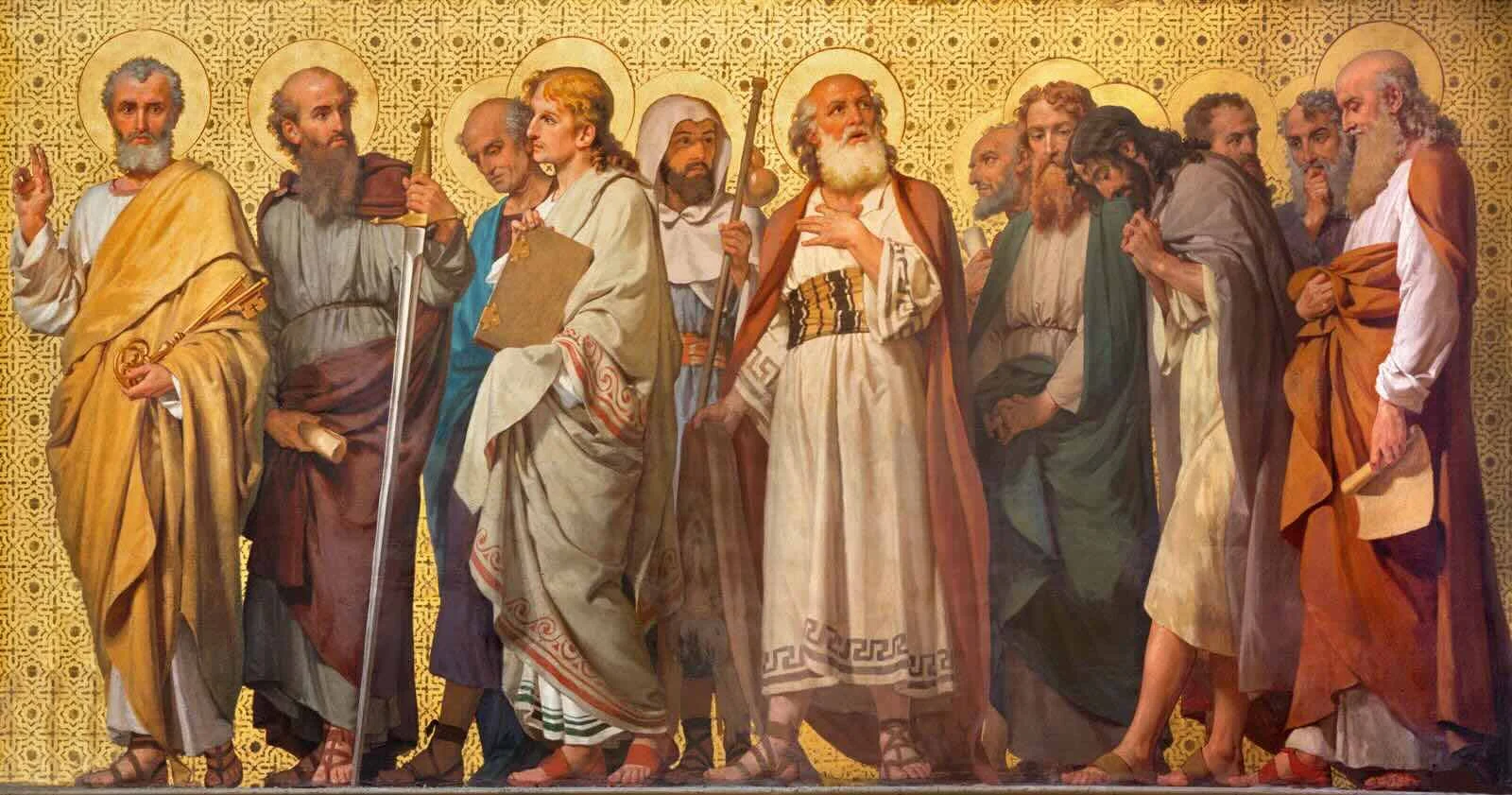
Translated from Philip Schaff's History of The Christian Church
第十章 教父与神学文献
目录
§ 161. 凯撒利亚的优西比乌
§ 162. 优西比乌之后的教会史家
§ 163. 圣亚他那修
§ 164. 大巴西尔
§ 165. 尼撒的贵格利
§ 166. 拿先斯的贵格利
§ 167. 亚历山大的狄迪穆斯
§ 168. 耶路撒冷的区利罗
§ 169. 伊皮法纽
§ 170. 金口约翰
§ 171. 亚历山大的区利罗
§ 172. 叙利亚的以法莲
§ 173. 拉克坦提乌斯
§ 174. 普瓦捷的希拉里
§ 175. 安布罗斯
§ 176. 作为神学家和学者的哲罗姆
§ 177. 哲罗姆的著作
§ 178. 奥古斯丁 (Augustine)
§ 179. 奥古斯丁的著作
§ 180. 奥古斯丁对后世的影响及其与天主教和新教的关系
参阅第一卷第116节有关教父的一般文献,以及以下各节所列的专题文献。
I.—希腊教父
§ 161. 凯撒利亚的优西比乌
I. 优西比乌·潘菲利 (Eusebius Pamphili):《希腊文与拉丁文全集》(Opera omnia Gr. et Lat.),由诸家,即 II. Valesii、Fr. Vigeri、B. Montfaucon 及枢机主教 Angelo Maii 编订;J. P. Migne 汇集并重新校订。巴黎 (Par.,Petit-Montrouge),1857年,6卷(米涅《希腊教父集》[Patrologia Graeca] 第xix–xxiv卷)。在他的各部著作中,《教会史》(Church History) 刊印最为频繁,有时单独出版,有时与他的《君士坦丁传》(Vita Constantini) 及其后继者的教会史合刊;最佳者为 Henr. Valesius(Du Valois)编订本,巴黎,1659–1673年,8卷;剑桥 (Cantabr.),1720年,3卷;以及1746年的再版本(附 G. Reading 增补,为最佳版本)。另有不收后世史家著作的版本:E. Zimmermann 编,法兰克福 (Francof.),1822年;F. A. Heinichen 编,莱比锡 (Lips.),1827–1828年,3卷;E. Burton 编,牛津 (Oxon.),1838年,2卷(1845年及1856年版合为1卷);Schwegler 编,图宾根 (Tüb.),1852年。又有多种译本:德译本有 Stroth 译,奎德林堡 (Quedlinburg),1776年及后,2卷;Closs 译,斯图加特 (Stuttg.),1839年;另有多次刊行的法译本和英译本。英译者有 Hanmer(1584年)、T. Shorting,以及译得更好的 Chr. Fr. Cruse(德裔美国圣公会信徒,1865年卒于纽约):《优西比乌·潘菲利教会史》等 (The Ecclesiastical History of Euseb. Pamph., etc.),纽约,1856年(第10版),及伦敦,1858年(收入博恩《教会文库》[Bohn’s Eccles. Library])。另参 Brunet 书中 Euseb. 条下的文献说明,以及 James Darling:《书目百科全书》(Cyclop. Bibliograph.),第1072页及后。
- 传记见哲罗姆 (Hieronymus)《名人传》(De viris illustr.),第81章(一篇简传,附著作目录);瓦莱修斯 (Valesius)《凯撒利亚的优西比乌生平与著作》(De vita scriptisque Eusebii Caesar.);W. 凯夫 (W. Cave)《最杰出教父传》(Lives of the most eminent Fathers of the Church),第ii卷,第95–144页,H. Cary 编,牛津,1840年;以及海尼兴 (Heinichen)、施特罗特 (Stroth)、克鲁斯 (Cruse) 等人在各自编译的优西比乌《教会史》版本中所作的传记。F. C. 鲍尔 (F. C. Baur):《教会史之父优西比乌与历史之父希罗多德的比较》(Comparatur Eusebius Hist. eccl. parens cum parente Hist. Herodoto),图宾根,1834年。黑内尔 (Haenell):《论基督教的护教者凯撒利亚的优西比乌》(De Euseb. Caes. religionis christ. defensore),哥廷根 (Gott.),1843年。萨姆·李 (Sam. Lee):其所编优西比乌《神显》(Theophany) 英译本中的导论,剑桥,1843年。泽米施 (Semisch):“凯撒利亚的优西比乌”条,载赫尔措格《百科全书》(Herzog’s Encycl.),第iv卷(1855年),第229–238页。莱曼·科尔曼 (Lyman Coleman):《作为史家的优西比乌》(Eusebius as an historian),载《圣经文库》(Bibliotheca Sacra),安多弗 (Andover),1858年,第78–96页。(继他担任凯撒利亚主教的阿卡修 [Acacius] 所写的传记,见苏格拉底 [Socr.] ii. 4,现已失传。)
这第三时期,教会伟大的教师异乎寻常地众多;他们将神学才干与实践的敬虔美好地结合起来,并在与强大谬误的争战中阐明了最重要的教义,因而赢得后世的感激。他们集衰落中的罗马帝国的一切学问与雄辩于一身,使之服务于基督教事业,造福后世。他们理当被称为教会的父辈;他们属于整个基督教世界,不分宗派;他们的著作与榜样至今仍发挥着强大的影响,尤其是希腊教父中的亚他那修 (Athanasius) 与金口约翰 (Chrysostom),以及拉丁教父中的奥古斯丁 (Augustine) 与哲罗姆 (Jerome)。不过,各教会对于圣经的至高地位与教会传统的价值所持看法不同,因而赋予他们的权威也有程度上的差别。
我们叙述尼西亚及后尼西亚时期最重要的神学家,先从凯撒利亚的优西比乌 (Eusebius of Caesarea) 开始;他是“教会史之父”,基督教的希罗多德 (Herodotus)。
他约于260年或270年出生,可能生于巴勒斯坦 (Palestine),先在安提阿 (Antioch) 受教育,后来又在巴勒斯坦的凯撒利亚求学,深受奥利金 (Origen) 著作的影响。他与博学的长老潘菲卢斯 (Pamphilus)1 结成挚友;潘菲卢斯搜集了相当丰富的圣经及教父文献,建立了一座藏书楼,并主持自己在凯撒利亚创办的一所兴盛的神学校,直到309年在戴克里先 (Diocletian) 的逼迫中殉道。2 优西比乌长期在这所学校任教;他的导师兼友人去世后,他前往推罗 (Tyre) 和埃及,亲眼目睹了最后一次大规模逼迫基督徒时的残酷景象。他曾因承认信仰而被囚禁,但不久便获释。
二十年后,优西比乌主持推罗会议(335年或336年),站在反对亚他那修的一边。据伊皮法纽 (Epiphanius) 记载,赫拉克利亚 (Hieraclea) 的主教波塔蒙 (Potamon) 当面向他高呼:“优西比乌啊,你怎能坐在这里审判无辜的亚他那修?谁能容忍这样的事?怎么!在暴君当政时,你不是曾与我一同坐牢吗?他们因我承认真理而剜去了我的眼睛;你却毫发无损地出来了;你并未因承认信仰而受过什么苦;如今你完好无伤地坐在这里。你是怎样逃出监狱的?难道不是因为你答应做一件不法的事〔向偶像献祭〕吗?或者,你莫非当真做了这事?”然而,这种影射他怯懦并背弃基督的指控,很可能出于一时激动中的嫉妒与党派激情。若有这样一个污点,古代教会恐怕不会将主教的牧杖交托给优西比乌。3
约在315年,或更早,优西比乌被选为凯撒利亚主教,4 并在那里劳苦服事,直到340年去世。331年,欧斯塔修 (Eustathius) 被废黜后,安提阿牧首之位曾授予他;但他出于可敬的自我克制,也因更喜爱安静的著述生活,而辞谢了这一职位。
他并非出于本意而被卷入阿里乌派 (Arian) 争论,并在尼西亚会议 (Council of Nicaea) 上发挥了显著作用;在会上,他坐在主持会议的皇帝右侧的尊位上。面对这场纷争中的种种困惑,他采取中间立场,力图调和对立双方。这一方面使他获得君士坦丁 (Constantine) 皇帝格外的眷顾,另一方面却使尼西亚正统派的领袖怀疑他暗中倾向阿里乌派异端.1895。可以确定的是:在尼西亚会议之前,他同情阿里乌 (Arius);在会议上,他提出了一份正统而措辞不明确的折衷信经;会议之后,他与亚他那修及其他正统信仰的捍卫者并不友好;在335年废黜亚他那修的推罗会议上,他起了主导作用,而且据伊皮法纽说,他还主持了会议。他的《教会史》记事下迄324年,很可能直到326年才完成,却对318年爆发的阿里乌派争论保持缄默,这与上述事实是一致的;其实,尼西亚会议本应成为该书最恰当的结尾。他宁愿以君士坦丁战胜李锡尼 (Licinius) 来结束他的历史,也不愿以那份引起神学派别争执、而他本人也牵涉其中的信经作为结束。但另一方面,事实也表明:他虽然勉强,却仍签署了尼西亚信经,只是保留了自己对“同质”(homoousion) 一词的解释;他曾公开向自己教区的信众推荐这份信经;而且从未正式拒绝它。
对于这种表面上的矛盾,唯一令人满意的解释,在于他本人的犹疑不决,以及倾向于教义上的宽泛主义;这种倾向,在熟悉不同时代、不同国家纷繁见解的史家中并不罕见。在“同质”(homoousion) 这一重要问题上,他始终没有形成坚定而最终的确信。他在较早的奥利金式从属论 (Origenistic subordinationism) 与尼西亚正统信仰之间摇摆。他与奥利金一样,清楚而有力地断言圣子的永恒性;就此而言,他坚决反对将基督视为时间中受造者的阿里乌主义 (Arianism)。但他对“同质”(homoousion) 一词却有所退缩,因为在他看来,这个词似乎超出了圣经;因此,无论在反驳马尔凯鲁 (Marcellus) 的书中,还是在反对撒伯流 (Sabellius) 的论述中,他都不使用这个词。宗教情感迫使他承认基督完全的神性;对撒伯流主义 (Sabellianism) 的畏惧却又牵制着他。他避开严格的正统表述,宁可采用早期较不明确的措辞。他天性中缺少神学上的敏锐。事实上,他不是一位好争辩的人,而是一位温和、爱和平的人。他站在前尼西亚神学与尼西亚神学的交界线上。他的教义交替显出两者的色彩,反映了教会在阿里乌派争论初期尚未解决的问题。6
与他神学上的犹疑不决相联系的,是他性格上的软弱。他是一位和蔼而柔顺的宫廷神学家,任凭第一位基督徒皇帝——他的庇护者与友人——的光辉蒙蔽自己,令自己心驰神往。君士坦丁常请他参与议事,邀他同席用餐,向他讲述自己所见十字架的异象,将著名的拉巴隆军旗 (labarum) 给他看,站着聆听他在特别场合的讲道,写给他数封书信,并委托他监督抄制供君士坦丁堡 (Constantinople) 各教会使用的圣经。
在这位皇帝即位三十周年的庆典上(336年),优西比乌发表了一篇颂词,用最铺张的夸饰加以点缀;皇帝死后,他又不折不扣地遵从“De mortuis nihil nisi bonum”(对死者只言其善)这句格言,不惜牺牲真实,刻意略去皇帝的过失,来颂扬他的美德。然而,尽管如此,他仍有高尚的心智与品性;若在较为平静的时代,足以为任何一个主教座增光。还应当为他的荣誉说一句:他从不利用皇帝的恩宠谋取私利。
优西比乌在神学和文学上的价值,在于他的学识。他是一位不知疲倦的读者与资料搜集者;就知识的广博,以及对异教和基督教希腊文献的熟悉而言,他很可能超过其他所有教父,甚至奥利金与哲罗姆也几乎不能例外;但在思想的独创性、力度、敏锐与丰富方面,他则远逊于奥利金、亚他那修、巴西尔 (Basil) 和两位贵格利 (Gregories)。他的学问广度远胜深度,且缺乏哲学头脑或批判判断力的统摄与系统整理。
在他的著作中,历史著作远为最负盛名,也最有价值,即《教会史》(Ecclesiastical History)、《编年史》(Chronicle)、《君士坦丁传》(Life of Constantine),以及论戴克里先逼迫中《巴勒斯坦殉道者》(Martyrs of Palestine) 的一篇专著。优西比乌身处逼迫时期的终结与帝国确立基督教地位时期的开端,又采用了许多古代文献,其中有些后来已经失传,这就使这些著作具有特殊价值。他为人温和,总体而言公正而热爱真实——在他所处的那个情绪激烈、论争热忱高涨的时代,这些都是罕见的美德。他是开垦这一重要神学研究领域的第一人,并且在此后许多世纪中始终成为这一领域的典范;因此,他理当享有“教会史之父”的尊称。然而,他既不是一位具有批判眼光的研究者,也不是一位文笔优雅的史家,而只是一位勤勉博学的搜集者。他的《教会史》从基督诞生写到324年君士坦丁战胜李锡尼,描绘了教会英勇的青年时期;这幅图景平淡、残缺、缺乏连贯而且零碎,却仍引人入胜。它的不可估量的价值,并不在于作者的史学技艺,而几乎全在于他从其他来源大量摘录的、且大多逐字照录的引文;其中一些来源如今已经不存。而就最初三个世纪而言,这部书也是独一无二的,因为优西比乌的后继者,都是从他停笔的地方开始写他们的历史。
他的《编年史》包括一部按时代与民族编排、下迄325年的世界史纲要(大部分取自尤利乌斯·阿非利加努斯 (Julius Africanus) 的《年代志》〔Chronography〕),以及以表格形式编成的这部世界编年史的摘要。希腊文原本已经失传,仅存辛凯卢斯 (Syncellus) 所保存的一些零散片段;但包含年代对照表的第二部分,经哲罗姆译出并续写至378年,此后数世纪一直是基督教世界获取各地历史年代对照知识的来源,也是历史著作的基础。7 哲罗姆还翻译了优西比乌一部颇有用处的考古著作,并作了若干订正与增补,即所谓《地名录》(Onomasticon),其中描述了圣经所提到的各处地方。8
在《君士坦丁传》(Life of Constantine) 中,尤其在《君士坦丁颂》(Eulogy of Constantine) 中,优西比乌因颂扬者的热忱,几乎完全忘记了历史家的尊严。尽管如此,这部著作仍是研究他那位皇帝友人统治时期历史的主要来源。9
重要性仅次于历史著作的,是他的护教著作,即《福音预备》(Praeparatio evangelica)10与《福音论证》(Demonstratio evangelica)。11 两书都写于324年以前,是古代教会护教资料的宝库。前者共十五卷,旨在运用希腊著述中的文献驳斥异教宗教;后者共二十卷,今仅存前十卷,从基督教的本质以及旧约预言的应验,正面论证基督教的绝对真实性。《神显论》(Theophany) 共五卷,是这两部著作的通俗节本,很可能写成较晚,正如伊皮法纽 (Epiphanius) 在《药箱》(Panarion) 之后,为使内容更广为流传而撰写《概要》(Anacephalaeosis) 一样。12 此书希腊文原本仅存片段,由红衣主教迈 (Mai) 刊布;13 如今又有完整的叙利亚文译本,是塔塔姆 (Tattam) 于1839年在尼特里亚 (Nitria) 的一座修道院中发现的,由塞缪尔·李 (Samuel Lee) 于1842年在伦敦编刊。14 他的护教短论《驳希罗克勒》(Against Hierocles) 也属于这一类。15
优西比乌的两部教义著作则远没有那么重要:《驳马尔凯鲁》(Against Marcellus) 和《论教会神学》(Upon the Church Theology)(同样针对马尔凯鲁),两书都维护圣子具有位格性的存在。16
他对圣经若干书卷(《以赛亚书》《诗篇》《路加福音》)所作的注释,沿用奥利金的寓意解经法,既无独立见解,也不具备希伯来文知识。17
最后还须加上几部圣经导论与考古学方面的著作,前已提到、属于圣地地理一类的《地名录》(Onomasticon),以及一部热情洋溢的《为奥利金辩护》(Apology for Origen) 的残篇。这是他早年的作品,由他与潘菲卢斯 (Pamphilus) 于309年以前合著;在奥利金主义争论中,此书成了伊皮法纽和哲罗姆最猛烈攻击的靶子。18
§ 162. 优西比乌之后的教会史家
I. 苏格拉底 (Socrates)、索佐门 (Sozomen)、狄奥多勒 (Theodoret)、埃瓦格里乌斯 (Evagrius)、菲洛斯托尔吉乌斯 (Philostorgius) 与诵经员狄奥多鲁 (Theodorus Lector) 的《教会史》,由瓦勒修斯 (Valesius) 连同优西比乌的《教会史》(Eccles. Hist.) 一并编刊,巴黎 (Par.),1659–1673年,3卷(美因河畔法兰克福〔Frankf. a. M.〕1672–1679年重印本有缺陷);最佳版本为剑桥1720年版及1746年再版,3卷,由 Guil. 雷丁 (Guil. Reading) 修订增补。最佳英译本由梅雷迪思 (Meredith)、汉默 (Hanmer) 与怀伊·索尔顿斯托尔 (Wye Saltonstall) 翻译,剑桥 (Cambr.),1688、1692年,以及伦敦,1709年。新版收入博恩《教会文库》(Bohn’s Ecclesiastical Library),伦敦 (Land.),1851年,4卷,小八开本。
- F. A. 霍尔茨豪森 (F. A. Holzhausen):《论苏格拉底、索佐门与狄奥多勒撰写教会史所用的史料》(De fontibus, quibus Socrates, Sozomenus, ac Theodoretus in scribenda historia sacra usi sunt),哥廷根 (Gött.),1825年。G. 丹格斯 (G. Dangers):《论诵经员狄奥多鲁与埃瓦格里乌斯著作的史料、性质与价值》(De fontibus, indole et dignitate librorum Theod. Lectoris et Evagrii),哥廷根,1841年。J. G. 道林 (J. G. Dowling):《教会史批判研究导论》(An Introduction to the Critical Study of Eccl. History),伦敦 (Lond.),1838年,第84页及后。F. Chr. 鲍尔 (F. Chr. Baur):《教会史学的各个时代》(Die Epochen der kirchlichen Geschichtschreibung),图宾根 (Tüb.),1852年,第7–32页。比较 P. 沙弗 (P. Schaff):《使徒教会史》(History of the Apostolic Church),总导论,第52页及下页。
优西比乌无意之中开创了一个教会史家学派;这些史家循着他的叙事线索,将历史从君士坦丁大帝续写到六世纪末。他们也像他一样,只限于简单而轻信地叙述外在事实,搜集有价值的文献,对于史料的批判性甄别、哲学上的驾驭和艺术性的再现,却毫无领会;而这些正是我们在古典作家修昔底德 (Thucydides) 与塔西佗,以及许多近代史家那里所能见到的。他们没有一人涉及最初三个世纪的历史;人们认为,优西比乌在这方面已经做到了尽善尽美。苏格拉底、索佐门与狄奥多勒的历史所涵盖的时期大致平行,但彼此并不知晓,也无依赖关系,而内容却十分相似。19 埃瓦格里乌斯则把叙述延续到六世纪末。他们都将教会史与政治史结合起来,因为君士坦丁以后,这两者在东方已经不可分割地交织在一起;而且,除菲洛斯托尔吉乌斯外,他们基本上都持同一种正统立场。他们忽略西方教会,只有在它与东方发生接触时才加以叙述。
优西比乌的这些继承者如下:
苏格拉底 (Socrates),君士坦丁堡的一位律师,即 scholasticus,生于380年。他的著作共七卷,叙述306年至439年的历史,其价值在于大量摘录史料,叙述冷静而公正。有人指责此书倾向诺瓦提安主义 (Novatianism)。总体而言,他对于历史家职责的认识,比他的同时代人和继承者更高;他评判异端者与分裂者时较为宽容,在赞颂皇帝与主教时也较少夸张。20
赫尔米亚斯·索佐门 (Hermias Sozomen) 是巴勒斯坦人,与苏格拉底同时而年辈稍晚,也在君士坦丁堡担任律师 (scholasticus)。他所写的《教会史》共九卷,叙述323年至423年霍诺里乌斯 (Honorius) 去世期间的历史;21 因此,他所论的题材大体上与苏格拉底同步,不过看来并不知道后者的著作。他又增入许多隐士与修士的历史,因为他对这些人怀有极大的偏爱。22
居罗斯 (Cyrus) 主教狄奥多勒 (Theodoret),约于390年生于安提阿 (Antioch),母亲尊贵而虔诚;他在圣欧普雷皮乌斯 (St. Euprepius) 修道院受教育(或许与聂斯托利〔Nestorius〕同学),并受大数的狄奥多鲁 (Diodorus of Tarsus) 和摩普绥提亚的狄奥多若 (Theodore of Mopsuestia) 著作的陶冶。420年以后,他出任叙利亚的居罗斯 (Cyros),又称居尔罗斯 (Cyrrhos) 的主教,卒于457年。我们从基督论争论中认识他,知道他是安提阿学派二性论 (dyophysitism),或温和聂斯托利主义,最有学识的辩护者;431年在以弗所被定罪,449年被强盗会议罢黜,451年第四次大公会议以他谴责聂斯托利及一切否认“上帝之母”(theotokos) 者为条件,宣告他无罪;但在他去世很久以后,第五次大公会议又将他的部分著述定罪。因此,他与优西比乌一样,既是教会历史的撰写者,也是参与者。作为主教,他的生活堪称典范,连他的敌人也如此评断;他对穷人尤其仁慈。除书籍之外,他没有什么贵重财物,又将主教区的收入用于公共福利。他也未能免于他那个时代的迷信与软弱。
他的《教会史》(Ecclesiastical History) 共五卷,约于450年写成,涵盖325年至429年。这是优西比乌历史最有价值的续篇;篇幅虽较短,却为苏格拉底与索佐门的著作提供了不可或缺的补充。
他的《修道史》(Historia religiosa) 由隐士与修士的传记组成,对禁欲生活的圣洁怀有极大热忱,并依照当时的趣味,附加了许多传说成分。他的《异端谬说》(Heretical Fables)23 虽然肤浅,且有许多错误损害了其价值,却对基督教教义史仍有一定的重要性。其中包含对聂斯托利的严厉谴责,这是我们几乎不会料到会出自狄奥多勒之手的。24
狄奥多勒是一位著述极丰的作家。除这些历史著作外,他还为旧约大多数书卷以及保罗全部书信撰写了有价值的注释;写过针对区利罗 (Cyril) 及亚历山大学派基督论、以及针对异端者的教义与论争著作;写过一部驳斥希腊哲学、为基督教辩护的著作;还有讲章与书信。25
埃瓦格里乌斯 (Evagrius,约536年生于叙利亚,卒于594年以后) 是安提阿的一位律师,曾为牧首贵格利 (Gregory) 效过大力,尤其在588年的一宗乱伦诉讼中。他结过两次婚,安提阿人在他第二次婚礼(592年)时还举办公开戏剧演出以示庆贺。他是严格意义上优西比乌与狄奥多勒最后的一位续史者。他的《教会史》共六卷,始于431年的以弗所会议,止于莫里斯 (Maurice) 皇帝在位第十二年,即594年。他对于聂斯托利派与欧提克派 (Eutychian) 争论的记述尤其重要;他叙述主教与修士、教堂与公共建筑、地震及其他灾难,又穿插政治史,如霍斯劳 (Chosroes) 的战争和蛮族的进攻。26 他严守正统,并且迷信地崇敬修士、圣徒与圣物。27
诵经员狄奥多鲁 (Theodorus Lector) 约于525年任君士坦丁堡教会诵经员。他从苏格拉底、索佐门和狄奥多勒的著作中编成一部摘要,题为《三部史》(Historia tripartita),现仍有抄本存世;28 他又将苏格拉底的历史从431年续写至518年,今仅有片段保存在大马士革的约翰 (John Damascenus)、尼鲁斯 (Nilus) 和尼基弗鲁斯·卡利斯提 (Nicephorus Callisti) 的著作中。29
阿里乌派教会史家菲洛斯托尔吉乌斯 (Philostorgius,生于368年) 的著作,除佛提乌 (Photius) 所保存的片段外,没有任何部分流传至今;而这些片段流露出如此强烈的党派精神,以致其余部分的散失并不值得惋惜。他所叙述的时期,从阿里乌派争论的开始,直到公元423年瓦伦提尼安三世 (Valentinian III) 的统治时期。
希腊教会史家的行列,结束于尼基弗鲁斯·卡利斯图斯 (Nicephorus Callistus),又称卡利斯提 (Callisti,即卡利斯图斯之子)。30 他生活于十五世纪的君士坦丁堡。他惊讶于历史的声音自六世纪以来一直沉寂,便从前人搁笔之处重新担起这项久被忽略的工作;不过,他采用了一个更宏大的计划,要撰写从开端直到911年的大公教会通史。然而,我们现存的只有十八卷,叙述至610年福卡斯 (Phocas) 皇帝去世,另有五卷的内容目录。他大量采用优西比乌及其继承者的著作,又加入关于使徒晚年不可靠的传说,以及基督一性论 (Monophysitism)、修士与圣徒、蛮族入侵等方面的历史。他也忽略了伯拉纠派 (Pelagian) 争论,对于五世纪以后的拉丁教会很少留意。31
在拉丁教会中——这里姑且预先说到这一点——优西比乌只有一位模仿者与续史者,即阿奎莱亚 (Aquileia) 的长老兼修士鲁菲努斯 (Rufinus,330–410年)。他起初是哲罗姆的朋友,后来却成了势不两立的敌人。他翻译了优西比乌的《教会史》,随意删节增补,并将其续写至狄奥多西大帝 (Theodosius the Great) 时期(392年)。但他的续篇价值不大。他还写过隐士传记、《使徒信经》释义,并翻译了奥利金的若干著作,对其中令人反感的部分作了修订。32
执政官兼修士卡西奥多鲁 (Cassiodorus,约卒于562年) 为中世纪拉丁教会,将苏格拉底、索佐门和狄奥多勒的著作编成一部颇有用处的摘要,共十二卷,题为《三部史》(Historia tripartita)。
拉丁神学家对于教会史真正称得上原创的贡献,只有哲罗姆(†419年)所著、兼具传记与文学性质的《名人录》(Catalogue of Illustrious Men,写于392年);高卢南部持半伯拉纠派立场的长老根纳迪乌斯 (Gennadius) 将此书续写至495年。苏尔皮基乌斯·塞韦鲁斯 (Sulpicius Severus,†420年) 以优美的文笔写了一部《神圣史》(Sacred History),又称《旧约与新约史》(History of the Old and New Testament),从创世叙述至400年;保卢斯·奥罗修斯 (Paulus Orosius,约415年) 则写了一部具有护教性质的《世界史》(Universal History),不过此书几乎不配称为历史。
§ 163. 圣亚他那修
I. 圣亚他那修 (S. Athanasius):《现存及以其名流传的全部著作等》(Opera omnia quae extant vel quae ejus nomine circumferuntur, etc.),希腊文及拉丁文,由圣本笃会圣摩尔修会的修士(雅克·洛潘 [Jac. Lopin] 与 B. 德·蒙福孔 [B. de, Montfaucon])编校。巴黎,1698年。3卷,对开本(确切地说是2卷,第一卷分为两部分)。这是最精美、最准确的版本,但须以 B. 德·蒙福孔所编的《新教父文集》(Collectio nova Patrum) 两卷补足;巴黎,1706年,2卷,对开本。1777年帕多瓦 (Patav.) 版更为完备,但不如前者美观,共4卷,对开本。(布吕内 [Brunet] 对后一版本说:“Édition moins belle et moins chère quo cello de Paris, mais augmentée d’un 4e vol., lequel renferme les opuscules de S. Athan., tirés de la Collectio nova du P. Montfaucon et des Anecdota de Wolf, et de plus l’interpretatio Psalmorum.” 意即:“此版不及巴黎版精美,价格也较低,但增添了第4卷,收入从蒙福孔神父的《新文集》和沃尔夫的《佚文集》中辑出的圣亚他那修小品,另有《诗篇释义》。”)然而,如今这两个旧版都还须以亚他那修的叙利亚文《节期书信》补足。这些书信由塔塔姆博士 (Dr. Tattam) 于1843年在尼特里亚 (Nitria) 的一所修道院中发现;W. 库尔顿 (W. Cureton) 于1846年和1848年在伦敦刊行叙利亚文本及英译本(另有 H. 伯吉斯 [H. Burgess] 与 H. 威廉斯 [H. Williams] 的英译本,牛津,1854年,收入《教父文库》[Libr. of the Fathers]);F. 拉尔森 (F. Larson) 的附注德译本于1852年在莱比锡出版;枢机主教 安杰洛·迈 (Angelo Mai) 的叙利亚文及拉丁文本则收入《教父新文库》(Nova Patr. Bibliotheca),罗马,1853年,第vi卷,第1–168页。亚他那修《全集》(Opera omnia Athan.) 的一个新版(本笃会版的重印本),虽较不准确,却更易销售,于1857年在小蒙鲁日 (Petit-Montrouge,巴黎) 出版,收入 J. P. 米涅 (J. P. Migne) 的《希腊教父集》(Patrologia Gr.,第xxv–xxviii卷),共4卷。
亚他那修较重要的教义著作另由 J. C. 蒂洛 (J. C. Thilo) 编刊,收入《希腊教父教义文库》(Bibliotheca Patrum Graec. dogmatica) 第一卷,莱比锡,1853年;另有 J. H. 纽曼 (J. H. Newman) 的英译本,附有解释及索引,牛津,1842–1844年(《教父文库》[Library of the Fathers],第8、13、19卷)。
- 拿先斯的贵格利 (Gregorius Naz.):《颂大亚他那修》(Oratio panegyrica in Magnum Athanasium,演说第xxi篇)。本笃会版亚他那修《全集》第一卷中收有数篇《亚他那修传》(Vitae Athan.)。《圣徒行传》(Acta Sanctorum),5月2日条。G. 埃尔芒 (G. Hermant):《亚他那修传》等 (La Vie d’Athanase, etc.),巴黎,1679年,2卷。蒂耶蒙 (Tillemont):《回忆录》(Mémoires),第viii卷,第2–258页(第2版,巴黎,1713年)。W. 凯夫 (W. Cave):《最初四世纪最杰出教父传》(Lives of the most eminent Fathers of the first Four Centuries),第ii卷,第145–364页(1840年牛津版)。施勒克 (Schröckh):第xii部,第101–270页。J. A. 默勒 (J. A. Möhler):《大亚他那修及其时代的教会,特别是与阿里乌主义的斗争》(Athanasius der Grosse und die Kirche seiner Zeit, besonders im Kampfe mit dem Arianismus),美因茨,1827年;第2版(更换扉页),1844年。海因里希·福伊格特 (Heinrich Voigt):《亚历山大的圣亚他那修之教义,或以圣经的逻各斯教义为基础的四世纪教会教义学》(Die Lehre des heiligen Athanasius von Alexandria oder die kirchliche Dogmatik des 4ten Jahrhunderts auf Grund der biblischen Lehre vom Logos),不来梅,1861年。A. P. 斯坦利 (A. P. Stanley):《东方教会史讲演》(Lectures on the History of the Eastern Church),纽约,1862年,第vii讲(第322–358页)。
亚他那修 (Athanasius) 是尼西亚时期所环绕的神学与教会中心,正如与他同时而年长于他的君士坦丁 (Constantine) 是其政治与世俗中心一样。两人都享有“伟大者”的称号;前者更当之无愧,因为他的伟大在于才智与道德,并在苦难中,在多年对抗强大谬误与帝国宫廷的争战中得到了证明。Athanasius contra mundum, et mundus contra Athanasium(亚他那修对抗世界,世界对抗亚他那修),这句名言鲜明地表达了他无所畏惧的独立精神,以及对自己信念坚定不移的忠诚。他的存在,似乎对大公教会关于权威的准则——Quod sem per, quod ubique, quod ab omnibus creditum est(凡在一切时候、一切地方、为所有人所信的)——构成了无可辩驳的反证,并表明真理绝不总在多数人一边,反倒往往极不受欢迎。孤身奋战的亚他那修,即使身处流放之中,受到会议与皇帝的禁令制裁,仍是真理的承载者;正如后人所称,他是“正统之父”。33
313年的一个殉道者纪念日,亚历山大 (Alexandria) 的主教亚历山大 (Alexander) 看见一群男孩天真地嬉戏,模仿教会礼仪;亚他那修扮演主教,以浸水的方式施洗。34 他由此瞥见这少年将来的伟大,便将他收在自己照管之下,委任他为秘书,后来又立他为会吏长。亚他那修研读古典著作、圣经与教父作品,同时过着禁欲生活。那时他已不时前往圣安东尼 (St. Anthony) 的隐居处探访他。
325年,他随自己的主教出席尼西亚会议 (Council of Nicaea),立即以驳斥阿里乌主义 (Arianism)、维护基督永恒神性所表现的热忱与才干而脱颖而出,也因此招致这一异端派别的仇恨;这个派别在他一生中掀起了许多风暴。
328年,35 在临终的亚历山大推荐之下,又得到民众的拥戴,他被提名继任亚历山大主教;当时他尚未达到教规所定的年龄,起初还想逃走,以避开这次选举。就这样,他被擢升到东方最高的教会尊位。因为亚历山大主教同时也是埃及 (Egypt)、利比亚 (Libya) 和五城地区 (Pentapolis) 的都主教。
然而,与阿里乌派之间一连串漫长的争斗也随即开始;该派已在君士坦丁的宫廷中取得影响,并劝动皇帝召回流放中的阿里乌 (Arius) 及其追随者。从此,亚他那修的个人遭际与阿里乌派争论的历史交织在一起,密不可分,以至于“尼西亚派”与“亚他那修派”成了同义词;而亚他那修每一次被罢黜与复职,都标志着尼西亚正统信仰的一次受挫或胜利。他的敌人凭借诡计与权势,以种种个人和政治上的罪行为借口,实际上却是因为他坚决反对阿里乌派与半阿里乌派异端,先后五次成功地将他罢黜并流放。他第一次流放是在特里尔 (Treves) 度过的,第二次主要在罗马,第三次则与埃及旷野中的修士同住;他利用这些流放岁月著书,为自己正义的事业辩护。后来,阿里乌派先因内部纷争,继又因其主要支柱君士坦提乌皇帝 (Constantius) 于361年去世,而陷入混乱。异教徒尤利安 (Julian) 召回了双方被流放的主教,指望他们彼此毁灭。于是,亚他那修也在其中,重新获得了主教职位;他与这位仇恨基督徒的皇帝,正是最截然相反的两个人。然而,他凭借精干而明智的治理,反而恢复了教区的和睦,并严重打击了异教——他对异教的畏惧远不及对阿里乌主义的畏惧——从而挫败了尤利安的诡计。皇帝于是诉诸暴力,把他当作扰乱和平的危险人物加以放逐。亚他那修第四次离开亚历山大,却以预言般的话安慰哭泣的朋友们:“放心吧;这不过是一片云,很快就会过去。”他凭借临危不乱的镇定,在尼罗河上逃脱了一艘帝国船只的追捕;那船上载有两名受雇的刺客。尤利安于362年死后,约维安 (Jovian) 又将他召回。但下一位皇帝瓦伦斯 (Valens) 是阿里乌派,于367年颁布敕令,将一切在君士坦提乌治下被罢黜、又由尤利安恢复职位的主教再度放逐。年迈的亚他那修不得不第五次离开他心爱的羊群,在父亲的墓中藏匿了四个多月。后来,瓦伦斯见亚历山大人热烈拥护他们的正统主教,预感事态不妙,便撤销了敕令。
从此,亚他那修得享安宁,虽已高龄,仍以青年的活力著书,反对亚波里拿留主义 (Apollinarianism)。373年,36 他在担任主教近四十六年之后去世,此时阿里乌派之争尚未结束。他的见证已确保正统信仰最终必获胜利,但他却像摩西一样,在到达目标之前,就蒙召离开了尘世。
亚他那修像许多伟人一样(从大卫、保罗,直到拿破仑 [Napoleon] 和施莱尔马赫 [Schleiermacher]),身材十分矮小,37 略微佝偻,因禁食和诸多患难而消瘦,但容貌俊美,目光锐利,仪表具有一种强大的感召力,连敌人也不能不受其影响。38 他无处不在的活动、迅速而神秘的行踪、无畏的勇气,以及对未来先知般的洞察,被他的朋友归于神的帮助,被他的敌人归于与邪恶势力的勾结。因此,便有人相信他会魔法。39 在他风波迭起的一生中,无论遭逢何种变迁,亚历山大的会众,以及埃及的民众和修士,都始终以同样的忠诚和敬意依恋着他。拿先斯的贵格利 (Gregory Nazianzen) 在其热情洋溢的颂词开篇说:“我赞美亚他那修,就是赞美美德本身,因为他集一切美德于一身。”小君士坦丁 (Constantine the Younger) 称他为“属神的人”;狄奥多勒 (Theodoret) 称他为“伟大的启蒙者”;大马士革的约翰 (John of Damascus) 则称他为“上帝教会的房角石”。
诚然,这一切都十分夸张,沿袭了衰颓的希腊修辞风尚。亚他那修并非没有他那个时代的缺点。但总的说来,他是教会史上最纯洁、最令人敬仰、最值得尊崇的人物之一;而这一判断,如今几乎会得到普遍的赞同。40
他是一位具有宏伟古风的神学家与教会人物(这样的人实属罕见)。他性格浑然一体,专注于一个观念,在这方面确有偏于一面的地方;然而,这是就最好的意义而言,正如大多数伟人也是如此:一个强大而包罗广泛的思想推动着他们,他们使其他一切都从属于它。保罗如此为钉十字架的基督而生活、劳苦;格列高利七世 (Gregory VII) 为罗马教阶制度,路德 (Luther) 为因信称义的教义,加尔文 (Calvin) 为上帝主权恩典的观念,也都如此。维护基督的神性,是亚他那修的热忱所在,也是他毕生的事业;他正确地视之为基督教信仰大厦的房角石,没有这一点,他就无法设想有任何救赎。为这一真理,他耗尽了全部光阴与精力;为这一真理,他遭受罢黜,度过二十年流放岁月;为这一真理,他随时都甘愿流血。由于他维护这一真理,他深受憎恨,也深受爱戴,并始终为人所尊敬或畏惧。他坚定不移地确信,正义与上帝的保护都在自己这一边,因此始终不屑于借助世俗权力来达到教会的目的,也不肯像他的敌手常做的那样,自贬为帝国的宫廷侍臣。
他对阿里乌派毫不妥协,因为他相信他们危及基督教本身的实质;他也毫不避讳地使用最招致憎恨、最轻蔑的措辞。他称他们为多神论者、无神论者、犹太人、法利赛人、撒都该人、希律党人、奸细、比异教徒更恶劣的逼迫者、说谎者、狗、狼、敌基督和魔鬼。但他只使用属灵的武器,从不像一个世纪后继承其职位的区利罗 (Cyril) 那样,采取或提倡暴力措施。他遭受逼迫,却不施行逼迫;他遵循的准则是:正统信仰应当劝人相信,而不应强迫人相信。
对于善人的非根本性错误,例如安居拉的马尔凯鲁斯 (Marcellus of Ancyra) 的错误,他则宽厚相待。他谈起奥利金 (Origen),总是表示敬重,并感激他的贡献;而伊皮法纽 (Epiphanius),甚至哲罗姆 (Jerome),却以玷污他的声名、焚烧他的遗骨为乐。有人怀疑巴西尔 (Basil) 的正统信仰——顺带一提,他从未与巴西尔亲自相识——他却不予理会,反而认定巴西尔的宽容是对软弱者合宜的迁就。当他发觉不得不撰文反驳自己所敬爱的亚波里拿留 (Apollinaris) 时,他只限于驳斥其错误,并不提及他的姓名。他所关心的,与其说是措辞和信仰公式,不如说是神学思想;即使对于作为辨别信仰口令的“同质”一词(homoousios),只要不牺牲基督本质上、永恒的神性这一伟大真理,他也不肯固执地坚持。在他最后一次公开露面,即于362年主持亚历山大会会议时,他充当了争论各派之间的调解者与和解者;这些派别虽然在 ousia(本质)与 hypostasis(位格)两词的用法上纷争不休,信仰的根基却是一致的。
在所有东方教父中,没有一位像亚他那修 (Athanasius) 那样在西方教会享有如此崇高的敬望。他曾亲自在罗马和特里尔 (Treves) 居留,又通晓拉丁语,这些都有助于他获得这一地位。他将修道制度移植到了西方。但最使他在西方享有盛名的,还是他对基督教根本教义的捍卫。年代晚得多、很可能起源于法国的《凡欲得救者信经》(Symbolum Quicunque),托在他的名下,已为拉丁教会普遍接受,直到今日仍在实际使用。他的名字与圣三一教义的争战及其胜利不可分割。
作为一位作者,亚他那修以神学上的深邃与明辨、辩证的技巧,以及有时雷霆万钧般的雄辩著称。他处处显出胜过对手的智力优势,确实无愧于“异端之锤”之名(malleus haereticorum)。他追击他们,深入一切藏身之处,驳倒他们所有的论证与诡辩,却从不忘记争论的要点,总是一再以新的力量回到这一要点。他的思想有着严密的逻辑联系;但他动荡的命运使他未能写成一部大型的系统著作。他的著述几乎都是因事而作,为环境所迫而写;其中不少是在流放期间仓促写成的。
这些著作可分为以下几类:
为基督教辩护的护教著作。其中包括他青年时期两部才思卓越、热情洋溢而彼此相关的作品(写于325年以前):《驳希腊人》("A Discourse against the Greeks") 与《论神圣之道的道成肉身》("On the Incarnation of the Divine Word");41 他当时已经将道成肉身视为基督教的中心思想。
维护尼西亚信仰的教义与论战著作;这些著作对于阿里乌派争论的历史也十分重要。其中下列著作是针对阿里乌主义而写的:《致全体主教通函》(An Encyclical Letter to all Bishops,写于341年);《论尼西亚会议的决议》(On the Decrees of the Council of Nicaea,352年);《论亚历山大的狄奥尼修的见解》(On the Opinion of Dionysius of Alexandria,352年);《致埃及与利比亚主教书》(An Epistle to the Bishops of Egypt and Libya,356年);《驳阿里乌派演说四篇》(Orations against the Arians,358年);《致塞拉皮翁论阿里乌之死书》(A Letter to Serapion on the Death of Arius,358或359年);《致修士们的阿里乌派史》(A History of the Arians to the Monks,358至360年间)。此外还应加上《致塞拉皮翁论圣灵神性书四封》(Epistles to Serapion on the Deity of the Holy Spirit,358年),以及为基督完整人性辩护的《驳亚波里拿留》(Against Apollinaris) 两卷(379年)。
为他本人辩护的著作:《反阿里乌派申辩书》(An Apology against the Arians,350年);《致君士坦提乌斯申辩书》(An Apology to Constantius,356年);《为逃亡申辩》(De fuga,357或358年);以及若干书信。
释经著作;尤其是《诗篇注释》(Commentary on the Psalms),他依循亚历山大学派过度寓意解经的方法,在其中处处找到基督与教会的预表和预言;还有一部《圣经纲要》,或称《圣经概要》。但这些不甚重要的著作是否确实出自他手,许多人有所怀疑。42
禁欲与实践方面的著作。其中最主要的是《圣安东尼传》("Life of St. Anthony"),约写于365年,无论如何是在安东尼去世以后;43 以及直到最近才为人所知的《节期书信》("Festal Letters")。44 《节期书信》使我们得以略见他身为主教在牧养上的忠诚,也为了解他的许多教义以及他那个时代教会的状况提供了新的亮光。在这些书信中,亚他那修依照亚历山大的惯例,每年在显现节向埃及的教牧与会众宣告下一次复活节的日期,并附上对于经文的造就性默想,以及切合时宜的劝勉。这些书信在复活节期间,尤其在棕枝主日,在各教会中宣读。亚他那修担任主教四十五年,若非数次因逃亡或患病而受阻,本应写下同样数目的节期书信。这些书信原用希腊文写成,但很快便译成叙利亚文,在尼特里亚 (Nitria) 一所修道院的尘埃中埋藏了数百年,直到新教学术的研究使它们重见天日。
§ 164. 大巴西尔
I. 卡帕多西亚凯撒利亚大主教圣巴西尔 (S. Basilius Caes. Cappad. archiepisc.):《现存及托名著作全集》(Opera omnia quae exstant vel quae ejus nomine circumferuntur),希腊文、拉丁文对照,由本笃会司铎兼修士 Jul. 加尼耶 (Jul. Garnier) 编辑。巴黎,1721—1730年,3卷,对开本。同书巴黎第二版,由 Lud. 德·辛纳 (Lud. de Sinner) 修订增补(Eadem ed. Parisina altera, emendata et aucta),巴黎 (Par.),Gaume Fratres,1839年,8册,分6部分(版本精美,使用方便)。米涅 (Migne) 亦予重印,巴黎,1857年,4卷(《希腊教父集》Patrol. Gr.,第xxix、xxxii卷)。圣巴西尔著作的第一版由伊拉斯谟 (Erasmus) 督编,弗罗本 (Froben) 于1532年在巴塞尔 (Basle) 出版。另参蒂洛 (Thilo)《希腊教父教义文库》(Bibl. Patr. Gr. dogm.) 第ii卷中的《巴西尔教义著作选》(Opera Bas. dogmatica selecta),莱比锡 (Lips.),1854年(由 J. D. H. 戈尔德霍恩 [J. D. H. Goldhorn] 负责,内收《驳欧诺米》三卷,Libri iii. adversus Eunomium,以及《论圣灵》一卷,Liber i. de Spiritu Sancto)。
- 古代关于巴西尔的记述与描绘,见拿先斯的贵格利 (Gregory Naz.) 的葬礼演说及颂词(《演说》第xliii篇,Oratio xliii.),以及尼撒的贵格利 (Gregory Nyss.)、安菲罗基乌斯 (Amphilochius)、叙利亚的以法莲 (Ephraem Syrus) 的葬礼演说及颂词。加尼耶 (Garnier):《圣巴西尔传》(Vita S. Basilii),载其所编《全集》(Opera),第iii卷,第xxxviii—ccliv页(1839年巴黎新版;或米涅重印本第i卷)。另参《圣徒行传》(Acta Sanctorum) 1月14日条下的传记(Vitae),以及埃尔芒 (Hermant)、蒂耶蒙 (Tillemont,第ix卷)、法布里修斯 (Fabricius,Bibl. 第ix卷)、凯夫 (Cave)、普法伊费尔 (Pfeiffer)、施勒克 (Schröckh,第xiii部,第8—220页)、伯林格 (Böhringer)、W. 克洛泽 (W. Klose,《大巴西尔》,Basilius der Grosse,施特拉尔松德 [Stralsund],1835年),及菲亚隆 (Fialon,《圣巴西尔的历史与文学研究》,Etude historique et littéraire sur S. Basile,巴黎,1866年) 的著作。
亚洲的卡帕多西亚 (Cappadocia) 行省在第四世纪产生了三位杰出的教会教师:巴西尔与两位贵格利。他们与同胞的一般性格形成了强烈的对照;因为卡帕多西亚人被描述为一个怯懦、奴颜婢膝而诡诈的民族。45
巴西尔约于329年46 生在卡帕多西亚首府凯撒利亚 (Caesarea) 一个富裕而虔诚的家庭,家族先人曾以殉道者的身份著称。他的祖母圣马克里娜 (St. Macrina) 与母亲圣埃梅利娅 (St. Emmelia),在他心中播下了敬虔的种子。他有四个兄弟、五个姐妹,都过着敬虔的生活;他的两个兄弟——尼撒主教贵格利 (Gregory, bishop of Nyssa) 和塞巴斯特主教彼得 (Peter, bishop of Sebaste)——以及他的妹妹小马克里娜 (Macrina the Younger),都像他本人一样,列于东方教会的圣徒之中。他最初从身为修辞学家的父亲接受文学教育;后来于347年在君士坦丁堡 (Constantinople) 求学,受教于著名的利巴尼乌斯 (Libanius),并得到他的个人敬重;又于351至355年间在雅典 (Athens) 度过数年,47 与挚友拿先斯的贵格利一同研习修辞学、数学和哲学;同一时期在此学习的,还有后来背教的朱利安皇子 (Julian the Apostate)。
雅典凭着古老的声誉与历史传统,也凭着卓越的哲学和雄辩术教师,仍在吸引着大批来自希腊各地、甚至亚洲偏远行省的学生。这些教师被尊称为智者 (Sophists),当时其中尤为卓著的是希梅里乌斯 (Himerius) 和普罗埃雷修斯 (Proaeresius)。每位智者都有自己的学派和追随者,他们以难以置信的热忱依附着他,并竭力将每一位新来的学生争取到自己老师的门下。在这些争取活动中,以及各学派之间频繁的文学竞赛与辩论中,常常出现十分粗野而狂放的行为。对于尚未在基督教中扎稳根基的青年来说,居留雅典、研习古典著作,充满了诱惑,很容易激起对异教的热情;然而,异教此时已经失去了生命力,只靠魔法、通神术 (theurgy) 和晦涩神秘主义这些人为的手段支撑着。48
巴西尔和贵格利始终坚定不移,诗歌或修辞的任何华彩,都不能冲淡敬虔教养留在他们心中的印记。贵格利在第四十三篇《演说》中谈及他们在雅典的求学生活,说:49“城中的街道,我们只知道两条:第一条,也是更美好的一条,通向教会和祭坛的服事者;另一条通向公立学校和各门学问的教师,不过我们并不把它看得同样重要。至于通往剧场、竞技场和不圣洁娱乐场所的街道,我们留给了别人。我们的圣洁是我们最关切的事;我们唯一的目标,就是被称为基督徒,并且真正作基督徒。我们把全部荣耀都寄托于此。”50 巴西尔在后来一篇论古典研究的演说中,鼓励这类研究,却告诫人应当谨慎从事,始终顾念基督徒永生这一伟大目标;与永生相比,世上的一切事物与成就,都如影子、梦境之于实在。采摘玫瑰时,应当防备荆棘;也当像蜜蜂一样,不仅以花的颜色和芬芳为乐,还要从花中采得有用的蜜。51
巴西尔与贵格利的亲密友谊,从朝气蓬勃、热情洋溢的青年时代一直延续至死,以相同的属灵与道德目标为基础,又为基督徒的敬虔所圣化,是教父史中可爱而动人的一章,值得我们在尚未有任何教会史家涉足的领域,略作一段插叙。
尽管那个时代禁欲主义的狭隘性甚至束缚了这些开明的教父,他们的心灵仍能领受科学、艺术和自然之美。巴西尔与两位贵格利的著作中,有一些对自然的描绘,是我们在异教古典著作中遍寻不得的。古希腊罗马诗人与哲学家对于自然景色的描写,很容易就能压缩在寥寥数页之内。从柏拉图 (Plato) 的记述中,我们得知苏格拉底 (Socrates) 认为,我们从树木和田野学不到什么,因此他从不散步;他如此专心于自我认识,以之为一切学问的真正目标,因而认定整个自然研究都是无用的,因为这并不能使人更明智或更有德行。唯有启示的宗教,才能唤醒人对自然之美更深的感受;它教导我们,处处在受造界中看见上帝能力、智慧和良善的踪迹。《路得记》《约伯记》、许多诗篇,尤其是第一百零四篇,以及各篇比喻,在希腊或罗马文学中都无可比拟。著名博物学家亚历山大·冯·洪堡 (Alexander von Humboldt) 为了自己的研究,从教父著作中搜集了一些最优美的自然描写。52 这些描写是饶有意味的明证,表明基督教的精神具有使事物焕然改观的力量,甚至连我们对自然的看法也不例外。
这些描写中流露着一缕甜美的忧伤,这是古典时代全然陌生的情调。在巴西尔的弟弟、尼撒的贵格利 (Gregory of Nyssa) 笔下,这一点尤其明显。例如,他说:“当我看见每一道岩岭、每一处山谷、每一片平原,都披上新生的青草;再看见树木缤纷的美色,以及脚边的百合花,大自然以甜美的香气和绚丽的色彩,赐予它们双重的丰盛;当我遥望远方的大海,变幻的云彩将视线引向那里——我的灵魂便被一种并非没有喜悦的忧伤所攫住。到了秋天,果实消失,树叶飘落,枝条失去美丽的衣裳,变得僵硬——我们随着这永恒而有规律的变迁,沉入创造奇迹的大自然的和谐之中。凡以灵魂深思的眼光透视这一切的人,都在宇宙的伟大中感到人的渺小。”53 然而,我们也能找到明媚的画面,例如拿先斯的贵格利 (Gregory Nazianzen) 在一篇纪念殉道者玛马斯 (Mamas) 的演说中,对春天所作的优美描绘。54
这些自然描写的第二个特点,也是对教会史家而言最重要的特点,是把地上的美归于永恒而属天的本原,并在受造之工中荣耀上帝;这种精神从《诗篇》和《约伯记》移植到了基督教会之中。巴西尔在论创造历史的讲道中,描写小亚细亚晴朗夜晚的温柔;在那里,繁星这“天上永恒的花朵,将人的心灵从可见之物提升到不可见之物”。在上述演说中,拿先斯的贵格利以最可爱、最生动的色彩描绘春天之后,继续说道:“万物都赞美上帝,以不可言喻的声音荣耀他;我也当为万物向上帝献上感谢,使这些受造物的歌声——我在这里替它们发出的赞美之歌——也成为我们的歌声……诚然,如今〔指复活节〕正是世界的春天、心灵的春天、灵魂的春天、身体的春天,是可见的春天,也是不可见的春天;我们若在此得着真正的改变,以新人的身份进入新的生命,将来也必在那里有分于这春天。”于是,大地成为天堂的前庭,身体之美也被分别为圣,成为心灵之美的形象。
希腊教父将自然之美置于艺术作品之上;由于异教对艺术的滥用,他们对艺术怀有某种成见。“你若看见一座华丽的建筑,柱廊的景象令你心醉神迷,就赶快仰望穹苍,观看海滨羊群吃草的旷野。当一个人在内心的寂静中,于清晨惊叹旭日将金色(番红花般的黄色)的光辉洒遍天际,谁不轻看一切艺术的创造呢?当他在深草中的泉旁,或浓密树木的幽暗荫下歇息,饱览朦胧而渐渐隐没的远景时,谁又不如此呢?”金口约翰 (Chrysostom) 在安提阿 (Antioch) 附近修道隐居时,便这样赞叹;洪堡 (Humboldt)55 又添上一句精辟的评语:“仿佛雄辩在叙利亚和小亚细亚当时林木茂密的山区,在大自然的泉源旁,重新找到了自己的天地和自由。”
在基督教初次传入凯尔特 (Celtic) 和日耳曼 (Germanic) 各部族的粗野时代,这些部族曾以粗陋的象征崇拜大自然中阴森可怖的力量,于是出现了一种反对亲近自然的态度,正如我们在德尔图良 (Tertullian) 那里所见的对异教艺术的反对。十二、十三世纪在图尔 (Tours,1163年) 和巴黎 (Paris,1209年) 举行的教会会议,禁止修士阅读论述自然的书籍,视之为有罪;直到著名的经院学者大阿尔伯特 (Albert the Great,† 1280) 和才华卓越的罗杰·培根 (Roger Bacon,† 1294) 探索自然的奥秘,自然研究才重新受到重视和尊崇。
我们现在回到巴西尔的生平。他在雅典完成学业之后,回到故乡凯撒利亚,以修辞教师的身份从事活动。但不久之后(公元360年),他便前往叙利亚、巴勒斯坦和埃及旅行,以了解修道生活;他对这种生活也日益热衷。他把财产分给穷人,退隐到本都 (Pontus) 一处幽僻而富有诗意的地方,邻近他母亲艾梅利娅 (Emmelia)、妹妹玛克丽娜 (Macrina),以及其他虔诚而有教养的童贞女所居住的修道院。他写信给朋友贵格利说:“上帝向我指示了一个完全适合我生活方式的地方;这实在就是我们在愉快的谈笑中常常向往的所在。昔日想象在远方向我们展示的,如今我已亲眼看见。一座高山覆盖着茂密的森林,清新而终年不断的溪流灌溉着它的北坡。山脚下铺展着宽广的平原,滋润它的水气使土地肥沃。四周的森林中,各种树木密集生长,如坚固的城堡一般将我与外界隔开。这片荒野以两道深谷为界。一边,溪水从山上奔腾而下,白沫翻滚,形成一道难以跨越的屏障;另一边,宽阔的山脊阻挡着来路。我的小屋位于山顶,既可俯瞰宽广的平原,也可纵览伊里斯河 (Iris) 的整个流程;它比安菲波利斯 (Amphipolis) 附近的斯特律蒙河 (Strymon) 更美,水量也更充沛。我这荒野中的河流,比我所知道的任何河流都湍急,冲击着突出的岩壁,翻腾着白沫滚入深渊:对山间的旅人而言,这是迷人而奇妙的景观;对当地居民而言,它又因渔产丰富而带来益处。我要向你描述从(湿润的)土地上升起的、使土壤肥沃的水气,以及从(流动的)明镜般的水面升起的清凉空气吗?我要述说鸟儿悦耳的歌唱和盛开的草木有多么丰茂吗?最令我喜悦的,是此地寂静的安宁。这里只有猎人偶尔到访;因为我的荒野养育着鹿和成群的野山羊,而不是你们那里的熊和狼。我岂肯与别人交换这样的居所呢?阿尔克迈翁 (Alcmaeon) 找到厄基纳得斯群岛 (Echinades) 之后,就不愿再四处漂泊了。”56
这幅富有诗意的图景表明,对于有教养的心灵,修道生活也有其理想与诗意的一面。在这个地方,巴西尔摆脱了世俗生活的一切忧虑、纷扰和打断,认为自己能够最妥善地服事上帝。“还有什么比在地上效法天使的诗班更加有福呢?黎明起来祷告,用颂歌和诗歌赞美造物主;然后在明亮的阳光下出外劳作,处处以祷告相随,用赞美调和工作,如同用盐调味。寂静的独处是灵魂洁净的开端。因为心灵若不受外界的搅扰,也不借着感官迷失于世界,就会退回自身之内,上升到对上帝的默想。”他在圣经中,“如同在一个备有一切药物的宝库里,找到了医治自己疾病的真正良药”。
然而,他也不得不发现,逃离城市并不就是逃离自己。他在第二封书信中说:57“我固然已离弃城中的住处,因为那里是千般祸患的根源,但我却未能离弃自己。我就像一个不惯航海而晕船的人,因为大船摇晃得厉害,便从大船换到小艇,然而即使在那里,头晕和恶心仍旧不去。我也是这样;因为我无论到哪里,都带着住在我里面的种种情欲,所以处处受到同样不安的折磨,以致这隐居之地实在没有给我多大帮助。”不过,在这封信的后文及其他地方,他仍竭力说明,要驯服狂放的情欲,达到灵魂真正的安宁,就必须远离世务、持守独身、独处,恒常研读圣经和敬虔之人的生平,祷告、默想,并在外在生活上实行相应的严格禁欲。
他成功地将朋友贵格利吸引到自己身边。他们一同祷告、研习和从事体力劳动;摘录奥利金 (Origen) 的著作,这部由两位朋友合编的文集,以《爱美集》(Philocalia) 之名流传至今;他们还撰写修道规章,大大促进了团体修道生活的传播与规范。
364年,巴西尔违背自己的意愿被立为长老;370年,在贵格利及其父亲的协助下,他当选为凯撒利亚主教和全卡帕多西亚 (Cappadocia) 的都主教。在这个职位上,他辖有五十位乡区主教,从此致力于治理教会,并与阿里乌派 (Arianism) 争战;阿里乌派此时借着皇帝瓦伦斯 (Valens),在东方重新掌权。他力图确保大公信仰取得胜利,首先与正统的西方保持密切联系,其次在尚未由信经确定的圣灵教义上采取某种宽容态度,认为只要不把圣灵视为受造物,便已足够。但严格的正统派,尤其是修士们,要求明确承认圣灵的神性,并激烈反对巴西尔。阿里乌派对他的逼迫更甚。皇帝想使卡帕多西亚屈从于异端,便借着自己的长官,以没收财产、放逐和死刑来威胁这位主教。巴西尔回答:“再没有别的了吗?这些事没有一件能伤害我。一无所有的人,财产无从没收;放逐,我并不知道,因为我不受任何地方的限制,而是上帝的宾客,全地都属于他;我不堪承受殉道,但死亡却是我的恩人,因为它使我更快到上帝那里去,我正是向着他生活、行动;况且,我大半已经死了,久已在赶往坟墓的路上。”
皇帝正要放逐他,六岁的儿子却突然患病,医生们都已放弃了希望。于是皇帝派人请来巴西尔,儿子便康复了,虽然不久之后仍然死去。那位帝国长官也从一场疾病中康复,并将自己的痊愈归功于这位主教的祷告,而他从前对主教曾十分傲慢。这样,借着上帝特别的帮助,这场危险便消除了。
但其他的困难、纠葛与分裂,仍不断临到他,阻碍他实现恢复教会和平的愿望。这些风暴和各样敌意,过早地耗损了他的身体。他于379年去世,距尼西亚正统信仰的最终胜利尚有两年,临终时说:“主啊,我将我的灵魂交在你手里;主,诚实的上帝啊,你救赎了我。”58 深为哀恸的群众送他入土安葬。
巴西尔生活贫穷,几乎总是体弱多病;他只有一件破旧的衣服,所吃的几乎只有面包、盐和蔬菜。他将照顾穷人和病人的重担,大部分承担在自己身上。他在凯撒利亚附近创办了我们已经提过的那所宏伟医院——巴西利亚斯 (Basilias),主要收容麻风病人;在那些地区,他们常常被完全遗弃,任凭最悲惨的命运摆布。他亲自收留这些受苦的人,待他们如弟兄,尽管他们的病状令人厌恶,也不怕亲吻他们。59
巴西尔作为讲道家和神学家卓然出众,作为灵魂的牧者和教会治理者则更为杰出;在修道制度的历史上,他也占有显著地位。60 在古典学养方面,他不逊于任何同时代的人;人们将他与两位贵格利并列,置于希腊教父中第一流作家的行列,是理所当然的。他的文体纯正、优雅而有力。佛提乌 (Photius) 认为,一个想成为颂辞作家的人,不必以德摩斯梯尼 (Demosthenes) 或西塞罗 (Cicero) 为典范,只须效法巴西尔即可。
在他的著作中,361年为捍卫基督的神性而写的《驳欧诺米五卷》及375年应友人安菲罗基乌斯 (Amphilochius) 请求而写的《论圣灵》,对于教义史都很重要。61 起初,他因惧怕撒伯流主义 (Sabellianism),不敢接受同质 (homoousia) 这一强有力的教义;但阿里乌派的逼迫促使他作出了坚定的认信。归于他名下的礼仪在东方具有重要地位,至今仍与圣金口约翰 (Chrysostom) 的礼仪一同使用,不过它无疑是逐渐形成今日面貌的。我们还保存了圣巴西尔论创造史的九篇讲道,其中充满寓意解释的奇想,却在古代教会受到极高的推崇;安布罗斯 (Ambrose) 在同类著作中大量采用,奥古斯丁也有所取用;62 此外还有《诗篇讲道集》、论各种题目的讲道、若干部禁欲与道德论著,63 以及三百六十五封书信,64 为我们提供了关于他的生平和时代的丰富资料。
§ 165. 尼撒的贵格利
I. 圣尼撒的贵格利 (S. Gregorius Nyssenus):《现存全集》 (Opera omnia, quae reperiri potuerunt),希腊文及拉丁文,首次据手稿刊行,由 Front. Ducaei(弗龙托·勒迪克〔Fronto le Duc〕,一位博学的耶稣会士)编订。巴黎,1615年,2卷,对开本。另须补入:Jac. Gretseri 编《贵格利附编》 (Appendix Gregorii),巴黎,1618年,对开本;以及《驳亚波里拿留》 (Antirrhetoricus adv. Apollinar.),由 L. Al. Zacagni 首次刊于《古代希腊及拉丁教会文献集》 (Collectanea monum. vet. eccl. Graec. et Lat.),罗马,1698年,亦收入 Gallandi 的《文库》 (Bibliotheca) 第vi卷。《全集》 (Opera) 后来的版本有:Aeg. Morél 编,巴黎,1638年,3卷,对开本(据布吕内〔Brunet〕评:“不及1615年版精美,却更完备、更便用……校勘颇差”,原文为“moins belle que cello de 1615, mais plus ample et plus commode ... peu correcte”);Migne 编,Petit-Montrouge(巴黎),1858年,3卷;以及 Franc. Oehler 编,萨克森的哈雷 (Halis Saxonum),1865年及后(第i卷收录教义著作,Tom. i. continens libros dogmaticos,但仅有希腊文原文)。厄勒 (Oehler) 还开始出版尼撒的贵格利论著选集,附原文及德译。圣莫尔会 (St. Maur) 的本笃会士已为贵格利著作的一个版本备妥校勘资料,但在法国大革命期间散失了。Angelo Mai 在《教父新文库》 (Nov. Patrum Biblioth.) 第iv卷第i部分,第1–53页(罗马,1847年)中,刊行了几篇此前不为人知的贵格利著作,即一篇《驳阿里乌与撒伯流》 (Adversus Arium et Sabellium) 讲道、一篇《论圣灵,驳马其顿派》 (De Spiritu Sancto adv. Macedonianos) 讲道,以及一篇《论圣灵由子而出》 (De processione Spiritus S. a Filio) 残篇(真伪存疑)。
- 传记见《圣徒行传》 (Acta Sanctorum),以及巴特勒 (Butler) 著作中3月9日条。蒂耶蒙 (Tillemont):《回忆录》 (Mém.),第ix卷,第561页及后。施勒克 (Schröckh):第xiv部分,第1–147页。尤尔·鲁普 (Jul. Rupp):《尼撒主教贵格利的生平与思想》 (Gregors des Bischofs von Nyssa Leben und Meinungen),莱比锡,1834年(未尽人意)。W. 默勒 (W. Möller):《尼撒的贵格利关于人性的教义》等 (Gregorii Nyss. doctrina de hominis natura, etc.),哈雷,1854年;以及发表于《赫尔佐格百科全书》 (Herzog’s Encykl.) 第v卷,第354页及后的文章。
尼撒的贵格利 (Gregory of Nyssa) 是巴西尔的弟弟,也是父母的第三个儿子。他并不看重自己显贵的出身。他说,门第、财富和荣华,都应留给那些与世界为友的人;基督徒的世系在于他与神的亲缘,他的祖国是美德,他的自由是作上帝儿子的身份。他体弱而胆怯,生来与其说适合实际生活,不如说适合研究与思辨。他主要借着奥利金 (Origen) 的著作,并在哥哥的指导下,形成自己的思想;他称哥哥为自己的父亲和导师。除此以外,他早年的生活便不为人知了。
他曾短期从事修辞学教学,随后便脱离尘世,退居本都 (Pontus) 的幽静之地,倾心于禁欲生活。
他自己虽已结婚,却完全本着当时广为流行的修道倾向,在一部专著中称赞守贞,视之为更高一级的完全,并描绘那超脱婚姻累赘与网罗之人的幸福;他认为,这样的人便恢复了人类在乐园中的原初状态。65 他说:“守贞免除婚姻的一切苦难;无须哀悼儿女的夭折,也无须哀悼丈夫的亡故;它常与自己的新郎同在,以虔敬操练为乐;死亡来临时,它并不与他分离,反而永远与他联合。”然而,在他看来,属灵贞洁的本质,绝不只在于感官节制这件小事,而在于整个生活的纯洁。对他而言,守贞是真正的哲学,是完全的自由。他认为,一般而言,禁欲的目的不在于苦待身体——这只是手段——而在于使属灵机能的运作尽可能轻省自如。
372年,他的哥哥巴西尔不顾他的意愿,将他从安逸的学术生活中召出,派往自己附近的尼撒 (Nyssa),担任那里的主教;这是加帕多家 (Cappadocia) 的一座小城。巴西尔认为,与其让弟弟从任职之地获得尊荣,不如让那地方从弟弟获得尊荣。事实果然如此。贵格利热心为尼西亚信仰效力,招致阿里乌派的仇恨;他们终于在376年的一次会议上将他罢黜,并逐往流放之地。但两年后,瓦伦斯 (Valens) 皇帝去世,格拉提安 (Gratian) 撤销放逐判决,贵格利便恢复了主教职位。
此时,另一些试炼又临到他。他的兄弟姐妹相继去世。他为自己极其敬重的巴西尔致悼词,又记述了美丽而高尚的姐姐马克里娜 (Macrina) 的生与死。她在未婚夫去世后,为了对他忠贞,选择终身不嫁,后来与母亲一同退隐,并对自己的兄弟们产生了重大影响。
他借她之口讲述自己关于灵魂、死亡、复活及最终复归的神学教导。66 她在贵格利怀中去世,祷告说:“上帝啊,你已除去我对死亡的恐惧。你赐给我恩典,使今生的终结成为真正生命的开始。你使我们的身体按时进入死亡的睡眠,又在末次号筒响起时,使它们从睡眠中苏醒……你亲自为我们成为咒诅、成为罪,救我们脱离了咒诅与罪;你已伤了蛇的头,冲开阴间的门,胜过那掌死权的,为我们开辟了复活的道路。为要毁灭仇敌,保全我们的生命,你已将一个记号,就是你圣十字架的记号,放在敬畏你的人身上。永恒的上帝啊,我自母腹中便已许配给你,我的灵魂曾竭尽全力爱你;从幼年直到如今,我已将身体与灵魂奉献给你。啊,求你差遣一位光明的天使到我这里,引我到安息之所,那里有平安的水,在诸位圣教父的怀中。你已折断火焰的剑,又将那与你同钉十字架、投奔你怜悯的人带回乐园。求你在你的国里也记念我!……求你赦免我在言语、行为或思想上的过犯!愿我的灵魂蒙你接纳到你手中,无可指摘,毫无玷污,如同献在你面前的燔祭!”67
贵格利出席了君士坦丁堡大公会议;他既是当时最杰出的神学家之一,无疑在会上发挥了强有力的影响。根据一种后起而错误的传说,经该会议批准、补入《尼西亚信经》的条文,出自他的手笔。68 会议视他为“大公正统信仰的柱石之一”,委托他巡察阿拉伯 (Arabia) 和耶路撒冷,因为那里发生了骚乱,有导致分裂的危险。他发现巴勒斯坦 (Palestine) 的情形十分可悲,因此,当一位加帕多家的修道院院长就带领修士往耶路撒冷朝圣之事征询他的意见时,他劝其不要前往。他说:“变换地方,并不能使我们更亲近上帝;无论你在哪里,只要你灵魂的客舍预备好了,上帝就能来到你那里……与其离开加帕多家,远赴巴勒斯坦,不如脱离身体,提升自己,来到主面前。”他未能促成和平,便回到加帕多家,哀叹耶路撒冷竟有一些人,“对弟兄表现出仇恨,而这种仇恨本应只向魔鬼、罪恶以及公然与救主为敌的人发出”。
关于他晚年的生活,我们所知甚少。此后他曾三度到君士坦丁堡,分别在383、385和394年;他约于395年去世。
他将丰富的思想生活寄托于大量著作之中,尤其是那些教义论战著作:《驳欧诺米》 (Against Eunomius)、《驳亚波里拿留》 (Against Apollinaris)、《论子与圣灵的神性》 (On the Deity of the Son and the Holy Ghost)、《论上帝里面本质与位格的区别》 (On the difference between ousia and hypostasis in God),以及他以教理问答形式编写的基督教信仰纲要。69 他与姐姐马克里娜论灵魂和复活的优美对话,前面已经提到。此外,他还写了许多讲道,尤其是论世界与人的创造、70 摩西的生平、《诗篇》《传道书》《雅歌》、主祷文及八福的讲道;为杰出的殉道者与圣徒所作的颂辞(圣司提反、四十殉道者、行神迹的贵格利〔Gregory Thaumaturgus〕、以法莲〔Ephrem〕、米利提乌〔Meletius〕及其兄巴西尔);各种有价值的禁欲论著;以及一部致修士奥林皮奥斯 (Olympios) 的姐姐马克里娜传。
贵格利与其说是行动家,不如说是思想家。他具有卓越的形而上学头脑,在捍卫三位一体与道成肉身的奥秘,以及精确区分本质与位格方面,作出了持久的贡献。在尼西亚时代的所有教会教师中,他与奥利金最为接近。他不仅沿用奥利金那有时极其离奇的寓意释经法,甚至在很大程度上赞同他的教义观点。71 在他那里,正如在奥利金那里,人的自由占有重要地位。两人都富于理想主义,有时并非有意、也并不自觉地陷入与教会教义相矛盾的境地,尤其是在末世论上。例如,贵格利接受万物最终复归的教义。在他看来,救赎计划是绝对普遍的,涵盖一切属灵的存在。善是唯一正面的实在;恶则是否定的、非存在的,最终必自行消灭,因为它并非出于上帝。不信者固然必须经过第二次死,才能洗净肉体的污秽。但上帝并不弃绝他们,因为他们是属他的,是与他相联的属灵本性。他的爱轻易而无痛地将纯洁的灵魂吸引到自己这里;对于一切眷恋属世之物的人,这爱却成为洁净的火,直至不洁的成分被驱除。正如万有都出于上帝,万有最终也必归入他里面。
§ 166. 拿先斯的贵格利
I. 圣神学家贵格利,通称拿先斯的贵格利 (S. Gregorius Theologus, vulgo Nazianzenus):《全集》 (Opera omnia),希腊文及拉丁文,由圣莫尔会的本笃会修士编订(Clemencet)。巴黎,1778年,第i卷(收录其演说)。这部宏伟的版本(圣莫尔会教父著作诸版本中最精美的版本之一)因法国大革命而中断,后来恢复编纂,由 A. B. Caillau 根据圣莫尔会士留下的文稿补成第二卷,全书遂告完成;巴黎,1837–1840年,2卷,对开本。重印于 Migne 的《希腊教父集》 (Patrolog. Graec.) 第35–38卷,Petit-Montrouge,1857年,共4卷。(关于其《演说集》〔Orationes〕与《诗集》〔Carmina〕的单行版本,参见布吕内〔Brunet〕:《书商手册》〔Man. du libraire〕,第ii卷,第1728页及下页。)
- 传记资料见贵格利的《书信集》与《诗集》,以及苏格拉底 (Socrates)、索佐门 (Sozomen)、狄奥多勒 (Theodoret)、鲁菲努斯 (Rufinus) 和苏伊达斯 (Suidas) 的著作(Γρηγόριος* 条)。长老贵格利 (Gregorius Presbyter,来历不详,或为十世纪卡帕多西亚人):《贵格利传》 (Βίος τοῦ Γρηγορίου*)(希腊文及拉丁文,见米涅版《全集》〔Opera〕第i卷,第243–304页)。G. 埃尔芒 (G. Hermant):《大巴西尔与拿先斯的贵格利传》 (La vie de S. Basile le Grand et celle de S. Gregoire de Nazianz),巴黎,1679年,2卷。《圣徒行传》 (Acta Sanctorum),五月第ii卷,第373页及后。本笃会编者 (Bened. Editores):《主要据其本人著作编成的贵格利传》 (Vita Greg. ex iis potissimum scriptis adornata)(米涅版第i卷,第147–242页)。蒂耶蒙 (Tillemont):《史料集》 (Mémoires),第ix卷,第305–560、692–731页。勒克莱尔 (Le Clerc):《世界文库》 (Bibliothèque Universelle),第xviii卷,第1–128页。W. 凯夫 (W. Cave):《教父传》 (Lives of the Fathers),第iii卷,第1–90页(牛津版,1840年)。施勒克 (Schröckh):第xiii部,第275–466页。卡尔·乌尔曼 (Carl Ullmann):《神学家拿先斯的贵格利:四世纪教会史与教义史论稿》 (Gregorius von Nazianz, der Theologe. Ein Beitrag zur Kirchen- und Dogmengeschichte des 4ten Jahrhunderts),达姆施塔特,1825年。(这是一位与传主精神相契的神学家所写的最优秀的历史专著之一。)另参赫费勒 (Hefele) 在韦策尔与韦尔特 (Wetzer und Welte)《教会百科全书》 (Kirchenlexikon) 第iv卷第736页及后所撰的条目,以及加斯 (Gass) 在赫尔佐格 (Herzog)《百科全书》 (Encykl.) 第v卷第349页所撰的条目。
拿先斯的贵格利 (Gregory Nazianzen),又称神学家贵格利 (Gregory the Theologian),是卡帕多西亚三杰中的第三位;作为教会领袖,他不及挚友巴西尔 (Basil),作为思辨思想家,他不及与他同名的尼撒的贵格利 (Gregory of Nyssa),但作为演说家,他却胜过这两人。他与二人一道,展现了与尼西亚信仰紧密结合的希腊神学之精华;他是正统信仰的捍卫者之一,同时心灵又向自由思辨敞开。他的一生,时而身居高位,时而隐居修院,热爱严谨的学问,又醉心于诗歌、自然和友谊,具有一种浪漫的魅力。他“由于性情与命运,在默观生活的寂静与教会治理的喧扰之间颠簸,对两者都不能满足;他既非思想家,也非诗人,而是如他少年时所愿,成为一位演说家。他虽常流于浮夸、枯燥,却为正统信仰的胜利,也为真正落实于生活的基督教,作出了同样有力的努力。”72
拿先斯的贵格利约生于330年,比皇帝尤利安 (Julian) 早一年;出生地或为卡帕多西亚 (Cappadocia) 西南部的集镇拿先祖姆 (Nazianzum),其父在那里任主教,或为邻近的阿里安祖斯村 (Arianzus)。73
在他宗教品格的形成上,母亲诺娜 (Nonna) 发挥了深刻而有益的影响;她是古代最高尚的基督徒妇女之一。她以祷告和圣洁的生活,使丈夫脱离至高者派 (Hypsistarians) 而归信;这一派没有明确的信仰,只敬拜一位至高的存在。她又像哈拿奉献撒母耳一样,在儿子尚未出生以前,就将他奉献给上帝,事奉上帝。贵格利这样描写她:“她是一位合乎所罗门心意的妻子;她按婚姻的法则,凡事顺服丈夫,却不以在真宗教上作他的教师和引路人为耻。她解决了一个难题:将较高的修养,尤其是对神圣事物的认识和严格的敬虔操练,与料理家务的实际事务结合起来。她忙于家务时,仿佛全然不知宗教操练为何物;她专心于上帝及敬拜时,又仿佛与一切世务无关:她做每一件事都全心投入。经历使她对信心祷告的功效生出无尽的信赖;所以她极其勤于恳求,并借祷告克服了因自己和他人的苦难而生的至深悲痛。她由此达到了如此克制心灵的地步,以致无论遭遇什么忧患,总要先感谢上帝,然后才发出悲叹。”他还特别称颂她非凡的慷慨,以及她对穷人和病人舍己的爱。然而,他对她的另一段叙述,似乎与此不尽协调:“她对异教妇女如此不宽容,以致从不让她们亲吻自己的嘴,也不向她们伸手致意。74 她不与那些从偶像不洁祭坛那里来的人同食盐。她不看异教的庙宇,更不用说踏入庙宇的地界;她也同样远离剧场。”当然,她的敬虔完全受那个时代的精神支配,带有禁欲主义律法精神的印记,而非福音自由的印记,并且严格拘守某些外在形式。她对圣物的极大敬畏也颇有意味。“她不敢背向圣桌,也不敢在教堂地上吐唾沫。”她的死与其圣洁的一生相称。她年事已高时,在那座几乎全由丈夫自资建造的教堂里,一手紧握祭坛,一手举向天空恳求,说:“基督,我的王啊,求你恩待我!”说完便离世了。在众人的哀悼中,尤其在那些以她为安慰与帮助的寡妇孤儿的哀悼中,她被安葬在丈夫身旁,靠近殉道者的坟墓。她那深情的儿子写了多首诗,颂扬她的敬虔与蒙福的善终;他在其中一首写道:“世人啊,为必死的人类悲泣吧;但若有人像诺娜一样,在祷告中死去,我便不哭泣。”
贵格利从小就接受圣经与基础学问的教育。他很快便对修习演说产生了特殊的爱好;又在母亲的影响下,加上一场梦的印证,75 决心过独身生活,以便专一地献身于上帝的国。与这一时期其他教会教师一样,他也认为独身的处境更为优越,并在演说和诗歌中加以颂扬,但并不否认婚姻的益处及其为上帝所设立。他的父亲和朋友尼撒的贵格利,都属于少数过着婚姻生活的主教。
为了继续求学,他从家乡前往卡帕多西亚的凯撒利亚 (Caesarea),大概在那里便已初识巴西尔;随后又到巴勒斯坦的凯撒利亚,当时那里有著名的修辞学校;继而前往亚历山大 (Alexandria),他所敬仰的亚他那修 (Athanasius) 正在那里担任教会的最高职分;最后到了雅典 (Athens),那里仍保持着希腊学术与艺术中心的古老声誉。在前往雅典的航程中,他经历了一场可怕的风暴,虽幸免于难,却陷入极度的精神痛苦;尤其因为他虽自幼受基督教教育,却依照当时并不罕见的习俗,尚未领受圣洗,而在他看来,圣洗乃是得救的条件。他将获救部分归因于父母的代祷;父母曾借预感和梦境得知他的危险。他又将此次获救视为自己第二次被分别出来,献身圣职。
在雅典,他与巴西尔建立或加深了那美好的基督徒友谊,我们在巴西尔传中已经谈过。正如贵格利所说,他们仿佛是一个灵魂赋予两个身体以生命。他也结识了当时在那里求学的尤利安亲王,却对他深感厌恶,并带着先知般的预见说:“罗马帝国在这里为自己培养的是何等祸害啊!”76 后来,他成了尤利安激烈的反对者,并在尤利安死后写了两篇痛斥他的演说;然而,激发这两篇演说的,与其说是对基督教的纯洁热忱,不如说是激情之火。其用意是使尤利安蒙受普世的羞辱,成为敌视基督教和遭受上帝报应之审判的可怕鉴戒。77
朋友们希望他留在雅典,担任修辞教师,但他在三十岁那年离开那里,途经君士坦丁堡 (Constantinople),带上了在那里的弟弟、杰出的医生凯撒里乌斯 (Caesarius),78 返回故城与父母家中。他在这时受了洗。此后,他全心投入严格的禁欲生活。他放弃了无害的享受,甚至音乐也不例外,因为这些事物取悦感官。“他的食物是饼和盐,饮料是水,床铺是光秃的地面,衣服是粗糙的布衣。劳作占满白日;祷告、歌唱和神圣的默想占据夜间的大部分时间。他早先的生活远非放荡,不过不那么严苛,如今在他看来却是应受责备的;从前的欢笑,现在使他流了许多眼泪。沉默与安静的默想,对他既是法则,也是乐事。”79 只有对父母的爱,使他没有完全隐退,并促使他违背自己的才性与志趣,协助父亲管理家务和产业。
但他不久便顺从了自己对孤独默观生活的强烈倾向,与巴西尔在本都 (Pontus) 一处僻静地方短住,专事祷告、属灵默想与体力劳作。后来,他写信给朋友,回忆这次相聚时说:80 “谁能把我带回往日,使我再与你一同以匮乏为乐?因为自愿的贫穷,终究远比被迫的享受更为尊贵。谁能将那些歌唱和守夜还给我?谁能将那些在祷告中上升到上帝面前的时刻,将那超尘脱俗、无形体的生活,将那弟兄间的团契与属灵和谐还给我?是你将这些弟兄提升到效法上帝的生活之中。谁能将那热切查考圣经的日子,以及我们在圣灵引导下从中寻得的亮光还给我?”随后,他又提到周围自然美景所带来的那些较小的乐趣。
361年的一个节日,贵格利回父母家探望时,父亲当着聚集的会众,违背他的意愿,甚至事先未让他知晓,便按立他为长老。这种强迫的选举与按立,虽很不合我们的观感,在当时却颇为常见,尤其是在民众迫切要求之下;而在许多情形中,民众的声音确实证明是上帝的声音。巴西尔与奥古斯丁 (Augustine) 被按立为长老,亚他那修与安布罗斯 (Ambrose) 被按立为主教,也都违背了他们自己的意愿。诚然,贵格利不久便逃到本都的朋友那里,但顾念年迈的父母,又因教会迫切呼召,他在362年复活节前后返回拿先祖姆,发表了首次讲坛演说,为自己的行为辩解,说:“面对上帝的呼召,稍作退缩自有其益处,正如摩西和后来的耶利米因年龄的缘故所做的;但当上帝呼召时,像亚伦和以赛亚一样欣然上前,也自有其益处;只要两者都出于敬虔的心,一者因为自身的软弱,一者倚靠呼召者的能力。”他的仇敌指控他傲慢地轻视祭司职分;但他解释,自己逃离的最重要理由,是认为自己不配主持羊群、承担照管不朽灵魂的责任,尤其是在这样动荡的时代。
巴西尔身为都主教,为加强大公教会对抗阿里乌派 (Arianism) 的力量,着手在卡帕多西亚 (Cappadocia) 的小城镇中设立新的主教区,并将萨西马 (Sasima) 的一个主教职分托付给这位年轻的朋友。萨西马是三条大道交汇处的贫穷集镇,既无水源,也无绿荫,更无社交生活,往来的只有粗野的车夫;当时,这地方又是他与对手、提亚纳 (Tyana) 主教安提穆斯 (Anthimus) 之间争执的焦点。这表达友谊的方式实在奇特;即使假定巴西尔是想借此操练贵格利的谦卑与舍己,也无法为之辩护。81 无怪乎,虽然主教职位本身对贵格利并不重要,这一举动却深深伤害了他的自尊,并使他与巴西尔一度疏远。82 在朋友与年迈父亲的共同请求下,他的确接受了祝圣,承当这一新职;但他究竟是否去过萨西马,却极可怀疑。83 无论如何,不久以后,我们便发现他又过起了隐居生活,随后在372年,他又在拿先祖姆 (Nazianzum) 协助父亲。他在372年当着父亲的面发表了一篇引人注目的演说,向会众陈述自己特有的摇摆不定:一边是生来对隐居默观生活的热爱,一边是圣灵呼召他从事公开的工作。
他向听众说:84 “请来帮助我,因为内心的渴望与圣灵几乎将我撕成两半。这渴望催促我逃离,退隐山中,使身心安静,使心灵脱离一切感官之物,退回自己的内在,好让我不受干扰地与上帝相交,让祂圣灵的光芒完全照透我……但另一方,就是圣灵,却要引我进入生活之中,为众人的福祉效力,在造就别人时也造就自己,传播光明,将一群属祂的子民、圣洁的国度、君尊的祭司献给上帝(多二14;彼前二9),并使祂的形象在许多人身上重新得以洁净。因为正如整座花园胜过一株植物,整个天空及其一切美景比一颗星辰更为辉煌,全身比一个肢体更为优美,照样,在上帝面前,整个受过良好教导的教会,也胜过一个生活井然有序的人;人通常不仅要顾自己的事,也要顾别人的事。基督就是这样行的:祂虽本可仍居于自己的尊荣与神圣荣耀之中,却不仅降卑自己,取了奴仆的形像,而且轻看一切羞辱,忍受十字架的死,为要借祂的受苦涂抹罪,借祂的死毁灭死亡。”
这样,他便作为忠实的助手,站在那位德高望重、普受爱戴的父亲身旁。他父亲活到将近一百岁,担任祭司职分已有四十五年;374年父亲去世时,他发表了一篇出色的葬礼演说,巴西尔也在场。85 在这篇演说中,他转向尚在世的母亲说:“只有一种生命,就是瞻仰那(神圣的)生命;只有一种死亡,就是罪,因为罪是灵魂的败坏。至于许多人为之竭力追求的其他一切,不过是引诱我们离开真实的梦境,是灵魂中骗人的幻影。我的母亲啊,我们若这样想,就不会以生命夸口,也不会惧怕死亡。因为,无论我们仍要忍受何种苦难,只要我们从中奋力进入真正的生命,脱离一切变迁、一切漩涡、一切餍足、一切对邪恶的奴役,就必在那里与永恒而不再变动的事物同在,如同环绕大光的点点微光。”
他受任承接空缺的主教职位后不久,于375年又退回他所钟爱的隐居生活;这一次,他去了伊苏里亚 (Isauria) 的塞琉西亚 (Seleucia),住在一座奉献给圣德克拉 (St. Thecla) 的教堂附近。
在那里,他于公元379年听到挚爱的巴西尔去世的噩耗。为此,他写信给巴西尔的弟弟、尼撒的贵格利 (Gregory of Nyssa),说:“原来,在这不幸的一生中,我还注定要听到巴西尔的死讯,听到这圣洁灵魂离去的消息;他从我们中间出去,只是为了进去,到主那里;他的一生早已为此作好了准备。”那时,他的身心都极为低沉。他在致修辞学家欧多克修斯 (Eudoxius) 的信中写道:“你问我境况如何。非常糟糕。我不再有巴西尔,不再有凯撒里乌斯;一个是我属灵的弟兄,一个是我肉身的弟兄。我可以同大卫说,我的父母离弃我。我的身体多病,衰老临到我的头上,忧虑愈加纷繁,职责使我不堪重负,朋友不忠,教会没有能干的牧者,善日渐衰退,恶公然横行。船在黑夜中航行,四处不见灯光,基督却睡着了。怎么办呢?啊,我只有一条逃离这困境的出路:死亡。但若必须凭眼前的情形判断来世,那来世于我也将是可怕的。”
然而,上帝的护理还为他安排了一项伟大的工作,并使他在帝国东方的首都身居高位。379年,君士坦丁堡的正统教会呼召他担任牧职;这教会在阿里乌派的压迫统治下,已衰减为软弱的一小群人;几位可敬的主教也劝他接受呼召。他出人意料地出现在那里。他身材不起眼,又因疾病而佝偻,衣着寒酸,生活简朴而离群,起初使首都爱好华丽的民众大失所望,并受到许多嘲弄与逼迫。86 然而,尽管如此,他仍凭着有力的口才和忠实的劳作,成功地在信仰与基督徒生活上建立了这个小教会,并帮助尼西亚教义 (Nicene doctrine) 再度获胜。为纪念这一成就,他那小小的家庭礼拜堂后来改建为宏伟的教堂,命名为阿纳斯塔西亚 (Anastasia),即复活堂。
各阶层的人都拥来听他的演说;这些演说主要为基督的神性与三位一体辩护,同时也恳切教导人过与纯正信仰相称的圣洁生活。就连当时已经五十岁的著名学者哲罗姆 (Jerome),也从叙利亚来到君士坦丁堡聆听这些演说,并私下向贵格利学习圣经解释。他满怀感激,称贵格利为自己的导师和教理教师。
贵格利这样从内部促成了尼西亚信仰在帝都的胜利,而新皇帝狄奥多西 (Theodosius) 于380年2月颁布的著名敕令,则从外部使这胜利得以完成。同年12月24日,皇帝进入君士坦丁堡时,罢免了阿里乌派主教德摩菲卢斯 (Demophilus) 及其全体教士,将主教座堂87 移交给贵格利,并说:“上帝借我们的手,将这殿托付给你,作为你劳苦的赏赐。”民众喧嚷着要求他担任主教,但他坚决拒绝了。事实上,他尚未解除拿先祖姆或萨西马的主教职分(尽管他从未正式就任后者);只有主教会议才能解除他的职分。
狄奥多西为正式解决神学争端,于381年5月召集了那次著名的大公会议;贵格利由这次会议本身选为君士坦丁堡主教,并在盛大的庆典中就职。凭借这一地位,他一度担任会议主席。
埃及和马其顿的主教抵达后,便质疑他当选的有效性,因为按照尼西亚会议第十五条教规,他不能从萨西马主教区调任别处;不过,他们真正的理由是,这次选举是在他们缺席时进行的,而且贵格利这样一位勇敢宣讲公义的人,很可能不合他们的心意。这深深伤害了他。不久,他又厌恶会议中党派激情的运作,便辞去职务,发表了以下这篇引人注目的声明:
“无论本会议今后对我作出什么决定,我都愿预先将你们的心思提升到远为崇高的事上:现在我恳求你们,要合而为一,在爱中彼此联合!难道我们总要被讥为不能有错的人,而激励我们的却只有一样东西,就是争竞的精神吗?请以弟兄之情彼此携手吧。但我要作第二个约拿。我要为我们这条船(教会)的得救献上自己,虽然这场风暴并非我的罪过。让签落在我身上,把我抛进海里吧。深海中一条好客的鱼会接纳我。这将成为你们和睦的开端。我原是不情愿地登上主教座位,如今却甘心乐意地下来。就是我这软弱的身体,也劝我这样做。我只剩一笔债要还,就是死亡;这是我欠上帝的。但啊,我的三一上帝!我忧伤只是为了你。你会得着一个有才能、勇敢而热心的人为你辩护吗?再会了,请记念我的劳作和辛苦。”
他在众主教面前发表了那篇著名的告别演说,陈述自己的治理工作,描绘尼西亚信仰在君士坦丁堡昔日所受的屈辱与如今的胜利,以及自己在这巨大转变中所起的作用;他只求安息,作为这一切的唯一报偿。他劝听众和睦相爱,然后向君士坦丁堡,尤其向他所爱的教会告别,说:
“如今,再会了,我的阿纳斯塔西亚,你拥有如此圣洁的名字;我们那一度受人藐视的信仰,你使它重新高升;你是我们共同的得胜之地,你是新的示罗 (Shiloh);约柜随着我们在旷野漂流四十年之后,我们就是在你这里,首次将它重新安置。”
尽管这样自愿辞去高位,部分出于敏感和愤慨,但与他那时代许多为攫取这类尊位而不惜使用任何阴谋和旁门左道的教士相比,这仍是贵格利品格的可敬见证。他于381年6月离开君士坦丁堡,此后余生大多隐居在拿先祖姆附近的祖产阿里安祖斯 (Arianzus),从事宗教操练和著述。然而,他仍借大量书信影响教会事务,并积极关心周围之人的福祉与苦难。死亡越近,他就越竭力借默想和严格的禁欲操练作好准备,使自己“真正成为,并且越来越成为,映照上帝和神圣事物的纯洁镜子;能在盼望中预尝来世的宝藏;能与天使同行;虽仍行走在地上,却已离弃尘世;并能借圣灵被提升到更高的境界”。在诗中,他描写自己独居于岩穴之间,与野兽为邻,赤足行走,满足于一件粗衣,身上盖着麻袋,睡在地上。他于390或391年去世;其去世的具体情形如今已不可知。他的遗骨后来被移至君士坦丁堡;如今罗马与威尼斯两地都有供人瞻仰的、据称是他的遗骨。
贵格利的著作中,最卓著的是他在君士坦丁堡发表的五篇《神学演说》 (Theological Orations),旨在为尼西亚教义辩护,反对欧诺米派 (Eunomians) 和马其顿派 (Macedonians);这些演说为他赢得了神学家的尊称(取其较狭义的含义,即逻各斯 (Logos) 神性的辩护者)。88 他的其他演说(全部共四十五篇),有的是纪念杰出的殉道者、朋友与亲属,有的论及教会节期、公共事件或他自身的遭际。其中两篇是在尤利安死后对他所作的猛烈抨击。89 这些演说并不以特定经文为依据,也没有严格的逻辑次序和联系。
他是希腊教会最伟大的演说家,也许只有金口约翰 (Chrysostom) 可以与之相比;但他的演说术常常流于劝诱的技巧,充满刻意雕琢的藻饰和夸张的辞令。这些虽符合他那个时代的风气,却违反健全而自然的审美。
作为诗人,他虽占有可敬的一席之地,却居于次等。他只在晚年写诗,而且并非出于天性的驱使,如鸟儿在枝间歌唱,而是以道德反省的笔调,吟咏自己的一生,或探讨教义与道德的题旨。他的许多演说富有诗意,许多诗作却平淡如散文。他的颂歌或圣诗,没有一首进入教会使用。然而,他的一些短章、箴言诗、警句诗和墓志诗却十分优美,流露出高尚的情操、深挚的感情,以及卓越的才华与修养。90
最后,我们还存有贵格利的书信二百四十二封(或二百四十四封);这些书信对于研究当时的历史十分重要,其中有些文笔非常优美,饶有趣味。
§ 167. 亚历山大的狄迪穆斯
I. 《亚历山大的狄迪穆斯全集,附圣安斐罗基乌斯及涅克塔里乌斯现存希腊文著作》 (Didymi Alexandrini Opera omnia: accedunt S. Amphilochii et Nectarii scripta quae supersunt Graece),由 J. P. 米涅 (J. P. Migne) 主编并重新校订。小蒙鲁日 (Petit-Montrouge,巴黎),1858年。(《希腊教父集》〔Patrologia Graeca〕第xxxix卷。)
- 哲罗姆 (Hieronymus):《名人传》 (De viris illustr.),第109章;《何西阿书注释序言》 (Prooem. in Hoseam)。鲁菲努斯 (Rufinus)、帕拉迪乌斯 (Palladius)、苏格拉底 (Socrates)、索佐门 (Sozomen) 和狄奥多勒 (Theodoret) 的著作中散见有关记载。蒂耶蒙 (Tillemont):《回忆录》 (Mémoires),x. 164。法布里修斯 (Fabricius):《希腊文献志》 (Bibl. Gr.),哈勒斯 (Harless) 编,第ix卷,269页及后(亦见米涅版《全集》〔Opera〕,131–140页)。施勒克 (Schröckh):《教会史》 (Church History),vii. 74–87。格里克 (Guericke):《论亚历山大学派》 (De schola Alexandrina),哈雷 (Hal.),1824年。
狄迪穆斯 (Didymus) 是亚历山大教理学校最后一位伟大的教师,也是奥利金 (Origen) 的忠实追随者;他约于309年出生,很可能生于亚历山大。虽然他在四岁时就完全失明,因而得了“盲者” (Caecus) 的称号,却凭着非凡的勤奋,在哲学、修辞学和数学方面获得了广博而精深的知识。他借助刻有字母的木板学会书写;又因聆听教会诵读经文而熟悉圣经,几乎能将全部经文背诵下来。
亚他那修 (Athanasius) 任命他为神学校的教师,他在那里热忱工作了近六十年。即使哲罗姆、鲁菲努斯、帕拉迪乌斯和伊西多尔 (Isidore) 这样的人,也钦慕地坐在他脚前受教。他又热心倡导禁欲生活,深受埃及隐修士的敬重;圣安东尼 (St. Anthony) 尤其敬重他,曾向他道贺,说他虽看不见这必朽坏的感官世界,却蒙赐天使般的眼睛,得以观看上帝的奥秘。他于395年高龄去世,普受敬爱。
狄迪穆斯在三位一体教义上完全正统,是阿里乌派 (Arians) 一位明辨善驳的对手;但同时,他又极其尊崇奥利金,赞同其关于灵魂先存的独特见解,并且很可能也赞同其关于万有最终复归的见解。因此,在他死后很久,几次大公会议以不容异说的热忱定了他的罪。91
他留给我们一卷《论圣灵》 (On the Holy Ghost),由哲罗姆译为拉丁文;他在书中以精细的辨析和朴实、合乎圣经的文风,维护圣灵与父同质的教义,反对当时的半阿里乌派 (Semi-Arians) 和敌圣灵派 (Pneumatomachi);92 此外,还有三卷希腊文原本的《论三位一体》 (On the Trinity)。93 他也写过一篇反对摩尼教徒 (Manichaeans) 的短论。在他众多的释经著作中,现存一部《大公书信注释》,94 以及《诗篇》《约伯记》《箴言》和几封保罗书信注释的大量残篇,其中一部分的归属尚不确定。95
§ 168. 耶路撒冷的区利罗
I. 耶路撒冷大主教圣区利罗 (S. Cyrilus):《现存著作全集》等 (Opera quae exstant omnia, &c.),由圣毛鲁斯会本笃会修士兼司铎 Ant. Aug. 图泰 (Ant. Aug. Touttaeus〔Touttée〕) 整理编订。巴黎,1720年,1卷,对开本。(图泰死后,由本笃会修士 D. Prud. 马拉努斯 (D. Prud. Maranus) 编辑出版。可比较 Sal. 戴林 (Sal. Deyling):《清除图泰及他人讹改的耶路撒冷区利罗著作》〔Cyrillus Hieros. a corruptelis Touttaei aliorumque purgatus〕,莱比锡〔Lips.〕,1728年。)1763年于威尼斯重印。米涅 (Migne) 新编本,小蒙鲁日,1857年(《希腊教父集》〔Patrol. Gr.〕第xxxiii卷,其中亦收有老底嘉的阿波利拿里〔Apollinaris of Laodicea〕、大数的狄奥多尔〔Diodor of Tarsus〕及其他人的著作)。区利罗的《教理讲授》 (Catecheses) 也曾多次单独出版,并译成现代语言。英译本见牛津《教父文库》 (Library of the Fathers),第ii卷,牛津 (Oxf.),1839年。
- 伊皮法纽 (Epiphanius):《驳异端》 (Haer.),lx. 20;lxxiii. 23、27、37。哲罗姆:《名人传》 (De viris illustr.),第112章。苏格拉底:《教会史》 (H. E.),ii. 40、42、45;iii. 20。索佐门:iv. 5、17、20、22、25。狄奥多勒:《教会史》 (H. E.),ii. 26、27;iii. 14;v. 8。《圣区利罗生平与著作论丛》等 (Dissertationes Cyrillianae de vita et scriptis S. Cyr. &c.),见本笃会版《全集》及米涅重印本,31–822页。《圣徒行传》 (Acta Sanctorum) 及巴特勒 (Butler) 的著作,均见3月18日条。蒂耶蒙:第viii卷,428–439、779–787页。另见迪潘 (Dupin)、塞利耶 (Ceillier)、凯夫 (Cave)、法布里修斯等著名教父学著作中的记述。施勒克:第xii部,369–476页。
区利罗 (Cyrilus) 原为耶路撒冷的长老,350年以后任该地主教;在其公开任职期间,他深深卷入阿里乌派争论。他的都主教、凯撒利亚的阿卡修 (Acacius of Caesarea) 是一位阿里乌派人士,曾提拔他登上主教之位,后来却因尼西亚信仰及管辖权问题与他失和,并于357年在一次会议上罢免了他。360年,君士坦丁堡的一次阿里乌派会议确认了对他的罢免。
皇帝君士坦提乌斯 (Constantius) 死后,他于361年恢复主教职位;363年,他那怀着深仇的对手阿卡修归信了正统信仰。尤利安 (Julian) 鼓励犹太人重建圣殿时,据说区利罗曾依据但以理和基督的预言,预告这项事业必告失败,结果证明他所言不虚。在阿里乌派皇帝瓦伦斯 (Valens) 治下,他又与所有其他正统派主教一同被罢免、放逐;直到狄奥多西 (Theodosius) 统治时期,他才终于获准于379年返回耶路撒冷,此后得以不受干扰地致力于监督和重建他那遭受严重纷扰的教会,直到去世。
他出席了381年在君士坦丁堡召开的普世会议;会议确认了他的职位,并高度赞扬他为信仰而饱受阿里乌派的苦害。他于386年去世,当时他任职的正当性和信仰的正统性已得到普遍承认;许多人曾因他第一次流亡期间与半阿里乌派主教交好而对他产生种种疑虑,此时也都已消除。96
区利罗留给我们一部重要的神学著作,其希腊文原本完整保存下来,即二十三篇《教理讲授》。97 这部著作由一系列相互连贯的宗教讲座或讲道组成,是他约于347年任长老时,为预备一班慕道者受洗而讲的。它依循当时巴勒斯坦各教会所用的《使徒信经》或信仰准则的形式,在一切要点上都与罗马的形式一致;它以圣经经文支持各项信条,并为之辩护,反对当时异端的曲解。最后五篇称为《奥秘教理讲授》 (Mystagogic Catecheses),98 对象是新近受洗者,对于圣礼教义和礼仪史都很重要。在这些讲授中,他解释了当时洗礼惯用的仪式:驱魔、脱衣、受膏、简短的认信、三次浸水,以及以膏油施行坚振;他也解释圣餐的性质与礼仪,认为信徒在其中与基督有奥秘而有生命的联合,并且使用了至少已接近变质说的措辞。与此相连,他为我们完整记述了最早的圣餐礼仪;这礼仪在一切要点上,都与东方教会其他传世的礼仪文献,如《使徒宪章》 (Apostolic Constitutions) 和《圣雅各礼仪》 (Liturgy of St. James),相互吻合。
区利罗的《教理讲授》是通俗宗教纲要的第一个范例;因为尼撒的贵格利 (Gregory of Nyssa) 的教理著作(λόγος κατηχητικὸς ὁ μέγας*),与其说是为慕道者而作,不如说是为教理教师和有志成为教师的人而作。
除几篇真伪十分可疑的讲道和短论外,一篇论毕士大瘸子得医治的讲道99,以及351年致皇帝君士坦提乌斯的一封引人注目的信,也归在区利罗名下。100 他在信中向皇帝叙述了一个神迹:有发光的十字架显现,从各各他 (Golgotha) 伸展到橄榄山上方某处(苏格拉底、索佐门及其他人也曾提及此事);他并呼吁皇帝赞美“同质的三位一体”。101
§ 169. 伊皮法纽
I. 圣伊皮法纽 (S. Epiphanius):《全集》 (Opera omnia),希腊文、拉丁文对照,狄奥尼修斯·佩塔维乌斯 (Dionysius Petavius) 据古抄本校订,译成拉丁文,并附考释。巴黎,1622年,2卷,对开本。同版增补后于1682年在科隆(实为莱比锡)重印;J. P. 米涅 (J. P. Migne) 又于1858年在小蒙鲁日重印为3卷(米涅《希腊教父集》〔Patrologia Graeca〕第xli–xliii卷)。伊皮法纽的《药箱》 (Πανάριον*,或 Panaria),连同他的《纲要》 (Anacephalaeosis),以及佩塔维乌斯所作两书的拉丁译本,也由 Fr. 厄勒 (Fr. Oehler) 单独编成,作为其《异端学文集》 (Corpus haereseologicum) 第ii、iii卷,柏林 (Berol.),1859–1861年。(第iii卷第二部收有佩塔维乌斯的《考释》〔Animadversiones〕和 A. 雅恩 (A. Jahn) 的《圣伊皮法纽〈药箱〉校释资料》〔Symbolae ad emendanda et illustranda S. Epiphanii Panaria〕。)
- 哲罗姆:《名人传》 (De viris illustr.),第114章,以及他涉及奥利金主义争论的几封书信,瓦拉尔西 (Vallarsi) 编,Epp. 66及后。苏格拉底:《教会史》 (Hist. Eccl.),第vi卷,第10–14章。索佐门:《教会史》 (H. E.),viii. 11–15。充满传说的旧传记,见米涅版第i卷,以及佩塔维乌斯版 (Petav.),ii. 318及后。《伊皮法纽传》 (Vita Epiph.),见《圣徒行传》 (Acta Sanctorum) 五月卷,第iii卷,12日条,36–49页(亦重印于米涅版第i卷)。蒂耶蒙:《回忆录》 (Mémoires),第x卷,484–521页,及注释802–809页。Fr. Arm. 热尔韦斯 (Fr. Arm. Gervaise):《圣伊皮法纽的历史与生平》 (L’histoire et la vie De saint Epiphane),巴黎 (Par.),1738年。法布里修斯:《希腊文献志》 (Biblioth. Graeca),哈勒斯编,第viii卷,255页及后(亦重印于米涅版伊皮法纽著作,i. 1及后)。W. 凯夫 (W. Cave):《教父生平》 (Lives of the Fathers),iii. 207–236(牛津新版)。施勒克:第x部,3页及后。R. Adelb. 利普修斯 (R. Adelb. Lipsius):《伊皮法纽的史料批判》 (Zur Quellenkritik des Epiphanies),维也纳,1865年。(对伊皮法纽《驳异端》第13–57章中较早的异端史料所作的批判性分析,特别着眼于诺斯替各体系。)
伊皮法纽 (Epiphanius)102 主要凭其捍卫正统的博学而不容异说的热忱赢得盛名。他于310至320年之间出生在巴勒斯坦的埃琉特罗波利斯 (Eleutheropolis) 附近,403年从君士坦丁堡返回塞浦路斯 (Cyprus) 的途中,以极高龄卒于海上。根据一项虽不确定却并非不可信的传统,他的父母是贫穷的犹太人,他由一位富有的犹太律法师教养,直到十六岁时接受了基督教;103 这是继圣保罗之后,博学的犹太人归信的第一个例子,也是古代教父中唯一的一个例子;因为其余教父不是生于基督徒家庭,就是从异教归信的。
他曾在埃及隐修士中间,度过数年严厉的禁欲操练生活,随后成为埃琉特罗波利斯附近一所修道院的院长。他与自己的老师兼朋友希拉里昂 (Hilarion) 一道,热忱致力于在巴勒斯坦推广修道制度。104
367年,他由民众和修士一致推选为塞浦路斯岛首府萨拉米斯 (Salamis,又名君士坦提亚〔Constantia〕) 的主教。他在这里撰写了反异端的著作,并积极参与当时的教义争论。他从埃及隐修士那里染上了对异端巨魁奥利金的深切憎恶,便以摧毁奥利金的影响为首要任务。为此,他晚年曾前往巴勒斯坦和君士坦丁堡;他去世的那一年,金口约翰也遭罢免和放逐,在激烈的奥利金主义争论中,成了对立一方无辜的牺牲者。105
伊皮法纽甚至在同时代人中间,就已被尊为圣徒和正统信仰的元老。有一次,他与约翰主教一同行经耶路撒冷街头,母亲们抱着孩子来求他祝福,民众围拥着他,亲吻他的脚,触摸他的衣裳繸子。他死后,他的名字更被种种神迹传说的光环所笼罩。他具有诚挚的修道式虔敬,对正统信仰抱有真诚却不容异说的热忱。他生性和善,很容易被人利用,成为别人发泄激情的工具;他的热心却不是按着真知识。他是搜捕异端者的始祖。他把基督教等同于修道式虔敬和教会正统,并认定自己一生的伟大使命,就是追逐那有千头的异端怪蛇,直捣它的一切藏身之处。然而,他炽烈的热忱偶尔也会焚毁后来被视为虔敬与正统不可或缺的事物。他与早期基督徒一样厌恶图像,曾毁坏巴勒斯坦一所乡村教堂里的一幅基督或某位圣徒的画像;他也时常违反教会秩序。
伊皮法纽学识广博,却未能融会贯通。他通晓五种语言:希伯来语、叙利亚语、埃及语、希腊语,以及少许拉丁语。哲罗姆自己只懂三种语言,虽然对这三种语言的掌握远胜伊皮法纽,却称他为“五语者”;106 鲁菲努斯 (Rufinus) 则责备他说,他以巡回传道者的身份,把用各种语言、在各民族中诋毁伟大的奥利金,当作自己的神圣职责。107 他缺乏对世情和人性的认识,也缺乏健全的判断力与批判性的辨别力。他轻信无度,如今几乎已成为俗谚,这也使他的著作充满无数错误和矛盾。他的文体全无优美典雅可言。
尽管如此,他的著作作为古代异端史和教父论战的资料宝库,仍具有相当的价值。这些著作如下:
《锚》 (The Anchor),108 是一部捍卫基督教教义的著作,尤其着重三位一体、道成肉身和复活的教义,共一百二十一章。他应教士和修士的恳求,于公元373年写成此书,为那些被异端和魔鬼在海上颠簸的人提供依托。他在书中列出两篇信经,一短一长,表明第二次大公会议在尼西亚信经中增补的有关圣灵和教会教义的内容,早已在教会中使用了数年。109 据伊皮法纽所述,自尼西亚会议至瓦伦提尼安 (Valentinian) 与瓦伦斯 (Valens) 在位第十年(公元373年),东方每位正统的慕道者受洗时都必须宣认那篇较短的信经;而这篇信经与君士坦丁堡信经完全相同。较长的一篇,在论圣灵的条款中,更明确地反对亚波里拿留主义 (Apollinarianism) 和马其顿尼主义 (Macedonianism)。两篇都包含尼西亚信经的咒诅条款;较长的一篇又将这些条款加以扩充。
《药箱》 (Panarium,或 Medicine-chest),110 其中备有医治一切异端毒害的解药。这是他的主要著作,写于374至377年间,是应各方的请求而作的;它也是古代教会最主要的异端学著作。它的篇幅超过此前殉道者游斯丁 (Justin Martyr)、爱任纽 (Irenaeus) 和希波吕托斯 (Hippolytus) 的同类著作,也超过此后菲拉斯特里乌斯 (Philastrius,或 Philastrus)、奥古斯丁、狄奥多勒 (Theodoret)、伪德尔图良、伪哲罗姆以及《预定者》 (Praedestinatus) 作者的同类著作。111 伊皮法纽以一个不知疲倦的编纂者的勤勉,把他从书面或口头资料中所能获知的、从世界起初直到他自己时代的有关异端的一切,汇集起来,却没有按逻辑或年代加以编排。但他最关心的还是医治异端的解药,即教义上的驳斥。他相信自己借此为上帝和教会立下大功;而这些驳论尽管充满狭隘和激情,仍包含许多良好的思想和坚实的论据。他不当地将异端的概念扩展到整个宗教领域;其实,异端不过是对基督教真理的歪曲或丑化,只能依附于基督教而存在。他所描述和驳斥的异端不下八十种,112 其中二十种出现在基督以前。113 基督以前的异端包括:从亚当到洪水时期的野蛮主义 (Barbarism);斯基泰主义 (Scythism);希腊主义 (Hellenism,即严格意义上的偶像崇拜,连同各种哲学学派);撒玛利亚主义 (Samaritanism,包含四个不同宗派);以及犹太教(细分为七派:法利赛人、撒都该人、文士、每日受洗派〔Hemerobaptists〕、奥赛派〔Osseans〕、拿撒勒派〔Nazarenes〕和希律党)。114 在基督教异端中,按古代传统,行邪术的西门 (Simon Magus) 被视为始祖;其中诺斯替主义 (Gnosticism) 的各派(很容易归并为约十二派)占据了主要篇幅。从第六十四种异端起,伊皮法纽开始向奥利金派、阿里乌派、佛提努派 (Photinians)、马尔凯鲁派 (Marcellians)、半阿里乌派、敌圣灵派 (Pneumatomachians)、反马利亚派 (Antidikomarianites),以及他当时的其他异端开战。在论述较早的异端时,他大量利用了殉道者游斯丁、爱任纽和希波吕托斯的著名作品,以及其他文字资料和口头传统,却没有适当地注明出处。在后面的部分,他则可以更多地取材于自己的观察和经历。
《概要》 (Anacephalaeosis) 只是《药箱》 (Panarion) 的节本,编排次序略有不同。115
这里适宜附带略述尼西亚会议后时期的几部同类著作。
约在同时,或稍晚于伊皮法纽(380年),布里克西亚 (Brixia,即布雷西亚〔Brescia〕) 主教菲拉斯特里乌斯,或作菲拉斯特鲁斯,撰写了《论异端》 (Liber de haeresibus,共156章)。116 他使用“异端”之名更为宽泛,将其扩展到一百五十六种体系,其中二十八种在基督以前,一百二十八种在基督以后。他把各种题目上的奇特见解都包括进来:Haeresis de stellis coelo affixis(论星辰固定于天上的异端)、haeresis de peccato Cain(论该隐之罪的异端)、haeresis de Psalterii inequalitate(论诗篇集不均等的异端)、haeresis de animalibus quatuor in prophetis(论先知书中四活物的异端)、haeresis de Septuaginta interpretibus(论七十位译者的异端)、haeresis de Melchisedech sacerdote(论祭司麦基洗德的异端)、haeresis de uxoribus, et concubinis Salomonis(论所罗门妻妾的异端)!
继他之后,圣奥古斯丁在晚年撰写了一部简要纲目,论述八十八种异端,从西门派 (Simonians) 起,到伯拉纠派 (Pelagians) 止。117
《预定者》 (Praedestinatus) 一书的佚名作者,在奥古斯丁所列的异端之外,又加上聂斯托利派 (Nestorians) 和预定派 (Predestinarians) 两派;不过,预定派很可能纯属作者虚构,目的是讽刺和揭露那种认为善恶皆出于绝对预定的异端。118
- 除这些反异端著作外,伊皮法纽还留下了一篇圣经考古论著《圣经的度量衡》 (Measures and Weights of the Scriptures),119 以及另一篇论亚伦胸牌上十二颗宝石的著作,对这些宝石的名称作了寓意解释。120
伊皮法纽的《雅歌注释》 (Commentary on the Song of Songs),由福吉尼 (Foggini) 于1750年在罗马刊行拉丁文译本。其他归于他名下的著作,或已散佚,或来源可疑。
§ 170. 金口约翰
I. 《君士坦丁堡大主教圣金口约翰现存或以其名流传的全部著作,据法国等地手抄本校订》 (S. Joannis Chrysostomi. archiepiscopi Constantinopolitani, Opera omnia quae exstant vel quae ejus nomine circumferuntur, ad MSS. codices Gallic. etc. castigata, etc.),希腊文及拉丁文。本笃会圣莫尔修会修士 D. 贝尔纳·德·蒙福孔 (D. Bernardi de Montfaucon) 编纂,同会其他修士协助。巴黎,1718–1738年,13卷,对开本。同一版本于1734–1741年在威尼斯重印,13卷,对开本(本节引文据此版);又由 辛纳 (Sinner)(Gaume)于1834–1839年在巴黎重印,13卷(版式精美,略有增补);并由 J. P. 米涅 (J. P. Migne) 于1859–1860年在小蒙鲁日 (Petit-Montrouge) 重印,13卷。此外,《讲道集》 (Homilies) 和《论祭司职分》 (Priesthood) 还有多种希腊文单行本及译本。F. G. 洛姆勒 (F. G. Lomler) 编有希腊文、拉丁文著作选集,1840年,鲁多尔夫城 (Rudolphopoli),1卷。《讲道集》的部分德译本,译者有 J. A. 克拉默 (J. A. Cramer)(莱比锡,1748–1751年)、费德尔 (Feder)(奥格斯堡,1786年)、Ph. 迈尔 (Ph. Mayer)(纽伦堡,1830年)、W. 阿尔诺尔迪 (W. Arnoldi)(特里尔,1831年)、Jos. 卢茨 (Jos. Lutz)(蒂宾根,1853年);新约各卷讲道的英译本收入牛津《教父文库》 (Library of the Fathers),1842–1853年。
- 帕拉迪乌斯 (Palladius,金口约翰的朋友,比提尼亚〔Bithynia〕海伦诺波利斯〔Helenopolis〕主教,《劳苏斯史》〔Historia Lausiaca〕的作者;另有人认为此处为同名的另一人):《与罗马教会执事狄奥多罗论有福的金口约翰生平与行事的历史对话》 (Dialogus historicus de vita et conversatione beati Joannis Chrysostomi cum Theodoro ecclesiae Romanae diacono),见本笃会版《全集》 (Opera),第xiii卷,1–89页。哲罗姆 (Hieronymus):《名人传》 (De viris illustribus),第129章(记述极简,仅提到《论祭司职分》〔de sacerdotio〕)。苏格拉底 (Socrates):《教会史》 (H. E.),vi. 3–21。索佐门 (Sozomen):《教会史》 (H. E.),viii. 2–23。狄奥多勒:《教会史》 (H. E.),v. 27–36。B. 德·蒙福孔 (B. de Montfaucon):《金口约翰传》 (Vita Joannis Chrys.),见其所编《全集》,第xiii卷,91–178页。《古人对圣金口约翰著作的见证》 (Testimonia Veterum de S. Joann. Chrys. scriptis),同上,第xiii卷,256–292页。蒂耶蒙 (Tillemont):《回忆录》 (Mémoires),第xi卷,1–405页。F. 斯蒂尔廷 (F. Stilting):《圣徒行传》 (Acta Sanctorum),9月14日(其逝世日)条,第iv卷,401–709页。A. 巴特勒 (A. Butler):《圣徒传》 (Lives of Saints),1月27日条。W. 凯夫 (W. Cave):《教父生平》 (Lives of the Fathers),第iii卷,237页及后。J. A. 法布里修斯 (J. A. Fabricius):《希腊文献志》 (Biblioth. Gr.),第viii卷,454页及后。施勒克 (Schröckh):第x卷,309页及后。A. 尼安德 (A. Neander):《圣金口约翰》 (Der heilige Chrysostomus),初版1821年,第3版,柏林,1848年,2卷。罗谢神父 (Abbé Rochet):《圣金口约翰史》 (Histoire de S. Jean Chrysostome),巴黎,1866年,2卷。另参 A. F. 维尔曼 (A. F. Villemain):《四世纪基督教雄辩术概观》 (Tableau de l’éloquence chrétienne au IVe siècle),巴黎,1854年。
约翰自七世纪以来,被敬仰他的后人冠以“克里索斯托穆斯” (Chrysostomus),即“金口”之名。他是希腊教会最伟大的释经家和传道者,至今仍在整个基督教世界享有极高的尊荣。在东方教父中,没有谁留下的声誉比他更纯洁无瑕;也没有谁的著作像他那样,为近代注释家如此广泛地阅读、如此频繁地引用。
他于公元347年生于安提阿。121 他的父亲是一位显赫的军官。他的母亲安图莎 (Anthusa) 自二十岁起便守寡,与农娜 (Nonna)、莫尼卡 (Monica) 一同,在古代基督徒妇女中焕发光彩。甚至异教徒也敬佩她;著名修辞学家利巴纽 (Libanius) 听到她始终如一的操守和奉献精神,不禁惊叹:“啊!基督徒中竟有这样奇妙的妇女!”122 她给了儿子极好的教育,早早就在他心中种下虔敬的种子,后来为他自己和教会结出了极丰盛的果实。借着她的劝诫和圣经的教训,他得以抵御异教的诱惑。
他从利巴纽接受文学训练;利巴纽视他为自己最优秀的学生。利巴纽临终前不久(395年),有人问他希望由谁继承自己的位置,他回答:“约翰,只要基督徒没有把他夺走。”
学业完成后,他成为一名修辞师。然而,他不久便决心献身于神圣之事,并在安提阿主教梅勒提乌斯 (Meletius) 的教导下学习三年之后,领受了洗礼。
归信之后,他最初的意愿,是顺应当时的禁欲倾向,过修道生活;只因母亲流泪恳求,嘱他不可离弃自己,他才暂时打消了这一念头。梅勒提乌斯任命他为诵经员,由此引他踏上教职生涯。他推举自己认为更配担任主教的朋友巴西尔 (Basil),借此避开了自己当选主教(370年);巴西尔却对他的逃避深表不满。这件事促成了他著名的《论祭司职分》;他在书中以与巴西尔对话的形式,为自己那并非完全诚实的行为辩护,并描绘圣职所肩负的重大责任。123
母亲去世以后,他为逃避城市生活的诱惑与纷扰,退到安提阿附近群山中的修道隐居之所,在那里度过了六年幸福的岁月,从事神学研究、神圣的默想与祷告。他受博学的修道院长狄奥多鲁斯 (Diodorus,后任大数主教,† 394) 指导,并与志同道合的青年交往,其中包括著名的安提阿派(聂斯托利派)神学之父、摩普绥提亚的狄奥多尔 (Theodore of Mopsuestia,† 429)。修道生活对他而言,是极有益的磨炼与自律的学校;因为他怀着最纯洁的动机选择这种生活,又具备充分的才智与修养,能使隐居有助于道德和灵性的成长。
在这一时期,他写下了最早的著作,赞扬修道生活与独身,又写了两封长信,给那位已经失足的狄奥多尔(后来任摩普绥提亚主教);后者对自己的修道誓愿感到后悔,决意结婚。124 金口约翰 (Chrysostom) 从他那个时代的禁欲立场看待这件小事,几乎视之为背弃基督教,因而使尽一切雄辩的技巧,以悲切的同情、温柔的恳求、严厉的责备和可畏的警告,要挽回朋友,使他重返自己所认为通往天国最稳妥、最安全的道路。他说,犯罪是人性的软弱,坚持犯罪却是魔鬼的行径;跌倒并不毁灭灵魂,伏地不起才会。这番劝告达到了预期的效果,也必能使每位读者受到有益的感动,只要我们把信中所说改变生活方式这件事,换作某种真正重大的罪过;因为那种生活方式,只能看作基督徒实践的一种暂时而非常态的形式。
约翰因过度苦修而损害了健康,约于380年返回安提阿。他在那里随即由梅勒提乌斯按立为执事,386年又由弗拉维安 (Flavian) 按立为长老。他凭着雄辩的口才和纯洁恳切的品格,很快赢得盛名,以及全教会的爱戴。
在安提阿劳苦的十六或十七年间,他写下了大部分《讲道集》与《注释》,以及《论祭司职分》、一封安慰灰心丧志的斯塔吉里乌斯 (Stagirius) 的书信,并一篇劝诫年轻寡妇的文字,论述守寡的光荣和继续守寡的本分。他不赞成再婚,并非认为再婚有罪或不合法,而是认为这与理想的婚姻观念及高尚的虔敬不相符合。
397年将近年底,涅克塔里乌斯 (Nectarius,拿先斯的贵格利的继任者) 去世之后,金口约翰在自己完全未曾谋求的情况下,被选为君士坦丁堡 (Constantinople) 牧首。他在这一职位上劳苦数年,颇有成效。然而,他毫不留情的讲道激怒了皇后欧多克西娅 (Eudoxia),他的声望又引起野心勃勃的亚历山大牧首提阿非罗 (Theophilus) 的嫉妒。他向埃及受逼迫的奥利金派修士施行基督徒的爱心,却因此卷入奥利金派争论,最终在提阿非罗和欧多克西娅的联合势力之下被罢黜。即使民众和罗马主教英诺森一世 (Innocent I.) 的同情,也未能帮助他。他于公元407年9月14日在流放中去世,临终为一切感谢上帝。125 希腊教会在11月13日纪念他,拉丁教会则在1月27日纪念他;438年的这一天,他的遗骸被隆重安放在君士坦丁堡的使徒教堂,与诸皇帝及牧首的遗骸同列。
逼迫与无辜受苦考验了金口约翰的品格,也增添了他的声誉。希腊教会尊他为教会最伟大的教师,只有亚他那修 (Athanasius) 和加帕多家三教父 (the three Cappadocians) 可与他相近。他的工作处于三位一体争论与基督论争论之间相对平静的时期。因此,除了奥利金派争论以外,他没有卷入任何教义争论;而在那场争论中,他也十分清白,因为他不喜思辨的思想倾向,使他全然未染奥利金派的谬误。倘若他晚生数十年,或许会被怀疑属于聂斯托利派;因为他与老师大数的狄奥多鲁斯、同学摩普绥提亚的狄奥多尔,以及继任者聂斯托利 (Nestorius),都属于同一个安提阿学派。这一学派当时的教义发展尚未完成,他从中养成了喜爱简明、严谨的文法—历史释经法的倾向,反对亚历山大学派任意的寓意解释,同时却完全没有沾染该学派不久之后所显露的理性主义倾向。因此,他是安提阿神学最健全、最可敬的代表。在人论上,他是坚定的神人合作论者 (synergist);他的学生、半伯拉纠主义 (Semi-Pelagianism) 的创始人卡西安 (Cassian),也引他为权威。126 然而,他的神人合作论也是整个希腊教会的立场;它与奥古斯丁主义没有直接冲突,因为金口约翰在伯拉纠争论开始前数年便已去世。他反对阿里乌派 (Arians) 与诺瓦提安派 (Novatians),始终忠实地持守当时已经发展的教会教义;但他避免狭隘的教条主义和愤怒的争辩,看重实践的虔敬,过于不结果子的正统。127
金口约翰对教义神学的贡献固然可贵,但他首要的重要性与功绩并不在这一领域,而在讲道式释经、讲坛雄辩和牧养关怀。在这些方面,无论希腊还是拉丁的古代教父,都无人超过他。他的天赋与修养,使他格外适合在大都会工作。当时,正如他自己所说,主教在宫廷、贵妇交际圈和贵族府邸中所享的尊荣,甚至超过帝国最高的显贵。128 因此,教阶的骄傲与随从世俗便成了巨大的危险,许多高级教士都在其中失足。金口约翰却幸而避开了这种危险。他身居帝都的华丽环境之中,仍保持朴素的修道生活,把一切多余的收入都用于供养病人和异乡客。他于己贫穷,于穷人却富足。他所传讲的是恳切而结出善行果实的基督教;他坚持严格的纪律,大胆抨击时代的恶习,以及宫廷中空洞、世俗、虚伪的宗教。无疑,他有时越过了节制与审慎的界限,例如斥责皇后欧多克西娅是一个新的希罗底,渴求约翰的血;然而,他即便有错,也是“偏于美德的一边”,而他无畏尽责的榜样,始终对那些身居高位、颇有影响力的教牧人员产生极有益的影响。尼安德 (Neander) 将他在希腊教会中的工作,比作十七世纪路德宗教会中实践性的改革者施本尔 (Spener) 的工作,这个比拟颇为贴切;尼安德又称他为基督徒仁爱的殉道者,在与其时代的世俗精神争战时成为牺牲。129
在讲坛上,金口约翰是一位对听众拥有无限权力的君王。他的讲道常被剧场般喧闹的喝彩打断,他愤然斥责这种表现,认为与上帝的殿不相称。130 他原有第一流的雄辩天赋,又在德摩斯梯尼 (Demosthenes) 和利巴纽的学派中加以训练,随后在圣灵这更高的学校中,使之高尚而圣洁。131 他惯常借着研读圣经、祷告和默想,仔细预备讲章;但他也懂得善用突发事件,他有些最卓越的讲论,正是受当时情境激发而即席倾吐出来的。他的思想取自基督徒的经验,尤其取自圣经取之不尽的宝藏;他以圣经为每日的粮食,也恳切劝勉平信徒如此行。他选取整卷经书,按次序讲解,而不像经课制度引入以后惯常所做的那样,只限于个别经文。他的语言高贵、庄严、雄健、炽烈,往往具有压倒一切的力量。然而,他也绝非全然没有失实的夸张与刻意的对偶;这些在当时被视为雄辩最华美的装饰和最高的成就,但在健全而有修养的鉴赏力看来,却是缺陷与衰退的表现。法国最杰出的讲道家波舒哀 (Bossuet)、马西永 (Massillon) 和布尔达卢 (Bourdaloue),都以金口约翰为典范。
这位教父的著作中,数量最多、价值最高的,首推六百余篇《讲道》,都是他在安提阿任长老及在君士坦丁堡任主教期间所讲的。132 这些讲道体现了他的释经,构成了一座丰富的释经宝库;后来的希腊注释家狄奥多勒 (Theodoret)、提阿非拉克特 (Theophylact) 和欧库梅尼乌斯 (Oecumenius) 都曾从中汲取材料,有时甚至满足于撮述他的解释。严格说来,他只为《以赛亚书》前八章和《加拉太书》写过注释。但他几乎所有以圣经经文为题的讲道,都或多或少具有解经性质。他留给我们的讲道,涵盖《创世记》《诗篇》《马太福音》《约翰福音》《使徒行传》,以及保罗的全部书信,包括《希伯来书》。他论保罗书信的讲道尤其受到推崇。133
除了这些逐卷讲解圣经的讲道以外,金口约翰还就圣经的个别段落或经节讲道,发表节期讲论、纪念使徒与殉道者的演说,以及因特殊场合而作的讲论。最后一类包括八篇《反对犹太人》的讲道(针对安提阿教会中的犹太化倾向)、十二篇《反对异质派》(Anomoeans,即阿里乌派) 的讲道,尤其是著名的二十一篇《论雕像》讲道,充分发挥了他最高的雄辩才能。134 他于387年在安提阿发表《论雕像》讲道,当时公众的情绪异常激动;民众不堪重税压迫,起来叛乱,推倒皇帝狄奥多西一世 (Theodosius I.)、已故皇后弗拉基拉 (Flacilla),以及皇子阿卡狄乌斯 (Arcadius) 和霍诺里乌斯 (Honorius) 的雕像,拖着它们游街,因而大大激怒了皇帝,以致他扬言要毁灭这座城市;幸而弗拉维安主教出面求情,才免去这场灾难。
金口约翰的其他著作,包括前文已提及的青年时期所作《论祭司职分》;若干教义与道德论著,为基督教信仰辩护,并赞扬独身和较高尚的修道生活形式;135 以及二百四十二封书信,几乎全写于403至407年的流放期间。其中最重要的是致罗马主教英诺森一世的两封信及其回信,还有写给他的朋友奥林匹娅斯 (Olympias) 的十七封长信;她是一位虔诚的寡妇,也是一位女执事。这些信都流露出高尚的基督徒精神:不求从流放中获召归回,深信唯一的不幸就是偏离虔敬与美德的道路,并充满真挚的友谊、对教会一切事务的忠实关怀,以及对天国荣耀宁静而喜乐的盼望。136
所谓的《金口约翰礼仪》,至今仍为希腊与俄罗斯教会所用,前文已在适当之处述及。137
在金口约翰的学生与景仰者中,我们要提到五世纪上半叶两位特别值得注意的修道院长:一位是西奈的老尼鲁斯 (Nilus of Sinai),他辞去帝国最高级的文职之一,带着儿子退隐西奈山,过默观的独居生活,而他的妻子和女儿则进入埃及的一所女修道院;138 另一位是佩卢西乌姆的伊西多尔 (Isidore of Pelusium),又称佩卢西奥塔 (Pelusiota),原籍亚历山大,主持尼罗河口附近的一所修道院;他支持区利罗反对聂斯托利,却也劝诫区利罗,提防自己暴烈的情欲。139 他们是古代修道主义最可敬的代表人物之二,在大量书信以及释经和禁欲论著中,以学识、虔敬、明辨和节制,讨论了他们时代几乎所有的神学与实践问题。
§ 171. 亚历山大的区利罗
I. 亚历山大大主教圣区利罗 (S. Cyrillus, Alex. archiepisc.):《全集》(Opera omnia),希腊文与拉丁文,由 Joan. Auberti 校订整理。巴黎 (Lutetiae),1638年,6卷,合为7册对开本。同一版本由 J. P. 米涅 (J. P. Migne) 大量增补,Petit-Montrouge,1859年,10卷(Patrol. Gr.,第 lxviii–lxxvii 卷)。参较 安杰洛·迈 (Angelo Mai) 的《教父新文库》(Nova Bibliotheca Patrum),第 ii 卷,第1–498页(罗马,1844年),及第 iii 卷(罗马,1845年);其中首次刊印区利罗的若干著作,即:《论主的道成肉身》(De incarnatione Domini);《路加福音释义》(Explanatio in Lucam);《讲道》(Homiliae);《摘录》(Excerpta);以及《诗篇》、保罗书信和大公书信注释的残篇。(这些增补著作已收入米涅版。)《区利罗〈路加福音注释〉现存部分》(Cyrilli Commentarii in Lucca Evangelium quae supersunt),叙利亚文,罗布·佩恩·史密斯 (Rob. Payne Smith) 据大英博物馆所藏抄本编刊(原文:e manuscriptis spud museum Britannicum edidit),牛津 (Oxonii),1858年。同书另有 R. P. 史密斯 (R. P. Smith) 的英译本,附有宝贵注释,牛津,1859年,2卷。
- 苏格拉底 (Socrates)、马里乌斯·墨卡托 (Marius Mercator),以及以弗所和迦克墩大公会议的会议录中,散见有关区利罗的记载。蒂耶蒙 (Tillemont):第 xiv 卷,第267–676页,及注释,第747–795页。塞利耶 (Cellier):第 xiii 卷,第241页及下。《圣徒行传》(Acta Sanctorum):1月28日,第 ii 卷。A. 巴特勒 (A. Butler):1月28日。法布里修斯 (Fabricius):《希腊文献志》(Biblioth. Gr.),Harless 编,第 ix 卷,第446页及下。(博兰学派的《传记》〔Vita〕与法布里修斯的《文学述略》〔Noticia literaria〕,亦重印于米涅版《区利罗著作集》第 i 卷,第1–90页。)施勒克 (Schröckh):第 xviii 部,第313–354页。另参安杰洛·迈为《教父新文库》(Nova Bibl. Patrum) 第 ii 卷所作序言,以及 R. P. 史密斯为其所译区利罗《路加福音注释》所作序言。
大多数教父的生平与劳作,不断激起我们的敬仰与虔诚之心;然而,亚历山大的区利罗 (Cyril of Alexandria) 却给人极不愉快的印象,至少也是极其难以定评的印象。他向我们显出一个把神学与正统信仰当作自身情欲工具的人。
区利罗约于412年成为亚历山大牧首。他追随前任、也是他叔父的臭名昭著的提阿非罗 (Theophilus) 的脚步;提阿非罗曾罢黜高尚的金口约翰,并促成他的放逐。事实上,区利罗的傲慢与暴烈更超过提阿非罗。他刚一就任,就关闭了亚历山大所有诺瓦提安派 (Novatians) 的教堂,并没收其教会财产。415年,他武力袭击当地人数众多的犹太人的会堂,因为他们受到他残酷不公的激惹,曾犯下一场轻微的骚乱;他杀死其中一些人,驱逐其余的人,并任由激动的群众劫掠他们的财产。
这些侵犯世俗权力职掌的行为,使他与驻亚历山大的帝国总督俄瑞斯忒斯 (Orestes) 发生争执,冲突不断。他从尼特里亚 (Nitrian) 山区召来五百名修士充当卫队,这些人公然侮辱总督。其中一名叫阿蒙 (Ammon) 的修士,用石头打伤总督,随即被俄瑞斯忒斯处死。然而,区利罗却把这修士奉为为宗教殉身的圣徒,在一所教堂中隆重安葬,并赐他“可钦佩者”陶马西奥斯 (Thaumasios) 的称号;但有教养的人普遍对此感到厌恶,迫使他不得不让这件事逐渐被人遗忘。
区利罗也常被指控为谋杀著名的希帕提娅 (Hypatia) 的煽动者;她是俄瑞斯忒斯的朋友。但在这场残酷的悲剧中,他大概只负有间接的责任,即煽起基督徒民众的激情,促成这一惨案,并以自己的崇高职权给予认可。140
他从叔父那里学来对金口约翰的强烈憎恶,并在公元403年于迦克墩附近召开的臭名昭著的橡树会议 (Synodus ad Quercum) 上,投票赞成罢黜金口约翰。因此,在金口约翰去世不久,君士坦丁堡和安提阿的牧首觉得不得不撤销对他的不义定罪时,区利罗顽固地加以抵制;他甚至毫不羞愧地将这位圣洁之人与叛徒犹大相比。然而,后来他屈从于佩卢西乌姆的伊西多尔等人的恳切劝谏,至少在表面上如此,于419年将金口约翰的名字收入本教会的双联名录 (diptychs),141 从而使罗马教座与亚历山大恢复了共融。
从428年直到444年去世,他的一生都与基督论争紧密交织。他是第三次大公会议上反聂斯托利派正统信仰最热心、最有影响力的捍卫者,为消灭对手而不择手段。除了运用神学知识与敏锐思辨的武器,他还不惜蓄意歪曲事实、施用诡计与暴力、煽动君士坦丁堡的民众和修士,并屡次贿赂帝国官员,甚至贿赂皇帝的姐姐普尔喀丽娅 (Pulcheria)。他的贿赂使亚历山大的教会产业债台高筑,然而他仍给自己的亲属留下可观的财富,又借最庄严的宗教仪式,郑重要求继任者、那卑劣的狄奥斯库鲁斯 (Dioscurus) 不得侵扰他的继承人。142
他后来为恢复和平所作的努力,并不能抹去他品格上的这些污点,因为他是迫于反对势力的力量,才作出这些努力。然而,他的继任者狄奥斯库鲁斯(444年以后)却使他相形之下显得稍可敬重;这位继任者继承了他的一切情欲,却没有他的神学才干,并纵任这些情欲发作,破坏和平。
区利罗提供了一个鲜明的证据,表明正统与虔敬是两回事,对纯正教义的热心可以与非基督徒的精神并存。论个人品格,他无疑远不及他那不幸的对手。天主教史家的判断,受其教会权威的约束;这个教会竟奇怪地盲目将他封为圣徒。143 然而,蒂耶蒙也觉得不得不承认,区利罗做过许多不配圣徒身份的事。144 新教史家的评价则更加严厉。温和而诚实的 Chr. W. 弗兰茨·瓦尔希 (Chr. W. Franz Walch),几乎找不出他有什么善行值得称许;145 英国史家 H. H. 米尔曼 (H. H. Milman) 则说,他宁愿背负聂斯托利的一切异端,站在基督的审判台前,也不愿背负区利罗的种种暴行。146
但他个人品格的缺陷,不应使我们看不见区利罗作为神学家的功绩。他思想强健敏锐,学识渊博,显然应当列在希腊教会最重要的教义神学家和论战神学家之中。147 在他的同时代人中,只有狄奥多勒胜过他。他是亚历山大神学与亚历山大教会最后一位重要代表,然而这神学与教会当时已开始衰退僵化;因此,他与安提阿学派最博学的代表狄奥多勒,恰成对照。他力求在道成肉身及基督位格的教义上,取得一个世纪以前他那更纯洁、更伟大的亚历山大教座前任在三位一体教义上所取得的地位。然而,他将亚历山大神学的超自然主义与神秘主义推得过远;他热衷于维护道成肉身的实在性和基督位格的统一,以致走到基督一性论谬误的边缘。他甚至引亚他那修 (Athanasius) 的话为自己辩护,却不符合亚他那修的精神,因为尼西亚时代尚未将 οὐσία* 与 ὑπόστασις* 在神学上的区别确定到不容互换的地步。148
与此相连的,是他热烈维护马利亚作为童贞上帝之母的尊荣。在第三次大公会议期间,他在以弗所发表了一篇颂扬马利亚的演说,情辞激切而浮夸,对她堆砌种种称号,超出一切圣经的限度,濒于偶像崇拜。149 他说:“愿你蒙福,上帝之母啊!你是世界丰盛的宝藏,不灭的明灯,童贞的冠冕,纯正教义的权杖,不朽的殿宇,那不受空间拘限者的居所;你兼为母亲与童女,那奉主名而来的,藉着你而存在。愿你蒙福,马利亚啊,你曾将那无限者怀在腹中;藉着你,可称颂的三位一体得着荣耀与敬拜;藉着你,宝贵的十字架在普世受人崇敬;藉着你,诸天欢喜,天使与天使长快乐;藉着你,魔鬼被解除武装,遭到驱逐;藉着你,堕落的受造者重归天上;藉着你,每一个相信的灵魂得蒙拯救。”150 这些以及其他夸张的赞辞中,还穿插着对聂斯托利的论战攻击。
然而,区利罗并不像奥古斯丁那样,认为童贞女没有罪或软弱;他倒像巴西尔 (Basil) 一样,认为她在基督被钉十字架时,曾严重怀疑基督真实的神性,并且畏缩逃避十字架,正如彼得仅仅听见十字架的事就感到难以接受,喊道:“主啊,万不可如此!”(太16:22。)区利罗在注释《约翰福音》19:25时说:“女性不知何故,总是喜爱流泪,151 又多好哀哭……圣福音书作者的用意,是要教导人:很可能连主自己的母亲,也因这意外的受难而跌倒;152 十字架上的死既如此惨痛,几乎使她失去应有的心境……不要怀疑,她心中曾容纳153 这样的念头:我所生的,正是那在木头上受人讥笑的;然而,当他说自己是全能上帝的真儿子时,也许他多少弄错了。154 他说过:‘我就是生命。’那么,他怎么竟被钉了十字架?怎么竟被杀他之人的绳索勒死?他怎么没有胜过逼迫他的人的阴谋?他既曾吩咐拉撒路复生,又以神迹使犹太全地惊奇,为什么不从十字架上下来?女人155 不明白这奥秘,陷入这样的思绪,是很自然的。因为我们应当明白,受难时的严酷情境,足以使一颗镇定的心也发生动摇;那么,女人156 陷入这样的推理,也就不足为奇了。”区利罗由此解释西面关于那把刀的预言(路2:35);他说,那把刀“指的是最剧烈的痛苦,刺入那女人的心,使她陷入荒诞的思想。因为试探试验受试探之人的心,将他们内心的意念显露出来。”157
撇开他党争中的过激行为不论,他针对聂斯托利抽象的基督二性论,有力而成功地维护了基督位格统一这一重要真理。
因此,他反驳聂斯托利 (Nestorius) 和狄奥多勒 (Theodoret) 的基督论著作,对于教义史具有极其重要的意义。158 此外,他还留给我们一部有价值的护教著作,写于433年,献给皇帝狄奥多西二世 (Theodosius II.),用以驳斥背道者尤利安 (Julian the Apostate) 对基督教的攻击;159 以及一部论三位一体和道成肉身的教义著作。160 作为解经家,他兼有亚历山大学派任意寓意化和教义化解经方法的长处与缺点;尽管思想丰富,他所提供的扎实益处,却远不及金口约翰 (Chrysostom) 或狄奥多勒。他留下了篇幅浩繁的注释,主要采用讲道的形式,所释经卷包括摩西五经(更确切地说,是其中最重要的段落以及礼仪律法的预表意义)、《以赛亚书》、十二小先知书及《约翰福音》。161 如今还须加上安杰洛·迈 (Angelo Mai) 首次刊行的《诗篇》和保罗部分书信的释经残篇,以及一部讲道式的《路加福音》注释;后者也是直到最近才为人所知,起初发现的是希腊原文残篇,后来又从尼特里亚 (Nitria) 一所修道院的抄本中发现了完整的叙利亚文译本。162 最后,区利罗 (Cyril) 的著作还包括三十篇《复活节讲道》(Homiliae paschales),他按照亚历山大的惯例,在其中宣布复活节的日期;若干在以弗所及其他地方发表的讲道;以及八十八封书信,内容大多涉及聂斯托利之争。163
§ 172. 叙利亚的以法莲
I. 叙利亚的圣以法莲 (S. Ephraem Syrus):《现存希腊文、叙利亚文、拉丁文著作全集,分为六卷,据梵蒂冈及其他抄本校订等,今首次在教宗革利免十二世庇护下由梵蒂冈图书馆刊行》(Opera omnia quae exstant Greece, Syriace, Latine, in sex tomos distributa, ad MSS. codices Vaticanos aliosque castigata, etc.: nunc primum, sub auspiciis S. P. Clementis XII. Pontificis Max. e Bibl. Vaticana prodeunt)。由著名东方学家 J. S. 阿塞马尼 (J. S. Assemani) 编订(由其侄斯蒂芬·埃沃迪乌斯·阿塞马尼 [Stephen Evodius Assemani] 及马龙派耶稣会士彼得·本尼迪克特 [Peter Benedict] 协助),1732—1743年,6卷。罗马 (Romae),对开本(第i—iii卷收希腊文和拉丁文译本;第iv—vi卷另编为第i—iii卷,收叙利亚文著作及拉丁文译本)。补编由梅希塔尔会 (Mechitarists) 编订,威尼斯 (Venet.),1836年,4卷,八开本。以法莲的圣诗另有奥古斯特·哈恩 (Aug. Hahn) 和弗里德里希·L. 西费尔特 (Fr. L. Sieffert) 编本:《叙利亚文选读,或圣以法莲诗选,附校勘、语文、历史注释及详尽词汇表》(Chrestomathia Syriaca sive S. Ephraemi carmina selecta, notis criticis, philologicis, historicis, et glossario locupletissimo illustr.),莱比锡 (Lips.),1825年;又见丹尼尔 (Daniel):《圣诗宝库》(Thes. hymn.),第iii卷(莱比锡,1855年),第139—268页。德译本由青格勒 (Zingerle) 译:《叙利亚人的神圣诗神》(Die heil. Muse der Syrer),因斯布鲁克 (Innsbruck),1830年。英译本由亨利·伯吉斯 (Henry Burgess) 译:《叙利亚的以法莲格律圣诗与讲道选译》(Select metrical Hymns and Homilies of Ephr. Syrus, transl.),伦敦 (Lond.),1853年,2卷,十二开本。参上文§114。
- 尼撒的贵格利 (Gregorius Nyss.):《叙利亚的圣以法莲生平与颂辞》(Vita et encomium S. Ephr. Syr.),载《贵格利全集》(Opera Greg.),巴黎1615年版,第ii卷,第1027—1048页;或米涅 (Migne) 所编贵格利著作,第iii卷,第819—850页;亦载《以法莲全集》(Ephr. Op.),第i卷。梅塔弗拉斯特所撰传记 (Vita per Metaphrastem)、数篇佚名传记、《古人见证》(Testimonia veterum) 与《近人评断》(Judicia recentiorum)、《论叙利亚的以法莲之生平、著作及版本》(Dissertation de rebus gestis, scriptis, editionibusque Ephr. Syr.) 等,均载阿塞马尼所编《以法莲全集》(Opera Ephr.) 第1卷;佚名作者的《叙利亚文以法莲行传》(Acta Ephraemi Syriaca auctore anonymo) 则载第6卷。哲罗姆 (Jerome):《名人传》(Cat. vir. ill.),第115章。索佐门 (Sozomen):《教会史》(H. E.),iii.16;vi.34。狄奥多勒:《教会史》(H. E.),iv.29。《圣徒行传》(Acta Sanctorum),2月第i卷(安特卫普 [Antw.],1658年),第67—78页。巴特勒 (Butler):《圣徒传》(The Lives of the Saints),7月9日条。W. 凯夫 (W. Cave):《教父传》等 (Lives of the Fathers, &c.),第iii卷,第404—412页(牛津1840年版)。法布里修斯 (Fabricius):《希腊文献志》(Bibl. Gr.),重印于阿塞马尼所编《全集》第i卷,第lxiii页及后。伦格尔克 (Lengerke):《论叙利亚的以法莲作为圣经解释者》(De Ephraemo Syro S. Scripturae interprete),哈雷 (Hal.),1828年;《论以法莲的释经技艺》(De Ephr. arte hermeneutica),柯尼斯堡 (Regiom.),1831年。阿尔斯勒本 (Alsleben):《圣以法莲传》(Das Leben des h. Ephraem),柏林,1853年。E. 勒迪格尔 (E. Rödiger):“以法莲”条 (Ephräm),载赫尔措格 (Herzog)《百科全书》(Encykl.),第iv卷(1855年),第85页及后。
在结束东方教父的叙述以前,我们必须略述以法莲 (Ephraem,或作 Ephraim)164,这位古代叙利亚教会最杰出的神学家、演说家和诗人。他被称为“教会的柱石”、“叙利亚人的教师”和“叙利亚人的先知”;作为圣诗作者,他又被称为“圣灵的吉他”。他的生平很早便与神迹传说交织在一起,如今已不可能从虔诚的虚构中筛出真实的事迹。
他于第四世纪初生在美索不达米亚 (Mesopotamia),或在埃德萨 (Edessa),或在尼西比斯 (Nisibis),父母都是异教徒。他父亲是阿布尼尔神 (Abnil) 的祭司,因为他倾向基督教,便将他逐出家门。165 他投奔备受尊崇的尼西比斯主教、认信者雅各 (Jacob),由雅各教导,可能也由他施洗;雅各又带他参加了325年的尼西亚会议,并任用他为教师。他很快便因圣学精深、热心维护正统信仰,以及苦修的虔诚而声名大振。363年,尼西比斯割让给波斯人以后,他退入罗马领土,定居埃德萨;约在这时,该城成为叙利亚基督教学术的主要中心。166 他隐居在城外的一处洞穴中,以苦修、读书、写作为业,并向修士和民众讲道,成效甚大。他完全克制了自己生来暴烈的性情,摒弃一切享乐,睡在裸露的地上。他反对周围乡间残存的偶像崇拜,并维护尼西亚正统信仰,抵挡各类异端。他曾前往埃及,在隐士中间度过数年。他又奉上帝的指示,到凯撒利亚 (Caesarea) 拜访大巴西尔 (Basil the Great),巴西尔按立他为执事。巴西尔极其敬重他,后来派了两个门徒到埃德萨,要按立他为主教;但以法莲为了逃避这一责任重大的职分,便装疯卖傻,使者于是回报说他精神失常。巴西尔告诉他们,愚昧的是他们,以法莲却是一个充满神圣智慧的人。
在他去世前不久,埃德萨城遭遇严重饥荒,以法莲离开独居的斗室,发表了一篇有力的讲道,责备富人竟任凭周围的穷人死去,并告诉他们,若不善用财富,财富就要毁灭他们的灵魂。富人受到责备的触动,便托他分发他们的财物。以法莲安排了约三百张床,亲自照料受苦的人,无论是外乡人还是本地人,直到灾荒结束。此后他回到自己的斗室,过了几天,约在379年,便离开人世,追随不久前去世的友人巴西尔而去。
索佐门说,以法莲的教职始终没有超过执事,但他在德行上的造诣,使他的声望足与升至最高圣职者比肩;他圣洁的生活和渊博的学识,又使他普遍受到钦佩。他留下了许多热心持守他教导的门徒。其中最著名的有阿巴斯 (Abbas)、泽诺比乌斯 (Zenobius)、亚伯拉罕 (Abraham)、马拉斯 (Maras) 和西缅 (Simeon),叙利亚人视他们为本国的荣耀。167
以法莲是一位异常多产的作家。他早年曾见异象,预先向他揭示了这一丰产:一株葡萄树从他的舌根长出,向四方伸展,直达地极;果实越摘,树上新结的葡萄就越多、越沉。他的著作包括圣经注释、讲道、苦修论著和圣诗。注释与圣诗,或称格律散文,保存着叙利亚文原本,对于东方学者还具有独立的语文学价值。其他著作则仅存希腊文、拉丁文和亚美尼亚文译本。早在金口约翰和哲罗姆的时代,优良的希腊文译本便已为人所知,广泛流传。他的著作没有提供明确证据,证明他通晓希腊语;有些作者断言他懂希腊语,另一些则否认。168
他的注释遍及整部圣经,正如尼撒的贵格利所说,“从创造之书,直到恩典的最后一书”。我们现有他以叙利亚文所写的旧约历史书、先知书及《约伯记》注释,以及亚美尼亚文译本的保罗书信注释。169 迄今为止,释经家很少利用这些著作。他不是依据希伯来原文,而是依据古叙利亚文译本《别西大译本》(Peshito) 来解释经文。170
据佛提乌斯 (Photius) 说,他写了超过一千篇讲章和讲道,其中一部分是释经性的,一部分则是针对犹太人、异教徒和异端的论战之作。171 这些讲道显示出相当高的通俗雄辩才干;随着主题的不同,其中充满深情、感叹、呼告、对照、例证、严厉的责备和甘美的安慰;但也充满夸张、浮夸、冗长,以及他那个时代的迷信,例如过分推崇苦修的德行,过度尊崇童贞女马利亚、圣徒和圣物。172 他的某些讲道,曾在许多东方教会、甚至西方教会中,于宣读圣经之后公开诵读。173
他创作圣诗,是为了抵消巴尔德萨尼斯 (Bardesanes) 及其子哈尔摩尼乌斯 (Harmonius) 的异端观点所产生的影响;这些观点藉着通俗的叙利亚歌曲广为传播。索佐门说:“以法莲看见叙利亚人迷恋哈尔摩尼乌斯优美的辞藻和悦耳的诗律,便担心他们也会吸收同样的见解;因此,他虽然不谙希腊学问,却致力研究哈尔摩尼乌斯的诗律,按照教会的教义创作类似的诗歌,以及赞颂圣者的圣诗。从那时起,叙利亚人就按哈尔摩尼乌斯所指示的方式,歌唱以法莲的颂歌。”狄奥多勒也有类似的记述,说以法莲的圣诗把和谐、旋律与虔诚结合起来,抵抗哈尔摩尼乌斯的异端圣诗,充分发挥了珍贵而有效的良药的功用。据传,他写下的诗句不下三十万行。174 不过,除了注释以外,他所有的叙利亚文著作都是以诗体写成的,即每行音节数目相等,偶尔押韵或使用元音谐音,却没有规则的格律。175
II.—拉丁教父
§ 173. 拉克坦提乌斯
I. 拉克坦提乌斯,卢修斯·凯基利乌斯·菲尔米亚努斯 (Lactantius, Lucius Caecilius Firmianus):《全集》(Opera)。初版于1465年刊行于苏比亚科的可敬修道院(in venerabili monasterio Sublacensi)。(布吕内 [Brunet]:“Livre précieux, qui est en même temps la première édition de Lactance, et le premier ouvrage impr. en Italia avec date.” 即:“这是一部珍贵的书,既是拉克坦提乌斯著作的初版,也是意大利第一部印有出版日期的印刷品。”)后来的版本有:J. L. 布吕内曼 (J. L. Brünemann) 编,莱比锡 (Lips.),1739年;勒布伦 (Le Brun) 与 N. 朗格莱·迪弗雷努瓦 (N. Lenglet Du Fresnoy) 编,巴黎 (Par.),1748年,2卷,四开本;F. E. a S. Xaverio 编,罗马 (Rom.),1754—1759年;以及米涅 (Migne) 编,巴黎,1844年,2卷。另有 O. 弗里多尔·弗里切 (O. Fridol. Fritzsche) 所编便携本,收入格尔斯多夫 (Gersdorf) 的《教父文库选编》(Bibliotheca Patrum ecclesiast. selecta),莱比锡,1842年,第x、xi卷。
- 各版本的导论。哲罗姆:《名人传》(Cat. vir. illustr.),第80章。迪潘 (Dupin)、塞利耶 (Ceillier)、凯夫(第iii卷,第373—384页)、舍内曼 (Schönemann)(《拉丁教父文献志》[Biblioth. Patr. Lat.],i.177及后)等著作中的记述。默勒 (Möhler):《教父学》(Patrologie),i,第917—933页。关于拉克坦提乌斯的基督论,参多尔纳 (Dorner):《基督位格教义发展史》(Entwicklungsgeschichte der Lehre Von der Person Christi),第i部,第761页及后。
菲尔米亚努斯·拉克坦提乌斯 (Firmiamus Lactantius) 在拉丁教父中的地位,犹如优西比乌斯 (Eusebius) 在希腊教父中的地位,处于第二时期与第三时期的交界;他的回忆兼含教会在罗马帝国中遭受逼迫和取得胜利这两方面的亲身经历。然而,就神学见解而言,他更属于尼西亚以前的时代。
据他自己承认,他出身于异教家庭。有人从他的名字推断,他可能生于意大利的菲尔穆姆 (Firmum,即费尔莫 Fermo);他曾在西卡的阿尔诺比乌斯 (Arnobius of Sicca) 这位修辞学家兼护教家的学校求学,因此也有人认为他是非洲人。他以一部名为《宴集》(Symposion) 的诗作成名,其中收录了一百则以六音步诗写成、供宴席消遣的谜语;后来,戴克里先 (Dioclesian) 召他到尼科米底亚 (Nicomedia) 教授拉丁修辞术。但这座城市的居民多为希腊人,他的听众寥寥无几,于是便专心著述。176 他在成年以后,大概就在戴克里先的逼迫开始前不久或逼迫期间,归信了基督教;他亲眼目睹了那场逼迫的残酷景象,虽然自己并未受害,却执笔为这受人憎恨、遭人诋毁的宗教辩护。
君士坦丁 (Constantine) 后来(312年以后)把他召到高卢 (Gaul) 的宫廷,将儿子克里斯普斯 (Crispus) 的教育托付给他;这位皇子后来于326年被皇帝下令处死。他在宫廷中生活十分俭朴,抵挡住了奢侈和贪财的诱惑。据说,他约于330年以高龄去世于皇帝驻跸的特里尔 (Treves)。
哲罗姆称拉克坦提乌斯为当代最博学的人。177 他的著作确实显示出广博而精深的知识、优美的修辞素养,尤其显示出以清晰、纯正、典雅的文体阐述思想的卓越能力。在最后这一点上,除哲罗姆以外,他几乎超过所有拉丁教父,因此被称为“基督教的西塞罗 (Cicero)”,并非没有道理。178 将“宗教”一词 religion 溯源于 religare(重新联结)的著名说法,便出自他;他据此将宗教界定为人与上帝重新联合,即和好。这一定义符合基督教的本质,并包含三层观念:起初的合一、因罪而分离,以及合一的恢复。179
然而,与其说他是哲学家或神学家,不如说他主要是一位修辞学家;正如哲罗姆所说,他驳斥谬误的本领,胜过确立真理的能力。他著作中的教义内容,与他的老师阿尔诺比乌斯一样,十分模糊,不能令人满意;他不属于狭义的教父之列,即教会中具有权威的教师。教皇格拉修 (Gelasius) 将他的著作列入伪经类 (apocrypha),也就是教会不予接纳的著作。
尽管如此,他的《要义》因文体典雅,一直是人们喜爱的读物,据说已刊行一百多个版本。他在阐释基督教教义各点时所犯的错误和谬误,尚未达到异端的程度,而主要是由于当时教会教义尚处于粗略、未定型的状态。他的罪论接近摩尼教 (Manichaeism)。在人论和救恩论上,他遵循神人合作说 (synergism),这种观点在奥古斯丁以前几乎普遍流行。在三位一体论上,他与尼西亚以前的大多数教父一样,持从属论 (subordinationism)。他教导基督有“两重出生”(duplex nativitas),一次在创造之时,一次在道成肉身之时。基督在创造之时从上帝而出,如同话语出于口,但却是以位格的方式而出。180
他最重要的著作是《神圣要义》(Divine Institutes),全面驳斥异教,为基督教辩护,旨在使有教养的阶层更好地认识基督教,并以学识和引人入胜的文笔使他们乐于接受它。181 他似乎在戴克里先逼迫期间就已开始撰写此书,后来约于321年加以扩充和修订;因为他将此书献给皇帝,颂扬他为第一位基督徒君主。182
他的《逼迫者之死》(De morte,或 mortibus, persecutorum) 也有同样的护教目的,此书对于教会外部历史颇有价值。183 他以详尽的知识,却以激烈的语调,描述了从尼禄直到戴克里先、加列里乌斯 (Galerius) 和马克西米努斯 (Maximinus,314年) 对基督徒的残酷逼迫,以及上帝对这些逼迫者的审判;他们被迫成为基督教不可摧毁之力量的不情愿的见证人。
他在《论上帝的创造》(De opificio Dei)184 一书中,论述了人的本性之构造,以及其中所显明的上帝的智慧。
他在《论上帝的忿怒》(De ira Dei)185 一文中指出,上帝施行惩罚的公义,是他憎恶邪恶的必然结果,与他的良善完全相容;篇末则劝勉我们,应当如此生活,使上帝始终以恩慈待我们,使我们永不必惧怕他的忿怒。
我们还存有拉克坦提乌斯的各种《残篇》(Fragmenta),以及《凤凰诗》(Carmina de Phoenice)、《主受难诗》(de Passione Domini)、《主复活诗》(de resurrectione Domini),另有一百则《谜语》(Aenigmata),每则由三行六音步诗组成。186
§ 174. 普瓦捷的希拉里
I. 普瓦捷的圣希拉里 (S. Hilarius Pictaviensis):《全集》(Opera),由圣本笃会圣摩尔修会的修士研究编订(studio et labore monach. S. Benedicti e congreg. S. Mauri)。巴黎,1693年,1卷,对开本。此版后由 Scip. 马费伊 (Scip. Maffei) 增订,维罗纳 (Verona),1730年,2卷,对开本(1749年在威尼斯重印)。另有 Fr. 奥弗蒂尔 (Fr. Overthür) 编订本,维尔茨堡 (Wirceburgi),1785—1788年,4卷;以及米涅 (Migne) 编订本,小蒙鲁日 (Petit-Montrouge),1844—1845年,2卷(《拉丁教父集》[Patrol. Lat.],第ix、x卷)。
- 马费伊版第一卷中的《序言与传记》(Praefatio et Vitae),亦见米涅版(第i卷,第125页及后)。哲罗姆 (Hieronymus):《名人传》(De viris illustr.),第100章。蒂耶蒙 (Tillemont)(第vii卷);塞利耶 (Ceillier)(第v卷);巴特勒 (Butler),1月14日条。克林 (Kling),载赫尔佐格 (Herzog) 的《百科全书》(Encykl.),vi,第84页及后。论希拉里的基督论,尤参多尔纳 (Dorner):《发展史》(Entwicklungsgeschichte),i,第1037页及后。
普瓦捷的希拉里 (Hilary of Poitiers),又称皮克塔维恩西斯 (Pictaviensis),因其出生地及后来担任主教之地——法国西南部的普瓦捷——而得名,借此与其他同名者相区别。187 在阿里乌派争论中,他因坚定承认并有力捍卫正统信仰而尤为卓著,因此被称为“西方的亚他那修 (Athanasius)”。
他生于第三世纪末,成年后与妻子及女儿阿普拉 (Apra) 一同归信基督教。188 他从圣经中找到了人生之谜的答案;此前,他曾在哲学家的著作中寻求,却徒劳无功。350年,他成为故乡城市的主教,随即采取极为坚决的立场,反对当时正在蹂躏高卢教会的阿里乌主义 (Arianism)。为此,君士坦提乌斯 (Constantius) 将他放逐到小亚细亚的弗里吉亚 (Phrygia),那里是阿里乌主义占统治地位的地方。他于356至361年间在此写成十二卷《论三位一体》,这是他一生的主要著作。189 他被召回高卢,随后又遭放逐,晚年退居乡间,直到368年去世。
除上述神学著作外,我们还存有他数部反对阿里乌主义的较短论战著作,即《论会议,或东方人的信仰》(358年);关于阿里米努姆 (Ariminum) 与塞琉西亚 (Seleucia) 会议史的残篇;一篇反对阿里乌派皇帝君士坦提乌斯的论著,以及一篇反对米兰的阿里乌派主教奥克森提乌斯 (Auxentius) 的论著。他还写过《诗篇注释》(未完成)和《马太福音注释》,其中一部分是对奥利金 (Origen) 著作的意译,190 并创作了一些赞美诗,使他在古代教会抒情诗人中的地位仅次于安布罗斯 (Ambrose)。
希拉里精通圣经,神学思想深刻敏锐,敬虔真挚而有实效。他从奥利金和亚他那修的著作中受教,同时却也是一位独立的思想家和研究者。他的语言往往晦涩沉重,却诚挚有力,使人想起德尔图良。他必须用拉丁文重述亚他那修及其他希腊教父的深邃思想;而拉丁文远不如词汇丰富、灵活多变、能表达细微差别的希腊文那样适于思辨。对他而言,正如对亚他那修一样,上帝的道成肉身是神学与基督徒生活的中心。他对圣子与圣父同质的教义,以及基督位格的教义之发展,都作出了有力的贡献。在这方面,他尤其擅长运用《约翰福音》。但他未能摆脱从属论,也未能直截了当地称圣灵为上帝。他的圣灵论,以及他的人论和救恩论,与奥古斯丁以前所有教父的这些教义一样,都比较粗略。在基督论上,他比许多同时代的人看得更远、更深。他清楚地区分基督的神性与人性,却又牢牢持守其位格的合一。他设想上帝的儿子有三重出生:在父怀中的永恒受生,子与父在本质和荣耀上同等;道成肉身,出于爱的自由推动,自卑而取奴仆的形像;以及在复活中,上帝的儿子从人子而生,奴仆的形像变为上帝的形像,一方面重新彰显上帝全部的荣耀,另一方面实现人性的理念。191
§ 175. 安布罗斯
I. 米兰主教圣安布罗斯 (S. Ambrosius Mediolanensis episcopus):《全集》(Opera),由圣本笃会圣摩尔修会的修士(Jac. 迪弗里克 [Jac. du Fricke] 与 Nic. 德努里 [Nic. de Nourry])参照梵蒂冈、高卢、比利时等地的抄本校订(ad manuscriptos codices Vaticanos, Gallicanos, Belgicos, &c., emendata, studio et labore monachorum ord. S. Benedicti e congreg. S. Mauri)。巴黎,1686—1690年,2卷,对开本。此版于1748—1751年在威尼斯重印,4卷,对开本;1781年又重印,8卷,四开本;米涅神父亦将其收入《教父集》(Patrol.),小蒙鲁日,1843年,2卷分为4册,略有增补。安布罗斯的《论职责三卷》(Libri tres de officiis) 及《六日创造论》(Hexaëmeron) 也曾多次单独刊行。两书的便携本收入格尔斯多夫 (Gersdorf) 的《拉丁教父文库选编》(Bibliotheca Patrum Latinorum selecta),第viii、ix卷,莱比锡 (Lips.),1839年。他的赞美诗亦见于 丹尼尔 (Daniel) 的《赞美诗宝库》(Thesaurus hymnolog),第i卷,第12页及后。
- 保利努斯 (Paulinus,米兰的执事、安布罗斯的秘书):《圣安布罗斯传》(Vita S. Ambrosii)(应圣奥古斯丁之请而作,资料来自亲身见闻、安布罗斯的姐妹马尔凯拉 [Marcella] 及几位友人)。另有一位佚名作者所写的《传记》(Vita),有希腊文和拉丁文,载于本笃会版《全集》。两者均见于本笃会版(ed. Benedictinae)第ii卷附录。本笃会编者 (Benedictini Editores):《主要据安布罗斯本人著作汇编并按年代编排的安布罗斯传》(Vita Ambrosii ex ejus potissimum scriptis collecta et secundum chronologiae ordinem digesta),见本笃会版第ii卷附录,以及米涅重印本第i卷(十分详尽,富有教益)。亦参同版本中的《古代论圣安布罗斯见证选辑》(Selecta veterum testimonia de S. Ambr.)。另有埃尔芒 (Hermant,1678年)、蒂耶蒙(第x卷,第78—306页)、瓦利亚诺 (Vagliano,《米兰历任大主教概览》[Sommario degli archivescovi di Milano])、巴特勒(12月7日条)、施勒克 (Schröckh)、伯林格 (Böhringer)、J. P. 西尔贝特 (J. P. Silbert,《圣安布罗斯传》[Das Leben des heiligen Ambrosius],维也纳 [Wien],1841年)所写的传记。
安布罗斯是高卢总督(praefectus)之子;高卢是西部帝国三大行政区之一。他约于340年生于特里尔 (Treves,Treviri),在罗马受教育,预备担任最高文职;他以修辞才能大显身手后,被选任为上意大利的帝国行政长官(praetor)。当时,意大利总督普罗布斯 (Probus) 给了他一句非同寻常的忠告,后来被解释为一句无意中说出的预言:“去吧,行事不要像法官,而要像主教。”他以公正温和的方式履行职务,受到普遍敬重。
米兰是意大利的第二首都,也是皇帝经常驻跸之地;当时占据其主教座的,是卡帕多西亚人 (Cappadocian) 奥克森提乌斯,他是西方阿里乌派的领袖。安布罗斯到任后不久,奥克森提乌斯便去世了。民众在继任者的选择上发生分裂,一场危险的骚乱一触即发。行政长官认为,平息这场风波是他的职责。然而,当他还在向民众讲话时,突然响起了一个孩子的声音:“让安布罗斯作主教!”这仿佛是上帝的声音,阿里乌派和大公教会信徒都高呼:“阿们!”
安布罗斯当时还是慕道者,因而尚未受洗。他惊恐万分,用尽一切可能的办法,甚至采取极为奇异的手段,想要逃避这项责任重大的职分。但他不得不顺从,于是受了洗,八天之后,即374年,被祝圣为米兰主教。他的朋友、凯撒利亚的大巴西尔 (Basil the Great) 为此欢喜,因上帝拣选了这样一个人担任如此重要的职分;他将高贵的出身、财富和雄辩都看作亏损,为要得着基督。
从此以后,安布罗斯全然为教会而活,成为古代基督教世界最伟大的主教之一,既具有罗马人的尊严、精力和行政智慧,又满有圣灵的恩膏。他开始工作时,便变卖自己庞大的地产和金银,赒济穷人;只为他虔诚的姐妹马尔凯拉 (Marcella),又名马尔凯利娜 (Marcellina),留下一份生活费;她早在年轻时就已立誓守贞。他甘愿贫穷,又按照当时的禁欲精神实行最严格的生活规条;不接受任何宴饮邀请;只在星期日、星期六和著名殉道者的节日用正餐;夜间大部分时间用来祷告、研读此前因情势所迫而不得不疏于研究的圣经和希腊教父著作,以及撰写神学作品;每个星期日讲道,平日也常讲道;人人都可求见他,尤其贫穷困苦的人更容易亲近他;他以最大的忠诚履行属灵监督之责,尤其尽心教导慕道者。
他以言语和行动竭力反对阿里乌派 (Arians),为尼西亚信仰 (Nicene faith) 在西方的胜利作出了贡献。在这项工作中,他以亚他那修 (Athanasius) 般的英雄气概对待信奉阿里乌派的皇太后尤斯蒂娜 (Justina),表现出罕见的勇气、尊严和始终如一的坚定。宫廷要求让出一所大公教会的教堂供阿里乌派使用,并主张他们应享有与正统派同等的权利。但安布罗斯坚持教会对国家完全独立,最终凭着坚忍取得了胜利。他的格言是:皇帝是在教会之内,而不是在教会之上,因此无权支配教会的建筑。
他不干预世俗事务,也不向官府求取恩惠,除非是为了在那个专制的时代,为不幸者和被判死刑的人代为求情。这使他在履行属灵职分时更能独立行事,宛如教会中一位真正的君王,甚至不惧怕皇帝本人。因此,当篡位者马克西穆斯 (Maximus) 希望与教会相交时,他宣告,除非马克西穆斯为谋杀皇帝格拉提安 (Gratian) 真诚悔罪,否则他绝不接纳他。
罗马城长官叙马库斯 (Symmachus) 是当时日趋衰败的异教最为高尚、最善雄辩的辩护者。他为矗立在罗马元老院议事厅中的胜利女神祭坛撰文辩护,恳求皇帝瓦伦提尼安 (Valentinian) 容许对古代诸神的敬拜,并保留其圣所。安布罗斯以一篇出色的答辩回应他,使他的请求未获准许。
这位主教对抗世俗权力最令人敬畏的一次表现,是他对待狄奥多西 (Theodosius) 的举动。这位确实伟大、却又性情暴烈而专断的皇帝,因帖撒罗尼迦 (Thessalonica) 的一场骚乱而大发雷霆,下令将数千名无辜者与罪犯一同处死。安布罗斯为这些不幸者挺身而出,如拿单对大卫一般,要求皇帝悔改,并拒绝让他领圣餐。他在教堂前厅对皇帝说:“你怎能,怎能举起那仍滴着被杀者鲜血的双手祷告?你怎能用这样的手领受主至圣的身体?你怎能将他的宝血送到口中?离开这里,不可再敢罪上加罪。”狄奥多西援引大卫杀人和奸淫的事为自己申辩,主教便回答:“好,既然你效法大卫犯罪,也当效法他悔改。”192 皇帝果真顺服了教会的惩戒,公开认罪;直到他颁布法令,规定死刑判决宣布三十天后方可执行,才得到赦罪。193
此后,安布罗斯与狄奥多西的关系始终和睦。据传,皇帝后来谈及这位主教时说,他近来才找到第一个向他说真话的人,而且他所认识的人中,只有一个配作主教。395年,他在米兰死于安布罗斯的怀中。主教为他致悼词,称颂他临终时关心教会的状况过于关心自己,并对士兵们说:“狄奥多西的信仰就是你们的胜利;愿你们的忠诚和信仰成为他众子的力量。不信之处便有黑暗,忠信之处便有天使的军旅。”
两年后,安布罗斯自己也病入膏肓。全米兰都陷入惊惶。有人劝他求上帝延长他的寿命,他回答说:“我在你们中间这样生活,若再活下去,也没有什么可羞愧的;但我也不怕死,因为我们有一位良善的主。”患病期间,他得到神奇的启示,听见天上的声音;他自己还说,基督曾面带笑容向他显现。他的书记兼传记作者、执事保利努斯 (Paulinus),在其整部传记中处处以神迹点缀他的生平,告诉我们:194“他去世前不久,向我口授《诗篇》第四十三篇的释义时,我看见他头上有一团形如小盾牌的火焰;随后他的脸变得洁白如雪,过了一段时间才恢复本来的颜色。”397年4月4日星期六,即受难日的夜间,他去世了,享年五十七岁;临终前,他双手交叉,连续祷告了数小时。连犹太人和异教徒也为他的死哀悼。接着到来的复活节之夜,许多人在停放他遗体的教堂受洗。不少新受洗的儿童看见他坐在主教座上,头上有一颗明亮的星。甚至在死后,他仍在许多地方行神迹;保利努斯为证实这些事,列举了自己的亲身经历、可信的见证人和文献。
安布罗斯与他之前的居普良 (Cyprian)、之后的利奥一世 (Leo I.) 一样,最伟大的成就在于教会治理。作为主教,他远远超越了同时代的教皇。但作为神学家和作家,他在教父中只是一颗二等星,远不及哲罗姆和奥古斯丁。这位杰出的教会领袖留给我们的著作,除讲道、演说和书信之外,还有若干释经、教义和禁欲方面的作品。在释经上,他全盘采用寓意解经法,所提供的实质性知识不多。他最重要的释经著作,是论创造历史的讲道集《六日创造论》(Hexaëmeron,作于389年)、《诗篇二十一篇释义》(390—397年),以及《路加福音注释》(386年)。195 被收入他著作中的《保罗书信注释》(所谓 Ambrosiaster,或 Pseudo-Ambrosius,即伪安布罗斯),作者不能确定,或许出自教皇达马苏 (Damasus) 任内的罗马执事希拉里 (Hilary) 之手;此书在许多方面与伯拉纠 (Pelagius) 的注释相似。他的教义著作中,值得一提的有《论信仰》五卷、《论圣灵》三卷,以及《论圣礼》六卷(关于洗礼、坚振礼和圣餐的教理讲道)。他的伦理著作中,以《论职责》最为重要。此书在形式上与西塞罗 (Cicero) 论同一主题的名著相似,并以基督教精神将其重新表达。这是一部为教牧人员编订的生活准则集,也是建立基督教道德学说的第一次尝试,尽管尚无系统的方法。196 此外,他还写了若干禁欲论著:《论童贞女》三卷、《论童贞》、《论童贞女的培育》、《劝守童贞》、《论献身童贞女的堕落》等,对于独身生活和修道敬虔的传播贡献甚大。他的九十一封《书信》中,有几封具有相当重要的历史价值。
安布罗斯在释经和神学上,尤其在道成肉身和三位一体的教义上,完全依赖希腊教父,其中最倚重巴西尔;对于巴西尔的《六日创造论》(Hexaëmeron),他几乎亦步亦趋地照抄。在人论上,他构成了从东方教义向奥古斯丁体系的过渡;他是奥古斯丁的老师和先驱。他最有独到之处的是伦理学,阐述于《论职责》(De Officiis) 三卷之中。作为讲道家,他极富尊严、力量和恩膏,给奥古斯丁留下了深刻印象,并对他的归信起了相当大的作用。许多母亲不许女儿听他讲道,恐怕他会劝她们过独身生活。
安布罗斯在崇拜史上也占有十分重要的地位,并为教会的音乐和诗歌作出了不朽的贡献,正如我们在前面一节中已经看到的。197 在这方面,他也如在神学和释经方面一样,将希腊教会的宝藏带入拉丁教会。米兰教会直到今日仍使用一种独特的礼仪,以他的名字称为“安布罗斯礼仪” (ritus Ambrosianus)。
§ 176. 作为神学家和学者的哲罗姆
参较§ 41所列文献;尤其参看奥托·策克勒 (Otto Zöckler) 教授的优秀专著(此书后来已寄达我们手中):《哲罗姆:据其著作叙述他的生平与工作》(Hieronymus. Sein Leben und Wirken aus seinen Schriften dargestellt)。哥达 (Gotha),1865年。
我们在论述修道制度的历史时,已经概述了哲罗姆(约生于340年,卒于419年)的生平和品格,因此这里仅限于讨论他的神学和文学工作;他在这些方面为教会作出了最主要的贡献,也为自己赢得了最大的声誉。
哲罗姆是拉丁教父中学问最渊博、文辞最雄辩、也最引人入胜的作家。他生来就有炽热的求知欲,198 在漫长的一生中,直到最后仍孜孜不倦地教导、学习和写作。199 他属于这样一种才智之士:阅读和研究对他们而言,如同每日的饮食一般不可或缺。他不能没有书籍。因此,他付出巨大的牺牲,搜集了一批藏书,按当时的标准来看,数量相当可观,价值也极为昂贵;这些书在他旅行时始终随行。200 此外,他还亲身受教于伟大的教会教师,如老底嘉的老阿波利纳里 (Apollinaris the Elder)、君士坦丁堡的拿先斯的贵格利 (Gregory Nazianzen),以及亚历山大的狄迪穆斯 (Didymus),并不以在壮年时仍作一个求知的学生为耻。用他自己的话说,他治学的原则是:“阅读古人,凡事察验,善美的要持守,永不偏离大公信仰。”201
除了作为学问之母的求知热忱之外,他还具有非凡的记忆力、敏锐的理解力、迅速而健全的判断力、热烈的性情、活泼的想象力、机敏的诙谐,以及卓越的表达能力。他精通修辞学和辩证法的一切技巧与机巧。他比拉克坦提乌斯 (Lactantius) 更配称为“基督教的西塞罗”,尽管他在古典文风的纯正上不及拉克坦提乌斯,也未能摆脱其时代的品味缺陷。诚然,德尔图良早已将罗马语言用作基督教神学的表达工具;居普良、拉克坦提乌斯、希拉里和安布罗斯也在同一条道路上更进一步;而奥古斯丁以含义深厚的警句丰富了基督教文学,其数量超过其他所有教父的总和。然而,哲罗姆仍是拉丁教会语言的主要塑造者;他的《武加大译本》(Vulgate) 对此起了决定性和规范性的作用,正如路德的圣经译本之于德语文学,以及新教英文钦定译本之于英语文学一样。202
他的学问涵盖拉丁、希腊和希伯来语言及文学;相比之下,就连奥古斯丁对希腊文也只是一知半解,对希伯来文则全然不通。哲罗姆熟悉拉丁古典作家,尤其是西塞罗 (Cicero)、维吉尔 (Virgil) 和贺拉斯 (Horace);203 即使在那次著名的反西塞罗异象之后(这异象使他从一个多少带有世俗气息的学者,转变为基督教的苦修者和隐士),他仍不能完全停止重读青年时代钟爱的作家,至少也不能不凭借忠实的记忆引用他们的话;因此,鲁菲努斯 (Rufinus) 指责他前后不一,甚至犯了背誓之罪。204 他对教会文学的知识同样精确。在拉丁教父中,他尤其钦佩德尔图良强健的才智和雄劲的文风,尽管不能宽恕他的孟他努主义 (Montanism);其次是居普良 (Cyprian)、拉克坦提乌斯、希拉里 (Hilary) 和安布罗斯 (Ambrose)。对于希腊古典著作,他便不那么娴熟;然而,他也显出对赫西俄德 (Hesiod)、索福克勒斯 (Sophocles)、希罗多德 (Herodotus)、德摩斯梯尼 (Demosthenes)、亚里士多德 (Aristotle)、泰奥弗拉斯托斯 (Theophrastus) 和盖伦 (Galen) 的了解。但他广泛阅读过希腊教父的著作,尤其是奥利金 (Origen)、优西比乌 (Eusebius)、狄迪穆斯和拿先斯的贵格利;对爱任纽 (Irenaeus)、亚他那修 (Athanasius)、巴西尔 (Basil) 及其他教义作家的著作,则读得较少。
他到壮年才下苦功学习希伯来文;最初是在叙利亚 (Syria) 的卡尔基斯 (Chalcis) 旷野隐居苦修的五年间(374—379年),向一位已经归信、但姓名不详的犹太人学习;后来又在伯利恒(约385年)向巴勒斯坦的拉比巴尔-阿尼纳 (Bar-Anina) 学习,后者因惧怕犹太人,只在夜间来访。205 这使偏执的反对者中间流传起愚妄的谣言,说他喜爱犹太教过于基督教,为选择这个新的“巴拉巴”而出卖了基督。206 后来翻译《旧约》时,他又请来其他犹太学者相助,为此付出了高昂的报酬。他也激起了几位仰慕他的女弟子的热忱,如圣保拉 (St. Paula) 及其女儿尤斯托基乌姆 (Eustochium),使她们学习旧约的神圣语言,并教导她们,直到能够与他一同用希伯来文吟唱《诗篇》,赞美主。他曾哀叹这些研究对自己文风的不良影响,因为“希伯来文那咯咯作响的声音,玷污了拉丁言语的一切优雅与美丽”。207 然而,另一方面,正是这些研究使他不致流于空洞浮夸的藻饰;他早期的著作,如致赫利奥多鲁斯 (Heliodorus) 和英诺森提乌斯 (Innocentius) 的书信,便并非完全没有这类弊病。他的希伯来文知识虽有缺陷,却远胜于奥利金、伊皮法纽 (Epiphanius) 和叙利亚的以法莲 (Ephraem Syrus);除他以外,教父中仅有这几位略通希伯来文。若考虑到当时缺乏语法书、词典等辅助工具,也没有马所拉标点 (Masoretic punctuation),他的成就就更值得注意了。208
遗憾的是,哲罗姆未能免于虚荣,他对自己的学问颇为自负,曾向对手鲁菲努斯夸耀,说自己是“哲学家、修辞学家、语法学家、辩证学家,是希伯来人、希腊人、拉丁人,通晓三种语言”,也就是说,他精通当时文明世界的三种主要语言。209
这一切多方面而罕见的禀赋与学养,使他成为教会中极有影响、极有用处的教师;因为他将这些才能全都用来服事一种诚挚而有力的虔敬,尽管这种虔敬带着修士式的古怪。这些才能使他在领会圣经的意义上具有优越的条件;直到极其年迈之时,他仍每日研读圣经,并认为它远高于一切古典著作。他的著作浸透着圣经知识,到处点缀着圣经引文。
然而,尽管如此,他仍不免有一些缺点,其显著程度与他的美德之光辉不相上下,妨碍了我们给予他应有的敬重与钦佩。他缺少思想和品格的深度,缺少对真理的细腻感受,也缺少坚定有力的信念。他容许自己有各种前后不一的表现,尤其是在对待奥利金的态度上;由于顾虑自己正统信仰的声誉,他对这位使自己受益甚多的伟大教师有失公允。他的性情极易冲动,过于随从一时而多变的印象。他的许多作品写得仓促,缺少深思。他生性极其虚荣、好名而易怒,始终未能完全克服这些邪恶的力量。他不能忍受责备。甚至他晚年的论战著作也充满嫉妒、仇恨与忿怒。在与奥古斯丁的通信中,尽管一再表示敬意,他却处处使这位教父感受到,自己作为博学之士高人一等;有一处甚至告诉奥古斯丁,除了《独语录》(Soliloquies) 和“几篇《诗篇》注释”之外,他从未费心读过他的著作。他纵情于修辞上的夸张和不公正的推论,违背了真实与诚实的法则;为替自己辩护,他以其特有的方式援引诡辩家高尔吉亚 (Gorgias),借助一种含混的区分,将论辩演练或论战的文体与教导的文体区别开来。210 他也从自己的老师西塞罗那里学来了浮夸、演说式虚构和博取喝彩等不良的修辞技巧;这些都有失基督教神学家的身份,也招致那异象中神圣审判者的责备:“你说谎!你是西塞罗的门徒,不是基督徒;因为你的财宝在哪里,你的心也在那里。”
§ 177. 哲罗姆的著作
哲罗姆的著作,在瓦拉尔西 (Vallarsi) 的版本中占了十一册对开本,可分为释经著作、历史著作、教义论战著作、伦理论战著作,以及书信。211
I. 释经著作居于首位。
其中,《武加大译本》(Vulgata),212 即新旧约全书的拉丁文译本,无疑最为重要,也最有价值;单是这一项便已构成不朽的贡献。213
哲罗姆凭借他的语言知识、东方游历和全部学养,不仅胜过所有同时代的人,也胜过直到十六世纪为止的一切后继者,是最适宜、事实上也是唯一能够承担并成功完成如此艰巨任务的人。而正当东西方即将分离、拉丁基督教世界对圣经原文语言的知识日渐衰微之际,这项任务又是极其必要的。在这里,正如历史上屡次出现的情形一样,我们清楚看见上帝护理的手。哲罗姆在第二次居留罗马期间(382—385年),应教皇达马苏 (Damasus) 的建议,开始了这项工作;达马苏提出这一建议,比他创作的赞美诗更值得称许。哲罗姆起初只打算修订《古拉丁译本》(Itala);这是自二世纪流传下来的拉丁文圣经译本,其文本因抄写者的疏忽和校订者的任意改动,已经陷入难以理清的混乱。214 经过二十年的辛劳,他于405年在伯利恒完成了翻译。他先译福音书,再译《新约》的其余部分,继而译《诗篇》(他曾在罗马和伯利恒两次加以修订215),随后不按固定次序翻译历史书、先知书、诗歌书,以及部分次经;不过,他明确地将次经置于正典书卷之下。他将这项工作称为“labor pius, sed periculosa praesumtio”(虔敬的劳作,却也是危险的冒昧之举);由于这项工作,他遭到出于无知和盲目排斥变革的种种敌意,被辱骂为扰乱和平、篡改圣经的人;216 但他也从别处得到了许多鼓励。《新约》和《诗篇》在全书完成以前很久,就已在教会中流传使用。例如,奥古斯丁当时已经使用哲罗姆的《新约》,并极力敦促他翻译《旧约》,不过要以《七十士译本》为底本。217 整部译本没有借助权威强制推行,而是凭着自身的优点逐渐通行,在西方起初与《古拉丁译本》并用,大约九世纪以后便独占地位。
《武加大译本》在古代教会的圣经译本中居于首位。它对拉丁基督教世界的影响,与《七十士译本》对希腊基督教世界的影响相同;欧洲各国大多数较早的本国语圣经译本,都直接或间接地由它衍生而来。218 它虽利用了一切可以获得的辅助资料,却是直接由原文语言译出;它优于《古拉丁译本》,正如路德的圣经优于更早的德文译本一样。从现今圣经语言学与释经学的发展程度来看,诚然可以指责《武加大译本》在具体之处有数不清的错误、不准确、前后不一和任意处置;219 然而,尽管如此,就其整体而言,它仍值得最高的赞誉:它大胆越过几乎被神化的《七十士译本》,直接回到希伯来原文;它兼具忠实与灵活;它的文风庄重、清晰而优美。因此,在希腊文知识消失之后,它极其自然地成为西方基督教世界的教士圣经,并一直保持这一地位;直到德国、瑞士、荷兰和英国的宗教改革才智,回归原文,并更深入地领会圣经的精神,同时仍不断借助《武加大译本》,才产生了若干部民众圣经。这些圣经对于福音派平信徒的意义,正如《武加大译本》许多世纪以来对于天主教教士的意义一样。直到今日,《武加大译本》在罗马教会中仍享有这一崇高地位;在那里,它被无理而有害地置于与原文同等的地位。220
哲罗姆的注释涵盖《创世记》、大小先知书、《传道书》、《约伯记》、部分《诗篇》、221《马太福音》,以及《加拉太书》《以弗所书》《提多书》和《腓利门书》。222 此外,他还翻译了奥利金论《耶利米书》《以西结书》《路加福音》和《雅歌》的讲道集。关于最后一部,他说:“奥利金在其他著作中超越了所有人,在《雅歌》中却超越了自己。”223
他最出色的释经著作,是关于先知书的注释(尤其是写于公元408—410年的《以赛亚书》注释、写于公元410—415年的《以西结书》注释,以及因他去世而中断、只写到第xxxii章的《耶利米书》注释),以及写于388年的《加拉太书》《以弗所书》和《提多书》注释,还有他那部对《创世记》作批判研究的《问题集》(或称《考究》)。不过,这些著作的水准并不一致;许多部分甚为平庸,另一些部分则倚仗自己的才智与博览,以极不负责的草率态度匆匆写成,或想到什么便口授给书记员。224 他不时以清晰、自然、令人信服的解释使人惊喜;但偏偏遇到难解的经文时,他却摇摆不定,或仅仅列举犹太传统及早期教父的释经意见,尤其是奥利金、优西比乌、阿波利纳里和狄迪穆斯的意见,留待读者自行判断和选择。然而,他治学的勤奋、鉴赏力与技巧,总能在一定程度上弥补其方法和一贯性的不足;因此,他的注释终究是当时拉丁教会留给我们最富教益的注释,甚至奥古斯丁的注释也不例外,尽管后者在神学深度和属灵感力方面远胜于他。他在《以赛亚书注释》的序言中说得很对:“不认识圣经的人,就不认识上帝的能力和智慧;不认识圣经,就是不认识基督。”225
哲罗姆的天赋与学识,足以使他成为文法—历史释经法之父;一切健全的圣经研究,都必须循此途径。他十分正确地认识到,释经者不可将自己的幻想塞入上帝的话语,而须从中引出其本有的意义;他有时也责备奥利金 (Origen) 及寓意解经法,任意驰骋于想象的广阔原野,将作者自己的思想与幻想说成圣经和教会所隐藏的智慧。226 在这种健全的释经精神上,除金口约翰 (Chrysostom) 和狄奥多勒 (Theodoret) 外,他超越了所有教父。在拉丁教会中,除异端人物伯拉纠 (Pelagius,其《保罗书信简释》收入哲罗姆的著作集) 和身份不明的伪安布罗斯 (Ambrosiaster,其注释混入了安布罗斯的著作集) 外,没有别人持有与他相同的看法。但他远未能贯彻始终;他自己也犯了他所指责的优西比乌 (Eusebius) 的错误:后者在《以赛亚书注释》的题辞中应许作历史性的解释,却忘记了这一应许,转而追随奥利金的风尚。尽管他常发表十分大胆的言论,例如认为长老与主教原本相同,227 甚至流露出对默示持宽松看法的迹象,228 但他缺乏勇气,又过分谨慎地顾虑自己的正统性,因而不能与传统释经法决裂。在给出历史意义之后,他仍不能抵挡那种冲动,沉溺于奇想纷纭的寓意解释,或用他自己的话说,“扬起属灵悟性的风帆”。229
在大多数情况下,他区分圣经的双重意义:字面意义与属灵意义,或历史意义与寓意意义;有时又随从奥利金和亚历山大学派 (Alexandrians),区分三重意义:历史意义、伦理意义(道德的)和属灵意义(奥秘的)。
上帝的话语在其字句之中,无疑蕴含着活泼而赐人生命的灵;它可以无穷地应用于一切时代与境况;古代教会寓意解经法的真理成分就在于此。但属灵意义必须以细致的良知与自制,从自然的字面意义中引出,而不可从外面强加进来,成为与字面意义并列、凌驾其上或与之相反的另一种意义。
哲罗姆有时像奥利金一样,毫无顾忌地歪曲字句与历史,并采用了他那有害的原则:凡字面意义显得可笑或不合体统时,就将其全然摒弃。例如,他将年迈的大卫王的妾、那位书念少女,解释为所罗门所极力颂扬的、永保童贞的上帝智慧(这是效法奥利金,以寓意解释抹去大卫对乌利亚和拔示巴所犯的双重罪行);230 他又将保罗与彼得之间严肃的争论改成一场假意的交锋,目的在于教导在场的安提阿基督徒;这样便将此事变成一种欺骗性的迁就。奥古斯丁对此种 patrocinium mendacii(为谎言辩护)深感不满,这是理所当然的;他因此与哲罗姆展开书信论争,充分显露了两人的性格。231
值得注意的是,奥古斯丁与哲罗姆在通信讨论的两个释经问题上,互换了立场,各自采取了对方的观点。在关于安提阿事件(《加拉太书》ii. 11–14)的争论中,奥古斯丁代表福音自由与热爱真理的原则,哲罗姆则代表拘守传统教义的原则,以及一种含混的迁就理论;而在关于《七十士译本》权威的争论中,哲罗姆坚持真正的进步,奥古斯丁却坚持倒退与错误的传统主义。后来,两人各自都看见了自己的错误,并至少在一定程度上将其放弃。
解释先知书时,哲罗姆看出了太多针对他那个时代异端的暗示(正如路德处处看出针对教皇派、狂热派和宗派分子的暗示一样);另一方面,他从奥利金那里承袭了反对一切千禧年论 (chiliasm) 的热忱,因此对于主再来时万物终结的指涉,又看得太少。例如,他甚至将《马太福音》第二十四章中基督论末世的讲论,以及《帖撒罗尼迦后书》中保罗关于大罪人的预言,都局限于耶路撒冷的毁灭。
属于广义释经著作的,还有《希伯来名字释义》(On the Interpretation of the Hebrew Names);这是一部解释新旧约专名词源的词典,在当时颇为有用,但在许多方面存在缺陷,如今已无价值;232 此外,他还意译了优西比乌的《地名录》(Onomasticon),这是一种按字母顺序编排的圣经地志,至今对于古物研究仍有价值。233
- 历史著作,其中有些我们已在别处论及,对于教父与圣徒的历史、基督教文学史以及道德史,都具有重要意义。
其中首先应提到的,是他用拉丁文对优西比乌希腊文《编年史》(Chronicle) 所作的自由改写与续编;也就是将世界史与教会史上最重要的事件,按年代编成表格,直至379年。234 哲罗姆在君士坦丁堡与拿先斯的贵格利 (Gregory Nazianzen) 同住期间(公元380年),十分仓促地口授了这部著作。尽管其中错误很多,它仍是对拉丁文学一项非常有用而值得称许的贡献,并成为整个中世纪西方基督教世界有限历史知识的主要来源之一。阿基坦的普罗斯珀 (Prosper Aquitanus) 是奥古斯丁的朋友,也是在高卢反对半伯拉纠派、捍卫白白恩典教义的人;他将《编年史》续写至449年;后来的作者又将其续至六世纪中叶。
更具原创性的是《名家录》(Catalogue of Illustrious Authors),235 哲罗姆应任官的朋友德克斯特 (Dexter) 之请,于狄奥多西 (Theodosius) 在位第十年(公元392及393年)编成。236 这部著作开创了神学文学史的先河,以一百三十五章,为从使徒到哲罗姆本人的一百三十五位教会作家撰写简传,并介绍他们最重要的著作。其用意之一,是驳斥塞尔苏斯 (Celsus)、波菲利 (Porphyry)、尤利安 (Julian) 及其他异教徒对基督徒无知的指控。哲罗姆当时尚未成为如此激烈的异端憎恶者,对于奥利金和优西比乌等人的评价,还相当公允而宽厚。237 然而,他的许多小传过于简短贫乏;甚至对居普良 (Cyprian)、亚他那修 (Athanasius)、大巴西尔 (Basil the Great)、尼撒的贵格利 (Gregory of Nyssa)、伊皮法纽 (Epiphanius)、安布罗斯 (Ambrose) 和金口约翰(卒于407年)这样重要的人物,也不例外。238 至于与他同时代、年纪较轻的奥古斯丁,虽然当时已写了几部哲学、释经及论战著作,他却完全略而不提。
此后,马赛的半伯拉纠派人物根纳迪乌斯 (Gennadius)、塞维利亚的伊西多尔 (Isidore)、伊尔德丰苏斯 (Ildefonsus) 及其他人,以同样的精神续编《名家录》,一直延续到中世纪。
哲罗姆还为著名隐士底比斯的保罗 (Paul of Thebes,公元375年)、希拉里翁 (Hilarion) 和曾被囚禁的马尔库斯 (Malchus,公元390年) 撰写传记,文笔十分优美生动,却夹杂许多荒诞和迷信的成分,并对修道生活推崇备至;他写这些传记,正是为了提倡这种生活。239 当时人们争相阅读这些著作,热切程度不亚于阅读小说。这些传记,以及为悼念已故友人尼波提安 (Nepotian)、卢基尼乌斯 (Lucinius)、利娅 (Lea)、布拉西拉 (Blasilla)、保利娜 (Paulina)、保拉 (Paula) 和马尔切拉 (Marcella) 等人而写的几封悼亡书信,都是修辞华丽、宣扬禁欲的圣徒传记杰作。它们开启了中世纪的圣徒传说文学,将历史与虚构不加区别地混在一起,并为民众的造就而牺牲历史真实。
- 在教义与伦理方面的论战著作中,240 有些涉及阿里乌派争论,有些涉及奥利金主义争论,有些则涉及伯拉纠派争论。第一类包括《驳分裂派路西弗派对话录》(Dialogue against the schismatic Luciferians);241 这是哲罗姆在叙利亚旷野生活期间(公元379年),因安提阿的米利提乌 (Meletius) 分裂而写的;此外还有他翻译狄迪穆斯 (Didymus) 的《论圣灵》(On the Holy Ghost),此书在罗马开始翻译,在伯利恒完成。他的《驳耶路撒冷主教约翰》(Against Bishop John of Jerusalem,公元399年),以及致昔日友人鲁菲努斯 (Rufinus) 的三卷《辩护书》(Apology,公元402—403年),都是针对奥利金主义而作。242 第三类则包括三卷《驳伯拉纠派对话录》(Dialogue against the Pelagians,公元415年)。其他论战著作,如《驳赫尔维迪乌斯》(Against Helvidius,写于383年)、《驳约维尼安》(Against Jovinian,公元393年) 及《驳维吉兰提乌斯》(Against Vigilantius,于406年一夜之间匆匆口授而成),在性质上部分属于教义,部分属于伦理,主要致力于维护马利亚无玷的童贞、独身、守夜、圣物崇拜及修道生活。
这些论战著作的内容,我们已在适当之处述及;总的说来,它们并未给作者增添多少光彩,反而与他作为罗马教会主要圣徒之一的声誉形成鲜明对照。这些著作显示出他精通辩护者的一切技巧和辩证论者的一切搏斗手段,同时又充满无穷的暴烈与狂热;为摧毁对手,他毫不犹豫地动用机锋、嘲笑、讽刺、猜疑和诽谤等一切武器,甚至在对手死后仍穷追不舍。243 这些著作的内容也不足以弥补这些缺陷。因为哲罗姆并不是一位富有原创性、深刻、系统或前后一贯的思想家,因此很不适合做教义神学家。在阿里乌派争论中,他不愿参与任何关于 οὐσία* 与 ὑπόστασις* 之区别的讨论,而将这个重要问题交给罗马主教达马苏 (Damasus) 裁决;在奥利金主义争论中,他猛烈谴责一切奥利金派,因而不得不与自己先前的看法相矛盾,因为他曾尊崇奥利金为使徒之后最伟大的教师;在伯拉纠派争论中,他主要受到个人因素的影响,被拉向奥古斯丁一边,却只走到半途;因为,尽管他始终确信罪的普遍性,244 但在意志自由和预定的问题上,他采取了神人合作说或半伯拉纠派的观点,此后直到伊拉斯谟 (Erasmus) 的时代,仍一直深受半伯拉纠派的推重。245
作为道德学家和实践神学家,他也同样不能令人满意。他没有连贯的道德教义体系,也未深入基督徒生活的根基与核心,而是在禁欲主义和决疑论的外围游移。他随从时代精神,将宗教的本质看作以修道方式逃离世界,蔑视上帝所设立的自然秩序,尤其是婚姻;他甚至完全颠倒健全的原则,提倡将禁欲者的不洁当作内在纯洁的外在标志。246 他对婚姻的看法十分低下,认为婚姻不过是为了增加童贞者而不得不容忍的一种恶。他从保罗在《哥林多前书》vii. 1所说的“男不近女倒好”,推出一个全无根据的结论:“所以,亲近女人就是坏的;因为好的反面只有坏。”他又将主对怀孕和奶孩子者所宣告的灾祸(《马太福音》xxiv. 19),解释为对一切怀孕、婴孩啼哭,以及婚姻生活的一切烦扰与果实的谴责。彼得曾经结婚这一令他不快的事实,他则试图用一种毫无根据的假定来冲淡:使徒撇下渔网时,也撇下了妻子;此外,“他必定已经以殉道之血,洗去了婚姻生活的污点。”247
在一封致青年尼波提安 (Nepotian) 的信中,248 他提出如下忠告;这封信在其他方面却十分优美,内容丰富:“你的住处应当很少、甚至从不让女人来访。对于基督的一切女儿和童贞女,你要么一概不加理会,要么一视同仁地爱她们。不仅如此,不要与她们住在同一屋檐下,也不要信赖她们以往的贞洁;你不可能比大卫更圣洁,也不可能比所罗门更有智慧。永远不要忘记,是一个女人使乐园的居民被逐出自己的居所。患病时,任何弟兄,或你的姊妹,或你的母亲,都可以照料你;若没有这样的亲属,教会本身也供养着许多年老妇人,你可以用她们所乐于接受的施舍,同时酬答她们的护理。我知道,有些人身体固然健康,心灵却患了病。无论如何,由一个你常常见到其面容的人来服侍你,都是危险的。如果你因教士的职务必须探访寡妇或少女,切不可独自进入她家。只带那些与你作伴不会使你蒙羞的人同行;只带某个诵经员、辅祭或唱诗员,他的装饰不在衣服,而在善良的品行;他不用卷发针卷曲头发,却在整个举止中显出贞洁。但私下里,或在没有见证人的时候,绝不要让自己与女人相处。”
不过,这类劝诫完全符合那个时代的精神,也部分出于哲罗姆本人青年时期的痛苦经验,以及日趋衰落的罗马帝国中社会生活彻底败坏的状况。
哲罗姆在提倡这些禁欲主义的极端做法时,也不忘挥动尖刻讽刺的鞭子,责打教士和修士的过失。他的著作中还处处散布着珍珠般优美的道德格言,以及劝人轻看世界、敬虔度日的雄辩训言。249
- 哲罗姆的书信,尽管有种种缺点,仍然极富教益与趣味,在行文的流畅和措辞的优雅上,不逊于西塞罗 (Cicero) 的书信。瓦拉尔西 (Vallarsi) 首次在其所编版本的第一卷中,按年代排列这些书信,使从前的编号(甚至本笃会版的编号)都不再适用。他共计收录一百五十封,其中包括同时代人的若干书信,如伊皮法纽 (Epiphanius)、亚历山大的提阿非罗 (Theophilus of Alexandria)、奥古斯丁、达马苏 (Damasus)、帕马基乌斯 (Pammachius) 和鲁菲努斯 (Rufinus) 的信;有些直接写给哲罗姆,有些则讨论他所关心的事情。哲罗姆自己的书信写给罗马主教达马苏、元老帕马基乌斯、诺拉主教保利努斯 (Paulinus of Nola)、亚历山大的提阿非罗、埃万格鲁斯 (Evangelus)、鲁菲努斯、赫利奥多鲁斯 (Heliodorus)、里帕里乌斯 (Riparius)、尼波提安 (Nepotianus)、奥凯阿努斯 (Oceanus)、阿维图斯 (Avitus)、鲁斯提库斯 (Rusticus)、高登提乌斯 (Gaudentius) 和奥古斯丁等朋友,也有些写给保拉 (Paula)、尤斯托基乌姆 (Eustochium)、马尔切拉 (Marcella)、富里娅 (Furia)、法比奥拉 (Fabiola) 和德米特里娅斯 (Demetrias) 等著名的禁欲妇女与童贞女。这些书信几乎涉及当时震动基督教世界的一切哲学与宗教实践问题,忠实地反映了哲罗姆及其时代的美德、缺点和显著的矛盾。
在神论与基督论上持正统立场,在人论上持半伯拉纠派立场,在教会与传统的教义上倾向罗马,在末世论上反对千禧年说,在伦理上主张律法主义与禁欲主义;猛烈攻击一切异端,狂热地为修道主义的一切极端做法辩护——这样的哲罗姆,在整个天主教中世纪被尊为基督教学术与教会学术的主保圣徒,并被尊为仅次于奥古斯丁的“教会最伟大的博士”(maximus doctor ecclesiae)。然而,由于他热爱圣经、诉诸原文、作出经典的圣经翻译,并在释经上有多方面的贡献,他也为宗教改革提供了重大的助力。在拉丁教父中,作为学者和作家,他至今仍居首位;作为有影响力的神学家,则居第二位(仅次于奥古斯丁)。但就道德品格而言,他显然远逊于希拉里 (Hilary)、安布罗斯 (Ambrose) 和利奥一世 (Leo I.) 等许多人;即使按照罗马禁欲主义的标准,也只能在极有限的意义上将他视为圣徒。250
§ 178. 奥古斯丁 (Augustine)
I. 《希坡主教圣奥勒留·奥古斯丁著作集》(S. Aurelii Augustini Hipponensis episcopi Opera … Post Lovaniensium theologorum recensionem[鲁汶神学家校订本于1577年在安特卫普出版,共11卷]castigatus[指第一卷,即 tomus primus,等等]denuo ad MSS. codd. Gallicanos, etc. Opera et studio monachorum ordinis S. Benedicti e congregatione S. Mauri[圣莫尔会本笃会修士依据法国等地抄本重新校订;编者为 Fr. 德尔福 (Fr. Delfau)、Th. 布朗潘 (Th. Blampin)、P. 库斯坦 (P. Coustant) 和 Cl. 盖尼耶 (Cl. Guesnié)])。巴黎,1679—1700年,xi卷,合订为8册对开本。同一版本加以增补,于1700—1703年在安特卫普重印,分12部分,合订为9册对开本;又于1729—1734年在威尼斯重印,xi卷,合订为8册对开本(我通常据此版引文;不可将它与1756—1769年另一种威尼斯版混淆,后者共xviii卷,四开本,印刷错误甚多);1807年又在巴萨诺 (Bassano) 出版,共18卷;高姆兄弟 (Gaume fratres) 于1836—1839年在巴黎出版,xi卷,分22部分(版本极为精美);最后由 J. P. 米涅 (J. P. Migne) 于1841—1849年在小蒙鲁日 (Petit-Montrouge) 出版,xii卷(《拉丁教父集》〔Patrol. Lat.〕第xxxii—xlvii卷)。米涅版(我也偶尔使用)在补编卷(第xii卷)中,收有舍讷曼 (Schönemann)《拉丁教父历史文献书目》(Bibliotheca historico-literaria Patrum Lat.,第ii卷,莱比锡〔Lips.〕,1794年) 中极有价值的《奥古斯丁生平、著作与版本文献考》(Notitia literaria de vita, scriptis et editionibus Aug.)、诺里修斯 (Norisius) 的《奥古斯丁辩护》(Vindiciae Augustinianae),以及由丰塔尼尼 (Fontanini) 和安杰洛·迈 (Angelo Mai) 首次刊布的奥古斯丁著作。然而,一部完全可靠的奥古斯丁著作校勘本,至今仍付阙如。有关本笃会版价值的争论,见米涅版补编第xii卷,第40页及后;另见蒂利耶 (Thuillier):《本笃会神父所编圣奥古斯丁新版史》(Histoire de la nouvelle ed. de S. Aug. par les PP. Bénédictins),巴黎,1736年。奥古斯丁著作的第一种印本于1489—1495年在巴塞尔出版;另一版于1509年出版,共11卷(我藏有此版一部,用哥特字体印刷,但缺扉页);随后是伊拉斯谟 (Erasmus) 编订、弗罗本尼乌斯 (Frobenius) 出版的版本,巴塞尔,1528—1529年,共10卷,对开本;又有《鲁汶版》(Editio Lovaniensis),即鲁汶神学家所编版本,安特卫普,1577年,共11卷,此后屡次重印。奥古斯丁的若干著作也多次单独刊行,尤其是《忏悔录》(Confessions) 和《上帝之城》(City of God)。1794年以前各版的完整目录,参见舍讷曼《书目》(Bibliotheca) 第ii卷,第73页及后。
- 波西狄乌斯 (Possidius,卡拉马主教〔Calamensis episcopus〕,奥古斯丁的学生和朋友):《奥古斯丁传》(Vita Augustini,篇幅简短,却真实可靠;写于432年,即奥古斯丁死后两年;载本笃会版第x卷附录,第257—280页,几乎所有其他版本也都收入)。本笃会编者 (Benedictini Editores):《主要依据奥古斯丁本人著作编成的奥古斯丁传》(Vita Augustini ex ejus potissimum scriptis concinnata),共8卷(考订极详,篇幅宏大),载本笃会版第xi卷,第1—492页(米涅重印本第i卷,第66—578页)。其他传记作者有:蒂耶蒙 (Tillemont,《回忆录》〔Mém.〕第xiii卷);埃利·迪潘 (Ellies Dupin,《教会作家新文库》〔Nouvelle bibliothèque des auteurs ecclésiastiques〕第ii、iii卷);P. 贝尔 (P. Bayle,《历史与批评辞典》〔Dictionnaire historique et critique〕,“奥古斯丁”条);雷米·塞利耶 (Remi Ceillier,《圣书与教会作家通史》〔Histoire générale des auteurs sacrés et ecclés.〕第xi、xii卷);凯夫 (Cave,《教父传》〔Lives of the Fathers〕第ii卷);克洛特 (Kloth,《圣奥古斯丁》〔Der heil. Aug.〕,亚琛,1840年,2卷);伯林格 (Böhringer,《传记体教会史》〔Kirchengeschichte in Biographien〕第i卷,第iii部分,第99页及后);普茹拉 (Poujoulat,《圣奥古斯丁传》〔Histoire de S. Aug.〕,巴黎,1843年及1852年,2卷;Fr. 赫特尔 (Fr. Hurter) 所译德文本,沙夫豪森〔Schaffh.〕,1847年,2卷);艾森巴特 (Eisenbarth,斯图加特〔Stuttg.〕,1853年);菲利普·沙弗 (Ph. Schaff,《圣奥古斯丁》〔St. Augustine〕,柏林,1854年;英文本,纽约及伦敦,1854年);C. 宾德曼 (C. Bindemann,《圣奥古斯丁》〔Der heil. Aug.〕第i卷,柏林,1844年;第ii卷,1855年,未完)。布劳内 (Braune):《莫尼卡与奥古斯丁》(Monica und Augustin),格里马,1846年。另参§ 146,第783页所列文献。
论述奥古斯丁哲学的,有布鲁克尔 (Brucker)、滕内曼 (Tennemann)、里克斯纳 (Rixner)、H. 里特尔 (H. Ritter,第vi卷,第153—443页)、胡贝尔 (Huber,《教父哲学》〔Philosophie der Kirchenväter〕) 等人的大型哲学史著作,以及下列著作:特奥德·冈高夫 (Theod. Gangauf):《圣奥古斯丁的形而上学心理学》(Metaphysische Psychologie des heil. Augustinus),第1部分,奥格斯堡,1852年。T. 泰里 (T. Théry):《圣奥古斯丁的哲学与文学天才》(Le génie philosophique et littéraire de saint Augustin),巴黎,1861年。弗洛特神父 (Abbé Flottes):《圣奥古斯丁研究:他的天才、心灵与哲学》(Études sur saint Aug., son génie, son âme, sa philosophie),巴黎,1861年。努里松 (Nourrisson):《圣奥古斯丁的哲学》(La philosophie de saint Augustin,法兰西学会获奖著作),第2版,巴黎,1866年,2卷。
撰写自己的生平,是一项冒险而微妙的事业,即使这生平堪称自然或上帝恩典的杰作,因而极值得记述,也是如此。在所有自传中,没有一部像圣奥古斯丁的自传那样,巧妙地避开了虚荣与自夸的暗礁;也没有一部凭借其诚实与谦卑,赢得如此多的敬重与爱戴。
他在四十六岁那年写成《忏悔录》(Confessions),当时起初爱心的热情仍在燃烧,书中充满圣灵的火焰与膏泽。这是一篇崇高的倾诉,奥古斯丁如同《诗篇》第五十一篇中的大卫,在本代和后世的人面前,毫无保留地向上帝承认自己青年时期的罪;同时,这也是一首颂赞上帝恩典的诗歌,这恩典领他出黑暗入光明,并呼召他在基督的国中事奉。251 在这里,我们看见这位历代伟大的教会教师“俯伏尘埃,与上帝交谈,沐浴在他的爱中;他的读者不过像影子一般浮现在他面前”。他将一切尊荣、一切伟大、一切美好都从自己身上卸下,感恩地放在至慈悲者的脚前。读者处处感到,基督教不是梦幻,也不是错觉,而是真理与生命,因而情不自禁地一同敬拜上帝奇妙的恩典。
奥勒留·奥古斯丁 (Aurelius Augustinus) 于354年11月13日出生,252 出生地塔加斯特 (Tagaste) 是北非富饶的努米底亚 (Numidia) 行省一个不起眼的村庄,距希坡雷吉乌斯 (Hippo Regius) 不远。他从异教徒父亲帕特里修斯 (Patricius)253 那里承袭了热烈的感性,从基督徒母亲莫尼卡 (Monica) 那里承袭了对上帝深切的渴慕。莫尼卡是基督教史上最高贵的妇女之一,才智与灵性俱高,虔诚炽热,情感极其温柔,爱能胜过一切。奥古斯丁在这句话中,庄严地表达了这种渴慕:“你为你自己造了我们;我们的心若不安息在你里面,就不得安宁。”254 这种渴慕,以及他对耶稣那甘甜而圣洁之名的敬畏,虽然一度被挤到心灵的深处,却始终伴随着他:他在马道拉 (Madaura) 和迦太基 (Carthage) 的学校求学,前往罗马与米兰,以及在肉欲享乐、摩尼教 (Manichaean) 的伪智慧、学院派 (Academic) 的怀疑论和柏拉图 (Platonic) 的唯心主义迷宫中长期徘徊时,都是如此。直到最后,他母亲的祈祷、安布罗斯的讲道、圣安东尼 (St. Anthony) 的传记,尤其是保罗的书信,仿佛圣灵手中的诸般器皿,在这个三十三岁的人身上成就了奇妙的改变,使他成为整个基督教世界不可估量的祝福,甚至使他青年时期的罪恶与谬误也为真理效力。255
如此多的祈祷与眼泪所生的儿子,不可能灭亡;这位忠心的母亲在灵里为他受生产之苦,比当初肉身生他时所受的痛苦更深。256 为了鼓励后世的母亲,上帝使她得以在临终前不久,看见自己的祈祷与盼望蒙了应允;她不必重返尘世的家乡,便能欢然离世。因为莫尼卡在归乡途中,于台伯河口的奥斯提亚 (Ostia) 去世,享年五十六岁,临终时躺在儿子的怀中;此前她曾与儿子作了一次荣耀的交谈,超越时空的界限,预尝圣徒永恒的安息。她并不因死在异乡而遗憾,因为她并未远离上帝,上帝必在末日使她复活。她最后的请求是:“把我的身体葬在任何地方都可以,不必为此烦恼;我只求这一件事:无论你们在哪里,都要在我上帝的祭坛前记念我。”257 奥古斯丁在《忏悔录》中,为莫尼卡树立了一座永不朽坏、最为崇高的纪念碑。
若说除了保罗在大马士革路上的归信之外,还有哪一次归信如此彻底而富有成果,那就是奥古斯丁的归信。386年9月,他在米兰附近卡西基亚库姆别墅 (Villa Cassiciacum) 的花园里,正经历心智与心灵最剧烈的挣扎——新生命诞生的阵痛——这时听见一个孩子传来神圣的声音:“拿起来,读吧!”于是他便“披戴主耶稣基督”(《罗马书》十三14)。他曾发出这样感人的哀叹:“我爱你太迟了,你这亘古常新之美;我爱你太迟了!看哪,你原在我里面,我却在外面,在那里寻找你。我以自己的丑陋,一头投入你美好的受造之物中;因为你与我同在,我却不与你同在!那些东西使我远离你,而它们若不在你里面,便根本不能存在!你呼唤,你大声呼喊,冲破了我的耳聋。你闪耀,你发光,驱散了我的眼瞎。你嘘气,我便吸气,将你吸入。我尝了你的滋味,便饥渴不已。你触摸我,我便燃起对你平安的渴望。倘若有一天,我能以整个内在生命活在你里面,痛苦与烦恼便要离我而去;我完全被你充满,一切对我都将成为生命。”
387年复活节主日,他与一同归信的朋友阿利庇乌斯 (Alypius),以及自己的非婚生子阿德奥达图斯 (Adeodatus,意为上帝所赐),在米兰一同领受安布罗斯的洗礼。这为他内在的转变印上了神圣的印记。他与世界彻底决裂;放弃了在罗马和米兰所从事的、前程光明而收入丰厚的修辞教师职业;变卖财物,周济穷人;从此将自己罕有的才干专用于事奉基督,并忠于这事奉,直到最后一息。他以最温柔的感情敬爱母亲;母亲去世后,他第二次前往罗马,逗留数月,撰写著作,捍卫真正的基督教,反对虚假的哲学和摩尼教异端。返回非洲后,他与朋友阿利庇乌斯和埃沃狄乌斯 (Evodius) 在故乡塔加斯特的一处庄园里,度过了三年潜心默想与著述的隐居生活。
随后,在391年,他在努米底亚的滨海城市希坡雷吉乌斯 (Hippo Regius,今博纳〔Bona〕),违背自己的意愿,因民众的呼声而被选为长老;正如居普良和安布罗斯的类似经历一样,这呼声后来证明就是上帝的声音。395年,他又被选为该城的主教。他在此劳苦三十八年,直到去世,使这里成为西方基督教世界的思想中心。258
他的外在生活极其简朴,带有温和的禁欲色彩。他与教士们同住一所房屋,仿照使徒实行财物公用,并使这所房屋成为一所神学院,从中培养出十位主教和许多低级教士。妇女不得进入他的住所,连他的姊妹也不例外,只有旁人在场时才能见他。但他创立了女子修道团体,其中一所由他的姊妹主持;她是一位圣洁的寡妇。259 他曾在一次讲道中说,他在任何地方都未见过比修道院里更好的人,也未见过比那里更坏的人。他将教士生活与修道生活结合起来,无意中成为奥古斯丁修会 (Augustinian order) 的创始人;这个修会后来为世界带来了改革者路德。他穿着东方共住修士的黑色服装,戴兜帽,束皮带。他几乎完全以蔬菜为食,用读书或自由交谈为共同进餐增添情趣;交谈有一条规矩,绝不可议论不在场者的品格。他在餐桌上刻下这副对句:
“Quisquis amat dictis absentum rodere vitam,
Hanc mensam vetitam noverit esse sibi.”
“凡爱以言语诋毁不在场者的为人,
当知此桌不许他入席。”
他常常连续五天讲道,有时一天讲两次,并以此作为讲道的目标:使众人与他、他与众人一同活在基督里面。他在非洲无论走到哪里,人们都恳请他宣讲救恩之道。260 虽然他最大的喜乐在于默想,他仍忠实地处理职分所涉及的外务。他尤其关怀穷人,并像安布罗斯一样,在急需之时命人熔化教会的器皿,用以赎回俘虏。但凡遗赠有损法定继承人的权益,他便拒绝接受。他还称赞迦太基的主教奥勒留 (Aurelius):有一人将财产遗赠教会,后来妻子意外为他生了儿女,奥勒留便不待请求,主动归还了那份财产。
奥古斯丁的劳作远远超出了他那小小的教区。他是当时北非乃至整个西方教会的思想领袖。他积极关注一切神学和教会问题。他是捍卫正统教义、抵抗摩尼派 (Manichaean)、多纳徒派 (Donatist) 和伯拉纠派 (Pelagian) 的健将。当时大公教会反对异端与分裂的全部论战力量,都集中在他身上;也在他身上赢得了对它们的胜利。
晚年,他批判性地回顾了自己的著述,并在《订正录》(Retractations) 中作了彻底的审查。他以温和精神撰写的、反对半伯拉纠派 (Semi-Pelagians) 的最后几部论战著作,也出于这一时期。他独自承担主教职务,直到七十二岁,那时会众一致推选他的朋友赫拉克利乌斯 (Heraclius) 为他的助手和继任者。
他的晚年饱受日益加重的身体衰弱之苦;汪达尔 (Vandals) 蛮族所带来的无可言喻的惨状,也使他忧心。他们一路得胜,入侵他的国土,毫不留情地摧毁城邑、村庄和教堂,甚至围攻设防坚固的希坡城。261 然而,他仍忠心坚持自己的工作。他在生命的最后十天闭门独处,在祈祷、流泪和反复诵读忏悔诗篇中度日;他曾命人将这些诗篇写在床上方的墙上,好使它们常在眼前。他就这样以悔罪的行动结束了自己的一生。在围城的恐怖和人民的绝望之中,他无从想到,自己已为未来撒下何等丰盛的种子。
在希坡被围的第三个月,即430年8月28日,他年届七十六岁,心智仍然清明,在许多朋友和门生的陪伴下,安详而喜乐地进入了他长久渴慕的永恒。他在《默想录》(Meditations) 中写道:262 “全能的上帝啊,你殿中的居所何等奇妙,何等美丽可爱!我满怀炽热的渴望,要在你的洞房中瞻仰你的荣美……耶路撒冷啊,上帝的圣城,基督亲爱的新妇,我心爱你,我的灵魂早已长久叹慕你的美丽!……万王之王亲自在你中间,他的儿女住在你的城墙之内。那里有天使歌唱的诗班,有天上国民的团契。凡走完这悲苦尘世旅程、进入你喜乐的人,都在那里同赴婚筵。那里有目光远大的先知之列,有十二使徒之数,有无数殉道者和圣洁认信者得胜的军旅。完全而圆满的爱在那里掌权,因为上帝是一切,又在一切之中。他们爱他、赞美他,永远赞美他、爱他……当我这可怜的身体解体时,……若我也能站在我的王、我的上帝面前,得见他的荣耀,我也必蒙福,完全而永远蒙福,正如他亲自俯就应许说:‘父啊,我在哪里,愿你所赐给我的人也同我在那里,叫他们看见我创世以前同你所有的荣耀。’”这种对天上耶路撒冷的渴慕,在赞美诗《乐园的荣耀与喜乐》(De gloria et gaudiis Paradisi) 中得到了宏伟的表达:
“Ad perennis vitae fontem mens sativit arida,”
“干渴的心灵渴慕永生的泉源,”
这首诗被收入奥古斯丁的《默想录》,其构想也部分源于他,不过直到很久以后,才由彼得·达米安尼 (Peter Damiani) 写成诗歌的形式。263
他没有留下遗嘱,因为他自愿贫穷,除了藏书之外,没有任何属世财产可以处置;他将藏书留给教会,而这些书也幸而躲过了阿里乌派 (Arian) 蛮族的劫掠,保存下来。264
他去世后不久,希坡便被汪达尔人攻陷并摧毁。265 罗马人失去了非洲。几十年后,整个西罗马帝国也倾覆成了废墟。非洲教会的鼎盛之时,正是它开始衰落之日。但奥古斯丁的工作却不能消亡。他的思想如同活的种子,落在欧洲的土壤里,在他从未听闻的民族与国土中,结出了丰硕的果实。266
奥古斯丁——通常画像中那位举目仰望、左手执笔、右手捧着一颗燃烧之心的人——是一位第一流的哲学与神学天才,像金字塔一般高耸于他的时代之上,威然俯瞰后世各个世纪。他的心智异常丰饶而深邃,大胆而高远;更可贵的是,他还有一颗充满基督徒之爱与谦卑的心。他理所当然地与古今最伟大的哲学家并列。无论在宽阔的大道还是狭窄的小径上,无论在令人眩晕的阿尔卑斯山巅,还是在令人敬畏的思辨深渊中,凡前后哲学思想家踏足之处,我们都能遇见他。作为神学家,他是facile princeps(无可争议的第一人),至少没有一位教父、经院学者或改革者超越他。他以君王般的慷慨,随手散布思想,使别的国土和后来的时代发生了强大的运动。他将德尔图良的创造力与居普良的教会精神、希腊教会的思辨才智与拉丁教会的实践智慧结合起来。他是一位十足的基督教哲学家,也是一位富于哲学思想的神学家。反复与最艰难的思想问题搏斗,并尽可能充分地理解上帝所启示的信仰内容,既是他的需要,也是他的喜乐。267 诚然,他始终主张信仰的优先地位,正如他的格言所说:Fides praecedit intellectum(信仰先于理解);他与先前的神学家一样,援引《以赛亚书》七9在七十士译本(LXX.)中的那句名言:“Nisi credideritis, non intelligetis.”(你们若不信,就不能理解。)但对他而言,信仰本身就是理性的一种活动,因此从信仰到知识,必然有一个过渡。268 他总是透过表面,探究行为背后隐秘的动机,以及纷繁事件中的普遍规律。形而上学家与基督徒信仰者在他身上融为一体。他的meditatio(默想)极其自然地转为oratio(祈祷),他的oratio(祈祷)又转为meditatio(默想)。他的思想既深刻,又同样清晰敏锐。他是一位极其娴熟而卓有成效的辩证论者,在提出论据、回应对手的反驳方面,都有取之不尽的资源。
他为拉丁文学增添了丰富的格言,其优美、独创而意蕴深厚的警句之多,超过任何古典作家或其他教会教师。269
他几乎对教会的每一项教义都作出了创造性而具有决定意义的贡献,有些由他完成,有些由他推进。他体系的中心,是上帝在基督里白白赐下的救赎恩典,这恩典藉着现实的、历史中的教会运行。在罪与恩典的教义上,他是福音派的,或说是保罗式的;但在教会论上,他则是大公教会的(即古代大公教会,而非罗马天主教)。保罗式的要素主要在伯拉纠派论争中显明,大公教会的要素则主要在多纳徒派论争中显明;但两者又彼此制约。
鲍尔博士 (Dr. Baur) 错将自由看作奥古斯丁体系的根本观念(这个观念其实更适用于伯拉纠的体系),并据此对奥古斯丁与奥利金 (Origen) 作了一番巧妙、却仅有一半正确的比较。他说:270“在古代教会教师中,就才智以及见解的宏伟与一贯而言,没有谁比奥古斯丁更配与奥利金并列;尽管二人在个性和思想方式上迥然有别,却没有谁与奥利金如此相似。他们二人远远超越其时代,最清楚的明证就在于:在头六个世纪的所有神学家中,唯独他们创立了各自独特的体系,各从一个确定的观念出发,并贯彻到底;这一事实也表明,两种体系之间有多少相似之处。两个体系同样以自由的观念为基础;在二者之中,都有一个决定人类生活全部发展的特定行动;而且,这一行动都远在个人的时间性意识之外;唯一的差别是,在一个体系中,这行动属于每一个个体自身,只是发生在他今生的生活与意识之外;在另一个体系中,这行动则处于人类时间性历史的范围以内,却只是一个人的行动。如果说在奥利金的体系中,最令人反感的莫过于灵魂先存与堕落的观念,因为它似乎把异教观念引进了基督教信仰,那么在奥古斯丁的体系中,也同样越过了个人的生活与意识,企图用过去的一次行动解释人类现今的罪恶状态;不过,异教的柏拉图主义观点被换成了取自旧约的观点……因此,奥古斯丁的体系与奥利金的体系,本质上的区别仅在于:以亚当的堕落代替灵魂在时间之前的堕落;在奥利金那里仍披着异教外衣的东西,到了奥古斯丁那里便穿上了纯粹旧约的形式。”
奥古斯丁的学识不及他的天才,也没有奥利金和优西比乌 (Eusebius) 那样广博,但就他的时代而言,仍相当可观;在拉丁教父中,除哲罗姆一人以外,无人能及。他在马道拉 (Madaura) 和迦太基 (Carthage) 的学校里,为日后从事法庭辩论而接受了良好的理论与修辞训练,这对他的神学工作也大有裨益。他熟悉拉丁文学,绝非看不见古典作品的优点,尽管他认为这些作品远远不及圣经更高的美。大学求学期间,西塞罗 (Cicero) 的《霍尔滕西乌斯》(Hortensius,此书已佚) 激起了他对哲学的热忱,也激起了他为真理本身而求知的热忱;研读柏拉图主义和新柏拉图主义著作(修辞学家维克托里努斯 (Victorinus) 的拉丁文译本),又在他里面燃起了不可思议的烈火;271 然而,在这两类著作中,他都找不到耶稣的圣名,也找不到爱与谦卑这两种首要美德;他从中看见的只是美丽的理想,却没有力量使自己符合这些理想。他的《上帝之城》(City of God)、论异端的著作及其他作品,表明他广泛通晓古代哲学、诗歌,以及神圣与世俗的历史。他提到希腊和罗马最杰出的人物;他常常论及毕达哥拉斯 (Pythagoras)、柏拉图 (Plato)、亚里士多德 (Aristotle)、普罗提诺 (Plotin)、波菲利 (Porphyry)、西塞罗、塞涅卡、贺拉斯 (Horace)、维吉尔 (Virgil),以及较早的希腊和拉丁教父、东方和西方的异端人物。但他对希腊文学的知识,大多得自拉丁文译本。至于希腊语,正如他自己坦率而谦逊地承认的,与哲罗姆相比,他只有粗浅的认识。272 希伯来语他则全然不懂。因此,尽管他对拉丁文圣经异常熟悉,在释经上仍犯了许多错误。与其说他是一位学者,不如说他是一位思想家;他主要依靠自身的才智,而这才智始终丰沛。216273
§ 179. 奥古斯丁的著作
奥古斯丁的众多著作,写作时间绵延四十四年,是基督教知识与经验的一座宝库。其中充满崇高的思想、高尚的情操、虔敬的倾诉、对真理的清晰陈述、驳斥谬误的有力论证,以及热情洋溢、具有不朽之美的雄辩篇章;但也充斥着无数重复、奇想异说,以及他那异常丰饶的头脑所作的游戏式猜测。274 他的文风充满生气与力量,善用巧妙的双关语,却欠缺纯净与典雅,也绝非没有令人厌倦的冗长,以及他那善于论辩的对手、埃克拉努姆的尤利安 (Julian of Eclanum) 所指责的那种 vagabunda loquacitas(漫无边际的饶舌)。他曾说,他宁可受到语法家的责备,也不愿百姓听不明白;他不大留心文体,尽管他的笔触屡屡如诗一般高飞。他不以文学声名为务,而是受爱上帝、爱教会之心的驱策,从充盈的心智与心灵中写作。他归信之前的著作,包括论美的《论美与适宜》(De Pulchro et Apto),以及他在迦太基、罗马和米兰 (Milan) 担任修辞教师时发表的演说和颂词,都已失传。对于他身为雄辩术教授、异教哲学家、摩尼教异端信徒、怀疑论者和自由思想者的那些经历,我们只能从他在《忏悔录》及其他著作中的悔恨与自我纠正中得知。就我们所知,他的著述生涯始于他在卡西基亚库姆 (Cassiciacum) 的虔敬退隐生活;在那里,他为公开承认自己的信仰作准备。在卡西基亚库姆、罗马以及塔加斯特 (Tagaste) 附近写成的著作中,他起初以基督教哲学家的面貌出现;受按立为长老之后,则以神学家的面貌出现。然而,即使在神学著作中,他也处处显出其心智的形而上学与思辨倾向。他从未放弃或贬低理性,只是使理性服从信仰,并使它服务于启示真理的辩护。信仰是理性的先驱,先发现那片由理性加以探索的疆域。
以下将他最重要的著作分类概述,其中大部分的内容,我们已在前面各节中述及。275
I. 自传性著作。属于这一类的有《忏悔录》(Confessions) 和《订正录》(Retractations);前者承认自己的罪,后者承认自己理论上的错误。在前者中,他严格审察自己的生活;在后者中,则严格审察自己的著作;因此,这两部作品为评判他的全部工作提供了最佳尺度。276
《忏悔录》是他笔下最有益、至少是最能造就人的作品;事实上,我们无疑可以说,这是全部教父文献中最能造就人的一本书。因此,即使在他生前,这也是他的著作中读者最多的一部,277 后来也成为再版最频繁的一部。278 从来没有一本书写得比它更真诚、更恳切。直到第十卷的历史叙述部分,是各信条群体共同珍视的灵修经典,其流行程度仅次于托马斯·肯皮斯 (Thomas a Kempis) 的《效法基督》(Imitation of Christ) 和班扬 (Bunyan) 的《天路历程》(Pilgrim’s Progress)。论真正的谦卑、属灵的深度和普遍的感染力,确实没有一部自传能胜过它。奥古斯丁曾是纵欲的异教徒、摩尼教异端信徒、焦灼的求道者、真诚的悔罪者,最后成为心怀感恩的归信者;凡在本性的诱惑和谬误的迷宫中挣扎,终于认识真理、看见圣洁之美,并在许多叹息与眼泪之后,于慈悲救主的怀抱中找到安息与平安的人,都能在自己的灵魂里映照出他的经历。卢梭 (Rousseau) 的《忏悔录》(Confessions) 和歌德 (Goethe) 的《诗与真》(Truth and Poetry),虽然写作精神截然不同,但就其罕见的天才和引人入胜的魅力而言,仍可与奥古斯丁的《忏悔录》相比;然而,它们试图抬高未经成圣的人性,结果却越发暴露了人性的虚荣与软弱;而这位希坡 (Hippo) 主教的著作,因专一着眼于上帝的荣耀,却将人从悔罪的尘土中提升,进入圣灵所赐崭新而不朽的生命。279
奥古斯丁约在400年写成《忏悔录》。前十卷以在上帝面前不断祈祷和认罪的形式,概述了他早年的生活、归信,以及他在三十四岁时返回非洲的经过。这些卷中最突出的部分,是他在米兰归信的动人历程,以及他那高尚的母亲在奥斯提亚 (Ostia) 度过最后日子的记述;那些日子仿佛是在天堂的门口度过的,并且满怀确据,相信将来必在荣耀的宝座前蒙福重聚。最后三卷(以及第十卷的一部分)专论思辨哲学;它们探讨认识上帝的可能性以及时间与空间的本质等形而上学问题,部分内容暗中针对摩尼教 (Manichaeism);它们也解释摩西所记的宇宙起源,采用教父惯用、却与我们时代格格不入的那种典型寓意释经方式。因此,对一般读者而言,这几卷价值不大,只是表明:即使抽象的形而上学题目,也可以用虔敬的方式加以论述。
《订正录》写于他生命的晚年(427年)。当时,他铭记“多言多语难免有过”这句箴言,280 也记得我们所说的每一句闲话,将来都必须交账,281 因而自我审判,免得受审判。282 他按时间顺序,重新审阅了自己任主教之前及任内写成的众多著作,凡在他更成熟的认识看来有错误或晦涩之处,都予以撤回或订正。然而,在一切根本要点上,他的神学体系从归信之时直到此时,始终未变。《订正录》为他的爱慕真理、认真尽责和谦卑,提供了美好的明证。283
奥古斯丁的《书信集》(Letters) 也应归入这一类。本笃会 (Benedictine) 编者在其第二卷中,按年代次序收录了公元386年至429年的二百七十封书信(包括写给奥古斯丁的信)。这些书信论及他那个时代的一切重要问题,有时讨论得极其细致,使我们得以窥见他的忧虑、他对职分的忠诚、他宽广的胸怀,以及他效法保罗、向什么样的人就作什么样的人的努力。
当朋友和学生提出的问题积累起来时,他便另撰专著加以答复;由此产生了多种《问题》(Quaestiones) 与《答复》(Responsiones) 集,内容涉及教义、释经及其他杂项(公元390年、397年等)。
- 以对话体写成的哲学论著;几乎全都作于他早年:有的是在他住于米兰附近的卡西基亚库姆乡间别墅期间写成的;受洗之前,他在那里度过半年,与莫尼卡 (Monica)、儿子阿德奥达图斯 (Adeodatus)、兄弟纳维吉乌斯 (Navigius)、朋友阿利皮乌斯 (Alypius),以及几位表亲和学生,进行富有教益、启发心智的交谈,仿佛置身于一所学园,或一场基督教的柏拉图式宴饮之中;有的是在他第二次居留罗马期间写成的;还有一些则写于他返回非洲之后不久。284
属于这一类的著作有:《驳学园派》三卷 (Contra Academicos libri tres,386年),其中他驳斥新学园派 (New Academy) 的怀疑主义和或然主义,即认为人永远不能达到真理,至多只能达到或然性的学说;《论幸福生活》(De vita beata,386年),其中他认为真正的福乐在于完全认识上帝;《论秩序》(De ordine),论恶与世界的神圣秩序之间的关系285(386年);《独语录》(Soliloquia,387年),是他与自己灵魂的交谈,论及上帝、至善、真理的知识和不朽;《论灵魂不朽》(De immortalitate animae,387年),为《独语录》的续篇;《论灵魂的大小》(De quantitate animae,387年),讨论灵魂的大小、起源及非物质性等种种问题;《论音乐》六卷 (De musica libri vi,387389年);《论教师》(De magistro,389年),其中他与儿子阿德奥达图斯对话,论述上帝之道的重要性与功效,以及基督作为无误的教师;阿德奥达图斯是个虔诚而有前途、但早熟的青年,返回非洲后不久便去世了(389年)。286 此外还可加上他后期的著作《论灵魂及其起源》(De anima et ejus origine,419年)。其他论语法、辩证法(或 ars bene disputandi,善于辩论之术)、修辞、几何及算术的哲学著作,均已散佚。287
这些著作所呈现的、具有鲜明基督教和教会特征的内容尚且不多;但其中展现的是一种被基督教精神所把握并圣化的柏拉图主义 (Platonism),充满崇高的思想、理想的见解和精细的论证。这些著作旨在呈现他本人藉以达到真理知识的人类思想的各个阶段,也为别人提供通往圣所的阶梯。它们构成了他神学的初步导论。后来,他在《订正录》中撤回了其中的许多观点,例如柏拉图关于灵魂先存的看法,以及认为知识的获得乃是对心中隐藏的知识加以回忆或发掘的观念。288 此后,他身上的哲学家越来越让位于神学家,他的见解变得更加确定,也更注重经验,尽管在某些方面也更为狭窄、更为排他。然而,他始终不能停止哲学思考,甚至他后期的著作,尤其《论三位一体》(De Trinitate) 和《上帝之城》(De Civitate Dei),也充满深邃的思辨。归信之前,他遵循某一特定的哲学体系,先是摩尼教的,后是柏拉图派的;归信之后,他接受了基督教哲学,这哲学以上帝在圣经中的启示为基础,是神学与宗教的婢女;但与此同时,他也为大公教会的教会哲学预备了道路,这种哲学以教会的权威为依据,并在中世纪的经院哲学中臻于完备。
在哲学史上,他理当位居最高之列;对于这门众学之学,他所作的贡献超过任何其他教父,连亚历山大的革利免 (Clement of Alexandria) 和奥利金 (Origen) 也不例外。他抨击并驳斥异教哲学,指出它在根本上不是泛神论,就是二元论;他动摇了占星术和魔法的迷信;他从哲学中驱除了流溢说,以及认为上帝是世界灵魂的观念;他大大推进了心理学;对于恶的起源与本质这一问题,他比所有前人都更接近解答,也不逊于大多数后人;他第一个彻底探究上帝的全能与全知同人的自由之间的关系,并构建神义论 (theodicy);简言之,他确实是基督教哲学的奠基者,不仅与亚里士多德 (Aristotle) 平分了中世纪经院哲学的天下,也为新的哲学体系提供了富有生命力的萌芽;在以思辨奠立基督教教义时,人们将永远向他求教。
针对异教徒和犹太人的护教著作。其中,《上帝之城》(De Civitate Dei) 二十二卷至今仍十分值得一读。它是古代最深刻、最丰富的护教著作;始作于413年,即哥特王阿拉里克 (Alaric) 占领罗马之后,完成于426年,且经常单独出版。它浓缩了他关于世界与人的全部理论,也是第一次尝试以两股彼此对抗的潮流或有组织力量的二元视角,建立一套全面的世界历史哲学:一方是注定最终毁灭的今世之国,另一方则是永远长存的上帝之国。289
一般性的宗教—神学著作(部分针对摩尼教):《论信仰的益处》(De utilitate credendi),反对诺斯替派 (Gnostic) 对知识的高举(392年);《论信仰与信经》(De fide et symbolo),是他在393年应众主教之请,于希波 (Hippo) 会议上所作的一篇关于《使徒信经》的演说,当时他还只是一名长老;《论基督教教义》四卷 (De doctrina Christiana iv libri,397年;第四卷增补于426年),是一部释经神学纲要,旨在教导人按照信仰的准则解释圣经;《论初信者的教导》(De catechizandis rudibus),同样以教理问答的教导为目的(400年);《手册》(Enchiridion),又名《论信、望、爱》(De fide, spe et caritate),是一部信仰与道德教义的简要纲要,由他于421年或更晚应劳伦提乌斯 (Laurentius) 之请写成,因此又称《致劳伦提乌斯手册》(Manuale ad Laurentium)。
V. 论战性的神学著作。这些是教义史最丰富的资料来源。《致库德武尔特德乌姆论异端》(De haeresibus ad Quodvultdeum) 一书对各异端作了总体考察;此书写于428至430年之间,是写给迦太基 (Carthage) 的一位友人兼执事的,概述了从西门派 (Simonians) 到伯拉纠派 (Pelagians) 的八十八种异端。290 在《论真宗教》(De vera religione,390年) 中,奥古斯丁旨在表明,真正的宗教不在异端者和分裂者中间,而只在当时的大公教会之中。
其他论战著作则分别针对摩尼教 (Manichaeism)、多纳徒派 (Donatism)、阿里乌派 (Arianism)、伯拉纠主义 (Pelagianism) 和半伯拉纠主义 (Semi-Pelagianism) 等特定异端。奥古斯丁虽然信念坚定,却不怀个人怨憎,而是以真正的基督徒精神执笔论战,fortiter in re, suaviter in modo(立场坚定,态度温和)。他领会了保罗所说的 ἀληθεύειν ἐν ἀγάπῃ*,在这方面与哲罗姆形成了令人欣慰的对照;哲罗姆天性的急烈大概并不超过他,却较不能自制。他对摩尼教徒说过一段十分优美的话:“让那些不知道寻求真理要付出多少辛劳、不知道防备谬误何等艰难的人,对你们燃起仇恨吧;至于我,经历了如此重大而长久的摇摆之后,才认识真理,就必须以同样的忍耐对待你们,正如我还在你们的见解中盲目狂乱地徘徊时,同信的人对待我那样。”291
- 反摩尼教著作大多写于他早年,在时间和内容上都紧接着他的哲学著作。292 后来,他在这些著作中发现需要撤回的地方最多,因为他曾主张意志自由,以反对摩尼教的宿命论。其中最重要的有:《论大公教会的道德与摩尼教徒的道德》(De moribus ecclesiae catholicae, et de moribus Manichaeorum),共两卷(写于他第二次居留罗马期间,388年);《论真宗教》(De vera religione,390年);《恶从何来及论自由意志》(Unde malum, et de libero arbitrio),通常简称《论自由意志》(De libero arbitrio),共三卷,反对摩尼教认为恶是一种实体、其所在是物质而非自由意志的学说(始作于388年,完成于395年);《驳摩尼教徒论创世记》(De Genesi contra Manichaeos),为圣经的创造教义辩护(389年);《论两个灵魂》(De duabus animabus),反对摩尼教的心理二元论(392年);《与福尔图纳图斯辩论》(Disputatio contra Fortunatum),记述392年8月在希波对这位摩尼教祭司的成功驳斥;《驳摩尼所谓〈根本书信〉》(Contra Epistolam Manichaei quam vocant fundamenti,397年);《驳摩尼教徒福斯图斯》(Contra Faustum Manichaeum),共三十三卷(400—404年);《论善的本性》(De natura boni,404年),等等。
这些著作论述恶的起源、自由意志、旧约与新约以及启示与自然的和谐、与二元论和物活论 (hylozoism) 相对立的从无创造、信仰高于知识、圣经与教会的权威、真伪禁欲主义,以及其他有争议的问题;它们是我们认识摩尼教的诺斯替主义及反对它的论证的主要资料来源。奥古斯丁本人曾有九年属于这一教派,因此更适于承担驳斥它的任务,正如保罗特别适于驳斥法利赛派的犹太教一样。他关于恶的本质的教义尤其可贵。他以无可辩驳、足以垂诸永久的论证表明:恶不是有形体之物,也绝非任何实体,而是受造物自由意志的产物,是本身为善的实体遭到扭曲,是上帝所造本性的败坏。
针对普里西利安派 (Priscillianists)——一个在西班牙以摩尼教原理为基础的教派——而写的,有《致保罗·奥罗修斯驳普里西利安派与奥利金派》(Ad Paulum Orosium contra Priscillianistas et Origenistas,411年);293 致孔森提乌斯 (Consentius) 的《驳说谎》(Contra mendacium,420年);还有第190封书信(另一编号为 Ep. 157)的部分内容,此信写于418年,是致奥普塔图斯 (Optatus) 主教论灵魂起源的;另有两封书信,他在其中驳斥了关于灵魂本性、来世刑罚有限,以及为自以为良善的目的而行欺诈乃属正当的错误见解。
反多纳徒派著作写于393至420年之间,旨在反对分离主义,其中包含奥古斯丁关于教会、教会纪律和圣礼的教义。属于这一类的有:《反多纳徒派诗篇》(Psalmus contra partem Donati,公元393年),是一首没有规则格律的通俗论战歌曲,旨在抵消多纳徒派歌曲的影响;《驳帕尔梅尼安书信》(Contra epistolam Parmeniani),写于400年,针对多纳徒 (Donatus) 的继任者、多纳徒派的迦太基主教;《驳多纳徒派论洗礼》(De baptismo contra Donatistas),主张异端所施洗礼的有效性(400年);《驳佩提利安书信》(Contra literas Petiliani,约400年),反对居普良 (Cyprian) 和多纳徒派认为圣礼的效力取决于施礼祭司个人的配得程度及其教会身份的观点;《致大公教徒驳多纳徒派书》(Ad Catholicos Epistola contra Donatistas),通称《论教会的合一》(De unitate ecclesiae,402年);《驳多纳徒派语法学家克雷斯科尼乌斯》(Contra Cresconium grammaticum Donatistam,406年);《与多纳徒派会谈简记》(Breviculus collationis cum Donatistis),简述与多纳徒派为期三天的宗教会议(411年);《论矫正多纳徒派》(De correctione Donatistarum,417年);《驳多纳徒派主教高登提乌斯》(Contra Gaudentium, Donat. Episcopum),为最后一部反多纳徒派著作(420年)。294
反阿里乌派著作涉及基督与圣灵的神性,以及神圣的三位一体。其中最重要的,远非其他著作可比,乃是《论三位一体》十五卷 (De Trinitate,400—416年);这是古代教会论三位一体最深刻、辨析最精细的著作,丝毫不逊于亚他那修 (Athanasius) 和两位贵格利 (Gregories) 的同类作品,并在数百年间成为这一教义的定论。295 此书也可归入正面教导性的著作,因为它并非直接的论战之作。《与阿里乌派马克西米努斯会谈》(Collatio cum Maximino Ariano) 则写于428年;此人是个名不见经传、喋喋不休之徒。
奥古斯丁众多反伯拉纠派的著作,是他最有影响、也最有价值的著作。它们写于412至429年之间。在这些著作中,正值思想与灵性鼎盛时期的奥古斯丁,阐发了他的人论和救恩论体系,并且最为接近福音派新教的立场:《论罪责、赦罪与婴儿洗礼》(412年);《论精意与字句》(413年);《论本性与恩典》(415年);《论伯拉纠案的议事录》(417年);《论基督的恩典与原罪》(418年);《论婚姻与情欲》(419年);《论恩典与自由意志》(426年);《论管教与恩典》(427年);《驳埃克拉努姆的尤利安》〔Julian of Eclanum;两部大作,写于421至429年之间,第二部未完成,因而称为《未完成之作》(Opus imperfectum)〕;《论圣徒的预定》(428年);《论恒忍的恩赐》(429年);等等。296
- 释经著作。其中最优秀的有:《创世记字义解》(De Genesi ad literam,即逐字解释《创世记》),十二卷,详解《创世记》前三章,尤其按字义解释创造的历史,但也包含许多奥秘性和寓意性的解释(写于401至415年);297《诗篇释义》(Enarrationes in Psalmos,大部分为讲道);298一百二十四篇《约翰福音讲道》(416和417年);299十篇《约翰一书讲道》(417年);《登山宝训释义》(393年);《福音书的和谐》(De consensu evangelistarum,400年);《加拉太书释义》(394年);以及未完成的《罗马书注释》。300
奥古斯丁的释经,与其说是严格的语法和历史解释,不如说是对圣经所作的生动、深刻而有益于造就的思考;对于前一种解释,无论他还是他的读者,都缺乏必要的语言知识、意向和趣味。他的神学,与其说建立在释经之上,不如说建立在他那浸透圣经真理、具有基督徒和教会精神的心思之上。
- 伦理性或实践性及禁欲著作。这一类包括三百九十六篇《讲道》(Sermones,大多很短),分为 de Scripturis(讲解圣经经文)、de tempore(节期讲道)、de sanctis(纪念使徒、殉道者和圣徒)以及 de diversis(适用于各种场合);其中有些由奥古斯丁口授,有些由听众记录。301此外还有各种道德论著:《论节制》(De continentia,395年);《论说谎》(De mendacio,395年),反对欺骗(不可与前面已提到、写于420年、反对普里西利安派欺诈理论的同类著作《驳说谎》〔Contra mendacium〕混淆);《论基督徒的争战》(De agone Christiano,396年);《论修士的劳作》(De opere monachorum,400年),反对修道生活中的懒惰;《驳约维尼安论婚姻之善》(De bono conjugali adv. Jovinianum,400年);《论童贞》(De virginitate,401年);《论信心与行为》(De fide et operibus,413年);《论奸淫的婚姻》(De adulterinis conjugiis,419年),论《哥林多前书》七章10节及下文;《论守寡之善》(De bono viduitatis,418年);《论忍耐》(De patientia,418年);《论为死者应有的照料》(De cura pro mortuis gerenda,421年),致诺拉的保利努斯 (Paulinus of Nola);《论禁食的益处》(De utilitate jejunii);《论爱上帝》(De diligendo Deo);《默想录》(Meditationes);等等。302
当我们纵览这浩繁的著述工作,再加上许多如今已经散佚的论著和书信,并想到他的主教职务、频繁的旅行,以及他为信徒裁断争端、往往耗去整日的事务时,我们实在不能不惊叹于这位教父的忠诚、丰沛的才思、精力和坚忍。诚然,这样的一生是不虚度的一生。
§ 180. 奥古斯丁对后世的影响及其与天主教和新教的关系
在我们告别这位令人肃然起敬的人物,以及他在其中如最明亮之星一般闪耀的那段教会历史之前,必须就奥古斯丁对其后世界的影响,以及他在天主教与新教这一重大对立中的地位,再作一些观察。诚然,所有教父都是双方共同的遗产;但没有哪一位像奥古斯丁那样,对双方产生如此持久的影响,也没有哪一位如此受到双方的尊崇。惟独对希腊教会,他的影响甚微,甚或全无;因为这一教会停留在前一时期尚未充分发展的人神协作论 (synergistic) 的人论上。303
首先,奥古斯丁对于天主教与新教共同持守、用以抵挡摩尼教 (Manichaeism)、阿里乌主义 (Arianism) 和伯拉纠主义 (Pelagianism) 等古代根本性异端的教义基础,其发展贡献甚大。在所有这些重大的思想交锋中,他大体上都是基督教真理的捍卫者,抵挡种种危险的谬误。在他的影响下,希波 (Hippo,393年) 和迦太基 (Carthage,397年) 的会议确定了圣经正典现有的形式(其中诚然也包括旧约次经)。他战胜了摩尼教的二元论、物活论 (hylozoism) 和宿命论,保全了圣经关于上帝和创造的观念,以及关于罪的本质和罪源于人自由意志的教义。他发展了尼西亚 (Nicene) 的三位一体教义,以圣灵双重发出的教义使之完备,并赋予它一种此后一直通行于西方的形式;他的学派在《亚他那修信经》(Athanasian Creed) 中,使这一形式获得了经典的表达。反之,在基督论上,他没有增添什么;他去世后不久,重大的基督论争端才开始,而这些争端在他死后二十年,于迦克墩会议 (Council of Chalcedon) 获得了普世性的解决。然而,他先于利奥 (Leo),使“一位格中有二性”这一重要公式通行于西方。304
奥古斯丁也是拉丁天主教体系在神学上的主要创立者;这一体系一方面有别于希腊天主教,另一方面有别于福音派新教。他支配了整个中世纪的神学,凭借其善于辩证的心智,成为经院哲学之父,又凭借其虔敬的心灵,成为神秘主义之父,却不应为这两种体系各自的过度发展负责。因为经院哲学自以为能用理智理解神圣的事物,最终迷失于空洞的辩证之中;神秘主义力图以情感把握神圣的事物,很容易流入朦胧的感伤主义;奥古斯丁则寻求以心智与心灵、大胆的思想与谦卑的信仰相结合的力量,来领会神圣的事物。305在这方面,安瑟伦 (Anselm)、克莱尔沃的伯尔纳 (Bernard of Clairvaux)、托马斯·阿奎那 (Thomas Aquinas) 和波纳文图拉 (Bonaventura),与他的关系最为密切。即便如今,大公教会已经成为罗马教会,他在其中受到的尊崇,仍超过安布罗斯 (Ambrose)、希拉里 (Hilary)、哲罗姆或大格列高利 (Gregory the Great)。若没有内在的亲缘性,这一切绝不可能得到解释。306
就连他的归信本身——在这件事上,除了圣经之外,与维护圣统制的安布罗斯的亲身交往,以及苦修者安东尼 (Anthony) 的生平,都产生了重大影响——也不是从异教转向基督教(因为他已经是一个摩尼教基督徒),而是从异端转向那历史传承、按主教制组织起来的教会;在当时,这教会乃是使徒基督教唯一获认可的承载者,与那些或多或少攻击福音根基的宗派和党派相抗衡。307这诚然是将他的心智与心灵完全而无条件地降服于上帝,但同时也是将个人判断顺服于那引导他接受福音信仰的教会权威。308他也以同样的精神接受了禁欲生活;按照天主教的原则,没有这种生活,就不可能有崇高的宗教生活。他固然没有像路德 (Luther) 那样进入修道院——路德在爱尔福特 (Erfurt) 的归信,其本质同样是天主教式的——却在自己家中过着修士般简朴的生活,并立下且持守自愿贫穷和独身的誓愿。309
他接受了居普良的教会论,并在与多纳徒主义的争论中使之完备,将合一、圣洁、普世、排他和母亲身份这些属性,直接赋予当时现实中的教会;这教会具有稳固的主教制组织、不间断的传承和《使徒信经》,胜利地抵挡了当时异端名录中八十个或一百个敌对宗派,并以罗马为其有形的中心。在这教会中,他从人生的覆舟中获得拯救,找到了真正基督教的家园、思想的坚实基础、心灵的满足,以及足以施展其广泛才能的相称领域。惟独无误性这一属性,他没有明确提出;他认为,后来的会议会逐步纠正早期的会议;在伯拉纠争论中,他对教皇佐西穆 (Zosimus) 表现出的独立性,与先前居普良在异端洗礼争论中对教皇司提反 (Stephen) 所表现的一样,而他的有利之处在于真理站在他这一边,以致佐西穆不得不向非洲教会让步。310
他首先为圣礼作出了明确而固定的定义:圣礼是基于上帝设立、表明无形恩典的有形记号;但他全然不知道圣礼有七件,这乃是很久以后才作出的规定。在洗礼的教义上,他完全是天主教的,311尽管这在逻辑上与他的预定论相矛盾;但在圣餐的教义上,他与其前辈德尔图良和居普良一样,更接近加尔文派 (Calvinistic) 关于基督身体和宝血属灵临在、并为信徒享用的理论。至少在他后期的著作中,他也促进了天主教对神迹的信仰312和对马利亚的崇拜;313不过,他只认为童贞女免于本罪,而非免于原罪;尽管对她极其尊敬,他却从未称她为上帝之母。314
他起初主张宗教自由,主张纯粹以属灵的方法反对谬误,后来却倡导了“勉强人进来”这一祸患深重的原则(coge intrare),并以其权威的巨大分量,支持世俗政权施行逼迫的制度;这一制度在中世纪结出的血腥果实,连他自己见了也会战栗;因为他内心始终是一个仁爱温柔的人,并且亲自实践这一崇高的原则:“惟有真理能够得胜,而真理的胜利就是爱。”315
由此可见,即使是真正伟大而良善的人,也会因误用热忱,无意间成为许多祸害的始作俑者。
- 然而,另一方面,在所有教父中,奥古斯丁最接近福音派新教;就其罪与恩典的教义而言,可以称他为宗教改革的第一位先驱。路德宗和改革宗教会向来毫无疑虑地承认他“圣徒”的称号,并认他为最明达的真理见证人之一,也是神圣恩典改变罪人之奇妙能力最显著的例证之一。值得注意的是,他那些与新教最为接近的保罗式教义,乃是他体系中较晚、较成熟的部分,而恰恰是这些教义在平信徒中广受欢迎。他在人论上有所发展的伯拉纠争论,标志着其神学与教会事业的顶峰;他最后的著作所针对的,是伯拉纠派的尤利安 (Julian),以及高卢 (Gaul) 的半伯拉纠派 (Semi-Pelagians);后者是由两位友好的平信徒普罗斯珀 (Prosper) 和希拉里提请他注意的。这些反伯拉纠派著作,确实曾强有力地影响天主教会,并抑制了圣统制和修道制度中趋向伯拉纠主义的倾向,但它们从未深入这教会的血肉骨髓。它们等待着一个有利的未来,并在沉默中滋养着对现行体系的反抗。
即使在中世纪,那些试图通过回归圣经,使占统治地位的基督教简化、洁净并属灵化的较优良宗派,以及宗教改革以前的改革者,如威克里夫 (Wiclif)、鲁斯 (Russ)、韦塞尔 (Wessel),在使徒保罗之外,也最多求助于这位希波主教,视他为白白恩典之教义的代表。
宗教改革者受他的著作引导,对保罗有了更深的理解,从而为他们伟大的使命作了准备。没有一位教会教师像他那样深刻地塑造了路德和加尔文 (Calvin);没有一位为他们提供了如此有力的武器,用以反对占统治地位的伯拉纠主义和形式主义;也没有一位如此频繁地被他们怀着敬重和爱戴加以引用。316
所有宗教改革者起初都接受了他对自由意志的否定及其预定论,梅兰希顿 (Melancthon) 和慈运理 (Zwingle) 也在其中;他们有时甚至比他走得更远,深入堕落前预定论 (supralapsarianism) 的深渊,以铲除人类功德与自夸的最后根苗。在这一点上,奥古斯丁之于天主教会,正如路德之于路德宗教会:他是一位权威无可非议的异端者,即使在其偏激之处,所受的赞赏也多于责难;然而,他的预定论却在詹森主义 (Jansenism) 受教皇谴责时,间接地受到了谴责,正如路德的观点被《协同信条》当作加尔文主义而加以拒绝一样。317因为詹森主义无非是奥古斯丁主义在罗马天主教会内部的复兴。318
奥古斯丁和宗教改革者在这一方向上的过度,源于他们对罪与恩典的认识是如此恳切而强烈。伯拉纠主义的松弛态度绝不可能孕育出一位改革者。唯有坚定不移地确信人自身的无能,确信人对上帝无条件的倚赖,确信上帝的恩典有全能,能赐我们力量行各样善事,才可能造就这样的人。一个人若要使别人确信,他领受了为教会和人类效力的神圣呼召,他自己就必须深信上帝那永恒不变的旨意,并且在最黑暗的时刻仍紧紧持守这一信念。
重大的对立面和看似相互冲突的真理,能够共存于伟人之中,也唯有伟人才能容纳。狭小的心智容纳不了它们。大公的、教会性的、圣礼性的和祭司性的体系,与注重主观个人经验的福音派新教基督教彼此冲突。尤其是普遍的洗礼重生教义,它以普遍的呼召为前提(至少在教会内部如此),按逻辑原则,很难与绝对预定论相调和;后者把救赎的旨意限于受洗者中的一部分人。奥古斯丁一方面认为,每一个受洗者都借着伴随圣礼外在行动的圣灵内在运行,领受罪的赦免,从自然状态迁入恩典状态,因而,qua baptizatus(就其受洗者的身份而言),也是上帝的儿女和永生的后嗣;但另一方面,他又使这一切福分都取决于上帝绝对的旨意;上帝只从“沉沦的群体”中拯救一定数目的人,并保守他们到底。在他看来,重生与拣选并不像在加尔文那里那样彼此重合。前者可以存在而没有后者,后者却不能存在而没有前者。奥古斯丁认为,许多人确实重生进入了恩典的国,却只是为了再次灭亡;加尔文则认为,对未蒙拣选的人而言,洗礼是一个毫无意义的仪式;前者把幻象置于内在功效中,后者则把它置于外在形式中。圣礼性的、教会性的体系把重点放在洗礼重生上,以致损及永恒的拣选;加尔文主义和清教徒的体系则为拣选而牺牲圣礼的功效;路德宗和圣公会的体系试图寻求中间立场,却无法在神学上为这一问题提供令人满意的解决。圣公会容许这两种对立的观点,在《公祷书》的洗礼仪文中认可前一种,又在带有温和加尔文主义色彩的《三十九条信纲》中认可后一种。
奥古斯丁的体系与哲罗姆的拉丁文圣经一样,恰好出现在历史的过渡时期:古代文明正在野蛮势力的洪流面前消逝,一种新的秩序则在基督教的引导下酝酿形成。这显然是上帝的安排。教会必须凭借其强大而威严的组织,以及稳固的教义体系,在民族大迁徙的混乱动荡中保存基督教,并成为中世纪蛮族诸民族的教养学校。319
在这一教养过程中,除圣经之外,哲罗姆的学识,以及奥古斯丁的神学和丰富思想,乃是最重要的精神力量。
奥古斯丁受到如此普遍的敬重,以致他能够在各个方向发挥影响,甚至其过激之处也不致引起反感。他具有充分的大公性,足以支持教会权威的原则;同时,他又如此自由而富有福音精神,能够修正这一原则的圣统制与圣礼性质,抵制它流于外在、机械的仪式主义的倾向,并使深刻的罪与恩典意识,以及热切而真正属基督的敬虔精神,始终存留,直到这种精神强大到足以冲破圣统制监护的外壳,进入其发展的新阶段。在对中世纪天主教发挥有益影响,以及为福音派宗教改革作有效预备这两方面,没有哪位教父能够胜过圣奥古斯丁;他不愧为保罗的继承者,也是路德和加尔文的先驱。
假如他生活在宗教改革时代,他极有可能领导福音运动,反对罗马教会中盛行的伯拉纠主义。因为我们不可忘记,尽管大公教会传统 (Catholicism) 与罗马主义 (Romanism),或教皇主义 (Popery),关系密切,两者之间仍有重要区别。它们彼此的关系,类似于旧约体制下的犹太教与基督被钉十字架及耶路撒冷被毁之后的犹太教之间的关系:前者仰望基督教,并为之预备道路,后者却与基督教敌对。大公教会传统涵盖教会古代和中世纪的全部历史,其中也包括保罗式、奥古斯丁式或福音派的倾向;这些倾向随着教皇制度的腐败,以及人们日益意识到有必要进行“reformatio in capite et membris”(首脑与肢体的改革),而不断增强。严格意义上的罗马主义始于特伦托会议 (council of Trent),该会议为它赋予了信条上的表述,并咒诅宗教改革的教义。大公教会传统是罗马主义的力量,罗马主义则是大公教会传统的弱点。大公教会传统产生了詹森主义,教皇主义却谴责了它。教皇主义从不遗忘,也从不学习;它不能容许教义有任何改变(增添除外),否则就要牺牲其无误性的根本原则,从而自取灭亡。但大公教会传统最终可能挣脱教皇主义长久加在它身上的锁链,获得新的生命和活力。
奥古斯丁这样的人物,至今仍在基督教世界两大分支之间居于中介地位,同受双方尊崇,对双方有同样的影响;这更为一个令人振奋的前景提供了可喜的凭据:将来大公教会传统与新教可能在更高的合一中和解,保全双方所有的真理,摒弃双方所有的错误,赦免双方所有的罪,忘却双方所有的仇怨。归根结底,宗教中权威与自由、客观与主观、教会性与个人性、有机整体与个体、圣礼与亲身经验之间的矛盾,并非绝对,而是相对且暂时的;它的产生,与其说源于事物的本性,不如说源于今世人类知识与敬虔的欠缺。这些要素可以在教会的完全状态中达到最终的和谐,与神性和人性的联合相对应;这种联合超越有限思想和逻辑理解的界限,却已在基督的位格中完全实现。事实上,这些要素在圣保罗的神学体系中已经联合起来;他对教会持有最高的看法,视其为奥秘的“基督的身体”,以及“真理的柱石和根基”,同时他又是福音自由、个人责任,以及信徒与救主亲自联合的伟大捍卫者。我们相信并盼望一个圣洁、大公、使徒性的教会,一个圣徒相通的团契,一个羊圈,一位牧人。各教会越是真正成为基督的教会,或越是亲近基督,越是切实彰显他的国度,就越会彼此亲近。因为基督是一切信徒共同的元首和生命的中心,也是一切不和的人间宗派与信条的神圣和谐。奥古斯丁最伟大、最高尚的门徒之一帕斯卡尔 (Pascal) 说:在基督里,在基督里,一切矛盾都得到解决。
Original Text
CHAPTER X. CHURCH FATHERS, AND THEOLOGICAL LITERATURE.
Comp. the general literature on the Fathers in vol. i. § 116, and the special literature in the several sections following.
I.—THE GREEK FATHERS.
§ 161. Eusebius of C sarea.
I. Eusebius Pamphili: Opera omnia Gr. et Lat., curis variorum nempe II. Valesii, Fr. Vigeri, B. Montfaucon, Card. Angelo Maii edita; collegit et denuo recognovit J. P. Migne. Par. (Petit-Montrouge) 1857. 6 vols. (tom. xix.-xxiv. of Migne’s Patrologia Graeca). Of his several works his Church History has been oftenest edited, sometimes by itself, sometimes in connection with his Vita Constantini, and with the church histories of his successors; best by Henr. Valesius (Du Valois), Par. 1659–’73, 8 vols., and Cantabr. 1720, 3 vols., and again 1746 (with additions by G. Reading, best ed.); also (without the later historians) by E. Zimmermann, Francof. 1822; F. A. Heinichen, Lips. 1827–’8, 3 vols.; E. Burton, Oxon. 1838, 2 vols. (1845 and 1856 in 1 vol.); Schwegler, Tüb. 1852; also in various translations: In German by Stroth, Quedlinburg, 1776 ff., 2 vols.; by Closs, Stuttg. 1839; and several times in French and English; in English by Hanmer (1584), T. Shorting, and better by Chr. Fr. Cruse (an Amer. Episcopalian of German descent, died in New York, 1865): The Ecclesiastical History of Euseb. Pamph., etc., Now York, 1856 (10th ed.), and Lond. 1858 (in Bohn’s Eccles. Library). Comp. also the literary notices in Brunet, sub Euseb., and James Darling, Cyclop. Bibliograph. p. 1072 ff.
- Biographies by Hieronymus (De viris illustr. c. 81, a brief sketch, with a list of his works), Valesius (De vita scriptisque Eusebii Caesar.), W. Cave (Lives of the most eminent Fathers of the Church, vol. ii. pp. 95–144, ed. H. Cary, Oxf. 1840), Heinichen, Stroth, Cruse, and others, in their editions of the Eccles. Hist. of Eusebius. F. C. Baur: Comparatur Eusebius Hist. eccl. parens cum parente Hist. Herodoto. Tub. 1834. Haenell: De Euseb. Caes. religionis christ. defensore. Gott. 1843. Sam. Lee: Introductory treatise in his Engl. edition of the Theophany of Eusebius, Cambr. 1843. Semisch: Art. Eusebius v. Caes. in Herzog’s Encycl. vol. iv. (1855), pp. 229–238. Lyman Coleman: Eusebius as an historian, in the Bibliotheca Sacra, Andover, 1858, pp. 78–96. (The biography by Acacius, his successor in the see of Caesarea, Socr. ii. 4, is lost.)
This third period is uncommonly rich in great teachers of the church, who happily united theological ability and practical piety, and who, by their development of the most important dogmas in conflict with mighty errors, earned the gratitude of posterity. They monopolized all the learning and eloquence of the declining Roman empire, and made it subservient to the cause of Christianity for the benefit of future generations. They are justly called fathers of the church; they belong to Christendom without distinction of denominations; and they still, especially Athanasius and Chrysostom among the Greek fathers, and Augustine and Jerome among the Latin, by their writings and their example, hold powerful sway, though with different degrees of authority according to the views entertained by the various churches concerning the supremacy of the Bible and the value of ecclesiastical tradition.
We begin the series of the most important Nicene and post-Nicene divines with Eusebius of Caesarea, the "father of church history," the Christian Herodotus.
He was born about the year 260 or 270, probably in Palestine, and was educated at Antioch, and afterwards at Caesarea in Palestine, under the influence of the works of Origen. He formed an intimate friendship with the learned presbyter Pamphilus,(1) who had collected a considerable biblical and patristic library, and conducted a flourishing theological school which he had founded at Caesarea, till in 309 he died a martyr in the persecution under Diocletian.(2) Eusebius taught for a long time in this school; and after the death of his preceptor and friend, he travelled to Tyre and to Egypt, and was an eye-witness of the cruel scenes of the last great persecution of the Christians. He was imprisoned as a confessor, but soon released.
Twenty years later, when Eusebius, presiding at the council at Tyre (335 or 336), took sides against Athanasius, the bishop Potamon of Hieraclea, according to the account of Epiphanius, exclaimed in his face: "How dost thou, Eusebius, sit as judge of the innocent Athanasius? Who can bear it? Why! didst thou not sit with me in prison in the time of the tyrants? They plucked out my eye for my confession of the truth; thou camest forth unhurt; thou hast suffered nothing for thy confession; unscathed thou art here present. How didst thou escape from prison? On some other ground than because thou didst promise to do an unlawful thing [to sacrifice to idols]? or, perchance, didst thou actually do this? "But this insinuation of cowardice and infidelity to Christ arose probably from envy and party passion in a moment of excitement. With such a stain upon him, Eusebius would hardly have been intrusted by the ancient church with the episcopal staff.(3)
About the year 315, or earlier, Eusebius was chosen bishop of Caesarea,(4) where he labored till his death in 340. The patriarchate of Antioch, which was conferred upon him after the deposition of Eustathius in 331, he in honorable self-denial, and from preference for a more quiet literary life, declined.
He was drawn into the Arian controversies against his will, and played an eminent part at the council of Nicaea, where he held the post of honor at the right hand of the presiding emperor. In the perplexities of this movement he took middle ground, and endeavored to unite the opposite parties. This brought him, on the one hand, the peculiar favor of the emperor Constantine, but, on the other, from the leaders of the Nicene orthodoxy, the suspicion of a secret leaning to the Arian heresy.189(5) It is certain that, before the council of Nicaea, he sympathized with Arius; that in the council he proposed an orthodox but indefinite compromise-creed; that after the council he was not friendly with Athanasius and other defenders of orthodoxy; and that, in the synod of Tyre, which deposed Athanasius in 335, he took a leading part, and, according to Epiphanius, presided. In keeping with these facts is his silence respecting the Arian controversy (which broke out in 318) in an Ecclesiastical History which comes down to 324, and was probably not completed till 326, when the council of Nicaea would have formed its most fitting close. He would rather close his history with the victory of Constantine over Licinius than with the Creed over which theological parties contended, and with which he himself was implicated. But, on the other hand, it is also a fact that he subscribed the Nicene Creed, though reluctantly, and reserving his own interpretation of the homoousion; that he publicly recommended it to the people of his diocese; and that he never formally rejected it.
The only satisfactory solution of this apparent inconsistency is to be found in his own indecision and leaning to a doctrinal latitudinarianism, not unfrequent in historians who become familiar with a vast variety of opinions in different ages and countries. On the important point of the homoousion he never came to a firm and final conviction. He wavered between the older Origenistic subordinationism and the Nicene orthodoxy. He asserted clearly and strongly with Origen the eternity of the Son, and so far was decidedly opposed to Arianism, which made Christ a creature in time; but he recoiled from the homoousion, because it seemed to him to go beyond the Scriptures, and hence he made no use of the term, either in his book against Marcellus, or in his discourses against Sabellius. Religious sentiment compelled him to acknowledge the full deity of Christ; fear of Sabellianism restrained him. He avoided the strictly orthodox formulas, and moved rather in the less definite terms of former times. Theological acumen he constitutionally lacked. He was, in fact, not a man of controversy, but of moderation and peace. He stood upon the border between the ante-Nicene theology and the Nicene. His doctrine shows the color of each by turns, and reflects the unsettled problem of the church in the first stage of the Arian controversy.(6)
With his theological indecision is connected his weakness of character. He was an amiable and pliant court-theologian, and suffered himself to be blinded and carried away by the splendor of the first Christian emperor, his patron and friend. Constantine took him often into his counsels, invited him to his table, related to him his vision of the cross, showed him the famous labarum, listened standing to his occasional sermons, wrote him several letters, and intrusted to him the supervision of the copies of the Bible for the use of the churches in Constantinople.
At the celebration of the thirtieth anniversary of this emperor’s reign (336), Eusebius delivered a panegyric decked with the most pompous hyperbole, and after his death, in literal obedience to the maxim: "De mortuis nihil nisi bonum," he glorified his virtues at the expense of veracity and with intentional omission of his faults. With all this, however, he had noble qualities of mind and heart, which in more quiet times would have been an ornament to any episcopal see. And it must be said, to his honor, that he never claimed the favor of the emperor for private ends.
The theological and literary value of Eusebius lies in the province of learning. He was an unwearied reader and collector, and probably surpassed all the other church fathers, hardly excepting even Origen and Jerome, in compass of knowledge and of acquaintance with Grecian literature both heathen and Christian; while in originality, vigor, sharpness, and copiousness of thought, he stands far below Origen, Athanasius, Basil, and the two Gregories. His scholarship goes much further in breadth than in depth, and is not controlled and systematized by a philosophical mind or a critical judgment.
Of his works, the historical are by far the most celebrated and the most valuable; to wit, his Ecclesiastical History, his Chronicle, his Life of Constantine, and a tract on the Martyrs of Palestine in the Diocletian persecution. The position of Eusebius, at the close of the period of persecution, and in the opening of the period of the imperial establishment of Christianity, and his employment of many ancient documents, some of which have since been lost, give these works a peculiar value. He is temperate, upon the whole, impartial, and truth-loving—rare virtues in an age of intense excitement and polemical zeal like that in which he lived. The fact that he was the first to work this important field of theological study, and for many centuries remained a model in it, justly entitles him to his honorable distinction of Father of Church History. Yet he is neither a critical student nor an elegant writer of history, but only a diligent and learned collector. His Ecclesiastical History, from the birth of Christ to the victory of Constantine over Licinius in 324, gives a colorless, defective, incoherent, fragmentary, yet interesting picture of the heroic youth of the church, and owes its incalculable value, not to the historic art of the author, but almost entirely to his copious and mostly literal extracts from foreign, and in some cases now extinct, sources. As concerns the first three centuries, too, it stands alone; for the successors of Eusebius begin their history where he leaves off.
His Chronicle consists of an outline-sketch of universal history down to 325, arranged by ages and nations (borrowed largely from the Chronography of Julius Africanus), and an abstract of this universal chronicle in tabular form. The Greek original is lost, with the exception of unconnected fragments by Syncellus; but the second part, containing the chronological tables, was translated and continued by Jerome to 378, and remained for centuries the source of the synchronistic knowledge of history, and the basis of historical works in Christendom.(7) Jerome also translated, with several corrections and additions, a useful antiquarian work of Eusebius, the so-called Onomasticon, a description of the places mentioned in the Bible.(8)
In his Life, and still more in his Eulogy, of Constantine, Eusebius has almost entirely forgotten the dignity of the historian in the zeal of the panegyrist. Nevertheless, this work is the chief source of the history of the reign of his imperial friend.(9)
Next in importance to his historical works are his apologetic; namely, his Praeparatio evangelica,(10) and his Demonstratio evangelica.(11) These were both written before 324, and are an arsenal of the apologetic material of the ancient church. The former proposes, in fifteen books, to give a documentary refutation of the heathen religious from Greek writings. The latter gives, in twenty books, of which only the first ten are preserved, the positive argument for the absolute truth of Christianity, from its nature, and from the fulfilment of the prophecies in the Old Testament. The Theophany, in five books, is a popular compend from these two works, and was probably written later, as Epiphanius wrote his Anacephalaeosis after the Panarion, for more general use.(12) It is known in the Greek original from fragments only, published by Cardinal Mai,(13) and now complete in a Syriac version which was discovered in 1839 by Tattam, in a Nitrian monastery, and was edited by Samuel Lee at London in 1842.(14) To this class also belongs his apologetic tract Against Hierocles.(15)
Of much less importance are the two dogmatic works of Eusebius: Against Marcellus, and Upon the Church Theology (likewise against Marcellus), in favor of the hypostatical existence of the Son.(16)
His Commentaries on several books of the Bible (Isaiah, Psalms, Luke) pursue, without independence, and without knowledge of the Hebrew, the allegorical method of Origen.(17)
To these are to be added, finally, some works in Biblical Introduction and Archaeology, the Onomasticon, already alluded to, a sort of sacred geography, and fragments of an enthusiastic Apology for Origen, a juvenile work which he and Pamphilus jointly produced before 309, and which, in the Origenistic controversy, was the target of the bitterest shots of Epiphanius and Jerome.(18)
§ 162. The Church Historians after Eusebius.
I. The Church Histories of Socrates, Sozomen, Theodoret, Evagrius, Philostorgius, and Theodorus Lector have been edited, with the Eccles. Hist. of Eusebius, by Valesius, Par. 1659–’73, in 3 vols. (defective reprint, Frankf. a. M. 1672–’79); best ed., Cambridge, 1720, and again 1746, in 3 vols., with improvements and additions by Guil. Reading. Best English translation by Meredith, Hanmer, and Wye Saltonstall, Cambr. 1688, 1692, and London, 1709. New ed. in Bohn’s Ecclesiastical Library, Land. 1851, in 4 vols. small 8vo.
- F. A. Holzhausen: De fontibus, quibus Socrates, Sozomenus, ac Theodoretus in scribenda historia sacra usi sunt. Gött. 1825. G. Dangers: De fontibus, indole et dignitate librorum Theod. Lectoris et Evagrii. Gött. 1841. J. G. Dowling: An Introduction to the Critical Study of Eccl. History. Lond. 1838, p. 84 ff. F. Chr. Baur: Die Epochen der kirchlichen Geschichtschreibung. Tüb. 1852, pp. 7–32. Comp. P. Schaff: History of the Apostolic Church, Gen. Introd. p. 52 f.
Eusebius, without intending it, founded a school of church historians, who continued the thread of his story from Constantine the Great to the close of the sixth century, and, like him, limited themselves to a simple, credulous narration of external facts, and a collection of valuable documents, without an inkling of the critical sifting, philosophical mastery, and artistic reproduction of material, which we find in Thucydides and Tacitus among the classics, and in many a modern historian. None of them touched the history of the first three centuries; Eusebius was supposed to have done here all that could be desired. The histories of Socrates, Sozomen, and Theodoret run nearly parallel, but without mutual acquaintance or dependence, and their contents are very similar.(19) Evagrius carried the narrative down to the close of the sixth century. All of them combine ecclesiastical and political history, which after Constantine were inseparably interwoven in the East; and (with the exception of Philostorgius) all occupy essentially the same orthodox stand-point. They ignore the Western church, except where it comes in contact with the East.
These successors of Eusebius are:
Socrates, an attorney or scholasticus in Constantinople, born in 380. His work, in seven books, covers the period from 306 to 439, and is valuable for its numerous extracts from sources, and its calm, impartial representation. It has been charged with a leaning towards Novatianism. He had upon the whole a higher view of the duty of the historian than his contemporaries and successors; he judged more liberally of heretics and schismatics, and is less extravagant in the praise of emperors and bishops.(20)
Hermias Sozomen, a native of Palestine, a junior contemporary of Socrates, and likewise a scholasticus in Constantinople, wrote the history of the church, in nine books, from 323 to the death of Honorius in 423,(21) and hence in its subjects keeps pace for the most part with Socrates, though, as it would appear, without the knowledge of his work, and with many additions on the history of the hermits and monks, for whom he had a great predilection.(22)
Theodoret, bishop of Cyrus, was born at Antioch about 390, of an honorable and pious mother; educated in the cloister of St. Euprepius (perhaps with Nestorius); formed upon the writings of Diodorus of Tarsus and Theodore of Mopsuestia; made bishop of Cyros, or Cyrrhos, in Syria, after 420; and died in 457. He is known to us from the Christological controversies as the most scholarly advocate of the Antiochian dyophysitism or moderate Nestorianism; condemned at Ephesus in 431, deposed by the council of Robbers in 449, acquitted in 451 by the fourth ecumenical council on condition of his condemning Nestorius and all deniers of the theotokos, but again partially condemned at the fifth long after his death. He was, therefore, like Eusebius, an actor as well as an author of church history. As bishop, he led an exemplary life, his enemies themselves being judges, and was especially benevolent to the poor. He owned nothing valuable but books, and applied the revenues of his bishopric to the public good. He shared the superstitions and weaknesses of his age.
His Ecclesiastical History, in five books, composed about 450, reaches from 325 to 429. It is the most valuable continuation of Eusebius, and, though shorter, it furnishes an essential supplement to the works of Socrates and Sozomen.
His "Historia religiosa" consists of biographies of hermits and monks, written with great enthusiasm for ascetic holiness, and with many fabulous accessories, according to the taste of the day. His "Heretical Fables,"(23) though superficial and marred by many errors, is of some importance for the history of Christian doctrine. It contains a severe condemnation of Nestorius, which we should hardly expect from Theodoret.(24)
Theodoret was a very fruitful author. Besides these histories, he wrote valuable commentaries on most of the books of the Old Testament and on all the Epistles of Paul; dogmatic and polemic works against Cyril and the Alexandrian Christology, and against the heretics; an apology of Christianity against the Greek philosophy; and sermons and letters.(25)
Evagrius (born about 536 in Syria, died after 594) was a lawyer in Antioch, and rendered the patriarch Gregory great service, particularly in an action for incest in 588. He was twice married, and the Antiochians celebrated his second wedding (592) with public plays. He is the last continuator of Eusebius and Theodoret, properly so called. He begins his Ecclesiastical History of six books with the council of Ephesus, 431, and closes it with the twelfth year of the reign of the emperor Maurice, 594. He is of special importance on the Nestorian and Eutychian controversies; gives accounts of bishops and monks, churches and public buildings, earthquakes and other calamities; and interweaves political history, such as the wars of Chosroes and the assaults of the barbarians.(26) He was strictly orthodox, and a superstitious venerator of monks, saints, and relics.(27)
Theodorus Lector, reader in the church of Constantinople about 525, compiled an abstract from Socrates, Sozomen, and Theodoret, under the title of Historia tripartita, which is still extant in the manuscript;(28) and composed a continuation of Socrates from 431 to 518, of which fragments only are preserved in John Damascenus, Nilus, and Nicephorus Callisti.(29)
Of Philostorgius, an Arian church historian (born in 368), nothing has come down to us but fragments in Photius; and these breathe so strong a partisan spirit, that the loss of the rest is not to be regretted. He described the period from the commencement of the Arian controversy to the reign of Valentinian III. a.d. 423.
The series of the Greek church historians closes with Nicephorus Callistus or Callisti (i.e., son of Callistus),(30) who lived at Constantinople in the fifteenth century. He was surprised that the voice of history had been silent since the sixth century, and resumed the long-neglected task where his predecessors had left it, but on a more extended plan of a general history of the catholic church from the beginning to the year 911. We have, however, only eighteen books to the death of emperor Phocas in 610, and a list of contents of five other books. He made large use of Eusebius and his successors, and added unreliable traditions of the later days of the Apostles, the history of Monophysitism, of monks and saints, of the barbarian irruptions, &c. He, too, ignores the Pelagian controversy, and takes little notice of the Latin church after the fifth century.(31)
In the Latin church—to anticipate thus much—Eusebius found only one imitator and continuator, the presbyter and monk Rufinus, of Aquileia (330–410). He was at first a friend of Jerome, afterwards a bitter enemy. He translated, with abridgments and insertions at his pleasure, the Ecclesiastical History of Eusebius, and continued it to Theodosius the Great (392). Yet his continuation has little value. He wrote also biographies of hermits; an exposition of the Apostles’ Creed; and translations of several works of Origen, with emendations of offensive portions.(32)
Cassiodorus, consul and monk (died about 562), composed a useful abstract of the works of Socrates, Sozomen, and Theodoret, in twelve books, under the title of Historia tripartita, for the Latin church of the middle age.
The only properly original contributions to church history from among the Latin divines were those of Jerome († 419) in his biographical and literary Catalogue of Illustrious Men (written in 392), which Gennadius, a Semi-Pelagian presbyter of South Gaul, continued to the year 495. Sulpicius Severus († 420) wrote in good style a Sacred History, or History of the Old and New Testament, from the creation down to the year 400; and Paulus Orosius (about 415) an apologetic Universal History, which hardly, however, deserves the name of a history.
§ 163. Athanasius the Great.
I. S. Athanasius: Opera omnia quae extant vel quae ejus nomine circumferuntur, etc., Gr. et lat., opera et studio monachorum ordinis S. Benedicti e congregatione S. Mauri (Jac. Lopin et B. de, Montfaucon). Paris, 1698. 3 tom. fol. (or rather 2 tomi, the first in two parts). This is the most elegant and correct edition, but must be completed by two volumes of the Collectio nova Patrum, ed. B. de Montfaucon. Par. 1706. 2 tom. fol. More complete, but not so handsome, is the edition of 1777, Patav., in 4 vols. fol. (Brunet says of the latter "Édition moins belle et moins chère quo cello de Paris, mais augmentée d’un 4e vol., lequel renferme les opuscules de S. Athan., tirés de la Collectio nova du P. Montfaucon et des Anecdota de Wolf, et de plus l’interpretatio Psalmorum.") But now both these older editions need again to be completed by the Syrian Festal Letters of Athanasius, discovered by Dr. Tattam in a Nitrian monastery in 1843; edited by W. Cureton in Syriac and English at London in 1846 and 1848 (and in English by H. Burgess and H. Williams, Oxf. 1854, in the Libr. of the Fathers); in German, with notes by F. Larson, at Leipzig in 1852; and in Syriac and Latin by Card. Angelo Mai in the Nova Patr. Bibliotheca, Rom. 1853, tom. vi. pp. 1–168. A new and more salable, though less accurate, edition of the Opera omnia Athan. (a reprint of the Benedictine) appeared at Petit-Montrouge (Par.) in J.P. Migne’s Patrologia Gr. (tom. xxv.-xxviii.), 1857, in 4 vols.
The more important dogmatic works of Athanasius have been edited separately by J. C. Thilo, in the first volume of the Bibliotheca Patrum Graec. dogmatica, Lips. 1853; and in an English translation, with explanations and indexes, by J. H. Newman, Oxf. 1842–’44 (Library of the Fathers, vols. 8, 13, 19).
- Gregorius Naz.: Oratio panegyrica in Magnum Athanasium (Orat. xxi.). Several Vitae Athan. in the 1st vol. of the Bened. ed. of his Opera. Acta Sanctorum for May 2d. G. Hermant: La Vie d’Athanase, etc. Par. 1679. 2 vols. Tillemont: Mémoires, vol. viii. pp. 2–258 (2d ed. Par. 1713). W. Cave: Lives of the most eminent Fathers of the first Four Centuries, vol. ii. pp. 145–364 (Oxf. ed. of 1840). Schröckh: Th. xii. pp. 101–270. J. A. Möhler: Athanasius der Grosse und die Kirche seiner Zeit, besonders im Kampfe mit dem Arianismus. Mainz, 1827. 2d (title) ed. 1844. Heinrich Voigt: Die Lehre des heiligen Athanasius von Alexandria oder die kirchliche Dogmatik des 4ten Jahrhunderts auf Grund der biblischen Lehre vom Logos. Bremen, 1861. A. P. Stanley: Lectures on the History of the Eastern Church. New York, 1862, lecture vii. (pp. 322–358).
Athanasius is the theological and ecclesiastical centre, as his senior contemporary Constantine is the political and secular, about which the Nicene age revolves. Both bear the title of the Great; the former with the better right, that his greatness was intellectual and moral, and proved itself in suffering, and through years of warfare against mighty, errors and against the imperial court. Athanasius contra mundum, et mundus contra Athanasium, is a well-known sentiment which strikingly expresses his fearless independence and immovable fidelity to his convictions. He seems to stand an unanswerable contradiction to the catholic maxim of authority: Quod sem per, quod ubique, quod ab omnibus creditum est, and proves that truth is by no means always on the side of the majority, but may often be very unpopular. The solitary Athanasius even in exile, and under the ban of council and emperor, was the bearer of the truth, and, as he was afterwards named, the "father of orthodoxy."(33)
On a martyrs’ day in 313 the bishop Alexander of Alexandria saw a troop of boys imitating the church services in innocent sport, Athanasius playing the part of bishop, and performing baptism by immersion.(34) He caught in this a glimpse of future greatness; took the youth into his care; and appointed him his secretary, and afterwards his archdeacon. Athanasius studied the classics, the Holy Scriptures, and the church fathers, and meantime lived as an ascetic. He already sometimes visited St. Anthony in his solitude.
In the year 325 he accompanied his bishop to the council of Nicaea, and at once distinguished himself there by his zeal and ability in refuting Arianism and vindicating the eternal deity of Christ, and incurred the hatred of this heretical party, which raised so many storms about his life.
In the year 328(35) he was nominated to the episcopal succession of Alexandria, on the recommendation of the dying Alexander, and by the voice of the people, though not yet of canonical age, and at first disposed to avoid the election by flight; and thus he was raised to the highest ecclesiastical dignity of the East. For the bishop of Alexandria was at the same time metropolitan of Egypt, Libya, and Pentapolis.
But now immediately began the long series of contests with the Arian party, which had obtained influence at the court of Constantine, and had induced the emperor to recall Arius and his adherents from exile. Henceforth the personal fortunes of Athanasius are so inseparably interwoven with the history of the Arian controversy that Nicene and Athanasian are equivalent terms, and the different depositions and restorations of Athanasius denote so many depressions and victories of the Nicene orthodoxy. Five times did the craft and power of his opponents, upon the pretext of all sorts of personal and political offences, but in reality on account of his inexorable opposition to the Arian and Semi-Arian heresy, succeed in deposing and banishing him. The first exile he spent in Treves, the second chiefly in Rome, the third with the monks in the Egyptian desert; and he employed them in the written defence of his righteous cause. Then the Arian party, was distracted, first by internal division, and further by the death of the emperor Constantius (361), who was their chief support. The pagan Julian recalled the banished bishops of both parties, in the hope that they might destroy one another. Thus, Athanasius among them, who was the most downright opposite of the Christian-hating emperor, again received his bishopric. But when, by his energetic and wise administration, he rather restored harmony in his diocese, and sorely injured paganism, which he feared far less than Arianism, and thus frustrated the cunning plan of Julian, the emperor resorted to violence, and banished him as a dangerous disturber of the peace. For the fourth time Athanasius left Alexandria, but calmed his weeping friends with the prophetic words: "Be of good cheer; it is only a cloud, which will soon pass over." By presence of mind he escaped from an imperial ship on the Nile, which had two hired assassins on board. After Julian’s death in 362 he was again recalled by Jovian. But the next emperor Valens, an Arian, issued in 367 an edict which again banished all the bishops who had been deposed under Constantius and restored by Julian. The aged Athanasius was obliged for the fifth time to leave his beloved flock, and kept himself concealed more than four months in the tomb of his father. Then Valens, boding ill from the enthusiastic adherence of the Alexandrians to their orthodox bishop, repealed the edict.
From this time Athanasius had peace, and still wrote, at a great age, with the vigor of youth, against Apollinarianism. In the year 373(36) he died, after an administration of nearly forty-six years, but before the conclusion of the Arian war. He had secured by his testimony the final victory of orthodoxy, but, like Moses, was called away from the earthly scene before the goal was reached.
Athanasius, like many great men (from David and Paul to Napoleon and Schleiermacher), was very small of stature,(37) somewhat stooping and emaciated by fasting and many troubles, but fair of countenance, with a piercing eye and a personal appearance of great power even over his enemies.(38) His omnipresent activity, his rapid and his mysterious movements, his fearlessness, and his prophetic insight into the future, were attributed by his friends to divine assistance, by his enemies to a league with evil powers. Hence the belief in his magic art.(39) His congregation in Alexandria and the people and monks of Egypt were attached to him through all the vicissitudes of his tempestuous life with equal fidelity and veneration. Gregory Nazianzen begins his enthusiastic panegyric with the words: "When I praise Athanasius, I praise virtue itself, because he combines all virtues in himself." Constantine the Younger called him "the man of God;" Theodoret, "the great enlightener;" and John of Damascus, the corner-stone of the church of God."
All this is, indeed, very hyperbolical, after the fashion of degenerate Grecian rhetoric. Athanasius was not free from the faults of his age. But he is, on the whole, one of the purest, most imposing, and most venerable personages in the history of the church; and this judgment will now be almost universally accepted.(40)
He was (and there are few such) a theological and churchly character in magnificent, antique style. He was a man of one mould and one idea, and in this respect one-sided; yet in the best sense, as the same is true of most great men who are borne along with a mighty and comprehensive thought, and subordinate all others to it. So Paul lived and labored for Christ crucified, Gregory VII. for the Roman hierarchy, Luther for the doctrine of justification by faith, Calvin for the idea of the sovereign grace of God. It was the passion and the life-work of Athanasius to vindicate the deity of Christ, which he rightly regarded as the corner-stone of the edifice of the Christian faith, and without which he could conceive no redemption. For this truth he spent all his time and strength; for this he suffered deposition and twenty years of exile; for this he would have been at any moment glad to pour out his blood. For his vindication of this truth he was much hated, much loved, always respected or feared. In the unwavering conviction that he had the right and the protection of God on his side, he constantly disdained to call in the secular power for his ecclesiastical ends, and to degrade himself to an imperial courtier, as his antagonists often did.
Against the Arians he was inflexible, because he believed they hazarded the essence of Christianity itself, and he allowed himself the most invidious and the most contemptuous terms. He calls them polytheists, atheists, Jews, Pharisees, Sadducees, Herodians, spies, worse persecutors than the heathen, liars, dogs, wolves, antichrists, and devils. But he confined himself to spiritual weapons, and never, like his successor Cyril a century later, used nor counselled measures of force. He suffered persecution, but did not practise it; he followed the maxim: Orthodoxy should persuade faith, not force it.
Towards the unessential errors of good men, like those of Marcellus of Ancyra, he was indulgent. Of Origen he spoke with esteem, and with gratitude for his services, while Epiphanius, and even Jerome, delighted to blacken his memory and burn his bones. To the suspicions of the orthodoxy of Basil, whom, by the way, be never personally knew, he gave no ear, but pronounced his liberality a justifiable condescension to the weak. When he found himself compelled to write against Apollinaris, whom he esteemed and loved, he confined himself to the refutation of his error, without the mention of his name. He was more concerned for theological ideas than for words and formulas; even upon the shibboleth homoousios he would not obstinately insist, provided only the great truth of the essential and eternal Godhead of Christ were not sacrificed. At his last appearance in public, as president of the council of Alexandria in 362, he acted as mediator and reconciler of the contending parties, who, notwithstanding all their discord in the use of the terms ousia and hypostasis, were one in the ground-work of their faith.
No one of all the Oriental fathers enjoyed so high consideration in the Western church as Athanasius. His personal sojourn in Rome and Treves, and his knowledge of the Latin tongue, contributed to this effect. He transplanted monasticism to the West. But it was his advocacy of the fundamental doctrine of Christianity that, more than all, gave him his Western reputation. Under his name the Symbolum Quicunque, of much later, and probably of French, origin, has found universal acceptance in the Latin church, and has maintained itself to this day in living use. His name is inseparable from the conflicts and the triumph of the doctrine of the holy Trinity.
As an author, Athanasius is distinguished for theological depth and discrimination, for dialectical skill, and sometimes for fulminating eloquence. He everywhere evinces a triumphant intellectual superiority over his antagonists, and shows himself a veritable malleus haereticorum. He pursues them into all their hiding-places, and refutes all their arguments and their sophisms, but never loses sight of the main point of the controversy, to which he ever returns with renewed force. His views are governed by a strict logical connection; but his stormy fortunes prevented him from composing a large systematic work. Almost all his writings are occasional, wrung from him by circumstances; not a few of them were hastily written in exile.
They may be divided as follows:
Apologetic works in defence of Christianity. Among these are the two able and enthusiastic kindred productions of his youth (composed before 325): "A Discourse against the Greeks," and "On the Incarnation of the Divine Word,)"(41) which he already looked upon as the central idea of the Christian religion.
Dogmatic and Controversial works in defence of the Nicene faith; which are at the same time very important to the history of the Arian controversies. Of these the following are directed against Arianism: An Encyclical Letter to all Bishops (written in 341); On the Decrees of the Council of Nicaea (352); On the Opinion of Dionysius of Alexandria (352); An Epistle to the Bishops of Egypt and Libya (356); four Orations against the Arians (358); A Letter to Serapion on the Death of Arius (358 or 359); A History of the Arians to the Monks (between 358 and 360). To these are to be added four Epistles to Serapion on the Deity of the Holy Spirit (358), and two books Against Apollinaris, in defence of the full humanity of Christ (379).
Works in his own Personal Defence: An Apology against the Arians (350); an Apology to Constantius (356); an Apology concerning his Flight (De fuga, 357 or 358); and several letters.
Exegetical works; especially a Commentary on the Psalms, in which he everywhere finds types and prophecies of Christ and the church, according to the extravagant allegorizing method of the Alexandrian school; and a synopsis or compendium of the Bible. But the genuineness of these unimportant works is by many doubted.(42)
Ascetic and Practical works. Chief among these are his "Life of St. Anthony," composed about 365, or at all events after the death of Anthony,(43) and his "Festal Letters," which have but recently become known.(44) The Festal Letters give us a glimpse of his pastoral fidelity as bishop, and throw new light also on many of his doctrines, and on the condition of the church in his time. In these letters Athanasius, according to Alexandrian custom, announced annually, at Epiphany, to the clergy and congregations of Egypt, the time of the next Easter, and added edifying observations on passages of Scripture, and timely exhortations. These were read in the churches, during the Easter season, especially on Palm-Sunday. As Athanasius was bishop forty-five years, he would have written that number of Festal Letters, if he had not been several times prevented by flight or sickness. The letters were written in Greek, but soon translated into Syriac, and lay buried for centuries in the dust of a Nitrian cloister, till the research of Protestant Scholarship brought them again to the light.
§ 164. Basil the Great.
I. S. Basilius Caes. Cappad. archiepisc.: Opera omnia quae exstant vel quae ejus nomine circumferuntur, Gr. et Lat. ed. Jul. Garnier, presbyter and monk of the Bened. order. Paris, 1721–’30. 3 vols. fol. Eadem ed. Parisina altera, emendata et aucta a Lud. de Sinner, Par. (Gaume Fratres) 1839, 8 tomi in 6 Partes (an elegant and convenient ed.). Reprinted also by Migne, Par. 1857, in 4 vols. (Patrol. Gr. tom xxix, xxxii.). The first edition of St. Basil was superintended by Erasmus with Froben in Basle, 1532. Comp. also Opera Bas. dogmatica selecta in Thilo’s Bibl. Patr. Gr. dogm. vol. ii. Lips. 1854 (under care of J. D. H. Goldhorn, and containing the Libri iii. adversus Eunomium, and Liber i. de Spiritu Sancto).
- Ancient accounts and descriptions of Basil in the funeral discourses and eulogies of Gregory Naz. (Oratio xliii.), Gregory Nyss., Amphilochius, Ephraem Syrus. Garnier: Vita S. Basilii, in his edition of the Opera, tom. iii. pp. xxxviii.-ccliv. (in the new Paris ed. of 1839; or tom. i. in Migne’s reprint). Comp. also the Vitae in the Acta Sanctorum, sub Jan. 14, by Hermant, Tillemont (tom. ix.), Fabricius (Bibl. tom. ix.), Cave, Pfeiffer, Schröckh (Part xiii. pp. 8–220), Böhringer, W. Klose (Basilius der Grosse, Stralsund, 1835), and Fialon (Etude historique et littéraire sur S. Basile, Par. 1866).
The Asiatic province of Cappadocia produced in the fourth century the three distinguished church teachers, Basil and the two Gregories, who stand in strong contrast with the general character of their countrymen; for the Cappadocians are described as a cowardly, servile, and deceitful race.(45)
Basil was born about the year 329,(46) at Caesarea, the capital of Cappadocia, in the bosom of a wealthy and pious family, whose ancestors had distinguished themselves as martyrs. The seed of piety had been planted in him by his grandmother, St. Macrina, and his mother, St. Emmelia. He had four brothers and five sisters, who all led a religious life; two of his brothers, Gregory, bishop of Nyssa, and Peter, bishop of Sebaste, and his sister, Macrina the Younger, are, like himself, among the saints of the Eastern church. He received his literary education at first from his father, who was a rhetorician; afterwards at school in Constantinople (347), where he enjoyed the instruction and personal esteem of the celebrated Libanius; and in Athens, where he spent several years, between 351 and 355,(47) studying rhetoric, mathematics, and philosophy, in company with his intimate friend Gregory Nazianzen, and at the same time with prince Julian the Apostate.
Athens, partly through its ancient renown and its historical traditions, partly by excellent teachers of philosophy and eloquence, Sophists, as they were called in an honorable sense, among whom Himerius and Proaeresius were at that time specially conspicuous, was still drawing a multitude of students from all quarters of Greece, and even from the remote provinces of Asia. Every Sophist had his own school and party, which was attached to him with incredible zeal, and endeavored to gain every newly arriving student to its master. In these efforts, as well as in the frequent literary contests and debates of the various schools among themselves, there was not seldom much rude and wild behavior. To youth who were not yet firmly grounded in Christianity, residence in Athens, and occupation with the ancient classics, were full of temptation, and might easily kindle an enthusiasm for heathenism, which, however, had already lost its vitality, and was upheld solely by the artificial means of magic, theurgy, and an obscure mysticism.(48)
Basil and Gregory remained steadfast, and no poetical or rhetorical glitter could fade the impressions of a pious training. Gregory says of their studies in Athens, in his forty-third Oration:(49) "We knew only two streets of the city, the first and the more excellent one to the churches, and to the ministers of the altar; the other, which, however, we did not so highly esteem, to the public schools and to the teachers of the sciences. The streets to the theatres, games, and places of unholy amusements, we left to others. Our holiness was our great concern; our sole aim was to be called and to be Christians. In this we placed our whole glory."(50) In a later oration on classic studies Basil encourages them, but admonishes that they should be pursued with caution, and with constant regard to the great Christian purpose of eternal life, to which all earthly objects and attainments are as shadows and dreams to reality. In plucking the rose one should beware of the thorns, and, like the bee, should not only delight himself with the color and the fragrance, but also gain useful honey from the flower.(51)
The intimate friendship of Basil and Gregory, lasting from fresh, enthusiastic youth till death, resting on an identity of spiritual and moral aims, and sanctified by Christian piety, is a lovely and engaging chapter in the history of the fathers, and justifies a brief episode in a field not yet entered by any church historian.
With all the ascetic narrowness of the time, which fettered even these enlightened fathers, they still had minds susceptible to science and art and the beauties of nature. In the works of Basil and of the two Gregories occur pictures of nature such as we seek in vain in the heathen classics. The descriptions of natural scenery among the poets and philosophers of ancient Greece and Rome can be easily compressed within a few pages. Socrates, as we learn from Plato, was of the opinion that we can learn nothing from trees and fields, and hence he never took a walk; he was so bent upon self-knowledge, as the true aim of all learning, that he regarded the whole study of nature as useless, because it did not tend to make man either more intelligent or more virtuous. The deeper sense of the beauty of nature is awakened by the religion of revelation alone, which teaches us to see everywhere in creation the traces of the power, the wisdom, and the goodness of God. The book of Ruth, the book of Job, many Psalms, particularly the 104th, and the parables, are without parallel in Grecian or Roman literature. The renowned naturalist, Alexander von Humboldt, collected some of the most beautiful descriptions of nature from the fathers for his purposes.(52) They are an interesting proof of the transfiguring power of the spirit of Christianity even upon our views of nature.
A breath of sweet sadness runs through them, which is entirely foreign to classical antiquity. This is especially manifest in Gregory of Nyssa, the brother of Basil. "When I see," says he, for example, "every rocky ridge, every valley, every plain, covered with new-grown grass; and then the variegated beauty of the trees, and at my feet the lilies doubly enriched by nature with sweet odors and gorgeous colors; when I view in the distance the sea, to which the changing cloud leads out—my soul is seized with sadness which is not without delight. And when in autumn fruits disappear, leaves fall, boughs stiffen, stripped of their beauteous dress—we sink with the perpetual and regular vicissitude into the harmony of wonder-working nature. He who looks through this with the thoughtful eye of the soul, feels the littleness of man in the greatness of the universe."(53) Yet we find sunny pictures also, like the beautiful description of spring in an oration of Gregory Nazianzen on the martyr Mamas.(54)
A second characteristic of these representations of nature, and for the church historian the most important, is the reference of earthly beauty to an eternal and heavenly principle, and that glorification of God in the works of creation, which transplanted itself from the Psalms and the book of Job into the Christian church. In his homilies on the history of the Creation, Basil describes the mildness of the serene nights in Asia Minor, where the stars, "the eternal flowers of heaven, raised the spirit of man from the visible to the invisible." In the oration just mentioned, after describing the spring in the most lovely and life-like colors, Gregory Nazianzen proceeds: "Everything praises God and glorifies Him with unutterable tones; for everything shall thanks be offered also to God by me, and thus shall the song of those creatures, whose song of praise I here utter, be also ours .... Indeed it is now [alluding to the Easter festival] the spring-time of the world, the spring-time of the spirit, spring-time for souls, spring-time for bodies, a visible spring, an invisible spring, in which we also shall there have part, if we here be rightly transformed, and enter as new men upon a new life." Thus the earth becomes a vestibule of heaven, the beauty of the body is consecrated an image of the beauty of the spirit.
The Greek fathers placed the beauty of nature above the works of art, having a certain prejudice against art on account of the heathen abuses of it. "If thou seest a splendid building, and the view of its colonnades would transport thee, look quickly at the vault of the heavens and the open fields, on which the flocks are feeding on the shore of the sea. Who does not despise every creation of art, when in the silence of the heart he early wonders at the rising sun, as it pours its golden (crocus-yellow) light over the horizon? when, resting at a spring in the deep grass or under the dark shade of thick trees, he feeds his eye upon the dim vanishing distance?" So Chrysostom exclaims from his monastic solitude near Antioch, and Humboldt(55) adds the ingenious remark: "It was as if eloquence had found its element, its freedom, again at the fountain of nature in the then wooded mountain regions of Syria and Asia Minor."
In the rough times of the first introduction of Christianity among the Celtic and Germanic tribes, who had worshipped the dismal powers of nature in rude symbols, an opposition to intercourse with nature appeared, like that which we find in Tertullian to pagan art; and church assemblies of the twelfth and thirteenth centuries, at Tours (1163) and at Paris (1209), forbid the monks the sinful reading of books on nature, till the renowned scholastics, Albert, the Great († 1280), and the gifted Roger Bacon († 1294), penetrated the mysteries of nature and raised the study of it again to consideration and honor.
We now return to the life of Basil. After finishing his studies in Athens he appeared in his native city of Caesarea as a rhetorician. But he soon after (a.d. 360) took a journey to Syria, Palestine, and Egypt, to become acquainted with the monastic life; and he became more and more enthusiastic for it. He distributed his property to the poor, and withdrew to a lonely romantic district in Pontus, near the cloister in which his mother Emmelia, with his sister Macrina, and other pious and cultivated virgins, were living. "God has shown me," he wrote to his friend Gregory, "a region which exactly suits my mode of life; it is, in truth, what in our happy jestings we often wished. What imagination showed us in the distance, that I now see before me. A high mountain, covered with thick forest, is watered towards the north by fresh perennial streams. At the foot of the mountain a wide plain spreads out, made fruitful by the vapors which moisten it. The surrounding forest, in which many varieties of trees crowd together, shuts me off like a strong castle. The wilderness is bounded by two deep ravines. On one side the stream, where it rushes foaming down from the mountain, forms a barrier hard to cross; on the other a broad ridge obstructs approach. My hut is so placed upon the summit, that I overlook the broad plain, as well as the whole course of the Iris, which is more beautiful and copious than the Strymon near Amphipolis. The river of my wilderness, more rapid than any other that I know, breaks upon the wall of projecting rock, and rolls foaming into the abyss: to the mountain traveller, a charming, wonderful sight; to the natives, profitable for its abundant fisheries. Shall I describe to you the fertilizing vapors which rise from the (moistened) earth, the cool air which rises from the (moving) mirror of the water? Shall I tell of the lovely singing of the birds and the richness of blooming plants? What delights me above all is the silent repose of the place. It is only now and then visited by huntsmen; for my wilderness nourishes deer and herds of wild goats, not your bears and your wolves. How would I exchange a place with him? Alcmaeon, after he had found the Echinades, wished to wander no further."(56)
This romantic picture shows that the monastic life had its ideal and poetic side for cultivated minds. In this region Basil, free from all cares, distractions, and interruptions of worldly life, thought that he could best serve God. "What is more blessed than to imitate on earth the choir of angels, at break of day to rise to prayer, and praise the Creator with anthems and songs; then go to labor in the clear radiance of the sun, accompanied everywhere by prayer, seasoning work with praise, as if with salt? Silent solitude is the beginning of purification of the soul. For the mind, if it be not disturbed from without, and do not lose itself through the senses in the world, withdraws into itself, and rises to thoughts of God." In the Scriptures he found, "as in a store of all medicines, the true remedy for his sickness."
Nevertheless, he had also to find that flight from the city was not flight from his own self. "I have well forsaken," says he in his second Epistle,(57) "my residence in the city as a source of a thousand evils, but I have not been able to forsake myself. l am like a man who, unaccustomed to the sea, becomes seasick, and gets out of the large ship, because it rocks more, into a small skiff, but still even there keeps the dizziness and nausea. So is it with me; for while I carry about with me the passions which dwell in me, I am everywhere tormented with the same restlessness, so that I really get not much help from this solitude." In the sequel of the letter, and elsewhere, he endeavors, however, to show that seclusion from worldly business, celibacy, solitude, perpetual occupation with the Holy Scriptures, and with the life of godly men, prayer and contemplation, and a corresponding ascetic severity of outward life, are necessary for taming the wild passions, and for attaining the true quietness of the soul.
He succeeded in drawing his friend Gregory to himself. Together they prosecuted their prayer, studies, and manual labor; made extracts from the works of Origen, which we possess, under the name of Philocalia, as the joint work of the two friends; and wrote monastic rules which contributed largely to extend and regulate the coenobite life.
In the year 364 Basil was made presbyter against his will, and in 370, with the co-operation of Gregory and his father, was elected bishop of Caesarea and metropolitan of all Cappadocia. In this capacity he had fifty country bishops under him, and devoted himself thenceforth to the direction of the church and the fighting of Arianism, which had again come into power through the emperor Valens in the East. He endeavored to secure to the catholic faith the victory, first by close connection with the orthodox West, and then by a certain liberality in accepting as sufficient, in regard to the not yet symbolically settled doctrine of the Holy Ghost, that the Spirit should not be considered a creature. But the strict orthodox party, especially the monks, demanded the express acknowledgment of the divinity of the Holy Ghost, and violently opposed Basil. The Arians pressed him still more. The emperor wished to reduce Cappadocia to the heresy, and threatened the bishop by his prefects with confiscation, banishment, and death. Basil replied: "Nothing more? Not one of these things touches me. His property cannot be forfeited, who has none; banishment I know not, for I am restricted to no place, and am the guest of God, to whom the whole earth belongs; for martyrdom I am unfit, but death is a benefactor to me, for it sends me more quickly to God, to whom I live and move; I am also in great part already dead, and have been for a long time hastening to the grave."
The emperor was about to banish him, when his son, six years of age, was suddenly taken sick, and the physicians gave up all hope. Then he sent for Basil, and his son recovered, though he died soon after. The imperial prefect also recovered from a sickness, and ascribed his recovery to the prayer of the bishop, towards whom he had previously behaved haughtily. Thus this danger was averted by special divine assistance.
But other difficulties, perplexities, and divisions, continually met him, to obstruct the attainment of his desire, the restoration of the peace of the church. These storms, and all sorts of hostilities, early wasted his body. He died in 379, two years before the final victory of the Nicene orthodoxy, with the words: "Into Thy hands, O Lord I commit my spirit; Thou hast redeemed me, O Lord, God of truth."(58) He was borne to the grave by a deeply sorrowing multitude.
Basil was poor, and almost always sickly; he had only a single worn-out garment, and ate almost nothing but bread, salt, and herbs. The care of the poor and sick he took largely upon himself. He founded in the vicinity of Caesarea that magnificent hospital, Basilias, which we have already mentioned, chiefly for lepers, who were often entirely abandoned in those regions, and left to the saddest fate; he himself took in the sufferers, treated them as brethren, and, in spite of their revolting condition, was not afraid to kiss them.(59)
Basil is distinguished as a pulpit orator and as a theologian, and still more as a shepherd of souls and a church ruler; and in the history of monasticism he holds a conspicuous place.(60) In classical culture he yields to none of his contemporaries, and is justly placed with the two Gregories among the very first writers among the Greek fathers. His style is pure, elegant, and vigorous. Photius thought that one who wished to become a panegyrist, need take neither Demosthenes nor Cicero for his model, but Basil only.
Of his works, his Five Books against Eunomius, written in 361, in defence of the deity of Christ, and his work on the Holy Ghost, written in 375, at the request of his friend Amphilochius, are important to the history of doctrine.(61) He at first, from fear of Sabellianism, recoiled from the strong doctrine of the homoousia; but the persecution of the Arians drove him to a decided confession. Of importance in the East is the Liturgy ascribed to him, which, with that of St. Chrysostom, is still in use, but has undoubtedly reached its present form by degrees. We have also from St. Basil nine Homilies on the history of the Creation, which are full of allegorical fancies, but enjoyed the highest esteem in the ancient church, and were extensively used by Ambrose and somewhat by Augustine, in similar works;(62) Homilies on the Psalms; Homilies on various subjects; several ascetic and moral treatises;(63) and three hundred and sixty-five Epistles,(64) which furnish much information concerning his life and times.
§ 165. Gregory of Nyssa.
I. S. Gregorius Nyssenus: Opera omnia, quae reperiri potuerunt, Gr. et Lat., nunc primum e mss. codd. edita, stud. Front. Ducaei (Fronto le Duc, a learned Jesuit). Paris, 1615, 2 vols. fol. To be added to this. Appendix Gregorii ex ed. Jac. Gretseri, Par. 1618, fol.; and the Antirrhetoricus adv. Apollinar., first edited by L. Al. Zacagni, Collectanea monum. vet. eccl. Graec. et Lat. Rom. 1698, and in Gallandi, Bibliotheca, tom. vi. Later editions of the Opera by Aeg. Morél, Par. 1638, 3 vols. fol. ("moins belle que cello de 1615, mais plus ample et plus commode ... peu correcte," according to Brunet); by Migne, Petit-Montrouge (Par.), 1858, 3 vols.; and by Franc. Oehler, Halis Saxonum, 1865 sqq. (Tom. i. continens libros dogmaticos, but only in the Greek original.) Oehler has also commenced an edition of select treatises of Gregory of Nyasa in the original with a German version. The Benedictines of St. Maur had prepared the critical apparatus for an edition of Gregory, but it was scattered during the French Revolution. Angelo Mai, in the Nov. Patrum Biblioth. tom. iv. Pars i. pp. 1–53 (Rom. 1847), has edited a few writings of Gregory unknown before, viz., a sermon Adversus Arium et Sabellium, a sermon De Spiritu Sancto adv. Macedonianos, and a fragment De processione Spiritus S. a Filio (doubtful).
- Lives in the Acta Sanctorum, and in Butler, sub Mart. 9. Tillemont: Mém. tom. ix. p. 561 sqq. Schröckh: Part xiv. pp. 1–147. Jul. Rupp: Gregors des Bischofs von Nyssa Leben und Meinungen. Leipz. 1834 (unsatisfactory). W. Möller: Gregorii Nyss. doctrina de hominis natura, etc. Halis, 1854, and article in Herzog’s Encykl. vol. v. p. 354 sqq.
Gregory of Nyssa was a younger brother of Basil, and the third son of his parents. Of his honorable descent he made no account. Blood, wealth, and splendor, says he, we should leave to the friends of the world; the Christian’s lineage is his affinity with the divine, his fatherland is virtue, his freedom is the sonship of God. He was weakly and timid, and born not so much for practical life, as for study and speculation. He formed his mind chiefly upon the writings of Origen, and under the direction of his brother, whom he calls his father and preceptor. Further than this his early life is unknown.
After spending a short time as a rhetorician he broke away from the world, retired into solitude in Pontus, and became enamored of the ascetic life.
Quite in the spirit of the then widely-spread tendency towards the monastic life, he, though himself married, commends virginity in a special work, as a higher grade of perfection, and depicts the happiness of one who is raised above the incumbrances and snares of marriage, and thus, as he thinks, restored to the original state of man in Paradise.(65) "From all the evils of marriage," he says, "virginity is free; it has no lost children, no lost husband to bemoan; it is always with its Bridegroom, and delights in its devout exercises, and, when death comes, it is not separated from him, but united with him forever." The essence of spiritual virginity, however, in his opinion, by no means consists merely in the small matter of sensual abstinence, but in the purity of the whole life. Virginity is to him the true philosophy, the perfect freedom. The purpose of asceticism in general he considered to be not the affliction of the body—which is only a means—but the easiest possible motion of the spiritual functions.
His brother Basil, in 372, called him against his will from his learned ease into his own vicinity as bishop of Nyssa, an inconsiderable town of Cappadocia. He thought it better that the place should receive its honor from his brother, than that his brother should receive his honor from his place. And so it turned out. As Gregory labored zealously for the Nicene faith, he drew the hatred of the Arians, who succeeded in deposing him at a synod in 376, and driving him into exile. But two years later, when the emperor Valens died and Gratian revoked the sentences of banishment, Gregory recovered his bishopric.
Now other trials came upon him. His brothers and sisters died in rapid succession. He delivered a eulogy upon Basil, whom he greatly venerated, and he described the life and death of his beautiful and noble sister Macrina, who, after the death of her betrothed, that she might remain true to him, chose single life, and afterwards retired with her mother into seclusion, and exerted great influence over her brothers.
Into her mouth he put his theological instructions on the soul, death, resurrection, and final restoration.(66) She died in the arms of Gregory, with this prayer: "Thou, O God, hast taken from me the fear of death. Thou hast granted me, that the end of this life should be the beginning of true life. Thou givest our bodies in their time to the sleep of death, and awakest them again from sleep with the last trumpet .... Thou hast delivered us from the curse and from sin by Thyself becoming both for us; Thou hast bruised the head of the serpent, hast broken open the gates of hell, hast overcome him who had the power of death, and hast opened to us the way to, resurrection. For the ruin of the enemy and the security of our life, Thou hast put upon those who feared Thee a sign, the sign of Thy holy cross, O eternal God, to whom I am betrothed from the womb, whom my soul has loved with all its might, to whom I have dedicated, from my youth up till now, my flesh and my soul. Oh! send to me an angel of light, to lead me to the place of refreshment, where is the water of peace, in the bosom of the holy fathers. Thou who hast broken the flaming sword, and bringest back to Paradise the man who is crucified with Thee and flees to Thy mercy. Remember me also in Thy kingdom!... Forgive me what in word, deed, or thought, I have done amiss! Blameless and without spot may my soul be received into Thy hands, as a burnt-offering before Thee!"(67)
Gregory attended the ecumenical council of Constantinople, and undoubtedly, since he was one of the most eminent theologians of the time, exerted a powerful influence there, and according to a later, but erroneous, tradition, he composed the additions to the Nicene Creed which were there sanctioned.(68) The council intrusted to him, as "one of the pillars of catholic orthodoxy," a tour of visitation to Arabia and Jerusalem, where disturbances had broken out which threatened a schism. He found Palestine in a sad condition, and therefore dissuaded a Cappadocian abbot, who asked his advice about a pilgrimage of his monks to Jerusalem. "Change of place," says he, "brings us no nearer God, but where thou art, God can come to thee, if only the inn of thy soul is ready .... It is better to go out of the body and to raise one’s self to the Lord, than to leave Cappadocia to journey to Palestine." He did not succeed in making peace, and he returned to Cappadocia lamenting that there were in Jerusalem men "who showed a hatred towards their brethren, such as they ought to have only towards the devil, towards sin, and towards the avowed enemies of the Saviour."
Of his later life we know very little. He was in Constantinople thrice afterwards, in 383, 385, and 394, and he died about the year 395.
The wealth of his intellectual life he deposited in his numerous writings, above all in his controversial doctrinal works: Against Eunomius; Against Apollinaris; On the Deity of the Son and the Holy Ghost; On the difference between ousia and hypostasis in God; and in his catechetical compend of the Christian faith.(69) The beautiful dialogue with his sister Macrina on the soul and the resurrection has been already mentioned. Besides these he wrote many Homilies, especially on the creation of the world, and of man,(70) on the life of Moses, on the Psalms, on Ecclesiastes, on the Song of Solomon, on the Lord’s Prayer, on the Beatitudes; Eulogies on eminent martyrs and saints (St. Stephen, the Forty Martyrs, Gregory Thaumaturgus, Ephrem, Meletius, his brother Basil); various valuable ascetic tracts; and a biography of his sister Macrina, addressed to the monk Olympios.
Gregory was more a man of thought than of action. He had a fine metaphysical head, and did lasting service in the vindication of the mystery of the Trinity and the incarnation, and in the accurate distinction between essence and hypostasis. Of all the church teachers of the Nicene age he is the nearest to Origen. He not only follows his sometimes utterly extravagant allegorical method of interpretation, but even to a great extent falls in with his dogmatic views.(71) With him, as with Origen, human freedom plays a great part. Both are idealistic, and sometimes, without intending it or knowing it, fall into contradiction with the church doctrine, especially in eschatology. Gregory adopts, for example, the doctrine of the final restoration of all things. The plan of redemption is in his view absolutely universal, and embraces all spiritual beings. Good is the only positive reality; evil is the negative, the non-existent, and must finally abolish itself, because it is not of God. Unbelievers must indeed pass through a second death, in order to be purged from the filthiness of the flesh. But God does not give them up, for they are his property, spiritual natures allied to him. His love, which draws pure souls easily and without pain to itself, becomes a purifying fire to all who cleave to the earthly, till the impure element is driven off. As all comes forth from God, so must all return into him at last.
§ 166. Gregory Nazianzen.
I. S. Gregorius Theologus, vulgo Nazianzenus: Opera omnia, Gr. et Lat. opera et studio monachorum S. Benedicti e congreg. S. Mauri (Clemencet). Paris, 1778, tom. i. (containing his orations). This magnificent edition (one of the finest of the Maurian editions of the fathers) was interrupted by the French Revolution, but afterwards resumed, and with a second volume (after papers left by the Maurians) completed by A. B. Caillau, Par. l837–’40, 2 vols. fol. Reprinted in Migne’s Patrolog. Graec. (tom. 35–38), Petit-Montrouge, 1857, in 4 vols. (on the separate editions of his Orationes and Carmina, see Brunet, Man. du libraire, tom. ii. 1728 sq.)
- Biographical notices in Gregory’s Epistles and Poems, in Socrates, Sozomen, Theodoret, Rufinus, and Suidas (s. v. Grhgovrio"). Gregorius Presbyter (of uncertain origin, perhaps of Cappadocia in the tenth century): Bivo" tou' Grhgorivou (Greek and Latin in Migne’s ed. of the Opera, tom. i. 243–304). G. Hermant: La vie de S. Basile le Grand et celle de S. Gregoire de Nazianz. Par. 1679, 2 vols. Acta Sanctorum, tom. ii. Maji, p. 373 sqq. Bened. Editores: Vita Greg. ex iis potissimum scriptis adornata (in Migne’s ed. tom. i. pp. 147–242). Tillemont: Mémoires, tom. ix. pp. 305–560, 692–731. Le Clerc: Bibliothèque Universelle, tom. xviii. pp. 1–128. W. Cave: Lives of the Fathers, vol. iii. pp. 1–90 (ed. Oxf. 1840). Schröckh: Part xiii. pp. 275–466. Carl Ullmann: Gregorius von Nazianz, der Theologe. Ein Beitrag zur Kirchen- und Dogmengeschichte des 4ten Jahrhunderts. Darmstadt, 1825. (One of the best historical monographs by a theologian of kindred spirit.) Comp. also the articles of Hefele in Wetzer und Welte’s Kirchenlexikon, vol. iv. 736 ff., and Gass in Herzog’s Encykl. vol. v. 349.
Gregory Nazianzen, or Gregory the Theologian, is the third in the Cappadocian triad; inferior to his bosom friend Basil as a church ruler, and to his namesake of Nyssa as a speculative thinker, but superior to both as an orator. With them he exhibits the flower of Greek theology in close union with the Nicene faith, and was one of the champions of orthodoxy, though with a mind open to free speculation. His life, with its alternations of high station, monastic seclusion, love of severe studies, enthusiasm for poetry, nature, and friendship, possesses a romantic charm. He was "by inclination and fortune tossed between the silence of a contemplative life and the tumult of church administration, unsatisfied with either, neither a thinker nor a poet, but, according to his youthful desire, an orator, who, though often bombastic and dry, labored as powerfully for the victory of orthodoxy as for true practical Christianity."(72)
Gregory Nazianzen was born about 330, a year before the emperor Julian, either at Nazianzum, a market-town in the south-western part of Cappadocia, where his father was bishop, or in the neighboring village of Arianzus.(73)
In the formation of his religious character his mother Nonna, one of the noblest Christian women of antiquity, exerted a deep and wholesome influence. By her prayers and her holy life she brought about the conversion of her husband from the sect of the Hypsistarians, who, without positive faith, worshipped simply a supreme being; and she consecrated her son, as Hannah consecrated Samuel, even before his birth; to the service of God. "She was," as Gregory describes her, "a wife according to the mind of Solomon; in all things subject to her husband according to the laws of marriage, not ashamed to be his teacher and his leader in true religion. She solved the difficult problem of uniting a higher culture, especially in knowledge of divine things and strict exercise of devotion, with the practical care of her household. If she was active in her house, she seemed to know nothing of the exercises of religion; if she occupied herself with God and his worship, she seemed to be a stranger to every earthly occupation: she was whole in everything. Experiences had instilled into her unbounded confidence in the effects of believing prayer; therefore she was most diligent in supplications, and by prayer overcame even the deepest feelings of grief over her own and others’ sufferings. She had by this means attained such control over her spirit, that in every sorrow she encountered, she never uttered a plaintive tone before she had thanked God." He especially celebrates also her extraordinary liberality and self-denying love for the poor and the sick. But it seems to be not in perfect harmony with this, that he relates of her: "Towards heathen women she was so intolerant, that she never offered her mouth or hand to them in salutation.(74) She ate no salt with those who came from the unhallowed altars of idols. Pagan temples she did not look at, much less would she have stepped upon their ground; and she was as far from visiting the theatre." Of course her piety moved entirely in the spirit of that time, bore the stamp of ascetic legalism rather than of evangelical freedom, and adhered rigidly to certain outward forms. Significant also is her great reverence for sacred things. "She did not venture to turn her back upon the holy table, or to spit upon the floor of the church." Her death was worthy of a holy life. At a great age, in the church which her husband had built almost entirely with his own means, she died, holding fast with one hand to the altar and raising the other imploringly to heaven, with the words: "Be gracious to me, O Christ, my King!" Amidst universal sorrow, especially among the widows and orphans whose comfort and help she had been, she was laid to rest by the side of her husband near the graves of the martyrs. Her affectionate son says in one of the poems in which he extols her piety and her blessed end: "Bewail, O mortals, the mortal race; but when one dies, like Nonna, praying, then weep I not."
Gregory was early instructed in the Holy Scriptures and in the rudiments of science. He soon conceived a special predilection for the study of oratory, and through the influence of his mother, strengthened by a dream,(75) he determined on the celibate life, that he might devote himself without distraction to the kingdom of God. Like the other church teachers of this period, he also gave this condition the preference, and extolled it in orations and poems, though without denying the usefulness and divine appointment of marriage. His father, and his friend Gregory of Nyssa were among the few bishops who lived in wedlock.
From his native town he went for his further education to Caesarea in Cappadocia, where he probably already made a preliminary acquaintance with Basil; then to Caesarea in Palestine, where there were at that time celebrated schools of eloquence; thence to Alexandria, where his revered Athanasius wore the supreme dignity of the church; and finally to Athens, which still maintained its ancient renown as the seat of Grecian science and art. Upon the voyage thither he survived a fearful storm, which threw him into the greatest mental anguish, especially because, though educated a Christian, he, according to a not unusual custom of that time, had not yet received holy baptism, which was to him the condition of salvation. His deliverance he ascribed partly to the intercession of his parents, who had intimation of his peril by presentiments and dreams, and he took it as a second consecration to the spiritual office.
In Athens be formed or strengthened the bond of that beautiful Christian friendship with Basil, of which we have already spoken in the life of Basil. They were, as Gregory says, as it were only one soul animating two bodies. He became acquainted also with the prince Julian, who was at that time studying there, but felt wholly repelled by him, and said of him with prophetic foresight: "What evil is the Roman empire here educating for itself!"(76) He was afterwards a bitter antagonist of Julian, and wrote two invective discourses against him after his death, which are inspired, however, more by the fire of passion than by pure enthusiasm for Christianity, and which were intended to expose him to universal ignominy as a horrible monument of enmity to Christianity and of the retributive judgment of God.(77)
Friends wished him to settle in Athens as a teacher of eloquence, but he left there in his thirtieth year, and returned through Constantinople, where he took with him his brother Caesarius, a distinguished physician,(78) to his native city and his parents’ house. At this time his baptism took place. With his whole soul he now threw himself into a strict ascetic life. He renounced innocent enjoyments, even to music, because they flatter the senses. "His food was bread and salt, his drink water, his bed the bare ground, his garment of coarse, rough cloth. Labor filled the day; praying, singing, and holy contemplation, a great part of the night. His earlier life, which was anything but loose, only not so very strict, seemed to him reprehensible; his former laughing now cost him many tears. Silence and quiet meditation were law and pleasure to him."(79) Nothing but love to his parents restrained him from entire seclusion, and induced him, contrary to talent and inclination, to assist his father in the management of his household and his property.
But he soon followed his powerful bent toward the contemplative life of solitude, and spent a short time with Basil in a quiet district of Pontus in prayer, spiritual contemplations, and manual labors. "Who will transport me," he afterwards wrote to his friend concerning this visit,(80) "back to those former days, in which I revelled with thee in privations? For voluntary poverty is after all far more honorable than enforced enjoyment. Who will give me back those songs and vigils? who, those risings to God in prayer, that unearthly, incorporeal life, that fellowship and that spiritual harmony of brothers raised by thee to a God-like life? who, the ardent searching of the Holy Scriptures, and the light which, under the guidance of the Spirit, we found therein?" Then he mentions the lesser enjoyments of the beauties of surrounding nature.
On a visit to his parents’ house, Gregory against his will, and even without his previous knowledge, was ordained presbyter by his father before the assembled congregation on a feast day of the year 361. Such forced elections and ordinations, though very offensive to our taste, were at that time frequent, especially upon the urgent wish of the people, whose voice in many instances proved to be indeed the voice of God. Basil also, and Augustine, were ordained presbyters, Athanasius and Ambrose bishops, against their will. Gregory fled soon after, it is true, to his friend in Pontus, but out of regard to his aged parents and the pressing call of the church, he returned to Nazianzum towards Easter in 362, and delivered his first pulpit discourse, in which he justified himself in his conduct, and said: "It has its advantage to hold back a little from the call of God, as Moses, and after him Jeremiah, did on account of their age; but it has also its advantage to come forward readily, when God calls, like Aaron and Isaiah; provided both be done with a devout spirit, the one on account of inherent weakness, the other in reliance upon the strength of him who calls." His enemies accused him of haughty contempt of the priestly office; but he gave as the most important reason of his flight, that he did not consider himself worthy to preside over a flock, and to undertake the care of immortal souls, especially in such stormy times.
Basil, who, as metropolitan, to strengthen the catholic interest against Arianism, set about the establishment of new bishoprics in the small towns of Cappadocia, intrusted to his young friend one such charge in Sasima, a poor market town at the junction of three highways, destitute of water, verdure, and society, frequented only by rude wagoners, and at the time an apple of discord between him and his opponent, the bishop Anthimus of Tyana. A very strange way of showing friendship, unjustifiable even by the supposition that Basil wished to exercise the humility and self-denial of Gregory.(81) No wonder that, though a bishopric in itself was of no account to Gregory, this act deeply wounded his sense of honor, and produced a temporary alienation between him and Basil.(82) At the combined request of his friend and his aged father, he suffered himself indeed to be consecrated to the new office; but it is very doubtful whether he ever went to Sasima.(83) At all events we soon afterwards find him in his solitude, and then again, in 372, assistant of his father in Nazianzum. In a remarkable discourse delivered in the presence of his father in 372, he represented to the congregation his peculiar fluctuation between an innate love of the contemplative life of seclusion and the call of the Spirit to public labor.
"Come to my help," said he to his hearers,(84) "for I am almost torn asunder by my inward longing and by the Spirit. The longing urges me to flight, to solitude in the mountains, to quietude of soul and body, to withdrawal of spirit from all sensuous things, and to retirement into myself, that I may commune undisturbed with God, and be wholly penetrated by the rays of His Spirit .... But the other, the Spirit, would lead me into the midst of life, to serve the common weal, and by furthering others to further myself, to spread light, and to present to God a people for His possession, a holy people, a royal priesthood (Tit. ii. 14; 1 Pet. ii. 9), and His image again purified in many. For as a whole garden is more than a plant, and the whole heaven with all its beauties is more glorious than a star, and the whole body more excellent than one member, so also before God the whole well-instructed church is better than one well-ordered person, and a man must in general look not only on his own things, but also on the things of others. So Christ did, who, though He might have remained in His own dignity and divine glory, not only humbled Himself to the form of a servant, but also, despising all shame, endured the death of the cross, that by His suffering He might blot out sin, and by His death destroy death."
Thus he stood a faithful helper by the side of his venerable and universally beloved father, who reached the age of almost an hundred years, and had exercised the priestly office for forty-five; and on the death of his father, in 374, he delivered a masterly funeral oration, which Basil attended.(85) "There is," said he in this discourse, turning to his still living mother, "only one life, to behold the (divine) life; there is only one death—sin; for this is the corruption of the soul. But all else, for the sake of which many exert themselves, is a dream which decoys us from the true; it is a treacherous phantom of the soul. When we think so, O my mother, then we shall not boast of life, nor dread death. For whatsoever evil we yet endure, if we press out of it to true life, if we, delivered from every change, from every vortex, from all satiety, from all vassalage to evil, shall there be with eternal, no longer changeable things, as small lights circling around the great."
A short time after he had been invested with the vacant bishopric, he retired again, in 375, to his beloved solitude, and this time be went to Seleucia in Isauria, to the vicinity of a church dedicated to St. Thecla.
There the painful intelligence reached him of the death of his beloved Basil, a.d. 379. On this occasion be wrote to Basil’s brother, Gregory of Nyssa: "Thus also was it reserved for me still in this unhappy life to hear of the death of Basil and the departure of this holy soul, which is gone out from us, only to go in to the Lord, after having already prepared itself for this through its whole life." He was at that time bodily and mentally very much depressed. In a letter to the rhetorician Eudoxius he wrote: "You ask, how it fares with me. Very badly. I no longer have Basil; I no longer have Caesarius; my spiritual brother, and my bodily brother. I can say with David, my father and my mother have forsaken me. My body is sickly, age is coming over my head, cares become more and more complicated, duties overwhelm me, friends are unfaithful, the church is without capable pastors, good declines, evil stalks naked. The ship is going in the night, a light nowhere, Christ asleep. What is to be done? O, there is to me but one escape from this evil case: death. But the hereafter would be terrible to me, if I had to judge of it by the present state."
But Providence had appointed him yet a great work and in exalted position in the Eastern capital of the empire. In the year 379 he was called to the pastoral charge by the orthodox church in Constantinople, which, under the oppressive reign of Arianism, was reduced to a feeble handful; and he was exhorted by several worthy bishops to accept the call. He made his appearance unexpectedly. With his insignificant form bowed by disease, his miserable dress, and his simple, secluded mode of life, he at first entirely disappointed the splendor-loving people of the capital, and was much mocked and persecuted.(86) But in spite of all he succeeded, by his powerful eloquence and faithful labor, in building up the little church in faith and in Christian life, and helped the Nicene doctrine again to victory. In memory of this success his little domestic chapel was afterwards changed into a magnificent church, and named Anastasia, the Church of the Resurrection.
People of all classes crowded to his discourses, which were mainly devoted to the vindication of the Godhead of Christ and to the Trinity, and at the same time earnestly inculcated a holy walk befitting the true faith. Even the famous Jerome, at that time already fifty years old, came from Syria to Constantinople to hear these discourses, and took private instruction of Gregory in the interpretation of Scripture. He gratefully calls him his preceptor and catechist.
The victory of the Nicene faith, which Gregory had thus inwardly promoted in the imperial city, was outwardly completed by the celebrated edict of the new emperor Theodosius, in February, 380. When the emperor, on the 24th of December of that year, entered Constantinople, he deposed the Arian bishop, Demophilus, with all his clergy, and transferred the cathedral church(87) to Gregory with the words: "This temple God by our hand intrusts to thee as a reward for thy pains." The people tumultuously demanded him for bishop, but he decidedly refused. And in fact he was not yet released from his bishopric of Nazianzum or Sasima (though upon the latter he had never formally entered); he could be released only by a synod.
When Theodosius, for the formal settlement of the theological controversies, called the renowned ecumenical council in May, 381, Gregory was elected by this council itself bishop of Constantinople, and, amidst great festivities, was inducted into the office. In virtue of this dignity he held for a time the presidency of the council.
When the Egyptian and Macedonian bishops arrived, they disputed the validity of his election, because, according to the fifteenth canon of the council of Nice, he could not be transferred from his bishopric of Sasima to another; though their real reason was, that the election had been made without them, and that Gregory would probably be distasteful to them as a bold preacher of righteousness. This deeply wounded him. He was soon disgusted, too, with the operations of party passions in the council, and resigned with the following remarkable declaration:
"Whatever this assembly may hereafter determine concerning me, I would fain raise your mind beforehand to something far higher: I pray you now, be one, and join yourselves in love! Must we always be only derided as infallible, and be animated only by one thing, the spirit of strife? Give each other the hand fraternally. But I will be a second Jonah. I will give myself for the salvation of our ship (the church), though I am innocent of the storm. Let the lot fall upon me, and cast me into the sea. A hospitable fish of the deep will receive me. This shall be the beginning of your harmony. I reluctantly ascended the episcopal chair, and gladly I now come down. Even my weak body advises me this. One debt only have I to pay: death; this I owe to God. But, O my Trinity! for Thy sake only am I sad. Shalt Thou have an able man, bold and zealous to vindicate Thee? Farewell, and remember my labors and my pains."
In the celebrated valedictory which be delivered before the assembled bishops, he gives account of his administration; depicts the former humiliation and the present triumph of the Nicene faith in Constantinople, and his own part in this great change, for which he begs repose as his only reward; exhorts his hearers to harmony and love; and then takes leave of Constantinople and in particular of his beloved church, with this address:
"And now, farewell, my Anastasia, who bearest a so holy name; thou hast exalted again our faith, which once was despised; thou, our common field of victory, thou new Shiloh, where we first established again the ark of the covenant, after it had been carried about for forty years on our wandering in the wilderness."
Though this voluntary resignation of so high a post proceeded in part from sensitiveness and irritation, it is still an honorable testimony to the character of Gregory in contrast with the many clergy of his time who shrank from no intrigues and by-ways to get possession of such dignities. He left Constantinople in June, 381, and spent the remaining years of his life mostly in solitude on his paternal estate of Arianzus in the vicinity of Nazianzum, in religious exercises and literary pursuits. Yet he continued to operate through numerous epistles upon the affairs of the church, and took active interest in the welfare and sufferings of the men around him. The nearer death approached, the more he endeavored to prepare himself for it by contemplation and rigid ascetic practice, that he "might be, and might more and more become, in truth a pure mirror of God and of divine things; might already in hope enjoy the treasures of the future world; might walk with the angels; might already forsake the earth, while yet walking upon it; and might be transported into higher regions by the Spirit." In his poems he describes himself, living solitary in the clefts of the rocks among the beasts, going about without shoes, content with one rough garment, and sleeping upon the ground covered with a sack. He died in 390 or 391; the particular circumstances of his death being now unknown. His bones were afterwards brought to Constantinople; and they are now shown at Rome and Venice.
Among the works of Gregory stand pre-eminent his five Theological Orations in defence of the Nicene doctrine against the Eunomians and Macedonians, which he delivered in Constantinople, and which won for him the honorary title of the Theologian (in the narrower sense, i.e., vindicator of the deity of the Logos).(88) His other orations (forty-five in all) are devoted to the memory of distinguished martyrs, friends, and kindred, to the ecclesiastical festivals, and to public events or his own fortunes. Two of them are bitter attacks on Julian after his death.(89) They are not founded on particular texts, and have no strictly logical order and connection.
He is the greatest orator of the Greek church, with the exception perhaps of Chrysostom; but his oratory often degenerates into arts of persuasion, and is full of labored ornamentation and rhetorical extravagances, which are in the spirit of his age, but in violation of healthful, natural taste.
As a poet he holds a subordinate, though respectable place. He wrote poetry only in his later life, and wrote it not from native impulse, as the bird sings among the branches, but in the strain of moral reflection, upon his own life, or upon doctrinal and moral themes. Many of his orations are poetical, many of his poems are prosaic. Not one of his odes or hymns passed into use in the church. Yet some of his smaller pieces, apothegms, epigrams, and epitaphs, are very beautiful, and betray noble affections, deep feeling, and a high order of talent and cultivation.(90)
We have, finally, two hundred and forty-two (or 244) Epistles from Gregory, which are important to the history of the time, and in some cases very graceful and interesting.
§ 167. Didymus of Alexandria.
I. Didymi Alexandrini Opera omnia: accedunt S. Amphilochii et Nectarii scripta quae supersunt Graece, accurante et denuo recognoscente J. P. Migne. Petit-Montrouge (Paris), 1858. (Tom. xxxix. of the Patrologia Graeca.)
- Hieronymus: De viris illustr. c. 109, and Prooem. in Hoseam. Scattered accounts in Rufinus, Palladius, Socrates, Sozomen, and Theodoret. Tillemont: Mémoires, x. 164. Fabricius: Bibl. Gr. tom. ix. 269 sqq. ed. Harless (also in Migne’s ed. of the Opera, pp. 131–140). Schröckh: Church History, vii. 74–87. Guericke: De schola Alexandrina. Hal. 1824.
Didymus, the last great teacher of the Alexandrian catechetical school, and a faithful follower of Origen, was born probably at Alexandria about the year 309. Though he became in his fourth year entirely blind, and for this reason has been surnamed Caecus, yet by extraordinary industry he gained comprehensive and thorough knowledge in philosophy, rhetoric, and mathematics. He learned to write by means of wooden tablets in which the characters were engraved; and he became so familiar with the Holy Scriptures by listening to the church lessons, that he knew them almost all by heart.
Athanasius nominated him teacher in the theological school, where he zealously labored for nearly sixty years. Even men like Jerome, Rufinus, Palladius, and Isidore, sat at his feet with admiration. He was moreover an enthusiastic advocate of ascetic life, and stood in high esteem with the Egyptian anchorites; with St. Anthony in particular, who congratulated him, that, though blind to the perishable world of sense, he was endowed with the eye of an angel to behold the mysteries of God. He died at a great age, in universal favor, in 395.
Didymus was thoroughly orthodox in the doctrine of the Trinity, and a discerning opponent of the Arians, but at the same time a great venerator of Origen, and a participant of his peculiar views concerning the pre-existence of souls, and probably concerning final restoration. For this reason he was long after his death condemned with intolerant zeal by several general councils.(91)
We have from him a book On the Holy Ghost, translated by Jerome into Latin, in which he advocates, with much discrimination, and in simple, biblical style, the consubstantiality of the Spirit with the Father, against the Semi-Arians and Pneumatomachi of his time;(92) and three books on the Trinity, in the Greek original.(93) He wrote also a brief treatise against the Manichaeans. Of his numerous exegetical works we have a commentary on the Catholic Epistles,(94) and large fragments, in part uncertain, of commentaries on the Psalms, Job, Proverbs, and some Pauline Epistles.(95)
§ 168. Cyril of Jerusalem.
I. S. Cyrilus, archiepisc. Hierosolymitanus: Opera quae exstant omnia, &c., cura et studio Ant. Aug. Touttaei (Touttée), presb. et monachi Bened. e congreg. S. Mauri. Paris, 1720. 1 vol. fol. (edited after Touttée’s death by the Benedictine D. Prud. Maranus. Comp. therewith Sal. Deyling: Cyrillus Hieros. a corruptelis Touttaei aliorumque purgatus. Lips. 1728). Reprint, Venice, 1763. A new ed. by Migne, Petit-Montrouge, 1857 (Patrol. Gr. tom. xxxiii., which contains also the writings of Apollinaris of Laodicea, Diodor of Tarsus, and others). The Catecheses of Cyril have also been several times edited separately, and translated into modern languages. Engl. transl. in the Oxford Library of the Fathers, vol. ii. Oxf. 1839.
- Epiphanius: Haer. lx. 20; lxxiii. 23, 27, 37. Hieronymus: De viris illustr. c. 112. Socrates: H. E. ii. 40, 42, 45; iii. 20. Sozomen: iv. 5, 17, 20, 22, 25. Theodoret: H. E. ii. 26, 27; iii. 14; v. 8. The Dissertationes Cyrillianae de vita et scriptis S. Cyr. &c. in the Benedictine edition of the Opera, and in Migne’s reprint, pp. 31–822. The Acta Sanctorum, and Butler, sub mense Martii 18. Tillemont: tom. viii. pp. 428–439, 779–787. Also the accounts in the well-known patristic works of Dupin, Ceillier, Cave, Fabricius. Schröckh: Part xii. pp. 369–476.
Cyrilus, presbyter and, after 350, bishop of Jerusalem, was extensively involved during his public life in the Arian controversies. His metropolitan, Acacius of Caesarea, an Arian, who had elevated him to the episcopal chair, fell out with him over the Nicene faith and on a question of jurisdiction, and deposed him at a council in 357. His deposition was confirmed by an Arian council at Constantinople in 360.
After the death of the emperor Constantius he was restored to his bishopric in 361, and in 363 his embittered adversary, Acacius, converted to the orthodox faith. When Julian encouraged the Jews to rebuild the temple, Cyril is said to have predicted the miscarriage of the undertaking from the prophecies of Daniel and of Christ, and he was justified by the result. Under the Arian emperor Valens he was again deposed and banished, with all the other orthodox bishops, till he finally, under Theodosius, was permitted to return to Jerusalem in 379, to devote himself undisturbed to the supervision and restoration of his sadly distracted church until his death.
He attended the ecumenical council in Constantinople in 381, which confirmed him in his office, and gave him the great praise of having suffered much from the Arians for the faith. He died in 386, with his title to office and his orthodoxy universally acknowledged, clear of all the suspicions which many had gathered from his friendship with Semi-Arian bishops during his first exile.(96)
From Cyril we have an important theological work, complete, in the Greek original: his twenty-three Catecheses.(97) The work consists of connected religious lectures or homilies, which he delivered while presbyter about the year 347, in preparing a class of catechumens for baptism. It follows that form of the Apostles’ Creed or the Rule of Faith which was then in use in the churches of Palestine and which agrees in all essential points with the Roman; it supports the various articles with passages of Scripture, and defends them against the heretical perversions of his time. The last five, called the Mystagogic Catecheses,(98) are addressed to newly baptized persons, and are of importance in the doctrine of the sacraments and the history of liturgy. In these he explains the ceremonies then customary at baptism: Exorcism, the putting off of garments, anointing, the short confession, triple immersion, confirmation by the anointing oil; also the nature and ritual of the holy Supper, in which he sees a mystical vital union of believers with Christ, and concerning which he uses terms verging at least upon the doctrine of transubstantiation. In connection with this he gives us a full account of the earliest eucharistic liturgy, which coincides in all essential points with such other liturgical remains of the Eastern church, as the Apostolic Constitutions and the Liturgy of St. James.
The Catecheses of Cyril are the first example of a popular compend of religion; for the catechetical work of Gregory of Nyssa (lovgo" kathchtiko;" oJ mevga") is designed not so much for catechumens, as for catechists and those intending to become teachers.
Besides several homilies and tracts of very doubtful genuineness, a homily on the healing of the cripple at Bethesda(99) and a remarkable letter to the emperor Constantius of the year 351, are also ascribed to Cyril.(100) In the letter he relates to the emperor the miraculous appearance of a luminous cross extending from Golgotha to a point over the mount of Olives (mentioned also by Socrates, Sozomen, and others), and calls upon him to praise the "consubstantial Trinity."(101)
§ 169. Epiphanius.
I. S. Epiphanius: Opera omnia, Gr. et Lat., Dionysius Petavius ex veteribus libris recensuit, Latine vertit et animadversionibus illustravit. Paris, 1622, 2 vols. fol. The same edition reprinted with additions at Cologne (or rather at Leipsic), 1682, and by J. P. Migne Petit-Montrouge, 1858, in 3 vols. (tom. xli.-xliii. of Migne’s Patrologia Graeca). The Panavrion or Panaria of Epiphanius, together with his Anacephalaeosis, with the Latin version of both by Petavius, has also been separately edited by Fr. Oehler, as tom. ii. and iii. of his Corpus haereseologicum, Berol. 1859–’61. (Part second of tom. iii. contains the Animadversiones of Petavius, and A. Jahn’s Symbolae ad emendanda et illustranda S. Epiphanii Panaria.)
- Hieronymus: De viris illustr. c. 114, and in several of his Epistles relating to the Origenistic controversies, Epp. 66 sqq. ed. Vallarsi. Socrates: Hist. Eccl. l. vi. c. 10–14. Sozomen: H. E. viii. 11–15. Old biographies, full of fables, see in Migne’s edition, tom. i., and in Petav. ii. 318 sqq. The Vita Epiph. in the Acta Sanctorum for May, tom. iii. die 12, pp. 36–49 (also reprinted in Migne’s ed. tom. i.). Tillemont: Mémoires, tom. x. pp. 484–521, and the notes, pp. 802–809. Fr. Arm. Gervaise: L’histoire et la vie De saint Epiphane. Par. 1738. Fabricius: Biblioth. Graeca ed. Harless, tom. viii. p. 255 sqq. (also reprinted in Migne’s ed. of Epiph. i. 1 sqq.). W. Cave: Lives of the Fathers, iii. 207–236 (new Oxf. ed.). Schröckh: Th. x. 3 ff. R. Adelb. Lipsius: Zur Quellenkritik des Epiphanies. Wien, 1865. (A critical analysis of the older history of heresies, in Epiph. haer. 13–57, with special reference to the Gnostic systems.)
Epiphanius,(102) who achieved his great fame mainly by his learned and intolerant zeal for orthodoxy, was born near Eleutheropolis in Palestine, between 310 and 320, and died at sea, at a very advanced age, on his way back from Constantinople to Cyprus, in 403. According to an uncertain, though not improbable tradition, he was the son of poor Jewish parents, and was educated by a rich Jewish lawyer, until in his sixteenth year he embraced the Christian religion,(103)—the first example, after St. Paul, of a learned Jewish convert and the only example among the ancient fathers; for all the other fathers were either born of Christian parents, or converted from heathenism.
He spent several years in severe ascetic exercises among the hermits of Egypt, and then became abbot of a convent near Eleutheropolis. In connection with his teacher and friend Hilarion he labored zealously for the spread of monasticism in Palestine.(104)
In the year 367 he was unanimously elected by the people and the monks bishop of Salamis (Constantia), the capital of the island of Cyprus. Here he wrote his works against the heretics, and took active part in the doctrinal controversies of his age. He made it his principal business to destroy the influence of the arch-heretic Origen, for whom he had contracted a thorough hatred from the anchorites of Egypt. On this mission he travelled in his old age to Palestine and Constantinople, and died in the same year in which Chrysostom was deposed and banished, an innocent sacrifice on the opposite side in the violent Origenistic controversies.(105)
Epiphanius was revered even by his cotemporaries as a saint and as a patriarch of orthodoxy. Once as he passed through the streets of Jerusalem in company with bishop John, mothers brought their children to him that he might bless them, and the people crowded around him to kiss his feet and to touch the hem of his garment. After his death his name was surrounded by a halo of miraculous legends. He was a man of earnest, monastic piety, and of sincere but illiberal zeal for orthodoxy. His good nature easily allowed him to be used as an instrument for the passions of others, and his zeal was not according to knowledge. He is the patriarch of heresy-hunters. He identified Christianity with monastic piety and ecclesiastical orthodoxy and considered it the great mission of his life to pursue the thousand-headed hydra of heresy into all its hiding places. Occasionally, however, his fiery zeal consumed what was subsequently considered an essential part of piety and orthodoxy. Sharing the primitive Christian abhorrence of images, he destroyed a picture of Christ or some saint in a village church in Palestine; and at times he violated ecclesiastical order.
The learning of Epiphanius was extensive, but ill digested. He understood five languages: Hebrew, Syriac, Egyptian, Greek, and a little Latin. Jerome, who himself knew but three languages, though he knew these far better than Epiphanius, called him the Five-tongued,(106) and Rufinus reproachfully says of him that he considered it his sacred duty as a wandering preacher to slander the great Origen in all languages and nations.(107) He was lacking in knowledge of the world and of men, in sound judgment, and in critical discernment. He was possessed of a boundless credulity, now almost proverbial, causing innumerable errors and contradictions in his writings. His style is entirely destitute of beauty or elegance.
Still his works are of considerable value as a storehouse of the history of ancient heresies and of patristic polemics. They are the following:
The Anchor,(108) a defence of Christian doctrine, especially of the doctrines of the Trinity, the incarnation, and the resurrection; in one hundred and twenty-one chapters. He composed this treatise a.d. 373, at the entreaty of clergymen and monks, as a stay for those who are tossed about upon the sea by heretics and devils. In it he gives two creeds, a shorter and a longer, which show that the addition made by the second ecumenical council to the Nicene symbol, in respect to the doctrine of the Holy Ghost and of the church, had already been several years in use in the church.(109) For the shorter symbol, which, according to Epiphanius, had to be said at baptism by every orthodox catechumen in the East, from the council of Nicaea to the tenth year of Valentinian and Valens (a.d. 373), is precisely the same as the Constantinopolitan; and the longer is even more specific against Apollinarianism and Macedonianism, in the article concerning the Holy Ghost. Both contain the anathemas of the Nicene Creed; the longer giving them in an extended form.
The Panarium, or Medicine-chest,(110) which contains antidotes for the poison of all heresies. This is his chief work, composed between the years 374 and 377, in answer to solicitations from many quarters. And it is the chief hereseological work of the ancient church. It is more extensive than any of the similar works of Justin Martyr, Irenaeus, and Hippolytus before it, and of Philastrius (or Philastrus), Augustine, Theodoret, pseudo-Tertullian, pseudo-Jerome, and the author of Praedestinatus, after it.(111) Epiphanius brought together, with the diligence of an unwearied compiler, but without logical or chronological arrangement, everything he could learn from written or oral sources concerning heretics from the beginning of the world down to his time. But his main concern is the antidote to heresy, the doctrinal refutations, in which he believed himself to be doing God and the church great service, and which, with all their narrowness and passion, contain many good thoughts and solid arguments. He improperly extends the conception of heresy over the field of all religion; whereas heresy is simply a perversion or caricature of Christian truth, and lives only upon the Christian religion. He describes and refutes no less than eighty heresies,(112) twenty of them preceding the time of Christ.(113) The pre-Christian heresies are: Barbarism, from Adam to the flood; Scythism; Hellenism (idolatry proper, with various schools of philosophy); Samaritanism (including four different sects); and Judaism (subdivided into seven parties: Pharisees, Sadducees, Scribes, Hemerobaptists, Osseans, Nazarenes, and Herodians).(114) Among the Christian heresies, of which Simon Magus, according to ancient tradition, figures as patriarch, the different schools of Gnosticism (which may be easily reduced to about a dozen) occupy the principal space. With the sixty-fourth heresy Epiphanius begins the war upon the Origenists, Arians, Photinians, Marcellians, Semi-Arians, Pneumatomachians, Antidikomarianites, and other heretics of his age. In the earlier heresies he made large use, without proper acknowledgment, of the well-known works of Justin Martyr, Irenaeus, and Hippolytus, and other written sources and oral traditions. In the latter sections he could draw more on his own observation and experience.
The Anacephalaeosis is simply an abridgment of the Panarion, with a somewhat different order.(115)
This is the proper place to add a few words upon similar works of the post-Nicene age.
About the same time, or shortly after Epiphanius (380), Philastrius or Philastrus, bishop of Brixia (Brescia), wrote his Liber de haeresibus (in 156 chapters).(116) He was still more liberal with the name of heresy, extending it to one hundred and fifty-six systems, twenty-eight before Christ, and a hundred and twenty-eight after. He includes peculiar opinions on all sorts of subjects: Haeresis de stellis coelo affixis, haeresis de peccato Cain, haeresis de Psalterii inequalitate, haeresis de animalibus quatuor in prophetis, haeresis de Septuaginta interpretibus, haeresis de Melchisedech sacerdote, haeresis de uxoribus, et concubinis Salomonis!
He was followed by St. Augustine, who in the last years of his life wrote a brief compend on eighty-eight heresies, commencing with the Simonians and ending with the Pelagians.(117)
The unknown author of the book called Praedestinatus added two more heretical parties, the Nestorians and the Predestinarians, to Augustine’s list; but the Predestinarians are probably a mere invention of the writer for the purpose of caricaturing and exposing the heresy of an absolute predestination to good and to evil.(118)
- In addition to those anti-heretical works, we have from Epiphanius a biblical archeological treatise on the Measures and Weights of the Scriptures,(119) and another on the Twelve Gems on the breastplate of Aaron, with an allegorical interpretation of their names.(120)
A Commentary of Epiphanius on the Song of Songs was published in a Latin translation by Foggini in 1750 at Rome. Other works ascribed to him are lost, or of doubtful origin.
§ 170. John Chrysostom.
I. S. Joannis Chrysostomi. archiepiscopi Constantinopolitani, Opera omnia quae exstant vel quae ejus nomine circumferuntur, ad MSS. codices Gallic. etc. castigata, etc. (Gr. et Lat.). Opera et studio D. Bernardi de Montfaucon, monachi ordinis S. Benedicti e congregatione S. Mauri, opem ferentibus aliis ex eodem sodalitio monachis. Paris. 1718–’38, in 13 vols. fol. The same edition reprinted at Venice, 1734–’41, in 13 vols. fol. (after which I quote in this section); also at Paris by Sinner (Gaume), 1834–’39, in 13 vols. (an elegant edition, with some additions), and by J. P. Migne, Petit-Montrouge, 1859–’60, in 13 vols. Besides we have a number of separate editions of the Homilies, and of the work on the Priesthood, both in Greek, and in translations. A selection of his writings in Greek and Latin was edited by F. G. Lomler, Rudolphopoli, 1840, 1 volume. German translations of the Homilies (in part) by J. A. Cramer (Leipzig, 1748–’51), Feder (Augsburg, 1786), Ph. Mayer (Nürnberg, 1830), W. Arnoldi (Trier, 1831), Jos. Lutz (Tübingen, 1853); English translations of the Homilies on the New Testament in the Oxford Library of the Fathers, 1842–’53.
- Palladius (a friend of Chrysostom and bishop of Helenopolis in Bithynia, author of the Historia Lausiaca; according to others a different person): Dialogus historicus de vita et conversatione beati Joannis Chrysostomi cum Theodoro ecclesiae Romanae diacono (in the Bened. ed. of the Opera, tom. xiii. pp. 1–89). Hieronymus: De viris illustribus, c. 129 (a very brief notice, mentioning only the work de sacerdotio). Socrates: H. E. vi. 3–21. Sozomen: H. E. viii. 2–23. Theodoret: H. E. v. 27–36. B. de Montfaucon: Vita Joannis Chrys. in his edition of the Opera, tom. xiii. 91–178. Testimonia Veterum de S. Joann. Chrys. scriptis, ibid. tom. xiii. 256–292. Tillemont: Mémoires, vol. xi. pp. 1–405. F. Stilting: Acta Sanctorum, Sept. 14 (the day of his death), tom. iv. pp. 401–709. A. Butler: Lives of Saints, sub Jan. 27. W. Cave: Lives of the Fathers, vol. iii. p. 237 ff. J. A. Fabricius: Biblioth. Gr. tom. viii. 454 sqq. Schröckh: Vol. x. p. 309 ff. A. Neander: Der heilige Chrysostomus (first 1821), 3d edition, Berlin, 1848, 2 vols. Abbé Rochet: Histoire de S. Jean Chrysostome. Par. 1866, 2 vols. Comp. also A. F. Villemain’s Tableau de l’éloquence chrétienne au IVe siècle. Paris, 1854.
John, to whom an admiring posterity since the seventh century has given the name Chrysostomus, the Golden-mouthed, is the greatest expositor and preacher of the Greek church, and still enjoys the highest honor in the whole Christian world. No one of the Oriental fathers has left a more spotless reputation; no one is so much read and so often quoted by modern commentators.
He was born at Antioch, a.d. 347.(121) His father was a distinguished military officer. His mother Anthusa, who from her twentieth year was a widow, shines with Nonna and Monica among the Christian women of antiquity. She was admired even by the heathen, and the famous rhetorician Libanius, on hearing of her consistency and devotion, felt constrained to exclaim: "Ah! what wonderful women there are among the Christians."(122) She gave her son an admirable education, and early planted in his soul the germs of piety, which afterwards bore the richest fruits for himself and for the church. By her admonitions and the teachings of the Bible he was secured against the seductions of heathenism.
He received his literary training from Libanius, who accounted him his best scholar, and who, when asked shortly before his death (395) whom he wished for his successor, replied: "John, if only the Christians had not carried him away."
After the completion of his studies he became a rhetorician. He soon resolved, however, to devote himself to divine things, and after being instructed for three years by bishop Meletius in Antioch, he received baptism.
His first inclination after his conversion was to adopt the monastic life, agreeably to the ascetic tendencies of the times; and it was only by the entreaties of his mother, who adjured him with tears not to forsake her, that he was for a while restrained. Meletius made him reader, and so introduced him to a clerical career. He avoided an election to the bishopric (370) by putting forward his friend Basil, whom he accounted worthier, but who bitterly complained of the evasion. This was the occasion of his celebrated treatise On the Priesthood, in which, in the form of a dialogue with Basil, he vindicates his not strictly truthful conduct, and delineates the responsible duties of the spiritual office.(123)
After the death of his mother he fled from the seductions and tumults of city life to the monastic solitude of the mountains near Antioch, and there spent six happy years in theological study and sacred meditation and prayer, under the guidance of the learned abbot Diodorus (afterwards bishop of Tarsus, † 394), and in communion with such like-minded young men as Theodore of Mopsuestia, the celebrated father of Antiochian (Nestorian) theology († 429). Monasticism was to him a most profitable school of experience and self-government; because he embraced this mode of life from the purest motives, and brought into it intellect and cultivation enough to make the seclusion available for moral and spiritual growth.
In this period he composed his earliest writings in praise of monasticism and celibacy, and his two long letters to the fallen Theodore (subsequently bishop of Mopsuestia), who had regretted his monastic vow and resolved to marry.(124) Chrysostom regarded this small affair from the ascetic stand-point of his age as almost equal to an apostasy from Christianity, and plied all his oratorical arts of sad sympathy, tender entreaty, bitter reproach, and terrible warning, to reclaim his friend to what he thought the surest and safest way to heaven. To sin, he says, is human, but to persist in sin is devilish; to fall is not ruinous to the soul, but to remain on the ground is. The appeal had its desired effect, and cannot fail to make a salutary impression upon every reader, provided we substitute some really great offence for the change of a mode of life which can only be regarded as a temporary and abnormal form of Christian practice.
By excessive self-mortifications John undermined his health, and returned about 380 to Antioch. There he was immediately ordained deacon by Meletius in 386, and by Flavian was made presbyter. By his eloquence and his pure and earnest character he soon acquired great reputation and the love of the whole church.
During the sixteen or seventeen years of his labors in Antioch he wrote the greater part of his Homilies and Commentaries, his work on the Priesthood, a consolatory Epistle to the despondent Stagirius, and an admonition to a young widow on the glory of widowhood and the duty of continuing in it. He disapproved second marriage, not as sinful or illegal, but as inconsistent with an ideal conception of marriage and a high order of piety.
After the death of Nectarius (successor of Gregory Nazianzen), towards the end of the year 397, Chrysostom was chosen, entirely without his own agency, patriarch of Constantinople. At this post he labored several years with happy effect. But his unsparing sermons aroused the anger of the empress Eudoxia, and his fame excited the envy of the ambitious patriarch Theophilus of Alexandria. An act of Christian love towards the persecuted Origenistic monks of Egypt involved him in the Origenistic controversy, and at last the united influence of Theophilus and Eudoxia overthrew him. Even the sympathy of the people and of Innocent I., the bishop of Rome, was unavailing in his behalf. He died in banishment on the fourteenth of September, a.d. 407, thanking God for all.(125) The Greeks celebrate his memorial day on the thirteenth of November, the Latins on the twenty-seventh of January, the day on which his remains in 438 were solemnly deposited in the Church of the Apostles in Constantinople with those of the emperors and patriarchs.
Persecution and undeserved sufferings tested the character of Chrysostom, and have heightened his fame. The Greek church honors him as the greatest teacher of the church, approached only by Athanasius and the three Cappadocians. His labors fall within the comparatively quiet period between the Trinitarian and the Christological controversies. He was not therefore involved in any doctrinal controversy except the Origenistic; and in that he had a very innocent part, as his unspeculative turn of mind kept him from all share in the Origenistic errors. Had he lived a few decades later he would perhaps have fallen under suspicion of Nestorianism; for he belonged to the same Antiochian school with his teacher Diodorus of Tarsus, his fellow-student Theodore of Mopsuestia, and his successor Nestorius. From this school, whose doctrinal development was not then complete, he derived a taste for the simple, sober, grammatico-historical interpretation, in opposition to the arbitrary allegorizing of the Alexandrians, while he remained entirely free from the rationalizing tendency which that school soon afterwards discovered. He is thus the soundest and worthiest representative of the Antiochian theology. In anthropology he is a decided synergist; and his pupil Cassian, the founder of Semi-Pelagianism, gives him for an authority.(126) But his synergism is that of the whole Greek church; it had no direct conflict with Augustinianism, for Chrysostom died several years before the opening of the Pelagian controversy. He opposed the Arians and Novatians, and faithfully and constantly adhered to the church doctrine, so far as it was developed; but he avoided narrow dogmatism and angry controversy, and laid greater stress on practical piety than on unfruitful orthodoxy.(127)
Valuable as the contributions of Chrysostom to didactic theology may be, his chief importance and merit lie not in this department, but in homiletical exegesis, pulpit eloquence, and pastoral care. Here he is unsurpassed among the ancient fathers, whether Greek or Latin. By talent and culture he was peculiarly fitted to labor in a great metropolis. At that time a bishop, as he himself says, enjoyed greater honor at court, in the society of ladies, in the houses of the nobles, than the first dignitaries of the empire.(128) Hence the great danger, of hierarchical pride and worldly conformity, to which so many of the prelates succumbed. This danger Chrysostom happily avoided. He continued his plain monastic mode of life in the midst of the splendor of the imperial residence, and applied all his superfluous income to the support of the sick and the stranger. Poor for himself, he was rich for the poor. He preached an earnest Christianity fruitful in good works, he insisted on strict discipline, and boldly attacked the vices of the age and the hollow, worldly, hypocritical religion of the court. He, no doubt, transcended at times the bounds of moderation and prudence, as when he denounced the empress Eudoxia as a new Herodias thirsting after the blood of John; but he erred "on virtue’s side," and his example of fearless devotion to duty has at all times exerted a most salutary influence upon clergymen in high and influential stations. Neander not inaptly compares his work in the Greek church with that of Spener, the practical reformer in the Lutheran church of the seventeenth century, and calls him a martyr of Christian charity, who fell a victim in the conflict with the worldly spirit of his age.(129)
In the pulpit Chrysostom was a monarch of unlimited power over his hearers. His sermons were frequently interrupted by noisy theatrical demonstrations of applause, which he indignantly rebuked as unworthy of the house of God.(130) He had trained his natural gift of eloquence, which was of the first order, in the school of Demosthenes and Libanius, and ennobled and sanctified it in the higher school of the Holy Spirit.(131) He was in the habit of making careful preparation for his sermons by the study of the Scriptures, prayer, and meditation; but he knew how to turn to good account unexpected occurrences, and some of his noblest efforts were extemporaneous effusions under the inspiration of the occasion. His ideas are taken from Christian experience and especially from the inexhaustible stores of the Bible, which he made his daily bread, and which he earnestly recommended even to the laity. He took up whole books and explained them in order, instead of confining himself to particular texts, as was the custom after the introduction of the pericopes. His language is noble, solemn, vigorous, fiery, and often overpowering. Yet he was by no means wholly free from the untruthful exaggerations and artificial antitheses, which were regarded at that time as the greatest ornament and highest triumph of eloquence, but which appear to a healthy and cultivated taste as defects and degeneracies. The most eminent French preachers, Bossuet, Massillon, and Bourdaloue, have taken Chrysostom for their model.
By far the most numerous and most valuable writings of this father are the Homilies, over six hundred in number, which he delivered while presbyter at Antioch and while bishop at Constantinople.(132) They embody his exegesis; and of this they are a rich storehouse, from which the later Greek commentators, Theodoret, Theophylact, and Oecumenius, have drawn, sometimes content to epitomize his expositions. Commentaries, properly so called, he wrote only on the first eight chapters of Isaiah and on the Epistle to the Galatians. But nearly all his sermons on Scripture texts are more or less expository. He has left us homilies on Genesis, the Psalms, the Gospel of Matthew, the Gospel of John, the Acts, and all the Epistles of Paul, including the Epistle to the Hebrews. His homilies on the Pauline Epistles are especially esteemed.(133)
Besides these expository sermons on whole books of the Scriptures, Chrysostom delivered homilies on separate sections or verses of Scripture, festal discourses, orations in commemoration of apostles and martyrs, and discourses on special occasions. Among the last are eight homilies Against the Jews (against Judaizing tendencies in the church at Antioch), twelve homilies Against the Anomoeans (Arians), and especially the celebrated twenty and one homilies On the Statues, which called forth his highest oratorical powers.(134) He delivered the homilies on the Statues at Antioch in 387 during a season of extraordinary public excitement, when the people, oppressed by excessive taxation, rose in rebellion, tore down the statues of the emperor Theodosius I., the deceased empress Flacilla, and the princes Arcadius and Honorius, dragged them through the streets, and so provoked the wrath of the emperor that he threatened to destroy the city—a calamity which was avoided by the intercession of bishop Flavian.
The other works of Chrysostom are his youthful treatise on the Priesthood already alluded to; a number of doctrinal and moral essays in defence of the Christian faith, and in commendation of celibacy and the nobler forms of monastic life;(135) and two hundred and forty-two letters, nearly all written during his exile between 403 and 407. The most important of the letters are two addressed to the Roman bishop Innocent I., with his reply, and seventeen long letters to his friend Olympias, a pious widow and deaconess. They all breathe a noble Christian spirit, not desiring to be recalled from exile, convinced that there is but one misfortune,—departure from the path of piety and virtue, and filled with cordial friendship, faithful care for all the interests of the church, and a calm and cheerful looking forward to the glories of heaven.(136)
The so-called Liturgy of Chrysostom, which is still in use in the Greek and Russian churches, has been already noticed in the proper place.(137)
Among the pupils and admirers of Chrysostom we mention as deserving of special notice two abbots of the first half of the fifth century: the elder Nilus of Sinai, who retired with his son from one of the highest civil stations of the empire to the contemplative solitude of Mount Sinai, while his wife and daughter entered a convent of Egypt;(138) and Isidore of Pelusium, or Pelusiota, a native of Alexandria, who presided over a convent not far from the mouth of the Nile, and sympathized with Cyril against Nestorius, but warned him against his violent passions.(139) They are among the worthiest representatives of ancient monasticism, and, in a large number of letters and exegetical and ascetic treatises, they discuss, with learning, piety, judgment, and moderation, nearly all the theological and practical questions of their age.
§ 171. Cyril of Alexandria.
I. S. Cyrillus, Alex. archiepisc.: Opera omnia, Gr. et Lat., cura et studio Joan. Auberti. Lutetiae, 1638, 6 vols. in 7 fol. The same edition with considerable additions by J. P. Migne, Petit-Montrouge, 1859, in 10 vols. (Patrol. Gr. tom. lxviii-lxxvii.). Comp. Angelo Mai’s Nova Bibliotheca Patrum, tom. ii. pp. 1–498 (Rom. 1844), and tom. iii. (Rom. 1845), where several writings of Cyril are printed for the first time, viz.: De incarnatione Domini; Explanatio in Lucam; Homiliae; Excerpta; Fragments of Commentaries on the Psalms, and the Pauline and Catholic Epistles. (These additional works are incorporated in Migne’s edition.) Cyrilli Commentarii in Lucca Evangelium quae supersunt, Syriace, e manuscriptis spud museum Britannicum edidit Rob. Payne Smith, Oxonii, 1858. The same also in an English version with valuable notes by R. P. Smith, Oxford, 1859, in 2 vols.
- Scattered notices of Cyril in Socrates, Marius Mercator, and the Acts of the ecumenical Councils of Ephesus and Chalcedon. Tillemont: Tom. xiv. 267–676, and notes, pp. 747–795. Cellier: Tom. xiii. 241 sqq. Acta Sanctorum: Jan. 28, tom. ii. A. Butler: Jan. 28. Fabricius: Biblioth. Gr. ed. Harless, vol. ix. p. 446 sqq. (The Vita of the Bollandists and the Noticia literaria of Fabricius are also reprinted in Migne’s edition of Cyril, tom. i. pp. 1–90.) Schröckh Theil xviii. 313–354. Comp. also the Prefaces of Angelo Mai to tom. ii. of the Nova Bibl. Patrum, and of R. P. Smith to his translation of Cyril’s Commentary on Luke.
While the lives and labors of most of the fathers of the church continually inspire our admiration and devotion, Cyril of Alexandria makes an extremely unpleasant, or at least an extremely equivocal, impression. He exhibits to us a man making theology and orthodoxy the instruments of his passions.
Cyrillus became patriarch of Alexandria about the year 412. He trod in the footsteps of his predecessor and uncle, the notorious Theophilus, who had deposed the noble Chrysostom and procured his banishment; in fact, he exceeded Theophilus in arrogance and violence. He had hardly entered upon his office, when he closed all the churches of the Novatians in Alexandria, and seized their ecclesiastical property. In the year 415 he fell upon the synagogues of the very numerous Jews with armed force, because, under provocation of his bitter injustice, they had been guilty of a trifling tumult; he put some to death, and drove out the rest, and exposed their property to the excited multitude.
These invasions of the province of the secular power brought him into quarrel and continual contest with Orestes, the imperial governor of Alexandria. He summoned five hundred monks from the Nitrian mountains for his guard, who publicly insulted the governor. One of them, by the name of Ammon, wounded him with a stone, and was thereupon killed by Orestes. But Cyril caused the monk to be buried in state in a church as a holy martyr to religion, and surnamed him Thaumasios, the Admirable; yet he found himself compelled by the universal disgust of cultivated people to let this act be gradually forgotten.
Cyril is also frequently charged with the instigation of the murder of the renowned Hypatia, a friend of Orestes. But in this cruel tragedy he probably had only the indirect part of exciting the passions of the Christian populace which led to it, and of giving them the sanction of his high office.(140)
From his uncle he had learned a strong aversion to Chrysostom, and at the notorious Synodus ad Quercum near Chalcedon, a.d. 403, he voted for his deposition. He therefore obstinately resisted the patriarchs of Constantinople and Antioch, when, shortly after the death of Chrysostom, they felt constrained to repeal his unjust condemnation; and he was not even ashamed to compare that holy man to the traitor Judas. Yet he afterwards yielded, at least in appearance, to the urgent remonstrances of Isidore of Pelusium and others, and admitted the name of Chrysostom into the diptychs(141) of his church (419), and so brought the Roman see again into communication with Alexandria.
From the year 428 to his death in 444 his life was interwoven with the Christological controversies. He was the most zealous and the most influential champion of the anti-Nestorian orthodoxy at the third ecumenical council, and scrupled at no measures to annihilate his antagonist. Besides the weapons of theological learning and acumen, he allowed himself also the use of wilful misrepresentation, artifice, violence, instigation of people and monks at Constantinople, and repeated bribery of imperial officers, even of the emperor’s sister Pulcheria. By his bribes he loaded the church property at Alexandria with debt, though he left considerable wealth even to his kindred, and adjured his successor, the worthless Dioscurus, with the most solemn religious ceremonies, not to disturb his heirs.(142)
His subsequent exertions for the restoration of peace cannot wipe these stains from his character; for he was forced to those exertions by the power of the opposition. His successor Dioscurus, however (after 444), made him somewhat respectable by inheriting all his passions without his theological ability, and by setting them in motion for the destruction of the peace.
Cyril furnishes a striking proof that orthodoxy and piety are two quite different things, and that zeal for pure doctrine may coëxist with an unchristian spirit. In personal character he unquestionably stands far below his unfortunate antagonist. The judgment of the Catholic historians is bound by the authority of their church, which, in strange blindness, has canonized him.(143) Yet Tillemont feels himself compelled to admit that Cyril did much that is unworthy of a saint.(144) The estimate of Protestant historians has been the more severe. The moderate and honest Chr. W. Franz Walch can hardly give him credit for anything good;(145) and the English historian, H. H. Milman, says he would rather appear before the judgment-seat of Christ, loaded with all the heresies of Nestorius, than with the barbarities of Cyril.(146)
But the faults of his personal character should not blind us to the merits of Cyril as a theologian. He was a man of vigorous and acute mind and extensive learning and is clearly to be reckoned among the most important dogmatic and polemic divines of the Greek church.(147) Of his contemporaries Theodoret alone was his superior. He was the last considerable representative of the Alexandrian theology and the Alexandrian church, which, however, was already beginning to degenerate and stiffen; and thus be offsets Theodoret, who is the most learned representative of the Antiochian school. He aimed to be the same to the doctrine of the incarnation and the person of Christ, that his purer and greater predecessor in the see of Alexandria had been to the doctrine of the Trinity a century before. But he overstrained the supranaturalism and mysticism of the Alexandrian theology, and in his zeal for the reality of the incarnation and the unity of the person of Christ, he went to the brink of the monophysite error; even sustaining himself by the words of Athanasius, though not by his spirit, because the Nicene age had not yet fixed beyond all interchange the theological distinction between oujsiva and uJpovstasi".(148)
And connected with this is his enthusiastic zeal for the honor of Mary as the virgin-mother of God. In a pathetic and turgid eulogy on Mary, which he delivered at Ephesus during the third ecumenical council, he piles upon her predicates which exceed all biblical limits, and border upon idolatry.(149) "Blessed be thou," says he, "O mother of God! Thou rich treasure of the world, inextinguishable lamp, crown of virginity, sceptre of true doctrine, imperishable temple, habitation of Him whom no space can contain, mother and virgin, through whom He is, who comes in the name of the Lord. Blessed be thou, O Mary, who didst hold in thy womb the Infinite One; thou through whom the blessed Trinity is glorified and worshipped, through whom the precious cross is adored throughout the world, through whom heaven rejoices and angels and archangels are glad, through whom the devil is disarmed and banished, through whom the fallen creature is restored to heaven, through whom every believing soul is saved."(150) These and other extravagant praises are interspersed with polemic thrusts against Nestorius.
Yet Cyril did not, like Augustine, exempt the Virgin from sin or infirmity, but, like Basil, he ascribed to her a serious doubt at the crucifixion concerning the true divinity of Christ, and a shrinking from the cross, similar to that of Peter, when he was scandalized at the bare mention of it, and exclaimed: "Be it far from thee, Lord!" (Matt. xvi. 22.) In commenting on John xix. 25, Cyril says: The female sex somehow is ever fond of tears,(151) and given to much lamentation .... It was the purpose of the holy evangelist to teach, that probably even the mother of the Lord Himself took offence(152) at the unexpected passion; and the death upon the cross, being so very bitter, was near unsettling her from her fitting mind .... Doubt not that she admitted(153) some such thoughts as these: I bore Him who is laughed at on the wood; but when He said He was the true Son of the Omnipotent God, perhaps somehow He was mistaken.(154) He said, ’I am the Life;’ how then has He been crucified? how has He been strangled by the cords of His murderers? how did He not prevail over the plot of His persecutors? why does He not descend from the cross, since He bade Lazarus to return to life, and filled all Judaea with amazement at His miracles? And it is very natural that woman,(155) not knowing the mystery, should slide into some such trains of thought. For we should understand, that the gravity of the circumstances of the Passion was enough to overturn even a self-possessed mind; it is no wonder then if woman(156) slipped into this reasoning." Cyril thus understands the prophecy of Simeon (Luke ii. 35) concerning the sword, which, he says, "meant the most acute pain, cutting down the woman’s mind into extravagant thoughts. For temptations test the hearts of those who suffer them, and make bare the thoughts which are in them."(157)
Aside from his partisan excesses, he powerfully and successfully represented the important truth of the unity of the person of Christ against the abstract dyophysitism of Nestorius.
For this reason his Christological writings against Nestorius and Theodoret are of the greatest importance to the history of doctrine.(158) Besides these he has left us a valuable apologetic work, composed in the year 433, and dedicated to the emperor Theodosius II., in refutation of the attack of Julian the Apostate upon Christianity;(159) and a doctrinal work on the Trinity and the incarnation.(160) As an expositor he has the virtues and the faults of the arbitrary allegorizing and dogmatizing method of the Alexandrians, and with all his copiousness of thought he affords far less solid profit than Chrysostom or Theodoret. He has left extended commentaries, chiefly in the form of sermons, on the Pentateuch (or rather on the most important sections and the typical significance of the ceremonial law), on Isaiah, on the twelve Minor Prophets, and on the Gospel of John.(161) To these must now be added fragments of expositions of the Psalms, and of some of the Epistles of Paul, first edited by Angelo Mai; and a homiletical commentary on the Gospel of Luke, which likewise has but recently become known, first by fragments in the Greek original, and since complete in a Syriac translation from the manuscripts of a Nitrian monastery.(162) And, finally, the works of Cyril include thirty Easter Homilies (Homiliae paschales), in which, according to Alexandrian custom, he announced the time of Easter; several homilies delivered in Ephesus and elsewhere; and eighty-eight Letters, relating for the most part, to the Nestorian controversies.(163)
§ 172. Ephraem the Syrian.
I. S. Ephraem Syrus: Opera omnia quae exstant Greece, Syriace, Latine, in sex tomos distributa, ad MSS. codices Vaticanos aliosque castigata, etc.: nunc primum, sub auspiciis S. P. Clementis XII. Pontificis Max. e Bibl. Vaticana prodeunt. Edited by the celebrated Oriental scholar J. S. Assemani (assisted by his nephew Stephen Evodius Assemani, 1732–’43, 6 vols. and the Maronite Jesuit Peter Benedict). Romae, fol. (vols. i.-iii. contain the Greek and Latin translations; vols. iv.-vi., which are also separately numbered i.-iii., the Syriac writings with a Latin version). Supplementary works edited by the Mechitarists, Venet. 1836, 4 vols. 8 vo. The hymns of Ephraem have also been edited by Aug. Hahn and Fr. L. Sieffert: Chrestomathia Syriaca sive S. Ephraemi carmina selecta, notis criticis, philologicis, historicis, et glossario locupletissimo illustr., Lips. 1825; and by Daniel: Thes. hymn. tom. iii. (Lips. 1855) pp. 139–268. German translation by Zingerle: Die heil. Muse der Syrer. Innsbruck, 1830. English translation by Henry Burgess: Select metrical Hymns and Homilies of Ephr. Syrus, transl. Lond. 1853, 2 vols. 12 mo. Comp. § 114, above.
- Gregorius Nyss.: Vita et encomium S. Ephr. Syr. (in Opera Greg. ed. Paris. 1615, tom. ii. pp. 1027–1048; or in Migne’s ed. of Greg. tom. iii. 819–850, and in Ephr. Op. tom. i.). The Vita per Metaphrastem; several anonymous biographies; the Testimonia veterum and Judicia recentiorum; the Dissertation de rebus gestis, scriptis, editionibusque Ephr. Syr., etc., all in the first volume, and the Acta Ephraemi Syriaca auctore anonymo, in the sixth volume, of Assemani’s edition of the Opera Ephr. Jerome: Cat. vir. ill.c. 115. Sozomen: H. E. iii. c. 16; vi. 34. Theodoret: H. E. iv. 29. Acta Sanctorum for Fehr. i. (Antw. 1658), pp. 67–78. Butler: The Lives of the Saints, sub July 9. W. Cave: Lives of the Fathers, &c. Vol. iii. 404–412 (Oxford ed. of 1840). Fabricius: Bibl. Gr. (reprinted in Assemani’s ed. of the Opera i. lxiii. sqq.). Lengerke: De Ephraemo Syro S. Scripturae interprete, Hal. 1828; De Ephr. arte hermeneutica, Regiom. 1831. Alsleben: Das Leben des h. Ephraem. Berlin, 1853. E. Rödiger: Art. Ephräm in Herzog’s Encykl. vol. iv. (1855), p. 85 ff.
Before we leave the Oriental fathers, we must give a sketch of Ephraem or Ephraim(164) the most distinguished divine, orator, and poet, of the ancient Syrian church. He is called "the pillar of the church," "the teacher," "the prophet, of the Syrians," and as a hymn-writer "the guitar of the Holy Ghost." His life was at an early date interwoven with miraculous legends, and it is impossible to sift the truth from pious fiction.
He was born of heathen parents in Mesopotamia (either at Edessa or at Nisibis) in the beginning of the fourth century, and was expelled from home by his father, a priest of the god Abnil, for his leaning to Christianity.(165) He went to the venerated bishop and confessor Jacob of Nisibis, who instructed and probably also baptized him, took him to the council of Nicaea in 325, and employed him as teacher. He soon acquired great celebrity by his sacred learning, his zealous orthodoxy, and his ascetic piety. In 363, after the cession of Nisibis to the Persians, he withdrew to Roman territory, and settled in Edessa, which about that time became the chief seat of Christian learning in Syria.(166) He lived a hermit in a cavern near the city, and spent his time in ascetic exercises, in reading, writing, and preaching to the monks and the people with great effect. He acquired complete mastery over his naturally violent temper, he denied himself all pleasures, and slept on the bare ground. He opposed the remnants of idolatry in the surrounding country, and defended the Nicene orthodoxy against all classes of heretics. He made a journey to Egypt, where he spent several years among the hermits. He also visited, by divine admonition, Basil the Great at Caesarea, who ordained him deacon. Basil held him in the highest esteem, and afterwards sent two of his pupils to Edessa to ordain him bishop; but Ephraem, in order to escape the responsible office, behaved like a fool, and the messengers returned with the report that he was out of his mind. Basil told them that the folly was on their side, and Ephraem was a man full of divine wisdom.
Shortly before his death, when the city of Edessa was visited by a severe famine, Ephraem quitted his solitary cell and preached a powerful sermon against the rich for permitting the poor to die around them, and told them that their wealth would ruin their soul, unless they made good use of it. The rich men felt the rebuke, and intrusted him with the distribution of their goods. Ephraem fitted up about three hundred beds, and himself attended to the sufferers, whether they were foreigners or natives, till the calamity was at an end. Then he returned to his cell, and a few days after, about the year 379, he expired, soon following his friend Basil.
Ephraem, says Sozomen, attained no higher clerical degree than that of deacon, but his attainments in virtue rendered him equal in reputation to those who rose to the highest sacerdotal dignity, while his holy life and erudition made him an object of universal admiration. He left many disciples who were zealously attached to his doctrines. The most celebrated of them were Abbas, Zenobius, Abraham, Maras, and Simeon, whom the Syrians regard as the glory of their country.(167)
Ephraem was an uncommonly prolific author. His fertility was prophetically revealed to him in his early years by the vision of a vine which grew from the root of his tongue, spreading in every direction to the ends of the earth, and was loaded with new and heavier clusters the more it was plucked. His writings consist of commentaries on the Scriptures, homilies, ascetic tracts, and sacred poetry. The commentaries and hymns, or metrical prose, are preserved in the Syriac original, and have an independent philological value for Oriental scholars. The other writings exist only in Greek, Latin, and Armenian translations. Excellent Greek translations were known and extensively read so early as the time of Chrysostom and Jerome. His works furnish no clear evidence of his knowledge of the Greek language; some writers assert his acquaintance with Greek, others deny it.(168)
His commentaries extended over the whole Bible, "from the book of creation to the last book of grace," as Gregory of Nyssa says. We have his commentaries on the historical and prophetical books of the Old Testament and the Book of Job in Syriac, and his commentaries on the Epistles of Paul in an Armenian translation.(169) They have been but little used thus far by commentators. He does not interpret the text from the original Hebrew, but from the old Syriac translation, the Peshito.(170)
His sermons and homilies, of which, according to Photius, he composed more than a thousand, are partly expository, partly polemical, against Jews, heathen, and heretics.(171) They evince a considerable degree of popular eloquence; they are full of pathos, exclamations, apostrophes, antitheses, illustrations, severe rebuke, and sweet comfort, according to the subject; but also full of exaggerations, bombast, prolixity, and the superstitious of his age, such as the over-estimate of ascetic virtue, and excessive veneration of the Virgin Mary, the saints, and relics.(172) Some of his sermons were publicly read after the Bible lesson in many Oriental and even Occidental churches.(173)
His hymns were intended to counteract the influence of the heretical views of Bardesanes and his son Harmonius, which spread widely by means of popular Syrian songs. "When Ephraem perceived," says Sozomen, "that the Syrians were charmed with the elegant diction and melodious versification of Harmonius, he became apprehensive, lest they should imbibe the same opinions; and therefore, although he was ignorant of Greek learning, he applied himself to the study of the metres of Harmonius, and composed similar poems in accordance with the doctrines of the church, and sacred hymns in praise of holy men. From that period the Syrians sang the odes of Ephraem, according to the method indicated by Harmonius." Theodoret gives a similar account, and says, that the hymns of Ephraem combined harmony and melody with piety, and subserved all the purposes of valuable and efficacious medicine against the heretical hymns of Harmonius. It is reported that he wrote no less than three hundred thousand verses.(174) But, with the exception of his commentaries, all his Syriac works are written in verse, i.e., in lines of an equal number of syllables, and with occasional rhyme and assonance, though without regular metre.(175)
II.—THE LATIN FATHERS.
§ 173. Lactantius.
I. Lactantius, Lucius Caecilius Firmianus: Opera. First edition in venerabili monasterio Sublacensi, 1465. (Brunet: "Livre précieux, qui est en même temps la première édition de Lactance, et le premier ouvrage impr. en Italia avec date.") Later editions by J. L. Brünemann, Lips. 1739; Le Brun and N. Lenglet Du Fresnoy, Par. 1748, 2 vols. 4to; F. E. a S. Xaverio, Rom. 1754–’9, and Migne, Par. 1844, in 2 vols. A convenient manual edition by O. Fridol. Fritzsche, in Gersdorf’s Bibliotheca Patrum ecclesiast. selecta, Lips. 1842, vol. x. and xi.
- The introductory essays to the editions. Jerome: Cat. vir. illustr. c. 80. Notices in Dupin, Ceillier, Cave (Vol. iii. pp. 373–384), Schönemann (Biblioth. Patr. Lat. i. 177 sqq.), &c. Möhler: Patrologie, i. pp. 917–933. On the Christology of Lactantius, comp. Dorner: Entwicklungsgeschichte der Lehre Von der Person Christi. Th. i. p. 761 ff.
Firmiamus Lactantius stands among the Latin fathers, like Eusebius among the Greek, on the border between the second period and the third, and unites in his reminiscences the personal experience of both the persecution and the victory of the church in the Roman empire; yet in his theological views he belongs rather to the ante-Nicene age.
According to his own confession he sprang from heathen parents. He was probably, as some have inferred from his name, a native of Firmum (Fermo) in Italy; he studied in the school of the rhetorician and apologist Arnobius of Sicca, and on this account has been taken by some for an African; he made himself known by a poetical work called Symposion, a collection of a hundred riddles in hexameters for table amusement; and he was called to Nicomedia by Dioclesian to teach Latin eloquence. But as this city was occupied mostly by Greeks, he had few hearers, and devoted himself to authorship.(176) In his manhood, probably shortly before or during the persecution under Dioclesian, he embraced Christianity; he was witness of the cruel scenes of that persecution, though not himself a sufferer in it; and he wrote in defence of the hated and reviled religion.
Constantine subsequently (after 312) brought him to his court in Gaul, and committed to him the education of his son Crispus, whom the emperor caused to be executed in 326. At court he lived very simply, and withstood the temptations of luxury and avarice. He is said to have died in the imperial residence at Treves at a great age, about the year 330.
Jerome calls Lactantius the most learned man of his time.(177) His writings certainly give evidence of varied and thorough knowledge, of fine rhetorical culture, and particularly of eminent power of statement in clear, pure, and elegant style. In this last respect he surpasses almost all the Latin fathers, except Jerome, and has not unjustly been called the Christian Cicero.(178) His is the famous derivation of the word religion from religare, defining it as the reunion of man with God, reconciliation; answering to the nature of Christianity, and including the three ideas of an original unity, a separation by sin, and a restoration of the unity again.(179)
But he is far more the rhetorician than the philosopher or theologian, and, as Jerome observes, has greater skill in the refutation of error than in the establishment of truth. The doctrinal matter of his writings, as in the case of his preceptor Arnobius, is very vague and unsatisfactory, and he does not belong to the narrower circle of the fathers, the authoritative teachers of the church. Pope Gelasius counted his works among the apocrypha, i.e., writings not ecclesiastically received.
Notwithstanding this, his Institutes, on account of their elegant style, have been favorite reading, and are said to have appeared in more than a hundred editions. His mistakes and errors in the exposition of points of Christian doctrine do not amount to heresies, but are mostly due to the crude and unsettled state of the church doctrine at the time. In the doctrine of sin he borders upon Manichaeism. In anthropology and soteriology he follows the synergism which, until Augustine, was almost universal. In the doctrine of the Trinity he was, like most of the ante-Nicene fathers, subordinationist. He taught a duplex nativitas of Christ, one at the creation, and one at the incarnation. Christ went forth from God at the creation, as a word from the mouth, yet hypostatically.(180)
His most important work is his Divine Institutes, a comprehensive refutation of heathenism and defence of Christianity, designed to make Christianity better known among the cultivated classes, and to commend it by scholarship and attractive style.(181) He seems to have begun the work during the Dioclesianic persecution, but afterwards to have enlarged and improved it about the year 321; for he dedicated it to the emperor, whom he celebrates as the first Christian prince.(182)
To the same apologetic purpose was his work De morte, or mortibus, persecutorum, which is of some importance to the external history of the church.(183) It describes with minute knowledge, but in vehement tone, the cruel persecutions of the Christians from Nero to Dioclesian, Galerius, and Maximinus (314), and the divine judgments on the persecutors, who were compelled to become involuntary witnesses to the indestructible power of Christianity.
In his book De opificio Dei(184) he gives observations on the organization of the human nature, and on the divine wisdom displayed in it.
In the treatise De ira Dei(185) he shows that the punitive justice of God necessarily follows from his abhorrence of evil, and is perfectly compatible with his goodness; and he closes with an exhortation to live such a life that God may ever be gracious to us, and that we may never have to fear his wrath.
We have also from Lactantius various Fragmenta and Carmina de Phoenice, de Passione Domini, de resurrectione Domini, and one hundred Aenigmata, each of three hexameters.(186)
§ 174. Hilary of Poitiers.
I. S. Hilarius Pictaviensis: Opera, studio et labore monach. S. Benedicti e congreg. S. Mauri. Paris, 1693, 1 vol. fol. The same ed. enlarged and improved by Scip. Maffei, Verona, 1730, 2 vols. fol. (reprinted in Venice, 1749). Am ed. by Fr. Overthür, Wirceburgi, 1785–’88, 4 vols.; and one by Migne, Petit-Montrouge, 1844–’45, in 2 vols. (Patrol. Lat. tom. ix. and x.).
- The Praefatio et Vitae in the first vol. of the ed. of Maffei, and Migne (tom. i. 125 sqq.). Hieronymus: De viris illustr. c. 100. Tillemont (tom. vii.); Ceillier (tom. v.); and Butler, sub Jan. 14. Kling, in Herzog’s Encykl. vi. 84 ff. On the Christology of Hilary, comp. especially Dorner, Entwicklungsgeschichte, i. 1037 ff.
Hilary of Poitiers, or Pictaviensis, so named from his birth-place and subsequent bishopric in Southwestern France, and so distinguished from other men of the same name,(187) was especially eminent in the Arian controversies for his steadfast confession and powerful defence of the orthodox faith, and has therefore been styled the "Athanasius of the West."
He was born towards the end of the third century, and embraced Christianity in mature age, with his wife and his daughter Apra.(188) He found in the Holy Scriptures the solution of the riddle of life, which he had sought in vain in the writings of the philosophers. In the year 350 he became bishop of his native city, and immediately took a very decided stand against Arianism, which was at that time devastating the Gallic church. For this he was banished by Constantius to Phrygia in Asia Minor, where Arianism ruled. Here, between 356 and 361, he wrote his twelve books on the Trinity, the main work of his life.(189) He was recalled to Gaul, then banished again, and spent the last years of his life in rural retirement till his death in 368.
We have from him, besides the theological work already mentioned several smaller polemic works against Arianism, viz., On Synods, or the Faith of the Orientals (358); fragments of a history of the Synod of Ariminum and Seleucia; a tract against the Arian emperor Constantius, and one against the Arian bishop Auxentius of Milan. He wrote also Commentaries on the Psalms (incomplete), and the Gospel of Matthew, which are partly a free translation of Origen,(190) and some original hymns, which place him next to Ambrose among the lyric poets of the ancient church.
Hilary was a man of thorough biblical knowledge, theological depth and acuteness, and earnest, efficient piety. He had schooled himself in the works of Origen and Athanasius, but was at the same time an independent thinker and investigator. His language is often obscure and heavy, but earnest and strong, recalling Tertullian. He had to reproduce the profound thoughts of Athanasius and other Greek fathers in the Latin language, which is far less adapted to speculation than the copious, versatile, finely-shaded Greek. The incarnation of God was to him, as it was to Athanasius, the centre of theology and of the Christian life. He had an effective hand in the development of the dogma of the consubstantiality of the Son with the Father, and the dogma of the person of Christ. In this he was specially eminent for his fine use of the Gospel of John. But he could not get clear of subordinationism, nor call the Holy Ghost downright God. His Pneumatology, as well as his anthropology and soteriology, was, like that of all the fathers before Augustine, comparatively crude. In Christology he saw farther and deeper than many of his contemporaries. He made the distinction clear between the divine and the human in Christ, and yet held firmly to the unity of His person. He supposes a threefold birth of the Son of God: the eternal generation in the bosom of the Father, to whom the Son is equal in essence and glory; the incarnation, the humiliation of Himself to the form of a servant from the free impulse of love; and the birth of the Son of God out of the Son of Man in the resurrection, the transfiguration of the form of a servant into the form of God, at once showing forth again the full glory of God, and realizing the idea of humanity.(191)
§ 175. Ambrose.
I. S. Ambrosius Mediolanensis episcopus: Opera ad manuscriptos codices Vaticanos, Gallicanos, Belgicos, &c., emendata, studio et labore monachorum ord. S. Benedicti e congreg. S. Mauri (Jac. du Fricke et Nic. de Nourry). Paris. 1686–’90, 2 vols. fol. This edition was reprinted at Venice, 1748–’51, in 4 vols. fol., and in 1781 in 8 vols. 4to, and by Abbé Migne in his Patrol., Petit-Montrouge, 1843, 2 tom. in 4 Parts with some additions. The Libri tres de officiis, and the Hexaëmeron of Ambrose have also been frequently published separately. A convenient edition of both is included in Gersdorf’s Bibliotheca Patrum Latinorum selecta, vols. viii. and ix. Lips. 1839. His hymns are found also in Daniel’s Thesaurus hymnolog tom. i. p. 12 sqq.
- Paulinus (deacon of Milan and secretary of Ambrose): Vita S. Ambrosii (written by request of St. Augustine, derived from personal knowledge, from Marcella, sister of Ambrose, and several friends). The Vita of an anonymous writer, in Greek and Latin, in the Bened. ed. of the Opera. Both in the Appendix to tom. ii. ed. Benedictinae. Benedictini Editores: Vita Ambrosii ex ejus potissimum scriptis collecta et secundum chronologiae ordinem digesta, in the Bened. ed., in the Appendix to tom. ii., and in Migne’s reprint, tom. i. (very thorough and instructive). Comp. also the Selecta veterum testimonia de S. Ambr. in the same editions. The biographies of Hermant (1678), Tillemont (tom. x. pp. 78–306), Vagliano (Sommario degli archivescovi di Milano), Butler (sub Dec. 7), Schröckh, Böhringer, J. P. Silbert (Das Leben des heiligen Ambrosius, Wien, 1841).
Ambrose, son of the governor (praefectus) of Gaul, which was one of the three great dioceses of the Western empire, was born at Treves (Treviri) about 340, educated at Rome for the highest civil offices, and after greatly distinguishing himself as a rhetorician, was elected imperial president (praetor) of Upper Italy; whereupon Probus, prefect of Italy, gave him the remarkable advice, afterwards interpreted as an involuntary prophecy: "Go, and act not the judge, but the bishop." He administered this office with justice and mildness, enjoying universal esteem.
The episcopal chair of Milan, the second capital of Italy, and frequently the residence of the emperors, was at that time occupied by the Cappadocian, Auxentius, the head of the Arian party in the West. Soon after the arrival of Ambrose, Auxentius died. A division then arose among the people in the choice of a successor, and a dangerous riot threatened. The governor considered it his duty to allay the storm. But while he was yet speaking to the people, the voice of a child suddenly rang out: "Let Ambrose be bishop!" It seemed a voice of God, and Arians and Catholics cried, Amen.
Ambrose was at that time a catechumen, and therefore not even baptized. He was terrified, and seized all possible, and even most eccentric, means to escape the responsible office. He was obliged to submit, was baptized, and eight days afterwards, in 374, was consecrated bishop of Milan. His friend, Basil the Great of Caesarea, was delighted that God had chosen such a man to so important a post, who counted noble birth, wealth, and eloquence loss, that he might win Christ.
From this time forward Ambrose lived wholly for the church, and became one of the greatest bishops of ancient Christendom, full of Roman dignity, energy, and administrative wisdom, and of the unction of the Holy Ghost. He began his work with the sale of his great estates and of his gold and silver for the benefit of the poor; reserving an allowance for his pious sister Marcella or Marcellina, who in early youth had taken the vow of virginity. With voluntary poverty he associated the strictest regimen of the ascetic spirit of his time; accepted no invitations to banquets; took dinner only on Sunday, Saturday, and the festivals of celebrated martyrs; devoted the greater part of the night to prayer, to the hitherto necessarily neglected study of the Scriptures and the Greek fathers, and to theological writing; preached every Sunday, and often in the week; was accessible to all, most accessible to the poor and needy; and administered his spiritual oversight, particularly his instruction of catechumens, with the greatest fidelity.
The Arians he vigorously opposed by word and act, and contributed to the victory of the Nicene faith in the West. In this work he behaved himself towards the Arian empress Justina with rare boldness, dignity, and consistency, in the heroic spirit of an Athanasius. The court demanded the cession of a catholic church for the use of the Arians, and claimed for them equal rights with the orthodox. But Ambrose asserted the entire independence of the church towards the state, and by perseverance came off victorious in the end. It was his maxim, that the emperor is in the church, but not over the church, and therefore has no right to the church buildings.
He did not meddle in secular matters, nor ask favor of the magistracy, except when he could put in a word of intercession for the unfortunate and for persons condemned to death in those despotic times. This enabled him to act the more independently in his spiritual office, as a real prince of the church, fearless even of the emperor himself. Thus he declared to the usurper Maximus, who desired church fellowship, that he would never admit him, unless he should do sincere penance for the murder of the emperor Gratian.
When the Roman prefect, Symmachus, the noblest and most eloquent advocate of the decaying heathenism of his time, implored the emperor Valentinian, in an apology for the altar of Victory which stood in the hall of the Roman senate, to tolerate the worship and the sanctuaries of the ancient gods, Ambrose met him with an admirable reply, and prevented the granting of his request.
The most imposing appearance of our bishop against the temporal power was in his dealing with Theodosius, when this truly great, but passionate and despotic, emperor, enraged at Thessalonica for a riot, had caused many thousand innocent persons to be put to death with the guilty, and Ambrose, interesting himself for the unfortunate, like a Nathan with David, demanded repentance of the emperor, and refused him the holy communion. "How wilt thou," said he to him in the vestibule of the church, "how wilt thou lift up in prayer the hands still dripping with the blood of the murdered? How wilt thou receive with such hands the most holy body of the Lord? How wilt thou bring to thy mouth his precious blood? Get thee away, and dare not to heap crime upon crime." When Theodosius appealed to David’s murder and adultery, the bishop answered: "Well, if thou hast imitated David in sin, imitate him also in repentance."(192) The emperor actually submitted to ecclesiastical discipline, made public confession of his sin, and did not receive absolution until he had issued a law that the sentence of death should never be executed till thirty days after it was pronounced.(193)
From this time the relation between Ambrose and Theodosius continued undisturbed, and the emperor is reported to have said afterwards with reference to the bishop, that he had recently found the first man who told him the truth, and that he knew only one man who was worthy to be bishop. He died in the arms of Ambrose at Milan in 395. The bishop delivered his funeral oration in which he tells, to his honor, that on his dying bed he was more concerned for the condition of the church than for himself, and says to the soldiers: "The faith of Theodosius was your victory; let your truth and faith be the strength of his sons. Where unbelief is, there is blindness, but where fidelity is, there is the host of angels."
Two years after this, Ambrose himself was fatally sick. All Milan was in terror. When he was urged to pray God for a lengthening of his life, he answered: "I have so lived among you that I cannot be ashamed to live longer; but neither do I fear to die; for we have a good Lord." During his sickness he had miraculous intimations and heard heavenly voices, and he himself related that Christ appeared to him smiling. His notary and biographer, the deacon Paulinus, who adorns his life throughout with miraculous incidents, tells us:(194) "Not long before his death, while he was dictating to me his exposition of the Forty-third Psalm, I saw upon his head a flame in the form of a small shield; hereupon his face became white as snow, and not till some time after did it return to its natural color." In the night of Good Friday, on Saturday, the 4th of April, 397, he died, at the age of fifty-seven years, having first spent several hours, with his hands crossed, in uninterrupted prayer. Even Jews and pagans lamented his death. On the night of Easter following many were baptized in the church where his body was exposed Not a few of the newly baptized children saw him seated in the episcopal chair with a shining star upon his head. Even after his death he wrought miracles in many places, in proof of which Paulinus gives his own experience, credible persons, and documents.
Ambrose, like Cyprian before him, and Leo I. after him, was greatest in administration. As bishop he towered above the contemporary popes. As a theologian and author he is only a star of the second magnitude among the church fathers, yielding by far to Jerome and Augustine. We have from this distinguished prelate several exegetical, doctrinal, and ascetic works, besides homilies, orations, and letters. In exegesis he adopts the allegorical method entire, and yields little substantial information. The most important among his exegetical works are his homilies on the history of creation (Hexaëmeron, written 389), an Exposition of twenty-one Psalms (390–397), and a Commentary on the Gospel of Luke (386).(195) The Commentary on the Pauline Epistles (Ambrosiaster so called or Pseudo-Ambrosius) which found its way among his works, is of uncertain authorship, perhaps the work of the Roman deacon Hilary under pope Damasus, and resembles in many respects the commentaries of Pelagius. Among his doctrinal writings his five books On Faith, three On the Holy Ghost, and six On the Sacraments (catechetical sermons on baptism, confirmation, and the eucharist) are worthy of mention. Among his ethical writings the work On Duties is the most important. It resembles in form the well-known work of Cicero on the same subject, and reproduces it in a Christian spirit. It is a collection of rules of living for the clergy, and is the first attempt at a Christian doctrine of morals, though without systematic method.(196) Besides this he composed several ascetic essays: Three books on Virgins; On Virginity; On the Institution of the Virgin; On Exhortation to Virginity; On the Fall of a Consecrated Virgin, &c., which contributed much to the spread of celibacy and monastic piety. Of his ninety-one Epistles several are of considerable historical interest.
In his exegesis and in his theology, especially in the doctrine of the incarnation and the Trinity, Ambrose is entirely dependent on the Greek fathers; most on Basil, whose Hexaëmeron he almost slavishly copied. In anthropology he forms the transition from the Oriental doctrine to the system of Augustine, whose teacher and forerunner he was. He is most peculiar in his ethics, which he has set forth in his three books De Officiis. As a pulpit orator he possessed great dignity, force, and unction, and made a deep impression on Augustine, to whose conversion he contributed a considerable share. Many mothers forbade their daughters to hear him lest he should induce them to lead a life of celibacy.
Ambrose has also a very important place in the history of worship, and did immortal service for the music and poetry of the church, as in a former section we have seen.(197) Here again, as in theology and exegesis, he brought over the treasures of the Greek church into the Latin. The church of Milan uses to this day a peculiar liturgy which is called after him the ritus Ambrosianus.
§ 176. Jerome as a Divine and Scholar.
Comp. the Literature at § 41; and especially the excellent monograph (which has since reached us) of Prof. Otto Zöckler: Hieronymus. Sein Leben und Wirken aus seinen Schriften dargestellt. Gotha, 1865.
Having already sketched the life and character of Jerome (born about 340, died in 419) in connection with the history of monasticism, we limit ourselves here to his theological and literary labors, in which he did his chief service to the church, and has gained the greatest credit to himself.
Jerome is the most learned, the most eloquent, and the most interesting author among the Latin fathers. He had by nature a burning thirst for knowledge,(198) and continued unweariedly teaching, and learning, and writing, to the end of a very long life.(199) His was one of those intellectual natures, to which reading and study are as indispensable as daily bread. He could not live without books. He accordingly collected, by great sacrifices, a library for that time very considerable and costly, which accompanied him on his journeys.(200) He further availed himself of the oral instruction of great church teachers, like Apollinaris the Elder in Laodicea, Gregory Nazianzen in Constantinople, and Didymus of Alexandria, and was not ashamed to become an inquiring pupil in his mature age. His principle in studying was, in his own words: "To read the ancients, to test everything, to hold fast the good, and never to depart from the catholic faith."(201)
Besides the passion for knowledge, which is the mother of learning, he possessed a remarkable memory, a keen understanding, quick and sound judgment, an ardent temperament, a lively imagination, sparkling wit, and brilliant power of expression. He was a master in all the arts and artifices of rhetoric, and dialectics. He, far more than Lactantius, deserves the name of the Christian Cicero, though he is inferior to Lactantius in classic purity, and was not free from the faulty taste, of his time. Tertullian had, indeed, long before applied the Roman language as the organ of Christian theology; Cyprian, Lactantius, Hilary, and Ambrose, had gone further on the same path; and Augustine has enriched the Christian literature with a greater number of pregnant sentences than all the other fathers together. Nevertheless Jerome is the chief former of the Latin church language, for which his Vulgate did a decisive and standard service similar to that of Luther’s translation of the Bible for German literature, and that of the authorized English Protestant version for English.(202)
His scholarship embraced the Latin, Greek, and Hebrew languages and literature; while even Augustine had but imperfect knowledge of the Greek, and none at all of the Hebrew. Jerome was familiar with the Latin classics, especially with Cicero, Virgil, and Horace;(203) and even after his famous anti-Ciceronian vision (which transformed him from a more or less secular scholar into a Christian ascetic and hermit) he could not entirely cease to read over the favorite authors of his youth, or at least to quote them from his faithful memory; thus subjecting himself to the charge of inconsistency, and even of perjury, from Rufinus.(204) Equally accurate was his knowledge of the literature of the church. Of the Latin fathers he particularly admired Tertullian for his powerful genius and vigorous style, though he could not forgive him his Montanism; after him Cyprian, Lactantius, Hilary, and Ambrose. In the Greek classics he was less at home; yet he shows acquaintance with Hesiod, Sophocles, Herodotus, Demosthenes, Aristotle, Theophrastus, and Galen. But in the Greek fathers he was well read, especially in Origen, Eusebius, Didymus, and Gregory Nazianzen; less in Irenaeus, Athanasius, Basil, and other doctrinal writers.
The Hebrew he learned with great labor in his mature years; first from a converted but anonymous Jew, during his five years’ ascetic seclusion in the Syrian desert of Chalcis (374–379); afterwards in Bethlehem (about 385) from the Palestinian Rabbi Bar-Anina, who, through fear of the Jews, visited him by night.(205) This exposed him to the foolish rumor among bigoted opponents, that he preferred Judaism to Christianity, and betrayed Christ in preference to the new "Barabbas."(206) He afterwards, in translating the Old Testament, brought other Jewish scholars to his aid, who cost him dear. He also inspired several of his admiring female pupils, like St. Paula and her daughter Eustochium, with enthusiasm for the study of the sacred language of the old covenant, and brought them on so far that they could sing with him the Hebrew Psalms in praise of the Lord. He lamented the injurious influence of these studies on his style, since "the rattling sound of the Hebrew soiled all the elegance and beauty of Latin speech."(207) Yet, on the other hand, he was by the same means preserved from flying off into hollow and turgid ornamentations, from which his earlier writings, such as his letters to Heliodorus and Innocentius, are not altogether free. Though his knowledge of Hebrew was defective, it was much greater than that of Origen, Epiphanius, and Ephraem Syrus, the only other fathers besides himself who understood Hebrew at all; and it is the more noticeable, when we consider the want of grammatical and lexicographical helps and of the Masoretic punctuation.(208)
Jerome, who unfortunately was not free from vanity, prided himself not a little upon his learning, and boasted against his opponent Rufinus, that he was "a philosopher, a rhetorician, a grammarian, a dialectician, a Hebrew, a Greek, a Latin, three-tongued," that is, master of the three principal languages of the then civilized world.(209)
All these manifold and rare gifts and attainments made him an extremely influential and useful teacher of the church; for he brought them all into the service of an earnest and energetic, though monkishly eccentric piety. They gave him superior access to the sense of the Holy Scriptures, which continued to be his daily study to extreme old age, and stood far higher in his esteem than all the classics. His writings are imbued with Bible knowledge, and strewn with Bible quotations.
But with all this he was not free from faults as glaring as his virtues are shining, which disturb our due esteem and admiration. He lacked depth of mind and character, delicate sense of truth, and firm, strong convictions. He allowed himself inconsistencies of every kind, especially in his treatment of Origen, and, through solicitude for his own reputation for orthodoxy, he was unjust to that great teacher, to whom he owed so much. He was very impulsive in temperament, and too much followed momentary, changing impressions. Many of his works were thrown off with great haste and little consideration. He was by nature an extremely vain, ambitious, and passionate man, and he never succeeded in fully overcoming these evil forces. He could not bear censure. Even his later polemic writings are full of envy, hatred, and anger. In his correspondence with Augustine, with all assurances of respect, he everywhere gives that father to feel his own superiority as a comprehensive scholar, and in one place tells him that he never had taken the trouble to read his writings, excepting his Soliloquies and "some commentaries on the Psalms." He indulged in rhetorical exaggerations and unjust inferences, which violated the laws of truth and honesty; and he supported himself in this, with a characteristic reference to the sophist Gorgias, by the equivocal distinction between the gymnastic or polemic style and the didactic.(210) From his master Cicero he had also learned the vicious rhetorical arts of bombast, declamatory fiction, and applause-seeking effects, which are unworthy of a Christian theologian, and which invite the reproach of the divine judge in that vision: "Thou liest! thou art a Ciceronian, not a Christian; for where thy treasure is, there thy heart is also."
§ 177. The Works of Jerome.
The writings of Jerome, which fill eleven folios in the edition of Vallarsi, may be divided into exegetical, historical, polemic doctrinal, and polemic ethical works, and epistles.(211)
I. The exegetical works stand at the head.
Among these the Vulgata,(212) or Latin version of the whole Bible, Old Testament and New, is by far the most important and valuable, and constitutes alone an immortal service.(213)
Above all his contemporaries, and above all his successors down to the sixteenth century, Jerome, by his linguistic knowledge, his Oriental travel, and his entire culture, was best fitted, and, in fact, the only man, to undertake and successfully execute so gigantic a task, and a task which just then, with the approaching separation of East and West, and the decay of the knowledge of the original languages of the Bible in Latin Christendom, was of the highest necessity. Here, its so often in history, we plainly discern the hand of divine Providence. Jerome began the work during his second residence in Rome (382–385), at the suggestion of pope Damasus, who deserves much more credit for that suggestion than for his hymns. He at first intended only a revision of the Itala, the old Latin version of the Bible which came down from the second century, and the text of which had fallen into inextricable confusion through the negligence of transcribers and the caprice of correctors.(214) He finished the translation at Bethlehem, in the year 405, after twenty years of toil. He translated first the Gospels, then the rest of the New Testament, next the Psalter (which he wrought over twice, in Rome and in Bethlehem(215)), and then, in irregular succession, the historical, prophetic, and poetical books, and in part the Apocrypha, which, however, he placed decidedly below the canonical books. By this "labor pius, sed periculosa praesumtio," as he called it, he subjected himself to all kinds of enmity from ignorance and blind aversion to change, and was abused as a disturber of the peace and falsifier of the Scripture;(216) but from other sources he received much encouragement. The New Testament and the Psalter were circulated and used in the church long before the completion of the whole. Augustine, for example, was using the New Testament of Jerome, and urged him strongly to translate the Old Testament, but to translate it from the Septuagint.(217) Gradually the whole version made its way on its own merits, without authoritative enforcement, and was used in the West, at first together with the Itala, and after about the ninth century alone.
The Vulgate takes the first place among the Bible-versions of the ancient church. It exerted the same influence upon Latin Christendom as the Septuagint upon Greek, and it is directly or indirectly the mother of most of the earlier versions in the European vernaculars.(218) It is made immediately from the original languages, though with the use of all accessible helps, and is as much superior to the Itala as Luther’s Bible to the older German versions. From the present stage of biblical philology and exegesis the Vulgate can be charged, indeed, with innumerable faults, inaccuracies, inconsistencies, and arbitrary, dealing, in particulars;(219) but notwithstanding these, it deserves, as a whole, the highest praise for the boldness with which it went back from the half-deified Septuagint directly to the original Hebrew; for its union of fidelity and freedom; and for the dignity, clearness, and gracefulness of its style. Accordingly, after the extinction of the knowledge of Greek, it very naturally became the clerical Bible of Western Christendom, and so continued to be, till the genius of the Reformation in Germany, Switzerland, Holland, and England, returning to the original text, and still further penetrating the spirit of the Scriptures, though with the continual help of the Vulgate, produced a number of popular Bibles, which were the same to the evangelical laity that the Vulgate had been for many centuries to the Catholic clergy. This high place the Vulgate holds even to this day in the Roman church, where it is unwarrantably and perniciously placed on an equality with the original.(220)
The Commentaries of Jerome cover Genesis, the Major and Minor Prophets, Ecclesiastes, Job, some of the Psalms,(221) the Gospel of Matthew, and the Epistles to the Galatians, Ephesians, Titus, and Philemon.(222) Besides these he translated the Homilies of Origen on Jeremiah and Ezekiel, on the Gospel of Luke, and on the Song of Solomon. Of the last he says: "While Origen in his other writings has surpassed all others, on the Song of Solomon he has surpassed himself."(223)
His best exegetical labors are those on the Prophets (Particularly his Isaiah, written a.d. 408–410; his Ezekiel, a.d. 410–415; and his Jeremiah to chap. xxxii., interrupted by his death), and those on the Epistles to the Galatians, Ephesians, and Titus, (written in 388), together with his critical Questions (or investigations) on Genesis. But they are not uniformly carried out; many parts are very indifferent, others thrown off with unconscionable carelessness in reliance on his genius and his reading, or dictated to an amanuensis as they came into his head.(224) He not seldom surprises by clear, natural, and conclusive expositions, while just on the difficult passages he wavers, or confines himself to adducing Jewish traditions and the exegetical opinions of the earlier fathers, especially of Origen, Eusebius, Apollinaris, and Didymus, leaving the reader to judge and to choose. His scholarly industry, taste, and skill, however, always afford a certain compensation for the defect of method and consistency, so that his Commentaries are, after all, the most instructive we have from the Latin church of that day, not excepting even those of Augustine, which otherwise greatly surpass them in theological depth and spiritual unction. He justly observes in the Preface to his Commentary on Isaiah: "He who does not know the Scriptures, does not know the power and wisdom of God; ignorance of the Bible is ignorance of Christ."(225)
Jerome had the natural talent and the acquired knowledge, to make him the father of grammatico-historical interpretation, upon which all sound study of the Scriptures must proceed. He very rightly felt that the expositor must not put his own fancies into the word of God, but draw out the meaning of that word, and he sometimes finds fault with Origen and the allegorical method for roaming in the wide fields of imagination, and giving out the writer’s own thought and fancy for the hidden Wisdom of the Scriptures and the church.(226) In this healthful exegetical spirit he excelled all the fathers, except Chrysostom and Theodoret. In the Latin church no others, except the heretical Pelagius (whose short exposition of the Epistles of Paul is incorporated in the works of Jerome), and the unknown Ambrosiaster (whose commentary has found its way among the works of Ambrose), thought like him. But he was far from being consistent; he committed the very fault he censures in Eusebius, who in the superscription of his Commentary on Isaiah promised a historical exposition, but, forgetting the promise, fell into the fashion of Origen. Though he often makes very bold utterances, such as that on the original identity of presbyter and bishop,(227) and even shows traces of a loose view of inspiration,(228) yet he had not the courage, and was too scrupulously concerned for his orthodoxy, to break with the traditional exegesis. He could not resist the impulse to indulge, after giving the historical sense, in fantastic allegorizing, or, as he expresses himself, "to spread the sails of the spiritual understanding."(229)
He distinguishes in most cases a double sense of the Scriptures: the literal and the spiritual, or the historical and the allegorical; sometimes, with Origen and the Alexandrians, a triple sense: the historical, the tropological (moral), and the pneumatical (mystical).
The word of God does unquestionably carry in its letter a living and life-giving spirit; and is capable of endless application to all times and circumstances; and here lies the truth in the allegorical method of the ancient church. But the spiritual sense must be derived with tender conscientiousness and self-command from the natural, literal meaning, not brought from without, as another sense beside, or above, or against the literal.
Jerome goes sometimes as far as Origen in the unscrupulous twisting of the letter and the history, and adopts his mischievous principle of entirely rejecting the literal sense whenever it may seem ludicrous or unworthy. For instance: By the Shunamite damsel, the concubine of the aged king David, he understands (imitating Origen’s allegorical obliteration of the double crime against Uriah and Bathsheba) the ever-virgin Wisdom of God, so extolled by Solomon;(230) and the earnest controversy between Paul and Peter he alters into a sham fight for the instruction of the Antiochian Christians who were present; thus making out of it a deceitful accommodation, over which Augustine (who took just offence at such patrocinium mendacii) drew him into an epistolary controversy characteristic of the two men."(231)
It is remarkable that Augustine and Jerome, in the two exegetical questions, on which they corresponded, interchanged sides, and each took the other’s point of view. In the dispute on the occurrence in Antioch (Gal. ii. 11–14), Augustine represented the principle of evangelical freedom and love of truth, Jerome the principle of traditional committal to dogma and an equivocal theory of accommodation; while in their dispute on the authority of the Septuagint Jerome held to true progress, Augustine to retrogression and false traditionalism. And each afterwards saw his error, and at least partially gave it up.
In the exposition of the Prophets, Jerome sees too many allusions to the heretics of his time (as Luther finds everywhere allusions to the Papists, fanatics, and sectarians); and, on the other hand, with the zeal he inherited from Origen against all chiliasm, he finds far too little reference to the end of, all things in the second coming of our Lord. He limits, for example, even the eschatological discourse of Christ in the twenty-fourth chapter of Matthew, and Paul’s prophecy of the man of sin in the second Epistle to the Thessalonians, to the destruction of Jerusalem.
Among the exegetical works in the wider sense belongs the book On the Interpretation of the Hebrew Names, an etymological lexicon of the proper names of the Old and New Testaments, useful for its time, but in many respects defective, and now worthless;(232) and a free translation of the Onomasticon of Eusebius, a sort of biblical topology in alphabetical order, still valuable to antiquarian scholarship.(233)
- The historical works, some of which we have already elsewhere touched, are important to the history of the fathers and the saints to Christian literature, and to the history of morals.
First among them is a free Latin reproduction and continuation of the Greek Chronicle of Eusebius; i.e., chronological tables of the most important events of the history of the world and the church to the year 379.(234) Jerome dictated this work quite fugitively during his residence with Gregory Nazianzen in Constantinople (a.d. 380). In spite of its many errors, it formed a very useful and meritorious contribution to Latin literature, and a principal source of the scanty historical information of Western Christendom throughout the middle age. Prosper Aquitanus, a friend of Augustine and defender of the doctrines of free grace against the Semi-Pelagians in Gaul, continued the Chronicle to the year 449; later authors brought it down to the middle of the sixth century.
More original is the Catalogue of Illustrious Authors,(235) which Jerome composed in the tenth year of Theodosius (a.d. 392 and 393),(236) at the request of his friend, an officer, Dexter. It is the pioneer in the history of theological literature, and gives, in one hundred and thirty-five chapters, short biographical notices of as many ecclesiastical writers, from the apostles to Jerome himself, with accounts of their most important works. It was partly designed to refute the charge of ignorance, which Celsus, Porphyry, Julian, and other pagans, made against the Christians. Jerome, at that time, was not yet so violent a heretic-hater, and was quite fair and liberal in his estimate of such men as Origen and Eusebius.(237) But many of his sketches are too short and meagre; even those, for example, of so important men as Cyprian, Athanasius, Basil the Great, Gregory of Nyssa, Epiphanius, Ambrose, and Chrysostom († 407).(238) His junior cotemporary, Augustine, who had at that time already written several philosophical, exegetical, and polemic works, he entirely omits.
The Catalogue was afterwards continued in the same spirit by the Semi-Pelagian Gennadius of Marseilles, by Isidore of Seville, by Ildefonsus, and by others, into the middle age.
Jerome wrote also biographies of celebrated hermits, Paul of Thebes (a.d. 375), Hilarion, and the imprisoned Malchus (a.d. 390), in very graceful and entertaining style, but with many fabulous and superstitious accompaniments, and with extravagant veneration of the monastic life, which he aimed by these writings to promote.(239) They were read at that time as eagerly as novels. These biographies, and several necrological letters in honor of deceased friends, such as Nepotian, Lucinius, Lea, Blasilla, Paulina, Paula, and Marcella are masterpieces of rhetorical ascetic hagiography. They introduce the legend ary literature of the middle age, with its indiscriminate mixture of history and fable, and its sacrifice of historical truth to popular edification.
- Of the polemic doctrinal and ethical works(240) some relate to the Arian controversies, some to the Origenistic, some to the Pelagian. In the first class belongs the Dialogue against the schismatic Luciferians,(241) which Jerome wrote during his desert life in Syria (a.d. 379) on the occasion of the Meletian schism in Antioch; also his translation of the work of Didymus On the Holy Ghost, begun in Rome and finished in Bethlehem. His book Against Bishop John of Jerusalem (a.d. 399), and his Apology to his former friend Rufinus, in three books (a.d. 402–403), are directed against Origenism.(242) In the third class belongs the Dialogue against the Pelagians, in three books (a.d. 415). Other polemic works, Against Helvidius (written in 383), Against Jovinian (a.d. 393), and Against Vigilantius (dictated rapidly in one night in 406), are partly doctrinal, partly ethical in their nature, and mainly devoted to the advocacy of the immaculate virginity of Mary, celibacy, vigils, relic-worship, and the monastic life.
These controversial writings, the contents of which we have already noted in the proper place, do the author, on the whole, little credit, and stand in striking contrast with his fame as one of the principal saints of the Roman church. They show an accurate acquaintance with all the arts of an advocate and all the pugilism of a dialectician, together with boundless vehemence and fanatical zealotism, which scruple over no weapons of wit, mockery, irony, suspicion, and calumny, to annihilate opponents, and which pursue them even after their death.(243) And their contents afford no sufficient compensation for these faults. For Jerome was not an original, profound, systematic, or consistent thinker, and therefore very little fitted for a didactic theologian. In the Arian controversy he would not enter into any discussion of the distinction between oujsiva and uJpovstasi", and left this important question to the decision of the Roman bishop Damasus; in the Origenistic controversy he must, in his violent condemnation of all Origenists, contradict his own former view and veneration of Origen as the greatest teacher after the Apostles; and in the Pelagian controversy he was influenced chiefly by personal considerations, and drawn half way to Augustine’s side; for while he was always convinced of the universality of sin,(244) in reference to the freedom of the will and predestination he adopted synergistic or Semi-Pelagian views, and afterwards continued in the highest consideration among the Semi-Pelagians down to Erasmus.(245)
He is equally unsatisfactory as a moralist and practical divine. He had no connected system of moral doctrine, and did not penetrate to the basis and kernel of the Christian life, but moved in the outer circle of asceticism and casuistry. Following the spirit of his time, he found the essence of religion in monastic flight from the world and contempt of the natural ordinances of God, especially of marriage; and, completely reversing sound principles, he advocated even ascetic filth as an external mark of inward purity.(246) Of marriage he had a very low conception, regarding it merely as a necessary evil for the increase of virgins. From the expression of Paul in 1 Cor. vii. 1: "It is good not to touch a woman," he draws the utterly unwarranted inference: "It is therefore bad to touch one; for the only opposite of good is bad;" and he interprets the woe of the Lord upon those that are with child and those that give suck (Matt. xxiv. 19), as a condemnation of pregnancy in general, and of the crying of little children, and of all the trouble and fruit of the married life. The disagreeable fact of the marriage of Peter he endeavors to weaken by the groundless assumption that the apostle forsook his wife when he forsook his net, and, besides, that "he must have washed away the stain of his married life by the blood of his martyrdom."(247)
In a letter, otherwise very beautiful and rich, to the young Nepotian,(248) he gives this advice: "Let your lodgings be rarely or never visited by women. You must either ignore alike, or love alike, all the daughters and virgins of Christ. Nay, dwell not under the same roof with them, nor trust their former chastity; you cannot be holier than David, nor wiser than Solomon. Never forget that a woman drove the inhabitants of Paradise out of their possession. In sickness any brother, or your sister, or your mother, can minister to in the lack of such relatives, the church herself maintains many aged women, whom you can at the same time remunerate for their nursing with welcome alms. I know some who are well in the body indeed, but sick in mind. It is a dangerous service in any case, that is done to you by one whose face you often see. If in your official duty as a clergyman you must visit a widow or a maiden, never enter her house alone. Take with you only those whose company does you no shame; only some reader, or acolyth, or psalm-singer, whose ornament consists not in clothes, but in good morals, who does not crimp his hair with crisping pins, but shows chastity in his whole bearing. But privately or without witnesses, never put yourself in the presence of a woman."
Such exhortations, however, were quite in the spirit of that age, and were in part founded in Jerome’s own bitter experience in his youth, and in the thoroughly corrupt condition of social life in the sinking empire of Rome.
While advocating these ascetic extravagancies Jerome does not neglect to chastise the clergy and the monks for their faults with the scourge of cutting satire. And his writings are everywhere strewn with the pearls of beautiful moral maxims and eloquent exhortations to contempt of the world and godly conduct.(249)
- The Epistles of Jerome, with all their defects are uncommonly instructive and interesting, and, in easy flow and elegance of diction, are not inferior to the letters of Cicero. Vallarsi has for the first time put them into chronological order in the first volume of his edition, and has made the former numbering of them (even that of the Benedictine edition) obsolete. He reckons in all a hundred and fifty, including several letters from cotemporaries, such as Epiphanius, Theophilus of Alexandria, Augustine, Damasus, Pammachius, and Rufinus; some of them written directly to Jerome, and some treating of matters in which he was interested. They are addressed to friends like the Roman bishop Damasus, the senator Pammachius, the bishop Paulinus of Nola, Theophilus of Alexandria, Evangelus, Rufinus, Heliodorus, Riparius, Nepotianus, Oceanus, Avitus, Rusticus, Gaudentius, and Augustine, and some to distinguished ascetic women and maidens like Paula, Eustochium, Marcella, Furia, Fabiola, and Demetrias. They treat of almost all questions of philosophy and practical religion, which then agitated the Christian world, and they faithfully reflect the virtues and the faults and the remarkable contrasts of Jerome and of his age.
Orthodox in theology and Christology, Semi-Pelagian in anthropology, Romanizing in the doctrine of the church and tradition, anti-chiliastic in eschatology, legalistic and ascetic in ethics, a violent fighter of all heresies, a fanatical apologist of all monkish extravagancies,—Jerome was revered throughout the catholic middle age as the patron saint of Christian and ecclesiastical learning, and, next to Augustine, as maximus doctor ecclesiae; but by his enthusiastic love for the Holy Scriptures, his recourse to the original languages, his classic translation of the Bible, and his manifold exegetical merits, he also played materially into the hands of the Reformation, and as a scholar and an author still takes the first rank, and as an influential theologian the second (after Augustine), among the Latin fathers; while, as a moral character, he decidedly falls behind many others, like Hilary, Ambrose, and Leo I., and, even according to the standard of Roman asceticism, can only in a very limited sense be regarded as a saint.(250)
§ 178. Augustine.
I. S. Aurelii Augustini Hipponensis episcopi Opera … Post Lovaniensium theologorum recensionem [which appeared at Antwerp in 1577 in 11 vols.] castigatus [referring to tomus primus, etc.] denuo ad MSS. codd. Gallicanos, etc. Opera et studio monachorum ordinis S. Benedicti e congregatione S. Mauri [Fr. Delfau, Th. Blampin, P. Coustant, and Cl. Guesnié]. Paris, 1679–1700, xi tom. in 8 fol. vols. The same edition reprinted, with additions, at Antwerp, 1700–1703, 12 parts in 9 fol.; and at Venice, 1729–’34, in xi tom. in 8 fol. (this is the edition from which I have generally quoted; it is not to be confounded with another Venice edition of 1756–’69 in xviii vols. 4to, which is full of printing errors); also at Bassano, 1807, in 18 vols.; by Gaume fratres, Paris, 1836–’39, in xi tom. in 22 parts (a very elegant edition); and lastly by J. P. Migne, Petit-Montrouge, 1841–’49, in xii tom. (Patrol. Lat. tom. xxxii.-xlvii.). Migne’s edition (which I have also used occasionally) gives, in a supplementary volume (tom. xii.), the valuable Notitia literaria de vita, scriptis et editionibus Aug. from Schönemann’s Bibliotheca historico-literaria Patrum Lat. vol. ii. Lips. 1794, the Vindiciae Augustinianae of Norisius, and the writings of Augustine first published by Fontanini and Angelo Mai. But a thoroughly reliable critical edition of Augustine is still a desideratum. On the controversies relating to the merits of the Bened. edition, see the supplementary volume of Migne, xii. p. 40 sqq., and Thuillier: Histoire de la nouvelle ed. de S. Aug. par les PP. Bénédictins, Par. 1736. The first printed edition of Augustine appeared at Basle, 1489–’95; another, a. 1509, in 11 vols. (I have a copy of this edition in black letter, but without a title page); then the edition of Erasmus published by Frobenius, Bas. 1528–’29, in 10 vols. fol.: the Editio Lovaniensis, or of the divines of Louvain, Antw. 1577, in 11 vols., and often. Several works of Augustine have been often separately edited, especially the Confessions and the City of God. Compare a full list of the editions down to 1794 in Schönemann’s Bibliotheca, vol. ii. p. 73 sqq.
- Possidius (Calamensis episcopus, a pupil and friend of Aug.): Vita Augustini (brief, but authentic, written 432, two years after his death, in tom. x. Append. 257–280, ed. Bened., and in nearly all other editions). Benedictini Editores: Vita Augustini ex ejus potissimum scriptis concinnata, in 8 books (very elaborate and extensive), in tom. xi. 1–492, ed. Bened. (in Migne’s reprint, tom. i. pp. 66–578). The biographies of Tillemont (Mém. tom. xiii.); Ellies Dupin (Nouvelle bibliothèque des auteurs ecclésiastiques, tom. ii. and iii.); P. Bayle (Dictionnaire historique et critique, art. Augustin); Remi Ceillier (Histoire générale des auteurs sacrés et ecclés., vol. xi. and xii.); Cave (Lives of the Fathers, vol. ii.); Kloth (Der heil. Aug., Aachen, 1840, 2 vols.); Böhringer (Kirchengeschichte in Biographien, vol. i. P. iii. p. 99 ff.); Poujoulat (Histoire de S. Aug. Par. 1843 and 1852, 2 vols.; the same in German by Fr. Hurter, Schaffh. 1847, 2 vols.); Eisenbarth (Stuttg. 1853); Ph. Schaff (St. Augustine, Berlin, 1854; English ed. New York and London, 1854); C. Bindemann (Der heil. Aug., vol. i. Berl. 1844; vol. ii. 1855, incomplete). Braune: Monica und Augustin. Grimma, 1846. Comp. also the literature at § 146, p. 783.
The Philosophy of Augustine is discussed in the larger Histories of Philosophy by Brucker, Tennemann, Rixner, H. Ritter (vol. vi. pp. 153–443), Huber (Philosophie der Kirchenväter), and in the following works: Theod. Gangauf: Metaphysische Psychologie des heil. Augustinus. 1ste Abtheilung, Augsburg, 1852. T. Théry: Le génie philosophique et littéraire de saint Augustin. Par. 1861. Abbé Flottes: Études sur saint Aug., son génie, son âme, sa philosophie. Par. 1861. Nourrisson: La philosophie de saint Augustin (ouvrage couronné par l’Institut de France), deuxième ed. Par. 1866, 2 vols.
It is a venturesome and delicate undertaking to write one’s own life, even though that life be a masterpiece of nature or of the grace of God, and therefore most worthy to be described. Of all autobiographies none has so happily avoided the reef of vanity and self-praise, and none has won so much esteem and love through its honesty and humility as that of St. Augustine.
The "Confessions," which he wrote in the forty-sixth year of his life, still burning in the ardor of his first love, are full of the fire and unction of the Holy Ghost. They are a sublime effusion, in which Augustine, like David in the fifty-first Psalm, confesses to God, in view of his own and of succeeding generations, without reserve the sins of his youth; and they are at the same time a hymn of praise to the grace of God, which led him out of darkness into light, and called him to service in the kingdom of Christ.(251) Here we see the great church teacher of all times "prostrate in the dust, conversing with God, basking in his love; his readers hovering before him only as a shadow." He puts away from himself all honor, all greatness, all beauty, and lays them gratefully at the feet of the All-merciful. The reader feels on every hand that Christianity is no dream nor illusion, but truth and life, and he is carried along in adoration of the wonderful grace of God.
Aurelius Augustinus, born on the 13th of November, 354,(252) at Tagaste, an unimportant village of the fertile province Numidia in North Africa, not far from Hippo Regius, inherited from his heathen father, Patricius,(253) a passionate sensibility, from his Christian mother, Monica (one of the noblest women in the history of Christianity, of a highly intellectual and spiritual cast, of fervent piety, most tender affection, and all-conquering love), the deep yearning towards God so grandly expressed in his sentence: "Thou hast made us for Thee, and our heart is restless till it rests in Thee."(254) This yearning, and his reverence for the sweet and holy name of Jesus, though crowded into the background, attended him in his studies at the schools of Madaura and Carthage, on his journeys to Rome and Milan, and on his tedious wanderings through the labyrinth of carnal pleasures, Manichaean mock-wisdom, Academic skepticism, and Platonic idealism; till at last the prayers of his mother, the sermons of Ambrose, the biography of St. Anthony, and, above all, the Epistles of Paul, as so many instruments in the hand of the Holy Ghost, wrought in the man of three and thirty years that wonderful change which made him an incalculable blessing to the whole Christian world, and brought even the sins and errors of his youth into the service of the truth.(255)
A son of so many prayers and tears could not be lost, and the faithful mother who travailed with him in spirit with greater pain than her body had in bringing him into the world,(256) was permitted, for the encouragement of future mothers, to receive shortly before her death an answer to her prayers and expectations, and was able to leave this world with joy without revisiting her earthly home. For Monica died on a homeward journey, in Ostia at the mouth of the Tiber, in her fifty-sixth year, in the arms of her son, after enjoying with him a glorious conversation that soared above the confines of space and time, and was a foretaste of the eternal Sabbath-rest of the saints. She regretted not to die in a foreign land, because she was not far from God, who would raise her up at the last day. "Bury my body anywhere," was her last request, "and trouble not yourselves for it; only this one thing I ask, that you remember me at the altar of my God, wherever you may be."(257) Augustine, in his Confessions, has erected to Monica the noblest monument that can never perish.
If ever there was a thorough and fruitful conversion, next to that of Paul on the way to Damascus, it was that of Augustine, when, in a garden of the Villa Cassiciacum, not far from Milan, in September of the year 386, amidst the most violent struggles of mind and heart—the birth-throes of the new life—he heard that divine voice of a child: "Take, read!" and he "put on the Lord Jesus Christ" (Rom. xiii. 14). It is a touching lamentation of his: "I have loved Thee late, Thou Beauty, so old and so new; I have loved Thee late! And lo! Thou wast within, but I was without, and was seeking Thee there. And into Thy fair creation I plunged myself in my ugliness; for Thou wast with me, and I was not with Thee! Those things kept me away from Thee, which had not been, except they had been in Thee! Thou didst call, and didst cry aloud, and break through my deafness. Thou didst glimmer, Thou didst shine, and didst drive away, my blindness. Thou didst breathe, and I drew breath, and breathed in Thee. I tasted Thee, and I hunger and thirst. Thou didst touch me, and I burn for Thy peace. If I, with all that is within me, may once live in Thee, then shall pain and trouble forsake me; entirely filled with Thee, all shall be life to me."
He received baptism from Ambrose in Milan on Easter Sunday, 387, in company with his friend and fellow-convert Alypius, and his natural son Adeodatus (given by God). It impressed the divine seal upon the inward transformation. He broke radically with the world; abandoned the brilliant and lucrative vocation of a teacher of rhetoric, which he had followed in Rome and Milan; sold his goods for the benefit of the poor: and thenceforth devoted his rare gifts exclusively to the service of Christ, and to that service he continued faithful to his latest breath. After the death of his mother, whom he revered and loved with the most tender affection, he went a second time to Rome for several months, and wrote books in defence of true Christianity against false philosophy and the Manichaean heresy. Returning to Africa, he spent three years, with his friends Alypius and Evodius, on an estate in his native Tagaste, in contemplative and literary retirement.
Then, in 391, he was chosen presbyter against his will, by the voice of the people, which, as in the similar cases of Cyprian and Ambrose, proved to be the voice of God, in the Numidian maritime city of Hippo Regius (now Bona); and in 395 he was elected bishop in the same city. For eight and thirty years, until his death, he labored in this place, and made it the intellectual centre of Western Christendom.(258)
His outward mode of life was extremely simple, and mildly ascetic. He lived with his clergy in one house in an apostolic community of goods, and made this house a seminary of theology, out of which ten bishops and many lower clergy went forth. Females, even his sister, were excluded from his house, and could see him only in the presence of others. But he founded religious societies of women; and over one of these his sister, a saintly widow, presided.(259) He once said in a sermon, that he had nowhere found better men, and he had nowhere found worse, than in monasteries. Combining, as he did, the clerical life with the monastic, he became unwittingly the founder of the Augustinian order, which gave the reformer Luther to the world. He wore the black dress of the Eastern coenobites, with a cowl and a leathern girdle. He lived almost entirely on vegetables, and seasoned the common meal with reading or free conversation, in which it was a rule that the character of an absent person should never be touched. He had this couplet engraved on the table:
"Quisquis amat dictis absentum rodere vitam,
Hanc mensam vetitam noverit esse sibi."
He often preached five days in succession, sometimes twice a day, and set it as the object of his preaching, that all might live with him, and he with all, in Christ. Wherever he went in Africa, he was begged to preach the word of salvation.(260) He faithfully administered the external affairs connected with his office, though he found his chief delight in contemplation. He was specially devoted to the poor, and, like Ambrose, upon exigency, caused the church vessels to be melted down to redeem prisoners. But he refused legacies by which injustice was done to natural heirs, and commended the bishop Aurelius of Carthage for giving back unasked some property which a man had bequeathed to the church, when his wife unexpectedly bore him children.
Augustine’s labors extended far beyond his little diocese. He was the intellectual head of the North African and the entire Western church of his time. He took active interest in all theological and ecclesiastical questions. He was the champion of the orthodox doctrine against Manichaean, Donatist, and Pelagian. In him was concentrated the whole polemic power of the catholicism of the time against heresy and schism; and in him it won the victory over them.
In his last years he took a critical review of his literary productions, and gave them a thorough sifting in his Retractations. His latest controversial works against the Semi-Pelagians, written in a gentle spirit, date from the same period. He bore the duties of his office alone till his seventy-second year, when his people unanimously elected his friend Heraclius to be his assistant and successor.
The evening of his life was troubled by increasing infirmities of body and by the unspeakable wretchedness which the barbarian Vandals spread over his country in their victorious invasion, destroying cities, villages, and churches, without mercy, and even besieging the fortified city of Hippo.(261) Yet he faithfully persevered in his work. The last ten days of his life he spent in close retirement, in prayers and tears and repeated reading of the penitential Psalms, which he had caused to be written on the wall over his bed, that he might have them always before his eyes. Thus with an act of penance he closed his life. In the midst of the terrors of the siege and the despair of his people he could not suspect what abundant seed he had sown for the future.
In the third month of the siege of Hippo, on the 28th of August, 430, in the seventy-sixth year of his age, in full possession of his faculties, and in the presence of many friends and pupils, he passed gently and happily into that eternity to which he had so long aspired. "O how wonderful," wrote he in his Meditations,(262) "how beautiful and lovely are the dwellings of Thy house, Almighty God! I burn with longing to behold Thy beauty in Thy bridal-chamber .... O Jerusalem, holy city of God, dear bride of Christ, my heart loves thee, my soul has already long sighed for thy beauty! .... The King of kings Himself is in the midst of thee, and His children are within thy walls. There are the hymning choirs of angels, the fellowship of heavenly citizens. There is the wedding-feast of all who from this sad earthly pilgrimage have reached thy joys. There is the far-seeing choir of the prophets; there the number of the twelve apostles; there the triumphant army of innumerable martyrs and holy confessors. Full and perfect love there reigns, for God is all in all. They love and praise, they praise and love Him evermore .... Blessed, perfectly and forever blessed, shall I too be, if, when my poor body shall be dissolved, ... I may stand before my King and God, and see Him in His glory, as He Himself hath deigned to promise: ’Father, I will that they also whom Thou hast given Me be with Me where I am; that they may behold My glory which I had with Thee before the world was.’ " This aspiration after the heavenly Jerusalem found grand expression in the hymn De gloria et gaudiis Paradisi:
"Ad perennis vitae fontem mens sativit arida,"
which is incorporated in the Meditations of Augustine, and the idea of which originated in part with him, though it was not brought into poetical form till long afterwards by Peter Damiani.(263)
He left no will, for in his voluntary poverty he had no earthly property to dispose of, except his library; this he bequeathed to the church, and it was fortunately preserved from the depredations of the Arian barbarians.(264)
Soon after his death Hippo was taken and destroyed by the Vandals.(265) Africa was lost to the Romans. A few decades later the whole West-Roman empire fell in ruins. The culmination of the African church was the beginning of its decline. But the work of Augustine could not perish. His ideas fell like living seed into the soil of Europe, and produced abundant fruits in nations and countries of which he had never heard.(266)
Augustine, the man with upturned eye, with pen in the left hand, and a burning heart in the right (as he is usually represented), is a philosophical and theological genius of the first order, towering like a pyramid above his age, and looking down commandingly upon succeeding centuries. He had a mind uncommonly fertile and deep, bold and soaring; and with it, what is better, a heart full of Christian love and humility. He stands of right by the side of the greatest philosophers of antiquity and of modern times. We meet him alike on the broad highways and the narrow footpaths, on the giddy Alpine heights and in the awful depths of speculation, wherever philosophical thinkers before him or after him have trod. As a theologian he is facile princeps, at least surpassed by no church father, scholastic, or reformer. With royal munificence he scattered ideas in passing, which have set in mighty motion other lands and later times. He combined the creative power of Tertullian with the churchly spirit of Cyprian, the speculative intellect of the Greek church with the practical tact of the Latin. He was a Christian philosopher and a philosophical theologian to the full. It was his need and his delight to wrestle again and again with the hardest problems of thought, and to comprehend to the utmost the divinely revealed matter of the faith.(267) He always asserted, indeed, the primacy of faith, according to his maxim: Fides praecedit intellectum; appealing, with theologians before him, to the well-known passage of Isaiah vii. 9 (in the LXX.): "Nisi credideritis, non intelligetis." But to him faith itself was an acting of reason, and from faith to knowledge, therefore, there was a necessary transition.(268) He constantly looked below the surface to the hidden motives of actions and to the universal laws of diverse events. The metaphysician and the Christian believer coalesced in him. His meditatio passes with the utmost ease into oratio, and his oratio into meditatio. With profundity he combined an equal clearness and sharpness of thought. He was an extremely skilful and a successful dialectician, inexhaustible in arguments and in answers to the objections of his adversaries.
He has enriched Latin literature with a greater store of beautiful, original, and pregnant proverbial sayings, than any classic author, or any other teacher of the church.(269)
He had a creative and decisive hand in almost every dogma of the church, completing some, and advancing others. The centre of his system is the free redeeming grace of God in Christ, operating through the actual, historical church. He is evangelical or Pauline in his doctrine of sin and grace, but catholic (that is, old-catholic, not Roman Catholic) in his doctrine of the church. The Pauline element comes forward mainly in the Pelagian controversy, the catholic-churchly in the Donatist; but each is modified by the other.
Dr. Baur incorrectly makes freedom the fundamental idea of the Augustinian system (it much better suits the Pelagian), and founds on this view an ingenious, but only half true, comparison between Augustine and Origen. "There is no church teacher of the ancient period," says he,(270) "who, in intellect and in grandeur and consistency of view, can more justly be placed by the side of Origen than Augustine; none who, with all the difference in individuality and in mode of thought, so closely resembles him. How far both towered above their times, is most clearly manifest in the very fact that they alone, of all the theologians of the first six centuries, became the creators of distinct systems, each proceeding from its definite idea, and each completely carried out; and this fact proves also how much the one system has that is analogous to the other. The one system, like the other, is founded upon the idea of freedom; in both there is a specific act, by which the entire development of human life is determined; and in both this is an act which lies far outside of the temporal consciousness of the individual; with this difference alone, that in one system the act belongs to each separate individual himself, and only falls outside of his temporal life and consciousness; in the other, it lies within the sphere of the temporal history of man, but is only the act of one individual. If in the system of Origen nothing gives greater offence than the idea of the pre-existence and fall of souls, which seems to adopt heathen ideas into the Christian faith, there is in the system of Augustine the same overleaping of individual life and consciousness, in order to explain from an act in the past the present sinful condition of man; but the pagan Platonic point of view is exchanged for one taken from the Old Testament .... What therefore essentially distinguishes the system of Augustine from that of Origen, is only this: the fall of Adam is substituted for the pre-temporal fall of souls, and what in Origen still wears a heathen garb, puts on in Augustine a purely Old Testament form."
The learning of Augustine was not equal to his genius, nor as extensive as that of Origen and Eusebius, but still considerable for his time, and superior to that of any of the Latin fathers, with the single exception of Jerome. He had received in the schools of Madaura and Carthage a good theoretical and rhetorical preparation for the forum, which stood him in good stead also in theology. He was familiar with Latin literature, and was by no means blind to the excellencies of the classics, though he placed them far below the higher beauty of the Holy Scriptures. The Hortensius of Cicero (a lost work) inspired him during his university course with enthusiasm for philosophy and for the knowledge of truth for its own sake; the study of Platonic and Neo-Platonic works (in the Latin version of the rhetorician Victorinus) kindled in him an incredible fire;(271) though in both he missed the holy name of Jesus and the cardinal virtues of love and humility, and found in them only beautiful ideals without power to conform him to them. His City of God, his book on heresies, and other writings, show an extensive knowledge of ancient philosophy, poetry, and history, sacred and secular. He refers to the most distinguished persons of Greece and Rome; he often alludes to Pythagoras, Plato, Aristotle, Plotin, Porphyry, Cicero, Seneca, Horace, Virgil, to the earlier Greek and Latin fathers, to Eastern and Western heretics. But his knowledge of Greek literature was mostly derived from Latin translations. With the Greek language, as he himself frankly and modestly confesses, he had, in comparison with Jerome, but a superficial acquaintance.(272) Hebrew he did not understand at all. Hence, with all his extraordinary familiarity with the Latin Bible, he made many mistakes in exposition. He was rather a thinker than a scholar, and depended mainly on his own resources, which were always abundant.216(273)
§ 179. The Works of Augustine.
The numerous writings of Augustine, the composition of which extended through four and forty years, are a mine of Christian knowledge and experience. They abound in lofty ideas, noble sentiments, devout effusions, clear statements of truth, strong arguments against error, and passages of fervid eloquence and undying beauty, but also in innumerable repetitions, fanciful opinions, and playful conjectures of his uncommonly fertile brain.(274) His style is full of life and vigor and ingenious plays on words, but deficient in purity and elegance, and by no means free from wearisome prolixity and from that vagabunda loquacitas, with which his adroit opponent, Julian of Eclanum, charged him. He would rather, as he said, be blamed by grammarians, than not understood by the people; and he bestowed little care upon his style, though he many a time rises in lofty poetic flight. He made no point of literary renown, but, impelled by love to God and to the church, he wrote from the fulness of his mind and heart. The writings before his conversion, a treatise on the Beautiful (De Pulchro et Apto), the orations and eulogies which he delivered as rhetorician at Carthage, Rome, and Milan, are lost. The professor of eloquence, the heathen philosopher, the Manichaean heretic, the sceptic and freethinker, are known to us only, from his regrets and recantations in the Confessions and other works. His literary career for as commences in his pious retreat at Cassiciacum where he prepared himself for a public profession of his faith. He appears first, in the works composed at Cassiciacum, Rome, and near Tagaste, as a Christian philosopher, after his consecration to the priesthood as a theologian. Yet even in his theological works he everywhere manifests the metaphysical and speculative bent of his mind. He never abandoned or depreciated reason, he only subordinated it to faith and made it subservient to the defence of revealed truth. Faith is the pioneer of reason, and discovers the territory which reason explores.
The following is a classified view of his most important works, the contents of the most of which we have already noticed in former sections.(275)
I. Autobiographical works. To these belong the Confessions and the Retractations; the former acknowledging his sins, the latter his theoretical errors. In the one he subjects his life, in the other his writings, to close criticism; and these productions therefore furnish the best standard for judging of his entire labors.(276)
The Confessions are the most profitable, at least the most edifying, product of his pen; indeed, we may no doubt say, the most edifying book in all the patristic literature. They were accordingly, the most read even during his lifetime,(277) and they have been the most frequently published since.(278) A more sincere and more earnest book was never written. The historical part, to the tenth book, is one of the devotional classics of all creeds, and second in popularity only to the "Imitation of Christ," by Thomas a Kempis, and Bunyan’s "Pilgrim’s Progress." Certainly no autobiography is superior to it in true humility, spiritual depth, and universal interest. Augustine’s experience, as a heathen sensualist, a Manichaean heretic, an anxious inquirer, a sincere penitent, and a grateful convert, is reflected in every human soul that struggles through the temptations of nature and the labyrinth of error to the knowledge of truth and the beauty of holiness, and after many sighs and tears finds rest ad peace in the arms of a merciful Saviour. Rousseau’s "Confessions," and Goethe’s "Truth and Poetry," though written in a radically different spirit, may be compared with Augustine’s Confessions as works of rare genius and of absorbing interest, but, by attempting to exalt human nature in its unsanctified state, they tend as much to expose its vanity and weakness, as the work of the bishop of Hippo, being written with a single eye to the glory of God, raises man from the dust of repentance to a new and imperishable life of the Spirit.(279)
Augustine composed the Confessions about the year 400. The first ten books contain, in the form of a continuous prayer and confession before God, a general sketch of his earlier life, of his conversion, and of his return to Africa in the thirty-fourth year of his age. The salient points in these books are the engaging history of his conversion in Milan, and the story of the last days of his noble mother in Ostia, spent as it were at the very gate of heaven and in full assurance of a blessed reunion at the throne of glory. The last three books (and a part of the tenth) are devoted to speculative philosophy; they treat, partly in tacit opposition to Manichaeism, of the metaphysical questions of the possibility of knowing God, and the nature of time and space; and they give an interpretation of the Mosaic cosmogony in the style of the typical allegorical exegesis usual with the fathers, but foreign to our age; they are therefore of little value to the general reader, except as showing that even abstract metaphysical subjects may be devotionally treated.
The Retractations were produced in the evening of his life (427), when, mindful of the proverb: "In the multitude of words there wanteth not sin,"(280) and remembering that we must give account for every idle word,(281) he judged himself, that he might not be judged.(282) He revised in chronological order the numerous works he had written before and during his episcopate, and retracted or corrected whatever in them seemed to his riper knowledge false or obscure. In all essential points, nevertheless, his theological system remained the same from his conversion to this time. The Retractations give beautiful evidence of his love of truth, his conscientiousness, and his humility.(283)
To this same class should be added the Letters of Augustine, of which the Benedictine editors, in their second volume, give two hundred and seventy (including letters to Augustine) in chronological order from a.d. 386 to a.d. 429. These letters treat, sometimes very minutely, of all the important questions of his time, and give us an insight of his cares, his official fidelity, his large heart, and his effort to become, like Paul, all things to all men.
When the questions of friends and pupils accumulated, he answered them in special works; and in this way he produced various collections of Quaestiones and Responsiones, dogmatical, exegetical, and miscellaneous (a.d. 390, 397, &c.).
- Philosophical treatises, in dialogue; almost all composed in his earlier life; either during his residence on the country-seat Cassiciacum in the vicinity of Milan, where he spent half a year before his baptism in instructive and stimulating conversation in a sort of academy or Christian Platonic banquet with Monica, his son Adeodatus, his brother Navigius, his friend Alypius, and some cousins and pupils; or during his second residence in Rome; or soon after his return to Africa.(284)
To this class belong the works: Contra Academicos libri tres (386), in which he combats the skepticism and probabilism of the New Academy,—the doctrine that man can never reach the truth, but can at best attain only probability; De vita beata (386), in which he makes true blessedness to consist in the perfect knowledge of God; De ordine,—on the relation of evil to the divine order of the world(285) (386); Soliloquia (387), communings with his own soul concerning God, the highest good, the knowledge of truth, and immortality; De immortalitate animae (387), a continuation of the Soliloquies; De quantitate animae (387), discussing sundry questions of the size, the origin, the incorporeity of the soul; De musica libri vi (387389); De magistro (389), in which, in a dialogue with his son Adeodatus, a pious and promising, but precocious youth, who died soon after his return to Africa (389), he treats on the importance and virtue of the word of God, and on Christ as the infallible Master.(286) To these may be added the later work, De anima et ejus origine (419). Other philosophical works on grammar, dialectics (or ars bene disputandi), rhetoric, geometry, and arithmetic, are lost.(287)
These works exhibit as yet little that is specifically Christian and churchly; but they show a Platonism seized and consecrated by the spirit of Christianity, full of high thoughts, ideal views, and discriminating argument. They were designed to present the different stages of human thought by which he himself had reached the knowledge of the truth, and to serve others as steps to the sanctuary. They form an elementary introduction to his theology. He afterwards, in his Retractations, withdrew many things contained in them, like the Platonic view of the pre-existence of the soul, and the Platonic idea that the acquisition of knowledge is a recollection or excavation of the knowledge hidden in the mind.(288) The philosopher in him afterwards yielded more and more to the theologian, and his views became more positive and empirical, though in some cases narrower also and more exclusive. Yet he could never cease to philosophize, and even his later works, especially De Trinitate and De Civitate Dei, are full of profound speculations. Before his conversion he, followed a particular system of philosophy, first the Manichaean, then the Platonic; after his conversion he embraced the Christian philosophy, which is based on the divine revelation of the Scriptures, and is the handmaid of theology and religion; but at the same time he prepared the way for the catholic ecclesiastical philosophy, which rests on the authority of the church, and became complete in the scholasticism of the middle age.
In the history of philosophy he deserves a place in the highest rank, and has done greater service to the science of sciences than any other father, Clement of Alexandria and Origen not excepted. He attacked and refuted the pagan philosophy as pantheistic or dualistic at heart; he shook the superstitions of astrology and magic; he expelled from philosophy the doctrine of emanation, and the idea that God is the soul of the world; he substantially advanced psychology; he solved the question of the origin and the nature of evil more nearly than any of his predecessors, and as nearly as most of his successors; he was the first to investigate thoroughly the relation of divine omnipotence and omniscience to human freedom, and to construct a theodicy; in short, he is properly the founder of a Christian philosophy, and not only divided with Aristotle the empire of the mediaeval scholasticism, but furnished also living germs for new systems of philosophy, and will always be consulted in the speculative establishment of Christian doctrines.
Apologetic works against Pagans and Jews. Among these the twenty-two books, De Civitate Dei, are still well worth reading. They form the deepest and richest apologetic work of antiquity; begun in 413, after the occupation of Rome by the Gothic king Alaric, finished in 426, and often separately published. They condense his entire theory of the world and of man, and are the first attempt at a comprehensive philosophy of universal history under the dualistic view of two antagonistic currents or organized forces, a kingdom of this world which is doomed to final destruction and a kingdom of God which will last forever.(289)
Religious-Theological works of a general nature (in part anti-Manichaean): De utilitate credendi, against the Gnostic exaltation of knowledge (392); De fide et symbolo, a discourse which, though only presbyter, he delivered on the Apostles’ Creed before the council at Hippo at the request of the bishops in 393; De doctrina Christiana iv libri (397; the fourth book added in 426), a compend of exegetical theology for instruction in the interpretation of the Scriptures according to the analogy of the faith; De catechizandis rudibus, likewise for catechetical purposes (400); Enchiridion, or De fide, spe et caritate, a brief compend of the doctrine of faith and morals, which he wrote in 421, or later, at the request of Laurentius; hence also called Manuale ad Laurentium.
V. Polemic-Theological works. These are the most copious sources of the history of doctrine. The heresies collectively are reviewed in the book De haeresibus ad Quodvultdeum, written between 428 and 430 to a friend and deacon in Carthage, and giving a survey of eighty-eight heresies, from the Simonians to the Pelagians.(290) In the work De vera religione (390) Augustine proposed to show that the true religion is to be found not with the heretics and schismatics, but only in the catholic church of that time.
The other controversial works are directed against the particular heresies of Manichaeism, Donatism, Arianism, Pelagianism, and Semi-Pelagianism. Augustine, with all the firmness of his convictions, was free from personal antipathy, and used the pen of controversy in the genuine Christian spirit, fortiter in re, suaviter in modo. He understood Paul’s ajlhqeuvein ejn ajgavph/, and forms in this respect a pleasing contrast to Jerome, who probably had by nature no more fiery temperament than he, but was less able to control it. "Let those," he very beautifully says to the Manichaeans, "burn with hatred against you, who do not know how much pains it costs to find the truth, how hard it is to guard against error;—but I, who after so great and long wavering came to know the truth, must bear myself towards you with the same patience which my fellow-believers showed towards me while I was wandering in blind madness in your opinions."(291)
- The anti-Manichaean works date mostly from his earlier life, and in time and matter follow immediately upon his philosophical writings.(292) In them he afterwards found most to retract, because he advocated the freedom of the will against the Manichaean fatalism. The most important are: De moribus ecclesiae catholicae, et de moribus Manichaeorum, two books (written during his second residence in Rome, 388); De vera religione (390); Unde malum, et de libero arbitrio, usually simply De libero arbitrio, in three books, against the Manichaean doctrine of evil as a substance, and as having its seat in matter instead of free will (begun in 388, finished in 395); De Genesi contra Manichaeos, a defence of the biblical doctrine of creation (389); De duabus animabus, against the psychological dualism of the Manichaeans (392); Disputatio contra Fortunatum (a triumphant refutation of this Manichaean priest in Hippo in August, 392); Contra Epistolam Manichaei quam vocant fundamenti (397); Contra Faustum Manichaeum, in thirty-three books (400–404); De natura boni (404), &c.
These works treat of the origin of evil; of free will; of the harmony of the Old and New Testaments, and of revelation and nature; of creation out of nothing, in opposition to dualism and hylozoism; of the supremacy of faith over knowledge; of the, authority of the Scriptures and the church; of the true and the false asceticism, and other disputed points; and they are the chief source of our knowledge of the Manichaean Gnosticism and of the arguments against it. Having himself belonged for nine years to this sect, Augustine was the better fitted for the task of refuting it, as Paul was peculiarly prepared for the confutation of the Pharisaic Judaism. His doctrine of the nature of evil is particularly valuable, He has triumphantly demonstrated for all time, that evil is not a corporeal thing, nor in any way substantial, but a product of the free will of the creature, a perversion of substance in itself good, a corruption of the nature created by God.
Against the Priscillianists, a sect in Spain built on Manichaean principles, are directed the book Ad Paulum Orosium contra Priscillianistas et Origenistas (411);(293) the book Contra mendacium, addressed to Consentius (420); and in part the 190th Epistle (alias Ep. 157), to the bishop Optatus, on the origin of the soul (418), and two other letters, in which he refutes erroneous views on the nature of the soul, the limitation of future punishments, and the lawfulness of fraud for supposed good purposes.
The anti-Donatistic works, composed between the years 393 and 420, argue against separatism, and contain Augustine’s doctrine of the church and church-discipline, and of the sacraments. To these belong: Psalmus contra partem Donati (a.d. 393), a polemic popular song without regular metre, intended to offset the songs of the Donatists; Contra epistolam Parmeniani, written in 400 against the Carthaginian bishop of the Donatists, the successor of Donatus; De baptismo contra Donatistas, in favor of the validity of heretical baptism (400); Contra literas Petiliani (about 400), against the view of Cyprian and the Donatists, that the efficacy of the sacraments depends on the personal worthiness and the ecclesiastical status of the officiating priest; Ad Catholicos Epistola contra Donatistas, vulgo De unitate ecclesiae (402); Contra Cresconium grammaticum Donatistam (406); Breviculus collationis cum Donatistis, a short account of the three-days’ religious conference with the Donatists (411); De correctione Donatistarum (417); Contra Gaudentium, Donat. Episcopum, the last anti-Donatistic work (420).(294)
The anti-Arian works have to do with the deity of Christ and of the Holy Ghost, and with the Holy Trinity. By far the most important of these are the fifteen books De Trinitate (400–416);—the most profound and discriminating production of the ancient church on the Trinity, in no respect inferior to the kindred works of Athanasius and the two Gregories, and for centuries final to the dogma.(295) This may also be counted among the positive didactic works, for it is not directly controversial. The Collatio cum Maximino Ariano, an obscure babbler, belongs to the year 428.
The numerous anti-Pelagian works of Augustine are his most influential and most valuable. They were written between the years 412 and 429. In them Augustine, in his intellectual and spiritual prime, developes his system of anthropology and soteriology, and most nearly approaches the position of evangelical Protestantism: On the Guilt and the Remission of Sins, and Infant Baptism (412); On the Spirit and the Letter (413); On Nature and Grace (415); On the Acts of Pelagius (417); On the Grace of Christ, and Original Sin (418); On Marriage and Concupiscence (419); On Grace and Free Will (426); On Discipline and Grace (427); Against Julian of Eclanum (two large works, written between 421 and 429, the Second unfinished, and hence called Opus imperfectum); On the Predestination of the Saints (428); On the Gift of Perseverance (429); &c.(296)
- Exegetical works. The best of these are: De Genesi ad literam (The Genesis word for word), in twelve books, an extended exposition of the first three chapters of Genesis, particularly the history of the creation literally interpreted, though with many mystical and allegorical interpretations also (written between 401 and 415);(297) Enarrationes in Psalmos (mostly sermons);(298) the hundred and twenty-four Homilies on the Gospel of John (416 and 417);(299) the ten Homilies on the First Epistle of John (417); the Exposition of the Sermon on the Mount (393); the Harmony of the Gospels (De consensu evangelistarum, 400); the Epistle to the Galatians (394); and the unfinished commentary on the Epistle to the Romans.(300)
Augustine deals more in lively, profound, and edifying thoughts on the Scriptures than in proper grammatical and historical exposition, for which neither he nor his readers had the necessary linguistic knowledge, disposition, or taste. He grounded his theology less upon exegesis than upon his Christian and churchly mind, saturated with Scriptural truths.
- Ethical or Practical and Ascetic works. Among these belong three hundred and ninety-six Sermones (mostly very short) de Scripturis (on texts of Scripture), de tempore (festival sermons), de sanctis (in memory of apostles, martyrs, and saints), and de diversis (on various occasions), some of them dictated by Augustine, some taken down by hearers.(301) Also various moral treatises: De continentia (395); De mendacio (395), against deception (not to be confounded with the similar work already mentioned Contra mendacium, against the fraud-theory of the Priscillianists, written in 420); De agone Christiano (396); De opere monachorum, against monastic idleness (400); De bono conjugali adv. Jovinianum (400); De virginitate (401); De fide et operibus (413); De adulterinis conjugiis, on 1 Cor. vii. 10 sqq. (419); De bono viduitatis (418); De patientia (418); De cura pro mortuis gerenda, to Paulinus of Nola (421); De utilitate jejunii; De diligendo Deo; Meditationes; etc.(302)
As we survey, this enormous literary labor, augmented by many other treatises and letters now lost, and as we consider his episcopal labors, his many journeys, and his adjudications of controversies among the faithful, which often robbed him of whole days, we must be really astounded at the fidelity, exuberance, energy, and perseverance of this father of the church. Surely, such a life was worth the living.
§ 180. The Influence of Augustine upon Posterity and his Relation to Catholicism and Protestantism.
Before we take leave of this imposing character, and of the period of church history in which he shines as the brightest star, we must add some observations respecting the influence of Augustine on the world since his time, and his position with reference to the great antagonism of Catholicism and Protestantism. All the church fathers are, indeed, the common inheritance of both parties; but no other of them has produced so permanent effects on both, and no other stands in so high regard with both, as Augustine. Upon the Greek church alone has he exercised little or no influence; for this church stopped with the undeveloped synergistic anthropology of the previous age.(303)
Augustine, in the first place, contributed much to the development of the doctrinal basis which Catholicism and Protestantism hold in common against such radical heresies of antiquity, as Manichaeism, Arianism, and Pelagianism. In all these great intellectual conflicts he was in general the champion of the cause of Christian truth against dangerous errors. Through his influence the canon of Holy Scripture (including, indeed, the Old Testament Apocrypha) was fixed in its present form by the councils of Hippo (393) and Carthage (397). He conquered the Manichaean dualism, hylozoism, and fatalism, and saved the biblical idea of God and of creation and the biblical doctrine of the nature of sin and its origin in the free will of man. He developed the Nicene dogma of the Trinity, completed it by the doctrine of the double procession of the Holy Ghost, and gave it the form in which it has ever since prevailed in the West, and in which it received classical expression from his school in the Athanasian Creed. In Christology, on the contrary, he added nothing, and he died shortly before the great Christological conflicts opened, which reached their ecumenical settlement at the council of Chalcedon, twenty years after his death. Yet he anticipated Leo in giving currency in the West to the important formula: "Two natures in one person."(304)
Augustine is also the principal theological creator of the Latin-Catholic system as distinct from the Greek Catholicism on the one hand, and from evangelical Protestantism on the other. He ruled the entire theology of the middle age, and became the father of scholasticism in virtue of his dialectic mind, and the father of mysticism in virtue of his devout heart, without being responsible for the excesses of either system. For scholasticism thought to comprehend the divine with the understanding, and lost itself at last in empty dialectics; and mysticism endeavored to grasp the divine with feeling, and easily strayed into misty sentimentalism; Augustine sought to apprehend the divine with the united power of mind and heart, of bold thought and humble faith.(305) Anselm, Bernard of Clairvaux, Thomas Aquinas, and Bonaventura, are his nearest of kin in this respect. Even now, since the Catholic church has become a Roman church, he enjoys greater consideration in it than Ambrose, Hilary, Jerome, or Gregory the Great. All this cannot possibly be explained without an interior affinity.(306)
His very conversion, in which, besides the Scriptures, the personal intercourse of the hierarchical Ambrose and the life of the ascetic Anthony had great influence, was a transition not from heathenism to Christianity (for he was already a Manichaean Christian), but from heresy to the historical, episcopally organized church, as, for the time, the sole authorized vehicle of the apostolic Christianity in conflict with those sects and parties which more or less assailed the foundations of the gospel.(307) It was, indeed, a full and unconditional surrender of his mind and heart to God, but it was at the same time a submission of his private judgment to the authority of the church which led him to the faith of the gospel.(308) In the same spirit he embraced the ascetic life, without which, according to the Catholic principle, no high religion is possible. He did not indeed enter a cloister, like Luther, whose conversion in Erfurt was likewise essentially catholic, but he lived in his house in the simplicity of a monk, and made and kept the vow of voluntary poverty and celibacy.(309)
He adopted Cyprian’s doctrine of the church, and completed it in the conflict with Donatism by transferring the predicates of unity, holiness, universality, exclusiveness, and maternity, directly to the actual church of the time, which, with a firm episcopal organization, an unbroken succession, and the Apostles’ Creed, triumphantly withstood the eighty or the hundred opposing sects in the heretical catalogue of the day, and had its visible centre in Rome. In this church he had found rescue from the shipwreck of his life, the home of true, Christianity, firm ground for his thinking, satisfaction for his heart, and a commensurate field for the wide range of his powers. The predicate of infallibility alone he does not plainly bring forward; he assumes a progressive correction of earlier councils by later; and in the Pelagian controversy he asserts the same independence towards pope Zosimus, which Cyprian before him had shown towards pope Stephen in the controversy on heretical baptism, with the advantage of having the right on his side, so that Zosimus found himself compelled to yield to the African church.(310)
He was the first to give a clear and fixed definition of the sacrament, as a visible sign of invisible grace, resting on divine appointment; but he knows nothing of the number seven; this was a much later enactment. In the doctrine of baptism he is entirely Catholic,(311) though in logical contradiction with his dogma of predestination; but in the doctrine of the holy communion he stands, like his predecessors, Tertullian and Cyprian, nearer to the Calvinistic theory of a spiritual presence and fruition of Christ’s body and blood. He also contributed to promote, at least in his later writings, the Catholic faith of miracles,(312) and the worship of Mary;(313) though he exempts the Virgin only from actual sin, not from original, and, with all his reverence for her, never calls her mother of God.(314)
At first an advocate of religious liberty and of purely spiritual methods of opposing error, he afterwards asserted the fatal principle of the coge intrare, and lent the great weight of his authority to the system of civil persecution, at the bloody fruits of which in the middle age he himself would have shuddered; for he was always at heart a man of love and gentleness, and personally acted on the glorious principle: "Nothing conquers but truth, and the victory of truth is love."(315)
Thus even truly great and good men have unintentionally, through mistaken zeal, become the authors of much mischief.
- But, on the other hand, Augustine is, of all the fathers, nearest to evangelical Protestantism, and may be called, in respect of his doctrine of sin and grace, the first forerunner of the Reformation. The Lutheran and Reformed churches have ever conceded to him, without scruple, the cognomen of Saint, and claimed him as one of the most enlightened witnesses of the truth and most striking examples of the marvellous power of divine grace in the transformation of a sinner. It is worthy of mark, that his Pauline doctrines, which are most nearly akin to Protestantism, are the later and more mature parts of his system, and that just these found great acceptance with the laity. The Pelagian controversy, in which he developed his anthropology, marks the culmination of his theological and ecclesiastical career, and his latest writings were directed against the Pelagian Julian and the Semi-Pelagians in Gaul, who were brought to his notice by the two friendly laymen, Prosper and Hilary. These anti-Pelagian works have wrought mightily, it is most true, upon the Catholic church, and have held in check the Pelagianizing tendencies of the hierarchical and monastic system, but they have never passed into its blood and marrow. They waited for a favorable future, and nourished in silence an opposition to the prevailing system.
Even in the middle age the better sects, which attempted to simplify, purify, and spiritualize the reigning Christianity by return to the Holy Scriptures, and the reformers before the Reformation such as Wiclif, Russ, Wessel, resorted most, after the apostle Paul, to the bishop of Hippo as the representative of the doctrine of free grace.
The Reformers were led by his writings into a deeper understanding of Paul, and so prepared for their great vocation. No church teacher did so much to mould Luther and Calvin; none furnished them so powerful weapons against the dominant Pelagianism and formalism; none is so often quoted by them with esteem and love.(316)
All the Reformers in the outset, Melancthon and Zwingle among them, adopted his denial of free will and his doctrine of predestination, and sometimes even went beyond him into the abyss of supralapsarianism, to cut out the last roots of human merit and boasting. In this point Augustine holds the same relation to the Catholic church, as Luther to the Lutheran; that is, he is a heretic of unimpeachable authority, who is more admired than censured even in his extravagances; yet his doctrine of predestination was indirectly condemned by the pope in Jansenism, as Luther’s view was rejected as Calvinism by the Form of Concord.(317) For Jansenism was nothing but a revival of Augustinianism in the bosom of the Roman Catholic church.(318)
The excess of Augustine and the Reformers in this direction is due to the earnestness and energy of their sense of sin and grace. The Pelagian looseness could never beget a reformer. It was only the unshaken conviction of man’s own inability, of unconditional dependence on God, and of the almighty power of his grace to give us strength for every good work, which could do this. He who would give others the conviction that he has a divine vocation for the church and for mankind, must himself be penetrated with the faith of an eternal, unalterable decree of God, and must cling to it in the darkest hours.
In great men, and only in great men, great opposites and apparently antagonistic truths live together. Small minds cannot hold them. The catholic, churchly, sacramental, and sacerdotal system stands in conflict with the evangelical Protestant Christianity of subjective, personal experience. The doctrine of universal baptismal regeneration, in particular, which presupposes a universal call (at least within the church), can on principles of logic hardly be united with the doctrine of an absolute predestination, which limits the decree of redemption to a portion of the baptized. Augustine supposes, on the one hand, that every baptized person, through the inward operation of the Holy Ghost, which accompanies the outward act of the sacrament, receives the forgiveness of sins, and is translated from the state of nature into the state of grace, and thus, qua baptizatus, is also a child of God and an heir of eternal life; and yet, on the other hand, he makes all these benefits dependent on the absolute will of God, who saves only a certain number out of the "mass of perdition," and preserves these to the end. Regeneration and election, with him, do not, as with Calvin, coincide. The former may exist without the latter, but the latter cannot exist without the former. Augustine assumes that many are actually born into the kingdom of grace only to perish again; Calvin holds that in the case of the non-elect baptism is an unmeaning ceremony; the one putting the delusion in the inward effect, the other in the outward form. The sacramental, churchly system throws the main stress upon the baptismal regeneration to the injury of the eternal election; the Calvinistic and Puritan system sacrifices the virtue of the sacrament to the election; the Lutheran and Anglican system seeks a middle ground, without being able to give a satisfactory theological solution of the problem. The Anglican church allows the two opposite views, and sanctions the one in the baptismal service of the Book of Common Prayer, the other in her Thirty-nine Articles, which are moderately Calvinistic.
It was an evident ordering of God, that the Augustinian system, like the Latin Bible of Jerome, appeared just in that transitional period of history, in which the old civilization was passing away before the flood of barbarism, and a new order of things, under the guidance of the, Christian religion, was in preparation. The church, with her strong, imposing organization and her firm system of doctrine, must save Christianity amidst the chaotic turmoil of the great migration, and must become a training-school for the barbarian nations of the middle age.(319)
In this process of training, next to the Holy Scriptures, the scholarship of Jerome and the theology and fertile ideas of Augustine were the most important intellectual agent.
Augustine was held in so universal esteem that he could exert influence in all directions, and even in his excesses gave no offence. He was sufficiently catholic for the principle of church authority, and yet at the same time so free and evangelical that he modified its hierarchical and sacramental character, reacted against its tendencies to outward, mechanical ritualism, and kept alive a deep consciousness of sin and grace, and a spirit of fervent and truly Christian piety, until that spirit grew strong enough to break the shell of hierarchical tutelage, and enter a new stage of its development. No other father could have acted more beneficently on the Catholicism of the middle age, and more successfully provided for the evangelical Reformation than St. Augustine, the worthy successor of Paul, and the precursor of Luther and Calvin.
Had he lived at the time of the Reformation, he would in all probability have taken the lead of the evangelical movement against the prevailing Pelagianism of the Roman church. For we must not forget that, notwithstanding their strong affinity, there is an important difference between Catholicism and Romanism or Popery. They sustain a similar relation to each other as the Judaism of the Old Testament dispensation, which looked to, and prepared the way for, Christianity, and the Judaism after the crucifixion and after the destruction of Jerusalem, which is antagonistic to Christianity. Catholicism covers the entire ancient and mediaeval history of the church, and includes the Pauline, Augustinian, or evangelical tendencies which increased with the corruptions of the papacy and the growing sense of the necessity of a "reformatio in capite et membris." Romanism proper dates from the council of Trent, which gave it symbolical expression and anathematized the doctrines of the Reformation. Catholicism is the strength of Romanism, Romanism is the weakness of Catholicism. Catholicism produced Jansenism, Popery condemned it. Popery never forgets and never learns anything, and can allow no change in doctrine (except by way of addition), without sacrificing its fundamental principle of infallibility, and thus committing suicide. But Catholicism may ultimately burst the chains of Popery which have so long kept it confined, and may assume new life and vigor.
Such a personage as Augustine, still holding a mediating place between the two great divisions of Christendom, revered alike by both, and of equal influence with both, is furthermore a welcome pledge of the elevating prospect of a future reconciliation of Catholicism and Protestantism in a higher unity, conserving all the truths, losing all the errors, forgiving all the sins, forgetting all the enmities of both. After all, the contradiction between authority and freedom, the objective and the subjective, the churchly and the personal, the organic and the individual, the sacramental and the experimental in religion, is not absolute, but relative and temporary, and arises not so much from the nature of things, as from the deficiencies of man’s knowledge and piety in this world. These elements admit of an ultimate harmony in the perfect state of the church, corresponding to the union of the divine and human natures, which transcends the limits of finite thought and logical comprehension, and is yet completely realized in the person of Christ. They are in fact united in the theological system of St. Paul, who had the highest view of the church, as the mystical "body of Christ," and "the pillar and ground of the truth," and who was at the same time the great champion of evangelical freedom, individual responsibility, and personal union of the believer with his Saviour. We believe in and hope for one holy catholic apostolic church, one communion of saints, one fold, and one Shepherd. The more the different churches become truly Christian, or draw nearer to Christ, and the more they give real effect to His kingdom, the nearer will they come to one another. For Christ is the common head and vital centre of all believers, and the divine harmony of all discordant human sects and creeds. In Christ, says Pascal, one of the greatest and noblest disciples of Augustine, In Christ all contradictions are solved.
Original Footnotes
(1; original 1894): Hence the surname Eujsevbio" (oJ fivlo") tou' Pamfivlou , Pamphhili, by which anciently he was most frequently distinguished from many other less noted men of the same name, e.g.: Eusebius of Nicomedia († 341), Eusebius of Vercelli († 371), Eusebius Emesenus, of Emesa or Emisa in Phoenicia († 360), and others. On this last comp. Opuscula quae supersunt Graeca, ed. Augusti, Elberfeld, 1829, somewhat hastily; corrected by Thilo, Ueber die Schriften des Euseb. von Alex. und des Euseb. von Emisa, Halle, 1832.
(2; original 1895): Jerome remarks of Pamphilus (De viris illustribus, c. 75): "Tanto bibliothecae divinae amore flagravit, ut maximam partem Origenis voluminum sua manu descripserit, quae usque hodie [a. 392] in Caesariensi bibliotheca habentur."
(3; original 1896): So Valesius also views the matter, while Baronius puts faith in the rebuke.
(4; original 1897): Hence he is also called Eusebius Caesariensis or Palestinus.
(5; original 1898): So thought, among the ancients, Hilary, Jerome (who otherwise speaks favorably of Eusebius), Theodoret, and the second council of Nicaea (a.d. 787), which unjustly condemned him even expressly, as an Arian heretic; and so have thought, among modems, Baronius, Petavius, Clericus, Tillemont, Gieseler; while the church historian Socrates, the Roman bishops Gelasius and Pelagius II., Valesius, G. Bull, Cave (who enters into a fall vindication, l.c. p. 135 sqq.), and Sam. Lee (and most Anglicans), have defended the orthodoxy of Eusebius, or at least mention him with very high respect. The Gallican church has even placed him in the catalogue of saints. Athanasius never expressly charges him with apostasy from the Nicene faith to Arianism or to Semi-Arianism, but frequently says that before 325 he held with Arius, and changed his opinion at Nicaea. This is the view of Möhler also (Athanasius der Grosse, p. 333 ff.), whom Dorner (History of Christology, i. 792) inaccurately reckons among the opponents of the orthodoxy of Eusebius. The testimonies of the ancients for and against Eusebius are collected in Migne’s edition of his works, tom. i. pp. 68-98. Among recent writers Dr. Samuel Lee has most fully investigated the orthodoxy of Eusebius in the Preliminary Dissertation to his translation of the Theophania from the Syriac, pp. xxiv.-xcix. He arrives at the conclusion (p. xcviii.), "that Eusebius was no Arian; and that the same reasoning must prove that he was no Semi-Arian; that he did in no degree partake of the error of Origen, ascribed to him so positively and so groundlessly by Photius." But this is merely a negative result.
(6; original 1899): The same view is taken substantially by Baur (Geschichte der Lehre von der Dreieinigkeit und Menschwerdung, i. 475 ff.), Domer (Entwicklungsgeschichte der Lehre von der Person Christi, i. 792 ff), Semisch (Art. Eusebius in Herzog’s Encyklopädie, vol iv. 233), and other modem German theologians.
(7; original 1900): The Greek title was: Cronikw'n kanovnwn pantodaph; iJstoriva (Hieron. De viris illustr. c. 81); the Latin is: Chronica Eusebii s. Canones historiae universae, Hieronymo interprete. See Vallarsi’s ed. of Jerome’s works, tom. viii. 1-820. Jerome also calls it Temporum librum. It is now known also (since 1818) in an Armenian translation. Most complete edition by Angelo Mai, in Script vet. nova coll. tom. viii. Rom. 1833, republished in Migne’s edition of the complete works of Eusebius, tom. i. p. 100 sqq.
(8; original 1901): Peri; tw'n topikw'n ojnomavtwn tw'n ejn th'/ qeiva grafh'/, De situ et nominibus locorum Hebraicorum, in Jerome’s works, tom. iii. 121-290. A new edition, Greek and Latin, by Larsow and Parthey, Berol. 1862.
(9; original 1902): Socrates already observes (in the first book of his Church History) that Eusebius wrote the Life of Constantine more as a panegyrical oration than as an accurate account of events. Baronius (Annal. ad an. 324, n. 5) compares the Vita Constantini, not unfitly, with the Cyropaedia of Xenophon, who, as Cicero says, "vitam Cyri non tam ad historiae fidem conscripsit, quam ad effigiem justi principis exhibendam." This is the most charitable construction we can put upon this book, the tone of which is intolerably offensive to a manly and independent spirit acquainted with the crimes of Constantine. But we should remember that stronger men, such as Athanasius, Hilary, and Epiphanius have overrated Constantine, and called him, "most pious," and "of blessed memory." Burckhardt, in his work on Constantine, p. 346 and passim, speaks too contemptuously of Eusebius, without any reference to his good qualities and great merits.
(10; original 1903): Best edited by Thomas Gaisford, Oxon. 1843, 4 vols. 8vo. In Migne’s edition it forms tom. iii.
(11; original 1904): Likewise edited by Gaisford, Oxf. 1852, 2 vols. 8vo. In Migne’s edition tom. !v.
(12; original 1905): Dr. Sam. Lee, however, is of the opposite opinion, see p. xxii. of the Preface to his translation."It appears probable to me," he says, "that this more popular and more useful work [the Theophania] was first composed and published, and that the other two [the Praeparatio, and the Demonstratio Evangelica]—illustrating, as they generally do, some particular points only—argued in order in our work—were reserved for the reading and occasional writing of our author during a considerable number of years, as well for the satisfaction of his own mind, as for the general reading of the learned. It appears probable to me, therefore, that this was one of the first productions of Eusebius, if not the first after the persecutions ceased."
(13; original 1906): In the fourth volume of the Novae Patrum Bibliothecae, Rom. 1847, pp. 108-156, reprinted in Migne’s edition of the works of Eusebius tom. v. 609 sqq.
(14; original 1907): Also in English, under the title: On the Theophania, or Divine Manifestation of our Saviour Jesus Christ, by Eusebius, translated into English, with Notes, from an ancient Syriac Version of the Greek original, now lost; to which is prefixed a Vindication of the orthodoxy, and prophetical views, of that distinguished writer, by Sam. Lee, D. D., Cambr. 1848. The MS. of this work is deposited in the British Museum; it was written at Edessa in the Estranghelo, or old church-handwriting of the Syrians, on very fine and well-prepared skin. Dr. Lee assigns it to the year 411 (I. c. p. xii.).
(15; original 1908): In Migne’s edition, tom. iv. 195-868.
(16; original 1909): In Migne’s edition, tom vi. p. 107 sqq.
(17; original 1910): Angelo Mai has published new fragments of Commentaries of Eusebius on the Psalms and on the Gospel of Luke in Novae Patrum Bibliothecae tom. iv. p. 77 sqq. and p. 160 sqq., and republished in Migne’s ed. vol. vi.
(18; original 1911): The sixth book was added by Eusebius alone after the death of his friend. The first book is still extant in the Latin version of Rufinus, and some extracts in Photius.
(19; original 1912): The frequent supposition (of Valois with others) that Sozomen wrote to complete Socrates, and Theodoret to complete both, cannot be proved. The authors seem independent of one another. Theodoret says in the Prooemium: "Since Eusebius of Palestine, commencing his history with the holy apostles, has described the events of the church to the reign of the God-beloved Constantine, I have begun my history where he ended his." He makes no mention of any other writers on the same subject. Nor does Sozomen, l. i. c. 1, where he alludes to his predecessors. Valesius charges Sozomen with plagiarism.
(20; original 1913): Separate edition by Hussey: Socratis scholastici Historia Eccl. Oxon. 1853, 3 vols. 8vo.
(21; original 1914): According to the usual, but incorrect statement, to the year 489.
(22; original 1915): He informs us (Book v. c. 15) that his grandfather, with his whole family, was converted to Christianity by a miracle of the monk Hilarion.
(23; original 1916): AiJretikh'" kakomuqiva" ejpitomhv, in five books; in Schulze’s edition of the Opera, tom. iv. p. 280 sqq. The fifth book presents a summary of the chief articles of the orthodox faith, a sort of dogmatical compend.
(24; original 1917): Book iv. ch. 12. Garnier, Cave, and Oudin regard this anti-Nestorian chapter as a later interpolation, though without good reason; Schulze (note in loco, tom. iv. p. 368) defends it as genuine. It should be remembered that Theodoret at the council of Chalcedon could only save himself from expulsion by anathematizing Nestorius.
(25; original 1918): Theodoreti Opera omnia cum et studio Jac. Sirmondi, Par. 1642, 4 vols. fol., with an additional vol. v. by Gamier, 1684. Another edition by J. L. Schulze, Halle, 1768-’74, 5 tom. in 10 vols., which has been republished by J. P. Migne, Par. 1860, in 5 vols. (Patrologia Graeca, tom. lxxx.-lxxxiv.). The last volume in Schulze’s and Migne’s editions contains Garnier’s Auctarium ad opera Theod. and his Dissertations on the life and on the faith of Theodoret, and on the fifth ecumenical Synod. Comp. also Schröckh, Church History, vol. xviii.
(26; original 1919): VaIesius blames him "quod non tantam diligentiam adhibuit in conquirendis antiquitatis ecclesiasticae monumentis, quam in legendis profanis auctoribus."
(27; original 1920): The first edition was from a Parisian manuscript by Rob. Stephanus, Par. 1544. Valesius, in his complete edition, employed two more manuscripts. A new edition, according to the text of Valesius, appeared at Oxford in 1844.
(28; original 1921): Valesius intended to edit it, and contented himself with giving the variations, since the book furnished nothing new.
(29; original 1922): Collected in the edition of Valesius.
(30; original 1923): Not to be confounded with Nicephorus, patriarch of Constantinople, who was deposed during the image controversy and died 828. His works, among which is also a brief Chronographia ab Adamo ad Michaelis et Theophili tempora (828), form tom. c. in Migne’s Patrologia Graeca.
(31; original 1924): First edition in Latin by John Lange, Basil. 1658; in Greek and Latin by Front. Ducaeus, Par. 1630, in 2 vols. There exists but one Greek manuscript copy of Nicephorus, as far as we know, which is in the possession of the imperial library of Vienna.
(32; original 1925): His works are edited by Vallarsi, Veron. 1745, vol. i. fol. (unfinished). The Ecclesiastical History has several times appeared separately, and was long a needed substitute for Eusebius in the West.
(33; original 1926): @O pathvr th''" ojrqodoxiva" .. So Epiphanius already calls him, Haer. 69, c. 2.
(34; original 1927): So Rufinus relates, H. E. l. i. c. 14. Most Roman historians, Hermant, Tillemont, Butler, and the author of the Vita Athan. in the Bened. ed. (tom. i. p. iii.), reject this legend, partly on account of chronological difficulty, partly because it seemed incompatible with the dignity of such a saint. Möhler passes it in silence.
(35; original 1928): This is the true date, according to the summaries of the newly-discovered Festal Letters of Athanasius, and not "a few weeks (or months rather] after the close of the council," as the editor of the English translation of the historical tracts of Athanasius (Oxford Library of the Fathers, 1843, Preface, p. xxi), and even Stanley (I. c. p. 325), still say. The older hypothesis rests on a misapprehension of the pevnte mh'ne" in a passage of Athanasius, Apol. pro fuga sua, tom. i. P. 1, p. 140, which Theodoret erroneously dates from the close of the council of Nicaea, instead of the readmission of the Meletians into the fellowship of the church (H. E. i. 26). Alexander died in 328, not in 326. See particulars in Larsow, l. c. p. 26, and § 121 above.
(36; original 1929): Opinions concerning the year of his death waver between 371 and 373. As he was bishop forty-six years, and came to the see in 328 (not 326, as formerly supposed), he cannot have died before 372 or 373.
(37; original 1930): Julian called him contemptuously (Ep. 51) mhde ;ajnh;r, ajll j ajnqrwpivsko" eujtelhv" .
(38; original 1931): Comp. Gregory Naz. in his Eulogy.
(39; original 1932): This belief embodied itself in the Arian form of the legend of St. George of Cappadocia, the Arian bishop elected in opposition to Athanasius, and killed by the populace in Alexandria, in his contest with the wizard Athanasius. In this way Arians revenged themselves on the memory of their great adversary. Afterwards the wizard became a dragon, whom George on his horse overcomes. According to others, George was a martyr under Diocletian.
(40; original 1933): The rationalistic historian Henke (Geschichte der christl. Kirche, 5th ed. 1818, i. p. 212) called him, indeed, a "haughty hard-head," and the "author of many broils and of the unhappiness of many thousand men." But the age of the rationalistic debasement of history, thank God, is past. Quite different is the judgment of Gibbon, who despised the faith of Athanasiis, yet could not withhold from him personally the tribute of his admiration. "We have seldom," says he in ch. xxi. of his celebrated work, "an opportunity of observing, either in active or speculative life, what effect may be produced, or what obstacles may be surmounted by the force of a single mind, when it is inflexibly applied to the pursuit of a single object. The immortal name of Athanasius will never be separated from the Catholic doctrine of the Trinity, to whose defence he consecrated every moment and every faculty of his being .... Amidst the storms of persecution the archbishop of Alexandria was patient of labor, jealous of fame, careless of safety; and although his mind was tainted by the contagion of fanaticism, Athanasius displayed a superiority of charater and abilities which would have qualified him far better than the degenerate sons of Constantine for the government of a great monarchy." Dr. Baur thus characterizes Athanasius (Vorlesungen über die Dogmengeschichte, vol. i. ii. p. 41): "His talent for speculative dogmatic investigations, in which he knew how to lay hold, sharply and clearly, of the salient point of the dogma, was as great as the power with which he stood at the head of a party and managed a theological controversy. ... The devotion, with which he defended the cause of orthodoxy, and the importance of the dogma, which was the subject of dispute, have made his name one of the most venerable in the church. In modern times he has been frequently charged with a passionate love for theological controversy. But the most recent ecclesiastical and doctrinal historians are more and more unanimous in according to him a pure zeal for Christian truth, and a profound sense for the apprehension of the same. It is a strong testimony for the purity of his character that his congregation at Antioch adhered to him with tender affection to the last." A. De Broglie (L’église et l’empire romain au IVe siècle, vol. ii. p. 25) finds the principal quality of the mind of Athanasius in "un rare mélange de droiture de sens et de subtilité de raisonnement. Dans la discussion la plus compliquée rien ne lui échappait, mais rien no l’ébranlait. Il démêlait toutes les nuances de la pensée de son adversaire, en pénétrait tous les détours; mais il ne perdait jamais de vue le point principal et le but du débat .... Unissant lea qualités des deux écoles, il discutait comme un Grec et concluait nettement comme un Latin. Cette combinaison originale, relevée par une indomptable fermeté de caractère, fait encore aujourd’hui le seul mérite qu’ à distance nous puissions pleinement apprécier dans sea écrits."
(41; original 1934): Lovgo" kata; JEllhvnwn (or Contra Gentes), and Peri; th'" ejnanqrwphvsew" tou' logvou in the first volume, Part 1, of the Bened. ed. pp. 1-97. The latter tract (De incarnatione Verbi Dei) against unbelievers is not to be confounded with the tract written much later (a.d. 364), and by some considered spurious: De incarnations Dei Verbi et contra Arianos, tom. i. Pars ii. pp. 871-890.
(42; original 1935): Comp. the arguments on both sides in the Opera, tom. ii. p. 1004 sqq. and tom. iii. p. 124 sqq.
(43; original 1936): Opera, tom. ii. (properly tom. i. Pars. ii.), pp. 785-866. Comp. above, § 35.
(44; original 1937): Comp. the cited editions of the Festal Letters by Cureton, Larsow, and Angelo Mai.
(45; original 1938): Particularly in the Letters of Isidore of Pelusium, who flourished in the beginning of the fifth century. Gregory Nazianzen gives a more favorable picture of the Cappadocians, and boasts of their orthodoxy, which, however, might easily be united with the faults above mentioned, especially in the East.
(46; original 1939): According to Garnier; Comp. his Vita Bas. c. 1, § 2. Fabricius puts the birth erroneously into the year 816.
(47; original 1940): On the time of his residence in Athens, see Tillemont and Garnier.
(48; original 1941): On this Athenian student-life of that day see especially the 43d, ch. 14 sqq. (in older editions the 20th) Oration of Gregory Nazianzen, and Libanius, De vita sua, p. 13, ed. Reiske.
(49; original 1942): The Oratio funebris in laudem Basilii M. c. 21 (Opera, ed. Migne, ii. p. 523).
(50; original 1943): @Hmi'n de; to; mevga pra'gma kai; o[noma, Cristianouv" kai; eikai; ojnomavzesqai.
(51; original 1944): Oratio ad adolescentes, quomodo possint ex gentilium libris fructum capere? or more simply, De legendis libris gentilium (in Gamier’s ed. tom. ii. P. i. pp. 243-259). This famous oration, which helped to preserve at least some regard for classical studies in the middle age, has been several times edited separately; as by Hugo Grotius (with a new Latin translation and Prolegomena), 1623; Joh. Potter, 1694; J. H. Majus, 1714; &c.
(52; original 1945): In the second volume of his Kosmos, Stuttgart and Tübingen, 1847, p. 27 ff. Humboldt justly observes, p. 26: "The tendency of Christian sentiment was, to prove from the universal order and from the beauty of nature the greatness and goodness of the Creator. Such a tendency, to glorify the Deity from His works, occasioned a prepension to descriptions of nature." The earliest and largest picture of this kind he finds in the apologetic writer, Minucius Felix. Then he draws several examples from Basil (for whom he confesses he had "long entertained a special predilection"), Epist. xiv. and Epist. ccxxiii. (tom. iii. ed. Gamier), from Gregory of Nyasa, and from Chrysostom.
(53; original 1946): From several fragments of Gregory of Nyasa combined and translated (into German) by Humboldt, l.c. p. 29 f.
(54; original 1947): See Ullmann’s Gregor von Nazianz, p. 210 ff.
(55; original 1948): L.. c. p. 30.
(56; original 1949): Ep. xiv. Grhgorivw/ eJtaivrw' (tom. iii. p. 132, ed. nova Paris. Garn.), elegantly reproduced in German by Humboldt, l.c. p. 28, with the observation: "In this simple description of landscape and of forest-life, sentiments are expressed which more intimately blend with those of modem times, than anything that has come down to us from Greek or Roman antiquity."
(57; original 1950): Addressed to his friend Gregory, Ep. ii. c. 1 (tom. iii. p. 100).
(58; original 1951): With this prayer of David, Ps. xxxi. 5, Luther also took leave of the world.
(59; original 1952): Greg. Naz. Orat. xliii. 63, p. 817 sq.
(60; original 1953): K. Hase (§ 102) thus briefly and concisely characterizes him: "An admirer of Libanius and St. Anthony, as zealous for science as for monkery, greatest in church government."
(61; original 1954): The former in tom. i., the latter in tom. iii., ed. Garnier. Both are incorporated in Thilo’s Bibliotheca Patr. Graec. dogm. tom. ii.
(62; original 1955): @Exahvmeron, or Homiliae ix. in Hexaëmeron. Opera, i. pp. 1-125, ed. Garnier (new ed.). An extended analysis of these sermons is given by Schröckh, xiii. pp. 168-181.
(63; original 1956): Moralia, or short ethical rules, Constitutiones monasticae, &c., in tom. ii.
(64; original 1957): Including some spurious, some doubtful, and some from other persons. Tom. iii, pp. 97-681. The numbering of Garnier differs from those of former editors.
(65; original 1958): That he was married appears from his own concession, De virginitate, c. 3, where by Theosebia he means his wife (not, as some earlier Roman scholars, and Rupp, l. c. p. 25, suppose, his sister), and from Gregory Nazianzen’s letter of condolence, Ep. 95. He laments that his eulogy of parqeniva can no longer bring him the desired fruit. Theosebia seems to have lived till 384. Gregory Nazianzen, in his short eulogy of her, says that she rivalled her brothers-in-law (Basil and Peter) who were in the priesthood.
(66; original 1959): In his dialogue, De anima et resurrectione (Peri; yuch'" kai; ajnastavsew" meta; th'" ijdiva" ajdelfh'" Makrivnh" diavlogo_"), Opp. iii. 181 sqq. (ed. Morell. 1638), also separately edited by J. G. Krabinger, Lips. 1837, and more recently, together with his biography of his sister, by Franc. Oehler, with a German translation, Leipz. 1858. The last-mentioned edition is at the same time the first volume of a projected Select Library of the Fathers, presenting the original text with a new German translation. The dialogue was written after the death of his brother Basil, and occasioned by it.
(67; original 1960): Nyss. Peri; tou' bivou th'" makariva" Makrivnh".
(68; original 1961): In Niceph. Call. H. E. xiii. 13. These additions were in use several years before 881, and are found in Epiphanius, Anchorate, n. 120 (tom. ii. p. 122).
(69; original 1962): The Lovgo" kathchtiko;" oJ mevga" stands worthily by the side of the similar work of Origen, De principiis. Separate edition, Gr. and Lat. with notes, by J. G. Krabinger, Munich, 1888.
(70; original 1963): The Hexaëmeron of Gregory is a supplement to his brother Basil’s Hexaëmeron, and discusses the more obscure metaphysical questions connected with this subject. His book on the Workmanship of Man, though written first, may be regarded as a continuation of the Hexaëmeron, and beautifully sets forth the spiritual and royal dignity and destination of man, for whom the world was prepared and adorned as his palace.
(71; original 1964): On his relation to Origen, Comp. the appendix of Rupp, l.c. pp. 243-262.
(72; original 1965): So K. Hase admirably characterizes him, in his Lehrbuch, p. 138 (7th ed.). The judgment of Gibbon (Decline and Fall, ch. xxii.) is characteristic: "The title of Saint has been added to his name: but the tenderness of his heart, and the elegance of his genius, reflect a more pleasing lustre on the memory of Gregory Nazianzen." The praise of "the tenderness of his heart" suggests to the skeptical historian another fling at the ancient church, by adding the note: "I can only be understood to mean, that such was his natural temper when it was not hardened, or inflamed, by religious zeal. From his retirement, he exhorts Nectarius to prosecute the heretics of Constantinople."
(73; original 1966): Respecting the time and place of his birth, views are divided. According to Suidas, Gregory was over ninety years old, and therefore, since he died in 389 or 390, must have been born about the year 800. This statement was accepted by Pagi and other Roman divines, to remove the scandal of his canonized father’s having begotten children after he became bishop; but it is irreconcilable with the fact that Gregory, according to his own testimony (Carmen de vita sua, v. 112 and 238, and Orat. v. c. 23), studied in Athens at the same time with Julian the Apostate, therefore in 355, and left Athens at the age of thirty years. Comp. Tillemont, tom. ix. pp. 693-697; Schröckh, Part xiii. p. 276, and the admirable monograph of Ullmann, p. 548 sqq. (of which I have made special use in this section).
(74; original 1967): Against the express injunction of love for enemies, Hatt. v. 44 ff. The command of 2 John v. 10, 11, which might be quoted in justification of Nonna, refers not to pagans, but to anti-Christian heretics.
(75; original 1968): There appeared to him two veiled virgins, of unearthly beauty, who called themselves Purity and Chastity, companions of Jesus Christ, and friends of those who renounced all earthly connections for the sake of leading a perfectly divine life. After exhorting the youth to join himself to them in spirit, they rose again to heaven. Carmen iv. v. 205-285.
(76; original 1969): Oi|on kako;n hJ JRwmaivwn trevfei.
(77; original 1970): These Invectivae, or lovgoisthliteutikoiv, are, according to the old order, the 3d and 4th, according to the new the 4th and 5th, of Gregory’s Orations, tom. i. pp. 78-176, of the Benedictine edition.
(78; original 1971): To this Caesarius, who was afterwards physician in ordinary to the emperor in Constantinople, many, following Photius, ascribe the still extant collection of theological and philosophical questions, Dialogi iv sive Quaestiones Theol. et philos. 145; but without sufficient ground. Comp. Fabricius, Bibl. Gr. viii. p. 435. He was a true Christian, but was not baptized till shortly before his death in 368. His mother Nonna followed the funeral procession in the white raiment of festive joy. He was afterwards, like his brother Gregory, his sister Gorgonia, and his mother, received into the number of the saints of the Catholic church.
(79; original 1972): Ullmann, l. c. p. 50.
(80; original 1973): Epist. ix. p. 774, of the old order, or Ep. vi. of the new (ed. Bened. ii. p. 6).
(81; original 1974): Gibbon (ch. xxvii.) very unjustly attributes this action of Basil to hierarchical pride and to an intention to insult Gregory. Basil treated his own brother not much better; for Nyssa was likewise an insignificant place.
(82; original 1975): Gregory gave to the pangs of injured friendship a touching expression in the following lines from the poem on his own Life (De vita sua, vss. 476 sqq. tom. ii. p. 699, of the Bened.ed., or tom. iii. 1062, in Migne’s ed.):
Toiau't! !Aqh'nai, kai; povnoi koino lovgwn,
@Omovstegov" te kai; sunevstio§ bivo",
Nou'§ ei" !en !amfoi'n, ou duvw, qua'm! @Ellavdo",
Kai; dexiai;, kovsmon me;n wJ" povrjrJw balei'n,
Aujtou;" de; koino;n tw'/ qew/' zh'sai bivon,
Lovgou" te dou'nai tw'/ movnw/ sofw/' Lovgw/.
Dieskevdastai pavnta, #erjrJiptai camai;,
Aufevpousi ta;" palaia;" elpivda".
"Talia Athenae, et communia studia,
Ejusdem texti et mensae consors vita,
Mena una, non duae in ambobus, res mira Graeciae,
Dataeque dexterae, mundum ut procul rejiceremus,
Deoque simul viveremus,
Et literas soli sapienti Verbo dedicaremus.
Dissipata haec sunt omnia, et humi projects,
Venti auferunt spes nostras antiquas."
Gibbon (ch. xxvii.) quotes this passage with admiration, though with characteristic omission of vss. 479-481, which refer to their harmony in religion; and he aptly alludes to a parallel from Shakespeare, who had never read the poems of Gregory Nazianzen, but who gave to similar feelings a similar expression, in the Midsummer Night’s Dream, where Helena utters the same pathetic complaint to her friend Hermia:
"Is all the counsel that we two have shared,
The sister’s vows," &e.
(83; original 1976): Gibbon says: "He solemnly protests, that he never consummated his spiritual marriage with this disgusting bride."
(84; original 1977): Orat. xii. 4; tom. i. 249 sq. (in Migne’s ed. tom. i. p. 847).
(85; original 1978): Orat. xviii. jEpitavfio" eij" to;n patevra, parovnto" Basileivou (ed. Bened. tom. i. pp. 330-362; in Migne’s ed. i. 981 sqq.).
(86; original 1979): Once the Arian populace even stormed his church by night, desecrated the altar, mixed the holy wine with blood, and Gregory but barely escaped the fury of common women and monks, who were armed with clubs and stones. The next day he was summoned before the court for the tumult, but so happily defended himself, that the occurrence heightened the triumph of his just cause. Probably from this circumstance he afterwards received the honorary title of confessor. See Ullmann, p. 176.
(87; original 1980): Not the church of St. Sophia, as Tillemont assumes, but the church of the Apostles, as Ullmann, p. 223, supposes; for Gregory never names the former, but mentions the latter repeatedly, and that as the church in which he himself preached. Constantine built both, but made the church of the Apostles the more magnificent, and chose it for his own burial place (Euseb. Vita Const. iv. 58-60); St. Sophia afterwards became under Justinian the most glorious monument of the later Greek architecture, and the cathedral of Constantinople.
(88; original 1981): Hence called also lovgoi qeologikoiv, Orationes theologicae. They are Orat. xxvii.-xxxi. in the Bened. ed. tom. i. pp. 487-577 (in Migne, tom. ii. 9 sqq.), and in the Bibliotheca Patrum Graec. dogmatica of Thilo, vol. ii. pp. 366-537.
(89; original 1982): Invectivae, Orat. iv. et v. in the Bened. ed. tom. i. 73-176 (in Migne’s ed. tom. i. pp. 531-722). His horror of Julian misled him even to eulogize the Arian emperor Constantius, to whom his brother was physician.
(90; original 1983): His poems fill together with the Epistles the whole second tome of the magnificent Benedictine edition, so delightful to handle, which was published at Paris, 1842 (edente et curante D. A. B. Caillau), and vols. iii. and iv. of Migne’s reprint. They are divided by the Bened. editor into: I. Poëmata theologica (dogmatica, moralia); II. historica (a. autobiographical, quae spectant ipsum Gregorium, peri; eJautou', De seipso; and b. peri; tw'n eJtevrwn, quae spectant alios); III. epitaphia; IV. epigrammata; and V. a long tragedy, Christus patiens, with Christ, the Holy Virgin, Joseph, Theologus, Mary Magdalene, Nicodemus, Nuntius, and Pilate as actors. This is the first attempt at a Christian drama. The order of the poems, as well as the Orations and Epistles, differs in the Benedictine from that of the older editions. See the comparative table in tom. ii. p. xv. sqq. One of the finest passages in his poems is his lamentation over the temporary suspension of his friendship with Basil, quoted above, p. 914.
(91; original 1984): First at the fifth ecumenical council in 553. The sixth council in 680 stigmatized him as a defender of the abominable doctrine of Origen, who revived the heathen fables of the transmigration of souls; and the seventh repeated this in 787
(92; original 1985): Didymus wrote only one book De Spiritu Sancto (see Jerome, De viris illustr. c. 135: librum unum de Sp. S. Didymi quem in Latinum transtuli). The division into three books is of later date.
(93; original 1986): Discovered and edited by Joh. Aloys. Mingarelli, at Bologna, 1769, with a Latin translation and learned treatises on the life, doctrine, and writings of Didymus. (Dr. Herzog, Encykl. iii. p. 384, confounds this edition with a preliminary advertisement by the brother Ferdinand Mingarelli: Veterum testimonia de Didymo Alex. coeco, ex quibus tres libri de Trinitate nuper detecti eidem asseruntur, Rom. 1764. The title of the work itself is: Didymus, De Trinitate libri tres, nunc primum ex Passioneiano codice Gr. editi, Latine conversi, ac notis illustrati a D. Joh. Aloys. Mingarellio, Bononiae 1769, fol.)
(94; original 1987): The Latin version is found in the libraries of the church fathers. The original Greek has been edited by Dr. Fr. Lücke from Muscovite manuscripts in four academic dissertations: Quaestiones ac vindiciae Didymianae, sive Didymi Alex. enarratio in Epistolas Catholicas Latina, Graeco exemplari magnam partem e Graecis scholiis restituta, Gotting. 1829-’32. Reprinted in Migne’s edition of Opera Didymi, pp. 1731-1818.
(95; original 1988): In Migne’s ed. p. 1109 sqq.
(96; original 1989): His sentiments on the holy Trinity are discussed at length in the third preliminary dissertation of the Bened. editor (in Migne’s ed. p. 167 sqq.).
(97; original 1990): Kathchvsei" fwtizomevnwn (or baptizomevnwn), catecheses illuminandorum. They are preceded by a procatechesis.
(98; original 1991): Kathchvsei" mustagwgikaiv. The name is connected with the mysterious practices of the disciplina arcani of the early church. Comp. the conclusion of the first Mystagogic Catechesis, c. 11 (Migne, p. 1075). The mystagogic lectures are also separately numbered. The first is a general exhortation to the baptized on 1 Pet. v. 8; the second treats De baptismo; the third, De chrismate; the fourth, De corpore et sanguine Christi; the fifth, De sacra liturgia et communione.
(99; original 1992): Homilia in paralyticum, John v. 2-16 (in Migne’s ed. pp. 1131-1158).
(100; original 1993): Ep. ad Constantium imper. De viso Hierosolymus lucidae crucis signo, pp. 1154-1178.
(101; original 1994): Th;n aJgivan kai; oJmoouvsion Triavda, to;n ajlhqino;n Qeo;n hJmw'n, w|/ prevpei pa'sa dovxa eij" tou;" : aijw'no" tw'n aijwvnwn.
(102; original 1995): There are several prominent ecclesiastical writers of that name. Compare a list of them in Fabricius, l. c.
(103; original 1996): See the biography of his pupil John, ch. 2, in Migne’s ed. i. 25 sqq. Cave accepts this story, and it receives some support from the Palestine origin of Epiphanius, and from his knowledge of the Hebrew language, which was then so rare that Jerome was the only father besides Epiphanius who possessed it.
(104; original 1997): He composed a eulogy on Hilarion, which, with some others of his works, is lost
(105; original 1998): Comp. above, §§ 133 and 134.
(106; original 1999): Pentavglwtto".
(107; original 2000): Hieron. Apol. adv. Rufinum, l. iii. c. 6 (Opera, tom. ii. 537, ed. Vall.) and l. ii. 21 and 22 (tom. ii. 515). Jerome says that "papa" Epiphanius had read the six thousand [?] books of Origen, and in his apology against Rufinus and in his letters he speaks of him with great respect as a confederate in the war upon Origen. He acknowledges, however, that his statements need an accurate and careful verification. In his Liber de viris illustribus, cap. 114, he disposes of him very summarily with two sentences: "Epiphanius, Cypri Salaminae episcopus, scripsit adversus omnes haereses libros, et multa alia, quae ab eruditus propter res, a simplicioribus propter verba lectitantur. Superest usque hodie, et in extrema jam senectute varia cudit opera."
(108; original 2001): !Agkurwtov", Ancoratus, or Ancora fidei catholicae in tom, ii of Petavius; tom. iii. 11-236 of Migne.
(109; original 2002): Anc. n. 119 and 120 (tom. iii. 23 sqq. ed. Migne).
(110; original 2003): Panavrion, Panarium (Panaria), sive Arcula, or Adversus lxxx. haereses (Petavius, tom. i. f. 1-1108; Migne, tom. i. 173-1200, and tom. ii. 10-832). Epiphanius himself names it panavrion, ei[t j oukibwvtion ijatriko;n kai; qhriodhktikovn, Panarium, sive Arculam Medicam ad eorum qui a serpentibus icti sunt remedium (Epist. ad Acacium et Paulum, in Oehler’s ed. i. p. 7).
(111; original 2004): Compare the convenient collection of the Latin writers De haeresibus, viz.: Philastrius, Augustine, the author of Praedestinatus (the first book), pseudo-Tertullian, pseudo-Jerome, Isdortis Hispalensis, and Gennadius (De ecclesiasticis dogmatibus), in the first volume of Franz Oehler’s Corpus haereseologicum, Berolini, 1856. This collection is intended to embrace eight volumes. Tom. ii. and iii. contain the anti-heretical works of Epiphanius; the remaining volumes are intended for Theodoret, pseudo-Origen, John of Damascus, Leontius, Timotheus, Irenaeus, and Nicetae Choniatae Thesaurus orthodoxae fidei.
(112; original 2005): Perhaps with a mystic reference to the eighty concubines in the Song of Songs, vi. 8: "Sexaginta sunt reginae et octoginta concubinae, et adolescentularum non est numerus. Una est columba mea, perfecta mea." (Vulgate.)
(113; original 2006): Pseudo-Tertullian (in Libellus adversus omnes haereses), Philastrus, and pseudo-Hieronymus (Indiculus de haeresibus) likewise include the Jewish sects among the heresies; while Irenaeus, Augustine, Theodoret, and the unknown author of the Semi-Pelagian work Praedestinatus more correctly begin with the Christian sects. For further particulars, see the comparative tables of Lipsius, l.c. p. 4 ff.
(114; original 2007): Epiphanius in his shorter work, the Anacephalaeosis, deviates somewhat from the order in the Panarion. His twenty heresies before Christ are as follows:
Order in the Panarion:
Barbarismus,
Scythismus,
Hellenismus,
Judaismus,
Hellenismi
Stoici,
Platonici,
Pythagorei,
Epicurei,
Samaritismi
Samaritae,
Esseni,
Sebuaei,
Gortheni,
Dosithei,
Judaismi
Saducaei,
Scribae,
Pharisaei,
Hemerobaptistae
Nazaraei,
Osseni or Ossaei,
Herodiani
Order in the Anacephalaeosis:
Barbarismus,
Scythismus,
Hellenismus,
Judaismus.
Samaritismus,
Hellenismi
Pythagorei,
Platonici,
Stoici,
Epicurei,
Sararitismi
Gortheni,
Sebuaei,
Esseni,
Dosithei,
Judaismi
Scribae,
Pharisaei,
Sadducaei,
Hemerobaptistae,
Ossaei,
Nazaraei,
Herodiani
(115; original 2008): !Anakefalaivwsi", or Epitome Panarii (tom. ii. 126, ed. Patav.; tom. ii. 834-886, ed. Migne).
(116; original 2009): Edited by J. A. Fabricius, Hamburg, 1728; by Gallandi, Bibliotheca, tom. vii. pp. 475-521; and by Oehler in tom. i. of his Corpus haereseolog. pp. 5-185. The close affinity of Philastrus with Epiphanius is usually accounted for on the ground of the dependence of the former on the latter. This seems to have been the opinion of Augustine, Epistola 222 ad Quodvultdeum. But Lipsius (l.c. p. 29 ff.) derives both from a common older source, viz., the work of Hippolytus against thirty-two heresies and explains the offence of Epiphanius (who mentions Hippolytus only once) by the unscrupulousuess of the authorship of the age, which had no hesitation in decking itself with borrowed plumes.
(117; original 2010): Liber de haeresibus, addressed to Quodvultdeus, a deacon who had requested him to write such a work. Augustine, in his letter of reply to Quodvultdeus (Ep. 222 in the Bened. edition) alludes to the work of Philastrus, whom he had seen with Ambrose in Milan, and to that of Epiphanius, and calls the latter "longe Philastrio doctiorem." The work of Augustine is also embodied in Oehler’s Corpus haereseol. tom. i. pp. 189-225. The following is a complete list of the heresies of Augustine as given by him at the close of the preface: 1. Simoniani; 2. Menandriani; 3. Saturniniani; 4. Basilidiani; 5. Nicolaitae; 6. Gnostici; 7. Carpocratiani; 8. Cerinthiani, vel Merinthiani; 9. Nazaraei; 10. Hebio-naei; 11. Valentiniani; 12. Secundiani; 13. Ptolemaei; 14. Marcitae; 15. Colorbasii; 16. Heracleonitae; 17. Ophitae; 18. Caiani; 19. Sethiani; 20. Archontici; 21. Cerdoniani; 22. Marcionitae; 23. Apellitae; 24. Se-veriani; 25. Tatiani, vel Encratitae; 26. Cataphryges; 27. Pepuziani, alias Quintilliani; 28. Artotyritae; 29. Tessarescaedecatitae; 30. Alegi; 31. Adamiani; 32. Elcesaei et Sampsaei; 33. Theodotiani; 34. Mel-chisedechiani; 35. Bardesanistae; 36. Noëtiani; 37. Valesii; 38. Ca-thari, sive Novatiani; 39. Angelici; 40. Apostolici; 41. Sabelliani; 42. Ori-geniani; 43. Alii Origeniani; 44. Pauliani; 45. Photiniani; 46. Manichaei; 47. Hieracitae; 48. Meletiani; 49. Ariani; 50. Vadiani, sive Anthropo-morphitae; 51. Semiariani; 52. Macedoniani; 53. Aëriani; 54. Aëtiani, qui et Eunomiani; 55. Apollinaristae; 56. Antidicomarianitae; 57. Mas-saliani, sive Euchitae; 58. Metangismonitae; 59. Seleuciani, vel Her-miani; 60. Proclianitae; 61. Patriciani; 62. Ascitae; 63. Passaloryn-chitae; 64. Aquarii; 65. Coluthiani; 66. Floriniani; 67. De mundi statu dissentientes; 68. Nudis pedibus ambulantes; 69. Donatistae, sive Do-natiani; 70. Priscillianistae; 71. Cum hominibus non manducantes; 72. Rhetoriani; 73. Christi divinitatem passibilem dicentes; 74. Triformem deum putantes; 75. Aquam Deo coaeternam dicentes; 76. Imaginem Dei non esse animam dicentes; 77. Innumerabiles mundos opinantes; 78. Animas converti in daemones et in quaecunque animalia existi-mantes; 79. Liberationem omnium apud inferos factam Christi descen-sione credentes; 80. Christi de Patre nativitati initium temporis dantes; 81. Luciferiani; 82. Iovinianistae; 83. Arabici; 84. Helvidiani; 85. Pater-niani, sive Venustiani; 86. Tertullianistae; 87. Abeloitae; 88. Pelagiani, qui et Caelestiani.
(118; original 2011): Corpus haereseol. i. 229-268. Comp. above, § 159.
(119; original 2012): Peri; mevtrwn kai; staqmw'n, De ponderibus et mensuris, written in 392. (Tom. ii. 158, ed. Petav.; tom. iii. 237, ed. Migne.)
(120; original 2013): Peri; tw'n dwvdeka livqwn, De xii. gemmis in veste Aaronis. (Tom. ii. 233, ed. Pet; iii. 293, ed. Migne.)
(121; original 2014): Baur (Vorlesungen über die Dogmengeschichte, Bd. i. Abthlg. ii. p. 50) and others erroneously state the year 354 as that of his birth. Comp. Tillemont and Montfaucon (tom. xiii. 91).
(122; original 2015): Babai;, oi|ai para; cristianoi'" gunai'ke" eijsi . Chrysostom himself relates this of his heathen teacher (by whom undoubtedly we are to understand Libanius), though, it Is true, with immediate reference only to the twenty years’ widowhood of his mother; Ad viduam juniorem, Opera, tom. i. p. 340. Comp. the remarks of Montfaucon in the Vita, tom. xiii. 92.
(123; original 2016): Peri; iJerwsuvnh". De sacerdotio libri vi. Separate editions are: That of Frobenius at Basel, 1525, Greek, with a preface by Erasmus; that of Hughes at Cam. bridge, 1710, Greek and Latin, with the Life of Chrysostom by Cave; that of J. A. Bengel, Stuttgart, 1725, Greek and Latin, reprinted at Leipsic in 1825 and 1834; besides several translations into modern languages. Comp. above, § 51, p. 253.
(124; original 2017): Compare Tillemont, Montfaucon, and Neander (l.c. i. p. 86 ff.).
(125; original 2018): Compare particulars above, § 134.
(126; original 2019): Julian of Eclanum had already appealed several times to Chrysostom against Augustine, as Augustine notes Contra Jul., and in the Opus imperfectum.
(127; original 2020): Niedner (Geschichte der christl. Kirche, 1846, p. 323, and in his posthumous Lehrbuch, 1866, p. 303) briefly characterizes him thus: "In him we find a most complete mutual interpenetration of theoretical and practical theology, as well as of the dogmatical and ethical elements, exhibited mainly in the fusion of the exegetical and homiletical. Hence his exegesis was guarded against barren philology and dogma; and his pulpit discourse was free from doctrinal abstraction and empty rhetoric. The introduction of the knowledge of Christianity from the sources into the practical life of the people left him little time for the development of special dogmas.
(128; original 2021): The tovparcoiand u{parcoi, the praefect praetorio. Homil. iii. in Acta Apost.
(129; original 2022): In his monograph on Chrysostom, vol. i. p. 5.
(130; original 2023): This Greek custom of applauding the preacher by clapping the hands and stamping the feet (called krovto", from krouvw) was a sign of the secularization of the church after its union with the state. It is characteristic of his age that a powerful sermon of Chrysostom against this abuse was most enthusiastically applauded by his hearers!
(131; original 2024): Karl Hase (Kirchengeschichte, § 104, seventh edition) truly says of Chrysostom that "he complemented the sober clearness of the Antiochian exegesis and the rhetorical arts of Libanius with the depth of his warm Christian heart, and that he carried out in his own life, as far as mortal man can do it, the ideal of the priesthood which, in youthful enthusiasm, he once described."
(132; original 2025): They are contained in vols. ii.-xii of the Benedictine edition.
(133; original 2026): A beautiful edition of the Homilies on the Pauline Epistles in Greek (but without the Latin version) has been recently published in connection with the Oxford Library of the Fathers under the title: S. Joannis Chrysostomi interpretatio omnium Epistolarum Paulinarum per homilias facta, Oxon. 1849-’52, 4 vols. The English translation has already been noticed.
(134; original 2027): The Homiliae xii contra Anomoeans de incomprehensibili Dei natura, and the Orationes viii adversus Judaeos are in the first, the Homilies xxi ad populum Antiochenum, de statuis, and the six Orationes de fato et providential in the second volume of the Bened. edition. The Homilies on the Statues are translated into English in the Oxford Library of the Fathers, 1842, 1 volume.
(135; original 2028): Ad Theodorum lapsum; Adversus oppugnatores vitae monasticae; Comparatio regis et monachi; De compunctione cordis; De virginitate; Ad viduam juniorem, etc.,—all in the first volume of the Bened. edition together with the vi Libri de Sacerdotio; also in Lomler’s selection of Chrys. Opera praestantissima.
(136; original 2029): The Epistles are in tom. iii. The Epistolae ad Olympiadem, and ad Innocentium are also included in Lomler’s selection (pp. 165-252). On Olympias, compare above, § 52, and especially Tillemont, tom. xi. pp. 416-440.
(137; original 2030): See above, § 99.
(138; original 2031): Comp. S. P. N. Nili abbatis opera omnia, variorum curis, nempe Leonis Allatii, Petri Possini, etc., edita, nunc primum in unum collecta et ordinata, accurante J. P. Migne, Par. 1860, 1 volume. (Patrol. Gr. tom. 79.)
(139; original 2032): Comp. S. Isidori Pelusiotae Epistolarum libri v, ed. Possinus (Jesuit), republished by Migne, Par. 1860. (Patrol. Gr. tom. 78, including the dissertation of H. Ag. Niemeyer: De Isid. Pel. vita, scriptis et doctrina, Hal. 1825.) It is not certain that Isidore was a pupil of Chrysostom, but he frequently mentions him with respect, and was evidently well acquainted with his writings. See the dissertation of Niemeyer, in Migne’s ed. p. 15 sq.
(140; original 2033): Comp. above, § 6, p. 67, and Tillemont, tom. xiv. 274-’76. The learned, but superstitious and credulous Roman Catholic hagiographer, Alban Butler (Lives of the Saints, sub Jan. 28), considers Cyril innocent, and appeals to the silence of Orestes and Socrates. But Socrates, H. E. l. vii. c. 15, expressly says of this revolting murder: Tou'to ouj mikro;n mw'mon Kurivllw/, kai; th'/ tw'n jAlexandrevwn ejkklhsiva/ eijrgavsato, and adds that nothing can be so contrary to the spirit of Christianity as the permission of murders and similar acts of violence. Walch, Schröckh, Gibbon, and Milman incline to hold Cyril responsible for the murder of Hypatia, which was perpetrated under the direction of a reader of his church, by the name of Peter. But the evidence is not sufficient. J. C. Robertson (History of the Christian Church, i. p. 401) more cautiously says: "That Cyril had any share in this atrocity appears to be an unsupported calumny; but the perpetrators were mostly officers of his church, and had unquestionably drawn encouragement from his earlier proceedings; and his character deservedly suffered in consequence." Similarly W. Bright (A History of the Church from 313 to 451, p. 275): "Had there been no onslaught on the syna gogues, there would doubtless have been no murder of Hypatia."
(141; original 2034): That is, the diptuca nekrw'n, or two-leaved tablets, with the list of names of distinguished martyrs and bishops, and other persons of merit, of whom mention was to be made in the prayers of the church. The Greek church has retained the use of diptychs to this day.
(142; original 2035): Dioscurus, however, did not keep his word, but extorted from the heirs of Cyril immense sums of money, and reduced them to extreme want. So one of Cyril’s relatives complained to the Conc, Chalc. Act. iii. in Hardouin, tom. ii. 406). A verification of the Proverb: Ill gotten, ill gone.
(143; original 2036): Even the monophysite Copts and Abyssinians celebrate his memory under the abbreviated name of Kerlos, and the title of Doctor of the World.
(144; original 2037): Mémoires, xiv. 541: "S. Cyrille est Saint: mais on ne peut pas dire que toutes es actions soient saintes."
(145; original 2038): Comp. the description at the close of the fifth volume of his tedious but thorough Ketzerhistorie, where, after recounting the faults of Cyril, he exclaims, p. 932: "Can a man read such a character without a shudder? And yet nothing is fabricated here, nothing overdrawn; nothing is done but to collect what is scattered in history. And what is worst: I find nothing at all that can be said in his praise." Schröckh (l.c. p. 352), in his prolix and loquacious way, gives an equally unfavorable opinion, and the more extols his antagonist Theodoret (p. 355 sqq.), who was a much more learned and pious man, but in his life-time was persecuted, and after his death condemned as a heretic, while Cyril was pronounced a saint.
(146; original 2039): History of Latin Christianity, vol. i. p. 210: "Cyril of Alexandria, to those who esteem the stern and uncompromising assertion of certain Christian tenets the one paramount Christian virtue, may be the hero, even the saint: but while ambition, intrigue, arrogance, rapacity, and violence, are proscribed as unchristian means—barbarity, persecution, bloodshed, as unholy and unevangelic wickednesses—posterity will condemn the orthodox Cyril as one of the worst heretics against the spirit of the Gospel. Who would not meet the judgment of the divine Redeemer loaded with the errors of Nestorius rather than the barbarities of Cyril?"
(147; original 2040): Baur (Vorlesungen über Dogmengeschichte, i. ii. p. 47) says of Cyril: "The current estimate of him is not altogether just. As a theologian he must be placed higher than he usually is. He remained true to the spirit of the Alexandrian theology, particularly in his predilection for the allegorical and the mystical, and he had a doctrine consistent with itself."
(148; original 2041): This is not considered by R. P. Smith, when, in the Preface to his English translation of Cyril’s Commentary on the Gospel of Luke from the Syriac (p. v.), he says, that Cyril never transcended Athanasius’ doctrine of miva fuvsi" tou' Qeou'lovgou sesarkwmevnh, and that both are irreconcilable with the dogma of Chalcedon, which rests upon the Antiochian theology. Comp. §§ 137-140, above.
(149; original 2042): Encomium in sanctam Mariam Deiparam, in tom. v. Pars ii. p. 880 (in Migne’s ed. tom. x. 1029 sqq.).
(150; original 2043): Di j h|" pa'sa pnoh; pisteuvousa swvzetai/
(151; original 2044): Filovdakru
(152; original 2045): !Eskandavlise pavqo".
(153; original 2046): Eijsedevxato.
(154; original 2047): !All j uiJon eJauto;n ajlhqino;n eilevgwn tou' pavntwn kratou'nto" Qeou', tavca pou kai; diesfavlleto.
(155; original 2048): Or woman’s nature, to; guvnaion, which is sometimes used in a contemptuous sense, like the German Weibsbild.
(156; original 2049): To; guvnaion.
(157; original 2050): Cyril, in Joann. lib. xii. (in Migne’s ed. of Cyril, vol. vii. col. 661 sq.). Dr. J. H. Newman (in his Letter to Dr. Pusey on his Eirenicon, Lond. 1866, p. 136) escapes the force of the argument of this and similar passages of Basil and Chrysostom against the Roman Mariolatry by the sophistical distinction, that they are not directed against the Virgin’s person, so much as against her nature (to; guvnaion), of which the fathers had the low estimation then prevalent, looking upon womankind as the "varium et mutabile semper," and knowing little of that true nobility which is exemplified in the females of the Germanic races, and in those of the old Jewish stock, Miriam, Deborah, Judith, Susanna. But it was to the human nature of Mary, and not to human nature in the abstract, that Cyril, whether right or wrong, attributed a doubt concerning the true divinity of her Son. I think there is no warrant for such a supposition in the accounts of the crucifixion, and the sword in the prophecy of Simeon means anguish rather than doubt. But this makes the antagonism of these Greek fathers with the present Roman Mariology only the more striking. Newman (l.c. p. 144) gratuitously assumes that the tradition of the sinlessness of the holy Virgin was obliterated and confused at Antioch and New Caesarea by the Arian troubles. But this would apply at best only to Chrysostom and Basil, and not to Cyril of Alexandria, who lived half a century after the defeat of Arianism at the second ecumenical council, and who was the leading champion of the theotokos in the Nestorian controversy. Besides there is no clear trace of the doctrine of the sinlessness of Mary before St. Augustine, either among the Greek or Latin fathers; for the tradition of Mary as the second Eve does not necessarily imply that doctrine, and was associated in Irenaeus and Tertullian with views similar to those expressed by Basil, Chrysostom, and Cyril. Comp. §§ 81 and 82, above.
(158; original 2051): Adversus Nestorii blasphemias contradictionum libri v (Kata; tw'n Nestwrivou dusfhmiw'n pentabivblo" ajntivrjrJhto"); Explanatio xii capitum s. anathematismorum (jEpivlusi" tw'n dwvdeka kefalaivwn); Apologeticus pro xii capitibus adversus Orientales episcopos; Contra Theodoretum pro xii capitibus—all in the last volume of the edition of Aubert (in Migne, in tom. ix.).
(159; original 2052): Contra Julianum Apostatam libri x, tom. vi. in Aubert (tom. ix. in Migne); also in Spanheim’s Opera Juliani. Comp. §§ 4 and 9, above.
(160; original 2053): De S. Trinitate, et de incarnatione Unigeniti, etc., tom. v. Pars i. Not to be confounded with the spurious work De trinitate, in tom. vi. 1-35, which combats the monothelite heresy, and is therefore of much later origin.
(161; original 2054): Tom. i.-iv.
(162; original 2055): By Angelo Mai and R. P. Smith. See the Literature above.
(163; original 2056): The Homilies and Letters in tom. v. Pars ii. ed. Aubert (in Migne, with additions, in tom. x.).
(164; original 2057): The Greeks spell his name jEfrai>vm,,, the Latins Ephraem.
(165; original 2058): This is the account of the Syriac Acta Ephraemi, in the sixth volume of the Opera p. xxiii sqq. But according to another account, which is followed by Butler and Cave, his parents were Christians, and dedicated him to God from the cradle.
(166; original 2059): On the early history of Christianity in Edessa, compare W. Cureton: Ancient Syriac Documents relative to the earliest Establishment of Christianity in Edessa and the neighboring Countries, from the Year after our Lord’s Ascension to the Beginning of the Fourth Century. Lond. 1866.
(167; original 2060): Sozomen, H. E. iii. 16. Cave (I. c. iii. 409) says of him: "He had all the virtues that can render a man great and excellent, and this that crowned all the rest, that he would not know it, nor cared to hear of it; being desirous, as Nyssen tells us, ouj dokei'n, ajll j eicrhstov", not to seem, but to be really good."
(168; original 2061): Sozomen and Theodoret expressly say that Ephraem was not acquainted with the Greek language, but used the Syriac "as a medium for reflecting the rays of divine grace." According to the legend he was miraculously endowed with the knowledge of the Greek on his visit to Basil, who was in like manner inspired to greet him in Syriac.
(169; original 2062): Opera, tom. iv. and v., or vol. i. and ii. of the Opera Syr., and the supplements of the Mechitarists.
(170; original 2063): He refers, however, occasionally to the original, as, for instance, ad Gen. i. 1: Interjecta particula at
, quae in Hebraico textu hac loco legitur, idem valet, quod Syriacus articulus ." (Opera, vi. 116.) But such references prove no more than a superficial knowledge of Hebrew.
(171; original 2064): Opera, tom. i. ii. iii. and iv. Compare Photius, Bibl. Cod. 196.
(172; original 2065): There is even a prayer to the holy Virgin (in Latin only) in his Works, tom. iii. p. 577; if it be genuine; for there are no other clear traces of such prayers before the fifth century. Mary is there addressed as "immaculata ... atque ab omni sorde ac labe peccati alienissima, virgo Dei sponsa, ac Domina nostra, " etc.
(173; original 2066): Hieron, De script. eccl.c.115,
(174; original 2067): Sozomen, iii. 16: triakosia muriavda e[pwn, —e[ph and stivcoi is equivalent to verses or lines. Origen says of the Book of Job that it contains nearly 10,000 e[ph.
(175; original 2068): Comp. Rödiger, in Herzog’s Encycl. vol. iv. p. 89, and the Observationes prosodicae of Hahn and Sieffert in their Chrestomathia Syriaca.
(176; original 2069): He says of his heathen life, Inst. div. i. 1, that he trained youth by his "non ad virtutem, sed plane ad argutam malitiam."
(177; original 2070): Catal.c.80: "Lact. vir omnium suo tempore eruditissimus." In Ep. 58 ad Paulinum (ed. Vall.), c. 10, he gives the following just view of him: "Lact. quasi quidam fluvius eloquentiae Tullianae, utinam tam nostra affirmare potuisset, quam facile aliena destruxit." O. Friedol. Fritzsche, in the Praefatio of his edition of his Opera, thus estimates him: "Firm. Lactantius, qui Ciceronis felicissimus exstitit imitator, non solum sermonis castitate et elegantia orationisque flumine, sed, qua erat summa eruditione, rerum etiam copia et varietate inter reliquos ecclesiae latinae scriptores maxime eminuit, eoque factum est, ut, quamvis doctrinam ejus non satis esse sanam viros pios haud lateret, nunquam tamen prorsus negligeretur."
(178; original 2071): Or, as Jerome, l. c., calls him: "Fluvius eloquentiae Tullianae."
(179; original 2072): Instit. div. l. iv. cap. 28 (vol. i. p. 223, ed. Fritzsche): "Hoc vinculo pietatis obstricti Deo et religati sumus; unde ipsa religio nomen accepit, non ut Cicero interpretatus est, a relegendo" Cicero says, De natura deorum, ii. 28: "Qui omnia quae ad cultum deorum pertinerent, diligenter retmetarent et tamquam relegerent, religiosi dicti sunt ex relegendo, ut elegantes ex eligendo, itemque ex diligendo diligentes." This derivation is not impossible, since we have legio from legere, and several nouns ending in io from verbs of the third conjugation, as regio, contagio, oblivio. But the derivation of Lactantius gives a more correct and profound idea of religion, and etymologically it is equally admissible; for although religare would rather yield the noun religatio, yet we have optio from optare, rebellio from rebellare internecio from internecare, &c. Augustine (Retract. i. 13), Jerome (Ad Amos, c. 9), and the majority of Christian divines have adopted the definition of Lactantius.
(180; original 2073): According to a statement of Jerome (Ep. 41 ad Pammach. et Ocean.) he denied the personality of the Holy Ghost.
(181; original 2074): Institutionum divinarum libri vii. The title was chosen with reference to the Institutiones juris civilis (i. 1). The several books then bear the following superscriptions: 1. De falsa religione; 2. De origine erroris; 3. De fan sapientia; 4. De vera sapientia; 5. De justitia; 6. De vero cultu; 7. De vita beata. Lactantius himself made an abstract of it under the title: Epitome ad Pentadium fratrem, in Fritzsche, Pars ii. pp. 114-171.
(182; original 2075): L. i. c. 1: "Quod opus nunc nominis tui auspicio inchoamus, Constantine imperator maxims, qui primus Romanorum principum, repudiatis erroribus, majestatem Dei singularis ac veri cognovisti et honorasti, " &c. This passage, by the way, does not appear in all the codices. Comp. the note in the ed. of Fritzsche, Pars i. p. 3.
(183; original 2076): In the ed. of Fritzsche, P. ii. pp. 248-286. This work is wanting in the earlier editions, and also in several manuscripts, and is therefore sometimes denied to Lactantius, e.g., by Dom de Nourry, in a learned dissertation on this question, reprinted in the Appendix to the second volume of Migne’s edition of Lactantius, p. 839 sqq. But its style, upon the whole, agrees with his; the work entirely suits his time and circumstances; and it is probably the same that Jerome cites under the name De persecutions. Jac. Burckhardt, in his monograph on Constantine the Great, 1853, treats this book throughout as an untrustworthy romance, but without proof, and with an obvious aversion to all the fathers, similar to that of Gibbon.
(184; original 2077): In the ed. of Fritzsche, Pars ii. pp. 172-208.
(185; original 2078): Ibid. ii. 208-247.
(186; original 2079): Ibid. ii. p. 286 sqq. Other works of Lactantius, cited by Jerome, are lost.
(187; original 2080): As Hilarius Arelatensis († 449), celebrated for his contest with pope Leo I.
(188; original 2081): We have from him an Epistola ad Apram (or Abram in other manuscripts), filiam suam, written in 358, in tom. ii. 549 (ed. Migne). He sent to her his famous morning hymn: "Lucia largitor splendide."
(189; original 2082): De trinitate libri xii. (tom. i. 26-472, ed. Migne).
(190; original 2083): Jerome (De viris illustr. c. 100) says of his Commentary on the Psalms: "In quo opere imitatus Origenem, nonnulla etiam de suo addidit," and of the Commentary on Matthew and the tract on Job: "Quos de Graeco Origenis ad sensum transtulit."
(191; original 2084): Kling says, l.c. p. 94: "Hilary holds a most important place in the development of Christology, and his massive analysis contains fruitful germs which in the succeeding centuries have been only in part developed; profound and comprehensive thoughts, the stimulating and fertilizing power of which reaches down even into our own time; nor need our time be ashamed to learn from this ancient master, as well as from other teachers of that age."
(192; original 2085): "Qui sequutus es errantem, sequere corrigentem" Paulinus, Vita Ambr. c. 24.
(193; original 2086): Paulinus, l. c. c. 24: "Quod ubi audivit clementissimus imperator, ita suscepit, ut publicam poenitentiam non abhorreret," &c. Ambrose himself says in his funeral oration on Theodosius: "Stravit omne, quo utebatur insigne regium, deflevit in ecclesia publice peccatum suum, neque ullus postea dies fuit, quo non illum doleret errorem." The main fact is beyond doubt; but the details are not all reliable, and may have been exaggerated for hierarchical ends.
(194; original 2087): Vita Ambr. c. 42.
(195; original 2088): The exegetical works are in tom. i. of the Bened. ed., excepting Ambrosiaster, which is in the Appendix to tom. ii. Jerome had a contemptuous opinion of his exegetical writings. In the preface to his translation of the thirty-nine Homilies of Origen on Luke, he compares the superficial and meagre Commentary of Ambrose on Luke to the croaking of a raven which makes sport of the colors of all other birds, and yet is itself dark all over (totus ipse tenebrosus). Against this attack Rufinus felt it his duty to defend Ambrose, "qui non solum Mediolanensis ecclesiae, verum etiam omnium ecclesiarum columna quaedam et turris inexpugnabilis fuit" (Invect. ii. adv. Hieron.). In his Catalogus vir. illustr. c. 124, Jerome disposes of Ambrose with the following frosty and equivocal notice: "Ambrosius Mediolanensis episcopus, usque in presentem diem scribit, de quo, quia superest, meum judicium subtraham, ne in alterutram partem aut adulatio in me reprehendatur, aut veritas." In his Epistles, however, he occasionally makes favorable allusion to his ascetic writings which fell in with his own taste. Augustine, from a sense of gratitude to his spiritual father, always mentions his name with respect. The passages of Augustine on Ambrose are collected in the Selecta veterum testimonia at the beginning of the first tome of the Bened. edition. But the unfavorable notice of Jerome quoted above is omitted there.
(196; original 2089): De officiis ministrorum in three books (in the Bened. ed. tom. ii. f. 1-142). Comp. F. Hassler: Ueber das Verhältniss der heidnischen und christlichen Ethik auf Grund einer Vergleichung des ciceronianischen Buches De officiis mit dem gleichnamigen des heiligen Ambrosius, München, 1866.
(197; original 2090): Paulinus, in Vita Ambr. c. 13, relates: "Hoc in tempore primum antiphonae hymni ac vigiliae in ecclesia Mediolanensi celebrari coeperunt. Cuius celebritatis devotio usque in hodiernum diem non solum in eadem ecclesia, verum per omnes pene occidentis provincias manet."
(198; original 2091): As he himself says, Ep. 84, c. 3 (Opera, ed. Vallarsi, tom. i. 523): "Dum essem juvenis, miro discendi ferebar ardore, nee juxta quorundam praesumptionem ipse me docui."
(199; original 2092): Sulpicius Severus, who describes from his own observation the learned seclusion of the aged Jerome at Bethlehem, where, however, he was much interrupted and stimulated by the visits of Christians from all parts of the world, says of him, in Dial. i. 4: "Totus semper in lectione, totus in libris est; non die, non nocte requiescit; aut legit aliquid semper, aut scribit, " &c.
(200; original 2093): He confesses that the purchase of the numerous works of Origen had exhausted his purse, Ep. 84, c. 3 (tom. i. 525): "Legi, inquam, legi Origenem, et, si in legendo crimen est, fateor; et nostrum marsupium Alexandrinae chartae evacuarunt." When he saw, and was permitted to use, the library of Pamphiltus in Caesarea, with all the works of Origen, he thought he possessed more than the riches of Croesus (De viris illustr. c. 75).
(201; original 2094): "Meum propositum est, antiquos legere, probare singula, retinere quae bona sunt, et a fide catholica numquam recedere."
(202; original 2095): Ozanam (Histoire de la civilisation chrét. au 5. siècle, ii. 100) calls Jerome, "Le maître de la prose chrétienne pour tous lea siècles suivants." Zöckler Says (l. a. p. 323): "As Cicero raised the language of his time to the classic grade, and cast it for all times in a model form, so, of the Western church fathers, Jerome was the one to make the Latin language Christian, and Christian theology Latin." Erasmus placed him as an author in several respects even above Cicero.
(203; original 2096): Virgil is quoted in the Letters of Jerome some fifty times, in his other works much more frequently; Horace, in the Letters, some twenty times; of the prose writers Cicero more than all, next to him Varro, Sallust, Quintilian, Seneca, Suetonius, and Pliny. Virgil, however, is viewed by Jerome, and by Augustine, who likewise admired him greatly, simply as a great poet, and not, as he afterwards came to be considered in the Latin church, especially through the influence of Dante’s Divina Commedia, as a divine and prophet of heathenism.
(204; original 2097): Comp. § 41 above, and Zöckler l.c. p. 45 ff., 156, and 325. It is certain that Jerome, after that dream of about 374, almost entirely suspended and even abhorred the study of the classics for fifteen years (comp. the Preface to his Commentary on the Galatians, written a. 388, Opera, tom. vii. 486, ed. Vallarsi), but that afterwards at Bethlehem he instructed the monks in grammaticis et humanioribus (Rufinus, Apol. ii. 8), and inserted quotations from the classics in his later writings, although mostly as reminiscences of his former reading ("quasi antiqui per nebulam somnii recordamur, " as he says in the preface above referred to), and with the obvious intent of making profane literature subservient to the Bible (comp. his Epistola xxi. ad Damasum, cap. 13). Both Jerome and Rufinus permitted themselves to be carried by passion to exaggerated assertions at the expense of truth.
(205; original 2098): Ep. 84 ad Pammach. et Ocean. c. 3 (tom. i. 524, ed. Vallarsi): "Veni rursum Jerosolymam et Bethlehem. Quo labore, quo pretio Baraninam nocturnum babui praeceptorem! Timebat enim Judaeos, et mihi alterum exhibebat Nicodemum."
(206; original 2099): So Rufinus wrested the name, with reference to Mark xv. 7. Comp. Rufinus, Apol. or Invect. ii. 12, and the answer of Jerome to these calumnies, in the Apol. adv. libros Ruf. l. i. c. 13 (tom. ii. 469).
(207; original 2100): In the Preface to his Commentary on the Epistle to the Galatians: "Omnem sermonis elegantiam et Latini eloquii venustatem stridor Hebraicae lectionis sordidavit." This, however, is to be understood cum grano salis.
(208; original 2101): That there were at that time as yet no vowel-points or other diacritical signs in writing Hebrew words, has been proved against Buxtorf by L. Capellus, Morinus, and Clericus, and among modem Oriental scholars, especially by Hupfeld (Studien und Kritiken, 1830, p. 549 ff.). Comp. Zöckler, l.c. p. 345 f.
(209; original 2102): Apol adv. Ruf. lib. iii. c. 6 (tom. ii. 537). His claim to be a philosopher may be questioned. In the same place he calls "papa" Epiphanius pentavglwtto", a man of five tongues, because besides the three chief languages he also understood the Syriac and the Egyptian or Coptic. But his knowledge of the languages was far inferior to that of Jerome. Augustine regarded Jerome as the most learned man among all mortals."Quod Hieronymus nescivit," he said, "nullus mortalium unquam scivit." Comp. also the enthusiastic praise of Erasmus, quoted § 41, p. 206, who placed him far above all the fathers; while Luther acknowledged his learning indeed, but could not bear his monastic spirit, and judged him harshly and unjustly. Comp. M. Lutheri Colloquia, ed. H. Bindseil, 1863, tom. iii. 135, 149, 193; ii. 340, 349, 357.
(210; original 2103): Between gumnastikw'" scribere and dogmatikw'" scribere. Ep. 48 ad Pammachium pro libris contra Jovinianum, cap. 13.
(211; original 2104): The Vallarsi edition, Verona, 1734-’42, and with improvements, Venet. 1766’72, is much more complete and accurate than the Benedictine or Maurine edition of Martianay and Pouget, in 5 vols. 1706, although this far surpassed the older editions of Erasmus, and Marianus Victorius. The edition of Migne, Paris (Petit-Montrouge), 1845-’46, also in 11 volumes (tom. xxii.-xxx. of the Patrologia Lat.), notwithstanding the boastful title, is only an uncritical reprint of the edition of Vallarsi with unessential changes in the order of arrangement; the Vitae Hieronymi and the Testimonia de Hieronymo being transferred from the eleventh to the first volume, which is more convenient. Vallarsi, a presbyter of Verona, was assisted in his work by Scipio Maffei, and others. I have mostly used his edition, especially in the Epistles.
(212; original 2105): The name Vulgata, sc. editio, koinh; e[kdosi", i. e., the received text of the Bible, was a customary designation of the Septuagint, as also of the Latin Itala (frequently so used in Jerome and Augustine), sometimes used in the bad sense of a vulgar, corrupt text as distinct from the original. The council of Trent sanctioned the use of the term in the honorable sense for Jerome’s version of the Bible. With the same right Luther’s version might be called the German, King James’ version the English Vulgate.
(213; original 2106): This is now pretty generally acknowledged. We add a few of the most weighty testimonies. Luther, who bore a real aversion to Jerome on account of his fanatical devotion to monkery, still, in view of the invaluable assistance he received from the Vulgate in his own similar work, does him the justice to say: "St. Jerome has personally done more and greater in translation than any one man will imitate." Zöckler, l.c. p. 183, thinks: "The Vulgate is unquestionably the most important and most meritorious achievement of our author, the ripest fruit of his laborious studies, not only in the department of Hebrew, in which he leaves all other ecclesiastical authors of antiquity far behind, but also in that of Greek and of biblical criticism and exegesis in general, in which he excels at least all, even the greatest, of the Western fathers." O. F. Fritzsche (in Herzog’s Encykl. vol. xvii. p. 435): "The severe judgment respecting the labor of Jerome softened with time, and, in fact, so swung to the opposite, that he was regarded as preserved from error by the guidance of the Holy Ghost. This certainly cannot be admitted, for the defects are palpably many and various. Yet criticism must acknowledge that Jerome performed a truly important service for his age; that he first gave the Old Testament to the West, and in a measure also the New, in a substantially pure form; put a stop, provisionally, to the confusion of the Bible text; and as a translator gave, on the whole, the true sense. He very properly aimed to be interpres, not paraphrastes, but in the great dissimilarity between the Hebrew and Latin idiom, he encountered the danger of slavish literalness. This he has in general avoided, and has been able to keep a certain mean between too great strictness and too great freedom, so that the language, though everywhere showing the Hebrew tinge, would not at all offend, but rather favor, the reader of that day. Yet it may be said that Jerome could have done still better. It was not that reverence, caution, restrained him; to avoid offence, he adhered as closely as possible to the current version, especially in the New Testament. He sometimes let false translations stand, when they seemed harmless (" quod non nocebat, mutare noluimus "), and probably followed popular usage in respect to phraseology; so that the style is not perfectly uniform. Finally, he did not always give himself due time, but worked rapidly. This is particularly true in the Apocrypha, of which, however, he had a very low estimate. Some parts he left entirely untouched, others he translated or revised very hastily." Comp. also the opinion of the English scholar, B. F. Westcott, in W. Smith’s Dictionary of the Bible, vol. iii. pp. 1696 and 1714 f., who says among other things: "When every allowance has been made for the rudeness of the original Latin, and the haste of Jerome’s revision, it can scarcely be denied that the Vulgate is not only the most venerable but also the most precious monument of Latin Christianity. For ten centuries it preserved in Western Europe a text of Holy Scripture far purer than that which was current in the Byzantine church; and at the revival of Greek learning, guided the way towards a revision of the late Greek text, in which the best biblical critics have followed the steps of Bentley, with ever-deepening conviction of the supreme importance of the coincidence of the earliest Greek and Latin authorities."
(214; original 2107): Jerome says of the Itala: "Tot sunt exemplaria paene quot codices, " and frequently complains of the "varietas" and "vitiositas" of the Codices Latini, which he charges partly upon the original translators, partly upon presumptuous revisers, partly upon negligent transcribers. Comp. especially his Praefat. in Evang. ad Damasum.
(215; original 2108): Both versions continued in use, the former as the Psalterium Romanum, the other as the Psalterium Gallicanum, like the two English versions of the Psalms in the worship of the Anglican church.
(216; original 2109): Falsarius, sacrilegus, et corruptor Scripturae.
(217; original 2110): Augustine feared, from the displacement of the Septuagint, which he regarded as apostolically sanctioned, and as inspired, a division between the Greek and Latin church, but yielded afterwards, in part at least, to the correct view of Jerome, and rectified in his Retractations several false translations in his former works. Westcott, in his scholarly article on the Vulgate (in Smith’s Dictionary of the Bible, iii. 702), makes the remark: "There are few more touching instances of humility than that of the young Augustine bending himself in entire submission before the contemptuous and impatient reproof of the veteran scholar."
(218; original 2111): Excepting the Gothic version, which is older than Jerome, and the Slavonic, which comes down from Methodius and Cyril.
(219; original 2112): It has been so censured long ago by Le Clere in his Quaestiones Hieronymianae,
(220; original 2113): For particulars respecting the Vulgate, see H. Hody: De Bibliorum textibus originalibus, Oxon. 1705; Joh. Clericus: Quaestiones Hieronymianae, Amsterd. 1719 (who, provoked by the exaggerated praise of the Benedictine editor, Martianay, subjected the Vulgate to a sharp and penetrating though in part unjust criticism); Leander van Ess: Pragmatisch-kritische Geschichte der Vulgata, Tüb. 1824; the lengthy article Vulgata by O. F. Fritzsche in Herzog’s Theol. Encycl. vol. xvii. pp. 422-460; an article on the same subject by B. F. Westcott in W. Smith’s Dictionary of the Bible, 1863, vol. iii. pp. 688-718; and Zöckler: Hieronymus, pp. 99 ff.; 183 ff.; 343 ff.
The text of the Vulgate, in the course of time, has become as corrupt as the text of the Itala was at the time of Jerome, and it is as much in need of a critical revision from manuscript sources, as the textus receptus of the Greek Testament. The authorized editions of Sixtus V. and Clement XIII. have not accomplished this task. Martianay, in the Benedictine edition of Jerome’s work, did more valuable service towards an approximate restoration of the Vulgate in its original form from manuscript sources. Of late the learned Barnabite C. Vercellone has commenced such a critical revision in Variae Lectiones Vulgatae Latin. Bibliorum editionis, tom. i. (Pentat.), Rome, 1860; tom. ii. Pars prior (to 1 Regg.), 1862. Westcott, in the article referred to, has made use of the chief results of this work, which may be said to create an epoch in the history of the Vulgate.
(221; original 2114): His seven treatises on Psalms x.-xvi. (probably translated from Origen), and his brief annotations to all the Psalms (commentarioli) are lost, but the pseudo-hieronymianum breviarium in Psalmos, a poor compilation of later times (Opera, vii. 1-588), contains perhaps fragments of these.
(222; original 2115): Opera, tom. iii. iv. v. vi. and vii. Jerome dedicated his commentaries and other writings mostly to those high-born ladies of Rome whom he induced to embrace the ascetic mode of life, as Paula, Eustochium, Marcella, &c.h He received much encouragement from them in his labors;—such was the lively theological interest which prevailed in some female circles at the time. He was, however, censured on this account, and defended himself in the Preface to his Commentary on Zephaniah, tom. vi. 671, by referring to Deborah and Huldah, Judith and Esther, Anna, Elizabeth, and Mary, not forgetting the heathen Sappho, Aspasia, Themista, and the Cornelia Gracchorum, as examples of literary women.
(223; original 2116): Praef. in Homil. Orig. in Cantic. Cant. tom. iii. 500. Rufinus, during the Origenistic controversy, did not forget to remind him of this sentence.
(224; original 2117): He frequently excuses this "dictare quodcunque in buccam venerit," by his want of time and the weakness of his eyes. Comp. Preface to the third book of his Comment. in Ep. ad Galat. (tom. vii. 486). At the close of the brief Preface to the second book of his Commentary on the Ep. to the Ephesians (tom. vii. 486), he says that he often managed to write as many as a thousand lines in one day ("interdum per singulos dies usque ad numerum mille versuum—i.e., here stivcoi ---pervenire").
(225; original 2118): "Qui nescit Scripturas, nescit Dei virtutem ejusque sapientiam; ignoratio Scripturarum ignoratio Christi est."
(226; original 2119): Comp. particularly the Preface to the fifth book of his Commentary on Isaiah, and Ep. 53 ad Paulinum, c. 7.
(227; original 2120): In the Comm. on Tit. i. 5, and elsewhere, e.g., Epist. 69 ad Oceanum, c. 3, and Epist. 146 ad Evangelum, c. 1. Such assertions, which we find also in Ambrosiaster, Chrysostom, and Theodoret were not disputed at that time, but subsequently they gave rise to violent disputes between Episcopalians and Presbyterians. Comp. my History of the Apostolic Church, § 132.
(228; original 2121): He admits, for instance, chronological contradictions, or, at least inexplicable difficulties in the Gospel history (Ep. 57 ad Pammach. c. 7 and 8), and he even ventures unjustly to censure St. Paul for supposed solecisms, barbarisms, and weak arguments (Ep. 121 ad Alag.; Comment. in Gal. iii. 1; iv. 24; vi. 2; Comment. in Eph. iii. 3, 8, 13; Comment. in Tit. i. 3).
(229; original 2122): "Spiritualis intelligentiae vela panders," or "spirituale aedificium super historiae fundamentum extruere," or "quasi inter saxa et scopulos" (between Scylla and Charybdis), "sic inter historiam et allegoriam omtionis cursum flectere."
(230; original 2123): Ep. 52 ad Nepotianum, c. 2-4. He objects against the historical construction, that it is absurd, inasmuch as the aged David, then seventy years old, might as well have warmed himself in the arms of Bathsheba, Abigail, and the other wives and concubines still living, considering that Abraham at a still more advanced age was content with his Sarah, Isaac with his Rebeccah. The Shunamite, therefore, must be "sapientia quae numquam senescit" (c. 4, tom. i. 258). Nevertheless, in another place, he understands the same passage literally, Contra Jovinian. l. i. c. 24 (tom. i. 274), where he mentions this and other sins of David, "non quod sanctis viris aliquid detrahere audeam, sed quod aliud sit in lege versari, aliud in evangelio."
(231; original 2124): Comp. Jerome’s Com. on Gal. ii. 11-14; Aug. Epp. 28, 40, and 82, or Epp. 56, 67, and 116 among the Epistles of Jerome (Opera, i. 300 sqq.; 404 sqq.; 761 sqq.) After defending for a long time his false interpretation, Jerome gave it up at last, a.d. 415, in his Dial. contra Pelag. l. i. c. 22. Augustine, on the other hand, yielded his erroneous preference for a translation of the Old Testament from the Septuagint instead of the original Hebrew, although he continued to entertain an exaggerated estimate of the value of the Septuagint and the very imperfect Itala. Besides these two points of dispute the Origenistic errors were a subject of correspondence between these most distinguished fathers of the Latin Church.
(232; original 2125): Liber de interpretatione nominum Hebraicorum, or De nominibus Hebr. (Opera, tom iii. 1-120). Clericus, in his Quaestiones Hieronymianae, severely criticised this book.
(233; original 2126): Liber de situ et nominibus locorum Hebraicorum, usually cited under the title Eusebii Onomasticon (urbium et locorum S. Scripturae). Opera, tom. iii. 121-290. Comp. Clericus: Eusebii Onomasticon cum versione Hieronymi, Amstel. 1707, and a modern convenient edition in Greek and Latin by F. Larsow and G. Parthey, Berlin, 1862.
(234; original 2127): Opera, viii. 1-820, including the Greek fragments. There is added also the Chronicon of Prosper Aquitanus (pp. 821-856), and the Apparatus, Castigationes et Notae of Arn. Pontac. We must mention also the famous separate edition of Jerome’s Chronicle and its continuators by Joseph Scaliger: Thesaurus temporum Eusebii Pamphili, Hieronymi, Prosperi, etc., Lugd. Bat. 1606, ed. altera Amstel. 1658. Scaliger and Vallarsi have spent immense industry and acuteness in editing this work made very difficult by the many chronological and other blunders and the corruptions of the text caused by ignorant and careless transcribers. The Chronicle of Eusebius is now known also in an Armenian translation, edited by Angelo Mai, Rome, 1833. The Greek original is lost with the exception of a few fragments of Syncellus.
(235; original 2128): Liber de illustribus viris, or De scriptoribus ecclesiasticis, frequently quoted by the title Catalogus. See Opera, ed. Vallarsi, tom. ii. 821-956, together with the Greek translation of Pseudo-Sophronius.
(236; original 2129): This date is given by himself, cap. 135, in which he speaks of his own writings.
(237; original 2130): In the very first chapter he says of the Second Epistle of Peter that it was by most rejected as spurious "propter styli cum priore dissonantiam." A thorough investigation, however, leads to a more favorable result as to the genuineness of this Epistle. He admits in his catalogue even heretics, as Tatian, Bardesanes, and Priscillian, also the Jews Philo and Josephus, and the heathen philosopher Seneca.
(238; original 2131): Of Chrysostom he merely says, cap. 129: "Joannes Antiochenae ecclesiae presbyter, Eusebii Emiseni Diodorique sectator, multa componere dicitar, de quibus peri; iJerosuvnh" tantum legi." But afterwards, during the Origenistic controversies, he translated a passionate libel of Theophilus of Alexandria against Chrysostom, and praised it as a valuable book (Comp. Ep. 114 ad Theophilum, written 405). Fragments of this miserable Libellus Theophili contra Joannem Chrysost. are preserved in the Defensio trium capp. l. vi. by Facundus of Hermiane.
(239; original 2132): Opera, tom. ii. 1 sqq. In most of the former editions these Vitae are wrongly placed among the Epistles. To the same class of writings belongs the translation of the Regula Pachomii. Characteristic is the judgment of Gibbon (ch. xxxvii. ad Ann. 370): "The stories of Paul, Hilarion, and Malchus by Jerome are admirably told: and the only defect of these pleasing compositions is the want of truth and common sense."
(240; original 2133): All in the second volume of the editions of Vallarsi (p. 171 sqq.) and Migne(p. 155 sqq.).
(241; original 2134): Altercatio Luciferiani et Orthodoxi, or Dialogus contra Luciferianos. The Luciferians had their name from Lucifer, bishop of Calaris in Sardinia (died 371), the head of the strict Athanasian party, who arbitrarily ordained Paulinus bishop of Antioch in opposition to the legitimate Meletius (362), because the latter had been elected by the Arian or Semi-Arian party, although immediately after his ordination he had given in his adhesion to the Nicene faith. Lucifer afterwards fell out with the orthodox and organized a new schismatic party, which adopted Novatian principles of discipline, but in the beginning of the fifth century gradually returned to the bosom of the Catholic church.
(242; original 2135): Besides these Jerome translated several letters of Epiphanius and Theophilus of Alexandria against the Origenists, which have been incorporated by Vallarsi with the collection of Jerome’s Epistles.
(243; original 2136): Of the dead Jovinian he says (Adv. Vigil.c. 1): "Ille Romanae ecclesicae auctoritate damnatus, inter phasides aves et carnes suillas non tam emisit spiritum, quam cructavit." He threatened his former friend Rufinus, whose language he had perverted into a threat to take his life, with a libel suit, and after his death in 410 he wrote in an ignoble sense of triumph (in the Prologue to his Commentary on Ezekiel): "Scorpius inter Enceladum et Porphyrionem Trinacriae humo premitur, et hydra multorum capitum contra nos aliquando sibilare cessavit." From Jerome’s polemical writings one would form a most unfavorable opinion of Rufinus. Two divines of Aquileja, Fontanini and Maria de Rubeis, felt it their duty to vindicate his memory against unjust aspersions. Comp. Zöckler, l.c. p. 266 f. Augustine, in a letter to Jerome (Ep. Hieron. 110, c. 10), called it a "magnum et triste miraculum, " that the friendship of Jerome and Rufinus should have turned into such enmity, and urged him to reconciliation, but in vain. This change, however, is easily explained, since hatred is only inverted love. Rufinus, it must be remembered, had not spared Jerome, and charged him even with worse than heathen impiety for calling, in hyper-ascetic zeal, Paula, the mother of the nun Eustochium, the "mother-in-law of God" (socrus Dei). See his Ep. xxii. c. 20 ad Paulam.
(244; original 2137): Comp. particularly the passage Dial adv. Pelag. l. ii. c. 4 (tom. ii. p. 744).
(245; original 2138): Hence it is not accidental, that several writings of Pelagius, his Commentary on the Epistles of Paul (with some emendations), his Epistola ad Demetriadem de virginitate, his Libellus fidei addressed to pope Innocent, and the Epistola ad Celantiam matronam de rations pie vivendi (which was probably likewise written by him), found their way, by an irony of history, into the writings of Jerome, on a seeming resemblance in spirit and aim.
(246; original 2139): "Difficile inter epulas servatur pudicitia. Nitens cutis sordidum ostendit animum." So he wrote to two ladies, a mother and her daughter in Gaul, Ep. 117, c. 6 (tom. i. 786). St. Anthony, the patriarch of monks, and other saints of the desert were of the same opinion, who washed themselves but seldom and combed their hair but once in a year, on holy Easter (when they ought to have been eminently holy, that is, according to their notions, eminently slovenly). What a contrast this to our modern principle that cleanliness is next to godliness! We must, however, judge this catholic ascetic cynicism from the stand-point of antiquity. Even Socrates, starting from the principle that freedom from need was divine, despised undergarments and shoes, and contented himself with a miserable cloak. Yet he did not neglect cleanliness altogether, and censured his disciple Antisthenes, who ostentatiously wore a dirty and torn cloak, by reminding him: "Friend, vanity peeps out from the holes of thy cloak." Man is by nature lazy and dirty. Industry and cleanliness are the fruit of discipline and civilization. In this respect Europe is in advance of Asia, the Teutonic races in advance of the Latin. The Italians call the English and Americans, soap-wasters. The use of soap and of the razor is a test of modern civilization.
(247; original 2140): Compare the work Against Jovinian, l. i. c. 7, 10, 12, 13, 15, 16, 26, 33, etc., and several of his ascetic letters. Some of his utterances on the state of matrimony gave offence even to his monastic friends.
(248; original 2141): Ep. 52 (i. 254 sqq.) de vita clericorum et monachorum, c. 5.
(249; original 2142): Comp. a collection of the principal doctrinal and moral sentences of Jerome in Zöckler p. 429 ff. and p. 458 ff.
(250; original 2143): Comp. the various estimates of Jerome at § 41 above; in Vallarsi, Opera Hier., tom. xi. 282-300, and in Zöckler, l.c. pp. 465-476. In the preface to his valuable monograph (p. v) Zöckler says: "Jerome is chiefly the orator and the scholar among the fathers. His life is essentially neither the life of a monk, nor a priest—for monk and priest he was only by the way—nor that of a saint—for he was no saint at all, at least not in the sense of the Roman church. It is from beginning to end the life of a scholar, a life replete with literary studies and all sorts of scholarly enterprises." This judgment we can subscribe only with two qualifications: he was as much a monk as a scholar, and exerted an extraordinary influence on the spread of monasticism in the West; and his reputation as a saint rests precisely on the Romish overestimate of asceticism, as distinguished from the evangelical Protestant form of piety.
(251; original 2144): Augustine himself says of his Confessions: "Confessionum mearum libri tredecim et de malis et de bonis meis Deum laudant justum et bonum, atque in eum excitant humanum intellectum et affectum." Retract. l. ii. c. 6.
(252; original 2145): He died, according to the Chronicle of his friend and pupil Prosper Aquitanus, the 28th of August, 430 (in the third month of the siege of Hippo by the Vandals); according to his biographer Possidius he lived seventy-six years. The day of his birth Augustine states himself, De vita beata, § 6 (tom. i. 800): "Idibus Novembris mihi natalis dies erat."
(253; original 2146): He received baptism shortly before his death.
(254; original 2147): Conf. i. I: "Fecisti nos ad Te, et inquietum est cor nostrum, donee requiescat in Te." In all his aberrations, which we would hardly know, if it were not from his own free confession, he never sunk to anything mean, but remained, like Paul in his Jewish fanaticism, a noble intellect and an honorable character, with burning love for the true and the good.
(255; original 2148): For particulars respecting the course of Augustine’s life, see my work above cited, and other monographs. Comp. also the fine remarks of Dr. Baur in his posthumous Lectures on Doctrine-History (1866), vol. i. Part ii, p. 26 ff. He compares the development of Augustine with the course of Christianity from the beginning to his time, and draws a parallel between Augustine and Origen.
(256; original 2149): Conf. ix. c. 8: "Quae me parturivit et carne ut in hanc temporalem, et corde, ut in aeternam lucem nascerer." L. v. 9: "Non enim satis eloquor, quid erga me habebat animi, et quanto majore sollicitudine me parturiebat spiritu, quam came pepererat."
(257; original 2150): Conf. l. ix. c. 11 "Tantum illud vos rogo, ut ad Domini altare memineritis mei, ubi fueritis." This must be explained from the already prevailing custom of offering prayers for the dead, which, however, had rather the form of thanksgiving for the mercy of God shown to them, than the later form of intercession for them. Comp. above, § 84, p. 432 ff.
(258; original 2151): He is still known among the inhabitants of the place as "the great Christian (Rumi Kebir). Gibbon (ch. xxxiii. ad Ann. 430) thus describes the place which became so famous through Augustine: " The maritime colony of Hippo, about two hundred miles westward of Carthage, had formerly acquired the distinguishing epithet of Regius, from the residence of the Numidian kings; and some remains of trade and populousness still adhere to the modern city, which is known in Europe by the corrupted name of Bona." See below, Fn 126.
(259; original 2152): He mentions a sister, "soror mea, sancta proposita" [monasterii], without naming her Epist. 211, n. 4 (ed. Bened.), alias Ep. 109. He also had a brother by the name of Navigius.
(260; original 2153): Possidius says, in his Vita Aug.: "Caeterum episcopatu suscepto multo instantius ac ferventius majore auctoritate, non in una tantum regione, sed ubicunque rogatus verisset verbum salutis alacriter ac suaviter, pullulante atque crescente Domini ecclesia, praedicavit."
(261; original 2154): Possidius, c. 28, gives a vivid picture of the ravages of the Vandals, which have become proverbial. Comp. also Gibbon, ch. xxxiii.
(262; original 2155): I freely combine several passages.
(263; original 2156): Comp. Daniel: Thesaurus hymnol. i. p. 116 sqq., and iv. p. 203 sq., and 116, above (p. 593, note 1).
(264; original 2157): Possidius says, Vita, c. 31: "Testamentum nullum fecit, quia unde faceret, pauper Dei non habuit. Ecclesiae bibliothecam omnesque codices diligenter posteris custodiendos semper jubebat."
(265; original 2158): The inhabitants escaped to the sea. There appears no bishop of Hippo after Augustine. In the seventh century the old city was utterly destroyed by the Arabians, but two miles from it Bona was built out of its ruins. Comp. Tillemont, xii i. 945, and Gibbon, ch. xxxiii. Gibbon says, that Bona, "in the sixteenth century, contained about three hundred families of industrious, but turbulent manufacturers. The adjacent territory is renowned for a pure air, a fertile soil, and plenty of exquisite fruits." Since the French conquest of Algiers, Bona was rebuilt in 1832, and is gradually assuming a French aspect. It is now one of the finest towns in Algeria, the key to the province of Constantine, has a public garden, several schools, considerable commerce, and a population of over 10,000 of French, Moors, and Jews, the great majority of whom are foreigners. The relics of St. Augustine have been recently transferred from Pavia to Bona. See the letters of abbé Sibour to Poujoulat sur la translation de la relique de saint Augustin de Pavie à Hippone, in Poujoulat’s Histoire de saint Augustin, tom. i. p. 413 sqq.
(266; original 2159): Even in Africa Augustine’s spirit reappeared from time to time, notwithstanding the barbarian confusion, as a light in darkness, first in Vigilius, bishop of Tapsus, who, at the close of the fifth century, ably defended the orthodox doctrine of the Trinity and the person of Christ, and to whom the authorship of the so-called Athanasian Creed has sometimes been ascribed; in Fulgentius, bishop of Ruspe, one of the chief opponents of Semi-Pelagianism, and the later Arianism, who with sixty catholic bishops of Africa was banished for several years by the Arian Vandals to the island of Sardinia, and who was called the Augustine of the sixth century died 533); and in Facundus of Hermiane (died 570), and Fulgentius Ferrandus and Liberatus, two deacons of Carthage, who took a prominent part in the Three Chapter controversy.
(267; original 2160): Or, as he wrote to a friend about the year 410, Epist. 120, c. 1, § 2 (tom. ii. p. 347, ed. Bened. Venet.; in older ed., Ep. 122): "Ut quod credis intelligas ... non ut fidem respuas, sed ea quae fidei firmitate jam tenes, etiam rationis luce conspicias." He continues, ibid. c. 3: "Absit namque, ut hoe in nobis Deus oderit, in quo nos reliquis animalibus excellentiores creavit. Absit, inquam, ut ideo credamus, ne rationem accipiamus vel quaeramus; cum etiam credere non possemus, nisi rationales animas haberemus." In one of his earliest works, Contra Academ. l. iii. c. 20, § 43, he says of himself: "Ita sum affectus, ut quid sit verum non credendo solum, sed etiam intelligendo apprehendere impatienter desiderem."
(268; original 2161): Comp. De praed. Sanct. cap. 2, § 5 (tom. x. p. 792): "Ipsum credere nihil aliud est quam cum assensione cogitare. Non enim omnia qui cogitat, credit, cum ideo cogitant, plurique ne credant; sed cogitat omnia qui credit, et credendo cogitat et cogitando credit. Fides si non cogitetur, nulls est." Ep. 120, cap. 1, § 3 (tom. ii. 347), and Ep. 137, c. 4, § 15 (tom. ii. 408): "Intellectui fides aditum aperit, infidelitas claudit." Augustine’s view of faith and knowledge is discussed at large by Gangauf, Metaphysische Psychologie des heil Augustinus, i. pp. 31-76, and by Nourrisson, La philosophie de saint Augustin, tom. ii. 282-290.
(269; original 2162): Prosper Aquitanus collected from the works of Augustine a long list of sentences (see the Appendix to the tenth vol. of the Bened. ed. p. 223 sqq.), with reference to theological purport and the Pelagian controversies. We recall some of the best, which he has omitted:
"Novum Testamentum in Vetere latet, Vetus in Novo patet."
"Distingue tempora, et concordabit Scriptura."
"Cor nostrum inquietum est, donec requiescat in Te."
"Da quod jubes, et jube quod vis."
"Non vincit nisi veritas, victoria veritatis est caritas."
"Ubi amor, ibi trinitas."
"Fides praecedit intellectum."
"Deo servire vera libertas est."
"Nulla infelicitas frangit, quem felicitas nulls corrumpit."
The famous maxim of ecclesiastical harmony: "In necessariis unitas, in dubiis (or non necessariis) libertas, in omnibus (in utrisque) caritas,"—which is often ascribed to Augustine, dates in this form not from him, but from a much later period. Dr. Lücke (in a special treatise on the antiquity of the author, the original form, etc., of this sentence, Göttingen, 1850) traces the authorship to Rupert Meldenius, an irenical German theologian of the seventeenth century.
(270; original 2163): L.c.p. 30 sq.
(271; original 2164): Adv. Academicos, l. ii. c. 2, § 5: "Etiam mihi ipsi de me incredibile incendium concitarunt." And in several passages of the Civitas Dei (viii. 3-12; xxii. 27) he speaks very favorably of Plato, and also of Aristotle, and thus broke the way for the high authority of the Aristotelian philosophy with the scholastics of the middle age.
(272; original 2165): It is sometimes asserted that he had no knowledge at all of the Greek. So Gibbon, for example, says (ch. xxxiii.): "The superficial learning of Augustine was confined to the Latin language." But this is as much a mistake as the other assertion of Gibbon, that "the orthodoxy of St. Augustine was derived from the Manichaean school." In his youth he had a great aversion to the glorious language of Hellas (Conf. i. 14), and read the writings of Plato in a Latin translation (vii. 9). But after his baptism during his second residence in Rome, he took it up again with greater zest, for the sake of his biblical studies. In Hippo he had, while presbyter, good opportunity to advance in it, since his bishop, Aurelius, a native Greek, understood his mother tongue much better than the Latin. In his books he occasionally makes reference to the Greek. In his work Contra Jul. i. c. 6 § 21 (tom. x. 510), he corrects the Pelagian Julian in a translation from Chrysostom, quoting the original. "Ego ipsa verba Graeca quae a Joanne dicta sunt ponam: ;dia; tou'to kai; ta; paidiva baptivzomen, kaivtoi aJmapthvmata oujk e[conta, quod est Latine: Ideo et infantes baptizamus, quamvis peccata non habentes." Julian had freely rendered this: "cum non sint coinquinati peccato," and had drawn the inference: "Sanctus Joannes Constantinopolitanus negat esse in parvulis originale peccatum." Augustine helps himself out of the pinch by arbitrarily supplying propria to aJmarthvmata, so that the idea of sin inherited from another is not excluded. The Greek fathers, however, did not consider hereditary corruption to be proper sin or guilt at all, but only defect, weakness, or disease. In the City of God, lib. xix. c. 23, he quotes a passage from Porphyry’s ejk logivwn filosofiva. It is probable that he read Plotin, and the Panarion of Epiphanius or the summary of it, in Greek (while the Church History of Eusebius he knew only in the translation of Rufinus). But in his exegetical and other works he very rarely consults the Septuagint or Greek Testament, and was content with the very imperfect Itala or the improved version of Jerome. The Benedictine editors overestimate his knowledge of Greek. He himself frankly confesses that he knew very little of it, De Trinit. l. iii. Prooem. ("Graecae linguae non sit nobis tantus habitus, ut talium rerum libris legendis et intelligendis uno modo reperiamur idonei"), and Contra literas Petiliani (written in 400), l. ii. c. 38 ("Et ego quidem Graecae linguae perparum assecutus sum, et prope nihil"). On the philosophical learning of Augustine may be compared Nourrisson, l.c. ii. p. 92 ff.
(273; original 2): 166 The following are some of the most intelligent and appreciative estimates of Augustine. Erasmus (Ep. dedicat. ad Alfons. archiep. Tolet. 1529) says, with an ingenious play upon the name Aurelius Augustinus: "Quid habet orbis christianus hoc scriptore magis aureum vel augustius? ut ipsa vocabula nequaquam fortuito, sed numinis providentia videantur indita viro. Auro sapientiae nihil pretiosius: fulgore eloquentiae cum sapientia conjunctae nihil mirabilius .... Non arbitror alium esse doctorem, in quem opulentus ille ac benignus Spiritus dotes suas omnes largius effuderit, quam in Augustinum." The great philosopher Leibnitz (Praefat. ad Theodic. § 34) calls him "virum sane magnum et ingenii stupendi," and "vastissimo ingenio praeditum." Dr. Baur, without sympathy with his views, speaks enthusiastically of the man and his genius. Among other things be says (Vorlesungen über Dogmengeschichte, i. i. p. 61): "There is scarcely another theological author so fertile and withal so able as Augustine. His scholarship was certainly not equal to his mind; yet even that is sometimes set too low, when it is asserted that he had no acquaintance at all with the Greek language; for this is incorrect, though he had attained no great proficiency in Greek." C. Bindemann (a Lutheran divine) begins his thorough monograph (vol. i. preface) with the well-deserved eulogium: "St. Augustine is one of the greatest personages in the church. He is second in importance to none of the teachers who have wrought most in the church since the apostolic time; and it can well be said that among the church fathers the first place is due to him, and in the time of the Reformation a Luther alone, for fulness and depth of thought and grandeur of character, may stand by his side. He is the summit of the development of the mediaeval Westem church; from him descended the mysticism, no less than the scholasticism, of the middle age; he was one of the strongest pillars of the Roman Catholicism, and from his works, next to the Holy Scriptures, especially the Epistles of Paul, the leaders of the Reformation drew most of that conviction by which a new age was introduced." Staudenmaier, a Roman Catholic theologian, counts Augustine among those minds in which an hundred others dwell (Scotus Erigena, i. p. 274). The Roman Catholic philosophers A. Günther and Th. Gangauf, put him on an equality with the greatest philosophers, and discern in him a providential personage endowed by the Spirit of God for the instruction of all ages. A striking characterization is that of Dr. Johannes Huber (in his instructive work: Die Philosophie der Kirchenväter, Munich, 1859, p. 312 sq.): "Augustine is a unique phenomenon in Christian history. No one of the other fathers has left so luminous traces of his existence. Though we find among them many rich and powerful minds yet we find in none the forces of personal character, mind, heart, and will, so largely developed and so harmoniously working. No one surpasses him in wealth of perceptions and dialectical sharpness of thoughts, in depth and fervor of religious sensibility, in greatness of aims and energy of action. He therefore also marks the culmination of the patriotic age, and has been elevated by the acknowledgment of succeeding times as the first and the universal church father.—His whole character reminds us in many respects of Paul, with whom he has also in common the experience of being called from manifold errors to the service of the gospel, and like whom he could boast that he had labored in it more abundantly than all the others. And as Paul among the Apostles pre-eminently determined the development of Christianity, and became, more than all others, the expression of the Christian mind, to which men ever afterwards return, as often as in the life of the church that mind becomes turbid, to draw from him, as the purest fountain, a fresh understanding of the gospel doctrine,—so has Augustine turned the Christian nations since his time for the most part into his paths, and become pre-eminently their trainer and teacher, in the study of whom they always gain a renewal and deepening of their consciousness. Not the middle age alone, but the Reformation also, was ruled by him, and whatever to this day boasts of the Christian spirit, is connected at least in part with Augustine." Nourrisson, the latest French writer on Augustine, whose work is clothed with the authority of the Institute of France, assigns to the bishop of Hippo the fast rank among the masters of human thought, alongside of Plato and Leibnitz, Thomas Aquinas and Bossuet. "Si une critique toujours respectueuse, mais d’une inviolable sincérité, est une des formes les plus hautes de l’admiration, j’estime, au contraire, n’avoir fait qu’exalter ce grand coeur, ce psychologue consolant et ému, ce métaphysicien subtil et sublime, en un mot, cet attachant et poétique génie, dont la place reste marquée, au premier rang, parmi le maîtres de la pensée humaine, à côté de Platon et de Descartes, d’Aristote et de saint Thomas, de Leibniz et de Bossuet." (La philosophie de saint Augustin, Par. 1866, tom. i. p. vii.) Among English and American writers, Dr. Shedd, in the Introduction to his edition of an old translation of the Confessions (1860), has furnished a truthful and forcible description of the mind and heart of St. Augustine, as portrayed in this remarkable book.
(274; original 2167): Ellies Dupin (Bibliothèque ecclésiastique, tom. iii. lre partie, p. 818) and Nourrisson (l.c. tom. ii. p. 449) apply to Augustine the term magnus opinator, which Cicero used of himself. There is, however, this important difference that Augustine, along with his many opinions on speculative questions in philosophy and theology, had very positive convictions in all essential doctrines, while Cicero was a mere ecclectic in philosophy.
(275; original 2168): Possidius counts in all, including sermons and letters, one thousand and thirty writings of Augustine. On these see, above all, his Retractations, where he himself reviews ninety-three of his works (embracing two hundred and thirty-two books, see ii. 67), in chronological order; in the first book those which he wrote while a layman and presbyter, in the second those which he wrote when a bishop. Also the extended chronological index in Schönemann’s Biblioth. historico-literaria Patrum Latinorum, vol. ii. (Lips. 1794), p. 340 spq. (reprinted in the supplemental volume, xii., of Migne’s ed. of the Opera, p. 24 sqq.); and other systematic and alphabetical lists in the eleventh volume of the Bened. ed. (p. 494 sqq., ed. Venet.), and in Migne, tom. xi.
(276; original 2169): For this reason the Benedictine editors have placed the Retractations and the Confessions at the head of his works.
(277; original 2170): He himself says of them, Retract. l. ii. c. 6: "Multis fratribus eos [Confessionum libros tredecim] multum placuisse et placere scio." Comp. De dono perseverantiae, c. 20: "Quid autem meorum opusculorum frequentius et delectabilius innotescere potuit quam libri Confessionum mearum?" Comp. Ep. 231 Dario comiti.
(278; original 2171): Schönemann (in the supplemental volume of Migne’s ed. of Augustine, p. 134 sqq.) cites a multitude of separate editions of the Confessions in Latin, Italian, spanish, Portuguese, French, English, and German, from a.d. 1475 to 1776. Since that time several new editions have been added. There are German translations by H. Kautz (R.C., Arnsberg, 1840), G. Rapp (Prot., 2d ed., Stuttg., 1847), and others. The best English edition is that of Dr. E. B. Pusey: The Confessions of S. Angustine, Oxford (first in 1838, as the first volume in the Oxf. Library of the Fathers, together with an edition of the Latin original). It is, however, as Dr. Pusey says, only a revision of the translation of Rev. W. Watts, D. D., London, 1650, accompanied with a long preface (pp. i-xxxv) and elucidations from Augustine’s works in notes and at the end (pp. 314-346). The edition of Dr. W. G. T. Shedd, Andover, 1860, is, as he says, "a reprint of an old translation by an author unknown to the editor, which was republished in Boston in 1843." A cursory comparison shows, that this anonymous Boston reprint agrees almost word for word with Pusey’s revision of Watts, omitting his introduction and all his notes. Dr. Shedd has, however, added an excellent original introduction, in which he clearly and vigorously characterizes the Confessions and draws a comparison between them and the Confessions of Rousseau. He calls the former (p. xxvii) not inaptly the best commentary yet written upon the seventh and eighth chapters of Romans. "That quickening of the human spirit, which puts it again into vital and sensitive relations to the holy and eternal; that illumination of the mind, whereby it is enabled to perceive with clearness the real nature of truth and righteousness; that empowering of the will, to the conflict of victory—the entire process of restoring the Divine image in the soul of man—is delineated in this book, with a vividness and reality never exceeded by the uninspired mind." ... "It is the life of God in the soul of a strong man, rushing and rippling with the freedom of the life of nature. He who watches can almost see the growth; he who listens can hear the perpetual motion; and he who is in sympathy will be swept along."
(279; original 2172): Nourrisson (l.c. tom. i. p. 19) calls the Confessions "cet ouvrage unique, souvent imité, toujours parodié, où il s’accuse se condamne et s’humilie, prière ardente, récit entraînant, métaphysique incomparable, histoire de tout un monde qui se reflète dans l’histoire d’une âme."
(280; original 2173): Prov. x. 19. This verse (ex multiloquio non effugies peccatum) the Semi-Pelagian Gennadius (De viris illustr. sub Aug.) applies against Augustine in excuse for his erroneous doctrines of freedom and predestination.
(281; original 2174): Matt. xii. 36.
(282; original 2175): 1 Cor. xi. 31. Comp. his Prologus to the two books of Retractationes.
(283; original 2176): J. Morell Mackenzie (in W. Smith’s Dictionary of Greek and Roman Biography and Mythology, vol. i. p. 422) happily calls the Retractations of Augustine one of the noblest sacrifices ever laid upon the altar of truth by a majestic intellect acting in obedience to the purest conscientiousness."
(284; original 2177): In tom. i. of the ed. Bened., immediately after the Retractationes and Confessiones, and at the close of the volume. On these philosophical writings, see Brucker: Historia critics Philosophiae, Lips. 1766, tom. iii. pp. 485-507; H. Ritter: Geschichte der Philosophie, vol. vi. p. 153 ff.; Bindemann, l. c. p. 282 sqq.; Huber, l. c. p. 242 sqq.; Gangauf, l.c. p. 25 sqq., and Nourrison, l.c. ch. i. and ii. Nourrison makes the just remark (i. p. 53): "Si la philosophie est la recherche de la verité, jamais sans doute il ne s’est rencontré une âme plus philosophe que celle de saint Augustin. Car jamais âme n’a supporté avec plus d’impatience les anxiétés du doute et n’a fait plus d’efforts pour dissiper les fantômes de l’erreur."
(285; original 2178): Or on the question: "Utrum omnia bona et mala divinae providentiae ordo contineat ? " Comp. Retract. i. 3.
(286; original 2179): Augustine, in his Confessions (I. ix. c. 6), expresses himself in this touching way about this son of his illicit love: "We took with us [on returning from the country to Milan to receive the sacrament of baptism] also the boy Adeodatus, the son of my carnal sin. Thou hadst formed him well. He was but just fifteen years old, and he was superior in mind to many grave and learned men. I acknowledge Thy gifts, O Lord, my God, who createst all, and who canst reform our deformities; for I had no part in that boy but sin. And when we brought him up in Thy nurture, Thou, only Thou, didst prompt us to it; I acknowledge Thy gifts. There is my book entitled, De Magistro; he speaks with me there. Thou knowest that all things there put into his mouth were in his mind when he was sixteen years of age. That maturity of mind was a terror to me; and who but Thou is the artificer of such wonders? Soon Thou didst take his life from the earth; and I think more quietly of him now, fearing no more for his boyhood, nor his youth, nor his whole life. We took him to ourselves as one of the same age in Thy grace, to be trained in Thy nurture; and we were baptized together; and all trouble about the past fled from us."
(287; original 2180): The books on grammar, dialectics, rhetoric, and the ten Categories of Aristotle, in the Appendix to the first volume of the Bened. ed., are spurious. For the genuine works of Augustine on these subjects were written in a different form (the dialogue) and for a higher purpose, and were lost in his own day. Comp. Retract. i. c. 6. In spite of this, Prantl (Geschichte der Logik im Abendlande, pp. 665-674, cited by Huber, l.c. p. 240) has advocated the genuineness of the Principia dialecticae, and Huber inclines to agree. Gangauf, l.c. p. 5, and Nourrisson, i. p. 37, consider them spurious.
(288; original 2181): JH mavqhsi" oujk a[llo ti h] ajnavmnhsi" . On his Plato, in the Phaedo, as is well known, rests his doctrine of pre-existence. Augustine was at first in favor of the idea, Solil. ii. 20, n. 35; afterwards he rejected it, Retract. i. 4, § 4.
(289; original 2182): In the Bened. ed. tom. vii. Comp. Retract. ii. 43, and above, § 12. The City of God and the Confessions are the only writings of Augustine which Gibbon thought good to read (chap. xxxiii.). Huber (l.c. p. 315) says: "Augustine’s philosophy of history, as he presents it in his Civitas Dei, has remained to this hour the standard philosophy of history for the church orthodoxy, the bounds of which this orthodoxy, unable to perceive in the motions of the modern spirit the fresh morning air of a higher day of history, is scarcely able to transcend." Nourrisson devotes a special chapter to the consideration of the two cities of Augustine, the City of the World and the City of God (tom. ii. 43-88). Compare also the Introduction to Saisset’s Traduction de la Cité de Dieu, Par. 1855.
(290; original 2183): This work is also incorporated in the Corpus haereseologicum of Fr. Oehler, tom. i. pp. 192-225.
(291; original 2184): Comp. Contra Epist. Manichaei quam vocant fundamenti, l. i. 2.
(292; original 2185): The earliest anti-Manichaean writings (De libero arbitrio; De moribus eccl. cath. et de moribus Manich.) are in tom. i. ed. Bened.; the latter in tom. viii.
(293; original 2186): Tom. viii. p. 611 sqq.
(294; original 2187): All these in tom. lx. Comp. above, §§ 69 and 70.
(295; original 2188): Tom. viii. ed. Bened. p. 749 sqq. Comp. § 131, above. The work was stolen from him by some impatient friends before revision, and before the completion of the twelfth book, so that he became much discouraged, and could only be moved to finish it by urgent entreaties.
(296; original 2189): Opera, tom. x., in two parts, with an Appendix. The same in Migne. Comp.146-160, above.
(297; original 2190): Tom. iii. 117-324. Not to be confounded with two other books on Genesis, in which he defends the biblical doctrine of creation against the Manichaeans. In this exegetical work he aimed, as he says, Retract. ii. c. 24, to interpret Genesis "non secundum allegoricas significationes, sed secundum rerum gestarum proprietatem." The work is more original and spirited than the Hexaëmeron of Basil or of Ambrose.
(298; original 2191): Tom. iv., the whole volume.
(299; original 2192): Tom. iii., 289-824.
(300; original 2193): All in tom. iii.
(301; original 2194): Tom. v., which contains besides these a multitude (317) of doubtful and spurious sermons, likewise divided into four classes. To these must be added recently discovered sermons, edited from manuscripts in Florence, Monte Cassino, etc., by M. Denis (1792), O. F. Frangipane (1820), A. L. Caillau (Paris, 1836), and Angelo Mai (in the Nova Bibliotheca Patrum).
(302; original 2195): Most of them in tom. vi. ed. Bened. On the scripta deperdita, dubia et spuria of Augustine, see the index by Schönemann, l.c. p. 50 sqq., and in the supplemental volume of Migne’s edition, pp. 34-40. The so-called Meditations of Augustine (German translation by August Krohne, Stuttgart, 1854) are a later compilation by the abbot of Fescamp in France, at the close of the twelfth century, from the writings of Augustine, Gregory the Great, Anselm, and others.
(303; original 2196): It betrays a very contracted, slavish, and mechanical view of history, when Roman Catholic divines claim the fathers as their exclusive property; forgetting that they taught a great many things which are as inconsistent with the papal as with the Protestant Creed, and knew nothing of certain dogmas (such as the infallibility of the pope, the seven sacraments, transubstantiation, purgatory, indulgences, auricular confession, the immaculate conception of the Virgin Mary, etc.), which are essential to Romanism. "I recollect well," says Dr. Newman, the former intellectual leader of Oxford Tractarianism (in his Letter to Dr. Pusey on his Eirenicon, 1866, p. 5), "what an outcast I seemed to myself, when I took down from the shelves of my library the volumes of St. Athanasius or St. Basil, and set myself to study them; and how, on the contrary, when at length I was brought into Catholic communion, I kissed them with delight, with a feeling that in them I had more than all that I had lost, and, as though I were directly addressing the glorious saints, who bequeathed them to the Church, I said to the inanimate pages, ’You are now mine, and I am yours, beyond any mistake.’ " With the same right the Jews might lay exclusive claim to the writings of Moses and the prophets. The fathers were living men, representing the onward progress and conflicts of Christianity in their time, unfolding and defending great truths, but not unmixed with many errors and imperfections which subsequent times have corrected. Those are the true children of the fathers who, standing on the foundation of Christ and the apostles, and, kissing the New Testament rather than any human writings, follow them only as far as they followed Christ, and who carry forward their work in the onward march of true evangelical catholic Christianity.
(304; original 2197): He was summoned to the council of Ephesus, which condemned Nestorianism in 431, but died a year before it met. He prevailed upon the Gallic monk, Leporius, to retract Nestorianism. His Christology is in many points defective and obscure. Comp. Dorner’s History of Christology, ii. pp. 90-98. Jerome did still less for this department of doctrine.
(305; original 2198): Wiggers (Pragmat. Darstellung des Augustinismus und Pelagianismus, i. p. 27) finds the most peculiar and remarkable point of Augustine’s character in his singular union of intellect and imagination, scholasticism and mysticism, in which neither can be said to predominate. So also Huber, l.c. p. 313.
(306; original 2199): Nourrisson, the able expounder of the philosophy of Augustine, says (I. c. tom. i. p. iv): "Je ne crois pas, qu’excepté saint Paul, aucun homme ait contribué davantage, par sa parole comme par ses écrits, à organiser, à interpréter, a répandre le christianisme; et, après saint Paul, nul apparemment, non pas même le glorieux, l’invincible Athanase, n’a travaillé d’une manière aussi puissante à fonder l’unité catholique."
(307; original 2200): On the catholic and ascetic character of his conversion and his religion, see the observations in my work on Augustine, ch. viii., in the German edition.
(308; original 2201): We recall his famous anti-Manichaean dictum: "Ego evangelio non crederem, nisi me catholicae ecclesiae commoveret auctoritas." The Protestant would reverse this maxim, and ground his faith in the church on his faith in Christ and in the gospel. So with the well-known maxim of Irenaeus: "Ubi ecclesia, ibi Spiritus Dei, et ubi Spiritus Dei, ibi ecclesia." According to the spirit of Protestantism it would be said conversely: "Where the Spirit of God is, there is the church, and where the church is, there is the Spirit of God."
(309; original 2202): According to genuine Christian principles it would have been far more noble, if he had married the African woman with whom he had lived in illicit intercourse for thirteen years, who was always faithful to him, as he was to her, and had borne him his beloved and highly gifted Adeodatus; instead of casting her off, and, as he for a while intended, choosing another for the partner of his life, whose excellences were more numerous. The superiority of the evangelical Protestant morality over the Catholic asceticism is here palpable. But with the prevailing spirit of his age he would hardly have enjoyed so great regard, nor accomplished so much good, if he had been married. Celibacy was the bridge from the heathen degradation of marriage to the evangelical Christian exaltation and sanctification of the family life.
(310; original 2203): On Augustine’s doctrine of the church, see § 71, above, and especially the thorough account by R. Rothe: Anfänge der christl. Kirche und ihrer Verfassung, vol. i. (1837), pp. 679-711. "Augustine," says he, "decidedly adopted Cyprian’s conception [of the church] in all essential points. And once adopting it, he penetrated it in its whole depth with his wonderfully powerful and exuberant soul, and, by means of his own clear, logical mind, gave it the perfect and rigorous system which perhaps it still lacked" (p. 679 f)." Augustine’s conception of the doctrine of the church was about standard for succeeding times" (p. 685).
(311; original 2204): Respecting Augustine’s doctrine of baptism, see the thorough discussion in W. Wall’s History of Infant Baptism, vol. i. p. 173 ff. (Oxford ed. of 1862). His view of the slight condemnation of all unbaptized children contains the germ of the scholastic fancy of the limbus infantum and the poena damni, as distinct from the lower regions of hell and the poena sensus.
(312; original 2205): In his former writings he expressed a truly philosophical view concerning miracles (De vera relig. c. 25, § 47; c. 50, § 98; De utilit. credendi, c. 16, § 34; De peccat. meritis et remiss. l. ii. c. 32, § 52, and De civit Dei, xxii. c. 8); but in his Retract. l. i. c. 14, § 5, he corrects or modifies a former remark in his book De utilit. credendi, stating that he did not mean to deny the continuance of miracles altogether, but only such great miracles as occurred at the time of Christ ("quia non tanta nec omnia, non quia nulla fiunt"). See above, §§ 87 and 88, and the instructive monograph of the younger Nitzsch (Lic. and Privatdocent in Berlin): Augustinus’ Lehre vom Wunder, Berlin, 1865 (97 pp.).
(313; original 2206): See above, §§ 81 and 82.
(314; original 2207): Comp. Tract. in Evang. Joannis, viii, c. 9, where he says: "Cur ergo ait matri filius: Quid mihi et tibi est, mulier? nondum venit hora mea (John ii. 4). Dominus noster Jesus Christus et Deus erat et homo: secundum quod Deus erat, matrem non habebat; secundum quod homo erat, habebat. Mater ergo [Maria] erat carnis, mater humanitatis, mater infirmitatis quam suscepit propter nos." This strict separation of the Godhead from the manhood of Jesus in his birth from the Virgin would have exposed Augustine in the East to the suspicion of Nestorianism. But he died a year before the council of Ephesus, at which Nestorius was condemned.
(315; original 2208): See above, § 27, p. 144 f. He changed his view partly from his experience that the Donatists, in his own diocese, were converted to the catholic unity "timore legum imperialium," and were afterwards perfectly good Catholics. He adduces also a misinterpretation of Luke xiv. 23, and Prov. ix. 9: "Da sapienti occasionem et sapientior erit." Ep. 93, ad Vincentium Rogatistam, § 17 (tom. ii. p. 237 sq. ed. Bened.). But he expressly discouraged the infliction of death on heretics, and adjured the proconsul Donatus, Ep. 100, by Jesus Christ, not to repay the Donatists in kind. "Corrigi eos cupimus, non necari."
(316; original 2209): Luther pronounced upon the church fathers (with whom, however, excepting Augustine, he was but slightly acquainted) very condemnatory judgments, even upon Basil, Chrysostom, and Jerome (for Jerome he had a downright antipathy, on account of his advocacy of fasts, virginity, and monkery); he was at times dissatisfied even with Augustine, because he after all did not find in him his sola fide, his articulus stantis et cadentis ecclesiae, and says of him: "Augustine often erred; he cannot be trusted. Though he was good and holy, yet he, as well as other fathers, was wanting in the true faith." But this cursory utterance is overborne by numerous commendations; and all such judgments of Luther must be taken cum grano salis. He calls Augustine the most pious, grave, and sincere of the fathers, the patron of divines, who taught a pure doctrine and submitted it in Christian humility to the Holy Scriptures, etc., and he thinks, if he had lived in the sixteenth century, he would have been a Protestant (si hoc seculo viveret, nobiscum sentiret), while Jerome would have gone with Rome. Compare his singular but striking judgments on the fathers in Lutheri colloquia, ed. H. E. Bindseil, 1863, tom. iii. 149, and many other places. Gangauf, a Roman Catholic (a pupil of the philosopher Günther), concedes (l.c. p. 28, note 13) that Luther and Calvin built their doctrinal system mainly on Augustine, but, as he correctly thinks, with only partial right. Nourrisson, likewise a Roman Catholic, derives Protestantism from a corrupted (!) Augustinianism, and very superficially makes Lutheranism and Calvinism essentially to consist in the denial of the freedom of the will, which was only one of the questions of the Reformation. "On ne saurait le méconnaître, de l’Augustinianisme corrompu, mais enfin de l’Augustinianisme procède le Protestantisme. Car, sans parler de Wiclef et de Huss, qui, nourris de saint Augustin, soutiennent, avec le réalisme platonicien, la doctrine de la prédestination; Luther et Calvin ne font guére autre chose, dans leurs Principaux ouvages, que cultiver des semences d’Augustinianisme" (l.c. ii. p. 176). But the Reformation is far more, of course, than a repristination of an old controversy; it is a new creation, and marks the epoch of modern Christianity which is different both from the mediaeval and from ancient or patristic Christianity.
(317; original 2210): It is well known that Luther, as late as 1526, in his work, De servo arbitrio, against Erasmus, which he never retracted, proceeded upon the most rigorous notion of the divine omnipotence, wholly denied the freedom of the will, declared it a mere lie (merum mendacium), pronounced the calls of the Scriptures to repentance a divine irony, based eternal salvation and eternal perdition upon the secret will of God, and almost exceeded Calvin. See particulars in the books on doctrine-history; the inaugural dissertation of Jul. Müller: Lutheri de praedestinatione et libero arbitrio doctrina, Gott. 1832; and a historical treatise on predestination by Carl Beck in the Studien und Kritiken for 1847. We add, as a curiosity, the opinion of Gibbon (ch. xxxiii.), who, however, had a very limited and superficial knowledge of Augustine: "The rigid system of Christianity which he framed or restored, has been entertained, with public applause, and secret reluctance, by the Latin church. The church of Rome has canonized Augustine, and reprobated Calvin. Yet as the real difference between them is invisible even to a theological microscope, the Molinists are oppressed by the authority of the saint, and the Jansenists are disgraced by their resemblance to the heretic. In the mean while the Protestant Arminians stand aloof, and deride the mutual perplexity of the disputants. Perhaps a reasoner, still more independent, may smile in his tum when he peruses an Arminian commentary on the Epistle to the Romans." Nourrisson (ii. 179), from his Romish standpoint, likewise makes Lutheranism to consist "essentiellement dans la question du libre arbitre." But the principle of Lutheranism, and of Protestantism generally, is the supremacy of the Holy Scriptures as a rule of faith, and justification by free grace through faith in Christ.
(318; original 2211): On the mighty influence of Augustine in the seventeenth century in France, especially on the noble Jansenists, see the works on Jansenism, and also Nourrisson, l.c. tom. ii. pp. 186-276.
(319; original 2212): Guizot, the Protestant historian and statesman, very correctly says in his Histoire générale de la civilization en Europe (Deuxième leçon, p. 45 sq. ed. Bruxelles, 1850): "S’il n’eût pas été une église, je ne sais ce qui en serait avenu au milieu de la chute de l’empire romain .... Si le christianisme n’eût été comme dans les premiers temps, qu’une croyance, un sentiment, une conviction individuelle, on peut croire qu’il aurait succombé au milieu de la dissolution de l’empire et de l’invasion des barbares. Il a succombé plus tard, en Asie et dans tous le nord de l’Afrique, sous une invasion de méme nature, sous l’invasion des barbares musulmans; il a succombé alors, quoiqu’il fût à l’état d’institution, d’église constituée. A bien plus forte raison le même fait aurait pu arriver au moment de la chute de l’empire romain. Il n’y avait alors aucun des moyens par lesquels aujourd’hui les influences morales s’établissent ou’ résistent indépendamment des institutions, aucun des moyens par lesquels une pure vérité, une pure idée acquiert un grand empire sur les esprits, gouverne les actions, détermine des événemens. Rien de semblable n’existait au IVe siècle, pour donner aux idées, aux sentiments personels, une pareille autorité. Il est clair qu’il fallait une société fortement organisée, fortement gouvernée, pour lutter contre un pareil désastre, pour sortir victorieuse d’un tel ouragan. Je no crois pas trop dire en affirmant qu’à la fin du IVe et au commencement du Ve siècle, c’est l’église chrétienne qui a sauvé le christianisme; c’est l’église avec ses institutions, ses magistrats, son pouvoir, qui s’est défendue vigoureusement contre la dissolution intérieure de l’empire, contre la barbarie, qui a conquis les barbares, qui est devenue le lien, le moyen, le principe de civilisation entre le monde romain et le monde barbare."
脚注
Best guess 对照表
正文及中文脚注中带上标 * 的外文为 best guess,尚未逐项核实;原始字串保留如下。
| 原字串 | Best guess | 语言 | 出现位置 | 说明 |
|---|---|---|---|---|
| Grhgovrio" | Γρηγόριος | Greek | 正文第 103 段 | 按旧字体编码推复人名。 |
| Bivo" tou' Grhgorivou | Βίος τοῦ Γρηγορίου | Greek | 正文第 103 段 | 按编码推复,与传记书名相合。 |
| lovgo" kathchtiko;" oJ mevga" | λόγος κατηχητικὸς ὁ μέγας | Greek | 正文第 145 段 | 按旧字体编码推复书名。 |
| Panavrion | Πανάριον | Greek | 正文第 148 段 | 按编码推复伊皮法纽书名。 |
| oujsiva | οὐσία | Greek | 正文第 197 段 | 编码对应神学术语 οὐσία。 |
| uJpovstasi" | ὑπόστασις | Greek | 正文第 197 段 | 按编码推复,保留粗气符。 |
| oujsiva | οὐσία | Greek | 正文第 282 段 | 按旧字体编码推复神学术语。 |
| uJpovstasi" | ὑπόστασις | Greek | 正文第 282 段 | 按旧字体编码推复神学术语。 |
| ajlhqeuvein ejn ajgavph/ | ἀληθεύειν ἐν ἀγάπῃ | Greek | 正文第 332 段 | 按编码推复,末尾斜线表示下标约塔。 |
| Eujsevbio" (oJ fivlo") tou' Pamfivlou | Εὐσέβιος (ὁ φίλος) τοῦ Παμφίλου | Greek | 脚注 1 | 按编码推复人名及括号内说明。 |
| Cronikw'n kanovnwn pantodaph; iJstoriva | Χρονικῶν κανόνων παντοδαπὴ ἱστορία | Greek | 脚注 7 | 按旧字体编码推复书名。 |
| Peri; tw'n topikw'n ojnomavtwn tw'n ejn th'/ qeiva grafh'/ | Περὶ τῶν τοπικῶν ὀνομάτων τῶν ἐν τῇ θείᾳ γραφῇ | Greek | 脚注 8 | 按编码推复;θείᾳ的下标约塔据书名语境推补。 |
| AiJretikh'" kakomuqiva" ejpitomhv | Αἱρετικῆς κακομυθίας ἐπιτομή | Greek | 脚注 23 | 按编码推复书名及词尾。 |
| @O pathvr th''" ojrqodoxiva" | Ὁ πατήρ τῆς ὀρθοδοξίας | Greek | 脚注 33 | 推定重复撇号为损坏的扬抑符编码。 |
| pevnte mh'ne" | πέντε μῆνες | Greek | 脚注 35 | 按编码推复,保留原主格形式。 |
| mhde ;ajnh;r, ajll j ajnqrwpivsko" eujtelhv" | μηδὲ ἀνὴρ, ἀλλ’ ἀνθρωπίσκος εὐτελής | Greek | 脚注 37 | 推复错位重音符及省音符。 |
| Lovgo" kata; JEllhvnwn | Λόγος κατὰ Ἑλλήνων | Greek | 脚注 41 | 按旧字体编码推复书名。 |
| Peri; th'" ejnanqrwphvsew" tou' logvou | Περὶ τῆς ἐνανθρωπήσεως τοῦ λόγου | Greek | 脚注 41 | logvou疑为重音编码错位,推作λόγου。 |
| @Hmi'n de; to; mevga pra'gma kai; o[noma, Cristianouv" kai; ei\nai kai; ojnomavzesqai | Ἡμῖν δὲ τὸ μέγα πρᾶγμα καὶ ὄνομα, Χριστιανούς καὶ εἶναι καὶ ὀνομάζεσθαι | Greek | 脚注 50 | 按编码推复引文,保留原重音形式。 |
| Grhgorivw/ eJtaivrw' | Γρηγορίῳ ἑταίρῳ | Greek | 脚注 56 | 书信题称为与格,末词下标约塔据此推复。 |
| @Exahvmeron | Ἑξαήμερον | Greek | 脚注 62 | 按编码推复六日创造讲道书名。 |
| parqeniva | παρθενία | Greek | 脚注 65 | 按旧字体编码推复。 |
| Peri; yuch'" kai; ajnastavsew" meta; th'" ijdiva" ajdelfh'" Makrivnh" diavlogo_" | Περὶ ψυχῆς καὶ ἀναστάσεως μετὰ τῆς ἰδίας ἀδελφῆς Μακρίνης διάλογος | Greek | 脚注 66 | 按编码推复;末词下划线疑为杂入字符。 |
| Peri; tou' bivou th'" makariva" Makrivnh" | Περὶ τοῦ βίου τῆς μακαρίας Μακρίνης | Greek | 脚注 67 | 按旧字体编码推复书名。 |
| Lovgo" kathchtiko;" oJ mevga" | Λόγος κατηχητικὸς ὁ μέγας | Greek | 脚注 69 | 按编码推复,与正文同名著作相合。 |
| Oi|on kako;n hJ JRwmaivwn trevfei | Οἷον κακὸν ἡ Ῥωμαίων τρέφει | Greek | 脚注 76 | 按编码推复,保留原引文未明示的省略。 |
| lovgoisthliteutikoiv | λόγοι στηλιτευτικοί | Greek | 脚注 77 | 推定两词误连,按斥责辞名称分词。 |
| Toiau't! !Aqh'nai, kai; povnoi koino lovgwn, | Τοιαῦτ’ Ἀθῆναι, καὶ πόνοι κοινοὶ λόγων, | Greek | 脚注 82 | 叹号推为气符或省音符;κοινοὶ疑脱末字母。 |
| @Omovstegov" te kai; sunevstio§ bivo", | Ὁμόστεγός τε καὶ συνέστιος βίος, | Greek | 脚注 82 | 按编码推复,§推为词尾ς。 |
| Nou'§ ei" !en !amfoi'n, ou\ duvw, qua'm! @Ellavdo", | Νοῦς εἷς ἐν ἀμφοῖν, οὐ δύω, θαῦμ’ Ἑλλάδος, | Greek | 脚注 82 | 据诗句与拉丁对译推复气符、省音及εἷς。 |
| Kai; dexiai;, kovsmon me;n wJ" povrjrJw balei'n, | Καὶ δεξιαὶ, κόσμον μὲν ὡς πόρρω βαλεῖν, | Greek | 脚注 82 | 按编码推复,保留双ρ及原重音。 |
| Aujtou;" de; koino;n tw'/ qew/' zh'sai bivon, | Αὐτοὺς δὲ κοινὸν τῷ θεῷ ζῆσαι βίον, | Greek | 脚注 82 | 按旧字体编码推复诗句。 |
| Lovgou" te dou'nai tw'/ movnw/ sofw/' Lovgw/. | Λόγους τε δοῦναι τῷ μόνῳ σοφῷ Λόγῳ. | Greek | 脚注 82 | 按编码推复,保留Λόγῳ首字母大写。 |
| Dieskevdastai pavnta, #erjrJiptai camai;, | Διεσκέδασται πάντα, ἔρριπται χαμαὶ, | Greek | 脚注 82 | 据编码及诗意推复损坏的ἔρριπται。 |
| Au\rai fevpousi ta;" palaia;" elpivda". | Αὖραι φέρουσι τὰς παλαιὰς ἐλπίδας. | Greek | 脚注 82 | fevpousi疑ρ误作π,据对译推作φέρουσι。 |
| jEpitavfio" eij" to;n patevra, parovnto" Basileivou | Ἐπιτάφιος εἰς τὸν πατέρα, παρόντος Βασιλείου | Greek | 脚注 85 | 按旧字体编码推复演说题名。 |
| lovgoi qeologikoiv | λόγοι θεολογικοί | Greek | 脚注 88 | 按编码推复演说分类名称。 |
| peri; eJautou' | περὶ ἑαυτοῦ | Greek | 脚注 90 | 按旧字体编码推复。 |
| peri; tw'n eJtevrwn | περὶ τῶν ἑτέρων | Greek | 脚注 90 | 按旧字体编码推复。 |
| Kathchvsei" fwtizomevnwn | Κατηχήσεις φωτιζομένων | Greek | 脚注 97 | 按编码推复教理讲授题名。 |
| baptizomevnwn | βαπτιζομένων | Greek | 脚注 97 | 按编码推复,保留属格复数。 |
| Kathchvsei" mustagwgikaiv | Κατηχήσεις μυσταγωγικαί | Greek | 脚注 98 | 按编码推复教理讲授题名。 |
| Th;n aJgivan kai; oJmoouvsion Triavda, to;n ajlhqino;n Qeo;n hJmw'n, w|/ prevpei pa'sa dovxa eij" tou;" : aijw'no" tw'n aijwvnwn | Τὴν ἁγίαν καὶ ὁμοούσιον Τριάδα, τὸν ἀληθινὸν Θεὸν ἡμῶν, ᾧ πρέπει πᾶσα δόξα εἰς τοὺς αἰῶνος τῶν αἰώνων | Greek | 脚注 101 | 去除疑似杂入冒号;αἰῶνος虽可疑,暂保留原编码词形。 |
| Pentavglwtto" | Πεντάγλωττος | Greek | 脚注 106 | 按旧字体编码推复。 |
| !Agkurwtov" | Ἀγκυρωτός | Greek | 脚注 108 | 按编码推复,保留原ω拼写,不改作常见异拼。 |
| Panavrion | Πανάριον | Greek | 脚注 110 | 按编码推复书名。 |
| panavrion, ei[t j ou\n kibwvtion ijatriko;n kai; qhriodhktikovn | πανάριον, εἴτ’ οὖν κιβώτιον ἰατρικὸν καὶ θηριοδηκτικόν | Greek | 脚注 110 | 按编码推复,分离错位的省音符。 |
| !Anakefalaivwsi" | Ἀνακεφαλαίωσις | Greek | 脚注 115 | 按旧字体编码推复书名。 |
| Peri; mevtrwn kai; staqmw'n | Περὶ μέτρων καὶ σταθμῶν | Greek | 脚注 119 | 按编码推复度量衡著作题名。 |
| Peri; tw'n dwvdeka livqwn | Περὶ τῶν δώδεκα λίθων | Greek | 脚注 120 | 按旧字体编码推复书名。 |
| Babai;, oi|ai para; cristianoi'" gunai'ke" eijsi | Βαβαὶ, οἷαι παρὰ χριστιανοῖς γυναῖκές εἰσι | Greek | 脚注 122 | 按编码推复引文,保留末词无ν形式。 |
| Peri; iJerwsuvnh" | Περὶ ἱερωσύνης | Greek | 脚注 123 | 按编码推复祭司职分著作题名。 |
| tovparcoi | τόπαρχοι | Greek | 脚注 128 | 按编码推复,不含后接英文and。 |
| u{parcoi | ὕπαρχοι | Greek | 脚注 128 | 花括号推为粗气与锐音合码。 |
| krovto" | κρότος | Greek | 脚注 130 | 按旧字体编码推复。 |
| krouvw | κρούω | Greek | 脚注 130 | 按旧字体编码推复动词。 |
| ejkklhsiva | ἐκκλησίᾳ | Greek | 脚注 140 | 据上下文紧随的斜线推复下标约塔。 |
| Tou'to ouj mikro;n mw'mon Kurivllw/, kai; th'/ tw'n jAlexandrevwn | Τοῦτο οὐ μικρὸν μῶμον Κυρίλλῳ, καὶ τῇ τῶν Ἀλεξανδρέων | Greek | 脚注 140 | 按编码推复引文片段,不补后续词。 |
| eijrgavsato | εἰργάσατο | Greek | 脚注 140 | 按旧字体编码推复。 |
| diptuca nekrw'n | δίπτυχα νεκρῶν | Greek | 脚注 141 | 推复希腊字母,并据词形补首词重音。 |
| miva fuvsi" tou' Qeou'lovgou sesarkwmevnh | μία φύσις τοῦ Θεοῦ λόγου σεσαρκωμένη | Greek | 脚注 148 | 按编码推复,并分开误连的Θεοῦ与λόγου。 |
| Di j h|" pa'sa pnoh; pisteuvousa swvzetai/ | Δι’ ἧς πᾶσα πνοὴ πιστεύουσα σώζεται | Greek | 脚注 150 | 推复省音符;动词后的孤立斜线疑为杂码。 |
| Filovdakru | Φιλόδακρυ | Greek | 脚注 151 | 按编码推复,保留原中性词尾。 |
| !Eskandavlise pavqo" | Ἐσκανδάλισε πάθος | Greek | 脚注 152 | 按旧字体编码推复。 |
| Eijsedevxato | Εἰσεδέξατο | Greek | 脚注 153 | 按旧字体编码推复动词。 |
| !All j uiJon eJauto;n ajlhqino;n ei\nai levgwn tou' pavntwn kratou'nto" Qeou', tavca pou kai; diesfavlleto. | Ἀλλ’ υἱὸν ἑαυτὸν ἀληθινὸν εἶναι λέγων τοῦ πάντων κρατοῦντος Θεοῦ, τάχα που καὶ διεσφάλλετο. | Greek | 脚注 154 | 按编码推复;υἱὸν气符和重音据词形推补。 |
| to; guvnaion | τὸ γύναιον | Greek | 脚注 155 | 按旧字体编码推复。 |
| To; guvnaion | Τὸ γύναιον | Greek | 脚注 156 | 按编码推复,保留首字母大写。 |
| to; guvnaion | τὸ γύναιον | Greek | 脚注 157 | 按旧字体编码推复。 |
| Kata; tw'n Nestwrivou dusfhmiw'n pentabivblo" ajntivrjrJhto" | Κατὰ τῶν Νεστορίου δυσφημιῶν πεντάβιβλος ἀντίρρητος | Greek | 脚注 158 | 按编码推复书名,保留原词形。 |
| jEpivlusi" tw'n dwvdeka kefalaivwn | Ἐπίλυσις τῶν δώδεκα κεφαλαίων | Greek | 脚注 158 | 按旧字体编码推复书名。 |
| jEfrai>vm,,, | Ἐφραΐμ | Greek | 脚注 164 | 推复人名的分音与重音,去除重复逗号。 |
| ouj dokei'n, ajll j ei\nai crhstov" | οὐ δοκεῖν, ἀλλ’ εἶναι χρηστός | Greek | 脚注 167 | 按编码推复,保留原主格词尾。 |
| triakosia muriavda e[pwn | τριακόσια μυριάδα ἐπῶν | Greek | 脚注 174 | 按字母推复并补重音;前两词搭配可疑,暂不改词尾。 |
| e[ph | ἔπη | Greek | 脚注 174 | 按旧字体编码推复。 |
| stivcoi | στίχοι | Greek | 脚注 174 | 按旧字体编码推复。 |
| e[ph | ἔπη | Greek | 脚注 174 | 按旧字体编码推复。 |
| pentavglwtto" | πεντάγλωττος | Greek | 脚注 209 | 按旧字体编码推复。 |
| gumnastikw'" | γυμναστικῶς | Greek | 脚注 210 | 按编码推复副词词尾。 |
| dogmatikw'" | δογματικῶς | Greek | 脚注 210 | 按编码推复副词词尾。 |
| koinh; e[kdosi" | κοινὴ ἔκδοσις | Greek | 脚注 212 | 按旧字体编码推复。 |
| stivcoi | στίχοι | Greek | 脚注 224 | 按旧字体编码推复。 |
| peri; iJerosuvnh | περὶ ἱεροσύνης | Greek | 脚注 238 | 词尾ς据上下文紧随的双引号编码推复;保留原ο拼写。 |
| ;dia; tou'to kai; ta; paidiva baptivzomen, kaivtoi aJmapthvmata oujk e[conta | διὰ τοῦτο καὶ τὰ παιδία βαπτίζομεν, καίτοι ἁμαρτήματα οὐκ ἔχοντα | Greek | 脚注 272 | 去除开头杂码;aJmapthvmata据同注复现推复ρ。 |
| aJmarthvmata | ἁμαρτήματα | Greek | 脚注 272 | 按旧字体编码推复。 |
| ejk logivwn filosofiva | ἐκ λογίων φιλοσοφία | Greek | 脚注 272 | 按编码推复书名,保留原形式。 |
| JH mavqhsi" oujk a[llo ti h] ajnavmnhsi" | Ἡ μάθησις οὐκ ἄλλο τι ἢ ἀνάμνησις | Greek | 脚注 288 | 按旧字体编码推复引文。 |
由此而有别称 Εὐσέβιος (ὁ φίλος) τοῦ Παμφίλου*,Pamphhili(潘菲卢斯的友人);古人最常用这一称呼,将他与许多名声较小的同名人物区别开来,例如尼科米底亚的优西比乌 (Eusebius of Nicomedia,† 341)、韦尔切利的优西比乌 (Eusebius of Vercelli,† 371)、腓尼基埃梅萨或埃米萨的优西比乌 (Eusebius Emesenus,† 360),以及其他人。关于最后一位,参见《现存希腊文短篇著作》(Opuscula quae supersunt Graeca),Augusti 编,Elberfeld,1829年;此版编得稍嫌仓促,后经 Thilo 订正,见其《论亚历山大的优西比乌与埃米萨的优西比乌的著作》(Ueber die Schriften des Euseb. von Alex. und des Euseb. von Emisa),Halle,1832年。↩︎
哲罗姆论潘菲卢斯 (Pamphilus) 说(《名人传》De viris illustribus,第75章):“Tanto bibliothecae divinae amore flagravit, ut maximam partem Origenis voluminum sua manu descripserit, quae usque hodie [a. 392] in Caesariensi bibliotheca habentur.”(他对神圣文库怀有如此炽烈的热爱,亲手抄录了奥利金的大部分著作;这些抄本直到今日〔392年〕仍保存在凯撒利亚的图书馆中。)↩︎
瓦莱修斯 (Valesius) 也如此看待此事,而巴罗尼乌斯 (Baronius) 则相信那番斥责确有其事。↩︎
因此,他也被称为 Eusebius Caesariensis(凯撒利亚的优西比乌)或 Palestinus(巴勒斯坦的优西比乌)。↩︎
古人中,希拉里 (Hilary)、哲罗姆(他在其他地方对优西比乌评价颇佳)、狄奥多勒 (Theodoret),以及第二次尼西亚会议(公元787年),都持这种看法;该会议甚至明文将他定为阿里乌派异端,这是不公正的。近代学者中的巴罗尼乌斯 (Baronius)、佩塔维乌斯 (Petavius)、克莱里库斯 (Clericus)、蒂耶蒙 (Tillemont)、吉泽勒 (Gieseler) 也持此说;而教会史家苏格拉底 (Socrates)、罗马主教格拉修斯 (Gelasius) 和佩拉纠二世 (Pelagius II.)、瓦莱修斯 (Valesius)、G. 布尔 (G. Bull)、凯夫 (Cave,他作了详尽的辩护,见前引书,第135页及后),以及 Sam. 李 (Sam. Lee)(和大多数圣公会人士),则为优西比乌的正统性辩护,或至少怀着极高的敬意提及他。高卢教会甚至将他列入圣徒名录。亚他那修 (Athanasius) 从未明确指控他背弃尼西亚信仰,转向阿里乌主义或半阿里乌主义,却屡次说他在325年以前赞同阿里乌,并在尼西亚改变了看法。默勒 (Möhler) 也持此见(《大亚他那修》Athanasius der Grosse,第333页及后);多尔纳 (Dorner) 却不准确地将他列入反对优西比乌正统性的人中(《基督论史》History of Christology,卷一,第792页)。古人赞成和反对优西比乌的证言,汇集于米涅 (Migne) 所编优西比乌著作集,卷一,第68–98页。近来的作者中,塞缪尔·李博士 (Dr. Samuel Lee) 在他从叙利亚文译出的《神显论》(Theophania) 卷首论述中,对优西比乌的正统性作了最详尽的考察,见第xxiv–xcix页。他所得的结论是(第xcviii页):“优西比乌不是阿里乌派;同样的论证也必然证明,他不是半阿里乌派;佛提乌 (Photius) 那样断然却毫无根据地归在他身上的奥利金的错误,他丝毫没有沾染。”但这仅仅是一个否定性的结果。↩︎
鲍尔(《三位一体与道成肉身教义史》Geschichte der Lehre von der Dreieinigkeit und Menschwerdung,卷一,第475页及后)、多尔纳 (Domer)(《基督位格教义发展史》Entwicklungsgeschichte der Lehre von der Person Christi,卷一,第792页及后)、泽米施 (Semisch)(赫尔措格《百科全书》Encyklopädie 中的“优西比乌”条,卷四,第233页),以及其他近代德国神学家,基本上也持同样的看法。↩︎
希腊文书名为:Χρονικῶν κανόνων παντοδαπὴ ἱστορία*(哲罗姆,De viris illustr.,第81章);拉丁文书名为:Chronica Eusebii s. Canones historiae universae, Hieronymo interprete(《优西比乌编年史,或世界史年表,哲罗姆译》)。见瓦拉尔西 (Vallarsi) 编哲罗姆著作集,卷八,第1–820页。哲罗姆也称其为 Temporum librum(《年代之书》)。现在还知道有亚美尼亚文译本(自1818年起)。最完备的版本由安杰洛·马伊 (Angelo Mai) 编,收入 Script vet. nova coll.,卷八,Rom.,1833年;重刊于米涅编优西比乌全集,卷一,第100页及后。↩︎
Περὶ τῶν τοπικῶν ὀνομάτων τῶν ἐν τῇ θείᾳ γραφῇ*,De situ et nominibus locorum Hebraicorum(《论希伯来地名及其位置》),见哲罗姆著作集,卷三,第121–290页。拉尔索 (Larsow) 和帕尔泰 (Parthey) 编有希腊文、拉丁文对照新版,Berol.,1862年。↩︎
苏格拉底 (Socrates) 早已指出(在其《教会史》第一卷中),优西比乌撰写《君士坦丁传》(Life of Constantine),与其说是准确记述事迹,不如说是一篇颂词。巴罗尼乌斯 (Baronius)(Annal. ad an. 324,n. 5)将《君士坦丁传》(Vita Constantini) 比作色诺芬 (Xenophon) 的《居鲁士的教育》(Cyropaedia),不无道理;西塞罗 (Cicero) 论后者说:“vitam Cyri non tam ad historiae fidem conscripsit, quam ad effigiem justi principis exhibendam”(他撰写居鲁士的生平,与其说是忠于史实,不如说是要描绘一位公正君主的形象)。这是我们对此书所能作出的最宽厚的解释;凡具有刚健独立的精神、又熟知君士坦丁罪行的人,都会觉得此书的语气令人难以忍受。然而,我们应当记得,像亚他那修 (Athanasius)、希拉里 (Hilary) 和伊皮法纽 (Epiphanius) 这样更坚强的人物,也曾过高评价君士坦丁,称他为“极其虔诚的”和“蒙福而受纪念的”。布克哈特 (Burckhardt) 在其论君士坦丁的著作中(第346页及散见各处),谈到优西比乌时过于轻蔑,丝毫不顾他的优良品格和重大功绩。↩︎
最佳版本为托马斯·盖斯福德 (Thomas Gaisford) 所编,Oxon.,1843年,4卷,八开本。在米涅版中为卷三。↩︎
同样由盖斯福德编订,Oxf.,1852年,2卷,八开本。在米涅版中为卷 !v。↩︎
然而,Sam. 李博士 (Dr. Sam. Lee) 持相反意见,见其译本序言第xxii页。他说:“在我看来,很可能这部较为通俗、也较为有用的著作[《神显论》Theophania]是最先写成并出版的;另外两部[《福音预备》Praeparatio 和《福音论证》Demonstratio Evangelica],通常只阐明本书依次论述的某些个别论点,则是作者在相当多年的时间内留作阅读、间或撰写的,既为满足自己的心智,也供一般学者阅读。因此,在我看来,这很可能是优西比乌在逼迫停止以后最早的作品之一,即使不是第一部的话。”↩︎
载于《教父新文库》(Novae Patrum Bibliothecae) 卷四,Rom.,1847年,第108–156页;重刊于米涅编优西比乌著作集,卷五,第609页及后。↩︎
亦有英译本,书名为:《优西比乌论神显,即我们的救主耶稣基督的神圣显现,据今已失传的希腊原文之古叙利亚文译本译为英文,附注释,并于卷首为这位杰出作家的正统信仰及其预言观辩护》(On the Theophania, or Divine Manifestation of our Saviour Jesus Christ, by Eusebius, translated into English, with Notes, from an ancient Syriac Version of the Greek original, now lost; to which is prefixed a Vindication of the orthodoxy, and prophetical views, of that distinguished writer),Sam. 李 (Sam. Lee),D. D.,Cambr.,1848年。此书手稿藏于大英博物馆;抄写于埃德萨 (Edessa),采用埃斯特兰格洛体 (Estranghelo),即叙利亚人古老的教会书写体,书写材料为极精细、处理完善的皮张。李博士将其年代定为411年(前引书,第xii页)。↩︎
见米涅版,卷四,第195–868页。↩︎
见米涅版,卷六,第107页及后。↩︎
安杰洛·马伊 (Angelo Mai) 在《教父新文库》(Novae Patrum Bibliothecae) 卷四,第77页及后、第160页及后,刊布了优西比乌《诗篇注释》和《路加福音注释》的新残篇;又重刊于米涅版,卷六。↩︎
第六卷是优西比乌在友人去世后独自增补的。第一卷仍存于鲁菲努斯 (Rufinus) 的拉丁文译本中,佛提乌 (Photius) 的著作中也保存了一些摘录。↩︎
人们常常假定(瓦卢瓦及其他人持此说),索佐门 (Sozomen) 写作是为了补充苏格拉底,狄奥多勒 (Theodoret) 则为补充这两人;但此说无法证实。这些作者似乎彼此独立。狄奥多勒在《序言》(Prooemium) 中说:“巴勒斯坦的优西比乌从圣使徒开始他的历史,已将教会的事迹叙述到蒙上帝所爱的君士坦丁在位时期,因此,我便从他结束之处开始我的历史。”他没有提到任何其他论述同一题材的作者。索佐门在卷一第1章提及前人时,也没有这样做。瓦莱修斯 (Valesius) 指控索佐门抄袭。↩︎
赫西 (Hussey) 所编单行本:《学者苏格拉底教会史》(Socratis scholastici Historia Eccl.),Oxon.,1853年,3卷,八开本。↩︎
按照通常但不正确的说法,是到489年。↩︎
他告诉我们(卷五,第15章),他的祖父及其全家,因修士希拉里昂 (Hilarion) 所行的一个神迹而归信基督教。↩︎
Αἱρετικῆς κακομυθίας ἐπιτομή*,共五卷;载于舒尔策 (Schulze) 编《著作集》(Opera),卷四,第280页及后。第五卷概述正统信仰的主要条款,可说是一部教义学纲要。↩︎
卷四,第12章。加尼耶 (Garnier)、凯夫 (Cave) 和乌丹 (Oudin) 将这一反聂斯托利派的章节视为后人插入的文字,但没有充分理由;舒尔策(该处注释,卷四,第368页)则为其真实性辩护。应当记得,在迦克墩会议上,狄奥多勒只有宣告咒诅聂斯托利 (Nestorius),才能免遭驱逐。↩︎
《狄奥多勒全集》(Theodoreti Opera omnia cum et studio Jac. Sirmondi),Par.,1642年,4卷,对开本;加米耶 (Gamier) 于1684年增补第五卷。另有 J. L. 舒尔策 (J. L. Schulze) 编订的版本,Halle,1768–1774年,5册,分装10卷;后由 J. P. 米涅 (J. P. Migne) 重刊,Par.,1860年,5卷(《希腊教父集》Patrologia Graeca,卷lxxx.–lxxxiv.)。舒尔策版与米涅版的最后一卷收有加尼耶的《狄奥多勒著作补编》(Auctarium ad opera Theod.),以及他论狄奥多勒生平、信仰和第五次大公会议的诸篇论文。亦参施勒克 (Schröckh),《教会史》(Church History),卷十八。↩︎
瓦莱修斯 (VaIesius) 责备他:“quod non tantam diligentiam adhibuit in conquirendis antiquitatis ecclesiasticae monumentis, quam in legendis profanis auctoribus”(他在搜集教会古代文献上所用的勤勉,不及他阅读世俗作家著作时所用的勤勉)。↩︎
初版由 Rob. 斯特凡努斯 (Rob. Stephanus) 根据一部巴黎手稿编成,Par.,1544年。瓦莱修斯在其完整版本中又采用了两部手稿。1844年,牛津出版了依据瓦莱修斯文本的新版本。↩︎
瓦莱修斯本拟编订此书,但因书中没有提供任何新材料,便仅仅列出了异文。↩︎
汇集于瓦莱修斯所编的版本中。↩︎
不要将他与君士坦丁堡牧首尼基弗鲁斯 (Nicephorus) 混淆;后者在圣像之争期间被废黜,死于828年。他的著作构成米涅《希腊教父集》(Patrologia Graeca) 卷c.,其中还包括一部简短的《从亚当到米迦勒及狄奥斐卢斯时代(828年)的编年史》(Chronographia ab Adamo ad Michaelis et Theophili tempora)。↩︎
拉丁文初版由 约翰·兰格 (John Lange) 编订,Basil.,1658年;希腊文、拉丁文对照本由 Front. 迪凯乌斯 (Front. Ducaeus) 编订,Par.,1630年,2卷。据我们所知,尼基弗鲁斯的著作只有一部希腊文抄本传世,现藏维也纳皇家图书馆。↩︎
其著作由 瓦拉尔西 (Vallarsi) 编订,Veron.,1745年,卷一,对开本(未完成)。《教会史》曾数次单独出版,长期以来在西方充当人们所需的优西比乌著作的替代品。↩︎
Ὁ πατήρ τῆς ὀρθοδοξίας*。伊皮法纽早已如此称呼他,见《驳异端》(Haer.) 69,第2章。↩︎
鲁菲努斯如此记述,见 H. E.,卷一,第14章。多数罗马天主教史家,包括埃尔芒 (Hermant)、蒂耶蒙 (Tillemont)、巴特勒 (Butler),以及本笃会版《亚他那修传》(Vita Athan.) 的作者(卷一,第iii页),都拒绝接受这一传说,部分是由于年代上的困难,部分是因为这似乎与这样一位圣徒的尊严不相称。默勒 (Möhler) 则对此默而不论。↩︎
根据新发现的亚他那修《节期书信》(Festal Letters) 的提要,这才是确切的日期,而不是亚他那修历史论著英译本的编者(《牛津教父文库》Oxford Library of the Fathers,1843年,序言,第xxi页),甚至斯坦利 (Stanley)(前引书,第325页)仍然所说的“会议闭幕后数周[毋宁说数月]”。较早的假说源于对亚他那修《为自己逃亡辩护》(Apol. pro fuga sua) 一处文字中 πέντε μῆνες* 的误解(卷一,第一部分,第140页);狄奥多勒误将这段时间从尼西亚会议闭幕算起,而不是从米利提派 (Meletians) 获准重新加入教会团契之时算起(H. E.,一,26)。亚历山大 (Alexander) 死于328年,而非326年。详情见拉尔索 (Larsow),前引书,第26页,以及上文§ 121。↩︎
关于他的卒年,意见在371年至373年之间不定。他任主教四十六年,于328年(而非从前所认为的326年)就任,因此他不可能早于372年或373年去世。↩︎
尤利安 (Julian) 轻蔑地称他为(《书信》Ep. 51)μηδὲ ἀνὴρ, ἀλλ’ ἀνθρωπίσκος εὐτελής*。↩︎
参拿先斯的贵格利 (Gregory Naz.) 所作的颂词。↩︎
这一信念体现在阿里乌派版本的加帕多家圣乔治 (St. George of Cappadocia) 传说中:乔治是被选来与亚他那修对立的阿里乌派主教,在亚历山大被民众杀死;传说叙述了他与巫师亚他那修的争斗。阿里乌派便以这种方式向他们那位大敌的声名报复。后来,巫师变成了一条龙,被骑马的乔治战胜。另据他人所说,乔治是戴克里先 (Diocletian) 统治下的一位殉道者。↩︎
理性主义史家亨克 (Henke)(《基督教会史》Geschichte der christl. Kirche,第5版,1818年,卷一,第212页)的确称他为“傲慢的顽固分子”,以及“许多纷争和成千上万人不幸的制造者”。然而,感谢上帝,以理性主义贬损历史的时代已经过去了。吉本 (Gibbon) 的判断则截然不同;他虽然鄙视亚他那修的信仰,却不能不向亚他那修本人表示钦佩。他在其名著第xxi章中说:“无论在行动的生活还是思辨的生活中,我们很少有机会观察到,一个人的心智若坚定不移地专注于追求一个目标,究竟能产生何等效果,或克服何等障碍。亚他那修不朽的名字,将永远与大公教会的三位一体教义相连;他将自己生命的每一刻、每一种才能都奉献于捍卫这一教义。……在逼迫的风暴中,这位亚历山大大主教不辞劳苦,珍惜声誉,不顾安危;尽管他的心智也受到狂热风气的感染,亚他那修仍表现出卓越的品格和才干,使他比君士坦丁那些堕落的儿子更有资格治理一个庞大的君主国。”鲍尔博士 (Dr. Baur) 如此描绘亚他那修(《教义史讲演录》Vorlesungen über die Dogmengeschichte,卷一、二,第41页):“他在思辨性的教义研究中,善于敏锐而清楚地抓住教义的关键;这种才华,与他领导一个派别、驾驭一场神学争论的能力同样伟大。……他为正统信仰事业辩护时的献身精神,以及争论所涉及的教义本身的重要性,使他的名字成为教会中最受尊崇的名字之一。近代,人们常指责他热衷于神学争论。然而,最近的教会史家和教义史家越来越一致地承认,他对基督教真理怀有纯正的热忱,对真理的领会具有深刻的感悟。他在安提阿的会众始终以温柔的爱依恋他,这有力地见证了他品格的纯洁。”A. 德·布罗意 (A. De Broglie)(《第四世纪的教会与罗马帝国》L’église et l’empire romain au IVe siècle,卷二,第25页)认为,亚他那修心智的主要特质在于:“un rare mélange de droiture de sens et de subtilité de raisonnement. Dans la discussion la plus compliquée rien ne lui échappait, mais rien no l’ébranlait. Il démêlait toutes les nuances de la pensée de son adversaire, en pénétrait tous les détours; mais il ne perdait jamais de vue le point principal et le but du débat .... Unissant lea qualités des deux écoles, il discutait comme un Grec et concluait nettement comme un Latin. Cette combinaison originale, relevée par une indomptable fermeté de caractère, fait encore aujourd’hui le seul mérite qu’ à distance nous puissions pleinement apprécier dans sea écrits.”(“一种罕见的结合:见识正直,推理精微。在最复杂的讨论中,没有什么能逃过他的注意,也没有什么能动摇他。他辨明对手思想的一切细微差别,洞悉其中的一切曲折,却从未忘记争论的要点和目标。……他兼有两派的长处,像希腊人一样论辩,又像拉丁人一样明确地下结论。这种独特的结合,再加上不屈不挠的坚定性格,直到今日,仍是我们隔着遥远年代所能充分赏识的、他著作中唯一的优点。”)↩︎
Λόγος κατὰ Ἑλλήνων*(或 Contra Gentes,《驳异教徒》)及 Περὶ τῆς ἐνανθρωπήσεως τοῦ λόγου*,载于本笃会版卷一,第一部分,第1–97页。后一篇针对不信者的论著(De incarnatione Verbi Dei,《论上帝之道的道成肉身》),不可与很久以后(公元364年)写成、且被一些人视为伪作的另一篇论著混淆:De incarnations Dei Verbi et contra Arianos(《论上帝之道的道成肉身并驳阿里乌派》),卷一,第二部分,第871–890页。↩︎
参《著作集》(Opera),卷二,第1004页及后,以及卷三,第124页及后所载双方的论据。↩︎
《著作集》(Opera),卷二(确切说来是卷一,第二部分),第785–866页。参上文§ 35。↩︎
参前引库尔顿 (Cureton)、拉尔索 (Larsow) 和安杰洛·马伊所编的《节期书信》(Festal Letters) 各版本。↩︎
尤其见佩鲁西乌姆的伊西多尔 (Isidore of Pelusium) 的《书信集》;他活跃于五世纪初。拿先斯的贵格利 (Gregory Nazianzen) 对卡帕多西亚人 (Cappadocians) 的描绘较为有利,并以他们的正统信仰为荣;不过,这种正统信仰很容易与上述缺点并存,尤其是在东方。↩︎
据加尼耶 (Garnier);参其《巴西尔传》(Vita Bas.),第1章,§ 2。法布里修斯 (Fabricius) 误将其出生年份定为816年。↩︎
关于他居留雅典 (Athens) 的时间,见蒂耶蒙 (Tillemont) 和加尼耶 (Garnier)。↩︎
关于当时雅典的这种学生生活,尤其见拿先斯的贵格利 (Gregory Nazianzen)《演说集》第43篇,第14章及后(旧版为第20篇),以及利巴尼乌斯 (Libanius)《自传》(De vita sua),赖斯克 (Reiske) 编,第13页。↩︎
《颂大巴西尔葬礼演说》(Oratio funebris in laudem Basilii M.),第21章(《著作集》Opera,米涅 (Migne) 版,卷二,第523页)。↩︎
Ἡμῖν δὲ τὸ μέγα πρᾶγμα καὶ ὄνομα, Χριστιανούς καὶ εἶναι καὶ ὀνομάζεσθαι*。意为:对我们而言,最重大的事与名号,就是作基督徒,并被称为基督徒。↩︎
《致青年:如何从外邦人的书籍中获益》(Oratio ad adolescentes, quomodo possint ex gentilium libris fructum capere?),或简称《论阅读外邦人的书籍》(De legendis libris gentilium)(加尼耶 (Gamier) 版,卷二,第一部分,第243–259页)。这篇著名的演说,帮助中世纪的人至少对古典研究保留了几分重视,曾数次单独刊行;例如胡果·格劳秀斯 (Hugo Grotius) 于1623年刊行的版本(附新的拉丁文译本及导论);约翰·波特 (Joh. Potter) 的1694年版;J. H. 马尤斯 (J. H. Majus) 的1714年版;等等。↩︎
见其《宇宙》(Kosmos) 卷二,斯图加特 (Stuttgart) 与蒂宾根 (Tübingen),1847年,第27页及后。洪堡 (Humboldt) 在第26页恰当地指出:“基督徒情感的趋向,是从宇宙的秩序和自然的美,证明造物主的伟大与良善。这种从上帝的作为来荣耀祂的趋向,促成了描写自然的倾向。”他在护教作家米努修斯·费利克斯 (Minucius Felix) 的作品中,找到了此类最早、篇幅也最大的描绘。随后,他又从巴西尔 (Basil) 的第xiv封及第ccxxiii封书信(加尼耶 (Gamier) 版,卷三)、尼撒的贵格利 (Gregory of Nyasa) 及金口约翰 (Chrysostom) 的著作中举出若干例子;对于巴西尔,他承认自己“长期怀有特殊的偏爱”。↩︎
出自尼撒的贵格利 (Gregory of Nyasa) 的若干片段,由洪堡 (Humboldt) 合并并译成德文,见前引书,第29页及下页。↩︎
见乌尔曼 (Ullmann)《拿先斯的贵格利》(Gregor von Nazianz),第210页及后。↩︎
前引书,第30页。↩︎
《书信集》(Ep.) 第xiv封,Γρηγορίῳ ἑταίρῳ*(加尼耶巴黎新版,卷三,第132页);洪堡 (Humboldt) 在前引书第28页将其优美地译成德文,并评论说:“这篇对风景和林间生活的朴素描写,所流露的情感,比希腊或罗马古代传给我们的任何作品,都更贴近现代人的情感。”↩︎
致其友贵格利 (Gregory),《书信集》(Ep.) 第ii封,第1章(卷三,第100页)。↩︎
路德 (Luther) 也是以大卫的这句祷告辞别世界的,见《诗篇》xxxi. 5。↩︎
拿先斯的贵格利 (Greg. Naz.),《演说集》(Orat.),xliii. 63,第817页及下页。↩︎
K. 哈泽 (K. Hase)(§ 102)以简明扼要的话这样描述他:“利巴尼乌斯 (Libanius) 和圣安东尼 (St. Anthony) 的仰慕者,热心学问,也同样热心修道生活,在教会治理方面最为卓越。”↩︎
前者载于加尼耶 (Garnier) 版卷一,后者载于卷三。两者均收入蒂洛 (Thilo) 的《希腊教父教义文库》(Bibliotheca Patr. Graec. dogm.),卷二。↩︎
Ἑξαήμερον*,或《论六日创造的九篇讲道》(Homiliae ix. in Hexaëmeron)。《著作集》(Opera),加尼耶 (Garnier) 新版,卷一,第1–125页。施勒克 (Schröckh) 对这些讲道作了详尽的分析,见卷十三,第168–181页。↩︎
《道德规条》(Moralia),即简短的伦理规则,以及《修道规章》(Constitutiones monasticae) 等,载于卷二。↩︎
其中包括一些伪作、一些真伪存疑之作,以及一些他人的书信。卷三,第97–681页。加尼耶 (Garnier) 的编号与先前各编者不同。↩︎
他曾结婚一事,可从他本人在《论童贞》(De virginitate) 第3章的承认,以及拿先斯的贵格利 (Gregory Nazianzen) 的吊唁信(《书信集》Ep.,第95封)看出。在前一处,他所说的狄奥塞比娅 (Theosebia) 是他的妻子,并非一些早期罗马天主教学者以及鲁普 (Rupp,前引书,第25页) 所认为的姊妹。他哀叹,自己对 παρθενία* 的颂扬,已不能再给自己带来所期望的果实。狄奥塞比娅似乎活到384年。拿先斯的贵格利在为她所作的简短颂辞中说,她足以媲美担任圣职的两位夫兄弟(巴西尔和彼得)。↩︎
见其对话《论灵魂与复活》(De anima et resurrectione,Περὶ ψυχῆς καὶ ἀναστάσεως μετὰ τῆς ἰδίας ἀδελφῆς Μακρίνης διάλογος*),《著作集》(Opp.),卷三,第181页及后(莫雷尔 (Morell.) 版,1638年);J. G. 克拉宾格 (J. G. Krabinger) 亦曾将其单独刊行,莱比锡 (Lips.),1837年。较近时,弗兰茨·厄勒 (Franc. Oehler) 又将它与作者所写的姊姊传记合刊,附德文译本,莱比锡 (Leipz.),1858年。最后提到的这一版,同时也是计划出版的《教父文选》第一卷,原文与新译德文并列。这篇对话写于其兄巴西尔死后,也是因巴西尔之死而作。↩︎
尼撒的贵格利 (Nyss.),Περὶ τοῦ βίου τῆς μακαρίας Μακρίνης*。↩︎
见尼基弗鲁斯·卡利斯图斯 (Niceph. Call.)《教会史》(H. E.),xiii. 13。这些增补语句在881年以前若干年已被使用,也见于伊皮法纽 (Epiphanius) 的《坚固之锚》(Anchorate),第120节(卷二,第122页)。↩︎
Λόγος κατηχητικὸς ὁ μέγας* 足以与奥利金 (Origen) 的同类著作《论首要原理》(De principiis) 并列。J. G. 克拉宾格 (J. G. Krabinger) 编有希腊文、拉丁文对照的单行本,附注释,慕尼黑 (Munich),1888年。↩︎
贵格利 (Gregory) 的《六日创造》(Hexaëmeron) 是对其兄巴西尔 (Basil) 同名著作的补充,探讨与这一主题有关的较为晦涩的形而上学问题。他的《论人的受造》(Workmanship of Man) 虽然写成较早,却可视为《六日创造》的续篇,优美地阐明了人属灵而尊贵如王的地位和归宿;世界正是为人预备、装饰而成,作为他的宫殿。↩︎
关于他与奥利金 (Origen) 的关系,参鲁普 (Rupp) 前引书的附录,第243–262页。↩︎
K. 哈泽 (K. Hase) 在其《教科书》(Lehrbuch) 第138页(第7版)如此精妙地刻画他。吉本 (Gibbon) 的评语(《衰亡史》Decline and Fall,第xxii章)颇具其个人特色:“他的名字已被冠以圣徒之称;然而,他温柔的心肠和优雅的才华,却使拿先斯的贵格利 (Gregory Nazianzen) 留给后世的形象焕发出更为可亲的光彩。”对他“温柔的心肠”的称赞,又使这位怀疑论历史学家想到再向古代教会投一支冷箭,于是添上一条注释:“我的意思只能理解为:当他的天性尚未因宗教热忱而变得冷酷或激愤时,他是如此。他在退隐之地,还劝勉涅克塔里乌斯 (Nectarius) 追诉君士坦丁堡的异端。”↩︎
关于他的出生时间和地点,意见不一。据苏伊达斯 (Suidas),贵格利 (Gregory) 享年九十余岁,因此,既然他死于389或390年,就必定生于800年前后。帕吉 (Pagi) 和其他罗马天主教神学家接受了这一说法,为的是消除他那已被封圣的父亲在成为主教以后仍生育子女这一丑闻;但这与下述事实无法相容:据贵格利本人的见证(《自传诗》Carmen de vita sua,第112、238行,以及《演说集》Orat.,第v篇,第23章),他与背道者尤利安 (Julian the Apostate) 同时在雅典求学,因而是在355年,并于三十岁时离开雅典。参蒂耶蒙 (Tillemont),卷九,第693–697页;施勒克 (Schröckh),第十三部分,第276页;以及乌尔曼 (Ullmann) 那部出色的专著,第548页及后(本节我特别参考了此书)。↩︎
这违反了爱仇敌的明确命令,见《马太福音》v. 44及后。《约翰二书》第10、11节的命令,或许会被引用来为诺娜 (Nonna) 辩护,但那里所指的并非异教徒,而是敌对基督的异端。↩︎
有两位蒙着面纱、美貌非尘世所有的童女向他显现,自称为纯洁与贞洁,是耶稣基督的伴侣,也是那些为过完全属神的生活而弃绝一切尘世关系之人的朋友。她们劝勉这位青年在灵里与她们联合之后,便又升回天上。《诗集》(Carmen),第iv首,第205–285行。↩︎
Οἷον κακὸν ἡ Ῥωμαίων τρέφει*.↩︎
这些《斥责辞》(Invectivae),或 λόγοι στηλιτευτικοί*,按旧次序为贵格利《演说集》的第3、4篇,按新次序为第4、5篇;见本笃会版,卷一,第78–176页。↩︎
这位凯撒里乌斯 (Caesarius) 后来在君士坦丁堡任皇帝的御医。许多人追随佛提乌斯 (Photius),将现存的神学与哲学问题集《四篇对话,或神学与哲学问题145则》(Dialogi iv sive Quaestiones Theol. et philos. 145) 归于他名下,但根据不足。参法布里修斯 (Fabricius)《希腊文献志》(Bibl. Gr.),卷八,第435页。他是一位真正的基督徒,但直到368年临死前不久才受洗。他的母亲诺娜 (Nonna) 身穿表示节庆喜乐的白衣,跟随送葬的队伍。后来,他同其兄贵格利、其姊妹戈尔戈尼娅 (Gorgonia) 及其母亲一样,被列入大公教会的圣徒之中。↩︎
乌尔曼 (Ullmann),前引书,第50页。↩︎
按旧次序为《书信集》(Epist.) 第ix封,第774页;按新次序为第vi封(本笃会版,卷二,第6页)。↩︎
吉本 (Gibbon)(第xxvii章)将巴西尔 (Basil) 的这一举动归因于教阶的傲慢和羞辱贵格利的意图,这是极不公允的。巴西尔对待自己的兄弟也好不了多少;因为尼撒 (Nyssa) 同样是个无足轻重的地方。↩︎
贵格利在其《自传》诗中的下列诗句里,动人地表达了友谊受损的痛苦(De vita sua,第476行及后,本笃会版卷二,第699页,或米涅版卷三,第1062页):
Τοιαῦτ’ Ἀθῆναι, καὶ πόνοι κοινοὶ λόγων,*
Ὁμόστεγός τε καὶ συνέστιος βίος,*
Νοῦς εἷς ἐν ἀμφοῖν, οὐ δύω, θαῦμ’ Ἑλλάδος,*
Καὶ δεξιαὶ, κόσμον μὲν ὡς πόρρω βαλεῖν,*
Αὐτοὺς δὲ κοινὸν τῷ θεῷ ζῆσαι βίον,*
Λόγους τε δοῦναι τῷ μόνῳ σοφῷ Λόγῳ.*
Διεσκέδασται πάντα, ἔρριπται χαμαὶ,*
Αὖραι φέρουσι τὰς παλαιὰς ἐλπίδας.*
“Talia Athenae, et communia studia,
Ejusdem texti et mensae consors vita,
Mena una, non duae in ambobus, res mira Graeciae,
Dataeque dexterae, mundum ut procul rejiceremus,
Deoque simul viveremus,
Et literas soli sapienti Verbo dedicaremus.
Dissipata haec sunt omnia, et humi projects,
Venti auferunt spes nostras antiquas.”
“这就是雅典,还有共同的研习,
同住一屋、同席而食的生活,
两人一心,并非两心,希腊为之惊叹,
还有紧握的右手,誓将世界远远抛开,
一同为上帝而活,
把学问献给那独一智慧的道。
这一切都已消散,被抛落尘埃,
风吹走了我们往日的盼望。”
吉本 (Gibbon)(第xxvii章)赞赏地引用了这段诗,然而却以其惯有的方式,删去了谈论二人宗教上契合的第479–481行。他也恰当地提到莎士比亚 (Shakespeare) 的一段相似文字。莎士比亚虽从未读过拿先斯的贵格利的诗,却在《仲夏夜之梦》(Midsummer Night’s Dream) 中,以相似的表达抒发了相似的感受;海伦娜 (Helena) 向她的朋友赫米娅 (Hermia) 发出了同样哀婉的怨诉:
“难道我们两人共享的一切私语,
姊妹般的盟誓”,等等。↩︎
吉本 (Gibbon) 说:“他郑重声明,他从未与这位令人厌恶的新娘完成属灵婚姻的结合。”↩︎
《演说集》(Orat.),xii. 4;卷一,第249页及下页(米涅版,卷一,第847页)。↩︎
《演说集》(Orat.),第xviii篇,Ἐπιτάφιος εἰς τὸν πατέρα, παρόντος Βασιλείου*(本笃会版,卷一,第330–362页;米涅版,卷一,第981页及后)。↩︎
有一次,阿里乌派 (Arian) 民众甚至在夜间冲进他的教堂,亵渎祭坛,使圣酒与鲜血混在一起;贵格利仅仅勉强逃过那些手持棍棒和石头的市井妇女与修士的狂怒。次日,他因这场骚乱被传到法庭,但他为自己辩护得十分成功,以致此事反而使他的正义事业获得了更大的胜利。他后来获得认信者的尊称,可能就是由于此事。见乌尔曼 (Ullmann),第176页。↩︎
并非蒂耶蒙 (Tillemont) 所认为的圣索菲亚教堂 (St. Sophia),而是乌尔曼 (Ullmann) 在第223页所推定的使徒教堂 (church of the Apostles);因为贵格利从未提及前者,却屡次提到后者,并且说那是他本人讲道的教堂。两座教堂都是君士坦丁 (Constantine) 所建,但他将使徒教堂建造得更为宏伟,并选作自己的安葬之所(优西比乌 (Euseb.)《君士坦丁传》Vita Const.,iv. 58–60);圣索菲亚教堂后来在查士丁尼 (Justinian) 治下,成为后期希腊建筑最辉煌的纪念物,以及君士坦丁堡的主教座堂。↩︎
因此也称 λόγοι θεολογικοί*,即《神学演说》(Orationes theologicae)。这些是本笃会版《演说集》(Orat.) 的第xxvii–xxxi篇,卷一,第487–577页(米涅版,卷二,第9页及后);也载于蒂洛 (Thilo) 的《希腊教父教义文库》(Bibliotheca Patrum Graec. dogmatica),卷二,第366–537页。↩︎
《斥责辞》(Invectivae),即《演说集》(Orat.) 第iv、v篇,本笃会版,卷一,第73–176页(米涅版,卷一,第531–722页)。他对尤利安 (Julian) 的憎恶甚至使他误入歧途,转而颂扬阿里乌派皇帝君士坦提乌斯 (Constantius);他的兄弟曾担任这位皇帝的御医。↩︎
他的诗篇与书信合在一起,占了装帧精美、令人爱不释手的本笃会版的整个第二卷;该卷于1842年在巴黎出版(edente et curante D. A. B. Caillau,即由D. A. B. 卡约编辑校订),也占了米涅 (Migne) 重印本的第三、四卷。本笃会编者将这些诗分为:I. 神学诗(Poëmata theologica,包括教义诗、道德诗);II. 历史诗(historica,包括a. 自传诗,quae spectant ipsum Gregorium,即关于贵格利本人的诗,περὶ ἑαυτοῦ*,De seipso;以及b. περὶ τῶν ἑτέρων*,quae spectant alios,即关于他人的诗);III. 墓志诗(epitaphia);IV. 短铭诗(epigrammata);V. 长篇悲剧《受难的基督》(Christus patiens),剧中人物有基督、圣母、约瑟、神学家、抹大拉的马利亚、尼哥底母、报信者和彼拉多。这是基督教戏剧的最初尝试。本笃会版中诗篇以及演说、书信的编排次序,与较早各版不同。参见卷二,第xv页及后所附的对照表。他诗中最优美的段落之一,是哀叹他与巴西尔 (Basil) 的友谊一度中断的诗句,已引于上文第914页。↩︎
最初是在553年的第五次大公会议上。680年的第六次大公会议斥他为奥利金 (Origen) 可憎教义的辩护者,称奥利金复活了异教关于灵魂转生的神话;787年的第七次大公会议又重申了这一谴责。↩︎
狄迪穆斯 (Didymus) 的《论圣灵》(De Spiritu Sancto) 只有一卷(见哲罗姆《名人传》De viris illustr.,第135章:librum unum de Sp. S. Didymi quem in Latinum transtuli,即“我译成拉丁文的狄迪穆《论圣灵》一卷”)。分为三卷是后来的事。↩︎
由约翰·阿洛伊斯·明加雷利 (Joh. Aloys. Mingarelli) 发现,并于1769年在博洛尼亚出版,附有拉丁文译本,以及论狄迪穆生平、教义和著作的博学论文。(赫尔措格博士 (Dr. Herzog) 在《百科全书》Encykl.,卷三,第384页,将此版与其兄弟费迪南德·明加雷利 (Ferdinand Mingarelli) 的一篇预告混淆了;该文题为《论亚历山大的盲人狄迪穆的古代见证,据以判定新近发现的〈论三位一体〉三卷确为其所作》——Veterum testimonia de Didymo Alex. coeco, ex quibus tres libri de Trinitate nuper detecti eidem asseruntur,罗马,1764年。该著作本身的书名是:《狄迪穆〈论三位一体〉三卷,今首次据帕西奥内伊希腊文抄本刊行,由D. 约翰·阿洛伊斯·明加雷利译成拉丁文并加注释》——Didymus, De Trinitate libri tres, nunc primum ex Passioneiano codice Gr. editi, Latine conversi, ac notis illustrati a D. Joh. Aloys. Mingarellio,博洛尼亚,1769年,对开本。)↩︎
拉丁文译本见于各教父文库。弗里德里希·吕克博士 (Dr. Fr. Lücke) 据莫斯科抄本,在四篇学术论文中刊行了希腊文原文,题为《狄迪穆研究与辨正,或亚历山大的狄迪穆〈大公书信释义〉拉丁文本,大部分据希腊文注疏恢复其希腊文本》(Quaestiones ac vindiciae Didymianae, sive Didymi Alex. enarratio in Epistolas Catholicas Latina, Graeco exemplari magnam partem e Graecis scholiis restituta),哥廷根,1829—1832年。重印于米涅版《狄迪穆著作集》(Opera Didymi),第1731—1818页。↩︎
见米涅版,第1109页及后。↩︎
本笃会编者的第三篇导论详论了他关于神圣三位一体的见解(米涅版,第167页及后)。↩︎
Κατηχήσεις φωτιζομένων*(或βαπτιζομένων*),catecheses illuminandorum,即《为将受光照者所作的教理讲授》。前面有一篇教理讲授序言(procatechesis)。↩︎
Κατηχήσεις μυσταγωγικαί*,即《奥秘教理讲授》。这一名称与早期教会的秘传纪律(disciplina arcani)所实行的秘密仪式有关。比较《奥秘教理讲授》第一讲的结尾,第11章(米涅版,第1075页)。这些奥秘讲授也另有编号。第一讲以《彼得前书》五章8节为题,对受洗者作一般性的劝勉;第二讲《论洗礼》(De baptismo);第三讲《论傅油》(De chrismate);第四讲《论基督的身体与血》(De corpore et sanguine Christi);第五讲《论神圣礼仪与领圣餐》(De sacra liturgia et communione)。↩︎
《论瘫子的讲道》(Homilia in paralyticum),论《约翰福音》五章2—16节(米涅版,第1131—1158页)。↩︎
《致君士坦提乌斯皇帝书:论耶路撒冷所见发光的十字架记号》(Ep. ad Constantium imper. De viso Hierosolymus lucidae crucis signo),第1154—1178页。↩︎
Τὴν ἁγίαν καὶ ὁμοούσιον Τριάδα, τὸν ἀληθινὸν Θεὸν ἡμῶν, ᾧ πρέπει πᾶσα δόξα εἰς τοὺς αἰῶνος τῶν αἰώνων*。意为:圣洁而同质的三一,我们的真神,一切荣耀都当归于他,直到永永远远。↩︎
有几位重要的教会作家都叫这个名字。可比较法布里修斯 (Fabricius) 前引书所列的名单。↩︎
见其门徒约翰所写的传记,第2章,米涅版,卷一,第25页及后。凯夫 (Cave) 接受这一故事;伊皮法纽 (Epiphanius) 出身巴勒斯坦,又通晓希伯来文,也为此提供了一些佐证。当时通晓希伯来文的人极为罕见,教父中除伊皮法纽以外,只有哲罗姆具备这项知识。↩︎
他曾为希拉里翁 (Hilarion) 撰写一篇颂词,与他的其他一些作品一样,现已散佚。↩︎
比较上文第133、134节。↩︎
Πεντάγλωττος*.↩︎
哲罗姆 (Hieron.)《驳鲁菲努辩护书》(Apol. adv. Rufinum),卷三,第6章(瓦拉尔西版,ed. Vall.,《著作集》Opera,卷二,第537页),以及卷二,第21、22章(卷二,第515页)。哲罗姆说,“教父”(papa)伊皮法纽读过奥利金的六千[?]卷书;在他反驳鲁菲努斯 (Rufinus) 的辩护书及书信中,他以极为尊敬的语气谈到伊皮法纽,视之为反对奥利金之战中的盟友。不过,他承认伊皮法纽的陈述需要准确而审慎的核实。在《名人传》(Liber de viris illustribus) 第114章中,他仅用两句话就极简略地介绍了伊皮法纽:“Epiphanius, Cypri Salaminae episcopus, scripsit adversus omnes haereses libros, et multa alia, quae ab eruditus propter res, a simplicioribus propter verba lectitantur. Superest usque hodie, et in extrema jam senectute varia cudit opera.”即:“塞浦路斯萨拉米斯的主教伊皮法纽,写了反驳一切异端的著作及许多其他作品;有学问的人因其内容而常读,较为浅学的人则因其措辞而常读。他至今仍健在,虽已届暮年,仍不断撰写各种著作。”↩︎
Ἀγκυρωτός*,Ancoratus,或《大公信仰之锚》(Ancora fidei catholicae),见佩塔维乌斯 (Petavius) 版卷二;米涅版卷三,第11—236页。↩︎
《信仰之锚》(Anc.),第119、120节(米涅版,卷三,第23页及后)。↩︎
Πανάριον*,Panarium(Panaria),即《小箱》(sive Arcula),又名《驳八十种异端》(Adversus lxxx. haereses)(佩塔维乌斯版,卷一,第1—1108页;米涅版,卷一,第173—1200页,以及卷二,第10—832页)。伊皮法纽本人称之为πανάριον, εἴτ’ οὖν κιβώτιον ἰατρικὸν καὶ θηριοδηκτικόν*,Panarium, sive Arculam Medicam ad eorum qui a serpentibus icti sunt remedium,即“药箱,或医治蛇咬伤者的小药箱”(《致阿卡修与保罗书》Epist. ad Acacium et Paulum,厄勒版,卷一,第7页)。↩︎
可比较弗兰茨·厄勒 (Franz Oehler)《异端学文集》(Corpus haereseologicum) 第一卷(柏林,1856年)所收、便于查阅的拉丁作家《论异端》(De haeresibus) 著作,即菲拉斯特里乌斯 (Philastrius)、奥古斯丁、《预定论者》(Praedestinatus) 作者(第一卷)、伪德尔图良、伪哲罗姆、塞维利亚的伊西多尔 (Isdortis Hispalensis) 以及根纳迪乌斯 (Gennadius) 的作品,后者为《论教会教义》(De ecclesiasticis dogmatibus)。这部文集计划共出八卷。第二、三卷收录伊皮法纽反驳异端的著作;其余各卷拟收狄奥多勒 (Theodoret)、伪奥利金、大马士革的约翰 (John of Damascus)、利昂提乌斯 (Leontius)、提摩太 (Timotheus)、爱任纽 (Irenaeus) 的作品,以及尼基塔斯·霍尼亚提斯的《正统信仰宝库》(Nicetae Choniatae Thesaurus orthodoxae fidei)。↩︎
这或许神秘地影射了《雅歌》六章8节所说的八十妃嫔:“Sexaginta sunt reginae et octoginta concubinae, et adolescentularum non est numerus. Una est columba mea, perfecta mea.”(《武加大译本》:有六十王后、八十妃嫔,并有无数的童女;我的鸽子、我的完全人,只有这一个。)↩︎
伪德尔图良(在《驳一切异端小书》Libellus adversus omnes haereses 中)、菲拉斯特鲁斯 (Philastrus) 和伪哲罗姆(《异端简目》Indiculus de haeresibus)同样将犹太教各派列入异端;爱任纽、奥古斯丁、狄奥多勒,以及半伯拉纠派著作《预定论者》(Praedestinatus) 那位不知名的作者,则较为正确地从基督教各派开始。更多详情,参见利普修斯 (Lipsius) 前引书第4页及后的对照表。↩︎
伊皮法纽在其较短的著作《概要》(Anacephalaeosis) 中,所用次序与《药箱》(Panarion) 略有不同。他所列基督以前的二十种异端如下:
《药箱》中的次序:
蛮族信仰 (Barbarismus),
斯基泰信仰 (Scythismus),
希腊信仰 (Hellenismus),
犹太教 (Judaismus),
希腊信仰各派 (Hellenismi)
斯多葛派 (Stoici),
柏拉图派 (Platonici),
毕达哥拉斯派 (Pythagorei),
伊壁鸠鲁派 (Epicurei),
撒玛利亚信仰各派 (Samaritismi)
撒玛利亚派 (Samaritae),
艾赛尼派 (Esseni),
塞布艾派 (Sebuaei),
戈尔特尼派 (Gortheni),
多西提派 (Dosithei),
犹太教各派 (Judaismi)
撒都该派 (Saducaei),
文士派 (Scribae),
法利赛派 (Pharisaei),
每日洗礼派 (Hemerobaptistae),
拿撒莱派 (Nazaraei),
奥塞尼派 (Osseni 或 Ossaei),
希律党 (Herodiani)
《概要》中的次序:
蛮族信仰 (Barbarismus),
斯基泰信仰 (Scythismus),
希腊信仰 (Hellenismus),
犹太教 (Judaismus)。
撒玛利亚信仰 (Samaritismus),
希腊信仰各派 (Hellenismi)
毕达哥拉斯派 (Pythagorei),
柏拉图派 (Platonici),
斯多葛派 (Stoici),
伊壁鸠鲁派 (Epicurei),
撒玛利亚信仰各派 (Sararitismi)
戈尔特尼派 (Gortheni),
塞布艾派 (Sebuaei),
艾赛尼派 (Esseni),
多西提派 (Dosithei),
犹太教各派 (Judaismi)
文士派 (Scribae),
法利赛派 (Pharisaei),
撒都该派 (Sadducaei),
每日洗礼派 (Hemerobaptistae),
奥塞派 (Ossaei),
拿撒莱派 (Nazaraei),
希律党 (Herodiani)
Ἀνακεφαλαίωσις*,即《〈药箱〉概要》(Epitome Panarii)(佩塔维乌斯版,ed. Patav.,卷二,第126页;米涅版,卷二,第834—886页)。↩︎
先后由J. A. 法布里修斯 (J. A. Fabricius) 于1728年在汉堡刊行;由加兰迪 (Gallandi) 收入《文库》(Bibliotheca),卷七,第475—521页;又由厄勒 (Oehler) 收入其《异端学文集》(Corpus haereseolog.),卷一,第5—185页。菲拉斯特鲁斯与伊皮法纽之间的密切相似之处,通常被解释为前者依赖后者的结果。奥古斯丁在《致夸德武尔特德乌书》(Epistola 222 ad Quodvultdeum) 中似乎也是这样认为的。但利普修斯(前引书,第29页及后)认为,二者都取材于一个更早的共同来源,即希波吕托斯 (Hippolytus) 反驳三十二种异端的著作;他解释伊皮法纽的过失——伊皮法纽仅有一次提到希波吕托斯——说,当时的作者著述时不甚顾忌,毫不犹豫地借他人的羽毛来装饰自己。↩︎
《论异端》(Liber de haeresibus),致执事夸德武尔特德乌 (Quodvultdeus),因他曾请求奥古斯丁撰写这样一部著作。奥古斯丁在答复夸德武尔特德乌的信中(本笃会版《书信集》Ep. 第222封),提及菲拉斯特鲁斯及伊皮法纽的著作;他曾在米兰见到菲拉斯特鲁斯与安布罗斯 (Ambrose) 在一起,并称伊皮法纽“longe Philastrio doctiorem”,即“远比菲拉斯特鲁斯博学”。奥古斯丁的这部著作也收入厄勒的《异端学文集》(Corpus haereseol.),卷一,第189—225页。以下是奥古斯丁在序言末尾列出的异端完整名单:1. 西门派 (Simoniani);2. 米南德派 (Menandriani);3. 撒土尼努派 (Saturniniani);4. 巴西利德派 (Basilidiani);5. 尼哥拉派 (Nicolaitae);6. 诺斯替派 (Gnostici);7. 卡波克拉底派 (Carpocratiani);8. 克林妥派,或梅林妥派 (Cerinthiani, vel Merinthiani);9. 拿撒莱派 (Nazaraei);10. 伊便尼派 (Hebio-naei);11. 瓦伦提努派 (Valentiniani);12. 塞孔杜派 (Secundiani);13. 托勒密派 (Ptolemaei);14. 马可派 (Marcitae);15. 科洛巴苏派 (Colorbasii);16. 赫拉克利翁派 (Heracleonitae);17. 蛇派 (Ophitae);18. 该隐派 (Caiani);19. 塞特派 (Sethiani);20. 执政者派 (Archontici);21. 克尔多派 (Cerdoniani);22. 马吉安派 (Marcionitae);23. 阿佩勒派 (Apellitae);24. 塞韦鲁派 (Se-veriani);25. 塔提安派,或禁欲派 (Tatiani, vel Encratitae);26. 弗里吉亚派 (Cataphryges);27. 佩普扎派,又名昆提拉派 (Pepuziani, alias Quintilliani);28. 饼酪派 (Artotyritae);29. 十四日派 (Tessarescaedecatitae);30. 反逻各斯派 (Alegi);31. 亚当派 (Adamiani);32. 埃尔克赛派与桑普赛派 (Elcesaei et Sampsaei);33. 狄奥多托派 (Theodotiani);34. 麦基洗德派 (Mel-chisedechiani);35. 巴尔德桑派 (Bardesanistae);36. 诺埃图派 (Noëtiani);37. 瓦勒修派 (Valesii);38. 清洁派,或诺瓦提安派 (Ca-thari, sive Novatiani);39. 天使派 (Angelici);40. 使徒派 (Apostolici);41. 撒伯流派 (Sabelliani);42. 奥利金派 (Ori-geniani);43. 另一种奥利金派 (Alii Origeniani);44. 保罗派 (Pauliani);45. 佛提努派 (Photiniani);46. 摩尼派 (Manichaei);47. 希拉卡派 (Hieracitae);48. 米利提派 (Meletiani);49. 阿里乌派 (Ariani);50. 瓦狄乌派,或神人同形派 (Vadiani, sive Anthropo-morphitae);51. 半阿里乌派 (Semiariani);52. 马其顿尼乌派 (Macedoniani);53. 埃里乌派 (Aëriani);54. 埃提乌派,又称优诺米乌派 (Aëtiani, qui et Eunomiani);55. 阿波利拿里派 (Apollinaristae);56. 反马利亚派 (Antidicomarianitae);57. 马萨利派,或祈祷派 (Mas-saliani, sive Euchitae);58. 容器派 (Metangismonitae);59. 塞琉古派,或赫米亚派 (Seleuciani, vel Her-miani);60. 普罗克利安派 (Proclianitae);61. 帕特里修派 (Patriciani);62. 革囊派 (Ascitae);63. 指鼻派 (Passaloryn-chitae);64. 清水派 (Aquarii);65. 科鲁图派 (Coluthiani);66. 弗洛里努派 (Floriniani);67. 对世界状况持异议者 (De mundi statu dissentientes);68. 赤足行走者 (Nudis pedibus ambulantes);69. 多纳徒派,或多纳提安派 (Donatistae, sive Do-natiani);70. 普里西利安派 (Priscillianistae);71. 不与他人同食者 (Cum hominibus non manducantes);72. 雷托里乌派 (Rhetoriani);73. 声称基督的神性可以受苦者 (Christi divinitatem passibilem dicentes);74. 认为上帝有三种形态者 (Triformem deum putantes);75. 声称水与上帝同为永恒者 (Aquam Deo coaeternam dicentes);76. 声称上帝的形象并非灵魂者 (Imaginem Dei non esse animam dicentes);77. 主张存在无数世界者 (Innumerabiles mundos opinantes);78. 认为灵魂能变为鬼魔及各种动物者 (Animas converti in daemones et in quaecunque animalia existi-mantes);79. 相信基督降至阴间时,已使其中所有人得释放者 (Liberationem omnium apud inferos factam Christi descen-sione credentes);80. 认为基督由父所生有时间上的起点者 (Christi de Patre nativitati initium temporis dantes);81. 路西弗派 (Luciferiani);82. 约维尼安派 (Iovinianistae);83. 阿拉伯派 (Arabici);84. 赫尔维狄乌派 (Helvidiani);85. 帕特尔尼安派,或维努斯提安派 (Pater-niani, sive Venustiani);86. 德尔图良派 (Tertullianistae);87. 亚伯派 (Abeloitae);88. 伯拉纠派,又称凯勒斯提乌派 (Pelagiani, qui et Caelestiani)。↩︎
《异端学文集》(Corpus haereseol.),卷一,第229—268页。比较上文第159节。↩︎
Περὶ μέτρων καὶ σταθμῶν*,《论度量衡》(De ponderibus et mensuris),作于392年。(佩塔维乌斯版,卷二,第158页;米涅版,卷三,第237页。)↩︎
Περὶ τῶν δώδεκα λίθων*,《论亚伦衣服上的十二颗宝石》(De xii. gemmis in veste Aaronis)。(佩塔维乌斯版,卷二,第233页;米涅版,卷三,第293页。)↩︎
鲍尔 (Baur)(《教义史讲演录》Vorlesungen über die Dogmengeschichte,卷一,第二分册,第50页)及其他人误将他的出生年份定为354年。比较蒂耶蒙 (Tillemont) 和蒙福孔 (Montfaucon)(卷十三,第91页)。↩︎
Βαβαὶ, οἷαι παρὰ χριστιανοῖς γυναῖκές εἰσι*。金口约翰 (Chrysostom) 自己记述了他那位异教老师的这句话(这位老师无疑就是利巴尼乌斯 (Libanius));不过,诚然,这话直接所指的只是他母亲守寡二十年一事。见《致年轻寡妇》(Ad viduam juniorem),《著作集》(Opera),卷一,第340页。比较蒙福孔在《传记》(Vita) 中的评论,卷十三,第92页。↩︎
Περὶ ἱερωσύνης*。《论祭司职分》六卷(De sacerdotio libri vi)。单行本有:弗罗本尼乌斯 (Frobenius) 于1525年在巴塞尔刊行的希腊文本,附伊拉斯谟 (Erasmus) 序言;休斯 (Hughes) 于1710年在剑桥刊行的希腊文、拉丁文对照本,附凯夫 (Cave) 所作《金口约翰传》;J. A. 本格尔 (J. A. Bengel) 于1725年在斯图加特刊行的希腊文、拉丁文对照本,1825年和1834年在莱比锡重印;此外还有数种现代语言译本。比较上文第51节,第253页。↩︎
比较蒂耶蒙、蒙福孔和尼安德 (Neander)(前引书,卷一,第86页及后)。↩︎
详情比较上文第134节。↩︎
埃克拉努姆的尤利安 (Julian of Eclanum) 早已数次援引金口约翰 (Chrysostom) 来反对奥古斯丁 (Augustine),正如奥古斯丁在《驳尤利安》(Contra Jul.) 和《未竟之作》(Opus imperfectum) 中所指出的。↩︎
尼德纳 (Niedner)(《基督教会史》Geschichte der christl. Kirche,1846年,第323页;以及其遗著《教科书》Lehrbuch,1866年,第303页)简要地这样描述他:“在他身上,我们看到理论神学与实践神学、教义要素与伦理要素极其充分地相互渗透,主要表现为释经与讲道的融合。因此,他的释经免于流为枯燥的语文学和教条;他的讲坛论述也没有抽象的教义议论和空洞的修辞。将从源头所得的基督教知识引入民众的实际生活,使他几乎没有时间发挥个别教义。↩︎
即 τόπαρχοι* 和 ὕπαρχοι*,即禁卫军长官 (praefect praetorio)。见《使徒行传讲道集》(Homil. in Acta Apost.),第三篇。↩︎
见他论金口约翰的专著,卷一,第5页。↩︎
这种以拍手、跺脚为讲道者喝彩的希腊习俗(称为 κρότος*,源自 κρούω*),是教会与国家联合以后趋于世俗化的一个标志。金口约翰曾作一篇有力的讲道,反对这种弊习,听众却报以最热烈的喝彩!这正显出他那个时代的特色。↩︎
卡尔·哈泽 (Karl Hase)(《教会史》Kirchengeschichte,第104节,第七版)论金口约翰的话是确切的:“他以自己火热的基督徒之心的深邃,补足了安提阿释经学的冷静明晰和利巴尼乌斯 (Libanius) 的修辞技巧;他也在凡人所能达到的限度内,以自己的生活实现了他年轻时曾怀着热忱描绘的祭司职分理想。”↩︎
这些作品收录于本笃会版第二至十二卷。↩︎
近来配合牛津《教父文库》(Library of the Fathers),出版了一部精美的《保罗书信讲道集》希腊文本(但不附拉丁译文),书名为《圣约翰·金口以讲道形式所作的保罗全部书信释义》(S. Joannis Chrysostomi interpretatio omnium Epistolarum Paulinarum per homilias facta),牛津 (Oxon.),1849—1852年,4卷。英译本前已提及。↩︎
《论上帝本性不可测透、驳异质派讲道十二篇》(Homiliae xii contra Anomoeans de incomprehensibili Dei natura) 和《驳犹太人演说八篇》(Orationes viii adversus Judaeos) 收于本笃会版第一卷;《致安提阿民众论雕像讲道二十一篇》(Homilies xxi ad populum Antiochenum, de statuis) 和《论命运与护理演说六篇》(Orationes de fato et providential) 收于第二卷。《论雕像讲道集》的英译本收于牛津《教父文库》,1842年,1卷。↩︎
《致失足的提奥多尔》(Ad Theodorum lapsum);《驳修道生活的攻击者》(Adversus oppugnatores vitae monasticae);《君王与修士之比较》(Comparatio regis et monachi);《论内心的痛悔》(De compunctione cordis);《论童贞》(De virginitate);《致年轻寡妇》(Ad viduam juniorem),等等——均与《论祭司职分》六卷 (vi Libri de Sacerdotio) 同收于本笃会版第一卷;亦见洛姆勒 (Lomler) 所编《金口约翰最杰出著作选》(Chrys. Opera praestantissima)。↩︎
书信收于第三卷。《致奥林匹娅书信》(Epistolae ad Olympiadem) 和《致英诺森书信》(ad Innocentium) 也收入洛姆勒的选集(第165—252页)。关于奥林匹娅 (Olympias),比较上文第52节,尤其参见蒂耶蒙 (Tillemont),卷十一,第416—440页。↩︎
见上文第99节。↩︎
比较《我等圣父院长尼鲁斯全集,由莱奥·阿拉蒂乌斯、彼得·波西努斯等诸家整理刊行,今首次汇集编次》(S. P. N. Nili abbatis opera omnia, variorum curis, nempe Leonis Allatii, Petri Possini, etc., edita, nunc primum in unum collecta et ordinata),J. P. 米涅 (J. P. Migne) 编订,巴黎 (Par.),1860年,1卷。(《希腊教父集》Patrol. Gr.,卷79。)↩︎
比较《佩卢西乌姆的圣伊西多尔书信五卷》(S. Isidori Pelusiotae Epistolarum libri v),耶稣会士波西努斯 (Possinus) 编,米涅 (Migne) 重刊,巴黎 (Par.),1860年。(《希腊教父集》Patrol. Gr.,卷78,内收 H. Ag. 尼迈尔 (H. Ag. Niemeyer) 的论文《论佩卢西乌姆的伊西多尔的生平、著作与教义》De Isid. Pel. vita, scriptis et doctrina,哈雷 (Hal.),1825年。)伊西多尔是否为金口约翰的学生,尚不能确定;但他常恭敬地提到金口约翰,而且显然十分熟悉其著作。见米涅版所收尼迈尔的论文,第15页及下页。↩︎
比较上文第6节,第67页;以及蒂耶蒙,卷十四,第274—276页。博学却迷信而轻信的罗马天主教圣徒传记作者阿尔班·巴特勒 (Alban Butler)(《圣徒传》Lives of the Saints,1月28日条)认为区利罗 (Cyril) 无辜,并以俄瑞斯忒斯 (Orestes) 和苏格拉底 (Socrates) 的沉默为据。但苏格拉底在《教会史》(H. E.),卷七,第15章,论到这场令人发指的谋杀时明说:Τοῦτο οὐ μικρὸν μῶμον Κυρίλλῳ, καὶ τῇ τῶν Ἀλεξανδρέων* ἐκκλησίᾳ*/ εἰργάσατο*,即此事使区利罗和亚历山大教会蒙受了不小的耻辱;他又补充说,没有什么比容许谋杀及类似暴行更违背基督教的精神了。瓦尔希 (Walch)、施勒克 (Schröckh)、吉本 (Gibbon) 和米尔曼 (Milman) 倾向于认为区利罗须对希帕提娅 (Hypatia) 的被害负责;这场谋杀是在他教会中一位名叫彼得的诵经员指挥下进行的。但证据并不充分。J. C. 罗伯逊 (J. C. Robertson)(《基督教会史》History of the Christian Church,卷一,第401页)更审慎地说:“声称区利罗参与这一暴行,看来是毫无根据的诽谤;但行凶者大多是他教会的职员,而且无疑从他先前的举措中得到了鼓励;他的名誉因此受损,也是理所当然的。”W. 布赖特 (W. Bright)(《313至451年教会史》A History of the Church from 313 to 451,第275页)也同样说:“若没有对犹太会堂的袭击,无疑也就不会有希帕提娅被害之事。”↩︎
即 δίπτυχα νεκρῶν*,或双页名册,列有著名殉道者、主教及其他有功之人的姓名,供教会祷告时提念。希腊教会至今仍保留使用这种双页名册的习惯。↩︎
然而,狄奥斯库鲁斯 (Dioscurus) 并未信守诺言,反而向区利罗的继承人勒索巨款,使他们陷入极度贫困。区利罗的一位亲属曾向迦克墩会议如此申诉(Conc. Chalc. Act. iii.,载阿尔杜安 (Hardouin),卷二,第406页)。这正应验了那句谚语:来路不正,去也匆匆。↩︎
甚至持基督一性论的科普特人 (Copts) 和阿比西尼亚人 (Abyssinians),也以简称凯尔洛斯 (Kerlos) 和“世界之师”的称号纪念他。↩︎
《回忆录》(Mémoires),卷十四,第541页:“S. Cyrille est Saint: mais on ne peut pas dire que toutes es actions soient saintes.”(“圣区利罗是圣徒;但不能说他的所有行为都是神圣的。”)↩︎
比较他那部冗长却详尽的《异端史》(Ketzerhistorie) 第五卷末尾的描述;他列举区利罗的过错之后,在第932页感叹道:“读到这样一个人的品格,谁能不战栗呢?然而,这里没有任何捏造,没有任何夸张;所做的不过是把散见于历史中的材料收集起来。最糟的是:我竟找不到一点可称赞他的话。”施勒克(前引书,第352页)以其冗长絮叨的笔调,作出了同样不利的评价,反而愈加赞扬区利罗的对手狄奥多勒 (Theodoret)(第355页及后);后者学识和敬虔都远胜于他,却生前遭逼迫,死后被定为异端,而区利罗却被宣布为圣徒。↩︎
《拉丁基督教史》(History of Latin Christianity),卷一,第210页:“对于那些把严厉而毫不妥协地坚持某些基督教信条视为至高无上的基督徒美德的人来说,亚历山大的区利罗或许是英雄,甚至是圣徒;但只要野心、阴谋、傲慢、贪婪和暴力仍被斥为非基督徒的手段,残暴、逼迫、流血仍被斥为不圣洁且违背福音的恶行,后世就会把这位正统的区利罗判为最严重背离福音精神的异端者之一。谁不宁愿背负聂斯托利 (Nestorius) 的错误,而不愿背负区利罗的暴行,去面对神圣救赎主的审判呢?”↩︎
鲍尔 (Baur)(《教义史讲演录》Vorlesungen über Dogmengeschichte,卷一,第二分册,第47页)论区利罗说:“通行的评价并非完全公允。作为神学家,他应当获得比通常更高的地位。他忠于亚历山大神学的精神,尤其偏爱寓意和神秘的解释,并拥有一套自洽的教义。”↩︎
R. P. 史密斯 (R. P. Smith) 未曾考虑到这一点;他在据叙利亚文译出的区利罗《路加福音注释》英译本序言(第v页)中说,区利罗从未超出亚他那修 (Athanasius) 的 μία φύσις τοῦ Θεοῦ λόγου σεσαρκωμένη* 教义,而且两者都与建立在安提阿神学之上的迦克墩信条无法调和。比较上文第137—140节。↩︎
《颂圣母马利亚》(Encomium in sanctam Mariam Deiparam),卷五,第二分册,第880页(米涅版卷十,第1029页及后)。↩︎
Δι’ ἧς πᾶσα πνοὴ πιστεύουσα σώζεται* 凡相信的生灵,都藉此得救。↩︎
Φιλόδακρυ*↩︎
Ἐσκανδάλισε πάθος*.↩︎
Εἰσεδέξατο*.↩︎
Ἀλλ’ υἱὸν ἑαυτὸν ἀληθινὸν εἶναι λέγων τοῦ πάντων κρατοῦντος Θεοῦ, τάχα που καὶ διεσφάλλετο.* 然而,他自称是那统管万有之上帝的真儿子,在这一点上或许也错了。↩︎
或指女人的本性,τὸ γύναιον*;这个词有时带有轻蔑之意,如同德语的 Weibsbild(婆娘)。↩︎
Τὸ γύναιον*.↩︎
区利罗,《约翰福音注释》(in Joann.),卷十二(米涅版《区利罗著作集》,卷七,第661栏及下栏)。J. H. 纽曼博士 (Dr. J. H. Newman)(《就〈和平论〉致蒲西博士书》Letter to Dr. Pusey on his Eirenicon,伦敦,1866年,第136页)以一种诡辩的区分,来回避这段话及巴西尔 (Basil)、金口约翰的类似段落对罗马马利亚崇拜所构成的有力反证:他说,这些话与其说是针对童贞女本人,不如说是针对她的本性(τὸ γύναιον*);教父们对此怀有当时盛行的低下评价,把女性看作“varium et mutabile semper”(永远反复无常、变化不定),对日耳曼各族女子以及古老犹太族裔的女子,如米利暗、底波拉、犹滴、苏撒拿所体现的真正高贵,却知之甚少。但区利罗无论对错,所归予的对她儿子真正神性的怀疑,是属于马利亚的人性,而非抽象的人性。我认为,受难记载并没有为这样的假设提供根据,西面预言中的那把剑也意味着痛苦,而非怀疑。然而,这只使这些希腊教父与现今罗马马利亚论之间的对立更加鲜明。纽曼(前引书,第144页)毫无根据地假定,圣童贞女无罪的传统,因阿里乌派的纷扰而在安提阿和新凯撒利亚遭到抹煞和混淆。但这一说法至多只能用于金口约翰和巴西尔,不能用于亚历山大的区利罗;他生活在阿里乌主义于第二次大公会议上被击败之后半个世纪,且是聂斯托利争论中“上帝之母”(theotokos) 称号的主要捍卫者。此外,在圣奥古斯丁以前,无论希腊教父还是拉丁教父中,都没有马利亚无罪教义的明确踪迹;因为把马利亚视为第二个夏娃的传统,并不必然包含这一教义,而且在爱任纽 (Irenaeus) 和德尔图良 (Tertullian) 那里,这一传统还与类似巴西尔、金口约翰和区利罗所表达的看法相联系。比较上文第81、82节。↩︎
《驳聂斯托利亵渎言论五卷》(Adversus Nestorii blasphemias contradictionum libri v,Κατὰ τῶν Νεστορίου δυσφημιῶν πεντάβιβλος ἀντίρρητος*);《十二条款或咒诅条款释义》(Explanatio xii capitum s. anathematismorum,Ἐπίλυσις τῶν δώδεκα κεφαλαίων*);《为十二条款辩护、驳东方主教》(Apologeticus pro xii capitibus adversus Orientales episcopos);《为十二条款辩护、驳狄奥多勒》(Contra Theodoretum pro xii capitibus)——均收于奥贝尔 (Aubert) 版最后一卷(米涅版卷九)。↩︎
《驳叛教者尤利安十卷》(Contra Julianum Apostatam libri x),奥贝尔版卷六(米涅版卷九);亦收于斯潘海姆 (Spanheim) 所编《尤利安著作集》(Opera Juliani)。比较上文第4、9节。↩︎
《论圣三一与独生子的道成肉身》等 (De S. Trinitate, et de incarnatione Unigeniti, etc.),卷五,第一分册。不可与卷六第1—35页那部伪托的《论三一》(De trinitate) 混淆;后者反驳基督一志论异端,因而成书年代要晚得多。↩︎
第一至四卷。↩︎
由安杰洛·迈 (Angelo Mai) 和 R. P. 史密斯刊行。见上文文献目录。↩︎
讲道与书信收于奥贝尔版卷五,第二分册(米涅版卷十,并有增补)。↩︎
希腊人将他的名字拼作 Ἐφραΐμ*,拉丁人则拼作 Ephraem。↩︎
这是叙利亚文《以法莲行传》(Acta Ephraemi) 的记载,见《著作集》(Opera) 第六卷,第xxiii页及后。但据巴特勒和凯夫 (Cave) 所采纳的另一种记载,他的父母是基督徒,从他尚在摇篮时就将他献给上帝。↩︎
关于埃德萨 (Edessa) 基督教的早期历史,比较 W. 库尔顿 (W. Cureton):《有关埃德萨及邻近各国最早建立基督教的古代叙利亚文文献:自我主升天后的第一年至第四世纪初》(Ancient Syriac Documents relative to the earliest Establishment of Christianity in Edessa and the neighboring Countries, from the Year after our Lord’s Ascension to the Beginning of the Fourth Century)。伦敦,1866年。↩︎
索佐门 (Sozomen),《教会史》(H. E.),iii. 16。凯夫 (Cave,前引书,iii. 409) 论他说:“凡能使人伟大而卓越的美德,他无不具备;而冠于一切美德之上的,是他不愿自知,也不在意听人称道;正如尼撒的贵格利 (Nyssen) 告诉我们的,他所愿的是 οὐ δοκεῖν, ἀλλ’ εἶναι χρηστός*,不是显得良善,而是真正良善。”↩︎
索佐门 (Sozomen) 和狄奥多勒 (Theodoret) 明言,以法莲 (Ephraem) 不通希腊语,而以叙利亚语“作为反映神恩之光的媒介”。据传说,他拜访巴西尔 (Basil) 时,曾蒙神迹般地赐予希腊语知识;巴西尔也同样受感,用叙利亚语向他致意。↩︎
《著作集》(Opera),卷iv、v,或《叙利亚文著作集》(Opera Syr.),卷i、ii,以及梅希塔尔会士 (Mechitarists) 的补编。↩︎
不过,他偶尔也参照原文,例如在解释《创世记》i. 1时说:“Interjecta particula at
, quae in Hebraico textu hac loco legitur, idem valet, quod Syriacus articulus .”(此处希伯来文本所见插入的小品词 at,与叙利亚语的冠词意义相同。)(《著作集》[Opera],vi. 116。)但这种参照至多只能证明他对希伯来语略知皮毛。↩︎
《著作集》(Opera),卷i、ii、iii、iv。比较佛提乌 (Photius),《文库》(Bibl.),Cod. 196。↩︎
他的《著作集》卷iii,第577页,甚至有一篇向圣童贞女所作的祷文(仅存拉丁文)——如果它确为真作的话;因为在第五世纪以前,并无其他此类祷告的明确痕迹。其中称马利亚为“immaculata ... atque ab omni sorde ac labe peccati alienissima, virgo Dei sponsa, ac Domina nostra,”,即“无玷污的……完全远离罪的一切污秽与玷染、作上帝新妇的童贞女、我们的主母”,等等。↩︎
哲罗姆 (Hieron.),《教会作家论》(De script. eccl.),第115章。↩︎
索佐门 (Sozomen),iii. 16:τριακόσια μυριάδα ἐπῶν*;ἔπη* 和 στίχοι* 相当于诗节或诗行。奥利金 (Origen) 说《约伯记》包含近10,000个 ἔπη*。↩︎
比较勒迪格 (Rödiger) 载于赫尔措格 (Herzog)《百科全书》(Encycl.),卷iv,第89页的文章,以及哈恩 (Hahn) 和西费尔特 (Sieffert) 在其《叙利亚文选》(Chrestomathia Syriaca) 中的《韵律考察》(Observationes prosodicae)。↩︎
他在《神圣教义》(Inst. div.),i. 1中论及自己信奉异教时的生活,说他培养青年,“non ad virtutem, sed plane ad argutam malitiam”,即“不是使他们趋于美德,而全然是使他们趋于巧诈的恶”。↩︎
《名人录》(Catal.),第80章:“Lact. vir omnium suo tempore eruditissimus.”(拉克坦提乌斯是他那个时代所有人中最博学的。)在《致保利努书》(Ep. 58 ad Paulinum,瓦拉尔西版 [ed. Vall.]) 第10章,他给予如下公允评价:“Lact. quasi quidam fluvius eloquentiae Tullianae, utinam tam nostra affirmare potuisset, quam facile aliena destruxit.”(拉克坦提乌斯犹如西塞罗雄辩之河;但愿他确立我们信仰的能力,能及得上他轻易摧毁别人信仰的能力。)O. 弗里多尔·弗里切 (O. Friedol. Fritzsche) 在其所编《著作集》(Opera) 的《序言》(Praefatio) 中如此评价他:“Firm. Lactantius, qui Ciceronis felicissimus exstitit imitator, non solum sermonis castitate et elegantia orationisque flumine, sed, qua erat summa eruditione, rerum etiam copia et varietate inter reliquos ecclesiae latinae scriptores maxime eminuit, eoque factum est, ut, quamvis doctrinam ejus non satis esse sanam viros pios haud lateret, nunquam tamen prorsus negligeretur.”(菲尔米安努斯·拉克坦提乌斯是西塞罗最成功的模仿者;在拉丁教会诸作家中,他不仅以语言的纯正、优雅与滔滔文采卓然出众,也凭其渊博学识,以内容的丰富多样见长。因此,虔敬之士虽明知他的教义不够健全,却从未将他全然忽视。)↩︎
或如哲罗姆在前引处所称:“Fluvius eloquentiae Tullianae.”(西塞罗雄辩之河。)↩︎
《神圣教义》(Instit. div.),卷iv,第28章(弗里切版,卷i,第223页):“Hoc vinculo pietatis obstricti Deo et religati sumus; unde ipsa religio nomen accepit, non ut Cicero interpretatus est, a relegendo”(我们受这敬虔的纽带约束,与上帝联结;宗教由此得名,并非如西塞罗所解释的,源于 relegendo)。西塞罗在《论神的本性》(De natura deorum),ii. 28中说:“Qui omnia quae ad cultum deorum pertinerent, diligenter retmetarent et tamquam relegerent, religiosi dicti sunt ex relegendo, ut elegantes ex eligendo, itemque ex diligendo diligentes.”(凡仔细重行考察、仿佛反复诵读一切有关敬神之事的人,都被称为 religiosi,这个词出自 relegendo,正如 elegantes 出自 eligendo,diligentes 出自 diligendo。)这种词源解释并非不可能,因为 legio 来自 legere,而且有若干以 io 结尾的名词来自第三变位法动词,如 regio, contagio, oblivio。但拉克坦提乌斯的词源解释对宗教提出了更正确、更深刻的观念,在词源学上也同样说得通;因为,虽然 religare 更应产生名词 religatio,我们却也有出自 optare 的 optio、出自 rebellare 的 rebellio、出自 internecare 的 internecio,等等。奥古斯丁(《订正录》[Retract.],i. 13)、哲罗姆(《阿摩司书注释》[Ad Amos],第9章),以及大多数基督教神学家,都采纳了拉克坦提乌斯的定义。↩︎
据哲罗姆的一项记述(《致帕玛基乌斯与俄刻阿努书》[Ep. 41 ad Pammach. et Ocean.]),他否认圣灵的位格。↩︎
《神圣教义七卷》(Institutionum divinarum libri vii)。这个书名是参照《民法阶梯》(Institutiones juris civilis) 而取的(i. 1)。各卷分别题为:1.《论虚假的宗教》(De falsa religione);2.《论谬误的起源》(De origine erroris);3.《论虚假的智慧》(De fan sapientia);4.《论真正的智慧》(De vera sapientia);5.《论公义》(De justitia);6.《论真正的敬拜》(De vero cultu);7.《论有福的生命》(De vita beata)。拉克坦提乌斯本人曾将此书编成摘要,题为《致弟兄彭塔迪乌斯的概要》(Epitome ad Pentadium fratrem),见弗里切版,第二部分,第114–171页。↩︎
卷i,第1章:“Quod opus nunc nominis tui auspicio inchoamus, Constantine imperator maxims, qui primus Romanorum principum, repudiatis erroribus, majestatem Dei singularis ac veri cognovisti et honorasti,”(至伟大的君士坦丁皇帝啊,我们如今在你名号的庇荫下开始这部著作;你是罗马诸君王中第一个弃绝谬误、认识并尊崇独一真神之威严的人),等等。顺带一提,这段话并非见于所有抄本。比较弗里切版,第一部分,第3页的注释。↩︎
见弗里切版,第二部分,第248–286页。早期各版及若干抄本都没有这部作品,因此有时有人否认它出于拉克坦提乌斯之手;例如,唐·德·努里 (Dom de Nourry) 曾就此写过一篇博学的专论,重印于米涅 (Migne) 版《拉克坦提乌斯著作集》第二卷附录,第839页及后。然而,其文体大体上与他的文体相符;作品也完全符合他所处的时代与境况;而且它可能就是哲罗姆以《论逼迫》(De persecutions) 之名引用的那部作品。雅各布·布克哈特 (Jac. Burckhardt) 在其1853年出版的君士坦丁大帝专著中,通篇都将此书视为不可信的传奇,却未提出证据,并且明显流露出一种类似吉本 (Gibbon) 的、对所有教父的反感。↩︎
见弗里切版,第二部分,第172–208页。↩︎
同上,ii. 208–247。↩︎
同上,ii,第286页及后。哲罗姆所引拉克坦提乌斯的其他著作均已散佚。↩︎
如阿尔勒的希拉里 (Hilarius Arelatensis,†449),他因与教皇利奥一世 (Leo I) 的争执而闻名。↩︎
他留有一封358年写成的《致女儿阿普拉书》(Epistola ad Apram;其他抄本作 Abram),见米涅版,卷ii,549。他曾将自己著名的晨颂寄给她:“Lucia largitor splendide.”(光辉的光明赐予者。)↩︎
《论三位一体十二卷》(De trinitate libri xii)(米涅版,卷i,26–472)。↩︎
哲罗姆(《名人传》[De viris illustr.],第100章)论他的《诗篇注释》说:“In quo opere imitatus Origenem, nonnulla etiam de suo addidit,”(在这部作品中,他仿效奥利金,也加入了一些自己的见解);论他的《马太福音注释》和《约伯记》论著则说:“Quos de Graeco Origenis ad sensum transtulit.”(这些是他按意译自奥利金的希腊文著作的。)↩︎
克林 (Kling) 在前引书第94页说:“希拉里在基督论的发展中占有极重要的地位;他那厚重的分析蕴含着富有成果的萌芽,在后来的几个世纪中仅有一部分得到发展;其中深刻而广博的思想,其激发和滋养之力甚至延续到我们自己的时代;我们的时代向这位古代大师以及那个时代的其他教师学习,也无须感到羞耻。”↩︎
“Qui sequutus es errantem, sequere corrigentem”(你既曾追随犯错的我,也当追随改正错误的我)。保利努 (Paulinus),《安布罗斯传》(Vita Ambr.),第24章。↩︎
保利努 (Paulinus),前引书,第24章:“Quod ubi audivit clementissimus imperator, ita suscepit, ut publicam poenitentiam non abhorreret,”(这位至仁慈的皇帝听见此话,便接受下来,并不拒绝公开悔罪),等等。安布罗斯 (Ambrose) 本人在为狄奥多西 (Theodosius) 所作的葬礼演说中说:“Stravit omne, quo utebatur insigne regium, deflevit in ecclesia publice peccatum suum, neque ullus postea dies fuit, quo non illum doleret errorem.”(他放下一切所佩戴的王权标志,在教会中公开痛哭自己的罪,此后没有一天不为那过犯忧伤。)主要事实无可置疑;但细节并非全都可靠,也可能曾为教阶制的目的而被夸大。↩︎
《安布罗斯传》(Vita Ambr.),第42章。↩︎
释经著作收于本笃会版卷i,唯《伪安布罗斯注释》(Ambrosiaster) 收于卷ii附录。哲罗姆对他的释经著作颇为轻蔑。在自己所译奥利金《路加福音讲道三十九篇》的序言中,他将安布罗斯那浅薄贫乏的《路加福音注释》比作乌鸦的聒噪:它嘲笑其他一切鸟儿的颜色,自己却浑身漆黑(totus ipse tenebrosus)。针对这一攻击,鲁菲努斯 (Rufinus) 认为自己有责任为安布罗斯辩护:“qui non solum Mediolanensis ecclesiae, verum etiam omnium ecclesiarum columna quaedam et turris inexpugnabilis fuit”(他不仅是米兰教会,而且也是众教会的一根柱石和一座不可攻破的高塔)(《驳哲罗姆》[Invect. ii. adv. Hieron.])。哲罗姆在《名人录》(Catalogus vir. illustr.) 第124章中,以如下冷淡而模棱两可的记述打发了安布罗斯:“Ambrosius Mediolanensis episcopus, usque in presentem diem scribit, de quo, quia superest, meum judicium subtraham, ne in alterutram partem aut adulatio in me reprehendatur, aut veritas.”(米兰主教安布罗斯至今仍在著述;由于他尚在人世,我不对他作出评判,免得无论哪一方面,或因谄媚,或因直言,使我受到责难。)不过,哲罗姆在书信中,偶尔也赞许地提到他那些合乎自己趣味的禁欲著作。奥古斯丁出于对自己属灵之父的感激,提到他的名字时始终怀有敬意。奥古斯丁论及安布罗斯的段落,汇集于本笃会版第一卷卷首的《古人见证选编》(Selecta veterum testimonia)。但上引哲罗姆那段不利的评语,却未收入其中。↩︎
《论教牧人员的职分》(De officiis ministrorum),三卷(本笃会版,卷ii,叶1–142)。比较 F. 哈斯勒 (F. Hassler):《以西塞罗〈论职分〉与圣安布罗斯同名著作的比较为基础,论异教伦理与基督教伦理的关系》(Ueber das Verhältniss der heidnischen und christlichen Ethik auf Grund einer Vergleichung des ciceronianischen Buches De officiis mit dem gleichnamigen des heiligen Ambrosius),慕尼黑,1866年。↩︎
保利努 (Paulinus) 在《安布罗斯传》(Vita Ambr.) 第13章记述:“Hoc in tempore primum antiphonae hymni ac vigiliae in ecclesia Mediolanensi celebrari coeperunt. Cuius celebritatis devotio usque in hodiernum diem non solum in eadem ecclesia, verum per omnes pene occidentis provincias manet.”(就在这个时候,米兰教会开始举行对唱、圣诗和守夜礼拜。这种敬虔的礼拜习俗直到今日,不仅保存在该教会中,也保存在几乎整个西方各行省。)↩︎
正如他本人在第84封书信第3章所说(《著作集》[Opera],瓦拉尔西版,卷i,523):“Dum essem juvenis, miro discendi ferebar ardore, nee juxta quorundam praesumptionem ipse me docui.”(我年轻时,怀着惊人的求知热忱;我并非像某些人所臆断的那样,是自学成才的。)↩︎
苏尔皮基乌斯·塞韦鲁斯 (Sulpicius Severus) 根据自己的亲眼见闻,描述了年迈的哲罗姆在伯利恒潜居治学的生活;不过,来自世界各地的基督徒前来探访,既常常打断他的工作,也给他以激励。他在《对话录》(Dial.),i. 4中论哲罗姆说:“Totus semper in lectione, totus in libris est; non die, non nocte requiescit; aut legit aliquid semper, aut scribit,”(他总是全心阅读,全心埋首书卷;无论白昼黑夜,都不停歇;不是读书,就是写作),等等。↩︎
他承认,购买奥利金的大量著作,已经耗尽了自己的钱财;第84封书信,第3章(卷i,525):“Legi, inquam, legi Origenem, et, si in legendo crimen est, fateor; et nostrum marsupium Alexandrinae chartae evacuarunt.”(我读过,我说,我读过奥利金;如果阅读是罪,我就承认;亚历山大的书卷已把我的钱袋掏空。)当他看见凯撒利亚潘菲卢斯 (Pamphiltus) 的藏书,其中备有奥利金的全部著作,并获准使用时,他觉得自己拥有的比克罗伊斯 (Croesus) 的财富还多(《名人传》[De viris illustr.],第75章)。↩︎
“Meum propositum est, antiquos legere, probare singula, retinere quae bona sunt, et a fide catholica numquam recedere.”(我的宗旨是阅读古人,凡事察验,善美的持守,从不偏离大公信仰。)↩︎
奥扎南 (Ozanam)(《第五世纪基督教文明史》[Histoire de la civilisation chrét. au 5. siècle],ii. 100)称哲罗姆为“Le maître de la prose chrétienne pour tous lea siècles suivants.”(后世各世纪基督教散文的大师。)策克勒 (Zöckler) 说(前引书,第323页):“正如西塞罗把他那个时代的语言提升到古典的境界,为后世铸成典范形式;在西方教父中,哲罗姆就是那位使拉丁语成为基督教的语言,使基督教神学成为拉丁语神学的人。”伊拉斯谟 (Erasmus) 甚至认为,作为作家,他在若干方面高于西塞罗。↩︎
哲罗姆的《书信集》引用维吉尔 (Virgil) 约五十次,其他著作引用得更多;《书信集》引用贺拉斯 (Horace) 约二十次;散文作家中,引用西塞罗最多,其次是瓦罗 (Varro)、萨卢斯特 (Sallust)、昆体良 (Quintilian)、塞涅卡、苏维托尼乌斯和普林尼 (Pliny)。然而,哲罗姆以及同样十分钦佩维吉尔的奥古斯丁,都只将他视为一位伟大的诗人;并不像后来拉丁教会、尤其在但丁《神曲》(Divina Commedia) 的影响下那样,把他视为异教的神学家和先知。↩︎
比较上文§41,以及策克勒 (Zöckler),前引书,第45页及后、第156、325页。可以确定的是,哲罗姆在约374年的那个梦之后,有十五年几乎完全中止、甚至厌弃古典文学的研究(比较他于388年所写《加拉太书注释》的序言,瓦拉尔西版《著作集》[Opera],卷vii,486);但后来在伯利恒,他又教授修士语法与人文学科(in grammaticis et humanioribus;鲁菲努斯,《辩护书》[Apol.],ii. 8),并在晚期著作中引用古典作品,虽然大多只是回忆早年的阅读所得(“quasi antiqui per nebulam somnii recordamur”,即“仿佛隔着迷雾回忆昔日的梦”,正如他在上述序言中所说),而且显然是为了使世俗文学服务于圣经(比较他的《致达马苏书》[Epistola xxi. ad Damasum],第13章)。哲罗姆和鲁菲努斯都曾任凭激情驱使,作出牺牲真相的夸大断言。↩︎
《致帕马基乌斯与奥凯阿努斯书》(Ep. 84 ad Pammach. et Ocean.),第3章(瓦拉尔西版,卷i,第524页):“Veni rursum Jerosolymam et Bethlehem. Quo labore, quo pretio Baraninam nocturnum babui praeceptorem! Timebat enim Judaeos, et mihi alterum exhibebat Nicodemum.”(我又来到耶路撒冷和伯利恒。我费了多少辛劳,付了多大代价,才请到巴拉尼纳作夜间的老师!因为他惧怕犹太人,对我而言,他俨然是另一个尼哥底母。)↩︎
鲁菲努斯 (Rufinus) 就是这样借《马可福音》十五7歪曲了这个名字。比较鲁菲努斯,《辩护书》或《驳斥书》(Apol. or Invect.),ii. 12,以及哲罗姆在《驳鲁菲努斯诸书的辩护书》(Apol. adv. libros Ruf.),卷i,第13章(卷ii,第469页)中对这些诽谤的答复。↩︎
在《加拉太书注释》的序言中:“Omnem sermonis elegantiam et Latini eloquii venustatem stridor Hebraicae lectionis sordidavit.”(诵读希伯来文的刺耳之声,玷污了言辞的一切优雅和拉丁文表达的秀美。)不过,这话须有所保留地理解(cum grano salis)。↩︎
当时书写希伯来文词语尚无元音点或其他附加符号,这一点已由L. 卡佩卢斯 (L. Capellus)、莫里努斯 (Morinus) 和克莱里库斯 (Clericus) 针对布克斯托夫 (Buxtorf) 的意见加以证明;近代东方学者中,尤其是胡普费尔德 (Hupfeld) 也作了证明(《研究与评论》[Studien und Kritiken],1830年,第549页及后)。比较策克勒 (Zöckler),前引书,第345页及下页。↩︎
《驳鲁菲努斯辩护书》(Apol. adv. Ruf.),卷iii,第6章(卷ii,第537页)。他自称为哲学家,这一点或可质疑。在同一处,他称“教父”(papa)伊皮法纽 (Epiphanius) 为πεντάγλωττος*,即通晓五种语言的人,因为他除三种主要语言外,还懂叙利亚语和埃及语,即科普特语。但他的语言知识远不及哲罗姆。奥古斯丁认为哲罗姆是世间最博学的人。他说:“Quod Hieronymus nescivit, nullus mortalium unquam scivit.”(哲罗姆所不知道的,世间从未有人知道。)又比较§41,第206页所引伊拉斯谟 (Erasmus) 的热烈赞词;他将哲罗姆置于所有教父之上,远非他人所及。路德 (Luther) 固然承认他的学问,却不能容忍他的修道精神,对他的评判严厉而不公。比较《马丁·路德谈话录》(M. Lutheri Colloquia),H. 宾德赛尔 (H. Bindseil) 编,1863年,卷iii,第135、149、193页;卷ii,第340、349、357页。↩︎
即在γυμναστικῶς* scribere(为辩论练习而写作)与δογματικῶς* scribere(为阐明教义而写作)之间。《致帕马基乌斯书:为〈驳约维尼安〉诸书辩护》(Ep. 48 ad Pammachium pro libris contra Jovinianum),第13章。↩︎
瓦拉尔西 (Vallarsi) 版,1734—1742年刊于维罗纳 (Verona),1766—1772年在威尼斯 (Venet.) 刊行修订版,远比本笃会亦即圣摩尔会的马尔蒂亚奈 (Martianay) 与普热 (Pouget) 所编的1706年五卷本更完整、准确;不过,后者已远胜于伊拉斯谟 (Erasmus) 和马里亚努斯·维克托里乌斯 (Marianus Victorius) 的旧版。米涅 (Migne) 版,1845—1846年刊于巴黎小蒙鲁日 (Petit-Montrouge),同为11卷(《拉丁教父集》[Patrologia Lat.],卷xxii—xxx),尽管书名自夸,实际不过是未经批判校勘的瓦拉尔西版重印本,仅在编排次序上作了无关宏旨的更动:将《哲罗姆传》(Vitae Hieronymi) 和《关于哲罗姆的见证》(Testimonia de Hieronymo) 从第十一卷移至第一卷,这样更便于使用。瓦拉尔西是维罗纳的一位司铎,编纂时得到西皮奥·马费伊 (Scipio Maffei) 等人的协助。我大多采用他的版本,尤其在引用《书信集》时。↩︎
Vulgata 一名,省略了 editio,即κοινὴ ἔκδοσις*,意为圣经的通行文本,惯常用来称呼《七十士译本》,也用来称呼拉丁文《意大利译本》(Itala)(哲罗姆和奥古斯丁常如此使用);有时也带贬义,指与原文有别的粗俗讹误文本。特伦托会议 (Council of Trent) 批准以此词的褒义称呼哲罗姆的圣经译本。依同样的道理,路德译本也可称为德文《武加大译本》,钦定本可称为英文《武加大译本》。↩︎
这一点如今已得到相当普遍的承认。我们补充几项最有分量的见证。路德因哲罗姆狂热地献身修道生活而对他深怀反感,但鉴于自己从事同类工作时从《武加大译本》所得的无价帮助,仍公正地评价他说:“圣哲罗姆一人在翻译方面所作的,数量之多、成就之大,非任何一人所能企及。”策克勒,前引书,第183页,认为:“《武加大译本》无疑是这位作者最重要、最有功绩的成就,是他勤苦研究最成熟的果实;这不仅表现在希伯来文领域——在这方面,他把古代所有其他教会作家都远远抛在后面——也表现在希腊文以及一般的圣经考据和释经领域,在这些方面,他至少胜过所有西方教父,连其中最伟大者也不例外。”O. F. 弗里切 (O. F. Fritzsche)(载赫尔佐格《百科全书》[Herzog’s Encykl.],卷xvii,第435页)说:“对哲罗姆工作的严厉评价,随着时间而缓和,事实上竟走向另一极端,以至人们认为他因圣灵的引导而免于错误。这当然不能承认,因为其中的缺陷显然既多且杂。然而,批判研究必须承认,哲罗姆确为他的时代作出了重要贡献:他首次将基本纯正的《旧约》文本交给西方,并在一定程度上也提供了这样的《新约》文本;暂时制止了圣经文本的混乱;而且作为译者,总体上传达了真实的含义。他十分恰当地以作一名译者(interpres)而非意译者(paraphrastes)为目标,但由于希伯来语和拉丁语的惯用表达极为不同,他面临着拘泥字面的危险。他大体上避免了这一点,并能在过严与过宽之间保持某种中道,因而其语言虽然处处带有希伯来语色彩,却丝毫不会使当时的读者感到不快,反而对他们有益。然而,仍可说哲罗姆本来能够做得更好。制约他的,并不是敬畏和谨慎;为了避免引起反感,他尽可能贴近通行译本,尤其在《新约》中如此。有时他保留了错误译法,只因觉得它们无害(‘quod non nocebat, mutare noluimus’,即‘无害的地方,我们不愿改动’),而在措辞方面,他很可能沿用了通俗用法;因此,文体并不完全一致。最后,他并不总给自己充分的时间,而是匆促工作。在次经方面尤其如此,不过,他本来就很不看重这些书。其中有些部分他完全未动,另一些则译得或修订得十分仓促。”又比较英国学者B. F. 韦斯特科特 (B. F. Westcott) 的意见,载W. 史密斯《圣经词典》(W. Smith’s Dictionary of the Bible),卷iii,第1696、1714页及下页。他说:“即使充分考虑到原有拉丁文的粗糙和哲罗姆修订时的仓促,也几乎不能否认,《武加大译本》不仅是拉丁基督教最可敬的遗产,也是最珍贵的遗产。在十个世纪之久的时间里,它在西欧保存的圣经文本,远比拜占庭教会通行的文本纯正;而在希腊学问复兴之际,它又指引了修订晚期希腊文本的道路。在这条道路上,最优秀的圣经批评学者追随本特利 (Bentley) 的脚步,愈益深信最早的希腊文与拉丁文权威文本彼此吻合具有至关重要的意义。”↩︎
哲罗姆论《意大利译本》说:“Tot sunt exemplaria paene quot codices”(几乎有多少抄本,就有多少种文本),并且屡次抱怨拉丁文抄本(Codices Latini)的“varietas”(歧异)和“vitiositas”(讹误);他将这些问题部分归咎于最初的译者,部分归咎于妄自尊大的修订者,部分归咎于粗心的抄写者。尤其比较他的《福音书序:致达马苏》(Praefat. in Evang. ad Damasum)。↩︎
两个译本都继续使用,前者称为《罗马诗篇集》(Psalterium Romanum),后者称为《高卢诗篇集》(Psalterium Gallicanum),正如英国圣公会礼拜中所用的两种英文《诗篇》译本。↩︎
Falsarius, sacrilegus, et corruptor Scripturae.(伪造者、亵渎圣物者、圣经的败坏者。)↩︎
奥古斯丁认为《七十士译本》得到使徒认可,并出于上帝默示,因此担心取代这一译本会造成希腊教会与拉丁教会的分裂;但后来他至少部分接受了哲罗姆的正确见解,并在《订正录》(Retractations) 中纠正了自己早期著作里的若干错误译法。韦斯特科特在论《武加大译本》的渊博文章中(载史密斯《圣经词典》,iii,第702页)评论说:“年轻的奥古斯丁面对这位资深学者轻蔑而不耐烦的斥责,竟俯首完全顺服;如此动人的谦卑事例,实属罕见。”↩︎
但哥特文译本 (Gothic version) 和斯拉夫文译本 (Slavonic) 除外;前者早于哲罗姆,后者则传自美多迪乌斯 (Methodius) 和西里尔 (Cyril)。↩︎
勒克莱尔 (Le Clere) 早已在其《哲罗姆问题研究》(Quaestiones Hieronymianae) 中对此作过这样的批评。↩︎
关于《武加大译本》的详情,见H. 霍迪 (H. Hody):《圣经原文文本论》(De Bibliorum textibus originalibus),牛津 (Oxon.),1705年;约翰·克莱里库斯 (Joh. Clericus):《哲罗姆问题研究》(Quaestiones Hieronymianae),阿姆斯特丹 (Amsterd.),1719年(他因本笃会编辑马尔蒂亚奈的过分赞誉而受到激发,对《武加大译本》作了尖锐而透彻、但部分失之不公的批评);莱安德·范埃斯 (Leander van Ess):《武加大译本的实用批判史》(Pragmatisch-kritische Geschichte der Vulgata),图宾根 (Tüb.),1824年;O. F. 弗里切在赫尔佐格《神学百科全书》(Herzog’s Theol. Encycl.),卷xvii,第422—460页所撰长篇条目“Vulgata”;B. F. 韦斯特科特在W. 史密斯《圣经词典》,1863年,卷iii,第688—718页所撰同题文章;以及策克勒:《哲罗姆》(Hieronymus),第99页及后;第183页及后;第343页及后。
随着时间推移,《武加大译本》的文本已变得与哲罗姆时代的《意大利译本》同样讹误,和希腊文《新约》的公认文本(textus receptus)一样,亟须依据抄本资料作批判性修订。西克斯图斯五世 (Sixtus V.) 和革利免十三世 (Clement XIII.) 的钦定版本未能完成这一任务。马尔蒂亚奈在本笃会版哲罗姆著作中,依据抄本资料力求恢复《武加大译本》的原貌,作出了更有价值的贡献。近来,博学的巴拿巴会士C. 韦尔切洛内 (C. Vercellone) 已着手进行这样的批判性修订,刊于《拉丁文圣经武加大版异读》(Variae Lectiones Vulgatae Latin. Bibliorum editionis),卷i(摩西五经),罗马,1860年;卷ii,前半部(至《列王纪上》〔1 Regg.〕),1862年。韦斯特科特在上述文章中采用了此书的主要成果;此书可说开创了《武加大译本》历史上的一个新纪元。↩︎
他论《诗篇》第十至十六篇的七篇论著(很可能译自奥利金〔Origen〕),以及对全部《诗篇》的简短注释(commentarioli),都已散佚;不过,后世一部拙劣的汇编——伪托哲罗姆的《诗篇简释》(pseudo-hieronymianum breviarium in Psalmos;《著作集》[Opera],vii,第1—588页)——或许保存了其中的一些片段。↩︎
《著作集》(Opera),卷iii、iv、v、vi及vii。哲罗姆大多将他的注释和其他著作献给那些由他劝导而接受苦修生活的罗马上流妇女,如保拉 (Paula)、尤斯托基乌姆 (Eustochium)、马尔切拉 (Marcella) 等。他在工作中从她们那里得到许多鼓励;可见当时某些妇女群体中的神学兴趣何等活跃。然而,他也因此遭到指责,便在《西番雅书注释》的序言(卷vi,第671页)中为自己辩护,举出底波拉、户勒大、犹滴、以斯帖、亚拿、伊利莎白和马利亚,也不忘异教中的萨福 (Sappho)、阿斯帕西娅 (Aspasia)、忒弥斯塔 (Themista) 和格拉古兄弟之母科尔内利娅 (Cornelia Gracchorum),作为有文才的妇女的例证。↩︎
《奥利金〈雅歌讲道集〉序》(Praef. in Homil. Orig. in Cantic. Cant.),卷iii,第500页。在奥利金主义争论期间,鲁菲努斯没有忘记用这句话提醒他。↩︎
对于这种“dictare quodcunque in buccam venerit”(想到什么便口授什么)的做法,他常以时间不足、视力衰弱为自己辩解。比较其《加拉太书注释》(Comment. in Ep. ad Galat.) 第三卷序言(卷vii,第486页)。在《以弗所书注释》第二卷的简短序言结尾(卷vii,第486页),他说自己常能一天写出多达一千行(“interdum per singulos dies usque ad numerum mille versuum—即此处的στίχοι*——pervenire”,意为“有时每日竟能达到一千行之数”)。↩︎
“Qui nescit Scripturas, nescit Dei virtutem ejusque sapientiam; ignoratio Scripturarum ignoratio Christi est.”(不认识圣经的人,就不认识上帝的能力和智慧;不认识圣经,就是不认识基督。)↩︎
尤其比较他《以赛亚书注释》第五卷的序言,以及《致保利努书》(Ep. 53 ad Paulinum),第7章。↩︎
见《提多书注释》(Comm. on Tit.) 一5,以及其他地方,如《致奥凯阿努斯书》(Epist. 69 ad Oceanum),第3章,和《致埃万格卢斯书》(Epist. 146 ad Evangelum),第1章。这类论断也见于伪安布罗斯 (Ambrosiaster)、金口约翰 (Chrysostom) 和狄奥多勒 (Theodoret),在当时并未受到争议,后来却在主教制派与长老制派之间引起激烈争论。比较拙著《使徒教会史》(History of the Apostolic Church),§132。↩︎
例如,他承认福音书的历史记载中存在年代上的矛盾,或至少有无法解释的难题(《致帕马基乌斯书》Ep. 57 ad Pammach.,第7、8章);他甚至妄加指责,批评圣保罗有所谓的语法错误、粗俗用语和软弱无力的论证(《致阿尔加西娅书》Ep. 121 ad Alag.;《加拉太书注释》Comment. in Gal. 三1,四24,六2;《以弗所书注释》Comment. in Eph. 三3、8、13;《提多书注释》Comment. in Tit. 一3)。↩︎
“Spiritualis intelligentiae vela panders”(扬起属灵理解的风帆),或“spirituale aedificium super historiae fundamentum extruere”(在历史的根基上建造属灵的大厦),或“quasi inter saxa et scopulos”(仿佛在岩石与暗礁之间,即在斯库拉与卡律布狄斯之间),“sic inter historiam et allegoriam omtionis cursum flectere”(同样在历史与寓意之间调整论述的航向)。↩︎
《致尼波提安书》(Ep. 52 ad Nepotianum),第2—4章。他反对按历史事实来解释,认为这样解释是荒谬的,因为年老的大卫当时七十岁,大可以在拔示巴、亚比该以及其他尚在人世的妻妾怀中取暖;况且,亚伯拉罕在更高的年龄仍以自己的撒拉为满足,以撒也以自己的利百加为满足。因此,书念女子必定是“sapientia quae numquam senescit”(永不衰老的智慧;第4章,卷i,第258页)。然而,在另一处,他又按字面理解同一段经文,见《驳约维尼安》(Contra Jovinian.),卷i,第24章(卷i,第274页);他在那里提到大卫这一项及其他罪过,说:“non quod sanctis viris aliquid detrahere audeam, sed quod aliud sit in lege versari, aliud in evangelio.”(并不是我胆敢贬损圣洁之人,而是生活在律法之下是一回事,生活在福音之下又是另一回事。)↩︎
比较哲罗姆 (Jerome)《加拉太书注释》二11—14;奥古斯丁 (Augustin)《书信》(Epp.) 28、40、82,或收入哲罗姆书信集中的第56、67、116封(《全集》Opera,卷i,第300页及下页;第404页及下页;第761页及下页)。哲罗姆长期为自己的错误解释辩护,但最终于公元415年在《驳伯拉纠对话录》(Dial. contra Pelag.),卷i,第22章中放弃了这一解释。另一方面,奥古斯丁也放弃了自己的错误偏好,不再主张以《七十士译本》而非希伯来原文为依据翻译旧约,尽管他仍然过高地估计《七十士译本》和极不完善的《古拉丁译本》(Itala) 的价值。除了这两项争论,奥利金主义的错误也是这两位拉丁教会最杰出的教父通信讨论的主题。↩︎
《希伯来名称释义》(Liber de interpretatione nominum Hebraicorum),或《论希伯来名称》(De nominibus Hebr.)(《全集》Opera,卷iii,第1—120页)。克莱里库斯 (Clericus) 在其《哲罗姆问题研究》(Quaestiones Hieronymianae) 中严厉批评了此书。↩︎
《希伯来地方的位置与名称》(Liber de situ et nominibus locorum Hebraicorum),通常以《优西比乌斯地名录》(Eusebii Onomasticon [urbium et locorum S. Scripturae]) 这一书名引用,即圣经城邑与地方的名称录。见《全集》(Opera),卷iii,第121—290页。比较克莱里库斯 (Clericus):《优西比乌斯地名录附哲罗姆译文》(Eusebii Onomasticon cum versione Hieronymi),阿姆斯特丹 (Amstel.),1707年;另有F. 拉尔索夫 (F. Larsow) 与G. 帕尔泰 (G. Parthey) 编订的近代希腊文、拉丁文便用版,柏林,1862年。↩︎
《全集》(Opera),卷viii,第1—820页,包括希腊文残篇。又附有阿基坦的普罗斯珀 (Prosper Aquitanus) 的《编年史》(Chronicon),第821—856页,以及阿尔恩·蓬塔克 (Arn. Pontac.) 的《资料、校订与注释》(Apparatus, Castigationes et Notae)。我们还须提及约瑟夫·斯卡利杰 (Joseph Scaliger) 编订的哲罗姆《编年史》及其续作者作品的著名单行本:《潘菲卢斯的优西比乌斯、哲罗姆、普罗斯珀等人的年代资料宝库》(Thesaurus temporum Eusebii Pamphili, Hieronymi, Prosperi, etc.),莱顿 (Lugd. Bat.),1606年;第二版,阿姆斯特丹 (Amstel.),1658年。斯卡利杰与瓦拉尔西 (Vallarsi) 为编订此书付出了极大的勤勉与才智;书中许多年代及其他方面的错误,加上无知而粗心的抄写者造成的文本讹误,使这一工作极为艰难。如今,优西比乌斯 (Eusebius) 的《编年史》还有亚美尼亚文译本传世,由安杰洛·迈 (Angelo Mai) 编订,罗马,1833年。希腊文原本除辛凯卢斯 (Syncellus) 所保存的少量残篇外,已经失传。↩︎
《名人传》(Liber de illustribus viris),或《论教会作家》(De scriptoribus ecclesiasticis),常以《名录》(Catalogus) 之名引用。见瓦拉尔西 (Vallarsi) 编《全集》(Opera),卷ii,第821—956页,附有伪索弗罗尼乌斯 (Pseudo-Sophronius) 的希腊文译本。↩︎
这一日期是他自己在第135章论述本人著作时所提供的。↩︎
就在第一章中,他论到《彼得后书》时说,多数人因其伪托而弃绝它,“propter styli cum priore dissonantiam”(因为其文体与前书不一致)。然而,深入考察之后,对于这封书信的真实性却能得出更为有利的结论。他甚至把塔提安 (Tatian)、巴尔代桑 (Bardesanes) 和普里西利安 (Priscillian) 等异端人物,以及犹太人斐洛 (Philo)、约瑟夫斯 (Josephus) 和异教哲学家塞涅卡 (Seneca),都收入了名录。↩︎
论到金口约翰 (Chrysostom),他在第129章中仅说:“Joannes Antiochenae ecclesiae presbyter, Eusebii Emiseni Diodorique sectator, multa componere dicitar, de quibus περὶ ἱεροσύνης*" tantum legi.”(安提阿教会的长老约翰,是埃梅萨的优西比乌斯和狄奥多尔的追随者,据说著作甚多,其中我只读过《论祭司职分》。)但后来在奥利金主义的争论期间,他翻译了亚历山大的提阿非罗 (Theophilus of Alexandria) 攻击金口约翰的一篇激烈的诽谤文字,还称赞它是一本有价值的书(比较405年所写的《致提阿非罗书》Ep. 114 ad Theophilum)。这篇可鄙的《提阿非罗驳金口约翰书》(Libellus Theophili contra Joannem Chrysost.) 的残篇,保存在赫尔米亚内的法昆杜斯 (Facundus of Hermiane) 所著《三章辩护》(Defensio trium capp.) 卷vi中。↩︎
《全集》(Opera),卷ii,第1页及下页。在多数旧版中,这些《传记》(Vitae) 被错误地编入书信之中。《帕科米乌斯会规》(Regula Pachomii) 的译本也属同类著作。吉本 (Gibbon) 的评论很能代表他的作风(第xxxvii章,公元370年条):“哲罗姆笔下保罗、希拉里翁和马尔库斯的故事,叙述得十分精彩;这些悦人的作品唯一的缺陷,就是缺少真实性和常识。”↩︎
全部收入瓦拉尔西 (Vallarsi) 版第二卷(第171页及下页)和米涅 (Migne) 版第二卷(第155页及下页)。↩︎
《路西弗派与正统派之辩》(Altercatio Luciferiani et Orthodoxi),或《驳路西弗派对话录》(Dialogus contra Luciferianos)。路西弗派 (Luciferians) 得名于撒丁岛卡拉里斯 (Calaris) 的主教路西弗 (Lucifer,卒于371年),他是严格的亚他那修派领袖。362年,他擅自按立保利努斯 (Paulinus) 为安提阿主教,以对抗合法的主教梅勒提乌斯 (Meletius),因为后者是由阿里乌派或半阿里乌派选出的,尽管他一受按立就立即表明自己赞同尼西亚信仰。路西弗后来又与正统派失和,另立了一个分裂派别,采用诺瓦提安派的纪律原则,但在第五世纪初逐渐回归大公教会的怀抱。↩︎
除此之外,哲罗姆还翻译了伊皮法纽 (Epiphanius) 和亚历山大的提阿非罗 (Theophilus of Alexandria) 反对奥利金派的数封书信,瓦拉尔西 (Vallarsi) 已将它们编入哲罗姆书信集。↩︎
论到已故的约维尼安 (Jovinian),他说(《驳维吉兰提乌斯》Adv. Vigil.,第1章):“Ille Romanae ecclesicae auctoritate damnatus, inter phasides aves et carnes suillas non tam emisit spiritum, quam cructavit.”(他已被罗马教会的权威定罪,在野雉与猪肉之间,与其说是断了气,不如说是打嗝把灵魂吐了出来。)他把昔日朋友鲁菲努斯 (Rufinus) 的话歪曲为要杀害自己的威胁,并扬言要以诽谤罪起诉他;鲁菲努斯于410年去世后,他又怀着卑劣的得意之情写道(在《以西结书注释》的序言中):“Scorpius inter Enceladum et Porphyrionem Trinacriae humo premitur, et hydra multorum capitum contra nos aliquando sibilare cessavit.”(蝎子如今与恩克拉多斯、波尔菲里翁一同被压在西西里岛的土地之下,那多头怪蛇终于不再向我们发出嘶声。)若只读哲罗姆的论战著作,人们对鲁菲努斯便会形成极为不利的看法。阿奎莱亚 (Aquileja) 的两位神学家丰塔尼尼 (Fontanini) 和玛利亚·德·鲁贝伊斯 (Maria de Rubeis) 觉得有责任为他的身后声誉辩护,洗刷不公正的诬蔑。比较策克勒 (Zöckler),前引书,第266页及下页。奥古斯丁在致哲罗姆的一封信中(哲罗姆《书信》Ep. Hieron. 110,第10章),称哲罗姆与鲁菲努斯的友谊竟变为如此仇恨,乃是“magnum et triste miraculum”(一件极大而悲惨的怪事),并敦促他和解,却毫无结果。然而,这种变化很容易解释,因为恨不过是倒转过来的爱。必须记得,鲁菲努斯也不曾放过哲罗姆,甚至指责他比异教徒还要不敬,因为哲罗姆出于过度的禁欲热忱,竟把修女尤斯托基乌姆 (Eustochium) 的母亲保拉 (Paula) 称为“上帝的岳母”(socrus Dei)。见他《致保拉书》(Ep. xxii. ad Paulam),第20章。↩︎
尤其比较《驳伯拉纠对话录》(Dial adv. Pelag.),卷ii,第4章中的一段(卷ii,第744页)。↩︎
因此,伯拉纠 (Pelagius) 的几部著作——《保罗书信注释》(经过一些修订)、《致德米特里娅论童贞书》(Epistola ad Demetriadem de virginitate)、呈交教皇英诺森 (Innocent) 的《信仰小书》(Libellus fidei),以及很可能同样出自他手的《致贵妇凯兰提娅论敬虔生活方式书》(Epistola ad Celantiam matronam de rations pie vivendi)——由于精神与目的上表面的相似,竟在历史的讽刺下混入了哲罗姆的著作之中,这并非偶然。↩︎
“Difficile inter epulas servatur pudicitia. Nitens cutis sordidum ostendit animum.”(宴饮之中难守贞洁;光洁的皮肤显出污秽的心灵。)他在致高卢两位妇女——一位母亲及其女儿——的信中如此写道,见《书信》(Ep.) 117,第6章(卷i,第786页)。修道士之祖圣安东尼 (St. Anthony) 和其他沙漠圣徒也持同样意见;他们极少洗澡,一年只在神圣的复活节梳一次头(那时他们理当格外圣洁,也就是说,按照他们的观念,格外邋遢)。这与我们现代“清洁仅次于敬虔”的原则,形成何等鲜明的对照!不过,我们必须从古代的立场来评判这种大公教会禁欲主义的犬儒作风。甚至苏格拉底 (Socrates) 也从无所需求乃属神性的原则出发,鄙弃内衣和鞋子,满足于一件破旧的外衣。然而,他并未完全忽视清洁;他的弟子安提斯泰尼 (Antisthenes) 故意穿着一件肮脏破烂的外衣,他便责备他,提醒道:“朋友,虚荣正从你外衣的破洞里探出头来。”人天性懒惰而肮脏。勤勉与清洁是教养和文明的果实。在这方面,欧洲领先于亚洲,条顿民族领先于拉丁民族。意大利人称英国人和美国人为肥皂浪费者。肥皂与剃刀的使用,是衡量现代文明的一个标准。↩︎
比较《驳约维尼安》(Against Jovinian),卷i,第7、10、12、13、15、16、26、33章等,以及他的若干封禁欲书信。他对婚姻状态的一些言论,甚至冒犯了他的修道友人。↩︎
《书信》(Ep.) 52(卷i,第254页及下页),《论教士与修士的生活》(de vita clericorum et monachorum),第5章。↩︎
比较策克勒 (Zöckler) 书中所辑哲罗姆主要教义与道德格言,第429页及下页、第458页及下页。↩︎
比较上文§41中对哲罗姆的各种评价;另见瓦拉尔西 (Vallarsi) 编《哲罗姆全集》(Opera Hier.),卷xi,第282—300页,以及策克勒 (Zöckler),前引书,第465—476页。策克勒在其颇有价值的专著序言中(第v页)说:“在教父之中,哲罗姆主要是一位雄辩家和学者。他的一生,本质上既不是修士的生活,也不是祭司的生活——因为修士和祭司都只是他的附带身份——也不是圣徒的生活——因为他根本不是圣徒,至少按罗马教会的意义而言不是。他的一生,自始至终都是一位学者的生活,充满了文献研究和各式各样的学术事业。”我们赞同这一判断,但须作两点限定:他既是学者,也同样是修士,并且对修道主义在西方的传播发挥了非凡的影响;而他的圣徒声誉,恰恰建立在罗马天主教对禁欲主义的过高评价之上,这有别于福音派新教的敬虔形式。↩︎
奥古斯丁自己论到他的《忏悔录》时说:“Confessionum mearum libri tredecim et de malis et de bonis meis Deum laudant justum et bonum, atque in eum excitant humanum intellectum et affectum.”(我的《忏悔录》十三卷,借着我的恶与善,赞美公义而良善的上帝,并激发人的理智与情感归向他。)见《订正录》(Retract.),卷ii,第6章。↩︎
据他的朋友兼学生阿基坦的普罗斯珀 (Prosper Aquitanus) 的《编年史》,他于430年8月28日去世(汪达尔人围攻希波的第三个月);据他的传记作者波西狄乌斯 (Possidius),他活了七十六岁。奥古斯丁在《论幸福生活》(De vita beata),§6(卷i,第800页)中亲自说明了自己的生日:“Idibus Novembris mihi natalis dies erat.”(十一月望日,即11月13日,是我的生日。)↩︎
他在临终前不久受了洗。↩︎
《忏悔录》(Conf.),卷i,第1章:“Fecisti nos ad Te, et inquietum est cor nostrum, donee requiescat in Te.”(你为你自己造了我们;我们的心不得安宁,直到安息在你里面。)在他一切的歧途中——若非他自己坦然承认,我们几乎不会知道这些——他从未堕落到任何卑鄙的地步,而是始终像处于犹太教狂热时期的保罗一样,保持着高尚的才智和可敬的品格,炽热地爱着真与善。↩︎
关于奥古斯丁生平历程的详情,见上引拙著及其他专著。也比较鲍尔博士 (Dr. Baur) 遗著《教义史讲演录》(Lectures on Doctrine-History,1866年),卷i,第二部分,第26页及下页中的精辟评论。他把奥古斯丁的发展,与基督教从起初直到奥古斯丁时代的历程相比较,并将奥古斯丁与奥利金 (Origen) 作了对照。↩︎
《忏悔录》(Conf.),卷ix,第8章:“Quae me parturivit et carne ut in hanc temporalem, et corde, ut in aeternam lucem nascerer.”(她在肉身中生养我,使我生于这暂时的光中;又在心中生养我,使我生于永恒的光中。)卷v,第9章:“Non enim satis eloquor, quid erga me habebat animi, et quanto majore sollicitudine me parturiebat spiritu, quam came pepererat.”(我实在无法充分说出她对我的心意,也无法说出,她在灵里生养我时所怀的忧虑,比在肉身中生我时大了多少。)↩︎
《忏悔录》(Conf.),卷ix,第11章:“Tantum illud vos rogo, ut ad Domini altare memineritis mei, ubi fueritis.”(我只求你们一件事:无论你们在哪里,都要在主的祭坛前记念我。)这必须从当时已经盛行的为死者祷告的习俗来理解;不过,这种祷告的形式,更多是为上帝已经向死者所施的怜悯而感恩,而不是后来为死者代求的形式。比较上文§84,第432页及下页。↩︎
当地居民至今仍称他为“伟大的基督徒” (Rumi Kebir)。吉本 (Gibbon,第xxxiii章,公元430年条) 如此描述这个因奥古斯丁而闻名的地方:“海滨殖民城希波 (Hippo),位于迦太基 (Carthage) 以西约二百英里,因努米底亚 (Numidia) 诸王曾在此居住,早年获得了王城 (Regius) 这一特殊称号;今日这座城市仍保留着昔日贸易和人口繁盛的若干遗迹,在欧洲则以讹变的名称博纳 (Bona) 为人所知。”见下文脚注126。↩︎
他提到一个姊妹,“soror mea, sancta proposita” [monasterii](我的姊妹,修院的圣洁女院长),却未提及她的名字。见《书信》(Epist.) 211,第4节(本笃会版),又编号为《书信》109。他还有一个兄弟,名叫纳维吉乌斯 (Navigius)。↩︎
波西狄乌斯 (Possidius) 在《奥古斯丁传》(Vita Aug.) 中说:“Caeterum episcopatu suscepto multo instantius ac ferventius majore auctoritate, non in una tantum regione, sed ubicunque rogatus verisset verbum salutis alacriter ac suaviter, pullulante atque crescente Domini ecclesia, praedicavit.”(他担任主教以后,更加殷勤热切,也更有权威地传讲救恩之道;不只在一地,而且无论应邀前往何处,都欢然和蔼地宣讲,主的教会也随之萌发、增长。)↩︎
波西狄乌斯,第28章,生动描绘了汪达尔人 (Vandals) 的蹂躏破坏,其暴行已成为谚语。也比较吉本,第xxxiii章。↩︎
我将几处文字作了自由的组合。↩︎
比较达尼埃尔 (Daniel):《圣诗宝库》(Thesaurus hymnol.),卷i,第116页及下页;卷iv,第203页及下页;以及上文§116(第593页,注1)。↩︎
波西狄乌斯在《传记》(Vita) 第31章说:“Testamentum nullum fecit, quia unde faceret, pauper Dei non habuit. Ecclesiae bibliothecam omnesque codices diligenter posteris custodiendos semper jubebat.”(他没有立遗嘱,因为这位上帝的穷人并无财产可供处置。他总是嘱咐,要为后人妥善保存教会的图书馆和一切抄本。)↩︎
居民逃往海上。奥古斯丁以后,似乎不再有希波的主教。七世纪时,旧城被阿拉伯人彻底摧毁,但在距旧城两英里处,人们利用其废墟的材料建起了博纳。比较蒂耶蒙 (Tillemont),卷xiii,第945页,以及吉本,第xxxiii章。吉本说,博纳“在十六世纪约有三百户人家,都是勤劳却桀骜不驯的手工业者。邻近地区以空气清新、土地肥沃和盛产上好水果著称”。法国征服阿尔及尔 (Algiers) 以后,博纳于1832年重建,并逐渐呈现出法国城市的面貌。如今它是阿尔及利亚 (Algeria) 最美的城镇之一,是通往君士坦丁省 (Constantine) 的门户,有一座公共花园、数所学校和可观的商业,人口超过10,000,由法国人、摩尔人 (Moors) 和犹太人组成,其中绝大多数是外来者。圣奥古斯丁的遗骸最近已从帕维亚 (Pavia) 移至博纳。见西布尔神父 (abbé Sibour) 致普茹拉 (Poujoulat) 的《关于将圣奥古斯丁的圣髑由帕维亚迁往希波的书信》(sur la translation de la relique de saint Augustin de Pavie à Hippone),载普茹拉《圣奥古斯丁史》(Histoire de saint Augustin),卷i,第413页及下页。↩︎
即使在非洲,尽管蛮族造成一片混乱,奥古斯丁的精神仍不时重现,仿佛黑暗中的光。首先是塔普苏斯 (Tapsus) 主教维吉利乌斯 (Vigilius),他在五世纪末有力地维护了关于三位一体和基督位格的正统教义;所谓《亚他那修信经》有时也被归于他的名下。其次是鲁斯佩 (Ruspe) 主教富尔根提乌斯 (Fulgentius),他是半伯拉纠主义 (Semi-Pelagianism) 和后期阿里乌主义 (Arianism) 的主要反对者之一,曾与非洲六十位大公教会主教一同被信奉阿里乌主义的汪达尔人放逐到撒丁岛 (Sardinia) 数年,被称为六世纪的奥古斯丁(卒于533年)。此外,还有赫尔米安 (Hermiane) 的法昆杜斯 (Facundus,卒于570年),以及迦太基的两位执事富尔根提乌斯·费兰杜斯 (Fulgentius Ferrandus) 和利贝拉图斯 (Liberatus),他们在三章争论 (Three Chapter controversy) 中都起了重要作用。↩︎
或者,如他在约410年写给一位朋友的信中所说,《书信》(Epist.) 120,第1章,§2(本笃会威尼斯版,卷ii,第347页;旧版为《书信》122):“Ut quod credis intelligas ... non ut fidem respuas, sed ea quae fidei firmitate jam tenes, etiam rationis luce conspicias.”(使你明白你所信的……不是要你摒弃信仰,而是要你也借理性之光,看清你凭坚定信仰已经持守的事。)他在同处第3章接着说:“Absit namque, ut hoe in nobis Deus oderit, in quo nos reliquis animalibus excellentiores creavit. Absit, inquam, ut ideo credamus, ne rationem accipiamus vel quaeramus; cum etiam credere non possemus, nisi rationales animas haberemus.”(上帝创造我们,使我们在某一点上超越其他动物,祂岂会憎恶我们里面的这一点呢?断乎不会!我说,我们决不是为了不接受或不寻求理性才相信;因为我们若没有理性的灵魂,甚至连相信也不可能。)在他最早的著作之一《驳学园派》(Contra Academ.),卷iii,第20章,§43中,他论及自己说:“Ita sum affectus, ut quid sit verum non credendo solum, sed etiam intelligendo apprehendere impatienter desiderem.”(我的心情是这样:我急切渴望掌握真理,不仅借着相信,也借着理解。)↩︎
比较《论圣徒的预定》(De praed. Sanct.),第2章,§5(卷x,第792页):“Ipsum credere nihil aliud est quam cum assensione cogitare. Non enim omnia qui cogitat, credit, cum ideo cogitant, plurique ne credant; sed cogitat omnia qui credit, et credendo cogitat et cogitando credit. Fides si non cogitetur, nulls est.”(相信本身,无非是带着赞同而思考。因为思考的人并不相信他所思考的一切;许多人思考,正是为了不相信。但相信的人会思考他所信的一切,既在相信中思考,也在思考中相信。信仰若不经过思考,就不成其为信仰。)又见《书信》120,第1章,§3(卷ii,第347页),以及《书信》137,第4章,§15(卷ii,第408页):“Intellectui fides aditum aperit, infidelitas claudit.”(信仰为理解打开入口,不信则将入口关闭。)关于奥古斯丁对信仰与知识的看法,甘高夫 (Gangauf) 的《圣奥古斯丁的形而上心理学》(Metaphysische Psychologie des heil Augustinus),卷i,第31—76页,以及努里松 (Nourrisson) 的《圣奥古斯丁的哲学》(La philosophie de saint Augustin),卷ii,第282—290页,均有详尽讨论。↩︎
阿基坦的普罗斯珀 (Prosper Aquitanus) 着眼于神学意旨和伯拉纠主义的争论,从奥古斯丁的著作中辑录了一长列格言(见本笃会版第十卷附录,第223页及下页)。我们在此举出他所遗漏的几条最佳格言:
“Novum Testamentum in Vetere latet, Vetus in Novo patet.”(新约隐藏在旧约中,旧约显明在新约中。)
“Distingue tempora, et concordabit Scriptura.”(分清时代,圣经便彼此和谐。)
“Cor nostrum inquietum est, donec requiescat in Te.”(我们的心不得安宁,直到安息在你里面。)
“Da quod jubes, et jube quod vis.”(求你赐下你所命令的,并命令你所愿意的。)
“Non vincit nisi veritas, victoria veritatis est caritas.”(唯有真理得胜,真理的胜利就是爱。)
“Ubi amor, ibi trinitas.”(哪里有爱,哪里就有三位一体。)
“Fides praecedit intellectum.”(信仰先于理解。)
“Deo servire vera libertas est.”(事奉上帝就是真自由。)
“Nulla infelicitas frangit, quem felicitas nulls corrumpit.”(不被顺境败坏的人,也不被任何逆境摧折。)
关于教会和睦的那句著名格言:“In necessariis unitas, in dubiis (or non necessariis) libertas, in omnibus (in utrisque) caritas,”(在必要之事上合一,在有疑问的事上〔或非必要之事上〕自由,在一切事上〔在上述两者上〕有爱),虽常被归于奥古斯丁,但这一形式并非出自他,而是出自晚得多的时期。吕克博士 (Dr. Lücke) 在一篇专门考察这句格言作者的年代、原始形式等问题的论著中(哥廷根,1850年),将其作者追溯为十七世纪德国倡导和睦的神学家鲁佩特·梅尔德尼乌斯 (Rupert Meldenius)。↩︎
前引书,第30页及下页。↩︎
《驳学园派》(Adv. Academicos),卷ii,第2章,§5:“Etiam mihi ipsi de me incredibile incendium concitarunt.”(他们在我心中激起的烈火,甚至使我自己也感到难以置信。)他在《上帝之城》(Civitas Dei) 的几处文字中(viii,3—12;xxii,27),对柏拉图 (Plato) 以及亚里士多德 (Aristotle) 都给予极高评价,从而为亚里士多德哲学在中世纪经院学者中享有崇高权威开辟了道路。↩︎
有时有人断言,他完全不懂希腊文。例如,吉本说(第xxxiii章):“奥古斯丁浅薄的学问仅限于拉丁文。”但这与吉本的另一断言——“圣奥古斯丁的正统信仰源自摩尼教学派”——同样错误。他年轻时十分厌恶希腊 (Hellas) 的光辉语言(《忏悔录》i,14),阅读柏拉图的著作也是借助拉丁译本(vii,9)。但在受洗以后、第二次居住罗马期间,他为了研究圣经,以更大的热忱重新学习了希腊文。在希波任长老时,他有很好的机会增进这方面的知识,因为他的主教奥勒利乌斯 (Aurelius) 是希腊人,对母语的掌握远胜于拉丁文。他在著作中偶尔也提到希腊文。在《驳尤利安》(Contra Jul.),卷i,第6章,§21(卷x,第510页)中,他引用原文,纠正了伯拉纠派的尤利安 (Julian) 对金口约翰 (Chrysostom) 一段文字的翻译。“Ego ipsa verba Graeca quae a Joanne dicta sunt ponam: διὰ τοῦτο καὶ τὰ παιδία βαπτίζομεν, καίτοι ἁμαρτήματα οὐκ ἔχοντα*, quod est Latine: Ideo et infantes baptizamus, quamvis peccata non habentes.”(我要列出约翰所说的希腊文原话:其拉丁文意思是:所以我们也给婴孩施洗,虽然他们没有罪。)尤利安将此意译为:“cum non sint coinquinati peccato,”(因为他们未被罪玷污),并由此推论:“Sanctus Joannes Constantinopolitanus negat esse in parvulis originale peccatum.”(君士坦丁堡的圣约翰否认婴孩有原罪。)奥古斯丁为摆脱困境,任意在 ἁμαρτήματα* 前补上 propria(自己的),这样就不排除从别人承受罪的观念。然而,希腊教父根本不把遗传的败坏视为严格意义上的罪或罪责,而只看作缺陷、软弱或疾病。在《上帝之城》,卷xix,第23章中,他引用了波菲利 (Porphyry) 的《神谕哲学》(ἐκ λογίων φιλοσοφία*) 中的一段话。他很可能读过希腊文的普罗提诺 (Plotin) 著作,以及伊皮法纽 (Epiphanius) 的《药箱》(Panarion) 或其摘要(至于优西比乌 (Eusebius) 的《教会史》,他只知道鲁菲努斯〔Rufinus〕的译本)。但在释经及其他著作中,他极少查考《七十士译本》或希腊文新约,而满足于极不完善的《古拉丁译本》(Itala),或哲罗姆改进的译本。本笃会的编者高估了他的希腊文知识。他自己坦率承认,他对希腊文所知甚少,见《论三位一体》(De Trinit.),卷iii,序言(“Graecae linguae non sit nobis tantus habitus, ut talium rerum libris legendis et intelligendis uno modo reperiamur idonei”,即“我们对希腊语的掌握还不足以使我们完全胜任阅读和理解论述这类问题的书籍”),以及《驳佩提利安书信》(Contra literas Petiliani,写于400年),卷ii,第38章(“Et ego quidem Graecae linguae perparum assecutus sum, et prope nihil”,即“我对希腊语的掌握的确极少,几乎一无所知”)。关于奥古斯丁的哲学学识,可比较努里松,前引书,卷ii,第92页及下页。↩︎
166 以下是对奥古斯丁最有识见、最具赏识之情的一些评价。伊拉斯谟 (Erasmus)(《致托莱多大主教阿方索的献辞书信》〔Ep. dedicat. ad Alfons. archiep. Tolet.〕,1529年)巧妙地借奥勒利乌斯·奥古斯丁 (Aurelius Augustinus) 这个名字作双关,说道:“Quid habet orbis christianus hoc scriptore magis aureum vel augustius? ut ipsa vocabula nequaquam fortuito, sed numinis providentia videantur indita viro. Auro sapientiae nihil pretiosius: fulgore eloquentiae cum sapientia conjunctae nihil mirabilius .... Non arbitror alium esse doctorem, in quem opulentus ille ac benignus Spiritus dotes suas omnes largius effuderit, quam in Augustinum.”(基督教世界还有什么比这位作家更为金贵、更为尊崇的呢?他所取的名字,仿佛绝非偶然,而是出于上帝的护理。没有什么比智慧的黄金更宝贵,也没有什么比雄辩与智慧结合所发出的光辉更奇妙……我想,没有哪一位教师,比奥古斯丁更丰盛地领受了那丰足仁慈的圣灵所倾赐的一切恩赐。)伟大的哲学家莱布尼茨 (Leibnitz)(《神义论序言》〔Praefat. ad Theodic.〕,§34)称他为“virum sane magnum et ingenii stupendi”(真正伟大而才智惊人的人物),又说他“vastissimo ingenio praeditum”(禀有极其宏大的才智)。鲍尔博士 (Dr. Baur) 虽不赞同他的观点,却满怀热情地谈论他的人格与天才。他说过这样的话(《教义史讲演录》〔Vorlesungen über Dogmengeschichte〕,i. i,第61页):“几乎没有另一位神学作家,像奥古斯丁这样著述丰富而又如此卓越。他的学识固然不及他的才智;但有时人们断言他全然不懂希腊文,甚至连他的学识也估得过低了;因为这种说法并不正确,尽管他的希腊文并未达到十分精通的程度。”C. 宾德曼 (C. Bindemann,一位路德宗神学家) 在其详尽的专著(卷i,序言)开头,作了这段当之无愧的颂赞:“圣奥古斯丁是教会中最伟大的人物之一。在使徒时期以来对教会贡献最大的教师中,他的重要性不亚于任何一人;可以说,在教父中,首席应当归于他;而在宗教改革时期,就思想的丰富与深邃、人格的伟大而言,只有路德一人可以与他并肩。他是中世纪西方教会发展的顶峰;中世纪的神秘主义与经院哲学同样源出于他;他是罗马天主教最坚强的支柱之一,而宗教改革的领袖,除圣经、尤其是保罗书信之外,主要从他的著作汲取了开创新时代的那些信念。”罗马天主教神学家施陶登迈尔 (Staudenmaier) 将奥古斯丁列于那些一心之中容纳百人心智的人物之中(《司各脱·爱留根纳》〔Scotus Erigena〕,i,第274页)。罗马天主教哲学家 A. 贡特尔 (A. Günther) 和 Th. 甘高夫 (Th. Gangauf) 将他与最伟大的哲学家等量齐观,认为他是上帝护理所兴起的人物,蒙上帝的灵赋予恩赐,以教导万世。约翰内斯·胡贝尔博士 (Dr. Johannes Huber) 的一段刻画尤为鲜明(见其颇具启发性的著作《教父的哲学》〔Die Philosophie der Kirchenväter〕,慕尼黑,1859年,第312页及下页):“奥古斯丁是基督教历史上独一无二的现象。其他教父没有一人留下如此光辉的生存痕迹。虽然他们中间不乏思想丰富而有力的人物,却没有一人的人格、心智、情感和意志的力量,发展得如此充分,运作得如此和谐。在洞见的丰富、思想的辩证锐利、宗教情感的深沉热烈、志向的远大和行动的精力方面,无人胜过他。因此,他也标志着教父时期的顶峰,并因后世的一致推崇而被尊为首要的、普世的教父。——他的整个品格在许多方面使我们想到保罗;他也与保罗一样,经历了从种种谬误中蒙召出来、服事福音的过程,并且也能像保罗一样夸口,说自己在福音上的劳苦比其余众人更多。正如保罗在使徒中,以卓越的方式决定了基督教的发展,比其他一切人更充分地表达了基督教的精神,以致此后每逢教会生活中这种精神变得浑浊,人们总要重新回到他那里,从他这最纯净的泉源中,重新领悟福音的教训;同样,奥古斯丁也使他以后的基督教各民族大体上走上了他的道路,卓然成为他们的培育者和教师;他们研读他,总能使自己的意识得到更新和深化。不仅中世纪,宗教改革也受到他的支配;直至今日,凡自称具有基督教精神的,至少有一部分与奥古斯丁相联。”最近论述奥古斯丁的法国作家努里松 (Nourrisson),其著作获得法兰西学会的权威认可,将这位希波主教列于人类思想大师的第一等,与柏拉图、莱布尼茨、托马斯·阿奎那和博絮埃并肩。“Si une critique toujours respectueuse, mais d’une inviolable sincérité, est une des formes les plus hautes de l’admiration, j’estime, au contraire, n’avoir fait qu’exalter ce grand coeur, ce psychologue consolant et ému, ce métaphysicien subtil et sublime, en un mot, cet attachant et poétique génie, dont la place reste marquée, au premier rang, parmi le maîtres de la pensée humaine, à côté de Platon et de Descartes, d’Aristote et de saint Thomas, de Leibniz et de Bossuet.”(如果始终怀着敬意、却又坚持不可动摇的真诚的批评,是赞赏的最高形式之一,那么我反倒认为,我所做的无非是颂扬这颗伟大的心,颂扬这位给人安慰而又情感深挚的心理学家、这位精微而崇高的形而上学家;一言以蔽之,颂扬这位引人亲近、富有诗意的天才。他在人类思想大师中的首列,始终占有确定的位置,与柏拉图和笛卡尔、亚里士多德和圣托马斯、莱布尼茨和博絮埃并肩。)(《圣奥古斯丁的哲学》〔La philosophie de saint Augustin〕,巴黎,1866年,卷i,第vii页。)在英美作家中,谢德博士 (Dr. Shedd) 在他所编的一部《忏悔录》旧译本(1860年)的导言中,对这部非凡著作所呈现的圣奥古斯丁的心智与心灵,作了真实而有力的描绘。↩︎
埃利·迪潘 (Ellies Dupin)(《教会文库》〔Bibliothèque ecclésiastique〕,卷iii,第1部分,第818页)和努里松 (Nourrisson)(前引书,卷ii,第449页)将西塞罗 (Cicero) 自称的 magnus opinator(伟大的持论者)一词用于奥古斯丁。不过,两者有一个重要区别:奥古斯丁虽然对哲学和神学的思辨问题持有许多意见,却对一切根本教义具有极其坚定的确信;西塞罗在哲学上则不过是一位折衷主义者。↩︎
波西迪乌斯 (Possidius) 将讲道和书信也计算在内,共数出奥古斯丁的著作一千零三十篇。关于这些著作,首先应参看他的《订正录》(Retractations),他在其中按年代顺序,亲自评述了自己的九十三部著作(共二百三十二卷,见ii,67);第一卷论他作平信徒和长老时所写的著作,第二卷论他任主教时所写的著作。另见舍内曼 (Schönemann)《拉丁教父历史文献书目》(Biblioth. historico-literaria Patrum Latinorum),卷ii(莱比锡,1794年),第340页及后所载的详尽编年索引(重印于米涅〔Migne〕版《全集》〔Opera〕补编卷xii,第24页及后);其他按类别和字母顺序编排的目录,见本笃会版第十一卷(威尼斯版,第494页及后),以及米涅版卷xi。↩︎
因此,本笃会的编者将《订正录》(Retractations) 和《忏悔录》(Confessions) 置于他的著作之首。↩︎
他自己论到这些书时说,见《订正录》(Retract.),卷ii,第6章:“Multis fratribus eos [Confessionum libros tredecim] multum placuisse et placere scio.”(我知道,许多弟兄从前十分喜爱、现在仍十分喜爱这些书〔《忏悔录》十三卷〕。)比较《论坚忍的恩赐》(De dono perseverantiae),第20章:“Quid autem meorum opusculorum frequentius et delectabilius innotescere potuit quam libri Confessionum mearum?”(在我的小著中,还有什么比我的《忏悔录》流传得更广、更为人所乐于阅读的呢?)比较《致达里乌斯伯爵书》(Ep. 231 Dario comiti)。↩︎
舍内曼 (Schönemann)(米涅版奥古斯丁著作补编卷,第134页及后)列举了公元1475至1776年间《忏悔录》的许多拉丁文、意大利文、西班牙文、葡萄牙文、法文、英文和德文单行本。此后又增添了若干新版本。德译本有 H. 考茨 (H. Kautz) 译本(罗马天主教,阿恩斯贝格,1840年)、G. 拉普 (G. Rapp) 译本(新教,第2版,斯图加特,1847年),以及其他译本。最好的英文版本是 E. B. 普西博士 (Dr. E. B. Pusey) 的《圣奥古斯丁忏悔录》(The Confessions of S. Angustine),牛津出版(初版于1838年,作为《牛津教父文库》〔Oxf. Library of the Fathers〕第一卷,与一个拉丁文原文版本同时出版)。不过,正如普西博士所说,这只是对 W. 瓦茨牧师、神学博士 (Rev. W. Watts, D. D.) 1650年伦敦译本的修订,附有一篇长序(第i—xxxv页),并在脚注和书末(第314—346页)引用奥古斯丁著作加以阐明。W. G. T. 谢德博士 (Dr. W. G. T. Shedd) 的版本,1860年在安多弗出版;据他所说,这是“一部旧译本的重印,译者姓名为编者所不知,该译本曾于1843年在波士顿再版”。稍加比较便可看出,这部匿名的波士顿重印本,与普西修订的瓦茨译本几乎逐字相同,只是删去了他的导言和所有注释。不过,谢德博士增添了一篇出色的原创导言,在其中清晰而有力地刻画了《忏悔录》的特色,并将它与卢梭 (Rousseau) 的《忏悔录》作了比较。他称前者是迄今为止对《罗马书》第七、第八章所写的最佳注释(第xxvii页),这话颇为贴切。“人的心灵得以苏醒,重新与神圣而永恒的事物建立起活泼而敏锐的关系;人的心智蒙了光照,因而能清晰地看见真理与公义的真实本质;人的意志获得力量,投入争战而取得胜利——上帝的形象在人灵魂中恢复的这整个过程,在此书中描绘得如此生动、如此真实,是未受默示的心智从未超越过的。”……“这是上帝的生命在一个刚强之人的灵魂中运行,像自然界的生命一样自由奔流、荡漾。观看的人几乎能看见它生长;聆听的人能听见它不停的运动;与之共鸣的人则会被它席卷而去。”↩︎
努里松 (Nourrisson)(前引书,卷i,第19页)称《忏悔录》为“cet ouvrage unique, souvent imité, toujours parodié, où il s’accuse se condamne et s’humilie, prière ardente, récit entraînant, métaphysique incomparable, histoire de tout un monde qui se reflète dans l’histoire d’une âme.”(这部独一无二的著作,屡遭模仿,却总被仿成拙劣的摹本;他在其中自诉、自判、自卑;它是热烈的祈祷、扣人心弦的叙事、无与伦比的形而上学,是映现在一个灵魂的历史中的整个世界的历史。)↩︎
《箴言》x,19。半伯拉纠派的根纳迪乌斯 (Gennadius)(《名人传》〔De viris illustr.〕,奥古斯丁条)引用这节经文(ex multiloquio non effugies peccatum,言语多,便难免有罪)来批评奥古斯丁,为他关于自由与预定的错误教义作解释。↩︎
《马太福音》xii,36。↩︎
《哥林多前书》xi,31。比较他的《订正录》(Retractationes) 两卷本的《序言》(Prologus)。↩︎
J. 莫雷尔·麦肯齐 (J. Morell Mackenzie)(载于 W. 史密斯〔W. Smith〕《希腊罗马人物与神话辞典》〔Dictionary of Greek and Roman Biography and Mythology〕,卷i,第422页)恰当地称奥古斯丁的《订正录》为“一个伟大的心智顺从最纯洁的良心所行,献在真理祭坛上的最高贵的祭物之一”。↩︎
见本笃会版卷i,紧接《订正录》(Retractationes) 和《忏悔录》(Confessiones) 之后,以及该卷末尾。关于这些哲学著作,参见布鲁克尔 (Brucker):《哲学批判史》(Historia critics Philosophiae),莱比锡,1766年,卷iii,第485—507页;H. 里特尔 (H. Ritter):《哲学史》(Geschichte der Philosophie),卷vi,第153页及后;宾德曼 (Bindemann),前引书,第282页及后;胡贝尔 (Huber),前引书,第242页及后;甘高夫 (Gangauf),前引书,第25页及后;以及努里松 (Nourrison),前引书,第i、ii章。努里松作了这一公允的评论(i,第53页):“Si la philosophie est la recherche de la verité, jamais sans doute il ne s’est rencontré une âme plus philosophe que celle de saint Augustin. Car jamais âme n’a supporté avec plus d’impatience les anxiétés du doute et n’a fait plus d’efforts pour dissiper les fantômes de l’erreur.”(如果哲学就是对真理的探求,那么无疑从未有过比圣奥古斯丁的灵魂更具哲学精神的灵魂。因为从未有一个灵魂如此不能忍受怀疑的焦虑,也从未有一个灵魂为了驱散谬误的幻影而付出如此大的努力。)↩︎
或论这一问题:“Utrum omnia bona et mala divinae providentiae ordo contineat ?”(一切善与恶是否都包含在上帝护理的秩序之中?)比较《订正录》(Retract.),i,3。↩︎
奥古斯丁在《忏悔录》(Confessions,卷ix,第6章) 中,以这番感人的话谈到他私情所生的儿子:“我们也带着少年阿德奥达图斯 (Adeodatus) 一同前往〔从乡间返回米兰,领受洗礼〕,他是我肉欲之罪所生的儿子。你将他塑造得很好。他才十五岁,才智却超过许多庄重博学的人。主啊,我的上帝,我承认这些都是你的恩赐;你创造万有,也能矫正我们的丑陋,因为在这孩子身上,我所贡献的只有罪。我们按你的教训养育他,也是你,唯独是你,感动我们如此行;我承认这些都是你的恩赐。我有一本书,名为《论教师》(De Magistro);他在其中与我对话。你知道,书中放在他口中的一切话,都是他十六岁时心中已有的思想。他心智的成熟使我惊惧;除了你,谁能造就这样的奇迹呢?不久,你便将他的生命从地上取去;如今想起他来,我心里更为安宁,不再为他的童年、青年或一生担忧。我们接纳他与我们同列,在你的恩典中不分长幼,同受你的教养;我们一同受了洗,过去的一切烦恼便都离我们而去了。”↩︎
本笃会版第i卷附录中论语法、辩证法、修辞学以及亚里士多德 (Aristotle) 十范畴的诸书,都是伪作。因为奥古斯丁论这些题目的真作,采用的是另一种形式(对话体),目的也更高,而且在他在世时便已散佚。比较《订正录》(Retract.),i,第6章。尽管如此,普兰特尔 (Prantl)(《西方逻辑史》〔Geschichte der Logik im Abendlande〕,第665—674页,转引自胡贝尔〔Huber〕,前引书,第240页)仍主张《辩证法原理》(Principia dialecticae) 是真作,胡贝尔也倾向于赞同。甘高夫 (Gangauf),前引书,第5页,以及努里松 (Nourrisson),i,第37页,则认为这些是伪作。↩︎
Ἡ μάθησις οὐκ ἄλλο τι ἢ ἀνάμνησις*。众所周知,柏拉图 (Plato) 在《斐多篇》(Phaedo) 中,将其先存说建立在这一点上。奥古斯丁起初赞成这一观念,见《独语录》(Solil.),ii,20,第35节;后来又加以否定,见《订正录》(Retract.),i,4,§ 4。↩︎
见本笃会版卷vii。比较《订正录》(Retract.),ii,43,以及上文§ 12。《上帝之城》和《忏悔录》是吉本 (Gibbon) 认为值得一读的仅有的两部奥古斯丁著作(第xxxiii章)。胡贝尔(前引书,第315页)说:“奥古斯丁在《上帝之城》(Civitas Dei) 中提出的历史哲学,直到今日仍是教会正统派的标准历史哲学;这种正统派不能在现代精神的运动中察觉历史更高阶段的新鲜晨风,因而几乎无力超越这一哲学的界限。”努里松特辟一章,考察奥古斯丁的两座城,即世界之城与上帝之城(卷ii,第43—88页)。另比较赛塞 (Saisset)《〈上帝之城〉法译本》(Traduction de la Cité de Dieu) 的导言,巴黎,1855年。↩︎
此书也收入 Fr. 厄勒 (Fr. Oehler) 的《异端论著汇编》(Corpus haereseologicum),卷i,第192—225页。↩︎
比较《驳摩尼所谓根本书信》(Contra Epist. Manichaei quam vocant fundamenti),卷i,2。↩︎
最早的反摩尼教著作(《论自由意志》〔De libero arbitrio〕;《论大公教会的道德与摩尼教徒的道德》〔De moribus eccl. cath. et de moribus Manich.〕)见本笃会版卷i;较晚的著作见卷viii。↩︎
卷viii,第611页及后。↩︎
这些全见卷lx。比较上文§§ 69、70。↩︎
本笃会版卷viii,第749页及后。比较上文§ 131。这部著作尚未经修订,第十二卷也尚未完成,就被几位急不可待的朋友从他那里窃走,以致他大为灰心,只有在恳切的请求下,才肯将它完成。↩︎
《著作集》(Opera),卷x,分两部分,附有附录。米涅 (Migne) 版亦同。比较上文§§ 146—160。↩︎
卷iii,第117—324页。不要与另两卷论《创世记》的著作混淆;在那两卷中,他针对摩尼教徒,为圣经的创造教义辩护。在这部释经著作中,正如他在《订正录》(Retract.),ii,第24章中所说,他旨在解释《创世记》,“non secundum allegoricas significationes, sed secundum rerum gestarum proprietatem”(不是依照寓意,而是依照所记事件本身的实义)。这部著作比巴西尔 (Basil) 或安布罗斯 (Ambrose) 的《创世六日论》(Hexaëmeron) 更具独创性,也更为生动。↩︎
卷iv,全卷。↩︎
卷iii,第289—824页。↩︎
全见卷iii。↩︎
卷v;除这些以外,该卷还收有大量真伪可疑及伪托的讲章(317篇),同样分为四类。此外,还须加上新近发现的讲章,由 M. 德尼 (M. Denis)(1792年)、O. F. 弗兰吉帕内 (O. F. Frangipane)(1820年)、A. L. 卡约 (A. L. Caillau)(巴黎,1836年)以及安杰洛·迈 (Angelo Mai)(载《教父新文库》〔Nova Bibliotheca Patrum〕),根据佛罗伦萨、卡西诺山等地的抄本编辑出版。↩︎
大部分见本笃会版卷vi。关于奥古斯丁的散佚、存疑及伪托著作(scripta deperdita, dubia et spuria),见舍内曼 (Schönemann) 所编索引,前引书,第50页及后,以及米涅版补编卷,第34—40页。所谓奥古斯丁的《默想录》(Meditations)(奥古斯特·克罗内〔August Krohne〕德译本,斯图加特,1854年),是十二世纪末法国费康 (Fescamp) 修道院院长从奥古斯丁、大格列高利 (Gregory the Great)、安瑟伦 (Anselm) 等人的著作中编成的后期汇编。↩︎
罗马天主教神学家将教父视为自己独有的财产,这显露出一种极为狭隘、奴性而机械的历史观;他们忘记了,教父的许多教导,既不符合教皇制度的信条,也不符合新教信条;而对于罗马天主教不可或缺的某些教义(如教皇无误、七件圣礼、化质说、炼狱、大赦、向神父耳语告解、童贞女马利亚无原罪始胎等等),教父却一无所知。曾任牛津小册子运动 (Oxford Tractarianism) 思想领袖的纽曼博士 (Dr. Newman),在《就〈和平论〉致蒲西博士书》(Letter to Dr. Pusey on his Eirenicon,1866年,第5页) 中说:“我清楚记得,当我从自己的书架上取下圣亚他那修或圣巴西尔的著作,着手研读时,我觉得自己何等像一个被摈弃的人;反之,当我终于被引入天主教的共融时,我欣然亲吻这些书卷,感到在其中所得的,远超过我所失去的一切。我仿佛直接对那些将著作留给教会的荣耀圣徒说话,向这些无生命的书页说道:‘如今你们属于我,我也属于你们,这是确凿无疑的。’”照同样的道理,犹太人也可以声称,摩西和先知的著作唯独属于他们。教父是活生生的人,代表着他们时代基督教的前进与争战,阐明并捍卫伟大的真理,却也夹杂着许多后来时代所纠正的错误与缺陷。真正的教父之子,是那些立在基督和使徒的根基上、亲吻新约过于任何人间著作的人;他们只在教父跟从基督的限度内跟从教父,并在真正合乎福音的大公基督教向前迈进的过程中,继续推进教父的工作。↩︎
他曾获召参加431年谴责聂斯托利派 (Nestorianism) 的以弗所会议 (council of Ephesus),但在会议召开前一年便去世了。他曾劝服高卢修士莱波里乌斯 (Leporius) 撤回聂斯托利派的观点。他的基督论在许多地方有缺陷,也不明确。比较多尔纳 (Dorner)《基督论史》(History of Christology),ii,第90—98页。哲罗姆在这一教义领域所做的就更少了。↩︎
维格斯 (Wiggers)(《奥古斯丁主义与伯拉纠主义的实用历史阐述》〔Pragmat. Darstellung des Augustinismus und Pelagianismus〕,i,第27页)认为,奥古斯丁性格中最独特、最引人注目的一点,在于理智与想象、经院思辨与神秘主义的奇妙结合,二者都不能说占据主导地位。胡贝尔亦持此见,见前引书,第313页。↩︎
善于阐释奥古斯丁哲学的努里松说(前引书,卷i,第iv页):“Je ne crois pas, qu’excepté saint Paul, aucun homme ait contribué davantage, par sa parole comme par ses écrits, à organiser, à interpréter, a répandre le christianisme; et, après saint Paul, nul apparemment, non pas même le glorieux, l’invincible Athanase, n’a travaillé d’une manière aussi puissante à fonder l’unité catholique.”(我认为,除了圣保罗,没有人借着言语和著作,在组织、解释和传播基督教方面作出更大的贡献;而在圣保罗之后,看来也没有人,甚至连荣耀而不可战胜的亚他那修也不例外,曾如此有力地为奠定大公合一而努力。)↩︎
关于他的归信与宗教信仰所具有的大公教会及禁欲主义性质,见我论奥古斯丁一书德文版第viii章中的评述。↩︎
我们记得他那句著名的反摩尼教格言:“Ego evangelio non crederem, nisi me catholicae ecclesiae commoveret auctoritas.”(若非大公教会的权威感动我,我便不会相信福音。)新教徒会将这句格言倒转过来,将他对教会的信建立在他对基督与福音的信之上。爱任纽 (Irenaeus) 那句著名的格言也是如此:“Ubi ecclesia, ibi Spiritus Dei, et ubi Spiritus Dei, ibi ecclesia.”(教会在哪里,上帝的灵就在哪里;上帝的灵在哪里,教会就在哪里。)依照新教的精神,应当反过来说:“上帝的灵在哪里,教会就在哪里;教会在哪里,上帝的灵就在哪里。”↩︎
按照真正的基督教原则,倘若他娶了那位与他有十三年私情的非洲女子,本会高尚得多;她始终忠于他,正如他也忠于她,并为他生下了他所钟爱、天赋甚高的阿德奥达图斯。他却将她抛弃,并且一度打算另选一位条件更优越的女子作终身伴侣。在这里,福音派新教道德优于天主教禁欲主义,是显而易见的。不过,按照他那个时代盛行的精神,倘若他结了婚,便几乎不可能享有如此崇高的声望,也不可能成就如此多的善工。独身制是从异教对婚姻的贬抑,通向福音基督教对家庭生活的尊崇与圣化的一座桥梁。↩︎
关于奥古斯丁的教会论,见上文§ 71,尤其参看 R. 罗特 (R. Rothe) 的详尽论述:《基督教会及其体制的起源》(Anfänge der christl. Kirche und ihrer Verfassung),卷i(1837年),第679—711页。他说:“奥古斯丁在一切要点上,明确采纳了居普良 (Cyprian) 的〔教会〕观念。他既接受了这一观念,便以其异常有力而充沛的心灵,深入探究它的全部深度,并凭借自己清晰而合乎逻辑的头脑,赋予它一种完善而严密的体系,这或许正是它先前所欠缺的”(第679页及下页)。“奥古斯丁对教会教义的理解,大体成为后世的标准”(第685页)。↩︎
关于奥古斯丁的洗礼教义,见 W. 沃尔 (W. Wall)《婴儿洗礼史》(History of Infant Baptism),卷i,第173页及后(1862年牛津版)中的详尽讨论。他认为所有未受洗的儿童都要受轻微的定罪,这一观点包含了经院哲学关于婴儿灵薄狱(limbus infantum)及失福之罚(poena damni)的想象的萌芽;二者有别于地狱的较深区域及感官之罚(poena sensus)。↩︎
在早期著作中,他对神迹表达了一种真正富于哲理的看法(《论真宗教》〔De vera relig.〕,第25章,§ 47;第50章,§ 98;《论信仰的益处》〔De utilit. credendi〕,第16章,§ 34;《论罪的功价与赦免》〔De peccat. meritis et remiss.〕,卷ii,第32章,§ 52;以及《上帝之城》〔De civit Dei〕,xxii,第8章);但在《订正录》(Retract.),卷i,第14章,§ 5中,他纠正或修订了先前在《论信仰的益处》中的一项论断,说明他并非意在完全否认神迹仍然存在,而只是说不再有基督时代那样大的神迹(“quia non tanta nec omnia, non quia nulla fiunt”——因为所发生的并非那样大,也并非样样都有,而不是因为全无神迹发生)。见上文§§ 87、88,以及小尼奇 (Nitzsch)(柏林神学特许学位持有人、大学编外讲师)颇有启发性的专著:《奥古斯丁的神迹论》(Augustinus’ Lehre vom Wunder),柏林,1865年(97页)。↩︎
见上文§§ 81、82。↩︎
比较《约翰福音讲解》(Tract. in Evang. Joannis),viii,第9章;他在那里说:“Cur ergo ait matri filius: Quid mihi et tibi est, mulier? nondum venit hora mea (John ii. 4). Dominus noster Jesus Christus et Deus erat et homo: secundum quod Deus erat, matrem non habebat; secundum quod homo erat, habebat. Mater ergo [Maria] erat carnis, mater humanitatis, mater infirmitatis quam suscepit propter nos.”(那么,儿子为何对母亲说:妇人,我与你有什么相干?我的时候还没有到〔《约翰福音》ii,4〕?我们的主耶稣基督既是上帝,也是人:就他是上帝而言,他没有母亲;就他是人而言,他有母亲。因此,〔马利亚〕是他肉身的母亲,是他人性的母亲,是他为我们所取的软弱之体的母亲。)在耶稣由童贞女所生这件事上,如此严格地区分他的神性与人性,在东方本会使奥古斯丁蒙上聂斯托利派的嫌疑。但他在谴责聂斯托利 (Nestorius) 的以弗所会议召开前一年便去世了。↩︎
见上文§ 27,第144页及下页。他改变看法,部分是由于自己的经验:在他本人的教区内,多纳徒派 (Donatists) 因“timore legum imperialium”(畏惧帝国法律)而归入大公教会的合一,后来竟成了十分良好的大公教会信徒。他还援引了对《路加福音》xiv,23和《箴言》ix,9的误解:“Da sapienti occasionem et sapientior erit.”(给智慧人一个机会,他就更有智慧。)见《书信》(Ep.) 93,致罗加图派的文森提乌斯 (ad Vincentium Rogatistam),§ 17(本笃会版,卷ii,第237页及下页)。但他明确反对将异端处死,并在《书信》100中,奉耶稣基督的名恳求行省总督多纳图斯 (Donatus),不要以多纳徒派的手段报复他们。“Corrigi eos cupimus, non necari.”(我们盼望他们得到纠正,而非被杀害。)↩︎
路德 (Luther) 对教父们作出了极为严厉的批判(不过,除奥古斯丁外,他对他们所知甚少),甚至连巴西尔 (Basil)、金口约翰 (Chrysostom) 和哲罗姆也未能幸免(对于哲罗姆,他因其提倡禁食、童贞和修道生活而深怀反感);他有时甚至不满奥古斯丁,因为他终究未能在奥古斯丁那里找到自己的唯独因信(sola fide),即他所谓教会存亡所系的信条(articulus stantis et cadentis ecclesiae)。他论到奥古斯丁说:“奥古斯丁常常犯错;他是不可靠的。他虽良善圣洁,却与其他教父一样,缺少真正的信仰。”但这一轻率的言论被众多赞誉所压倒;路德所有这类判断,都必须有所保留地看待(cum grano salis)。他称奥古斯丁为教父中最虔诚、庄重、诚恳的人,是神学家的庇护者,所教导的是纯正的教义,并以基督徒的谦卑将其置于圣经的权威之下,等等;他又认为,奥古斯丁若活在十六世纪,必会成为新教徒(si hoc seculo viveret, nobiscum sentiret——倘若他活在本世纪,就会与我们持相同见解),而哲罗姆则会站在罗马一边。比较《路德谈话录》(Lutheri colloquia),H. E. 宾德赛尔 (H. E. Bindseil) 编,1863年,卷iii,第149页及其他多处,其中载有他对教父们独特而发人深省的判断。罗马天主教徒冈高夫 (Gangauf)(哲学家京特尔〔Günther〕的学生)承认(前引书,第28页,注13),路德和加尔文 (Calvin) 的教义体系主要建立在奥古斯丁之上;但他正确地认为,他们这样做只有部分根据。同为罗马天主教徒的努里松 (Nourrisson) 则把新教追溯到一种败坏了的(!)奥古斯丁主义,并极其肤浅地认为,路德宗与加尔文主义本质上都在于否认意志自由,而这不过是宗教改革所涉及的问题之一。“On ne saurait le méconnaître, de l’Augustinianisme corrompu, mais enfin de l’Augustinianisme procède le Protestantisme. Car, sans parler de Wiclef et de Huss, qui, nourris de saint Augustin, soutiennent, avec le réalisme platonicien, la doctrine de la prédestination; Luther et Calvin ne font guére autre chose, dans leurs Principaux ouvages, que cultiver des semences d’Augustinianisme”(前引书,ii,第176页)。(“不可否认,新教出自败坏了的奥古斯丁主义,但终究还是出自奥古斯丁主义。因为,姑且不论威克里夫〔Wiclef〕和胡斯〔Huss〕,他们受圣奥古斯丁的熏陶,在坚持柏拉图式实在论的同时,也坚持预定论;路德与加尔文在他们的主要著作中,几乎也无非是在培育奥古斯丁主义的种子。”)然而,宗教改革当然远不只是恢复一场古老的争论;它是一种新的创造,标志着现代基督教时代的来临,这一时代既不同于中世纪的基督教,也不同于古代或教父时期的基督教。↩︎
众所周知,路德迟至1526年,在他反驳伊拉斯谟 (Erasmus) 的《论意志的捆绑》(De servo arbitrio) 中——他从未撤回此书的主张——仍以最严格的上帝全能观念为出发点,完全否认意志自由,称之为纯粹的谎言(merum mendacium),宣称圣经呼召人悔改乃是上帝的反讽,把永远的救恩与永远的沉沦都归于上帝隐秘的旨意,几乎超过了加尔文。详情见各教义史著作;尤利乌斯·米勒 (Jul. Müller) 的就职论文《路德的预定论与自由意志学说》(Lutheri de praedestinatione et libero arbitrio doctrina),哥廷根 (Gott.),1832年;以及卡尔·贝克 (Carl Beck) 刊于1847年《研究与评论》(Studien und Kritiken) 的一篇关于预定论的历史论著。我们再附上吉本 (Gibbon) 的意见(第xxxiii章),以供一览;不过,他对奥古斯丁的认识十分有限而肤浅:“他所建立或恢复的那种严厉的基督教体系,已为拉丁教会所接受,公开赞许,暗中却不情愿。罗马教会将奥古斯丁列为圣徒,却谴责加尔文。然而,两人之间的实际差异,即便在神学的显微镜下也无法察见,因此,莫利纳派 (Molinists) 受圣徒的权威所压制,詹森派 (Jansenists) 则因与那异端者相似而蒙羞。与此同时,新教的阿民念派 (Arminians) 却置身事外,嘲笑争辩双方彼此造成的困境。也许,一个更加独立的论者,在读到阿民念派对《罗马书》的注释时,他也会转而报以一笑。”努里松(ii,第179页)同样从罗马天主教的立场出发,认为路德宗“essentiellement dans la question du libre arbitre”(本质上在于自由意志问题)。但路德宗以及一般新教的原则,乃是圣经作为信仰准则所具有的至高权威,以及借着信靠基督、靠白白的恩典而称义。↩︎
关于奥古斯丁在十七世纪法国、尤其在高尚的詹森派中所发挥的巨大影响,见有关詹森主义 (Jansenism) 的著作,亦见努里松,前引书,卷ii,第186–276页。↩︎
新教历史学家兼政治家基佐 (Guizot) 在《欧洲文明通史》(Histoire générale de la civilization en Europe)(第二讲,第45页及下页,1850年布鲁塞尔版)中说得十分正确:“S’il n’eût pas été une église, je ne sais ce qui en serait avenu au milieu de la chute de l’empire romain .... Si le christianisme n’eût été comme dans les premiers temps, qu’une croyance, un sentiment, une conviction individuelle, on peut croire qu’il aurait succombé au milieu de la dissolution de l’empire et de l’invasion des barbares. Il a succombé plus tard, en Asie et dans tous le nord de l’Afrique, sous une invasion de méme nature, sous l’invasion des barbares musulmans; il a succombé alors, quoiqu’il fût à l’état d’institution, d’église constituée. A bien plus forte raison le même fait aurait pu arriver au moment de la chute de l’empire romain. Il n’y avait alors aucun des moyens par lesquels aujourd’hui les influences morales s’établissent ou’ résistent indépendamment des institutions, aucun des moyens par lesquels une pure vérité, une pure idée acquiert un grand empire sur les esprits, gouverne les actions, détermine des événemens. Rien de semblable n’existait au IVe siècle, pour donner aux idées, aux sentiments personels, une pareille autorité. Il est clair qu’il fallait une société fortement organisée, fortement gouvernée, pour lutter contre un pareil désastre, pour sortir victorieuse d’un tel ouragan. Je no crois pas trop dire en affirmant qu’à la fin du IVe et au commencement du Ve siècle, c’est l’église chrétienne qui a sauvé le christianisme; c’est l’église avec ses institutions, ses magistrats, son pouvoir, qui s’est défendue vigoureusement contre la dissolution intérieure de l’empire, contre la barbarie, qui a conquis les barbares, qui est devenue le lien, le moyen, le principe de civilisation entre le monde romain et le monde barbare.”(“倘若基督教不是一个教会,我不知道在罗马帝国崩溃之际,它的命运将会如何……倘若基督教仍像最初那样,仅仅是一种信仰、一种情感、一种个人的确信,我们有理由相信,它会在帝国的瓦解和蛮族的入侵中覆灭。后来,在亚洲和整个非洲北部,它确曾在同样性质的入侵、即穆斯林蛮族的入侵之下覆灭;那时它虽已成为一种制度、一个有组织的教会,却仍然覆灭了。那么,在罗马帝国崩溃之际,同样的事就更有可能发生。当时,今日道德影响赖以不依附制度而建立或抵御冲击的手段,一概不存在;纯粹的真理、纯粹的观念赖以深刻支配人心、指导行动、决定事态发展的手段,也一概不存在。第四世纪并没有任何类似的事物,能赋予个人的观念与情感以这样的权威。显然,必须有一个组织严密、治理有力的团体,才能抗御这般灾难,才能在这样的狂飙中获胜。我认为,断言下述事实并不为过:在第四世纪末和第五世纪初,正是基督教会拯救了基督教;正是教会,凭借其制度、职官和权力,有力地抵御了帝国的内部瓦解,抵御了野蛮状态,征服了蛮族,并成为罗马世界与蛮族世界之间文明的纽带、媒介和本原。”)↩︎