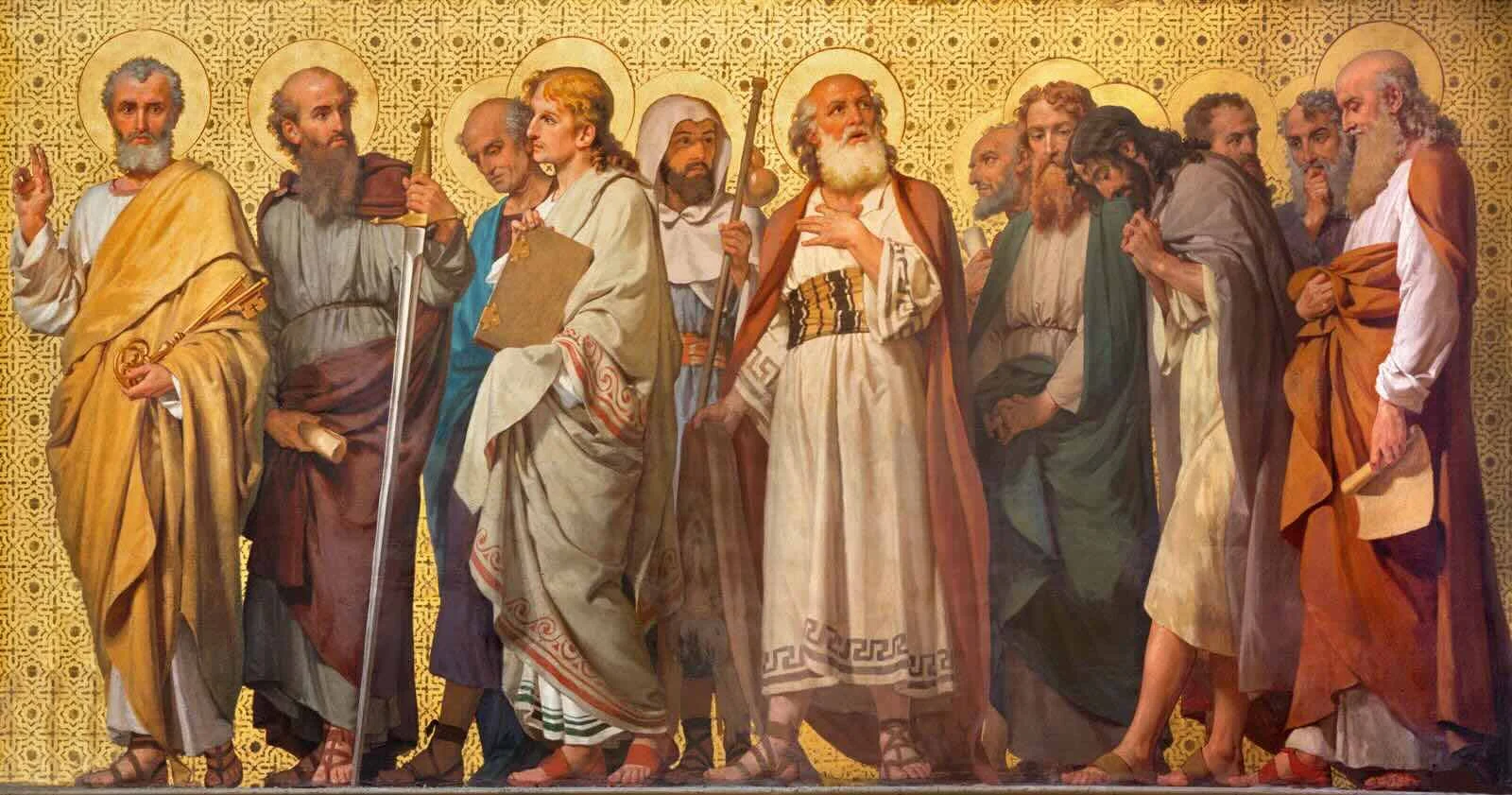
Translated from Philip Schaff's History of The Christian Church
第七章 圣约翰与使徒时期的最后阶段:犹太与外邦基督教的联合巩固
目录
§ 40. 约翰文献
§ 41. 约翰的生平与品格
§ 42. 约翰的使徒工作
§ 43. 关于约翰的传统1
Kai; oJ lovgo" sa;rx ejgevneto kai; ejskhvnwsen ejn hmi'n, kai; eqeasavmeqa th;n dovxan autou'.——道成了肉身,住在我们中间,我们也见过他的荣光。——《约翰福音》1:14。
§ 40. 约翰文献
I. 史料
约翰的《福音书、书信与启示录》。对观福音书、《使徒行传》及《加拉太书》2:9中有关约翰的记载。(经文出处见杨氏 (Young)《分析经文汇编》〔Analytical Concordance〕。)
教父传承。爱任纽 (Irenaeus):《驳异端》 (Adv. Haer.),II. 22, 5(约翰活到图拉真〔Trajan〕时代);III. 1, 1(约翰在以弗所);III. 3, 4(约翰与克林妥〔Cerinthus〕);V. 30, 3(约翰与《启示录》)。亚历山大的革利免 (Clemens Alex.):《哪个财主能得救》 (Quis dives salvus),第42章(约翰与年轻强盗)。以弗所的波利克拉底 (Polycrates),见优西比乌 (Eusebius)《教会史》 (Hist. Eccl.),III. 31;V. 24(约翰是 mevgala stoicei'a〔伟大人物〕之一,又是 iJereu;" to; pevtalon peforhkwv"〔佩戴金牌的祭司〕)。德尔图良 (Tertullian):《论异端的抗辩》 (De praescr. haer.),第36章(关于约翰在罗马被浸入油中受殉道之刑,却蒙神迹保全的传说)。优西比乌:《教会史》 (Hist. Eccl.),III. 第18、23、31章;IV. 14;V. 24(逾越节日期之争)。哲罗姆 (Jerome):《加拉太书注释》 (Ad Gal.),6:10(约翰最后的话);《名人传》 (De vir. ill.),第9章。奥古斯丁 (Augustin):《约翰福音讲论》第124篇 (Tract. 124 in Evang. Joann.),载《全集》 (Opera) III. 1970,米涅 (Migne) 编。尼基弗鲁斯·卡利斯图斯 (Nicephorus Cal.):《教会史》 (Hist. Eccl.),II. 42。
II. 伪托的传说
《约翰行传》 (Acta Johannis),康斯特·蒂申多夫 (Const. Tischendorf) 编,载其《使徒伪经行传》 (Acta Apost. Apocr.),莱比锡 (Lips.),1851年,第266–276页。参较《序论》 (Prolegg.) 第LXXIII页及后,其中汇集了教父们关于伪托的《约翰行传》的见证。
《约翰行传:利用C. v. 蒂申多夫遗稿编订》 (Acta Joannis, unter Benutzung von C. v. Tischendorf’s Nachlass bearbeitet),特奥德·察恩 (Theod. Zahn) 编。埃尔朗根 (Erlangen),1880年(正文264页,导论clxxii页)。
这部《行传》包含普罗哥罗 (Prochorus) 所写的 pravxei" tou' ... jIwavnnou tou' qeolovgou(《神学家……约翰行传》);他自称是七十门徒之一、耶路撒冷七位执事之一(《使徒行传》6:5),也是圣约翰的门徒;此外还包含约翰的朋友兼门徒琉修斯·卡里努斯 (Leucius Charinus) 所写的 perivodoi jIwavnnou(《约翰游历记》)残篇。前者是一部宗教传奇,写于约翰死后约400年;后者据察恩判定,是小亚细亚一位作者在160年以前、很可能在140年以前写成的;它既使用了第四福音书,也使用了对观福音书,就此而言具有某种护教价值。见第cxlviii页。
法国古典语文学家马克斯·博内 (Max Bonnet) 允诺出版一部新的《约翰行传》校勘本。见E. 勒鲁 (E. Leroux) 的《评论杂志》 (Revue critique),1880年,第449页。
《约翰启示录》 (Apocalypsis Johannis),载蒂申多夫 (Tischindorf)《摩西、以斯拉、保罗、约翰的伪经启示录,附马利亚安息记》 (Apocalypses Apocryphae Mosis, Esdrae, Pauli, Johannis, item Mariae Dormitio)。莱比锡 (Lips.),1866年,第70–94页。
这部伪托约翰的《启示录》自称是圣约翰在基督升天后不久于他泊山 (Mount Tabor) 写成的。现存抄本可追溯到九世纪,最初由A. 比尔希 (A. Birch) 于1804年刊行。
关于圣约翰的传说,参较詹姆森夫人 (Mrs. Jameson):《神圣与传奇艺术》 (Sacred and Legendary Art),I. 第157–172页,第五版。
III. 传记与批判研究
弗朗西斯·特伦奇 (Francis Trench):《福音书作者圣约翰的生平与品格》 (Life and Character of St. John the Evangelist)。伦敦,1850年。
座堂主任牧师斯坦利 (Dean Stanley,卒于1881年):《使徒时期讲章与论文》 (Sermons and Essays on the Apostolic Age)。牛津与伦敦,1847年;第三版,1874年,第234–281页。
马克斯·克伦克尔 (Max Krenkel):《使徒约翰》 (Der Apostel Johannes)。莱比锡,1871年。
詹姆斯·M. 麦克唐纳 (James M. Macdonald):《圣约翰的生平与著作,附座堂主任牧师豪森所撰导论》 (The Life and Writings of St. John. With Introduction by Dean Howson.)。纽约,1877年(新版,1880年)。
魏茨泽克 (Weizsäcker):《使徒时期》 (Das Apost. Zeitalter)。1886年,第493–559页。
参较§ 20(第189页)所列有关使徒教会著作中的传记概述;以及吕克 (Lücke)、迈耶 (Meyer)、兰格 (Lange)、卢特哈特 (Luthardt)、戈代 (Godet)、韦斯科特 (Westcott)、普卢默 (Plummer) 各家注释的导论。
IV. 教义研究
下列学者阐述了约翰式的教义类型:尼安德 (Neander)(在其论使徒时期的著作中,第四版,1847年;鲁宾逊〔Robinson〕英译本,纽约〔N. York〕,1865年,第508–531页);弗罗曼 (Frommann)(《约翰的教义观》〔Der Johanneische Lehrbegriff〕,莱比锡〔Leipz.〕,1839年);C. 莱因哈德·克斯特林 (C. Reinh. Köstlin)(《约翰福音与书信的教义观》〔Der Lehrbegriff des Ev. und der Briefe Johannis〕,柏林,1843年);罗伊斯 (Reuss)(《约翰神学》〔Die Johann. Theologie〕,载斯特拉斯堡《神学研究论集》〔Beiträge zu den Theol. Wissenschaften〕,1847年;《约翰神学》〔La Théologie johannique〕,巴黎,1879年;以及其《使徒时期神学》〔Theology of the Apost. Age〕,第二版,1860年,安妮·哈伍德〔Annie Harwood〕据法文第三版英译,伦敦〔Lond.〕,1872–74年,2卷);施密德 (Schmid)(在其《新约圣经神学》〔Bibl. Theol. des N. T.〕中,斯图加特〔Stuttg.〕,1853年);鲍尔 (Baur)(在《新约神学讲义》〔Vorlesungen über N. T. Theol.〕中,莱比锡〔Leipz.〕,1864年);希尔根费尔德 (Hilgenfeld)(1849年及1863年);B. 魏斯 (B. Weiss)(《约翰的教义观》〔Der Johanneische Lehrbegriff〕,柏林,1862年;以及其《新约圣经神学》〔Bibl. Theol. des N. T.〕,第四版,1884年)。此外,魏茨泽克(1862年)、拜施拉格 (Beyerschlag)(1866年)等人也有论述约翰的逻各斯教义 (Logos-doctrine) 与基督论的专著。
V. 《约翰福音》注释
关于《约翰福音》及其真确性的文献,自1792年至1875年(从埃文森〔Evanson〕到卢特哈特),美国学者卡斯帕·勒内·格雷戈里博士 (Dr. Caspar René Gregory) 在他所译的卢特哈特《圣约翰:第四福音书的作者》 (St. John, the Author of the Fourth Gospel) 附录中,作了格外详尽而准确的列举。爱丁堡 (Edinb.),1875年,第283–360页。又参较以斯拉·阿博特博士 (Dr. Ezra Abbot) 在史密斯 (Smith)《圣经辞典》 (Dict. of the Bible) 美国版“约翰福音” (John, Gospel of) 条目中极为审慎编制的书目(截至1869年),I. 第1437–1439页。
俄利根 (Origen,卒于254年);金口约翰 (Chrysostom,407年);奥古斯丁(430年);亚历山大的区利罗 (Cyril of Alexandria,444年);加尔文 (Calvin,1564年);兰佩 (Lampe)(1724年,3卷);本格尔 (Bengel)(《释经指要》〔Gnomen〕,1752年);吕克(1820年,第三版1843年);奥尔斯豪森 (Olshausen)(1832年,埃布拉德〔Ebrard〕编第四版,1861年);托卢克 (Tholuck)(1827年,第七版1857年);亨斯滕贝格 (Hengstesnberg)(1863年;第二版,第I卷,1867年;英译本1865年);卢特哈特(1852年;第二版完全重写,1875年;格雷戈里英译,2卷,另有一专卷论第四福音书的作者,1875年);德·韦特—布吕克纳 (De Wette-Brückner)(第五版1863年);迈耶(迈耶本人编的第五版,也是最后一版,1869年;魏斯编第六版,1880年);埃瓦尔德 (Ewald)(1861年);阿尔福德 (Alford)(第六版1868年);沃兹沃思 (Wordsworth)(第五版1866年);戈代(1865年,2卷;第二版1877年,英译本3卷;第三版,巴黎,1881年,T. 德怀特〔T. Dwight〕译,1886年);兰格(沙弗译并增订,纽约〔N. Y.〕与爱丁堡,1871年);沃特金斯 (Watkins)(载埃利科特〔Ellicott〕《英语读者新约注释》〔N.T. Com. for English Readers〕,1878年);韦斯科特(载《议长注释》〔Speaker’s Commentary〕,1879年,亦有单行本);米利根 (Milligan) 与莫尔顿 (Moulton)(载《沙弗通俗注释》〔Schaff’s Popul. Com.〕,1880年);凯尔 (Keil)(1881年);普卢默(1881年);托马 (Thoma)(《约翰福音的起源》〔Die Genesis des Joh. Evangeliums〕,1882年);保罗·尚茨 (Paul Schanz)(图宾根,1885年)。
VI. 论第四福音书真确性与可信性的专著
我们没有篇幅列出所有书名,或各注释导论中的相关页码,请读者参阅阿博特与格雷戈里的书目。
- 反对其真确性的作者:
E. 埃文森 (E. Evanson)(《四部公认福音书的不协调》〔The Dissonance of the Four generally received Evangelists〕,格洛斯特,1792年)。K. G. 布雷特施奈德 (K. G. Bretschneider)(《论使徒约翰福音与书信的性质及起源之可能性》〔Probabilia de Ev. et Ep. Joh. Ap. Indole et Origine〕,莱比锡〔Leips.〕,1820年;为肖特〔Schott〕、艾希霍恩〔Eichhorn〕、吕克等人所驳斥;作者本人于1828年撤回此说)。D. F. 施特劳斯 (D. F. Strauss)(在其《耶稣传》〔Leben Jesu〕中,1835年;1838年第三版撤回,1840年第四版又重新提出,1864年《为德国民众所写的耶稣传》〔Leben Jesu für das deutsche Volk〕中亦然);吕策尔贝格 (Lützelberger)(1840年);布鲁诺·鲍姆 (Bruno Baum)(1840年)。——F. Chr. 鲍尔 (F. Chr. Baur)(最初见于图宾根《神学年鉴》〔Theol. Jahrbücher〕1844年所载对这部福音书极为敏锐而精巧的分析,此后又于1847、1848、1853、1855、1859年重申)。他把第四福音书说成文学发展或演化的成熟成果;这一发展依黑格尔 (Hegel) 的方法,从正题进到反题与合题,亦即从犹太化的彼得派,进到反犹太的保罗派,再进到(伪)约翰式的调和。整个图宾根学派 (Tübingen School) 都追随了他:策勒 (Zeller)(1845、1847、1853年);施韦格勒 (Schwegler)(1846年);希尔根费尔德(1849、1854、1855、1875年);福尔克马尔 (Volkmar)(1870、1876年);申克尔 (Schenkel)(1864及1873年);霍尔茨曼 (Holtzmann)(载申克尔《圣经辞典》〔Bibellexikon〕,1871年,及《导论》〔Einleitung〕,1886年)。凯姆 (Keim)(《拿撒勒人耶稣的历史》〔Gesch. Jesu v. Nazara〕,1867年起出版,第I卷,第146页及后、第167页及后;又见其节本第三版,1875年,第40页);豪斯拉特 (Hausrath)(1874年);曼戈尔德 (Mangold)(载布利克〔Bleek〕《导论》〔Introd.〕第四版,1886年);托马(1882年)。荷兰有斯霍尔滕 (Scholten)(莱顿,1865年及1871年)。英国有J. J. 泰勒 (J. J. Tayler)(伦敦,1867年);塞缪尔·戴维森 (Samuel Davidson)(在其《新约导论》〔Introduction to the N. T.〕新版中,1868年,II. 第323页及后、第357页及后);《超自然宗教》 (Supernatural Religion) 的匿名作者(第六版,第II卷,第251页及后,伦敦,1875年);以及E. A. A.(伦敦的埃德温·A. 阿博特神学博士〔Edwin A. Abbott, D. D.〕,撰《不列颠百科全书》〔Encycl. Brit.〕“福音书”〔Gospels〕条目,第X卷,1879年,第818–843页)。
这些反对者所定的第四福音书成书年代,从110年到170年不等;但他们当中最优秀的学者,已越来越被迫从170年(鲍尔的年代)退到130年(凯姆),甚至退到二世纪之初(110年)。这对他们的理论是致命的;因为在那个时候,约翰许多亲近的朋友和门徒必定仍然在世,足以阻止一部文学虚构之作在教会中被普遍接受为使徒的真作。
罗伊斯(在其《约翰神学》〔Théologie johannique〕,1879年;其巨著《圣经》〔La Bible〕第六部分;以及《新约圣经著作史》〔Geschichte der heil. Schriften N. T.〕第六版,1887年,第249页及后)对此问题未作定论,尽管倾向于否认约翰为作者。萨巴蒂埃 (Sabatier) 先前曾捍卫其真实性(在其《耶稣生平史料论》〔Essai sur les sources de la vie de Jésus〕中,1866年),后来追随罗伊斯的脚步,得出否定的结论(见其“约翰”〔Jean〕条目,载利希滕贝格〔Lichtenberger〕《宗教科学百科全书》〔Encycl. des Sciences Relig.〕,第VII卷,巴黎,1880年,第173页及后)。
魏瑟 (Weisse)(1836年)、施韦策 (Schweizer)(1841年)、魏茨泽克(1857、1859、1862、1886年)、哈泽 (Hase)(在其《耶稣史》〔Geschichte Jesu〕中,1875年;他在早期著作中原曾捍卫其真确性),以及勒南 (Renan)(1863、1867及1879年),都承认第四福音书中有真实的部分,但对于其范围彼此意见不一。有些人捍卫其中讲论的真确性,却拒绝接受神迹。勒南恰好相反,他在《耶稣传》 (Vie de Jésus) 第13版第477页及后的一篇专论中,赞同其中历史叙述的部分,却拒绝接受基督的讲论。他在《基督教会》 (L’église chrétienne),1879年,第47页及后,又改变了看法。他说:“Ce qui paraît le plus probable, c’est qu’un disciple de l’apôtre, dépositaire de plusieurs de ses souvenirs, se crut autorisé à parler en son nom et à écrire, vingt-cinq ou trente ans aprés sa mort, ce que l’on regrettait qu’il n’eût pas lui-même fixé de son vivant.”(“看来最有可能的是,使徒的一位门徒,保存着他的若干回忆,自认为有权奉他的名说话,并在他死后二十五或三十年,将人们遗憾他生前未曾亲自记录的事写下来。”)他倾向于把这部福音书的编写归给“长老约翰”(此人是否存在,本身就有疑问)和亚里斯提翁 (Aristion),二人都是使徒约翰在以弗所的门徒。他对《约翰福音》中讲论的描述,表明他完全不能领会这部福音书的精神。马修·阿诺德 (Matthew Arnold)(《上帝与圣经》〔God and the Bible〕,第248页)猜测,以弗所的长老们利用约翰提供的材料编成了这部福音书。
应当指出,鲍尔及其追随者,还有勒南,虽然否认第四福音书的真实性,却极力维护《启示录》出于约翰,把它视为使徒时期确实可靠的文献之一。但凯姆否定约翰曾居留以弗所的整个传承,从而摧毁了鲍尔理论的根基。
b. 以下作者曾捍卫其真确性:
约斯·普里斯特利 (Jos. Priestley)(一位论者,1793年反驳埃文森〔Evanson〕)。施莱尔马赫 (Schleiermacher) 及其学派,尤其是吕克 (Lücke)(1820及1840年)、布莱克 (Bleek)(1846及1862年),以及德·韦特 (De Wette)(起初有所犹豫,1837年;第5版由布吕克纳〔Brückner〕编订,1863年)。克雷德纳 (Credner)(1836年);尼安德 (Neander)(《耶稣生平》〔Leben Jesu〕,1837年);托卢克 (Tholuck)(在《福音史的可信性》〔Glaubwürdigkeit der evang. Geschichte〕中反驳施特劳斯〔Strauss〕,1837年);安德鲁斯·诺顿 (Andrews Norton)(一位论者,著有《福音书真确性的证据》〔Evidences of the Genuineness of the Gospels〕,1837—1844年,3卷;第2版,1846年;节本,波士顿,1875年);埃布拉德 (Ebrard)(1845年反驳鲍尔;又于1861、1868及1880年在赫尔佐格〔Herzog〕《百科全书》〔Encykl.〕中论及);蒂尔施 (Thiersch)(1845年反驳鲍尔);施奈德 (Schneider)(1854年);亨斯滕贝格 (Hengstenberg)(1863年);阿斯蒂耶 (Astié)(1863年);霍夫斯泰德·德·格鲁特 (Hofstede de Groot)(《巴西里德》〔Basilides〕,1863年;德译本,1868年);范·奥斯特泽 (Van Oosterzee)(反驳斯霍尔滕〔Scholten〕,德文版,1867年;赫斯特〔Hurst〕英译);蒂申多夫 (Tischendorf)(《我们的福音书写于何时?》〔Wann wurden unsere Evangelien verfasst?〕,1865年;第4版,1866年;亦有英译本,但译得极差);里根巴赫 (Riggenbach)(1866年反驳福尔克马尔〔Volkmar〕)。迈耶 (Meyer)(《注释》〔Com.〕,第5版,1869年);魏斯 (Weiss)(迈耶《注释》第6版,1880年);兰格 (Lange)(在其《耶稣生平》〔Leben Jesu〕及《注释》〔Com.〕中,后者第3版,1868年;沙弗于1871年译出并增补);桑迪 (Sanday)(《第四福音书的作者及其历史性质》〔Authorship and Historical Character of the Fourth Gospel〕,伦敦,1872年);拜施拉格 (Beyschlag)(在1874及1875年的《研究与评论》〔Studien und Kritiken〕中);卢塔特 (Luthardt)(第2版,1875年);莱特福特 (Lightfoot)(在1875—1877年的《当代评论》〔Contemporary Review〕中反驳《超自然宗教》〔Supernatural Religion〕);乔治·P. 费舍尔 (Geo. P. Fisher)(《基督教的起源》〔Beginnings of Christianity〕,1877年,第X章;以及《第四福音书》〔The Fourth Gospel〕一文,载《普林斯顿评论》〔The Princeton Review〕,1881年7月,第51—84页);戈代 (Godet)(《圣约翰福音注释》〔Commentaire sur l’Évangile de Saint Jean〕,第2版,1878年;第3版,“complètement revue”〔“全面修订”〕,第I卷,《历史与批判导论》〔Introduction historique et critique〕,巴黎,1881年,376页);韦斯科特 (Westcott)(《福音书导论》〔Introd. to the Gospels〕,1862、1875年,及《注释》〔Com.〕,1879年);麦克莱伦 (McClellan)(《四福音书》〔The Four Gospels〕,1875年);米利根 (Milligan)(在1867、1868、1871年的《当代评论》〔Contemp. Review〕中发表的数篇文章,以及他与莫尔顿〔Moulton〕合著的《注释》〔Com.〕,1880年);以斯拉·阿博特 (Ezra Abbot)(《第四福音书的作者》〔The Authorship of the Fourth Gospel〕,波士顿,1880年;重刊于其《考证论文集》〔Critical Essays〕,波士顿,1888年;关于外部证据,尤其是殉道者游斯丁〔Justin Martyr〕的重要见证,其论证具有决定性);乔治·萨蒙 (George Salmon)(《新约历史导论》〔Historical Introd. to the N. T.〕,伦敦,1886年;第3版,1888年,第210页及后)。另见 A. H. 弗兰克 (A. H. Francke):《约翰著作中的旧约》〔Das Alte Test. bei Johannes〕,哥廷根,1885年。
VIII. 约翰书信注释
厄库梅尼乌斯 (Oecumenius)(1000年);狄奥菲拉克特 (Theophylact)(1071年);路德 (Luther);加尔文 (Calvin);布灵格 (Bullinger);吕克 (Lücke)(第3版,1856年);德·韦特 (De Wette)(1837年;第5版由布吕克纳〔Brückner〕编订,1863年);尼安德 (Neander)(1851年;科南特夫人〔Mrs. Conant〕英译,1852年);迪斯特迪克 (Düsterdieck)(1852—1856年,2卷);胡特尔 (Huther)(载迈耶的《注释》〔Com.〕,1855年;第4版,1880年);F. D. 莫里斯 (F. D. Maurice)(1857年);埃布拉德 (Ebrard)(载奥尔斯豪森〔Olshausen〕的《注释》〔Com.〕,1859年;W. B. 波普〔W. B. Pope〕译,爱丁堡,1860年);埃瓦尔德 (Ewald)(1861年);布劳内 (Braune)(载兰格的《注释》〔Com.〕,1865年;蒙伯特〔Mombert〕编英文版,1867年);坎德利什 (Candlish)(1866年);埃里希·豪普特 (Erich Haupt)(1869年;W. B. 波普〔W. B. Pope〕英译,爱丁堡,1879年);R. 罗特 (R. Rothe)(K. 米尔豪泽〔K. Mühlhäuser〕编遗著版,1879年);W. B. 波普 (W. B. Pope)(载沙弗的《通俗注释》〔Pop. Com.〕,1883年);韦斯科特 (Westcott)(1883年)。
IX. 约翰启示录注释
布灵格 (Bullinger)(1535年;第6版,1604年);格劳秀斯 (Grotius)(1644年);约斯·米德 (Jos. Mede)(《启示录之钥》〔Clavis Apocalyptica〕,1682年);波舒哀 (Bossuet)(罗马天主教徒,1689年);维特林加 (Vitringa)(1719年);本格尔 (Bengel)(1740、1746年;新版,1834年);赫尔德 (Herder)(1779年);艾希霍恩 (Eichhorn)(1791年);E. P. 埃利奥特 (E. P. Elliott)(《启示录时光,或启示录注释》〔Horae Apocalypticae, or, a Com. on the Apoc.〕,第5版,伦敦,1862年,4卷);吕克 (Lücke)(1852年);埃瓦尔德 (Ewald)(1828及1862年);楚利希 (Züllig)(1834及1840年);摩西·斯图亚特 (Moses Stuart)(1845年,2卷);德·韦特 (De Wette)(1848年;第3版,1862年);奥尔福德 (Alford)(第3版,1866年);亨斯滕贝格 (Hengstenberg)(1849及1861年);埃布拉德 (Ebrard)(1853年);奥伯伦 (Auberlen)(《先知但以理与约翰启示录》〔Der Prophet Daniel und die Offenbarung Johannis〕,1854年;Ad. 萨菲尔〔Ad. Saphir〕英译,1856年;德文第2版,1857年);迪斯特迪克 (Düsterdieck)(1859年;第3版,1877年);布莱克 (Bleek)(1820及1862年);卢塔特 (Luthardt)(1861年);福尔克马尔 (Volkmar)(1862年);金伦 (Kienlen)(1870年);兰格 (Lange)(1871年;美国版由克雷文〔Craven〕大量增补,1874年);考尔斯 (Cowles)(1871年);格布哈特 (Gebhardt)(《启示录的教义观》〔Der Lehrbegriff der Apocalypse〕,1873年;J. 杰斐逊〔J. Jefferson〕英译,题为《启示录的教义》〔The Doctrine of the Apocalypse〕,1878年);克利福特 (Kliefoth)(1874年);李 (Lee)(1882年);米利根 (Milligan)(载沙弗的《国际注释》〔Internat. Com.〕,1883年;又见《启示录讲座》〔Lectures on the Revel.〕,1886年);施皮塔 (Spitta)(1889年)。费尔特 (Völter)(1882年)和菲舍尔 (Vischer)(1886年)否认本书的统一性。菲舍尔将它看作一部经过基督徒改写的犹太启示录,全然不顾《启示录》22:18、19的警告;这警告足以驳倒这一假说。
§ 41. 约翰的生平与品格
“Volat avis sine meta,(飞鸟翱翔,无边无际,)
Quo nec votes nec propheta
Evolavit altius:(诗人或先知,未曾飞得比它更高;)
Tam implenda quam impleta,(无论尚待成就,还是已经成就的事,)
Numquam vidit tot secreta
Purus homo purius.(从无凡人如此纯净地,洞见如此众多的奥秘。)
(圣维克多的亚当〔Adam of St. Victor〕。)
约翰的使命
彼得是代表权柄的犹太人使徒,保罗是代表自由的外邦人使徒;他们在耶路撒冷毁灭以前,已经完成了在世上的工作——既是为他们的时代,也是为将来的一切时代而作的工作;他们已经完成了这工作,并且借着他们著作的影响,至今仍在以永不可取代的方式继续这工作。二人都是建造的能手:一个为基督的教会奠立根基,一个在这根基上建造,而阴间的权柄永不能胜过这教会。
然而,还有一项极其重要的工作尚待完成,就是联合与巩固的工作。这工作是为那位爱的使徒、耶稣的知心朋友所保留的;就人所能反映的神人纯洁与圣洁之理想而言,他已成为耶稣最完美的映照。约翰不像彼得和保罗那样,是宣教士或实干家。据我们所知,他对于基督教向外传播所做的甚少,却为基督教在已经建立之处的内在生命与成长做得更多。对于有形教会的治理、形式和礼仪,他无所论述(甚至“教会”这个名称也未出现在他的福音书和第一封书信中),却更多地论及教会的属灵实质——信徒与基督在生命上的联合,以及信徒彼此间的弟兄相交。他兼为新约的使徒、福音书作者和先见。他活到第一世纪末,为要在使徒时期的根基和上层建筑之上,竖起那宏伟的穹顶,由新天的光辉为之镀金。
他必须在静默的默想中等候,直到教会成熟,足以领受他崇高的教训。我们的主论到约翰时,对彼得所说的那句奥秘的话,就暗示了这一点:“我若要他等到我来的时候,与你何干?”2 无疑,主确曾在耶路撒冷所受的可怕审判中临到。约翰本人活过了这场审判,而他的教义与品格类型,也必长存,超越教会历史较早的阶段(彼得和保罗预示并代表了这些阶段),直到主最终降临。在这一较广的意义上,他甚至至今仍在等候;而他的著作,其中尚未探明的深邃与高远,也仍在等待合宜的解释者。最好的总在最后。在以利亚于何烈山 (Mount Horeb) 所见的异象中,裂山碎石的烈风、地震和火,都在耶和华微小的声音之前。3 智慧女神密涅瓦 (Minerva) 的猫头鹰,到黄昏才开始飞翔。战斗的风暴,为和平的筵席预备道路。使徒时期那位伟大的战士,早已奏响了爱的主调,要使基督教世界的两部分和谐一致;而约翰以一切定义中最深刻的定义,揭示至高者内心最深处的本质:“上帝就是爱”,这不过是对保罗的回应。4
福音书中的约翰
约翰是西庇太 (Zebedee) 和撒罗米 (Salome) 的儿子(可能是幼子),也是大雅各的兄弟;雅各后来成为使徒中第一位殉道者。5 他可能比耶稣年轻十岁左右;古代的见证一致认为,他活到图拉真 (Trajan) 在位之时,即98年以后,因此他必定享寿九十余岁。他以捕鱼为业,很可能是加利利的伯赛大 (Bethsaida) 人(如同彼得、安得烈和腓力)。他的父母家境似乎颇为宽裕。他父亲雇有工人;他母亲属于那群高尚的妇女,她们跟随耶稣,用自己的财物供给他,又买香膏要膏他的身体;她们是最后留在十字架旁、最先来到敞开的坟墓前的人。约翰本人认识大祭司,并在耶路撒冷或加利利拥有一所房屋,将我们主的母亲接到那里奉养。6
按肉身说,他是耶稣的表弟,因为他的母亲是马利亚的姐妹。7 这一亲属关系,加上青春的热忱和他天性中炽烈的情感,构成了他与主亲密相交的基础。
他不像保罗那样受过拉比教育;在犹太学者眼中,他和彼得及其他加利利门徒一样,是个“没有学问的小民”。8 但他曾在施洗约翰门下受预备性的教导;施洗约翰以耶稣是“上帝的羔羊,除去世人罪孽的”为见证,概括了自己先知的使命,而约翰后来在自己的著作中阐发了这一见证。正是这见证,引领他在约旦河畔来到耶稣面前,经历了那次难忘的会面;半个世纪以后,他甚至还记得当时的时辰。9 他不仅是十二使徒之一,更是三位蒙拣选者中的特选者。彼得作为弥赛亚的朋友,在公众面前更为显著;约翰则在亲近的圈子里被人视为耶稣的朋友。10 彼得总是注目于基督的职分,询问自己和其他使徒应当做什么;约翰却定睛注视耶稣本身,专心领会夫子所说的话。他们之间的差别,正如忙碌的马大急于服事,而沉思的马利亚以受教为满足。惟有约翰与彼得和他的兄弟雅各一同,目睹了登山变像和客西马尼园的情景——我们主在世生活中最高的荣耀与最深的降卑。在最后的晚餐上,他靠在主的胸膛上,将那些奇妙的临别讲论珍藏在心里,留待日后使用。他跟随主进入该亚法 (Caiaphas) 的院子。所有门徒中,惟有他在场目睹了钉十字架,并受临终的救主托付,照顾他的母亲。这是一个格外细腻温柔的场景:Mater dolorosa(悲痛之母)与蒙爱的门徒仰望十字架,垂死的儿子与主以母子之爱将他们联结起来。这成为那些出于天上的属灵关系的典范,比血缘和利害关系更深、更坚固。约翰既是最后留在十字架旁的人,也是在复活的清晨,继抹大拉的马利亚之后,最先来到敞开的坟墓前向内观看的门徒;他甚至跑在彼得前面。复活的主在加利利湖岸向门徒显现时,也是他首先认出主来。11
他似乎是使徒中最年轻的,因为他比他们所有人都多活了许多年;他无疑是最有天赋、最蒙眷爱的。他具有最高的宗教天才——不是为栽种,而是为浇灌;不是为外在的行动和奋进的工作,而是为内在的默想,洞察基督位格以及在他里面永生的奥秘。品格的纯洁与单纯,情感的深厚与热烈,以及罕见的属灵领悟力与直觉,是他的主要特征;这些特征借着神的恩典,变得高尚,并分别为圣。
关于约翰的生平,没有剧烈转变的记载;他在静默中、不知不觉地成长,进入与主的相交,并愈益效法主的榜样;在这一点上,他与保罗恰成对照。与其他门徒相比,他听得更多,看得更多,说得却更少。他领受了主那些最深刻、却未引起别人注意的话;虽然起初他自己也不明白,却将这些话反复思想,存在心里,直到圣灵使他明白。他与马利亚的亲密关系,也必有助于他从内在了解主的心思和情怀。他始终以蒙爱门徒的形象出现,与主最为亲密,也最能与主心心相印。12
雷子与蒙爱的门徒
符类福音与约翰著作所描绘的约翰,表面上似乎彼此矛盾,正如《启示录》与第四福音之间的差异一样;但仔细考察,就会发现这不过是同一性格的两个方面。福音书中的彼得与他书信中的彼得,也有类似的情形:前者年轻、冲动、急躁、多变,后者则因上帝的恩典而成熟、克制、温厚、纯净。
在《马可福音》中,约翰被称为雷子(Boanerges)。13 救主赐给他和他哥哥的这个称号,无疑是一种尊称,预示着他未来的使命,正如赐给西门的彼得之名一样。在希伯来人看来,雷声就是上帝的声音。14 它所表达的是热烈的性情、强大的力量和刚烈的性格;至于是善是恶,则取决于动机和目的。同一声雷,既使人惊恐,也借着随之而来的阵雨洁净空气,滋润大地,使之结实。火热的性情若受理性节制,为真理服务,就能成为强大的建设力量;同样的性情若不受约束、误入歧途,则会成为同样强大的破坏力量。约翰燃烧的热忱与献身之心,只需加以管教和明辨,就能成为历代教会的祝福与激励。
西庇太的两个儿子早年并不明白律法与福音的区别;有一个撒马利亚村庄拒绝接待耶稣,他们便大发义怒,想要像古时的以利亚一样,吩咐火从天降,烧灭他们。15 但几年之后,约翰前往撒马利亚,坚固新归信的人时,却为他们求下了属神生命与光明的火,就是圣灵的恩赐。16 他不容那些在使徒圈子之外奉基督的名行善事的人,其根源也是这种为夫子而发、却误入歧途的热心。17 两兄弟渴望在弥赛亚的国里居于最高地位,他们的母亲也有同样的愿望;这同样显明了他们的长处与弱点:他们有一种高贵的志向,愿意亲近基督,即使这意味着亲近烈火与刀剑;然而,这种志向仍未脱尽自私与骄傲,理当受到我们主的责备,而主也将受血洗的前景摆在他们面前。18
这一切与约翰的著作完全一致。在这些著作中,他绝非柔弱多情的人,而是立场鲜明、坚定果决的人。他的性情无疑温柔可爱,但同时也有细腻的感受、炽烈的情怀和坚强的信念。这些特征绝非不能相容。他不知妥协,也不容忠诚有所分割。他里面燃烧着圣洁的火,只是他的激动是在深处,而非浮于表面。在《启示录》中,雷声响亮而有力地震撼着基督及其国度的仇敌;但另一方面,同一卷书里也有安息的片段、平安喜乐的颂歌,以及对天上耶路撒冷的描绘,这一切只能出自那蒙爱的门徒之手。在约翰的福音书和书信中,我们感受到同样的力量,只是受到节制与约束。他既记述救主最严厉的讲论,也记述他最温柔的讲论,视乎主是在向真理的仇敌说话,还是置身门徒之中。没有别的福音书作者,能让我们如此深入地看见基督与犹太教权势集团之间的对立,以及那最终酿成流血毒谋、日益加深的仇恨;也没有一位使徒,比约翰更鲜明地划出光明与黑暗、真理与虚谎、基督与敌基督之间的界线。他的福音书与书信,始终围绕着这些不可调和的对立展开。他不知上帝与巴力之间有何妥协可言。他谈到那卖主的人,以及法利赛人向自己的弥赛亚日益增长的愤怒时,流露出何等圣洁的憎恶!他借主的话,何等严厉地斥责那些心怀杀机、不信的犹太人,称他们为魔鬼的儿女!在书信中,他称凡有辱自己基督徒信仰表白的人为说谎的;凡恨弟兄的为杀人的;凡故意犯罪的为魔鬼的儿女;他又郑重警告人提防那些否认道成肉身奥秘的教师,称他们为敌基督,甚至禁止向他们问安。19 他对基督的爱有多深,对敌基督的恨就有多深。因为恨就是反向的爱。爱与恨是同一种激情,只是显露的方向相反。同一个太阳,既给活物光明和温暖,也加速死物的腐朽。
基督教艺术在这一点上充分领会了约翰的双重性格:将他的面容描绘得如女子般纯洁温柔,却并不软弱;又以一只勇猛的鹰作为他的象征,展翅翱翔于云霄之上。20
《启示录》与第四福音
正确理解上述约翰的性格,便消除了将《启示录》与第四福音归于同一作者的主要困难。21 两者的性情相同:都是高贵而热烈的天性,能够怀有强烈的爱与恨;所不同的,只是壮年与暮年、战阵的轰鸣与和平的安息之间的差别。两者的神学也是相同的,包括基督论与救恩论最具特色的要点。22 没有别的使徒称基督为逻各斯(Logos)。这部福音书就是“属灵化的《启示录》”,或说是理想化的《启示录》。甚至那乍看之下令人惊异的文体差异,经过细察,也就消失了。《启示录》的希腊文是新约各书中最具希伯来色彩的;鉴于它与希伯来预言的密切关系,而古典希腊文又没有相应的表达范式,这是意料之中的。第四福音的希腊文则纯正而无不规则之处;然而,福音书作者约翰毕竟也表现出对希伯来宗教最深的熟悉与洞察,并保存了其中最纯洁、最高贵的成分;他的文体具有旧约全部的赤子般的单纯和格言式的简洁;它不过是由希伯来灵魂赋予生命的希腊躯体。23
要解释《启示录》与约翰其他著作的差异,我们也必须考虑到:直接受默示而写成的先知性作品,与历史性及教导性作品之间必然存在差别;两者写作时间又相隔约二十年。《启示录》写于耶路撒冷被毁之前,第四福音则写于第一世纪末叶,当时他已极其年迈,却如鹰一般返老还童,正如几位最伟大的诗人荷马(Homer)、索福克勒斯(Sophocles)、弥尔顿(Milton)和歌德(Goethe)的情形一样。
附注
I. 雷子与爱的使徒
我从友人戈代博士(Dr. Godet)的著作中,摘引几段论约翰性格的精辟见解(《注释》〔Com.〕I. 35,克伦比〔Crombie〕与库辛〔Cusin〕英译):
“我们该怎样解释这两种表面上如此相反的性格特征呢?有些人性情深沉,善于领受,惯于将所受的感动封存在自己里面;这些感动越是深刻、激荡,他们就越是如此。但一旦这些人失去自制,那些长久压抑的情感便会突然爆发,使周围的人大为惊讶。约翰的性格岂不正属此类吗?耶稣给他和他兄弟起名叫半尼其(Boanerges),就是雷子(《马可福音》3:17),还有比这更贴切的描述吗?我不能认为,耶稣赐下这个称号,是像所有古代作者所相信的那样,为要标明他们出众的口才。我也不能同意,他是要借这称号,让人永远记住他们在上述某一场合中所发的怒气。前面所说的,引导我们作出一种更自然、也更配得上耶稣本人的解释。正如电逐渐积聚在云中,直到忽然化为闪电与霹雳迸发出来;照样,在这两个充满爱与热情的性情之中,种种感动默默积聚,直等到内心满溢,便以出人意料的猛烈之势迸发而出。我们喜欢把圣约翰想象为温柔而非刚强的人,甚至温柔到了软弱的地步。他的著作岂不是首先并且最为强调爱吗?这位老人最后的讲道,岂不就是‘你们要彼此相爱’吗?这固然不错;但我们忘记了他生平最初与最后阶段的另一些不同特征,它们显明他的性情中有某种果决、锐利、绝对,甚至猛烈的成分。如果我们考虑到上述一切事实,就会看出,他属于这样一类敏感而热烈的心灵:他们崇尚理想,一旦遇见在他们看来实现了自己梦想的那一位,便立刻毫无保留地依附于他;而他们的献身之情,也很容易变得排他而不宽容。凡与他们的热情不相契合的事物,都使他们感到排斥。他们不再理解内心何以能有所分割,因为他们自己根本不知如何如此行。以一切报答一切!这就是他们的格言。哪里没有那一切,在他们眼中,哪里就一无所有。这样的情感,总不免掺杂不纯的自我中心。必须有神圣的工作,才能使构成这种情感根基的真正献身之心,最终显出其全部崇高。如果我们没有看错,这就是约翰内心最深处的历程。”参戈代《注释》(Com.)法文第三版,I,第50页。
韦斯科特博士(Dr. Westcott,在其《注释》〔Com.〕第xxxiii页中)说:“约翰知道,与基督同在就是生命,拒绝基督就是死亡;他并不畏缩,乃以旧约时代的精神表达这一思想。随着时日推移,他从主学会了更忠实的忍耐,却没有丢掉那焚烧着他的热烈献身之心。直到最后,那些令人敬畏的警戒之言,犹如宝座周围的雷声,仍显明那隐秘之火的存在。《启示录》的每一页,都激荡着祭坛底下那些灵魂的呼喊:‘要等到几时呢?’(《启示录》6:10);对于有关基督位格的谬误,也没有别处比他的书信斥责得更严厉(《约翰二书》10节;《约翰一书》4:1及下)。”斯坦利(Stanley)的著作中也有类似的段落。
- 约翰的使命
斯坦利座堂主任牧师(Dean Stanley,《使徒时期的讲道与论文》〔Sermons and Essays on the Apost. Age,〕,第249页及下页,第3版)说:“约翰所讲的,首要的是灵魂与上帝的联合;但这并非仅凭东方的沉思,或神秘的消融,而是凭着那此时才首次在世界秩序中取得其应有地位的一个字——爱。宣告人心最深处的原则乃是信,这使命留给了圣保罗;宣告上帝本质的属性乃是爱,这使命则留给了圣约翰。旧约已经教导人,‘智慧的开端是敬畏上帝’;新约最后一位使徒还要教导人,‘智慧的终极是爱上帝’。古时,无论犹太人还是异教徒,无论希腊哲学还是东方宗教,都曾教导说,神明喜悦人的献祭、思辨与苦刑;而那项教训——上帝儿女唯一的标记就是‘爱弟兄’——则留给圣约翰来作充分的阐明。正如爱贯穿我们对于他教训的全部理解,爱也贯穿我们对于他品格的全部理解。我们看见他——这想象想必并非毫无根据——随着那个世纪的衰逝而渐渐衰老;他的每一种感官、每一种能力都日益衰弱,惟有那最具神圣性质的能力,燃烧得愈加明亮;我们看见这爱从他每一个眼神、每一个姿态中流露出来,成为他生活行动于其中的氛围里唯一赋予生气的原则;天地、过去、现在与未来,都向他回响着他最后话语中那渐趋低回的曲调:‘我们爱他,因为他先爱我们。’及至他终于在圣经的最后几页中消失于我们的视野,教会传统仍在这结尾处流连不去;在那个感人的故事中——它并不因我们如此熟悉而稍减感人之力——我们看见年迈的使徒由门徒抱着,来到以弗所的聚会中,在那里一遍又一遍地重复同一句话:‘小子们哪,你们要彼此相爱。’后来有人问他,为何只讲这一句而不讲别的,他便用那众所周知、确实配作这位蒙爱门徒临别之言的话回答说:‘因为这是我们主的命令;你们若遵行这一条,就不需要别的了。’”
§ 42. 约翰的使徒工作
《使徒行传》中的约翰
在使徒时期基督教的第一阶段,约翰与彼得及主的兄弟雅各同列为受割礼者教会的三根柱石;保罗与巴拿巴则代表外邦人的教会。24这似乎意味着,他当时尚未充分领会福音的普世性与自由。但在这三人之中,他最为开明,居于雅各、彼得这一方与保罗另一方之间,并已展望犹太基督教与外邦基督教的和解。犹太主义者从未像援引雅各或彼得那样,援引约翰为自己的依据。25我们虽能看到矶法派和雅各派的踪迹,却看不到约翰派的踪迹。他超然于争竞和分裂之上。
在《使徒行传》前几章中,他是这新宗教中仅次于彼得的主要使徒;他与彼得一同医治了圣殿门口的瘸子;与彼得一同被带到公会面前,为基督作见证;又与彼得一同受使徒差遣,从耶路撒冷到撒马利亚,借着将圣灵赐给那些归信基督的人来坚固他们;随后与彼得一同返回耶路撒冷。26但彼得总是先被提名,并且在言语和行动上带头;约翰则以一种神秘的沉默跟随,给人的印象是一股蓄而未发的力量,将在未来某时显露出来。他必定出席了公元50年在耶路撒冷召开的使徒会议,但没有发言,也没有积极参与那场关于割礼及加入教会条件的大辩论。27这一切与福音书赋予他的那种谦逊、沉默却又卓然出众的品格完全一致。
公元50年以后,他似乎离开了耶路撒冷。《使徒行传》不再提到他,也不再提到彼得。保罗第五次、也是最后一次访问圣城时(公元58年),见到了雅各,却没有见到任何一位使徒。28
在以弗所的约翰
约翰后来最重要的工作,保存在他的著作中,我们将在另一章充分考察。这些著作向我们展示了一段几乎全然属于内在与属灵领域的历史,其影响之深远、意义之重大,却不可估量。它们没有提及他的居住与写作的时间和地点。但《启示录》表明,他居于小亚细亚(Asia Minor)众教会的领袖地位。29古代一致的见证证实了这一点;这见证不容任何合理的怀疑,并指出以弗所(Ephesus)是他晚年的居所。30他在提拉真(Trajan)统治期间,以极高的年寿死于那里;提拉真的统治始于98年。第二世纪时,人们还在那里指认他的坟墓。
我们不知道他何时迁往小亚细亚,但不可能早于63年。因为保罗在对以弗所长老的临别训言中,以及《以弗所书》《歌罗西书》和《提摩太后书》中,都没有提到约翰,并且以小亚细亚众教会监督的权柄发言。很可能是彼得与保罗的殉道,促使约翰接管这些如同失怙、面临严重危险和试炼的教会。31
以弗所是亚细亚行省的首府,是希腊文化、商业和宗教的中心;自古便以荷马(Homer)、阿那克里翁(Anacreon)和弥姆涅尔摩斯(Mimnermus)的诗歌,泰勒斯(Thales)、阿那克西美尼(Anaximenes)和阿那克西曼德(Anaximander)的哲学,以及狄安娜(Diana)的崇拜和宏伟神庙而闻名。保罗曾在那里工作三年(54–57年),建立了一间颇有影响的教会,成为周围异教黑暗中的灯塔。从那里,他最便于与自己在各行省建立的许多教会保持联系。他在那里经历了特殊的喜乐和试炼,也预见到将从内部兴起的异端所带来的巨大危险。32正统基督教与异端基督教的一切势力,都汇集于此。耶路撒冷正走向覆亡;罗马尚未成为第二个耶路撒冷。由于保罗和约翰的工作,以弗所成为第一世纪后半叶及第二世纪大部分时期教会历史的主要舞台。那位元老般的殉道者坡旅甲(Polycarp),以及与诺斯替主义(Gnosticism)争战中的主要神学家爱任纽(Irenaeus),最能代表约翰的精神,并为他的影响作证。惟有约翰能够完成保罗和彼得的工作,赋予教会一种紧密的合一,使她能够抵御外来的逼迫和内部的异端与败坏,保全自己。
若非约翰的著作,第一世纪最后三十年的历史几乎会是一片空白。这些年有如复活与升天之间那神秘的四十天;那时,主仿佛徘徊于天地之间,几乎不触及下面的大地,向门徒显现时,如同来自另一个世界的灵。但第二、第三世纪的神学,显然以约翰的著作为前提,并以他的基督论为出发点,而非保罗的人论与救恩论;后两者几乎被埋没无闻,直到非洲的奥古斯丁(Augustin)才使它们重新发扬起来。
在拔摩的约翰
约翰被放逐到爱琴海(Aegean sea)中、以弗所西南方那座孤寂、多岩而荒瘠的拔摩岛(Patmos,今名Patmo或Palmosa)。这说法依据《启示录》1:9通常所理解的见证:“我约翰,就是你们的弟兄,和你们在耶稣里一同有分于患难、国度、忍耐的,为(由于)上帝的道,并为耶稣的见证,曾在那名叫拔摩的海岛上。”33他在那里“当主日,在灵里”,领受了那些关乎基督教争战与得胜的奇妙启示。
他被放逐到拔摩的事实,得到古代一致见证的证实。34这件事在岛上的传统中长存不灭;除此以外,这座岛并无别的意义。“约翰——这就是拔摩所唤起的思想;这岛属于他,是他的圣所。岛上的石头传讲着他,他活在每个人心中。”35
放逐的时间尚不确定,取决于《启示录》写作年代这一有争议的问题。外部证据指向图密善(Domitian)统治时期,即公元95年;内部证据则指向尼禄统治时期,或他死后不久,即公元68年。
通行的传统——我们可以说,是唯一明确的传统——始于约170年爱任纽这样一位可敬的见证人,将这次放逐定在图密善统治末期;他的统治自81年延续至96年。36他是第二位逼迫基督教的罗马皇帝,而放逐是他惯用的刑罚之一。37这两个事实都支持这一传统。他起初颇有可取之处,后来却变得像尼禄一样残酷嗜血,并且在虚伪和亵渎地自封为神这两方面,更超过尼禄。他在书信开头写道:“我们的主和上帝命令”,并要求臣民如此称呼他。38他下令将自己的金像银像安放在各神庙最神圣的地方。他显得最友善时,正是最危险的时候。无论元老还是执政官,一旦受到他阴暗的猜忌,或妨碍了他的野心,他都不予饶恕。他搜寻大卫的后裔和耶稣的亲属,惧怕他们有所图谋,却发现他们都是贫穷而无辜的人。39许多基督徒在他统治期间因无神论的罪名殉道——其中包括他自己的堂亲、具有执政官身份的弗拉维乌斯·克莱门斯(Flavius Clemens),他被处死;其妻多米提拉(Domitilla)则被放逐到那不勒斯(Naples)附近的潘达特里亚岛(Pandateria)。40支持传统年代的理由,还可以说有一种内在的适切性:这部为正典作结、论述末后之事直至最终成全的书,理应最后写成。
然而,《启示录》本身的内部证据,以及它与第四福音书的比较,都支持一个较早的年代,即耶路撒冷被毁以前、尼禄死后(68年)的帝位空缺时期;那时,兽,也就是罗马帝国,受了伤,却不久就要复原(因韦斯帕芗登基)。早期传统说,有人曾企图在罗马或以弗所以油刑使约翰殉道;倘若这说法有某种根据,自然会指向尼禄的逼迫,那时基督徒被裹上易燃之物,烧作火炬。书中对帝国逼迫的明确暗示,用于尼禄远比用于图密善更为贴切。我们已经提到,《启示录》的希伯来色彩与炽烈气势,和第四福音书纯熟的希腊文与宁静安详之间,存在差异;若前者早写了约二十年,这些差异便更容易解释。这一观点在古代传统中得到一些微弱的支持,41也已为现代大多数批判派历史学家和注释家所采纳。42
因此,我们认为最可能的看法是:约翰在尼禄统治下被放逐到拔摩,在尼禄死后不久,即公元68或69年,写成《启示录》,随后返回以弗所,若干年(也许二十年)后完成福音书和书信,并于公元98年以后、提拉真统治期间安然睡去。
忠实地记述历史中的基督,充分展现他兼具神人二性之位格的丰盛,显明他是所有信徒永生的体现与源泉,再附上一封讲明实际应用的书信——这就是那位蒙爱门徒在第二世纪的门槛上、在使徒时期金色的夕照中所传的最后信息。他对青年时代的回忆,经过长久经验的陶冶,因圣灵而焕然生辉,放射着真理与圣洁的属天光辉,乃是这位最后的使徒留给教会后世万代最宝贵的遗产。
§ 43. 关于约翰的传统43
约翰的形象深深铭刻在教会心中;早期教父保存了不少关于他的轶事,多少显出他的性格,也多少有其可信之处。
第二世纪末,亚历山大的革利免 (Clement of Alexandria) 描写约翰是一位忠心而献身的牧者:他年老时,在一次巡访途中,出于爱心去追寻一位自己从前带领归信、后来却沦为强盗的人,使他重归教会。
爱任纽 (Irenaeus) 转述据说出自坡旅甲 (Polycarp) 之口的一件事,见证了约翰作为“雷子”的性格:约翰在以弗所的一处公共浴室,遇见否认我们主道成肉身的诺斯替派异端者克林妥 (Cerinthus),44便不肯与他同处一个屋顶之下,恐怕房屋倒塌。这使人想起《路加福音》9:49所记的事,以及使徒在《约翰二书》10、11节所发的严厉警告。这个故事表明,对真理最深切的爱,可以与对谬误和道德邪恶最严厉的斥责并存。45
哲罗姆 (Jerome) 将他描绘为爱的门徒:他到了极高龄时,由门徒用臂膀抬到聚会之处,一再重复这句劝勉:“小子们哪,你们要彼此相爱。”又补充说:“这是主的命令;只要实行了这一条,就够了。”在一切关于约翰的传统中,这一则最为可信,也最有益处。
在希腊教会中,约翰有“神学家” (qeolovgo") 的称号,因为他最清楚地教导了基督的神性 (th;n qeovthta tou' lovgou)。他又因贞洁和被认为终身未婚,而被称为“童贞者” (parqevno")。46奥古斯丁 (Augustin) 说,有人认为,约翰自幼格外贞洁,乃是他与耶稣亲密的缘由。47
第五世纪的修士卡西安 (Cassian) 讲述了约翰与猎人的故事:约翰温柔地逗弄着手中的一只鹧鸪,有位猎人见了感到惊讶,他便对猎人说:“不要因我心灵这片刻而轻微的松弛而见怪;若没有这种调剂,精神就会因过度劳累而衰疲,在需要的时候,便不能回应职责的呼召。”赤子般的纯真与活泼,常与真正伟大的心灵相伴。
据优西比乌 (Eusebius) 记载,第二世纪末的以弗所主教波利克拉底 (Polycrates) 说,约翰在小亚细亚引入了犹太人的习俗,在尼散月十四日守逾越节,不论那天是否为主日。这件事在第二世纪的逾越节争论,以及近代关于《约翰福音》真伪的争论中,都占有重要地位。
这位以弗所的波利克拉底还描写约翰佩戴着犹太大祭司的金牌,或称冠冕(出28:36、37;39:30、31)。这大概是比喻祭司的圣洁;约翰认为一切真信徒都具有这种圣洁(参启2:17),而他身为长老之首,在这方面尤为卓越。48
由于误解了耶稣在《约翰福音》21:22所说的那句隐晦的话,便产生了一种传说:约翰只是在坟墓里睡着,呼吸时坟丘微微起伏,等待着主最后的降临。这传说的另一种说法是,他虽死了,却立刻复活,像以利亚一样被接到天上,将与以利亚一同归来,作基督再临的先驱。49
Original Text
CHAPTER VII. ST. JOHN, AND THE LAST STADIUM OF THE APOSTOLIC PERIOD. THE CONSOLIDATION OF JEWISH AND GENTILE CHRISTIANITY.
Kai; oJ lovgo" sa;rx ejgevneto kai; ejskhvnwsen ejn hmi'n, kai; eqeasavmeqa th;n dovxan autou'.—John 1:14.
§ 40. The Johannean Literature.
I. Sources.
The Gospel, Epistles, and Revelation of John. The notices of John in the Synoptical Gospels, in the Acts, and in Gal. 2:9. (See the passages in Young’s Analytical Concordance.)
Patristic traditions. Irenaeus: Adv. Haer. II. 22, 5 (John lived to the age of Trajan); III. 1, 1 (John at Ephesus); III. 3, 4 (John and Cerinthus); V. 30, 3 (John and the Apocalypse). Clemens Alex.: Quis dives salvus, c. 42 (John and the young robber). Polycrates of Ephesus in Eus. Hist. Eccl., III. 31; V. 24 (John, one of the mevgala stoicei'a, and a iJereu;" to; pevtalon peforhkwv"). Tertullian: De praescr. haer., c. 36 (the legend of John’s martyrdom in Rome by being steeped in oil, and his miraculous preservation). Eusebius: Hist. Eccl, III. chs. 18, 23, 31; IV. 14; V. 24 (the paschal controversy). Jerome: Ad Gal. 6:10 (the last words of John); De vir. ill., c. 9. Augustin: Tract. 124 in Evang. Joann. (Opera III. 1970, ed. Migne). Nicephorus Cal.: Hist. Eccl., II. 42.
II. Apocryphal Traditions.
Acta Johannis, ed. Const. Tischendorf, in his Acta Apost. Apocr., Lips., 1851, pp. 266–276. Comp. Prolegg. LXXIII. sqq., where the patristic testimonies on the apocryphal Acts of John are collected.
Acta Joannis, unter Benutzung von C. v. Tischendorf’s Nachlass bearbeitet von Theod. Zahn. Erlangen, 1880 (264 pages and clxxii. pages of Introd.).
The "Acta "contain the pravxei" tou' ... jIwavnnou tou' qeolovgou Prochorus, who professes to be one of the Seventy Disciples, one of the Seven Deacons of Jerusalem (Acts 6:5), and a pupil of St. John; and fragments of the perivodoi jIwavnnou, "the Wanderings of John," by Leucius Charinus, a friend and pupil of John. The former work is a religious romance, written about 400 years after the death of John; the latter is assigned by Zahn to an author in Asia Minor before 160, and probably before 140; it uses the fourth as well as the Synoptical Gospels, and so far has some apologetic value. See p. cxlviii.
Max Bonnet, the French philologist, promises a new critical edition of the Acts of John. See E. Leroux’s "Revue critique," 1880, p. 449.
Apocalypsis Johannis, in Tischindorf’s Apocalypses Apocryphae Mosis, Esdrae, Pauli, Johannis, item Mariae Dormitio. Lips., 1866, pp. 70–94.
This pseudo-Johannean Apocalypse purports to have been written shortly after the ascension of Christ, by St. John, on Mount Tabor. It exists in MS. from the ninth century, and was first edited by A. Birch, 1804.
On the legends of St. John comp. Mrs. Jameson: Sacred and Legendary Art, I. 157–172, fifth edition.
III. Biographical and Critical.
Francis Trench: Life and Character of St. John the Evangelist. London, 1850.
Dean Stanley (d. 1881): Sermons and Essays on the Apostolic Age. Oxford and London, 1847, third ed., 1874, pp. 234–281.
Max Krenkel: Der Apostel Johannes. Leipzig, 1871.
James M. Macdonald: The Life and Writings of St. John. With Introduction by Dean Howson. New York, 1877 (new ed. 1880).
Weizsäcker: Das Apost. Zeitalter. 1886, pp. 493–559.
Comp. the biographical sketches in the works on the Apostolic Church, mentioned § 20 (p. 189); and the Introductions to the Commentaries of Lücke, Meyer, Lange, Luthardt, Godet, Westcott, Plummer.
IV. Doctrinal.
The Johannean type of doctrine is expounded by Neander (in his work on the Apost. Age, 4th ed., 1847; E. transl. by Robinson, N. York, 1865, pp. 508–531); Frommann (Der Johanneische Lehrbegriff, Leipz., 1839); C. Reinh. Köstlin (Der Lehrbegriff des Ev. und der Briefe Johannis, Berlin, 1843); Reuss (*Die Johann. Theologie, in the Strasburg "**Beiträge zu den Theol. Wissenschaften," 1847, in La Théologie johannique, Paris, 1879, and in his Theology of the Apost. Age,* 2d ed. 1860, translated from the third French ed. by Annie Harwood, Lond. 1872–74, 2 vols.); Schmid (in his Bibl. Theol. des N. T, Stuttg. 1853); Baur (in Vorlesungen über N. T. Theol, Leipz. 1864); Hilgenfeld (1849 and 1863); B. Weiss (Der Johanneische Lehrbegriff, Berlin, 1862, and in his Bibl. Theol. des N. T., 4th ed. 1884). There are also special treatises on John’s Logos-doctrine and Christology by Weizsäcker (1862), Beyerschlag (1866), and others.
V. Commentaries on the Gospel of John.
The Literature on the Gospel of John and its genuineness, from 1792 to 1875 (from Evanson to Luthardt), is given with unusual fulness and accuracy by Dr. Caspar René Gregory (an American scholar), in an appendix to his translation of Luthardt’s St. John, the Author of the Fourth Gospel. Edinb. 1875, pp. 283–360. Comp. also the very careful lists of Dr. Ezra Abbot (down to 1869) in the article John, Gospel of, in the Am. ed. of Smith’s "Dict. of the Bible," I. 1437–1439.
Origen (d. 254) Chrysostom (407); Augustin (430); Cyril of Alexandria (444) Calvin (1564); Lampe (1724, 3 vols.); Bengel (Gnomen, 1752); Lücke (1820, 3d ed. 1843); Olshausen (1832, 4th ed. by Ebrard, 1861) Tholuck (1827, 7th ed. 1857); Hengstesnberg (1863, 2d, I. 1867 Eng. transl. 1865); Luthardt (1852, 2d ed. entirely rewritten 1875; Eng. transl. by Gregory, in 2 vols., and a special volume on the Authorship of the Fourth Gospel, 1875) De Wette-Brückner (5th ed. 1863); Meyer (5th and last ed. of Meyer, 1869; 6th ed. by Weiss, 1880); Ewald (1861); Alford (6th ed. 1868; Wordsworth (5th ed. 1866), Godet (1865, 2 vols., 2d ed. 1877, Eng. transl. in 3 vols.; 3d edition, Paris, 1881, trsl. by T. Dwight, 1886); Lange (as translated and enlarged by Schaff, N. Y. and Edinb. 1871); Watkins (in Ellicott’s "N.T. Com. for English Readers," 1878); Westcott (in "Speaker’s Commentary," 1879, and separately); Milligan and Moulton (in "Schaff’s Popul. Com.," 1880); Keil (1881); Plummer (1881); Thoma (Die Genesis des Joh. Evangeliums, 1882); Paul Schanz (Tübingen, 1885).
VI. Special Treatises on the Genuineness and Credibility of the Fourth Gospel.
We have no room to give all the titles of books, or the pages in the introductions to Commentaries, and refer to the lists of Abbot and Gregory.
- Writers against the Genuineness:
E. Evanson (The Dissonance of the Four generally received Evangelists, Gloucester, 1792). K. G. Bretschneider (Probabilia de Ev. et Ep. Joh. Ap. Indole et Origine, Leips. 1820, refuted by Schott, Eichhorn, Lücke, and others; retracted by the author himself in 1828). D. F. Strauss (in his Leben Jesu, 1835; withdrawn in the 3d ed. 1838, but renewed in the 4th, 1840 in his Leben Jesu für das deutsche Volk, 1864); Lützelberger (1840); Bruno Baum (1840).—F. Chr. BAUR (first in a very acute and ingenious analysis of the Gospel, in the "Theol. Jahrbücher," of Tübingen, 1844, and again in 1847, 1848, 1853, 1855, 1859). He represents the fourth Gospel as the ripe result of a literary development, or evolution, which proceeded, according to the Hegelian method, from thesis to antithesis and synthesis, or from Judaizing Petrinism to anti-Jewish Paulinism and (pseudo-) Johannean reconciliation. He was followed by the whole Tübingen School; Zeller (1845, 1847, 1853); Schwegler (1846); Hilgenfeld (1849, 1854, 1855, 1875); Volkmar (1870, 1876); Schenkel (1864 and 1873); Holtzmann (in Schenkel’s "Bibellexikon." 1871, and Einleitung, 1886). Keim (Gesch. Jesu v. Nazara, since 1867, vol. I., 146 sqq.; 167 sqq., and in the 3d ed. of his abridgement, 1875, p. 40); Hausrath (1874); Mangold (in the 4th ed. of Bleek’s Introd., 1886); Thoma (1882). In Holland, Scholten (Leyden, 1865, and again 1871). In England, J. J. Tayler (London, 1867); Samuel Davidson (in the new ed. of his Introduction to the N. T., 1868, II. 323 sqq. and 357 sqq.); the anonymous author of Supernatural Religion (vol. II. 251 sqq., of the 6th ed., London, 1875); and E. A. A. (Edwin A. Abbott, D. D., of London, in art. Gospels, "Encycl. Brit.," vol. X., 1879, pp. 818–843).
The dates assigned to the composition of the Fourth Gospel by these opponents vary from 110 to 170, but the best scholars among them are more and more forced to retreat from 170 (Baur’s date) to 130 (Keim), or to the very beginning of the second century (110). This is fatal to their theory; for at that time many of the personal friends and pupils of John must have been still living to prevent a literary fiction from being generally accepted in the church as a genuine work of the apostle.
Reuss (in his Théologie johannique, 1879, in the sixth part of his great work, "La Bible" and in the Sixth edition of his Geschichte der heil. Schriften N. T., 1887, pp. 249 sqq.) leaves the question undecided, though inclining against the Johannean authorship. Sabatier, who had formerly defended the authenticity (in his Essai sur les sources de la vie de Jésus, 1866), follows the steps of Reuss, and comes to a negative conclusion (in his art. Jean in Lichtenberger’s "Encycl. des Sciences Relig.," Tom. VII., Paris, 1880, pp. 173 sqq.).
Weisse (1836), Schweizer (1841), Weizsäcker (1857, 1859, 1862, 1886), Hase (in his Geschichte Jesu, 1875, while in his earlier writings he had defended the genuineness), and Renan (1863, 1867, and 1879) admit genuine portions in the Fourth Gospel, but differ among themselves as to the extent. Some defend the genuineness of the discourses, but reject the miracles. Renan, on the contrary, favors the historical portions, but rejects the discourses of Christ, in a special discussion in the 13th ed. of his Vie de Jésus, pp. 477 sqq. He changed his view again in his L’église chrétienne, 1879, pp. 47 sqq. "Ce qui paraît le plus probable," he says, "c’est qu’un disciple de l’apôtre, dépositaire de plusieurs de ses souvenirs, se crut autorisé à parler en son nom et à écrire, vingt-cinq ou trente ans aprés sa mort, ce que l’on regrettait qu’il n’eût pas lui-même fixé de son vivant." He is disposed to ascribe the composition to the "Presbyter John" (whose very existence is doubtful) and to Aristion, two Ephesian disciples of John the Apostle. In characterizing the discourses in the Gospel of John he shows his utter incapacity of appreciating its spirit. Matthew Arnold (God and the Bible, p. 248) conjectures that the Ephesian presbyters composed the Gospel with the aid of materials furnished by John.
It should be remarked that Baur and his followers, and Renan, while they reject the authenticity of the Fourth Gospel, strongly defend the Johannean origin of the Apocalypse, as one of the certain documents of the apostolic age. But Keim, by denying the whole tradition of John’s sojourn at Ephesus, destroys the foundation of Baur’s theory.
b. The genuineness has been defended by the following writers:
Jos. Priestley (Unitarian, against Evanson, 1793). Schleiermacher and his school, especially Lücke (1820 and 1840), Bleek (1846 and 1862), and De Wette (after some hesitation, 1837, 5th ed., by Brückner, 1863). Credner (1836); Neander (Leben Jesu, 1837) Tholuck (in Glaubwürdigkeit der evang. Geschichte, against Strauss, 1837); Andrews Norton (Unitarian, in Evidences of the Genuineness of the Gospels, 1837–1844, 3 vols., 2d ed. 1846, abridged ed., Boston, 1875); Ebrard (1845, against Baur; again 1861, 1868, and 1880, in Herzog’s "Encykl." Thiersch (1845, against Baur); Schneider (1854); Hengstenberg (1863); Astié, (1863); Hofstede de Groot (Basilides, 1863; Germ. transl. 1868); Van Oosterzee (against Scholten, Germ. ed. 1867; Engl. transl. by Hurst); Tischendorf (Wann wurden unsere Evangelien verfasst? 1865, 4th ed. 1866; also translated into English, but very poorly); Riggenbach (1866, against Volkmar). Meyer (Com., 5th ed. 1869); Weiss (6th ed. of Meyer, 1880); Lange (in his Leben Jesu, and in his Com., 3d ed. 1868, translated and enlarged by Schaff, 1871); Sanday (Authorship and Historical Character of the Fourth Gospel, London, 1872); Beyschlag (in the "Studien und Kritiken" for 1874 and 1875); Luthardt (2d ed. 1875); Lightfoot (in the Contemporary Review, " 1875–1877, against Supernatural Religion); Geo. P. Fisher (Beginnings of Christianity, 1877, ch. X., and art. The Fourth Gospel, in "The Princeton Review" for July, 1881, pp. 51–84); Godet (Commentaire sur l’Évangile de Saint Jean, 2d ed. 1878; 3d ed. "complètement revue," vol. I., Introduction historique et critique, Paris, 1881, 376 pages); Westcott (Introd. to the Gospels, 1862, 1875, and Com. 1879); McClellan (The Four Gospels, 1875); Milligan (in several articles in the "Contemp. Review" for 1867, 1868, 1871, and in his and Moulton’s Com., 1880); Ezra Abbot (The Authorship of the Fourth Gospel, Boston, 1880; republished in his Critical Essays, Boston, 1888; conclusive on the external evidences, especially the important testimony of Justin Martyr); George Salmon (Historical Introd. to the N. T., London, 1886; third ed. 1888, pp. 210 sqq.). See also A. H. Francke: Das Alte Test. bei Johannes, Göttingen, 1885.
VIII. Commentaries on the Epistles of John.
Oecumenius (1000); Theophylact (1071); Luther; Calvin; Bullinger; Lücke (3d ed. 1856); De Wette (1837, 5th ed. by Brückner, 1863); Neander (1851, Engl. transl. by Mrs. Conant, 1852); Düsterdieck 1852–1856, 2 vols.); Huther (in Meyer’s Com., 1855, 4th ed. 1880); F. D. Maurice, (1857); Ebrard (in Olshausen’s Com., 1859, transl. by W. B. Pope, Edinb. 1860); Ewald (1861); Braune (in Lange’s Com., 1865, Engl. ed. by Mombert, 1867); Candlish (1866); Erich Haupt (1869, Engl. transl. by W. B. Pope, Edinb., 1879); R. Rothe (posthumous ed. by K. Mühlhäuser, 1879); W. B. Pope (in Schaff’s Pop. Com., 1883); Westcott (1883).
IX. Commentaries on the Apocalypse of John.
Bullinger (1535, 6th ed. 1604); Grotius (1644); Jos. Mede (Clavis Apocalyptica, 1682); Bossuet (R. C., 1689); Vitringa (1719); Bengel (1740, 1746, and new ed. 1834); Herder (1779); Eichhorn (1791); E. P. Elliott (Horae Apocalypticae, or, a Com. on the Apoc., 5th ed., Lond., 1862, 4 vols.) Lücke (1852); Ewald (1828 and 1862); Züllig (1834 and 1840) Moses Stuart (1845, 2 vols.); De Wette (1848, 3d ed. 1862); Alford (3d ed. 1866); Hengstenberg (1849 and 1861); Ebrard (1853); Auberlen (Der Prophet Daniel und die Offenbarung Johannis, 1854; Engl. transl. by Ad. Saphir, 1856, 2d Germ. ed. 1857); Düsterdieck (1859, 3d ed. 1877); Bleek (1820 and 1862); Luthardt (1861); Volkmar (1862); Kienlen (1870); Lange (1871, Am. ed., with large additions by Craven, 1874); Cowles (1871); Gebhardt (Der Lehrbegriff der Apocalypse, 1873; Engl. transl., The Doctrine of the Apocalypse, by J. Jefferson, 1878); Kliefoth (1874); Lee (1882); Milligan (in Schaff’s Internat. Com., 1883, and in Lectures on the Revel., 1886); Spitta (1889). Völter (1882) and Vischer (1886) deny the unity of the book. Vischer makes it a Jewish Apocalypse worked over by a Christian, in spite of the warning, Apoc. 22:18, 19, which refutes this hypothesis.
§ 41. Life and Character of John
"Volat avis sine meta,
*Quo nec votes nec propheta
Evolavit altius:*
Tam implenda quam impleta,
*Numquam vidit tot secreta
Purus homo purius.*
(Adam of St. Victor.)
The Mission of John.
Peter, the Jewish apostle of authority, and Paul, the Gentile apostle of freedom, had done their work on earth before the destruction of Jerusalem—had done it for their age and for all ages to come; had done it, and by the influence of their writings are doing it still, in a manner that can never be superseded. Both were master-builders, the one in laying the foundation, the other in rearing the superstructure, of the church of Christ, against which the gates of Hades can never prevail.
But there remained a most important additional work to be done, a work of union and consolidation. This was reserved for the apostle of love, the bosom-friend of Jesus, who had become his most perfect reflection so far as any human being can reflect the ideal of divine-human purity and holiness. John was not a missionary or a man of action, like Peter and Paul. He did little, so far as we know, for the outward spread of Christianity, but all the more for the inner life and growth of Christianity where it was already established. He has nothing to say about the government, the forms, and rites of the visible church (even the name does not occur in his Gospel and first Epistle), but all the more about the spiritual substance of the church—the vital union of believers with Christ and the brotherly communion of believers among themselves. He is at once the apostle, the evangelist, and the seer, of the new covenant. He lived to the close of the first century, that he might erect on the foundation and superstructure of the apostolic age the majestic dome gilded by the light of the new heaven.
He had to wait in silent meditation till the church was ripe for his sublime teaching. This is intimated by the mysterious word of our Lord to Peter with reference to John: "If I will that he tarry till I come, what is that to thee?"(1) No doubt the Lord did come in the terrible judgment of Jerusalem. John outlived it personally, and his type of doctrine and character will outlive the earlier stages of church history (anticipated and typified by Peter and Paul) till the final coming of the Lord. In that wider sense he tarries even till now, and his writings, with their unexplored depths and heights still wait for the proper interpreter. The best comes last. In the vision of Elijah on Mount Horeb, the strong wind that rent the mountains and brake in pieces the rocks, and the earthquake, and the fire preceded the still small voice of Jehovah.(2) The owl of Minerva, the goddess of wisdom, begins its flight at twilight. The storm of battle prepares the way for the feast of peace. The great warrior of the apostolic age already sounded the keynote of love which was to harmonize the two sections of Christendom; and John only responded to Paul when he revealed the inmost heart of the supreme being by the profoundest of all definitions: "God is love."(3)
John in the Gospels.
John was a son (probably the younger son) of Zebedee and Salome, and a brother of the elder James, who became the protomartyr of the apostles.(4) He may have been about ten years younger than Jesus, and as, according to the unanimous testimony of antiquity, he lived till the reign of Trajan, i.e., till after 98, he must have attained an age of over ninety years. He was a fisherman by trade, probably of Bethsaida in Galilee (like Peter, Andrew, and Philip). His parents seem to have been in comfortable circumstances. His father kept hired servants; his mother belonged to the noble band of women who followed Jesus and supported him with their means, who purchased spices to embalm him, who were the last at the cross and the first at the open tomb. John himself was acquainted with the high priest, and owned a house in Jerusalem or Galilee, into which he received the mother of our Lord.(5)
He was a cousin of Jesus, according to the flesh, from his mother, a sister of Mary.(6) This relationship, together with the enthusiasm of youth and the fervor of his emotional nature, formed the basis of his intimacy with the Lord.
He had no rabbinical training, like Paul, and in the eyes of the Jewish scholars he was, like Peter and the other Galilaean disciples, an "unlearned and ignorant man."(7) But he passed through the preparatory school of John the Baptist who summed up his prophetic mission in the testimony to Jesus as the "Lamb of God that taketh away the sin of the world," a testimony which he afterwards expanded in his own writings. It was this testimony which led him to Jesus on the banks of the Jordan in that memorable interview of which, half a century afterwards, he remembered the very hour.(8) He was not only one of the Twelve, but the chosen of the chosen Three. Peter stood out more prominently before the public as the friend of the Messiah; John was known in the private circle as the friend of Jesus.(9) Peter always looked at the official character of Christ, and asked what he and the other apostles should do; John gazed steadily at the person of Jesus, and was intent to learn what the Master said. They differed as the busy Martha, anxious to serve, and the pensive Mary, contented to learn. John alone, with Peter and his brother James, witnessed the scene of the transfiguration and of Gethsemane—the highest exaltation and the deepest humiliation in the earthly life of our Lord. He leaned on his breast at the last Supper and treasured those wonderful farewell discourses in his heart for future use. He followed him to the court of Caiaphas. He alone of all the disciples was present at the crucifixion, and was intrusted by the departing Saviour with the care of his mother. This was a scene of unique delicacy and tenderness: the Mater dolorosa and the beloved disciple gazing at the cross, the dying Son and Lord uniting them in maternal and filial love. It furnishes the type of those heaven-born spiritual relationships, which are deeper and stronger than those of blood and interest. As John was the last at the cross, so he was also, next to Mary Magdalene, the first of the disciples who, outrunning even Peter, looked into the open tomb on the resurrection morning; and he first recognized the risen Lord when he appeared to the disciples on the shore of the lake of Galilee.(10)
He seems to have been the youngest of the apostles, as he long outlived them all; he certainly was the most gifted and the most favored. He had a religious genius of the highest order—not indeed for planting, but for watering; not for outward action and aggressive work, but for inward contemplation and insight into the mystery of Christ’s person and of eternal life in him. Purity and simplicity of character, depth and ardor of affection, and a rare faculty of spiritual perception and intuition, were his leading traits, which became ennobled and consecrated by divine grace.
There are no violent changes reported in John’s history; he grew silently and imperceptibly into the communion of his Lord and conformity to his example; he was in this respect the antipode of Paul. He heard more and saw more, but spoke less, than the other disciples. He absorbed his deepest sayings, which escaped the attention of others; and although he himself did not understand them at first, he pondered them in his heart till the Holy Spirit illuminated them. His intimacy with Mary must also have aided him in gaining an interior view of the mind and heart of his Lord. He appears throughout as the beloved disciple, in closest intimacy and in fullest sympathy with the Lord.(11)
The Son of Thunder and the Beloved Disciple.
There is an apparent contradiction between the Synoptic and the Johannean picture of John, as there is between the Apocalypse and the fourth Gospel; but on closer inspection it is only the twofold aspect of one and the same character. We have a parallel in the Peter of the Gospels and the Peter of his Epistles: the first youthful, impulsive, hasty, changeable, the other matured, subdued, mellowed, refined by divine grace.
In the Gospel of Mark, John appears as a Son of Thunder (Boanerges).(12) This surname, given to him and to his elder brother by our Saviour, was undoubtedly an epithet of honor and foreshadowed his future mission, like the name Peter given to Simon. Thunder to the Hebrews was the voice of God.(13) It conveys the idea of ardent temper, great strength and vehemence of character whether for good or for evil, according to the motive and aim. The same thunder which terrifies does also purify the air and fructify the earth with its accompanying showers of rain. Fiery temper under the control of reason and in the service of truth is as great a power of construction as the same temper, uncontrolled and misdirected, is a power of destruction. John’s burning zeal and devotion needed only discipline and discretion to become a benediction and inspiration to the church in all ages.
In their early history the sons of Zebedee misunderstood the difference between the law and the gospel, when, in an outburst of holy indignation against a Samaritan village which refused to receive Jesus, they were ready, like Elijah of old, to call consuming fire from heaven.(14) But when, some years afterwards, John went to Samaria to confirm the new converts, he called down upon them the fire of divine life and light, the gift of the Holy Spirit.(15) The same mistaken zeal for his Master was at the bottom of his intolerance towards those who performed a good work in the name of Christ, but outside of the apostolic circle.(16) The desire of the two brothers, in which their mother shared, for the highest positions in the Messianic kingdom, likewise reveals both their strength and their weakness, a noble ambition to be near Christ, though it be near the fire and the sword, yet an ambition that was not free from selfishness and pride, which deserved the rebuke of our Lord, who held up before them the prospect of the baptism of blood.(17)
All this is quite consistent with the writings of John. He appears there by no means as a soft and sentimental, but as a positive and decided character. He had no doubt a sweet and lovely disposition, but at the same time a delicate sensibility, ardent feelings, and strong convictions. These traits are by no means incompatible. He knew no compromise, no division of loyalty. A holy fire burned within him, though he was moved in the deep rather than on the surface. In the Apocalypse, the thunder rolls loud and mighty against the enemies of Christ and his kingdom, while on the other hand there are in the same book episodes of rest and anthems, of peace and joy, and a description of the heavenly Jerusalem, which could have proceeded only from the beloved disciple. In the Gospel and the Epistles of John, we feel the same power, only subdued and restrained. He reports the severest as well as the sweetest discourses of the Saviour, according as he speaks to the enemies of the truth, or in the circle of the disciples. No other evangelist gives us such a profound inside-view of the antagonism between Christ and the Jewish hierarchy, and of the growing intensity of that hatred which culminated in the bloody counsel; no apostle draws a sharper line of demarcation between light and darkness, truth and falsehood, Christ and Antichrist, than John. His Gospel and Epistles move in these irreconcilable antagonisms. He knows no compromise between God and Baal. With what holy horror does he speak of the traitor, and the rising rage of the Pharisees against their Messiah! How severely does he, in the words of the Lord, attack the unbelieving Jews with their murderous designs, as children of the devil! And, in his Epistles, he terms every one who dishonors his Christian profession a liar; every one who hates his brother a murderer; every one who wilfully sins a child of the devil; and he earnestly warns against teachers who deny the mystery of the incarnation, as Antichrists, and he forbids even to salute them.(18) The measure of his love of Christ was the measure of his hatred of antichrist. For hatred is inverted love. Love and hatred are one and the same passion, only revealed in opposite directions. The same sun gives light and heat to the living, and hastens the decay of the dead.
Christian art has so far well understood the double aspect of John by representing him with a face of womanly purity and tenderness, but not weakness, and giving him for his symbol a bold eagle soaring with outspread wings above the clouds.(19)
The Apocalypse and the Fourth Gospel.
A proper appreciation of John’s character as thus set forth removes the chief difficulty of ascribing the Apocalypse and the fourth Gospel to one and the same writer.(20) The temper is the same in both: a noble, enthusiastic nature, capable of intense emotions of love and hatred, but with the difference between vigorous manhood and ripe old age, between the roar of battle and the repose of peace. The theology is the same, including the most characteristic features of Christology and soteriology.(21) By no other apostle is Christ called the Logos. The Gospel is, "the Apocalypse spiritualized," or idealized. Even the difference of style, which is startling at first sight, disappears on closer inspection. The Greek of the Apocalypse is the most Hebraizing of all the books of the New Testament, as may be expected from its close affinity with Hebrew prophecy to which the classical Greek furnished no parallel, while the Greek of the fourth Gospel is pure, and free from irregularities; yet after all John the Evangelist also shows the greatest familiarity with, and the deepest insight into, the Hebrew religion, and preserves its purest and noblest elements; and his style has all the childlike simplicity and sententious brevity of the Old Testament; it is only a Greek body inspired by a Hebrew soul.(22)
In accounting for the difference between the Apocalypse and the other writings of John, we must also take into consideration the necessary difference between prophetic composition under direct inspiration, and historical and didactic composition, and the intervening time of about twenty years; the Apocalypse being written before the destruction of Jerusalem, the fourth Gospel towards the close of the first century, in extreme old age, when his youth was renewed like the eagle’s, as in the case of some of the greatest poets, Homer, Sophocles, Milton, and Goethe.
Notes.
I. The Son of Thunder and the Apostle of Love.
I quote some excellent remarks on the character of John from my friend, Dr. Godet (Com. I. 35, English translation by Crombie and Cusin):
"How are we to explain two features of character apparently so opposite? There exist profound receptive natures which are accustomed to shut up their impressions within themselves, and this all the more that these impressions are keen and thrilling. But if it happens that these persons once cease to be masters of themselves, their long-restrained emotions then burst forth in sudden explosions, which fill the persons around them with amazement. Does not the character of John belong to this order? And when Jesus gave to him and his brother the surname of Boanerges, sons of thunder (Mark 3:17), could he have described them better? I cannot think that, by that surname, Jesus intended, as all the old writers have believed, to signalize the eloquence which distinguished them. Neither can I allow that he desired by that surname to perpetuate the recollection of their anger in one of the cases indicated. We are led by what precedes to a more natural explanation, and one more worthy of Jesus himself. As electricity is stored up by degrees in the cloud until it bursts forth suddenly in the lightning and thunderbolt, so in those two loving and passionate natures impressions silently accumulated till the moment when the heart overflowed, and they took an unexpected and violent flight. We love to represent St. John to ourselves as of a gentle rather than of an energetic nature, tender even to weakness. Do not his writings insist before and above all else upon love? Were not the last sermons of the old man ’Love one another?’ That is true; but we forget other features of a different kind, during the first and last periods of his life, which reveal something decisive, sharp, absolute, even violent in his disposition. If we take all the facts stated into consideration, we shall recognize in him one of those sensitive, ardent souls, worshippers of an ideal, who attach themselves at first sight, and without reservation, to that being who seems to them to realize that of which they have dreamt, and whose devotion easily becomes exclusive and intolerant. They feel themselves repelled by everything which is not in sympathy with their enthusiasm. They no longer understand a division of heart which they themselves know not how to practice. All for all! such is their motto. Where that all is not, there is in their eyes nothing. Such affections do not subsist without including an alloy of impure egoism. A divine work is needed, in order that the true devotion, which constitutes the basis of such, may shine forth at the last in all its sublimity. Such was, if we are not deceived, the inmost history of John." Comp. the third French ed. of Godet’s Com., I. p. 50.
Dr. Westcott (in his Com., p. xxxiii.): "John knew that to be with Christ was life, to reject Christ was death; and he did not shrink from expressing the thought in the spirit of the old dispensation. He learned from the Lord, as time went on, a more faithful patience, but he did not unlearn the burning devotion which consumed him. To the last, words of awful warning, like the thunderings about the throne, reveal the presence of that secret fire. Every page of the Apocalypse is inspired with the cry of the souls beneath the altar, ’How long’ (Rev. 6:10); and nowhere is error as to the person of Christ denounced more sternly than in his Epistles (2 John 10; 1 John 4:1ff.)." Similar passages in Stanley.
- The Mission of John.
Dean Stanley (Sermons and Essays on the Apost. Age, p. 249 sq., 3d ed.): "Above all John spoke of the union of the soul with God, but it was by no mere process of oriental contemplation, or mystic absorption; it was by that word which now for the first time took its proper place in the order of the world—by Love. It has been reserved for St. Paul to proclaim that the deepest principle in the heart of man was Faith; it was reserved for St. John to proclaim that the essential attribute of God is Love. It had been taught by the Old Testament that ’the beginning of wisdom was the fear of God;’ it remained to be taught by the last apostle of the New Testament that ’the end of wisdom was the love of God.’ It had been taught of old time by Jew and by heathen, by Greek philosophy and Eastern religion, that the Divinity was well pleased with the sacrifices, the speculations, the tortures of man; it was to St. John that it was left to teach in all its fulness that the one sign of God’s children is ’the love of the brethren.’ And as it is Love that pervades our whole conception of his teaching, so also it pervades our whole conception of his character. We see him—it surely is no unwarranted fancy—we see him declining with the declining century; every sense and faculty waxing feebler, but that one divinest faculty of all burning more and more brightly; we see it breathing through every look and gesture; the one animating principle of the atmosphere in which he lives and moves; earth and heaven, the past, the present, and the future alike echoing to him that dying strain of his latest words, ’We love Him because He loved us.’ And when at last he disappears from our view in the last pages of the sacred volume, ecclesiastical tradition still lingers in the close: and in that touching story, not the less impressive because so familiar to us, we see the aged apostle borne in the arms of his disciples into the Ephesian assembly, and there repeating over and over again the same saying, ’Little children, love one another;’ till, when asked why he said this and nothing else, he replied in those well known words, fit indeed to be the farewell speech of the Beloved Disciple, ’Because this is our Lord’s command and if you fulfil this, nothing else is needed.’ "
§ 42. Apostolic Labors of John.
John in the Acts.
In the first stadium of Apostolic Christianity John figures as one of the three pillars of the church of the circumcision, together with Peter and James the brother of the Lord; while Paul and Barnabas represented the Gentile church.(23) This seems to imply that at that time he had not yet risen to the full apprehension of the universalism and freedom of the gospel. But he was the most liberal of the three, standing between James and Peter on the one hand, and Paul on the other, and looking already towards a reconciliation of Jewish and Gentile Christianity. The Judaizers never appealed to him as they did to James, or to Peter.(24) There is no trace of a Johannean party, as there is of a Cephas party and a party of James. He stood above strife and division.
In the earlier chapters of the Acts he appears, next to Peter, as the chief apostle of the new religion; he heals with him the cripple at the gate of the temple; he was brought with him before the Sanhedrin to bear witness to Christ; he is sent with him by the apostles from Jerusalem to Samaria to confirm the Christian converts by imparting to them the Holy Spirit; he returned with him to Jerusalem.(25) But Peter is always named first and takes the lead in word and act; John follows in mysterious silence and makes the impression of a reserved force which will manifest itself at some future time. He must have been present at the conference of the apostles in Jerusalem, a.d. 50, but he made no speech and took no active part in the great discussion about circumcision and the terms of church membership.(26) All this is in entire keeping with the character of modest and silent prominence given to him in the Gospels.
After the year 50 he seems to have left Jerusalem. The Acts no more mention him nor Peter. When Paul made his fifth and last visit to the holy City (a.d. 58) he met James, but none of the apostles.(27)
John at Ephesus.
The later and most important labors of John are contained in his writings, which we shall fully consider in another chapter. They exhibit to us a history that is almost exclusively inward and spiritual, but of immeasurable reach and import. They make no allusion to the time and place of residence and composition. But the Apocalypse implies that he stood at the head of the churches of Asia Minor.(28) This is confirmed by the unanimous testimony of antiquity which is above all reasonable doubt, and assigns Ephesus to him as the residence of his latter years.(29) He died there in extreme old age during the reign of Trajan, which began in 98. His grave also was shown there in the second century.
We do not know when he removed to Asia Minor, but he cannot have done so before the year 63. For in his valedictory address to the Ephesian elders, and in his Epistles to the Ephesians and Colossians and the second to Timothy, Paul makes no allusion to John, and speaks with the authority of a superintendent of the churches of Asia Minor. It was probably the martyrdom of Peter and Paul that induced John to take charge of the orphan churches, exposed to serious dangers and trials.(30)
Ephesus, the capital of proconsular Asia, was a centre of Grecian culture, commerce, and religion; famous of old for the songs of Homer, Anacreon, and Mimnermus, the philosophy of Thales, Anaximenes, and Anaximander, the worship and wonderful temple of Diana. There Paul had labored three years (54–57) and established an influential church, a beacon-light in the surrounding darkness of heathenism. From there he could best commune with the numerous churches he had planted in the provinces. There he experienced peculiar joys and trials, and foresaw great dangers of heresies that should spring up from within.(31) All the forces of orthodox and heretical Christianity were collected there. Jerusalem was approaching its downfall; Rome was not yet a second Jerusalem. Ephesus, by the labors of Paul and of John, became the chief theatre of church history in the second half of the first and during the greater part of the second century. Polycarp, the patriarchal martyr, and Irenaeus, the leading theologian in the conflict with Gnosticism, best represent the spirit of John and bear testimony to his influence. He alone could complete the work of Paul and Peter, and give the church that compact unity which she needed for her self-preservation against persecution from without and heresy and corruption from within.
If it were not for the writings of John the last thirty years of the first century would be almost an entire blank. They resemble that mysterious period of forty days between the resurrection and the ascension, when the Lord hovered, as it were, between heaven and earth, barely touching the earth beneath, and appearing to the disciples like a spirit from the other world. But the theology of the second and third centuries evidently presupposes the writings of John, and starts from his Christology rather than from Paul’s anthropology and soteriology, which were almost buried out of sight until Augustin, in Africa, revived them.
John at Patmos.
John was banished to the solitary, rocky, and barren island of Patmos (now Patmo or Palmosa), in the Aegean sea, southwest of Ephesus. This rests on the testimony of the Apocalypse, 1:9, as usually understood: "I, John, your brother and partaker with you in the tribulation and kingdom and patience in Jesus, was in the isle that is called Patmos, for (on account of) the word of God and the testimony of Jesus."(32) There he received, while "in the spirit, on the Lord’s day," those wonderful revelations concerning the struggles and victories of Christianity.
The fact of his banishment to Patmos is confirmed by the unanimous testimony of antiquity.(33) It is perpetuated in the traditions of the island, which has no other significance. "John—that is the thought of Patmos; the island belongs to him; it is his sanctuary. Its stones preach of him, and in every heart, he lives."(34)
The time of the exile is uncertain, and depends upon the disputed question of the date of the Apocalypse. External evidence points to the reign of Domitian, a.d. 95; internal evidence to the reign of Nero, or soon after his death, a.d. 68.
The prevailing—we may say the only distinct tradition, beginning with so respectable a witness as Irenaeus about 170, assigns the exile to the end of the reign of Domitian, who ruled from 81 to 96.(35) He was the second Roman emperor who persecuted Christianity, and banishment was one of his favorite modes of punishment.(36) Both facts give support to this tradition. After a promising beginning he became as cruel and bloodthirsty as Nero, and surpassed him in hypocrisy and blasphemous self-deification. He began his letters: "Our Lord and God commands," and required his subjects to address him so.(37) He ordered gold and silver statues of himself to be placed in the holiest place of the temples. When he seemed most friendly, he was most dangerous. He spared neither senators nor consuls when they fell under his dark suspicion, or stood in the way of his ambition. He searched for the descendants of David and the kinsmen of Jesus, fearing their aspirations, but found that they were poor and innocent persons.(38) Many Christians suffered martyrdom under his reign, on the charge of atheism—among them his own cousin, Flavius Clemens, of consular dignity, who was put to death, and his wife Domitilla, who was banished to the island of Pandateria, near Naples.(39) In favor of the traditional date may also be urged an intrinsic propriety that the book which closes the canon, and treats of the last things till the final consummation, should have been written last.
Nevertheless, the internal evidence of the Apocalypse itself, and a comparison with the fourth Gospel, favor an earlier date, before the destruction of Jerusalem, and during the interregnum which followed the death of Nero (68), when the beast, that is the Roman empire, was wounded, but was soon to be revived (by the accession of Vespasian). If there is some foundation for the early tradition of the intended oil-martyrdom of John at Rome, or at Ephesus, it would naturally point to the Neronian persecution, in which Christians were covered with inflammable material and burned as torches. The unmistakable allusions to imperial persecutions apply much better to Nero than to Domitian. The difference between the Hebrew coloring and fiery vigor of the Apocalypse and the pure Greek and calm repose of the fourth Gospel, to which we have already alluded, are more easily explained if the former was written some twenty years earlier. This view has some slight support in ancient tradition,(40) and has been adopted by the majority of modern critical historians and commentators.(41)
We hold, then, as the most probable view, that John was exiled to Patmos under Nero, wrote the Apocalypse soon after Nero’s death, a.d. 68 or 69, returned to Ephesus, completed his Gospel and Epistles several (perhaps twenty) years later, and fell asleep in peace during the year of Trajan, after a.d. 98.
The faithful record of the historical Christ in the whole fulness of his divine-human person, as the embodiment and source of life eternal to all believers, with the accompanying epistle of practical application, was the last message of the Beloved Disciple at the threshold of the second century, at the golden sunset of the apostolic age. The recollections of his youth, ripened by long experience, transfigured by the Holy Spirit, and radiant with heavenly light of truth and holiness, are the most precious legacy of the last of the apostles to all future generations of the church.
§ 43. Traditions Respecting John.(42)
The memory of John sank deep into the heart of the church, and not a few incidents more or less characteristic and probable have been preserved by the early fathers.
Clement of Alexandria, towards the close of the second century, represents John as a faithful and devoted pastor when, in his old age, on a tour of visitation, he lovingly pursued one of his former converts who had become a robber, and reclaimed him to the church.
Irenaeus bears testimony to his character as "the Son of Thunder" when he relates, as from the lips of Polycarp, that, on meeting in a public bath at Ephesus the Gnostic heretic Cerinthus,(43) who denied the incarnation of our Lord, John refused to remain under the same roof, lest it might fall down. This reminds one of the incident recorded in Luke 9:49, and the apostle’s severe warning in 2 John 10 and 11. The story exemplifies the possibility of uniting the deepest love of truth with the sternest denunciation of error and moral evil.(44)
Jerome pictures him as the disciple of love, who in his extreme old age was carried to the meeting-place on the arms of his disciples, and repeated again and again the exhortation, "Little children, love one another," adding: "This is the Lord’s command, and if this alone be done, it is enough." This, of all the traditions of John, is the most credible and the most useful.
In the Greek church John bears the epithet "the theologian (qeolovgo"), for teaching most clearly the divinity of Christ (th;n qeovthta tou' lovgou). He is also called "the virgin" (parqevno"),(45) for his chastity and supposed celibacy. Augustin says that the singular chastity of John from his early youth was supposed by some to be the ground of his intimacy with Jesus.(46)
The story of John and the huntsman, related by Cassian, a monk of the fifth century, represents him as gently playing with a partridge in his hand, and saying to a huntsman, who was surprised at it: "Let not this brief and slight relaxation of my mind offend thee, without which the spirit would flag from over-exertion and not be able to respond to the call of duty when need required." Childlike simplicity and playfulness are often combined with true greatness of mind.
Polycrates, bishop of Ephesus, at the close of the second century, relates (according to Eusebius) that John introduced in Asia Minor the Jewish practice of observing Easter on the 14th of Nisan, irrespective of Sunday. This fact entered largely into the paschal controversies of the second century, and into the modern controversy about the genuineness of the Gospel of John.
The same Polycrates of Ephesus describes John as wearing the plate, or diadem of the Jewish high-priest (Ex. 28:36, 37; 39:30, 31). It is probably a figurative expression of priestly holiness which John attaches to all true believers (Comp. Rev. 2:17), but in which he excelled as the patriarch.(47)
From a misunderstanding of the enigmatical word of Jesus, John 21:22, arose the legend that John was only asleep in his grave, gently moving the mound as he breathed, and awaiting the final advent of the Lord. According to another form of the legend he died, but was immediately raised and translated to heaven, like Elijah, to return with him as the herald of the second advent of Christ.(48)
Original Footnotes
(1; original 559): John 21:22, 23. Milligan and Moulton in loc. The point of contrast between the words spoken respectively to Peter and John, is not that between a violent death by martyrdom and a peaceful departure; but that between impetuous and struggling apostleship, ending in a violent death, and quiet, thoughtful, meditative waiting for the Second Coming of Jesus, ending in a peaceful transition to the heavenly repose. Neither Peter nor himself is to the Evangelist a mere individual. Each is a type of one aspect of apostolic working—of Christian witnessing for Jesus to the very end of time."
(2; original 560): 1 Kings 19:11, 12.
(3; original 561): 1 Cor., ch. 13; 1 John 4:8, 16.
(4; original 562): The name John, from the Hebrew @n:jwO;hyÒ or @n:h;w�y, i.e., Jehovah is gracious (comp. the German Gotthold), implied to his mind a prophecy of his relation to Jesus, the incarnate Jehovah (comp. John 12:41 with Isa. 6:1), and is equivalent to "the disciple whom Jesus loved," John 13:23; 19:26; 20:2; 21:7, 20. The Greek fathers call John oJ ejpisthvqio", the leaner on the bosom, or, as we would say, the bosom-friend (of Jesus).
(5; original 563): Mark 1:20; 15: 40 sq.; Luke 8:3; John 19:27. Godet (I. 37) thinks that his home was on the lake of Gennesareth, and accounts thus for his absence in Jerusalem at Paul’s first visit (Gal. 1:18, 19).
(6; original 564): According to the correct interpretation of John 19:25, that four woman (not three) are meant there, as Wieseler, Ewald, Meyer., Lange, and other commentators now hold. The writer of the Fourth Gospel, from peculiar delicacy, never mentions his own name, nor the name of his mother, nor the name of the mother of our Lord; yet his mother was certainly at the cross, according to the Synoptists, and he would not omit her.
(7; original 565): Acts 4:13, a[nqrwpoi ajgravmmatoi kai; ijdiw'tai.
(8; original 566): John 1:35-40. The commentators are agreed that the unnamed of the two disciples is John. See my notes in Lange on the passage.
(9; original 567): The well-known distinction made by Grotius between filovcristo" and filihsou'".
(10; original 568): John 20:4; 21:7.
(11; original 569): For an ingenious comparison between John and Salome, John and James, John and Andrew, John and Peter, John and Paul, see Lange’s Com on John, pp. 4-10 (Am. ed.).
(12; original 570): Mark 3:17. Boanhrgev" (as Lachmann, Tischendorf, and Tregelles read, in. of Gr. Boanergev"), ie.,uiJoi; bronth'". The word is usually derived from vg,r, ynEB] (as pronounced in the broad Galilean dialect). vg,r, means a noisy crowd of men, but may have had the significance of thunder in Syriac. Robinson derives it from zg,ro which means tumult, alarm, and is used of the roaring noise of thunder, Job 37:2. The usual Hebrew word for thunder is r;['m (Ps. 77:19; 81:8; Job 26:14). This name completely dispels the popular notion of John. "Nichts,"says Hilgenfeld (Einleit., p. 393), "stimmt zu den synoptischen Evangelien weniger als jenes mädchenhafte Johannesbild, welches unter uns gangbar geworden ist."Comp. Godet’s remarks at the close of this section.
(13; original 571): "The Lord thundered with a great thunder;" "The Lord shall send thunder and rain." See Ex. 9:23; 1 Sam. 7:10; 12:17, 18; Job 26:14; Ps. 77:18; 81:7; 104:7; Isa. 29:6, etc.
(14; original 572): Luke 9:4-56. Some commentators think that this incident suggested the giving of the name Boanerges; but that would make it an epithet of censure, which the Lord would certainly not fasten upon his beloved disciple.
(15; original 573): Acts 8:14-17.
(16; original 574): Mark 9: 38-40; comp. Luke 9:49, 50.
(17; original 575): Matt. 20:20-24; comp. Mark 10:35-41.
(18; original 576): John 8:44; 1 John 1:6, 8, 10; 2:18 sqq.; 3:8, 15; 4:1 sqq.; 2 John 10 and 11.
(19; original 577): Jerome (Com. ad Matth., Proaem., Opera, ed. Migne, Tom. vii. 19): Quarta [facies]Joannem evangelistam [significat], qui assumptis pennis aquilae, et ad altiora festinans, de Verbo Dei disputat. An old epigram says of John:
"More volans aquila, verbo petit astra Joannes."
(20; original 578): The author of Supernat. Relig., II.400, says: "Instead of the fierce and intolerant spirit of the Son of Thunder, we find [in the Fourth Gospel] a spirit breathing forth nothing but gentleness and love." How superficial this judgment is appears from our text.
(21; original 579): This is well shown in Gebhardt’s Doctrine of the Apocalypse, and is substantially even acknowledged by those who deny the Johannean origin of either the Apocalypse (the Schleiermacher School), or of the Gospel (the Tübingen School)."Es ist nicht blos," says Baur (in his Church History, vol. I. p. 147), "eine äussere Anlehnnung an einen vielgefeierten Namen, es fehlt auch nicht an innern Berührungspunkten zwischen dem Evangelium und der Apokalypse, und man kann nur die tiefe Genialität und feine Kunst bewundern, mit welcher der Evangelist die Elemente, welche vom Standpunkt der Apokalypse auf den freiern und höhern des Evangeliums hinüberleiteten, in sich aufgenommen hat, um die Apokalypse zum Evangelium zu vergeistigen. Nur vom Standpunkt dei Evangeliums aus lässt sich das Verhältniss, in das sich der Verfasser desselben zu der Apokalypse setzte, richtig begreifen."Schwegler and Köstlin make similar concessions. See my Hist. of the Apost. Ch., p. 425.
(22; original 580): In this way the opposite views of two eminent Hebrew scholars and judges of style may be reconciled. While Renan, looking at the surface, says of the fourth Gospel: "John’s style has nothing Hebrew, nothing Jewish, nothing Talmudic," Ewald, on the contrary, penetrating to the core, remarks: "In its true spirit and afflatus, no language can be more genuinely Hebrew than that of John." Godet agrees with Ewald when he says: "The dress only is Greek, the body is Hebrew."
(23; original 581): Gal. 2:9, jIavkwbo", kai; Khfa'" kai; jIwavnnh", oij dokou'nte" stu'loi ei|nai ... aujtoi; eij" th;n peritomhvn. They are named in the order of their conservatism.
(24; original 582): Gal. 2:12, tine;" ajpo; jIakwvbou. 1 Cor. 1:12, ejgwv eijmi Khfa'.
(25; original 583): Acts 3:1 sqq.; 4:1, 13, 19, 20; 5:19, 20, 41, 42; 8:14-17, 25.
(26; original 584): He is included among the "apostles," assembled in Jerusalem on that occasion, Acts 15:6, 22, 23, and is expressly mentioned as one of the three pillar-apostles by Paul in the second chapter of the Galatians, which refers to the same conference.
(27; original 585): Acts 21:18. John may have been, however, still in Palestine, perhaps in Galilee, among the scenes of his youth. According to tradition he remained in Jerusalem till the death of the Holy Virgin, about a.d. 48.
(28; original 586): Rev. 1:4, 9, 11, 20; 2 and 3. It is very evident that only an apostle could occupy such a position, and not an obscure presbyter of that name, whose very existence is doubtful.
(29; original 587): Irenaeus, the disciple of Polycarp (a personal pupil of John), Adv. Haer. III. 1, 1; 3, 4; II. 22, 5, etc., and in his letter to Florinus (in Eusebius, H. E. V. 20); Clemens Alex., Quis dives salvetur, c.42; Apollonius and Polycrates, at the close of the second century, in Euseb. H. E. III. 31; V. 18, 24; Origen, Tertullian, Eusebius, Jerome, etc. Leucius, also, the reputed author of the Acts of John about 130, in the fragments recently published by Zahn, bears witness to the residence of John in Ephesus and Patmos, and transfers his martyrdom from Rome to Ephesus. Lützelberger, Keim (Leben Jesu v. Nazara, I. 161 sq.), Holtzmann, Scholten, the author of Supernatural Religion, (II. 410), and other opponents of the Gospel of John, have dared to remove him out of Asia Minor with negative arguments from the silence of the Acts, the Ephesians, Colossians, Papias, Ignatius, and Polycarp, arguments which either prove nothing at all, or only that John was not in Ephesus before 63. But the old tradition has been conclusively defended not only by Ewald, Grimm, Steitz, Riggenbach, Luthardt, Godet, Weiss, but even by Krenkel, Hilgenfeld (Einleitung, pp. 395 sqq.), and Weizsäcker (498 sqq.), of the Tübingen school.
(30; original 588): "The maintenance of evangelical truth," says Godet (I. 42), "demanded at that moment powerful aid. It is not surprising then that John, one of the last survivors amongst the apostles, should feel himself called upon to supply in those countries the place of the apostle of the Gentiles, and to water, as Apollos had formerly done in Greece, that which Paul had planted." Pressensé (Apost. Era, p. 424): "No city could have been better chosen as a centre from which to watch over the churches, and follow closely the progress of heresy. At Ephesus John was in the centre of Paul’s mission field, and not far from Greece."
(31; original 589): See his farewell address at Miletus, Acts 20:29, 30, and the Epistles to Timothy.
(32; original 590): Bleek understands diav of the object: John was carried (in a vision) to Patmos for the purpose of receiving there the revelation of Christ He derives the whole tradition of John’s banishment to Patmos from a misunderstanding of this passage. So also Lücke, De Wette, Reuss, and Düsterdieck. But the traditional exegesis is confirmed by the mention of the qlivyi", basileiva and uJpomonhv in the same verse, by the natural meaning of marturiva, and by the parallel passages Rev. 6:9 and 20:4, where diav likewise indicates the occasion or reason of suffering.
(33; original 591): Irenaeus, Clement of Alexandria, Origen, Tertullian, Eusebius, Jerome, etc.
(34; original 592): Tischendorf, Reise in’s Morgenland, II.257 sq. A grotto on a hill in the southern part of the island is still pointed out as the place of the apocalyptic vision, and on the summit of the mountain is the monastery of St. John, with a library of about 250 manuscripts.
(35; original 593): Irenaeus, Adv. Haer., V. 30, says that the Apocalypse was seen pro;" tw/' tevlei th'" Dometianou' ajrch'". So also Eusebius, H. E. III. 18, 20, 33; Chron. ad ann. 14 Domitiani; and Jerome, De vir. illustr., c. 9. This view has prevailed among commentators and historians till quite recently, and is advocated by Hengstenberg, Lange, Ebrard (and by myself in the Hist. of the Ap. Ch., § 101, pp. 400 sqq.). It is indeed difficult to set aside the clear testimony of Irenaeus, who, through Polycarp, was connected with the very age of John. But we must remember that he was mistaken even on more important points of history, as the age of Jesus, which he asserts, with an appeal to tradition, to have been above fifty years.
(36; original 594): Tacitus congratulates Agricola (Vita Agr., c. 44) that he did not live to see under this emperor "tot consularium caedes, tot nobilissimarum feminarum exilia et fugas." Agricola, whose daughter Tacitus married, died in 93, two years before Domitian.
(37; original 595): Suetonius, Domit., c. 13: "Dominus et Deus noster hoc fieri jubet. Unde institutum posthac, ut ne scripto quidem ac sermone cujusquam appellaretur aliter."
(38; original 596): Hegesippus in Eusebius, Hist. Eccl., III., 19, 20. Hegesippus, however, is silent about the banishment of John, and this silence has been used by Bleek as an argument against the fact.
(39; original 597): Dion Cassius in the abridgment of Xiphilinus, 67, 14.
(40; original 598): So the title of the Syriac translation of the Apocalypse (which, however, is of much later date than the Peshitto, which omits the Apocalypse): "Revelatio quam Deus Joanni Evangelistae in Patmo insula dedit, in quam a Nerone Caesare relegatus fuerat."Clement of Alexandria (Quis dives salv., c. 42, and quoted by Eusebius, III., 23) says indefinitely that John returned from Patmos to Ephesus after the death of "the tyrant" (tou' turavnnou teleuthvsanto"), which may apply to Nero as well as to Domitian. Origen mentions simply a Roman basileuv". Tertullian’s legend of the Roman oil-martyrdom of John seems to point to Nero rather than to any other emperor, and was so understood by Jerome (Adv. Jovin. I. 26), although Tertullian does not say so, and Jerome himself assigns the exile and the composition of the Apocalypse to the reign of Domitian (De vir. ill., c. 9). Epiphanius (Haer. LI. 33) puts the banishment back to the reign of Claudius (a.d. 41-53), which is evidently much too early.
(41; original 599): Neander, Gieseler, Baur, Ewald, Lücke, Bleek, De Wette, Reuss, Düsterdieck, Weiss, Renan, Stanley, Lightfoot, Westcott.
(42; original 600): These traditions are reproduced in a pleasing manner by Dean Stanley, in his Sermons and Essays on the Apost. Age, pp. 266-281 (3d ed.). Comp. my Hist. of the Ap. Ch, pp. 404 sqq.
(43; original 601): Or Ebion, according to Epiphanius, Haer., xxx. 25.
(44; original 602): Stanley mentions, as an illustration of the magnifying influence of fancy, that Jeremy Taylor, in relating this story, adds that "immediately upon the retreat of the apostle the bath fell down and crushed Cerinthus in the ruins" (Life of Christ, Sect. xii. 2).
(45; original 603): parqevno" usually means a virgin (Matt. 1:23; Luke 1:27; Acts 21:9; 1 Cor. 7:25; 28, 34), but is applied also to men who never touched women, Apoc. 14:4, and in patristic writers.
(46; original 604): Augustin, Tract. 124 in Joh. Evang. (Opera III. 1976, ed. Migne) "Sunt qui senserint ... a Christo Joannem apostolum propterea plus amatum quod neque uxorem duxerit, et ab ineunte pueritui castissimus vixerit."He quotes Jerome, Contr. Jovin. l.c., but adds: "Hoc quidem in Scriptuis non evidenter apparet."According to Ambrosiaster, Ad 2 Cor. 11:2, all the apostles were married except John and Paul. Tertullian calls John Christi spado.
(47; original 605): In Euseb. H. E. III. 31, 3; V. 24, 3: jIwavnnh" ...o}" ejgennhvqh iJereu" to; pevtalon peforhkw;" kai;mavrtu" kai; didavskalo" ou|to" ejn Efevsw, kekoivmhtai. Epiphanius reports (no doubt from Hegesippus) the same, with some ascetic features, of James the brother of the Lord. See Stanley’s remarks, pp. 276-278, and Lightfoot on Galat., p. 345 note, and Philipp. p. 252. "As a figurative expression," says Lightfoot, "or as a literal fact, the notice points to St. John as the veteran teacher, the chief representative, of a pontifical race. On the other hand, it is possible that this was not the sense which Polycrates himself attached to the figure or the fact; and if so, we have here perhaps the earliest passage in any extant Christian writing where the sacerdotal view of the ministry is distinctly put forward." But in the Didache (ch. 13) the Christian prophets are called "high priests."
(48; original 606): Augustin mentions the legend, but contradicts it, Trad. 224 in Ev. Joann.
脚注
斯坦利座堂主任牧师 (Dean Stanley) 在其《使徒时期讲章与论文集》(Sermons and Essays on the Apost. Age),第266—281页(第3版),以优美的笔调重述了这些传统。参我的《使徒教会史》(Hist. of the Ap. Ch),第404页及后。↩︎
约21:22、23。米利根与莫尔顿 (Milligan and Moulton),该处注释 (in loc.)。“分别对彼得和约翰所说的话,其对照之处,并不在于殉道的惨死与安然离世之别,而在于两种使徒职分之别:一种奋勇争战,终以暴死告终;另一种安静、深思、默想,等候耶稣再来,最后安然进入天上的安息。在这位福音书作者看来,彼得与他自己都不只是个人。两人各自代表使徒工作的一面——直到世界末了为耶稣作基督徒的见证。”↩︎
王上19:11、12。↩︎
林前第13章;约壹4:8、16。↩︎
约翰 (John) 一名,源自希伯来文 @n:jwO;hyÒ 或 @n:h;w�y,意即“耶和华有恩惠”(参德文 Gotthold)。在他看来,这名字隐含着对他与耶稣——道成肉身的耶和华——之间关系的预言(将约12:41与赛6:1比较),等同于“耶稣所爱的那门徒”,约13:23;19:26;20:2;21:7、20。希腊教父称约翰为 oJ ejpisthvqio",即靠在胸膛上的人,或用我们的说法,就是(耶稣的)知心密友。↩︎
可1:20;15:40及下节;路8:3;约19:27。戈代 (Godet,I. 37) 认为,他的家在革尼撒勒湖 (Gennesareth) 畔,并以此解释保罗第一次到耶路撒冷时他为何不在那里(加1:18、19)。↩︎
这是依据对约19:25的正确解释,即那里指的是四位妇女(不是三位);如今维瑟勒 (Wieseler)、埃瓦尔德 (Ewald)、迈耶 (Meyer)、兰格 (Lange) 及其他注释家都持此说。第四福音书作者出于一种特有的细腻心意,从不提自己的名字,也不提自己母亲或我们主母亲的名字;然而,按照对观福音书的记载,他的母亲确实在十字架旁,他不会将她遗漏。↩︎
徒4:13,a[nqrwpoi ajgravmmatoi kai; ijdiw'tai(没有学问的小民)。↩︎
约1:35–40。注释家一致认为,两位门徒中未提名的那位就是约翰。参我在兰格注释书中对该段所作的注释。↩︎
即格劳秀斯 (Grotius) 在 filovcristo"(爱基督者)与 filihsou'"(爱耶稣者)之间所作的著名区分。↩︎
约20:4;21:7。↩︎
关于约翰与撒罗米、约翰与雅各、约翰与安得烈、约翰与彼得、约翰与保罗之间的精妙比较,参兰格《约翰福音注释》(Com on John),第4–10页(美国版)。↩︎
可3:17。Boanhrgev"(拉赫曼 [Lachmann]、蒂申多夫 [Tischendorf] 和特雷格尔斯 [Tregelles] 均作此读法,而非希腊文 Boanergev"),即 uiJoi; bronth'"(雷子)。此词通常被认为源于 vg,r, ynEB](按加利利浓重方音的发音)。vg,r, 意为喧嚷的人群,但在叙利亚语中可能曾有雷的意思。罗宾逊 (Robinson) 则认为它源于 zg,ro,意为骚动、惊惶;这个词也用于形容雷的轰鸣,伯37:2。希伯来文通常表示雷的词是 r;['m(诗77:19;81:8;伯26:14)。这个名字彻底破除了人们对约翰的通俗想象。希尔根费尔德 (Hilgenfeld) 说(《导论》[Einleit.],第393页):“Nichts stimmt zu den synoptischen Evangelien weniger als jenes mädchenhafte Johannesbild, welches unter uns gangbar geworden ist.”(没有什么比我们中间流行的那种少女般的约翰形象,更不符合对观福音书了。)参本节末戈代的评论。↩︎
“耶和华大发雷声”;“耶和华必打雷降雨。”参出9:23;撒上7:10;12:17、18;伯26:14;诗77:18;81:7;104:7;赛29:6等处。↩︎
路9:4–56。有些注释家认为,这件事促使主赐下“半尼其” (Boanerges) 之名;但这样一来,它便成了责备性的称号,而主断不会把这样的称号加在他所爱的门徒身上。↩︎
徒8:14–17。↩︎
可9:38–40;参路9:49、50。↩︎
太20:20–24;参可10:35–41。↩︎
约8:44;约壹1:6、8、10;2:18及下文;3:8、15;4:1及下文;约贰10、11节。↩︎
哲罗姆(《马太福音注释·序言》,Com. ad Matth., Proaem., Opera,米涅 [Migne] 编,第vii卷,第19页):Quarta [facies] Joannem evangelistam [significat], qui assumptis pennis aquilae, et ad altiora festinans, de Verbo Dei disputat.(第四张脸象征福音书作者约翰;他披上鹰的翅膀,奋飞高处,论述上帝之道。)一首古老的短诗这样说约翰:
“More volans aquila, verbo petit astra Joannes.”(约翰如鹰飞翔,以言辞直达星辰。)↩︎
《超自然宗教》(Supernat. Relig.,II. 400) 的作者说:“我们在〔第四福音书中〕发现的,不是雷子那种猛烈而不宽容的精神,而是只流露温柔与爱的精神。”从我们的正文便可看出,这种判断何等肤浅。↩︎
格布哈特 (Gebhardt) 的《启示录的教义》(Doctrine of the Apocalypse) 很好地阐明了这一点;甚至那些否认《启示录》出自约翰(施莱尔马赫学派 [Schleiermacher School]),或否认福音书出自约翰(图宾根学派 [Tübingen School])的人,实质上也承认这一点。鲍尔 (Baur) 在《教会史》(Church History,第I卷,第147页) 中说:“Es ist nicht blos eine äussere Anlehnnung an einen vielgefeierten Namen, es fehlt auch nicht an innern Berührungspunkten zwischen dem Evangelium und der Apokalypse, und man kann nur die tiefe Genialität und feine Kunst bewundern, mit welcher der Evangelist die Elemente, welche vom Standpunkt der Apokalypse auf den freiern und höhern des Evangeliums hinüberleiteten, in sich aufgenommen hat, um die Apokalypse zum Evangelium zu vergeistigen. Nur vom Standpunkt dei Evangeliums aus lässt sich das Verhältniss, in das sich der Verfasser desselben zu der Apokalypse setzte, richtig begreifen.”(这不只是从外面依附于一个备受颂扬的名字;福音书与《启示录》之间也不乏内在的契合点。福音书作者将那些能从《启示录》的立场引向福音书更自由、更高立场的要素吸收进来,使《启示录》升华为福音书;对此,人们只能赞叹他深邃的天才与精妙的艺术。只有从福音书的立场,才能正确理解其作者使自己与《启示录》所处的关系。)施韦格勒 (Schwegler) 和克斯特林 (Köstlin) 也作出类似的让步。参我的《使徒教会史》(Hist. of the Apost. Ch.),第425页。↩︎
两位杰出的希伯来文学者兼文体鉴赏家所持的相反看法,可以这样调和。勒南 (Renan) 着眼于表面,论第四福音书说:“约翰的文体毫无希伯来色彩,毫无犹太色彩,毫无《塔木德》色彩。”埃瓦尔德却深入核心,反过来说:“就其真正的精神与灵感而言,没有任何语言比约翰的语言更地道地具有希伯来性质。”戈代赞同埃瓦尔德,说:“只有衣裳是希腊的,身体却是希伯来的。”↩︎
加2:9,jIavkwbo", kai; Khfa'" kai; jIwavnnh", oij dokou'nte" stu'loi ei|nai ... aujtoi; eij" th;n peritomhvn(那被称为柱石的雅各、矶法、约翰……他们往受割礼的人那里去)。这里按他们保守程度的高低依次列名。↩︎
加2:12,tine;" ajpo; jIakwvbou(从雅各那里来的人)。林前1:12,ejgwv eijmi Khfa'(我是属矶法的)。↩︎
徒3:1及下文;4:1、13、19、20;5:19、20、41、42;8:14–17、25。↩︎
他包括在那次聚集于耶路撒冷的“使徒”之中,徒15:6、22、23;保罗在《加拉太书》第二章中明确提到他是三位柱石使徒之一,那里所指的正是同一次会议。↩︎
徒21:18。不过,约翰可能仍在巴勒斯坦,或许在加利利,在他青年时代生活过的地方。据传统说,他留在耶路撒冷,直到圣母于公元48年左右去世。↩︎
启1:4、9、11、20;第2、3章。显而易见,只有使徒才能居于这样的地位,而不可能是一个同名而默默无闻的长老,况且此人是否存在,本身就值得怀疑。↩︎
爱任纽是坡旅甲(约翰的亲传门徒)的弟子,见其《驳异端》(Adv. Haer.) III. 1, 1;3, 4;II. 22, 5等处,以及他致弗洛里努斯 (Florinus) 的信(载于优西比乌《教会史》[H. E.] V. 20);亚历山大的革利免,Quis dives salvetur(《谁是得救的富人》),第42章;第二世纪末的阿波罗尼乌斯 (Apollonius) 和波利克拉底,见优西比乌《教会史》(H. E.) III. 31;V. 18、24;另有俄利根 (Origen)、德尔图良 (Tertullian)、优西比乌、哲罗姆等人。被认为在约130年写成《约翰行传》的琉基乌斯 (Leucius),也在察恩 (Zahn) 最近刊布的残篇中,见证约翰曾住在以弗所和拔摩,并将他受殉道之刑的地点从罗马移到以弗所。吕策尔贝格尔 (Lützelberger)、凯姆 (Keim,《拿撒勒耶稣传》[Leben Jesu v. Nazara],I. 161及下页)、霍尔茨曼 (Holtzmann)、斯霍尔滕 (Scholten)、《超自然宗教》(Supernatural Religion,II. 410) 的作者,以及其他反对《约翰福音》的人,竟敢根据《使徒行传》《以弗所书》《歌罗西书》以及帕皮亚 (Papias)、伊格那丢 (Ignatius) 和坡旅甲的沉默,提出否定性的论据,将约翰排除在小亚细亚之外。这些论据要么全无证明力,要么只能证明约翰在63年以前不在以弗所。然而,不仅埃瓦尔德、格林 (Grimm)、施泰茨 (Steitz)、里根巴赫 (Riggenbach)、路塔德 (Luthardt)、戈代、魏斯 (Weiss),甚至图宾根学派的克伦克尔 (Krenkel)、希尔根费尔德(《导论》[Einleitung],第395页及后)和魏茨泽克 (Weizsäcker,第498页及后),都已对这一古老传统作出有力的辩护。↩︎
戈代 (I. 42) 说:“当时,维护福音真理需要强有力的援助。因此,约翰作为使徒中最后几位仍然在世的人之一,感到自己蒙召,要在那些地方接替外邦人使徒的工作,像从前亚波罗在希腊所做的那样,浇灌保罗所栽种的,这就不足为奇了。”普雷桑塞 (Pressensé,《使徒时代》[Apost. Era],第424页):“若要选择一座城市作为中心,以照管众教会并密切追踪异端的发展,没有比这更合适的了。在以弗所,约翰既处于保罗宣教地区的中心,又离希腊不远。”↩︎
参他在米利都 (Miletus) 的临别赠言,徒20:29、30,以及致提摩太的书信。↩︎
布莱克 (Bleek) 将 diav 理解为表示目的:约翰被带到拔摩(在异象中),为要在那里领受基督的启示。他认为,约翰被放逐到拔摩的整个传统,都源于对这段经文的误解。吕克 (Lücke)、德韦特 (De Wette)、罗伊斯 (Reuss) 和迪斯特迪克 (Düsterdieck) 也持此说。然而,同一节经文提到 qlivyi"、basileiva 和 uJpomonhv,加上 marturiva 的自然含义,以及启6:9和20:4的平行经文,都印证了传统的解释;在这两处经文中,diav 同样表示受苦的缘由或原因。↩︎
爱任纽 (Irenaeus)、亚历山大的革利免 (Clement of Alexandria)、俄利根 (Origen)、德尔图良 (Tertullian)、优西比乌 (Eusebius)、哲罗姆 (Jerome) 等人。↩︎
蒂申多夫 (Tischendorf),《东方游记》(Reise in’s Morgenland),II.257及下页。岛南部一座山丘上的岩洞,至今仍被指认为领受《启示录》异象的地点;山顶则有圣约翰修道院,其图书馆藏有约250部抄本。↩︎
爱任纽 (Irenaeus) 在《驳异端》(Adv. Haer.),V. 30中说,《启示录》的异象是在 pro;" tw/' tevlei th'" Dometianou' ajrch'"(图密善统治将近结束时)看见的。优西比乌《教会史》(H. E.) III. 18、20、33;《编年史》(Chron.),图密善第14年条;以及哲罗姆《名人传》(De vir. illustr.),第9章,也持此说。直到不久以前,这种观点一直盛行于释经家和历史学家之间,并得到亨斯滕贝格 (Hengstenberg)、兰格 (Lange)、埃布拉德 (Ebrard) 的支持(我本人在《使徒教会史》[Hist. of the Ap. Ch.],§ 101,第400页及后,也曾支持此说)。爱任纽借着坡旅甲,与约翰所处的时代有直接的联系,要撇开他这明确的见证,确实不易。但我们必须记得,他甚至在更重要的历史问题上也曾出错,例如耶稣的年龄;他援引传统,断言耶稣曾活到五十岁以上。↩︎
塔西佗 (Tacitus) 庆幸阿格里科拉 (Agricola)(《阿格里科拉传》[Vita Agr.],第44章)没有活着看到这位皇帝治下的“tot consularium caedes, tot nobilissimarum feminarum exilia et fugas”(如此多的前执政官遭到杀戮,如此多最高贵的妇女被放逐、被迫流亡)。塔西佗娶了阿格里科拉的女儿;阿格里科拉死于93年,比图密善早两年。↩︎
苏维托尼乌斯 (Suetonius),《图密善传》(Domit.),第13章:“Dominus et Deus noster hoc fieri jubet. Unde institutum posthac, ut ne scripto quidem ac sermone cujusquam appellaretur aliter.”(我们的主、我们的神命令如此行。从此便立下规矩,任何人在文字或言谈中,都不得用别的称呼称他。)↩︎
赫格西普 (Hegesippus),载于优西比乌《教会史》(Hist. Eccl.),III. 19、20。然而,赫格西普对约翰被放逐一事只字未提,布莱克便以这种沉默作为否认此事的论据。↩︎
狄奥·卡西乌斯 (Dion Cassius),见克西菲利努斯 (Xiphilinus) 的节本,67, 14。↩︎
《启示录》叙利亚文译本的标题便如此说(不过,这一译本远晚于未收《启示录》的《别西大译本》[Peshitto]):“Revelatio quam Deus Joanni Evangelistae in Patmo insula dedit, in quam a Nerone Caesare relegatus fuerat.”(上帝在拔摩岛赐给福音书作者约翰的启示;他曾被凯撒尼禄放逐到那里。)亚历山大的革利免(《谁是得救的富人》[Quis dives salv.],第42章,优西比乌也曾引述,III. 23)仅笼统地说,约翰在“暴君”死后(tou' turavnnou teleuthvsanto"),从拔摩回到以弗所;这既可指尼禄,也可指图密善。俄利根只提到一位罗马 basileuv"(皇帝)。德尔图良关于约翰在罗马受油刑殉道的传说,似乎指向尼禄,而非其他皇帝;哲罗姆也是这样理解的(《驳约维尼安》[Adv. Jovin.] I. 26),尽管德尔图良并未明说,而且哲罗姆自己又将约翰被放逐及《启示录》的写作归于图密善统治时期(《名人传》[De vir. ill.],第9章)。埃皮法尼乌斯 (Epiphanius)(《驳异端》[Haer.] LI. 33)将此次放逐上推至克劳狄 (Claudius) 统治时期(公元41—53年),这显然太早了。↩︎
尼安德 (Neander)、吉泽勒 (Gieseler)、鲍尔 (Baur)、埃瓦尔德 (Ewald)、吕克 (Lücke)、布莱克 (Bleek)、德韦特 (De Wette)、罗伊斯 (Reuss)、迪斯特迪克 (Düsterdieck)、魏斯 (Weiss)、勒南 (Renan)、斯坦利 (Stanley)、莱特福特 (Lightfoot)、韦斯科特 (Westcott)。↩︎
斯坦利座堂主任牧师 (Dean Stanley) 在其《使徒时期讲章与论文集》(Sermons and Essays on the Apost. Age),第266—281页(第3版),以优美的笔调重述了这些传统。参我的《使徒教会史》(Hist. of the Ap. Ch),第404页及后。↩︎
据埃皮法尼乌斯 (Epiphanius)《驳异端》(Haer.),xxx. 25,则是伊便 (Ebion)。↩︎
斯坦利举了一例,说明想象如何夸大事实:杰里米·泰勒 (Jeremy Taylor) 叙述这个故事时,加上一句:“使徒刚一离开,浴室便倒塌了,将克林妥 (Cerinthus) 压死在废墟之中。”(《基督生平》[Life of Christ],第xii节,2。)↩︎
parqevno" 通常意为童女(太1:23;路1:27;徒21:9;林前7:25、28、34),但也用于从未亲近妇女的男子,见启14:4及教父著作。↩︎
奥古斯丁 (Augustin),《约翰福音讲论》(Tract. 124 in Joh. Evang.)(《全集》[Opera] III. 1976,米涅 [Migne] 编):“Sunt qui senserint ... a Christo Joannem apostolum propterea plus amatum quod neque uxorem duxerit, et ab ineunte pueritui castissimus vixerit.”(有人认为……使徒约翰更蒙基督所爱,是因为他没有娶妻,并且自幼就过着极其贞洁的生活。)他引用了哲罗姆《驳约维尼安》(Contr. Jovin.),前引处,但又补充说:“Hoc quidem in Scriptuis non evidenter apparet.”(不过,这在圣经中并没有明确显明。)据安布罗西亚斯特 (Ambrosiaster)《哥林多后书注释》(Ad 2 Cor.) 11:2,除约翰和保罗以外,所有使徒都已婚。德尔图良称约翰为 Christi spado(基督的阉人)。↩︎
载于优西比乌《教会史》(H. E.) III. 31, 3;V. 24, 3:jIwavnnh" ...o}" ejgennhvqh iJereu" to; pevtalon peforhkw;" kai;mavrtu" kai; didavskalo" ou|to" ejn Efevsw, kekoivmhtai.(约翰……他曾作祭司,佩戴金牌,又是见证人和教师;他已在以弗所长眠。)埃皮法尼乌斯对主的兄弟雅各也有同样的记述(无疑取自赫格西普),并增添了一些禁欲主义的特征。见斯坦利的评论,第276—278页,以及莱特福特《加拉太书注释》(Galat.),第345页注,和《腓立比书注释》(Philipp.),第252页。莱特福特说:“无论视为比喻的表达,还是实际的事实,这项记载都表明,圣约翰是一个祭司族系中资深的教师和首要代表。另一方面,波利克拉底 (Polycrates) 本人赋予这个比喻或事实的,也可能不是这一含义;若是如此,那么在现存基督教著作中,这里或许是最早明确提出圣职之祭司观的段落。”但在《十二使徒遗训》(Didache)(第13章)中,基督徒先知已被称为“大祭司”。↩︎
奥古斯丁提到这个传说,却予以驳斥,见《约翰福音讲论》(Trad. 224 in Ev. Joann.)。↩︎