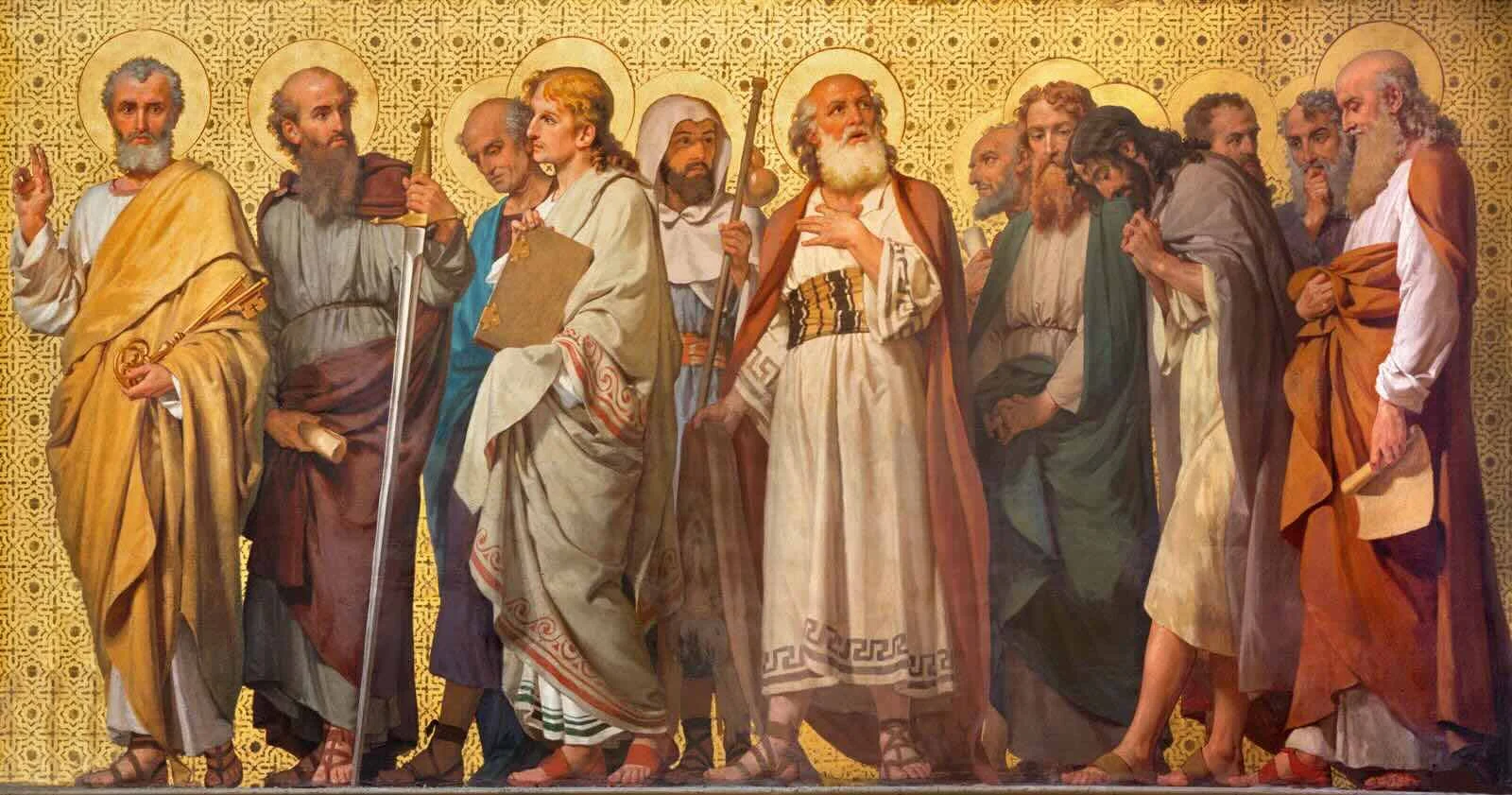
Translated from Philip Schaff's History of The Christian Church
第五章 基督教的敬拜
目录
§ 59. 公共敬拜的场所
§ 60. 主日
§ 61. 基督教的逾越节(复活节)
§ 62. 逾越节之争
§ 63. 五旬节
§ 64. 主显节
§ 65. 公共礼拜的程序
§ 66. 礼拜的组成部分
§ 67. 崇拜礼仪的划分与守秘规制
§ 68. 圣餐的举行
§ 69. 圣餐教义
§ 70. 洗礼的施行
§ 71. 洗礼的教义
§ 72. 教理讲授与坚信礼
§ 73. 婴儿洗礼
§ 74. 异端所施的洗礼
I. 这里最丰富的史料,是殉道者游斯丁 (Justin M.)、德尔图良 (Tertullian)、居普良 (Cyprian)、优西比乌 (Eusebius) 的著作,以及所谓的《使徒宪章》(Constitutiones Apostolicae);还有罗马的革利免 (Clement of Rome)(《致哥林多人书》,Ad Cor. 59–61),以及误托于他名下的一篇讲道(1875年全文刊行)。
- 参见第I卷第455页所引书籍,以及下列教会考古学著作中的有关章节:宾厄姆 (Bingham) 的《基督教会古制》(Antiquities of the Christian Church, Lond. 1708–22,10卷;新版,Lond. 1852,2卷);奥古斯蒂 (Augusti) 的著作(其大部著作共12卷,Leipz. 1817–31;另有《基督教考古学手册》,Handbuch der Christl. Archaeol.,3卷,Leipz. 1836);宾特里姆 (Binterim,罗马天主教)、西格尔 (Siegel)、史密斯与奇瑟姆 (Smith & Cheetham)(《基督教古制辞典》,Dict. of Chr. Ant.,Lond. 1875,2卷),以及加鲁奇 (Garrucci)(《基督教艺术史》,Storia della arte crist.,1872–80,6卷)。
§ 59. 公共敬拜的场所
R. 霍斯皮尼安 (R. Hospinianus):《论圣殿》等,De Templis, 等。Tig. 1603。亦收入其《著作集》(Opera),Genev. 1681。
法布里修斯 (Fabricius):《论古代基督徒的圣殿》(De Templis vett. Christ.)。Helmst. 1704。
穆拉托里 (Muratori,罗马天主教):《论最早的基督教教堂》(De primis Christianorum Ecclesiis.)。Arezzo,1770。
许布施 (Hübsch):《早期基督教教堂》(Altchristliche Kirchen.)。Karlsruh,1860。
Jos. 穆卢利 (Jos. Mullooly):《圣革利免及其在罗马的巴西利卡》(St. Clement and his Basilica in Rome.)。Rome,第2版,1873。
德·沃居埃 (De Vogüé):《第一至第七世纪的民用与宗教建筑》(Architecture civile et relig. du Ie au Vlle siècle.)。Paris,1877,2卷。
众多论述教会建筑的著作(作者有弗格森 Fergusson、布朗 Brown、本森 Bunsen、库格勒 Kugler、金克尔 Kinkel、克罗伊泽 Kreuser、施纳泽 Schnaase、吕布克 Lübke、维奥莱-勒-迪克 Voillet-le-Duc、德·沃居埃 De Vogüé 等),通常都从君士坦丁时代的巴西利卡 (Basilica) 开始讲起;这些建筑已在第III卷第541页及后叙述。
正如我们从教会在这一逼迫时期的卑微处境所能预料的,基督教的敬拜十分简朴,与希腊和罗马教会的华丽隆重形成鲜明对照;然而,它绝非清教徒式的。我们在这里,如同在组织和教义方面一样,可以看出尼西亚时代正逐渐而确定地临近;这一点尤其表现在洗礼仪式的礼仪性庄严,以及圣餐献祭的奥秘性质上。
我们先来略看公共敬拜的场所。直到约第二世纪末,基督徒多半在私人住宅,或荒僻之处、殉道者的墓旁以及地下墓窟的洞室中举行敬拜。这是由于他们贫穷,处于受压迫、不受法律保护的境地,喜爱安静与独处,又厌恶一切异教艺术。护教士屡次申明,他们的弟兄既没有庙宇,也没有祭坛(就这些词的异教含义而言),他们的敬拜是属灵的,不受地点和仪式限制。像塞尔苏斯 (Celsus) 这样的异教徒,以此责难他们;但俄利根 (Origen) 作了极好的回答:基督的人性是上帝至高的圣殿和至美的形像,真正的基督徒则是圣灵活的雕像,斐狄亚斯 (Phidias) 的朱庇特 (Jupiter) 像也无法与之相比。殉道者游斯丁对罗马长官说:基督徒在任何方便的地方聚集,因为他们的上帝不像异教的诸神那样受空间局限,而是无形地临在各处。亚历山大的革利免 (Clement of Alexandria) 则驳斥了宗教受任何建筑物约束的迷信。
在私人住宅中,最适于敬拜和爱筵的房间,是长方形的餐厅,即 triclinium;一所设备便利的希腊或罗马住宅,总少不了这样的房间,而且往往有一个半圆形的壁龛,犹如后来教堂中的诗班席。1 诵读圣经和讲道使用高座,2 圣餐则使用一张简朴的桌子。3 地下墓窟中也有类似的布置,有时其形制如同一座地下教堂。
专用敬拜房屋4的最早踪迹,见于德尔图良的著作,他谈到上教堂;5 也见于与他同时代的亚历山大的革利免,他提到 ἐκκλησία* 一词的双重含义。6 约在230年,亚历山大·塞韦鲁 (Alexander Severus) 不顾酒馆经营者的抗议,准许基督徒使用罗马的一处地方,因为无论何种形式的敬拜上帝,都比经营酒馆更好。第三世纪中叶以后,兴建教堂的活动便蓬勃开展起来,因为基督徒享有四十余年的安宁(260–303),人数增加得极快,以致据优西比乌所说,各处都需要更宽敞的敬拜场所。戴克里先 (Diocletian) 的逼迫始于303年,其开端便是拆毁尼科米底亚 (Nicomedia) 那座宏伟的教堂;据拉克坦提乌 (Lactantius) 所说,它甚至高过邻近的皇宫。7 据推测,早在第四世纪初,罗马就已有四十多座教堂。但关于这些教堂的形制与布局,我们没有记载。教会建筑的时代始于君士坦丁大帝 (Constantine the Great),其最初的样式便是巴西利卡。皇帝本人率先垂范,在耶路撒冷、伯利恒和君士坦丁堡兴建了宏伟的教堂,不过这些建筑后来都经历了许多改动。与他同时代的历史学家优西比乌,给我们留下了第一份教堂建筑的记述,所述是保利努斯 (Paulinus) 于公元313至322年间在推罗 (Tyre) 兴建的教堂。8 它包括一座宽大的门廊(πρόπυλον*);一座四周环列柱廊的四方形中庭(αἴθριον*);中庭中央的一座水泉,供人按惯例在进入教堂前洗手洗脚;内部的柱廊;中殿,即中央空间(βασίλειος οἶκος*),两侧走道上方有楼廊,顶部覆盖着黎巴嫩香柏木的屋顶;以及至圣的祭坛(ἅγιον ἁγίων θυσιαστήριον*)。优西比乌还提到主教和长老的宝座(θρόνοι*),以及长凳或座位。教堂四周环绕着厅堂,外面围以一道墙,其遗迹至今仍可辨认。在推罗的废墟中,尚存这座建筑的五根花岗岩柱的残段。
《使徒宪章》中对教堂的描述,9表明教牧人员占据教堂东端的空间(在诗班席中),会众则在中殿,但没有提到两者之间有任何隔栏。不过,早在第四世纪,已有这样的隔栏,当时平信徒被禁止进入祭坛的围栏以内。
§ 60. 主日
参见第I卷第476页的参考文献。
守主日以纪念基督复活,无疑始于使徒时期。10 第二世纪各教会普遍以宗教方式守这日,若非出于使徒的先例,便无从解释。对此,没有任何异议。这一习俗得到使徒以后最早期作者的见证所证实,如巴拿巴 (Barnabas)、11伊格那丢 (Ignatius)12和殉道者游斯丁。13 小普林尼 (Pliny) 也证实了这一点。14《十二使徒遗训》(Didache) 称一周的第一日为“主的主日”。15
考虑到教会当时正挣扎求存,而且许多基督徒是异教主人的奴隶,我们不能指望,在君士坦丁时代世俗政府援助教会、使守主日合法化(甚至部分加以强制)以前,星期日的敬拜能够始终有规律地举行,劳动也能普遍停止。这或许就是基督和使徒未曾明令要求以宗教方式守这日的缘故;出于类似的原因,《新约》的字句也没有禁止多妻制和奴隶制,尽管其精神谴责这些弊端,并导致它们的废除。我们还可以进一步说,强制性的星期日法令违背基督教的本性与精神,因为基督教诉诸人的自由意志,并且只运用道德的手段来达到目的。基督教政府可以、也应当保护基督教的安息日,使之不受公然亵渎;但以参加公共敬拜来积极遵守这日,则必须留给个人良心上的确信。宗教不能靠法律强制。一旦不再出于自愿,它就失去了价值。
教父们并不把基督教的星期日看作犹太安息日的延续,而是视为它的替代;他们为此所依据的,与其说是第四条诫命,以及这条诫命明确提及的上帝在创世之初的安息,不如说是基督的复活和使徒的传统。在热切证明基督教制度独立的原创性时,人们往往倾向于贬低犹太律法。同样的反犹太教论争动机,也支配着逾越节之争,使基督教的复活节成为一个日期不固定的节期。然而,古代教会始终把星期日视为神圣的设立,至少是在次一级的意义上如此,有别于首要意义上的神圣规例,即基督直接、明确吩咐的洗礼和圣餐等。定期的公共敬拜,绝对需要一个指定的敬拜日。
伊格那丢最先将星期日与犹太人的安息日相对照,认为后者是已经废去的事物。16 所谓《巴拿巴书》的作者也是如此。17 殉道者游斯丁在与一位犹太人的辩论中说,摩西以前的敬虔之人并未受割礼,也未守安息日,却蒙上帝喜悦;18 基督教所要求的不是某一个特定的安息日,而是永恒的安息日。19 他说明选择一周第一日举行基督教敬拜的理由,是上帝在那一日驱散了黑暗和混沌,而且耶稣在那一日从死里复活,向聚集的门徒显现;但他并未提及第四条诫命。20 他使用“守安息日”(σαββατίζειν*)一词时,所指仅限于犹太人,只有刚才引用的那段话例外,在那里他将犹太律法作了属灵的解释。哥林多的狄奥尼修 (Dionysius of Corinth) 在公元170年致罗马教会的一封信中,顺带提到星期日:“今日我们守主日为圣,并在其中诵读了你们的信。”21 撒狄的梅利托 (Melito of Sardis) 曾撰写一篇论主日的著作,现已失传。22 里昂的爱任纽 (Irenaeus of Lyons) 约在170年见证了守主日的习俗,23但他也认为犹太安息日不过是一种象征性和预表性的规例,并说:“亚伯拉罕未受割礼,也未守安息日,就信了上帝”,这证明“那些规例具有象征性和暂时性,且不能使人完全”。24 第二世纪末、第三世纪初的德尔图良,把主日看作脱离罪恶而得安息的象征,以及人最终安息的预表,并说:“我们与安息日、月朔或犹太人的节期毫无关系,更不用说异教徒的节期了。我们有自己的节庆,例如主日和五旬节。既然异教徒只守自己的节期,不守我们的,我们也当只守自己的,不要干预属于他们的节期。”他认为,在主日禁食,或在这一天跪着祷告,都是不对的。“星期日,我们用来欢喜快乐。”但他也认为,基督徒有责任停止世俗的忧虑和劳作,免得给魔鬼留地步。25 这是基督徒在星期日停止劳动的最早明确证据。星期日站立祷告的习惯,德尔图良认为是这日节庆性质所必不可少的,而且曾获一次大公会议认可,后来却被西方教会放弃了。
亚历山大教父们的看法基本相同,只是在犹太安息日的寓意方面,又有一些他们自己的奇想。
由此可见,尼西亚会议以前的教会明确区分基督教的星期日与犹太人的安息日,并将前者置于独立的基督教基础上。教会尚未充分认识到,第四条诫命的实质,即每周有一日休息,乃是根植于人身体与道德上的需要,具有永久的约束力。这与那些仅为犹太人而设、已被福音废除的礼仪规定无关。但另一方面,教会也不容人随意以世俗方式度过这一天。在戏剧及其他娱乐问题上,教会的立场断然是清教徒式和禁欲式的,斥责这些活动无论在哪一天,都与十字架精兵的身份不相称。教会视星期日为圣日,为主的日子,为每周纪念主复活及五旬节圣灵浇灌的日子,因此也是圣洁喜乐与感恩的日子;甚至在日出以前,就当以祷告、赞美和与复活的主及救主相交来庆祝。
星期日立法始于君士坦丁 (Constantine),属于下一时期的历史。
犹太基督徒中守安息日的习俗逐渐消失。然而,东方教会直到今日,仍以不禁食及站立祷告来特别遵守一周的第七日(唯独复活节前的安息日除外);拉丁教会则直接与犹太教相对立,将星期六定为禁食日。关于这一点的争论,早在第二世纪末就已开始。
星期三26,尤其是星期五27,被用来每周纪念主的受苦与受死,并作为忏悔日,或守望日28,以及半日禁食的日子(禁食持续至下午三时)。29
§ 61. 基督教的逾越节(复活节)
R. 霍斯皮尼安努斯 (R. Hospinianus):《基督教节期,即论基督教节日的起源、发展、礼仪与仪式》(Festa Christ., h.e. de origine, progressu, ceremonies el ritibusfestorum dierum Christ.)。Tig.,1593年,后屡次再版。
A. G. 皮尔维茨 (A. G. Pillwitz):《西方教会圣期史》(Gesch. der heil. Zeiten in der abendländ. Kirche)。德累斯顿 (Dresden),1842年。
M. A. 尼克尔 (M. A. Nickel,罗马天主教):《天主教会圣期与节庆的历史及庆祝方式》(Die heil. Zeiten u. Feste nach ihrer Gesch. u. Feier in der kath. Kirche)。美因茨 (Mainz),1825–1838年。6卷。
P. 皮珀 (P. Piper):《复活节史》(Gesch. des Osterfestes)。柏林 (Berl.),1845年。
利斯科 (Lisco):《基督教教会年历》(Das christl. Kirchenjahr)。柏林,1840年;第4版,1850年。
施特劳斯 (Strauss,普鲁士国王的宫廷牧师,卒于1863年):《福音派教会年历》(Das evangel. Kirchenjahr)。柏林,1850年。
博伯斯塔格 (Boberstag):《福音派教会年历》(Das evangel. Kirchenjahr)。布雷斯劳 (Breslau),1857年。
H. 阿尔特 (H. Alt):《基督教敬拜》(Der Christliche Cultus),第II部分:《教会年历》(Das Kirchenjahr),第2版。柏林,1860年。
L. 亨斯利 (L. Hensley):“复活节”(Easter) 条,载史密斯与奇瑟姆 (Smith and Cheetham) 所编著作(1875年),卷I,第586–595页。
F. X. 克劳斯 (F. X. Kraus,罗马天主教):“节期”(Feste) 条,载《基督教古代事物百科全书》(R. Encykl. der Christl. Alterthümer),卷I(1881年),第486–502页,及该条所引文献。此条由数位作者合撰,其中论复活节与五旬节的部分,由图宾根 (Tübingen) 的丰克 (Funk) 博士撰写。
这一时期每年的节期有复活节、五旬节和显现节。它们构成教会年历的雏形,其范围不超出《新约》所记的事实。
严格说来,尼西亚会议以前的教会有两个年度节期:纪念基督受苦的逾越节 (Passover),以及纪念基督复活与升高的五十日节期 (Pentecoste);后者始于复活节,终于严格意义上的五旬节。但逾越节与复活节连成一个持续的庆典,将最深的哀伤与最高的喜乐结合起来,因此,pascha 一词(希腊文和拉丁文皆然)往往在广义上指复活节期,法文的 paque or paques 和意大利文的 pasqua 也是如此。犹太人的逾越节也持续整整一周,此后便开始他们的五旬节期,或七七节期。基督的死在复活中结出果实;若没有复活,他的死就没有救赎的能力。纪念基督受死的节期称为 pascha staurosimon,即严格意义上的逾越节。30 纪念复活的节期称为 pascha anastasimon,后来称为复活节 (Easter)。31 前者对应于悲哀的星期五,后者对应于欢乐的星期日;这两天是一周中纪念那些伟大事件的圣日。
基督教的逾越节自然地从犹太人的逾越节发展而来,正如主日从安息日发展而来一样;逾越节的羔羊被视为基督的预言性预表,基督就是为我们的罪被杀的上帝的羔羊(《哥林多前书》5:7、8),而脱离埃及的奴役,则被视为蒙救赎脱离罪恶的预表。这无疑是教会最古老、最重要的年度节期,可以追溯到第一世纪,或至少追溯到第二世纪中叶;当时各地已普遍遵守,只是在日期以及与之相连的禁食期限上有所不同。这一节期所依据的观念,是被钉十字架并复活的基督乃信仰的中心。犹太基督徒从一开始就很自然地继续庆祝律法所规定的逾越节,却在基督献祭使之成全的亮光中加以庆祝,并主要着眼于钉十字架这一方面。对于外邦基督徒,犹太人的逾越节唯有从十字架反照而来的意义,因此他们主要庆祝主的复活,正如他们每周星期日所做的一样。复活节起初是基督教年历的开端,正如包含春分的尼散月(Nisan,相当于我们的三月或四月)是犹太人宗教年的开端一样。在纪念基督受死与复活的庆典之间,是“大安息日”32,希腊教会也在这一天破例禁食;还有“复活节守夜”33,全体会众以格外虔诚的心守夜,直到黎明。由于普遍相信主将在这一夜荣耀再临,人们便更加谨慎地遵守。复活成全了整个救赎之工,纪念复活的节庆遂逐渐成为基督教逾越节中最突出的部分,并与复活节等同。但纪念钉十字架的礼仪,仍继续在所谓“受难日”(Good Friday)举行。34
逾越节庆典以前,有一段忏悔与禁食的时期,以“圣周”为其顶峰。35 这一禁食期在各地长短不一,从一日或四十小时到六周不等;36 但第五世纪以后,由于罗马的影响,各地一律定为四十日,37 所依据的是基督在旷野禁食四十日,以及《旧约》中这一事件的预表(摩西和以利亚的禁食)。38
§ 62. 逾越节之争
I. 关于逾越节之争的史料:
梅利托 (Melito)、阿波利拿里乌斯 (Apollinarius)、波利克拉底 (Polycrates)、亚历山大的革利免 (Clement of Alexandria)、爱任纽 (Irenaeus) 和希波吕托斯 (Hippolytus) 的残篇,保存于优西比乌 (Euseb.)《教会史》(H. E.) IV. 3、26;V. 23–25;VI. 13;《逾越节编年史》(Chronicon Pasch.) I. 12及后;希波吕托斯《哲学论》(Philosophumena) 第VIII卷第18章的一段文字(第435页,邓克尔与施奈德温 [Duncker & Schneidewin] 编,1859年);安杰洛·迈 (Angelo Mai)《新教父文库》(Nova P. P. Bibl.) 卷IV,第209–216页所收优西比乌的一篇残篇;以及埃皮法尼乌斯 (Epiphanius)《异端论》(Haeresies),Haer. LXX. 1–3;LXX. 9。
- 近代著作,大多因约翰著作问题的争论而起:
魏策尔 (Weitzel):《最初三个世纪基督教的逾越节庆典》(Die Christl. Passafeier der drei ersten Jahrh.)。普福尔茨海姆 (Pforzheim),1848年(另见1848年《研究与评论》[“Studien und Kritiken”] 第4期,反驳鲍尔)。
鲍尔 (Baur):《最初三个世纪的基督教》(Das Christenthum der 3 ersten Jahrh.)(1853年)。图宾根 (Tüb.),第3版,1863年,第156–169页。另有数篇反驳施泰茨 (Steitz) 的论战文章。
希尔根费尔德 (Hilgenfeld):《逾越节之争与〈约翰福音〉》(Der Paschastreit und das Evang. Johannis)(载1849年《神学年鉴》[“Theol. Jahrbücher”]);《再论逾越节之争》(Noch ein Wort über den Passahstreit)(同刊,1858年);以及《据文献论古代教会的逾越节之争及其对教会史与福音书研究的意义》(Der Paschastreit der alten Kirche nach seiner Bedeutung für die Kirchengesch. und für die Evangelienforschung urkundlich dargestellt.)。哈雷 (Halle),1860年(410页)。
施泰茨 (Steitz):关于此问题的数篇论文,大多反驳鲍尔,载1856、1857及1859年《研究与评论》 (“Studien u. Kritiken”);1857年《神学年鉴》 (“Theol. Jahrbücher”);另有“逾越节”(Passah) 条,载《赫尔佐格百科全书》 (“Herzog’s Encycl.”),卷XII(1859年),第149页及后;新版经瓦根曼 (Wagenmann) 修订,见卷XI,第270页及后。
威廉·米利根 (William Milligan):《第二世纪的复活节之争及其与〈约翰福音〉的关系》(The Easter Controversies of the second century in their relation to the Gospel of St. John,),载1867年9月《当代评论》 (“Contemporary Review”),第101–118页。
埃米尔·许勒 (Emil Schürer):《论基督降生后第二世纪发生的逾越节之争》(De Controversiis paschalibus sec. post Chr. soc. exortis,),莱比锡 (Lips.),1869年。同一作者:《第二世纪的逾越节之争》(Die Paschastreitigkeiten des 2ten Jahrh.,),载卡尼斯 (Kahnis) 主编的《历史神学杂志》 (“Zeitschrift für Hist. Theol.”),1870年,第182–284页。极为详尽而精到。
C. 约斯·冯·赫费勒 (C. Jos. von Hefele,罗马天主教):《会议史》(Conciliengeschichte,) I. 86–101(第2版,弗赖堡 [Freib.],1873年;有若干重要改动)。
迪舍纳神父 (Abbé Duchesne):《逾越节问题》(La question de la Pâque),载《历史问题评论》 (“Revue des questions historiques”),1880年7月。
勒南 (Renan):《基督教会》(L’église chrét.),第445–451页;以及《马可·奥勒留》(M. Aurèle,),第194–206页(“逾越节问题”,la question de la Páque)。
关于基督教逾越节及与之相连的禁食的时间,各地有不同的遵守方式。这在古代教会引起了激烈的争论;在近代神学各派中,又因牵涉罗马首位权及《约翰福音》的真伪问题,而引起了几乎同样激烈的争论。39
尼西亚会议以前的逾越节之争,是古代教会史中极为复杂的一章,至今尚未得到充分澄清。这些争论纯属礼仪和纪律问题,不涉及任何教义,却几乎使众教会分裂;双方都过分看重外在形式的一致。然而,这些争论也间接涉及基督教是否独立于犹太教的问题。40
让我们先来考察遵守方式的差异,也就是争论的主题。
小亚细亚 (Asia Minor) 的基督徒沿用犹太人的历法,并援引使徒约翰和腓力的权威,一律在尼散月十四日(可能恰逢一周七日中的任何一天),以庄严的禁食庆祝基督教的逾越节;他们据此确定禁食结束的时间,似乎在这一天晚上结束禁食时,所领受的并非有时人们所设想的犹太逾越节羔羊,41 而是圣餐和爱筵,以此作为基督教的逾越节,庆祝基督受死所成全的救赎。42 尼散月十四日晚上(若按犹太人从日落至日落计算一日的方式,则是十五日开始时)的圣餐,是纪念基督最后的逾越节晚餐。这种遵守方式并不排斥基督作为真正的逾越节羔羊而死的观念。因为在教父们那里,我们既见到这一观念,也见到另一观念,即基督曾与门徒同吃犹太人通常的逾越节筵席,而这筵席是在十四日举行的。43 亚细亚的基督徒后来因其守节的日期,被称为十四日派 (Quartadecimanians)。44 罗马的希波吕托斯轻蔑地称他们为一群好争辩而无知的宗派分子,主张“应当按照律法,在正月十四日守逾越节,无论那一天是一周中的哪一日”。45 然而,十四日派的守节方式很可能是最古老的,而且符合符类福音关于我主最后一次逾越节的传统;他们所纪念的正是这件事。46
相反,罗马教会同样援引早期的习俗,却总在星期五,也就是耶稣实际受死的那个星期日序,纪念他的受死;并总在三月满月之后的一个星期日庆祝他的复活,将逾越节禁食延续至那一天;他们认为,在更早的日期结束禁食,或在复活节庆典以前举行圣餐,都是不合宜的。几乎所有其他教会在这种守节方式上都与罗马一致,并将重点放在星期日的复活庆典上。罗马的这一做法形成了一整个圣周,以庄严的禁食纪念主的受难;亚细亚的做法则在尼散月十四日结束禁食,而这一天有时可能比星期日早数日。
因此,世人常常看到这样一幅景象:基督教世界的一部分正在为我们救主的受死禁食哀恸,另一部分却正在因复活的荣耀而欢欣。这在大公教会所持的礼仪合宜与整齐划一的观念看来,实在令人震惊。由此引发争论,并有人竭力谋求协调基督教世界中彼此对立的双方,使他们在公开庆祝基督教救恩的根本事实及教会年历中最神圣的节期时取得一致,我们对此不足为奇。
逾越节之争的要点在于:应当由犹太人的逾越节日(无论是否星期五),还是由基督教的星期日,来决定整个节期的意义和日期。亚细亚 (Asia) 遵循约翰的做法,在这里体现了恪守历史先例的精神,其优点在于复活节日期固定;除了遵守每月的一个固定日期以外,并无犹太化之处。罗马的习俗则体现了自由与酌情变通的原则,以及基督教节期制度的独立性。从教义上说,两者的差别在于:前者着重主的受死,后者则着重他的复活。但早期教会关注这一问题,主要不是出于天文学或教义的考虑,而是出于礼仪的考虑。其主要目的,是确保守节方式一致,并申明基督教节期循环自有其本源,独立于犹太教;由于这两个缘故,罗马的习俗最终甚至在东方也取得了胜利。因此,复活节成了一个日期不固定的节日,其日期从三月底到四月下旬不等。
这场争论的历史可分为三幕。
- 公元150至155年间,士每拿 (Smyrna) 主教坡旅甲 (Polycarp) 访问罗马主教阿尼凯图斯 (Anicetus) 时,这一分歧首次成为讨论的议题。47 问题虽未解决,两位主教却和平分手;临别以前,后者曾请这位德高望重的客人在自己的教会中主持圣餐。坡旅甲的学生爱任纽 (Irenaeus) 为我们留下了一段简短而饶有兴味的争论记述,内容如下:48
“蒙福的坡旅甲在阿尼凯图斯任内旅居罗马时,二人在其他几点上也有些小小的意见分歧,49 但他们不喜彼此争辩,便立刻在这一问题[守复活节]上达成了和平的谅解。因为阿尼凯图斯不能说服坡旅甲不再遵守,50 因为他[坡旅甲]一向与我们主的门徒约翰,以及他曾与之交往的其他使徒一同遵守;坡旅甲也未能说服阿尼凯图斯遵守(希腊文:τηρεῖν*),因为阿尼凯图斯说,他有责任保持在他以前的长老(即主教)们的习俗。既是如此,他们便一同领受圣餐;在教会中,阿尼凯图斯将主持圣餐(希腊文:τὴν εὐχαριστίαν*)的职分让给坡旅甲,无疑是出于敬意。随后,他们和平分手,全教会也都和睦,无论遵守还是不遵守[尼散月十四日]的人,都保持着和平。”
这封信证明,坡旅甲时代的基督徒懂得,即使礼仪和仪式不一致,也能保守圣灵所赐的合一。爱任纽在同一封信中说:“我们禁食方式的差异本身,反倒确立了我们信仰上的一致。”
- 数年以后,约公元170年,争论在老底嘉 (Laodicea) 爆发,但仅限于亚细亚;那里或是十四日派内部产生了分歧,或更确切地说,是他们与遵循西方守节方式的人发生了分歧。关于这场发生于两次争论之间的局部争端,记载既不完整,也不清楚。优西比乌 (Eusebius) 仅仅提到,当时撒狄 (Sardis) 的米利都 (Melito) 写了两部论逾越节的著作。51 但这两部著作都已散佚,亚历山大的革利免 (Clement of Alexandria) 关于同一题目的著作也已失传。52 我们的主要史料来源,是弗里吉亚 (Phrygia) 的希拉波立 (Hierapolis) 主教克劳狄乌斯·阿波利纳里乌斯 (Claudius Apolinarius,亦作 Apollinaris)53 论述这一问题的两段残篇,保存在《逾越节编年史》(Chronicon Paschale) 中。54 内容如下:
“如今有些人出于无知,喜欢在这些事上挑起争端;他们在这件事上所犯的过错,尚可宽恕;因为无知与其说应受责备,不如说需要教导。他们说,十四日[尼散月],主与门徒同吃了逾越节的羊羔(τὸ πρόβατον ἔφαγε*),而他自己却在除酵节的大日受难55[即尼散月十五日];他们又把《马太福音》解释为支持自己的观点。由此可见,他们的观点与律法不合,56 而且照他们的说法,各福音书似乎彼此矛盾。57
十四日才是主真正的逾越节,是那伟大的祭牲,就是代替羊羔的上帝之子58……他被举在独角兽的角上……又在逾越节那天被安葬,石头也安放在他的坟墓上。”
这里,阿波利纳里乌斯显然是在反对十四日派的做法,但只将其视为出于无知,而非应受谴责的异端。他反对这种做法,是认为它犯了年代与释经上的错误;他似乎主张,十四日而非十五日,才是基督作为上帝真正的羔羊受死的大日,但其错误的前提是,以为这一真理取决于十字架受难与犹太人逾越节在日期上的重合。然而,问题在于:他是站在西方和罗马的立场上提出抗议——这一立场在东方也有许多拥护者59——还是以十四日派成员的身份提出抗议?60 若属后者,我们就必须在十四日派中区分出两派:一派是正统的或大公教会的十四日派,仅以禁食和晚间圣餐遵守尼散月十四日;另一派则是人数较少、持异端并造成分裂的十四日派,采纳犹太人的做法,在那一天吃逾越节羊羔,以纪念救主最后一次逾越节。然而,无论上述引文还是其他段落,都没有证据支持这种区分。一个如此严重犹太化的派别,必会受到大公教会主教更严厉的对待。甚至犹太人,在圣殿被毁以后也不能再吃逾越节羊羔,因为羊羔必须在圣殿中宰杀。爱任纽、希波吕托斯 (Hippolytus)61 和优西比乌的著作中都没有这种派别的踪迹;他们所说的十四日派只有一类。62
因此,我们断定,阿波利纳里乌斯所反对的是十四日派的整个做法,尽管他的态度十分温和而宽厚。老底嘉的争论,是同一场争论中的一个阶段;此前,坡旅甲与阿尼凯图斯曾以基督徒的爱心讨论过这一问题,不久以后,坡利克拉底 (Polycrates) 与维克托 (Victor) 又以教阶权势和不宽容的激烈态度,再度掀起了争端。
- 190至194年间,争论进入第三阶段,其重要性和激烈程度都远胜于前,波及整个教会,并促成了许多会议及会议书信。63 罗马主教维克托与他的前任阿尼凯图斯大不相同,他以专横的口吻要求亚细亚人放弃十四日派的做法。对此,以弗所 (Ephesus) 主教坡利克拉底以他所召集的会议的名义,郑重提出抗议,并列举了一大批令人敬重的权威,为他们古老的习俗作证。优西比乌保存了他的信,这封信颇能显出他的性格。
“我们,”这位以弗所主教写信给罗马教皇及其教会说,“我们遵守真正的日子,既不增加,也不删减。因为在亚细亚,伟大的光体64 已经睡了;他们将在主显现的日子复起,那时他要带着荣耀从天降临,使众圣徒复活。他们是:十二使徒之一的腓力,长眠于希拉波立,还有他的两个年老的童贞女儿;他的另一个女儿,一生受圣灵感动,如今也安息在以弗所;还有约翰,他曾靠在我们主的胸膛上,65 也是祭司,佩戴祭司的金牌,66 既是殉道者,也是教师;他葬在以弗所。还有士每拿的坡旅甲,既是主教,也是殉道者;以及欧梅尼亚 (Eumenia) 的主教兼殉道者特拉西阿斯 (Thraseas),他长眠于士每拿。我何须再提长眠于老底嘉的主教兼殉道者撒迦里斯 (Sagaris),以及蒙福的帕皮里乌斯 (Papirius),还有那位宦者[独身者]米利都?米利都一生完全受圣灵感动,如今安息在撒狄,等候那从天而来的眷顾,届时他将从死里复活。这一切人都按照福音遵守逾越节的十四日,毫无偏离,只遵循信仰的准则。
“再者,我坡利克拉底,是你们中间最小的,也照着我亲属的传统而行;其中有几位是我所追随的。因为我的亲属中有七位曾任主教,而我是第八位;我的亲属始终遵守犹太百姓除去酵的那一天。因此,弟兄们,我在主里如今已有六十五年,曾与普天下的弟兄商议,也研读过全部圣经;对于那些用来恐吓我的威胁,我毫不惊惶。因为比我更大的人曾说:‘顺从上帝,不顺从人,是应当的。’……我还可以提及那些出席的主教;你们请我召集他们,我也确实召集了他们。他们的名字若列出来,为数甚多;他们虽见我身体瘦弱,仍赞同我的书信,深知我的白发并非徒然,而我始终在主耶稣里规正自己的生活。”67
维克托对这一劝谏置若罔闻,斥亚细亚人为异端,并威胁要将他们逐出教会。68
但许多东方主教,甚至代表高卢 (Gaul) 基督徒的爱任纽,虽然在争议的问题上赞同维克托,却严正责备他如此傲慢,并提醒他,他的前任阿尼凯图斯、庇护 (Pius)、希吉努斯 (Hyginus)、特勒斯福鲁斯 (Telesphorus) 和克西斯图斯 (Xystus),曾将圣餐送给持不同意见的弟兄,表现得更合乎基督徒的品格与弟兄之情。他尤其详述了阿尼凯图斯对待坡旅甲的友爱行为。正如优西比乌所说,爱任纽在这件事上证明了自己确是一位使人和睦的人;他有力的抗议,似乎阻止了这场分裂。
我们还保存有这位爱任纽论这场争论的另一段话:69“使徒已经吩咐我们,不可‘在饮食上,或在节期、月朔、安息日上,论断任何人’(《歌罗西书》2:16)。那么,这些争战从何而来?这些分裂从何而来?我们虽然守节,却带着恶毒的酵,撕裂上帝的教会,遵守外在的事物,反而弃绝更美的,就是信心和爱心。这样的节期和禁食不蒙主喜悦,我们已经从先知那里听见了。”这实在是合乎福音的情怀,出自一位传扬圣约翰的教导及其临终之言的人:“孩子们哪,你们要彼此相爱。”
- 在第三世纪,罗马的做法在东方各地日益扩展;若先说其结局,325年的尼西亚会议 (Council of Nicaea) 将其确立为全教会的法规。这次会议认为,基督徒沿用那些不信而又敌对的犹太人的习俗,有失体统,遂规定复活节应始终在春分(3月21日)后第一次满月之后的第一个星期日庆祝,而且始终须在犹太人的逾越节之后。70 如果满月恰逢星期日,复活节便定于下一个星期日。按照这一安排,复活节最早可在3月22日,最晚可在4月25日。
从此,十四日派普遍被视为异端,并受到相应的惩处。341年的安提阿会议 (Synod of Antioch) 将他们逐出教会。孟他努派 (Montanists) 和诺瓦atian派 (Novatians) 也被指有遵守十四日派习俗之事。这种做法的最后踪迹,到第六世纪便消失了。
然而,由于按照月亮运行和春分推算复活节主日的方法不同,人们所期望的复活节守节日期的统一仍受阻碍。亚历山大里亚人 (Alexandrians) 将春分定在3月21日,罗马人则定在18日;因此,例如在387年,罗马人于3月21日庆祝复活节,亚历山大里亚人却直到4月25日才庆祝。在西方,计算方法也发生了变化,致使复活节争论在第六、七世纪再度兴起。古不列颠、爱尔兰和苏格兰的基督徒,以及欧洲大陆上的爱尔兰传教士,坚持较早的八十四年周期,反对后来狄奥尼修斯 (Dionysius) 的、亦即罗马的九十五年周期,因此被盎格鲁-撒克逊 (Anglo-Saxon) 和罗马的反对者称为“十四日派” (Quartadecimanians),但这并不公允;因为他们总是在该月14日至20日之间的一个星期日庆祝复活节(罗马人则在15日至21日之间)。罗马的做法取得了胜利。但罗马又在格列高利十三世 (Gregory XIII) 任内改历(公元1583年)。因此,直到今日,坚持儒略历 (Julian calendar)、拒绝格列高利历 (Gregorian calendar) 的东方教会,在守复活节的日期上,仍与西方基督徒不同。
如果在结束禁食的时间上,对古代亚细亚的做法略作调整,使复活节像圣诞节一样成为固定的节期——即使不能固定日期,至少固定其所在的星期——那么,所有这些无益的礼仪争论,本来都可以避免。
附注
图宾根学派 (Tübingen School) 的否定派批评家,大大夸大了这场争论对于第四福音书出自约翰这一问题的意义。鲍尔博士 (Dr. Baur)、施韦格勒 (Schwegler)、希尔根费尔德 (Hilgenfeld)、施特劳斯 (Straus)(《耶稣传》Leben Jesu,1864年新版,第76页及下页)、申克尔 (Schenkel)、斯霍尔滕 (Scholten)、塞缪尔·戴维森 (Samuel Davidson)、勒南 (Renan)(《马可·奥勒留》Marc-Aurèle,第196页),都把它用作反对约翰著作权的致命论据。他们的论证如下:“亚细亚的做法所依据的信念是,耶稣在尼散月 (Nisan) 十四日晚上与门徒同吃犹太人的逾越节筵席,并在十五日受死;这个信念与第四福音书不相容,因为该书把耶稣作为真正逾越节羔羊的死,定在尼散月十四日,正好在犹太人例行的逾越节之前;因此,约在公元160年复活节争论初起之时,第四福音书不可能已经存在;或者,无论如何,它不可能是约翰的作品,而亚细亚的基督徒却如此自信地援引约翰,为他们守逾越节的做法辩护。”
然而,即使暂且不论那些可追溯至第二世纪最初四分之一时期、证明《约翰福音》真实性的早期见证,上述论证的小前提也是错误的,因此其结论便不能成立。仔细考察《约翰福音》的有关经文,便会得出结论:它与对观福音书的记载一致,将最后的晚餐定在尼散月十四日,将钉十字架定在十五日。(关于这一年代问题上的困难,参本书第I卷,第133页及后;以及那里所引的学者,尤其是约翰·莱特福特 (John Lightfoot)、维泽勒 (Wieseler)、罗宾逊 (Robinson)、兰格 (Lange)、基希纳 (Kirchner) 和麦克莱伦 (McClellan)。)
魏策尔 (Weitzel)、施泰茨 (Steitz) 和瓦根曼 (Wagenmann) 则通过质疑大前提,否定图宾根学派的推论;他们主张,亚细亚的守节方式意味着基督作为真正的逾越节羔羊,死于尼散月十四日,而非十五日(这与图宾根学派及他们自己对约翰年代次序的解释相符)。对此观点,我们提出以下反对理由:1)它与第214页所引《逾越节编年史》(Chronicon Paschale) 中阿波利纳里乌斯 (Apolinarius) 的片段相冲突。2)基督作为真正的逾越节羔羊受死这一观念,与对观福音书的年代次序并不矛盾;因为前者是保罗所教导的(《哥林多前书》5:7),而支持罗马做法的人也援引保罗;教父们同时持有这两种看法,时间上的吻合较之事实本身是次要的。3)关于基督受死的原始传统存在矛盾,是极不可能的;而使约翰的年代次序与对观福音书相协调,远比反过来(vice versa)容易。
在我看来,亚细亚人在尼散月十四日守节,是为了纪念主最后一次守逾越节,而这也必然包含对他受死的纪念,正如每次举行圣餐一样。然而,无论如何,这些古代的逾越节争论,其关键根本不在年代次序的问题,也不在基督受死的确切日期,而在于每年守节应在星期几,以及采取何种方式。问题在于:逾越节的圣餐应在尼散月十四日举行,还是不顾犹太人的历法,在复活节的主日举行。
§ 63. 五旬节
复活节之后是五旬节 (Pentecost)。71 它以犹太人的收割节为基础。早在第二世纪,人们就已普遍守这节,纪念复活之主的显现及其升天得荣,整个节期都洋溢着欢乐。它持续五十天——Quinquagesima——人们把这五十天当作一个连续的主日来庆祝,每日领圣餐,站立祷告,完全不禁食。德尔图良 (Tertullian) 说,异教徒的一切节期加起来,也抵不上基督徒的一个五旬节。72 在这段期间,公共礼拜中诵读《使徒行传》(希腊教会至今仍如此)。
后来,庆祝便只限于第四十日的升天节,以及第五十日、即严格意义上的五旬节(Whitsunday),后者是纪念圣灵浇灌和基督教会诞生的节日。在这个较狭的意义上,五旬节结束了纪念我主的节期循环(semestre Domini),在这些节期中位居第三(仅次于复活节和圣诞节)。73 这也是人们喜爱施行洗礼的时节,尤其是在节日前夕的守夜礼中。
§ 64. 主显节
主显节 (Epiphany) 的起源较晚。74 它由东方传向西方,但在西方,甚至到了第四世纪,仍受到多纳徒派 (Donatists) 等派别的抵制,被斥为东方的新创。一般而言,这是纪念基督在肉身中显现的节日,尤其纪念他在约旦河受洗时显明自己的弥赛亚身份;它同时是纪念他降生和受洗的节日。通常在1月6日守此节。75 当东方从西方采纳圣诞节之后,主显节便仅限于庆祝基督受洗,并成为施行洗礼的三大节期之一。
在西方,后来它成为综合纪念耶稣生平中数件事迹的节日,如博士来拜、迦拿的第一个神迹,有时也纪念给五千人吃饱的神迹。它更特别地成为“三王节”,即纪念来自东方的博士的节日,并与向异教徒传教有了特别的联系。三王——卡斯帕尔 (Caspar)、梅尔基奥尔 (Melchior)、巴尔塔扎尔 (Baltazar)——的传说,是从经文所记博士献给新生犹太人之王的礼物,即黄金、乳香和没药,逐渐发展出来的。76
第四世纪以前,尚无圣诞节的明确踪迹;一方面,因为主显节在某种程度上取代了它的位置;另一方面,因为基督的降生——其日期无论如何并不确定——在基督徒心目中,不如他的受死和复活那样突出。圣诞节起源于西方(罗马),第四世纪中叶之后传入东方;因为金口约翰 (Chrysostom) 在一篇很可能于386年12月25日宣讲的讲道中,提到另定一日庆祝基督降生的做法,是最近才传入安提阿 (Antioch) 的。
§ 65. 公共礼拜的程序
关于基督徒礼拜的最早描述,是一位异教徒小普林尼 (Pliny) 于公元109年提供给我们的,见于他致图拉真 (Trajan) 的著名书信,其中包含了他在庇推尼 (Bithynia) 进行司法调查的结果。77 据此记载,基督徒在指定的日子(星期日)日出时聚集,以应答的方式向基督唱诗,如同向上帝唱诗一样,78 随后以誓言(sacramentum)约束自己,不作任何恶事,不偷窃,不抢劫,不奸淫,不背约,也不侵吞受托保管的财物。之后(在晚上),他们再次聚集,吃普通而无害的食物(爱筵)。
因此,这位罗马官员的记述,见证了早期信徒守主日的惯例、爱筵与晨间礼拜(包括圣餐)的分离,以及在诗歌中将基督当作上帝敬拜的做法。
殉道者游斯丁 (Justin Martyr) 在其较长的《护教书》(Apology) 结尾,79 更详细地描述了约140年时公共礼拜的举行方式。他先详述洗礼和圣餐——我们以后还要论及——然后继续说:
“在星期日,80 凡住在城里和乡村的人都聚集在一起,按时间所容许的,诵读一段使徒的回忆录(福音书)和先知的著作(旧约)。81 诵读者读毕,主持人82 便发表讲论,劝勉众人83 效法这些美善的事。此后,我们全体起立,同心祷告。84 祷告结束时,正如我们前面所述,85 有人拿来饼和搀水的酒。主持人按所赐给他的能力,86 为这些献上祷告和感谢,会众则回应阿们。随后,将祝圣的饼和酒分给各人领受,执事也将这些送到缺席者家中。有资财而又乐意的人,便随己意捐献;所收的款项交由主持人保管,他用来供给孤儿寡妇、贫穷困乏者、囚犯和客旅,并照顾所有有需要的人。我们在星期日共同聚集,是因为这是第一日,上帝在这一天创造了世界和光;也因为我们的救主耶稣基督在这同一天从死里复活,向门徒显现。”
在这里,诵读圣经、讲道(且被视为主教的职分)、祷告和圣餐,显然已是主日礼拜的固定组成部分;这一切无疑都传自使徒时期。这里没有明确提到唱诗,但在别处有所提及。87 圣餐此时尚未与礼拜的其他部分明确分开。不过,到第二世纪末,这种区分便已形成。
德尔图良也在不同地方提到了这些相同的礼拜组成部分。88
《使徒宪章》(Apostolical Constitutions) 第八卷已经载有一套详尽的礼拜仪式,其中包括多种礼仪祷文。89
§ 66. 礼拜的组成部分
诵读选自旧约的经课,并加以实际应用和劝勉,是从犹太会堂传入基督教会的。随着福音书和使徒书信取代使徒时期的口头教导,新约经课的使用也日益显著。殉道者游斯丁明确提到了诵读福音书,《使徒宪章》又加上了使徒书信和《使徒行传》。90 五旬节期间,经课取自《使徒行传》。但在尼西亚时期以前,尚无统一的选经制度。除了正典圣经,有些会众也诵读使徒之后的著作,如《罗马的革利免书信》(Epistle of Clement of Rome)、《巴拿巴书信》(Epistle of Barnabas) 和《黑马牧人书》(Pastor of Hermas);这些著作也见于重要的新约抄本中。91 殉道者殉道的周年纪念日,也诵读《殉道者行传》(Acts of Martyrs)。
讲道92原是对圣经所作的浅近讲解,并劝人悔改、过圣洁生活;在希腊教会中,逐渐带上了艺术和修辞的色彩。起初,凡有公开讲说恩赐的成员,都可以自由讲道;后来,这逐渐成为教牧人员、尤其是主教的专有特权。奥利金 (Origen) 在受按立以前就曾应邀讲道,但即使在当时,这也已是例外。现知最古老的讲章,于1875年重新发现了全文,出自二世纪中叶一位姓名不详的希腊或罗马作者,很可能写于公元140年以前(从前曾归于罗马的革利免名下)。他称听众为“弟兄”和“姊妹”,并照着讲稿宣读。93 这篇讲章并无文学价值,显出思想的混乱与贫乏,却洋溢着道德上的热忱和得胜的信心。它以如下颂荣作结:“愿荣耀归于那独一不可见的上帝、真理之父,直到永永远远。祂差遣救主、永生之君到我们这里来,又借着祂将真理和属天的生命向我们显明。阿们。”94
祷告。这是一切礼拜中不可或缺的部分,同样从犹太人的崇拜传入了基督教礼拜。使徒之后时期最古老的祷文,是《十二使徒遗训》(Didache) 中的圣餐感恩祷文,以及《革利免致哥林多人书信》结尾的代祷文;后者似乎曾在罗马教会使用。95 这篇祷文篇幅很长,措辞审慎,大量穿插旧约经文。开头以对偶句详尽地呼求上帝,继而为受苦者、穷乏者、迷失者和被囚者代求,祈求异教徒归信,承认罪过并求赦免(但没有宣告赦罪的程式),最后以求合一的祷告和颂荣作结。其中为当时如此敌视基督徒的统治者祈求上帝赐他们健康、平安、和睦与安稳,尤为感人。这篇文献与一些古代礼仪的若干部分有惊人的相似之处;这些礼仪到四世纪才开始出现,却冠以革利免、雅各和马可的名字,而且很可能包含一些原始的成分。96
《使徒宪章》(Apostolical Constitutions) 的最后一卷载有伪托革利免或革利免之后的礼仪,其中有为信徒、慕道者、被鬼附者、悔罪者,甚至为死者所作的专门祷文,以及完整的圣餐礼仪。97
祷告时通常采取东方的姿势,站立并伸开双臂。
- 诗歌。教会从犹太会堂承受了《诗篇》,历世历代都以之为取之不尽的敬虔宝库。《诗篇》的精神和宗旨真正具有普世性;它发源于人心在与上帝隐密相交时的深处泉源,将各时代、各语言之人的宗教经验表达为典范。这就是它出于默示的最佳证明。在异教世界的全部诗歌中,找不到任何可以与之相比的作品。首先使《诗篇》的宝库更加丰富的,是那些迎接世界救主降生的受默示诗歌:马利亚的《尊主颂》(Magnificat)、撒迦利亚的《颂赞歌》(Benedictus)、天军的《至高荣耀颂》(Gloria in Excelsis),以及老西面的《西面颂》(Nunc Dimittis)。这些诗歌立即进入教会的礼拜,作为“永远令人喜悦”的美好事物,响彻此后的各个世纪。在各书信和《启示录》中,处处可见原始基督教诗歌的踪迹。天使的颂歌(《路加福音》2:14)扩展成了《至高荣耀颂》(Gloria in Excelsis),最早出现于希腊教会,即使不在二世纪,也是在三世纪;后来传入拉丁教会,用作晨祷诗。98 它与年代较晚的拉丁文《赞美颂》(Te Deum) 一样,是敬虔表达的经典形式之一。希腊教会的晚祷诗则不那么为人熟知,价值也稍逊。
以下是一篇意译:
“欢呼!喜乐之光,从祂纯净的荣耀倾泻而出,
祂是不朽、属天、蒙福的父,
至圣中的至圣——我们的主耶稣基督!
如今我们已来到太阳安歇之时,
晚间的灯光照耀我们四周,
我们歌颂父、子和神圣的圣灵!
你在一切时候都最配受歌颂,
以无玷污的舌头颂扬,
我们上帝之子,惟一赐生命者!
因此,主啊,我们在普世之中承认你的荣耀。”99
二世纪末的一位作者100在驳斥亚 Artemon 派 (Artemonites) 时,能够援引众多诗歌,证明教会对基督神性的信仰:“从起初以来,信徒所写的基督徒诗篇和颂歌何其多!他们在这些诗歌中阐明神学,赞美基督为上帝的道 (Logos)。”据传统说,交替唱和的对唱诗歌,是由安提阿的伊格纳修 (Ignatius of Antioch) 引入的。诺斯替派 (Gnostics) 的瓦伦廷 (Valentine) 和巴尔德萨尼斯 (Bardesanes) 也创作宗教诗歌;教会采用这种做法,无疑不是向他们学来的,而是承自旧约的《诗篇》。
现存最古老、能够追溯到具体作者的基督教诗歌,出自思想深邃的基督教哲学家亚历山大的革利免 (Clement of Alexandria) 之手;他在公元202年以前曾在该城教授神学。这是一首崇高而措辞略显浮夸的诗歌,赞美道为人类的神圣导师和领袖;它虽不是为公共礼拜而作,也不适合用于公共礼拜,却以其精神和古老年代而值得注意。101
附注
I. 罗马教会的祷文,出自新近重新发现的《革利免致哥林多人书信》第59–61章(采用莱特福特主教的译文,见《罗马的圣革利免》〔St. Clement of Rome〕,附录,第376–378页):
“主啊,求你使我们将盼望寄托于你的名,这名乃是一切受造之物最初的源头;又求你开我们心中的眼睛,使我们认识你,惟有你在至高之处为至高,在圣者之中为圣;你使骄傲人的狂妄降卑,使列国的计谋四散;你将卑微的升高,又使高傲的降卑;你使人富足,也使人贫穷;你使人死,也使人活;惟有你是众灵的恩主,是凡有血气者的上帝;你鉴察深渊,审视人的行为;你是危难中之人的帮助,是绝望之人的救主;你是每一个灵的创造者和鉴察者;你使地上的列国繁衍,又借着你的爱子耶稣基督,从万民中拣选了爱你的人;你借着祂教导我们,使我们成圣,使我们得尊荣。主宰啊,我们恳求你作我们的帮助和援救。拯救我们中间遭患难的人;怜悯卑微的人;扶起跌倒的人;向穷乏的人显现;医治不敬虔的人;使你百姓中迷失的人回转;使饥饿的人得饱足;释放我们中间被囚的人;扶起软弱的人;安慰灰心的人。使一切外邦人知道,惟有你是上帝,耶稣基督是你的儿子,我们是你的子民,是你草场上的羊。
“你借着你的作为,使世上亘古的信实者显明出来。主啊,你创造了大地。你世世代代信实,判断公义,能力与卓越奇妙无比。你创造时有智慧,立定所造之物时有聪明;你在可见的事物上显为良善,向倚靠你的人守信;你满有怜悯和慈悲,求你赦免我们的罪孽、不义、过犯与亏欠。不要将你仆人和婢女的一切罪归在我们账上,却求你以真理的洁净来洁净我们,引导我们的脚步,使我们以圣洁、公义和专一的心行事,作在你眼中和我们的统治者眼中美好而蒙悦纳的事。主啊,求你使你的脸在平安中光照我们,使我们得福,使我们蒙你大能之手的庇护,并借着你高举的膀臂脱离一切罪恶。又求你救我们脱离那些无故恨我们的人。求你将和睦与平安赐给我们和地上所有居民,正如我们的祖先以信心、真诚和圣洁呼求你时,你所赐给他们的一样;使我们顺服你全能、至高的名,以及地上治理我们的官长之时,可以得救。
“主宰啊,你借着你卓越、不可言喻的大能,将统治的权柄赐给他们,使我们知道你所赐给他们的荣耀和尊贵,就顺服他们,在任何事上都不违抗你的旨意。因此,主啊,求你赐他们健康、平安、和睦与安稳,使他们可以毫无失误地施行你交付他们的治理。因为,属天的主宰、万世之王啊,是你将荣耀、尊贵和治理地上一切事物的权柄赐给世人。主啊,求你照着你眼中美好而蒙悦纳的事,引导他们的谋划,使他们以敬虔的心,在平安与温柔中运用你所赐的权柄,因而得蒙你的恩眷。惟有你能为我们成就这些事,并成就远比这些更加美善的事;我们借着我们灵魂的大祭司和守护者耶稣基督赞美你,愿荣耀和威严借着祂归于你,从今时直到世世代代,直到永永远远。阿们。”
- 亚历山大的革利免赞美基督之诗的直译。
《救主基督颂》Ὕμνος τοῦ Σωτῆρος χριστοῦ*。(Στομίον πώλων ἀδάων*)。
“未驯幼驹的辔头,
基督的脚踪啊,
不迷途之鸟的翅膀,
属天的道路啊,
婴孩稳妥的舵,
永存的道,
君王羔羊的牧者!
无尽的世代,
求你聚集你纯真的儿女,
永恒的光,
使他们圣洁地赞美,
怜悯的泉源,
毫无诡诈地歌颂,
美德的践行者。
用纯洁的口,
那些人的生命[是]高贵的,
歌颂基督,孩童的引导者。
他们赞美上帝,
基督耶稣啊,
圣徒之王啊,
属天的乳汁,
降服万有的道,
来自甘甜的乳房,
至高之父的道,
来自新妇的恩泽,
智慧之君,
从你的智慧中挤出。
忧伤中的扶持,
在万世中欢喜的那一位,
得着滋养的婴孩,
耶稣,救主,
用柔嫩的口,
人类的救主,
饱饮甘露般的灵,
牧者,农夫,
来自属灵的乳房。
舵,辔头,
让我们一同歌唱,
属天的翅膀,
唱出纯真的赞美,
至圣羊群的翅膀,
唱出真诚的颂歌,
得人的渔夫,
献给基督[这位]君王,
使人得救,
神圣的奖赏,
捕取贞洁的鱼,
为着生命的教训。
以甘甜的生命,
让我们一同歌唱,
从可憎的波涛中,
以纯真的心歌唱,
从罪恶之海中。
向那大能的圣婴。
和平的诗班啊,
求你引导[我们],牧者,
为基督所生的诗班,
有理性之羊的牧者;
贞洁的子民啊,
求你引导无邪的孩童,
让我们一同赞美,
圣洁的君王啊。
赞美赐平安的上帝。”
这首诗在十六个世纪中一直只是圣诗学上的一件珍品,直到1846年,美国公理宗牧师亨利·马丁·德克斯特博士 (Henry Martyn Dexter) 以巧妙的改写,使它在现代圣诗集中占有了一席之地。他告诉我,当时他正在准备一篇论“早期基督徒若干显著特征”的讲章(经文为《申命记》32:7:“你当追想上古之日”),先将革利免的这首希腊文圣诗准确译出,然后加以改写,使之适合现代用语,供会众配合讲章使用。众所周知,以色列的许多诗篇曾激发出一些最崇高的基督教圣诗。《诗篇》第46篇为路德那首凯歌般的宗教改革战歌《上帝是我们坚固保障》(Ein’ feste Burg) 定下了基调。约翰·梅森·尼尔 (John Mason Neale) 从历代尘封的文献中发掘了许多希腊文和拉丁文圣诗,造就了英国各教会;其中尤其值得一提的是克吕尼的伯尔纳 (Bernard of Cluny) 所作《论轻看世界》(De Contemptu Mundi) 的若干部分。这首长诗贯穿近三千行扬抑抑格六音步诗句,为《今生所分短暂》《为你,亲爱、亲爱的家乡》和《金色的耶路撒冷》提供了素材。我们在此附上德克斯特的圣诗,作为赋予古诗新生命、使之焕发青春而有益于人的一个佳例。
- 幼年之人的牧者,
无人向你呼求而徒然;
以慈爱和真理引导,
你不嫌弃施予援手——
经过曲折的道路;
赐下从上头来的帮助。
基督,我们得胜的君王,
我们前来歌颂你的名;
- 愿你永远作我们的向导,
将我们的孩童带到这里,
我们的牧者,我们的荣耀,
高声赞美你!
我们的杖,我们的歌!
耶稣,你是上帝的基督,
- 你是我们的圣主,
求你以永存的话语,
使万有降服的道,
领我们走你所走过的路,
纷争的医治者!
使我们的信心坚固。
你曾自甘卑微,
为要从罪的深重羞辱中,
- 因此,从今直到离世,
拯救我们人类,
我们高声赞美你,
赐我们生命。
并且欢然歌唱:
婴孩,以及欢乐的众人,
- 你是尊荣的大祭司;
凡属你教会的人,
你已预备筵席,
同心合意,使歌声更嘹亮,
那属天之爱的筵席
§ 67. 崇拜礼仪的划分与守秘规制
理查德·罗特 (Richard Rothe):《论基督教会中所谓守秘规制的起源》(De Disciplinae Arcani, quae dicitur, in Ecclesia Christ. Origine.)。海德堡 (Heidelb.),1841年;以及他在赫尔措格 (Herzog) 百科全书第1版中论此题的文章(第I卷,469–477页)。
C. A. 格尔哈德·冯·策施维茨 (C. A. Gerh. Von Zezschwitz):《基督教会教理问答教育体系》(System der christl. kirchlichen Katechetik.)。莱比锡 (Leipz.),1863年,第I卷,154–227页。另见他在赫尔措格百科全书第2版中的文章,第I卷,637–645页(沙弗的《宗教百科全书》〔“Rel. Enc.”〕有节本)。
G. 纳特·邦韦奇 (G. Nath. Bonwetsch,多尔帕特〔Dorpat〕):《守秘规制的性质、起源与发展》(Wesen, Entstehunq und Fortgang der Arkandisciplin),载卡尼斯 (Kahnis) 主编《历史神学杂志》(Zeitschrift für Hist. Theol.),1873年,203页及下页。
J. P. 伦迪 (J. P. Lundy):《古迹中的基督教》(Monumental Christianity.)。纽约 (N. York),1876年,62–86页。
另参A. W. 哈登 (A. W. Haddan) 载于史密斯与奇瑟姆 (Smith & Cheetham) 编著中的文章,第I卷,564–566页;万丁格 (Wandinger) 载于韦策尔与韦尔特 (Wetzer & Welte) 编著新版第I卷(1882年)中的文章,1234–1238页。较早论述此题的专文,作者有谢尔斯特拉特 (Schelstrate,1678年)、迈尔 (Meier,1679年)、滕策尔 (Tenzell,1863年)、朔利纳 (Scholliner,1756年)、林哈特 (Lienhardt,1829年)、托克洛特 (Toklot,1836年)、弗罗曼 (Frommann,1833年)、西格尔 (Siegel,1836年,第I卷,506页及下页)。
从二世纪中叶至五世纪末,公共崇拜分为慕道者的崇拜102与信徒的崇拜。103前者包括读经、讲道、祷告和唱诗,未受洗者及正在接受补赎的人均可参加。后者包括圣餐及其附属礼仪,只有正式的教会成员才能参加;在开始之前,所有慕道者和不信者都须遵照执事的命令离开聚会,104随后便关上门户,或派人把守。
这种严格区分的最早见证人是德尔图良 (Tertullian);他责备异端容许已受洗者和未受洗者一同参加祷告,甚至将圣物抛在异教徒面前。105他要求信徒、慕道者和异教徒在公共崇拜中各居不同的位置。亚历山大的神学家以其关于专为内门者保存秘密传统的教导,为这种做法提供了理论根据。除圣餐之外,洗礼圣礼及其相伴的信仰告白,也被视为专属于入门者的奥秘,106不让犹太人和异教徒观看。
在这里,我们看到了基督教奥秘崇拜的开端,也就是自1679年以来所谓的“守秘规制”(Disciplina Arcani)。它在四世纪的礼仪中得到充分发展;但六世纪以后,随着异教的瓦解和婴儿洗礼的普遍推行,便从拉丁教会中消失了。
守秘规制主要涉及洗礼和圣餐两项圣礼的举行,但也包括洗礼信经、主祷文和三位一体的教义。亚历山大的革利免 (Clement of Alexandria)、俄利根 (Origen)、耶路撒冷的区利罗 (Cyril of Jerusalem) 及其他教父,将教义区分为较低或初步的(外传的)教义与较高或较深的(内传的)教义,并且说,出于敬畏,也为免使软弱者和异教徒反感,后者不向未入门者传授。然而,这种神秘的缄默,并不足以使人推断守秘规制包含了变质说、炼狱以及其他在教父著作中并无明确教导的罗马天主教信条。与之相反的正面证据,足以推翻这种诉诸沉默的论证。107近代罗马天主教考古学家将地下墓窟的全部象征体系都拉来为守秘规制效力,却未适当顾及这些象征图像的年代。
有些人将守秘规制的起源追溯至使徒时期,所据的是当时曾区分供婴孩吃的“奶”与供“长大成人”者吃的“干粮”,又区分向“属肉体”的听众和“属灵”的听众说话。108但这种区分与公共崇拜无关;殉道者游斯丁 (Justin Martyr) 在写给一位异教皇帝的《第一护教辞》中,毫无保留地描述了洗礼和圣餐的举行。另有人认为,这一制度出于二世纪后半叶出现的祭司主义与教阶主义精神;这种精神无疑助长并巩固了它;109还有人认为它源于希腊和罗马的奥秘崇拜,这最能解释许多用语和程式,以及附随这些奥秘而来、种种不合圣经的繁琐讲究。110然而,其最初动机倒应从对异教的抵制中寻找:也就是说,按照《马太福音》7:6,人们感到有必要在敌对的世界中,保护那些体现基督教最深真理的神圣礼仪,使之不受亵渎;尤其是哈德良 (Hadrian) 以后,甚至可能早在尼禄时期,这些礼仪就已经受到极其可耻的误解和诽谤。此外,还须考虑到,为成人施行浸礼时,对于羞耻之心和端庄体面的正当顾虑。最后——这也是主要原因——慕道者阶层的设立,导致了半基督徒与完全基督徒、外门者与内门者的区别,而这种区别逐渐在礼仪中确立下来。因此,守秘规制是尼西亚会议以前时期一种暂时的、教育上和礼仪上的权宜之计。慕道制度与崇拜礼仪的划分一同发展,也一同衰落。随着成年慕道者的消失,或者说随着婴儿洗礼的普及和政教合一,守秘规制也于六世纪消失了:“cessante causa cessat effectus”(原因既止,结果亦止)。
然而,东方教会的礼仪至今仍保留着古代遣散慕道者的程式、为他们所作的特别祷告、将圣礼称为“奥秘”的用语,以及在帷幕之后举行部分弥撒的做法;尽管几个世纪以来,除罕见的个别情形或宣教地区之外,东方教会也已没有古义上的慕道者,即那些预备受洗的成年异教或犹太教门徒。
§ 68. 圣餐的举行
举行感恩礼或圣餐,并配以信徒适宜的祷告,是基督教崇拜的顶点。111殉道者游斯丁为我们留下了以下描述,其中仍显出初期的简朴:112“在[慕道者崇拜的]祷告之后,我们以弟兄的亲嘴彼此问安。然后,将饼和一杯掺有水的酒递给弟兄们的主持者(主教)。他接过来,奉子和圣灵的名,为万有之父的这些恩赐向他献上赞美、荣耀和感谢。他结束祷告和感恩以后,全体会众回应说:‘阿们。’因为‘阿们’在希伯来语中的意思是:‘愿如此。’随后,我们所称的执事,将祝谢过的饼113和掺水的酒分给每一位在场的人,又将这些送到未出席者的家中。我们称这种食物为感恩餐,只有相信并受洗、照基督命令生活的人才能领受。因为我们并不把这些当作普通的饼和普通的饮料;正如我们的救赎主耶稣基督借着上帝的道成为肉身,为救赎我们而取了血肉之体;照样,我们所受的教导是:那借着祷告之言而蒙祝福、又通过转化(同化作用)滋养我们血肉的食物,就是道成肉身之耶稣的血肉。”
接着,他根据福音书记述圣餐的设立,并提到为穷人募捐的惯例。
我们没有根据将整套完备的崇拜礼仪追溯至这一时期;到了尼西亚时期,我们才见到这种礼仪通行于各地教会,其基本内容具有显著的一致性,尽管细节上有许多差异。我们眼前这个时期的特征,是一定程度的简朴与自由。即使是伪托《使徒宪章》(Apostolical Constitutions) 第八卷中所谓的革利免礼仪,很可能也不早于四世纪才编成并以这种形式写定。在戴克里先 (Diocletian) 逼迫时期,没有发现成文礼仪的踪迹。不过,其萌芽可追溯至二世纪。最古老的圣餐祷文,最近在《十二使徒遗训》(Didache) 中重见天日;其中包含三篇感恩祷文,分别为杯、擘开的饼及一切恩惠而献(第9、10章)。
从尼西亚会议以前教父们的零星记述中,我们可以勾勒出以下圣餐礼仪的概貌;它至迟在三世纪中叶,或许更早,就可能已是如此。
圣餐是主日崇拜中固定而最庄严的部分;或者说,它是较严格意义上的敬拜上帝,只有正式的教会成员才能参与。在许多地方,许多基督徒甚至每天都举行圣餐,所依据的是使徒的先例,以及当时极为普遍的、对主祷文第四项祈求的奥秘解释。114慕道者被遣散以后,礼仪便以平安之吻开始,男与男、女与女彼此亲嘴,表示在一个冷酷无爱心的世界中,彼此承认为同属一个蒙救赎之家的人。这种做法以使徒的先例为依据,体现了早期基督徒孩童般的纯朴,以及他们的爱与喜乐。115礼仪本身包含两项主要行动:一是奉献,116即由执事呈上会众的礼物,供圣餐礼本身使用,并供养教牧人员和穷人;二是领餐,即领受祝圣后的饼酒。在奉献中,会众也同时将自己献为活的感恩祭;正如在领餐中,会众凭信心重新领受基督的献祭,并重新与其元首联合。这两项行动都伴随着祷告和赞美诗歌,并由此分别为圣。
在这些祷告中,我们必须区分:第一,为上帝所赐一切自然和属灵恩惠而献上的总感恩(即最严格意义上的圣餐感恩,eucharist),通常以《以赛亚书》6:3中撒拉弗的颂歌结束;第二,祝圣祷告,即祈求圣灵降临117于会众和饼酒之上,通常伴随着诵读设立圣餐的话语和主祷文;最后,以基督为拯救世人而在十字架上献的祭为依据,为各等人,尤其是信徒,献上总代祷。不过,这些祷告的长短和次序并不一致;主祷文的位置也不固定,有时它取代祝圣祷告,被保留在礼仪的重要环节中。教皇格列高利一世 (Gregory I.) 说,“使徒的惯例,是只用主祷文来祝圣所献之物。”会众依照古代犹太人和使徒的惯例,不时出声回应“阿们”,或“Kyrie eleison”(主啊,求你怜悯)。“Sursum corda”(当举起你们的心)这一劝勉人虔诚敬拜的呼声,以及“Habemus ad Dominum”(我们向主举起了心)的回应,至少早在居普良 (Cyprian) 的时代便已出现;他曾明确提及此事,一切古代礼仪中也都有这些用语。祷告是口述的,并非照着书本诵读。然而,即兴祷告经常反复使用,自然也会形成固定的形式。
所用的饼酒,是普通的发酵饼118(以便尼派〔Ebionites〕除外,他们如同七世纪以后的罗马教会一样,使用无酵饼),以及掺水的酒。酒中掺水在古代原是普遍的习俗,如今却被赋予了各种奥秘的含义。在会众吟唱诗篇(《诗篇》34篇)之际,在场的教牧人员,或据游斯丁 (Justin) 所说,单由执事,将饼酒放在每个领餐者的手中(不是口中),同时说:“基督的身体”;“基督的血,生命之杯”;领受者每次都回应“阿们”。119全体会众就这样站着领受饼酒。120礼仪以感恩和祝福结束。
公共崇拜以后,执事把祝圣后的饼酒送给病人和监狱中的认信者。许多人将一部分饼带回家,在家庭晨祷时领用。这种家庭领餐尤其盛行于北非,成为communio sub una specie(单形领餐)的最早实例。在同一地区,居普良时代已有婴儿领餐的习俗(只用酒施行);其根据是《约翰福音》6:53,而且在希腊教会(以及俄罗斯教会)中一直延续至今,尽管这与使徒要求领餐前先作自我省察的教训(林前11:28)无法调和。
起初,圣餐与爱筵相连,因此在晚间举行,以纪念耶稣与门徒共进的最后晚餐。但早在二世纪初,这两项活动便已分开,除某些特别守持的日子外,圣餐改在早晨,爱筵则在晚间举行。121德尔图良 (Tertullian) 为反驳异教徒无耻的诬蔑,曾详细描述爱筵 (Agape)。122然而,教会的增长和种种弊端的出现,使爱筵逐渐废弛,到了四世纪甚至受到正式禁止;事实上,它只属于教会的童年时期和起初的爱心。那是一种家庭式的筵席,富人与穷人、主人与奴隶平等相聚,分享简单的饭食,听取远方会众的消息,捐助受苦弟兄的需要,并在日常的本分和试炼中彼此勉励。奥古斯丁 (Augustin) 记述,他的母亲莫尼卡 (Monica) 提着装满食物的篮子赴这些筵席,并将食物分给众人。
圣餐礼在时间的推移中经历了许多变化,但在基督教世界的一切教会中,它在实质上仍保存着起初的全部活力和庄严,成为基督为人类所献赎罪祭及其拯救之爱的永久纪念。洗礼和主的晚餐这两项设立,日复一日地宣告历史中的基督,绝不可能被人的聪明智慧所设计的事物取代。
§ 69. 圣餐教义
文献。参见第I卷第472页所引诸家著作:沃特兰 (Waterland,圣公会,卒于1740年);德林格 (Döllinger,罗马天主教,1826年;自1870年起属旧天主教);埃布拉德 (Ebrard,加尔文派,1845年);内文 (Nevin,加尔文派,1846年);卡尼斯 (Kahnis,路德宗,1851年,但他在其《教义学》〔Dogmatik〕中改变了看法);E. B. 普西 (E. B. Pusey,圣公会高教会派,1855年);吕克特 (Rückert,理性主义派,1856年);沃根 (Vogan,圣公会高教会派,1871年);哈里森 (Harrison,圣公会福音派,1871年);斯坦利 (Stanley,圣公会广教会派,1881年);古德 (Gude,路德宗,1887年)。
关于伊格纳修 (Ignatius)、游斯丁、爱任纽 (Irenaeus) 和德尔图良的圣餐教义,另有蒂尔施 (Thiersch,1841年)、塞米施 (Semisch,1842年)、恩格尔哈特 (Engelhardt,1842年)、鲍尔 (Baur,1839及1857年)、施泰茨 (Steitz,1864年) 等人的专论。
赫夫林 (Höfling):《最早期教会关于基督徒生活与崇拜中献祭的教义》(Die Lehre der ältesten Kirche vom Opfer im Leben und Cultus der Christen.)。埃尔朗根 (Erlangen),1851年。
斯坦利座堂主任牧师 (Dean Stanley):《圣餐之祭》(The Eucharistic Sacrifice),载《基督教制度》("Christian Institutions"),纽约 (N. Y.),1881年,第73页及下页。
有关主的晚餐这一圣礼的教义,由于未曾受到专门讨论,仍然不明确而含混。古代教会更重视按理领受这一礼仪,而不是从逻辑上理解它。教会视之为基督教崇拜中最神圣的奥秘,因而以最深的虔诚举行,却不探究基督临在的方式,也不探究可感知的表记与他的身体和血之间的关系。将后世的任何理论追溯到这个时代,都是不合历史的;尽管在有关此题的护教和论战中,人们常常如此行。
1. 作为圣礼的圣餐
《十二使徒遗训》(Didache) 载有圣餐祷文,却没有圣餐理论。伊格纳修在两处谈到这一圣礼,都只是顺带提及,却用了极强烈而奥秘的措辞,称它为我们被钉十字架而复活的主耶稣基督的肉,又称祝圣后的饼为不朽的良药和属灵死亡的解毒剂。123这一看法与他总体上的高教会倾向密切相关,无疑包含对真实临在的信仰,并认为圣餐同时作用于人的灵与身体,指向将来的复活;但它仍有些含混,与其说是逻辑上的定义,不如说是崇高情感的表达。
殉道者游斯丁 (Justin Martyr) 将基督降临于祝圣后的饼酒之中,比作他为救赎我们而道成肉身;对这一说法也可作同样的评价。124
爱任纽在反驳诺斯替派的幻影说 (Gnostic Docetism) 时,125反复说,圣礼中的饼和酒,因上帝之道的临在和圣灵的能力,成为基督的身体和血;领受这些,能坚固灵魂和身体(复活身体的萌芽),使之得永生。然而,这还不足以让我们把化质说 (transubstantiation) 或同质说 (consubstantiation) 归于爱任纽。因为他在另一处称祝圣后的饼和酒为“对应之象”(antitypes),这意味着它们的实体仍与基督的身体和血有别。126诚然,这一表述本身也可理解为:这里只是把作为实体的圣餐,与作为其预表的旧约逾越节相对照;正如彼得称洗礼为洪水中救人之水的对应之象。127但上下文,以及早期希腊教父的usus loquendi(用语习惯),要求我们将“对应之象”理解为预表,或更确切地说,理解为与原型相对之物。饼和酒代表并呈现作为原型的基督的身体和血,与之相对应,如摹本之于原本。《希伯来书》9:24(比较8:5)说地上的圣所是天上原型的对应之象,也就是摹本,用的正是同一意义。直到五世纪,其他希腊教父,尤其是《使徒宪章》(Apostolical Constitutions) 的作者,也称祝圣后的饼酒为基督身体和血的“对应之象”(有时则像狄奥多勒〔Theodoretus〕一样,称为“预表”)。128
在非洲教父中,我们遇见另一种看法,更接近加尔文派或改革宗。德尔图良将设立圣餐的话语:Hoc est corpus meum(这是我的身体),视为等同于:figura corporis mei(我身体的象征),借此反对马吉安 (Marcion) 的幻影说,证明耶稣身体的真实性——单纯的幻影不可能有象征性的表象。129无论如何,这都意味着,圣餐中祝圣后的饼酒与基督的身体和血之间有本质的区别。然而,不可据此以为德尔图良教导基督仅仅象征性地临在;因为在其他地方,他依照自己一贯的实在论倾向,几乎用物质主义的语言讲论吃基督的身体,甚至将这种参与延伸至领受者的身体。130居普良似乎也赞同以象征意义解释设立圣餐的话语,只是没有那么明确。真实临在的观念本来会更契合他把教牧职分视为祭司职分的看法。在惯常的酒中掺水一事上,他看见了基督与其教会联合的预表,131并根据《约翰福音》6:53的权威,认为领受圣餐是得救所不可缺少的。在居普良那里,献祭的观念表现得十分鲜明。
亚历山大学派 (Alexandrians) 在这里一如既往,明确持属灵化的看法。革利免 (Clement) 两次明言,酒是基督之血的象征或寓意,并说领餐者所领受的并非基督物质的血,而是他属灵的血,就是他的生命;正如血本是身体的生命一样。奥利金 (Origen) 更明确地区分地上的饼酒与天上生命的粮,并认为圣餐的全部目的,就是以上帝的道喂养灵魂。132他在这里运用了自己那不健全的寓意解释法,说饼代表旧约,酒代表新约,擘饼则代表上帝之道的增多!但这些更像是供深谙其说者领会的个人见解,很难视为亚历山大教会教义的表述。
因此,在尼西亚会议以前的教父中,我们见到三种不同的看法:东方的、北非的和亚历山大的。第一种,即伊格纳修和爱任纽的看法,最符合圣餐礼的奥秘性质,也最符合那个时代趋向大公教会化的特征。
2. 作为献祭的圣餐
这一点对于古代教会的教义十分重要,对于其崇拜和生活则更为重要。主的晚餐普遍被视为不仅是圣礼,也是献祭,133是新约真实而永恒的祭,取代旧约一切暂时而具有预表意义的祭;尤其取代逾越节,即纪念那预表性出埃及救赎的节期。然而,尼西亚会议以前的教父,并不把这圣餐之祭理解为不流血地重献基督在十字架上的赎罪祭,而只是将其理解为纪念并重新领受那赎罪之恩;最重要的是,全教会为上帝在创造和救赎中所赐的一切恩惠而献上的感恩祭。因此,通行的名称本身就是eucharist(感恩);起初它指感恩祷告,后来则指整个礼仪。134
祝圣后的饼酒具有双重意义,同时代表上帝在自然与属灵两方面的恩赐;这些恩赐以基督在十字架上献上自己为顶峰。因此,圣餐中的祷告,如同与那具有预表意义的逾越节相连的祷告一样,同时涉及创造与救赎;诺斯替派 (Gnostics) 以二元论将二者割裂,反而使教会在思想上把它们联系得更加紧密。地上的饼酒之赐,被视为同一位上帝所赐天上恩惠的预表和凭据;这位上帝既创造了世界,也救赎了世界。
由此又产生了敬拜者献上自己的观念,即以重新将自己奉献给基督为祭,报答他在十字架上的献祭,同时也向穷人献上慈惠之祭。直到十二、十三世纪,圣餐的饼酒仍由会众亲自献上,作为感恩祭,余下的则归教士和穷人。在这些礼物中,信徒以祭司的族类身份,将自己献给上帝,作为活的感恩祭;因为他们在上帝的护理与恩典中所得的一切福分,都出于他。到了后来,便只有祭司献祭。然而,即使《罗马弥撒经书》(Roman Missal),仍在“我们献上”这一复数形式,以及下面这句话中,保留了对古代习俗的追忆:“众弟兄姊妹,你们都当祈求,使我的祭和你们的祭——这祭既是我的,也同样是你们的——可以成为献给主的食物。”
全体会众以基督客观的赎罪之祭为根基,主观地献上自己,这才是古代基督教崇拜,尤其是圣餐礼的真正中心。因此,它既不同于后来的罗马天主教弥撒——后者将感恩祭变成了赎罪祭,将会众的献祭变成了祭司的献祭;也不同于一般的新教崇拜——后者为反对罗马弥撒,除了惯常为穷人奉献之外,几乎已将献祭的观念完全排除于主的晚餐之外。
第二世纪的著述者严格地守在会众献感恩祭这一观念的范围内。因此,游斯丁 (Justin) 明言,唯有祷告和感恩,才是基督徒所献真实而蒙悦纳的祭。有人援引爱任纽 (Irenaeus) 为罗马教义作证,其根据却只是一个错误的读法。135第三世纪的非洲教父,在别处倾向于从象征意义解释设立圣餐的话,却最先在这一点上接近后来罗马天主教的赎罪祭观念;尤其如此的是居普良 (Cyprian),这位祭司职分与主教权威的坚定拥护者。136祭司职分、献祭与祭坛这几个观念密切相连;若对其中一个采取犹太化或异教化的理解,这种理解就必然延及其余各项。
§ 70. 洗礼的施行
参考文献见第I卷,§ 54,第465页及下页,尤参沃尔 (Wall) 与赫夫林 (Höfling)。关于洗礼的考古研究,参宾厄姆 (Bingham) 的《古制考》(Antiquities)、奥古斯蒂 (Augusti) 的《古迹考》(Denkwürdigkeiten)、宾特里姆 (Binterim) 著作第1卷,以及史密斯 (Smith) 与奇瑟姆 (Cheetham) 所编书中“洗礼”(Baptism) 条,第I卷,第155–172页。另参沙弗 (Schaff) 论《十二使徒遗训》(Didache) 的著作(1885年),第29–56页。图像资料见卡夫·德罗西 (Cav. de Rossi)、加鲁奇 (Garrucci)、罗勒 (Roller) 关于地下墓窟的巨著,以及沙弗前引书(l.c.)。
《十二使徒遗训》(Teaching of the Twelve Apostles) 第7章吩咐,在教理教导之后施行洗礼,其用语如下:“要在活水(流水)中,奉父、子、圣灵的名施洗。若没有活水,就用别的水施洗;若不能用冷水,就用温水。若两者皆无,就奉父、子、圣灵的名,在头上浇水三次。”
殉道者游斯丁 (Justin Martyr) 对洗礼作了如下记述:137“凡深信我们教义为真,并应许照着实行的人,都受劝勉,要为过去的罪祷告、禁食、悔改;我们也与他们一同祷告、禁食。然后,我们领他们到有水的地方,他们便这样得以重生,正如我们也曾得以重生一样;就是说,他们奉上帝——万有之父与主宰——以及我们的救赎主耶稣基督和圣灵的名,领受水洗。因为基督说:人若不重生,就不能进天国。(《约翰福音》3:5)这样,我们便由必然与无知之子,成为选择与智慧之子,并且得蒙赦免从前的罪……洗礼的沐浴又称为光照(φωτισμός*),因为领受的人在悟性上得了光照。”
德尔图良 (Tertullian) 和后来著述者所记的下列细节,可以补充这一叙述。
施洗以前,受洗者必须庄严立誓,弃绝服事魔鬼,就是弃绝一切邪恶,138将自己交给基督,并承认使徒信仰中关于父、子、圣灵上帝的纲要。139因此,《使徒信经》严格说来就是洗礼的信仰标志;事实上,它本来就是从洗礼的宣告词发展而来的。
受洗者作出这离罪归神、亦即悔改与信心的举动之后,主礼者便献上适当的祷告,随后奉三一之名正式施洗,连续浸水三次,并有男女执事协助。浸水的做法,是让受洗者赤身站在水中,将其头部浸入水中三次。140单次浸水似乎是欧诺米乌斯 (Eunomius) 约于360年引入的,但遭到谴责,施行者将受革职处分;然而,这种做法后来又在西班牙出现,教皇贵格利一世 (Gregory I) 宣布,两种形式都有效:三次浸水表明三位一体,单次浸水表明神性的一体。141不过,东方教会至今仍严格坚持三次浸水。142用贝壳、器皿或手将水浇在受洗者头上的洗礼,也很早便已出现,可能被认为与浸礼具有同等效力。143《十二使徒遗训》允许在缺水时采用浇水的方式。但后来,这种方式只用于虚弱或患病的人,故称病榻洗礼 (clinical baptism)。144第三世纪甚至有许多人怀疑这种洗礼的效力;居普良曾撰文为之辩护,认为只要领受者与施行者都有信心,施水的方式便是次要的事。145按照教会法规,领受病榻洗礼至少会使人失去担任教职的资格。146然而,罗马主教法比安 (Fabian) 仍按立诺瓦atian所指的诺瓦提安 (Novatian) 为长老,尽管他是在病榻上以洒水方式受洗的。147
感恩、祝福和弟兄间的亲嘴礼,为这神圣的仪式作了结束。
除了洗礼仪式的这些基本要素之外,早在第三世纪,我们就发现还有若干附属的习俗。这些习俗确有优美的象征意义,但如同一切繁文缛节一样,很容易遮蔽这一圣礼原有的纯朴,正如殉道者游斯丁的描述所呈现的那样。这些附加仪节包括:在受洗者的额上和胸前画十字,表明他是在十字架旗帜下的基督精兵;给他奶和蜜(也给盐),表明他是上帝的儿子、天上迦南 (Canaan) 的国民;此外还有在头上抹油、点燃蜡烛,以及穿上白袍。
驱魔 (exorcism),即赶逐魔鬼,不应与弃绝魔鬼这一必要的宣告形式混淆;它起初很可能只在特殊情形下施行,例如有人被鬼附身的时候。但在公元256年迦太基会议 (Council of Carthage) 之后,我们发现,驱魔已成为洗礼仪式的常规部分,安排在正式施洗之前;在某些情形下,似乎还会在教理教导期间反复施行数次。要充分理解这一习俗,我们应当记得,早期教会把异教偶像崇拜的整个体系归因于撒但的活动,并理所当然地憎恶它,视之为最重大的罪恶之一。148异教诸神虽然生前曾是杰出人物,但就赋予其活力的本原而言,却被认作鬼魔——或是堕落的天使,或是它们的后裔。从游斯丁、米努基乌斯·费利克斯 (Minucius Felix)、德尔图良及其他人的许多段落中,我们可以推知,当时人相信,这些鬼魔穿行空中,游荡地上,欺骗人类、折磨人类,附在人身上,诱人献祭,潜伏于神像之中,借神谕发声,指挥鸟类飞行,施展巫术和招魂术的幻象,以虚假的神迹迷惑感官,煽动对基督教的逼迫;实际上,整个异教体系及其一切谬误与恶行,都靠它们维系。然而,即使这些邪灵,也服在耶稣大有能力的名下。德尔图良公开向异教的敌对者挑战,要他们将被鬼附的人带到法庭上,并断言,附在这些人身上的邪灵必会为基督教的真实性作证。
由德尔图良最先提及的代父母 (sponsors) 制度,149无疑起源于婴儿洗礼,其目的在于确保儿童受到基督教教养,却不因此免除基督徒父母的责任。
洗礼可以随时施行,但通常与复活节和五旬节相连,在东方也与显现节 (Epiphany) 相连,以增添其庄严。最受青睐的时辰,是火炬照耀下的午夜。男子先受洗,女子随后。在接下来的一周中,新受洗者穿着白衣,象征他们的纯洁。
专供洗礼使用的礼拜堂,或称洗礼堂 (baptisteries),最早出现于第四世纪,南欧至今仍保存着许多这类建筑。洗礼可以在任何地方施行,只要那里如游斯丁所说“有水”。然而,第三世纪中叶的居普良,以及伪托的《使徒宪章》(Apostolical Constitutions),都要求预先将水祝圣,使之成为传递圣灵洁净能力的媒介。这与主的晚餐中饼酒的祝圣相对应,并不涉及物质本体的转变。
§ 71. 洗礼的教义
古代教会将这一礼仪视为新生或重生的圣礼,也是加入基督教会的庄严入门礼,使人得享教会的一切益处,并承担教会的一切义务。对于成年人,人们认为,洗礼之前应有教会所施的教导,以及受洗者自己的悔改与信心(即归信);洗礼则使重生这一属灵过程得以完成并受印证:旧人被埋葬,新人从水的坟墓中起来。洗礼的功效在于赦罪和赐下圣灵。游斯丁称洗礼为“使罪得赦并使人重生的水洗”,又称之为“归信与认识上帝的沐浴”。它也常被称作光照、属灵的割礼、恩膏、印记、恩典的礼物、救赎的象征、罪的死亡,等等。150德尔图良如此描述它的功效:“当灵魂归于信仰,并借着水与从上头来的能力重生而改变时,旧有败坏的帷幕便被揭去,灵魂的全部光明也随之显露。它被接纳,与圣灵相交;灵魂与圣灵联合,身体也随之而行。”他已经倾向于认为洗礼的水具有一种魔法般的作用。然而,悔改与信心这一主观条件,仍是普遍的要求。洗礼不仅是上帝的作为,同时也是人向上帝最庄严的降服,是一个至死不渝的誓约,立志此后只为基督和他的子民而活。持守这一誓约,是继续留在教会中的条件;违背誓约,就必须悔改,否则便须被逐出教会。
德尔图良 (Tertullian) 和其他教父根据《约翰福音》3:5及《马可福音》16:16,论证洗礼是得救所必需的。亚历山大的革利免 (Clement of Alexandria) 与罗马的黑马 (Hermas) 等人一样,认为连旧约的圣徒也曾在阴间受基督或使徒施洗。但殉道的血洗被视为例外,可以弥补未受水洗的缺憾;这便会引向福音的原则:使人被定罪的不是未领圣礼,而只是藐视圣礼。151
然而,人们认为洗礼的功效只及于受洗以前所犯的罪。因此,人们往往延迟领受这圣礼;152德尔图良极力推荐这种做法,不过,若延迟受洗伴随着道德上的轻率与妄自恃恩,他也加以责备。153许多人像君士坦丁大帝 (Constantine the Great) 一样,将洗礼推迟到病榻与临终之时。他们宁可冒着未受洗而死的危险,也不愿冒着永远丧失洗礼恩典的危险。当时的临终受洗,正如现在的临终悔改。
但随之而来的问题是:受洗以后所犯的罪,如何才能得到赦免?这便是罗马教会补赎圣礼教义的起点。德尔图良154和居普良 (Cyprian)155最先提出,必须借着自愿承担的悔罪操练与善行,如祷告和施舍,来为这类罪作出补偿。德尔图良认为,有七种大罪,他称之为死罪,在受洗以后不可赦免,只能交托给上帝在圣约应许之外的怜悯;但大公教会采取了较为宽和的看法,甚至接纳公开悔改的奸淫者与背道者重新入教。
附注
在考察教父的洗礼教义时,我们应当记住:这一教义为希腊教会和罗马教会所认可,路德宗与圣公会也作了一些重要修改后加以认可;但在最初三个世纪,甚至在君士坦丁时代,成人洗礼仍是常规,而候洗者实际的归信,则是施行圣礼的先决条件(今日宣教地区仍然如此)。因此,受洗以前有教理讲授、弃绝魔鬼和信仰告白。然而,当同样崇高的洗礼观不加限制地应用于婴儿洗礼时,我们立刻便面临一个难题:婴儿无法满足这一条件。他们可以重生(因为这是上帝的作为),却不能归信,即不能悔改和相信;他们也不需要悔改,因为尚未犯下任何实际的过犯。婴儿洗礼是一种奉献之举,指向日后的教导和个人归信,以此作为取得教会完全成员资格的条件。因此,坚信礼便作为婴儿洗礼的补充而出现。
严格的罗马天主教教义,最先由圣奥古斯丁 (Augustin) 明确提出——尽管他心有不忍,且采用了最温和的形式——以亚当的罪和洗礼对于得救的绝对必要性为理由,将一切未受洗的婴儿都判入地狱。这是一个可怕的教义(dogma horribile),却是错误的(falsum)。基督就是真理,他曾赐福给未受洗的婴孩,并宣告:“天国正是属于这样的人。”《奥格斯堡信纲》(Augsburg Confession,第IX条) 仍针对重洗派教导说:quod baptismus sit necessarius ad salutem(洗礼是得救所必需的);但主要的路德宗神学家将洗礼的绝对必要性降为相对的或通常的必要性;改革宗教会在加尔文 (Calvin) 教导的影响下,更进一步,将救恩系于上帝的拣选,而非圣礼,如今普遍主张一切夭折的婴孩都得救。《第二苏格兰信纲》(Second Scotch Confession,公元1580年) 最先声明,它憎恶“对未领圣礼便离世的婴孩所作的残酷[教皇派]判决”,以及“洗礼具有绝对必要性”的教义。
§ 72. 教理讲授与坚信礼
参考文献
I. 耶路撒冷的区利罗 (Cyril,Κυρίλλος*,315—386年):向慕道者讲授的十八篇《教理讲论》(Catechetical Lectures,Κατηχήσεις φωτιζομένων*),以及向新受洗者讲授的五篇《奥秘讲论》(Mystigogical Lectures)。最佳版本由图泰 (Touttée) 编订,§ 1720年,重印于米涅 (Migne) 的《希腊教父集》(Patrol. Gr.),第33卷。
奥古斯丁(卒于430年):《论初学者的教理教导》(De Catechizandis Rudibus)。
- 宾厄姆 (Bingham):《教会古制》(Antiquities),X. 2。
策施维茨 (Zezschwitz,图宾根):《基督教会教理教育体系》(System der christl. Kirchl. Katechetik)。莱比锡,第I卷,1863年;第II卷分两部分,1869年及1872年。
约翰·迈尔 (Joh. Mayer,罗马天主教):《最初六个世纪的慕道制度与教理讲授史》(Geschichte des Katechumenats, and der Katechese, in den ersten sechs Jahrh.)。肯普滕,1866年。
A. 魏斯 (A. Weiss,罗马天主教):《从最初六个世纪的慕道制度与教理讲授看古代教会的教育》(Die altkirchliche Pädagogik dargestelit in Katecumenat und Katechese der ersten sechs Jahrh.)。弗赖堡,1869年。
Fr. X. 丰克 (Fr. X. Funk,罗马天主教):《基督教古代的慕道者等级》(Die Katechumenats-classen des christl. Alterthums),载图宾根《神学季刊》(Theol. Quartalschrift),图宾根,1883年,第41—77页。
- 慕道制度,即受洗前的预备,是早期教会一项极为重要的制度。它实质上起源于使徒时期。提阿非罗在福音历史的主要事实方面曾“受过教导”;亚波罗也曾在主的道上“受过教训”。156教会置身于异教世界之中,传教宣讲起初主要以成年人为对象,因此认识到,有必要让愿意接受福音的人,在称为“教理教师”的教师指导下,接受专门教导,为受洗作好预备;这些教师通常是长老和执事。157慕道教育先于(成人的)洗礼;但到后来,婴儿洗礼普遍施行以后,它便在洗礼之后进行。它一方面是教会抵挡不配成员的堡垒,另一方面又是从世界通向教会的桥梁,是基督徒的初习阶段,引领初学者走向成熟。慕道者或听道者158并不被视为不信者,而被视为半个基督徒,因此获准参加除圣礼举行以外的一切崇拜活动。他们包括各阶层、各年龄和各种文化程度的人,甚至有哲学家、政治家和修辞学家——游斯丁 (Justin)、雅典那哥拉 (Athenagoras)、亚历山大的革利免、德尔图良、居普良、阿尔诺比乌斯 (Arnobius)、拉克坦提乌斯 (Lactantius),他们都是成年以后才接受基督教的。
《十二使徒遗训》(Didache) 的前六章包含一篇格调高尚的道德教理教导,作为受洗前的预备,主要以登山宝训为依据。
慕道者只有一个等级,至多两个等级。通常将他们分为三个(或四个)等级的说法,是与悔罪者的等级相混淆的结果。159
亚历山大的教理学校,尤其以其高度的学术性著称。
这种教理讲授的期限,有时定为两年,160有时定为三年,161但可按情况缩短。品行端正、具备一般理解能力的人,可以立即获准受洗。各次会议允许患病者立即受洗。
- 坚信礼162最初与洗礼紧密相连,是洗礼正面的补充,施行方式为按手,并用馨香的香膏油涂抹身体的若干部位;这种油称为圣膏 (chrism)。这些举动是传授圣灵、将人分别为圣以承当属灵祭司职分的媒介。然而,后来坚信礼逐渐与洗礼分离,婴儿的情形尤其如此,并被视为独立的圣礼。居普良最先将水的洗礼与圣灵的洗礼区分为两种圣礼;不过,当时“圣礼”一词的用法尚极不确定,可以用来指一切神圣的教义与礼仪。
第三世纪以后,西方教会根据《使徒行传》8:17,将施行坚信礼的权柄限于主教,认为只有他们作为使徒的继承者,才能传授圣灵。希腊教会则将这一职能扩展至司祭和执事。圣公会保留了拉丁教会的做法。坚信礼,或某种在适当教导之后、凭个人信仰告白而庄严接纳其进入完全相交的仪式,被视为婴儿洗礼的必要补充,后来又被视为一种特殊的圣礼。
§ 73. 婴儿洗礼
关于婴儿洗礼,参较殉道者游斯丁 (Just. M.):《与犹太人特利丰对话》(Dial. c. Tryph. Jud.),第43章。爱任纽 (IREN.):《驳异端》(Adv. Haer.),II. 22,§ 4,并与III. 17,§ 1及其他段落比较。德尔图良 (Tertul.):《论洗礼》(De Baptismo),第18章。居普良 (Cypr.):《致斐杜书》(Epist. LIX. ad Fidum)。亚历山大的革利免 (Clem. Alex.):《导师》(Paedag.),III. 217。俄利根 (Orig.):《罗马书注释》(Com. in Rom.),V,见《全集》(Opp.),IV. 565;以及《路加福音讲道》第XIV篇 (Homil. XIV. in Luc.)。
参见第I卷第463页及下页的参考文献,尤其是沃尔 (Wall) 的著作。另参W. R. 鲍尔斯 (W. R. Powers):《爱任纽与婴儿洗礼》(Irenaeus and Infant Baptism),载《美国长老会与神学评论》(Am. Presb. and Theol. Rev.),纽约,1867年,第239—267页。
当教会仍是异教世界中的一个宣教机构时,婴儿洗礼被成年归信者的洗礼所掩盖;而在后来的时期,随着政教合一,情形便倒转过来。当然,在那时,即使基督徒父母也不会实行强制性的洗礼;这种洗礼始于查士丁尼 (Justinian) 的统治时期,必然导致对圣礼的亵渎。君士坦丁在尼西亚大公会议 (Council of Nicaea) 上与教父们同席,并使会议的决议具有法律效力,却仍将自己的洗礼推迟到临终之时。拿先斯的贵格利 (Gregory of Nazianzum)、圣金口约翰 (Chrysostom) 和圣奥古斯丁,他们的母亲都具有堪为典范的虔诚,然而他们直到成年初期才受洗;这些事例充分表明,即使在尼西亚及后尼西亚时期,这方面仍有相当大的自由。拿先斯的贵格利劝告说,若没有死亡的危险,儿童的洗礼应推迟到三岁。163
与此同时,尽管许多人对此有争议,但以下一点似乎几乎是可以确定的事实:在归信者受洗的同时,已建立的会众中,基督徒父母的子女也可自愿选择受洗,这一做法是从使徒时期传下来的。164虔诚的父母自然会渴望从一开始便将自己的儿女奉献给救赎主,事奉他,并从割礼的规例中找到先例。遇到疾病时,当时普遍认为洗礼是得救所必需的,这种观念又会加强他们的愿望。在教父中,连德尔图良本人也不例外——因为他反对的只是这样做是否适宜——没有一个人出声反对婴儿洗礼的合法性及其使徒起源。无法确定它最初是在何时引入的。德尔图良暗示,这一做法通常以基督的邀请为依据:“让小孩子到我这里来,不要禁止他们。”德尔图良本人虽不赞成,却也见证了代父母的习俗;这一习俗,以及更能说明问题的、几乎同样古老的婴儿领圣餐的滥用,都表明婴儿洗礼已经存在。异端也施行婴儿洗礼,却没有因此受到责备。
使徒教父确实没有提到婴儿洗礼。但他们的沉默并不能证明什么;因为除黑马 (Hermas) 外,他们几乎完全不涉及洗礼,而黑马宣称,甚至阴间的列祖也必须受洗才能得救(因此,我们大可推断,儿童也是如此)。殉道者游斯丁 (Justin Martyr) 明确教导,所有人都能借洗礼领受属灵的割礼;而且,他在这里是对一个犹太人说话,因此更不宜限制他所说的“所有人”的范围。165他还说,有许多六七十岁的老年男女,从幼年起就是基督的门徒。166坡旅甲 (Polycarp) 作基督徒已有八十六年,必定是在幼年便受了洗。按照他的学生、忠实传承约翰传统的爱任纽 (Irenaeus) 所说,基督经历了人生的各个阶段,为要使这些阶段全都成圣;他来,是要借着自己救赎“一切借着他向上帝重生的人,乳婴、儿童、少年、青年和成年人”。167这一深刻的见解,似乎不仅包含对婴儿洗礼观念的承认,也包含对其实践的承认;因为在爱任纽和古代教会的思想中,洗礼与重生紧密相连,几乎被视为同一回事。168事实上,很难设想婴儿有什么不是借着洗礼而有的重生。有别于圣礼性重生的道德和属灵重生,意味着归信;而归信是意志的自觉行动,是悔改与信心的运用,婴儿尚无此能力。
在埃及的众教会中,婴儿洗礼必定从起初就已施行。因为,姑且不论亚历山大的革利免的一些不甚明确的表述,俄利根 (Origen) 明确指出,这一做法源于使徒的传统;而他曾游历东西各地,十分熟悉当时教会的实践。169
教父中唯一反对婴儿洗礼的,是北非那位性情乖僻、倾向分裂的德尔图良。他谴责人们急于使无辜的幼儿获得赦罪,并将神圣的恩赐托付给他们,而我们却不肯把地上的财产交给他们。170凡想到洗礼之庄严的人,对于领受洗礼的畏惧,必定甚于对推迟洗礼的畏惧。但德尔图良反对婴儿洗礼的方式本身,既可成为反对它的证据,也同样可成为支持它的证据。他所面对的,不是一项新创的做法,而是一种盛行的习俗;他反对它所用的,也不是释经或历史的论据,而仅仅是宗教上的审慎考虑。他的反对立场,立足于他对洗礼重生功效的看法,以及他认为受洗以后所犯的死罪不可能在教会中获得赦免的观点;洗礼这一礼仪不能重复举行,而且只洗去领受以前所犯的罪责。基于同样的理由,他劝告健康的成年人,尤其是未婚者,推迟领受这一圣礼,直到他们不再有因犯奸淫、杀人、背教,或他称为死罪的七种罪行中的任何一种,而永远丧失洗礼恩典的危险。按照同一原则,他的劝告只适用于健康的儿童,不适用于病弱的儿童,因为他认为洗礼是罪得赦免不可或缺的条件,并且教导遗传之罪的教义。对他而言,这一立场出于道德上的严肃态度,以及对洗礼誓约极其庄严的鲜明意识。但许多人出于道德上的轻浮和妄自恃恩,将洗礼推迟到临终之时,好让自己尽可能长久地犯罪。
此外,德尔图良的反对,即使在北非也没有产生影响,至少没有产生理论上的影响。他的门徒居普良 (Cyprian) 与他的看法完全不同。在居普良的时代,问题不在于基督徒父母的子女可否及应否受洗——对此众人都无异议——而在于他们是否可以早在出生后的第二或第三天受洗,还是应当按照犹太人割礼的先例,在第八天受洗。居普良和253年在他主持下于迦太基 (Carthage) 召开的六十六位主教的会议,决定采用较早的时间,却没有谴责延迟的做法。171在某种程度上,正是同一种看法,即洗礼之水具有近乎魔法般的功效,而且是得救所绝对必需的,使居普良主张及早施行这神圣的礼仪,而德尔图良却主张推迟;前者更多着眼于这圣礼对既往罪过的有益功效,后者则着眼于将来犯罪的危险。
§ 74. 异端所施的洗礼
关于异端所施的洗礼,参较优西比乌 (Eusebius):《教会史》(H.E.),VII. 3–5。居普良:《书信集》(Epist.),LXX.–LXXVI。255年和256年迦太基诸会议的议事录,以及匿名论著《论重洗》(De Rebaptismate),后者收入居普良著作集及劳斯 (Routh) 的《神圣遗篇》(Reliquiae Sacrae),第V卷,第283–328页。
赫费勒 (Hefele):《教会会议史》(Conciliengeschichte),I. 117–132(第2版)。
G. E. 施泰茨 (G. E. Steitz):《异端洗礼》(Ketzertaufe),载赫尔佐格 (Herzog) 百科全书,修订版,VII. 652–661。
在第三世纪,异端所施的洗礼成为一场激烈争论的主题;这场争论也因涉及罗马主教座的权威问题而具有重要意义。
居普良的书信为这一问题提供了最清楚的资料。他追随德尔图良,172拒绝承认异端所施的洗礼,认为那是没有功效的假洗礼,并要求一切归入大公教会的异端都应受洗(他不肯说是重新受洗)。他在此问题上的立场,源于他高举教会的排他观念,以及对分裂的憎恶。既然唯一的大公教会是一切恩典的唯一宝库,在她的怀抱之外,就不可能有赦罪、重生、圣灵的赐予或救恩,因而也不可能有有效的圣礼。就此而言,他在逻辑上是自洽的。但另一方面,他把圣礼的功效系于祭司主观的圣洁,便如后来的多纳徒派 (Donatists) 一样,偏离了对教会的客观看法。他问道:“一个自身不圣洁、没有圣灵的人,怎能使水成圣呢?”北非教会追随他的立场,在255至256年于迦太基举行的几次会议上,拒绝承认异端所施的洗礼;小亚细亚教会也追随这一立场,那里早已按此观点行事,如今又由加帕多家 (Cappadocia) 主教斐尔米利安 (Firmilian) 出面,有力地捍卫这一立场,反对罗马。他是伟大的俄利根的门徒和仰慕者,所用的言辞与教皇制的权利主张全然不相容。173
罗马主教司提反 (Stephen,253–257年) 根据其教会的古老惯例,主张相反的教义。174他没有提出论证,而是以自觉拥有权威的口吻说话,并遵循一种大公性的本能。他最重视圣礼的客观性质,认为圣礼的功效既不取决于主持礼仪的祭司,也不取决于领受者,而完全取决于基督的设立。因此,他认为异端所施的洗礼是有效的,只要施行时有施洗的意向,并采用正确的形式,即奉三一上帝之名,甚至单奉基督之名;这样,归入教会的异端就只需要领受坚振礼,或由圣灵认可其洗礼。他说:“异端生下儿女,又将他们遗弃;教会则收养这些弃儿,虽然不是自己所生,却把他们当作自己的儿女抚养。”
从教阶制度的观点看,居普良的教义更为一致;从圣礼的观点看,司提反的教义更为一致。前者更合乎逻辑,后者更切合实际,也更有爱心。前者维护教会排他性的原则;后者则维护圣礼客观效力的原则,甚至接近事功本身生效说 (opus operatum) 的边缘。双方都受同一种教会精神和同一种对异端的憎恨所支配;但罗马的教义终究是一种可喜的、出于宽宏却不甚一致的立场,是对绝对排他原则的突破,是一种不自觉的让步,承认在罗马天主教之外,洗礼以及随之而来的赦罪和重生,因而也就是救恩,仍有可能存在。175
这场争论本身进行得极为激烈。司提反虽然主张宽容的观点,却表现出十足的教皇式傲慢与不宽容。居普良的代表向他呈送非洲会议的决议,他甚至不肯接见他们;居普良这位主教在各方面都胜过他,如今又被罗马教会尊为最伟大的圣徒之一,他却称之为假基督、假使徒。176他断绝了与非洲教会的一切交往,正如先前已与亚细亚教会断绝交往一样。但居普良和斐尔米利安毫不畏惧,极其勇敢地维护自己的不同见解;后者的言辞还带着尖刻的激愤。他们终身坚持这一立场。亚历山大主教狄奥尼修 (Dionysius) 努力调解双方,却收效甚微。随后不久发生的瓦勒良 (Valerian) 逼迫,以及司提反(257年)和居普良(258年)的殉道,使这场内部纷争平息下来。
然而,在第四世纪,罗马的理论逐渐压倒另一种理论,获得325年尼西亚大公会议的认可;在多纳徒派争论期间,又由348年的迦太基会议在北非采纳。圣奥古斯丁以强有力的辩证论证维护这一理论,反对多纳徒派;后来,特伦托会议 (Council of Trent) 又加以确认,并咒诅持相反观点的人。
附注
特伦托会议宣告(Sessio Sept.,第七次会议,1547年3月3日,教规第4条):“若有人说,即使是异端奉父、子、圣灵之名,怀着行教会所行之事的意向所施的洗礼,也不是真正的洗礼,就当受咒诅。”希腊教会同样禁止重复那已经奉圣三一之名施行的洗礼,但要求三次浸水。参见《正统信仰告白》(Orthodox Conf.),问题CII(载沙弗《信经集》〔Creeds〕,II. 376),以及《俄罗斯教理问答》(Russian Catch.,II. 493),后者说:“洗礼是属灵的出生:人只出生一次,因此也只受洗一次。”但同一部教理问答又宣称,“三次浸水”是“施行洗礼时最不可或缺的”(II. 491)。
罗马教会遵循圣奥古斯丁的教导,甚至以异端和分裂派所施洗礼的有效性为依据,对所有受洗者提出某种法权上的要求,认为他们实际上属于她的共融,并认为在有利的情况下,她有权强迫异端归信。177但由于归信者心中可能对其在异端中所受洗礼的形式和意向是否正统存有疑虑(例如,他若是一位一位论者〔Unitarian〕),同一教会也准许有条件地重新施洗,所用的程式是:“如果你尚未受洗,我就为你施洗”,等等。
福音派信条承认罗马天主教或其他任何基督教洗礼,其依据与其说是圣礼客观功效的理论,不如说是对教会更广阔、更宽容的理解。基督在哪里,教会就在哪里,真正的礼仪也在那里。在新教徒中,唯独浸信会 (Baptists) 否认浸礼以外任何洗礼的有效性(在这一点上类似希腊教会),但他们绝不因此否认其他宗派的基督徒身份,因为在他们看来,洗礼只是重生或归信的记号(而非途径);重生或归信先于这一礼仪,而且不依赖于它。
Original Text
CHAPTER V. CHRISTIAN WORSHIP.
I. The richest sources here are the works of Justin M., Tertullian, Cyprian, Eusebius, and the so-called Constitutiones Apostolicae; also Clement of Rome (Ad Cor. 59–61), and the Homily falsely ascribed to him (fully publ. 1875).
- See the books quoted in vol. I. 455, and the relevant sections in the archaeological works of Bingham (Antiquities of the Christian Church, Lond. 1708–22. 10 vols.; new ed. Lond. 1852, in 2 vols.), Augusti (whose larger work fills 12 vols., Leipz. 1817–31, and his Handbuch der Christl. Archaeol. 3 vols. Leipz. 1836), Binterim (R.C.), Siegel, Smith & Cheetham (Dict. of Chr. Ant., Lond. 1875, 2 vols.), and Garrucci (Storia della arte crist., 1872–80, 6 vols.)
§ 59. Places of Common Worship.
R. Hospinianus: De Templis, etc. Tig. 1603. And in his Opera, Genev. 1681.
Fabricius: De Templis vett. Christ. Helmst. 1704.
Muratori (R.C.): De primis Christianorum Ecclesiis. Arezzo, 1770.
Hübsch: Altchristliche Kirchen. Karlsruh, 1860.
Jos. Mullooly: St. Clement and his Basilica in Rome. Rome, 2nd ed. 1873.
De Vogüé: Architecture civile et relig. du Ie au Vlle siècle. Paris, 1877, 2 vols.
The numerous works on church architecture (by Fergusson, Brown, Bunsen, Kugler, Kinkel, Kreuser, Schnaase, Lübke, Voillet-le-Duc, De Vogüé etc.) usually begin with the basilicas of the Constantinian age, which are described in vol. III. 541 sqq.
The Christian worship, as might be expected from the humble condition of the church in this period of persecution, was very simple, strongly contrasting with the pomp of the Greek and Roman communion; yet by no means puritanic. We perceive here, as well as in organization and doctrine, the gradual and sure approach of the Nicene age, especially in the ritualistic solemnity of the baptismal service, and the mystical character of the eucharistic sacrifice.
Let us glance first at the places of public worship. Until about the close of the second century the Christians held their worship mostly in private houses, or in desert places, at the graves of martyrs, and in the crypts of the catacombs. This arose from their poverty, their oppressed and outlawed condition, their love of silence and solitude, and their aversion to all heathen art. The apologists frequently assert, that their brethren had neither temples nor altars (in the pagan sense of these words), and that their worship was spiritual and independent of place and ritual. Heathens, like Celsus, cast this up to them as a reproach; but Origen admirably replied: The humanity of Christ is the highest temple and the most beautiful image of God, and true Christians are living statues of the Holy Spirit, with which no Jupiter of Phidias can compare. Justin Martyr said to the Roman prefect: The Christians assemble wherever it is convenient, because their God is not, like the gods of the heathen, inclosed in space, but is invisibly present everywhere. Clement of Alexandria refutes the superstition, that religion is bound to any building.
In private houses the room best suited for worship and for the love-feast was the oblong dining-hall, the triclinium, which was never wanting in a convenient Greek or Roman dwelling, and which often had a semicircular niche, like the choir(1) in the later churches. An elevated seat(2) was used for reading the Scriptures and preaching, and a simple tables(3) for the holy communion. Similar arrangements were made also in the catacombs, which sometimes have the form of a subterranean church.
The first traces of special houses of worship(4) occur in Tertullian, who speaks of going to church,(5) and in his contemporary, Clement of Alexandria, who mentions the double meaning of the word ekklhsiva.(6) About the year 230, Alexander Severus granted the Christians the right to a place in Rome against the protest of the tavern-keepers, because the worship of God in any form was better than tavern-keeping. After the middle of the third century the building of churches began in great earnest, as the Christians enjoyed over forty years of repose (260–303), and multiplied so fast that, according to Eusebius, more spacious places of devotion became everywhere necessary. The Diocletian persecution began (in 303,) with the destruction of the magnificent church at Nicomedia, which, according to Lactantius, even towered above the neighboring imperial palace.(7) Rome is supposed to have had, as early as the beginning of the fourth century, more than forty churches. But of the form and arrangement of them we have no account. With Constantine the Great begins the era of church architecture, and its first style is the Basilica. The emperor himself set the example, and built magnificent churches in Jerusalem, Bethlehem, and Constantinople, which, however, have undergone many changes. His contemporary, the historian Eusebius, gives us the first account of a church edifice which Paulinus built in Tyre between a.d. 313 and 322.(8) It included a large portico (pro;pulon) a quadrangular atrium (ai[qrion) surrounded by ranges of columns; a fountain in the centre of the atrium for the customary washing of hands and feet before entering the church; interior porticoes; the nave or central space (basivleio" oi") with galleries above the aisles, and covered by a roof of cedar of Lebanon; and the most holy altar (a{gion aJgivwn qusiasthvrion). Eusebius mentions also the thrones (qrovnoi) for the bishops and presbyters, and benches or seats. The church was surrounded by halls and inclosed by a wall, which can still be traced. Fragments of five granite columns of this building are among the ruins of Tyre.
The description of a church in the Apostolic Constitutions,(9) implies that the clergy occupy the space at the cast end of the church (in the choir), and the people the nave, but mentions no barrier between them. Such a barrier, however, existed as early as the fourth century, when the laity were forbidden to enter the enclosure of the altar.
§ 60. The Lord’s Day.
See Lit. in vol. I. 476.
The celebration of the Lord’s Day in memory of the resurrection of Christ dates undoubtedly from the apostolic age.(10) Nothing short of apostolic precedent can account for the universal religious observance in the churches of the second century. There is no dissenting voice. This custom is confirmed by the testimonies of the earliest post-apostolic writers, as Barnabas,(11) Ignatius,(12) and Justin Martyr.(13) It is also confirmed by the younger Pliny.(14) The Didache calls the first day "the Lord’s Day of the Lord."(15)
Considering that the church was struggling into existence, and that a large number of Christians were slaves of heathen masters, we cannot expect an unbroken regularity of worship and a universal cessation of labor on Sunday until the civil government in the time of Constantine came to the help of the church and legalized (and in part even enforced) the observance of the Lord’s Day. This may be the reason why the religious observance of it was not expressly enjoined by Christ and the apostles; as for similar reasons there is no prohibition of polygamy and slavery by the letter of the New Testament, although its spirit condemns these abuses, and led to their abolition. We may go further and say that coercive Sunday laws are against the genius and spirit of the Christian religion which appeals to the free will of man, and uses only moral means for its ends. A Christian government may and ought to protect the Christian Sabbath against open desecration, but its positive observance by attending public worship, must be left to the conscientious conviction of individuals. Religion cannot be forced by law. It looses its value when it ceases to be voluntary.
The fathers did not regard the Christian Sunday as a continuation of, but as a substitute for, the Jewish Sabbath, and based it not so much on the fourth commandment, and the primitive rest of God in creation, to which the commandment expressly refers, as upon the resurrection of Christ and the apostolic tradition. There was a disposition to disparage the Jewish law in the zeal to prove the independent originality of Christian institutions. The same polemic interest against Judaism ruled in the paschal controversies, and made Christian Easter a moveable feast. Nevertheless, Sunday was always regarded in the ancient church as a divine institution, at least in the secondary sense, as distinct from divine ordinances in the primary sense, which were directly and positively commanded by Christ, as baptism and the Lord’s Supper. Regular public worship absolutely requires a stated day of worship.
Ignatius was the first who contrasted Sunday with the Jewish Sabbath as something done away with.(16) So did the author of the so-called Epistle of Barnabas.(17) Justin Martyr, in controversy with a Jew, says that the pious before Moses pleased God without circumcision and the Sabbath,(18) and that Christianity requires not one particular Sabbath, but a perpetual Sabbath.(19) He assigns as a reason for the selection of the first day for the purposes of Christian worship, because on that day God dispelled the darkness and the chaos, and because Jesus rose from the dead and appeared to his assembled disciples, but makes no allusion to the fourth commandment.(20) He uses the term "to sabbathize" (sabbativzein), only of the Jews, except in the passage just quoted, where he spiritualizes the Jewish law. Dionysius of Corinth mentions Sunday incidentally in a letter to the church of Rome, a.d., 170: "To-day we kept the Lord’s Day holy, in which we read your letter."(21) Melito of Sardis wrote a treatise on the Lord’s Day, which is lost.(22) Irenaeus of Lyons, about 170, bears testimony to the celebration of the Lord’s Day,(23) but likewise regards the Jewish Sabbath merely as a symbolical and typical ordinance, and says that "Abraham without circumcision and without observance of Sabbaths believed in God," which proves "the symbolical and temporary character of those ordinances, and their inability to make perfect."(24) Tertullian, at the close of the second and beginning of the third century, views the Lord’s Day as figurative of rest from sin and typical of man’s final rest, and says: "We have nothing to do with Sabbaths, new moons or the Jewish festivals, much less with those of the heathen. We have our own solemnities, the Lord’s Day, for instance, and Pentecost. As the heathen confine themselves to their festivals and do not observe ours, let us confine ourselves to ours, and not meddle with those belonging to them." He thought it wrong to fast on the Lord’s Day, or to pray kneeling during its continuance. "Sunday we give to joy." But he also considered it Christian duty to abstain from secular care and labor, lest we give place to the devil.(25) This is the first express evidence of cessation from labor on Sunday among Christians. The habit of standing in prayer on Sunday, which Tertullian regarded as essential to the festive character of the day, and which was sanctioned by an ecumenical council, was afterwards abandoned by the western church.
The Alexandrian fathers have essentially the same view, with some fancies of their own concerning the allegorical meaning of the Jewish Sabbath.
We see then that the ante-Nicene church clearly distinguished the Christian Sunday from the Jewish Sabbath, and put it on independent Christian ground. She did not fully appreciate the perpetual obligation of the fourth commandment in its substance as a weekly day of rest, rooted in the physical and moral necessities of man. This is independent of those ceremonial enactments which were intended only for the Jews and abolished by the gospel. But, on the other hand, the church took no secular liberties with the day. On the question of theatrical and other amusements she was decidedly puritanic and ascetic, and denounced them as being inconsistent on any day with the profession of a soldier of the cross. She regarded Sunday as a sacred day, as the Day of the Lord, as the weekly commemoration of his resurrection and the pentecostal effusion of the Spirit, and therefore as a day of holy joy and thanksgiving to be celebrated even before the rising sun by prayer, praise, and communion with the risen Lord and Saviour.
Sunday legislation began with Constantine, and belongs to the next period.
The observance of the Sabbath among the Jewish Christians gradually ceased. Yet the Eastern church to this day marks the seventh day of the week (excepting only the Easter Sabbath) by omitting fasting, and by standing in prayer; while the Latin church, in direct opposition to Judaism, made Saturday a fast day. The controversy on this point began as early as the, end of the second century
Wednesday,(26) and especially Friday,(27) were devoted to the weekly commemoration of the sufferings and death of the Lord, and observed as days of penance, or watch-days,(28) and half-fasting (which lasted till three o’clock in the afternoon).(29)
§ 61. The Christian Passover. (Easter).
R. Hospinianus: Festa Christ., h.e. de origine, progressu, ceremonies el ritibusfestorum dierum Christ. Tig. 1593, and often.
A. G. Pillwitz: Gesch. der heil. Zeiten in der abendländ. Kirche. Dresden, 1842.
M. A. Nickel (R.C.): Die heil. Zeiten u. Feste nach ihrer Gesch. u. Feier in der kath. Kirche. Mainz, 1825–1838. 6 vols.
P. Piper: Gesch. des Osterfestes. Berl. 1845.
Lisco: Das christl. Kirchenjahr. Berlin, 1840, 4th ed. 1850.
Strauss (court-chaplain of the King of Prussia, d. 1863): Das evangel. Kirchenjahr. Berlin, 1850.
Boberstag: Das evangel. Kirchenjahr. Breslau 1857.
H. Alt: Der Christliche Cultus, IInd Part: Das Kirchenjahr, 2nd ed. Berlin 1860.
L. Hensley: Art. Easter in Smith and Cheetham (1875), I. 586–595.
F. X. Kraus (R.C.): Art. Feste in "R. Encykl. der Christl. Alterthümer," vol. I. (1881), pp. 486–502, and the Lit. quoted there. The article is written by several authors, the section on Easter and Pentecost by Dr. Funk of Tübingen.
The yearly festivals of this period were Easter, Pentecost, and Epiphany. They form the rudiments of the church year, and keep within the limits of the facts of the New Testament.
Strictly speaking the ante-Nicene church had two annual festive seasons, the Passover in commemoration of the suffering of Christ, and the Pentecoste in commemoration of the resurrection and exaltation of Christ, beginning with Easter and ending with Pentecost proper. But Passover and Easter were connected in a continuous celebration, combining the deepest sadness with the highest joy, and hence the term pascha (in Greek and Latin) is often used in a wider sense for the Easter season, as is the case with the French paque or paques, and the Italian pasqua. The Jewish passover also lasted a whole week, and after it began their Pentecost or feast of weeks. The death of Christ became fruitful in the resurrection, and has no redemptive power without it. The commemoration of the death of Christ was called the pascha staurosimon or the Passover proper.(30) The commemoration of the resurrection was called the pascha anastasimon, and afterwards Easter.(31) The former corresponds to the gloomy Friday, the other to the cheerful Sunday, the sacred days of the week in commemoration of those great events.
The Christian Passover naturally grew out of the Jewish Passover as the Lord’s Day grew out of the Sabbath; the paschal lamb being regarded as a prophetic type of Christ, the Lamb of God slain for our sins (1 Cor. 5:7, 8), and the deliverance from the bondage of Egypt as a type of the redemption from sin. It is certainly the oldest and most important annual festival of the church, and can be traced back to the first century, or at all events to the middle of the second, when it was universally observed, though with a difference as to the day, and the extent of the fast connected with it. It is based on the view that Christ crucified and risen is the centre of faith. The Jewish Christians would very naturally from the beginning continue to celebrate the legal passover, but in the light of its fulfillment by the sacrifice of Christ, and would dwell chiefly on the aspect of the crucifixion. The Gentile Christians, for whom the Jewish passover had no meaning except through reflection from the cross, would chiefly celebrate the Lord’s resurrection as they did on every Sunday of the week. Easter formed at first the beginning of the Christian year, as the month of Nisan, which contained the vernal equinox (corresponding to our March or April.), began the sacred year of the Jews. Between the celebration of the death and the resurrection of Christ lay "the great Sabbath,"(32) on which also the Greek church fasted by way of exception; and "the Easter vigils," (33) which were kept, with special devotion, by the whole congregation till the break of day, and kept the more scrupulously, as it was generally believed that the Lord’s glorious return would occur on this night. The feast of the resurrection, which completed the whole work of redemption, became gradually the most prominent part of the Christian Passover, and identical with Easter. But the crucifixion continued to be celebrated on what is called "Good Friday."(34)
The paschal feast was preceded by a season of penitence and fasting, which culminated in "the holy week."(35) This fasting varied in length, in different countries, from one day or forty hours to six weeks;(36) but after the fifth century, through the influence of Rome, it was universally fixed at forty days,(37) with reference to the forty days’ fasting of Christ in the wilderness and the Old Testament types of that event (the fasting of Moses and Elijah).(38)
§ 62. The Paschal Controversies.
I. The sources for the paschal controversies:
Fragments from Melito, Apollinarius, Polycrates, Clement of Alexandria, Irenaeus, and Hippolytus, preserved in Euseb. H. E. IV. 3, 26; V. 23–25; VI. 13; The Chronicon Pasch. I. 12 sqq., a passage in the Philosophumena of Hippolytus, Lib. VIII. cap. 18 (p. 435, ed. Duncker & Schneidewin, 1859), a fragment from Eusebius in Angelo Mai’s Nova P. P. Bibl. T. IV. 2O9–216, and the Haeresies of Epiphanius, Haer. LXX. 1–3; LXX. 9.
- Recent works, occasioned mostly by the Johannean controversy:
Weitzel: Die Christl. Passafeier der drei ersten Jahrh. Pforzheim, 1848 (and in the "Studien und Kritiken," 1848, No. 4, against Baur).
Baur: Das Christenthum der 3 ersten Jahrh. (1853). Tüb. 3rd ed. 1863, pp. 156–169. And several controversial essays against Steitz.
Hilgenfeld: Der Paschastreit und das Evang. Johannis (in "Theol. Jahrbücher" for 1849); Noch ein Wort über den Passahstreit (ibid. 1858); and Der Paschastreit der alten Kirche nach seiner Bedeutung für die Kirchengesch. und für die Evangelienforschung urkundlich dargestellt. Halle 1860 (410 pages).
Steitz: Several essays on the subject, mostly against Baur, in the "Studien u. Kritiken, "1856, 1857, and 1859; in the "Theol. Jahrbücher, "1857, and art. Passah in "Herzog’s Encycl." vol. XII. (1859), p. 149 sqq., revised in the new ed., by Wagenmann, XI. 270 sqq.
William Milligan: The Easter Controversies of the second century in their relation to the Gospel of St. John, in the "Contemporary Review" for Sept. 1867 (p. 101–118).
Emil Schürer: De Controversiis paschalibus sec. post Chr. soc. exortis, Lips. 1869. By the same: Die Paschastreitigkeiten des 2ten Jahrh., in Kahnis’ "Zeitschrift für Hist. Theol." 1870, pp. 182–284. Very full and able.
C. Jos. von Hefele (R.C.): Conciliengeschichte, I. 86–101 (second ed. Freib. 1873; with some important changes).
Abbé Duchesne: La question de la Pâque, in "Revue des questions historiques," July 1880.
Renan: L’église chrét. 445–451; and M. Aurèle, 194–206 (la question de la Páque.
Respecting the time of the Christian Passover and of the fast connected with it, there was a difference of observance which created violent controversies in the ancient church, and almost as violent controversies in the modern schools of theology in connection with the questions of the primacy of Rome, and the genuineness of John’s Gospel.(39)
The paschal controversies of the ante-Nicene age are a very complicated chapter in ancient church-history, and are not yet sufficiently cleared up. They were purely ritualistic and disciplinary, and involved no dogma; and yet they threatened to split the churches; both parties laying too much stress on external uniformity. Indirectly, however, they involved the question of the independence of Christianity on Judaism.(40)
Let us first consider the difference of observance or the subject of controversy.
The Christians of Asia Minor, following the Jewish chronology, and appealing to the authority of the apostles John and Philip, celebrated the Christian Passover uniformly on the fourteenth of Nisan (which might fall on any of the seven days of the week) by a solemn fast; they fixed the close of the fast accordingly, and seem to have partaken on the evening of this day, as the close of the fast, but indeed of the Jewish paschal lamb, as has sometimes been supposed,(41) but of the communion and love-feast, as the Christian passover and the festival of the redemption completed by the death of Christ.(42) The communion on the evening of the 14th (or, according to the Jewish mode of reckoning, the day from sunset to sunset, on the beginning of the 15th) of Nisan was in memory of the last pascha supper of Christ. This observance did not exclude the idea that Christ died as the true paschal Lamb. For we find among the fathers both this idea and the other that Christ ate the regular Jewish passover with his disciples, which took place on the14th.(43) From the day of observance the Asiatic Christians were afterwards called Quartadecimanians.(44) Hippolytus of Rome speaks of them contemptuously as a sect of contentious and ignorant persons, who maintain that "the pascha should be observed on the fourteenth day of the first month according to the law, no matter on what day of the week it might fall."(45) Nevertheless the Quartadecimanian observance was probably the oldest and in accordance with the Synoptic tradition of the last Passover of our Lord, which it commemorated.(46)
The Roman church, on the contrary, likewise appealing to early custom, celebrated the death of Jesus always on a Friday, the day of the week on which it actually occurred, and his resurrection always on a Sunday after the March full moon, and extended the paschal fast to the latter day; considering it improper to terminate the fast at an earlier date, and to celebrate the communion before the festival of the resurrection. Nearly all the other churches agreed with the Roman in this observance, and laid the main stress on the resurrection-festival on Sunday. This Roman practice created an entire holy week of solemn fasting and commemoration of the Lord’s passion, while the Asiatic practice ended the fast on the 14th of Nisan, which may fall sometimes several days before Sunday.
Hence a spectacle shocking to the catholic sense of ritualistic propriety and uniformity was frequently presented to the world, that one part of Christendom was fasting and mourning over the death of our Saviour, while the other part rejoiced in the glory of the resurrection. We cannot be surprised that controversy arose, and earnest efforts were made to harmonize the opposing sections of Christendom in the public celebration of the fundamental facts of the Christian salvation and of the most sacred season of the church-year.
The gist of the paschal controversy was, whether the Jewish paschal-day (be it a Friday or not), or the Christian Sunday, should control the idea and time of the entire festival. The Johannean practice of Asia represented here the spirit of adhesion to historical precedent, and had the advantage of an immovable Easter, without being Judaizing in anything but the observance of a fixed day of the month. The Roman custom represented the principle of freedom and discretionary change, and the independence of the Christian festival system. Dogmatically stated, the difference would be, that in the former case the chief stress was laid on the Lord’s death; in the latter, on his resurrection. But the leading interest of the question for the early Church was not the astronomical, nor the dogmatical, but the ritualistic. The main object was to secure uniformity of observance, and to assert the originality of the Christian festive cycle, and its independence of Judaism; for both reasons the Roman usage at last triumphed even in the East. Hence Easter became a movable festival whose date varies from the end of March to the latter part of April.
The history of the controversy divides itself into three acts.
- The difference came into discussion first on a visit of Polycarp, bishop of Smyrna, to Anicetus, bishop of Rome, between a.d. 150 and 155.(47) It was not settled; yet the two bishops parted in peace, after the latter had charged his venerable guest to celebrate the holy communion in his church. We have a brief, but interesting account of this dispute by Irenaeus, a pupil of Polycarp, which is as follows:(48)
"When the blessed Polycarp sojourned at Rome in the days of Anicetus, and they had some little difference of opinion likewise with regard to other points,(49) they forthwith came to a peaceable understanding on this head [the observance of Easter], having no love for mutual disputes. For neither could Anicetus persuade Polycarp not to observe(50) inasmuch as he [Pol.] had always observed with John, the disciple of our Lord, and the other apostles, with whom he had associated; nor did Polycarp persuade Anicetus to observe Gr. (threi’n) who said that he was bound to maintain the custom of the presbyters (= bishops) before him. These things being so, they communed together; and in the church Anicetus yielded to Polycarp, out of respect no doubt, the celebration of the eucharist Gr. (thVn eujcaristivan), and they separated from each other in peace, all the church being at peace, both those that observed and those that did not observe [the fourteenth of Nisan], maintaining peace."
This letter proves that the Christians of the days of Polycarp knew how to keep the unity of the Spirit without uniformity of rites and ceremonies. "The very difference in our fasting," says Irenaeus in the same letter, "establishes the unanimity in our faith."
- A few years afterwards, about a.d. 170, the controversy broke out in Laodicea, but was confined to Asia, where a difference had arisen either among the Quartadecimanians themselves, or rather among these and the adherents of the Western observance. The accounts on this interimistic sectional dispute are incomplete and obscure. Eusebius merely mentions that at that time Melito of Sardis wrote two works on the Passover.(51) But these are lost, as also that of Clement of Alexandria on the same topic.(52) Our chief source of information is Claudius Apolinarius (Apollinaris),(53) bishop of Hierapolis, in Phrygia, in two fragments of his writings upon the subject, which have been preserved in the Chronicon Paschale.(54) These are as follows:
"There are some now who, from ignorance, love to raise strife about these things, being guilty in this of a pardonable offence; for ignorance does not so much deserve blame as need instruction. And they say that on the fourteenth [of Nisan] the Lord ate the paschal lamb (to; provbaton e[fage) with his disciples, but that He himself suffered on the great day of unleavened bread(55) [i.e. the fifteenth of Nisan]; and they interpret Matthew as favoring their view from which it appears that their view does not agree with the law,(56) and that the Gospels seem, according to them, to be at variance.(57)
The Fourteenth is the true Passover of the Lord, the great sacrifice, the. Son of God(58) in the place of the lamb ... who was lifted up upon the horns of the unicorn ... and who was buried on the day of the Passover, the stone having been placed upon his tomb."
Here Apolinarius evidently protests against the Quartadecimanian practice, yet simply as one arising from ignorance, and not as a blameworthy heresy. He opposes it as a chronological and exegetical mistake, and seems to hold that the fourteenth, and not the fifteenth, is the great day of the death of Christ as the true Lamb of God, on the false assumption that this truth depends upon the chronological coincidence of the crucifixion and the Jewish passover. But the question arises: Did he protest from the Western and Roman standpoint which had many advocates in the East,(59) or as a Quartadecimanian?(60) In the latter case we would be obliged to distinguish two parties of Quartadecimanians, the orthodox or catholic Quartadecimanians, who simply observed the 14th Nisan by fasting and the evening communion, and a smaller faction of heretical and schismatic Quartadecimanians, who adopted the Jewish practice of eating a paschal lamb on that day in commemoration of the Saviour’s last passover. But there is no evidence for this distinction in the above or other passages. Such a grossly Judaizing party would have been treated with more severity by a catholic bishop. Even the Jews could no more eat of the paschal lamb after the destruction of the temple in which it had to be slain. There is no trace of such a party in Irenaeus, Hippolytus(61) and Eusebius who speak only of one class of Quartadecimanians.(62)
Hence we conclude that Apolinarius protests against the whole Quartadecimanian practice, although very mildly and charitably. The Laodicean controversy was a stage in the same controversy which was previously discussed by Polycarp and Anicetus in Christian charity, and was soon agitated again by Polycrates and Victor with hierarchical and intolerant violence.
- Much more important and vehement was the third stage of the controversy between 190 and 194, which extended over the whole church, and occasioned many synods and synodical letters.(63) The Roman bishop Victor, a very different man from his predecessor Anicetus, required the Asiatics, in an imperious tone, to abandon their Quartadecimanian practice. Against this Polycrates, bishop of Ephesus, solemnly protested in the name of a synod held by him, and appealed to an imposing array of authorities for their primitive custom. Eusebius has preserved his letter, which is quite characteristic.
"We," wrote the Ephesian bishop to the Roman pope and his church, "We observe the genuine day; neither adding thereto nor taking therefrom. For in Asia great lights(64) have fallen asleep, which shall rise again in the day of the Lord’s appearing, in which he will come with glory from heaven, and will raise up all the saints: Philip, one of the twelve apostles, who sleeps in Hierapolis, and his two aged virgin daughters; his other daughter, also, who having lived under the influence of the Holy Spirit, now likewise rests in Ephesus; moreover, John, who rested upon the bosom of our Lord,(65) who was also a priest, and bore the sacerdotal plate,(66) both a martyr and teacher; he is buried in Ephesus. Also Polycarp of Smyrna, both bishop and martyr, and Thraseas, both bishop and martyr of Eumenia, who sleeps in Smyrna. Why should I mention Sagaris, bishop and martyr, who sleeps in Laodicea; moreover, the blessed Papirius, and Melito, the eunuch [celibate], who lived altogether under the influence of the Holy Spirit, who now rests in Sardis, awaiting the episcopate from heaven, in which he shall rise from the dead. All these observed the fourteenth day of the passover according to the gospel, deviating in no respect, but following the rule of faith.
"Moreover, I, Polycrates, who am the least of you, according to the tradition of my relatives, some of whom I have followed. For seven of my relatives were bishops, and I am the eighth; and my relatives always observed the day when the people of the Jews threw away the leaven. I, therefore, brethren, am now sixty-five years in the Lord, who having conferred with the brethren throughout the world, and having studied the whole of the Sacred Scriptures, am not at all alarmed at those things with which I am threatened, to intimidate me. For they who are greater than I have said, ’we ought to obey God rather than men.’ ... I could also mention the bishops that were present, whom you requested me to summon, and whom I did call; whose names would present a great number, but who seeing my slender body consented to my epistle, well knowing that I did not wear my gray hairs for nought, but that I did at all times regulate my life in the Lord Jesus."(67)
Victor turned a deaf ear to this remonstrance, branded the Asiatics as heretics, and threatened to excommunicate them.(68)
But many of the Eastern bishops, and even Irenaeus, in the name of the Gallic Christians, though he agreed with Victor on the disputed point, earnestly reproved him for such arrogance, and reminded him of the more Christian and brotherly conduct of his predecessors Anicetus, Pius, Hyginus, Telesphorus, and Xystus, who sent the eucharist to their dissenting brethren. He dwelt especially on the fraternal conduct of Anicetus to Polycarp. Irenaeus proved himself on this occasion, as Eusebius remarks, a true peacemaker, and his vigorous protest seems to have prevented the schism.
We have from the same Irenaeus another utterance on this controversy,(69) saying: "The apostles have ordered that we should ’judge no one in meat or in drink, or in respect to a feast-day or a new moon or a sabbath day’ (Col. 2:16). Whence then these wars? Whence these schisms? We keep the feasts, but in the leaven of malice by tearing the church of God and observing what is outward, in order to reject what is better, faith and charity. That such feasts and fasts are displeasing to the Lord, we have heard from the Prophets." A truly evangelical sentiment from one who echoes the reaching of St. John and his last words: "Children, love one another."
- In the course of the third century the Roman practice gained ground everywhere in the East, and, to anticipate the result, was established by the council of Nicaea in 325 as the law of the whole church. This council considered it unbecoming, in Christians to follow the usage of the unbelieving, hostile Jews, and ordained that Easter should always be celebrated on the first Sunday after the first full moon succeeding the vernal equinox (March 21), and always after the Jewish passover.(70) If the full moon occurs on a Sunday, Easter-day is the Sunday after. By this arrangement Easter may take place as early as March 22, or as late as April 25.
Henceforth the Quartadecimanians were universally regarded as heretics, and were punished as such. The Synod of Antioch, 341, excommunicated them. The Montanists and Novatians were also cleared with the Quartadecimanian observance. The last traces of it disappeared in the sixth century.
But the desired uniformity in the observance of Easter was still hindered by differences in reckoning the Easter Sunday according to the course of the moon and the vernal equinox, which the Alexandrians fixed on the 21st of March, and the Romans on the 18th; so that in the year 387, for example, the Romans kept Easter on the 21st of March, and the Alexandrians not till the 25th of April. In the West also the computation changed and caused a renewal of the Easter controversy in the sixth and seventh centuries. The old British, Irish and Scotch Christians, and the Irish missionaries on the Continent adhered to the older cycle of eighty-four years in opposition to the later Dionysian or Roman cycle of ninety-five years, and hence were styled "Quartadecimanians "by their Anglo-Saxon and Roman opponents, though unjustly; for they celebrated Easter always on a Sunday between the 14th and the 20th of the mouth (the Romans between the 15th and 21st). The Roman practice triumphed. But Rome again changed the calendar under Gregory XIII. (a.d. 1583). Hence even to this day the Oriental churches who hold to the Julian and reject the Gregorian calendar, differ from the Occidental Christians in the time of the observance of Easter.
All these useless ritualistic disputes might have been avoided if, with some modification of the old Asiatic practice as to the close of the fast, Easter, like Christmas, had been made an immovable feast at least as regards the week, if not the day, of its observance.
Note.
The bearing of this controversy on the Johannean origin of the fourth Gospel has been greatly overrated by the negative critics of the Tübingen School. Dr. Baur, Schwegler, Hilgenfeld, Straus (Leben Jesu, new ed. 1864, p. 76 sq.), Schenkel, Scholten, Samuel Davidson, Renan (Marc-Aurèle, p. 196), use it as a fatal objection to the Johannean authorship. Their argument is this: "The Asiatic practice rested on the belief that Jesus ate the Jewish Passover with his disciples on the evening of the 14th of Nisan, and died on the 15th; this belief is incompatible with the fourth Gospel, which puts the death of Jesus, as the true Paschal Lamb, on the 14th of Nisan, just before the regular Jewish Passover; therefore the fourth Gospel cannot have existed when the Easter controversy first broke out about a.d. 160; or, at all events, it cannot be the work of John to whom the Asiatic Christians so confidently appealed for their paschal observance."
But leaving out of view the early testimonies for the authenticity of John, which reach back to the first quarter of the second century, the minor premise is wrong, and hence the conclusion falls. A closer examination of the relevant passages of John leads to the result that he agrees with the Synoptic account, which puts the last Supper on the 14th, and the crucifixion on the 15th of Nisan. (Comp. on this chronological difficulty vol. I. 133 sqq.; and the authorities quoted there, especially John Lightfoot, Wieseler, Robinson, Lange, Kirchner, and McClellan.)
Weitzel, Steitz, and Wagenmann deny the inference of the Tübingen School by disputing the major premise, and argue that the Asiatic observance (in agreement with the Tübingen school and their own interpretation of John’s chronology) implies that Christ died as the true paschal lamb on the 14th, and not on the 15th of Nisan. To this view we object: 1) it conflicts with the extract from Apolinarius in the Chronicon Paschale as given p. 214. 2) There is no contradiction between the idea that Christ died as the true paschal lamb, and the Synoptic chronology; for the former was taught by Paul (1 Cor. 5:7), who was quoted for the Roman practice, and both were held by the fathers; the coincidence in the time being subordinate to the fact. 3) A contradiction in the primitive tradition of Christ’s death is extremely improbable, and it is much easier to conform the Johannean chronology to the Synoptic than vice versa.
It seems to me that the Asiatic observance of the 14th of Nisan was in commemoration of the last passover of the Lord, and this of necessity implied also a commemoration of his death, like every celebration of the Lord’s Supper. In any case, however, these ancient paschal controversies did not hinge on the chronological question or the true date of Christ’s death at all but on the week-day and the manner of its annual observance. The question was whether the paschal communion should be celebrated on the 14th of Nisan, or on the Sunday of the resurrection festival, without regard to the Jewish chronology.
§ 63. Pentecost.
Easter was followed by the festival of Pentecost.(71) It rested on the Jewish feast of harvest. It was universally observed, as early as the second century, in commemoration of the appearances and heavenly exaltation of the risen Lord, and had throughout a joyous character. It lasted through fifty days—Quinquagesima —which were celebrated as a continuous Sunday, by daily communion, the standing posture in prayer, and the absence of all fasting. Tertullian says that all the festivals of the heathen put together will not make up the one Pentecost of the Christians.(72) During that period the Acts of the Apostles were read in the public service (and are read to this day in the Greek church).
Subsequently the celebration was limited to the fortieth day as the feast of the Ascension, and the fiftieth day, or Pentecost proper (Whitsunday) as the feast of the outpouring of the Holy Spirit and the birthday of the Christian Church. In this restricted sense Pentecost closed the cycle of our Lord’s festivals (the semestre Domini), among which it held the third place (after Easter and Christmas).(73) It was also a favorite time for baptism, especially the vigil of the festival.
§ 64. The Epiphany
The feast of the Epiphany is of later origin.(74) It spread from the East towards the West, but here, even in the fourth century, it was resisted by such parties as the Donatists, and condemned as an oriental innovation. It was, in general, the feast of the appearance of Christ in the flesh, and particularly of the manifestation of his Messiahship by his baptism in the Jordan, the festival at once of his birth and his baptism. It was usually kept on the 6th of January.(75) When the East adopted from the West the Christmas festival, Epiphany was restricted to the celebration of the baptism of Christ, and made one of the three great reasons for the administration of baptism.
In the West it was afterwards made a collective festival of several events in the life of Jesus, as the adoration of the Magi, the first miracle of Cana, and sometimes the feeding of the five thousand. It became more particularly the "feast of the three kings," that is, the wise men from the East, and was placed in special connexion with the mission to the heathen. The legend of the three kings (Caspar, Melchior, Baltazar) grew up gradually from the recorded gifts, gold, frankincense, and myrrh, which the Magi offered to the new-born King, of the Jews.(76)
Of the Christmas festival there is no clear trace before the fourth century; partly because the feast of the Epiphany in a measure held the place of it; partly because of birth of Christ, the date of which, at any rate, was uncertain, was less prominent in the Christian mind than his death and resurrection. It was of Western (Roman) origin, and found its way to the East after the middle of the fourth century for Chrysostom, in a Homily, which was probably preached Dec. 25, 386, speaks of the celebration of the separate day of the Nativity as having been recently introduced in Antioch.
§ 65. The Order of Public Worship.
The earliest description of the Christian worship is given us by a heathen, the younger Pliny, a.d. 109, in his well-known letter to Trajan, which embodies the result of his judicial investigations in Bithynia.(77) According to this, the Christians assembled on an appointed day (Sunday) at sunrise, sang responsively a song to Christ as to God,(78) and then pledged themselves by an oath (sacramentum) not to do any evil work, to commit no theft, robbery, nor adultery, not to break their word, nor sacrifice property intrusted to them. Afterwards (at evening) they assembled again, to eat ordinary and innocent food (the agape).
This account of a Roman official then bears witness to the primitive observance of Sunday, the separation of the love-feast from the morning worship (with the communion), and the worship of Christ as God in song.
Justin Martyr, at the close of his larger Apology,(79) describes the public worship more particularly, as it was conducted about the year 140. After giving a full account of baptism and the holy Supper, to which we shall refer again, he continues:
"On Sunday(80) a meeting of all, who live in the cities and villages, is held, and a section from the Memoirs of the Apostles (the Gospels) and the writings of the Prophets (the Old Testament) is read, as long as the time permits.(81) When the reader has finished, the president,(82) in a discourse, gives all exhortation(83) to the imitation of these noble things. After this we all rise in common prayer.(84) At the close of the prayer, as we have before described,(85) bread and wine with water are brought. The president offers prayer and thanks for them, according to the power given him,(86) and the congregation responds the Amen. Then the consecrated elements are distributed to each one, and partaken, and are carried by the deacons to the houses of the absent. The wealthy and the willing then give contributions according to their free will, and this collection is deposited with the president, who therewith supplies orphans and widows, poor and needy, prisoners and strangers, and takes care of all who are in want. We assemble in common on Sunday because this is the first day, on which God created the world and the light, and because Jesus Christ our Saviour on the same day rose from the dead and appeared to his disciples."
Here, reading of the Scriptures, preaching (and that as an episcopal function), prayer, and communion, plainly appear as the regular parts of the Sunday worship; all descending, no doubt, from the apostolic age. Song is not expressly mentioned here, but elsewhere.(87) The communion is not yet clearly separated from the other parts of worship. But this was done towards the end of the second century.
The same parts of worship are mentioned in different places by Tertullian.(88)
The eighth book of the Apostolical Constitutions contains already an elaborate service with sundry liturgical prayers.(89)
§ 66. Parts of Worship.
The reading of Scripture lessons from the Old Testament with practical application and exhortation passed from the Jewish synagogue to the Christian church. The lessons from the New Testament came prominently into use as the Gospels and Epistles took the place of the oral instruction of the apostolic age. The reading of the Gospels is expressly mentioned by Justin Martyr, and the Apostolical Constitutions add the Epistles and the Acts.(90) During the Pentecostal season the Acts of the Apostles furnished the lessons. But there was no uniform system of selection before the Nicene age. Besides the canonical Scripture, post-apostolic writings, as the Epistle of Clement of Rome, the Epistle of Barnabas, and the Pastor of Hermas, were read in some congregations, and are found in important MSS. of the New Testament.(91) The Acts of Martyrs were also read on the anniversary of their martyrdom.
The sermon(92) was a familiar exposition of Scripture and exhortation to repentance and a holy life, and gradually assumed in the Greek church an artistic, rhetorical character. Preaching was at first free to every member who had the gift of public speaking, but was gradually confined as an exclusive privilege of the clergy, and especially the bishop. Origen was called upon to preach before his ordination, but this was even then rather an exception. The oldest known homily, now recovered in full (1875), is from an unknown Greek or Roman author of the middle of the second century, probably before a.d. 140 (formerly ascribed to Clement of Rome). He addresses the hearers as "brothers" and "sisters," and read from manuscript.(93) The homily has no literary value, and betrays confusion and intellectual poverty, but is inspired by moral earnestness and triumphant faith. It closes with this doxology: "To the only God invisible, the Father of truth, who sent forth unto us the Saviour and Prince of immortality, through whom also He made manifest unto us the truth and the heavenly life, to Him be the glory forever and ever. Amen."(94)
Prayer. This essential part of all worship passed likewise from the Jewish into the Christian service. The oldest prayers of post-apostolic times are the eucharistic thanksgivings in the Didache, and the intercession at the close of Clement’s Epistle to the Corinthians, which seems to have been used in the Roman church.(95) It is long and carefully composed, and largely interwoven with passages from the Old Testament. It begins with an elaborate invocation of God in antithetical sentences, contains intercession for the afflicted, the needy, the wanderers, and prisoners, petitions for the conversion of the heathen, a confession of sin and prayer for pardon (but without a formula of absolution), and closes with a prayer for unity and a doxology. Very touching is the prayer for rulers then so hostile to the Christians, that God may grant them health, peace, concord and stability. The document has a striking resemblance to portions of the ancient liturgies which begin to appear in the fourth century, but bear the names of Clement, James and Mark, and probably include some primitive elements.(96)
The last book of the Apostolical Constitutions contains the pseudo- or post-Clementine liturgy, with special prayers for believers, catechumens, the possessed, the penitent, and even for the dead, and a complete eucharistic service.(97)
The usual posture in prayer was standing with outstretched arms in Oriental fashion.
- Song. The Church inherited the psalter from the synagogue, and has used it in all ages as an inexhaustible treasury of devotion. The psalter is truly catholic in its spirit and aim; it springs from the deep fountains of the human heart in its secret communion with God, and gives classic expression to the religious experience of all men in every age and tongue. This is the best proof of its inspiration. Nothing like it can be found in all the poetry of heathendom. The psalter was first enriched by the inspired hymns which saluted the birth of the Saviour of the world, the Magnificat of Mary, the Benedictus of Zacharias, the Gloria in Excelsis of the heavenly host, and the Nunc Dimittis of the aged Simeon. These hymns passed at once into the service of the Church, to resound through all successive centuries, as things of beauty which are "a joy forever." Traces of primitive Christian poems can be found throughout the Epistles and the Apocalypse. The angelic anthem (Luke 2:14) was expanded into the Gloria in Excelsis, first in the Greek church, in the third, if not the second, century, and afterwards in the Latin, and was used as the morning hymn.(98) It is one of the classical forms of devotion, like the Latin Te Deum of later date. The evening hymn of the Greek church is less familiar and of inferior merit.
The following is a free translation:
"Hail! cheerful Light, of His pure glory poured,
Who is th’ Immortal Father, Heavenly, Blest,
Holiest of Holies—Jesus Christ our Lord!
Now are we come to the Sun’s hour of rest,
The lights of Evening round us shine,
We sing the Father, Son, and Holy Ghost Divine!
Worthiest art Thou at all times, to be sung
With undefiled tongue,
Son of our God, Giver of Life alone!
Therefore, in all the world, Thy glories, Lord, we own."(99)
An author towards the close of the second century(100) could appeal against the Artemonites, to a multitude of hymns in proof of the faith of the church in the divinity of Christ: "How many psalms and odes of the Christians are there not, which have been written from the beginning by believers, and which, in their theology, praise Christ as the Logos of God?" Tradition says, that the antiphonies, or responsive songs; were introduced by Ignatius of Antioch. The Gnostics, Valentine and Bardesanes also composed religious songs; and the church surely learned the practice not from them, but from the Old Testament psalms.
The oldest Christian poem preserved to us which can be traced to an individual author is from the pen of the profound Christian philosopher, Clement of Alexandria, who taught theology ill that city before a.d. 202. It is a sublime but somewhat turgid song of praise to the Logos, as the divine educator and leader of the human race, and though not intended and adapted for public worship, is remarkable for its spirit and antiquity.(101)
Notes.
I. The Prayer of the Roman Church from the newly recovered portion of the Epistle of Clement to the Corinthians, ch. 59–61 (in Bishop Lightfoot’s translation, St. Clement of Rome, Append. pp. 376–378):
"Grant unto us, Lord, that we may set our hope on Thy Name which is the primal source of all creation, and open the eyes of our hearts, that we may know Thee, who alone abidest Highest in the highest, Holy in the holy; who layest low the insolence of the proud: who scatterest the imaginings of nations; who settest the lowly on high, and bringest the lofty low; who makest rich and makest poor; who killest and makest alive; who alone art the Benefactor of spirits and the God of all flesh; who lookest into the abysses, who scannest the works of man; the Succor of them that are in peril, the Saviour of them that are in despair; the Creator and Overseer of every spirit; who multipliest the nations upon earth, and hast chosen out from all men those that love Thee through Jesus Christ, Thy beloved Son, through whom Thou didst instruct us, didst sanctify us, didst honor us. We beseech Thee, Lord and Master, to be our help and succor. Save those among us who are in tribulation; have mercy on the lowly; lift up the fallen; show Thyself unto the needy; heal the ungodly; convert the wanderers of Thy people; feed the hungry; release our prisoners; raise up the weak; comfort the faint-hearted. Let all the Gentiles know that Thou art God alone, and Jesus Christ is Thy Son, and we are Thy people and the sheep of Thy pastures
"Thou through Thine operation didst make manifest the everlasting faithful of the world. Thou, Lord, didst create the earth. Thou art faithful throughout all generations, righteous in Thy judgments, marvellous in strength and excellence. Thou that art wise in creating and prudent in establishing that which Thou hast made, that art good in the things which are seen and faithful with them that trust on Thee, pitiful and compassionate, forgive us our iniquities and our unrighteousnesses and our transgressions and shortcomings. Lay not to our account every sin of Thy servants and Thine handmaids, but cleanse us with the cleansing of Thy truth, and guide our steps to walk in holiness and righteousness and singleness of heart, and to do such things as are good and well-pleasing in Thy sight and in the sight of our rulers. Yea Lord, make Thy face to shine upon us in peace for our good, that we may be sheltered by Thy mighty hand and delivered from every sin by Thine uplifted arm. And deliver up from them that hate us wrongfully. Give concord and peace to us and to all that dwell on the earth, as thou gavest to our fathers, when they called on Thee in faith and truth with holiness, that we may be saved, while we render obedience to Thine almighty and most excellent Name, and to our rulers and governors upon the earth.
"Thou, Lord and Master, hast given them the power of sovereignty through Thine excellent and unspeakable might, that we knowing the glory and honor which Thou hast given them may submit ourselves unto them, in nothing resisting Thy will. Grant unto them therefore, O Lord, health, peace, concord, stability, that they may administer the government which Thou hast given them without failure. For Thou, O heavenly Master, King of the ages, givest to the sons of men glory and honor and power over all things that are upon earth. Do Thou, Lord, direct their counsel according to that which is good and well pleasing in Thy sight, that, administering in peace and gentleness with godliness the power which Thou hast given them, they may obtain Thy favor. O Thou, who alone art able to do these things and things far more exceeding good than these for us, we praise Thee through the High-priest and Guardian of our souls, Jesus Christ, through whom be, the glory and the majesty unto Thee both now and for all generations and for ever and ever. Amen."
- A literal translation of the poem of Clement of Alexandria in praise of Christ.
{Umno" tou' Swth'ro" cristouv . (Stomivon pwvlwn ajdavwn).
"Bridle of untamed colts,
O footsteps of Christ,
Wing of unwandering birds,
O heavenly way,
Sure Helm of babes,
Perennial Word,
Shepherd of royal lambs!
Endless age,
Assemble Thy simple children,
Eternal Light,
To praise holily,
Fount of mercy,
To hymn guilelessly
Performer of virtue.
With innocent mouths
Noble [is the] life of those
Christ, the guide of children.
Who praise God
O Christ Jesus,
O King of saints,
Heavenly milk
All-subduing Word
Of the sweet breasts
Of the most high Father,
Of the graces of the Bride,
Prince of wisdom,
Pressed out of Thy wisdom.
Support of sorrows,
That rejoicest in the ages,
Babes nourished
Jesus, Saviour
With tender mouths,
Of the human race,
Filled with dewy spirit
Shepherd, Husbandman,
Of the spiritual breast.
Helm, Bridle,
Let us sing together
Heavenly Wing,
Simple praises
Of the all holy flock,
True hymns
Fisher of men
To Christ [the] King,
Who are saved,
Holy reward
Catching the chaste fishes
For the doctrine of life.
With sweet life
Let us sing together,
From the hateful wave
Sing in simplicity
Of a sea of vices.
To the mighty Child.
O choir of peace,
Guide [us], Shepherd
The Christ begotten,
Of rational sheep;
O chaste people
Guide harmless children,
Let us praise together
O holy King.
The God of peace."
This poem was for sixteen centuries merely a hymnological curiosity, until an American Congregational minister, Dr. Henry Martyn Dexter, by a happy reproduction, in 1846, secured it a place in modern hymn-books. While preparing a sermon (as He. informs me) on "some prominent characteristics of the early Christians" (text, Deut. 32:7, "Remember the days of old"), he first wrote down an exact translation of the Greek hymn of Clement, and then reproduced and modernized it for the use of his congregation in connection with the sermon. It is well known that many Psalms of Israel have inspired some of the noblest Christian hymns. The 46th Psalm gave the key-note of Luther’s triumphant war-hymn of the Reformation: "Ein’ feste Burg." John Mason Neale dug from the dust of ages many a Greek and Latin hymn, to the edification of English churches, notably some portions of Bernard of Cluny’s De Contemptu Mundi, which runs through nearly three thousand dactylic hexameters, and furnished the material for "Brief life is here our portion." "For thee, O dear, dear Country," and "Jerusalem the golden." We add Dexter’s hymn as a fair specimen of a useful transfusion and rejuvenation of an old poem.
- Shepherd of tender youth,
None calls on Thee in vain;
Guiding in love and truth
Help Thou dost not disdain—
Through devious ways;
Help from above.
Christ, our triumphant King,
We come Thy name to sing;
- Ever be Thou our Guide,
Hither our children bring
Our Shepherd and our Pride,
To shout Thy praise!
Our Staff and Song!
Jesus, Thou Christ of God
- Thou art our Holy Lord,
By Thy perennial Word
The all-subduing Word,
Lead us where Thou hast trod,
Healer of strife!
Make our faith strong.
Thou didst Thyself abase,
That from sin’s deep disgrace
- So now, and till we die,
Thou mightest save our race,
Sound we Thy praises high,
And give us life.
And joyful sing:
Infants, and the glad throng
- Thou art the great High Priest;
Who to Thy church belong,
Thou hast prepared the feast
Unite to swell the song
Of heavenly lov
§ 67. Division of Divine Service. The Disciplina Arcani.
Richard Rothe: De Disciplinae Arcani, quae dicitur, in Ecclesia Christ. Origine. Heidelb. 1841; and his art. on the subject in the first ed. of Herzog (vol. I. 469–477).
C. A. Gerh. Von Zezschwitz: System der christl. kirchlichen Katechetik. Leipz. 1863, vol. I. p. 154–227. See also his art. in the second ed. of Herzog, I. 637–645 (abridged in Schaff’s "Rel. Enc.").
G. Nath. Bonwetsch (of Dorpat): Wesen, Entstehunq und Fortgang der Arkandisciplin, in Kahnis’ "Zeitschrift für Hist. Theol." 1873, pp. 203 sqq.
J. P. Lundy: Monumental Christianity. N. York, 1876, p. 62–86.
Comp. also A. W. Haddan in Smith & Cheetham, I. 564–566; Wandinger, in Wetzer & Welte, new ed. vol. I. (1882), 1234–1238. Older dissertations on the subject by Schelstrate (1678), Meier (1679), Tenzell (1863), Scholliner (1756), Lienhardt (1829), Toklot (1836), Frommann (1833), Siegel (1836, I. 506 sqq.).
The public service was divided from. the middle of the second century down to the close of the fifth, into the worship of the catechumens,(102) and the worship of the faithful.(103) The former consisted of scripture reading, preaching, prayer, and song, and was open to the unbaptized and persons under penance. The latter consisted of the holy communion, with its liturgical appendages; none but the proper members of the church could attend it; and before it began, all catechumens and unbelievers left the assembly at the order of the deacon,(104) and the doors were closed or guarded.
The earliest witness for this strict separation is Tertullian, who reproaches the heretics with allowing the baptized and the unbaptized to attend the same prayers, and casting the holy even before the heathens.(105) He demands, that believers, catechumens, and heathens should occupy separate places in public worship. The Alexandrian divines furnished a theoretical ground for this practice by their doctrine of a secret tradition for the esoteric. Besides the communion, the sacrament of baptism, with its accompanying confession, was likewise treated as a mystery for the initiated,(106) and withdrawn from the view of Jews and heathens.
We have here the beginnings of the Christian mystery-worship, or what has been called since 1679 "the Secret Discipline," (Disciplina Arcani), which is presented in its full development in the liturgies of the fourth century, but disappeared from the Latin church after the sixth century, with the dissolution of heathenism and the universal introduction of infant baptism.
The Secret Discipline had reference chiefly to the celebration of the sacraments of baptism and the eucharist, but included also the baptismal symbol, the Lord’s Prayer, and the doctrine of the Trinity. Clement of Alexandria, Origen, Cyril of Jerusalem, and other fathers make a distinction between lower or elementary (exoteric) and higher or deeper (esoteric) doctrines, and state that the latter are withheld from the uninitiated out of reverence and to avoid giving offence to the weak and the heathen. This mysterious reticence, however, does not justify the inference that the Secret Discipline included transubstantiation, purgatory, and other Roman dogmas which are not expressly taught in the writings of the fathers. The argument from silence is set aside by positive proof to the contrary.(107) Modern Roman archaeologists have pressed the whole symbolism of the Catacombs into the service of the Secret Discipline, but without due regard to the age of those symbolical representations.
The origin of the Secret Discipline has been traced by some to the apostolic age, on the ground of the distinction made between "milk for babes" and "strong meat" for those "of full age," and between speaking to "carnal" and to "spiritual" hearers.(108) But this distinction has no reference to public worship, and Justin Martyr, in his first Apology, addressed to a heathen emperor, describes the celebration of baptism and the eucharist without the least reserve. Others derive the institution from the sacerdotal and hierarchical spirit which appeared in the latter part of the second century, and which no doubt favored and strengthened it;(109) still others, from the Greek and Roman mystery worship, which would best explain many expressions and formulas, together with all sorts of unscriptural pedantries connected with these mysteries.(110) Yet the first motive must be sought rather in an opposition to heathenism; to wit, in the feeling of the necessity of guarding the sacred transactions of Christianity, the embodiment of its deepest truths, against profanation in the midst of a hostile world, according to Matt. 7:6; especially when after Hadrian, perhaps even from the time of Nero, those transactions came to be so shamefully misunderstood and slandered. To this must be added a proper regard for modesty and decency in the administration of adult baptism by immersion. Finally—and this is the chief cause—the institution of the order of catechumens led to a distinction of half-Christians and full-Christians, exoteric and esoteric, and this distinction gradually became established in the liturgy. The secret discipline was therefore a temporary, educational and liturgical expedient of the ante-Nicene age. The catechumenate and the division of the acts of worship grew together and declined to, together. With the disappearance of adult catechumens, or with the general use of infant baptism and the union of church and state, disappeared also the secret discipline in the sixth century: "cessante causa cessat effectus."
The Eastern church, however, has retained in her liturgies to this day the ancient form for the dismission of catechumens, the special prayers for them, the designation of the sacraments as "mysteries," and the partial celebration of the mass behind the veil; though she also has for centuries had no catechumens in the old sense of the word, that is, adult heathen or Jewish disciples preparing for baptism, except in rare cases of exception, or on missionary ground.
§ 68. Celebration of the Eucharist.
The celebration of the Eucharist or holy communion with appropriate prayers of the faithful was the culmination of Christian worship.(111) Justin Martyr gives us the following description, which still bespeaks the primitive simplicity:(112) "After the prayers [of the catechumen worship] we greet one another with the brotherly kiss. Then bread and a cup with water and wine are handed to the president (bishop) of the brethren. He receives them, and offers praise, glory, and thanks to the Father of all, through the name of the Son and the Holy Spirit, for these his gifts. When he has ended the prayers and thanksgiving, the whole congregation responds: ’Amen.’ For ’Amen’ in the Hebrew tongue means: ’Be it so.’ Upon this the deacons, as we call them, give to each of those present some of the blessed bread,(113) and of the wine mingled with water, and carry it to the absent in their dwellings. This food is called with us the eucharist, of which none can partake, but the believing and baptized, who live according to the commands of Christ. For we use these not as common bread and common drink; but like as Jesus Christ our Redeemer was made flesh through the word of God, and took upon him flesh and blood for our redemption; so we are taught, that the nourishment blessed by the word of prayer, by which our flesh and blood are nourished by transformation (assimilation), is the flesh and blood of the incarnate Jesus."
Then he relates the institution from the Gospels, and mentions the customary collections for the poor.
We are not warranted in carrying back to this period the full liturgical service, which we find prevailing with striking uniformity in essentials, though with many variations in minor points, in all quarters of the church in the Nicene age. A certain simplicity and freedom characterized the period before us. Even the so-called Clementine liturgy, in the eighth book of the pseudo-Apostolical Constitutions, was probably not composed and written out in this form before the fourth century. There is no trace of written liturgies during the Diocletian persecution. But the germs (late from the second century. The oldest eucharistic prayers have recently come to light in the Didache ,which contains three thanksgivings, for the, cup, the broken and for all mercies. (chs. 9 and 10.)
From scattered statements of the ante-Nicene fathers we may gather the following view of the eucharistic service as it may have stood in the middle of the third century, if not earlier.
The communion was a regular and the most solemn part of the Sunday worship; or it was the worship of God in the stricter sense, in which none but full members of the church could engage. In many places and by many Christians it was celebrated even daily, after apostolic precedent, and according to the very common mystical interpretation of the fourth petition of the Lord’s prayer.(114) The service began, after the dismission of the catechumens, with the kiss of peace, given by the men to men, and by the women to women, in token of mutual recognition as members of one redeemed family in the midst of a heartless and loveless world. It was based upon apostolic precedent, and is characteristic of the childlike simplicity, and love and joy of the early Christians.(115) The service proper consisted of two principal acts: the oblation,(116) or presenting of the offerings of the congregation by the deacons for the ordinance itself, and for the benefit of the clergy and the poor; and the communion, or partaking of the consecrated elements. In the oblation the congregation at the same time presented itself as a living thank-offering; as in the communion it appropriated anew in faith the sacrifice of Christ, and united itself anew with its Head. Both acts were accompanied and consecrated by prayer and songs of praise.
In the prayers we must distinguish, first, the general thanksgiving (the eucharist in the strictest sense of the word) for all the natural and spiritual gifts of God, commonly ending with the seraphic hymn, Isa. 6:3; secondly, the prayer of consecration, or the invocation of the Holy Spirit(117) upon the people and the elements, usually accompanied by the recital of the words of institution and the Lord’s Prayer; and finally, the general intercessions for all classes, especially for the believers, on the ground of the sacrifice of Christ on the cross for the salvation of the world. The length and order of the prayers, however, were not uniform; nor the position of the Lord’s Prayer, which sometimes took the place of the prayer of consecration, being reserved for the prominent part of the service. Pope Gregory I. says that it "was the custom of the Apostles to consecrate the oblation only by the Lord’s Prayer." The congregation responded from time to time, according to the ancient Jewish and the apostolic usage, with an audible "Amen, "or "Kyrie eleison." The "Sursum corda," also, as an incitement to devotion, with the response, "Habemus ad Dominum," appears at least as early as Cyprian’s time, who expressly alludes to it, and in all the ancient liturgies. The prayers were spoken, not read from a book. But extemporaneous prayer naturally assumes a fixed form by constant repetition.
The elements were common or leavened bread(118) (except among the Ebionites, who, like the later Roman church from the seventh century, used unleavened bread), and wine mingled with water. This mixing was a general custom in antiquity, but came now to have various mystical meanings attached to it. The elements were placed in the hands (not in the mouth) of each communicant by the clergy who were present, or, according to Justin, by the deacons alone, amid singing of psalms by the congregation (Psalm 34), with the words: "The body of Christ;" "The blood of Christ, the cup of life;" to each of which the recipient responded "Amen."(119) The whole congregation thus received the elements, standing in the act.(120) Thanksgiving and benediction concluded the celebration.
After the public service the deacons carried the consecrated elements to the sick and to the confessors in prison. Many took portions of the bread home with them, to use in the family at morning prayer. This domestic communion was practised particularly in North Africa, and furnishes the first example of a communio sub una specie. In the same country, in Cyprian’s time, we find the custom of infant communion (administered with wine alone), which was justified from John 6:53, and has continued in the Greek (and Russian) church to this day, though irreconcilable with the apostle’s requisition of a preparatory examination (1 Cor. 11:28).
At first the communion was joined with a love feast, and was then celebrated in the evening, in memory of the last supper of Jesus with his disciples. But so early as the beginning of the second century these two exercises were separated, and the communion was placed in the morning, the love feast in the evening, except on certain days of special observance.(121) Tertullian gives a detailed description of the Agape in refutation of the shameless calumnies of the heathens.(122) But the growth of the churches and the rise of manifold abuses led to the gradual disuse, and in the fourth century even to the formal prohibition of the Agape, which belonged in fact only to the childhood and first love of the church. It was a family feast, where rich and poor, master and slave met on the same footing, partaking of a simple meal, hearing reports from distant congregations, contributing to the necessities of suffering brethren, and encouraging each other in their daily duties and trials. Augustin describes his mother Monica as going to these feasts with a basket full of provisions and distributing them.
The communion service has undergone many changes in the course of time, but still substantially survives with all its primitive vitality and solemnity in all churches of Christendom,—a perpetual memorial of Christ’s atoning sacrifice and saving love to the human race. Baptism and the Lord’s Supper are institutions which proclaim from day to day the historic Christ, and can never be superseded by contrivances of human ingenuity and wisdom.
§ 69. The Doctrine of the Eucharist.
Literature. See the works quoted, vol. I. 472, by Waterland (Episc. d. 1740), Döllinger (R. Cath., 1826; since 1870 Old Cath.), Ebrard (Calvinistic, 1845), Nevin (Calvinistic, 1846), Kahnis (Luth. 1851, but changed his view in his Dogmatik), E. B. Pusey (high Anglic., 1855), Rückert (Rationalistic, 1856), Vogan (high Anglic., 1871), Harrison (Evang. Angl., 1871), Stanley (Broad Church Episc., 1881), Gude (Lutheran, 1887).
On the Eucharistic doctrine of Ignatius, Justin, Irenaeus, and Tertullian, there are also special treatises by Thiersch (1841), Semisch (1842), Engelhardt (1842), Baur (1839 and 1857), Steitz (1864), and others.
Höfling: Die Lehre der ältesten Kirche vom Opfer im Leben und Cultus der Christen. Erlangen, 1851.
Dean Stanley: The Eucharistic Sacrifice. In "Christian Institutions" (N. Y. 1881) p. 73 sqq.
The doctrine concerning the sacrament of the Lord’s Supper, not coming into special discussion, remained indefinite and obscure. The ancient church made more account of the worthy participation of the ordinance than of the logical apprehension of it. She looked upon it as the holiest mystery of the Christian worship, and accordingly celebrated it with the deepest devotion, without inquiring into the mode of Christ’s presence, nor into the relation of the sensible signs to his flesh and blood. It is unhistorical to carry any of the later theories back into this age; although it has been done frequently in the apologetic and polemic discussion of this subject.
1. The Eucharist as a Sacrament.
The Didache of the Apostles contains eucharistic prayers, but no theory of the eucharist. Ignatius speaks of this sacrament in two passages, only by way of allusion, but in very strong, mystical terms, calling it the flesh of our crucified and risen Lord Jesus Christ, and the consecrated bread a medicine of immortality and an antidote of spiritual death.(123) This view, closely connected with his high-churchly tendency in general, no doubt involves belief in the real presence, and ascribes to the holy Supper an effect on spirit and body at once, with reference to the future resurrection, but is still somewhat obscure, and rather an expression of elevated feeling than a logical definition.
The same may be said of Justin Martyr, when he compares the descent of Christ into the consecrated elements to his incarnation for our redemption. (124)
Irenaeus says repeatedly, in combating the Gnostic Docetism,(125) that broad and wine in the sacrament become, by the presence of the Word of God, and by the power of the Holy Spirit, the body and blood of Christ and that the receiving of there strengthens soul and body (the germ of the resurrection body) unto eternal life. Yet this would hardly warrant our ascribing either transubstantiation or consubstantiation to Irenaeus. For in another place he calls the bread and wine, after consecration, "antitypes," implying the continued distinction of their substance from the body and blood of Christ.(126) This expression in itself, indeed, might be understood as merely contrasting here the upper, as the substance, with the Old Testament passover, its type; as Peter calls baptism the antitype of the saving water of the flood.(127) But the connection, and the usus loquendi of the earlier Greek fathers, require us to take the term antitype, a the sense of type, or, more precisely, as the antithesis of archetype. The broad and wine represent and exhibit the body and blood of Christ as the archetype, and correspond to them, as a copy to the original. In exactly the same sense it is said in Heb. 9:24—comp. 8:5—that the earthly sanctuary is the antitype, that is the copy, of the heavenly archetype. Other Greek fathers also, down to the fifth century, and especially the author of the Apostolical Constitutions, call the consecrated elements "antitypes" (sometimes, like Theodoretus, "types") of the body and blood of Christ.(128)
A different view, approaching nearer the Calvinistic or Reformed, we meet with among the African fathers. Tertullian makes the words of institution: Hoc est corpus meum, equivalent to: figura corporis mei, to prove, in opposition to Marcion’s docetism, the reality of the body of Jesus—a mere phantom being capable of no emblematic representation(129) This involves, at all events, an essential distinction between the consecrated elements and the body and blood of Christ in the Supper. Yet Tertullian must not be understood as teaching a merely symbolical presence of Christ; for in other places he speaks, according to his general realistic turn, in almost materialistic language of an eating of the body of Christ, and extends the participation even to the body of the receiver.(130) Cyprian likewise appears to favor a symbolical interpretation of the words of institution, yet not so clearly. The idea of the real presence would have much better suited his sacerdotal conception of the ministry. In the customary mixing of the wine with water he sees a type of the union of Christ with his church,(131) and, on the authority of John 6:53, holds the communion of the Supper indispensable to salvation. The idea of a sacrifice comes out very boldly in Cyprian.
The Alexandrians are here, as usual, decidedly spiritualistic. Clement twice expressly calls the wine a symbol or an allegory of the blood of Christ, and says, that the communicant receives not the physical, but the spiritual blood, the life, of Christ; as, indeed, the blood is the life of the body. Origen distinguishes still more definitely the earthly elements from the heavenly bread of life, and makes it the whole design of the supper to feed the soul with the divine word.(132) Applying his unsound allegorical method here, he makes the bread represent the Old Testament, the wine the New, and the breaking of the bread the multiplication of the divine word! But these were rather private views for the initiated, and can hardly be taken as presenting the doctrine of the Alexandrian church.
We have, therefore, among the ante-Nicene fathers, three different views, an Oriental, a North-African, and an Alexandrian. The first view, that of Ignatius and Irenaeus, agrees most nearly with the mystical character of the celebration of the eucharist, and with the catholicizing features of the age.
2. The Eucharist as a Sacrifice.
This point is very important in relation to the doctrine, and still more important in relation to the cultus and life, of the ancient church. The Lord’s Supper was universally regarded not only as a sacrament, but also as a sacrifice,(133) the true and eternal sacrifice of the new covenant, superseding all the provisional and typical sacrifices of the old; taking the place particularly of the passover, or the feast of the typical redemption from Egypt. This eucharistic sacrifice, however, the ante-Nicene fathers conceived not as an unbloody repetition of the atoning sacrifice of Christ on the cross, but simply as a commemoration and renewed appropriation of that atonement, and, above all, a thank-offering of the whole church for all the favors of God in creation and redemption. Hence the current name itself—eucharist; which denoted in the first place the prayer of thanksgiving, but afterwards the whole rite.(134)
The consecrated elements were regarded in a twofold light, as representing at once the natural and the spiritual gifts of God, which culminated in the self-sacrifice of Christ on the cross. Hence the eucharistic prayer, like that connected with the typical passover, related at the same time to creation and redemption, which were the more closely joined in the mind of the church for their dualistic separation by the Gnostics. The earthly gifts of broad and wine were taken as types and pledges of the heavenly gifts of the same God, who has both created and redeemed the world.
Upon this followed the idea of the self-sacrifice of the worshipper himself, the sacrifice of renewed self-consecration to Christ in return for his sacrifice on the cross, and also the sacrifice of charity to the poor. Down to the twelfth and thirteenth centuries the eucharistic elements were presented as a thank-offering by the members of the congregation themselves, and the remnants went to the clergy and he poor. In these gifts the people yielded themselves as a priestly race and a living thank-offering to God, to whom they owed all the blessings alike of providence and of grace. In later times the priest alone offered the sacrifice. But even the Roman Missal retains a recollection of the ancient custom in the plural form, "We offer," and in the sentence: "All you, both brethren and sisters, pray that my sacrifice and your sacrifice, which is equally yours as well as mine, may be meat for the Lord."
This subjective offering of the whole congregation on the ground of the objective atoning sacrifice of Christ is the real centre of the ancient Christian worship, and particularly of the communion. It thus differed both from the later Catholic mass, which has changed the thank-offering into a sin-offering, the congregational offering into a priest offering; and from the common Protestant cultus, which, in opposition to the Roman mass, has almost entirely banished the idea of sacrifice from the celebration of the Lord’s Supper, except in the customary offerings for the poor.
The writers of the second century keep strictly within the limits of the notion of a congregational thank-offering. Thus Justin says expressly, prayers and thanksgivings alone are the true and acceptable sacrifices, which the Christians offer. Irenaeus has been brought as a witness for the Roman doctrine, only on the ground of a false reading.(135) The African fathers, in the third century, who elsewhere incline to the symbolical interpretation of the words of institution, are the first to approach on this point the later Roman Catholic idea of a sin-offering; especially Cyprian, the steadfast advocate of priesthood and of episcopal authority.(136) The ideas of priesthood, sacrifice, and altar, are intimately connected, and a Judaizing or paganizing conception of one must extend to all.
§ 70. The Celebration of Baptism.
The Lit. see in vol. I. § 54, p. 465 sq., especially Wall and Höfling. On the archaeology of baptism see Bingham’s Antiquities, Augusti’s Denkwürdigkeiten, the first vol. of Binterim, and the art. Baptism in Smith and Cheetham, I. 155–172. Also Schaff, on the Didache (1885), p. 29–56. For pictorial illustrations see the monumental works of Cav. de Rossi, Garrucci, Roller, on the catacombs, and Schaff, l.c.
The "Teaching of the Twelve Apostles" (ch. 7,) enjoins baptism, after catechetical instruction, in these words: "Baptize into the name of the Father, and of the Son, and of the Holy Ghost in living (running) water. But if thou hast not living water, baptize into other water; and if thou canst not in cold, then in warm. But if thou hast neither, pour water upon the head thrice, into the name of the Father, Son, and Holy Ghost."
Justin Martyr gives the following account of baptism:(137) "Those who are convinced of the truth of our doctrine, and have promised to live according to it, are exhorted to prayer, fasting and repentance for past sins; we praying and fasting with them. Then they are led by its to a place where is water, and in this way they are regenerated, as we also have been regenerated; that is, they receive the water-bath in the name of God, the Father and Ruler of all, and of our Redeemer Jesus Christ, and of the Holy Ghost. For Christ says: Except ye be born again, ye cannot enter into the kingdom of heaven. (John 3:5) Thus, from children of necessity and ignorance, we become children of choice and of wisdom, and partakers of the forgiveness of former sins .... The baptismal bath is called also illumination (fwtismov") because those who receive it are enlightened in the understanding."
This account may be completed by the following particulars from Tertullian and later writers.
Before the act the candidate was required in a solemn vow to renounce the service of the devil, that is, all evil,(138) give himself to Christ, and confess the sum of the apostolic faith in God the Father, the Son, and Holy Spirit.(139) The Apostles’ Creed, therefore, is properly the baptismal symbol, as it grew, in fact, out of the baptismal formula.
This act of turning front sin and turning to God, or of repentance and faith, on the part of the candidate, was followed by an appropriate prayer of the minister, and then by the baptism itself into the triune name, with three successive immersions in which the deacons and deaconesses assisted. The immersion in thrice dipping the head of the candidate who stood nude in the water.(140) Single immersion seems to have been introduced by Eunomius about 360, but was condemned on pain of degradation, yet it reappeared afterwards in Spain, and Pope Gregory I. declared both forms valid, the trine immersion as setting forth the Trinity, the single immersion the Unity of the Godhead.(141) The Eastern church, however, still adheres strictly to the trine immersion.(142) Baptism by pouring water from a shell or vessel or from the hand on the head of the candidate very early occurs also and was probably considered equivalent to immersion.(143) The Didache allows pouring in cases of scarcity of water. But afterwards this mode was applied only to infirm or sick persons; hence called clinical baptism.(144) The validity of this baptism was even doubted by many in the third century; and Cyprian wrote in its defence, taking the ground that the mode of application of water was a matter of minor importance, provided that faith was present in the recipient and ministrant.(145) According to ecclesiastical law clinical baptism at least incapacitated for the clerical office.(146) Yet the Roman bishop Fabian ordained Novatian a presbyter, though he had been baptized on a sickbed by aspersion.(147)
Thanksgiving, benediction, and the brotherly kiss concluded the sacred ceremony.
Besides these essential elements of the baptismal rite, we find, so early as the third century, several other subordinate usages, which have indeed a beautiful symbolical meaning, but, like all redundancies, could easily obscure the original simplicity of this sacrament, as it appears in Justin Martyr’s description. Among these appendages are the signing of the cross on the forehead and breast of the subject, as a soldier of Christ under the banner of the cross; giving him milk and honey (also salt) in token of sonship with God, and citizenship in the heavenly Canaan; also the unction of the head, the lighted taper, and the white robe.
Exorcism, or the expulsion of the devil, which is not to be confounded with the essential formula of renunciation, was probably practised at first only in special cases, as of demoniacal possession. But after the council of Carthage, a.d. 256, we find it a regular part of the ceremony of baptism, preceding the baptism proper, and in some eases, it would seem, several times repeated during the course of catechetical instruction. To understand fully this custom, we should remember that the early church derived the whole system of heathen idolatry, which it justly abhorred as one of the greatest crimes,(148) from the agency of Satan. The heathen deities, although they had been eminent men during their lives, were, as to their animating principle, identified with demons—either fallen angels or their progeny. These demons, as we may infer from many passages of Justin, Minucius Felix, Tertullian, and others, were believed to traverse the air, to wander over the earth, to deceive and torment the race, to take possession of men, to encourage sacrifices, to lurk in statues, to speak through the oracles, to direct the flights of birds, to work the illusions of enchantment and necromancy, to delude the senses by false miracles, to incite persecution against Christianity, and, in fact, to sustain the whole fabric of heathenism with all its errors and vices. But even these evil spirits were Subject to the powerful name of Jesus. Tertullian openly challenges the pagan adversaries to bring demoniacs before the tribunals, and affirms that the spirits which possessed them, would bear witness to the truth of Christianity.
The institution of sponsors,(149), first mentioned by Tertullian, arose no doubt from infant baptism, and was designed to secure Christian training, without thereby excusing Christian parents from their duty.
Baptism might be administered at any time, but was commonly connected with Easter and Pentecost, and in the East with Epiphany also, to give it the greater solemnity. The favorite hour was midnight lit up by torches. The men were baptized first, the women afterwards. During the week following, the neophytes wore white garments as symbols of their purity.
Separate chapels for baptism, or baptisteries, occur first in the fourth century, and many of them still remain in Southern Europe. Baptism might be performed in any place, where, as Justin says, "water was." Yet Cyprian, in the middle of the third century, and the pseudo-Apostolical Constitutions, require the element to be previously consecrated, that it may become the vehicle of the purifying energy of the Spirit. This corresponded to the consecration of the bread and wine in the Lord’s Supper, and involved no transformation of the substance.
§ 71. The Doctrine of Baptism.
This ordinance was regarded in the ancient church as the sacrament of the new birth or regeneration, and as the solemn rite of initiation into the Christian Church, admitting to all her benefits and committing to all her obligations. It was supposed to be preceded, in the case of adults, by instruction on the part of the church, and by repentance and faith (i.e. conversion) on the part of the candidate, and to complete and seal the spiritual process of regeneration, the old man being buried, and the new man arising from the watery grave. Its effect consists in the forgiveness of sins and the communication of the Holy Spirit. Justin calls baptism "the water-bath for the forgiveness of sins and regeneration," and "the bath of conversion and the knowledge of God." It is often called also illumination, spiritual circumcision, anointing, sealing, gift of grace, symbol of redemption, death of sins, &c.(150) Tertullian describes its effect thus: "When the soul comes to faith, and becomes transformed through regeneration by water and power from above, it discovers, after the veil of the old corruption is taken away, its whole light. It is received into the fellowship of the Holy Spirit; and the soul, which unites itself to the Holy Spirit, is followed by the body." He already leans towards the notion of a magical operation of the baptismal water. Yet the subjective condition of repentance and faith was universally required. Baptism was not only an act of God, but at the same time the most solemn surrender of man to God, a vow for life and death, to live henceforth only to Christ and his people. The keeping of this vow was the condition of continuance in the church; the breaking of it must be followed either by repentance or excommunication.
From John 3:5 and Mark 16:16, Tertullian and other fathers argued the necessity of baptism to salvation. Clement of Alexandria supposed, with the Roman Hermas and others, that even the saints of the Old Testament were baptized in Hades by Christ or the apostles. But exception was made in favor of the bloody baptism of martyrdom as compensating the want of baptism with water; and this would lead to the evangelical principle, that not the omission, but only the contempt of the sacrament is damning.(151)
The effect of baptism, however, was thought to extend only to sins committed before receiving it. Hence the frequent postponement of the sacrament,(152) which Tertullian very earnestly recommends, though he censures it when accompanied with moral levity and presumption.(153) Many, like Constantine the Great, put it off to the bed of sickness and of death. They preferred the risk of dying unbaptized to that of forfeiting forever the baptismal grace. Death-bed baptisms were then what death-bed repentances are now.
But then the question arose, how the forgiveness of sins committed after baptism could be obtained? This is the starting point of the Roman doctrine of the sacrament of penance. Tertullian(154) and Cyprian(155) were the first to suggest that satisfaction must be made for such sins by self-imposed penitential exercises and good works) such as prayers and almsgiving. Tertullian held seven gross sins, which he denoted mortal sins, to be unpardonable after baptism, and to be left to the uncovenanted mercies of God; but the Catholic church took a milder view, and even received back the adulterers and apostates on their public repentance.
Notes
In reviewing the patristic doctrine of baptism which was sanctioned by the Greek and Roman, and, with some important modifications, also by the Lutheran and Anglican churches, we should remember that during the first three centuries, and even in the age of Constantine, adult baptism was the rule, and that the actual conversion of the candidate was required as a condition before administering the sacrament (as is still the case on missionary ground). Hence in preceding catechetical instruction, the renunciation of the devil, and the profession of faith. But when the same high view is applied without qualification to infant baptism, we are confronted at once with the difficulty that infants cannot comply with this condition. They may be regenerated (this being an act of God), but they cannot be converted, i.e. they cannot repent and believe, nor do they need repentance, having not yet committed any actual transgression. Infant baptism is an act of consecration, and looks to subsequent instruction and personal conversion, as a condition to full membership of the church. Hence confirmation came in as a supplement to infant baptism.
The strict Roman Catholic dogma, first clearly enunciated by St. Augustin though with reluctant heart and in the mildest form, assigns all unbaptized infants to hell on the round of Adam’s sin and the absolute necessity of baptism for salvation. A dogma horribile, but falsum. Christ, who is the truth, blessed unbaptized infants, and declared: "To such belongs again kingdom of heaven. The Augsburg Confession (Art. IX.) still teaches against the Anabaptists: quod baptismus sit necessarius ad salutem," but the leading Lutheran divines reduce the absolute necessity of baptism to a relative or ordinary necessity; and the Reformed churches, under the influence of Calvin’s teaching went further by making salvation depend upon divine election, not upon the sacrament, and now generally hold to the salvation of all infants dying in infancy. The Second Scotch Confession (a.d. 1580) was the first to declare its abhorrence of "the cruel [popish] judgment against infants departing without the sacrament," and the doctrine of "the absolute necessity of baptism."
§ 72. Catechetical Instruction and Confirmation.
Literature.
I. Cyril (Kurivllo") of Jerusalem (315–386): Eighteen Catechetical Lectures, addressed to Catechumens (Kathchvsei" fwtizomevnwn), and Five Mystigogical Lectures, addressed to the newly baptized. Best ed. byTouttée, § 1720, reprinted in Migne’s Patrol. Gr. vol. 33.
Augustin (d. 430): De Catechizandis Rudibus.
- Bingham: Antiquities, X. 2.
Zezschwitz (Tüb.): System der christl. Kirchl. Katechetik. Leipzig, vol. I. 1863; vol. II. in 2 Parts, 1869 and 1872.
Joh. Mayer (R.C.): Geschichte des Katechumenats, and der Katechese, in den ersten sechs Jahrh. Kempten, 1866.
A. Weiss (R.C.): Die altkirchliche Pädagogik dargestelit in Katecumenat und Katechese der ersten sechs Jahrh. Freiburg, 1869.
Fr. X. Funk (R. C): Die Katechumenats-classen des christl. Alterthums, in the Tübing. "Theol. Quartalschrift," Tüb. 1883, p. 41–77.
- The catechumenate or preparation for baptism was a very important institution of the early church. It dates substantially from apostolic times. Theophilus was "instructed" in the main facts of the gospel history; and Apollos was "instructed" in the way of the Lord.(156) As the church was set in the midst of a heathen world, and addressed herself in her missionary preaching in the first instance to the adult generation, she saw the necessity of preparing the susceptible for baptism by special instruction under teachers called "catechists," who were generally presbyters and deacons.(157) The catechumenate preceded baptism (of adults); whereas, at a later period, after the general introduction of infant baptism, it followed. It was, on the one hand, a bulwark of the church against unworthy members; on the other, a bridge from the world to the church, a Christian novitiate, to lead beginners forward to maturity. The catechumens or hearers(158) were regarded not as unbelievers, but as half-Christians, and were accordingly allowed to attend all the exercises of worship, except the celebration of the sacraments. They embraced people of all ranks, ages, and grades of culture, even philosophers, statesmen, and rhetoricians,—Justin, Athenagoras, Clement of Alexandria, Tertullian, Cyprian, Arnobius, Lactantius, who all embraced Christianity in their adult years.
The Didache contains in the first six chapters, a high-toned moral catechism preparatory to baptism, based chiefly on the Sermon on the Mount.
There was but one or at most two classes of Catechumens. The usual division into three (or four) classes rests on confusion with the classes of Penitents.(159)
The catechetical school of Alexandria was particularly renowned for its highly learned character.
The duration of this catechetical instruction was fixed sometimes at two years(160) sometimes at three,(161) but might be shortened according to circumstances. Persons of decent moral character and general intelligence were admitted to baptism without delay. The Councils allow immediate admission in cases of sickness.
- Confirmation(162) was originally closely connected with baptism, as its positive complement, and was performed by the imposition of hands, and the anointing of several parts of the body with fragrant balsam-oil, the chrism, as it was called. These acts were the medium of the communication of the Holy Spirit, and of consecration to the spiritual priesthood. Later, however, it came to be separated from baptism, especially in the case of infants, and to be regarded as a sacrament by itself. Cyprian is the first to distinguish the baptism with water and the baptism with the Spirit as two sacraments; yet this term, sacrament, was used as yet very indefinitely, and applied to all sacred doctrines and rites.
The Western church, after the third century, restricted the power of confirmation to bishops, on the authority of Acts 8:17; they alone, as the successors of the apostles, being able to impart the Holy Ghost. The Greek church extended this function to priests and deacons. The Anglican church retains the Latin practice. Confirmation or some form of solemn reception into full communion on personal profession of faith, after proper instruction, was regarded as a necessary supplement to infant baptism, and afterwards as a special sacrament.
§ 73. Infant Baptism.
On Infant Baptism comp. Just. M.: Dial. c. Tryph. Jud. c. 43. IREN.: Adv. Haer. II. 22, § 4, compared with III. 17, § 1, and other passages. Tertul.: De Baptismo, c. 18. Cypr.: Epist. LIX. ad Fidum. Clem. Alex.: Paedag. III. 217. Orig.: Com. in Rom. V. Opp. IV. 565, and Homil. XIV. in Luc.
See Lit. in vol. I. 463sq., especially Wall. Comp. also W. R. Powers: Irenaeus and Infant Baptism, in the "Am. Presb. and Theol. Rev." N. Y. 1867, pp. 239–267.
While the church was still a missionary institution in the midst of a heathen world, infant baptism was overshadowed by the baptism of adult proselytes; as, in the following periods, upon the union of church and state, the order was reversed. At that time, too, there could, of course, be no such thing, even on the part of Christian parents, as a compulsory baptism, which dates from Justinian’s reign, and which inevitably leads to the profanation of the sacrament. Constantine sat among the fathers at the great Council of Nicaea, and gave legal effect to its decrees, and yet put off his baptism to his deathbed. The cases of Gregory of Nazianzum, St. Chrysostom, and St. Augustin, who had mothers of exemplary piety, and yet were not baptized before early manhood, show sufficiently that considerable freedom prevailed in this respect even in the Nicene and post-Nicene ages. Gregory of Nazianzum gives the advice to put off the baptism of children, where there is no danger of death, to their third year.(163)
At the same time it seems an almost certain fact, though by many disputed, that, with the baptism of converts, the optional baptism of the children of Christian parents in established congregations, comes down from the apostolic age.(164) Pious parents would naturally feel a desire to consecrate their offspring from the very beginning to the service of the Redeemer, and find a precedent in the ordinance of circumcision. This desire would be strengthened in cases of sickness by the prevailing notion of the necessity of baptism for salvation. Among the fathers, Tertullian himself not excepted—for he combats only its expediency—there is not a single voice against the lawfulness and the apostolic origin of infant baptism. No time can be fixed at which it was first introduced. Tertullian suggests, that it was usually based on the invitation of Christ: "Suffer the little children to come unto me, and forbid them not." The usage of sponsors, to which Tertullian himself bears witness, although he disapproves of it, and still more, the almost equally ancient abuse of infant communion, imply the existence of infant baptism. Heretics also practised it, and were not censured for it.
The apostolic fathers make, indeed, no mention of it. But their silence proves nothing; for they hardly touch upon baptism at all, except Hermas, and he declares it necessary to salvation, even for the patriarchs in Hades (therefore, as we may well infer, for children also). Justin Martyr expressly teaches the capacity of all men for spiritual circumcision by baptism; and his "all" can with the less propriety be limited, since he is here speaking to a Jew.(165) He also says that many old men and women of sixty and seventy years of age have been from childhood disciples of Christ.(166) Polycarp was eighty-six years a Christian, and must have been baptized in early youth. According to Irenaeus, his pupil and a faithful bearer of Johannean tradition, Christ passed through all the stages of life, to sanctify them all, and came to redeem, through himself, "all who through him are born again unto God, sucklings, children, boys, youths, and adults."(167) This profound view seems to involve an acknowledgment not only of the idea of infant baptism, but also of the practice of it; for in the mind of Irenaeus and the ancient church baptism and regeneration were intimately connected and almost identified.(168) In an infant, in fact, any regeneration but through baptism cannot be easily conceived. A moral and spiritual regeneration, as distinct from sacramental, would imply conversion, and this is a conscious act of the will, an exercise of repentance and faith, of which the infant is not capable.
In the churches of Egypt infant baptism must have been practised from the first. For, aside from some not very clear expressions of Clement of Alexandria, Origen distinctly derives it from the tradition of the apostles; and through his journeys in the East and West he was well acquainted with the practice of the church in his time.(169)
The only opponent of infant baptism among the fathers is the eccentric and schismatic Tertullian, of North Africa. He condemns the hastening of the innocent age to the forgiveness of sins, and intrusting it with divine gifts, while we would not commit to it earthly property.(170) Whoever considers the solemnity of baptism, will shrink more from the receiving, than from the postponement of it. But the very manner of Tertullian’s opposition proves as much in favor of infant baptism as against it. He meets it not as an innovation, but as a prevalent custom; and he meets it not with exegetical nor historical arguments, but only with considerations of religious prudence. His opposition to it is founded on his view of the regenerating effect of baptism, and of the impossibility of having mortal sins forgiven in the church after baptism; this ordinance cannot be repeated, and washes out only the guilt contracted before its reception. On the same ground he advises healthy adults, especially the unmarried, to postpone this sacrament until they shall be no longer in danger of forfeiting forever the grace of baptism by committing adultery, murder, apostasy, or any other of the seven crimes which he calls mortal sins. On the same principle his advice applies only to healthy children, not to sickly ones, if we consider that he held baptism to be the indispensable condition of forgiveness of sins, and taught the doctrine of hereditary sin. With him this position resulted from moral earnestness, and a lively sense of the great solemnity of the baptismal vow. But many put off baptism to their death-bed, in moral levity and presumption, that they might sin as long as they could.
Tertullian’s opposition, moreover, had no influence, at least no theoretical influence, even in North Africa. His disciple Cyprian differed from him wholly. In his day it was no question, whether the children of Christian parents might and should be baptized—on this all were agreed,—but whether they might be baptized so early as the second or third day after birth, or, according to the precedent of the Jewish circumcision, on the eighth day. Cyprian, and a council of sixty-six bishops held at Carthage in 253 under his lead, decided for the earlier time, yet without condemning the delay.(171) It was in a measure the same view of the almost magical effect of the baptismal water, and of its absolute necessity to salvation, which led Cyprian to hasten, and Tertullian to postpone the holy ordinance; one looking more at the beneficent effect of the sacrament in regard to past sins, the other at the danger of sins to come.
§ 74. Heretical Baptism.
On Heretical Baptism comp. Eusebius: H.E. VII. 3–5. Cyprian: Epist. LXX.-LXXVI. The Acts of the Councils of Carthage, a.d. 255 and 256, and the anonymous tract, De Rebaptismate, among Cyprian’s works, and in Routh’s Reliquiae Sacrae, vol. v. 283–328.
Hefele: Conciliengeschichte, I. 117–132 (second ed.).
G. E. Steitz: Ketzertaufe, in Herzog, rev. ed., VII. 652–661.
Heretical baptism was, in the third century, the subject of a violent controversy, important also for its bearing on the question of the authority of the Roman see.
Cyprian, whose Epistles afford the clearest information on this subject, followed Tertullian(172) in rejecting baptism by heretics as an inoperative mock-baptism, and demanded that all heretics coming over to the Catholic church be baptized (he would not say re-baptized). His position here was due to his high-church exclusiveness and his horror of schism. As the one Catholic church is the sole repository of all grace, there can be no forgiveness of sins, no regeneration or communication of the Spirit, no salvation, and therefore no valid sacraments, out of her bosom. So far he had logical consistency on his side. But, on the other hand, he departed from the objective view of the church, as the Donatists afterwards did, in making the efficacy of the sacrament depend on the subjective holiness of the priest. "How can one consecrate water," he asks, "who is himself unholy, and has not the Holy Spirit?" He was followed by the North African church, which, in several councils at Carthage in the years 255–6, rejected heretical baptism; and by the church of Asia Minor, which had already acted on this view, and now, in the person of the Cappadocian bishop Firmilian, a disciple and admirer of the great Origen, vigorously defended it against Rome, using language which is entirely inconsistent with the claims of the papacy.(173)
The Roman bishop Stephen (253–257) appeared for the opposite doctrine, on the ground of the ancient practice of his church.(174) He offered no argument, but spoke with the consciousness of authority, and followed a catholic instinct. He laid chief stress on the objective nature of the sacrament, the virtue of which depended neither on the officiating priest, nor on the receiver, but solely on the institution of Christ. Hence he considered heretical baptism valid, provided only it was administered with intention to baptize and in the right form, to wit, in the name of the Trinity, or even of Christ alone; so that heretics coming into the church needed only confirmation or the ratification of baptism by the Holy Ghost. "Heresy," says he, "produces children and exposes them; and the church takes up the exposed children, and nourishes them as her own, though she herself has not brought them forth."
The doctrine of Cyprian was the more consistent from the hierarchical point of view; that of Stephen, from the sacramental. The former was more logical, the latter more practical and charitable. The one preserved the principle of the exclusiveness of the church; the other, that of the objective force of the sacrament, even to the borders of the opus operatum theory. Both were under the direction of the same churchly spirit, and the same hatred of heretics; but the Roman doctrine is after all a happy inconsistency of liberality, an inroad upon the principle of absolute exclusiveness, an involuntary concession, that baptism, and with it the remission of sin and regeneration, therefore salvation, are possible outside of Roman Catholicism.(175)
The controversy itself was conducted with great warmth. Stephen, though advocating the liberal view, showed the genuine papal arrogance and intolerance. He would not even admit to his presence the deputies of Cyprian, who brought him the decree of the African synod, and he called this bishop, who in every respect excelled Stephen, and whom the Roman church now venerates as one of her greatest saints, a false Christ and false apostle.(176) He broke off all intercourse with the African church, as he had already with the Asiatic. But Cyprian and Firmilian, nothing daunted, vindicated with great boldness, the latter also with bitter vehemence, their different view, and continued in it to their death. The Alexandrian bishop Dionysius endeavored to reconcile the two parties, but with little success. The Valerian persecution, which soon ensued, and the martyrdom of Stephen (257) and of Cyprian (258), suppressed this internal discord.
In the course of the fourth century, however, the Roman theory gradually gained on the other, received the sanction of the oecumenical Council of Nicaea in 325, was adopted in North Africa during the Donatistic controversies, by a Synod of Carthage, 348, defended by the powerful dialectics of St. Augustin against the Donatists, and was afterwards confirmed by the Council of Trent with an anathema on the opposite view.
Note.
The Council of Trent declares (Sessio Sept., March 3, 1547, canon 4): "If any one says that the baptism, which is even given by heretics in the name of the Father, and of the Son, and of the Holy Ghost, with the intention of doing what the church doth, is not true baptism: let him be anathema." The Greek church likewise forbids the repetition of baptism which has been performed in the name of the Holy Trinity, but requires trine immersion. See the Orthodox Conf. Quaest. CII. (in Schaff’s Creeds II. 376), and the Russian Catch. (II. 493), which says: "Baptism, is spiritual birth: a man is born but once, therefore he is also baptized but once." But the same Catechism declares "trine immersion" to be "most essential in the administration of baptism"(II. 491).
The Roman church, following the teaching of St. Augustin, bases upon the validity of heretical and schismatical baptism even a certain legal claim on all baptized persons, as virtually belonging to her communion, and a right to the forcible conversion of heretics under favorable circumstances.(177) But as there may be some doubt about the orthodox form and intention of heretical baptism in the mind of the convert (e.g. if he be a Unitarian), the same church allows a conditional rebaptism with the formula: "If thou art not yet baptized, I baptize thee," etc.
Evangelical creeds put their recognition of Roman Catholic or any other Christian baptism not so much on the theory of the objective virtue of the sacrament, as on a more comprehensive and liberal conception of the church. Where Christ is, there is the church, and there are true ordinances. The Baptists alone, among Protestants, deny the validity of any other baptism but by immersion (in this respect resembling the Greek church), but are very far on that account from denying the Christian status of other denominations, since baptism with them is only a sign (not a means) of regeneration or conversion, which precedes the rite and is independent of it.
Original Footnotes
(1; original 290): Chorus, bh'ma. The two are sometimes identified, sometimes distinguished, the bema being the sanctuary proper for the celebration of the holy mysteries, the choir the remaining part of the chancel for the clergy; while the nave was for the laity.
(2; original 291): [Ambwn, suggestus, pulpitum.
(3; original 292): Travpeza, mensa sacra; also ara, altare.
(4; original 293): jEkklhsiva, ejkklhsiasthvrion, kuriakav, oi" qeou',, ecclesia, dominica, domus Dei, templum. The names for a church building in the Teutonic and Slavonic languages (Kirche, Church, Kerk, Kyrka, Tserkoff, etc.) are derived from the Greek kuriakhv, kuriakovn, (belonging to the Lord, the Lord’s house), through the medium of the Gothic; the names in the Romanic languages (Chiesa, Igreja, Eglise, etc.) from the Latin ecclesia, although this is also from the Greek, and meant originally assembly (either a local congregation, or the whole body of Christians). Churches erected specially in honor of martyrs were called martyria, memoriae, tropaea, tituli.
(5; original 294): In ecclcsima, in domum Dei venire
(6; original 295): Tovpo",anda]qroisma tw'n ejklektw'n
(7; original 296): De Mort. Persec. c. 12. The Chronicle of Edessa (in Assem. Bibl Orient. XI. 397) mentions the destruction of Christian temples a.d. 292.
(8; original 297): Hist. Ecel. X. 4. Eusebius also describes, in rhetorical exaggeration and looseness, the churches built by Constantine in Jerusalem, Antioch, and Constantinople (Vita Const. 1. III. 50; IV. 58, 59). See De Vogüe, Eglises de la terre-sainte, Hübsch, l.c., , -tnd Smith & Cheetliam, I. 368 sqq.
(9; original 298): II. 57, ed. Ueltzen, p. 66 sqq.
(10; original 299): The original designations of the Christian Sabbath or weekly rest-day are: hJ miva ormiva sabbavtwn, the first day of the week (Matt. 28:1; Mark 16:2; Luke 24:1; John 21:1; Acts 20:7; 1 Cor. 16:2), and hJ hJmevra kuriakhv, the Lord’s Day, which first occurs in Rev. 1:10, then in Ignatius and the fathers. The Latins render it Dominicus or Dominica dies. Barnabas calls it the eighth day, in contrast to the Jewish Sabbath. After Constantine the Jewish term Sabbath and the heathen term Sunday (hJmevra tou' hJlivou, dies Solis)were used also. In the edict of Gratian, a.d. 386, two are combined: "Solis die, quem Dominicum rite` dixere majores." On the Continent of Europe Sunday has ruled out Sabbath completely; while in England, Scotland, and the United States Sabbath is used as often as the other or oftener in religious literature. The difference is characteristic of the difference in the Continental and the Anglo-American observance of the Lord’s Day.
(11; original 300): Ep., c. 15: "We celebrate the eighth day with joy, on which Jesus rose from the dead, and, after having appeared [to his disciple, ;], ascended to heaven." It does not follow from this that Barnabas put the ascension of Christ likewise on Sunday.
(12; original 301): Ep. ad Magnes. c. 8, 9.
(13; original 302): Apol. I. 67.
(14; original 303): "Stato die, ’ in his letter to Trajan, Ep. X. 97. This " stated day, "on which the Christian, in Bithynia assembled before day-light to sing hymns to Christ as a God, and to bind themselves by a sacramentum, must be the Lord’s Day.
(15; original 304): Ch. 14: Kuriakh; kurivou, pleonastic. The adjective in Rev. 1:10.
(16; original 305): Ep. ad Magna. c. 8, 9 in the shorter Greek recension (wanting in the Syriac edition).
(17; original 306): Cap. 15. This Epistle is altogether too fierce in its polemics against Judaism to be the production of the apostolic Barnabas.
(18; original 307): Dial c. TryPh. M. 19, 27 (Tom. I. P. II. p. 68, 90, in the third ed. of Otto).
(19; original 308): Dial. 12 (II, p. 46):sabbativzein uJma'" (so Otto reads, but hJma'" would be better) oJ kaino;" novmo" dia; panto;" (belong to sabbativzein)ejqevlei. Comp. Tertullian, Contra Jud. c. 4: "Unde nos intelligimis magis, sabbatizare nos ab omni opere servili semper debere, et non tantum septimo quoque die, sed per omne tempus."
(20; original 309): Apol. I. 67 (I. p. 161):Th;n de; tou' hJlivou hJmevran koinh'/ pavnte" th;n sunevleusin poiouvmeqa, ejpeidh; prwvth ejsti;n hJmevra, ejn h|/ oJ qeo;" to; skovto" kai; th;n u{lhn trevya" , kovsmon ejpoivhse, kai; jIhsou'" Cristo;" oJ hJmevtero" swth;r th'/ auth'/ hJmevra/ ejk nekrw'n ajnevsth. k.t.l.
(21; original 310): Eusebius, H. E. IV. 23.
(22; original 311): Peri; kuriakh'" lovgo". Euseb. IV. 26.
(23; original 312): In one of his fragments peri; tou' pavsca, and by his part in the Quartadecimanian controversy, which turned on the yearly celebration of the Christian Passover, but implied universal agreement as to the weekly celebration of the Resurrection. Comp. Hessey, Bampton Lectures on Sunday. London, 1860, p. 373.
(24; original 313): Adv. Haer. IV. 16.
(25; original 314): De Orat. c. 23: "Nos vero sicut accepimus, solo die Dominicae Resurrectionis non ab isto tantum [the bowing of the knee], sed omni anxietatis habitu et officio cavere debemus, differentes etiam negotia, ne quem diabolo locum demus." Other passages of Tertullian, Cyprian, Clement of Alex., and Origen see in Hessey, l.c., pp. 375 ff.
(26; original 315): Feria quarta.
(27; original 316): Feria sexta, hJ paraskeuhv
(28; original 317): Dies stationum of the milites Christi.
(29; original 318): Semijejunia.
(30; original 319): Pascha, pavsca, is not from the verb pavscein, to, suffer (though often con founded with it and with the Latin passio by the Father, who were ignorant of Hebrew), but from the Hebrew js'K, the Chaldee ah;s]K' , (Comp. the verb js'K; to pass over, to spare). See Ex. chg. 12 and 13; Lev. 23:4–9; Num. ch. 9. It has three meanings in the Sept. and the N. T. 1) the paschal festival, called "the feast of unleavened bread," and lasting from the fourteenth to the twentieth of Nisan, in commemoration of the sparing of the first-born and the deliverance of Israel from Egypt; 2) the paschal lamb which was slain between the two evenings. (3-5 p. m.) on the 14th of Nisan; 3) the paschal supper on the evening- of the same day, which marked the beginning of the 15th of Nisan, or the first day of the festival. In the first sense it corresponds to the Christian Easter-festival, as the type corresponds to the substance. Nevertheless the translation Easter for Passover in the English version, Acts 12:4, is a strange anachronism (corrected in the Revision).
(31; original 320): Easter is the resurrection festival which follow., ; the Passover proper, but is included in the same festive week. The English Easter (Anglo-Saxon easter, eastran, German Ostern) is connected with East and sunrise, and is akin to hjwv", oriens, aurora (comp. Jac. Grimm’s Deutsche Mythol. 1835, p. 181 and 349, and Skeat’s Etym. Dict. E. Lang. sub Easter). The comparison of sunrise and the natural spring with the new moral creation in the resurrection of Christ, and the transfer of the celebration of Ostara, the old German divinity of the rising, health-bringing light, to the Christian Easter festival, was easy and natural, because all nature is a symbol of spirit, and the heathen myths are dim presentiments and carnal anticipations of Christian truths.
(32; original 321): To; mevga savbbaton, to; a{gion savbbaton , Sabbatum magnum.
(33; original 322): Pannucivde",vigiae paschae, Easter Eve. Good Friday and Easter Eve were a continuous fast, which was prolonged till midnight or cock-crow. See Tertull. Ad uxoR. II. 4; Euseb. H. E. VI. 34; Apost. ConSt. V. 18; VII. 23.
(34; original 323): Various names: pavsca staurwvsimou (as distinct from p. ajnastavsimou).hJmevra staurou', paraskeuh; megavlh or ajgiva, parasceue, feria sexta major, Good Friday, Charfreitag (fromcavri" or from carus, dear). But the celebration seems not to, have been universal; for Augustin says in his letter Ad Januar., that he did not consider this day holy. See Siegel, Handbuch der christl. Kirchl. Alterthümer, I. 374 sqq.
(35; original 324): From Palm Sunday to Easter Eve. JEbdoma;" megavlh, or tou' pavsca, hebdomas magna, hebdomas nigra (in opposition to dominica in albis), hebdomas crux, Chaiwoche.
(36; original 325): Irenaeus, in his letter to Victor of Rome (Euseb. V. 24): "Not only is the dispute respecting the day, but also respecting the manner of fasting. For some think that the v ought to fast only one day, some two, some more days; some compute their day as consisting of forty hours night and day; and this diversity existing among those that observe it, is not a matter that has just sprung up in our times, but long ago among those before us, who perhaps not having ruled with sufficient strictness, established the practice that arose from their simplicity and ignorance."
(37; original 326): quadragesima.
(38; original 327): Matt. 4:2; comp. Ex. 34:28; 1 Kings 19:8.
(39; original 328): See note at the end of the section.
(40; original 329): So Renan regards the controversy, Marc-Aurèle, p. 194, as a conflict between two kinds of Christianity. "le christianisme qui s’envisageait comme une suite du judaisme," and "le christianisme qui s’envisageait comme la destruction du judaisme."
(41; original 330): By Mosheim (De rebus christ. ante Const. M Com., p. 435 sqq.) and Neander (in the first edition of his Church Hist., 1. 518, but not in the second I. 512, Germ. ed., I. 298 in Torrey’s translation). There is no trace of such a Jewish custom on the part of the Quartadecimani. This is admitted by Hefele (I. 87), who formerly held to three parties in this controversy; but there were only two.
(42; original 331): The celebration of the eucharist is not expressly mentioned by Eusebius, but may be inferred. He says (H. E. V. 23): "The churches of all Asia, guided by older tradition (wJ"ejk paradovsew"ajrcaiotevra", older than that of Rome), thought that they were bound to keep the fourteenth day of the moon, on (or at the time of) the feast of the Saviour’s Passover (ejpi; th'"tou' swthrivou pavsca ejorth'"), that day on which the Jews were commanded to kill the paschal lamb; it being incumbent on them by all means to regulate the close of the fast by that day on whatever day of the week it might happen to fall."
(43; original 332): Justin M. Dial.c.111; Iren. Adv. Haer. II. 22, 3; Tert. De Bapt. 19; Origen, In Matth.; Epiph. Haer. XLII. St. Paul first declared Christ to be our passover (1 Cor. 5:7), and yet his companion Luke, with whom his own account of the institution of the Lord’s Supper agrees, represents Christ’s passover meal as takin, place on the 14th.
(44; original 333): The id v=14, quarta decima. See Ex. 12:6; Lev. 23:5, where this day is prescribed for the celebration of the Passover. Hence Tessareskaidekati'taiQuartodecimani, more correctly Quartadecimani. This sectarian name occurs in the canons of the councils of Laodicea, 364, Constantinople, 381, etc.
(45; original 334): Philosph. or Refutat. of all Haeres. VIII. 18.
(46; original 335): So also Renan regards it, L’égl. Chrét., p. 445sq., but he brings it, like Baur, in conflict with the chronology of the fourth Gospel. He traces the Roman custom from the pontificate of Xystus and Telesphorus, a.d. 120.
(47; original 336): Renan (l.c., p. 447) conjectures that Trenaeus and Florinus accompanied Polycarp on that journey to Rome. Neander and others give a wrong date, 162. Polycarp died in 155, see § 19, p. 51, The pontificate of Anicetus began in 154 or before.
(48; original 337): In a fragment of a letter to the Roman bishop Victor, preserved by Eusebius, H. E. V. c. 24 (ed. Heinichen, I. 253).
(49; original 338): kai; peri; a{llwn tinw'n mikra; scovnte" (ore[conte")pro;" ajllhvlou"
(50; original 339): mh; threi'n, i.e. the fourteenth of Nisan, as appears from the connection and from ch. 23. The threi'n consisted mainly in fasting, and probably also the celebration of the eucharist in the evening. It was a technical term for legal observances, Comp. John 9:16.
(51; original 340): H. E. IV. 26.
(52; original 341): With the exception of a few fragments in the Chrenicon Paschale.
(53; original 342): Eusebius spells his name jApolinavrio" (IV. 21 and 26, 27, ree Heinichen’s ed.), and so do Photius, and the Chron. Pachale in most MSS. But the Latins spell his name Apollinaris. He lived under Marcus Aurelius (161-180), was an apologist and opponent of Montanism which flourished especially in Phrygia, and must not be confounded with one of the two Apollinarius or Apollinaris, father and son, of Laodicea in Syria, who flourished in the fourth century.
(54; original 343): Ed. Dindorf I. 13; in Routh’s Reliquiae Sacrae I.p. 160. Quoted and discussed by Milligan,l.c. p. 109 sq.
(55; original 344): If this is the genuine Quartadecimanian view, it proves conclusively that it agreed with the Synoptic chronology as to the day of Christ’s death, and that Weitzel and Steitz are wrong on this point.
(56; original 345): Since according to the view of Apolinarius, Christ as the true fulfillment of the law, must have died on the 14th, the day of the legal passover.
(57; original 346): This seems to be the meaning of stasiavzein dokei', kat j aujtouv", ta; eujaggevlia,inter se pugnare, etc. On the assumption namely that John fixes the detail of Christ on the fourteenth of Nisan, which, however, is a point in dispute. The opponents who started from the chronology of the Synoptists, could retort this objections.
(58; original 347): The same argument is urged in the fragments of Hippolytus in the Chronicon Paschale. But that Jesus was the true Paschal Lamb is a doctrine in which all the churches were agreed.
(59; original 348): So Baur (p. 163 sq.) and the Tübingen School rightly maintain.
(60; original 349): As Weitzel, Steitz, and Lechler assume in opposition to Baur.
(61; original 350): In the passage of the Philosoph. above quoted and in the fragments of the Paschal Chronicle.
(62; original 351): Epiphanius, it is true, distinguishes different opinions among the Quartadecimanians (Haer. L. cap. 1-3 Contra Quartadecimanas), but be makes no mention of the practice of eating a Paschal lamb, or of any difference in this chronology of the death of Christ.
(63; original 352): Eusebius, H. E., V. 23-25.
(64; original 353): Megavla stoicei'a in the sense of stars used Ep. ad Diog. 7; Justin Dial.c. 23 (ta; oujravnia stoicei'a).
(65; original 354): oJ ejpi; to; sth'qo" tou' kurivou ajnapeswvn. Comp. John 1. 3: 25; 21: 20, This designation, as Renan admits Marc-Aurèle, p. 196, note 2), implies that Polycrates acknowledged the Gospel of John as genuine.
(66; original 355): to; pevtalon.On this singular expression, which is probably figurative for priestly holiness, see vol. 1. p. 431, note 1.
(67; original 356): Euseb. V. 24 (ed. Heinichen, 1. p. 250 sqq).
(68; original 357): He is probably the author of the pseudo-Cypranic homily against dice players (De Aleatoribus), which assumes the tone of the papal encyclical.
(69; original 358): In the third fragment discovered by Pfaff, probably from his book against Blastus. See Opera. ad. Stieren, I. 887.
(70; original 359): In the Synodical letter which the fathers of Nicaea addressed to the churches of Egypt, Libya, and Pentapolis (Socrates, H. E. l.c. 9), it is said: "We have also gratifying intelligence to communicate to you relating to the unity of judgment on the subject of the most holy feast of Easter; ...that all the brethren in the East who have heretofore kept this festival at the same time as the Jews, will henceforth conform to the Romans and to us, and to all who from the earliest time have observed our period of celebrating Easter." Eusebius; reports (Vita Const. III. 19) that especially the province of Asia acknowledged the decree. He thinks that only God and the emperor Constantine could remove this, ; evil of two conflicting celebrations of Easter.
(71; original 360): Pentekosthv (hJmevra), Quinquagesima, is the fiftieth day after the Passover Sabbath, see vol. I. 225 sqq. It is used by the fathers; in it wider sense for the whole period of fifty days, from Easter to Whitsunday, and in a narrower sense for the single festival of Whitsunday.
(72; original 361): De Idol. c. 12; Comp. De Bapt. c. 19; Const. Apost. V. 20.
(73; original 362): In this sense Pentecoste is first used by the Council of Elvira (Granada) a.d. 306, can. 43. The week following was afterwards called Hebdomadas Spiritus Sancti.
(74; original 363): hJ ejpifavneia, ta; epifavnia, hJ qeofavneia, hJmevra tw'n fwvtwn: Epiphania, Theophania, Dies Luminum, Festura Trium Regum, etc. The feast is first mentioned by Clement of Alex. as the annual commemoration of the. baptism of Christ by the Gnostic sect of the Basilidians (Strom. I. 21). Neander supposes that they derived it from the Jewish Christians in Palestine. Chrysostom often alludes to it.
(75; original 364): Augustin, Serm. 202, § 2.
(76; original 365): Matt. 2:11. The first indistinct trace, perhaps, is in Tertullian, Adv., Jud. c. 9: "Nam at Magos reges fere habuit Oriens." The apocryphal Gospels of the infancy give us no fiction on that point.
(77; original 366): Comp. §17, p. 46, and G. Boissier, De l’authenticité de la lettre de Pline au sujet des Chrétiens, in the "Revue Archéol., " 1876, p. 114-125.
(78; original 367): "Quod essent soliti stato die ante lucem convenire, Carmenque, Christo, Deo, dicere secum invicem."
(79; original 368): Apol. l.c. 65-67 (Opera, ed. Otto III. Tom. I. P. I. 177-188). The passage quoted is from ch. 67.
(80; original 369): th'/ tou' JHlivou legomevnh/ hJmevra/
(81; original 370): Mevcri" ejgcwrei'
(82; original 371): JO proestwv", the presiding presbyter or bisbop.
(83; original 372): ·Th;n nouqesivan kai; paravklhsin.
(84; original 373): Eujca;" pevmpomen, preces emittimus.
(85; original 374): Chap. 65.
(86; original 375): {Osh duvnami" aujtw'/ , that is probably pro viribus, quantum potest; or like Tertullian’s "de pectore", and" ex proprio ingenio."Others translate wrongly: totis viribus, with all his might, or with a clear, load voice. Comp. Otto, l.c. 187. The passages, however, in no case contain any opposition to forms of prayer which were certainly in use already at the time, and familiar Without book to every worshipper; above all the Lord’s Prayer. The whole liturgical literature of the fourth and fifth centuries presupposes a much, older liturgics tradition. The prayers in the eighth, book of the Apost. Constitutions are probably among the oldest Portions of the work.
(87; original 376): Cap. 13. Justin himself wrote a book entitled vyavlth".
(88; original 377): See the passages quoted by Otto, l.c. 184 sq.
(89; original 378): B. VIII. 3 sqq. Also VII. 33 sqq. See translation in the "Ante-Nicene Library, " vol. XVII., P. II. 191 sqq. and 212 sqq.
(90; original 379): BK. VII. 5.
(91; original 380): The Ep. of Clemens in the Codex Alexandrinus (A); Barnabas and Hermas in the Cod. Sinaiticus.
(92; original 381): Jomiliva, lovgo", sermo, tractatus.
(93; original 382): § 19, ajnaginwvskw uJmi'n. But the homily may have first been delivered extempore, and taken down by short-hand writers (tacugravfoi, notarii). See Lightfoot, p. 306.
(94; original 383): Ed. by Bryennios (1875), and in the Patr. Apost. ed. by de Gebhardt and Harnack, I. 111-143. A good translation by Lightfoot, S. Clement of Rome, Appendix, 380-390. Lightfoot says: "If the first Epistle of Clement is the earliest foreshadowing of a Christian liturgy, the so called Second Epistle is the first example of a Christian homily." He thinks that the author was a bishop; Harnack, that be was a layman, as be seems to distinguish himself from the presbyters. Lightfoot assigns him to Corinth, and explains in this way the fact that the homily was bound tip with the letter of Clement to the Corinthians; while Harnack ably maintain, the Roman origin from the time and circle of Hermas. Bryennios ascribe, ; it to Clement of Rome (which is quite impossible), Hilgenfeld to Clement of Alexandria (which is equally impossible).
(95; original 384): Ad Cor. ch. 59-61, discovered and first published by Bryennios, 1875. We give Clement’s prayer below, p. 228 sq. The prayers if the Didache(chs.9 and 10), brought to light by Bryennios, 1883, are still older, and breathe the spirit of primitive simplicity. See § 68.
(96; original 385): See vol. III. 517 sqq., and add to the literature there, quoted, Probst (R.C.), Die Liturgie der 3 ersten Jahrh., Tüb., 1870; C. A. Hammond, Ancient Liturgies (with introduction, notes, and liturgical glossary), Oxford and Lond., 1878.
(97; original 386): Ap. Const., Bk. VIII., also in the liturgical collections of Daniel, Neale, Hammond, etc.
(98; original 387): Const. Apost. lib. VII. 47. Also in Daniel’s Thesaurus Hymnol., tom. III, p. 4, where it is called u{mno" eJwqinov"(as in Cod. Alex.), and commences: Dovxa ejn uJyivstoi" qew'/. Comp. Tom. II. 268 sqq. It is also called hymnus angelicus while the Ter Sanctus (from Isa. 6:3) came afterwards to be distinguished as hymnus seraphicus. Daniel ascribes the former to the third century, Routh to the second. It is found with slight variations at the end of the Alexandrian Codex of the Bible (in the British Museum), and in the Zurich Psalter reprinted by Tischendorf in his Monumenta Sacra. The Latin form is usually traced to Hilary of Poictiers in the fourth century.
(99; original 388): Daniel, l.c. vol. III. p. 5. Comp. in part Const. Ap. VIII. 37. The u{mno" eJaperinov"or u{mno" tou' lucnikou', commences:
Fw'" iJlaro;n aJgiva" dovch"
jAqanavtou patro;" oujranivou.
(100; original 389): In Euseb. H. E. V. 28.
(101; original 390): In the Paedag. III. 12 (p. 311 ed. Pott.); also in Daniel’s Thesaurus hymnologicus III. p. 3 and 4. Daniel calls it "vetustissimus hymnus ecclesiae", but the Gloria in Excelsis may dispute this claim. The poem has been often translated into Cierinan, by Münter (in Rambach’s Anthologie christl. Gesänge, I. p, 35); Dorner (Christologie, I. 293); Fortlage (Gesänge christl. Vorzeit, 1844, p. 38); and in rhyme by Hagenbach (Die K. G. der 3 ersten Jahrh. p. 222 sq.). An English translation may be found in Mrs. Charles: The Voice of Christian Life, in Song, N. York, 1858, p. 44 sq., and a closer one in the "Ante-Nicene Christian Library, " vol. V. p. 343 sq.
(102; original 391): Leitourgiva tw'n kathcoumevnwn, Missa Catechumenorum. The name missa (from which our mass is derived) occurs first in Augustin and in the acts of the council of Carthage, a.d. 398. it arose from the formula of dismission at the close of each part of the service, and is equivalent to missio, dismissio. Augustin (Serm. 49, c. 8): "Take notice, after the sermon the dismissal (missa) of the catechumens takes place; the faithful will remain." Afterwards missa came to designate exclusively the communion service. In the Greek church leitourgiva or litourgiva, service, is the precise equivalent for missa.
(103; original 392): Leitourgiva tw'n pistw'n, Missa Fidelium.
(104; original 393): Mhv ti" tw'n kathcoumevnwn, mhv ti" tw'n ajkrowmevnwn, mhv ti" ajpivstwn, mhv ti" eJterodovxwn, "Let none of the catechumens, let none of the hearers, let none of the unbelievers, let none of the heterodox, stay here." Const. Apost. viii. 12. Comp. Chrysostom Hom. in Matt. xxiii.
(105; original 394): De PraescR. Haer. C. 41: "Quis catechimenus, quis fidelis, incertum est" that is, among the heretics); "pariter adeunt, pariter orant, etiam ethnici, si supervenerint; sanctum canibus et porcis, margaritas, licet non veras " (since they have no proper sacraments), "jactabunt." But this does not apply to all heretics, least of all to the Manichaeans, who carried the notion of mystery in the sacrament much further than the Catholics.
(106; original 395): Muvhtoi, initiati = pistoiv, fideles.
(107; original 396): The learned Jesuit Emanuel von Scheistrate first used this argument in Antiquitas illustrate (Antw. 1678), and De Disciplina Arcani (Rom. 1685); but he was refuted by the Lutheran W. Ernst Tentzel, in his Dissert. de Disc. Arcani, Lips. 1683 and 1692. Tentzel, Casaubon, Bingham, Rothe, and Zetzschwitz are wrong, however, in confining the Disc. Arc. to the ritual and excluding the dogma. See especially Cyril of Jerus. Katech, XVI. 26; XVIIL 32, 33.
(108; original 397): Heb. 5:12-14; 1 Cor. 3:1, 2. So some fathers who carry the Disc. Arc. back to the Lord’s command, Matt. 7:6, and in recent times Credner (1844), and Wandinger (in the new ed. of Wetzer and Welte, I. 1237). St. Paul, 1 Cor. 14:23-25, implies the presence of strangers in the public services, but not necesarily during the communion.
(109; original 398): So Bonwetsch, l.c., versus Rothe and Zetzchwitz.
(110; original 399): The correspondence is very apparent in the ecclesiastical use of such terms as musthvrion, suvmbolon, muvhsi", mustagwgei''n, kavqarsi" , teleiwvsi", fwtismov"(of baptism), etc. On the Greek, and especially the Eleusinian cultus of mysteries, Comp. Lobeck, Aglaophanus, Königsberg, 1829; several articles of Preller in Pauly’s Realencyklop. der Alterthumswissenschaft III. 83 sqq., V. 311 sqq., Zetzs chwitz, l.c. 156 sqq., and Lübker’s Reallex. des class. Alterthums. 5th ed. by Erler (1877), p. 762. Lobeck has refuted the older view of Warburton and Creuzer, that a secret wisdom, and especially the traditions of a primitive revelation, were propagated in the Greek mysteries.
(111; original 400): Names:eujcaristiva, koinwniva, eucharistia, communio, communicatio, etc.
(112; original 401): Apol. l.c. 65, 66
(113; original 402): Eujcaristhqevnto" a[rtou
(114; original 403): Cyprian speaks of daily sacrifice, ;. Ep. 54: "Sacerdotes qui Sacrificia Dei quotidie celebramus." So Ambrose, Ep. 14 ad Marcell., and the oldest liturgical works. But that the observance was various, is certified by Augustin, among others. Ep. 118 ad Januar. c. 2: "Alii quotidie communicant corpori et sanguini Dominico; alii certis diebus accipiunt; alibi nullus dies intermittitur quo non offeratur; alibi sabbato tantum et dominico; alibi tantum dominico." St. Basil says (Ep. 289): ’We commune four times in the week, on the Lord’s Day, the fourth day, the preparation day [Friday], and the Sabbath. "Chrysostom complains of the small number of communicants at the daily sacrifice.
(115; original 404): Rom. 16:16; 1 Cor. 16:20; 2 Cor. 13:12; 1 Thess. 5:26; 1 Pet. 5:14. The Kiss of Peace continued in the Latin church till the end of the thirteenth century, and was then transferred to the close of the service or exchanged for a mere form of words: Pax tibi et ecclesiae. In the Russian church the clergy kiss each other during the recital of the Nicene Creed to show the nominal union of orthodoxy and charity (so often divided). In the Coptic church the primitive custom is still in force, and in some small Protestant sects it has been revived.
(116; original 405): Prosforav.
(117; original 406): jEpivklhsi" tou' Pn. JAg. Irenaeus derives this invocatio Spiritus S., as well as the oblation and the thanksgiving, from apostolic instruction. See the 2nd fragment, in Stieren, I. 854. It appears in all the Greek liturgies. In the Liturgia Jacobi it reads thus:Kai; ejxapovsteilon ejf j hJma'" kai; ejpi; ta; proskeivmena dw'ra tau'ta to; Pneu'mav sou to; panavgion, to; kuvrion kai; zwopoiovn ... i{na ... ajgiavsh/ kaiv poihvsh/ to;n me;n a[rton tou'ton sw'ma a{gion tou' Cristou; sou', kai; to; pothvrion tou'to aitivmion tou' Cr. sou', i{na gevnhtai pa'si toi'" ejx auJtw'n metalambavnousin eij" a{fesin aJmartiw'n kai; eij" zwh;n aijwvnion, eij" aJgiasmo;n yucw'n kai; swmavtwn, eij" kartoforivan e[rgwn ajgaqw'n.
(118; original 407): Koino;" a[rto", says; Justin, while in view of its sacred import be calls it also uncommon bread and drink. The use of leavened or unleavened bread became afterwards, as is well known, a point of controversy between the Roman and Greek churches.
(119; original 408): This simplest form of distribution, "Sw'ma Cristou'," and "Ai[ma Cr., pothvrion zwh'"" occurs in the Clementine liturgy of the Apostolic Constitutions, VIII. 13, and seems to be the oldest. The Didache gives no form of distribution.
(120; original 409): The standing posture of the congregation during the principal prayers, and in the communion itself, seems to have been at first universal. For this was, indeed, the custom always on the day of the resurrection in distinction from Friday ("stantes oramus, quod est signunt resurrectionis," says Augustin) besides, the communion was, in the highest sense, a ceremony of festivity and joy; and finally, Justin expressly observes: "Then we all stand up to prayer." After the twelfth century, kneeling in receiving the elements became general, and passed from the Catholic church into the Lutheran and Anglican, while most of the Reformed churches; returned to the original custom of standing. Sitting in the communion was first introduced after the Reformation by the Presbyterian church of Scotland, and is very common in the United States the deacons or elders banding the bread and cup to the communicants in their pews. A curious circumstance is the sitting posture of the Pope in the communion, which Dean Stanley regards as a relic of the reclining or recumbent posture of the primitive disciples. See his Christ. Instit. p. 250 sqq.
(121; original 410): On Maundy-Thursday, according, to Augustin’s testimony, the communion continued to be celebrated in the evening, "tanquam ad insigniorem commemorationem." So on high feasts, as Christmas night, Epiphany, and Easter Eve, and in fasting seasons. See Ambrose, Serm. viii. in Ps. 118.
(122; original 411): Apol. c.39: "About the modest supper-room of the Christians alone a great ado is made. Our feast explains itself by its name. The Greeks call it love. Whatever it costs, our outlay in the name of piety is gain, since with the good things of the feast we benefit the needy, not as it is with you, do parasites aspire to the glory of satisfying their licentious propensities, selling themselves for a belly-feast to all disgraceful treatment-but as it is with God himself, a peculiar respect is shown to the lowly. If the object of our feast be good, in the light of that consider its further regulations. As it is an act of religious service, it permits no vileness or immodesty. The participants, before reclining, taste first of prayer to God. As much is eaten as satisfies the cravings of hunger; as much is drunk as befits the chaste. They say it is enough, as those who remember that even during the night they have to worship God; they talk as those who know that the Lord is one of their auditors. After the washing of hands and the bringing in of lights, each is asked to stand forth and sing, as he can, a hymn to God, either one from the holy Scriptures or one of his own composing-a proof of the measure of our drinking. As the feast commenced with prayer, so with prayer it closed. We go from it, not like troops of mischief-doers, nor bands of roamers, nor to break out into licentious acts, but to have aq ruucli care of our modesty and chastity as if we had been at a school of virtue rather than a banquet." (Translation from the "Ante-Nicene Library ").
(123; original 412): Ad Smyrn. c. 7; against the Docetists, who deny th;n eujcaristivan savrka eitou' swth'ro" hJmw'n jL.Cr., k.t.l. and Ad Ephes. C. 20: {O" (*sc**. a{rto")e[stin favrmakon ajqanisiva" , a[ntivdoto" tou' mh; ajpoqanei'n, ajlla; zh'/n eJn jIhsou' Cristw' dia; pantov" .* Both passages are wanting in the Syriac version. But the first is cited by Theodoret, Dial. III. p. 231, and must therefore have been known even in the Syrian church in his time.
(124; original 413): Apol. I. 66 (I. 182, third ed. of Otto). Here also occurs already the term metabolhv, which some Roman controversialists use at once as an argument for transubstantiation. Justin says: jEx h|" (*i.e.**trofh'")ai|ma kai; savrke" kata; metabolh;n trevfontai hJmw'n, ex quo alimento sanguis et carnes nostae per mutationem aluntur.* But according to the context, this denotes by no means a transmutation of the elements, but either the assimilation of them to the body of the receiver, or the operation of them upon the body, with reference to the future resurrection. Comp. John 6:54 sqq., and like passages in Ignatius and Irenaeus.
(125; original 414): Adv. haer. IV. 18, and passim.
(126; original 415): In the second of the Fragments discovered by Pfaff (Opp. Tren. ed Stieren, vol. I. p. 855), which Maffei and other Roman divines have unwarrantably declared spurious. It is there said that the Christians, after the offering of the eucharistic sacrifice, call upon the Holy Ghost, o{pw" ajpofhvnh/ th;n qusivan tauvthn kai; to;n a[rton sw'ma tou' Cristou', kai; to; pothvrion to; ai|ma tou' Cr., i{na oij metalabovnte" tou'twn tw'n ajntituvpwn, th'" ajfevsew" tw'n aJmartiw'n kai; zwh'" aijwnivou tuvcwsin.
(127; original 416): 1 Pet. 3:20, 21.
(128; original 417): Const. Apost. l. V. c. 14Ta; ajntivtupa musthvria tou' timivou swvmato" aujtou' kai; ai{mato". So VI. 30, and in a eucharistic prayer, VII. 25. Other passages of the Greek fathers see in Stieren, l.c. p. 884 sq. Comp. also Bleek’s learned remarks in his large Com. on Heb. 8:5, and 9:24.
(129; original 418): Adv. Marc. IV. 40; and likewise III. 19. This interpretation is plainly very near that of Œcolampadius, who puts the figure in the predicate, and who attached no small weight to Tertullian’s authority. But the Zwinglian view, which puts the figure in theejsti. instead of the predicate, appears also in Tertullian, Adv. Marc. I. 14, in the words: "Panem qui ipsum corpus suum repraesentat." The two interpretations are only grammatical modifications of the same symbolical theory.
(130; original 419): De Resur. Carnis, c. 8."Caro corpore et sanguine Christi vescitur, ut et anima de Deo saginetur." De Pudic. c. 9, he refers the fatted calf, in the parable of the prodigal son, to the Lord’s Supper, and says: "Opimitate Dominici corporis vescitur, eucharistia scilicet."De Orat. c. 6: "Quod et corpus Christi in pane censetur," which should probably be translated: is to be understood by the bread (not contained in the bread).
(131; original 420): For this reason he considers the mixing essential. Epist. 63 (ed. Bal.) c. 13: "Si vinum tantum quis offerat, sanguis Christi incipit esse sine nobis; si vero aqua sit sola, plebs incipit esse sine Christo. Quando autem utrumque miscetur et adunatione confusa sibi invicem copitlatur, tunc sacramentum spirituale et cœleste perficitur."
(132; original 421): Comment. ser. in Matt. c. 85 (III. 898): "Panis iste, quem Dem Verbum [Logos] corpus suum esse fatetur, verbum est nutritorium animarum, verbum de Deo Verbo procedens, et panis de pani cœlesti ... Non enim panem illum visibilem, quem tenebat in manibus, corpus situm dicebat Deus Verbum, sed verbum, in cuius mysterio est panis ille frangendus." Then the same of the wine. Origen evidently goes no higher than the Zwinglian theory, while Clement approaches the Calvinistic view of a spiritual real fruition of Christ’s life in the Eucharist.
(133; original 422): Prosforav, qusiva, oblatio, sacrificium.
(134; original 423): So among the Jews the cup of wine at the paschal supper was called "the cup of blessing,"pothvrion eulogiva" = eujcaristiva" , Comp. 1 Cor. 10:16.
(135; original 424): Adv. Haer. IV. c. 18, §. 4: "Verbum [the Logos] quod offertur Deo;" instead of which should be read, according to other manuscripts: "Verbum per quod offertur,"—which suits the connexion much better. Comp. IV. 17, § 6: "Per Jes. Christum offert ecclesia." Stieren reads "Verbum quod," but refers it not to Christ, but to the word of the prayer. The passage is, at all events, too obscure and too isolated to build a dogma upon.
(136; original 425): Epist. 63 ad Council. c. 14: "Si Jesus Christus, Dominus et Deus noster, ipse est summus sacerdos Dei Patris et sacrificium Patri seipsum primus obtulit et hoc fieri in sui commemorationem praecepit: utique ille sacerdos vice Christi vere fungitur, gui id, quod Christus fecit, imitatur et sacrificium verum et plenum tunc offert."
(137; original 426): Apol. I., c. 61 (I. 164 ed. Otto).
(138; original 427): Abrenunciatio diaboti. Tertullian: "Renunciare diabolo et pompae et angelis ejus." Const. Apost.: jApotavssomai tw/' Satana/' kai; toi'" e[rgoi" aujtou' kai; tai;" pompai'" aujtou', kai; tai'" latreivai" aujtou', kai; pa'si toi'" uJp j aujtovn This renunciation of the devil was made, at least in the fourth century, as we learn from Cyril of Jerusalem, in the vestibule of the baptistery, with the face towards the west, and the hand raised in the repelling posture, as if Satan were present (wJ" parovnti ajpotavssesqe Satana/'), and was sometimes accompanied with exsufflations, or other signs of expulsion of the evil spirit.
(139; original 428): JOmolovghsi", professio. The creed was either said by the catechumen after The priest, or confessed in answer to questions, and with the face turned eastwards towards the light.
(140; original 429): See the authorities (Quoted in Smith and Cheetham, I. 161, and more fully in Augusti.. l.c."Ter mergitamur, " says Tertullian. Immersion was very natural in Southern climates. The baptisteries of the Nicene age, of which many remain in Asia, Africa, and Southern Europe, were built for immersion, and all Oriental churches still adhere to this mode. Garrucci (Storia della Arte Cristiana, I. 27) says: "Antichissimo e solenne fu il rito d’ immergere la persona nell’ acqua, e tre volte anche it capo, al pronunziare del ministro i tre nomi." Schultze (Die Katacomben, p. 136): "Die Taufdarstellungen vorkonstantinischer Zeit, deren Zahl sich auf drei beläuft, zeigen sämmtlich erwachsene Täuflinge, in zvei FälIen Knabent von etwa zwölf Jahren, im dritten Falle einen Jüngling. Der Act wird durch Untertauchen vollzogen." Dean Stanley delights in pictorial exaggeration of the baptismal immersion in patristic times as contrasted with modern sprinkling. "Baptism," he says, "was not only a bath, but a plunge—an entire submersion in the deep water, a leap as into the rolling sea or the rushing river, where for the moment the waves close over the bather’s head, and he emerges again as from a momentary grave; or it was a shock of a shower-bath—the rush of water passed over the whole person from capacious vessels, so as to wrap the recipient as within the veil of a splashing cataract. This was the part of the ceremony on which the Apostles laid so much stress. It was to them like a burial of the old former self and the rising up again of the new self."Christian Institutions, (1881), p. 9. See Schaff, l.c. p. 41 sqq.
(141; original 430): Ep. I. 41 in reply to Leander, bishop of Hispala. Thomas Aquinas (Summa Theol., Tom. IV., f. 615, ed. Migne) quotes this letter with approval, but gives the preference to trina immersio, as expressing "triduum sepulturus Christi et etiam Trinitas personarum."
(142; original 431): The Russian Orthodox Catechism defines baptism as "a sacrament, in which a man who believes, having his body thrice plunged in water in the name of God the Father, the Son, and the Holy Ghost, dies to the carnal life of sin, and is born again of the Holy Ghost to a life spiritual and holy." In the case of infants the act is usually completed by pouring water over the head, the rest of the body being, immersed. So I was informed by a Greek priest.
(143; original 432): Pouring or affusion is the present practice of the Roman Catholic church. It is first found on pictures in the Roman catacombs, one of which De Rossi assigns to the second century (in the cemetry of Calixtus). "It is remarkable that in almost all the earliest representations of baptism that have been preserved to us, this [the pouring of water from vessels over the body] is the special act represented." Marriott in Smith and Cheetham, I. 168. But the art of painting can only represent a part of the act, not the whole process; in all the Catacomb pictures the candidate stands with the feet in water, and is undressed as for immersion, total or partial.
(144; original 433): "Baptismus clinicorum" (klinikoiv, from klvivnhbed) Clinicus or grabbatarius designated one who was baptized on the sick bed.
(145; original 434): Ep. 69 (al. 75), ad Magnum. He answered the question as best be could in the absence of any ecclesiastical decision at that time. This Epistle, next to Tertullian’s opposition to infant baptism, is the oldest document in the controversial baptismal literature. Cyprian quotes (ch. 12) several passages from the O.T. where "sprinkling" is spoken of as an act of cleansing (Ez. 36:25, 26; Num. 8:5–7; 19:8–13), and then concludes: "Whence it appears that sprinkling also of water prevails equally with the salutary washing (adspersionem quoque aquae instar salutaris lavacri obtinere); and that when this is done in the church where the faith both of the receiver and the giver is sound (ubi sit et accipieatis et dantis fides integra), all things hold and may be consummated and perfected by the majesty of the Lord and by the truth of faith." But in the same Ep., Cyprian denies the validity of heretical and schismatic baptism in any form. See below, §74.
(146; original 435): The twelfth canon of the Council of Neo-Caesarea (after 314) ordains: "Whosoever has received clinical baptism cannot be promoted to the priesthood, because his [profession of] faith was not from free choice, but from necessity (ejx ajnavgkh" ,fear of death), unless he, excel afterwards in zeal and faith, or there is a deficiency of [able] men." This canon passed into the Corpus jur. can. c. 1 Dist. 57. See Hefele, Conciliengesch, I. 249 (2nd ed.).
(147; original 436): Pouring and sprinkling were still exceptional in the ninth century according to Walafrid Strabo (De Rel. Eccl., c. 26), but they made gradual progress with the spread of infant baptism, as the most convenient mode, especially in Northern climates, and came into common use in the West at the end of the thirteenth century, Thomas Aquinas (d. 1274) says, that although it may be safer to baptize by immersion, yet pouring and sprinkling are also allowable (Summa Theol. P. III. Qu. LXVI. De Rapt. art. 7: in Migne’s ed. Tom. IV. fol. 614): "Si totum corpus aquâ non possit perfundi propter aquae paucitatem, vel propter aliquam aliam causam, opportet caput perfundere, in quo manifestatur principium animalis vitae. In Ireland aspersion seems to have been practiced very early along with immersion." Trine immersion, with the alternative of aspersion, is ordered in the earliest extant Irish Baptismal Office, in the composition of which, however, Roman influence is strongly marked." F. E. Warren, The Liturgy and Ritual of the CeItic Church, Oxford (Clarendon Press), 1881, p. 65. Prof. Norman Fox and other Baptist writer., ;, think that " neither infant baptism nor the use of pouring and sprinkling for baptism would ever have been thought of but for the superstitious idea that baptism was necessary to salvation."But this idea prevailed among the fathers and in the Greek church fully as much as in the Roman, while it is rejected in most Protestant churches where sprinkling is practiced.
Luther sought to restore immersion, but without effect. Calvin took a similar view of the subject as Thomas Aquinas, but he went farther and declared the mode of application to be a matter of indifference, Inst. IV. ch. 15, §19: " Whether the person who is baptized be wholly immersed (mergatur totus)and whether thrice or once, or whether water be only poured (infusa)or sprinkled upon him (aspergatur), is of no importance (minimum refert): but this should be left free to the churches according to the difference of countries. Yet the very word baptize signifies to immerse (mergere); and it is certain that immersion was the practice of the ancient church." Most Protestants agree with Calvin, except the Baptists, who revived the ancient practice, but only in part (single instead of trine immersion), and without the patristic ideas of baptismal regeneration, infant baptism, and the necessity of baptism for salvation. They regard baptism as a mere symbol which exhibits the fact that regeneration and conversion have already taken place.
(148; original 437): Tertullian calls it "principals crimen generis humani" (De idol. c. 1), and Cyprian, "summum delictum" (Ep. x.).
(149; original 438): jAnavdocoi, sponsores, fideijussores.
(150; original 439): The patristic terms for baptism expressive of doctrine are ajnagevnnhsi", paliggenesiva(and loutro;n paliggenesiva" ,Tit. 3:5), qeogevnesi"regeneratio, secunda or spiritualis nativitas, renascentia; also fwtismov" , fwvtisma, illuminatio, sfragiv",signaculum, seal, muvhsi", mustagwgiva, initiation into the mysteries (the sacraments). The sign was almost identified with the thing itself.
(151; original 440): "Non defectus (or privatio), sed contemtus sacramenti damnat." This leaves the door open for the salvation of Quakers, unbaptized children, and elect heathen who die with a desire for salvation.
(152; original 441): Procrastinatio baptismi.
(153; original 442): So the author of the Apost. Constit., VI. 15, disapproves those who say: o{tio{tan teleutw', baptivzomai, i{na mh; aJmarthvsw kai; rJupanw' to; bavptisma.
(154; original 443): De Paenitientia.
(155; original 444): De Opere et Eleemosynis.
(156; original 445): Luke 1:4 (kathchvqh") Acts 18:25 (kathchmevno"); Comp. Rom. 2:18; 1 Cor.14:19; Gal. 6:6; Heb. 5:12. The verb kathcevw means 1) to resound; 2) to teach by word of mouth; 3) in Christian writers, to instruct in the elements of religion.
(157; original 446): Kathchtaiv, doctores audientium. The term designates a function, not a special office or class.
(158; original 447): Kathcouvmenoi, jakroataiv, auditores, audientes.
(159; original 448): jAkrowvmenoi, or audientes; gonuklivnonte", or genuflectentes; and fwtizovmenoi, or competentes. So Ducange, Augusti, Neander, Höfling, Hefele (in the first ed. of his Conciliengesch., but modified in the second, vol. I. 246, 249), Zezschwitz, Herzog, and many others. Bona and Bingham add even a fourth class (ejxwqouvmenoi). But this artificial classification (as Dr. Funk has shown, l.c.) arose from a misunderstanding of the fifth canon of Neocaesarea (between 314 and 325), which mentions one govnu klivnwn, but as representing a class of penitents, not of catechumens. Suicer, Mayer, and Weiss assume but two classes, audientes and competentes. Funk maintains that the candidates for baptism (fwtizovmenoi, companies or electi baptizandi) were already numbered among the faithful (fideles), and that there was only one class of catechumens.
(160; original 449): Conc. of Elvira, can. 42
(161; original 450): Const. Apost. VIII. 32.
(162; original 451): Sfragiv", crivsma, confirmatio obsignatio, signaculum.
(163; original 452): Orat. XL.
(164; original 453): Comp. I. 469 sq. The fact is not capable of positive proof, but rests on strong probabilities. The Baptists deny it. So does Neander, but lie approves the practice of infant baptism as springing from the spirit of Christianity.
(165; original 454): Dial. c. Tr. c. 43.
(166; original 455): Apol. l.c. 15 (Otto 1. 48): oiJ ejk paivdwn ejmaqhteuvqhsan tw'/ Cristw'/
(167; original 456): Adv. Haer. II. 22, § 4: "Omnes venit per semetipsum salvare; omnes, inquam qui per cum renascuntur in Deum, infantes et parvulos et pueros et juvenes et seniores. Ideo per omnem venit aetatem, et infantibus infans factus, sanctificans infantes; in parvulis parvulus, sanctificans hanc ipsam habentes aetatem; simul et exemplunt illis pietatis effectus et justitae et subjectionis, in juvenibus juvenis," etc. Neander, in discussing this passage remarks, that" from this idea, founded on what is inmost in Christianity, becoming prominent in the feeling of Christians, resulted the practice of infant baptism" (I. 312, Boston ed.)
(168; original 457): Irenaeus speaks of "the washing of regeneration, " and of the "baptism of regeneration unto God,"to; bavptisma th'" eij" qeo;n ajnagennhvsew" (Adv. Haer. l.c. 21, § 1); he identifies the apostolic commission to baptize with the potestas regenerationis in Deum (III. 17, § 1); he says that Christ descending into Hades, regenerated the ancient patriarchs (III. c. 22, § 4; "in sinum suum recipiens pristinos patres regeneravit eos in vitam Dei"), by which he probably meant baptism (according to the fancy of Hermas, Clement of Alex., and others). Compare an examination of the various passages of Irenaeus in the article by Powers, who comes to the conclusion (l.c. p. 267) that " Irenaeus everywhere implies baptism in the regeneration he so often names."
(169; original 458): In Ep. ad Rom. (Opera, vol. IV. col. 1047 ed. Migne; or IV. 565 ed. Delarue): "Pro hoc et Ecclesia ab apostolis traditionem suscepit, etiam parvulis baptismum dare." In Levit. Hom. VIII. (II. 496 in Migne), he says that "secundum Ecclesiae observantiam" baptism was given also to children (etiam parvulis). Comp. his Com. in Matt. XV. (III. 1268 sqq.) where he seems to infer this custom from the example of Christ blessing little children. That Origen himself was baptized in childhood (185 or soon after), is nowhere expressly stated in his works (as far as I know), but may be inferred as probable from his descent of, and early religious instruction, by Christian parents (reported by Euseb H. E. VI. 19: tw'/jOrigevnei ta; th'" kata; Cristo;n didaskaliva" ejk progovnwn ejswvzeto), in connection with the Egyptian custom. Comp. Redepenning, Origenes, I. 49. It would certainly be more difficult to prove that be was not baptized in infancy. He could easily make room for infant baptism in his theological system, which involved the Platonic idea of a prehistoric fall of the individual soul. But the Cyprianic and Augustinian theology connected it with the historic fall of Adam, and the consequent hereditary depravity and guilt.
(170; original 459): ’Quid festinat innocens aetas ad remissionem peccatorum?" The" innocens" here is to be taken only in a relative sense; for Tertullian in other plain teaches a vitium originis, or hereditary sin and guilt, although not as distinctly and clearly as Augustin
(171; original 460): A later council of Carthage of the year 418 went further and decreed: "item placuit, ut quicunque parvulos recentes ab uteris matrum baptizandos negat ... anathema sit."
(172; original 461): De Bapt. c. 15. Comp. also Clement of Alex., Strom. I. 375.
(173; original 462): See p. 162. Some Roman divines (Molkenkuhr and Tizzani, as quoted by Hefele, p. 121) thought that such an irreverent Epistle as that of Firmilian (the 75th among Cyprian’s Epp.) cannot be historical, and that the whole story of the controversy between Pope Stephen and St. Cyprian must be a fabrication! Dogma versus facts
(174; original 463): According to Hippolytus (Philosoph.), the rebaptism of heretics was unknown before Callistus, a.d. 218-223. Cyprian does not deny the antiquity of the Roman customs but pleads that truth is better than custom ("quasi consuetudo major sit veritate"). Hefele, 1. p. 121. The Epistles of Stephen are lost, and we must learn his position from his opponents.
(175; original 464): Unless it be maintained that the baptismal grace, if received outside of the Catholic communion, is of no use, but rather increases the guilt (like the knowledge of the heathen), and become, ; available only by the subjective conversion and regular confirmation of the heretic. This was the view of Augustin; see Steitz, l. c., p. 655 sq.
(176; original 465): "Pseudochristum, pseudoapostolum, et dolosum operarium." Firmil. Ad Cyp. toward, ; the end (Ep. 75). Hefele (I. 120) calls this unchristian intolerance of Stephen very mildly "eine grosse Unfreundlichkeit."
(177; original 466): Augustin thus misinterpreted the "Coge intrare,"Luke 14:22, 23, as justifying persecution (Ep. ad Bonifac., c. 6). If the holy bishop of Hippo had foreseen the fearful consequences of his exegesis, be would have shrunk from it in horror.
脚注
Best guess 对照表
正文及中文脚注中带上标 * 的外文为 best guess,尚未逐项核实;原始字串保留如下。
| 原字串 | Best guess | 语言 | 出现位置 | 说明 |
|---|---|---|---|---|
| ekklhsiva | ἐκκλησία | Greek | 正文第 15 段 | 据教会一词及旧编码推复,补平气号。 |
| pro;pulon | πρόπυλον | Greek | 正文第 15 段 | 门廊语境支持此词;原重音编码疑有损坏。 |
| ai[qrion | αἴθριον | Greek | 正文第 15 段 | 按旧编码推复,与中庭语境相合。 |
| basivleio" oi\ko" | βασίλειος οἶκος | Greek | 正文第 15 段 | 按旧编码还原,保留原形容词形式。 |
| a{gion aJgivwn qusiasthvrion | ἅγιον ἁγίων θυσιαστήριον | Greek | 正文第 15 段 | 按气号及重音编码推复。 |
| qrovnoi | θρόνοι | Greek | 正文第 15 段 | 按旧编码推复,为宝座的复数。 |
| sabbativzein | σαββατίζειν | Greek | 正文第 22 段 | 按旧编码推复,为守安息日的不定式。 |
| threi’n | τηρεῖν | Greek | 正文第 65 段 | 弯引号疑代扬抑符,与脚注同词相合。 |
| thVn eujcaristivan | τὴν εὐχαριστίαν | Greek | 正文第 65 段 | 按旧编码推复宾格词组。 |
| to; provbaton e[fage | τὸ πρόβατον ἔφαγε | Greek | 正文第 68 段 | 按旧编码推复,与吃羊羔的引文相合。 |
| {Umno" tou' Swth'ro" cristouv | Ὕμνος τοῦ Σωτῆρος χριστοῦ | Greek | 正文第 124 段 | 据标题推复;保留原末词小写。 |
| Stomivon pwvlwn ajdavwn | Στομίον πώλων ἀδάων | Greek | 正文第 124 段 | 按旧编码推复圣诗首句。 |
| fwtismov" | φωτισμός | Greek | 正文第 224 段 | 按旧编码推复洗礼光照术语。 |
| Kurivllo" | Κυρίλλος | Greek | 正文第 244 段 | 按旧编码推复区利罗之名。 |
| Kathchvsei" fwtizomevnwn | Κατηχήσεις φωτιζομένων | Greek | 正文第 244 段 | 按旧编码推复讲论标题。 |
| bh'ma | βῆμα | Greek | 脚注 1 | 按旧编码推复圣所建筑术语。 |
| [Ambwn | Ἄμβων | Greek | 脚注 2 | 左方括号疑编码平气号与锐音;重音按常见词形补足。 |
| Travpeza | Τράπεζα | Greek | 脚注 3 | 按旧编码推复圣桌名称。 |
| jEkklhsiva, ejkklhsiasthvrion, kuriakav, oi\ko" qeou', | Ἐκκλησία, ἐκκλησιαστήριον, κυριακά, οἶκος θεοῦ, | Greek | 脚注 4 | 按旧编码推复,保留复数及末尾逗号。 |
| kuriakhv, kuriakovn | κυριακή, κυριακόν | Greek | 脚注 4 | 按旧编码推复属主的两种词形。 |
| Tovpo" | Τόπος | Greek | 脚注 6 | 按旧编码推复。 |
| a]qroisma tw'n ejklektw'n | ἄθροισμα τῶν ἐκλεκτῶν | Greek | 脚注 6 | 首词气号编码疑损坏,据词形推复。 |
| hJ miva ormiva sabbavtwn | ἡ μία or μία σαββάτων | Greek | 脚注 10 | 将粘连的英文连接词or分开,其余按编码推复。 |
| hJ hJmevra kuriakhv | ἡ ἡμέρα κυριακή | Greek | 脚注 10 | 按旧编码推复主日名称。 |
| hJmevra tou' hJlivou | ἡμέρα τοῦ ἡλίου | Greek | 脚注 10 | 按旧编码推复太阳日名称。 |
| Kuriakh; kurivou | Κυριακὴ κυρίου | Greek | 脚注 15 | 按旧编码推复,保留所论赘语。 |
| sabbativzein uJma'" | σαββατίζειν ὑμᾶς | Greek | 脚注 19 | 按编码推复,保留正文明确讨论的第二人称异读。 |
| hJma'" | ἡμᾶς | Greek | 脚注 19 | 按旧编码推复所建议的第一人称异读。 |
| oJ kaino;" novmo" dia; panto;" | ὁ καινὸς νόμος διὰ παντὸς | Greek | 脚注 19 | 按旧编码推复,保留原重音。 |
| sabbativzein | σαββατίζειν | Greek | 脚注 19 | 按旧编码推复。 |
| ejqevlei | ἐθέλει | Greek | 脚注 19 | 按旧编码推复。 |
| Th;n de; tou' hJlivou hJmevran koinh'/ pavnte" th;n sunevleusin poiouvmeqa, ejpeidh; prwvth ejsti;n hJmevra, ejn h|/ oJ qeo;" to; skovto" kai; th;n u{lhn trevya" , kovsmon ejpoivhse, kai; jIhsou'" Cristo;" oJ hJmevtero" swth;r th'/ auth'/ hJmevra/ ejk nekrw'n ajnevsth. k.t.l. | Τὴν δὲ τοῦ ἡλίου ἡμέραν κοινῇ πάντες τὴν συνέλευσιν ποιούμεθα, ἐπειδὴ πρώτη ἐστὶν ἡμέρα, ἐν ᾗ ὁ θεὸς τὸ σκότος καὶ τὴν ὕλην τρέψας, κόσμον ἐποίησε, καὶ Ἰησοῦς Χριστὸς ὁ ἡμέτερος σωτὴρ τῇ αὐτῇ ἡμέρᾳ ἐκ νεκρῶν ἀνέστη. κ.τ.λ. | Greek | 脚注 20 | 据旧编码推复;αὐτῇ的气号据词形补足。 |
| Peri; kuriakh'" lovgo" | Περὶ κυριακῆς λόγος | Greek | 脚注 22 | 按旧编码推复篇名。 |
| peri; tou' pavsca | περὶ τοῦ πάσχα | Greek | 脚注 23 | 按旧编码推复。 |
| hJ paraskeuhv | ἡ παρασκευή | Greek | 脚注 27 | 按旧编码推复星期五名称。 |
| pavsca | πάσχα | Greek | 脚注 30 | 按旧编码推复。 |
| pavscein | πάσχειν | Greek | 脚注 30 | 按旧编码推复受苦的不定式。 |
| js'K | פֶּסַח | Hebrew | 脚注 30 | 据逾越节词源推复;原辅音与元音编码有损坏。 |
| ah;s]K' | פַּסְחָא | Hebrew | 脚注 30 | 据迦勒底文逾越节词形推复,使用希伯来字母;元音不完全确定。 |
| js'K; | פָּסַח | Hebrew | 脚注 30 | 据越过、饶过的动词及逆序编码推复。 |
| hjwv" | ἠώς | Greek | 脚注 31 | 按旧编码推复黎明一词。 |
| To; mevga savbbaton, to; a{gion savbbaton | Τὸ μέγα σάββατον, τὸ ἅγιον σάββατον | Greek | 脚注 32 | 按旧编码推复。 |
| Pannucivde" | Παννυχίδες | Greek | 脚注 33 | 按旧编码推复守夜名称。 |
| pavsca staurwvsimou | πάσχα σταυρώσιμου | Greek | 脚注 34 | 按编码推复,保留原末尾ου,不改格位。 |
| p. ajnastavsimou | π. ἀναστάσιμου | Greek | 脚注 34 | 保留缩写及末尾ου,按旧编码推复。 |
| hJmevra staurou', paraskeuh; megavlh | ἡμέρα σταυροῦ, παρασκευὴ μεγάλη | Greek | 脚注 34 | 按旧编码推复节日名称。 |
| ajgiva | ἀγία | Greek | 脚注 34 | 严格按原平气号编码推复;通常作ἁγία,此处不擅改。 |
| cavri" | χάρις | Greek | 脚注 34 | 按旧编码推复,未改作者词源说。 |
| JEbdoma;" megavlh | Ἑβδομὰς μεγάλη | Greek | 脚注 35 | 按旧编码推复大周名称。 |
| tou' pavsca | τοῦ πάσχα | Greek | 脚注 35 | 按旧编码推复。 |
| wJ"ejk paradovsew"ajrcaiotevra" | ὡς ἐκ παραδόσεως ἀρχαιοτέρας | Greek | 脚注 42 | 按旧编码推复并分开粘连词。 |
| ejpi; th'"tou' swthrivou pavsca ejorth'" | ἐπὶ τῆς τοῦ σωτηρίου πάσχα ἑορτῆς | Greek | 脚注 42 | 按旧编码推复;末词粗气号据词形补足。 |
| id v | ιδʹ | Greek | 脚注 44 | 据等于14的说明,推为希腊字母数字。 |
| Tessareskaidekati'tai | Τεσσαρεσκαιδεκατῖται | Greek | 脚注 44 | 按旧编码推复十四日派名称,保留原拼写。 |
| kai; peri; a{llwn tinw'n mikra; scovnte" | καὶ περὶ ἅλλων τινῶν μικρὰ σχόντες | Greek | 脚注 49 | 按编码推复,保留ἅλλων的原粗气号异样。 |
| e[conte" | ἔχοντες | Greek | 脚注 49 | 按旧编码推复所列异读。 |
| pro;" ajllhvlou" | πρὸς ἀλλήλους | Greek | 脚注 49 | 按旧编码推复。 |
| mh; threi'n | μὴ τηρεῖν | Greek | 脚注 50 | 按旧编码推复。 |
| threi'n | τηρεῖν | Greek | 脚注 50 | 按旧编码推复。 |
| jApolinavrio" | Ἀπολινάριος | Greek | 脚注 53 | 按编码推复,保留作者特别说明的单λ拼写。 |
| stasiavzein dokei', kat j aujtouv", ta; eujaggevlia | στασιάζειν δοκεῖ, κατ’ αὐτούς, τὰ εὐαγγέλια | Greek | 脚注 57 | 按旧编码推复,恢复省音符。 |
| Megavla stoicei'a | Μεγάλα στοιχεῖα | Greek | 脚注 64 | 按旧编码推复。 |
| ta; oujravnia stoicei'a | τὰ οὐράνια στοιχεῖα | Greek | 脚注 64 | 按旧编码推复。 |
| oJ ejpi; to; sth'qo" tou' kurivou ajnapeswvn | ὁ ἐπὶ τὸ στῆθος τοῦ κυρίου ἀναπεσών | Greek | 脚注 65 | 按旧编码推复引文。 |
| to; pevtalon | τὸ πέταλον | Greek | 脚注 66 | 按旧编码推复。 |
| Pentekosth*v | Πεντηκοστή | Greek | 脚注 71 | 星号为格式残留,v为锐音编码。 |
| hJmevra | ἡμέρα | Greek | 脚注 71 | 按旧编码推复。 |
| hJ ejpifavneia, ta; epifavnia, hJ qeofavneia, hJmevra tw'n fwvtwn | ἡ ἐπιφάνεια, τὰ ἐπιφάνια, ἡ θεοφάνεια, ἡμέρα τῶν φώτων | Greek | 脚注 74 | 按编码推复,保留原ἐπιφάνια拼写。 |
| th'/ tou' JHlivou legomevnh/ hJmevra/ | τῇ τοῦ Ἡλίου λεγομένῃ ἡμέρᾳ | Greek | 脚注 80 | 按旧编码推复,保留太阳一词大写。 |
| Mevcri" ejgcwrei' | Μέχρις ἐγχωρεῖ | Greek | 脚注 81 | 按旧编码推复。 |
| JO proestwv" | Ὁ προεστώς | Greek | 脚注 82 | 按旧编码推复主持者称谓。 |
| Th;n nouqesivan kai; paravklhsin | Τὴν νουθεσίαν καὶ παράκλησιν | Greek | 脚注 83 | 按旧编码推复。 |
| Eujca;" pevmpomen | Εὐχὰς πέμπομεν | Greek | 脚注 84 | 按旧编码推复。 |
| {Osh duvnami" aujtw'*/ | Ὅση δύναμις αὐτῷ | Greek | 脚注 86 | 去除格式星号,将末尾斜线还原下标ι。 |
| vyavlth" | ψάλτης | Greek | 脚注 87 | 据书名语境,首字vy疑为ψ的损坏编码。 |
| Jomiliva, lovgo" | ὁμιλία, λόγος | Greek | 脚注 92 | 按旧编码推复讲道名称。 |
| ajnaginwvskw uJmi'n | ἀναγινώσκω ὑμῖν | Greek | 脚注 93 | 按旧编码推复。 |
| tacugravfoi | ταχυγράφοι | Greek | 脚注 93 | 按旧编码推复速记员名称。 |
| u{mno" eJwqinov" | ὕμνος ἑωθινός | Greek | 脚注 98 | 按旧编码推复晨颂名称。 |
| Dovxa ejn uJyivstoi" qew'/ | Δόξα ἐν ὑψίστοις θεῷ | Greek | 脚注 98 | 按旧编码推复颂歌首句。 |
| u{mno" eJaperinov" | ὕμνος ἑσπερινός | Greek | 脚注 99 | 据晚颂语境,原a疑误代σ。 |
| u{mno" tou' lucnikou' | ὕμνος τοῦ λυχνικοῦ | Greek | 脚注 99 | 按旧编码推复点灯颂名称。 |
| Fw'" iJlaro;n aJgiva" dovch" | Φῶς ἱλαρὸν ἁγίας δόξης | Greek | 脚注 99 | 按旧编码推复晚颂首句。 |
| jAqanavtou patro;" oujranivou | Ἀθανάτου πατρὸς οὐρανίου | Greek | 脚注 99 | 按旧编码推复诗句。 |
| Leitourgiva tw'n kathcoumevnwn | Λειτουργία τῶν κατηχουμένων | Greek | 脚注 102 | 按旧编码推复礼仪名称。 |
| leitourgiva | λειτουργία | Greek | 脚注 102 | 按旧编码推复。 |
| litourgiva | λιτουργία | Greek | 脚注 102 | 保留作者列举的ι异拼,不统一为ει。 |
| Leitourgiva tw'n pistw'n | Λειτουργία τῶν πιστῶν | Greek | 脚注 103 | 按旧编码推复信徒礼仪名称。 |
| Mhv ti" tw'n kathcoumevnwn, mhv ti" tw'n ajkrowmevnwn, mhv ti" ajpivstwn, mhv ti" eJterodovxwn | Μή τις τῶν κατηχουμένων, μή τις τῶν ἀκροωμένων, μή τις ἀπίστων, μή τις ἑτεροδόξων | Greek | 脚注 104 | 按旧编码推复遣散用语。 |
| Muvhtoi | Μύητοι | Greek | 脚注 106 | 按原编码推复,不擅改其重音。 |
| pistoiv | πιστοί | Greek | 脚注 106 | 按旧编码推复。 |
| musthvrion | μυστήριον | Greek | 脚注 110 | 按旧编码推复奥秘一词。 |
| suvmbolon, muvhsi", mustagwgei''n, kavqarsi" , teleiwvsi", fwtismov" | σύμβολον, μύησις, μυσταγωγεῖν, κάθαρσις, τελείωσις, φωτισμός | Greek | 脚注 110 | 按编码推复术语列;双撇号疑为扬抑符重复残留。 |
| eujcaristiva, koinwniva | εὐχαριστία, κοινωνία | Greek | 脚注 111 | 按旧编码推复圣餐名称。 |
| Eujcaristhqevnto" a[rtou | Εὐχαριστηθέντος ἄρτου | Greek | 脚注 113 | 按旧编码推复。 |
| Prosforav | Προσφορά | Greek | 脚注 116 | 按旧编码推复奉献一词。 |
| jEpivklhsi" tou' Pn.* *JAg. | Ἐπίκλησις τοῦ Πν. Ἁγ. | Greek | 脚注 117 | 按旧编码推复,移除格式符并保留缩写。 |
| Kai; ejxapovsteilon ejf j hJma'" kai; ejpi; ta; proskeivmena dw'ra tau'ta to; Pneu'mav sou to; panavgion, to; kuvrion kai; zwopoiovn ... i{na ... ajgiavsh/ kaiv poihvsh/ to;n me;n a[rton tou'ton sw'ma a{gion tou' Cristou; sou', kai; to; pothvrion tou'to ai\ma tivmion tou' Cr. sou', i{na gevnhtai pa'si toi'" ejx auJtw'n metalambavnousin eij" a{fesin aJmartiw'n kai; eij" zwh;n aijwvnion, eij" aJgiasmo;n yucw'n kai; swmavtwn, eij" kartoforivan e[rgwn ajgaqw'n | Καὶ ἐξαπόστειλον ἐφ’ ἡμᾶς καὶ ἐπὶ τὰ προκείμενα δῶρα ταῦτα τὸ Πνεῦμά σου τὸ πανάγιον, τὸ κύριον καὶ ζωοποιόν ... ἵνα ... ἀγιάσῃ καί ποιήσῃ τὸν μὲν ἄρτον τοῦτον σῶμα ἅγιον τοῦ Χριστοὺ σοῦ, καὶ τὸ ποτήριον τοῦτο αἷμα τίμιον τοῦ Χρ. σοῦ, ἵνα γένηται πᾶσι τοῖς ἐξ αὑτῶν μεταλαμβάνουσιν εἰς ἅφεσιν ἁμαρτιῶν καὶ εἰς ζωὴν αἰώνιον, εἰς ἁγιασμὸν ψυχῶν καὶ σωμάτων, εἰς καρτοφορίαν ἔργων ἀγαθῶν | Greek | 脚注 117 | 据编码推复,保留原气号、重音及καρτοφορίαν等可疑拼写。 |
| Koino;" a[rto" | Κοινὸς ἄρτος | Greek | 脚注 118 | 按旧编码推复。 |
| Sw'ma Cristou' | Σῶμα Χριστοῦ | Greek | 脚注 119 | 按旧编码推复分餐用语。 |
| Ai[ma Cr., pothvrion zwh'" | Αἷμα Χρ., ποτήριον ζωῆς | Greek | 脚注 119 | 据血一词推复首词气号重音;保留缩写。 |
| th;n eujcaristivan savrka ei\nai tou' swth'ro" hJmw'n jL.Cr., k.t.l. | τὴν εὐχαριστίαν σάρκα εἶναι τοῦ σωτῆρος ἡμῶν Ἰ. Χρ., κ.τ.λ. | Greek | 脚注 123 | 据引文推复;jL疑为Ἰ.的损坏缩写。 |
| {O" | Ὅς | Greek | 脚注 123 | 按旧编码推复关系代词。 |
| a{rto" | ἄρτος | Greek | 脚注 123 | 据饼一词推复;原粗气号疑误。 |
| e[stin favrmakon ajqanisiva" , a[ntivdoto" tou' mh; ajpoqanei'n, ajlla; zh'/n eJn jIhsou' Cristw' dia; pantov" . | ἔστιν φάρμακον ἀθανασίας, ἀντίδοτος τοῦ μὴ ἀποθανεῖν, ἀλλὰ ζῆν ἐν Ἰησοῦ Χριστῷ διὰ παντός. | Greek | 脚注 123 | 据引文推复;ἀθανασίας原编码疑脱字,ἐν原气号疑误。 |
| metabolh*v | μεταβολή | Greek | 脚注 124 | 移除格式星号,恢复末尾锐音。 |
| jEx h|" | Ἐξ ἧς | Greek | 脚注 124 | 按旧编码推复。 |
| trofh'" | τροφῆς | Greek | 脚注 124 | 按旧编码推复。 |
| ai|ma kai; savrke" kata; metabolh;n trevfontai hJmw'n | αἷμα καὶ σάρκες κατὰ μεταβολὴν τρέφονται ἡμῶν | Greek | 脚注 124 | 按旧编码推复,保留原词序。 |
| o{pw" ajpofhvnh/ th;n qusivan tauvthn kai; to;n a[rton sw'ma tou' Cristou', kai; to; pothvrion to; ai|ma tou' Cr., i{na oij metalabovnte" tou'twn tw'n ajntituvpwn, th'" ajfevsew" tw'n aJmartiw'n kai; zwh'" aijwnivou tuvcwsin. | ὅπως ἀποφήνῃ τὴν θυσίαν ταύτην καὶ τὸν ἄρτον σῶμα τοῦ Χριστοῦ, καὶ τὸ ποτήριον τὸ αἷμα τοῦ Χρ., ἵνα οἱ μεταλαβόντες τούτων τῶν ἀντιτύπων, τῆς ἀφέσεως τῶν ἁμαρτιῶν καὶ ζωῆς αἰωνίου τύχωσιν. | Greek | 脚注 126 | 按编码推复;οἱ气号据冠词词形推定。 |
| Ta; ajntivtupa musthvria tou' timivou swvmato" aujtou' kai; ai{mato" | Τὰ ἀντίτυπα μυστήρια τοῦ τιμίου σώματος αὐτοῦ καὶ αἵματος | Greek | 脚注 128 | 按旧编码推复。 |
| ejsti. | ἐστι. | Greek | 脚注 129 | 按编码推复系词,保留原无重音及句点。 |
| Prosforav, qusiva | Προσφορά, θυσία | Greek | 脚注 133 | 按旧编码推复。 |
| pothvrion eulogiva" | ποτήριον εὐλογίας | Greek | 脚注 134 | 按编码推复,补εὐ的平气号。 |
| eujcaristiva" | εὐχαριστίας | Greek | 脚注 134 | 按旧编码推复属格形式。 |
| jApotavssomai tw/' Satana/' kai; toi'" e[rgoi" aujtou' kai; tai;" pompai'" aujtou', kai; tai'" latreivai" aujtou', kai; pa'si toi'" uJp j aujtovn | Ἀποτάσσομαι τῷ Σατανᾷ καὶ τοῖς ἔργοις αὐτοῦ καὶ ταῖς πομπαῖς αὐτοῦ, καὶ ταῖς λατρείαις αὐτοῦ, καὶ πᾶσι τοῖς ὑπ’ αὐτόν | Greek | 脚注 138 | 按旧编码推复;tai;ς疑误码,据并列形式推为ταῖς。 |
| wJ" parovnti ajpotavssesqe Satana/' | ὡς παρόντι ἀποτάσσεσθε Σατανᾷ | Greek | 脚注 138 | 按旧编码推复。 |
| JOmolovghsi" | Ὁμολόγησις | Greek | 脚注 139 | 按旧编码推复信仰告白术语。 |
| klinikoi*v | κλινικοί | Greek | 脚注 144 | 移除格式星号并恢复末尾锐音。 |
| klvivnh | κλίνη | Greek | 脚注 144 | 据床的释义,原klviv疑重复或错位编码。 |
| ejx ajnavgkh" | ἐξ ἀνάγκης | Greek | 脚注 146 | 按旧编码推复。 |
| jAnavdocoi | Ἀνάδοχοι | Greek | 脚注 149 | 按旧编码推复担保人名称。 |
| ajnagevnnhsi" | ἀναγέννησις | Greek | 脚注 150 | 按旧编码推复。 |
| paliggenesiva | παλιγγενεσία | Greek | 脚注 150 | 按旧编码推复。 |
| loutro;n paliggenesiva" | λουτρὸν παλιγγενεσίας | Greek | 脚注 150 | 按旧编码推复,保留原格位。 |
| qeogevnesi" | θεογένεσις | Greek | 脚注 150 | 按旧编码推复。 |
| fwtismov" | φωτισμός | Greek | 脚注 150 | 按旧编码推复。 |
| fwvtisma | φώτισμα | Greek | 脚注 150 | 按旧编码推复。 |
| sfragiv" | σφραγίς | Greek | 脚注 150 | 按旧编码推复印记一词。 |
| muvhsi" | μύησις | Greek | 脚注 150 | 按旧编码推复入门礼术语。 |
| mustagwgiva | μυσταγωγία | Greek | 脚注 150 | 按旧编码推复。 |
| o{tio{tan teleutw', baptivzomai, i{na mh; aJmarthvsw kai; rJupanw' to; bavptisma | ὅτι ὅταν τελευτῶ, βαπτίζομαι, ἵνα μὴ ἁμαρτήσω καὶ ῥυπανῶ τὸ βάπτισμα | Greek | 脚注 153 | 按旧编码推复并拆开粘连词。 |
| kathchvqh" | κατηχήθης | Greek | 脚注 156 | 按原编码推复,不据经文擅补前缀。 |
| kathchmevno" | κατηχημένος | Greek | 脚注 156 | 按原编码推复,不据经文擅补重叠音节。 |
| kathcevw | κατηχέω | Greek | 脚注 156 | 按旧编码推复。 |
| Kathchtaiv | Κατηχηταί | Greek | 脚注 157 | 按旧编码推复教师称谓。 |
| Kathcouvmenoi | Κατηχούμενοι | Greek | 脚注 158 | 按旧编码推复慕道者名称。 |
| jakroataiv | ἀκροαταί | Greek | 脚注 158 | 按旧编码推复听道者名称。 |
| jAkrowvmenoi | Ἀκροώμενοι | Greek | 脚注 159 | 按旧编码推复。 |
| gonuklivnonte" | γονυκλίνοντες | Greek | 脚注 159 | 按旧编码推复跪拜者名称。 |
| fwtizovmenoi | φωτιζόμενοι | Greek | 脚注 159 | 按旧编码推复候洗者名称。 |
| ejxwqouvmenoi | ἐξωθούμενοι | Greek | 脚注 159 | 按旧编码推复,保留作者所列类别。 |
| govnu klivnwn | γόνυ κλίνων | Greek | 脚注 159 | 按旧编码推复,保留分写形式。 |
| fwtizovmenoi | φωτιζόμενοι | Greek | 脚注 159 | 按旧编码推复。 |
| Sfragiv" | Σφραγίς | Greek | 脚注 162 | 按旧编码推复。 |
| crivsma | χρίσμα | Greek | 脚注 162 | 按旧编码推复膏抹术语。 |
| oiJ ejk paivdwn ejmaqhteuvqhsan tw'/ Cristw' | οἱ ἐκ παίδων ἐμαθητεύθησαν τῷ Χριστῷ | Greek | 脚注 166 | 按旧编码推复,不改原句语法。 |
| to; bavptisma th'" eij" qeo;n ajnagennhvsew" | τὸ βάπτισμα τῆς εἰς θεὸν ἀναγεννήσεως | Greek | 脚注 168 | 按旧编码推复。 |
| didaskaliva | διδασκαλία | Greek | 脚注 169 | 此项仅含词干,末尾ς编码在下一项,故不重复补入。 |
| tw'/jOrigevnei ta; th'" kata; Cristo;n | τῷ Ὠριγένει τὰ τῆς κατὰ Χριστὸν | Greek | 脚注 169 | 按旧编码推复,保留与下一片段拼接的空格。 |
| " ejk progovnwn ejswvzeto | ς ἐκ προγόνων ἐσώζετο | Greek | 脚注 169 | 开头双引号实为前项διδασκαλίας的词尾ς编码。 |
Chorus(唱诗班席),βῆμα*。两者有时被视为同一部分,有时则加以区别:bema 是举行神圣奥秘礼仪的圣所本部,唱诗班席则是圣坛区内供教牧人员使用的其余部分;中殿供平信徒使用。↩︎
Ἄμβων*, suggestus, pulpitum(讲坛)。↩︎
Τράπεζα*,mensa sacra(圣桌);也称 ara, altare(祭坛)。↩︎
Ἐκκλησία, ἐκκλησιαστήριον, κυριακά, οἶκος θεοῦ,*, ecclesia, dominica, domus Dei, templum(教会、属主之所、上帝之家、圣殿)。条顿语族和斯拉夫语族中表示教会建筑的名称(Kirche, Church, Kerk, Kyrka, Tserkoff, 等),经由哥特语,源出希腊文 κυριακή, κυριακόν*(属主的、主的家);罗曼语族中的名称(Chiesa, Igreja, Eglise, 等)则源出拉丁文 ecclesia,不过这个词也来自希腊文,原意是集会(或指地方会众,或指全体基督徒)。专为纪念殉道者而建的教堂称为 martyria、memoriae、tropaea, tituli。↩︎
In ecclcsima, in domum Dei venire(到教会、到上帝的家中来)。↩︎
Τόπος*, 以及 ἄθροισμα τῶν ἐκλεκτῶν*。↩︎
《逼迫者之死》(De Mort. Persec.),第12章。《埃德萨编年史》(Chronicle of Edessa,载 Assem. Bibl Orient. XI. 397) 提到公元292年基督教圣殿遭毁之事。↩︎
《教会史》(Hist. Ecel.) X. 4。优西比乌 (Eusebius) 也以夸张而不严谨的修辞,描写了君士坦丁 (Constantine) 在耶路撒冷、安提阿和君士坦丁堡所建的教堂(《君士坦丁传》[Vita Const.],第III卷50;IV. 58、59)。参见德·沃盖 (De Vogüe),《圣地教堂》(Eglises de la terre-sainte);许布施 (Hübsch),前引书;以及史密斯与奇瑟姆 (Smith & Cheetliam),I. 368及下页。↩︎
- 57,乌尔岑 (Ueltzen) 编,第66页及下页。
基督教安息日或每周休息日最初的名称是:ἡ μία or μία σαββάτων*,即一周的第一日(太28:1;可16:2;路24:1;约21:1;徒20:7;林前16:2);以及 ἡ ἡμέρα κυριακή*,即主日,最早见于启1:10,后来见于伊格那丢 (Ignatius) 和教父们的著作。拉丁作者将其译为 Dominicus 或 Dominica dies。巴拿巴 (Barnabas) 称之为第八日,与犹太人的安息日相对。君士坦丁以后,犹太人的名称安息日和异教徒的名称太阳日(ἡμέρα τοῦ ἡλίου*, dies Solis)也都得到使用。在格拉提安 (Gratian) 公元386年的敕令中,两者合用:“Solis die, quem Dominicum rite` dixere majores.”(在太阳日,即先人恰当地称为主日的那一天。)在欧洲大陆,Sunday 已完全排除了 Sabbath;而在英格兰、苏格兰和美国的宗教文献中,Sabbath 的使用与另一名称同样频繁,甚至更为频繁。这一差异,正体现了欧洲大陆与英美在守主日方式上的区别。↩︎
《书信》(Ep.),第15章:“我们欢喜庆祝第八日,耶稣在这一天从死里复活,并且在显现[给他的门徒]之后,升到天上。”不能由此推断,巴拿巴也把基督升天的日子定在星期日。↩︎
《致马格尼西亚人书》(Ep. ad Magnes.),第8、9章。↩︎
《第一护教辞》(Apol. I.),67。↩︎
“Stato die”(在指定的日子),见他致图拉真 (Trajan) 的信,Ep. X. 97。比提尼亚 (Bithynia) 的基督徒在这个“指定的日子”天亮以前聚集,向基督唱诗,奉他为神,并以 sacramentum(誓约)约束自己;这日必定就是主日。↩︎
第14章:Κυριακὴ κυρίου*,属赘语。这个形容词见于启1:10。↩︎
《致马格尼西亚人书》(Ep. ad Magna.),希腊文较短本第8、9章(叙利亚文版缺此)。↩︎
第15章。这封书信在反对犹太教的论战中,措辞实在过于激烈,不可能出自使徒巴拿巴之手。↩︎
《与特利丰对话》(Dial c. TryPh.) M. 19、27(奥托 [Otto] 第3版,第I卷第II部,第68、90页)。↩︎
《对话》(Dial.) 12(II,第46页):σαββατίζειν ὑμᾶς*(奥托如此读,但作 ἡμᾶς* 更好)ὁ καινὸς νόμος διὰ παντὸς*(修饰 σαββατίζειν*)ἐθέλει*。比较德尔图良 (Tertullian)《驳犹太人》(Contra Jud.),第4章:“Unde nos intelligimis magis, sabbatizare nos ab omni opere servili semper debere, et non tantum septimo quoque die, sed per omne tempus.”(由此我们更明白,我们应当始终停止一切奴役性的工作而守安息,不仅每逢第七日如此,而且在一切时候都当如此。)↩︎
《第一护教辞》(Apol. I.),67(I,第161页):Τὴν δὲ τοῦ ἡλίου ἡμέραν κοινῇ πάντες τὴν συνέλευσιν ποιούμεθα, ἐπειδὴ πρώτη ἐστὶν ἡμέρα, ἐν ᾗ ὁ θεὸς τὸ σκότος καὶ τὴν ὕλην τρέψας, κόσμον ἐποίησε, καὶ Ἰησοῦς Χριστὸς ὁ ἡμέτερος σωτὴρ τῇ αὐτῇ ἡμέρᾳ ἐκ νεκρῶν ἀνέστη. κ.τ.λ.*↩︎
优西比乌 (Eusebius),《教会史》(H. E.) IV. 23。↩︎
Περὶ κυριακῆς λόγος*。优西比乌,IV. 26。↩︎
见其一篇 περὶ τοῦ πάσχα* 残篇,以及他参与十四日派争论的事迹;这场争论所涉及的是基督教逾越节的年度庆祝,却隐含着众人对于每周庆祝复活一事的普遍共识。比较赫西 (Hessey),《论星期日的班普顿讲座》(Bampton Lectures on Sunday),伦敦,1860年,第373页。↩︎
《驳异端》(Adv. Haer.) IV. 16。↩︎
《论祷告》(De Orat.),第23章:“Nos vero sicut accepimus, solo die Dominicae Resurrectionis non ab isto tantum[屈膝],sed omni anxietatis habitu et officio cavere debemus, differentes etiam negotia, ne quem diabolo locum demus.”(但照我们所领受的,唯在主复活之日,我们不仅应当避免屈膝,也当避免一切忧虑的姿态和活动,甚至把事务延后,免得给魔鬼留地步。)德尔图良、居普良 (Cyprian)、亚历山大的革利免 (Clement of Alex.) 和奥利金 (Origen) 的其他有关段落,见赫西,前引书,第375页及下页。↩︎
Feria quarta(第四日,即星期三)。↩︎
Feria sexta(第六日,即星期五),ἡ παρασκευή*。↩︎
milites Christi(基督的精兵)的 Dies stationum(站岗之日)。↩︎
Semijejunia(半日禁食)。↩︎
Pascha,πάσχα*,并非源于动词 πάσχειν*(受苦;不过,不懂希伯来文的教父们常把它与这个词及拉丁文 passio 混淆),而是源于希伯来文 פֶּסַח*、迦勒底文 פַּסְחָא*(比较动词 פָּסַח*,意为越过、饶恕)。参见《出埃及记》第12、13章;利23:4–9;《民数记》第9章。在《七十士译本》和《新约》中,这个词有三种含义:1)逾越节,又称“除酵节”,从尼散月十四日至二十日,纪念以色列人的长子蒙保全,以及以色列脱离埃及;2)逾越节的羊羔,于尼散月十四日两晚之间(下午3至5时)宰杀;3)同日晚上的逾越节晚餐,这标志着尼散月十五日,即节期第一日的开始。就第一种意义而言,它与基督教的复活节相对应,如同预表与实体相对应。然而,英文译本在徒12:4中把 Passover(逾越节)译为 Easter(复活节),是一个奇怪的时代错置(修订本已予改正)。↩︎
复活节是纪念复活的节日,在严格意义的逾越节之后,但仍在同一节期的一周之内。英文 Easter(盎格鲁-撒克逊文 easter, eastran,德文 Ostern)与 East(东方)和日出有关,也与 ἠώς*, oriens, aurora 同源(比较雅各布·格林 [Jac. Grimm] 的《德意志神话》[Deutsche Mythol.],1835年,第181、349页,以及斯基特 [Skeat] 的《英语词源词典》[Etym. Dict. E. Lang.],Easter 条)。将日出和自然界的春天,比作基督复活中道德上的新创造,并将古代日耳曼人对带来健康的初升光明之神 Ostara 的庆祝,转移到基督教复活节上,原是容易而自然的,因为整个自然界都是属灵事物的象征,而异教神话则是对基督教真理朦胧的预感和属肉体的预期。↩︎
Τὸ μέγα σάββατον, τὸ ἅγιον σάββατον*,Sabbatum magnum(大安息日)。↩︎
Παννυχίδες*, vigiae paschae, Easter Eve(复活节前夕的守夜)。受难日与复活节前夕实行连续禁食,直至午夜或鸡鸣。参见德尔图良,《致妻子》(Ad uxoR.) II. 4;优西比乌,《教会史》(H. E.) VI. 34;《使徒宪章》(Apost. ConSt.) V. 18;VII. 23。↩︎
名称有多种:πάσχα σταυρώσιμου*(有别于 π. ἀναστάσιμου*);ἡμέρα σταυροῦ, παρασκευὴ μεγάλη* 或 ἀγία*, parasceue, feria sexta major, Good Friday, Charfreitag(源于 χάρις*,或源于 carus,意为亲爱的)。但这一庆祝似乎并非普遍实行;因为奥古斯丁 (Augustin) 在《致雅努阿里乌斯书》(Ad Januar.) 中说,他不认为这一天是圣日。参见西格尔 (Siegel),《基督教会古制手册》(Handbuch der christl. Kirchl. Alterthümer),I. 374及下页。↩︎
从棕枝主日至复活节前夕。Ἑβδομὰς μεγάλη*,或 τοῦ πάσχα*, hebdomas magna, hebdomas nigra(与 dominica in albis 相对),hebdomas crux, Chaiwoche,即大周、黑周、十字架周等名称。↩︎
爱任纽 (Irenaeus) 在致罗马的维克托 (Victor) 的信中说(优西比乌,V. 24):“争议不仅涉及日期,也涉及禁食的方式。有人认为只应禁食一天,有人认为两天,有人认为更多天;有人则把自己的那一天算为昼夜共四十小时。守这节期的人之间所存在的这种差异,并非在我们这个时代才刚刚出现,而是早在我们以前的人中间就有了;他们也许未曾作出足够严格的规定,便确立了出于他们的淳朴和无知而产生的习惯。”↩︎
quadragesima(四旬期)。↩︎
太4:2;比较出34:28;王上19:8。↩︎
参见本节末的附注。↩︎
勒南 (Renan) 正是这样看待这场争论的;他在《马可·奥勒留》(Marc-Aurèle),第194页,将其视为两种基督教之间的冲突:“le christianisme qui s’envisageait comme une suite du judaisme”(“自视为犹太教之延续的基督教”),与“le christianisme qui s’envisageait comme la destruction du judaisme”(“自视为犹太教之毁灭的基督教”)。↩︎
莫斯海姆 (Mosheim)(De rebus christ. ante Const. M Com.,第435页及下页)和尼安德 (Neander)(《教会史》初版,1. 518;但德文第2版 I. 512、托里 [Torrey] 译本 I. 298 已不持此说)曾持这种看法。十四日派并无实行这种犹太习俗的任何迹象。赫费勒 (Hefele,I. 87) 也承认这一点;他从前认为这场争论中有三派,其实只有两派。↩︎
优西比乌没有明确提及举行圣餐,但可以推知。他说(《教会史》[H. E.] V. 23):“全亚细亚的众教会,遵循更古老的传统(ὡς ἐκ παραδόσεως ἀρχαιοτέρας*,比罗马的传统更古老),认为自己必须在救主逾越节的节期当日(或期间)(ἐπὶ τῆς τοῦ σωτηρίου πάσχα ἑορτῆς*),遵守月之第十四日,即犹太人奉命宰杀逾越节羊羔的那一天;无论这一天落在一周中的哪一日,他们都必须以这一天为准,结束禁食。”↩︎
殉道者游斯丁 (Justin M.),《对话》(Dial.),第111章;爱任纽,《驳异端》(Adv. Haer.) II. 22, 3;德尔图良,《论洗礼》(De Bapt.) 19;奥利金,《马太福音注释》(In Matth.);埃皮法尼乌 (Epiph.),《驳异端》(Haer.) XLII。圣保罗最先宣告基督是我们的逾越节羔羊(林前5:7),然而他的同伴路加却将基督的逾越节晚餐记为发生于十四日;而保罗自己关于设立主餐的记载,也与路加一致。↩︎
ιδʹ*=14,quarta decima(第十四)。参见出12:6;利23:5,那里规定在这一天庆祝逾越节。因此有 Τεσσαρεσκαιδεκατῖται*Quartodecimani 之称,更准确的写法是 Quartadecimani(十四日派)。这一派别名称见于364年老底嘉 (Laodicea) 会议、381年君士坦丁堡会议等会议的教规。↩︎
《哲学论》或《驳一切异端》(Philosph. or Refutat. of all Haeres.) VIII. 18。↩︎
勒南也持这种看法,见《基督教会》(L’égl. Chrét.),第445页及下页;但他像鲍尔 (Baur) 一样,使之与第四福音书的年代次序相冲突。他将罗马习俗追溯到克西斯图斯 (Xystus) 和特勒斯福鲁斯 (Telesphorus) 任主教之时,即公元120年。↩︎
勒南(前引书,第447页)推测,爱任纽和弗洛里努斯 (Florinus) 曾陪同坡旅甲 (Polycarp) 前往罗马。尼安德等人误将此行定于162年。坡旅甲死于155年,见§19,第51页。阿尼凯图斯 (Anicetus) 的主教任期始于154年或更早。↩︎
见致罗马主教维克托的一封信的残篇,由优西比乌保存于《教会史》(H. E.) 第V卷第24章(海尼兴 [Heinichen] 编,I. 253)。↩︎
καὶ περὶ ἅλλων τινῶν μικρὰ σχόντες*(或 ἔχοντες*)πρὸς ἀλλήλους*↩︎
μὴ τηρεῖν*,即不守尼散月十四日,这从上下文和第23章可以看出。τηρεῖν* 主要指禁食,可能也包括晚间举行圣餐。这是一个表示遵守律法规条的术语。比较约9:16。↩︎
《教会史》(H. E.) IV. 26。↩︎
只有《逾越节编年史》(Chrenicon Paschale) 中的少数残篇例外。↩︎
优西比乌将他的名字拼作 Ἀπολινάριος*(IV. 21及26、27,参见海尼兴版),佛提乌 (Photius) 以及《逾越节编年史》大多数抄本也如此。但拉丁作者将其拼作 Apollinaris。他生活在马可·奥勒留 (Marcus Aurelius,161—180年) 在位期间,是一位护教士,反对尤其盛行于弗里吉亚 (Phrygia) 的孟他努主义 (Montanism);不可将他与第四世纪活跃于叙利亚老底嘉、同名为 Apollinarius 或 Apollinaris 的父子二人中的任何一位混淆。↩︎
丁多夫 (Dindorf) 编,I. 13;亦见劳斯 (Routh)《圣教遗篇》(Reliquiae Sacrae) I,第160页。米利根 (Milligan) 在前引书第109页及下页引用并讨论了此文。↩︎
如果这确是十四日派的真正观点,那么它就确凿地证明:关于基督受死的日期,这一观点与对观福音书的年代次序相合,而魏策尔 (Weitzel) 和施泰茨 (Steitz) 在这一点上是错误的。↩︎
因为按照阿波利纳里乌斯 (Apolinarius) 的观点,基督作为律法的真正成全,必定是在十四日,即律法所定的逾越节之日受死。↩︎
στασιάζειν δοκεῖ, κατ’ αὐτούς, τὰ εὐαγγέλια*、inter se pugnare(彼此冲突)等语,似乎就是这个意思。也就是说,这以约翰将基督受死之日定在尼散月十四日为前提;然而,这本身就是一个有争议的问题。以对观福音书的年代次序为出发点的反对者,也可以用这一异议反驳他们。↩︎
《逾越节编年史》所存希波吕托斯 (Hippolytus) 的残篇也提出同样的论证。但耶稣是真正的逾越节羔羊,这一教义是各教会一致承认的。↩︎
鲍尔 (Baur,第163页及下页) 和图宾根学派 (Tübingen School) 如此主张,是正确的。↩︎
魏策尔 (Weitzel)、施泰茨 (Steitz) 和莱希勒 (Lechler) 正是如此假定的,以反对鲍尔。↩︎
见上引《驳斥异端》(Philosoph.) 段落,以及《逾越节编年史》中的残篇。↩︎
诚然,埃皮法尼乌斯 (Epiphanius) 区分了十四日派 (Quartadecimanians) 内部的不同意见(《驳异端》Haer. L,第1—3章,Contra Quartadecimanas〔反对十四日派〕),但他没有提到吃逾越节羔羊的习俗,也没有提到在基督受死的年代次序上有何分歧。↩︎
优西比乌 (Eusebius),《教会史》(H. E.),V. 23—25。↩︎
Μεγάλα στοιχεῖα* 一语中的“星辰”之义,见《致丢格那妥书》(Ep. ad Diog.) 7;游斯丁 (Justin),《对话录》(Dial.),第23章(τὰ οὐράνια στοιχεῖα*)。↩︎
ὁ ἐπὶ τὸ στῆθος τοῦ κυρίου ἀναπεσών*(曾靠着主胸膛的那一位)。参见《约翰福音》1. 3:25;21:20。正如勒南 (Renan) 所承认的(《马可·奥勒留》Marc-Aurèle,第196页,注2),这一称呼表明,波利克拉底 (Polycrates) 承认《约翰福音》的真实性。↩︎
τὸ πέταλον*。关于这一独特的说法,见第1卷,第431页,注1;它可能是比喻祭司的圣洁。↩︎
优西比乌,V. 24(海尼兴〔Heinichen〕版,1,第250页及后)。↩︎
那篇伪托居普良 (Cyprian)、反对掷骰者的讲道《论掷骰者》(De Aleatoribus),很可能出自他手;其语气俨然是一道教皇通谕。↩︎
见普法夫 (Pfaff) 所发现的第三篇残篇,很可能出自他反对布拉斯图斯 (Blastus) 的著作。参见《全集》(Opera),施蒂伦 (Stieren) 编,I. 887。↩︎
尼西亚 (Nicaea) 会议教父致埃及、利比亚 (Libya) 和五城地区 (Pentapolis) 各教会的会议书信(苏格拉底〔Socrates〕,《教会史》H. E.,I,第9章)说:“关于至圣复活节日期意见的一致,我们也有令人欣喜的消息要告诉你们;……东方一切从前与犹太人同时守这节期的弟兄,今后都将遵从罗马人、我们,以及所有从最早的时候就按我们所定日期庆祝复活节的人。”优西比乌记载(《君士坦丁传》Vita Const. III. 19),亚细亚行省尤其承认了这一决议。他认为,只有上帝和君士坦丁 (Constantine) 皇帝才能消除复活节有两个相互冲突的庆祝日期这一弊端。↩︎
Πεντηκοστή*(ἡμέρα*)、Quinquagesima,意为逾越节安息日之后的第五十日,见第I卷,第225页及后。教父在广义上用它指从复活节至圣灵降临节的整个五十日期间,在狭义上则仅指圣灵降临节这一天的节期。↩︎
《论偶像崇拜》(De Idol.),第12章;参见《论洗礼》(De Bapt.),第19章;《使徒宪章》(Const. Apost.),V. 20。↩︎
埃尔维拉 (Elvira,即格拉纳达〔Granada〕) 会议于公元306年首次在此意义上使用 Pentecoste 一词,见第43条教规。其后的一周,后来称为 Hebdomadas Spiritus Sancti(圣灵周)。↩︎
ἡ ἐπιφάνεια, τὰ ἐπιφάνια, ἡ θεοφάνεια, ἡμέρα τῶν φώτων*: Epiphania, Theophania, Dies Luminum, Festura Trium Regum 等,即显现节、神显节、光明日、三王节。亚历山大的革利免 (Clement of Alexandria) 最早提到这一节期,说诺斯替派 (Gnostic) 中的巴西里得派 (Basilidians) 每年以此纪念基督受洗(《杂学》Strom. I. 21)。尼安德 (Neander) 推想,他们是从巴勒斯坦的犹太基督徒那里接受这一节期的。金口约翰 (Chrysostom) 经常提到它。↩︎
奥古斯丁 (Augustin),《讲道集》(Serm.) 202,§ 2。↩︎
《马太福音》2:11。最早的模糊痕迹,也许见于德尔图良 (Tertullian)《驳犹太人》(Adv., Jud.),第9章:“Nam at Magos reges fere habuit Oriens.”(因为东方通常视博士为君王。)伪经的童年福音书在这一点上没有提供任何虚构故事。↩︎
参见§17,第46页;以及 G. 布瓦西耶 (G. Boissier)《论普林尼关于基督徒的书信之真实性》(De l’authenticité de la lettre de Pline au sujet des Chrétiens),载《考古评论》(Revue Archéol.),1876年,第114—125页。↩︎
“Quod essent soliti stato die ante lucem convenire, Carmenque, Christo, Deo, dicere secum invicem.”(他们惯于在指定之日天亮以前聚集,彼此交替向基督如同向上帝歌唱。)↩︎
《护教篇》(Apol.),前引,第65—67章(《全集》Opera,奥托〔Otto〕第III版,第I卷,第I部,第177—188页)。所引段落出自第67章。↩︎
τῇ τοῦ Ἡλίου λεγομένῃ ἡμέρᾳ*↩︎
Μέχρις ἐγχωρεῖ*↩︎
Ὁ προεστώς*,即主持聚会的长老或主教。↩︎
·Τὴν νουθεσίαν καὶ παράκλησιν*.↩︎
Εὐχὰς πέμπομεν*, preces emittimus.(我们献上祷告。)↩︎
第65章。↩︎
Ὅση δύναμις αὐτῷ*,其意可能是 pro viribus, quantum potest(尽其所能);或如德尔图良所说的“de pectore”(发自内心)和“ex proprio ingenio”(出于自己的才思)。另一些人误译为 totis viribus,即竭尽全力,或用清晰洪亮的声音。参见奥托,前引书,第187页。然而,这些段落绝不含有任何反对固定祷文的意思;当时这些祷文无疑已在使用,每个敬拜者不用书本也能熟记,其中首要的就是主祷文。第四、第五世纪的全部礼仪文献,都以一种古老得多的礼仪传统为前提。《使徒宪章》第八卷中的祷文,很可能属于该书最古老的部分。↩︎
第13章。游斯丁本人曾写过一本题为 ψάλτης* 的书。↩︎
见奥托在前引书第184页及下页所引的段落。↩︎
第VIII卷,第3章及后;亦见第VII卷,第33章及后。参见《尼西亚前教父文库》(Ante-Nicene Library) 第XVII卷,第II部,第191页及后、第212页及后的译文。↩︎
第VII卷,第5章。↩︎
《亚历山大抄本》(Codex Alexandrinus,A) 中的《革利免书信》;《西奈抄本》(Cod. Sinaiticus) 中的《巴拿巴书》和《黑马牧人书》。↩︎
ὁμιλία, λόγος*, sermo, tractatus,即讲道、讲论。↩︎
§ 19,ἀναγινώσκω ὑμῖν*(我读给你们听)。但这篇讲道也可能最初是即席讲述,由速记员(ταχυγράφοι*, notarii)记录下来的。见莱特福特 (Lightfoot),第306页。↩︎
由布林尼奥斯 (Bryennios) 编辑出版(1875年),亦收入德·格布哈特 (de Gebhardt) 与哈纳克 (Harnack) 编《使徒教父》(Patr. Apost.),I. 111—143。莱特福特《罗马的圣革利免》(S. Clement of Rome) 附录第380—390页有一篇良好的译文。莱特福特说:“如果《革利免一书》是基督教礼仪最早的预示,那么所谓《革利免二书》便是基督教讲道的第一个范例。”他认为作者是一位主教;哈纳克则认为是一位平信徒,因为作者似乎把自己与长老们区别开来。莱特福特认为他属于哥林多,并据此解释为什么这篇讲道与革利免致哥林多人的书信合订在一起;哈纳克则有力地论证它出自罗马,属于黑马 (Hermas) 的时代和圈子。布林尼奥斯将其归于罗马的革利免(这是完全不可能的),希尔根费尔德 (Hilgenfeld) 则将其归于亚历山大的革利免(这同样不可能)。↩︎
《致哥林多人书》(Ad Cor.),第59—61章,由布林尼奥斯发现,并于1875年首次出版。我们在下文第228页及下页载出革利免的祷文。布林尼奥斯于1883年公布的《十二使徒遗训》(Didache) 中的祷文(第9、10章)更为古老,洋溢着原始纯朴的精神。见§68。↩︎
见第III卷,第517页及后;除那里所列文献外,还应增列普罗布斯特 (Probst,罗马天主教)《最初三个世纪的礼仪》(Die Liturgie der 3 ersten Jahrh.),图宾根 (Tüb.),1870年;C. A. 哈蒙德 (C. A. Hammond)《古代礼仪》(Ancient Liturgies,附导论、注释和礼仪词汇表),牛津及伦敦,1878年。↩︎
《使徒宪章》(Ap. Const.),第VIII卷;亦见丹尼尔 (Daniel)、尼尔 (Neale)、哈蒙德等人所编的礼仪集。↩︎
《使徒宪章》(Const. Apost.),第VII卷,第47章。亦见丹尼尔《圣诗宝库》(Thesaurus Hymnol.),第III卷,第4页,那里称之为 ὕμνος ἑωθινός*(晨颂;《亚历山大抄本》也如此),起句为:Δόξα ἐν ὑψίστοις θεῷ*(荣耀归于至高之处的上帝)。参见第II卷,第268页及后。它也称为 hymnus angelicus(天使颂),而 Ter Sanctus(三圣颂,出自《以赛亚书》6:3)后来则被特别称为 hymnus seraphicus(撒拉弗颂)。丹尼尔将前者定于第三世纪,劳斯 (Routh) 则定于第二世纪。它见于《圣经》的《亚历山大抄本》末尾(藏于大英博物馆),也见于蒂申多夫 (Tischendorf) 在其《神圣文献》(Monumenta Sacra) 中重印的《苏黎世诗篇集》;各处文字略有出入。其拉丁文形式通常被追溯至第四世纪普瓦捷的希拉里 (Hilary of Poictiers)。↩︎
丹尼尔,前引书,第III卷,第5页。部分内容可参见《使徒宪章》(Const. Ap.) VIII. 37。ὕμνος ἑσπερινός* 或 ὕμνος τοῦ λυχνικοῦ*(晚颂或点灯颂)的起句是:
Φῶς ἱλαρὸν ἁγίας δόξης*
Ἀθανάτου πατρὸς οὐρανίου*。↩︎
见优西比乌《教会史》(H. E.) V. 28。↩︎
见《导师》(Paedag.) III. 12(波特〔Pott.〕版,第311页);亦见丹尼尔《圣诗宝库》(Thesaurus hymnologicus) III,第3、4页。丹尼尔称它为“vetustissimus hymnus ecclesiae”(教会最古老的圣诗),但《至高荣耀颂》(Gloria in Excelsis) 或可与之争此殊荣。这首诗屡有德文译本:明特尔 (Münter) 译本(载兰巴赫〔Rambach〕《基督教圣歌选》Anthologie christl. Gesänge,I,第35页);多尔纳 (Dorner) 译本(《基督论》Christologie,I. 293);福特拉格 (Fortlage) 译本(《基督教古代圣歌》Gesänge christl. Vorzeit,1844年,第38页);还有哈根巴赫 (Hagenbach) 的押韵译本(《最初三个世纪的教会史》Die K. G. der 3 ersten Jahrh.,第222页及下页)。英文译本可见查尔斯夫人 (Mrs. Charles)《歌声中的基督徒生命之声》(The Voice of Christian Life, in Song),纽约,1858年,第44页及下页;更贴近原文的译本见《尼西亚前基督教文库》(Ante-Nicene Christian Library),第V卷,第343页及下页。↩︎
Λειτουργία τῶν κατηχουμένων*, Missa Catechumenorum(慕道者礼仪)。missa 一词(我们的 mass〔弥撒〕一词即由此而来)最早见于奥古斯丁以及公元398年迦太基 (Carthage) 会议的记录。它源于礼拜每一部分结束时遣散会众的用语,相当于 missio, dismissio(遣散)。奥古斯丁(《讲道集》Serm. 49,第8章)说:“请注意,讲道之后便遣散(missa)慕道者;信徒仍留下。”后来,missa 专指圣餐礼。在希腊教会中,λειτουργία* 或 λιτουργία*,即礼仪,与 missa 完全相当。↩︎
Λειτουργία τῶν πιστῶν*, Missa Fidelium.(信徒礼仪。)↩︎
Μή τις τῶν κατηχουμένων, μή τις τῶν ἀκροωμένων, μή τις ἀπίστων, μή τις ἑτεροδόξων*,“慕道者、听道者、不信者、持异端者,一概不得留在这里。”《使徒宪章》(Const. Apost.) viii. 12。参见金口约翰《马太福音讲道》(Hom. in Matt.) xxiii。↩︎
《论异端的抗辩》(De PraescR. Haer.),第41章:“Quis catechimenus, quis fidelis, incertum est”(谁是慕道者,谁是信徒,分辨不清——即指异端中间);“pariter adeunt, pariter orant, etiam ethnici, si supervenerint; sanctum canibus et porcis, margaritas, licet non veras”(他们一同进来,一同祷告,连偶然到来的异教徒也不例外;他们把圣物给狗,把珍珠——虽不是真珍珠——给猪〔因为他们没有真正的圣礼〕),“jactabunt”(他们竟如此抛掷)。但这不适用于一切异端,尤其不适用于摩尼教徒 (Manichaeans);他们将圣礼的奥秘观念推衍得比大公教会信徒远得多。↩︎
Μύητοι*, initiati(已入门者)=πιστοί*, fideles(信徒)。↩︎
博学的耶稣会士埃马努埃尔·冯·沙伊斯特拉特 (Emanuel von Scheistrate) 首先在《古代阐明》(Antiquitas illustrate,安特卫普〔Antw.〕,1678年) 和《论保密规制》(De Disciplina Arcani,罗马〔Rom.〕,1685年) 中使用这一论证;但路德宗学者 W. 恩斯特·滕策尔 (W. Ernst Tentzel) 在《论保密规制》(Dissert. de Disc. Arcani,莱比锡〔Lips.〕,1683及1692年) 中驳斥了他。然而,滕策尔、卡索邦 (Casaubon)、宾厄姆 (Bingham)、罗特 (Rothe) 和策施维茨 (Zetzschwitz) 将保密规制 (Disc. Arc.) 局限于仪式而排除教义,也是错误的。尤其参见耶路撒冷的区利罗 (Cyril of Jerusalem)《教理讲授》(Katech.),XVI. 26;XVIII. 32、33。↩︎
《希伯来书》5:12—14;《哥林多前书》3:1、2。有些教父持此看法,将保密规制 (Disc. Arc.) 追溯至主在《马太福音》7:6中的命令;近代的克雷德纳 (Credner,1844年) 和万丁格 (Wandinger,见韦策尔与韦尔特〔Wetzer and Welte〕新版,I. 1237) 也如此。圣保罗在《哥林多前书》14:23—25暗示,公开礼拜中有外人到场,但未必是在圣餐期间。↩︎
邦韦奇 (Bonwetsch) 在前引书中如此主张,以反对罗特和策施维茨 (Zetzchwitz)。↩︎
教会使用 μυστήριον*, σύμβολον, μύησις, μυσταγωγεῖν, κάθαρσις, τελείωσις, φωτισμός*(用于洗礼)等术语,十分明显地表现出这种对应关系。关于希腊的奥秘崇拜,尤其是厄琉西斯 (Eleusinian) 的奥秘崇拜,参见洛贝克 (Lobeck)《阿格劳法穆斯》(Aglaophanus),柯尼斯堡 (Königsberg),1829年;普雷勒 (Preller) 在保利 (Pauly)《古典学实用百科全书》(Realencyklop. der Alterthumswissenschaft) 中的数篇文章,III,第83页及后,V,第311页及后;策施维茨,前引书,第156页及后;以及吕布克 (Lübker)《古典时代实用辞典》(Reallex. des class. Alterthums.),埃勒尔 (Erler) 编,第5版(1877年),第762页。沃伯顿 (Warburton) 和克罗伊策 (Creuzer) 从前认为,希腊奥秘仪式传授一种秘密智慧,尤其是原始启示的传统;洛贝克已驳斥了这一看法。↩︎
名称:εὐχαριστία, κοινωνία*, eucharistia, communio, communicatio 等,意为感恩、相交、共同领受。↩︎
《护教篇》(Apol.),前引,第65、66章。↩︎
Εὐχαριστηθέντος ἄρτου*↩︎
居普良 (Cyprian) 论及每日献祭;《书信》(Ep.) 54:“Sacerdotes qui Sacrificia Dei quotidie celebramus”(我们这些每日举行上帝之祭的祭司)。安布罗斯 (Ambrose)《致马尔切拉书》(Ep. 14 ad Marcell.) 及最古老的礼仪著作也如此说。但奥古斯丁 (Augustin) 等人证实,各处的遵行方式并不一致。《致雅努阿里乌斯书》(Ep. 118 ad Januar.),第2章:“Alii quotidie communicant corpori et sanguini Dominico; alii certis diebus accipiunt; alibi nullus dies intermittitur quo non offeratur; alibi sabbato tantum et dominico; alibi tantum dominico.”(有人每日领受主的身体和血;有人在指定的日子领受;有的地方无一日不献祭;有的地方只在安息日和主日献祭;有的地方只在主日献祭。)圣巴西尔 (Basil) 说(Ep. 289):“我们每周领圣餐四次,即主日、第四日、预备日〔星期五〕和安息日。”金口约翰 (Chrysostom) 则抱怨每日献祭时领餐的人太少。↩︎
《罗马书》16:16;《哥林多前书》16:20;《哥林多后书》13:12;《帖撒罗尼迦前书》5:26;《彼得前书》5:14。平安之吻在拉丁教会一直延续到十三世纪末,此后移至礼拜结束时,或改为仅用一句话:“Pax tibi et ecclesiae.”(愿你和教会平安。)在俄国教会中,教士在诵读《尼西亚信经》时彼此亲吻,以表示正统信仰与爱心(两者如此经常地分离)在名义上的联合。在科普特教会 (Coptic church) 中,这一原始习俗仍在实行;在一些小的新教宗派中,它也已恢复。↩︎
Προσφορά*.↩︎
Ἐπίκλησις τοῦ Πν. Ἁγ.* 爱任纽 (Irenaeus) 认为,这种 invocatio Spiritus S.(呼求圣灵),连同奉献和感恩,都源于使徒的教导。见施蒂伦 (Stieren) 编本,I,第854页,第2篇残篇。它见于所有希腊礼仪。在《雅各礼仪》(Liturgia Jacobi) 中,其文如下:Καὶ ἐξαπόστειλον ἐφ’ ἡμᾶς καὶ ἐπὶ τὰ προκείμενα δῶρα ταῦτα τὸ Πνεῦμά σου τὸ πανάγιον, τὸ κύριον καὶ ζωοποιόν ... ἵνα ... ἀγιάσῃ καί ποιήσῃ τὸν μὲν ἄρτον τοῦτον σῶμα ἅγιον τοῦ Χριστοὺ σοῦ, καὶ τὸ ποτήριον τοῦτο αἷμα τίμιον τοῦ Χρ. σοῦ, ἵνα γένηται πᾶσι τοῖς ἐξ αὑτῶν μεταλαμβάνουσιν εἰς ἅφεσιν ἁμαρτιῶν καὶ εἰς ζωὴν αἰώνιον, εἰς ἁγιασμὸν ψυχῶν καὶ σωμάτων, εἰς καρτοφορίαν ἔργων ἀγαθῶν*↩︎
Κοινὸς ἄρτος*(普通的饼),游斯丁 (Justin) 如此说;但鉴于其神圣意义,他也称之为非同寻常的饼和饮料。众所周知,使用有酵饼还是无酵饼,后来成为罗马教会与希腊教会之间的一个争论点。↩︎
这种最简单的分餐用语——“Σῶμα Χριστοῦ*”和“Αἷμα Χρ., ποτήριον ζωῆς*”——见于《使徒宪章》(Apostolic Constitutions) VIII. 13 所载的伪克莱门礼仪,似乎也是最古老的形式。《十二使徒遗训》(Didache) 没有提供分餐用语。↩︎
会众在主要祷告时以及领圣餐时采取站立的姿势,起初似乎是普遍的惯例。因为在复活之日,站立祷告确实一向是区别于星期五的习俗(奥古斯丁说:“stantes oramus, quod est signunt resurrectionis”,即“我们站立祷告,因为这是复活的标记”);再者,圣餐在最高的意义上是一种欢庆喜乐的仪式;最后,游斯丁明言:“于是我们全体起立祷告。”十二世纪以后,跪着领受饼酒渐成通例,并从天主教会传入路德宗与圣公会,而大多数改革宗教会则恢复了原来站立的习俗。坐着领圣餐,是宗教改革以后由苏格兰长老会首先引入的,在美国也十分常见,由执事或长老将饼和杯递给坐在长椅上的领餐者。一个奇特的现象是,教皇领圣餐时采取坐姿;斯坦利主任牧师 (Dean Stanley) 认为,这是最初门徒斜倚或卧席姿势的遗存。见其《基督教制度》(Christ. Instit.),第250页及后。↩︎
据奥古斯丁见证,在濯足节 (Maundy-Thursday),圣餐仍在晚间举行,“tanquam ad insigniorem commemorationem”(仿佛为要作更显著的纪念)。在圣诞之夜、主显节、复活节前夕等大节期,以及禁食期间,也是如此。见安布罗斯《诗篇第118篇讲道》(Serm. viii. in Ps. 118)。↩︎
《护教篇》(Apol.),第39章:“偏偏只有基督徒简朴的晚餐室,才招来这样大的喧嚷。我们的筵席,顾名便可知其意义。希腊人称它为爱。无论花费多少,我们以敬虔之名所作的支出都是收益,因为我们以筵席上的美物周济贫乏的人;这不像你们那里,食客以满足放纵的欲望为荣,为了饱餐一顿而卖身,甘受一切可耻的待遇;我们却效法上帝自己,特别尊重卑微的人。既然我们筵席的宗旨是良善的,就当据此考察其余的规矩。它既是宗教敬拜的举动,就不容许任何卑污或失检的行为。赴席者在卧席以前,先品尝向上帝祷告的滋味。所吃的,只够解除饥饿;所喝的,只到合乎贞洁的分量。他们说已经足够,因为记得即使在夜间也必须敬拜上帝;他们谈话,仿佛知道主也是听者之一。洗手、点灯以后,每个人都受邀上前,按自己的能力向上帝唱一首赞美诗,或出自圣经,或出于自己的创作——这足以证明我们饮酒的分量。筵席既以祷告开始,也以祷告结束。我们散席而去,不像成群的作恶者,也不像结伙的游荡者,更不是要去纵欲放荡,而是仍然谨守端庄与贞洁,仿佛我们刚才是在德行的学校,而不是在筵席上。”(译文取自《尼西亚前期教父文库》〔“Ante-Nicene Library”〕。)↩︎
《致士每拿人书》(Ad Smyrn.),第7章;针对幻影派 (Docetists),他们否认 τὴν εὐχαριστίαν σάρκα εἶναι τοῦ σωτῆρος ἡμῶν Ἰ. Χρ., κ.τ.λ.*。又《致以弗所人书》(Ad Ephes.),第20章:Ὅς*(即 ἄρτος*)ἔστιν φάρμακον ἀθανασίας, ἀντίδοτος τοῦ μὴ ἀποθανεῖν, ἀλλὰ ζῆν ἐν Ἰησοῦ Χριστῷ διὰ παντός.*。这两段在叙利亚文译本中都没有。但第一段为狄奥多勒 (Theodoret)《对话录》(Dial.) III,第231页所引用,因此在他的时代,就连叙利亚教会也必定知道这一段。↩︎
《第一护教篇》(Apol. I.) 66(奥托〔Otto〕第3版,I,第182页)。这里也已经出现了 μεταβολή* 一词,一些罗马天主教论战家随即以此为化质说 (transubstantiation) 的论据。游斯丁说:Ἐξ ἧς*(即 τροφῆς*)αἷμα καὶ σάρκες κατὰ μεταβολὴν τρέφονται ἡμῶν*, ex quo alimento sanguis et carnes nostae per mutationem aluntur.(我们的血与肉藉着变化从这食物得到滋养。)但按上下文,这绝不是指饼酒本质的转变,而是指它们被领受者的身体吸收同化,或是它们对身体所起的作用,且与将来的复活有关。比较《约翰福音》6:54及后,以及伊格那丢 (Ignatius) 和爱任纽的类似段落。↩︎
《驳异端》(Adv. haer.) IV. 18,以及其他多处。↩︎
见普法夫 (Pfaff) 所发现残篇中的第二篇(《爱任纽著作集》〔Opp. Tren.〕,施蒂伦编,卷I,第855页);马费伊 (Maffei) 和其他罗马天主教神学家毫无根据地断言它是伪作。其中说,基督徒献上圣餐祭以后,便呼求圣灵:ὅπως ἀποφήνῃ τὴν θυσίαν ταύτην καὶ τὸν ἄρτον σῶμα τοῦ Χριστοῦ, καὶ τὸ ποτήριον τὸ αἷμα τοῦ Χρ., ἵνα οἱ μεταλαβόντες τούτων τῶν ἀντιτύπων, τῆς ἀφέσεως τῶν ἁμαρτιῶν καὶ ζωῆς αἰωνίου τύχωσιν.*。↩︎
《彼得前书》3:20、21。↩︎
《使徒宪章》(Const. Apost.),卷V,第14章:Τὰ ἀντίτυπα μυστήρια τοῦ τιμίου σώματος αὐτοῦ καὶ αἵματος*。VI. 30 以及 VII. 25 的一篇圣餐祷文也是如此。希腊教父的其他段落,见施蒂伦,前引书,第884页及下页。另比较布莱克 (Bleek) 大部头《希伯来书注释》(Com. on Heb.) 中对8:5和9:24所作的博学论述。↩︎
《驳马吉安》(Adv. Marc.) IV. 40;III. 19 也如此。这种解释显然十分接近厄科兰帕迪乌斯 (Œcolampadius) 的解释;他把比喻放在谓语中,并且相当看重德尔图良 (Tertullian) 的权威。但慈运理 (Zwingli) 的看法,即把比喻放在 ἐστι.* 而非谓语中,也见于德尔图良《驳马吉安》I. 14:“Panem qui ipsum corpus suum repraesentat.”(那表征他自己身体的饼。)这两种解释,不过是同一象征理论在语法上的不同形式。↩︎
《论肉身复活》(De Resur. Carnis),第8章:“Caro corpore et sanguine Christi vescitur, ut et anima de Deo saginetur.”(肉身以基督的身体和血为食,使灵魂也从上帝得饱足。)《论贞洁》(De Pudic.),第9章,他把浪子比喻中那肥牛犊解释为主的圣餐,并说:“Opimitate Dominici corporis vescitur, eucharistia scilicet.”(他以主身体的丰美为食,也就是圣餐。)《论祷告》(De Orat.),第6章:“Quod et corpus Christi in pane censetur”,这句话大概应译为:基督的身体也是藉着饼来理解的(而不是包含在饼中)。↩︎
因此,他认为搀和是必不可少的。《书信》(Epist.) 63(巴卢兹〔Bal.〕版),第13章:“Si vinum tantum quis offerat, sanguis Christi incipit esse sine nobis; si vero aqua sit sola, plebs incipit esse sine Christo. Quando autem utrumque miscetur et adunatione confusa sibi invicem copitlatur, tunc sacramentum spirituale et cœleste perficitur.”(若有人只献上酒,基督的血便没有我们;若只有水,百姓便没有基督。但当二者搀和,混合为一、彼此结合时,这属灵而属天的圣礼才得以成全。)↩︎
《马太福音注释系列》(Comment. ser. in Matt.),第85章(III,第898页):“Panis iste, quem Dem Verbum〔逻各斯 (Logos)〕corpus suum esse fatetur, verbum est nutritorium animarum, verbum de Deo Verbo procedens, et panis de pani cœlesti ... Non enim panem illum visibilem, quem tenebat in manibus, corpus situm dicebat Deus Verbum, sed verbum, in cuius mysterio est panis ille frangendus.”(上帝之道宣称为自己身体的这饼,乃是滋养灵魂的道,是从上帝之道而出的道,也是从天上之饼而出的饼……因为上帝之道所称为自己身体的,并不是他手中所拿的那可见的饼,而是道;那饼应当在这道的奥秘中擘开。)随后,他对酒也作同样的解释。奥利金 (Origen) 显然没有超出慈运理的理论,而革利免 (Clement) 则接近加尔文派的看法,即在圣餐中属灵地真实享受基督的生命。↩︎
Προσφορά, θυσία*, oblatio, sacrificium.(奉献、祭献。)↩︎
同样,在犹太人中,逾越节晚餐的酒杯被称为“祝福的杯”,ποτήριον εὐλογίας* = εὐχαριστίας*。比较《哥林多前书》10:16。↩︎
《驳异端》(Adv. Haer.) IV,第18章,§ 4:“Verbum〔逻各斯〕quod offertur Deo”(献给上帝的道);但按另一些抄本,此处应读作:“Verbum per quod offertur”(藉着他献祭的道)——这与上下文更加相合。比较 IV. 17,§ 6:“Per Jes. Christum offert ecclesia.”(教会藉着耶稣基督献祭。)施蒂伦采用“Verbum quod”这一读法,却认为它不是指基督,而是指祷告的话。无论如何,这段话太过晦涩,也太过孤立,不能据此建立一项教义。↩︎
《致孔基利乌斯书》(Epist. 63 ad Council.),第14章:“Si Jesus Christus, Dominus et Deus noster, ipse est summus sacerdos Dei Patris et sacrificium Patri seipsum primus obtulit et hoc fieri in sui commemorationem praecepit: utique ille sacerdos vice Christi vere fungitur, gui id, quod Christus fecit, imitatur et sacrificium verum et plenum tunc offert.”(若耶稣基督、我们的主和上帝,自己就是父上帝的大祭司,首先将自己献给父为祭,并吩咐人如此行以纪念他,那么,惟有那效法基督所行之事的祭司,才真正代行基督的职分,并在那时献上真实而完全的祭。)↩︎
《第一护教篇》(Apol. I.),第61章(奥托版,I,第164页)。↩︎
Abrenunciatio diaboti.(弃绝魔鬼。)德尔图良:“Renunciare diabolo et pompae et angelis ejus.”(弃绝魔鬼及其浮华与使者。)《使徒宪章》(Const. Apost.):Ἀποτάσσομαι τῷ Σατανᾷ καὶ τοῖς ἔργοις αὐτοῦ καὶ ταῖς πομπαῖς αὐτοῦ, καὶ ταῖς λατρείαις αὐτοῦ, καὶ πᾶσι τοῖς ὑπ’ αὐτόν*。我们从耶路撒冷的区利罗 (Cyril of Jerusalem) 得知,至少在四世纪,这种弃绝魔鬼的仪式是在洗礼堂前厅举行的,受洗者面向西方,举手作拒斥的姿势,仿佛撒但就在面前(ὡς παρόντι ἀποτάσσεσθε Σατανᾷ*);有时还伴以吹气,或其他驱逐邪灵的动作。↩︎
Ὁμολόγησις*, professio(信仰告白)。慕道者或跟随祭司诵读信经,或以回答问题的方式作出告白,同时转脸朝东,面向光明。↩︎
参见史密斯 (Smith) 与奇瑟姆 (Cheetham),I,第161页所引的权威文献;奥古斯蒂 (Augusti),前引书(l.c.)所引更为详尽。德尔图良说:“Ter mergitamur”(我们三次浸入水中)。在南方气候下,浸礼是十分自然的。尼西亚时期 (Nicene age) 的洗礼堂是为浸礼而建的,其中许多至今仍存于亚洲、非洲和南欧;所有东方教会也仍坚持这种方式。加鲁奇 (Garrucci)(《基督教艺术史》Storia della Arte Cristiana,I,第27页)说:“Antichissimo e solenne fu il rito d’ immergere la persona nell’ acqua, e tre volte anche it capo, al pronunziare del ministro i tre nomi.”(将人浸入水中的仪式极其古老而庄严;施礼者宣告那三个名时,也将头浸入三次。)舒尔策 (Schultze)(《地下墓窟》Die Katacomben,第136页)说:“Die Taufdarstellungen vorkonstantinischer Zeit, deren Zahl sich auf drei beläuft, zeigen sämmtlich erwachsene Täuflinge, in zvei FälIen Knabent von etwa zwölf Jahren, im dritten Falle einen Jüngling. Der Act wird durch Untertauchen vollzogen.”(君士坦丁以前的洗礼图像共有三幅,所描绘的受洗者全是已长成的人,其中两幅是约十二岁的男孩,第三幅是一位青年。洗礼是以浸入水中的方式施行的。)斯坦利座堂主任牧师 (Dean Stanley) 喜欢用生动而夸张的笔法,描绘教父时期的浸礼,与现代的洒水礼作对照。他说:“洗礼不只是沐浴,而是猛然浸入——全身没入深水,如同跳进波涛翻滚的海洋或奔流的江河;波浪一时淹没沐浴者的头,他随后又浮现出来,仿佛从片刻的坟墓中出来;或者,它是一次骤然冲淋——水从大容器中倾泻而下,流遍全身,使受洗者如同被裹在飞瀑的水帘之中。这正是使徒们如此着重强调的仪式部分。在他们看来,这好比埋葬从前的旧我,而新的自我重新兴起。”《基督教制度》Christian Institutions(1881年),第9页。参见沙弗 (Schaff),前引书,第41页及下页。↩︎
《书信》Ep. I. 41,答希斯帕拉 (Hispala) 主教利安德 (Leander)。托马斯·阿奎那 (Thomas Aquinas)(《神学大全》Summa Theol.,第IV卷,第615叶,米涅版)赞同地引用此信,但更倾向于 trina immersio(三次浸水),因为它表达了“triduum sepulturus Christi et etiam Trinitas personarum”(基督埋葬的三日,以及三个位格的三一性)。↩︎
《俄罗斯正教教理问答》将洗礼定义为:“一种圣礼,在其中,信的人奉父、子、圣灵上帝的名,身体三次浸入水中,向属肉体的罪恶生活死去,并由圣灵重生,进入属灵而圣洁的生活。”至于婴孩,通常是将身体其余部分浸入水中,再把水浇在头上,以完成这一仪式。一位希腊教会的祭司曾如此告诉我。↩︎
浇水礼或灌水礼是罗马天主教目前的做法。它最早见于罗马地下墓窟的图画,其中一幅位于卡利克斯图斯 (Calixtus) 墓地,德·罗西 (De Rossi) 将其定为第二世纪的作品。“值得注意的是,在保存至今的几乎所有最早的洗礼图像中,所特别描绘的都是这一动作[从容器中将水浇在身上]。”马里奥特 (Marriott),载史密斯与奇瑟姆,I,第168页。但绘画艺术只能表现这一行动的一部分,不能表现整个过程;在所有地下墓窟的图画中,受洗者都双脚站在水里,并且脱去衣服,仿佛准备接受全身或部分身体的浸礼。↩︎
“Baptismus clinicorum”(病榻洗礼;κλινικοί*,源自 κλίνη*,意为床)。Clinicus 或 grabbatarius 指在病榻上受洗的人。↩︎
《致马格努斯书》Ep. 69(另一编号为75),ad Magnum。当时尚无教会的裁决,他只能尽其所能回答这个问题。这封书信,是继德尔图良反对婴儿洗礼之后,洗礼论争文献中最早的文献。居普良 (Cyprian) 引用(第12章)旧约中几处将“洒水”说成洁净行动的经文(结36:25、26;民8:5–7;19:8–13),然后得出结论:“由此可见,洒水也与使人得救的洗濯同样有效(adspersionem quoque aquae instar salutaris lavacri obtinere);当这事在教会中施行,领受者和施行者的信仰都纯正无缺时(ubi sit et accipieatis et dantis fides integra),一切便都有效,并可藉着主的威严和信仰的真实而成全、完善。”然而,在同一封书信中,居普良否认异端和分裂派以任何方式施行的洗礼有效。参见下文§74。↩︎
新凯撒利亚会议 (Council of Neo-Caesarea)(314年以后)第十二条教规规定:“凡受过病榻洗礼的人,不得晋升祭司职,因为他的信仰[告白]不是出于自由选择,而是出于迫不得已(ἐξ ἀνάγκης*,即惧怕死亡),除非他后来在热心和信仰上表现卓越,或缺乏[合适的]人选。”这条教规被收入《教会法大全》Corpus jur. can.,c. 1 Dist. 57。参见黑费勒 (Hefele),《大公会议史》Conciliengesch,I,第249页(第2版)。↩︎
据瓦拉弗里德·斯特拉波 (Walafrid Strabo)(De Rel. Eccl.,第26章),浇水礼和洒水礼在第九世纪仍属例外;但随着婴儿洗礼的传播,它们作为最方便的方式,尤其适合北方气候,便逐渐发展,到十三世纪末已在西方普遍采用。托马斯·阿奎那(卒于1274年)说,虽然以浸水方式施洗可能更为稳妥,但浇水和洒水也可以采用(《神学大全》Summa Theol.,第III部,第LXVI问,De Rapt.,第7条;米涅版,第IV卷,第614叶):“Si totum corpus aquâ non possit perfundi propter aquae paucitatem, vel propter aliquam aliam causam, opportet caput perfundere, in quo manifestatur principium animalis vitae.”(如果因为水少或其他缘故,不能用水浇遍全身,就应当浇头,因为生命的本原显明于头部。)在爱尔兰,洒水礼似乎很早就与浸礼并行。“现存最早的爱尔兰洗礼仪文规定三次浸水,也可改用洒水;不过,这篇仪文的编撰明显受到罗马的强烈影响。”F. E. 沃伦 (F. E. Warren),《凯尔特教会的礼仪与仪式》The Liturgy and Ritual of the CeItic Church,牛津(克拉伦登出版社),1881年,第65页。诺曼·福克斯 (Norman Fox) 教授及其他浸礼宗作者认为:“若非迷信地以为洗礼是得救所必需的,人们决不会想到婴儿洗礼,也不会想到用浇水和洒水施洗。”但这种观念在教父中和希腊教会中流行的程度,丝毫不亚于罗马教会;反之,多数实行洒水礼的新教教会却拒绝这种观念。
路德 (Luther) 曾试图恢复浸礼,但未奏效。加尔文 (Calvin) 对这一问题的看法与托马斯·阿奎那相近,但他更进一步,宣布用水的方式无关紧要。《基督教要义》Inst. IV,第15章,§19:“受洗者是全身浸入(mergatur totus),是三次还是一次,或只将水浇在(infusa)或洒在他身上(aspergatur),都无关紧要(minimum refert);应当任凭各教会按各国的不同情形自由决定。然而,施洗一词本身的意思就是浸入(mergere);而且,古代教会实行浸礼,是确定无疑的。”多数新教徒赞同加尔文,惟浸礼宗除外;他们恢复了古代的做法,但只是部分恢复(以一次代替三次浸水),并不接受教父关于洗礼重生、婴儿洗礼和洗礼为得救所必需的观念。他们认为洗礼仅是象征,表明重生和归信已经发生。↩︎
德尔图良称之为“principals crimen generis humani”(人类首要的罪行;《论偶像崇拜》De idol.,第1章),居普良则称之为“summum delictum”(最大的罪过;《书信》Ep. x.)。↩︎
Ἀνάδοχοι*, sponsores, fideijussores.(担保人、保证人。)↩︎
教父用来表达洗礼教义的术语有:ἀναγέννησις*, παλιγγενεσία*(以及 λουτρὸν παλιγγενεσίας*,多3:5),θεογένεσις*、regeneratio, secunda 或 spiritualis nativitas, renascentia(重生、第二次或属灵的出生、再生);还有 φωτισμός*, φώτισμα*, illuminatio(光照),σφραγίς*, signaculum(印记),μύησις*, μυσταγωγία*(进入奥秘,即圣礼的入门礼)。象征几乎被等同于事物本身。↩︎
“Non defectus(或 privatio), sed contemtus sacramenti damnat.”(使人被定罪的,不是未能领受或缺少圣礼,而是藐视圣礼。)这就为贵格会信徒 (Quakers)、未受洗的儿童,以及怀着得救愿望而死的蒙拣选的异教徒,敞开了得救之门。↩︎
Procrastinatio baptismi.(延迟洗礼。)↩︎
因此,《使徒宪章》Apost. Constit.,VI. 15的作者,不赞成那些说如下话的人:ὅτι ὅταν τελευτῶ, βαπτίζομαι, ἵνα μὴ ἁμαρτήσω καὶ ῥυπανῶ τὸ βάπτισμα*(等我临终时再受洗,免得我犯罪,玷污洗礼)。↩︎
《论悔改》De Paenitientia.↩︎
《论善工与施舍》De Opere et Eleemosynis.↩︎
路1:4(κατηχήθης*);徒18:25(κατηχημένος*);参罗2:18;林前14:19;加6:6;来5:12。动词 κατηχέω* 的意思是:1)回响;2)口头教导;3)在基督教作者笔下,指教导宗教的基本知识。↩︎
Κατηχηταί*, doctores audientium(听道者的教师)。这一称谓指一种职能,并非特殊的职分或阶层。↩︎
Κατηχούμενοι*, ἀκροαταί*, auditores, audientes(慕道者、听道者)。↩︎
Ἀκροώμενοι*,或 audientes(听道者);γονυκλίνοντες*,或 genuflectentes(跪拜者);以及 φωτιζόμενοι*,或 competentes(候洗者)。杜康热 (Ducange)、奥古斯蒂、尼安德 (Neander)、赫夫林 (Höfling)、黑费勒(在其《大公会议史》Conciliengesch. 第1版中如此,但第2版第I卷第246、249页有所修正)、策施维茨 (Zezschwitz)、赫尔佐格 (Herzog) 及许多其他人,都采取这一分类。博纳 (Bona) 和宾厄姆 (Bingham) 甚至另加第四类(ἐξωθούμενοι*)。但这种人为的分类(如丰克博士 (Dr. Funk) 在前引书中所指出的),是由于误解了新凯撒利亚会议(314至325年之间)第五条教规而产生的;该教规提到一位 γόνυ κλίνων*,但他代表的是一类悔罪者,而非慕道者。苏伊策 (Suicer)、迈尔 (Mayer) 和魏斯 (Weiss) 只承认两类,即 audientes 和 competentes。丰克主张,候洗者(φωτιζόμενοι*, companies 或 electi baptizandi)已经被列入信徒(fideles)之中,而慕道者只有一类。↩︎
埃尔维拉会议 (Council of Elvira),第42条教规。↩︎
《使徒宪章》Const. Apost. VIII. 32。↩︎
Σφραγίς*, χρίσμα*, confirmatio obsignatio, signaculum.(印记、膏抹、坚振、盖印、印记。)↩︎
《演说》Orat. XL。↩︎
参见第I卷,第469页及下页。这一事实无法得到确凿的证明,却有很强的可能性作为根据。浸礼宗否认这一点。尼安德也否认,但他赞成婴儿洗礼的做法,认为它出于基督教的精神。↩︎
《与特利丰对话》Dial. c. Tr.,第43章。↩︎
《护教篇》Apol.,前引处,第15章(奥托版,1,第48页):οἱ ἐκ παίδων ἐμαθητεύθησαν τῷ Χριστῷ*/(自幼就作了基督门徒的人)。↩︎
《驳异端》Adv. Haer. II. 22,§4:“Omnes venit per semetipsum salvare; omnes, inquam qui per cum renascuntur in Deum, infantes et parvulos et pueros et juvenes et seniores. Ideo per omnem venit aetatem, et infantibus infans factus, sanctificans infantes; in parvulis parvulus, sanctificans hanc ipsam habentes aetatem; simul et exemplunt illis pietatis effectus et justitae et subjectionis, in juvenibus juvenis,”等等。(他来,要藉着自己拯救所有人;我说的所有人,是指一切藉着他重生归向上帝的人,包括婴儿、幼童、儿童、青年和老年人。因此,他经历了每一个年龄阶段;为婴儿成为婴儿,使婴儿成圣;在幼童中成为幼童,使处于这一年龄的人成圣,同时也为他们成为敬虔、公义和顺服的榜样;在青年中成为青年。)尼安德讨论这一段时指出:“这一观念以基督教最内在的实质为根基,在基督徒的情感中日益突出,由此产生了婴儿洗礼的做法。”(I,第312页,波士顿版。)↩︎
爱任纽 (Irenaeus) 说到“重生的洗”,以及“重生归向上帝的洗礼”,τὸ βάπτισμα τῆς εἰς θεὸν ἀναγεννήσεως*(《驳异端》Adv. Haer.,前引处,21,§1);他将使徒受命施洗等同于 potestas regenerationis in Deum(使人重生归向上帝的权柄;III. 17,§1);他说,基督降到阴间,使古代的族长重生(III,第22章,§4;“in sinum suum recipiens pristinos patres regeneravit eos in vitam Dei”,即“将古时的列祖接入自己怀中,使他们重生,进入上帝的生命”),他所指的可能就是洗礼(依照黑马 (Hermas)、亚历山大的革利免 (Clement of Alexandria) 等人的想象)。关于爱任纽各处相关文字的考察,可参阅鲍尔斯 (Powers) 的文章;他得出的结论是(前引文,第267页):“爱任纽每逢提到他屡次所说的重生,都隐含着洗礼。”↩︎
在《罗马书注释》Ep. ad Rom.(《著作集》Opera,第IV卷,第1047栏,米涅版;或第IV卷,第565页,德拉吕版)中说:“Pro hoc et Ecclesia ab apostolis traditionem suscepit, etiam parvulis baptismum dare.”(因此,教会也从使徒领受了给婴孩施洗的传统。)在《利未记讲道集》Levit. Hom. VIII.(米涅版,II,第496页)中,他说,“secundum Ecclesiae observantiam”(按照教会的惯例),也给婴孩(etiam parvulis)施洗。参较他的《马太福音注释》Com. in Matt. XV.(III,第1268页及后);在那里,他似乎从基督为小孩子祝福的榜样推论出这一习俗。据我所知,奥利金 (Origen) 的著作中,没有一处明言他自己在幼年(185年或稍后)受洗;但从他出身于基督徒家庭,并在幼年受基督徒父母的宗教教导这一点(据优西比乌 (Eusebius)《教会史》H. E. VI. 19:τῷ Ὠριγένει τὰ τῆς κατὰ Χριστὸν*διδασκαλία*ς ἐκ προγόνων ἐσώζετο*),结合埃及的习俗,可以推断此事很有可能。参较雷德彭宁 (Redepenning),《奥利金》Origenes,I,第49页。要证明他没有在婴儿时期受洗,当然会更加困难。他的神学体系包含柏拉图关于个体灵魂在历史以前堕落的观念,因此很容易为婴儿洗礼留出地位。但居普良 (Cyprian) 和奥古斯丁的神学,却将婴儿洗礼与亚当在历史中的堕落,以及由此而来的遗传性败坏和罪责联系起来。↩︎
“Quid festinat innocens aetas ad remissionem peccatorum?”(无辜的年纪,何必急于求得罪的赦免?)这里的“innocens”(无辜)只能按相对的意义理解;因为德尔图良在别处确实教导一种 vitium originis,即遗传的罪与罪责,虽然不如奥古斯丁那样明确清楚。↩︎
后来于418年召开的迦太基 (Carthage) 会议更进一步,颁布道:“item placuit, ut quicunque parvulos recentes ab uteris matrum baptizandos negat ... anathema sit.”(又议决:凡否认刚从母腹出生的婴孩应当受洗者……当受咒诅。)↩︎
《论洗礼》De Bapt.,第15章。另参亚历山大的革利免,《杂学》Strom. I,第375页。↩︎
见第162页。有些罗马天主教神学家(莫尔肯库尔 (Molkenkuhr) 和蒂扎尼 (Tizzani),据黑费勒 (Hefele),第121页引述)认为,像菲尔米利安 (Firmilian) 那封如此不敬的书信(居普良《书信集》中的第75封)不可能是真实的历史文献,而教皇司提反 (Stephen) 与圣居普良之间争论的整个故事,必定都是捏造的!这是教条与事实的对抗。↩︎
据希波吕托 (Hippolytus)(《驳斥一切异端》Philosoph.)说,在卡利斯图 (Callistus,公元218—223年) 以前,尚无给异端者重新施洗的做法。居普良并不否认罗马习俗的古老,却力言真理胜于习俗(“quasi consuetudo major sit veritate”,即“仿佛习俗竟大于真理”)。黑费勒,I,第121页。司提反的书信已经散佚,我们只能从他的反对者那里了解他的立场。↩︎
除非主张:在大公教会共融之外领受的洗礼恩典并无益处,反而增加罪责(如同异教徒所拥有的知识一样),只有当异端者本人归信并按正规领受坚振礼后,这恩典才生效。这是奥古斯丁的看法;见施泰茨 (Steitz),前引文 l. c.,第655页及下页。↩︎
“Pseudochristum, pseudoapostolum, et dolosum operarium.”(假基督、假使徒和诡诈的工人。)菲尔米利安,《致居普良书》Ad Cyp.,近末尾处(Ep. 75)。黑费勒(I,第120页)十分温和地将司提反这种不合基督徒身份的偏狭称为“eine grosse Unfreundlichkeit”(极大的不友善)。↩︎
奥古斯丁就这样误解了《路加福音》14:22、23的“Coge intrare”(勉强人进来),将其当作逼迫的根据(《致博尼法修书》Ep. ad Bonifac.,第6章)。倘若这位希坡 (Hippo) 的圣洁主教预见到他的释经所产生的可怕后果,他必定会惊恐地退避。↩︎