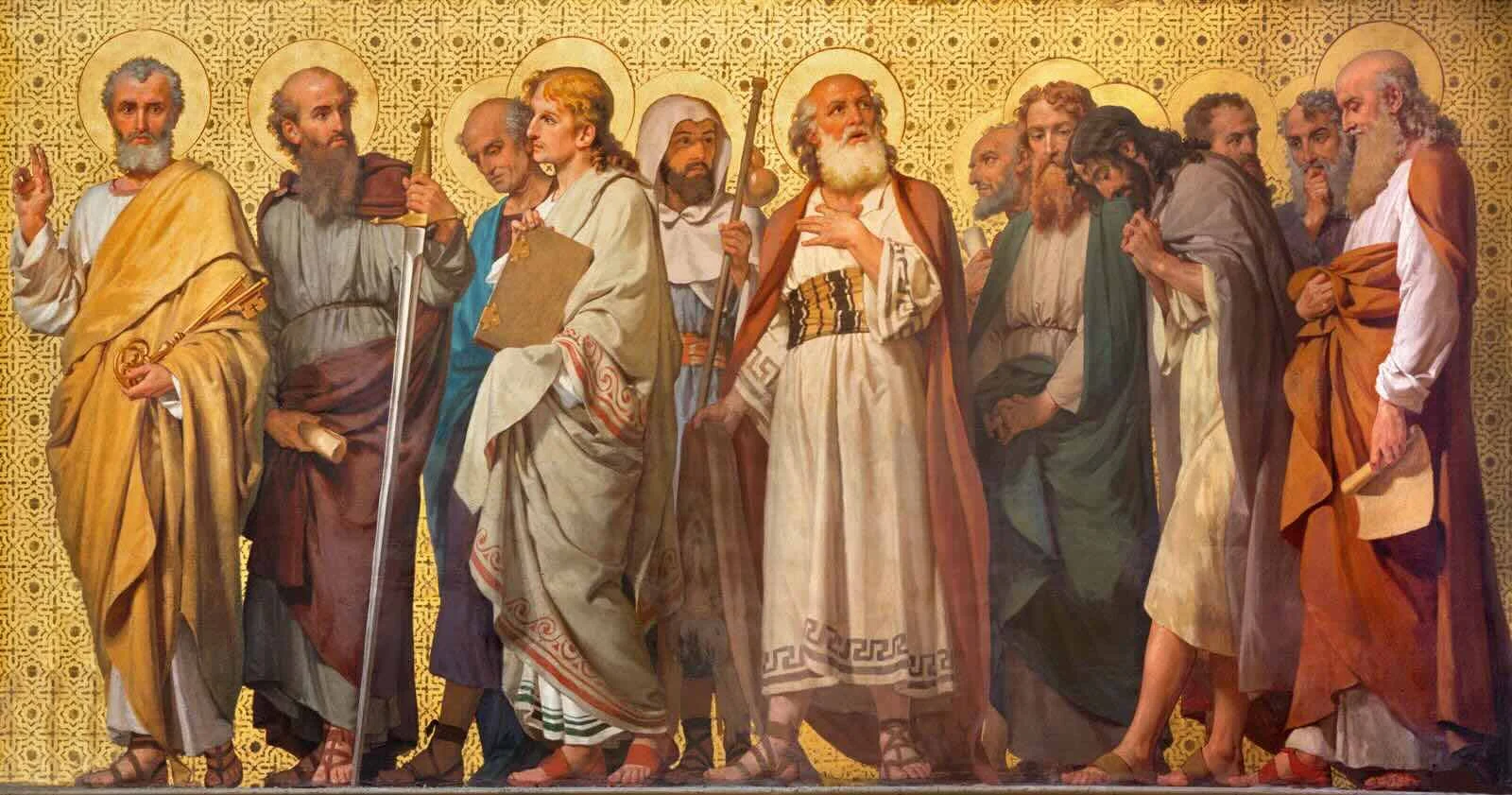
Translated from Philip Schaff's History of The Christian Church
第十一章 使徒教会的神学
目录
§ 66. 文献
§ 67. 使徒教导的合一
§ 68. 使徒教导的不同类型
§ 69. 犹太基督教神学——一、雅各与律法的福音
§ 70. 二、彼得与盼望的福音
§ 71. 外邦基督徒的神学:保罗与信心的福音
§ 72. 约翰与爱的福音
§ 73. 异端对使徒教训的歪曲
§ 66. 文献
I. 论整个新约神学的著作。
奥古斯特·尼安德 (August Neander,卒于1850年):《使徒建立并治理基督教会史》(Geschichte der Pflanzung und Leitung der christl. Kirche durch die Apostel)。汉堡 (Hamburg),1832年;第4版,1847年,2卷(有关内容在第2卷);英译本由 J. A. 赖兰德 (J. A. Ryland) 译,爱丁堡 (Edinb.),1842年;由 E. G. 鲁滨逊 (E. G. Robinson) 修订校正,纽约 (New York),1865年。尼安德与施密德 (Schmid) 率先从历史角度分析使徒教义的不同类型(雅各、彼得、保罗、约翰)。
萨姆·卢茨 (Sam. Lutz):《圣经教义学》,R. 吕奇 (R. Rüetschi) 编 (Biblische Dogmatik, herausgeg. von R. Rüetschi.)。普福尔茨海姆 (Pforzheim),1847年。
克里斯特·弗里德尔·施密特 (Christ. Friedr. Schmidt,尼安德的一位独立同工,卒于1852年):《新约圣经神学》(Biblische Theologie des Neuen Testaments.)。魏茨泽克 (Weizsäcker) 编。斯图加特 (Stuttg.),1853年;第2版,1859年。2卷。(G. H. 维纳布尔斯 (G. H. Venables) 的英译本,爱丁堡,1870年,仅为节译本。)
爱德华·罗伊斯 (Edward Reuss,斯特拉斯堡教授):《使徒时期基督教神学史》(Histoire de la théologie chétienne au siécle apostolique.)。斯特拉斯堡 (Strassb.),1852年。第3版,巴黎 (Paris),1864年。2卷。安妮·哈伍德 (Annie Harwood) 据法文第3版英译。伦敦 (London),1872年。2卷。
卢特贝克 (Lutterbeck,一位自由派罗马天主教徒):《新约教义观念,或宗教转折时代研究》(Die N. T. lichen Lehrbegriffe, oder Untersuchungen über das Zeitalter der Religionswende.)。美因茨 (Mainz),1852年。2卷。
G. L. 哈恩 (G. L. Hahn):《新约神学》(Die Theologie des Neuen Testaments.)。第I卷。莱比锡 (Leipzig),1854年。
H. 梅斯纳 (H. Messner):《使徒的教义》(Die Lehre der Apostel.)。莱比锡 (Leipz.),1856年。沿着尼安德的道路前行。
P. Chr. 鲍尔 (P. Chr. Baur,卒于1860年):《新约神学讲义》(Vorlesungen über neutestamentliche Theologie.)。莱比锡,1864年。死后由其子出版。此书汇集了这位图宾根学派 (Tübingen School) 创始人大胆的批判性思辨。最重要的部分是论保罗体系的一节。
W. 拜施拉格 (W. Beyschlag):《新约基督论》(Die Christologie des Neuen Testaments.)。柏林 (Berlin),1866年(260页)。
托马斯·德哈尼·伯恩萨德 (Thomas Dehaney Bernsard):《新约中教义的进展》(Progress of Doctrine in the New Testament.)。班普顿基金讲座 (Bampton Foundation)。伦敦及波士顿 (Boston),1867年。
H. 埃瓦尔德 (H. Ewald):《圣经论上帝的教义,或新旧两约的神学》(Die Lehre der Bibel von Gott oder die Theologie des alten und neuen Bundes)。莱比锡,1871–76年。4卷。(对于旧约的价值大于新约。)
A. 伊默 (A. Immer):《新约神学》(Theologie des neuen Testaments)。伯尔尼 (Bern),1877年。
J. J. 范·奥斯特泽 (J. J. van Oosterzee):《新约圣经神学》(Biblische Theol. des N. T.,译自荷兰文)。埃尔伯费尔德 (Elberf.),1868年。英译本由 G. E. 戴 (G. E. Day) 教授译,纽黑文 (New Haven),1870年。另一英译本由 莫里斯·J. 埃文斯 (Maurice J. Evans) 译:《新约神学》等 (The Theology of the New Test., etc.)。伦敦,1870年。
伯恩哈德·魏斯 (Bernh. Weiss):《新约圣经神学》(Bibl. Theologie des Neuen Testaments.)。柏林,1868年;第4版,1884年。英译本,爱丁堡,1883年,2卷。
论各使徒教义类型的专著:W. G. 施密特 (W. G. Schmidt) 与拜尔施拉格 (Beyerschlag) 论雅各;迈耶霍夫 (Mayerhoff)、魏斯与莫里希 (Morich) 论彼得;乌斯特里 (Usteri)、普弗莱德雷尔 (Pfleiderer)、霍尔斯滕 (Holsten)、利思斯 (Leathes)、艾恩斯 (Irons) 论保罗;赖姆 (Reihm) 论《希伯来书》;弗罗曼 (Frommann)、克斯特林 (Köstlin)、魏斯、利思斯论约翰——均已在前面各节引用。
除上述尼安德的著作外,还有兰格 (Lange)、莱希勒 (Lechler)、蒂尔施 (Thiersch)、斯坦利 (Stanley) 及沙弗 (Schaff,第614–679页) 所著使徒教会史中论教义的各节。另参查尔斯·A. 布里格斯 (Charles A. Briggs):《圣经神学的观念、历史及重要性》(The idea, history and importance of Biblical Theology,),载《长老会评论》("Presbyterian Review"),纽约,1882年7月。
关于使徒神学与拉比神学的对照,见费迪南德·韦伯 (Ferd. Weber,在犹太人中间传教的宣教士,卒于1879年):《根据他尔根、米德拉什及塔木德阐述的古代会堂巴勒斯坦神学体系》,作者死后由弗兰茨·德利奇 (Frz. Delitzsch) 及 G. 施内德曼 (G. Schnedermann) 编 (System der altsynagogalen paltästinsichen Theologie, aus Targum, Midrasch, und Talmud dargestellt. Nach des Verf. Tode herausgeg. von Frz. Delitzsch und G. Schnedermann)。莱比锡,1880年。
§ 67. 使徒教导的合一
基督教首先不只是教义,而是生命,是道德上的新创造,是施行拯救的事实;这事实最初具体体现在耶稣基督这位道成肉身的圣言、神人身上,并从他扩展出去,逐渐涵盖全人类,使人类与上帝进入得救的相交。基督教主观地存在于各个人里面时,也是如此。它的起点不只是宗教见解和观念,尽管这些至少以萌芽的形式包含在内。它临到人,是作为一种新生命,作为重生、归信和成圣,作为经验中具有创造力的事实;它把整个人连同其一切官能和才干都纳入其中,释放他脱离罪责和罪的权势,使他与上帝和好,使灵魂恢复和谐与平安,最后使身体本身也得着荣耀。这样,基督的生命便映现在他的子民身上,藉着施恩之道的运用,以及信心和爱心的不断操练,逐渐长进,直到在复活中达到成熟。
但这新生命必然包含教义的要素,也就是真理的知识。基督称自己是“道路、真理、生命”。他本身就是救恩真理以及人与上帝正常关系的位格性启示。然而,这教义要素本身在新约中所呈现的,并不是抽象的理论、思辨的产物,或可用逻辑与数学加以论证的学术性观念体系;它乃是超自然的神圣生命新鲜而直接的表达,是赐生命的能力,兼具实践与理论的性质,带着神圣的权柄,不但临到人的心智,也临到人的内心、意志和良心,不可抗拒地将它们吸引到自己这里。我们在这里所遇见的、在基督里对上帝的认识,同时就是永生。1 我们不可把真理与信条混为一谈。真理是神圣的实质,教义或信条则是人对它的领会和表述;真理是活泼而赐生命的能力,信条则是逻辑的公式;真理是无限、不变而永恒的,信条则是有限、可变而可臻完善的。
因此,圣经不单是、也不主要是供学者阅读的书,而是人人的生命之书,是圣灵写给人类的一封书信。基督及其使徒的话语中,洋溢着至高至圣的属灵能力,就是上帝赐生命的气息,刺透骨髓,震撼内心与良心,使死人活过来。那起初与父同在、如今向我们显现的生命,那永远的生命,在其中仿佛可被感知地临到我们,时而如猛烈的旋风,时而如轻柔的和风;时而压倒我们,使我们俯伏于谦卑悔罪的尘土之中,时而苏醒我们,使我们奋起,进入信心与平安的喜乐;然而,它总是产生新造的人,正如起初创造时那大有能力的话语所说:“要有光!”这里实在是圣地。这里是永恒之门,是通天的真梯,上帝的使者在其上往来升降,连绵不绝。因此,基督教信仰与道德的体系,无论有多少,虽然对于教会及神学的学术目的不可或缺,却永远不能代替圣经;圣经的话就是灵,就是生命。
我们说新约并不是一套按逻辑编排的教义和诫命体系,绝不是说它缺乏内在的秩序与一致。恰恰相反,它展现出最美的和谐,如同外在的受造世界,也如同真正的艺术作品。历史学家,尤其是神学家的任务,正是将这隐藏而活泼的秩序揭示出来,并以合乎逻辑的学术形式加以呈现。在这项工作上,保罗——使徒中唯一受过高深学术教育的人——亲自提供了最初富有成效的启示,尤其是在他的《罗马书》中。这封书信甚至在形式上也遵循逻辑的安排,并在不违背圣经本质上那种热切、直接、切实、通俗的精神与文体的限度内,尽可能接近一篇学术论著;这种精神与文体,与圣经面向整个基督教世界的伟大使命是不可分割的。
使徒一切教导的实质,乃是为基督作见证,是福音,是白白传扬那神圣之爱与救恩的信息;这爱与救恩在基督的位格中显现,藉着他的工作为人类确立,在地上上帝的国中逐渐实现,并将在基督荣耀再来时完成。这救恩也与犹太教紧密相连,作为律法与先知的成全,以及旧约一切预表和影儿的实体。构成使徒宣讲之本质的各项教义,在所谓《使徒信经》(Apostles’ Creed) 中得到了极其优美而简明的编排和陈述;这信经虽非在确切形式上,但就其内容而言,无疑可追溯至基督教的原始时期。在一切主要的要点上——耶稣作为所应许之弥赛亚的位格,他圣洁的生活、赎罪的死、得胜的复活与被高举在上帝右边,以及他再来审判世界,教会作为神圣制度的设立,信徒的相交,上帝的道,洗礼与圣餐这两项圣礼,圣灵的工作,悔改与归信、重生与成圣的必要,救恩在耶稣基督之日的最终完成,身体的复活,以及永生——在这一切要点上,就使徒流传至今的著作而言,他们完全一致。
使徒们的教义都有共同的来源:一是亲身接触那位被钉十字架而复活的救主所经历的神人历史,二是圣灵内在的光照;圣灵在他们里面启示基督的位格和工作,并开启他们的悟性,使他们明白他的言语和作为。这神圣的光照就是默示,它不仅支配圣书的写作,也支配其作者的口头教导;它不只是一个行动,也是一种持久的状态。使徒始终生活、行动在真理之中。他们本着真理之灵说话、写作和行事;而且不是作为被动的工具,而是作为自觉而自由的器官。因为圣灵并不取代上帝所命定的天然恩赋和特性,而是使它们成圣,为他的国度效力。然而,默示所关涉的只是道德与宗教的真理,以及传达救恩所必需的知识。附带涉及的地理、历史、考古及纯属个人兴趣的事项,只有在它们确实影响宗教真理的限度内,才可视为受默示引导。
救恩所必需的基督教真理整体,其启示范围与公认的新约正典相合。基督教会中固然不断有成长与发展,其外在与内在的进步,都与其生命力和热忱的程度相称;但这乃是人在领会和领受上的进步,而不是上帝在传达或启示上的进步。对于上帝不时兴起的非凡人物,我们可以说有一种次级的默示,但他们的著作必须以唯一无谬的标准,即基督及其使徒的教导来衡量。基督教知识和生命中的每一次真正进步,都以更深入基督的心思与精神为条件;他先亲自、继而藉着他的使徒,宣明了上帝全部的旨意与救恩之道。
因此,新约其实只是一本书,是同一心思的教导,就是基督的心思。他将父赐给他的生命之道赐给门徒,并以真理之灵感动他们,向他们显明自己的荣耀。构成新约的二十七卷著作,其合一与和谐就在于此;它们适用于一切境遇,供人永远使用,直到这写下并印行的道,被那有位格的道再度显现,以及光明中圣徒蒙福的亲见所取代。
§ 68. 使徒教导的不同类型
尽管有这一切和谐,基督教教义在新约中仍呈现出不同的形式,与各位圣书作者独特的性格、教育和活动范围相应。福音的真理本身是无限的,能够适应每一个阶层、每一种气质、每一等才具和每一种思维习惯。它如同阳光,照在不同性质的物体上,便折射出不同的色彩;又如宝石,每转动一次,便焕发出新的光辉。
爱任纽 (Irenaeus) 说到四重的“福音”。2 同样,我们也可以区分出四重的“使徒”,3 或四种相应的使徒教义类型。4《雅各书》与《马太福音》相应;彼得的书信及其在《使徒行传》中的讲论与《马可福音》相应;保罗的书信与路加的福音书和《使徒行传》相应;约翰的书信则与这位使徒自己的福音书相应。
然而,无论就福音书还是书信而言,这种划分都从属于犹太基督教与外邦基督教之间一种更广泛的差别;这一差别贯穿使徒时期的整个历史,甚至影响到教会的教义、体制、敬拜和实际生活。这一差别的根源,在于基督以前及其在世之时世界上宗教的重大分野;它一直延续到生长于基督教中的一代人取代第一代归信者为止。犹太人自然将基督教信仰与上帝所启示的旧约宗教紧密相联,并尽可能持守其神圣的制度和礼仪;而从异教归信的人,因为原不认识摩西的律法,便从自然的状态直接进入恩典的状态。前者代表历史、传统和保守的原则;后者则代表自由、独立和进步的原则。
因此,我们有两类教师:犹太人或受割礼之人的使徒,以及外邦人或未受割礼之人的使徒。这一区别不只限于传教领域,而是深入双方全部的教义见解和实际生活;从使徒会议的记载中,我们便可看出这一点。这次会议召开的明确目的,正是调解双方对于摩西律法权威的分歧。
然而,这种对立只是相对的,虽然有时也引起冲突,甚至暂时的疏离,如保罗与彼得在安提阿 (Antioch) 的情形。5这两种基督教形式既同根于基督丰盛的生命——他是外邦人和犹太人共同的救主——也就逐渐共同生长,合而成为大公教会。彼得代表犹太人的教会,保罗代表外邦人的教会,而约翰则在使徒时期的末尾,体现了二者更高的联合。
与这种立场差别相联的,还有气质、文风、方法等次要差别。雅各被称为律法或行为的使徒;彼得为盼望的使徒;保罗为信心的使徒;约翰为爱的使徒。有人将第一位归为黏液质(?),第二位归为多血质,第三位归为胆汁质,第四位归为抑郁质,所指的都是这些气质在基督教中成圣后的状态;不过,这种分配只有在极有限的意义上才可接受。四福音也呈现出类似的差别:第一卷与雅各的立场密切相近,第二卷与彼得相近,第三卷与保罗相近,第四卷则在其教义内容中表现出约翰的精神。
如果我们以犹太基督教与外邦基督教的差别为分类依据,就可以把新约诸卷归为三种教义类型:犹太基督教型、外邦基督教型,以及理想的或联合的基督教型。第一种主要以彼得为代表,第二种以保罗为代表,第三种以约翰为代表。至于雅各,他是保守学派中耶路撒冷一支的地方领袖,必须列入第一种类型;彼得则是整个受割礼教会的普世领袖。6
§ 69. 犹太基督教神学——一、雅各与律法的福音
(参较§ 27及该处所列文献。)
犹太基督教类型包括雅各、彼得和犹大的书信,马太和马可的福音书,并在一定程度上包括《约翰启示录》;因为保罗将约翰列在受割礼教会的“柱石”之中,虽然约翰在后期著作中采取了超越犹太人与外邦人之别的独立立场。这些书卷起初主要是为犹太基督徒读者而写的,虽不完全以他们为限;其中所呈现的基督教,是与旧约合一、作为旧约之成全的基督教。它们阐明了登山宝训的基本观念(《马太福音》5:17):基督来不是要废掉律法或先知,而是要“成全”。福音书,尤其是《马太福音》,从历史上显明耶稣就是弥赛亚,是以色列的立法者、先知、祭司和君王。
雅各和彼得以这一历史基础建立他们的实际劝勉;两者的区别在于,前者主要显明福音与律法的一致,后者则显明福音与先知的一致。
主的兄弟雅各最紧密地持守摩西的宗教,并将福音本身表述为律法,却是“使人自由之全备的律法”;7这与他毕生在耶路撒冷的劳作、他在会议上的发言,以及会议的书信——很可能由他亲自执笔——都是一致的。两种施行安排的差别与合一,都在于此。“律法”一词指明二者的和谐,而“全备”和“自由”这两个限定词,则指明基督教的优越,并暗示犹太教是不全备的,是使人受捆绑的律法,基督已将我们从其中释放出来。反之,保罗将福音与律法区别开来,视福音为脱离律法这一奴役制度的自由;8但他又在自由的基础上重新坚立律法,并将整个基督徒生活归结为成全爱上帝与爱邻舍的律法;由此,他从相反的起点出发,与雅各会合。9
雅各这位基督教的律法主义者,极其强调律法所要求的善行;但他所要求的,是出于信心之果实的行为,这信心所信靠的,就是他作为仆人而恭敬地称为“荣耀的主”的那一位;马太所记载的主的话,正是他劝勉的基础。10此外,这样的信心乃是重生的结果;他将重生追溯到“上帝的旨意”,借着“真道”,也就是福音而成就。11至于信心与行为的关系,以及二者与在上帝审判台前称义的联系,他似乎教导因信心和行为称义;保罗则教导唯独因信称义,其后必有善行,作为信心所必需的凭据。如此表述的两种见解,分别体现于罗马天主教和福音派新教的信仰告白中,并构成争论的主要题目之一。然而,雅各与保罗之间的矛盾,与其说在逻辑和教义上,不如说在措辞上;二者可以调和,其调和之处就在于活的信心与善行,或称义与成圣之间不可分割的联系。因此,他们彼此补充,彼此证实:一位在品格上奠定真实的根基,另一位则坚持实际的表现。雅各写作时,很可能远未见过保罗的任何书信;他当然无意驳斥保罗的教义,甚至也不是为了防止人以反律法主义滥用它;因为这完全没有必要,保罗自己已足够清楚地防备了这一点;而且,对于犹太基督徒读者,这样做也毫无用处,因为他们所面临的危险,是不结果子的律法主义,而不是冒充保罗的自由主义和反律法主义。诚然,不能仅靠将“称义”“信心”“行为”这三个术语中的一个或几个作不同解释,就使他们所说的完全相同;但他们从不同的立场写作,反对不同的错误,从而呈现出同一真理的两个不同方面。雅各说:没有行为的信心是死的。保罗说:没有信心的行为是死的。一位坚持能行事的信心,另一位坚持出于信心的行为。两人都是对的:雅各反对的是死的犹太正统,保罗反对的是自以为义的律法主义。雅各所要求的,不是没有信心的行为,而是由信心所激发的行为;12另一方面,保罗同样宣告,没有爱的信心,即使能移山,也毫无价值;13他绝不会把使人称义的能力归给仅仅相信上帝存在的信念,雅各称这种信念为鬼魔战惊的信。14但雅各主要看果子,保罗主要看根;一位关切凭据,另一位关切原理;一位采取实际与经验的观点,从结果推论原因,另一位则更深入行为最内在的泉源,然而二者都达到同一结果:圣洁、仁爱、顺服的生活,是真信心所必需的凭据。归根到底,无论按保罗还是按雅各,这都是审判的最终标准。15保罗用一句话解决了这一难题:“使人生发仁爱的信心。”这就是相争的使徒与相争的教会之间的和议 (Irenicon)。16
《雅各书》列在所谓大公书信之首,代表基督教知识最初、最低的阶段。它在教义上十分简略,却极其切合实际、浅近通俗。它吩咐人持守一种单纯、恳切、敬虔的虔敬生活,就是看顾孤儿寡妇,并保守自己不沾染世俗。17
《雅各书》与《马太福音》之间的密切联系,自然源于二者共同的犹太基督教背景和巴勒斯坦 (Palestine) 渊源。
附注
一、雅各与保罗。将《雅各书》2:14–26与《罗马书》3:20及后、4:1及后和《加拉太书》2:16及后相比较,便显出称义教义上表面的矛盾。保罗说(《罗马书》3:28):“人称义是因着信,与律法的行为无关”(πίστει χωρὶς ἔργων νόμου*),参较《加拉太书》2:16(οὐ δικαιοῦται ἄνθρωπος ἐξ ἔργων νόμου ἐὰν μὴ διὰ πίστεως Χριστοῦ Ἰησοῦ*,即“人称义不是因律法的行为,乃是借着信基督耶稣”);他并援引亚伯拉罕的例子,亚伯拉罕在受割礼以前就已因信称义(《创世记》17:10)。《雅各书》2:24说:“人称义是因着行为,不是单因着信”(ἐξ ἔργων δικαιοῦται, ἄνθρωπος καὶ οὐκ ἐκ πίστεως μόνον*);他援引的也是亚伯拉罕的例子,亚伯拉罕将儿子以撒献在坛上,显明了他对上帝真实的信心(《创世记》22:9、12)。路德 (Luther) 在《罗马书》3:28中不必要地插入了 allein(“唯独”;sola fide,即“唯独因信”)一词,使这矛盾更为严重,虽然这样做并非没有先例(见我在兰格 (Lange)《罗马书注释》美国版该节所作的注,第136页)。这位伟大的改教家无法调和这两位使徒,便轻率地称《雅各书》为“稻草书信”(eine recht ströherne Epistel,即“一封十足的稻草书信”;《新约序言》,1524年)。
鲍尔 (Baur) 从纯粹批判的立场出发,也得出同样的结论;他认为《雅各书》直接攻击了保罗教义的核心,并认定一切调和的尝试都是徒劳的(《新约神学讲义》Vorles. über neutestam. Theol.,第277页)。勒南 (Renan) 和魏芬巴赫 (Weiffenbach) 也持同样的看法。勒南(《圣保罗》St. Paul,第10章)毫无根据地断言,雅各组织了一场犹太人的反向宣教运动,以破坏保罗的工作。但若果真如此,雅各作为一个明智而务实的人,就应当写信给外邦基督徒,而不是给“十二个支派”,因为后者并不需要有人警告他们提防保罗及其教义。他的书信所代表的,不过是一种较早、较低的基督教形态,尚不知道那较高的形态,却为它作了准备,正如施洗约翰的传道为基督的传道预备道路一样。这封信写作时并未针对保罗,很可能写于耶路撒冷会议和割礼争论以前,即《使徒行传》开头几章所描述的使徒教会最初阶段;那时,基督徒与犹太人尚未明确区分,也尚未最终分离。主张这封书信起源甚早的,有一些最卓越的历史学家和注释家,如尼安德 (Neander)、施内肯布格尔 (Schneckenburger)、泰勒 (Theile)、蒂尔施 (Thiersch)、拜施拉格 (Beyschlag)、阿尔福德 (Alford)、巴塞特 (Basset)、普伦普特里 (Plumptre)、斯坦利 (Stanley)。魏斯 (Weiss) 也十分肯定地说(《圣经神学》Bibl. Theol.,第3版,第120页):“Der Brief gehört der vorpaulinischen Zeit an und steht jedenfalls zeitlich wie inhaltlich dem ersten Brief Petri am nächsten”(“这封书信属于保罗以前的时期;无论如何,在年代和内容上,它都与《彼得前书》最为接近。”)因此,他分别就雅各和彼得本身的教导加以论述,而不以保罗的教导为参照。参较他的《新约导论》Einleitung in d. N. T.(1886年),第400页。
二、雅各与马太。泰勒和其他注释家曾多次详尽指出两者之间的对应关系。《雅各书》对基督话语的追忆,比任何其他书信都多,尤其是对登山宝训的追忆。参较《雅各书》1:2与《马太福音》5:10–12;《雅各书》1:4与《马太福音》5:48;《雅各书》1:17与《马太福音》7:11;《雅各书》1:20与《马太福音》5:22;《雅各书》1:22及后与《马太福音》7:21及下节;《雅各书》1:23与《马太福音》7:26;《雅各书》2:13与《马太福音》6:14及下节;《雅各书》2:14与《马太福音》7:21–23;《雅各书》3:2与《马太福音》12:36、37;《雅各书》3:17、18与《马太福音》5:9;《雅各书》4:3与《马太福音》7:7;《雅各书》4:4与《马太福音》6:24;《雅各书》5:12与《马太福音》5:34。据伪亚他那修 (pseudo-Athanasian)《概要》(Synopsis) 中的一则记载,“耶路撒冷的主教”雅各曾将《马太福音》从亚兰文译成希腊文。但《雅各书》与《彼得前书》之间,甚至与伪经《便西拉智训》(Ecclesiasticus) 和《所罗门智训》(Wisdom of Solomon) 之间,也有平行之处。见普伦普特里《雅各书注释》Com. on James,第32页及下页。
§ 70. 二、彼得与盼望的福音
(参较第25、26节的文献。)
彼得介于雅各与保罗之间,构成了从前者极端的保守主义到后者进取的自由主义的过渡。他的教义体系的萌芽,包含在他那伟大的认信之中:耶稣是弥赛亚,是永生上帝的儿子。18 这确实是一个简短的信条,只有一条;但这一条既是根本,又包罗一切,是基督教会的房角石。因此,他的体系以基督论为中心,补充了雅各以人论为中心的类型。他在《使徒行传》中的讲论和他的书信,都充满了亲身与基督交往在他那高尚、热诚而冲动的天性上留下的鲜明印象。基督教是一切弥赛亚预言的应验;但同时,它本身也是主荣耀再来的预言。这将来荣耀的显现是如此确实,以致人凭着活泼的盼望,现今便能在蒙福的喜乐中预尝它;这盼望激励人过圣洁的生活,为末后的结局作准备。因此,彼得尤其配称为“盼望的使徒”。19
一、彼得以宣告耶稣复活和圣灵浇灌的历史事实,开始他的见证;他指出,按照古时先知的预言,这些事实乃是上帝对耶稣弥赛亚身份的印证;众先知都为他作见证,说凡信他的人,必因他的名得蒙赦罪。上帝使这位耶稣从死里复活,又将他高举在自己的右边,立他为主、为救主;他还要再来审判自己的百姓,使安舒的日子从他面前来到,并带来万物的复兴 (apokatastasis),即使万物恢复其正常而完全的状态,从而彻底应验弥赛亚的预言。在主耶稣基督以外,别无救恩。得这救恩的条件,是承认他的弥赛亚身份,并改变心思和行为,从服事罪转向圣洁。20
这些见解如此简单、质朴而切合当时的需要,以致我们无法设想,在基督教的那个早期阶段,彼得还能怎样以不同的方式传道而更有成效。他在五旬节的讲道使三千人归信,我们不必为此惊奇。随着基督教的扩展和哥尼流 (Cornelius) 的归信,他的认识也逐渐拓宽、加深。一次特别的启示使他在割礼问题上得了光照,并使他确信,“原来各国中,那敬畏主、行义的人都为主所悦纳”,又确信犹太人和外邦人同样是借着信、靠基督的恩典得救,不必负礼仪律法那不能承受的轭。21
二、彼得的书信代表了这一更成熟的认识阶段。它们与保罗的教导在实质上是一致的。其主导思想,与他在《使徒行传》的讲论中所表达的相同:基督是弥赛亚预言的应验者,也是基督徒的盼望。彼得的基督论没有任何思辨的成分,完全源于历史中的、复活的耶稣所留下的印象。他在第一封书信中,如同在早期的讲论中一样,强调基督的复活;上帝借此“重生了我们,叫我们有活泼的盼望,可以得着不能朽坏、不能玷污、不能衰残、为我们存留在天上的基业”;到“牧长显现的时候”,我们“必得那荣耀的冠冕”。在第二封书信中,他又指向将来的“新天新地,有义居在其中”。22 他由此将基督的复活与最终的成全联系起来,前者正是后者确实的凭据。但除了复活以外,他也阐明基督之死的赎罪功效,其有力与清晰几乎不亚于保罗。基督“曾一次为罪受苦,就是义的代替不义的,为要引我们到上帝面前”;他“被挂在木头上,亲身担当了我们的罪,使我们既然在罪上死,就得以在义上活”;他用“宝血,如同无瑕疵、无玷污的羔羊之血”,将我们赎回。23 对彼得而言,基督是唯一的救主,是主,是生命的主,是世界的审判者。他赋予基督一个远超其他一切人的尊荣地位,并将他与永恒的耶和华置于最密切的关系中,虽然他仍从属于耶和华。当他说基督“在创世以前是预先被上帝知道的”,并“在这末后的时候显现”,又说基督的灵住在古时的先知里面,指示他们基督将来的受苦和荣耀时,即便没有明言基督先存的教义,似乎也已暗示并蕴含了这一教义。24
三、彼得将基督传道、审判和施行拯救的活动,扩展到他钉十字架与复活之间那神秘的三日 (triduum) 中、阴间 (Hades) 离世之灵的领域。25 保罗也教导基督降入阴间(《以弗所书》4:9、10)。
四、与这一理论相应的,是实际生活中的劝勉。主观方面的基督教,被表述为对历史中的基督的信仰,以及对他荣耀再现的活泼盼望;这盼望应当使基督徒效法他们的主和救主,即使身处试炼和逼迫之中,也能欢喜。
§ 71. 外邦基督徒的神学:保罗与信心的福音
(见第29节的文献,第280页及后。)
外邦基督徒类型的福音,体现在保罗和路加 (Luke) 的著作,以及匿名的《希伯来书》中。
保罗神学的资料来源,是他在《使徒行传》中的讲论(尤其是在亚略巴古的演说),以及他的十三封书信,即:写作最早、但主要论及实际生活的《帖撒罗尼迦前后书》;致哥林多人、加拉太人和罗马人的四封大书信,是他与犹太化倾向争战的成熟成果;四封监狱书信;以及教牧书信。这几个组别分别呈现了他的体系发展的不同阶段,以相应变化的文体讨论不同的问题,但它们都贯穿着同一精神,并带有同一深邃而广博的天才的印记。
保罗是基督教神学的先驱。在使徒中,只有他受过渊博的拉比教育,精于逻辑和辩证的论证。但他的逻辑充满生命,燃烧着火焰。他的神学既发自头脑,也发自内心;它是他归信的结果,处处洋溢着对基督炽热的爱;他的经院思维因神秘主义而温暖、深化,他的神秘主义又因经院思维而受到规范、趋于清醒;宗教与道德的因素、教义学与伦理学,融合成一个和谐的整体。他从自己亲身经历的深处出发,在与犹太化倾向对福音的限缩、以及诺斯替主义 (Gnosticism) 对福音的虚化的争战中,阐发出我们所拥有的、出自使徒笔下最完备的基督教教义体系。它在本质上是救恩论的,即一套论述得救之道的体系。它远远超越雅各和彼得的教导,却仍不过是对福音书中耶稣教导的一贯发展。26
中心思想
保罗的亲身经历,包含了对犹太教的强烈狂热,以及对基督教更强烈的热忱。起初,他在律法主义中徒劳挣扎,试图靠行律法获得人的义;后来,他借着信基督领受了上帝的义。这种二重性反映在他的神学之中。义,即与上帝圣洁旨意相符的观念,是犹太人扫罗与基督徒保罗之间的纽带。律法与行为,是这位自以为义的摩西门生的座右铭;福音与信心,则是这位谦卑的耶稣门徒的座右铭。他使基督徒的意识摆脱律法主义与偏狭所施加的压迫性束缚,是自由与大公性的捍卫者。保罗的福音,尤其是使人得救之信心的福音,是福音自由的福音,是普世性的福音;它以基督的位格和工作为中心,以与基督联合为条件。他定意不知道别的,只知道基督并他钉十字架;但这已包含一切——这是他神学的灵魂。那死了的基督,就是已经复活、永远活着作主和救主的基督;上帝又使他成为我们的智慧、公义、圣洁、救赎。27 一位死了的基督,将是一切盼望的坟墓;一个死了的救主的福音,将是一场可悲的幻觉。“若基督没有复活,我们所传的便是枉然,你们所信的也是枉然。”28 他的死唯有借着他的复活,才能发生功效。保罗以一句包罗广泛的话,将这两个事实结合起来:“基督被交给人,是为我们的过犯;复活,是为叫我们称义。”29 他是一位有条件的普救论者;他教导人人都需要救恩,上帝也有使万人得救的旨意,并为此作了预备;但每个人实际得救与否,取决于他的信心,即他亲自接受基督、将基督领受为己有。因此,他的教义体系以罪与恩典这一伟大的对立为枢纽。在基督以前、在基督以外,是罪与死掌权;在基督以后、在基督里面,是义与生命掌权。
我们现在依照《罗马书》的次序,概述保罗神学的主要特点;《罗马书》是他著作中最有条理、最为完备的一部。其中心思想是:基督的福音乃是上帝的大能,要救一切人,无论是犹太人还是外邦人。30
- 人人都需要救恩——这需要源于亚当和全人类的堕落;全人类都包含在亚当里面,正如树包含在种子里面,因此他一次悖逆的行为,就将罪与死带给了所有后裔。保罗证明,外邦人和犹太人无一例外都已败坏,以致他们绝不能获得义,也不能自救。“没有义人,连一个也没有。”他们都在罪的权势之下,都已被判定有罪。31 诚然,他承认,即使在异教徒中,理性与良心这些善的因素仍然存在,32 成为上帝恩典施行重生之工的联系点;然而,正因如此,他们才无可推诿,因为他们明知故犯。人里面较高的本性与较低的本性之间存在冲突(即趋向赐下它的上帝的 νοῦς*,与趋向罪的 σάρξ* 之间的冲突),而上帝的律法又激发这冲突,使之达到危急关头;但由于我们属肉体、堕落、败坏的本性软弱无力,这冲突终以失败和绝望告终,直到基督使人更新的恩典释放我们,脱离罪的咒诅与捆绑,赐给我们自由和胜利。在《罗马书》第七章,保罗根据自己的亲身经历,极其卓越而真实地描绘了人的宗教历程:从天然或异教徒的状态,即在肉体中安然自得的状态(没有律法,罗7:7–9),进入律法之下的犹太人状态;律法将罪从其隐秘之处引出,显明罪的真面目,并唤醒人,使人意识到受罪奴役的苦境(7:10–25);然而,正是这样,律法为基督徒自由的状态预备了道路(7:24及《罗马书》第8章)。33
- 上帝使万人得救的旨意与预备——上帝真诚地愿意(θέλει*)万人得救,甚至包括罪大恶极的人,并借着基督认识真理;基督舍自己作了万人的赎价。34 基督的义与生命所及的范围,与亚当的罪与死所及的范围同样普遍,而其内在的能力却更为强大。首先的亚当和第二个亚当,在各自作为代表的性质上,形成了完全对应的对照;然而基督远为强大,他杀灭了罪与死,始终是战场上的胜利者,并且永远活着,作生命的主。罪在哪里显多,恩典就在那里更加显多。正如罪(作为一种渗透一切的力量)借着首先的亚当入了世界,死又是从罪来的,于是死就临到众人,因为众人都犯了罪(就全人类及其潜在状态而言,是在亚当里犯罪;就个人而言,则是实际犯了过犯);照样,义更借着基督这第二个亚当进入世界,生命又从义而来,于是义就临到众人,以信为条件,我们正是借着信有分于他的义。35 上帝将众人都圈在悖逆之中,为要怜恤一切相信的人。36
(1.) 为这救恩所作的预备,就是旧约时期的应许与律法。赐给亚伯拉罕和众先祖的应许,早于律法,也不因律法而废去;应许包含着救恩的萌芽与保证,而亚伯拉罕则卓然成为信徒之父,甚至在领受割礼作为记号和印证以前,就已因信称义。律法是外添的,或说是介于应许与福音之间的,为要使罪这疾病发作,揭示其违背上帝旨意的真面目,从而激起人对救恩需要的自觉。律法本身是圣洁而良善的,却不能赐人生命;它发出命令和警告,却不给人遵行的力量;它不能更新肉体,就是人败坏而有罪的本性;它既不能使人称义,也不能使人成圣,却使人知罪,并借着管教预备人进入基督的自由,正如训蒙的师傅预备孩童长大成人,能够自立。37
(2.) 救恩本身包含在基督的位格与工作之中。这救恩在日期满足的时候,借着基督无罪的生活、赎罪的死、荣耀的复活与升高而成就;他是上帝永恒的儿子,以罪身的形状显现,作了赎罪祭,从而为我们取得赦免、平安与和好。“上帝既不爱惜自己的儿子,为我们众人舍了他。”这是父对其受造物永恒之爱所赐的最大礼物。上帝的儿子出于同样无限的爱,放下他神圣的荣耀与存在方式,倒空自己,将上帝的形像换作奴仆的形像,自己卑微,存心顺服,以至于死,且死在十字架上。他本来富足,与上帝同等,却为我们的缘故成了贫穷,叫我们因他的贫穷可以成为富足。上帝为酬报他主动与被动的顺服,将他升为至高,又赐给他那超乎万名之上的名,叫一切的膝因耶稣的名无不跪拜,一切的口无不承认他为主。38
从前,对保罗以及其他犹太人属肉体的弥赛亚盼望和自义而言,基督的十字架是最大的绊脚石,正如在异教徒属世的智慧看来,它是极端的愚拙。39 然而,在大马士革 (Damascus) 所见耶稣荣耀的天上异象,为他开启了理解这一奥秘的门;起初使徒所传的传统,40 以及他亲身经历律法的无能、福音却能使他不安的良心得享平安,也都证实了这一认识。如今,在他看来,基督的死乃是上帝所设立、使人得义的途径。这是无限的智慧与爱所设的办法,使公义与怜悯彼此冲突的要求得以调和,借此,上帝既能称罪人为义,自己又仍然是公义的。41 基督本不知罪,却为我们成为罪,好叫我们在他里面成为上帝的义。他代替罪人和仇敌、并为他们的益处(ὑπέρ*、περί*)而死,因此他的死具有普世的意义。一人既替众人死,众人就都死了。42 他献上自己无玷污、圣洁的生命,作为我们罪的赎价(λύτρον*)或代价(τιμή*),从而成就了我们的救赎(ἀπολύτρωσις*),正如战俘借着付出相等的代价得赎一样。因此,他的死乃是代替性的牺牲,是为全世界之罪所作的赎罪、除罪或挽回祭(ἱλασμός*、ἱλαστήριον*,sacrificium expiatorium),并确保了完全而最终的赦免(ἄφεσις*),以及上帝与人之间的和好(καταλλαγή*)。这是摩西的律法与祭祀所不能成就的。它们只能使人持续意识到赎罪的必要,并加深这种意识。义若是借着律法而来,基督的死便是多余而无效的。他的死不仅除去罪责,也摧毁了罪的能力与统治。因此,保罗极其重视传讲十字架(ὁ λόγος τοῦ σταυροῦ*),并且只愿以此夸口。43
这一贯穿保罗书信、内涵丰富的赎罪教义,不过是对基督话语的合乎本意的展开:他说,他要舍命作罪人的赎价,流出自己的血,使罪得赦。
(3.) 基督成就了救恩,圣灵则使信徒得以领受这救恩。圣灵是新生命在宗教与道德上的本原。他出于上帝,住在基督徒里面,作更新、成圣、安慰的能力,作更高的良心,作神圣的向导与劝戒者。他在基督与教会之间作中介,正如基督在上帝与世界之间作中介一样;他是向个人意识启示基督的神圣启示者,也是一切恩赐(χαρίσματα*)的源头,新生命正是借着这些恩赐表现出来。“基督在我们里面”,等于说我们有“基督的灵”。唯有借着圣灵内在的启示,我们才能称基督为我们的主和救主,称上帝为我们的父;借着圣灵,上帝的爱浇灌在我们心里;圣灵在我们里面生发信心和一切美德;正是圣灵,甚至将信徒的身体也化作圣殿;凡被圣灵引导的,都是上帝的儿子,是救恩的后嗣;我们正是借着在基督耶稣里赐生命之圣灵的律,得以脱离罪和死的律,并能行事为人有新生的样式。上帝的灵在哪里,哪里就有真正的自由。44
(4.) 因此,我们的救恩有三重成因:差遣其子的父,取得救恩的子,以及将救恩施用于信徒的圣灵。这三重的工作表现在那包含一切神圣福分的祝福中:“主耶稣基督的恩惠(χάρις*)、上帝的慈爱(ἀγάπη*)、圣灵的感通(κοινωνία*)。”45 这就是保罗对福音所启示的神圣三位一体的实践性认识。基督的恩惠首先被提及,因为父的爱在其中以其最高的形态——作为拯救的能力——向我们显明;感通归于圣灵,因为他是父与子之间、基督与信徒之间,以及信徒彼此之间联合的纽带;这些信徒同属一个蒙救赎者的弟兄团契。
我们可以说,与这神圣的三位一体相对应的,是人这一方面基督徒三重美德的一体:信、望、爱。46
- 救恩的次序——(1.) 救恩根源于上帝永恒的旨意、他的预知(πρόγνωσις*)与他的预定(προορισμός*、πρόθεσις*);前者是他全知之理智的行动,后者是他全能之意志的行动。在逻辑上,预知先于预定;然而在实际上,二者在上帝的心意中彼此重合、同时存在,因为在那里并无先后之分。47
保罗无疑教导,上帝凭其主权的恩典作了永恒的拣选,即无条件、不可改变地预定他的儿女在他的儿子耶稣基督里面、并借着他,成为圣洁、得蒙救恩。48 他由此排除了一切人的功德,将救恩建立在不可动摇的磐石上。但他并未因此排除人的自由与责任;相反,他将它们作为上帝计划中的要素包括进来,并大胆地将二者并列。49 因此,他劝勉、警戒人,仿佛救恩可以因人的努力而获得或丧失。那些灭亡的人,是因自己的不信而灭亡。灭亡是对人不肯悔改、坚持犯罪所作的公义审判。把保罗看作宿命论者或特殊主义者,实在是奇怪的误解;他是盲目必然性与犹太特殊主义最坚决的反对者,即使在《罗马书》第九章中也是如此。但他并不打算为一个人类有限的悟性无法解决的问题寻求哲学上的解答;他只满足于申明这个问题神与人的两个方面、宗教与伦理的两种观点、上帝绝对的主权与人相对的自由、白白赐下的救恩与忽视救恩所当受的公正惩罚。基督徒的经历包含这两项真理;我们祷告,仿佛一切都在于上帝,同时又工作,仿佛一切都在于人,而并不觉得这有何矛盾。这就是保罗的神学与实践。
预知与预定是救恩永恒的背景;呼召、称义、成圣与得荣耀,则标志着救恩在时间中施行、并应用于个人时逐步推进的各个阶段。50
(2.) 呼召(κλῆσις*)出于父上帝,借着传讲救恩的福音而临到人;这救恩是真诚地向所有人提供的。信心从传道而来,传道出于传道者,而传道者则出于差遣他们的上帝。51
与上帝的呼召相应的人的行动,就是罪人的归信(μετάνοια*);这包括悔改,即离弃罪,以及信心,即转向基督,都是在借着圣道运行的圣灵感动之下发生的。52 圣灵是基督徒新生命的客观本原。信心是上帝白白赐下的恩赐,同时也是人最高的行动。它是对基督毫无限量的信靠,也是我们借以领受他、他本身的生命及其恩惠的器官,使我们仿佛与他成为一体,或在奥秘中与他联合为一体。53
(3.) 下一步是称义(δικαίωσις*)。这是保罗体系中一项至关重要的教义,既是他一生中犹太教时期与基督教时期之间的纽带,也是二者的分界线。对他而言,这始终是一个迫切的生命问题。作为犹太人,他曾真诚而热切地凭行律法寻求义,却徒劳无功;作为基督徒,他借着信基督,得到了这作为恩典白白赐下的义。义(δικαιοσύνη*)用于人时,是指人与上帝圣洁旨意之间的正常关系;这旨意表明在他所启示的律法中,要求人尽心爱上帝,并爱邻舍。义是道德与宗教的理想,本身就包含上帝的恩宠与最高的幸福。这正是人受造的目的;人应当与那绝对圣洁、公义的上帝相符。像上帝,是人的完全与福乐的最高观念。
然而,义有两种,或者更确切地说,寻求义有两条道路:一种是律法的义,凭行律法而寻求;但这种义是虚幻的,至多也是极不完全的,不能在上帝面前站立得住;另一种是基督的义,或信心的义,白白赐予信徒,并蒙上帝悦纳。称义是上帝使悔改的罪人得着基督之义的行动。它与定罪相反,包含罪得赦免和基督之义的归算。它以基督的赎罪祭为根基,以信心为条件;信心乃是领受并据有基督及其一切恩惠的主观器官。因此,我们惟独靠恩典、借着信心称义;然而,信心并不孤立存在,而总是结出善行的果子。
称义的结果,是与上帝和好(εἰρήνη*),并得着儿子的名分(υἱοθεσία*);这也包含承受永生的后嗣身份(κληρονομία*)。“圣灵亲自与我们的心同证我们是上帝的儿女;既是儿女,便是后嗣,就是上帝的后嗣,和基督同作后嗣。如果我们和他一同受苦,也必和他一同得荣耀。”54 保罗称义论的根源,见于基督的教导:他要求门徒的义远胜于文士和法利赛人拘守律法的义,以此为进入天国的条件,这就是上帝的义;他将这上帝的义列为首先应当寻求的目标;并且教导说,这义惟有借着信心才能获得,而他处处都将信心列为人这一方面得救的唯一条件。55
(4.) 成圣(ἁγιασμός*)。56 上帝称义的行动,与罪人的归信和更新不可分割。它不但影响情感,也影响意志与行为。它虽然是白白赐下的,却不是无条件的。它必然是成圣的开端,是进入新生命的诞生,而这生命还要长成完全的成人。我们不是在基督以外称义,而是惟独在基督里面,借着活的信心称义;这信心使我们与他联合,在他的死中向罪死,在他的复活中进入圣洁。信心借着爱运行,而且必须产生善行,作为其存在的必然凭据。若没有爱这最大的基督徒恩德,即使最坚强的信心,也不过是“鸣的锣、响的钹”。57
成圣不像称义那样是一次的行动,而是一个过程。它是整个内在的人在圣洁中不断成长,从归信和称义之时起,直到耶稣基督在荣耀中再临。58 从上帝这一方面说,它是有保证的,因为他是信实的,必成全他所开始的善工;从人这一方面说,它要求不断警醒,免得失足跌倒。从一个角度看,它全在于上帝的恩典;从另一个角度看,它全在于人的努力。这两种作用之间有一种奥秘的合作,表现在这句深刻的悖论中:“当恐惧战兢,作成你们得救的工夫;因为你们立志行事,都是上帝在你们心里运行,为要成就他的美意。”59 信徒从归信之时起(由洗礼加以印证),便在奥秘中与基督成为一体。他与基督一同向罪死,为要不再犯罪;又与他一同复活,向上帝活出新生命,为要为上帝而活;就世界而论,他已经钉在十字架上;就他而论,世界也已经钉在十字架上;他在基督里是新造的人;属罪的旧人已经死了、埋葬了,新人则活在圣洁和公义之中。“现在活着的不再是我(我自己有罪的自我),乃是基督在我里面活着;并且我如今在肉身活着,是因信上帝的儿子而活,他是爱我,为我舍己。”60 基督徒生命的全部教义就在这里:基督在我们里面,我们也在基督里面。 它在于与那钉十字架并复活的救赎主基督有生命的联合;他是内住于信徒、贯通其全人并主宰其全人的生命。但这种联合不是泛神论式的混同或吸收;信徒仍作为一个有自我意识、独立的人格而活着。对信徒而言,“活着就是基督,死了就有益处。”“我们若活着,是为主而活;若死了,是为主而死。所以,我们或活或死,总是主的人。”61
在《罗马书》第12章中,保罗用感恩这一观念概括他的伦理教导;这感恩表现为甘心乐意地将我们自己和我们的服事献给拯救我们的上帝。62
(5.) 得荣耀(δοξάζειν*)。这是恩典在信徒身上之工作的最终完成,将在我们的主再临(parousia)时显明。无论是现在的、将来的、可见的、不可见的,任何权势都不能拦阻它,因为上帝和基督比我们一切的仇敌更强,必使我们在信心的争战中得胜有余。
这种坚信最终必得胜的崇高确信,在《罗马书》第八章末尾的凯歌中得到了最雄辩的表达。63
- 救恩福音从犹太人传到外邦人、又回到犹太人的历史进程。64 救恩起初是为犹太人预备、向犹太人提供的;他们历经数世纪,借着律法与应许,为接受救恩作了准备,救主也在他们中间降生、生活、受死并复活。但犹太人作为一个民族,拒绝了基督及其使徒,在不信中使自己的心刚硬。这一事实使使徒满怀难以言喻的忧伤,甚至情愿为同胞的得救牺牲自己的救恩(若是可能的话)。
但他在这幽暗的奥秘中看见了亮光。首先,上帝对他一切受造之物拥有主权,并在历史中逐步施行其智慧计划的各个阶段,显明他的怜悯和公义。他的应许并没有落空,因为这应许并不是赐给亚伯拉罕和以撒一切按肉体所生的后裔,而只是赐给属灵的后裔,即那些具有亚伯拉罕之信心的真以色列人;他们已经得救,正如直到今日仍有个别犹太人得救一样。甚至对于那些因不信和忘恩负义而使自己预备遭毁灭、可怒的器皿,他也显出恒久的忍耐。
其次,犹太人整体被弃绝的真正原因,是他们自己拒绝了基督。他们凭行律法寻求自己的义,而不凭信心接受上帝的义。
最后,犹太人在历史这部伟大戏剧中被弃绝,只是暂时的、附带的。这事受上帝掌管,促使外邦人更迅速地归信;而外邦人数目的满足,或外邦人作为一个有机整体的归信(并非每一个外邦人都归信),最终将引致以色列的归信。“以色列人有几分是硬心的,等到外邦人的数目添满了;于是以色列全家都要得救。”
使徒以这一充满盼望的预言,结束《罗马书》的教义部分。这预言似乎尚在遥远的将来,却正稳步趋向应验,必按上帝自己的时间和方式实现。“上帝将众人(τοὺς πάντας*)都圈在不顺服之中,特意要怜恤众人。深哉,上帝智慧和知识的丰富!他的判断何其难测!他的踪迹何其难寻!……因为万有都是本于他(ἐξ αὐτοῦ*),倚靠他(δι’ αὐτοῦ*),归于他(εἰς αὐτόν*)。愿荣耀归给他,直到永远。阿们。”65
然而,在这荣耀的终局来到之前,必有一场与敌基督、即那“罪人”的可怕争战,如今受着约束的不法之奥秘也将充分显露。随后,主必作为战场上的得胜者显现,使死人复活,审判世界,毁灭最后的仇敌,并将国交还给父,使上帝成为万有中的一切(τὰ πάντα ἐν πᾶσιν*)。66
附注
I. 保罗的教义体系,比任何其他体系都更经常地得到阐释。
在较早的作者中,尼安德 (Neander)、乌斯特里 (Usteri) 和施密德 (Schmid) 居于首位,他们的著作至今仍有价值。尼安德和施密德完全认同保罗的精神和观点。乌斯特里则将这些观点作了某种调整,使之适应他所信奉的施莱尔马赫 (Schleiermacher) 的体系。
在他们之后,图宾根学派 (Tübingen school) 为批判性地重构保罗的神学所做的工作最多:先是该派的宗师鲍尔 (Baur)(两次,分别在他的《保罗》〔Paul〕和《新约神学》〔New Test. Theology〕中),然后是他的学生普弗莱德雷尔 (Pfleiderer) 和霍尔斯滕 (Holsten)。他们以认真而明达的态度欣赏保罗崇高的神学,远远超越了较早的理性主义,给人的印象是:在最崇高的题目上,保罗是一位极其深刻、大胆、敏锐而一贯的思想家。但他们忽视了默示的超自然因素,对使徒的信仰缺少属灵的认同,过分强调他与犹太教的对立(正如古时的马吉安〔Marcion〕一样),并将真实可靠的资料局限于四封反对犹太主义的书信,即《加拉太书》《罗马书》和两封《哥林多书》,虽然他们也承认较短的书信中具有“paulinische Grundlage”(保罗思想的基础)。然而,鲍尔较为温和的追随者,如今承认七至十封保罗书信的真实性,只对三封教牧书信和《以弗所书》仍抱有严重怀疑。
魏斯 (Weiss) 的《保罗主义》(Paulinismus)(载于他的《圣经神学》〔Bibl. Theol.〕第3版,1881年,第194–472页),以极其细致的语文学释经为基础;就这一点而言,在重构保罗神学的所有尝试中,它最有价值。他将其分为三部分:第一,四封主要教义性及论战性书信的体系;第二,保罗主义在被囚书信中的进一步发展;第三,教牧书信的教义。他只怀疑最后一组书信的真实性,却承认从第一组到第二组有思想上的进展。
在法国作者中,勒斯 (Reuss)、普雷桑塞 (Pressensé) 和萨巴蒂埃 (Sabatier) 对保罗体系的阐释最佳,多少都效法了德国学者的研究。斯特拉斯堡 (Strasburg) 的勒斯也用德文写作,在他们中间最为独立,学识也最渊博;普雷桑塞更认同保罗的信仰,但只作了简略的概述;萨巴蒂埃则倾向图宾根学派。勒斯十分详尽地讨论了保罗的体系(第III卷,第17–220页),分为以下题目:义;罪;律法;福音;上帝;基督的位格;基督的工作;新旧两约的预表关系;信心;拣选;呼召与圣灵;重生;救赎;称义与和好;教会;盼望与试炼;末后的时期;上帝的国。萨巴蒂埃(《使徒保罗》〔L’apôtre Paul〕,第249–318页,第2版,1881年)从基督论的观点(la personne de Christ Principe générateur de la conscience chrétienne,基督的位格是基督徒意识的生成原则)出发,以较简短而清晰的方式阐述保罗的神学,分为三项:第一,心理领域中的基督教原则(人论);第二,社会与历史领域中的基督教原则(宗教历史哲学);第三,形而上领域中的基督教原则(神论),其顶点就是 θεὸς τὰ πάντα ἐν πᾶσιν*。“Ainsi naît et grandit cet arbre magnifique de la pensée de Paul, dont les racines plongent dans le sol de la conscience chrétienne et dont la cime est dans les cieux.”(“保罗思想的这株壮丽大树就是这样萌生、长大;它的根深扎于基督徒意识的土壤,它的树梢高耸于诸天之中。”)
勒南 (Renan) 自称对耶稣这位“迷人的加利利农夫”的诗意与智慧怀有极其深情的赞赏,却无力领会保罗的神学,正如伏尔泰 (Voltaire) 无力领会莎士比亚 (Shakespeare) 的诗歌一样。他认为保罗是一位大胆而强健、却粗野而半开化的天才,满脑子拉比式的繁琐辨析、无用的思辨,以及论战中的不宽容,甚至在安提阿 (Antioch) 对善良的老彼得也不例外。
德国学者曾专门讨论保罗的若干教义,例如提申多夫 (Tischendorf):《使徒保罗论基督之死的补赎效力》(Doctrina Pauli apostoli de Vi Mortis Christi Satisfactoria)(Leipz.,1837年);雷比格 (Räbiger):《保罗的基督论》(De Christologia Paulina)(Breslau,1852年);利普修斯 (Lipsius):《保罗的称义教义》(Die paulinische Rechtfertigunglehre)(Leipz.,1853年);埃内斯蒂 (Ernesti):《依保罗教义论罪的起源》(Vom Ursprung der Sünde nach paulinischem Lehrgehalt)(Wolfenbüttel,1855年);《保罗的伦理学》(Die Ethik des Paulus)(Braunschweig,1868年;第3版,1881年);W. 拜施拉格 (W. Beyschlag):《保罗的神义论》(Die paulinische Theodicee)(Berlin,1868年);R. 施密特 (R. Schmidt):《使徒保罗的基督论》(Die Christologie des Ap. Paulus)(Gött.,1870年);A. 德利奇 (A. Delitzsch):《亚当与基督》(Adam und Christus)(Bonn,1871年);H. 吕德曼 (H. Lüdemann):《使徒保罗的人论》(Die Anthropologie des Ap. Paulus)(Kiel,1872年);R. 施特黑林 (R. Stähelin):《论保罗的末世论》(Zur paulinischen Eschatologie)(1874年);A. 舒曼 (A. Schumann):《依使徒保罗教义体系论世界历史的发展进程》(Der weltgeschichtl. Entwickelungsprocess nach dem Lehrsystem des Ap. Paulus)(Crefeld,1875年);Fr. 克斯特林 (Fr. Köstlin):《保罗的复活教义》(Die Lehre des Paulus von der Auferstehung)(1877年);H. H. 温特 (H. H. Wendt):《圣经用语中肉体与灵的概念》(Die Begriffe Fleisch und Geist in biblischen Sprachgebrauch)(Gotha,1878年)。
- 保罗的基督论与他的救恩论紧密交织。在《罗马书》和《加拉太书》中,救恩论的方面占主导地位;在《腓立比书》和《歌罗西书》中,基督论的方面占主导地位。他的基督论极为丰富,与《希伯来书》的基督论一同为约翰的基督论预备了道路。它甚至比约翰的基督论发展得更为充分,只是在整个体系中不那么突出。
论基督位格的主要经文如下:《罗马书》1:3、4(ἐκ σπέρματος Δαυεὶδ κατὰ σάρκα*……υἱὸς θεοῦ κατὰ* πνεῦμα* ἁγιωσύνης*);8:3(ὁ θεὸς τὸν ἑαυτοῦ υἱὸν πέμψας ἐν ὁμοιώματι σάρκος ἁμαρτίας*);8:32(ὃς τοῦ ἰδίου υἱοῦ οὐκ ἐφείσατο*);9:5(ἐξ ὧν ὁ Χριστὸς τὸ κατὰ σάρκα, ὁ ὢν ἐπὶ πάντων, θεὸς εὐλογητὸς εἰς τοὺς αἰῶνας*——但其标点,以及由标点决定的颂赞对象究竟是上帝还是基督,仍有争议);《哥林多前书》1:19(ὁ κύριος ἡμῶν*,这是一个极常见的称谓);《哥林多后书》5:21(τὸν μὴ γνόντα ἁμαρτίαν*);8:9(ἐπτώχευσεν πλούσιος ὤν, ἵνα ὑμεῖς τῇ ἐκείνου πτωχείᾳ πλουτήσητε*);《腓立比书》2:5–11(论 κένωσις* 的著名经文);《歌罗西书》1:15–18(ὅς* ἐστιν εἰκὼν τοῦ θεοῦ τοῦ ἀοράτου πρωτότοκος πάσης κτίσεως, ὅτι ἐν αὐτῷ ἐκτίσθη τὰ πάντα*……τὰ πάντα δι’ αὐτοῦ καὶ εἰς αὐτὸν ἔκτισται*……);2:9(ἐν αὐτῷ κατοικεῖ πᾶν τὸ πλήρωμα τῆς θεότητος σωματικῶς*);《提摩太前书》3:16(ὃς ἐφανερώθη ἐν σαρκί* ……);《提多书》2:13(τοῦ μεγάλου θεοῦ καὶ σωτῆρος ἡμῶν Χριστοῦ Ἰησοῦ*,不过,注释家对于这里句法结构的意见,与《罗马书》9:5一样,仍有分歧)。
从这些及其他经文,可以推得以下教义要点:
- 就其神性而言,基督永恒的先存。一般意义上的先存,隐含于《罗马书》8:3、32;《哥林多后书》5:21;《腓立比书》2:5;创造以前的先存,则在《歌罗西书》1:15中得到明确宣告;这一先存的永恒性,是由事理本身作出的形而上推论,因为在一切创造以前的存在,必是非受造的存在,因而是神圣或永恒的存在,既无终结,也无起始。(约翰仔细区分了先存之道〔Logos〕的永恒的 ἦν*,与道成肉身之道的时间性的 ἐγένετο*,见《约翰福音》1:1、14;比较8:58。)这与《歌罗西书》1:15称基督为“一切受造之物的首生者”并不矛盾;因为 πρωτότοκος* 不同于 πρωτόκτιστος*(首先受造者),尼西亚 (Nicene) 的教父们在反对阿里乌 (Arius) 时,早已指出这一点;阿里乌从这段经文推论,基督是上帝的第一个受造物,也是其余一切受造物的创造者。“首生者”一词相当于约翰所用的 μονογενής*,即独生者。莱特福特 (Lightfoot) 说(《歌罗西书注释》〔Com. on Col.〕):“两者表达的是同一个永恒的事实;但 μονογενής* 陈述这一事实本身,πρωτότοκος* 则将它置于与宇宙的关系之中。”我们也可比较 προτόγονος*,即首先生者;斐洛 (Philo) 将此词用于道,认为道包含受造世界最初的原型观念。独立使用的“首生者”(πρωτότοκος*,בְּכוֹר*,《诗篇》89:28),成为公认的弥赛亚称号。此外,属格 πάσης κτίσεως* 不是部分属格,而是比较属格:与一切受造物相比为首生者,也就是在一切受造物以前。殉道者游斯丁 (Justin Martyr)(πρὸ πάντων τῶν κτισμάτων*)、迈耶 (Meyer) 和莱特福特主教对该处的解释都是如此;魏斯 (Weiss) 在《新约圣经神学》(Bibl. Theol. d. N. T.),第431页,也持同样见解(他驳斥了乌斯特里、勒斯和鲍尔的相反看法,说:“Da πάσης κτίσεως* jede einzelne Creatur bezeichnet, so kann der Genii. nur comparativ genommen werden, und nur besagen, dass er im Vergleich mit jeden Creatur der Erstgeborne war”——“既然此语指每一个受造物,这一属格便只能作比较意义理解,只能表示他与每一个受造物相比都是首生者”)。紧接着的《约翰福音》1:16、17,排除了将基督本人视为受造物的可能性。莱特福特在其卓越的注释中(第212页及下页),极其详尽地解释了这一用语,指出它教导圣子的绝对先存,以及他在一切受造物以先、并统管一切受造物的地位。
拜施拉格博士最近试图(《新约基督论》〔Christologie des N. T.〕,第149页及后、242页及后)将保罗与约翰所说的先存基督化约为一种观念原则,而非真实的位格;这种尝试与苏西尼派 (Socinians) 类似的尝试一样,在释经上是失败的,也同某些尼西亚教父(例如马尔凯鲁〔Marcellus〕)的解释一样偏离了本意;那些教父为避开阿里乌派的论证,将 prototokos 理解为道成肉身之道,作为属灵新创造的元首。
基督是创造的中保与目的。“万有都是在他里面造的,无论是天上的、地上的,能看见的、不能看见的……;万有都是藉着他(δι’ αὐτοῦ*),并且归于他(εἰς αὐτόν*)造的;他在万有之先,万有也在他里面得以维系。”《歌罗西书》1:15–18。同样的教义也见于《哥林多前书》8:6(“耶稣基督,万有都是藉着他有的”);10:9;15:47;也见于《希伯来书》1:2(“也曾藉着他创造诸世界”,或“诸世代”),以及《约翰福音》1:3。
基督的神性,清楚地隐含于书信的问安中:基督不断与父并列,同为“恩典与平安”的赐予者;也隐含于以下表述中:“不能看见之上帝的像”(《歌罗西书》1:15);“上帝本性一切的丰盛,都有形有体地居住在他里面”(2:9);“本有上帝的形像”,并且“与上帝同等”(《腓立比书》2:6)。按通常的解释,在两处经文中,他甚至被称为“上帝”(θεός*);但如前所述,释经家对于《罗马书》9:5与《提多书》2:13中 θεός* 的所指仍有分歧。迈耶承认,按保罗的基督论,他可以称基督为“上帝”(作为表语,不带冠词,是 θεός*,而非 ὁ θεός*);魏斯在迈耶《罗马书注释》第6版(1881年)中,则纯粹根据释经的理由(κατὰ σάρκα* 必须有相应的补充语,以及 εὐλόγητος* 位于 θεός* 之后),采用《罗马书》9:5通行的正统标点与解释,认为这是最自然的读法:“按肉体说,基督是从他们出来的,他〔同时按其更高的本性〕是在万有之上、永远可称颂的上帝。”韦斯科特 (Westcott) 与霍特 (Hort) 对标点并不完全一致。见他们的《希腊文新约·导论与附录》(Greek Test., Introd. and Appendix),第109页的注释。
道成肉身。以下措辞表达了这一教义:上帝“差遣自己的儿子”(《罗马书》8:3,比较8:32);基督“虚己,取了奴仆的形像,成为人的样式”(《腓立比书》2:7)。这里不必深入讨论虚己 (Kenosis) 的争论(较早的一次于1620–1630年发生在吉森〔Giessen〕与图宾根之间,近代的一次则始于托马修斯〔Thomasius〕,1845年);只须指出,虚己,即自我倒空,所指的不是已经道成肉身的圣子,而是先存的上帝之子,并且意味着他在降卑的状态中某种自我限制,或暂时舍弃神圣的存在方式。这降卑之后继以升高,作为他顺服至死的赏赐(《腓立比书》2:9–11);因此,他如今是“荣耀的主”(《哥林多前书》2:8)。界定虚己的限度,并使之与神性的不变性及三一内部的过程相协调,已超出释经的范围,属于思辨教义学。
基督真实而无罪的人性。他“成为罪身的形状”(《罗马书》8:3);他“按肉体说”是大卫的后裔(1:3),这里包括完整的人性,即身体、魂与灵(如《约翰福音》1:14);他被称为人(ἄνθρωπος*),是这词完全意义上的人(《哥林多前书》15:21;《罗马书》5:15;《使徒行传》17:31)。他“为女子所生,且生在律法以下”(《加拉太书》4:4);他“有人的样子”,并且“存心顺服,以至于死”(《腓立比书》2:8),他确实像其他人一样受苦、死去。但他“不知罪”(《哥林多后书》5:21)。当然,倘若他自己也是罪人,也需要救恩,就不能成为罪人的救主。
在基督一生的事迹中,保罗特别而频繁地提及他的死与复活,我们的救恩有赖于此。他也记述了主餐的设立;主餐使人不断记念十字架上的赎罪祭,并不断领受其福祉(《哥林多前书》11:23–30)。他的书信全是写给已经归信的人,所以他当然假定读者对历史中的基督已有一般的认识;不过,他也偶然保存了一句福音书作者没有记载的基督话语,宛如一颗孤星,照耀在那些不确定的传统所构成的苍穹之上:“施比受更为有福。”(《使徒行传》20:35)
- 保罗的预定论。——对一切人与事的永恒预知,必然包含在上帝的无所不知之中,也是圣经一贯的教导;永恒的预先命定或预定,则包含在他的全能与主权之中,但对此的理解必须给自由行动与责任留下余地,并排除上帝是罪的创始者这一观念。即使在人身上,自我限制也是自由的一部分;拥有主权的上帝,也可以为了圣洁的目的,并出于对受造物的爱而施行自我限制;事实上,救恩若要成为一个道德过程,而非物理或机械的必然结果,这种自我限制就是必要的。宗教若不是自由确信与自愿献身的表达,就毫无价值。保罗有时阐述上帝的主权,有时阐述人的责任,有时则将两者结合,如《腓立比书》2:12、13,却不试图解决这个无法解决的问题;它确实超出了人类心智目前的能力。“他不讨论思辨的极端;无论在思辨上如何调和这个问题,绝对的依赖与道德上的自我决定,二者都包含在基督徒直接的自我意识之中。”鲍尔 (Baur),《保罗》(Paul),II. 249。罗伊斯 (Reuss)(II. 532)也表达了同样的意思:“实践性的教导,总不得不坚持这一事实:人的救恩是上帝白白的恩赐,而人的被定罪,不过是对罪的公正惩罚。”另比较法勒 (Farrar),《圣保罗》(St. Paul),II. 243、590;魏斯 (Weiss),第356页及后;拜施拉格 (Beyschlag),《保罗的神义论》(Die paulinische Theodicee)(柏林,1868年)。魏斯将保罗的预定论概括如下:“An sich hat Gott das absolute Becht, die Menschen von vornherein zum Heil oder zum Verderben zu erschaffen und durch freie Machtwirkung diesem Ziele zuzuführen; aber er hat sich in Betreff des christlichen Heils dieses Rechtes nur insofern bedient, als er unabhängig von allem menschlichen Thun und Verdienen nach seinem unbeschränkten Willen bestimmt, an welche Bedingung er seine Gnade knüpfen will. Die Bedingung, an welche er seine Erwählung gebunden hat, ist nun nichts anders als die Liebe zu ihm, welche er an den empfänglichen Seelen vorhererkennt. Die Erwählten aber werden berufen, indem Gott durch das Evangelium in ihnen den Glauben wirkt.”(“上帝本来拥有绝对的权利,可以从起初就创造人,使之得救或灭亡,并以自由施展的大能将他们引向这一目标;但在基督徒的救恩上,他运用这项权利,只限于不依赖人的任何行为与功德,按自己不受限制的旨意,决定要将恩典系于什么条件。他为拣选所定的条件,不是别的,正是对他的爱;这爱是他在乐于领受的灵魂中预先看见的。而蒙拣选的人得蒙呼召,是上帝借着福音在他们里面生发信心。”)
毫无疑问,保罗教导一种出于白白恩典、使人得永恒救恩的永恒拣选;这拣选须借着对基督的信心,以及圣洁顺服的生活而实现。但他并不教导弃绝的谕旨,或预定人犯罪与灭亡(这种谕旨若是真实的〔verum〕,就确实是一个“可怕的谕旨〔decretum horribile〕”)。这是堕落前预定论神学家在逻辑上的发明;他们认为,这是拣选谕旨必不可少的对应面。然而,人的逻辑并不是上帝的逻辑。圣经从未提到弃绝的谕旨。ἀδόκιμος* 一词,意为不蒙认可的、无价值的、被弃绝的,仅出现五次,都是用来描述品性(其中两次指事物)。《罗马书》第9章是堕落前预定论的直布罗陀 (Gibraltar) 堡垒,但必须联系第10–11章来解释,因为后两章呈现了其他方面。最强有力的经文是《罗马书》9:22,保罗在那里说到 σκεύη ὀργῆς κατηρτισμένα εἰς ἀπώλειαν*。但值得注意的是,他在这里使用被动语态:“被预备遭毁灭的”;或更确切地说(从金口约翰〔Chrysostom〕到魏斯,许多最优秀的注释家都如此理解),是中间语态:“使自己预备好遭毁灭的”,因而是罪有应得;但论到蒙怜悯的器皿,他却说,上帝“早已预备”他们得荣耀(σκεύη ἐλέους ἃ προητοίμασεν*,9:23)。他刻意避免对可怒的器皿说 ἃ κατήρτισεν*,因为这会与 ἃ προητοίμασεν* 相对应;这样,他便排除了上帝在罪与毁灭中直接施行有效作用的说法。在9:17,他论到法老,说上帝将他兴起,正是为了(εἰς αὐτὸ τοῦτό ἐξήγειρά σε*)在他身上彰显自己的能力;他并不是说上帝创造了他,或使他开始存在(那就需要用另一个动词),而是按照希伯来原文(《出埃及记》9:16,עָמַד* 的使役式〔hiphil〕),意为“使他站出来”,成为这场景中的行动者。而当他论及同一段历史,说上帝“要叫谁刚硬,就叫谁刚硬”(《罗马书》9:18,ὃν δὲ θέλει σκληρύνει*)时,必须记得,法老已经屡次使自己的心刚硬(《出埃及记》8:15、32;9:34、35),所以,上帝是因他的罪惩罚他,任凭他承受罪的后果。上帝并不造成邪恶,却使它转向,引导它,统辖它,并且常以罪惩罚罪。“Das ist der Fluch der bösen That, dass sie, fortzeugend, immer Böses muss gebären.”(“恶行的咒诅就在于:它不断繁衍,必永远生出邪恶。”席勒〔Schiller〕。)
在预定这个奥秘的问题上,保罗同样忠实地贯彻了他夫子的教导。因为基督在对最后审判的崇高描述中,对那些“蒙我父赐福的”说:“来承受那创世以来为你们所预备的国”(《马太福音》25:34);但对左边的人,他却说:“你们这被咒诅的人,离开我,进入那为魔鬼和他的使者所预备的永火里去”(25:41)。在“你们这被咒诅的人”之后,没有“我父”二字,也没有“为你们”和“创世以来”等语,意义极为重大;这意味着,承受国度的根源在于上帝永恒的恩宠,而被定罪则是由于人的罪责。
- 称义的教义。这在保罗的体系中占有突出地位,但绝不因此贬低他的成圣教义;即使在《罗马书》中,成圣也得到了同样充分的论述(比较《罗马书》6–8及12–15章)。路德 (Luther) 在与犹太化的罗马教会争战时,称因信称义为 articulus stantis vel cadentis ecclesiae(教会存亡所系的信条),便过分强调了它的重要性。这话只能用于基督(比较《马太福音》16:16;《哥林多前书》3:11;《约翰一书》4:2、3)。因信称义甚至也不是《罗马书》的主题,尽管人们常如此说(例如法勒,《圣保罗》〔St. Paul〕,II. 181);因为在那里,γάρ* 将它置于更广泛的救恩(σωτηρία*)观念之下,救恩才是该书的主题(《罗马书》1:16、17)。因信称义乃是获得救恩的途径。
称义的教义可以作如下阐明:
同源词有 δικαίωσις*、δικαίωμα*、δίκαιος*、δικαιόω*。保罗关于义的观念源于旧约,与上帝圣洁旨意及其所启示之律法的观念不可分割。不过,古典文献中的用法与此完全一致,并从较低的层面阐明了圣经的用法。这些希腊词源于 jus,即权利,再向前追溯,则源于 δίχα*,或 δίς*,意为双重的、分为两部分(据亚里士多德〔Aristotle〕,《尼各马可伦理学》〔Eth. Nic.〕,v. 2);因此,这些词表示各部分或各人之间比例适当、各得其所的关系。所以,它可以用于上帝与人之间的关系,或人与人之间的关系,或同时用于这两种关系。在希腊人看来,义人就是履行自己对上帝和对人的义务之人。希腊有句谚语:“一切美德都包含在义中。”
Δικαιοσύνη*(צֶדֶק צְדָקָה*)是上帝的一种属性,也是人相应的道德状态,即人符合上帝在其圣洁律法中所表达的旨意。因此,它与真宗教、与上帝所要求的敬虔和美德相同,并使人得享他的恩宠与赐福。据布鲁德 (Bruder) 的《经文汇编》(Concord.),这个词在保罗所有书信中共出现六十次,即:《罗马书》三十六次,《加拉太书》四次,《哥林多后书》七次,《哥林多前书》一次,《腓立比书》四次,《以弗所书》三次,《提摩太后书》三次,《提摩太前书》一次,《提多书》一次。
Δίκαιος*(צַדִּיק*),意为公义的(rechtbeschaffen,品行端正的),指履行自己对上帝和对人的本分,因而蒙上帝喜悦的人。保罗使用这个词十七次(《罗马书》中七次),新约其他地方也常用。
Δικαίωσις* 在新约中只出现两次(《罗马书》4:25;5:18)。它意为称义,即上帝使罪人得以拥有义的行动。
Δικαίωμα* 见于《罗马书》1:32;2:26;5:16、18;8:4,意为公义的法令或判决。亚里士多德(《尼各马可伦理学》〔Eth. Nicom.〕,v. 10)将它界定为 τὸ ἐπανόρθωμα τοῦ ἀδικήματος*,即对恶行的纠正,或法律上的调整;这个意思也适用于《罗马书》5:16、18的经文。
动词 δικαιόω*(צִדֵּק, הִצְדִּיק*)在保罗书信中出现二十七次,大多在《罗马书》中;在对观福音书中出现数次,在《使徒行传》中一次,在《雅各书》2:21、24、25中三次。从词源上说,它可以意为使之成为义,justificare(因为由第二变格形容词派生、以 όω* 结尾的动词,表示使之成为该形容词所指的状态,如 δηλόω*,使之清楚;φανερόω*,显明;τυφλόω*,使之眼瞎);但在《七十士译本》和希腊文新约中,它几乎从未具有这个意思(格林〔Grimm〕说:“haec significatio … admodum rara, nisi prorsus dubia est”,即“这个意义即便不能说完全可疑,也极为罕见”),而是用于法庭或司法意义:宣告某人为义(aliquem justum declarare, judicare)。罪人的这种称义,当然不是法律上的虚构,而是完全真实的,因为它以基督真实的义为根据;罪人借着信心将这义据为己有,也必须以圣洁顺服的生活,或善行,证明这义确已属于自己。进一步的阐释,见我为兰格 (Lange)《罗马书》(Romans) 所作的注释,第74、130、136、138页;以及我的《加拉太书注释》(Com on Gal.) 2:16、17。关于归算的争论,见我在兰格《罗马书》5:12中的论文,第190–195页。关于保罗与雅各的称义教义之间的关系,见本卷§ 69。
V. 保罗关于教会的教义,已在本卷§ 65中阐述。但要对这位奇伟人物的奇妙神学作出稍称充分的论述,绝非一本书所能办到
§ 72. 约翰与爱的福音
(见§ 40,第405页所列文献。)
一般特征
在约翰的著作中,我们看见犹太基督徒神学与外邦基督徒神学的统一;他在第一世纪最后数十年间,总结了使徒时期此前种种争战的最终成果,并将其传给后世。保罗已经打完了与犹太教的伟大争战,使福音的自由性与普世性获得承认,历久不移。约翰只用一句话便了结了这个问题:“律法本是借着摩西传的;恩典和真理都是由耶稣基督来的。”67他的神学标志着使徒时期对上帝的认识所达到的最高峰。没有什么能比鹰翱翔得更高,而鹰正是他的恰当象征。68他与主的关系比其他任何门徒都更为亲密,他的见解也与主的话如此融为一体,以至难以将二者分开;不过,他的福音书序言包含了他的主要思想,而他的第一封书信则是这些思想的实际应用。《启示录》的神学在本质上也相同,这就有力地证实了作者的同一性。69
约翰不是逻辑学家,而是先见;不是推理者,而是神秘家;他不作论证,而是宣告;他仿佛凭着直接的直觉,一跃便达到结论。他根据亲身经历说话,见证自己眼睛所看见、耳朵所听见、双手所摸过的,见证父独生子的荣耀,充充满满地有恩典有真理。70
约翰的神学以质朴无华和灵性深邃为特征。最高的艺术不露艺术的痕迹。在宗教中,正如在诗歌中一样,最自然的就是最完美的。与保罗相比,他的思想活动范围较小,但这些思想都是根本性的,且包罗万有。他追溯最初的原理,直见要害,不旁顾,也不留意例外。基督与敌基督、信者与不信者、上帝的儿女与魔鬼的儿女、真理与虚假、光明与黑暗、爱与恨、生与死:他正是在这些重大的对照之下看待宗教世界。他以庄严而质朴的笔调,一再阐明这些对照。
约翰与保罗
约翰的教义体系不及保罗的那样充分展开、论证坚实,却更富理想性。他的心智不如保罗那样丰富有力,却翱翔得更高,预先领略了荣福直观 (beatific vision)。保罗作为学者(以及实际工作者)虽然远胜于他,古代希腊教会却视约翰为理想的神学家。71约翰的精神和文风好比平静清澈的山间湖泊,映照着日月星辰的形象;保罗则像山间急流,奔下悬崖,势不可挡;然而,约翰也有战争的号角,保罗也有和平的颂歌。一位从至高处开始,从上帝与道 (Logos) 开始;另一位则从人类罪恶与苦难的深处开始;但二者都在神人之中相遇,他使上帝降临人间,又将人提升到上帝面前。约翰沉思而安详,保罗进取而善辩;但二者都统一于信心的得胜和爱永无止境的统治。约翰的神学以基督论为中心,保罗的神学以救恩论为中心;约翰从基督的位格出发,保罗从他的工作出发;但他们的基督论与救恩论在本质上是一致的。约翰的理想是永生,保罗的理想是义;但二者都从同一源头——与基督联合——获得这一理想,并在其中寻得人最高的幸福。约翰代表得胜的教会,保罗代表他那个时代以及我们这个时代争战的教会,却满有把握,确信最终必得胜,连最后的仇敌也必战胜。
中心思想
约翰所传的基督教以爱与生命的观念为中心;这二者在最深的根源上是同一的。他的教义学归结为一句话:上帝先爱了我们;他的伦理学归结为一个劝勉:所以我们应当爱他,也爱弟兄。他被称为爱的使徒,是恰当的。不过,我们不可从感伤的意义,而须从最高、最纯洁的道德意义来理解这个词。上帝的爱是他将自身赐予人;人的爱则是圣洁地将自己奉献给上帝。在那求天降报复的雷子身上,在那向基督仇敌倾倒忿怒之碗的《启示录》先见身上,以及在那不容中间立场、要求人对他的主怀有专一忠诚和全心奉献的蒙爱门徒身上,我们可以认出同一种火热的精神,只是经过了逐级上升的转化。在他里面,最高的知识与最高的爱相合:知识是爱的眼睛,爱是知识的心;二者构成永生,而永生就是幸福的丰满。72
约翰的中心真理,也是基督教本身的中心事实,就是永恒的道成了肉身,这是上帝爱世人的最高显明。否认这真理,就是辨认敌基督的准则。73
主要教义
I. 上帝论。他是灵(πνεῦμα*),他是光(φῶς*),他是爱(ἀγάπη*)。74对于那无限的、万有之本的存在者,这是所能给出的最简短、却又最深刻的定义。第一项出自基督之口,第二、第三项出自约翰之笔。第一项阐明上帝在形而上意义上的完全,第二项阐明他在理智上的完全,第三项阐明他在道德上的完全;但三者融为一体。
上帝是灵,完全是灵,是绝对的灵(与一切唯物的观念和限制相对);因此他无所不在,贯通万有,无论在耶路撒冷 (Jerusalem)、基利心 (Gerizim),或其他任何地方,人都当用心灵和诚实敬拜他。
上帝是光,全然是光,毫无一点黑暗,又是一切光的泉源,也就是真理、纯洁和圣洁的泉源。
上帝是爱;约翰两次重复这句话,视爱为上帝最内在的道德本质,它赋予其他一切属性以活力,引导它们,并使它们结合为一;爱是他启示自己或将自身赐予人的动力,是他一切道路与作为的起点和终点,是他在基督里显现的核心。
- 基督位格论。他是永恒的、成为肉身的道,或说是上帝的启示者。从来没有人看见上帝(θεόν*,不带冠词,指上帝的本性,或作为上帝的上帝);惟有那在父怀里75的独生子(或独生的上帝),76他,而且只有他(ἐκεῖνος*),将上帝表明出来,将上帝存在的隐秘奥秘一次而永远地显明了。77
基督自己在《马太福音》11:27那段非凡的话中,宣称他对父具有这种完全的认识;这段话鲜明地证实,约翰与对观福音书对基督的描绘在本质上是和谐一致的。
约翰(而且只有他)称基督为上帝的“道” (Logos),即上帝的具体体现和他一切启示的媒介。78正如人的理性或思想表达于言语,言语又是使别人知道我们思想的媒介;同样,上帝在作为位格之道的基督里面,并借着他,为自己和世界所认识。“道”表明基督与上帝在形而上和理智上的关系,“子”这一称谓则表明他与上帝在道德上的关系,即爱的关系;而“独生”或“唯一所生”(μονογενής*)这一称号,则使他的子之身份成为完全独特的,超越其他一切子之身份,后者不过是它的反映。这是无限知识与无限之爱的有福关系。道是永恒的,是有位格的,是神圣的。79他在太初、在创造以前,或说从永恒就已存在。一方面,他有别于上帝,却与上帝有最亲密的相交(πρὸς τὸν θεόν*);另一方面,他自己在本质上就是神圣的,因此被称为“上帝”(θεός*,却不是ὁ θεός*)。80
这先存的道,是一切有形无形之物借以受造的施行者。81他是所有人生命(ἡ ζωή*,即真实、不朽的生命,有别于βίος*,即自然、必死的生命)与光(τὸ φῶς*,包括理智和道德的真理、理性和良心)的丰满与泉源。在异教世界的黑暗中,凡如星辰和流星般闪耀的真、善、美的成分,都必须追溯到道,就是那普遍赐生命者和光照者。
保罗与约翰在这里再次相遇;二人都教导基督在创造中的作用,但约翰更清楚地将他与道成肉身以前一切预备性的启示联系起来。道的启示有如此广泛的范围,这就解释了为何某些希腊教父(殉道者游斯丁 (Justin Martyr)、亚历山大的革利免 (Clement of Alexandria)、俄利根 (Origen))如此推崇希腊哲学,尤其是柏拉图哲学,视其为训练异教徒心智、使之预备接受基督的学校。
道向每个人启示自己,却以特殊的方式向他自己的选民启示自己;这启示在施洗约翰身上达到顶点,他将律法与先知的意义集于一身,并指着拿撒勒 (Nazareth) 人耶稣说,他是“上帝的羔羊,除去世人罪孽的”。
最后,道成了肉身。82他在除罪以外的一切事上,一次而永远地与人联合,借此完成了他的启示。83“肉身”这个带有希伯来语色彩的词,最能表达他屈尊降至我们堕落的处境,以及他人性的完全真实:他成为感官所能感知的对象,可见可触,与他非物质的神性形成鲜明对照。这个词不仅包括身体(σῶμα*),也包括人的魂(ψυχή*)和理性的灵(νοῦς*,πνεῦμα*);因为约翰将这一切都归于基督。用后来的术语来说,道成肉身(ἐνσάρκωσις*,incarnatio)只是取了人性(ἐνανθρώπησις*,Menschwerdung)的一个更强烈的说法。道成为人——不是部分地,而是完全地;不是表面上,而是真实地;不是暂时地,而是永久地;不是停止具有神性,也不是变成一个人,而是借着与人持久的位格联合。从此,他就是神人。他作为真正的舍金纳 (Shekinah),在地上支搭帐幕,向门徒显明独生子的荣耀,这荣耀从他人性的帷幕中照耀出来。84这是降卑状态中神人二性的荣耀,有别于他先存状态中的神性荣耀,也有别于他在升高状态中最终而完全显明的荣耀;他的门徒也将分享这荣耀。85
第四福音书是对序言中诸观念的阐释。它的写作目的,是要使读者相信“耶稣是基督(所应许的弥赛亚),是上帝的儿子(意指独生而永恒的子),并且使他们信了,就可以因他的名得生命”。86
- 基督的工作(救恩论)。这包括战胜罪与撒但,并取得永生。基督显现,自己没有罪,为要除灭魔鬼的作为;魔鬼从历史之初就是说谎者和杀人者,他先离弃真理,继而将罪与死带入人类之中。87基督为他的羊舍命流血。借着这样在死中奉献自己,他成为挽回祭(ἱλασμός*),赎了信徒的罪,也赎了全世界的罪。88他的血洗净罪的一切罪责和污秽。用施洗约翰的话说,他是上帝的羔羊,担当并除去世人的罪;而按该亚法 (Caiaphas) 无意中所说的预言,他是为百姓而死的。89他一身兼为祭司与祭物。他继续履行祭司的职分,在天上作我们的中保;当我们犯罪,真诚悔改而来到他面前时,他随时愿意赦免我们。90
这是基督工作消极的一面,即除去使我们与上帝隔绝的障碍。积极的一面则在于启示父,并将永生赐给人,而永生也包括永远的幸福。他自己就是生命,是世界的光。91他称自己为道路、真理、生命。在他里面,那从起初就与父同在的真实而永恒的生命,以人的形态亲自显现出来。他来,是要将这生命赐给人。他是从天上降下的生命之粮,在各处从属灵方面喂养信徒,自己却不减少,正如他曾用五个饼在肉身方面喂饱五千人一样。这神迹在基督以奥秘的方式将自身赐予他子民的事上延续着。凡信他的人都有永生;这永生在今世始于重生,并将在身体复活时得以完全。92
在这一点上,《启示录》也与约翰的福音书和书信十分一致。基督被描绘为战胜魔鬼的得胜者。93他是犹大支派中得胜的狮子,也是为我们被杀、受苦的羔羊。羔羊的形象,无论是指逾越节的羊羔,还是指《以赛亚书》53:7那段弥赛亚预言中的羊羔,都表达了赎罪祭的观念,而这观念在基督的死中得到了完全的实现。他“用自己的血洗净了”(或按另一异读,“释放了”)“我们的罪”;他从“各支派、各方言、各民族、各邦国”中赎了人来,“使他们成为国度,作祭司归于我们的上帝”。无数蒙救赎的人“曾用羔羊的血把衣裳洗白净了”(明亮而光耀)。这既包含洁净,也包含成圣;因为白衣是圣洁的象征。94爱是促使他为自己的子民舍命的动机。95这里十分强调复活,正如福音书称他为复活与生命一样。升高的道—弥赛亚 (Logos-Messiah) 掌握着死亡和阴间的钥匙。96他有分于上帝对宇宙的统治;他是世界的中保君王,是“地上君王的元首”,是“万王之王,万主之主”。97《启示录》的先见也引入了最高意义上的生命这一观念,以之作为信基督的赏赐:对于那些得胜而且至死忠心的人,基督要赐下“生命的冠冕”,并使他们与他同坐宝座。他“要领他们到生命水的泉源;上帝也必擦去他们一切的眼泪”。98
- 圣灵的教义(圣灵论,Pneumatology)。这教义在我们主临别的讲论中得到了最充分的阐明,而这些讲论只有约翰记载。基督应许在回到父那里以后差来的圣灵,被称为保惠师 (Paraclete),即辩护者、谋士或帮助者;他为信徒申辩,引导、扶持并安慰他们。99他是“另一位保惠师”(ἄλλος παράκλητος*);基督自己则是第一位保惠师,作为信徒永远的大祭司,在父的宝座前为他们代求。圣灵(永远)从父而出,又在五旬节由父和子差来。100他向人心启示基督,并荣耀他(ἐμὲ δοξάσει*);他为基督作见证(μαρτυρήσει περὶ ἐμοῦ*);他使人想起并解释基督的教训(ὑμᾶς διδάξει πάντα καὶ ὑπομνήσει ὑμᾶς πάντα ἃ εἶπον ὑμῖν ἐγώ*);他引导门徒进入一切真理(ὁδηγήσει ὑμᾶς εἰς τὴν ἀλήθειαν πᾶσαν*);他从基督的丰盛中有所领受,并向他们显明(ἐκ τοῦ ἐμοῦ λαμβάνει καὶ ἀναγγελεῖ ὑμῖν*)。圣灵是基督与信徒之间的中保和代求者,正如基督是上帝与世界之间的中保。他是真理的灵,也是圣洁的灵。他使世人,就是一切受他感动的人,为罪(περὶ ἁμαρτίας*)、为义(δικαιοσύνης*)、为审判(κρίσεως*),自己责备自己(ἐλέγχει*);这种责备的结果,或是罪人归信,或是罪人不肯悔改。圣灵的工作伴随着圣道的宣讲,而且总是在内心与良知的领域中运行。他是三位见证者之一,并使另外两个在地上为基督作的见证发生效力,即基督的洗礼(τὸ ὕδωρ*)和赎罪之死(τὸ αἷμα*)。101
V. 基督徒的生命。它始于从上头、或从圣灵而来的重生。信徒是上帝的儿女,“不是从血气生的,不是从情欲生的,也不是从人意生的,乃是从上帝生的”。102与旧的出生相比,这是“新”的出生;与从人生相比,这是“从上帝”生;与属肉体的出生相区别,这是从“圣灵”生;与属地的出生相对,这是“从天上”生。信徒的生命不是沿着堕落本性的渠道传下来的,而是需要圣灵借着福音的宣讲施行创造的作为。重生之人的生命脱离了罪的原则与权势。“凡从上帝生的,就不犯罪,因上帝的种存在他心里;他也不能犯罪,因为他是由上帝生的。”103魔鬼在他身上没有权势。104
新生命就是基督在灵魂中的生命。无论就其内在本质,还是就其存续而言,它都是永恒的。人里面的永生,在于认识独一的真神和耶稣基督——这种认识包含在爱中的完全契合与相交。105它在今世始于信;因此,书中屡次宣告,信基督的人有(ἔχει*)永生。106但它要等到基督在荣耀中显现时,才显出完全的发展;那时我们必要像他,并要见他的真体。107信是交通的媒介,是与基督联合的纽带。信就是胜过世界的得胜;这得胜在今世已经在原则上实现了。108
约翰的永生观,取代了保罗的义的观念;但二人对信都有同样崇高的理解,认为信使我们与基督联合,因而是获得永生或义唯一不可缺少的条件;基督既是义,也是永生。109
此外,基督徒的生命乃是在圣灵里与基督、与父相交。我们的主在受难以前祈求,使当时以及后世一切信徒都能与他合一,正如他与父合一一样,并使他们得享他的荣耀。约翰写第一封书信,是要使读者“与父并他儿子耶稣基督相交”,从而使他们的“喜乐充足”。110这相交不过是爱的另一种说法,而爱上帝与爱弟兄是不可分的。“上帝既是这样爱我们,我们也当彼此相爱。”“上帝就是爱;住在爱里面的,就是住在上帝里面,上帝也住在他里面。”爱弟兄是检验基督教实践的真正标准。111这种弟兄间的相交,是教会的真正本质;而约翰的福音书和第一封书信中,甚至从未提到教会这个名称。112
爱上帝和爱弟兄,不只是感情,而是一种活跃的力量,并在遵守上帝的诫命上显明出来。113
在这里,约翰与保罗又一次在爱的观念上相遇:爱是基督徒诸般美德中最高的,当信化为眼见、望化为实享以后,爱仍永远长存。114
附注
约翰用“道成了肉身”这一短语,简明扼要地表达了道成肉身的真理(《约翰福音》1:14)。
I. σάρξ*的意义。阿波里拿里 (Apollinaris) 将“肉身”局限于身体,包括动物性的魂,并教导说,道 (Logos) 在基督里面占据了理性的魂或灵(νοῦς*,πνεῦμα*)的位置;因此,基督并非完全的人,而是介于上帝与人之间的某种存在,半神半人,而非完全的神和完全的人。这种观点被尼西亚教会 (Nicene church) 定为异端,但图宾根学派 (Tübingen school) 实质上又将它恢复,视之为约翰的教义。按照鲍尔 (Baur) 的解释(l.c.,第363页),σάρξ ἐγένετο*并不等于ἄνθρωπος ἐγένετο*,而是说,道取了人的身体,在其他方面却仍旧不变。道成肉身,只是道那不变的位格中一种偶然的现象。此外,基督的肉身并不像其他人的肉身,而是几乎非物质的,因此能行走在湖面上(《约翰福音》6:16;参7:10、15;8:59;10:39)。对于这种释经,我们提出以下反对意见:
约翰明确将魂归于基督,见《约翰福音》10:11、15、17;12:27(ἡ ψυχῇ μου τετάρακται*);也将灵归于他,见11:33(ἐνεβριμήσατο τῷ πνεύματι*);13:21(ἐταράχθη τῷ πνεύματι*);19:30(παρέδωκεν τὸ* πνεῦμα*)。有人或许会说,这里的πνεῦμα*不过是动物性的魂,因为魂与灵都被赋予相同的情感,而且这灵在死时被交付了。然而,基督在约翰笔下常称自己为“人子”(1:51等),又有一次称自己为“人”(ἄνθρωπος*,8:40);这当然不仅包括身体,也必定包括那更为重要的理智与属灵的部分。
“肉身”在旧约和新约中常用来指整个人,例如“一切肉身”(πᾶσα σάρξ*,即每一个必死的人)这一短语,或μία σάρξ*(《约翰福音》17:2;《罗马书》3:20;《哥林多前书》1:29;《加拉太书》2:16)。在这段经文中,这个词比ἄνθρωπος*更适合约翰的思想,因为它更有力地表达了道屈尊降至人性现今的处境,承受其软弱、试炼、试探与痛苦。他完全认同我们在地上的命运,与我们成为同类,甚至具有罪的形状,虽无罪的实质(《罗马书》8:3;参《希伯来书》2:14;5:8、9)。因此,“肉身”用在基督身上时,在约翰笔下与在保罗笔下具有同样广泛的意义(另参《提摩太前书》3:16)。这是有灵魂的肉身,而这肉身的灵魂既包含属灵的生命,也包含身体的生命。
- 另一个难题来自动词ἐγένετο*。现代虚己论 (Kenosis) 的拥护者——托马修斯 (Thomasius)、盖斯 (Gess)、埃布拉德 (Ebrard)、戈代 (Godet) 等——虽不同于阿波里拿里派以道代替基督里面理性人魂的观点,却主张道自己借着自愿的转变成为人的灵魂;他们就是这样解释ἐγένετο*,以及保罗那句著名的话ἑαυτὸν ἐκένωσεν, μορφὴν δούλου λαβών*(《腓立比书》2:7)。正如迦拿 (Cana) 的水变成了酒(《约翰福音》2:9:Τὸ ὕδωρ οἶνον γεγενημένον*),道也以无限的舍己,在降卑状态中将其神性的存在变为人的存在,因而过着单一而非双重的生命(迦克墩理论主张,从马槽到十字架,两种完整的本性同时共存于同一位格中,似乎就意味着双重的生命)。但是,
动词ἐγένετο*必须与平行经文“他在肉身里来了”相一致地理解,见《约翰一书》4:2(ἐν σαρκὶ ἐληλυθότα*)和《约翰二书》7(ἐρχόμενον ἐν σαρκί*);两者的区别在于,“成为”表明基督人性的真实,“来”则表明他神性的持续。另参保罗的用语ἐφανερώθη ἐν σαρκί*,见《提摩太前书》3:16。
对于迦克墩的二性论 (Chalcedonian dyophysitism),无论可以提出什么反对意见,都不能靠把虚己推至道自我停止存在、或实际放弃其本质属性的地步来消除;因为这在形而上学上是不可能的,也与上帝的不变性及三一内部的过程不相一致。道进入人的存在状态时,并未停止为上帝;当他回到创世以前与父同享的神圣荣耀状态时,也并未停止为人。
- 拜施拉格 (Beyschlag)(《新约基督论》,Die Christologie des N. T,第168页)否认道与基督的同一性,并将道化为一种神性的原则,而非一个位格。“Der Logos ist nicht die Person Christi ... sondern er ist das gottheitliche Princip dieser menschlichen Persönlichkeit.”(道并非基督的位格……而是这个属人的位格的神性原则。)他假定道的原则在基督属人的位格中逐渐展开。然而,《约翰福音》1:1–3教导了道的位格性,而ἐγένετο*则表示一个已经完成的行动。不过,我们必须记得,三一中的位格性以及道的位格性,不同于人的位格性。人的言语不足以表达这种区别。
§ 73. 异端对使徒教训的歪曲
(参拙著《使徒教会史》,Hist. of the Ap. Ch.,第649–674页。)
我们已经简要阐述的三种教义类型,展现了基督教生命的全部丰盛;它们也构成了教会后世各个时代所奏变奏曲的主题。基督是那主音,使他国度历史中的一切不和谐归于和谐,并解开其中一切的奥秘。
然而,这一属天的使徒真理体系,却面临异端幽灵的对抗;正如摩西凭神力所行的神迹,遭遇埃及人出于撒但的戏法,基督也遭遇鬼魔附身的现象。真理之灵兴起得越有能力,谬妄之灵便活动得越加猖獗。“上帝在哪里建造一座教会,魔鬼就紧挨着建造一座小礼拜堂。”然而,在上帝护理的手中,一切谬误都必促进真理的展开及其最终的胜利。它们激发探究,迫使人起来辩护。撒但本身就是那“不断意欲作恶,却成就善事的力量”。在一个失序的世界中,异端具有相对的必要性,从消极方面说也有其存在的理由;当然,传授异端的人并不因此减轻罪责。“绊倒人的事是免不了的,但那绊倒人的有祸了。”115
使徒时期的各种异端,分别是纯正教义各个类型的歪曲形态。因此,我们可以区分出三种基本的异端形式;此后几乎每个时期,它们都以各种变形重新出现。在这一点上,正如在其他方面一样,使徒时期是整个未来的典型;新约针对错误教义所发的劝勉与警告,对每个时代都有效力。
- 犹太化倾向,是犹太基督教在异端方面的对应物。它过分坚持基督教与犹太教的一致,以致将前者降至后者的水平,使福音不过成为一种改良的、或臻于完善的律法。它把基督仅仅看作一位先知、第二位摩西;否认他的神性以及祭司和君王的职分,或至少完全忽略这些。犹太化派实际上是犹太人,只在外表和名义上是基督徒。他们认为割礼以及摩西全部的道德律和礼仪律仍有约束力,遵行这些乃是得救的必要条件。对于基督教是一种崭新、自由而普世的宗教,他们毫无认识。因此,他们憎恨那思想开明的外邦人使徒保罗,视他为危险的背道者和革命者,攻击他的动机,并且到处竭力破坏他在众教会中的权威,尤其是在加拉太 (Galatia) 和哥林多 (Corinth)。若不始终留意保罗书信对这种虚假的犹太化基督教的反对,就永远不能正确理解这些书信,尤其是《加拉太书》。
同一异端在第二世纪发展得更加完备,以伊便尼主义 (Ebionism) 之名出现。
- 另一个相反的极端,是一种虚假的外邦基督教,可以称为异教化的或诺斯替派的异端 (Gnostic heresy)。前者有多么狭隘、反动,后者就有多么激进、革命。它猛烈地与过去决裂,而犹太化的异端却执拗顽固地依恋过去,认为过去具有永久的约束力。它夸大保罗关于基督教与犹太教之区别的见解,割断基督教与其历史基础的联系,把救主真实的人性化为幻影说 (Doketism) 的幻象,并将福音的自由歪曲为反律法主义的放纵。依照基督教古代一致的见证,这种受了洗的异教,其创始人或最早的代表,就是行邪术的西门 (Simon Magus);他无疑将异教的观念与行径掺入基督教,并以泛神论的方式,自称是上帝的流溢。116 这种谬误的明显痕迹,见于保罗后期的书信(《歌罗西书》《提摩太书》和《提多书》)、《彼得后书》、《约翰一书》和《约翰二书》、《犹大书》,以及《启示录》致七教会的信息。
这一异端在第二世纪以诺斯替主义 (Gnosticism) 各学派的形式,遍及东西方整个教会。
- 基督降世以前,斐洛 (Philo)、医治派 (Therapeutae)、爱色尼派 (Essenes) 等,就已试图将犹太宗教与异教哲学,尤其是毕达哥拉斯 (Pythagoras) 和柏拉图 (Plato) 的哲学相混合;如今,在基督徒的名义之下,这些相反体系又出现了混乱的结合。视犹太成分或异教成分何者占据优势,便形成异教化的犹太教,即诺斯替式的伊便尼主义,或犹太化的异教,即伊便尼式的诺斯替主义。这种混合主义 (Syncretism) 的异端,是对约翰神学的歪曲;约翰神学以对基督位格与工作的最高认识,真正调和了犹太基督教与外邦基督教。新约较晚的各卷书所驳斥的谬误,几乎全都或多或少属于这种混合的类型,人们往往难以确定,它们究竟来自犹太教还是异教。它们通常笼罩在朦胧的神秘主义中,周围环绕着自行营造的禁欲圣洁之光晕,但有时也堕入相反的极端,成为反律法主义的放纵。
然而,无论彼此有何差异,这三种基本异端到头来都归结为:或明或暗地否认福音的中心真理——上帝的儿子为拯救世人而道成肉身。它们把基督变成一个单纯的人,或一个单纯的超人幻影;无论如何,它们都不容许救赎主的位格中有神性与人性真实而恒久的联合。这正是约翰所指出的敌基督的标记;甚至在他自己的时代,敌基督就已以各种形式存在。117 这显然动摇了教会的根基。因为基督若不是神人,也就不是上帝与人之间的中保;基督教便重新沦为异教或犹太教。归根结底,一切都取决于对这个根本问题的回答:“论到基督,你们的意见如何?”正确解答这个问题,就是从根本上驳倒一切谬误。
附注
“人们常说,真理与谬误齐头并进。谬误是真理投下的阴影,真理则是谬误衬托出的光明面。第一世纪的异端与使徒教训之间,正是这样的关系。诚然,福音书在这一点上,如同在其他方面一样,几乎完全超越了当时的处境;但从人的角度说,书信恰恰是早期基督徒社会内部善恶因素并存、彼此冲突的结果。书信所展现的原则,后来展开为一切真理和良善;同样,它们所攻击的异端也展现出一些原则,后来发展为各式各样的谬误、虚假和邪恶。一方所具有的活力、新鲜感,甚至超自然的力量,另一方也同样具有。无论使徒著作中的真理,还是其反对者意见中的谬误,都不能说已呈现出后来任何时代的教条形式。前者所追求的,是一种更高、更普遍的善;后者所受到攻击的,是一种更深、更普遍的恶之原则。前者所反映的是基督自己,而非任何次要的真理或关于他的思辨;使徒们也正确地认为,后者所预示的是敌基督,而非此后出现的任何一种谬误的特定外在表现。”——斯坦利座堂主任牧师 (Dean Stanley)(《使徒时期》,Apostolic Age, 第182页)。
文献——尼安德 (Neander) 和鲍尔 (Baur) 在论述伊便尼主义与诺斯替主义的历史时,已对使徒时期的异端作了深入研究(见下一卷);《歌罗西书》和教牧书信的批判性注释之导论,也分别探讨了这一问题;此外还有蒂尔施 (Thiersch)、利普修斯 (Lipsius)、希尔根费尔德 (Hilgenfeld) 的研究。英语作者中,我们列举伯顿 (Burton):《使徒时期异端探究》(Inquiry into the Heresies of the Apostolic Age),共八篇讲章(班普顿讲座,Bampton Lectures)。牛津 (Oxford),1829年。斯坦利座堂主任牧师:《使徒时期讲章与论文》(Sermons and Essays on the Apostolic Age),第182–233页,第3版。牛津,1874年。莱特福特主教 (Bishop Lightfoot):《圣保罗致歌罗西人与腓利门书注释》(Com. on St. Paul’s Ep. to the Colossians and to Philemon),第73–113页(论歌罗西的异端及其与爱色尼主义的关系)。伦敦 (London),1875年。另参希尔根费尔德:《原始基督教异端史》(Die Ketzergeschichte des Urchristenthums)。莱比锡 (Leipzig),1884年(642页)。
Original Text
CHAPTER XI. THEOLOGY OF THE APOSTOLIC CHURCH.
§ 66. Literature.
I. Works on the Theology of the whole New Testament.
August Neander (d. 1850): Geschichte der Pflanzung und Leitung der christl. Kirche durch die Apostel. Hamburg, 1832; 4th ed., 1847, 2 vols. (in the second vol.); Engl. transl. by J. A. Ryland, Edinb., 1842; revised and corrected by E. G. Robinson, New York, 1865. Neander and Schmid take the lead in a historical analysis of the different types of Apostolic doctrine (James, Peter, Paul, John).
Sam. Lutz: Biblische Dogmatik, herausgeg. von R. Rüetschi. Pforzheim, 1847.
Christ. Friedr. Schmidt (an independent co-laborer of Neander, d. 1852): Biblische Theologie des Neuen Testaments. Ed. by Weizsäcker. Stuttg., 1853, 2d ed. 1859. 2 vols. (The Engl. translation by G. H. Venables, Edinb., 1870, is merely an abridgment.)
Edward Reuss (Prof. in Strassburg): Histoire de la théologie chétienne au siécle apostolique. Strassb., 1852. 3d ed., Paris, 1864. 2 vols. English translation from the third French ed. by Annie Harwood. London, 1872. 2 vols.
Lutterbeck (a liberal Rom. Cath.): Die N. T. lichen Lehrbegriffe, oder Untersuchungen über das Zeitalter der Religionswende. Mainz, 1852. 2 vols.
G. L. Hahn: Die Theologie des Neuen Testaments. Bd. I. Leipzig, 1854.
H. Messner: Die Lehre der Apostel. Leipz., 1856. Follows in the path of Neander.
P. Chr. Baur (d. 1860): Vorlesungen über neutestamentliche Theologie. Leipz., 1864. Published after his death, by his son. Sums up the bold critical speculations of the founder of the Tübingen School. The most important part is the section on the system of Paul.
W. Beyschlag: Die Christologie des Neuen Testaments. Berlin, 1866 (260 pages).
Thomas Dehaney Bernsard: Progress of Doctrine in the New Testament. Lectures on the Bampton Foundation. London and Boston, 1867.
H. Ewald: Die Lehre der Bibel von Gott oder die Theologie des alten und neuen Bundes. Leipzig, 1871–76. 4 vols. (More important for the Old Test. than for the New.)
A. Immer: Theologie des neuen Testaments. Bern, 1877.
J. J. van Oosterzee: Biblische Theol. des N. T. (translated from the Dutch). Elberf., 1868. Engl. transl. by Prof. G. E. Day. New Haven, 1870. Another English translation by Maurice J. Evans: The Theology of the New Test., etc. London, 1870.
Bernh. Weiss: Bibl. Theologie des Neuen Testaments. Berlin, 1868; 4th ed., 1884. Engl. translation, Edinb., 1883, 2 vols.
Separate works on the doctrinal types of the several apostles, by W. G. Schmidt, and Beyerschlag, on James; by Mayerhoff, Weiss, and Morich, on Peter; by Usteri, Pfleiderer, Holsten, Leathes, Irons, on Paul; by Reihm, on Hebrews; by Frommann, Köstlin, Weiss, Leathes, on John—quoted in previous sections.
The doctrinal sections in the Histories of the Apostolic Church by Lange, Lechler, Thiersch, Stanley, and Schaff (pp. 614–679), besides Neander already mentioned. Comp. also Charles A. Briggs: The idea, history and importance of Biblical Theology, in the "Presbyterian Review," New York, July, 1882.
For the contrast between the apostolic and the rabbinical theology, see Ferd. Weber (a missionary among the Jews, d. 1879): System der altsynagogalen paltästinsichen Theologie, aus Targum, Midrasch, und Talmud dargestellt. Nach des Verf. Tode herausgeg. von Frz. Delitzsch und G. Schnedermann. Leipz., 1880.
§ 67. Unity of Apostolic Teaching.
Christianity is primarily not merely doctrine, but life, a new moral creation, a saving fact, first personally embodied in Jesus Christ, the incarnate Word, the God-man, to spread from him and embrace gradually the whole body of the race, and bring it into saving fellowship with God. The same is true of Christianity as it exists subjectively in single individuals. It begins not with religious views and notions simply; though it includes these, at least in germ. It comes as a new life; as regeneration, conversion, and sanctification; as a creative fact in experience, taking up the whole man with all his faculties and capacities, releasing him from the guilt and the power of sin, and reconciling him with God, restoring harmony and peace to the soul, and at last glorifying the body itself. Thus, the life of Christ is mirrored in his people, rising gradually, through the use of the means of grace and the continued exercise of faith and love to its maturity in the resurrection.
But the new life necessarily contains the element of doctrine, or knowledge of the truth. Christ calls himself "the way, the truth, and the life." He is himself the personal revelation of saving truth, and of the normal relation of man to God. Yet this element of doctrine itself appears in the New Testament, not in the form of an abstract theory, the product of speculation, a scientific system of ideas subject to logical and mathematical demonstration; but as the fresh, immediate utterance of the supernatural, divine life, a life-giving power, equally practical and theoretical, coming with divine authority to the heart, the will, and the conscience, as well as to the mind, and irresistibly drawing them to itself. The knowledge of God in Christ, as it meets us here, is at the same time eternal life.(1) We must not confound truth with dogma. Truth is the divine substance, doctrine or dogma is the human apprehension and statement of it; truth is a living and life-giving power, dogma a logical formula; truth is infinite, unchanging, and eternal; dogma is finite, changeable, and perfectible.
The Bible, therefore, is not only, nor principally, a book for the learned, but a book of life for every one, an epistle written by the Holy Spirit to mankind. In the words of Christ and his apostles there breathes the highest and holiest spiritual power, the vivifying breath of God, piercing bone and marrow, thrilling through the heart and conscience, and quickening the dead. The life, the eternal life, which was from the beginning with the Father, and is manifested to us, there comes upon us, as it were, sensibly, now as the mighty tornado, now as the gentle zephyr; now overwhelming and casting us down in the dust of humility and penitence, now reviving and raising us to the joy of faith and peace; but always bringing forth a new creature, like the word of power, which said at the first creation. "Let there be light!" Here verily is holy ground. Here is the door of eternity, the true ladder to heaven, on which the angels of God are ascending and descending in unbroken line. No number of systems of Christian faith and morals, therefore, indispensable as they are to the scientific purposes of the church and of theology, can ever fill the place of the Bible, whose words are spirit and life.
When we say the New Testament is no logically arranged system of doctrines and precepts, we are far from meaning that it has no internal order and consistency. On the contrary, it exhibits the most beautiful harmony, like the external creation, and like a true work of art. It is the very task of the historian, and especially of the theologian, to bring this hidden living order to view, and present it in logical and scientific forms. For this work Paul, the only one of the apostles who received a learned education, himself furnishes the first fruitful suggestions, especially in his epistle to the Romans. This epistle follows a logical arrangement even in form, and approaches as nearly to a scientific treatise as it could consistently with the fervent, direct, practical, popular spirit and style essential to the Holy Scriptures and inseparable from their great mission for all Christendom.
The substance of all the apostolic teaching is the witness of Christ, the gospel, and the free message of that divine love and salvation, which appeared in the person of Christ, was secured to mankind by his work, is gradually realized in the kingdom of God on earth, and will be completed with the second coming of Christ in glory. This salvation also comes in close connection with Judaism, as the fulfilment of the law and the prophets, the substance of all the Old Testament types and shadows. The several doctrines entering essentially into this apostolic preaching are most beautifully and simply arranged and presented in what is called the Apostles’ Creed, which, though not in its precise form, yet, as regards its matter, certainly dates from the primitive age of Christianity. On all the leading points, the person of Jesus as the promised Messiah, his holy life, his atoning death, his triumphant resurrection and exaltation at the right hand of God, and his second coming to judge the world, the establishment of the church as a divine institution, the communion of believers, the word of God, and the sacraments of baptism and the Lord’s supper, the work of the Holy Spirit, the necessity of repentance and conversion, of regeneration and sanctification, the final completion of salvation in the day of Jesus Christ, the resurrection of the body, and the life everlasting—on all these points the apostles are perfectly unanimous, so far as their writings have come down to us.
The apostles all drew their doctrine in common from personal contact with the divine-human history of the crucified and risen Saviour, and from the inward illumination of the Holy Spirit, revealing the person and the work of Christ in them, and opening to them the understanding of his words and acts. This divine enlightenment is inspiration, governing not only the composition of the sacred writings, but also the oral instructions of their authors; not merely an act, but a permanent state. The apostles lived and moved continually in the element of truth. They spoke, wrote, and acted from the spirit of truth; and this, not as passive instruments, but as conscious and free organs. For the Holy Spirit does not supersede the gifts and peculiarities of nature, which are ordained by God; it sanctifies them to the service of his kingdom. Inspiration, however, is concerned only with moral and religious truths, and the communication of what is necessary to salvation. Incidental matters of geography, history, archeology, and of mere personal interest, can be regarded as directed by inspiration only so far as they really affect religious truth.
The revelation of the body of Christian truth essential to salvation coincides in extent with the received canon of the New Testament. There is indeed constant growth and development in the Christian church, which progresses outwardly and inwardly in proportion to the degree of its vitality and zeal, but it is a progress of apprehension and appropriation by man, not of communication or revelation by God. We may speak of a secondary inspiration of extraordinary men whom God raises from time to time, but their writings must be measured by the only infallible standard, the teaching of Christ and his apostles. Every true advance in Christian knowledge and life is conditioned by a deeper descent into the mind and spirit of Christ, who declared the whole counsel of God and the way of salvation, first in person, and then through his apostles.
The New Testament is thus but one book, the teaching of one mind, the mind of Christ. He gave to his disciples the words of life which the Father gave him, and inspired them with the spirit of truth to reveal his glory to them. Herein consists the unity and harmony of the twenty-seven writings which constitute the New Testament, for all emergencies and for perpetual use, until the written and printed word shall be superseded by the reappearance of the personal Word, and the beatific vision of saints in light.
§ 68. Different Types of Apostolic Teaching.
With all this harmony, the Christian doctrine appears in the New Testament in different forms according to the peculiar character, education, and sphere of the several sacred writers. The truth of the gospel, in itself infinite, can adapt itself to every class, to every temperament, every order of talent, and every habit of thought. Like the light of the sun, it breaks into various colors according to the nature of the bodies on which it falls; like the jewel, it emits a new radiance at every turn.
Irenaeus speaks of a fourfold "Gospel."(2) In like manner we may distinguish a fourfold "Apostle,"(3) or four corresponding types of apostolic doctrine.(4) The Epistle of James corresponds to the Gospel of Matthew; the Epistles of Peter and his addresses in the Acts to that of Mark; the Epistles of Paul to the Gospel of Luke and his Acts; and the Epistles of John to the Gospel of the same apostle.
This division, however, both as regards the Gospels and the Epistles, is subordinate to a broader difference between Jewish and Gentile Christianity, which runs through the entire history of the apostolic period and affects even the doctrine, the polity, the worship, and the practical life of the church. The difference rests on the great religious division of the world, before and at the time of Christ, and continued until a native Christian race took the place of the first generation of converts. The Jews naturally took the Christian faith into intimate association with the divinely revealed religion of the old covenant, and adhered as far as possible to their sacred institutions and rites; while the heathen converts, not having known the law of Moses, passed at once from the state of nature to the state of grace. The former represented the historical, traditional, conservative principle; the latter, the principle of freedom, independence, and progress.
Accordingly we have two classes of teachers: apostles of the Jews or of the circumcision, and apostles of the Gentiles or of the uncircumcision. That this distinction extends farther than the mere missionary field, and enters into all the doctrinal views and practical life of the parties, we see from the accounts of the apostolic council which was held for the express purpose of adjusting the difference respecting the authority of the Mosaic law.
But the opposition was only relative, though it caused collisions at times, and even temporary alienation, as between Paul and Peter at Antioch.(5) As the two forms of Christianity had a common root in the full life of Christ, the Saviour of both Gentiles and Jews, so they gradually grew together into the unity of the catholic church. And as Peter represents the Jewish church, and Paul the Gentile, so John, at the close of the apostolic age, embodies the higher union of the two.
With this difference of standpoint are connected subordinate differences, as of temperament, style, method. James has been distinguished as the apostle of the law or of works; Peter, as the apostle of hope; Paul, as the apostle of faith; and John, as the apostle of love. To the first has been assigned the phlegmatic (?) temperament, in its sanctified Christian state, to the second the sanguine, to the third the choleric, and to the fourth the melancholic; a distribution, however, only admissible in a very limited sense. The four gospels also present similar differences; the first having close affinity to the position of James, the second to that of Peter, the third to that of Paul, and the fourth representing in its doctrinal element the spirit of John.
If we make the difference between Jewish and Gentile Christianity the basis of classification, we may reduce the books of the New Testament to three types of doctrine: the Jewish Christian, the Gentile Christian, and the ideal or unionistic Christian. The first is chiefly represented by Peter, the second by Paul, the third by John. As to James, he must be ranked under the first type as the local head of the Jerusalem wing of the conservative school, while Peter war, the oecumenical head of the whole church of the circumcision.(6)
§ 69. The Jewish Christian Theology—I. James and the Gospel of Law.
(Comp. § 27, and the Lit. given there.)
The Jewish Christian type embraces the Epistles of James, Peter, and Jude, the Gospels of Matthew and Mark, and to some extent the Revelation of John; for John is placed by Paul among the "pillars" of the church of the circumcision, though in his later writings he took an independent position above the distinction of Jew and Gentile. In these books, originally designed mainly, though not exclusively, for Jewish Christian readers, Christianity is exhibited in its unity with the Old Testament, as the fulfilment of the same. They unfold the fundamental idea of the Sermon on the Mount (Matt. 5:17), that Christ did not come to destroy the law or the prophets, but to "fulfil." The Gospels, especially that of Matthew, show historically that Jesus is the Messiah, the lawgiver, the prophet, priest, and king of Israel.
On this historical basis James and Peter build their practical exhortations, with this difference, that the former shows chiefly the agreement of the gospel with the law, the latter with the prophets.
James, the brother of the Lord, in keeping with his life-long labors in Jerusalem, his speech at the Council, and the letter of the Council—which he probably wrote himself—holds most closely to the Mosaic religion, and represents the gospel itself as law, yet as the "perfect law of liberty."(7) Herein lies the difference as well as the unity of the two dispensations. The "law" points to the harmony, the qualifying "perfect" and "liberty" to the superiority of Christianity, and intimates that Judaism was imperfect and a law of bondage, from which Christ has set us free. Paul, on the contrary, distinguishes the gospel as freedom from the law, as a system of slavery;(8) but he re-establishes the law on the basis of freedom, and sums up the whole Christian life in the fulfilment of the law of love to God and to our neighbor; therein meeting James from the opposite starting-point.(9)
James, the Christian legalist, lays great stress on good works which the law requires, but he demands works which are the fruit of faith in Him, whom he, as his servant, reverently calls "the Lord of glory," and whose words as reported by Matthew are the basis of his exhortations.(10) Such faith, moreover, is the result of it new birth, which he traces to "the will of God" through the agency of "the word of truth," that is, the gospel.(11) As to the relation between faith and works and their connection with justification at the tribunal of God, he seems to teach the doctrine of justification by faith and works; while Paul teaches the doctrine of justification by faith alone, to be followed by good works, as the necessary evidence of faith. The two views as thus stated are embodied in the Roman Catholic and the evangelical Protestant confessions, and form one of the chief topics of controversy. But the contradiction between James and Paul is verbal rather than logical and doctrinal, and admits of a reconciliation which lies in the inseparable connection of a living faith and good works, or of justification and sanctification, so that they supplement and confirm each other, the one laying the true foundation in character, the other insisting on the practical manifestation. James wrote probably long before he had seen any of Paul’s Epistles, certainly with no view to refute his doctrine or even to guard it against antinomian abuse; for this was quite unnecessary, as Paul did it clearly enough himself, and it would have been quite useless for Jewish Christian readers who were exposed to the danger of a barren legalism, but not of a pseudo-Pauline liberalism and antinomianism. They cannot, indeed, be made to say precisely the same thing, only using one or more of the three terms, "to justify," "faith," "works" in different senses; but they wrote from different standpoints and opposed different errors, and thus presented two distinct aspects of the same truth. James says: Faith is dead without works. Paul says: Works are dead without faith. The one insists on a working faith, the other on faithful works. Both are right: James in opposition to the dead Jewish orthodoxy, Paul in opposition to self-righteous legalism. James does not demand works without faith, but works prompted by faith;(12) While Paul, on the other hand, likewise declares a faith worthless which is without love, though it remove mountains,(13) and would never have attributed a justifying power to the mere belief in the existence of God, which James calls the trembling faith of demons.(14) But James mainly looks at the fruit, Paul at the root; the one is concerned for the evidence, the other for the principle; the one takes the practical and experimental view, and reasons from the effect to the cause, the other goes deeper to the inmost springs of action, but comes to the same result: a holy life of love and obedience as the necessary evidence of true faith. And this, after all, is the ultimate standard of judgment according to Paul as well as James.(15) Paul puts the solution of the difficulty in one sentence: "faith working through love." This is the Irenicon of contending apostles and contending churches.(16)
The Epistle of James stands at the head of the Catholic Epistles, so called, and represents the first and lowest stage of Christian knowledge. It is doctrinally very meagre, but eminently practical and popular. It enjoins a simple, earnest, and devout style of piety that visits the orphans and widows, and keeps itself unspotted from the world.(17)
The close connection between the Epistle of James and the Gospel of Matthew arises naturally from their common Jewish Christian and Palestinian origin.
Notes
I. James and Paul.. The apparent contradiction in the doctrine of justification appears in James 2:14–26, as compared with Rom. 3:20 sqq.; 4:1 sqq.; Gal. 2:16 sqq. Paul says (Rom. 3:28): "Man is justified by faith apart from works of law" (pivstei cwri;" e[rgwn novmou), comp. Gal. 2:16 (ouj dikaiou'tai a[nqrwpo" ejz e[rgwn novmou eja;n mh; dia; pivstew" Cristou' jIhsou'), and appeals to the example of Abraham, who was justified by faith before he was circumcised (Gen. 17:10). James 2:24 says: "By works a man is justified, and not only by faith" (ejx e[rgwn dikaiou'tai, a[nqrwpo" kai; oujk ejk pivstew'" movnon), and appeals to the example of the same Abraham who showed his true faith in God by offering up his son Isaac upon the altar (Gen. 22:9, 12). Luther makes the contradiction worse by unnecessarily inserting the word allein (sola fide) in Rom. 3:28, though not without precedent (see my note on the passage in the Am. ed. of Lange on Romans, p. 136). The great Reformer could not reconcile the two apostles, and rashly called the Epistle of James an "epistle of straw" (eine recht ströherne Epistel, Pref. to the New Test., 1524).
Baur, from a purely critical point of view, comes to the same conclusion; he regards the Epistle of James as a direct attack upon the very heart of the doctrine of Paul, and treats all attempts at reconciliation as vain. (Vorles. über neutestam. Theol., p. 277). So also Renan and Weiffenbach. Renan (St. Paul, ch. 10) asserts without proof that James organized a Jewish counter-mission to undermine Paul. But in this case, James, as a sensible and practical man, ought to have written to Gentile Christians, not to "the twelve tribes," who needed no warning against Paul and his doctrine. His Epistle represents simply an earlier and lower form of Christianity ignorant of the higher, yet preparatory to it, as the preaching of John the Baptist prepared the way for that of Christ. It was written without any reference to Paul, probably before the Council of Jerusalem and before the circumcision controversy, in the earliest stage of the apostolic church as it is described in the first chapters of the Acts, when the Christians were not yet clearly distinguished and finally separated from the Jews. This view of the early origin of the Epistle is maintained by some of the ablest historians and commentators, as Neander, Schneckenburger, Theile, Thiersch, Beyschlag, Alford, Basset, Plumptre, Stanley. Weiss also says very confidently (Bibl. Theol. 3d ed., p. 120): "Der Brief gehört der vorpaulinischen Zeit an und steht jedenfalls zeitlich wie inhaltlich dem ersten Brief Petri am nächsten." He therefore treats both James and Peter on their own merits, without regard to Paul’s teaching. Comp. his Einleitung in d. N. T. (1886), p. 400.
- James and Matthew. The correspondence has often been fully pointed out by Theile and other commentators. James contains more reminiscences of the words of Christ than any other Epistle, especially from the Sermon on the Mount. Comp. James 1:2 with Matt. 5:10–12; James 1:4 with Matt. 5:48; James 1:17 with Matt. 7:11; James 1:20 with Matt. 5:22; James 1:22 sqq. with Matt. 7:21 sq.; James 1:23 with Matt. 7:26; James 2:13 with Matt. 6:14 sq.; James 2:14 with Matt. 7:21–23; James 3:2 with Matt. 12:36, 37; James 3:17, 18 with Matt. 5:9; James 4:3 with Matt. 7:7; James 4:4 with Matt. 6:24; James 5:12 with Matt. 5:34. According to a notice in the pseudo-Athanasian Synopsis, James "the Bishop of Jerusalem" translated the Gospel of Matthew from the Aramaic into the Greek. But there are also parallelisms between James and the first Epistle of Peter, and even between James and the apocryphal books of Ecclesiasticus and the Wisdom of Solomon. See Plumptre, Com. on James, pp. 32 sq.
§ 70. II. Peter and the Gospel of Hope.
(Comp. the Lit. in §§ 25 and 26.)
Peter stands between James and Paul, and forms the transition from the extreme conservatism of the one to the progressive liberalism of the other. The germ of his doctrinal system is contained in his great confession that Jesus is the Messiah, the Son of the living God.(18) A short creed indeed, with only one article, but a fundamental and all-comprehensive article, the corner-stone of the Christian church. His system, therefore, is Christological, and supplements the anthropological type of James. His addresses in the Acts and his Epistles are full of the fresh impressions which the personal intercourse with Christ made upon his noble, enthusiastic, and impulsive nature. Christianity is the fulfilment of all the Messianic prophecies; but it is at the same time itself a prophecy of the glorious return of the Lord. This future glorious manifestation is so certain that it is already anticipated here in blessed joy by a lively hope which stimulates to a holy life of preparation for the end. Hence, Peter eminently deserves to be called "the Apostle of hope."(19)
I. Peter began his testimony with the announcement of the historical facts of the resurrection of Jesus and the outpouring of the Holy Spirit, and represents these facts as the divine seal of his Messiahship, according to the prophets of old, who bear witness to him that through his name every one that believes shall receive remission of sins. The same Jesus whom God raised from the dead and exalted to his right hand as Lord and Saviour, will come again to judge his people and to bring in seasons of refreshing from his presence and the apokatastasis or restitution of all things to their normal and perfect state, thus completely fulfilling the Messianic prophecies. There is no salvation out of the Lord Jesus Christ. The condition of this salvation is the acknowledgment of his Messiahship and the change of mind and conduct from the service of sin to holiness.(20)
These views are so simple, primitive, and appropriate that we cannot conceive how Peter could have preached differently and more effectively in that early stage of Christianity. We need not wonder at the conversion of three thousand souls in consequence of his, pentecostal sermon. His knowledge gradually widened and deepened with the expansion of Christianity and the conversion of Cornelius. A special revelation enlightened him on the question of circumcision and brought him to the conviction that "in every nation he that fears God and works righteousness, is acceptable to him," and that Jews and Gentiles are saved alike by the grace of Christ through faith, without the unbearable yoke of the ceremonial law.(21)
The Epistles of Peter represent this riper stage of knowledge. They agree substantially with the teaching of Paul. The leading idea is the same as that presented in his addresses in the Acts: Christ the fulfiller of the Messianic prophecies, and the hope of the Christian. Peter’s christology is free of all speculative elements, and simply derived from the impression of the historical and risen Jesus. He emphasizes in the first Epistle, as in his earlier addresses, the resurrection whereby God "begat us again unto a lively hope, unto an inheritance incorruptible, and undefiled, and that fadeth not away, reserved in heaven," when "the chief shepherd shall be manifested," and we "shall receive the crown of glory." And in the second Epistle he points forward to "new heavens and a new earth, wherein dwelleth righteousness."(22) He thus connects the resurrection of Christ with the final consummation of which it is the sure pledge. But, besides the resurrection, he brings out also the atoning efficacy of the death of Christ almost as strongly and clearly as Paul. Christ "suffered for sins once, the righteous for the unrighteous, that he might bring us to God;" he himself "bare our sins in his body upon the tree, that we, having died unto sins, might live unto righteousness;" he redeemed us "with precious blood, as of a lamb without blemish and without spot."(23) Christ is to him the only Saviour, the Lord, the Prince of life, the Judge of the world. He assigns him a majestic position far above all other men, and brings him into the closest contact with the eternal Jehovah, though in subordination to him. The doctrine of the pre-existence seems to be intimated and implied, if not expressly stated, when Christ is spoken of as being "foreknown before the foundation of the world" and "manifested at the end of the time," and his Spirit as dwelling in the prophets of old and pointing them to his future sufferings and glory.(24)
Peter extends the preaching, judging, and saving activity of Christ to the realm of the departed spirits in Hades during the mysterious triduum between the crucifixion and the resurrection.(25) The descent into Hades is also taught by Paul (Eph. 4:9, 10).
With this theory correspond the practical exhortations. Subjective Christianity is represented as faith in the historical Christ and as a lively hope in his, glorious reappearance, which should make the Christians rejoice even amidst trials and persecution, after the example of their Lord and Saviour.
§ 71. The Gentile Christian Theology. Paul and the Gospel of Faith.
(See the Lit. in § 29, pp. 280 sqq.)
The Gentile Christian type of the gospel is embodied in the writings of Paul and Luke, and in the anonymous Epistle to the Hebrews.
The sources of Paul’s theology are his discourses in the Acts (especially the speech on the Areopagus) and his thirteen Epistles, namely, the Epistles to the Thessalonians—the earliest, but chiefly practical; the four great Epistles to the Corinthians, Galatians, and Romans, which are the mature result of his conflict with the Judaizing tendency; the four Epistles of the captivity; and the Pastoral Epistles. These groups present as many phases of development of his system and discuss different questions with appropriate variations of style, but they are animated by the same spirit, and bear the marks of the same profound and comprehensive genius.
Paul is the pioneer of Christian theology. He alone among the apostles had received a learned rabbinical education and was skilled in logical and dialectical argument. But his logic is vitalized and set on fire. His theology springs from his heart as well as from his brain; it is the result of his conversion, and all aglow with the love of Christ; his scholasticism is warmed and deepened by mysticism, and his mysticism is regulated and sobered by scholasticism; the religious and moral elements, dogmatics, and ethics, are blended into a harmonious whole. Out of the depths of his personal experience, and in conflict with the Judaizing contraction and the Gnostic evaporation of the gospel be elaborated the fullest scheme of Christian doctrine which we possess from apostolic pens. It is essentially soteriological, or a system of the way of salvation. It goes far beyond the teaching of James and Peter, and yet is only a consistent development of the teaching of Jesus in the Gospels.(26)
The Central Idea.
Paul’s personal experience embraced intense fanaticism for Judaism, and a more intense enthusiasm for Christianity. It was first an unavailing struggle of legalism towards human righteousness by works of the law, and then the apprehension of divine righteousness by faith in Christ. This dualism is reflected in his theology. The idea of righteousness or conformity to God’s holy will is the connecting link between the Jewish Saul and the Christian Paul. Law and works, was the motto of the self-righteous pupil of Moses; gospel and faith, the motto of the humble disciple of Jesus. He is the emancipator of the Christian consciousness from the oppressive bondage of legalism and bigotry, and the champion of freedom and catholicity. Paul’s gospel is emphatically the gospel of saving faith, the gospel of evangelical freedom, the gospel of universalism, centring in the person and work of Christ and conditioned by union with Christ. He determined to know nothing but Christ and him crucified; but this included all—it is the soul of his theology. The Christ who died is the Christ who was raised again and ever lives as Lord and Saviour, and was made unto us wisdom from God, and righteousness, and sanctification, and redemption.(27) A dead Christ would be the grave of all our hopes, and the gospel of a dead Saviour a wretched delusion. "If Christ has not been raised then is our preaching vain, your faith also is vain."(28) His death becomes available only through his resurrection. Paul puts the two facts together in the comprehensive statement: "Christ delivered up for our trespasses, and raised for our justification."(29) He is a conditional universalist; he teaches the universal need of salvation, and the divine intention and provision for a universal salvation, but the actual salvation of each man depends upon his faith or personal acceptance and appropriation of Christ. His doctrinal system, then, turns on the great antithesis of sin and grace. Before Christ and out of Christ is the reign of sin and death; after Christ and in Christ is the reign of righteousness and life.
We now proceed to an outline of the leading features of his theology as set forth in the order of the Epistle to the Romans, the most methodical and complete of his writings. Its central thought is: The Gospel of Christ, a power of God for the salvation of all men, Jew and Gentile.(30)
- The Universal Need of Salvation.—It arises from the fall of Adam and the whole human race, which was included in him as the tree is included in the seed, so that his one act of disobedience brought sin and death upon the whole posterity. Paul proves the depravity of Gentiles and Jews without exception to the extent that they are absolutely unable to attain to righteousness and to save themselves. "There is none righteous, no, not one." They are all under the dominion of sin and under the sentence of condemnation.(31) He recognizes indeed, even among the heathen, the remaining good elements of reason and conscience,(32) which are the connecting links for the regenerating work of divine grace; but for this very reason they are inexcusable, as they sin against better knowledge. There is a conflict between the higher and the lower nature in man (the nou'", which tends to God who gave it, and the savrx, which tends to sin), and this conflict is stimulated and brought to a crisis by the law of God; but this conflict, owing to the weakness of our carnal, fallen, depraved nature, ends in defeat and despair till the renewing grace of Christ emancipates us from the curse and bondage of sin and gives us liberty and victory. In the seventh chapter of the Romans, Paul gives from his personal experience a most remarkable and truthful description of the religious history of man from the natural or heathen state of carnal security (without the law, Rom. 7:7–9) to the Jewish state under the law which calls out sin from its hidden recess, reveals its true character, and awakens the sense of the wretchedness of slavery under sin (7:10–25), but in this very way prepares the way for the Christian state of freedom (7:24 and Rom. 8).(33)
- The Divine Intention and Provision of Universal Salvation.—God sincerely wills (qevlei) that all men, even the greatest of sinners, should be saved, and come to the knowledge of truth through Christ, who gave himself a ransom for all.(34) The extent of Christ’s righteousness and life is as universal as the extent of Adam’s sin and death, and its intensive power is even greater. The first and the second Adam are perfectly parallel by contrast in their representative character, but Christ is much stronger and remains victor of the field, having slain sin and death, and living for ever as the prince of life. Where sin abounds there grace super-abounds. As through the first Adam sin (as a pervading force) entered into the world, and death through sin, and thus death passed unto all men, inasmuch as they all sinned (in Adam generically and potentially, and by actual transgression individually); so much more through Christ, the second Adam, righteousness entered into the world and life through righteousness, and thus righteousness passed unto all men on condition of faith by which we partake of his righteousness.(35) God shut up all men in disobedience, that he might have mercy upon all that believe.(36)
(1.) The Preparation for this salvation was the promise and the law of the Old dispensation. The promise given to Abraham and the patriarchs is prior to the law, and not set aside by the law; it contained the germ and the pledge of salvation, and Abraham stands out as the father of the faithful, who was justified by faith even before he received circumcision as a sign and seal. The law came in besides, or between the promise and the gospel in order to develop the disease of sin, to reveal its true character as a transgression of the divine will, and thus to excite the sense of the need of salvation. The law is in itself holy and good, but cannot give life; it commands and threatens, but gives no power to fulfil; it cannot renew the flesh, that is, the depraved, sinful nature of man; it can neither justify nor sanctify, but it brings the knowledge of sin, and by its discipline it prepares men for the freedom of Christ, as a schoolmaster prepares children for independent manhood.(37)
(2.) The Salvation itself is comprehended in the person and work of Christ. It was accomplished in the fulness of the time by the sinless life, the atoning death, and the glorious resurrection and exaltation of Christ, the eternal Son of God, who appeared in the likeness of the flesh of sin and as an offering for sin, and thus procured for us pardon, peace, and reconciliation. "God spared not his own Son, but delivered him up for us all." This is the greatest gift of the eternal love of the Father for his creatures. The Son of God, prompted by the same infinite love, laid aside his divine glory and mode of existence, emptied himself exchanged the form of God for the form of a servant, humbled himself and became obedient, even unto the death of the cross. Though he was rich, being equal with God, yet for our sakes he became poor, that we through his poverty might become rich. In reward for his active and passive obedience God exalted him and gave him a name above every name, that in the name of Jesus every knee should bow and every tongue confess that he is Lord.(38)
Formerly the cross of Christ had been to the carnal Messianic expectations and self-righteousness of Paul, as well as of other Jews, the greatest stumbling-block, as it was the height of folly to the worldly wisdom of the heathen mind.(39) But the heavenly vision of the glory of Jesus at Damascus unlocked the key for the understanding of this mystery, and it was confirmed by the primitive apostolic tradition,(40) and by his personal experience of the failure of the law and the power of the gospel to give peace to his troubled conscience. The death of Christ appeared to him now as the divinely appointed means for procuring righteousness. It is the device of infinite wisdom and love to reconcile the conflicting claims of justice and mercy whereby God could justify the sinner and yet remain just himself.(41) Christ, who knew no sin, became sin for us that we might become righteousness of God in him. He died in the place and for the benefit (uJpevr, periv) of sinners and enemies, so that his death has a universal significance. If one died for all, they all died.(42) He offered his spotless and holy life as a ransom (luvtron) or price (timhv) for our sins, and thus effected our redemption (ajpoluvtrwsi"), as prisoners of war are redeemed by the payment of an equivalent. His death, therefore, is a vicarious sacrifice, an atonement, an expiation or propitiation iJlasmov", iJlasthvrion, sacrificium expiatorium) for the sins of the whole world, and secured full and final remission (a[fesi") and reconciliation between God and man (katallaghv). This the Mosaic law and sacrifices could not accomplish. They could only keep alive and deepen the sense of the necessity of an atonement. If righteousness came by the law, Christ’s death would be needless and fruitless. His death removes not only the guilt of sin, but it destroyed also its power and dominion. Hence the great stress Paul laid on the preaching of the cross (oJ lovgo" tou' staurou') in which alone he would glory.(43)
This rich doctrine of the atonement which pervades the Pauline Epistles is only a legitimate expansion of the word of Christ that he would give his life as a ransom for sinners and shed his blood for the remission of sins.
(3.) While Christ accomplished the salvation, the Holy Spirit appropriates it to the believer. The Spirit is the religious and moral principle of the new life. Emanating from God, he dwells in the Christian as a renewing, sanctifying, comforting energy, as the higher conscience, as a divine guide and monitor. He mediates between Christ and the church as Christ mediates between God and the world; be is the divine revealer of Christ to the individual consciousness and the source of all graces (carivsmata) through which the new life manifests itself. "Christ in us" is equivalent to having the "Spirit of Christ." It is only by the inward revelation of the Spirit that we can call Christ our Lord and Saviour, and God our Father; by the Spirit the love of God is shed abroad in our hearts; the Spirit works in us faith and all virtues; it is the Spirit who transforms even the body of the believer into a holy temple; those who are led by the Spirit are the sons of God and heirs of salvation; it is by the law of the Spirit of life in Christ Jesus that we are made free from the law of sin and death and are able to walk in newness of life. Where the Spirit of God is there is true liberty.(44)
(4.) There is, then, a threefold cause of our salvation: the Father who sends his Son, the Son who procures salvation, and the Holy Spirit who applies it to the believer. This threefold agency is set forth in the benediction, which comprehends all divine blessings: "the grace (cavri") of the Lord Jesus Christ, and the (ajgavph) of God, and the communion (koinwniva) of the Holy Spirit."(45) This is Paul’s practical view of the Holy Trinity as revealed in the gospel. The grace of Christ is mentioned first because in it is exhibited to us the love of the Father in its highest aspect as a saving power; to the Holy Spirit is ascribed the communion because he is the bond of union between the Father and the Son, between Christ and the believer, and between the believers as members of one brotherhood of the redeemed.
To this divine trinity corresponds, we may say, the human trinity of Christian graces: faith, hope, love.(46)
- The Order of Salvation.—(1.) Salvation has its roots in the eternal counsel of God, his Foreknowledge (provgnwsi"), and his Foreordination (proorismov", provqesi"); the former an act of his omniscient intellect, the latter of his omnipotent will. Logically, foreknowledge precedes foreordination, but in reality both coincide and are simultaneous in the divine mind, in which there is no before nor after.(47)
Paul undoubtedly teaches an eternal election by the sovereign grace of God, that is an unconditioned and unchangeable predestination of his children to holiness and salvation in and through his Son Jesus Christ.(48) He thus cuts off all human merit, and plants the salvation upon an immovable rock. But he does not thereby exclude human freedom and responsibility; on the contrary, he includes them as elements in the divine plan, and boldly puts them together.(49) Hence he exhorts and warns men as if salvation might be gained or lost by their effort. Those who are lost, are lost by their own unbelief. Perdition is the righteous judgment for sin unrepented of and persisted in. It is a strange misunderstanding to make Paul either a fatalist or a particularist; he is the strongest opponent of blind necessity and of Jewish particularism, even in the ninth chapter of Romans. But he aims at no philosophical solution of a problem which the finite understanding of man cannot settle; he contents himself with asserting its divine and human aspects, the religious and ethical view, the absolute sovereignty of God and the relative freedom of man, the free gift of salvation and the just punishment for neglecting it. Christian experience includes both truths, and we find no contradiction in praying as if all depended on God, and in working as if all depended on man. This is Pauline theology and practice.
Foreknowledge and foreordination are the eternal background of salvation: call, justification, sanctification, and glorification mark the progressive steps in the time of execution, and of the personal application of salvation.(50)
(2.) The Call (klh'si") proceeds from God the Father through the preaching of the gospel salvation which is sincerely offered to all. Faith comes from preaching, preaching from preachers, and the preachers from God who sends them.(51)
The human act which corresponds to the divine call is the conversion (metavnoia) of the sinner; and this includes repentance or turning away from sin, and faith or turning to Christ, under the influence of the Holy Spirit who acts through the word.(52) The Holy Spirit is the objective principle of the new life of the Christian. Faith is the free gift of God, and at the same time the highest act of man. It is unbounded trust in Christ, and the organ by which we apprehend him, his very life and benefits, and become as it were identified with him, or mystically incorporated with him.(53)
(3.) Justification (dikaivwsi") is the next step. This is a vital doctrine in Paul’s system and forms the connecting link as well as the division line between the Jewish and the Christian period of his life. It was with him always a burning life-question. As a Jew he sought righteousness by works of the law, honestly and earnestly, but in vain; as a Christian he found it, as a free gift of grace, by faith in Christ. Righteousness (dikaiosuvnh), as applied to man, is the normal relation of man to the holy, will of God as expressed in his revealed law, which requires supreme love to God and love to our neighbor; it is the moral and religious ideal, and carries in itself the divine favor and the highest happiness. It is the very end for which man was made; he is to be conformed to God who is absolutely holy and righteous. To be god-like is the highest conception of human perfection and bliss.
But there are two kinds of righteousness, or rather two ways of seeking it: one of the law, and sought by works of the law; but this is imaginary, at best very defective, and cannot stand before God; and the righteousness of Christ, or the righteousness of faith, which is freely communicated to the believer and accepted by God. Justification is the act of God by which he puts the repenting sinner in possession of the righteousness of Christ. It is the reverse of condemnation; it implies the remission of sins and the imputation of Christ’s righteousness. It is based upon the atoning sacrifice of Christ and conditioned by faith, as the subjective organ of apprehending and appropriating Christ with all his benefits. We are therefore justified by grace alone through faith alone; yet faith remains not alone, but is ever fruitful of good works.
The result of justification is peace (eijrhvnh) with God, and the state of adoption (uiJoqesiva) and this implies also the heirship (klhronomiva) of eternal life. "The Spirit itself beareth witness with our spirit that we are children of God: and if children, then heirs; heirs of God, and joint-heirs with Christ; if so be that we suffer with him, that we may be also glorified with him."(54) The root of Paul’s theory of justification is found in the teaching of Christ: he requires from his disciples a far better righteousness than the legal righteousness of the Scribes and Pharisees, as a condition of entering the kingdom of heaven, namely, the righteousness of God; he holds up this righteousness of God as the first object to be sought; and teaches that it can only be obtained by faith, which he everywhere presents as the one and only condition of salvation on the part of man.(55)
(4.) Sanctification (aJgiasmov").(56) The divine act of justification is inseparable from the conversion and renewal of the sinner. It affects the will and conduct as well as the feeling. Although gratuitous, it is not unconditional. It is of necessity the beginning of sanctification, the birth into a new life which is to grow unto full manhood. We are not justified outside of Christ, but only in Christ by a living faith, which unites us with him in his death unto sin and resurrection unto holiness. Faith is operative in love and must produce good works as the inevitable proof of its existence. Without love, the greatest of Christian graces, even the strongest faith would be but "sounding brass or clanging cymbal."(57)
Sanctification is not a single act, like justification, but a process. It is a continuous growth of the whole inner man in holiness from the moment of conversion and justification to the reappearance of Jesus Christ in glory.(58) On the part of God it is insured, for he is faithful and will perfect the good work which he began; on the part of man it involves constant watchfulness, lest he stumble and fall. In one view it depends all on the grace of God, in another view it depends all on the exertion of man. There is a mysterious co-operation between the two agencies, which is expressed in the profound paradox: "Work out your own salvation with fear and trembling; for it is God who worketh in you both to will and to work, for his good pleasure."(59) The believer is mystically identified with Christ from the moment of his conversion (sealed by baptism). He died with Christ unto sin so as to sin no more; and he rose with him to a new life unto God so as to live for God; he is crucified to the world and the world to him; he is a new creature in Christ; the old man of sin is dead and buried, the new man lives in holiness and righteousness. "It is no longer I (my own sinful self) that lives, but it is Christ that lives in me: and that life which I now live in the flesh, I live in faith in the Son of God, who loved me and gave himself up for me."(60) Here is the whole doctrine of Christian life: it is Christ in us, and we in Christ. It consists in a vital union with Christ, the crucified and risen Redeemer, who is the indwelling, all-pervading, and controlling life of the believer; but the union is no pantheistic confusion or absorption; the believer continues to live as a self-conscious and distinct personality. For the believer "to live is Christ, and to die is gain." "Whether we live, we live unto the Lord; whether we die, we die unto the Lord: whether we live therefore, or die, we are the Lord’s."(61)
In Romans 12, Paul sums up his ethics in the idea of gratitude which manifests itself in a cheerful sacrifice of our persons and services to the God of our salvation.(62)
(5.) Glorification (doxavzein). This is the final completion of the work of grace in the believer and will appear at the parousia of our Lord. It cannot be hindered by any power present or future, visible or invisible, for God and Christ are stronger than all our enemies and will enable us to come out more than conquerors from the conflict of faith.
This lofty conviction of final victory finds most eloquent expression in the triumphal ode which closes the eighth chapter of Romans.(63)
- The Historical Progress of the gospel of salvation from Jews to Gentiles and back again to the Jews.(64) Salvation was first intended for and offered to the Jews, who were for centuries prepared for it by the law and the promise, and among whom the Saviour was born, lived, died, and rose again. But the Jews as a nation rejected Christ and his apostles, and hardened their hearts in unbelief. This fact filled the apostle with unutterable sadness, and made him willing to sacrifice even his own salvation (if it were possible) for the salvation of his kinsmen.
But he sees light in this dark mystery. First of all, God has a sovereign right over all his creatures and manifests both his mercy and his righteousness in the successive stages of the historical execution of his wise designs. His promise has not failed, for it was not given to all the carnal descendants of Abraham and Isaac, but only to the spiritual descendants, the true Israelites who have the faith of Abraham, and they have been saved, as individual Jews are saved to this day. And even in his relation to the vessels of wrath who by unbelief and ingratitude have fitted themselves for destruction, he shows his long-suffering.
In the next place, the real cause of the rejection of the body of the Jews is their own rejection of Christ. They sought their own righteousness by works of the law instead of accepting the righteousness of God by faith.
Finally, the rejection of the Jews is only temporary and incidental in the great drama of history. It is overruled for the speedier conversion of the Gentiles, and the conversion of the full number or the organic totality of the Gentiles (not all individual Gentiles) will lead ultimately to the conversion of Israel. "A hardening in part has befallen Israel, until the fulness of the Gentiles be come in; and so all Israel shall be saved."
With this hopeful prophecy, which seems yet far off, but which is steadily approaching fulfilment, and will be realized in God’s own time and way, the apostle closes the doctrinal part of the Epistle to the Romans. "God has shut up all men (tou;" pavnta"¼ unto disobedience that he might have mercy upon all men. O the depth of the riche" both of the wisdom and the knowledge of God[ how unsearchable are hi" judgment", and hi" way" past tracing out[ ... For of Him »ejx aujtou'¼ and through Him »dij aujtou'), and unto Him (eij" aujtonv) are all things. To Him be the glory forever. Amen."(65)
Before this glorious consummation, however, there will be a terrible conflict with Antichrist or "the man of sin," and the full revelation of the mystery of lawlessness now held in check. Then the Lord will appear as the conqueror in the field, raise the dead, judge the world, destroy the last enemy, and restore the kingdom to the Father that God may be all in all (ta; pavnta ejn pa'sin).(66)
Notes.
I. The Pauline System of Doctrine has been more frequently explained than any other.
Among the earlier writers Neander, Usteri, and Schmid take the lead, and are still valuable. Neander and Schmid are in full sympathy with the spirit and views of Paul. Usteri adapted them somewhat to Schleiermacher’s system, to which he adhered.
Next to them the Tübingen school, first the master, Baur (twice, in his Paul, and in his New Test. Theology), and then his pupils, Pfleiderer and Holsten, have done most for a critical reproduction. They rise far above the older rationalism in an earnest and intelligent appreciation of the sublime theology of Paul, and leave the impression that he was a most profound, bold, acute, and consistent thinker on the highest themes. But they ignore the supernatural element of inspiration, they lack spiritual sympathy with the faith of the apostle, overstrain his antagonism to Judaism (as did Marcion of old), and confine the authentic sources to the four anti-Judaic Epistles to the Galatians, Romans, and Corinthians, although recognizing in the minor Epistles the "paulinische Grundlage." The more moderate followers of Baur, however, now admit the genuineness of from seven to ten Pauline Epistles, leaving only the three Pastoral Epistles and Ephesians in serious doubt.
The Paulinismus of Weiss (in the third ed. of his Bibl. Theol., 1881, pp. 194–472) is based upon a very careful philological exegesis in detail, and is in this respect the most valuable of all attempts to reproduce Paul’s theology. He divides it into three sections: 1st, the system of the four great doctrinal and polemical Epistles; 2d, the further development of Paulinism in the Epistles of the captivity; 3d, the doctrine of the Pastoral Epistles. He doubts only the genuineness of the last group, but admits a progress from the first to the second.
Of French writers, Reuss, Pressensé, and Sabatier give the best expositions of the Pauline system, more or less in imitation of German labors. Reuss, of Strasburg, who writes in German as well, is the most independent and learned; Pressensé is more in sympathy with Paul’s belief, but gives only a meagre summary; Sabatier leans to the Tübingen school. Reuss discusses Paul’s system (in vol. III., 17–220) very fully under these heads: righteousness; sin; the law; the gospel; God; the person of Christ; the work of Christ; typical relation of the old and new covenant; faith; election; calling and the Holy Spirit; regeneration; redemption; justification and reconciliation; church; hope and trial; last times; kingdom of God. Sabatier (L’apôtre Paul, pp. 249–318, second ed., 1881) more briefly but clearly develops the Pauline theology from the Christological point of view (la personne de Christ Principe générateur de la conscience chrétienne) under three heads: lot, the Christian principle in the psychological sphere (anthropology); 2d, in the social and historical sphere (religious philosophy of history); 3d, in the metaphysical sphere (theology), which culminates in the qeo;" ta; pavnta ejn pa'sin "Ainsi naît et grandit cet arbre magnifique de la pensée de Paul, dont les racines plongent dans le sol de la conscience chrétienne et dont la cime est dans les cieux."
Renan, who professes so much sentimental admiration for the poetry and wisdom of Jesus, "the charming Galilaean peasant," has no organ for the theology of Paul any more than Voltaire had for the poetry of Shakespeare. He regards him as a bold and vigorous, but uncouth and semi-barbarous genius, full of rabbinical subtleties, useless speculations, and polemical intolerance even against good old Peter at Antioch.
Several doctrines of Paul have been specially discussed by German scholars, as Tischendorf: Doctrina Pauli apostoli de Vi Mortis Christi Satisfactoria (Leipz., 1837); Räbiger: De Christologia Paulina (Breslau, 1852); Lipsius: Die paulinische Rechtfertigunglehre (Leipz., 1853); Ernesti: Vom Ursprung der Sünde nach paulinischem Lehrgehalt (Wolfenbüttel, 1855); Die Ethik des Paulus (Braunschweig, 1868; 3d ed., 1881); W. Beyschlag Die paulinische Theodicee (Berlin, 1868); R. Schmidt: Die Christologie des Ap. Paulus (Gött., 1870); A. Delitzsch: Adam und Christus (Bonn, 1871); H. Lüdemann: Die Anthropologie des Ap. Paulus (Kiel, 1872); R. Stähelin: Zur paulinischen Eschatologie (1874); A. Schumann: Der weltgeschichtl. Entwickelungsprocess nach dem Lehrsystem des Ap. Paulus (Crefeld, 1875); Fr. Köstlin: Die Lehre des Paulus von der Auferstehung (1877); H. H. Wendt: Die Begriffe Fleisch und Geist in biblischen Sprachgebrauch (Gotha, 1878).
- The Christology of Paul is closely interwoven with his soteriology. In Romans and Galatians the soteriological aspect prevails, in Philippians and Colossians the christological. His christology is very rich, and with that of the Epistle to the Hebrews prepares the way for the christology of John. It is even more fully developed than John’s, only less prominent in the system.
The chief passages on the person of Christ are: Rom. 1:3, 4 (ejk spevrmato" Dauei;d kata; savrka ... uiJo" qeou' kata; pneu'ma aJgiwsuvnh"); 8:3 (oJ qeo;" to;n ejautou' uiJo;n pemya" ejn oJmoiwvmati savrko" aJmartiva") 8:32 (o}" tou' ijdivou uiJou' oujk ejfeivsato) 9:5 (ejx w|n oJ Cristo;" to; kata; savrka, oJ w]n epi; pavntwn, qe;o" eujloghto;" eij" tou;" aijwna"—but the punctuation and consequently the application of the doxology—whether to God or to Christ—are disputed); 1 Cor. 1:19 (oJ kuvrio" hJmw'n, a very frequent designation); 2 Cor. 5:21 (to;n mh; gnovnta aJmartivan); 8:9 (ejptwceusen plouvsio" w[n, i{na uJmei'" th/' ejkeivnou ptwceiva/ plouthvshte ); Phil. 2:5–11 (the famous passage about the kevnwsi"); Col. 1:15–18 (o{" ejstin eijkw;n tou' qeou' tou' ajoravtou prwtovtoko" pavsh" krivsew", o{ti ejn aujtw/' ejkrivsqh ta; panvta ... ta; pavnta dij aujtou' kai;i; eij" aujto;n e[ktistai ...); 2:9 (ejn aujtw/' katoikei' pa'n to; plhvrwma th'" qeovthto" swmatikw'" ); 1 Tim. 3:16 (o}" ejfanerwvqh ejn sarkiv ...); Tit.2:13 (tou' megavlou qeou' kai; swth'ro" hJmw'n Cristou' jIhsou', where, however, commentators differ in the construction, as in Rom. 9:5).
From these and other passages the following doctrinal points may be inferred:
1.The eternal pre-existence of Christ as to his divine nature. The pre-existence generally is implied in Rom. 8:3, 32; 2 Cor. 5:21; Phil. 2:5; the pre-existence before the creation is expressly asserted, Col. 1:15; the eternity of this pre-existence is a metaphysical inference from the nature of the case, since an existence before all creation must be an uncreated, therefore a divine or eternal existence which has no beginning as well as no end. (John carefully distinguishes between the eternal hof the pre-existent Logos, and the temporal ejgevneto of the incarnate Logos, John 1:1, 14; comp. 8:58.) This is not inconsistent with the designation of Christ as "the first-born of all creation," Col. 1:15; for prwtovtoko" is different from prwtovktisto" (first-created), as the Nicene fathers already remarked, in opposition to Arius, who inferred from the passage that Christ was the first creature of God and the creator of all other creatures. The word first-born corresponds to the Johannean monogenhv", only-begotten. "Both express," as Lightfoot says (Com. on Col.) "the same eternal fact; but while monogenhv" states it in itself, prwtovtoko" places it in relation to the universe." We may also compare the protovgono", first-begotten, which Philo applies to the Logos, as including the original archetypal idea of the created world. "The first-born," used absolutely (prwtovtoko" B]kror Ps. 89:28), became a recognized title of the Messiah. Moreover, the genitive pavsh" ktivsew" is not the partitive, but the comparative genitive: the first-born as compared with, that is, before, every creature. So Justin Martyr (pro; pavntwn tw'n ktismavtwn), Meyer, and Bp. Lightfoot, in loc.; also Weiss, Bibl. Theol. d. N. T., p. 431 (who refutes the opposite view of Usteri, Reuss, and Baur, and says: "Da pavsh" krivsew" jede einzelne Creatur bezeichnet, so kann der Genii. nur comparativ genommen werden, und nur besagen, dass er im Vergleich mit jeden Creatur der Erstgeborne war"). The words immediately following, John 1:16, 17, exclude the possibility of regarding Christ himself as a creature. Lightfoot, in his masterly Comm. (p. 212 sq.), very fully explains the term as teaching the absolute pre-existence of the Son, his priority to and sovereignty over all creation.
The recent attempt of Dr. Beyschlag (Christologie des N. T., pp. 149 sqq., 242 sqq.) to resolve the pre-existent Christ of Paul and John into an ideal principle, instead of a real personality, is an exegetical failure, like the similar attempts of the Socinians, and is as far from the mark as the interpretation of some of the Nicene fathers (e.g., Marcellus) who, in order to escape the Arian argument, understood prototokos of the incarnate Logos as the head of the new spiritual creation.
Christ is the mediator and the end of creation. "All things were created in him, in the heavens and upon the earth, things visible and things invisible ...; all things have been created through him (di j aujtou' and unto him (eij" aujtovn); and he is before all things, and in him all things consist," Col. 1:15–18. The same doctrine is taught in 1 Cor. 8:6 ("Jesus Christ, through whom are all things"); 10;9; 15:47; as well as in the Ep. to the Hebrews 1:2: ("through whom he also made the worlds" or "ages"), and in John 1:3.
The divinity of Christ is clearly implied in the constant co-ordination of Christ with the Father as the author of "grace and peace," in the salutations of the Epistles, and in such expressions as, "the image of the invisible God" (Col. 1:15); "in him dwells the fulness of the Godhead bodily" (2:9): "existing in the form of God," and "being on an equality with God" (Phil. 2:6). In two passages he is, according to the usual interpretation, even called "God" (qeov"), but, as already remarked, the exegetes are still divided on the reference of qeov" in Rom. 9:5 and Tit. 2:13. Meyer admits that Paul, according to his christology, could call Christ "God" (as predicate, without the article, qeov" not oJ qeov"); and Weiss, in the 6th edition of Meyer on Romans (1881), adopts the prevailing orthodox punctuation and interpretation in Rom. 9:5 as the most natural, on purely exegetical grounds (the necessity of a supplement to kata; savrka, and the position of eujlovghto" after qeov"): "Christ as concerning the flesh, who [at the same time according to his higher nature] is over all, even God blessed for ever." Westcott and Hort are not quite agreed on the punctuation. See their note in Greek Test., Introd. and Appendix, p. 109.
The incarnation. This is designated by the terms "God sent his own Son (Rom. 8:3, comp. 8:32); Christ "emptied himself, taking the form of a servant, being made in the likeness of men" (Phil. 2:7). Without entering here into the Kenosis controversy (the older one between Giessen and Tübingen, 1620–1630, and the recent one which began with Thomasius, 1845), it is enough to say that the Kenosis, or self-exinanition, refers not to the incarnate, but to the pre-existent Son of God, and implies a certain kind of self-limitation or temporary surrender of the divine mode of existence during the state of humiliation. This humiliation was followed by exaltation as a reward for his obedience unto death (Phil 2:9–11); hence he is now "the Lord of glory" (1 Cor. 2:8). To define the limits of the Kenosis, and to adjust it to the immutability of the Godhead and the intertrinitarian process, lies beyond the sphere of exegesis and belongs to speculative dogmatics.
The true, but sinless humanity of Christ. He appeared "in the likeness of the flesh of sin" (Rom. 8:3); he is a son of David "according to the flesh" (1:3), which includes the whole human nature, body, soul, and spirit (as in John 1:14); he is called a man (a[nqrwpo") in the full sense of the term (1 Cor. 15:21; Rom. 5:15; Acts 17:31). He was "born of a woman, born under the law"(Gal. 4:4); he was "found in fashion as a man" and became "obedient even unto death" (Phil. 2:8), and he truly suffered and died, like other men. But he "knew no sin" (2 Cor. 5:21). He could, of course, not be the Saviour of sinners if he himself were a sinner and in need of salvation.
Of the events of Christ’s life, Paul mentions especially and frequently his death and resurrection, on which our salvation depends. He also reports the institution of the Lord’s Supper, which perpetuates the memory and the blessing of the atoning sacrifice on the cross (1 Cor. 11:23–30). He presupposes, of course, a general knowledge of the historical Christ, as his Epistles are all addressed to believing converts; but he incidentally preserves a gem of Christ’s sayings not reported by the Evangelists, which shines like a lone star on the firmament of uncertain traditions:, "It is more blessed to give than to receive" (Acts 20:35).
- Paul’s Doctrine of Predestination.—Eternal foreknowledge of all persons and things is necessarily included in God’s omniscience, and is uniformly taught in the Bible; eternal foreordination or predestination is included in his almighty power and sovereignty, but must be so conceived as to leave room for free agency and responsibility, and to exclude God from the authorship of sin. Self-limitation is a part of freedom even in man, and may be exercised by the sovereign God for holy purposes and from love to his creatures; in fact it is necessary, if salvation is to be a moral process, and not a physical or mechanical necessity. Religion is worth nothing except as the expression of free conviction and voluntary devotion. Paul represents sometimes the divine sovereignty, sometimes the human responsibility, sometimes, as in Phil. 2:12, 13, he combines both sides, without an attempt to solve the insolvable problem which really lies beyond the present capacity of the human mind. "He does not deal with speculative extremes; and in whatever way the question be speculatively adjusted, absolute dependence and moral self-determination are both involved in the immediate Christian self-consciousness," Baur, Paul, II. 249. "Practical teaching," says Reuss (II. 532) to the same effect, "will always be constrained to insist upon the fact that man’s salvation is a free gift of God, and that his condemnation is only the just punishment of sin." Comp. also Farrar, St. Paul, II. 243, 590; Weiss, p. 356 sqq.; Beyschlag, Die paulinische Theodicee (Berlin, 1868). Weiss thus sums up Paul’s doctrine of predestination: "An sich hat Gott das absolute Becht, die Menschen von vornherein zum Heil oder zum Verderben zu erschaffen und durch freie Machtwirkung diesem Ziele zuzuführen; aber er hat sich in Betreff des christlichen Heils dieses Rechtes nur insofern bedient, als er unabhängig von allem menschlichen Thun und Verdienen nach seinem unbeschränkten Willen bestimmt, an welche Bedingung er seine Gnade knüpfen will. Die Bedingung, an welche er seine Erwählung gebunden hat, ist nun nichts anders als die Liebe zu ihm, welche er an den empfänglichen Seelen vorhererkennt. Die Erwählten aber werden berufen, indem Gott durch das Evangelium in ihnen den Glauben wirkt."
There can be no doubt that Paul teaches an eternal election to eternal salvation by free grace, an election which is to be actualized by faith in Christ and a holy life of obedience. But he does not teach a decree of reprobation or a predestination to sin and perdition (which would indeed be a "decretum horribile," if verum). This is a logical invention of supralapsarian theologians who deem it to be the necessary counterpart of the decree of election. But man’s logic is not God’s logic. A decree of reprobation is nowhere mentioned. The term ajdovkimo", disapproved, worthless, reprobate, is used five times only as a description of character (twice of things). Romans 9 is the Gibraltar of supralapsarianism, but it must be explained in connection with Rom. 10–11, which present the other aspects. The strongest passage is Rom. 9:22, where Paul speaks of skeuvh ojrgh'" kathrtismevna eij" ajpwvleian. But he significantly uses here the passive: "fitted unto destruction," or rather (as many of the best commentators from Chrysostom to Weiss take it) the middle: "who fitted themselves for destruction," and so deserved it; while of the vessels of mercy he says that God "before prepared" them unto glory (skeuvh ejlevou" a} prohtoivmasen, 9:23). He studiously avoids to say of the vessels of wrath: a} kathvrtisen, which would have corresponded to a} prohtoivmasen, and thus he exempts God from a direct and efficient agency in sin and destruction. When in 9:17, he says of Pharaoh, that God raised him up for the very purpose (eij" auvto; tou'tov ejxhvgeirav se) that he might show in him His power, he does not mean that God created him or called him into existence (which would require a different verb), but, according to the Hebrew (Ex. 9:16, the hiphil of [;m'd), that "he caused him to stand forth" as actor in the scene; and when he says with reference to the same history that God "hardens whom he will" (Rom. 9:18. o}n dev qevlei sklhruvnei), it must be remembered that Pharaoh had already repeatedly hardened his own heart (Ex. 8:15, 32; 9:34, 35), so that God punished him for his sin and abandoned him to its consequences. God does not cause evil, but he bends, guides, and overrules it and often punishes sin with sin. "Das ist der Fluch der bösen That, dass sie, fortzeugend, immer Böses muss gebären." (Schiller.)
In this mysterious problem of predestination Paul likewise faithfully carries out the teaching of his Master. For in the sublime description of the final judgment, Christ says to the "blessed of my Father:" "Inherit the kingdom prepared for you from the foundation of the world" (Matt. 25:34), but to those on the left hand he says, "Depart from me, ye cursed, into the eternal fire which is prepared for the devil and his angels" (25:41). The omission of the words "of my Father," after "ye cursed," and of the words, for you, "and, from the foundation of the world," is very significant, and implies that while the inheritance of the kingdom is traced to the eternal favor of God, the damnation is due to the guilt of man.
- The doctrine of Justification. This occupies a prominent space in Paul’s system, though by no means to the disparagement of his doctrine of sanctification, which is treated with the same fulness even in Romans (comp. Rom. 6–8 and 12–15). Luther, in conflict with Judaizing Rome, overstated the importance of justification by faith when he called it the articulus stantis vel cadentis ecclesiae. This can only be said of Christ (comp. Matt. 16:16; 1 Cor. 3:11; 1 John 4:2, 3). It is not even the theme of the Epistle to the Romans, as often stated (e.g., by Farrar, St. Paul, II. 181); for it is there subordinated by gavr to the broader idea of salvation (swthriva), which is the theme (Rom 1:16, 17). Justification by faith is the way by which salvation can be obtained.
The doctrine of justification may be thus illustrated:
The cognate words are dikaivwsi", dikaivwma, divkaio", dikaiovw. The Pauline idea of righteousness is derived from the Old Testament, and is inseparable from the conception of the holy will of God and his revealed law. But the classical usage is quite consistent with it, and illustrates the biblical usage from a lower plane. The Greek words are derived from jus, right, and further back from. divca, or div", two-fold, in two parts (according to Aristotle, Eth. Nic., v. 2); hence they indicate a well-proportioned relation between parts or persons where each has his due. It may then apply to the relation between God and man, or to the relation between man and man, or to both at once. To the Greeks a righteous man was one who fulfils his obligations to God and man. It was a Greek proverb: "In righteousness all virtue is contained."
Dikaiosuvnh (qd,x, hq;d;x]) is an attribute of God, and a corresponding moral condition of man, i.e., man’s conformity to the will of God as expressed in his holy law. It is therefore identical with true religion, with piety and virtue, as required by God, and insures his favor and blessing. The word occurs (according to Bruder’s Concord.) sixty times in all the Pauline Epistles, namely: thirty-six times in Romans, four times in Galatians, seven times in 2 Corinthians, once in 1 Corinthians, four times in Philippians, three times in Ephesians, three times in 2 Timothy, once in 1 Timothy, and once in Titus.
Divkaio" (qyDix;) righteous (rechtbeschaffen), is one who fulfils his duties to God and men, and is therefore well pleasing to God. It is used seventeen times by Paul (seven times in Romans), and often elsewhere in the New Testament.
Dikaivwsi" occurs only twice in the New Test. (Rom. 4:25; 5:18). It signifies justification, or the act of God by which he puts the sinner into the possession of righteousness.
Dikaivwma, which is found Rom. 1:32; 2:26; 5:16, 18; 8:4 means a righteous decree, or judgment. Aristotle (Eth. Nicom., v. 10) defines it as to; ejpanovrqwma tou' ajdikhvmato", the amendment of an evil deed, or a legal adjustment; and this would suit the passage in Rom. 5:16, 18.
The verb dikaiovw (iq]Dex , qyDix]hi)occurs twenty-seven times in Paul, mostly in Romans, several times in the Synoptical Gospels, once in Acts, and three times in James 2:21, 24, 25. It may mean, etymologically, to make just, justificare (for the verbs in ovw, derived from adjectives of the second declension, indicate the making of what the adjective denotes, e.g., dhlovw, to make clear, fanerovw, to reveal, tuflovw, to blind); but in the Septuagint and the Greek Testament it hardly, ever has this meaning ("haec significatio," says Grimm, "admodum rara, nisi prorsus dubia est"), and is used in a forensic or judicial sense: to declare one righteous (aliquem justum declarare, judicare). This justification of the sinner is, of course, not a legal fiction, but perfectly true, for it is based on the real righteousness of Christ which the sinner makes his own by faith, and must prove his own by a life of holy obedience, or good works. For further expositions see my annotations to Lange on Romans, pp. 74, 130, 136, 138; and my Com on Gal. 2:16, 17. On the imputation controversies see my essay in Lange on Romans 5:12, pp. 190–195. On the relation of Paul’s doctrine of justification to that of James, see § 69 of this vol.
V. Paul’s doctrine of the Church has been stated in § 65 of this vol. But it requires more than one book to do anything like justice to the wonderful theology of this wonderful
§ 72. John and the Gospel of Love.
(See the Lit. in § 40 p. 405.)
General Character.
The unity of Jewish Christian and Gentile Christian theology meets us in the writings of John, who, in the closing decades of the first century, summed up the final results of the preceding struggles of the apostolic age and transmitted them to posterity. Paul had fought out the great conflict with Judaism and secured the recognition of the freedom and universality of the gospel for all time to come. John disposes of this question with one sentence: "The law was given through Moses; grace and truth came through Jesus Christ."(67) His theology marks the culminating height of divine knowledge in the apostolic age. It is impossible to soar higher than the eagle, which is his proper symbol.(68) His views are so much identified with the words of his Lord, to whom he stood more closely related than any other disciple, that it is difficult to separate them; but the prologue to his Gospel contains his leading ideas, and his first Epistle the practical application. The theology of the Apocalypse is also essentially the same, and this goes far to confirm the identity of authorship.(69)
John was not a logician, but a seer; not a reasoner, but a mystic; he does not argue, but assert; he arrives at conclusions with one bound, as by direct intuition. He speaks from personal experience and testifies of that which his eyes have seen and his ears heard and his hands have handled, of the glory of the Only-begotten of the Father full of grace and truth.(70)
John’s theology is marked by artless simplicity and spiritual depth. The highest art conceals art. As in poetry, so in religion, the most natural is the most perfect. He moves in a small circle of ideas as compared with Paul, but these ideas are fundamental and all-comprehensive. He goes back to first principles and sees the strong point without looking sideways or taking note of exceptions. Christ and Antichrist, believers and unbelievers, children of God and children of the devil, truth and falsehood, light and darkness, love and hatred, life and death: these are the great contrasts under which he views the religious world. These he sets forth again and again with majestic simplicity.
John and Paul.
John’s type of doctrine is less developed and fortified than Paul’s, but more ideal. His mind was neither so rich nor so strong, but it soared higher and anticipated the beatific vision. Although Paul was far superior to him as a scholar (and practical worker), yet the ancient Greek church saw in John the ideal theologian.(71) John’s spirit and style may be compared to a calm, clear mountain-lake which reflects the image of the sun) moon, and stars, while Paul resembles the mountain-torrent that rushes over precipices and carries everything before it; yet there are trumpets of war in John, and anthems of peace in Paul. The one begins from the summit, with God and the Logos, the other from the depths of man’s sin and misery; but both meet in the God-man who brings God down to man and lifts man up to God. John is contemplative and serene, Paul is aggressive and polemical; but both unite in the victory of faith and the never-ending dominion of love. John’s theology is Christological, Paul’s soteriological; John starts from the person of Christ, Paul from his work; but their christology and soteriology are essentially agreed. John’s ideal is life eternal, Paul’s ideal is righteousness; but both derive it from the same source, the union with Christ, and find in this the highest happiness of man. John represents the church triumphant, Paul the church militant of his day and of our day, but with the full assurance of final victory even over the last enemy.
The Central Idea.
John’s Christianity centres in the idea of love and life, which in their last root are identical. His dogmatics are summed up in the word: God first loved us; his ethics in the exhortation: Therefore let us love Him and the brethren. He is justly called the apostle of love. Only we must not understand this word in a sentimental, but in the highest and purest moral sense. God’s love is his self-communication to man; man’s love is a holy self-consecration to God. We may recognize—in rising stages of transformation—the same fiery spirit in the Son of Thunder who called vengeance from heaven; in the Apocalyptic seer who poured out the vials of wrath against the enemies of Christ; and in the beloved disciple who knew no middle ground, but demanded undivided loyalty and whole-souled devotion to his Master. In him the highest knowledge and the highest love coincide: knowledge is the eye of love, love the heart of knowledge; both constitute eternal life, and eternal life is the fulness of happiness.(72)
The central truth of John and the central fact in Christianity itself is the incarnation of the eternal Logos as the highest manifestation of God’s love to the world. The denial of this truth is the criterion of Antichrist.(73)
The Principal Doctrines.
I. The doctrine of God. He is spirit (pneu'ma), he is light (fw'") he is love (ajgavph).(74) These are the briefest and yet the profoundest definitions which can be given of the infinite Being of all beings. The first is put into the mouth of Christ, the second and third are from the pen of John. The first sets forth God’s metaphysical, the second his intellectual, the third his moral perfection; but they are blended in one.
God is spirit, all spirit, absolute spirit (in opposition to every materialistic conception and limitation); hence omnipresent, all-pervading, and should be worshipped, whether in Jerusalem or Gerizim or anywhere else, in spirit and in truth.
God is light, all light without a spot of darkness, and the fountain of all light, that is of truth, purity, and holiness.
God is love; this John repeats twice, looking upon love as the inmost moral essence of God, which animates, directs, and holds together all other attributes; it is the motive power of his revelations or self-communications, the beginning and the end of his ways and works, the core of his manifestation in Christ.
- The doctrine of Christ’s Person. He is the eternal and the incarnate Logos or Revealer of God. No man has ever yet seen God (qeovn, without the article, God’s nature, or God as God); the only-begotten Son (or God only-begotten),(75) who is in the bosom(76) of the Father, he and he alone (ekei'no") declared him and brought to light, once and forever, the hidden mystery of his being.(77)
This perfect knowledge of the Father, Christ claims himself in that remarkable passage in Matthew 11:27, which strikingly confirms the essential harmony of the Johannean and Synoptical representations of Christ.
John (and he alone) calls Christ the "Logos" of God, i.e., the embodiment of God and the organ of all his revelations.(78) As the human reason or thought is expressed in word, and as the word is the medium of making our thoughts known to others, so God is known to himself and to the world in and through Christ as the personal Word. While "Logos" designates the metaphysical and intellectual relation, the term "Son" designates the moral relation of Christ to God, as a relation of love, and the epithet "only-begotten" or "only-born" (monogenhv") raises his sonship as entirely unique above every other sonship, which is only a reflection of it. It is a blessed relation of infinite knowledge and infinite love. The Logos is eternal, he is personal, he is divine.(79) He was in the beginning before creation or from eternity. He is, on the one hand, distinct from God and in the closest communion with him (pro;" to;n qeovn); on the other hand he is himself essentially divine, and therefore called "God" (qeov", but not oJ qeov").(80)
This pre-existent Logos is the agent of the creation of all things visible and invisible.(81) He is the fulness and fountain of life (hJ zwhv, the true, immortal life, as distinct from bivo", the natural, mortal life), and light (to; fw'", which includes intellectual and moral truth, reason and conscience) to all men. Whatever elements of truth, goodness, and beauty may be found shining like stars and meteors in the darkness of heathendom, must be traced to the Logos, the universal Life-giver and Illuminator.
Here Paul and John meet again; both teach the agency of Christ in the creation, but John more clearly connects him with all the preparatory revelations before the incarnation. This extension of the Logos revelation explains the high estimate which some of the Greek fathers, (Justin Martyr, Clement of Alexandria, Origen) put upon the Hellenic, especially the Platonic philosophy, as a training-school of the heathen mind for Christ.
The Logos revealed himself to every man, but in a special manner to his own chosen people; and this revelation culminated in John the Baptist, who summed up in himself the meaning of the law and the prophets, and pointed to Jesus of Nazareth as "the Lamb of God that taketh away the sin of the world."
At last the Logos became flesh.(82) He completed his revelation by uniting himself with man once and forever in all things, except sin.(83) The Hebraizing term "flesh" best expresses his condescension to our fallen condition and the complete reality of his humanity as an object of sense, visible and tangible, in strong contrast with his immaterial divinity. It includes not only the body (sw'ma), but also a human soul (yuchv) and a rational spirit (nou'", pneu'ma); for John ascribes them all to Christ. To use a later terminology, the incarnation (ejnsavrkwsi",incarnatio) is only a stronger term for the assumption of humanity (ejnanqrwvphsi",Menschwerdung). The Logos became man—not partially but totally, not apparently but really, not transiently but permanently, not by ceasing to be divine, nor by being changed into a man, but by an abiding, personal union with man. He is henceforth the Godman. He tabernacled on earth as the true Shekinah, and manifested to his disciples the glory of the only begotten which shone from the veil of his humanity.(84) This is the divine-human glory in the state of humiliation as distinct from the divine glory in his preexistent state, and from the final and perfect manifestation of his glory in the state of exaltation in which his disciples shall share.(85)
The fourth Gospel is a commentary on the ideas of the Prologue. It was written for the purpose that the readers may believe "that Jesus is the Christ (the promised Messiah), the Son of God (in the sense of the only begotten and eternal Son), and that believing they may have life in his name."(86)
- The Work of Christ (Soteriology). This implies the conquest over sin and Satan, and the procurement of eternal life. Christ appeared without sin, to the end that he might destroy the works of the devil, who was a liar and murderer from the beginning of history, who first fell away from the truth and then brought sin and death into mankind.(87) Christ laid down his life and shed his blood for his sheep. By this self-consecration in death he became the propitiation (iJlasmov") for the sins of believers and for the sins of the whole world.(88) His blood cleanses from all the guilt and contamination of sin. He is (in the language of the Baptist) the Lamb of God that bears and takes away the sin of the world; and (in the unconscious prophecy of Caiaphas) he died for the people.(89) He was priest and sacrifice in one person. And he continues his priestly functions, being our Advocate in Heaven and ready to forgive us when we sin and come to him in true repentance.(90)
This is the negative part of Christ’s work, the removal of the obstruction which separated us from God. The positive part consists in the revelation of the Father, and in the communication of eternal life, which includes eternal happiness. He is himself the Life and the Light of the world.(91) He calls himself the Way, the Truth, and the Life. In him the true, the eternal life, which was from the beginning with the Father, appeared personally in human form. He came to communicate it to men. He is the bread of life from heaven, and feeds the believers everywhere spiritually without diminishing, as He fed the five thousand physically with five loaves. That miracle is continued in the mystical self-communication of Christ to his people. Whosoever believes in him has eternal life, which begins here in the new birth and will be completed in the resurrection of the body.(92)
Herein also the Apocalypse well agrees with the Gospel and Epistles of John. Christ is represented as the victor of the devil.(93) He is the conquering Lion of the tribe of Judah, but also the suffering Lamb slain for us. The figure of the lamb, whether it be referred to the paschal lamb, or to the lamb in the Messianic passage of Isaiah 53:7, expresses the idea of atoning sacrifice which is fully realized in the death of Christ. He "washed" (or, according to another reading, he "loosed") "us from our sins by his blood;" he redeemed men "of every tribe, and tongue, and people, and nation, and made them to be unto our God a kingdom and priests." The countless multitude of the redeemed "washed their robes and made them white (bright and shining) in the blood of the Lamb." This implies both purification and sanctification; white garments being the symbols of holiness.(94) Love was the motive which prompted him to give his life for his people.(95) Great stress is laid on the resurrection, as in the Gospel, where he is called the Resurrection and the Life. The exalted Logos-Messiah has the keys of death and Hades.(96) He is a sharer in the universal government of God; he is the mediatorial ruler of the world, "the Prince of the kings of the earth" "King of kings and Lord of lords."(97) The apocalyptic seer likewise brings in the idea of life in its highest sense as a reward of faith in Christ to those who overcome and are faithful unto death, Christ will give "a crown of life," and a seat on his throne. He "shall guide them unto fountains of waters of life; and God shall wipe away every tear from their eyes."(98)
- The Doctrine of the Holy Spirit (Pneumatology). This is most fully set forth in the farewell discourser, of our Lord, which are reported by John exclusively. The Spirit whom Christ promised to send after his return to the Father, is called the Paraclete, i.e., the Advocate or Counsellor, Helper, who pleads the cause of the believers, directs, supports, and comforts them.(99) He is "another Advocate" (a[llo" paravklhto"), Christ himself being the first Advocate who intercedes for believers at the throne of the Father, as their eternal High priest. The Spirit proceeds (eternally) from the Father, and was sent by the Father and the Son on the day of Pentecost.(100) He reveals Christ to the heart and glorifies him (ejme; doxavsei¼_ he bear" witnes" to him »marturhvsei peri; ejmou'¼_ he call" to remembrance and explain" hi" teaching »uJma'" didavxei pavnta kai; uJpomnhvsei uJma'" pavnta a{ ei|pon uJmi'n ejgwv); he leads the disciples into the whole truth (oJdhghvsei uJma'" eij" th;n ajlhvqeian pa'san¼_ he take" out of the fulnes" of Christ and show" it to them »ejk tou' ejmou' lambavnei kai; ajnaggelei' uJmi'n ¼. The Holy Spirit i" the Mediator and Intercessor between Christ and the believer, a" Christ i" the Mediator between God and the world. He i" the Spirit of truth and of holines". He convict" »ejlevgcei¼ the world, that i" all men who come under hi" influence, in respect of sin »peri; aJmartiva"¼, of righteousnes" »dikaiosuvnh"¼, and of judgment »krivsew"¼_ and thi" conviction will result either in the conversion, or in the impenitence of the sinner. The operation of the Spirit accompanie" the preaching of the word, and i" alway" internal in the sphere of the heart and conscience. He i" one of the three witnesse" and give" efficacy to the other two witnesse" of Christ on earth, the baptism »to; u}dwr), and the atoning death (to; ai|ma) of Christ.(101)
V. Christian Life. It begins with a new birth from above or from the Holy Spirit. Believers are children of God who are "born, not of blood, nor of the will of the flesh, nor of the will of man, but of God."(102) It is a "new" birth compared with the old, a birth "from God," as compared with that from man, a birth from the Holy "Spirit," in distinction from carnal birth, a birth "from heaven," as opposed to earthly birth. The life of the believer does not descend through the channels of fallen nature, but requires a creative act of the Holy Spirit through the preaching of the gospel. The life of the regenerate is free from the principle and power of sin. "Whosoever is begotten of God doeth no sin, because his seed abideth in him; and he cannot sin because he is begotten of God."(103) Over him the devil has no power.(104)
The new life is the life of Christ in the soul. It is eternal intrinsically and as to duration. Eternal life in man consists in the knowledge of the only true God and of Jesus Christ—a knowledge which implies full sympathy and communion of love.(105) It begins here in faith; hence the oft-repeated declaration that he who believes in Christ has (e[cei) eternal life.(106) But it will not appear in its full development till the time of his glorious manifestation, when we shall be like him and see him even as he is.(107) Faith is the medium of communication, the bond of union with Christ. Faith is the victory over the world, already here in principle.(108)
John’s idea of life eternal takes the place of Paul’s idea of righteousness, but both agree in the high conception of faith as the one indispensable condition of securing it by uniting us to Christ, who is both righteousness and life eternal.(109)
The life of the Christian, moreover, is a communion with Christ and with the Father in the Holy Spirit. Our Lord prayed before his passion that the believers of that and all future ages might be one with him, even as he is one with the Father, and that they may enjoy his glory. John writes his first Epistle for the purpose that his readers may have "fellowship with the Father, and with his Son Jesus Christ, and that thus their joy may be made full."(110) This fellowship is only another word for love, and love to God is inseparable from love to the brethren. "If God so loved us, we also ought to love one another." "God is love; and he that abideth in love abideth in God and God abideth in him." Love to the brethren is the true test of practical Christianity.(111) This brotherly fellowship is the true essence of the Church, which is nowhere even mentioned in John’s Gospel and First Epistle.(112)
Love to God and to the brethren is no mere sentiment, but an active power, and manifests itself in the keeping of God’s commandments.(113)
Here again John and Paul meet in the idea of love, as the highest of the Christian graces which abides forever when faith shall have passed into sight, and hope into fruition.(114)
Notes.
The incarnation is expressed by John briefly and tersely in the phrase "The Word became flesh" (John 1:14).
I. The meaning of savrx. Apollinaris confined "flesh" to the body, including the animal soul, and taught that the Logos occupied the place of the rational soul or spirit (nou'", pneu'ma) in Christ; that consequently he was not a full man, but a sort of middle being between God and man, half divine and haIf human, not wholly divine and wholly human. This view was condemned as heretical by the Nicene church, but renewed substantially by the Tübingen school, as being the doctrine of John. According to Baur (l.c., p. 363) savrx ejgeneto is not equivalent to (a[nqrwpo" ejgevneto, but means that the Logos assumed a human body and continued otherwise the same. The incarnation was only an incidental phenomenon in the unchanging personality of the Logos. Moreover the flesh of Christ was not like that of other men, but almost immaterial, so at; to be able to walk on the lake (John 6:16; Comp. 7:10, 15; 8:59 10:39). To this exegesis we object:
John expressly ascribes to Christ a soul, John 10:11, 15, 17; 12:27 (hJ yuch/' mou tetavraktai), and a spirit, 11:33 (ejnebrimhvsato tw/' pneuvmati); 13:21 (ejtaracqh tw/' pneuvmati); 19:30 (parevdwken to; pneu'ma). It may be said that pneu’ma is here nothing more than the animal soul, because the same affection is attributed to both, and because it was surrendered in death. But Christ calls himself in John frequently "the Son of man" 1:51, etc.), and once "a man" (a[nqrwpo", 8:40), which certainly must include the more important intellectual and spiritual part as well as the body.
"Flesh" is often used in the Old and New Testament for the whole man, as in the phrase "all flesh" (pa'sa savrx, every mortal man), or miva sarvx (John 17:2; Rom. 3:20; 1 Cor. 1:29; Gal. 2:16). In this passage it suited John’s idea better than a[nqrwpo", because it more strongly expresses the condescension of the Logos to the human nature in its present condition, with its weakness, trials, temptations, and sufferings. He completely identified himself with our earthly lot, and became homogeneous with us, even to the likeness, though not the essence, of sin (Rom. 8:3; comp. Heb. 2:14; 5:8, 9). "Flesh" then, when ascribed to Christ, has the same comprehensive meaning in John as it has in Paul (comp. also 1 Tim. 3:16). It is animated flesh, and the soul of that flesh contains the spiritual as well as the physical life.
- Another difficulty is presented by the verb ejgevneto. The champions of the modern Kenosis theory (Thomasius, Gess, Ebrard, Godet, etc.), while differing from the Apollinarian substitution of the Logos for a rational human soul in Christ, assert that the Logos himself because a human soul by voluntary transformation; and so they explain ejgevneto and the famous Pauline phrase eJauto;n ejkevnwsen, morfh;n douvlou labwvn (Phil. 2:7). As the water was changed into wine at Cana (John 2:9: To; u{dwr oi|non gegenhmevnon), so the Logos in infinite self-denial changed his divine being into a human being during the state of his humiliation, and thus led a single life, not a double life (as the Chalcedonian theory of two complete natures simultaneously coexisting in the same person from the manger to the cross seems to imply). But
The verb ejgevneto must be understood in agreement with the parallel passages:, "he came in the flesh," 1 John 4:2 (ejn sarki; ejlhluqovta); 2 John 7 (ejrcovmenon ejn sarkiv), with this difference, that "became" indicates the realness of Christ’s manhood, "came" the continuance of his godhood. Compare also Paul’s expression, ejfanerwvqh ejn sarkiv, 1 Tim. 3:16.
Whatever may be the objections to the Chalcedonian dyophysitism, they cannot be removed by running the Kenosis to the extent of a self-suspension of the Logos or an actual surrender of his essential attributes; for this is a metaphysical impossibility, and inconsistent with the unchangeableness of God and the intertrinitarian process. The Logos did not cease to be God when he entered into the human state of existence, nor did he cease to be man when he returned to the state of divine glory which he had with the Father before the foundation of the world.
- Beyschlag (Die Christologie des N. T, p. 168) denies the identity of the Logos with Christ, and resolves the Logos into a divine principle, instead of a person. "Der Logos ist nicht die Person Christi ... sondern er ist das gottheitliche Princip dieser menschlichen Persönlichkeit." He assumes a gradual unfolding of the Logos principle in the human person of Christ. But the personality of the Logos is taught in John 1:1–3, and ejgevneto denotes a completed act. We must remember, however, that personality in the trinity and personality of the Logos are different from personality of man. Human speech is inadequate to express the distinction.
§ 73. Heretical Perversions of the Apostolic Teaching.
(Comp. my Hist. of the Ap. Ch., pp. 649–674.)
The three types of doctrine which we have briefly unfolded, exhibit Christianity in the whole fulness of its life; and they form the theme for the variations of the succeeding ages of the church. Christ is the key-note, harmonizing all the discords and resolving all the mysteries of the history of his kingdom.
But this heavenly body of apostolic truth is confronted with the ghost of heresy; as were the divine miracles of Moses with the satanic juggleries of the Egyptians, and as Christ was with demoniacal possessions. The more mightily the spirit of truth rises, the more active becomes the spirit of falsehood. "Where God builds a church the devil builds, a chapel close by." But in the hands of Providence all errors must redound to the unfolding and the final victory of the truth. They stimulate inquiry and compel defence. Satan himself is that "power which constantly wills the bad, and works the good." Heresies in a disordered world are relatively necessary and negatively justifiable; though the teachers of them are, of course, not the less guilty. "It must needs be, that scandals come; but woe to that man by whom the scandal cometh."(115)
The heresies of the apostolic age are, respectively, the caricatures of the several types of the true doctrine. Accordingly we distinguish three fundamental forms of heresy, which reappear, with various modifications, in almost every subsequent period. In this respect, as in others, the apostolic period stands as the type of the whole future; and the exhortations and warnings of the New Testament against false doctrine have force for every age.
- The Judaizing tendency is the heretical counterpart of Jewish Christianity. It so insists on the unity of Christianity with Judaism, as to sink the former to the level of the latter, and to make the gospel no more than an improvement or a perfected law. It regards Christ as a mere prophet, a second Moses; and denies, or at least wholly overlooks, his divine nature and his priestly and kingly offices. The Judaizers were Jews in fact, and Christians only in appearance and in name. They held circumcision and the whole moral and ceremonial law of Moses to be still binding, and the observance of them necessary to salvation. Of Christianity as a new, free, and universal religion, they had no conception. Hence they hated Paul, the liberal apostle of the Gentiles, as a dangerous apostate and revolutionist, impugned his motives, and everywhere, especially in Galatia and Corinth, labored to undermine his authority in the churches. The epistles of Paul, especially that to the Galatians, can never be properly understood, unless their opposition to this false Judaizing Christianity be continually kept in view.
The same heresy, more fully developed, appears in the second century under the name of Ebionism.
- The opposite extreme is a false Gentile Christianity, which may be called the Paganizing or Gnostic heresy. It is as radical and revolutionary as the other is contracted and reactionary. It violently breaks away from the past, while the Judaizing heresies tenaciously and stubbornly cling to it as permanently binding. It exaggerates the Pauline view of the distinction of Christianity from Judaism, sunders Christianity from its historical basis, resolves the real humanity of the Saviour into a Doketistic illusion, and perverts the freedom of the gospel into antinomian licentiousness. The author, or first representative of this baptized heathenism, according to the uniform testimony of Christian antiquity, is Simon Magus, who unquestionably adulterated Christianity with pagan ideas and practices, and gave himself out, in pantheistic style, for an emanation of God.(116) Plain traces of this error appear in the later epistles of Paul (to the Colossians, to Timothy, and to Titus), the second epistle of Peter, the first two epistles of John, the epistle of Jude, and the messages of the Apocalypse to the seven churches.
This heresy, in the second century, spread over the whole church, east and west, in the various schools of Gnosticism.
- As attempts had already been made, before Christ, by Philo, by the Therapeutae and the Essenes, etc., to blend the Jewish religion with heathen philosophy, especially that of Pythagoras and Plato, so now, under the Christian name, there appeared confused combinations of these opposite systems, forming either a Paganizing Judaism, i.e., Gnostic Ebionism, or a Judaizing Paganism i.e., Ebionistic Gnosticism, according as the Jewish or the heathen element prevailed. This Syncretistic heresy was the caricature of John’s theology, which truly reconciled Jewish and Gentile Christianity in the highest conception of the person and work of Christ. The errors combated in the later books of the New Testament are almost all more or less of this mixed sort, and it is often doubtful whether they come from Judaism or from heathenism. They were usually shrouded in a shadowy mysticism and surrounded by the halo of a self-made ascetic holiness, but sometimes degenerated into the opposite extreme of antinomian licentiousness.
Whatever their differences, however, all these three fundamental heresies amount at last to a more or less distinct denial of the central truth of the gospel—the incarnation of the Son of God for the salvation of the world. They make Christ either a mere man, or a mere superhuman phantom; they allow, at all events, no real and abiding union of the divine and human in the person of the Redeemer. This is just what John gives as the mark of antichrist, which existed even in his day in various forms.(117) It plainly undermines the foundation of the church. For if Christ be not God-man, neither is he mediator between God and men; Christianity sinks back into heathenism or Judaism. All turns at last on the answer to that fundamental question: "What think ye of Christ?" The true solution of this question is the radical refutation of every error.
Notes.
"It has often been remarked that truths and error keep pace with each other. Error is the shadow cast by truth, truth the bright side brought out by error. Such is the relation between the heresies and the apostolical teaching of the first century. The Gospels indeed, as in other respects, so in this, rise almost entirely above the circumstances of the time, but the Epistles are, humanly speaking, the result of the very conflict between the good and the evil elements which existed together in the bosom of the early Christian society. As they exhibit the principles afterward to be unfolded into all truth and goodness, so the heresies which they attack exhibit the principles which were afterward to grow up into all the various forms of error, falsehood and wickedness. The energy, the freshness, nay, even the preternatural power which belonged to the one belonged also to the other. Neither the truths in the writings of the Apostles, nor the errors in the opinions of their opponents, can be said to exhibit the dogmatical form of any subsequent age. It is a higher and more universal good which is aimed at in the former; it is a deeper and more universal principle of evil which is attacked in the latter. Christ Himself, and no subordinate truths or speculations concerning Him, is reflected in the one; Antichrist, and not any of the particular outward manifestations of error which have since appeared, was justly regarded by the Apostles as foreshadowed in the other." — Dean Stanley (Apostolic Age, p. 182).
Literature.—The heresies of the Apostolic Age have been thoroughly investigated by Neander and Baur in connection with the history of Ebionism and Gnosticism (see next vol.), and separately in the introductions to critical commentaries on the Colossians and Pastoral Epistles; also by Thiersch, Lipsius, Hilgenfeld. Among English writers we mention Burton: Inquiry into the Heresies of the Apostolic Age, in eight Sermons (Bampton Lectures). Oxford, 1829. Dean Stanley: Sermons and Essays on the Apostolic Age, pp. 182–233, 3d ed. Oxford, 1874. Bishop Lightfoot: Com. on St. Paul’s Ep. to the Colossians and to Philemon, pp. 73–113 (on the Colossian heresy and its connection with Essenism). London, 1875. Comp. also Hilgenfeld: Die Ketzergeschichte des Urchristenthums. Leipzig, 1884 (642 pages).
Original Footnotes
(1; original 748): John 17:3.
(2; original 749): euvaggevlion tetravmorfon.
(3; original 750): ajpovstolo".
(4; original 751): Comp. tuvposdidach'", Rom. 6:17, and the remarks of Weiss in loc. (6th ed. of Meyer’s Com., 1881), who takes the word in specific application to the Pauline doctrine of Christianity; while others refer it to the Christian system in general. Similar terms in Plato, tuvpoi paideiva", tuvpo" th'" didaskaliva", etc.
(5; original 752): Gal. 2:11 sqq. See § 85, pp. 352 sqq.
(6; original 753): Schelling’s great idea of the three ages in the history of Christianity, the Petrine (catholic), the Pauline (Protestant), and the Johannean (future), is well known. I saw the aged philosopher shortly before his death, in a hotel at Ragatz, Switzerland (August, l854), and found him lying on his bed, as pale as a corpse, but with clear mind and brilliant eyes. When I asked him whether he still held to that construction of church history, be emphatically replied in the affirmative, but added that he had, on further reflection, made room for James as the representative of the Greek church, in distinction from the Roman or Petrine church. I mention this as an interesting modification of his theory, not made known before, and as containing a grain of truth.
(7; original 754): James 1:25: eij" novmon tejleion to;n th'" ejleuqeriva".
(8; original 755): Gal. 5:1; 2 Cor. 3:6.
(9; original 756): Comp. Gal. 6:2 (the law of Christ); Rom. 13:8 sqq.; 3:22; 8:2.
(10; original 757): James 1:1; 2:1; thvn pivstin tou' Kurivou hJmw'n jIhsou' Cristou' th'" dovzh".
(11; original 758): James 1:18: boulhqei" ajpekuvhsen hJma'" lovgw/ ajlhqeiva".
(12; original 759): James 2: 22 hJ pivsti" sunhvrgei toi'" e[rgoi" aujtou' kai; ejk tw'n e[rgwn hJ pivsti" ejteleiwvqh.
(13; original 760): 1 Cor. 13:2.
(14; original 761): James 2:19.
(15; original 762): See Rom. 2:6 (oJ" ajpodwvsei eJkavstw/ kata; ta; e[rga auvtou'); 2 Cor. 5:10; Gal. 6:7; comp. Matt. 12:37; 25:35 sqq. The solution of the apparent contradiction between the doctrines of justification by faith and judgment by works lies in the character of the works as being the evidence of faith.
(16; original 763): Gal. 5:6: pivsti" dij ajgavph" ejnergoumevnh, is operative (in the middle sense, as always in the New Test.). "These words," says Bishop Lightfoot (in loc.),"bridge the gulf which seems to separate the language of St. Paul and St. James. Both assert a principle of practical energy, as opposed to a barren in active theory." To quote from my own commentary on the passage (1882): "The sentence ’faith working through love’ reconciles the doctrine of Paul with that of James; comp. 6:15; 1 Thess. 1:3; 1 Cor. 13; 1 Tim. 1:5; James 2:22. Here is the basis for a final settlement of the controversy on the doctrine of justification. Romanism (following exclusively the language of James) teaches justification by faith and works; Protestantism (on the authority of Paul), justification by faith alone; Paul and James combined: justification and salvation by faith working through love. Man is justified by faith alone, but faith remains not alone: it is the fruitful mother of good works, which are summed up in love to God and love to men. Faith and love are as inseparable as light and heat in the sun. Christ’s merits are the objective andmeritorious ground of justification; faith (as the organ of appropriation) is the subjective condition; love or good works are the necessary evidence; without love faith is dead, according to James, or no faith at all, according to Paul. A great deal of misunderstanding in this and other theological controversies has arisen from the different use of terms."
(17; original 764): James 1:27; comp. 5:13sqq., and the concluding verse.
(18; original 765): Matt. 16:16; comp. John 6:68, 69.
(19; original 766): Weiss (p. 172): "Die Hoffnung bildet in der Anschauung des Petrus den eigentlichen Mittelpunkt des Christenlebens. Sie erscheint bei ihm in der höchsten Energie, wonach die gehoffte Vollendung bereits unmittelbar nahe gerückterscheint."
(20; original 767): See his Pentecostal sermon, Acts 2:14 sqq.; his addresses to the people, 3:12 sqq.; before the Sanhedrin, 4:8 sqq.; 5:29 sqq.; to Cornelius, 10:34 sqq.
(21; original 768): Acts 10:35; 15:7-11.
(22; original 769): 1 Pet. 1:3-5; 5:4; 2 Pet. 3:13.
(23; original 770): 1 Pet. 1:18 sqq.; 2:4; 3:18 sqq.
(24; original 771): 1 Pet. 1:20: Cristou' proegnwsmevnou mevn pro; katabolh'" kovsmou, fanerwqevnto" dev, k. t. l.; 1:11: to; ejn aujtoi'"(toi'" profhvtai")pneu'ma Cristou' promarturovmenon, k. t. l. Schmid, Lechler, Gess, and others understand these passages as teaching a real pre-existence; Beyschlag (l.c., p. 121) finds in them only an ideal pre-existence in the foreknowledge of God, and emphasizes the ejpoivhsen in Acts 2:36. He refers the pveu'ma Cristou'to the Holy Spirit, which was afterwards given in full measure to Christ at his baptism. So also Weiss (p. 161). But in this case Peter would have said to; peu'ma a{gion, as he did 1 Pet. 1:12; 2 Pet. 1:21; Acts 2:33, 38.
(25; original 772): 1 Pet. 3:19; 4:6; comp. Acts 2:27. The reference of the first passage to a preaching of Christ through Noah at the time of the flood is artificial, breaks the historic connection (ajpevqanen ... qamatwqeiv" ... zwopoihqeiv" pneuvmati ... ejkhvruxen ... poreuqei;" eij" oujranovn ) and is set aside by 1 Pet. 4:6, which explains and generalizes the statement of the former passage. Baur (p. 291) understands the pneuvmata ejn fulakh/' to be the fallen angels (comp. 2 Pet. 2:4; Gen. 6:1), and the preaching of Christ an announcement of the judgment. But in this case we should have to distinguish between the ejkhvruxen, 1 Pet. 3:9, and the eujhggelivsqh in 4:6. The latter always means preaching the gospel, which is a savor of life unto life to believers, and a savor of death unto death to unbelievers.
(26; original 773): Dr. Baur, who was formerly disposed to make Paul the founder of Christian universalism, admits in his last elaboration of the Pauline system (N. T. liche Theol., p. 128), that "Paul only expressed to the consciousness what in itself, in principle and actually, or by implication, was contained already in the doctrine of Jesus (was an sich principiell und thatsächlich, oder implicite schon in der Lehre Jesu enthalten war)."Pressensé misstates here Baur’s position, but himself correctly calls Paul’s doctrine "as a whole and in all its parts, the logical deduction and development of the teaching of the Master" (Apost. Era, p. 255).
(27; original 774): 1 Cor. 1:30; 2:2.
(28; original 775): 1 Cor. 15:13.
(29; original 776): Rom. 4: 23. The first diav is retrospective, the second prospective: for the destruction of sin and for the procurement of righteousness.
(30; original 777): Rom. 1:17:duvnami"' qeou' eij" swthrivan panti;
tw/' pisteuvonti , jIoudaivw/ te [prw'ton]kai; {Ellhni. Other pregnant
passages in which Paul summarizes his dogmatics and ethics, are Rom.
1:16, 17:3: 21-26
(31; original 778): Rom. 1:18; 3:20. First the depravity of the heathen, then that of the Jews (2:1, comp. 2:17).
(32; original 779): Rom. 1:18-21; 2:14-16; comp. Acts 17:28.
(33; original 780): The Augustinian application of this conflict to the regenerate state, involves Rom. 7 in contradiction with Rom. 6 and 8, and obliterates the distinction between the regenerate and the unregenerate state. Augustine understood that chapter better in his earlier years, before the Pelagian controversy drove him to such an extreme view of total depravity as destroys all freedom and responsibility. We see here the difference between an inspired apostle and an enlightened theologian. The chief object of Rom. 7 is to show that the law cannot sanctify any more than it can justify (Rom. 3), and that the legal conflict with the sinful flesh ends in total failure. Paul always uses here nou'" for the higher principle in man (including reason and conscience); while in Rom. 8, where he speaks of the regenerate man, he uses pneu'ma, which is the nou'" sanctified and enlightened by the Holy Spirit. In 8:25 he indeed alludes to the regenerate state by way of anticipation and as an immediate answer to the preceding cry for redemption; but from this expression of thanks he once more points back with aouto the previous state of bondage before he enters more fully with anu'n into the state of freedom.
(34; original 781): 1 Tim. 1:15; 2:4, 6; Tit. 2:11. Particularistic restrictions of "all" in these passages are arbitrary. The same doctrine is taught 2 Pet. 3:9, and John 3:16; 1 John 2:2. The last passage is as clear as the sun: "Christ is the propitiation (iJlasmov") for our sins; and not for ours only, but also for the whole world"(ouj movnon ... ajlla; kai; peri; o{lou tou' kovsmou ).
(35; original 782): Rom. 5:12-21; 1 Cor. 15:1, 22. The pavnte" and the oiJ polloiv (which is equivalent to pavnte" and opposed, not to a few, but to the one) in the second clause referring to the second Adam, is as comprehensive and unlimited as in the first clause. The English Version weakens the force of oiJ polloiv, and limits the number by omitting the article. The pollw'/ ma'llon (Rom. 5:15, 17) predicated of Christ’s saving grace, is not a numerical, nor a logical, but a dynamic plus, indicating a higher degree of efficacy, insomuch as Christ brought far greater blessings than we lost in Adam.
(36; original 783): Rom. 11:32; Gal. 8:22. These contain the briefest statement of the sad mystery of the fall cleared up by the blessed mystery of redemption. In the first passage the masculine is used (tou;" pavnta"), in the second the neuter (ta; pavnta), and the application is confined to believers (toi'" pisteuvousin).
(37; original 784): Rom. 3 –7; Gal. 2 - 4; especially Rom. 3:20; 5:20; Gal. 3:24
(38; original 785): Rom. 8:3, 32; Phil. 2:6-11; 2 Cor. 8:9. On the Christology of Paul, see the Notes at the end of this section.
(39; original 786): Gal. 5:11; 6:12. 1 Cor. 1:23.
(40; original 787): 1 Cor. 15:3: "I delivered unto you first of all that which I also received, that Christ died for our sins according to the Scriptures."
(41; original 788): Rom. 3:26: eij" to; eiaujto;n divkaion kai; dikaiou'nta to;n ejk Cristou'. Bengel calls this "summum paradoxon evangelicum."
(42; original 789): 2 Cor. 5:15: o{ti ei" ujpevr pavntwn ajpevqanen, a[ra oiJ pavnte" apevqanon. Mark the aorist. The prepositions uJpevr (used of persons) and periv (of things, but also of persons) express the idea of benefit, but often in close connection with the idea of vicariousness (ajntiv). Comp. Gal. 1:4; 3:13; Rom. 4:25; 5:6, etc
(43; original 790): Rom. 3:21-26; 5:6-10; 8:32; 1 Cor. 1:17, 18; 2:2; 6:20; 7:23; 11:24; 15:3; 2 Cor. 5:15, 18, 19, 21; Gal. 1:4; 2:11 sqq.; 3:13; 6:14, etc. Comp. Weiss, p. 302; Pfleiderer, p. 7; Baur (N. T. Theol., p. 156). Holsten and Pfleiderer (in his able introduction) regard the atoning death of Christ as the kernel of Paul’s theology, and Holsten promises to develop the whole system from thus idea in his new work, Das Evangelium des Paulus, of which the first part appeared in 1880. But they deny the objective character of the revelation at Damascus, and resolve it into a subjective moral struggle and a dialectical process of reflection and reasoning. Luther passed through a similar moral conflict and reached the same conclusion, but on the basis of the Scriptures and with the aid of the divine Spirit.
(44; original 791): The passages in which the Holy Spirit is
mentioned are very numerous, especially in the Thessalonians, Romans,
Corinthians, Galatians, and Ephesians. Comp. Rom. 5:5; 7:6; 8:2, 5, 9,
11, 14, 15, 16, 26; 1 Cor. 2: 4 sqq.; 3:16
(45; original 792): The concluding verse in the second Epistle to the Corinthians; comp. Eph. 2:18, 22; 4:4-6, where God the Father, the Lord Jesus Christ, and the Holy Spirit are mentioned as distinct personalities, if we may use this unsatisfactory yet indispensable term.
(46; original 793): 1 Cor. 13:13.
(47; original 794): Rom. 8:29: "Whom he foreknew (ou}" proevgnw), he also foreordained (prowvrisen), to be conformed to the image of his Son. "The verb proginwvskw occurs in the New Test. five times (Rom. 8:29; 11:1, 2; Acts 26:5; 1 Pet. 1:20), the noun provgnwsi" twice (Acts 2:23; 1 Pet. 1:2), always, as in classical Greek, in the sense of previous knowledge (not election). The verb proorivzw occurs six times, and means always to foreordain, to determine before. The words ejklegw and ejklevgomai, ejkloghv, ejklektov" occur much more frequently, mostly with reference to eternal choice or election. See note below.
(48; original 795): Eph. 1:4: "Even as he chose us in Christ (ejxelevxato hJma'" ejn aujtw/') before the foundation of the world, that we should be holy and without blemish before him in love: having foreordained us unto adoption as sons (proorivsa" hJma'" eij" uiJoqesivan )through Jesus Christ unto himself, according to the good pleasure of his will."
(49; original 796): Phil. 2:12, 13. Comp. Romans 9 with 10.
(50; original 797): Rom. 8:30: "Whom he foreordained them he also called (ejkavlesen): and whom he called them he also justified (ejdikaivwsen), which is also the beginning of sanctification), and whom he justified, them he also glorified (ejdovxasen)."The proleptic aorist is used for the future to indicate the absolute certainty that God will carry out his gracious design to the glorious consummation.
(51; original 798): Rom. 10:14, 15. A chain of abridged syllogisms (sorites) by which Paul reasons back from effect to cause till he reaches the first link in the chain. On the klh'si"(vocatio) see Rom. 11:29; 1 Cor. 1:26; 7:20; Gal. 1:6; Eph. 1:18; 4:14; Phil. 3:14, etc. The verb kalevw is of very frequent occurrence in the Gospels and Epistles.
(52; original 799): Rom. 2:4; 2 Cor 7:9, 10; 2 Tim. 2:25.
(53; original 800): Baur (p. 154) distinguished five conceptions of pivsti" (from peivqein): 1st, conviction in general, a theoretical belief or assent. In this sense it does not occur in Paul, but in James 1:17. 2d, conviction of the invisible and supernatural; 2 Cor. 5:7, pivsti" as distinct from ei|do". 3d, religious conviction, 1 Cor. 2:5; 2 Cor. 1:24, etc. 4th, trust in God, Rom. 4:17-21. 5th, trust in Christ, or the specific Christian faith, Rom. 3:22; 1 Cor. 15:14; Gal, 1:23, and always where justifying faith is meant. Weiss (p. 316) defines the Pauline idea of justifying faith as "the very opposite of all the works required by the law; it is no human performance, but, on the contrary, an abandonment of all work of our own, an unconditional reliance on God who justifies, or on Christ as the Mediator of salvation." But this is only the receptive side of faith, it has an active side as well, pivsti" is ejnergoumevnh di j ajgavph". See below.
(54; original 801): Rom. 5:1; 8:15-17; Gal. 4:5-7. If we read in Rom. 5:1 (with the oldest authorities) the hortative subjunctive e[cwmen "let us have" (instead of the indicative e[comen "we have"), peace is represented as a blessing which we should grasp and fully enjoy—an exhortation well suited for Judaizing and gloomy Christians who groan under legal bondage. On justification see the notes below.
(55; original 802): Matt. 5:20; 6:33; 9:22, 29; 17:20; Mark 11:22; 16:16; Luke 5:50; 18:10-14; John 3:16, 17; 6:47, etc.
(56; original 803): Comp. Rom. 6:19, 22; 1 Cor. 1:30; 1 Thess. 4:3, 4, 7; 2 Thess. 2:13.
(57; original 804): 1 Cor. 18:1, 2. Luther’s famous description of faith (in his Preface to Romans), as "a lively, busy, mighty thing that waits not for work, but is ever working, and is as inseparable from love as light is from heat," is in the very spirit of Paul, and a sufficient reply to the slander brought against the doctrine of justification by faith as being antinomian in its tendency.
(58; original 805): 1 Thess. 5:23: "The God of peace sanctify you wholly; and may your spirit and soul and body be preserved entire, without blame at the coming (parousiva)of our Lord Jesus Christ. Faithful is he that calleth you, who will also do it." Comp. Romans 6 –8, which treat most fully of sanctification, also Rom. 12 –15, and all the ethical or hortatory portions of his other epistles.
(59; original 806): Phil. 2:12, 13. The apostle emphatically uses the same verb, ejnergw'n and ejnerfei'n, while the E. V., with its usual love for variation, renders "worketh" and "to do." Augustin (De dono persev. 33): "Nos ergo volumus, sed Deus in nobis operatur et velle nos ergo operamur, sed Deus in nobis operatur at operari." Phil. 2:13 "supplies at once the stimulus to, and the corrective of the precept in the preceding verse: ’Work, for God works with you;’ and ’The good is not yours but God’s.’" Lightfoot, in loc. Comp. also Calvin, Alford, and Braune, in loc.
(60; original 807): Gal. 2:20. This passage is obscured in the E V. by the omission of oujkevti, "no longer," and the insertion of "nevertheless."
(61; original 808): Gal. 3:27; Eph. 5:30; 1 Cor. 1:9; 2 Cor. 1:3, 5; 5:17; 13:4; Col. 3:4; Phil. 1:21; Rom. 6:4-8; 14:8; 1 Thess. 5:10. Comp. those numerous passages where Paul uses the significant phrase ejn Cristw/', living and moving and acting in Him, as the element of our spiritual existence.
(62; original 809): Hence the Heidelberg Catechism, following the order of the Ep. to the Romans, represents Christian life, in the third and last part, under the head: "Thankfulness."
(63; original 810): Erasmus justly regarded the conclusion of Rom. 8:31-39 as unsurpassed for genuine eloquence: "Quid unquam Cicero dixit grandiloquentius It is only equalled by the ode on love in 1".
(64; original 811): This is the subject of Rom. 9–11. These three chapters contain a theodicy and an outline of the philosophy of church history. They are neither the chief part of Romans (Baur), nor a mere episode or appendix (De Wette), but an essential part of the Epistle in exposition of the concluding clause of the theme, Rom. 1:17 ... "to the Jew first, and also to the Greek" (or Gentile). Romans 9 treats of divine sovereignty; Rom. 10 (which should begin at Rom. 9:30) treats of human responsibility; Rom. 11 of the future solution of this great problem. They must be taken together as a unit. Romans 9 alone may be and has been made to prove Calvinism and even extreme supralapsarianism; Rom. 10 Arminianism; and Rom. 11 Universalism. But Paul is neither a Calvinist nor an Arminian nor a Universalist in the dogmatic sense. See the doctrinal expositions in Lange on Romans, much enlarged in the translation, pp. 327-334.
(65; original 812): Rom. 11:32, 33, 86.
(66; original 813): 2 Thess. 2:3-12; 1 Cor. 15:28.
(67; original 814): John 1:17.
(68; original 815): Herein Baur agrees with Neander and Schmid. He says of the Johannean type (l.c., p. 351): In ihm erreicht die neuteitamentliche Theologie ihre höchste Stufe und ihre vollendetste Form." This admission makes it all the more impossible to attribute the fourth Gospel to a literary forger of the second century. See also some excellent remarks of Weiss, pp. 605 sqq., and the concluding chapter of Reuss on Paul and John.
(69; original 816): For the theology of the Apocalypse as compared with that of the Gospel and Epistles of John, see especially Gebhardt, The Doctrine of the Apoc., transl. by Jefferson, Edinb., 1878.
(70; original 817): John 1:14 (ejqeasavmeqa th;n dovxan aujtou'); 1 John 1:1-3.
(71; original 818): In the strictest sense of qeolovgo" as the chief champion of the eternal deity of the Logos: John 1:1:qeov" h|n oJ lovgo".So in the superscription of the Apocalypse in several cursive MSS.
(72; original 819): John 17 3
(73; original 820): Comp. John 1:14; 3:16; 1 John 4:1-3.
(74; original 821): John 4:24; 1 John 1:5; 4:8, 16. The first definition or oracle is from Christ’s dialogue with the woman of Samaria, who could, of course, not grasp the full meaning, but understood sufficiently its immediate practical application to the question of dispute between the Samaritans and the Jews concerning the worship on Gerizim or Jerusalem.
(75; original 822): There is a remarkable variation of reading in John 1:18 between monogenhv" qeov" ,one who is God only-begotten, andoJ monogenhv" uiJov" ,the only-begotten Son. (A third reading: oJ monogenh;" qeov" ,"the only-begotten God," found in a’ and 33, arose simply from a combination of the two readings, the article being improperly transferred from the second to the first.) The two readings are of equal antiquity; qeov" is supported by the oldest Greek MSS., nearly all Alexandrian or Egyptian (a* BCL, also the Peshitto Syr.);uiJov" by the oldest versions (Itala Vulg., Curet. Syr., also by the secondary uncials and all known cursives except 33). The usual abbreviations in the uncial MS., Qo-forqeov"and UO for uiJov" ,may easily be confounded. The connection of monogenhv" withqeov"is less natural than with uiJo;" although John undoubtedly could call the Son qeov" (not oJ qeov"),* and did so in 1:1. Monogenhv" qeov"simply combines the two attributes of the Logos, qeov" 1:1, and monogenhv", 1:14. For a learned and ingenious defence of qeov" see Hort’s Dissertations (Cambridge, 1877), Westcott on St. John (p. 71), and Westcott and Hort’s Gr. Test. Introd. and Append., p. 74. Tischendorf and nearly all the German commentators (except Weiss) adopt uiJov", and Dr. Abbot, of Cambridge, Mass., has written two very able papers in favor of this reading, one in the Bibliotheca Sacra for 1861, pp. 840-872, and another in the " Unitarian Review" for June, 1875. The Westminster Revision first adopted " God" in the text, but afterwards put it on the margin. Both readings are intrinsically unobjectionable, and the sense is essentially the same. Monogenhv" does not necessarily convey the Nicene idea of eternal generation, but simply the unique character and superiority of the eternal and uncreated sonship of Christ over the sonship of believers which is a gift of grace. It shows his intimate relation to the Father, as the Pauline prwtovtoko" his sovereign relation to the world.
(76; original 823): Lit."towards the bosom" (eij" to;n kovlpon), i.e., leaning on, and moving to the bosom. It expresses the union of motion and rest and the closest and tenderest intimacy, as between mother and child, like the German term Schoosskind, bosom-child. Comp. prov" to;n qeovn John 1:1 and Prov. 8:30, where Wisdom (the Logos) says: "I was near Him as one brought up with Him, and I was daily his delight, rejoicing always before him."
(77; original 824): With this sentence the Prologue returns to the beginning and suggests the best reason why Christ is called Logos. He is the Exegete, the Expounder, the Interpreter of the hidden being, of God. "The word ejxhghvsato used by classical writers of the interpretation of divine mysteries. The absence of the object in the original is remarkable. Thus the literal rendering is simply, he made declaration (Vulg. ipse enarravit). Comp. Acts 15: 4. Westcott, in loc. See the classical parallels in Wetstein.
(78; original 825): John 1:1, 14:1 John 1:1; Rev. 19:13. The Logos theory of John is the fruitful germ of the speculations of the Greek church on the mysteries of the incarnation and the trinity. See my ed. of Lange’s Com. on John, pp. 51 and 55 sqq., where also the literature is given. On the latest discussions see Weiss in the sixth ed. of Meyer’s Com. on John (1880), pp. 49 sqq. Lovgo" means both ratio and oratio reason and speech, which are inseparably connected. " Logos," being masculine in Greek, is better fitted as a designation of Christ than our neuter " Word." Hence Ewald, in defiance of German grammar, renders it "der Wort."On the apocalyptic designation oJ logo" tou' quou' and on the christology of the Apocalypse, see Gebhardt, l.c., 94 and 333 sqq. On Philo’s idea of the Logos I refer to Schürer, Neutestam. Zeitgeschichte, pp. 648 sqq., and the works of Gfrörer, Zeller, Frankel, etc., there quoted.
(79; original 826): These three ideas are contained in the first verse of the Gospel, which has stimulated and puzzled the profoundest minds from Origen and Augustin to Schelling and Goethe. Mark the unique union of transparent simplicity and inexhaustible depth, and the symmetry of the three clauses. The subject (lovgo") and the verb (h|n) are three times repeated. " The three clauses contain all that it is possible for man to realize as to the essential nature of the Word in relation to time and mode of being and character: He was (1) in the beginning: He was (2) with God: He was (3) God. At the same time these three clauses answer to the three great moments of the Incarnation of the Word declared in John 1:14. He who ’was God,’ became flesh: He who ’was with God,’ tabernacled among us (comp. 1 John 1:2): He who ’was in the beginning,’ became (in time)." Westcott (in Speaker’s Com.). A similar interpretation is given by Lange. The personality of the Logos is denied by Beyschlag. See Notes (in text at end of § 72).
(80; original 827): Here we have the germ (but the germ only) of the orthodox distinction between unity of essence and trinity of persons or hypostases; also of the distinction between an immanent, eternal trinity, and an economical trinity, which is revealed in time (in the works of creation, redemption, and sanctification). A Hebrew monotheist could not conceive of an eternal and independent being of a different essence (eJteroouvsi") existing besides the one God. This would be dualism.
(81; original 828): John 1:3, with a probable allusion to Gen. 1:3, "God said," as ejn arch/' refers to bereshith, Gen. 1:1. The negative repetition oujde; e[n, prorsus nihil, not even one thing (stronger than oujdevn nihil), excludes every form of dualism (against the Gnostics), and makes the pavnta absolutely unlimited. The Socinian interpretation, which confines it to the moral creation, is grammatically impossible.
(82; original 829): John 1:14: oJ lovgo" sa;rx ejgevneto a sentence of immeasurable import, the leading idea not only of the Prologue, but of the Christian religion and of the history of mankind. It marks the close of the preparation for Christianity and the beginning of its introduction into the human race. Bengel calls attention to the threefold antithetic correspondence between 1:1 and 1:14:
The Logos
was (h|n) in the beginning
became (ejgevneto)
God,
flesh,
with God.
and dwelt among us
(83; original 830): Paul expresses the same idea: God sent his Son "in the likeness of the flesh of sin," Rom. 8:3; comp. Heb. 2:17; 4:15. See the note at the close of the section.
(84; original 831): John 1:14: ejskhvnwsen ejn hJmi'n, in allusion to the indwelling of Jehovah in the holy of holies of the tabernacle (skhnhv) and the temple. The humanity of Christ is now the tabernacle of God, and the believers are the spectators of that glory. Comp. Rev. 7:15; 21:3
(85; original 832): John 17:5, 24; 1 John 3:2.
(86; original 833): John 20:31.
(87; original 834): 1 John 3:5, 8; comp. the words of Christ, John 8:44.
(88; original 835): John 6:52-58; 10:11, 15; 1 John 2:2: aujto;" iJlasmov" ejstin peri; tw'n aJmartiw'n hJmw'n, ouj peri; tw'n hJmetevrwn de; movnon, alla; kai; peri; o]lou tou' kovsmou.. The universality of the atonement could not be more clearly expressed; but there is a difference between universal sufficiency and universal efficiency.
(89; original 836): 1 John 1:10; John 1:29; 11:50; comp. 18:14.
(90; original 837): 1 John 2:1: eja;n ti" aJmavrth/, paravklhton e[comen pro;" to;n patevra jIhsou'n Cristo;n divkaion.
(91; original 838): 1 John 1:2: hJ zwh; ejfanerwvqh, kai; eJwravkamen kai; marturou'men kai; ajpaggevllomen uJmi'nth'n zwhvn th;n aijwvnion h{ti" h|n pro;" to;n patevra kai; ejfanerwvqh hJmi'n. Comp. John 1:4; 5; 26; 14:6. The passage 1 John 5:20: ou|tov" ejstin oJ ajliqino;" qeo;" kai; zwh; aijwvnio" , is of doubtful application. The natural connection of ou|to"with the immediately preceding jIhsou' Cristw/', and the parallel passages where Christ is called " life," favor the reference to Christ; while the words oJ ajlhqino;" qeov" suit better for the Father. See Braune, Huther, Ebrard, Haupt, Rothe, in loc.
(92; original 839): John 6:47; and the whole mysterious discourse which explains the spiritual meaning of the preceding miracle.
(93; original 840): Apoc. 12:1-12; 20:2. Comp. with 1 John 3:8; John 8:44; 12:31, 13:2, 27; 14 30; 16:11.
(94; original 841): Apoc. 1:6; 5:6, 9, 12, 13;7: 14, etc. Comp. John 1:29; 17:19; 19:36; 1 John 1:7; 2:2; 5:6. The apocalyptic diminutive ajrnion(agnellus, lambkin, pet-lamb) for ajmnov" is used to sharpen the contrast with the Lion. Paul Gerhardt has reproduced it in his beautiful passion hymn: "Ein Lämmlein geht und trägt die Schuld."
(95; original 842): Apoc. 1:5: "Unto him that loveth us," etc.; comp. John 15:13; 1 John 3:16.
(96; original 843): Apoc. 1:5, 17, 18 2:8; comp. John 5:21, 25; 6:39, 40 –11:25.
(97; original 844): Apoc. 1:5; 3:21; 17:14; 19:16.
(98; original 845): Apoc. 2:10; 3:21; 7:17; 14:1-5; 21:6, 7; 22:1-5. Comp. Gebhardt, l.c., 106-128, 343-353.
(99; original 846): John 14:16, 26; 15:26; 16:7. Comp. also 1 John 2:1, where Christ is likewise called paravklhto". He is our Advocate objectively at the throne of the Father, the Holy Spirit is our Advocate subjectively in our spiritual experience. The E. V. renders the word in all these passages, except the last, by " Comforter" (Consolator), which rests on a confusion of the passive paravklhto" with the active paraklhvtwr. See my notes in Lange’s Com. on John, pp. 440 sqq., 468 sqq.
(100; original 847): There is a distinction between the eternal procession (ejkpovreusi")of the Spirit from the Father (para; tou' Patro;" ejkporeuvetai, procedit, John 15:26), and the temporal mission (pevmyi") of the Spirit from the Father and the Son (15:26, where Christ says of the Spirit: o}n ejgw; pevmyw, to, and 14:26, where he says: o} pevmyei oJ path;r ejn tw/' ojnovmativ mou). The Greek church to this day strongly insists on this distinction, and teaches an eternal procession of the Spirit from the Father alone, and a temporal mission of the Spirit by the Father and the Son. The difference between the present ejkporeuvetai and the future pevmyw seems to favor such a distinction, but the exclusive alone (movnon) in regard to the procession is an addition of the Greek church as much as the Filioque is an addition of the Latin church to the original Nicene Creed. It is doubtful whether John meant to make a metaphysical distinction between procession and mission. But the distinction between the eternal trinity of the divine being and the temporal trinity of the divine revelation has an exegetical basis in the pre-existence of the Logos and the Spirit. The trinitarian revelation reflects the trinitarian essence; in other words, God reveals himself as he is, as Father, Son, and Spirit. We have a right to reason from the revelation of God to his nature, but with proper reverence and modesty; for who can exhaust the ocean of the Deity!
(101; original 848): 1 John 5:8. There are different interpretations of water and blood: 1st, reference to the miraculous flow of blood and water from the wounded side of Christ, John 19:34; 2d, Christ’s baptism, and Christ’s atoning death; 3d, the two sacraments which he instituted as perpetual memorials. I would adopt the last view, if it were not for to; ai, which nowhere designates the sacrament of the Lord’s Supper, and more naturally refers to the blood of Christ shed for the remission of sins. The passage on the three heavenly witnesses in 5:7, formerly quoted as a proof text for the doctrine of the trinity, is now generally given up as a mediaeval interpolation, and must be rejected on internal as well as external grounds; for John would never have written: "the Father, the Word, and the Spirit," but either "the Father, the Son, and the Spirit," or God, the Word (Logos), and the Spirit."
(102; original 849): 2 John 1:13: tevkna qeou' ... ejk qeou' ejgennhvqhsan. The classical section on the new birth is Christ’s discourse with Nicodemus, 3: 1-15. The terms gennhqh'nai a[nwqen, to be born anew, afresh, or from above, i. e., from heaven, Comp. 3:31; 19:11 (the reference is not to a repetition, again, a second time, pavlin, deuvteron, but to an analogous process); 3: 6, 7; gevnhqh'nai ejx u]dato" kai;pneuvmato" of water (baptism) and spirit, 3:5;ejk qeou', of God, ejk tou' oujranou'from heaven, are equivalent. John himself most frequently uses ejk qeou', 1:13; 1 John 2:29; 3:9; 4:7; 5:1, 4, 18. He does not use ajnagennavomai, to be begotten or born again (but it occurs in Justin Martyr’s quotation, Apol. I. 61; also in 1 Pet. 1:23, a[agennhmevnoi ... dia; lovgou zw'nto" qeou', and 1 Pet. 1:3, ajnagennhvsa" hJma'" eiv" ejlpivda), and the noun ajnagevnnhsi", regeneration, is not found at all in the Greek Test. (though often in the Greek fathers); but the analogous paliggenesiva occurs once in connection with baptism, Tit. 3:5 (e[swsen hJma'" dai; loutrou' paliggenesiva" kai; ajnakainwvsew" pneuvmato" aJgivou), and once in a more comprehensive sense of the final restitution and consummation of all things, Matt. 19:18. Paul speaks of the new creature in Christ (kainh; ktivsi" , 2 Cor. 5:17) and of the new (kaino;" a[nqrwpo" ,Eph. 4:24). In the Rabbinical theology regeneration meant simply the change of the external status of a proselyte to Judaism.
(103; original 850): 1 John 3:9; comp. 5:18. But 5:16 implies that a "brother" may sin, though not "unto death," and 1:10 also excludes the idea of absolute freedom from sin in the present state.
(104; original 851): 1 John 5:18: oJ ponhro;" oujc a}ptetai aujtou'.
(105; original 852): John 17:3, words of our Lord in the sacerdotal prayer.
(106; original 853): 1 John 5:12, 13: oJ e[cwn to;n uiJo;n e[cei th;n zwh;n ... zwh;n e[cete aijwvnion. Comp. the words of Christ, John 3:36; 5:24; 6:47, 54; and of the Evangelist, 20:31.
(107; original 854): 1 John 3:2: oi|damen o{ti eja;n fanevrwqh/' (he, or it), o{moioi aujtw/' ejsovmeqa, o{ti oyovmeqa aujto;n kaqwv" ejstin.
(108; original 855): 1 John 5:4: au{th ejsti;n hJ nikhvsasa to;n kovsmon, hJ pivsti" hJmw'n.
(109; original 856): John uses the term dikaiosuvnh, but neverdikaivwsi" ordikaiovw. A striking example of religious agreement and theological difference.
(110; original 857): John 17:22-24; 1 John 1:3, 4.
(111; original 858): 1 John 3:11, 23; 4:7, 11; comp. John 13:34, 35; 15:12, 17.
(112; original 859): The word ejkklhsiva occurs in the third Epistle, but in the sense of a local congregation. Of the external organization of the church John is silent; he does not even report the institution of the sacraments, though he speaks of the spiritual meaning of baptism (John 3:5), and indirectly of the spiritual meaning of the Lord’s Supper (6:53-56).
(113; original 860): 1 John 2:3, 4; 3:22, 24; 4:7, 11; 5:2, 3; 2 John 6; comp. the Gospel, John 14:15, 21: "If ye love me, ye will keep my commandments," etc.
(114; original 861): Rom. 13:7-10; 1 Cor. 13:1-13.
(115; original 862): Matt. 18:7; 1 Cor. 11:19: "There must be also heresies (factions) among you, that they who are approved may be made manifest among you." Comp. Acts 20:30; 1 Tim. 4:1; 2 Pet. 2:1-3.
(116; original 863): Acts 8:10: hJ Duvnami" tou' qeou' hJ kaloumevnh Megavlh.
(117; original 864): 1 John 2:23; 4:1-3.
脚注
Best guess 对照表
正文及中文脚注中带上标 * 的外文为 best guess,尚未逐项核实;原始字串保留如下。
| 原字串 | Best guess | 语言 | 出现位置 | 说明 |
|---|---|---|---|---|
| pivstei cwri;" e[rgwn novmou | πίστει χωρὶς ἔργων νόμου | Greek | 正文第 47 段 | 据旧字体编码及罗3:28推复。 |
| ouj dikaiou'tai a[nqrwpo" ejz e[rgwn novmou eja;n mh; dia; pivstew" Cristou' jIhsou' | οὐ δικαιοῦται ἄνθρωπος ἐξ ἔργων νόμου ἐὰν μὴ διὰ πίστεως Χριστοῦ Ἰησοῦ | Greek | 正文第 47 段 | 据加2:16推复;ejz疑为ejx之误。 |
| ejx e[rgwn dikaiou'tai, a[nqrwpo" kai; oujk ejk pivstew'" movnon | ἐξ ἔργων δικαιοῦται, ἄνθρωπος καὶ οὐκ ἐκ πίστεως μόνον | Greek | 正文第 47 段 | 据雅2:24推复;保留原逗号,修复重音乱码。 |
| nou'" | νοῦς | Greek | 正文第 66 段 | 据旧字体编码推复。 |
| savrx | σάρξ | Greek | 正文第 66 段 | 据旧字体编码推复。 |
| qevlei | θέλει | Greek | 正文第 67 段 | 据旧字体编码推复。 |
| uJpevr | ὑπέρ | Greek | 正文第 70 段 | 据旧字体编码推复。 |
| periv | περί | Greek | 正文第 70 段 | 据旧字体编码推复。 |
| luvtron | λύτρον | Greek | 正文第 70 段 | 据旧字体编码推复。 |
| timhv | τιμή | Greek | 正文第 70 段 | 据旧字体编码推复。 |
| ajpoluvtrwsi" | ἀπολύτρωσις | Greek | 正文第 70 段 | 据旧字体编码推复。 |
| iJlasmov" | ἱλασμός | Greek | 正文第 70 段 | 据旧字体编码推复。 |
| iJlasthvrion | ἱλαστήριον | Greek | 正文第 70 段 | 据旧字体编码推复。 |
| a[fesi" | ἄφεσις | Greek | 正文第 70 段 | 据旧字体编码推复。 |
| katallaghv | καταλλαγή | Greek | 正文第 70 段 | 据旧字体编码推复。 |
| oJ lovgo" tou' staurou' | ὁ λόγος τοῦ σταυροῦ | Greek | 正文第 70 段 | 据旧字体编码推复。 |
| carivsmata | χαρίσματα | Greek | 正文第 72 段 | 据旧字体编码推复。 |
| cavri" | χάρις | Greek | 正文第 73 段 | 据旧字体编码推复。 |
| ajgavph | ἀγάπη | Greek | 正文第 73 段 | 据旧字体编码推复。 |
| koinwniva | κοινωνία | Greek | 正文第 73 段 | 据旧字体编码推复。 |
| provgnwsi" | πρόγνωσις | Greek | 正文第 75 段 | 据旧字体编码推复。 |
| proorismov" | προορισμός | Greek | 正文第 75 段 | 据旧字体编码推复。 |
| provqesi" | πρόθεσις | Greek | 正文第 75 段 | 据旧字体编码推复。 |
| klh'si" | κλῆσις | Greek | 正文第 78 段 | 据旧字体编码推复。 |
| metavnoia | μετάνοια | Greek | 正文第 79 段 | 据旧字体编码推复。 |
| dikaivwsi" | δικαίωσις | Greek | 正文第 80 段 | 据旧字体编码推复。 |
| dikaiosuvnh | δικαιοσύνη | Greek | 正文第 80 段 | 据旧字体编码推复。 |
| eijrhvnh | εἰρήνη | Greek | 正文第 82 段 | 据旧字体编码推复。 |
| uiJoqesiva | υἱοθεσία | Greek | 正文第 82 段 | 据旧字体编码推复。 |
| klhronomiva | κληρονομία | Greek | 正文第 82 段 | 据旧字体编码推复。 |
| aJgiasmov" | ἁγιασμός | Greek | 正文第 83 段 | 据旧字体编码推复。 |
| doxavzein | δοξάζειν | Greek | 正文第 86 段 | 据旧字体编码推复,保留不定式。 |
| tou;" pavnta"¼ | τοὺς πάντας | Greek | 正文第 92 段 | 据罗11:32推复;剔除混入的右括号乱码。 |
| »ejx aujtou'¼ | ἐξ αὐτοῦ | Greek | 正文第 92 段 | 据罗11:36推复;剔除外围括号乱码。 |
| »dij aujtou') | δι’ αὐτοῦ | Greek | 正文第 92 段 | 据罗11:36推复;剔除外围括号。 |
| eij" aujtonv | εἰς αὐτόν | Greek | 正文第 92 段 | 据编码及罗11:36修复错位重音。 |
| ta; pavnta ejn pa'sin | τὰ πάντα ἐν πᾶσιν | Greek | 正文第 93 段 | 据旧字体编码推复。 |
| qeo;" ta; pavnta ejn pa'sin | θεὸς τὰ πάντα ἐν πᾶσιν | Greek | 正文第 99 段 | 据旧字体编码推复。 |
| pneu'ma | πνεῦμα | Greek | 正文第 103 段 | 据旧字体编码推复。 |
| o{" | ὅς | Greek | 正文第 103 段 | 据编码推复,保留原锐音。 |
| ejk spevrmato" Dauei;d kata; savrka | ἐκ σπέρματος Δαυεὶδ κατὰ σάρκα | Greek | 正文第 103 段 | 据编码推复,保留Δαυείδ拼写。 |
| uiJo" qeou' kata; | υἱὸς θεοῦ κατὰ | Greek | 正文第 103 段 | 据罗1:4语境补复υἱός重音。 |
| aJgiwsuvnh" | ἁγιωσύνης | Greek | 正文第 103 段 | 据旧字体编码推复。 |
| oJ qeo;" to;n ejautou' uiJo;n pemya" ejn oJmoiwvmati savrko" aJmartiva" | ὁ θεὸς τὸν ἑαυτοῦ υἱὸν πέμψας ἐν ὁμοιώματι σάρκος ἁμαρτίας | Greek | 正文第 103 段 | 据罗8:3推复气息与缺失重音。 |
| o}" tou' ijdivou uiJou' oujk ejfeivsato | ὃς τοῦ ἰδίου υἱοῦ οὐκ ἐφείσατο | Greek | 正文第 103 段 | 据旧字体编码推复。 |
| ejx w|n oJ Cristo;" to; kata; savrka, oJ w]n epi; pavntwn, qe;o" eujloghto;" eij" tou;" aijwna" | ἐξ ὧν ὁ Χριστὸς τὸ κατὰ σάρκα, ὁ ὢν ἐπὶ πάντων, θεὸς εὐλογητὸς εἰς τοὺς αἰῶνας | Greek | 正文第 103 段 | 据罗9:5推复错位及缺失重音,保留标点。 |
| oJ kuvrio" hJmw'n | ὁ κύριος ἡμῶν | Greek | 正文第 103 段 | 据旧字体编码推复。 |
| to;n mh; gnovnta aJmartivan | τὸν μὴ γνόντα ἁμαρτίαν | Greek | 正文第 103 段 | 据旧字体编码推复。 |
| ejptwceusen plouvsio" w[n, i{na uJmei'" th/' ejkeivnou ptwceiva/ plouthvshte | ἐπτώχευσεν πλούσιος ὤν, ἵνα ὑμεῖς τῇ ἐκείνου πτωχείᾳ πλουτήσητε | Greek | 正文第 103 段 | 据林后8:9推复,补首词重音。 |
| kevnwsi" | κένωσις | Greek | 正文第 103 段 | 据旧字体编码推复。 |
| ejstin eijkw;n tou' qeou' tou' ajoravtou prwtovtoko" pavsh" krivsew", o{ti ejn aujtw/' ejkrivsqh ta; panvta | ἐστιν εἰκὼν τοῦ θεοῦ τοῦ ἀοράτου πρωτότοκος πάσης κτίσεως, ὅτι ἐν αὐτῷ ἐκτίσθη τὰ πάντα | Greek | 正文第 103 段 | 据西1:15–16,κρίσεως、ἐκρίσθη疑为τ误识ρ。 |
| ta; pavnta dij aujtou' kai;i; eij" aujto;n e[ktistai | τὰ πάντα δι’ αὐτοῦ καὶ εἰς αὐτὸν ἔκτισται | Greek | 正文第 103 段 | 据西1:16推复,去除καί的重复重音乱码。 |
| ejn aujtw/' katoikei' pa'n to; plhvrwma th'" qeovthto" swmatikw'" | ἐν αὐτῷ κατοικεῖ πᾶν τὸ πλήρωμα τῆς θεότητος σωματικῶς | Greek | 正文第 103 段 | 据旧字体编码推复。 |
| o}" ejfanerwvqh ejn sarkiv | ὃς ἐφανερώθη ἐν σαρκί | Greek | 正文第 103 段 | 据编码推复,保留ὃς异读。 |
| tou' megavlou qeou' kai; swth'ro" hJmw'n Cristou' jIhsou' | τοῦ μεγάλου θεοῦ καὶ σωτῆρος ἡμῶν Χριστοῦ Ἰησοῦ | Greek | 正文第 103 段 | 据编码推复,保留原姓名次序。 |
| h\n | ἦν | Greek | 正文第 105 段 | 据约1:1及与ἐγένετο的对照推复。 |
| ejgevneto | ἐγένετο | Greek | 正文第 105 段 | 据旧字体编码推复。 |
| prwtovtoko" | πρωτότοκος | Greek | 正文第 105 段 | 据旧字体编码推复。 |
| prwtovktisto" | πρωτόκτιστος | Greek | 正文第 105 段 | 据旧字体编码推复。 |
| monogenhv" | μονογενής | Greek | 正文第 105 段 | 据旧字体编码推复。 |
| monogenhv" | μονογενής | Greek | 正文第 105 段 | 据旧字体编码推复。 |
| prwtovtoko" | πρωτότοκος | Greek | 正文第 105 段 | 据旧字体编码推复。 |
| protovgono" | προτόγονος | Greek | 正文第 105 段 | 按编码保留原ο拼写,不径改为πρωτόγονος。 |
| prwtovtoko" | πρωτότοκος | Greek | 正文第 105 段 | 据旧字体编码推复。 |
| B]kror | בְּכוֹר | Hebrew | 正文第 105 段 | 据诗89:28及首生者语境推复;提示字形亦有损坏。 |
| pavsh" ktivsew" | πάσης κτίσεως | Greek | 正文第 105 段 | 据旧字体编码推复。 |
| pro; pavntwn tw'n ktismavtwn | πρὸ πάντων τῶν κτισμάτων | Greek | 正文第 105 段 | 据旧字体编码推复。 |
| pavsh" krivsew" | πάσης κτίσεως | Greek | 正文第 105 段 | 上下文反复讨论受造物,ρ疑为τ误识。 |
| di j aujtou' | δι’ αὐτοῦ | Greek | 正文第 107 段 | 据编码修复省音符号及误断空格。 |
| eij" aujtovn | εἰς αὐτόν | Greek | 正文第 107 段 | 据旧字体编码推复。 |
| qeov" | θεός | Greek | 正文第 108 段 | 据旧字体编码推复。 |
| qeov" | θεός | Greek | 正文第 108 段 | 据旧字体编码推复。 |
| qeov" | θεός | Greek | 正文第 108 段 | 据旧字体编码推复。 |
| oJ qeov" | ὁ θεός | Greek | 正文第 108 段 | 据旧字体编码推复。 |
| kata; savrka | κατὰ σάρκα | Greek | 正文第 108 段 | 据旧字体编码推复。 |
| eujlovghto" | εὐλόγητος | Greek | 正文第 108 段 | 按编码保留原重音位置,未径改为εὐλογητός。 |
| qeov" | θεός | Greek | 正文第 108 段 | 据旧字体编码推复。 |
| a[nqrwpo" | ἄνθρωπος | Greek | 正文第 110 段 | 据旧字体编码推复。 |
| ajdovkimo" | ἀδόκιμος | Greek | 正文第 113 段 | 据旧字体编码推复。 |
| skeuvh ojrgh'" kathrtismevna eij" ajpwvleian | σκεύη ὀργῆς κατηρτισμένα εἰς ἀπώλειαν | Greek | 正文第 113 段 | 据旧字体编码推复。 |
| skeuvh ejlevou" a} prohtoivmasen | σκεύη ἐλέους ἃ προητοίμασεν | Greek | 正文第 113 段 | 据旧字体编码推复。 |
| a} kathvrtisen | ἃ κατήρτισεν | Greek | 正文第 113 段 | 据旧字体编码推复。 |
| a} prohtoivmasen | ἃ προητοίμασεν | Greek | 正文第 113 段 | 据旧字体编码推复。 |
| eij" auvto; tou'tov ejxhvgeirav se | εἰς αὐτὸ τοῦτό ἐξήγειρά σε | Greek | 正文第 113 段 | 据罗9:17修复气息及错位重音。 |
| [;m'd | עָמַד | Hebrew | 正文第 113 段 | 据出9:16及使役式说明推复词根原形。 |
| o}n dev qevlei sklhruvnei | ὃν δὲ θέλει σκληρύνει | Greek | 正文第 113 段 | 据旧字体编码推复。 |
| gavr | γάρ | Greek | 正文第 115 段 | 据旧字体编码推复。 |
| swthriva | σωτηρία | Greek | 正文第 115 段 | 据旧字体编码推复。 |
| dikaivwsi" | δικαίωσις | Greek | 正文第 117 段 | 据旧字体编码推复。 |
| dikaivwma | δικαίωμα | Greek | 正文第 117 段 | 据旧字体编码推复。 |
| divkaio" | δίκαιος | Greek | 正文第 117 段 | 据旧字体编码推复。 |
| dikaiovw | δικαιόω | Greek | 正文第 117 段 | 据旧字体编码推复。 |
| divca | δίχα | Greek | 正文第 117 段 | 据旧字体编码推复。 |
| div" | δίς | Greek | 正文第 117 段 | 据旧字体编码推复,保留作者词源说。 |
| Dikaiosuvnh | Δικαιοσύνη | Greek | 正文第 118 段 | 据旧字体编码推复。 |
| qd,x, hq;d;x] | צֶדֶק צְדָקָה | Hebrew | 正文第 118 段 | 据义的两个希伯来同义词推复逆序编码。 |
| Divkaio" | Δίκαιος | Greek | 正文第 119 段 | 据旧字体编码推复。 |
| qyDix; | צַדִּיק | Hebrew | 正文第 119 段 | 据编码及公义的语境推复。 |
| Dikaivwsi" | Δικαίωσις | Greek | 正文第 120 段 | 据旧字体编码推复。 |
| Dikaivwma | Δικαίωμα | Greek | 正文第 121 段 | 据旧字体编码推复。 |
| to; ejpanovrqwma tou' ajdikhvmato" | τὸ ἐπανόρθωμα τοῦ ἀδικήματος | Greek | 正文第 121 段 | 据旧字体编码推复。 |
| dikaiovw | δικαιόω | Greek | 正文第 122 段 | 据旧字体编码推复。 |
| iq]Dex , qyDix]hi | צִדֵּק, הִצְדִּיק | Hebrew | 正文第 122 段 | 据称义动词及提示推复,首词元音编码较损。 |
| ovw | όω | Greek | 正文第 122 段 | 据编码推复动词词尾,不另加气息。 |
| dhlovw | δηλόω | Greek | 正文第 122 段 | 据旧字体编码推复。 |
| fanerovw | φανερόω | Greek | 正文第 122 段 | 据旧字体编码推复。 |
| tuflovw | τυφλόω | Greek | 正文第 122 段 | 据旧字体编码推复。 |
| pneu'ma | πνεῦμα | Greek | 正文第 136 段 | 据旧字体编码推复。 |
| fw'" | φῶς | Greek | 正文第 136 段 | 据旧字体编码推复。 |
| ajgavph | ἀγάπη | Greek | 正文第 136 段 | 据旧字体编码推复。 |
| qeovn | θεόν | Greek | 正文第 140 段 | 据旧字体编码推复。 |
| ekei'no" | ἐκεῖνος | Greek | 正文第 140 段 | 据约1:18补复首字气息。 |
| monogenhv" | μονογενής | Greek | 正文第 142 段 | 据旧字体编码推复。 |
| pro;" to;n qeovn | πρὸς τὸν θεόν | Greek | 正文第 142 段 | 据旧字体编码推复。 |
| qeov" | θεός | Greek | 正文第 142 段 | 据旧字体编码推复。 |
| oJ qeov" | ὁ θεός | Greek | 正文第 142 段 | 据旧字体编码推复。 |
| hJ zwhv | ἡ ζωή | Greek | 正文第 143 段 | 据旧字体编码推复。 |
| bivo" | βίος | Greek | 正文第 143 段 | 据旧字体编码推复。 |
| to; fw'" | τὸ φῶς | Greek | 正文第 143 段 | 据旧字体编码推复。 |
| nou'" | νοῦς | Greek | 正文第 146 段 | 据旧字体编码推复。 |
| pneu'ma | πνεῦμα | Greek | 正文第 146 段 | 据旧字体编码推复。 |
| sw'ma | σῶμα | Greek | 正文第 146 段 | 据旧字体编码推复。 |
| yuchv | ψυχή | Greek | 正文第 146 段 | 据旧字体编码推复。 |
| ejnsavrkwsi" | ἐνσάρκωσις | Greek | 正文第 146 段 | 据旧字体编码推复。 |
| ejnanqrwvphsi" | ἐνανθρώπησις | Greek | 正文第 146 段 | 据旧字体编码推复。 |
| iJlasmov" | ἱλασμός | Greek | 正文第 148 段 | 据旧字体编码推复。 |
| a[llo" paravklhto" | ἄλλος παράκλητος | Greek | 正文第 151 段 | 据旧字体编码推复。 |
| ejme; doxavsei | ἐμὲ δοξάσει | Greek | 正文第 151 段 | 据旧字体编码推复。 |
| marturhvsei peri; ejmou' | μαρτυρήσει περὶ ἐμοῦ | Greek | 正文第 151 段 | 据旧字体编码推复。 |
| uJma'" didavxei pavnta kai; uJpomnhvsei uJma'" pavnta a{ ei|pon uJmi'n ejgwv | ὑμᾶς διδάξει πάντα καὶ ὑπομνήσει ὑμᾶς πάντα ἃ εἶπον ὑμῖν ἐγώ | Greek | 正文第 151 段 | 据约14:26推复,εἷπον气息疑误。 |
| oJdhghvsei uJma'" eij" th;n ajlhvqeian pa'san | ὁδηγήσει ὑμᾶς εἰς τὴν ἀλήθειαν πᾶσαν | Greek | 正文第 151 段 | 据旧字体编码推复,保留词序。 |
| ejk tou' ejmou' lambavnei kai; ajnaggelei' uJmi'n | ἐκ τοῦ ἐμοῦ λαμβάνει καὶ ἀναγγελεῖ ὑμῖν | Greek | 正文第 151 段 | 据编码推复,保留λαμβάνει时态。 |
| ejlevgcei | ἐλέγχει | Greek | 正文第 151 段 | 据编码推复,保留现在时。 |
| peri; aJmartiva" | περὶ ἁμαρτίας | Greek | 正文第 151 段 | 据旧字体编码推复。 |
| dikaiosuvnh" | δικαιοσύνης | Greek | 正文第 151 段 | 据旧字体编码推复。 |
| krivsew" | κρίσεως | Greek | 正文第 151 段 | 据旧字体编码推复。 |
| to; u}dwr | τὸ ὕδωρ | Greek | 正文第 151 段 | 据水的语境修复误置气息重音。 |
| to; ai|ma | τὸ αἷμα | Greek | 正文第 151 段 | 据旧字体编码推复。 |
| e[cei | ἔχει | Greek | 正文第 153 段 | 据旧字体编码推复。 |
| nou'" | νοῦς | Greek | 正文第 160 段 | 据旧字体编码推复。 |
| pneu'ma | πνεῦμα | Greek | 正文第 160 段 | 据旧字体编码推复。 |
| savrx | σάρξ | Greek | 正文第 160 段 | 据旧字体编码推复。 |
| savrx ejgeneto | σάρξ ἐγένετο | Greek | 正文第 160 段 | 据约1:14补复动词重音。 |
| a[nqrwpo" ejgevneto | ἄνθρωπος ἐγένετο | Greek | 正文第 160 段 | 据旧字体编码推复。 |
| pneu'ma | πνεῦμα | Greek | 正文第 161 段 | 据旧字体编码推复。 |
| hJ yuch/' mou tetavraktai | ἡ ψυχῇ μου τετάρακται | Greek | 正文第 161 段 | 按编码保留ψυχῇ;虽经文通常作ψυχή,暂不改格。 |
| ejnebrimhvsato tw/' pneuvmati | ἐνεβριμήσατο τῷ πνεύματι | Greek | 正文第 161 段 | 据旧字体编码推复。 |
| ejtaracqh tw/' pneuvmati | ἐταράχθη τῷ πνεύματι | Greek | 正文第 161 段 | 据约13:21补复动词重音。 |
| parevdwken to; | παρέδωκεν τὸ | Greek | 正文第 161 段 | 据旧字体编码推复。 |
| pneu’ma | πνεῦμα | Greek | 正文第 161 段 | 弯引号疑为旧字体扬抑符号。 |
| a[nqrwpo" | ἄνθρωπος | Greek | 正文第 161 段 | 据旧字体编码推复。 |
| pa'sa savrx | πᾶσα σάρξ | Greek | 正文第 162 段 | 据旧字体编码推复。 |
| miva sarvx | μία σάρξ | Greek | 正文第 162 段 | 据编码修复错位重音,保留原短语。 |
| a[nqrwpo" | ἄνθρωπος | Greek | 正文第 162 段 | 据旧字体编码推复。 |
| ejgevneto | ἐγένετο | Greek | 正文第 163 段 | 据旧字体编码推复。 |
| ejgevneto | ἐγένετο | Greek | 正文第 163 段 | 据旧字体编码推复。 |
| eJauto;n ejkevnwsen, morfh;n douvlou labwvn | ἑαυτὸν ἐκένωσεν, μορφὴν δούλου λαβών | Greek | 正文第 163 段 | 据旧字体编码推复。 |
| To; u{dwr oi|non gegenhmevnon | Τὸ ὕδωρ οἶνον γεγενημένον | Greek | 正文第 163 段 | 据约2:9修复οἷνον气息,保留原分词拼写。 |
| ejgevneto | ἐγένετο | Greek | 正文第 164 段 | 据旧字体编码推复。 |
| ejn sarki; ejlhluqovta | ἐν σαρκὶ ἐληλυθότα | Greek | 正文第 164 段 | 据旧字体编码推复。 |
| ejrcovmenon ejn sarkiv | ἐρχόμενον ἐν σαρκί | Greek | 正文第 164 段 | 据旧字体编码推复。 |
| ejfanerwvqh ejn sarkiv | ἐφανερώθη ἐν σαρκί | Greek | 正文第 164 段 | 据旧字体编码推复。 |
| ejgevneto | ἐγένετο | Greek | 正文第 166 段 | 据旧字体编码推复。 |
| euvaggevlion tetravmorfon | εὐαγγέλιον τετράμορφον | Greek | 脚注 2 | 据编码及四重福音称谓推复气息。 |
| ajpovstolo" | ἀπόστολος | Greek | 脚注 3 | 据旧字体编码推复。 |
| didaskaliva | διδασκαλίας | Greek | 脚注 4 | 上下文完整词尾有ς,条目疑误截于末字前。 |
| tuvposdidach'" | τύπος διδαχῆς | Greek | 脚注 4 | 据罗6:17相关短语拆开误连词,保留主格。 |
| tuvpoi paideiva" | τύποι παιδείας | Greek | 脚注 4 | 据旧字体编码推复。 |
| tuvpo" th'" | τύπος τῆς | Greek | 脚注 4 | 据旧字体编码推复。 |
| eij" novmon tejleion to;n th'" ejleuqeriva" | εἰς νόμον τέλειον τὸν τῆς ἐλευθερίας | Greek | 脚注 7 | 据雅1:25推复,tejleion重音疑错位。 |
| thvn pivstin tou' Kurivou hJmw'n jIhsou' Cristou' th'" dovzh" | τὴν πίστιν τοῦ Κυρίου ἡμῶν Ἰησοῦ Χριστοῦ τῆς δόξης | Greek | 脚注 10 | 据雅2:1推复;δόζης疑为δόξης误识。 |
| boulhqei" ajpekuvhsen hJma'" lovgw/ ajlhqeiva" | βουληθεὶς ἀπεκύησεν ἡμᾶς λόγῳ ἀληθείας | Greek | 脚注 11 | 据雅1:18补复首词重音。 |
| hJ pivsti" sunhvrgei toi'" e[rgoi" aujtou' kai; ejk tw'n e[rgwn hJ pivsti" ejteleiwvqh | ἡ πίστις συνήργει τοῖς ἔργοις αὐτοῦ καὶ ἐκ τῶν ἔργων ἡ πίστις ἐτελειώθη | Greek | 脚注 12 | 据旧字体编码推复。 |
| oJ" ajpodwvsei eJkavstw/ kata; ta; e[rga auvtou' | ὃς ἀποδώσει ἑκάστῳ κατὰ τὰ ἔργα αὐτοῦ | Greek | 脚注 15 | 据罗2:6修复关系代词及αὐτοῦ气息。 |
| pivsti" dij ajgavph" ejnergoumevnh | πίστις δι’ ἀγάπης ἐνεργουμένη | Greek | 脚注 16 | 据旧字体编码推复。 |
| pneu'ma | πνεῦμα | Greek | 脚注 24 | 据旧字体编码推复。 |
| Cristou' proegnwsmevnou mevn pro; katabolh'" kovsmou, fanerwqevnto" dev, k. t. l | Χριστοῦ προεγνωσμένου μὲν πρὸ καταβολῆς κόσμου, φανερωθέντος δέ, κ. τ. λ. | Greek | 脚注 24 | 据编码推复,保留原缩略式。 |
| to; ejn aujtoi'"(toi'" profhvtai") | τὸ ἐν αὐτοῖς (τοῖς προφήταις) | Greek | 脚注 24 | 据编码推复并补词间空格。 |
| Cristou' promarturovmenon, k. t. l. | Χριστοῦ προμαρτυρόμενον, κ. τ. λ. | Greek | 脚注 24 | 据编码推复,保留原缩略式。 |
| ejpoivhsen | ἐποίησεν | Greek | 脚注 24 | 据旧字体编码推复。 |
| pveu'ma Cristou' | πνεῦμα Χριστοῦ | Greek | 脚注 24 | 据同段重复短语,v疑误识ν。 |
| to; peu'ma a{gion | τὸ πνεῦμα ἅγιον | Greek | 脚注 24 | 据圣灵语境及同段用词补复漏失ν。 |
| ajpevqanen | ἀπέθανεν | Greek | 脚注 25 | 据旧字体编码推复。 |
| qamatwqeiv" | θανατωθείς | Greek | 脚注 25 | 据彼前3:18,m疑为n误识。 |
| zwopoihqeiv" pneuvmati | ζωοποιηθείς πνεύματι | Greek | 脚注 25 | 据旧字体编码推复。 |
| ejkhvruxen | ἐκήρυξεν | Greek | 脚注 25 | 据旧字体编码推复。 |
| poreuqei;" eij" oujranovn | πορευθεὶς εἰς οὐρανόν | Greek | 脚注 25 | 据旧字体编码推复。 |
| pneuvmata ejn fulakh/' | πνεύματα ἐν φυλακῇ | Greek | 脚注 25 | 据旧字体编码推复。 |
| ejkhvruxen | ἐκήρυξεν | Greek | 脚注 25 | 据旧字体编码推复。 |
| eujhggelivsqh | εὐηγγελίσθη | Greek | 脚注 25 | 据旧字体编码推复。 |
| diav | διά | Greek | 脚注 29 | 据旧字体编码推复。 |
| duvnami"' qeou' eij" swthrivan panti; tw/' pisteuvonti , jIoudaivw/ te [prw'ton]kai; {Ellhni. | δύναμις θεοῦ εἰς σωτηρίαν παντὶ τῷ πιστεύοντι, Ἰουδαίῳ τε [πρῶτον] καὶ Ἕλληνι. | Greek | 脚注 30 | 据罗1:16推复,去δύναμις后游离符号,保留方括号。 |
| nou'" | νοῦς | Greek | 脚注 33 | 据旧字体编码推复。 |
| pneu'ma | πνεῦμα | Greek | 脚注 33 | 据旧字体编码推复。 |
| nou'" | νοῦς | Greek | 脚注 33 | 据旧字体编码推复。 |
| a\ra ou\n | ἆρα οὖν | Greek | 脚注 33 | 按编码保留ἆρα重音,不径改作者形式。 |
| a\ra nu'n | ἆρα νῦν | Greek | 脚注 33 | 按编码保留ἆρα重音,不径改作者形式。 |
| iJlasmov" | ἱλασμός | Greek | 脚注 34 | 据旧字体编码推复。 |
| ouj movnon ... ajlla; kai; peri; o{lou tou' kovsmou | οὐ μόνον ... ἀλλὰ καὶ περὶ ὅλου τοῦ κόσμου | Greek | 脚注 34 | 据旧字体编码推复。 |
| pavnte" | πάντες | Greek | 脚注 35 | 据旧字体编码推复。 |
| oiJ polloiv | οἱ πολλοί | Greek | 脚注 35 | 据旧字体编码推复。 |
| pavnte" | πάντες | Greek | 脚注 35 | 据旧字体编码推复。 |
| oiJ polloiv | οἱ πολλοί | Greek | 脚注 35 | 据旧字体编码推复。 |
| pollw'/ ma'llon | πολλῷ μᾶλλον | Greek | 脚注 35 | 据旧字体编码推复。 |
| tou;" pavnta" | τοὺς πάντας | Greek | 脚注 36 | 据旧字体编码推复。 |
| ta; pavnta | τὰ πάντα | Greek | 脚注 36 | 据旧字体编码推复。 |
| toi'" pisteuvousin | τοῖς πιστεύουσιν | Greek | 脚注 36 | 据旧字体编码推复。 |
| eij" to; ei\nai aujto;n divkaion kai; dikaiou'nta to;n ejk Cristou'. | εἰς τὸ εἶναι αὐτὸν δίκαιον καὶ δικαιοῦντα τὸν ἐκ Χριστοῦ. | Greek | 脚注 41 | 按编码推复,保留作者省略形式,不补经文。 |
| o{ti ei\" ujpevr pavntwn ajpevqanen, a[ra oiJ pavnte" apevqanon. | ὅτι εἷς ὑπὲρ πάντων ἀπέθανεν, ἄρα οἱ πάντες ἀπέθανον. | Greek | 脚注 42 | 据林后5:14推复气息与缺失重音。 |
| uJpevr | ὑπέρ | Greek | 脚注 42 | 据旧字体编码推复。 |
| periv | περί | Greek | 脚注 42 | 据旧字体编码推复。 |
| ajntiv | ἀντί | Greek | 脚注 42 | 据旧字体编码推复。 |
| ou}" proevgnw | οὓς προέγνω | Greek | 脚注 47 | 据旧字体编码推复。 |
| prowvrisen | προώρισεν | Greek | 脚注 47 | 据旧字体编码推复。 |
| proginwvskw | προγινώσκω | Greek | 脚注 47 | 据旧字体编码推复。 |
| provgnwsi" | πρόγνωσις | Greek | 脚注 47 | 据旧字体编码推复。 |
| proorivzw | προορίζω | Greek | 脚注 47 | 据旧字体编码推复。 |
| ejklegw | ἐκλέγω | Greek | 脚注 47 | 据词典原形补复缺失重音。 |
| ejklevgomai | ἐκλέγομαι | Greek | 脚注 47 | 据旧字体编码推复。 |
| ejkloghv | ἐκλογή | Greek | 脚注 47 | 据旧字体编码推复。 |
| ejklektov" | ἐκλεκτός | Greek | 脚注 47 | 据旧字体编码推复。 |
| ejxelevxato hJma'" ejn aujtw/' | ἐξελέξατο ἡμᾶς ἐν αὐτῷ | Greek | 脚注 48 | 据旧字体编码推复。 |
| proorivsa" hJma'" eij" uiJoqesivan | προορίσας ἡμᾶς εἰς υἱοθεσίαν | Greek | 脚注 48 | 据旧字体编码推复。 |
| ejkavlesen | ἐκάλεσεν | Greek | 脚注 50 | 据旧字体编码推复。 |
| ejdikaivwsen | ἐδικαίωσεν | Greek | 脚注 50 | 据旧字体编码推复。 |
| ejdovxasen | ἐδόξασεν | Greek | 脚注 50 | 据旧字体编码推复。 |
| klh'si" | κλῆσις | Greek | 脚注 51 | 据旧字体编码推复。 |
| kalevw | καλέω | Greek | 脚注 51 | 据旧字体编码推复。 |
| pivsti" | πίστις | Greek | 脚注 53 | 据旧字体编码推复。 |
| peivqein | πείθειν | Greek | 脚注 53 | 据旧字体编码推复。 |
| pivsti" | πίστις | Greek | 脚注 53 | 据旧字体编码推复。 |
| ei|do" | εἶδος | Greek | 脚注 53 | 据林后5:7修复气息;提示εἷδος疑误。 |
| pivsti" | πίστις | Greek | 脚注 53 | 据旧字体编码推复。 |
| ejnergoumevnh di j ajgavph" | ἐνεργουμένη δι’ ἀγάπης | Greek | 脚注 53 | 据编码推复并修复省音符号。 |
| e[cwmen | ἔχωμεν | Greek | 脚注 54 | 据编码推复,保留所讨论的虚拟式异读。 |
| e[comen | ἔχομεν | Greek | 脚注 54 | 据编码推复,保留直陈式。 |
| parousiva | παρουσία | Greek | 脚注 58 | 据旧字体编码推复。 |
| ejnergw'n | ἐνεργῶν | Greek | 脚注 59 | 据旧字体编码推复。 |
| ejnerfei'n | ἐνεργεῖν | Greek | 脚注 59 | 据腓2:13及同动词说明,f疑误识g。 |
| oujkevti | οὐκέτι | Greek | 脚注 60 | 据旧字体编码推复。 |
| ejn Cristw/' | ἐν Χριστῷ | Greek | 脚注 61 | 据旧字体编码推复。 |
| ejqeasavmeqa th;n dovxan aujtou' | ἐθεασάμεθα τὴν δόξαν αὐτοῦ | Greek | 脚注 70 | 据旧字体编码推复。 |
| qeolovgo" | θεολόγος | Greek | 脚注 71 | 据旧字体编码推复。 |
| qeov" h|n oJ lovgo" | θεός ἦν ὁ λόγος | Greek | 脚注 71 | 据约1:1修复ἦν气息,保留原θεός重音。 |
| monogenhv" qeov" | μονογενής θεός | Greek | 脚注 75 | 据编码推复,保留所讨论异读与重音。 |
| oJ monogenhv" uiJov" | ὁ μονογενής υἱός | Greek | 脚注 75 | 据编码推复,保留原重音形式。 |
| oJ monogenh;" qeov" | ὁ μονογενὴς θεός | Greek | 脚注 75 | 据编码推复,保留带冠词异读。 |
| qeov" | θεός | Greek | 脚注 75 | 据旧字体编码推复。 |
| uiJov" | υἱός | Greek | 脚注 75 | 据旧字体编码推复。 |
| Qo- | Θ̅Ϲ̅ | Greek | 脚注 75 | 据圣名缩写语境推测为带上划线的ΘϹ;提示Θο疑误。 |
| qeov" | θεός | Greek | 脚注 75 | 据旧字体编码推复。 |
| uiJov" | υἱός | Greek | 脚注 75 | 据旧字体编码推复。 |
| monogenhv" | μονογενής | Greek | 脚注 75 | 据旧字体编码推复。 |
| qeov" | θεός | Greek | 脚注 75 | 据旧字体编码推复。 |
| uiJo;" | υἱὸς | Greek | 脚注 75 | 据编码推复,保留原钝音。 |
| qeov" | θεός | Greek | 脚注 75 | 据旧字体编码推复。 |
| oJ qeov" | ὁ θεός | Greek | 脚注 75 | 据旧字体编码推复。 |
| Monogenhv" qeov" | Μονογενής θεός | Greek | 脚注 75 | 据编码推复,保留原大小写及重音。 |
| qeov" | θεός | Greek | 脚注 75 | 据旧字体编码推复。 |
| monogenhv" | μονογενής | Greek | 脚注 75 | 据旧字体编码推复。 |
| qeov" | θεός | Greek | 脚注 75 | 据旧字体编码推复。 |
| uiJov" | υἱός | Greek | 脚注 75 | 据旧字体编码推复。 |
| Monogenhv" | Μονογενής | Greek | 脚注 75 | 据旧字体编码推复。 |
| prwtovtoko" | πρωτότοκος | Greek | 脚注 75 | 据旧字体编码推复。 |
| eij" to;n kovlpon | εἰς τὸν κόλπον | Greek | 脚注 76 | 据旧字体编码推复。 |
| prov" to;n qeovn | πρός τὸν θεόν | Greek | 脚注 76 | 据编码推复,保留原πρός锐音。 |
| ejxhghvsato | ἐξηγήσατο | Greek | 脚注 77 | 据旧字体编码推复。 |
| Lovgo" | Λόγος | Greek | 脚注 78 | 据旧字体编码推复。 |
| oJ logo" tou' quou' | ὁ λόγος τοῦ θεοῦ | Greek | 脚注 78 | 据启19:13推复;末词疑字母误识,λόγος缺重音。 |
| lovgo" | λόγος | Greek | 脚注 79 | 据旧字体编码推复。 |
| h|n | ἦν | Greek | 脚注 79 | 据约1:1修复气息符号。 |
| eJteroouvsi" | ἑτεροούσιος | Greek | 脚注 80 | 据异质的神学术语推复,原串疑漏ο。 |
| ejn arch/' | ἐν ἀρχῇ | Greek | 脚注 81 | 据约1:1补复ἀρχῇ气息。 |
| oujde; e[n | οὐδὲ ἕν | Greek | 脚注 81 | 据约1:3修复ἕν气息。 |
| oujdevn | οὐδέν | Greek | 脚注 81 | 据旧字体编码推复。 |
| pavnta | πάντα | Greek | 脚注 81 | 据旧字体编码推复。 |
| oJ lovgo" sa;rx ejgevneto | ὁ λόγος σὰρξ ἐγένετο | Greek | 脚注 82 | 据编码修复σάρξ错位重音。 |
| h|n | ἦν | Greek | 脚注 82 | 据约1:1修复气息符号。 |
| ejgevneto | ἐγένετο | Greek | 脚注 82 | 据旧字体编码推复。 |
| ejskhvnwsen ejn hJmi'n | ἐσκήνωσεν ἐν ἡμῖν | Greek | 脚注 84 | 据旧字体编码推复。 |
| skhnhv | σκηνή | Greek | 脚注 84 | 据旧字体编码推复。 |
| aujto;" iJlasmov" ejstin peri; tw'n aJmartiw'n hJmw'n, ouj peri; tw'n hJmetevrwn de; movnon, alla; kai; peri; o]lou tou' kovsmou | αὐτὸς ἱλασμός ἐστιν περὶ τῶν ἁμαρτιῶν ἡμῶν, οὐ περὶ τῶν ἡμετέρων δὲ μόνον, ἀλλὰ καὶ περὶ ὅλου τοῦ κόσμου | Greek | 脚注 88 | 据约壹2:2修复缺失及误置气息,保留词序。 |
| eja;n ti" aJmavrth/, paravklhton e[comen pro;" to;n patevra jIhsou'n Cristo;n divkaion | ἐὰν τις ἁμάρτῃ, παράκλητον ἔχομεν πρὸς τὸν πατέρα Ἰησοῦν Χριστὸν δίκαιον | Greek | 脚注 90 | 据旧字体编码推复。 |
| hJ zwh; ejfanerwvqh, kai; eJwravkamen kai; marturou'men kai; ajpaggevllomen uJmi'nth'n zwhvn th;n aijwvnion h{ti" h|n pro;" to;n patevra kai; ejfanerwvqh hJmi'n | ἡ ζωὴ ἐφανερώθη, καὶ ἑωράκαμεν καὶ μαρτυροῦμεν καὶ ἀπαγγέλλομεν ὑμῖν τὴν ζωήν τὴν αἰώνιον ἥτις ἦν πρὸς τὸν πατέρα καὶ ἐφανερώθη ἡμῖν | Greek | 脚注 91 | 据约壹1:2拆开误连词,修复τὴν及ἦν。 |
| ou|tov" ejstin oJ ajliqino;" qeo;" kai; zwh; aijwvnio" | οὗτός ἐστιν ὁ ἀληθινὸς θεὸς καὶ ζωὴ αἰώνιος | Greek | 脚注 91 | 据约壹5:20及同段重复词修复ἀλιθινός。 |
| ou|to" | οὗτος | Greek | 脚注 91 | 据旧字体编码推复。 |
| jIhsou' Cristw/' | Ἰησοῦ Χριστῷ | Greek | 脚注 91 | 按编码保留原形,不径改Ἰησοῦ格形。 |
| oJ ajlhqino;" qeov" | ὁ ἀληθινὸς θεός | Greek | 脚注 91 | 据旧字体编码推复。 |
| ajrnion | ἀρνίον | Greek | 脚注 94 | 据羔羊词形补复缺失重音。 |
| ajmnov" | ἀμνός | Greek | 脚注 94 | 据旧字体编码推复。 |
| paravklhto" | παράκλητος | Greek | 脚注 99 | 据旧字体编码推复。 |
| paravklhto" | παράκλητος | Greek | 脚注 99 | 据旧字体编码推复。 |
| paraklhvtwr | παρακλήτωρ | Greek | 脚注 99 | 据旧字体编码推复。 |
| ejkpovreusi" | ἐκπόρευσις | Greek | 脚注 100 | 据旧字体编码推复。 |
| para; tou' Patro;" ejkporeuvetai | παρὰ τοῦ Πατρὸς ἐκπορεύεται | Greek | 脚注 100 | 据旧字体编码推复。 |
| pevmyi" | πέμψις | Greek | 脚注 100 | 据旧字体编码推复。 |
| o}n ejgw; pevmyw | ὃν ἐγὼ πέμψω | Greek | 脚注 100 | 据编码推复,仅处理给定希腊文。 |
| o} pevmyei oJ path;r ejn tw/' ojnovmativ mou | ὃ πέμψει ὁ πατὴρ ἐν τῷ ὀνόματί μου | Greek | 脚注 100 | 据旧字体编码推复。 |
| ejkporeuvetai | ἐκπορεύεται | Greek | 脚注 100 | 据旧字体编码推复。 |
| pevmyw | πέμψω | Greek | 脚注 100 | 据旧字体编码推复。 |
| movnon | μόνον | Greek | 脚注 100 | 据旧字体编码推复。 |
| to; ai\ma | τὸ αἷμα | Greek | 脚注 101 | 据血的词形修复气息符号。 |
| tevkna qeou' ... ejk qeou' ejgennhvqhsan | τέκνα θεοῦ ... ἐκ θεοῦ ἐγεννήθησαν | Greek | 脚注 102 | 据旧字体编码推复。 |
| gennhqh'nai a[nwqen | γεννηθῆναι ἄνωθεν | Greek | 脚注 102 | 据旧字体编码推复。 |
| pavlin, deuvteron | πάλιν, δεύτερον | Greek | 脚注 102 | 据旧字体编码推复。 |
| gevnhqh'nai ejx u]dato" | γεννηθῆναι ἐξ ὕδατος | Greek | 脚注 102 | 据约3:5修复首词误字及ὕδατος气息。 |
| kai; | καὶ | Greek | 脚注 102 | 据旧字体编码推复。 |
| pneuvmato" | πνεύματος | Greek | 脚注 102 | 据旧字体编码推复。 |
| ejk qeou' | ἐκ θεοῦ | Greek | 脚注 102 | 据旧字体编码推复。 |
| ejk tou' oujranou' | ἐκ τοῦ οὐρανοῦ | Greek | 脚注 102 | 据旧字体编码推复。 |
| ejk qeou' | ἐκ θεοῦ | Greek | 脚注 102 | 据旧字体编码推复。 |
| ajnagennavomai | ἀναγεννάομαι | Greek | 脚注 102 | 据旧字体编码推复。 |
| a[agennhmevnoi ... dia; lovgou zw'nto" qeou' | ἀναγεγεννημένοι ... διὰ λόγου ζῶντος θεοῦ | Greek | 脚注 102 | 据彼前1:23推复,首词疑漏ν及γε。 |
| ajnagennhvsa" hJma'" eiv" ejlpivda | ἀναγεννήσας ἡμᾶς εἰς ἐλπίδα | Greek | 脚注 102 | 据编码推复,修复εἰς误置锐音。 |
| ajnagevnnhsi" | ἀναγέννησις | Greek | 脚注 102 | 据旧字体编码推复。 |
| paliggenesiva | παλιγγενεσία | Greek | 脚注 102 | 据旧字体编码推复。 |
| e[swsen hJma'" dai; loutrou' paliggenesiva" kai; ajnakainwvsew" pneuvmato" aJgivou | ἔσωσεν ἡμᾶς διὰ λουτροῦ παλιγγενεσίας καὶ ἀνακαινώσεως πνεύματος ἁγίου | Greek | 脚注 102 | 据多3:5,dai疑为dia字母倒置。 |
| kainh; ktivsi" | καινὴ κτίσις | Greek | 脚注 102 | 据旧字体编码推复。 |
| kaino;" a[nqrwpo" | καινὸς ἄνθρωπος | Greek | 脚注 102 | 据旧字体编码推复。 |
| oJ ponhro;" oujc a}ptetai aujtou' | ὁ πονηρὸς οὐχ ἅπτεται αὐτοῦ | Greek | 脚注 104 | 据约壹5:18修复ἅπτεται误置重音。 |
| oJ e[cwn to;n uiJo;n e[cei th;n zwh;n ... zwh;n e[cete aijwvnion | ὁ ἔχων τὸν υἱὸν ἔχει τὴν ζωὴν ... ζωὴν ἔχετε αἰώνιον | Greek | 脚注 106 | 据旧字体编码推复。 |
| oi|damen o{ti eja;n fanevrwqh/' | οἴδαμεν ὅτι ἐὰν φανερωθῇ | Greek | 脚注 107 | 据约壹3:2修复气息及动词错位重音。 |
| o{moioi aujtw/' ejsovmeqa, o{ti oyovmeqa aujto;n kaqwv" ejstin | ὅμοιοι αὐτῷ ἐσόμεθα, ὅτι ὀψόμεθα αὐτὸν καθώς ἐστιν | Greek | 脚注 107 | 据编码推复并补ὀψόμεθα气息。 |
| au{th ejsti;n hJ nikhvsasa to;n kovsmon, hJ pivsti" hJmw'n | αὕτη ἐστὶν ἡ νικήσασα τὸν κόσμον, ἡ πίστις ἡμῶν | Greek | 脚注 108 | 据编码推复,保留原省略形式,不补νίκη。 |
| dikaiosuvnh | δικαιοσύνη | Greek | 脚注 109 | 据旧字体编码推复。 |
| dikaivwsi" | δικαίωσις | Greek | 脚注 109 | 据旧字体编码推复。 |
| dikaiovw | δικαιόω | Greek | 脚注 109 | 据旧字体编码推复。 |
| ejkklhsiva | ἐκκλησία | Greek | 脚注 112 | 据旧字体编码推复。 |
| hJ Duvnami" tou' qeou' hJ kaloumevnh Megavlh | ἡ Δύναμις τοῦ θεοῦ ἡ καλουμένη Μεγάλη | Greek | 脚注 116 | 据编码推复,保留原大写形式。 |
《约翰福音》17:3。↩︎
εὐαγγέλιον τετράμορφον*.↩︎
ἀπόστολος*.↩︎
参《罗马书》6:17的 τύπος διδαχῆς*,以及魏斯 (Weiss) 对该处的论述(in loc.,迈耶《注释》〔Com.〕第6版,1881年);他认为此词专指保罗的基督教教义,其他人则认为它泛指基督教体系。柏拉图也有类似用语:τύποι παιδείας*、τύπος τῆς* διδασκαλίας*" 等。↩︎
《加拉太书》2:11及后。见§ 85,第352页及后。↩︎
谢林 (Schelling) 关于基督教历史三个时代的宏大构想,即彼得时代(天主教)、保罗时代(新教)和约翰时代(未来),是众所周知的。他去世前不久,我在瑞士拉加茨 (Ragatz) 的一家旅馆见到了这位年迈的哲学家(1854年8月);他躺在床上,面色苍白如尸体,然而头脑清晰,双目炯炯有神。我问他是否仍坚持这种教会史构想,他断然给予肯定的回答,但又补充说,经过进一步思考,他已为雅各留出地位,以他代表希腊教会,区别于罗马教会或彼得的教会。我提及此事,是因为这是他理论上一项此前未曾公布的有趣修正,其中也含有一分真理。↩︎
《雅各书》1:25:εἰς νόμον τέλειον τὸν τῆς ἐλευθερίας*。↩︎
《加拉太书》5:1;《哥林多后书》3:6。↩︎
参《加拉太书》6:2(基督的律法);《罗马书》13:8及后;3:22;8:2。↩︎
《雅各书》1:1;2:1;τὴν πίστιν τοῦ Κυρίου ἡμῶν Ἰησοῦ Χριστοῦ τῆς δόξης*。↩︎
《雅各书》1:18:βουληθεὶς ἀπεκύησεν ἡμᾶς λόγῳ ἀληθείας*。↩︎
《雅各书》2:22:ἡ πίστις συνήργει τοῖς ἔργοις αὐτοῦ καὶ ἐκ τῶν ἔργων ἡ πίστις ἐτελειώθη*。↩︎
《哥林多前书》13:2。↩︎
《雅各书》2:19。↩︎
见《罗马书》2:6(ὃς ἀποδώσει ἑκάστῳ κατὰ τὰ ἔργα αὐτοῦ*);《哥林多后书》5:10;《加拉太书》6:7;参《马太福音》12:37;25:35及后。因信称义与按行为受审判这两项教义之间表面上的矛盾,其解决之道,在于认清行为乃是信心的证据这一性质。↩︎
《加拉太书》5:6:πίστις δι’ ἀγάπης ἐνεργουμένη*,意为发挥作用(取中间语态的意义,新约中一向如此)。莱特福特主教在该处(in loc.)说:“这些话弥合了圣保罗与圣雅各的措辞之间看似存在的鸿沟。两人都主张一种实践的动力原则,与贫乏而不活动的理论相对。”兹引我自己对这段经文的注释(1882年):“‘借着爱运行的信心’这句话,调和了保罗与雅各的教义;参6:15;《帖撒罗尼迦前书》1:3;《哥林多前书》13章;《提摩太前书》1:5;《雅各书》2:22。这里有最终解决称义教义之争的基础。罗马天主教主义(专门遵循雅各的措辞)教导人因信和行为称义;新教(依据保罗的权威)教导人唯独因信称义;将保罗与雅各合起来,就是:人因借着爱运行的信心而称义、得救。人唯独因信称义,但信心并不独存:它是多结果子的善行之母,而善行总括为爱上帝与爱人。信心与爱不可分离,正如太阳的光与热不可分离。基督的功德是称义的客观基础和功德依据;信心(作为领受的器官)是主观条件;爱或善行是必不可少的证据;没有爱,依雅各所说,信心就是死的;依保罗所说,就根本不是信心。在这一争论和其他神学争论中,许多误解都出于术语用法的不同。”↩︎
《雅各书》1:27;参5:13及后,以及末节。↩︎
《马太福音》16:16;参《约翰福音》6:68、69。↩︎
魏斯 (Weiss)(第172页):“Die Hoffnung bildet in der Anschauung des Petrus den eigentlichen Mittelpunkt des Christenlebens. Sie erscheint bei ihm in der höchsten Energie, wonach die gehoffte Vollendung bereits unmittelbar nahe gerückterscheint.”(在彼得的观念中,盼望构成基督徒生活真正的中心。在他那里,盼望展现出最高的活力,以致所盼望的成全似乎已经近在眼前。)↩︎
见他在五旬节的讲道,《使徒行传》2:14及后;他向百姓的讲话,3:12及后;在公会前的讲话,4:8及后;5:29及后;对哥尼流的讲话,10:34及后。↩︎
《使徒行传》10:35;15:7–11。↩︎
《彼得前书》1:3–5;5:4;《彼得后书》3:13。↩︎
《彼得前书》1:18及后;2:4;3:18及后。↩︎
《彼得前书》1:20:Χριστοῦ προεγνωσμένου μὲν πρὸ καταβολῆς κόσμου, φανερωθέντος δέ, κ. τ. λ.*;1:11:τὸ ἐν αὐτοῖς (τοῖς προφήταις)* πνεῦμα* Χριστοῦ προμαρτυρόμενον, κ. τ. λ.*。施密德 (Schmid)、莱希勒 (Lechler)、盖斯 (Gess) 等人认为,这些经文教导的是一种真实的先存;拜施拉格 (Beyschlag,前引书,第121页) 则认为,其中只有上帝预知中的观念性先存,并强调《使徒行传》2:36中的 ἐποίησεν*。他把 πνεῦμα Χριστοῦ* 解释为圣灵,就是后来在基督受洗时丰丰富富赐给他的圣灵。魏斯 (Weiss,第161页) 也持同样看法。但若是如此,彼得就会说 τὸ πνεῦμα ἅγιον*,如他在《彼得前书》1:12;《彼得后书》1:21;《使徒行传》2:33、38中所说的那样。↩︎
《彼得前书》3:19;4:6;比较《使徒行传》2:27。把第一处经文解释为基督在洪水时代借挪亚传道,是牵强的,割裂了历史的连贯性(ἀπέθανεν* ... θανατωθείς* ... ζωοποιηθείς πνεύματι* ... ἐκήρυξεν* ... πορευθεὶς εἰς οὐρανόν*),而且被《彼得前书》4:6所排除,因为后者解释了前一处经文的陈述,并将其意义推广。鲍尔 (Baur,第291页) 把 πνεύματα ἐν φυλακῇ* 理解为堕落的天使(比较《彼得后书》2:4;《创世记》6:1),把基督的传道理解为宣告审判。但这样一来,我们就必须区分《彼得前书》3:9的 ἐκήρυξεν* 与4:6的 εὐηγγελίσθη*。后者总是指传福音;这福音对信的人是活的香气叫他活,对不信的人则是死的香气叫他死。↩︎
鲍尔博士从前倾向于把保罗视为基督教普世主义的创始人,但他在最后一次阐述保罗体系时(N. T. liche Theol.,第128页)承认:“保罗不过使人自觉地认识到,那本身在原则上和事实上,或隐含地,已经包含在耶稣教导中的内容(was an sich principiell und thatsächlich, oder implicite schon in der Lehre Jesu enthalten war)。”普雷桑塞 (Pressensé) 在这里误述了鲍尔的立场,但他自己正确地称保罗的教义“无论就整体还是就各部分而言,都是主的教导在逻辑上的推演和发展”(《使徒时代》〔Apost. Era〕,第255页)。↩︎
《哥林多前书》1:30;2:2。↩︎
《哥林多前书》15:13。↩︎
《罗马书》4:23。第一个 διά* 回顾过去,第二个则展望未来:为除灭罪,也为取得义。↩︎
《罗马书》1:17:δύναμις θεοῦ εἰς σωτηρίαν παντὶ τῷ πιστεύοντι, Ἰουδαίῳ τε [πρῶτον] καὶ Ἕλληνι.*。保罗用以概括其教义学与伦理学的其他含义丰富的经文,有《罗马书》1:16、17;3:21–26
;4:25
;11:32;《哥林多前书》15:22;《加拉太书》3:22;《提多书》3:3–7。↩︎《罗马书》1:18;3:20。先论异教徒的败坏,再论犹太人的败坏(2:1,比较2:17)。↩︎
《罗马书》1:18–21;2:14–16;比较《使徒行传》17:28。↩︎
奥古斯丁派把这一争战应用于重生者的状态,使《罗马书》第7章与第6、8章相矛盾,并抹去了重生与未重生状态之间的区别。奥古斯丁早年对这一章的理解较为正确;那时,伯拉纠 (Pelagius) 之争尚未把他推向一种极端的全然败坏观,以致摧毁一切自由和责任。在这里,我们看见了受默示的使徒与蒙光照的神学家之间的区别。《罗马书》第7章的主要目的,是说明律法既不能使人成圣,也同样不能使人称义(《罗马书》第3章),并说明在律法之下与有罪肉体的争战,最终归于彻底失败。保罗在这里始终用 νοῦς* 指人里面较高的原则(包括理性和良心);而在《罗马书》第8章,他论到重生的人时,则用 πνεῦμα*,就是被圣灵分别为圣并蒙其光照的 νοῦς*。他在8:25确实预先提到重生的状态,作为对前面求救赎之呼声的直接回应;但在这句感谢之后,他又用 ἆρα οὖν* 回指先前受奴役的状态,然后才用 ἆρα νῦν* 更充分地进入自由状态的论述。↩︎
《提摩太前书》1:15;2:4、6;《提多书》2:11。以特殊主义来限制这些经文中“万人”的含义,是武断的。《彼得后书》3:9,以及《约翰福音》3:16;《约翰一书》2:2,也教导同样的教义。最后一处经文如日光一般明白:“基督为我们的罪作了挽回祭(ἱλασμός*);不是单为我们的罪,也是为普天下人的罪”(οὐ μόνον ... ἀλλὰ καὶ περὶ ὅλου τοῦ κόσμου*)。↩︎
《罗马书》5:12–21;《哥林多前书》15:1、22。第二分句论到第二个亚当时所用的 πάντες* 和 οἱ πολλοί*(后者相当于 πάντες*,所对照的不是少数人,而是一人),与第一分句中的用语一样,涵盖一切,不受限制。英文译本省略了冠词,削弱了 οἱ πολλοί* 的语力,并限制了人数。用以描述基督救恩之恩典的 πολλῷ μᾶλλον*(《罗马书》5:15、17),不是数量上或逻辑上的增加,而是效力上的增益,表明功效的程度更高,因为基督所带来的福分,远远超过了我们在亚当里所失去的。↩︎
《罗马书》11:32;《加拉太书》8:22。这两处以最简短的陈述,表明堕落这一悲惨的奥秘如何由救赎这一有福的奥秘得到阐明。第一处使用阳性(τοὺς πάντας*),第二处使用中性(τὰ πάντα*),并把应用范围限于信的人(τοῖς πιστεύουσιν*)。↩︎
《罗马书》第3–7章;《加拉太书》第2–4章;尤其是《罗马书》3:20;5:20;《加拉太书》3:24。↩︎
《罗马书》8:3、32;《腓立比书》2:6–11;《哥林多后书》8:9。关于保罗的基督论,见本节末的附注。↩︎
《加拉太书》5:11;6:12。《哥林多前书》1:23。↩︎
《哥林多前书》15:3:“我当日所领受又传给你们的,第一,就是基督照圣经所说,为我们的罪死了。”↩︎
《罗马书》3:26:εἰς τὸ εἶναι αὐτὸν δίκαιον καὶ δικαιοῦντα τὸν ἐκ Χριστοῦ.*。本格尔 (Bengel) 称之为“summum paradoxon evangelicum”(福音至高的悖论)。↩︎
《哥林多后书》5:15:ὅτι εἷς ὑπὲρ πάντων ἀπέθανεν, ἄρα οἱ πάντες ἀπέθανον.*。注意这里的不定过去时。介词 ὑπέρ*(用于人)和 περί*(用于事物,也用于人)表达的是使人得益的意思,但常与代替的观念(ἀντί*)紧密相连。比较《加拉太书》1:4;3:13;《罗马书》4:25;5:6等。↩︎
《罗马书》3:21–26;5:6–10;8:32;《哥林多前书》1:17、18;2:2;6:20;7:23;11:24;15:3;《哥林多后书》5:15、18、19、21;《加拉太书》1:4;2:11及后;3:13;6:14等。比较魏斯 (Weiss),第302页;普弗莱德雷尔 (Pfleiderer),第7页;鲍尔(N. T. Theol.,第156页)。霍尔斯滕 (Holsten) 与普弗莱德雷尔(在他那篇出色的导论中)把基督赎罪的死视为保罗神学的核心;霍尔斯滕还承诺,在他的新著《保罗的福音》(Das Evangelium des Paulus) 中,从这一观念展开整个体系;该书第一部分已于1880年出版。但他们否认大马士革启示的客观性质,把它化约为主观的道德挣扎,以及反思与推理的辩证过程。路德 (Luther) 也经历过类似的道德争战,并得出了同样的结论,但他是以圣经为基础,并得到了神圣之灵的帮助。↩︎
提及圣灵的经文极多,尤其是在《帖撒罗尼迦前后书》《罗马书》《哥林多前后书》《加拉太书》和《以弗所书》中。比较《罗马书》5:5;7:6;8:2、5、9、11、14、15、16、26;《哥林多前书》2:4及后;3:16
;6:11、17、19
;12:3–16;《哥林多后书》1:12;2:7;《加拉太书》4:6;5:16、22、25;《以弗所书》1:17;2:2;4:23、30;5:18;《帖撒罗尼迦前书》1:5、6;4:8;5:19、23;《帖撒罗尼迦后书》2:2、8、13;《提摩太后书》1:7、14;《提多书》3:5。↩︎《哥林多后书》的末节;比较《以弗所书》2:18、22;4:4–6,其中提及父上帝、主耶稣基督和圣灵,视他们为彼此有别的位格——倘若我们可以使用这个虽不尽如人意、却不可或缺的术语。↩︎
《哥林多前书》13:13。↩︎
《罗马书》8:29:“他预先所知道的人(οὓς προέγνω*),就预先定下(προώρισεν*)效法他儿子的模样。”动词 προγινώσκω* 在新约中出现五次(《罗马书》8:29;11:1、2;《使徒行传》26:5;《彼得前书》1:20),名词 πρόγνωσις* 出现两次(《使徒行传》2:23;《彼得前书》1:2),与古典希腊语一样,总是指预先知道(不是拣选)。动词 προορίζω* 出现六次,始终意为预先命定、事先决定。ἐκλέγω* 和 ἐκλέγομαι*、ἐκλογή*、ἐκλεκτός* 这些词出现得更为频繁,大多指永恒的选择或拣选。见下文附注。↩︎
《以弗所书》1:4:“就如上帝从创立世界以前,在基督里拣选了我们(ἐξελέξατο ἡμᾶς ἐν αὐτῷ*),使我们在他面前,在爱中成为圣洁,无有瑕疵;又按着自己意旨所喜悦的,预定我们借着耶稣基督得儿子的名分(προορίσας ἡμᾶς εἰς υἱοθεσίαν*),归于他自己。”↩︎
《腓立比书》2:12、13。将《罗马书》第9章与第10章比较。↩︎
《罗马书》8:30:“预先所定下的人,又召他们来(ἐκάλεσεν*);所召来的人,又称他们为义(ἐδικαίωσεν*),这也是成圣的开始;所称为义的人,又叫他们得荣耀(ἐδόξασεν*)。”这里以预示性的不定过去时代替将来时,表明上帝必使他恩惠的计划达到荣耀的终局,此事绝对确定。↩︎
《罗马书》10:14、15。这是一连串省略的三段论(sorites,连锁推论),保罗借此由果溯因,直至推到链条的第一环。关于 κλῆσις*(vocatio,呼召),见《罗马书》11:29;《哥林多前书》1:26;7:20;《加拉太书》1:6;《以弗所书》1:18;4:14;《腓立比书》3:14等。动词 καλέω* 在福音书和书信中出现得极为频繁。↩︎
《罗马书》2:4;《哥林多后书》7:9、10;《提摩太后书》2:25。↩︎
鲍尔(第154页)区分了 πίστις*(源自 πείθειν*)的五种含义:第一,一般的确信,即理论上的相信或赞同。保罗未在这一意义上使用此词,但《雅各书》1:17如此使用。第二,对不可见之事及超自然之事的确信;《哥林多后书》5:7中的 πίστις*,有别于 εἶδος*。第三,宗教上的确信,《哥林多前书》2:5;《哥林多后书》1:24等。第四,对上帝的信靠,《罗马书》4:17–21。第五,对基督的信靠,即基督教特有的信仰,《罗马书》3:22;《哥林多前书》15:14;《加拉太书》1:23;凡指使人称义的信心时,都是这个意思。魏斯(第316页)把保罗所说使人称义的信心界定为:“与律法所要求的一切行为截然相反;它不是人的作为,而恰恰是放弃我们自己的一切工作,无条件地倚靠那称人为义的上帝,或倚靠作为救恩中保的基督。”但这只是信心领受的一面;它也有主动的一面,πίστις* 是 ἐνεργουμένη δι’ ἀγάπης*。见下文。↩︎
《罗马书》5:1;8:15–17;《加拉太书》4:5–7。如果我们在《罗马书》5:1中(随从最古老的文本见证)采用劝勉式的虚拟语气 ἔχωμεν*,“让我们有”(而非直陈语气 ἔχομεν*,“我们有”),那么,平安便被表述为一种我们应当抓住并充分领受的福分——这样的劝勉十分适合那些倾向犹太教、心情忧郁,在律法奴役之下叹息的基督徒。关于称义,见下文附注。↩︎
《马太福音》5:20;6:33;9:22、29;17:20;《马可福音》11:22;16:16;《路加福音》5:50;18:10–14;《约翰福音》3:16、17;6:47等。↩︎
比较《罗马书》6:19、22;《哥林多前书》1:30;《帖撒罗尼迦前书》4:3、4、7;《帖撒罗尼迦后书》2:13。↩︎
《哥林多前书》18:1、2。路德在《罗马书序言》中对信心作过著名的描述:“它是活泼、忙碌而有力的,不等待工作,而是始终在工作;它与爱不可分离,正如光与热不可分离。”这完全合乎保罗的精神,也足以驳斥那种诬蔑,声称因信称义的教义带有反律法主义倾向。↩︎
《帖撒罗尼迦前书》5:23:“愿赐平安的上帝使你们全然成圣;又愿你们的灵与魂与身子得蒙完整保守,在我主耶稣基督降临(παρουσία*)的时候,无可指摘。那召你们的本是信实的,他必成就这事。”比较《罗马书》第6–8章,其中对成圣的论述最为充分;也比较《罗马书》第12–15章,以及他其他书信中一切论伦理或劝勉的部分。↩︎
《腓立比书》2:12、13。使徒着重使用同一个动词,ἐνεργῶν* 和 ἐνεργεῖν*,而英文译本照其惯常喜好变化的做法,分别译为“运行”和“去行”。奥古斯丁(《论坚忍的恩赐》〔De dono persev.〕33):“Nos ergo volumus, sed Deus in nobis operatur et velle nos ergo operamur, sed Deus in nobis operatur at operari.”(所以,我们立志,但上帝在我们里面运行,使我们立志;所以,我们行事,但上帝在我们里面运行,使我们行事。)《腓立比书》2:13“既为前一节的命令提供推动力,又对其加以纠正:‘要作工,因为上帝与你们一同作工;’又说:‘善并非出于你们,而是出于上帝。’”莱特福特 (Lightfoot),该处注释。也比较加尔文 (Calvin)、阿尔福德 (Alford) 和布劳内 (Braune) 的该处注释。↩︎
《加拉太书》2:20。英文译本省略了 οὐκέτι*(“不再”),又插入“然而”一词,使这段经文的意义晦暗不明。↩︎
《加拉太书》3:27;《以弗所书》5:30;《哥林多前书》1:9;《哥林多后书》1:3、5;5:17;13:4;《歌罗西书》3:4;《腓立比书》1:21;《罗马书》6:4–8;14:8;《帖撒罗尼迦前书》5:10。比较保罗使用 ἐν Χριστῷ* 这一富有深意的措辞的许多经文:我们在他里面生活、行动、行事,以他为我们属灵生存的境域。↩︎
因此,《海德堡教理问答》 (Heidelberg Catechism) 遵循《罗马书》的次序,在第三部分,即最后一部分,以“感恩”为题论述基督徒的生活。↩︎
伊拉斯谟 (Erasmus) 认为,《罗马书》8:31–39这一结尾,就真正的雄辩而言无与伦比,这一评价是公允的:“Quid unquam Cicero dixit grandiloquentius(西塞罗何曾说过比这更雄伟的话?)只有第1……中的爱之颂歌可与之媲美。”↩︎
这就是《罗马书》第9–11章的主题。这三章包含一篇神义论 (theodicy),以及教会历史哲学的纲要。它们既不是《罗马书》的主要部分(鲍尔〔Baur〕),也不是单纯的插曲或附录(德韦特〔De Wette〕),而是这封书信不可或缺的部分,阐释其主题《罗马书》1:17……的末句:“先是犹太人,后是希腊人”(或外邦人)。《罗马书》第9章论上帝的主权;第10章(应当从9:30开始)论人的责任;第11章论这个重大问题将来的解决。这三章必须作为一个整体来看。单独用《罗马书》第9章,可以而且曾经被用来证明加尔文主义 (Calvinism),甚至极端的堕落前预定论 (supralapsarianism);第10章被用来证明阿民念主义 (Arminianism);第11章被用来证明普救论 (Universalism)。但在教义体系的意义上,保罗既不是加尔文主义者,也不是阿民念主义者,更不是普救论者。参见兰格 (Lange)《罗马书》注释(Romans)中的教义阐释;译本对此大有增补,第327–334页。↩︎
《罗马书》11:32、33、86。↩︎
《帖撒罗尼迦后书》2:3–12;《哥林多前书》15:28。↩︎
《约翰福音》1:17。↩︎
在这一点上,鲍尔 (Baur) 与尼安德 (Neander)、施密德 (Schmid) 意见一致。他论约翰的神学类型说(前引书,第351页):“In ihm erreicht die neuteitamentliche Theologie ihre höchste Stufe und ihre vollendetste Form.”(在其中,新约神学达到了最高的阶段和最完美的形式。)这一承认,使人更加不可能把第四福音书归于第二世纪的某个文学伪作者。另参见魏斯 (Weiss) 第605页及后的一些精辟论述,以及罗伊斯 (Reuss) 论保罗与约翰的最后一章。↩︎
关于《启示录》的神学与《约翰福音》及约翰书信神学的比较,尤其参见格布哈特 (Gebhardt)《启示录的教义》 (The Doctrine of the Apoc.),杰斐逊 (Jefferson) 译,爱丁堡 (Edinb.),1878年。↩︎
《约翰福音》1:14(ἐθεασάμεθα τὴν δόξαν αὐτοῦ*,我们也见过他的荣光);《约翰一书》1:1–3。↩︎
这是就 θεολόγος* 最严格的意义而言,因为他是逻各斯 (Logos) 永恒神性的首要捍卫者:《约翰福音》1:1:θεός ἦν ὁ λόγος*(道就是上帝)。若干草写体抄本的《启示录》题署也是如此。↩︎
《约翰福音》17:3
;15:11 ;16:24;《约翰一书》1:4。↩︎比较《约翰福音》1:14;3:16;《约翰一书》4:1–3。↩︎
《约翰福音》4:24;《约翰一书》1:5;4:8、16。第一个定义或神谕出自基督与撒马利亚妇人的对话;她当然不能领会其全部含义,但对于这句话如何直接而实际地应用于撒马利亚人与犹太人之间的争论,即应当在基利心山 (Gerizim) 还是在耶路撒冷敬拜,她却有充分的理解。↩︎
直译为“朝向怀里”(εἰς τὸν κόλπον*),即倚靠着、趋向其怀抱。它表达了运动与静止的统一,以及最亲密、最温柔的关系,如母亲与孩子之间的关系,正如德语 Schoosskind,即怀中的孩子。比较《约翰福音》1:1的 πρός τὸν θεόν*,以及《箴言》8:30,那里智慧(逻各斯)说:“我在他旁边,如同与他一同养育的,日日为他所喜爱,常常在他面前踊跃。”↩︎
《约翰福音》1:18有一个引人注目的异读:μονογενής θεός*,一位是独生之上帝的,与 ὁ μονογενής υἱός*,那独生子。(第三种读法 ὁ μονογενὴς θεός*,“那独生的上帝”,见于 a’ 和33号抄本,只是由这两种读法混合而成,冠词被不恰当地从第二种移到了第一种。)这两种读法同样古老;θεός* 得到最古老的希腊文抄本支持,这些抄本几乎全属亚历山大或埃及系统(a* BCL,另有叙利亚文《别西大译本》〔Peshitto Syr.〕);υἱός* 则得到最古老的译本支持(古拉丁译本〔Itala〕、《武加大译本》〔Vulg.〕、库热顿叙利亚文译本〔Curet. Syr.〕,另有次等大写体抄本,以及除33号外所有已知的草写体抄本)。大写体抄本中通常采用的缩写,代表 θεός* 的 Θ̅Ϲ̅*,与代表 υἱός* 的 UO,很容易混淆。μονογενής* 与 θεός* 的搭配不如与 υἱὸς* 的搭配自然,尽管约翰无疑可以称子为 θεός*(不是 ὁ θεός*),并且在1:1确曾如此称呼。Μονογενής θεός* 只是将逻各斯的两个属性合在一起,即1:1的 θεός* 和1:14的 μονογενής*。关于为 θεός* 所作的博学而精巧的辩护,参见霍特 (Hort) 的《论文集》 (Dissertations)(剑桥,1877年)、韦斯科特 (Westcott) 的《约翰福音》注释(St. John,第71页),以及韦斯科特与霍特的《希腊文新约导论及附录》 (Gr. Test. Introd. and Append.),第74页。提申多夫 (Tischendorf) 和几乎所有德国注释家(魏斯除外)都采用 υἱός*;马萨诸塞州剑桥的阿博特 (Abbot) 博士也写了两篇极有力的论文支持这一读法,一篇载于1861年的《圣经文库》 (Bibliotheca Sacra),第840–872页,另一篇载于1875年6月的《一位论评论》 (Unitarian Review*)。威斯敏斯特修订本 (Westminster Revision) 最初在正文中采用“上帝”,后来却将它放在页边。两种读法本身都无可指摘,意义也基本相同。Μονογενής* 并不必然传达尼西亚关于永恒受生的观念,只是表明基督那永恒而非受造的圣子身份具有独一的性质,且高于信徒凭恩典所得的儿子身份。它表明他与父的亲密关系,正如保罗所用的 πρωτότοκος* 表明他对世界的主权关系一样。↩︎
序言以这一句回到开端,并提示了基督为何被称为逻各斯的最佳理由。他是上帝那隐秘存在的解经者、阐释者、诠释者。“ἐξηγήσατο* 一词,古典作家用以指解释神圣的奥秘。原文没有宾语,这一点值得注意。因此,直译只是:他作了宣明(《武加大译本》:ipse enarravit)。比较《使徒行传》15:4。”韦斯科特 (Westcott),该处注释。古典文献中的平行用例,参见韦特施泰因 (Wetstein)。↩︎
《约翰福音》1:1、14;《约翰一书》1:1;《启示录》19:13。约翰的逻各斯理论,是希腊教会探讨道成肉身和三位一体奥秘的丰饶胚芽。参见我所编的兰格《约翰福音注释》 (Com. on John),第51及55页及后,那里也列有参考文献。关于最近的讨论,参见魏斯 (Weiss) 在迈耶 (Meyer)《约翰福音注释》 (Com. on John) 第六版(1880年)中的论述,第49页及后。Λόγος* 兼有 ratio 与 oratio,即理性与言语的意义,二者不可分割。“Logos”在希腊文中为阳性,比我们中性的“Word”更适合用作基督的称号。因此,埃瓦尔德 (Ewald) 不顾德语语法,将它译为“der Wort”。关于《启示录》中的称号 ὁ λόγος τοῦ θεοῦ* 及《启示录》的基督论,参见格布哈特 (Gebhardt),前引书,第94及333页及后。关于斐洛 (Philo) 的逻各斯观念,我请读者参阅许勒尔 (Schürer) 的《新约时代史》 (Neutestam. Zeitgeschichte),第648页及后,以及那里所引格弗勒 (Gfrörer)、策勒 (Zeller)、弗兰克尔 (Frankel) 等人的著作。↩︎
这三个观念包含在福音书的第一节中;从俄利根 (Origen)、奥古斯丁 (Augustin),直到谢林 (Schelling)、歌德 (Goethe),这节经文既启发了最深邃的心灵,也使他们困惑。请留意那明澈的简洁与无穷的深意之间独特的结合,以及三个分句的对称。主语(λόγος*)和动词(ἦν*)都重复了三次。“关于道在时间、存在方式及性质上的本质,人所能领会的一切,都包含在这三个分句中:他(1)太初就有;他(2)与上帝同在;他(3)就是上帝。同时,这三个分句又与《约翰福音》1:14所宣告的道成肉身的三个伟大环节相对应。那位‘就是上帝’的,成了肉身;那位‘与上帝同在’的,在我们中间支搭帐幕(比较《约翰一书》1:2);那位‘太初就有’的,成为(在时间之中)。”韦斯科特 (Westcott),载《讲解者注释》 (Speaker’s Com.)。兰格也作了类似的解释。拜施拉格 (Beyschlag) 否认逻各斯的位格性。参见附注(正文§72末)。↩︎
这里有正统教义区分本质之一与位格或自立体 (hypostases) 之三的胚芽(但仅是胚芽);也有内在的、永恒的三位一体,与在时间中(在创造、救赎和成圣之工中)显明的经纶性三位一体之间的区分的胚芽。一个希伯来的一神论者,不可能设想在独一上帝之外,还存在着一个本质不同(ἑτεροούσιος*)的、永恒而独立的存在者。这将成为二元论。↩︎
《约翰福音》1:3,很可能暗指《创世记》1:3的“上帝说”,正如 ἐν ἀρχῇ* 指向《创世记》1:1的 bereshith。否定式的重复 οὐδὲ ἕν*,prorsus nihil,连一件也没有(比 οὐδέν*,nihil,更强),排除了一切形式的二元论(针对诺斯替派〔Gnostics〕),使 πάντα* 完全不受任何限制。索西尼派 (Socinian) 将它局限于道德创造的解释,在语法上是不可能的。↩︎
《约翰福音》1:14:ὁ λόγος σὰρξ ἐγένετο*(道成了肉身),这是一句意义不可估量的话,不仅是序言的主导观念,也是基督教和人类历史的主导观念。它标志着基督教预备时期的终结,以及基督教进入人类的开端。本格尔 (Bengel) 提醒人注意1:1与1:14之间三重对照的呼应:
逻各斯
太初就有(ἦν*)
成了(ἐγένετο*)
上帝,
肉身,
与上帝同在。
并且住在我们中间↩︎
保罗表达了同样的观念:上帝差遣自己的儿子,“成为罪之肉身的形状”,《罗马书》8:3;比较《希伯来书》2:17;4:15。参见本节末的附注。↩︎
《约翰福音》1:14:ἐσκήνωσεν ἐν ἡμῖν*,暗指耶和华住在会幕(σκηνή*)及圣殿的至圣所中。如今,基督的人性就是上帝的帐幕,而信徒就是那荣光的目睹者。比较《启示录》7:15;21:3。↩︎
《约翰福音》17:5、24;《约翰一书》3:2。↩︎
《约翰福音》20:31。↩︎
《约翰一书》3:5、8;比较基督在《约翰福音》8:44所说的话。↩︎
《约翰福音》6:52–58;10:11、15;《约翰一书》2:2:αὐτὸς ἱλασμός ἐστιν περὶ τῶν ἁμαρτιῶν ἡμῶν, οὐ περὶ τῶν ἡμετέρων δὲ μόνον, ἀλλὰ καὶ περὶ ὅλου τοῦ κόσμου*。(他为我们的罪作了挽回祭,不是单为我们的罪,也是为普天下人的罪。)赎罪的普世性,不可能表达得更加清楚;但普遍的充分性与普遍的实效性之间,仍有区别。↩︎
《约翰一书》1:10;《约翰福音》1:29;11:50;比较18:14。↩︎
《约翰一书》2:1:ἐὰν τις ἁμάρτῃ, παράκλητον ἔχομεν πρὸς τὸν πατέρα Ἰησοῦν Χριστὸν δίκαιον*。(若有人犯罪,在父那里我们有一位中保,就是那义者耶稣基督。)↩︎
《约翰一书》1:2:ἡ ζωὴ ἐφανερώθη, καὶ ἑωράκαμεν καὶ μαρτυροῦμεν καὶ ἀπαγγέλλομεν ὑμῖν τὴν ζωήν τὴν αἰώνιον ἥτις ἦν πρὸς τὸν πατέρα καὶ ἐφανερώθη ἡμῖν*。(这生命已经显现出来,我们也看见过,如今又作见证,将原与父同在、且显现与我们那永远的生命传给你们。)比较《约翰福音》1:4;5:26;14:6。《约翰一书》5:20的经文:οὗτός ἐστιν ὁ ἀληθινὸς θεὸς καὶ ζωὴ αἰώνιος*(这是真上帝,也是永生),其所指尚有疑问。οὗτος* 与紧接在前的 Ἰησοῦ Χριστῷ* 之间自然的联系,以及那些称基督为“生命”的平行经文,都支持将此处理解为指基督;而 ὁ ἀληθινὸς θεός* 这些词则更适合指父。参见布劳内 (Braune)、胡特 (Huther)、埃布拉德 (Ebrard)、豪普特 (Haupt)、罗特 (Rothe) 的该处注释。↩︎
《约翰福音》6:47;以及整篇奥秘的讲论,其中解释了前述神迹的属灵意义。↩︎
《启示录》12:1–12;20:2。比较《约翰一书》3:8;《约翰福音》8:44;12:31;13:2、27;14:30;16:11。↩︎
《启示录》1:6;5:6、9、12、13;7:14等。比较《约翰福音》1:29;17:19;19:36;《约翰一书》1:7;2:2;5:6。《启示录》用指小词 ἀρνίον*(agnellus,小羊羔、爱宠的羊羔)代替 ἀμνός*,是为了加强它与狮子的对照。保罗·格哈特 (Paul Gerhardt) 在他优美的受难诗中重现了这一用法:“Ein Lämmlein geht und trägt die Schuld.”(一只小羊羔前去,背负着罪责。)↩︎
《启示录》1:5:“归给那爱我们的”,等等;比较《约翰福音》15:13;《约翰一书》3:16。↩︎
《启示录》1:5、17、18;2:8;比较《约翰福音》5:21、25;6:39、40;11:25。↩︎
《启示录》1:5;3:21;17:14;19:16。↩︎
《启示录》2:10;3:21;7:17;14:1–5;21:6、7;22:1–5。比较格布哈特 (Gebhardt),前引书,第106–128、343–353页。↩︎
《约翰福音》14:16、26;15:26;16:7。另比较《约翰一书》2:1,那里同样称基督为 παράκλητος*。他在父的宝座前,客观地作我们的中保;圣灵则在我们的属灵经历中,主观地作我们的中保。英文译本 (E. V.) 在这些经文中,除最后一处外,都将此词译作“安慰者” (Consolator),这是把被动意义的 παράκλητος* 与主动意义的 παρακλήτωρ* 混淆了。参见我在兰格 (Lange)《约翰福音注释》(Com. on John) 中的注释,第440及下页、468及下页。↩︎
圣灵从父永恒的发出(ἐκπόρευσις*;παρὰ τοῦ Πατρὸς ἐκπορεύεται*,procedit,《约翰福音》15:26),与圣灵在时间中受父与子的差遣(πέμψις*;15:26,基督在那里论圣灵说:ὃν ἐγὼ πέμψω*;又见14:26,他在那里说:ὃ πέμψει ὁ πατὴρ ἐν τῷ ὀνόματί μου*),两者有所区别。希腊教会 (Greek church) 至今仍坚决坚持这一区别,教导圣灵永恒地从父独一位发出,而在时间中受父与子的差遣。现在时的 ἐκπορεύεται* 与将来时的 πέμψω* 之间的差别,似乎支持这种区分;但在发出一事上加上排他性的“独一位”(μόνον*),与拉丁教会 (Latin church) 在原始《尼西亚信经》中增添 Filioque(“和子”)一样,都是增添之词。约翰是否有意在发出与差遣之间作形而上学的区分,是可疑的。不过,上帝本体中永恒的三一,与上帝启示中时间性的三一,两者之间的区别,在逻各斯 (Logos) 与圣灵的先存中具有释经的根据。三一的启示反映三一的本质;换言之,上帝按其本来所是,将自己启示为父、子、灵。我们有权从上帝的启示推论他的本性,但当存适度的敬畏与谦逊;因为谁能穷尽神性的大海呢!↩︎
《约翰一书》5:8。对于水和血,有不同的解释:第一,指从基督受伤的肋旁神奇地流出的血和水,《约翰福音》19:34;第二,指基督的受洗与基督赎罪的死;第三,指他所设立、作为永久纪念的两项圣礼。若不是因为 τὸ αἷμα* 从未用来指称圣餐的圣礼,而且更自然地指基督为赦罪而流的血,我就会采纳最后一种看法。5:7中关于天上三位见证者的那段话,从前曾被引作三一教义的证明经文,如今一般已承认是中世纪的插文而予以放弃;无论根据内证还是外证,都必须将它排除。因为约翰决不会写“父、道、灵”,而只会写“父、子、灵”,或“上帝、道 (Logos)、灵”。↩︎
《约翰二书》1:13:τέκνα θεοῦ ... ἐκ θεοῦ ἐγεννήθησαν*。论重生的经典段落,是基督与尼哥底母的谈话,3:1–15。以下用语意义相同:γεννηθῆναι ἄνωθεν*,即重新生、新生,或从上头生,即从天上生,比较3:31;19:11(所指的不是重复,即再一次、第二次,πάλιν, δεύτερον*,而是一个类似的过程),3:6、7;γεννηθῆναι ἐξ ὕδατος* καὶ* πνεύματος*,即从水(洗礼)和灵生,3:5;ἐκ θεοῦ*,即从上帝生;ἐκ τοῦ οὐρανοῦ*,即从天上生。约翰自己最常使用 ἐκ θεοῦ*,见1:13;《约翰一书》2:29;3:9;4:7;5:1、4、18。他不使用 ἀναγεννάομαι*,即再被生出或重生(但此词见于殉道者游斯丁 (Justin Martyr) 的引文,《护教篇》Apol. I. 61;也见于《彼得前书》1:23,ἀναγεγεννημένοι ... διὰ λόγου ζῶντος θεοῦ*,以及《彼得前书》1:3,ἀναγεννήσας ἡμᾶς εἰς ἐλπίδα*);名词 ἀναγέννησις*,即重生,在希腊文新约中全然不见(虽然希腊教父常常使用)。但意义相近的 παλιγγενεσία*,有一次用于洗礼的语境,《提多书》3:5(ἔσωσεν ἡμᾶς διὰ λουτροῦ παλιγγενεσίας καὶ ἀνακαινώσεως πνεύματος ἁγίου*);另有一次用于更广泛的意义,指万物最终的复兴与成全,《马太福音》19:18。保罗说到在基督里的新造的人(καινὴ κτίσις*,《哥林多后书》5:17),以及新人(καινὸς ἄνθρωπος*,《以弗所书》4:24)。在拉比神学中,重生仅指归信犹太教者外在身份的改变。↩︎
《约翰一书》3:9;比较5:18。但5:16暗示,一个“弟兄”可能犯罪,虽然不是“至于死”的罪;1:10也排除了人在现今状态中绝对无罪的观念。↩︎
《约翰一书》5:18:ὁ πονηρὸς οὐχ ἅπτεται αὐτοῦ*。↩︎
《约翰福音》17:3,我们的主在大祭司祷告中所说的话。↩︎
《约翰一书》5:12、13:ὁ ἔχων τὸν υἱὸν ἔχει τὴν ζωὴν ... ζωὴν ἔχετε αἰώνιον*。比较基督的话,《约翰福音》3:36;5:24;6:47、54;以及福音书作者的话,20:31。↩︎
《约翰一书》3:2:οἴδαμεν ὅτι ἐὰν φανερωθῇ*(他,或它),ὅμοιοι αὐτῷ ἐσόμεθα, ὅτι ὀψόμεθα αὐτὸν καθώς ἐστιν*。↩︎
《约翰一书》5:4:αὕτη ἐστὶν ἡ νικήσασα τὸν κόσμον, ἡ πίστις ἡμῶν*。↩︎
约翰使用 δικαιοσύνη* 一词,却从不使用 δικαίωσις* 或 δικαιόω*。这是宗教信仰一致而神学表述有别的一个鲜明例证。↩︎
《约翰福音》17:22–24;《约翰一书》1:3、4。↩︎
《约翰一书》3:11、23;4:7、11;比较《约翰福音》13:34、35;15:12、17。↩︎
ἐκκλησία* 一词见于第三封书信,但指的是地方会众。约翰对教会的外在组织保持沉默;他甚至没有记述圣礼的设立,虽然他说到洗礼的属灵意义(《约翰福音》3:5),也间接说到圣餐的属灵意义(6:53–56)。↩︎
《约翰一书》2:3、4;3:22、24;4:7、11;5:2、3;《约翰二书》6;比较福音书,《约翰福音》14:15、21:“你们若爱我,就必遵守我的命令”,等等。↩︎
《罗马书》13:7–10;《哥林多前书》13:1–13。↩︎
《马太福音》18:7;《哥林多前书》11:19:“在你们中间也必有异端(派别),好叫那些经得起考验的人在你们中间显明出来。”比较《使徒行传》20:30;《提摩太前书》4:1;《彼得后书》2:1–3。↩︎
《使徒行传》8:10:ἡ Δύναμις τοῦ θεοῦ ἡ καλουμένη Μεγάλη*。↩︎
《约翰一书》2:23;4:1–3。↩︎